Mountain driving separates the truly capable trucks from those that only look the part. Steep climbs, thin air, loose rock, and unpredictable weather demand vehicles with real strength, durability, and traction.
Some trucks are engineered with these challenges in mind, built to deliver torque where it counts and reliability mile after mile. Others, despite flashy designs or powerful specs on paper, falter when the terrain becomes unforgiving.
In this feature, “5 Trucks That Stay Dependable In The Mountains vs 5 That Struggle Uphill”, we explore which models have earned their reputation for conquering harsh conditions and which ones fall short when put to the test.
Icons like the Toyota Land Cruiser, Hilux, and Nissan Patrol prove why they’ve become trusted companions for adventurers and professionals worldwide. In contrast, vehicles such as the Tesla Cybertruck or Range Rover L405 show that luxury or futuristic design doesn’t always translate into uphill dependability.
Whether you’re hauling heavy loads, towing on steep grades, or planning serious off-road journeys, choosing a truck that can handle the mountains is more than a matter of convenience; it’s about confidence, endurance, and performance where it matters most.
5 Trucks That Stay Dependable In The Mountains
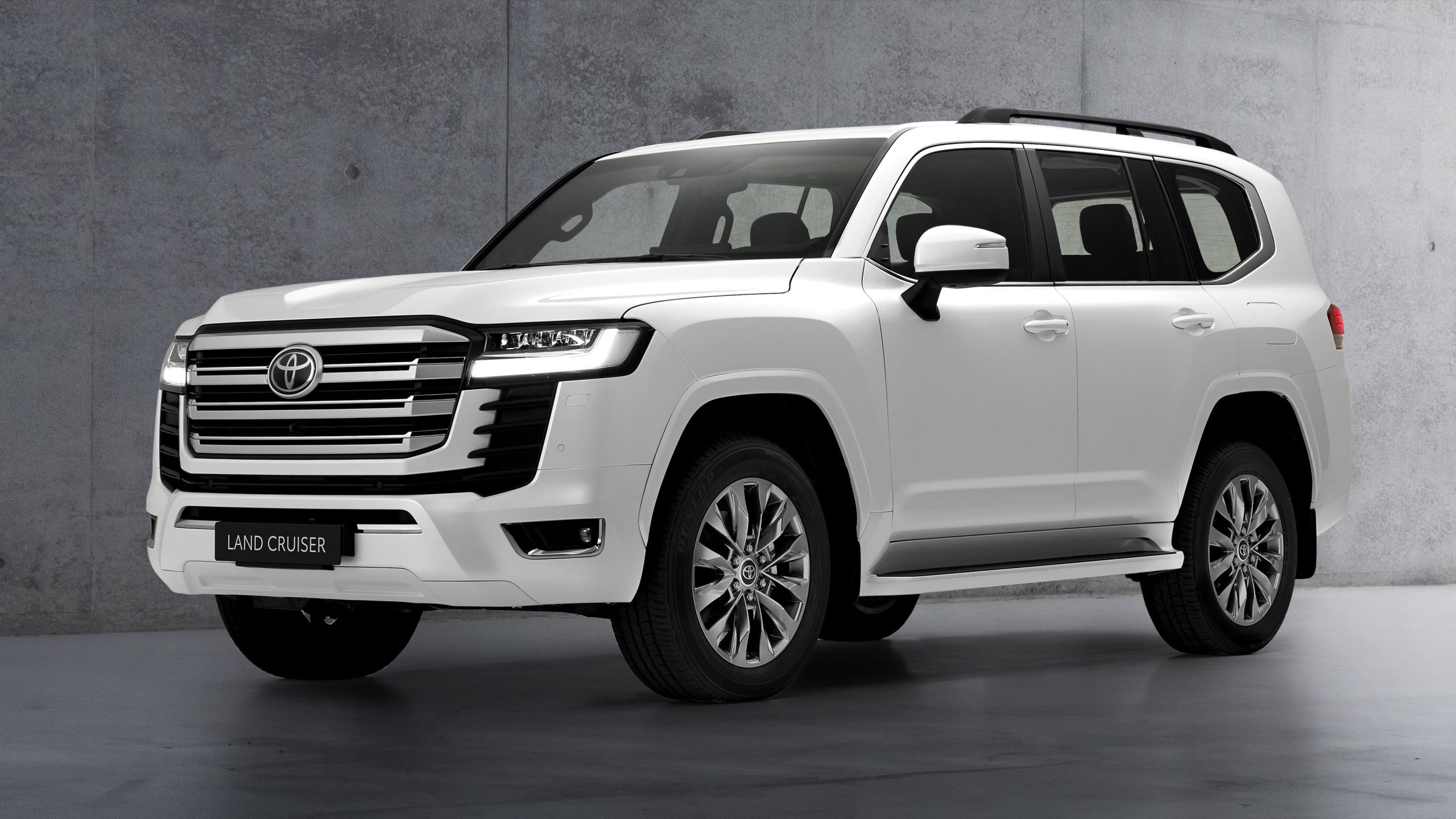
1. Toyota Land Cruiser V6: Toyota’s Rugged Off-Road SUV
The Toyota Land Cruiser has been synonymous with durability since its debut in 1951 with the FJ20. Over the decades, it has become one of the most recognized names in off-road vehicles, known for conquering harsh terrains worldwide.
The Land Cruiser V6, in particular, has long stood as a powerhouse, boasting a robust four-wheel-drive system and impressive towing capacity of up to 8,100 pounds. This makes it an ideal companion for mountain driving and heavy-duty adventures where reliability and strength are non-negotiable.
The 2025 Toyota Land Cruiser arrives with a fresh redesign that blends heritage-inspired styling with modern efficiency. Downsizing from the previous V8, Toyota now equips the SUV with a hybridized turbocharged 2.4L four-cylinder engine paired with an eight-speed automatic transmission.
While this new setup produces less horsepower than the outgoing V8, it delivers better fuel economy, an EPA-estimated 23 mpg combined, marking a shift toward efficiency without sacrificing rugged character.
Toyota has also refined the Land Cruiser’s footprint, making it more compact and maneuverable while still retaining off-road toughness. The biggest change for 2025 is the removal of the First Edition trim, leaving core trims such as the Land Cruiser 1958 and higher specifications.
At the heart of the Land Cruiser’s identity is its trail readiness. Every model comes with a full-time four-wheel-drive system with a low-range transfer case. Standard features include locking center and rear differentials, maximizing traction on steep or rocky terrain. For serious off-roaders, Toyota also offers a front stabilizer bar disconnect system, improving wheel articulation at the push of a button.
Technology further enhances the off-road experience. Features such as low-speed crawl control, terrain-specific traction modes, and multi-angle camera views help drivers tackle tricky environments with precision. These upgrades keep the Land Cruiser competitive against segment rivals like the Jeep Wrangler, Ford Bronco, and Land Rover Defender.
While engineered for off-road strength, the Land Cruiser delivers a mixed on-road experience. In testing, it accelerated from 0–60 mph in 8.2 seconds, slower than the Land Rover Defender 110. The hybrid powertrain is smooth and responsive but lacks the punch needed for effortless highway passing.
Steering feels heavy with limited feedback, and hard braking produces a noticeable nosedive. However, compared to hardcore off-road rivals like the Wrangler or Bronco, the Land Cruiser feels more composed and comfortable on paved roads.
Inside, the Land Cruiser balances ruggedness with comfort. Front and second-row seats are supportive, offering good headroom, but rear legroom is limited for such a large SUV. Seat cushions sit slightly too low, forcing knees upward in an uncomfortable position for taller passengers.
The cabin layout is practical, with logically placed controls and excellent insulation from wind and road noise. Car seat installation is straightforward thanks to well-positioned anchors, though tight legroom complicates rear-facing seat placement.
Technology is a strong point. The touchscreen infotainment system supports wireless Apple CarPlay and Android Auto, complemented by abundant USB ports and even a household-style plug.
Cargo space, however, is less impressive. The Land Cruiser offers 37.5 cubic feet of cargo room, but the hybrid battery placement raises the cargo floor, making loading more awkward. Folding the rear seats does not yield a flat surface, and small-item storage is limited by narrow door pockets and a reduced center console when equipped with the cooled storage option.
The hybridized Land Cruiser is rated to tow up to 6,000 pounds, which is competitive for the segment but less than the V6’s historic 8,100-pound capacity. While adequate for pulling a small camper or trailer, the four-cylinder hybrid can feel strained when towing on steep grades.
The Land Cruiser enters the U.S. market with a starting price around $55,000 USD, climbing higher for well-equipped trims. While it offers ruggedness, advanced tech, and Toyota’s renowned build quality, critics argue that the tight rear seat, awkward cargo layout, and high price make it less practical than rivals.
The 2025 Toyota Land Cruiser is a carefully balanced evolution of a legend. It retains Toyota’s reputation for toughness and trail capability while embracing modern efficiency through hybrid technology. Though not the fastest or roomiest SUV in its class, it strikes a chord with buyers seeking an authentic, durable, and tech-equipped off-road machine.
With iconic styling, advanced 4WD systems, and Toyota reliability, the Land Cruiser remains a standout choice for adventurers, though buyers must weigh its premium price against more spacious or powerful alternatives.
2. Toyota Hilux: The Legendary Pickup Truck
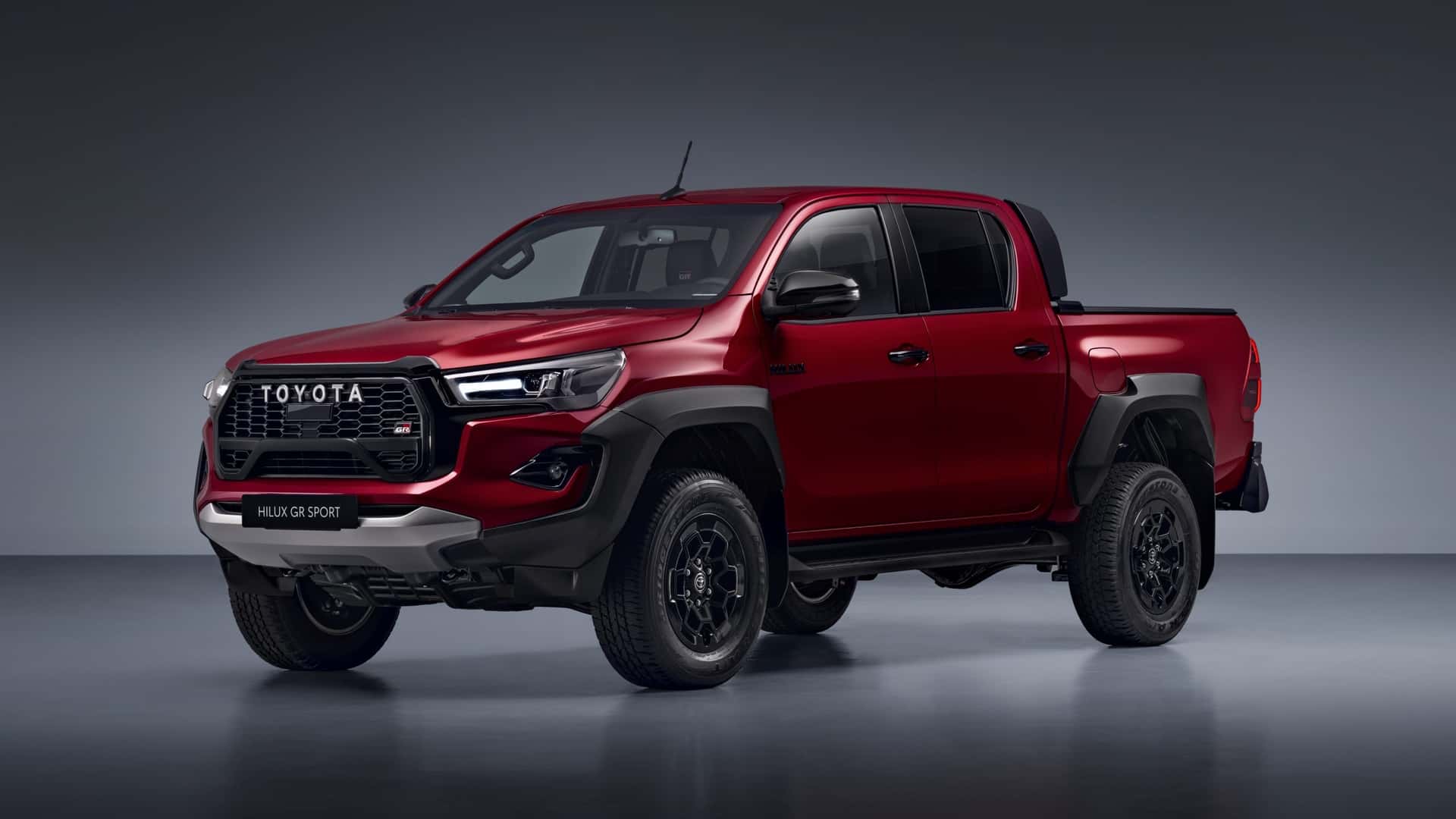
First launched in 1968, the Toyota Hilux holds the title of the longest-running pickup truck in production. Over the decades, it has earned a reputation for being one of the toughest and most dependable vehicles on the road or off it.
With more than 27 million units sold worldwide, the Hilux has become a global icon, relied upon by farmers, adventurers, and even Dakar Rally champions, where it has claimed victories in 2019, 2022, 2023, and 2025.
At its core, the Hilux is engineered for strength. The flagship 2.8L diesel engine delivers 201 bhp and 369 lb-ft of torque, enabling the truck to tow up to 6,700 pounds. Its rugged build and off-road capability make it ideal for tackling steep inclines, rough trails, and unpredictable weather conditions. Whether hauling heavy loads or climbing mountain roads, the Hilux is designed to perform reliably in the harshest environments.
Toyota has also updated its lineup to cater to both workhorse users and lifestyle buyers. While the base models remain practical and robust, higher trims add comfort features such as heated leather seats, automatic gearboxes, touchscreen infotainment, dual-zone climate control, and JBL audio systems. These upgrades make the Hilux not just a utility vehicle but also a comfortable long-distance companion.
In 2025, Toyota introduced a 48V mild hybrid system to the Hilux range. This setup pairs the 2.8L diesel with an electric motor-generator for smoother acceleration, quieter restarts, and improved fuel efficiency by up to seven percent.
While the hybrid does not allow full electric driving, it provides small performance boosts of 16 bhp and 48 lb-ft of torque during acceleration. However, critics argue that the hybrid system is more of an efficiency gesture than a true game-changer, as performance figures remain nearly identical to the non-hybrid version.
Building on its motorsport success, Toyota introduced the Hilux GR Sport and later the GR Sport II editions. These variants emphasize sporty styling and enhanced driving dynamics rather than raw power. They feature upgraded suspension, stiffer springs, retuned steering, wider wheel arches, and all-terrain tyres.
Inside, drivers get leather sports seats and aluminum pedals, while the exterior gains a bold black mesh grille and distinctive GR branding. Despite these upgrades, the GR Sport does not deliver extra horsepower, positioning it as a style-focused edition rather than a performance overhaul.
Historically, the Hilux was tuned for carrying heavy loads, resulting in a stiff and bouncy ride when unladen. Recognizing that many modern buyers use pickups more for lifestyle than for labor, Toyota adjusted the suspension to deliver better ride comfort even with an empty bed. This makes the latest Hilux more versatile for everyday use while retaining the toughness that long-time fans expect.
Globally, the Hilux competes with rivals such as the Ford Ranger, VW Amarok, and Isuzu D-Max, which have carved out strong followings among both workers and lifestyle truck enthusiasts.
Toyota’s strategy has been to modernize the Hilux without alienating its loyal customer base. Pricing reflects this dual appeal: in the UK, the four-door double cab starts at around $44,750 USD for the Invincible trim, climbing past $48,975 USD for the hybrid variant, excluding VAT.
Despite efforts to modernize, the Toyota Hilux remains true to its roots. It is still a rugged, no-nonsense pickup built more as a dependable partner than a flashy status symbol.
The 2.8L diesel remains the standout engine choice, while the hybrid option offers marginal efficiency gains. The interior, though improved, prioritizes practicality over luxury, reminding drivers that the Hilux is more tool than toy.
In short, Toyota has successfully balanced tradition with innovation. The Hilux continues to be a symbol of reliability, endurance, and versatility, making it as relevant today as it was over five decades ago.
3. Nissan Patrol: The Middle East’s Off-Road Titan
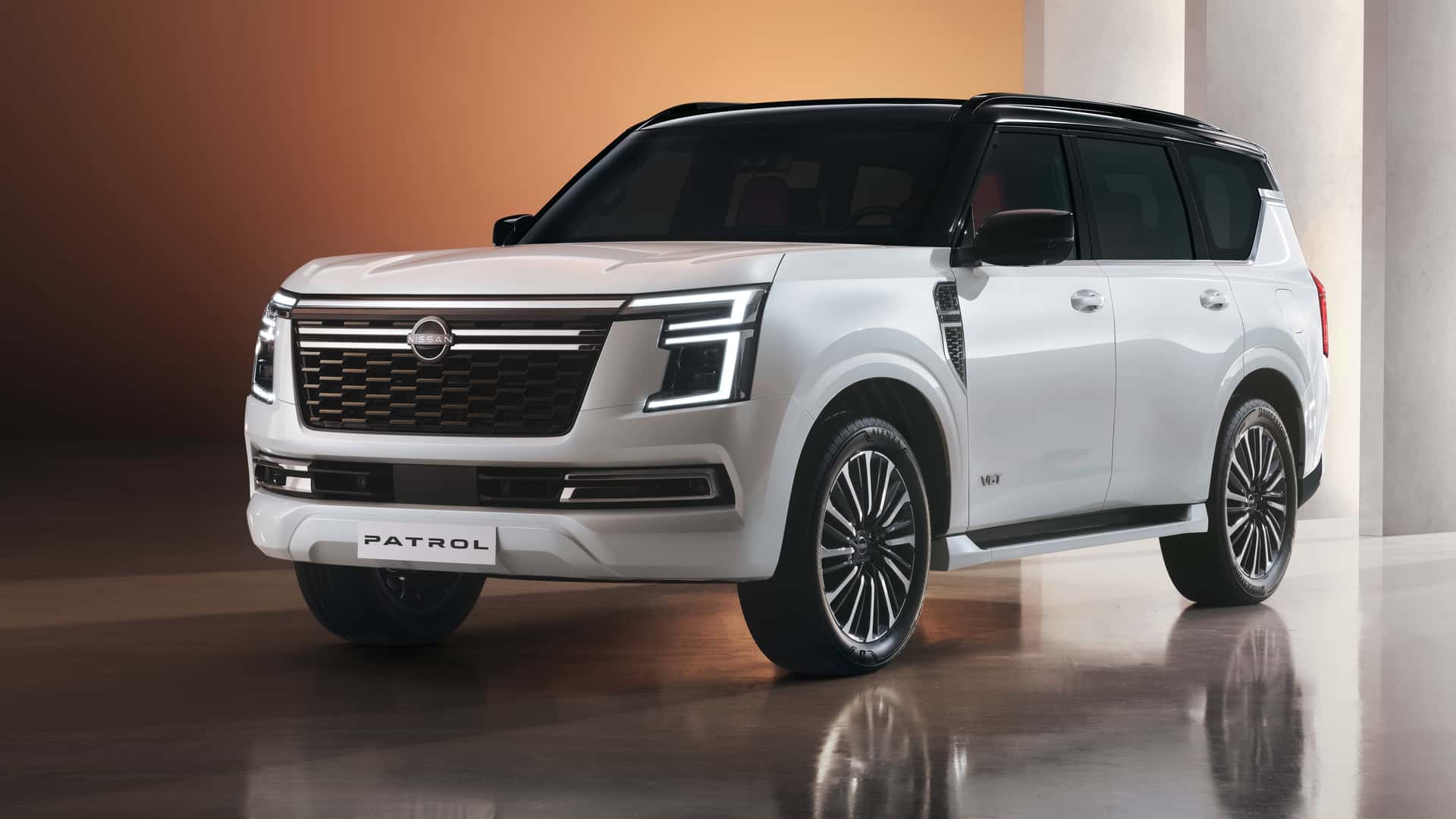
The Nissan Patrol is one of the world’s most enduring off-roaders, tracing its origins back to 1951, the same year the Toyota Land Cruiser debuted. Over its seven generations, the Patrol has built a reputation for strength and resilience, especially in the Middle East, where it enjoys cult-like status.
With a legacy that includes feats like scaling Mt. Fuji and crossing Australia’s Simpson Desert, the Patrol is more than just a large SUV; it’s an off-road legend that has long rivaled Toyota’s iconic Land Cruiser.
The latest Patrol continues its tradition of toughness with a body-on-frame construction and advanced off-road technologies. Features like hill descent control, electronic locking differentials, low-range gearing, and adjustable ride height ensure it can handle dunes, rocky trails, and uneven terrain with ease.
Uniquely tailored for the Middle East, the Patrol even includes a built-in air compressor on higher trims, allowing drivers to lower and reinflate tire pressures when tackling sand.
Although its reputation is off-road focused, the Patrol is equally at home as a family hauler. Its cavernous cabin seats up to seven passengers and still leaves 623 liters of cargo space. This combination of practicality and ruggedness keeps it relevant in a competitive SUV market.
Traditionally known for its naturally aspirated 5.6L V8, the Patrol has now embraced downsizing with a new 3.5L twin-turbo V6. Despite fewer cylinders, the V6 outperforms the old V8, producing 425 horsepower and 516 lb-ft of torque, a 30 hp boost over its predecessor and slightly more powerful than the Toyota Land Cruiser’s V6.
Performance is impressive for such a large SUV. The Patrol, weighing over 2.7 tonnes and stretching 5.2 meters long, still manages 0–62 mph in 6.6 seconds with the twin-turbo V6. A naturally aspirated 3.8L V6 is also offered, but its 312 hp and 284 lb-ft of torque feel underwhelming given the SUV’s massive weight.
Unlike global rivals, the Patrol is not offered in Europe or Japan. Instead, it is engineered specifically for regions like the Middle East, Australia, Canada, South Africa, and the Philippines.
This market focus explains the absence of diesel or hybrid variants. Fuel economy is less of a concern in these markets, where petrol remains relatively inexpensive. A claimed 27.4 mpg and a 100-liter fuel tank emphasize long-distance endurance rather than emissions compliance.
The Patrol blends ruggedness with modern updates. Its C-shaped LED headlights, vertical taillights, and full-width light bar create a contemporary look, while its upright stance and massive 22-inch wheels underscore its off-road readiness.
Inside, the Patrol offers a mix of practicality and luxury. It boasts dual 14.3-inch displays and even a biometric cooling system that uses infrared sensors to monitor body temperature.
While the technology impresses, the cabin materials and design lag behind European luxury SUVs such as the Range Rover or Mercedes G-Class. Still, leather seating, premium amenities, and spaciousness give it an upscale yet functional feel.
On-road performance is a step forward compared to the outgoing model. The V6 is responsive, though turbo lag is noticeable at times. The air suspension system helps the Patrol adapt to different conditions, raising for off-road use and lowering at highway speeds for better stability. However, its ladder-frame chassis limits refinement compared to unibody luxury SUVs, leading to less polished handling on pavement.
Off-road, the Patrol shines. Easy-to-use drive mode selectors, a rear diff lock, and intelligent suspension make it highly capable across sand dunes and rocky trail environments. It was specifically designed to dominate.
The Patrol remains competitively priced for its size and capability. Prices start at around $62,000 USD and climb to $105,000 USD for fully loaded trims. This positions it below ultra-luxury SUVs while offering comparable space, power, and off-road strength.
The Nissan Patrol excels in its target markets, particularly the Middle East, where ruggedness and dune-bashing capability are valued above all else. While not as refined as European rivals or as globally versatile as the Toyota Land Cruiser, the Patrol delivers exactly what its audience demands: raw power, durability, and space in abundance.
It may not be groundbreaking in design or electrification, but in the environment it was built for, the Patrol remains a formidable giant of the desert.
4. Honda CR-V: The Practical Everyday SUV
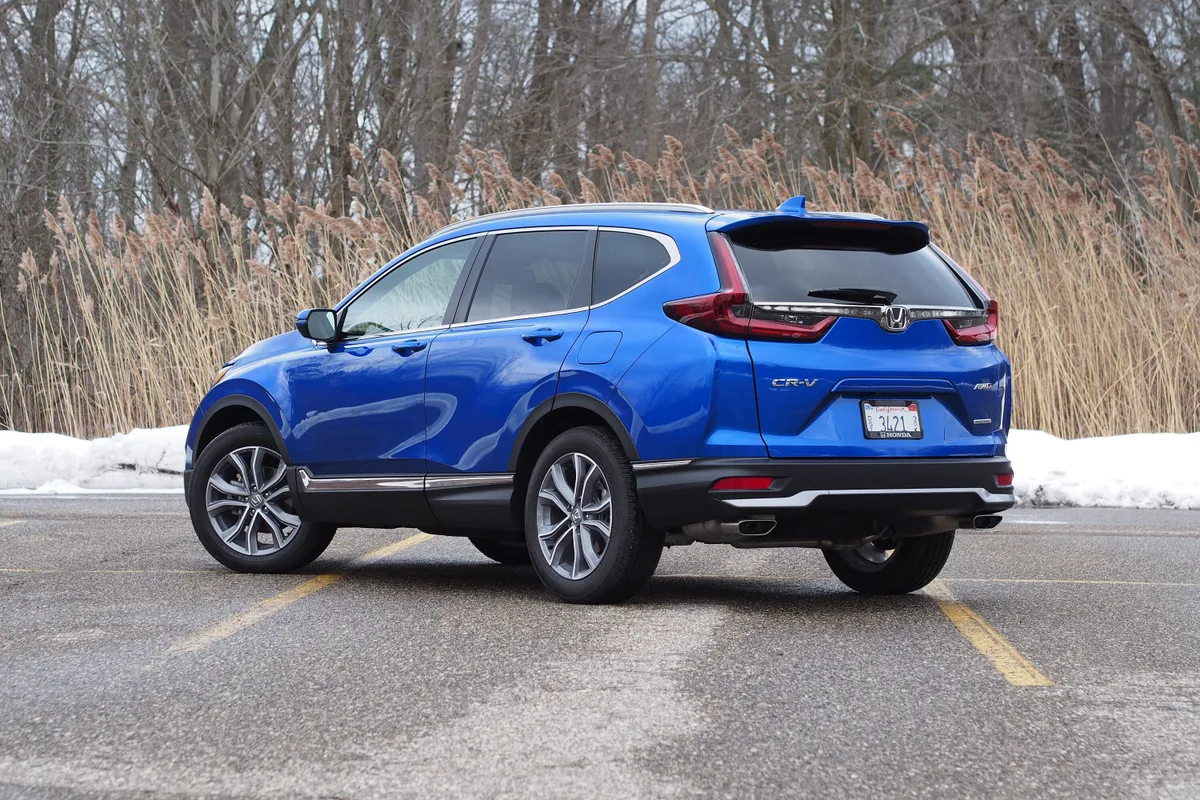
Since its debut in 1995, the Honda CR-V has consistently been one of the world’s best-selling SUVs, known for its reliability, efficiency, and practicality.
Now in its sixth generation, the CR-V continues to build on its reputation as a family-friendly vehicle that balances comfort with utility. Over nearly three decades, it has evolved from a modest compact SUV into a global best-seller that rivals the Toyota RAV4, Kia Sportage, and Volkswagen Tiguan.
Honda has transitioned the CR-V lineup toward electrification. In the UK and Europe, buyers can choose between the e:HEV full hybrid and the e:PHEV plug-in hybrid, the latter being Honda’s first PHEV for that market. Both pair a 2.0L four-cylinder petrol engine with an electric motor to produce 181 hp.
- The e:HEV hybrid offers all-wheel drive and accelerates from 0–60 mph in about 8.4 seconds, a respectable figure for its class.
- The e:PHEV plug-in hybrid is front-wheel drive, with a larger 17.7 kWh battery that delivers up to 37 miles of real-world EV range (slightly under the official 51-mile claim). It can tow up to 1,500 kg (3,300 lbs), making it practical for light trailers.
In the US, the CR-V lineup includes both gas-only models (powered by a 1.5L turbo-four) and the hybrid CR-V Sport and Sport Touring trims. The hybrid is rated at up to 40 mpg city, 37 mpg highway, with AWD versions slightly lower. Pricing starts around $30,800 USD for the base EX and rises to about $40,000 USD for the fully equipped Sport Touring Hybrid.
The CR-V is not a performance SUV, but it delivers secure handling and responsive steering that make it pleasant to drive. The hybrid version tested in the US managed 0–60 mph in 8.0 seconds, which is typical for the segment. Braking is smooth and confidence-inspiring, and the hybrid system transitions seamlessly between petrol and electric power.
One weakness is road noise, particularly on motorways, where the cabin isn’t as hushed as in some premium rivals like the Lexus NX or Audi Q5. Still, for daily use, the CR-V strikes a good balance between comfort and composure.
Inside, the CR-V prioritizes space and ease of use. Wide-opening doors, comfortable seating positions, and excellent visibility make it welcoming for families. The rear seats offer generous legroom and flexibility, and Honda’s clever “magic seat” design allows for a versatile cargo layout.
Cargo capacity is among the best in the class, with over 39 cu ft of space behind the rear seats and 76.5 cu ft with them folded in US-spec models. The hybrid loses a little space due to its battery placement, but it remains competitive.
Front seats are supportive for long drives, and rear passengers enjoy more than adequate comfort. However, rear headroom is somewhat limited, and while the CR-V’s cabin is functional, it lacks the premium feel of higher-priced competitors.
Honda has equipped the CR-V with solid, if not class-leading, technology. A 9-inch infotainment display is standard on higher trims, offering wireless Apple CarPlay and Android Auto, plus a wireless charging pad.
The system is intuitive but feels small compared to rivals with 12-inch or larger screens. Safety tech is strong, with Honda Sensing driver assistance features included across the range, adaptive cruise control, lane-keeping assist, and forward-collision warning among them.
At around $30K–$40K USD, the CR-V is competitively priced but slightly more expensive than some rivals. The hybrid versions are particularly appealing for urban driving, where their 37–40 mpg efficiency outshines most petrol-only competitors. While not the cheapest option in the segment, the CR-V makes up for it with build quality, reliability, and practicality.
The Honda CR-V doesn’t chase flashiness or outright performance. Instead, it focuses on what families actually need: spacious seating, excellent cargo capacity, reliability, and strong efficiency. Its hybrids add versatility for city or suburban use, while its competitive towing capacity and roomy interior broaden its appeal.
Yes, it has drawbacks: road noise, slightly higher pricing, and a cabin that feels less premium than rivals, but for many buyers, these are small trade-offs. The CR-V continues to deliver what it always has: dependability and practicality wrapped in a comfortable, no-nonsense package.
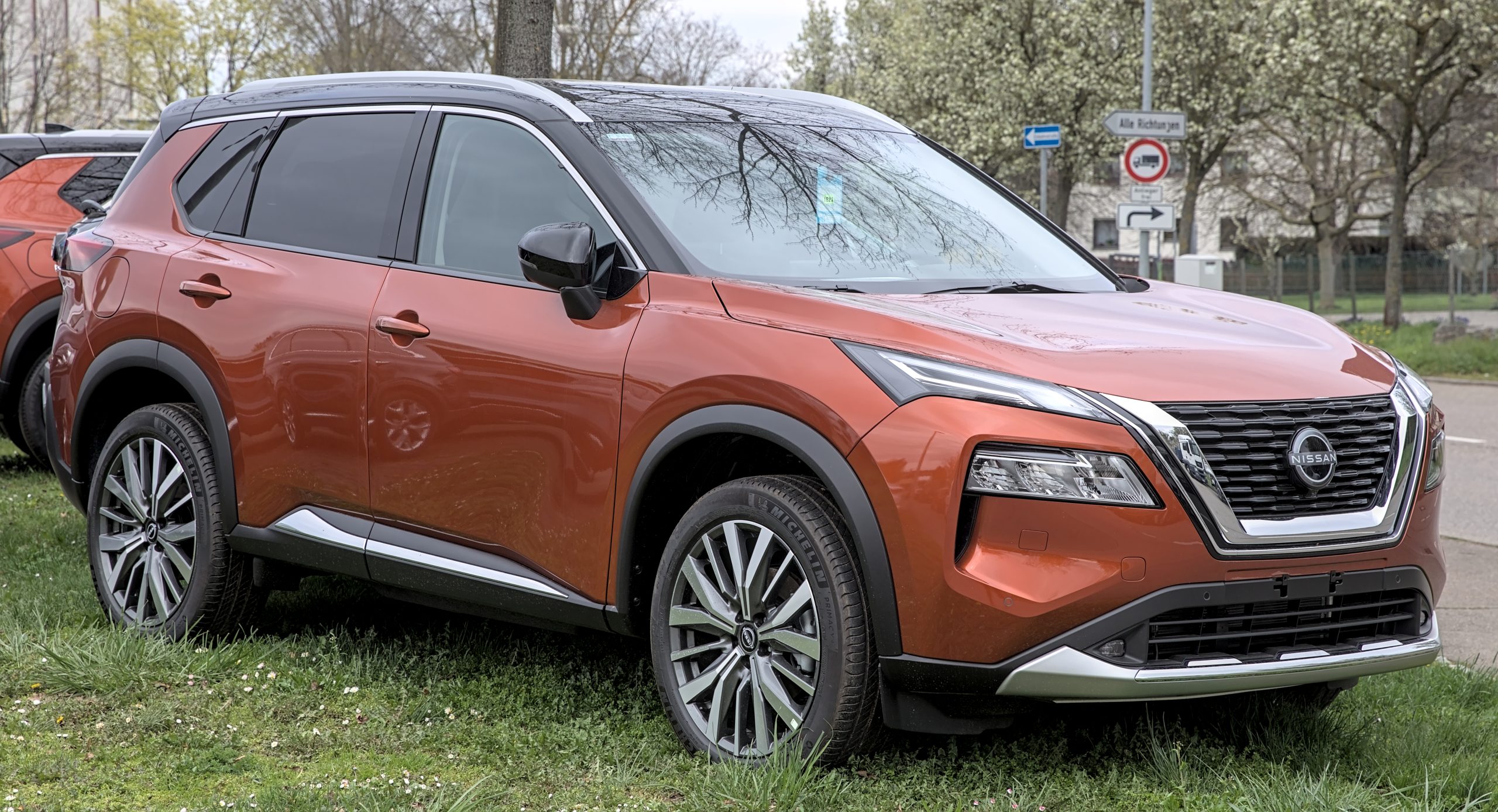
5. Nissan X-Trail: A Practical Hybrid Seven-Seater
The Nissan X-Trail, first launched in 2001, started life as a no-frills, chunky pseudo-4×4 in the same spirit as the early Toyota RAV4. Now in its fourth generation, the X-Trail has steadily evolved into a more refined, family-focused SUV that blends practicality with efficiency. While it shares DNA with the popular Nissan Qashqai, the X-Trail is bigger, more versatile, and thanks to hybrid tech, more economical than ever.
It now competes in the crowded midsize SUV segment against the Skoda Kodiaq, Kia Sorento, Toyota RAV4, Hyundai Santa Fe, and Mazda CX-80. It’s the ace card? The ability to seat up to seven passengers in a relatively compact, efficient package.
Nissan has taken a distinctive approach with the X-Trail’s latest generation by offering its e-Power hybrid system. Unlike traditional hybrids, the 1.5L three-cylinder petrol engine doesn’t drive the wheels directly. Instead, it acts solely as a generator for a 201 hp electric motor, which powers the front wheels. This design allows the X-Trail to deliver the smooth, instant response of an EV without the need for plugging in.
For those seeking extra traction, Nissan offers the e-4orce all-wheel-drive variant, which adds a second 134 hp electric motor on the rear axle. Together, the system produces 211 hp and distributes torque intelligently between front and rear wheels for enhanced grip on slippery terrain.
Performance varies depending on the setup:
- Mild-hybrid petrol (161 hp, FWD) – 0–62 mph in 9.6 seconds, ~40 mpg.
- e-Power hybrid (201 hp, FWD) – 0–62 mph in 8.0 seconds, ~50 mpg.
- e-4orce hybrid (211 hp, AWD) – 0–62 mph in 7.0 seconds, ~45 mpg.
In real-world testing, the AWD hybrid returned fuel economy in the low 40s mpg, close to official figures, a notable achievement for a seven-seater SUV.
The X-Trail’s e-Power is marketed as “self-charging,” meaning it never requires external charging. Instead, energy is recovered during braking and stored in a small 2.1 kWh battery. While not as efficient as a true plug-in hybrid, it provides a useful middle ground between petrol and full EV, appealing to buyers who want EV-like smoothness without charging infrastructure concerns.
Step inside the latest X-Trail, and it feels spacious, airy, and family-friendly. The option for seven seats makes it a standout in its class, though, as is typical, the sixth and seventh seats are best reserved for children. The middle row is roomy and comfortable, while features like a panoramic roof (standard on top trims) enhance the sense of space.
The cabin is modern, especially in higher trims where a 12.3-inch infotainment display takes center stage. Wireless Apple CarPlay, Android Auto, and advanced driver assistance tech are available, though not all features are standard on lower trims.
Storage space is plentiful, with clever compartments up front, though some materials weaken the impression of quality. Shiny plastics around the gear selector and touchscreen show fingerprints easily, and minor build-quality issues, such as rattling over bumps, detract from the otherwise solid feel.
On the road, the X-Trail prioritizes comfort and efficiency over sharp handling. The e-Power system delivers smooth, responsive acceleration, while the e-4orce AWD version provides extra confidence in poor weather or on light off-road tracks. However, enthusiasts will find it less engaging than rivals like the Mazda CX-80.
Ride quality is generally good, but bumps and vibrations occasionally reveal the car’s less polished side. Still, for most family buyers, the X-Trail offers exactly what they’re after: a calm, predictable drive.
In the UK, the X-Trail starts at around £39,985, which converts to approximately $49,000 USD. That puts it squarely in competition with the Kia Sorento and Hyundai Santa Fe, while still undercutting premium seven-seaters like the Land Rover Discovery Sport.
For the money, buyers get a hybrid SUV that’s cheaper to run than most rivals, with the flexibility of seven seats and strong safety equipment as standard.
The Nissan X-Trail is not the flashiest SUV on the market, nor is it the sportiest. But for families needing space, efficiency, and occasional seven-seat practicality, it ticks a lot of boxes. Its hybrid system stands out as an innovative bridge between petrol and full EV, while its interior offers enough comfort and tech to satisfy most buyers.
It doesn’t quite reach the premium feel of rivals, and its driving dynamics are more competent than exciting. Still, for those who value practicality and frugality above all else, the X-Trail remains a compelling choice.
Also Read: 5 Cars That Survive Harsh Winters and 5 That Rust Immediately
5 Trucks That Struggle Uphill
1. Range Rover L405: Luxury, Risk, and Reward in Equal Measure
The Range Rover L405, produced from 2013 to 2021, exemplifies the duality of modern luxury SUVs: a vehicle of supreme comfort and prestige, shadowed by concerns of reliability and cost.
Critics often cite Range Rovers as notoriously unreliable, but by the L405 generation, many issues of earlier models had been addressed, though not entirely eliminated. Known trouble spots, such as timing chain guides and coolant pipes, still existed, but with proper maintenance, these SUVs could be dependable companions.
The L405 marked a turning point for Land Rover, as it embraced a more upscale market, paving the way for rivals like the Bentley Bentayga and Aston Martin DBX. Its cabin offered unparalleled refinement, with plush leather, wood accents, and some of the smoothest air suspension available, making the driving experience akin to gliding.
Paired with the powerful 5.0-liter supercharged V8, the L405 delivered sports car-level acceleration, sprinting from 0-62 mph in just 5.4 seconds, despite weighing over two and a half tons. However, its soft suspension made spirited driving awkward, rewarding instead a relaxed, commanding pace.
Off-road capability, while rarely used by most owners, remained a key part of the Range Rover identity, with advanced systems ensuring that it could outperform rivals in the rough if called upon.
As newer generations have arrived, the L405 has become more affordable, making it tempting for risk-takers who are willing to gamble on upkeep costs.
In many ways, it is the quintessential “Brave Pill” purchase: unmatched luxury and presence, but with the constant reminder that ownership requires deep pockets and perhaps an extended warranty. For those willing to take the risk, however, the L405 offers one of the most rewarding luxury SUV experiences of its era.

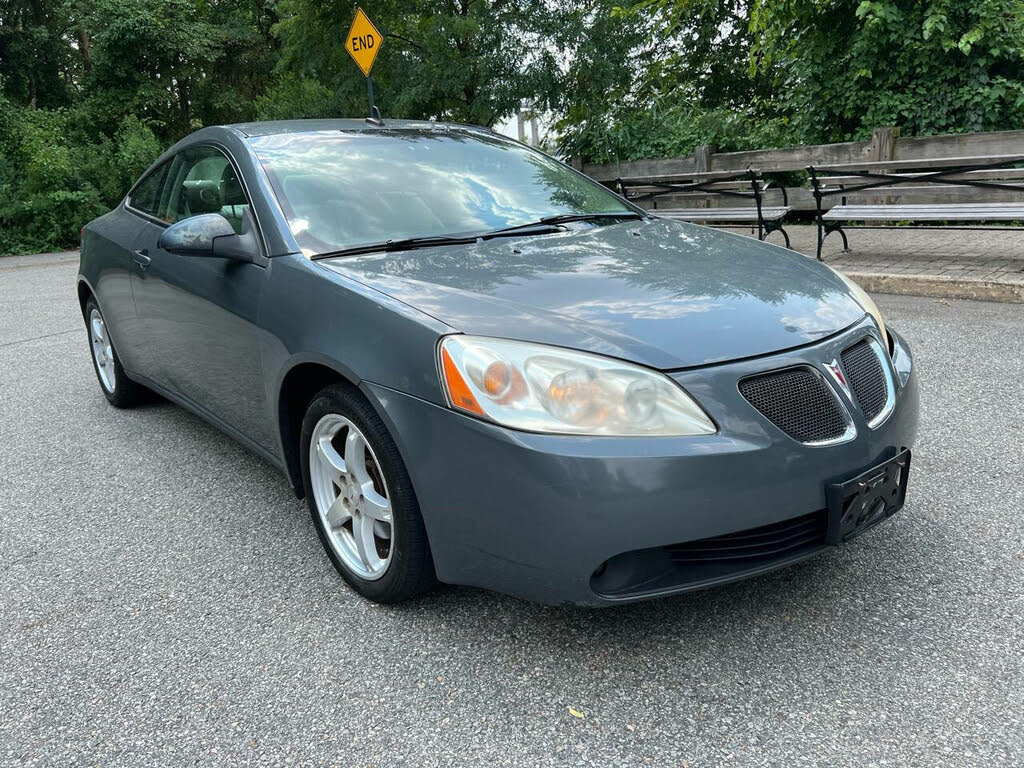
2. Pontiac G6 Coupe: A Stylish Misstep with Fleeting Appeal
The Pontiac G6 Coupe represents one of the last chapters in Pontiac’s history, and while it wasn’t a disaster, it ultimately fell short of leaving a lasting impression. At its best, the G6 Coupe offered sleek styling, especially in its retractable hardtop convertible form, and decent performance with the later 3.6-liter V6 engine producing 252 horsepower.
Unfortunately, Pontiac’s attempt to court tuner enthusiasts backfired with the awkward G6 GXP Street Edition, a trim that promised aggression in looks but delivered no performance gains over the standard GXP. Beyond aesthetics, the G6 struggled with practical shortcomings.
The convertible’s cargo space became virtually nonexistent with the top retracted, while its interior suffered from cheap plastics, unresponsive steering in base sedan models, and disappointing crash test ratings. Even its fuel economy lagged behind expectations, particularly with the 3.9-liter V6.
However, Pontiac did make some improvements late in the model’s run, offering a six-speed automatic transmission with the four-cylinder engine that boosted highway efficiency to 33 mpg. Features such as standard satellite radio were nice touches, but they weren’t enough to save the car’s reputation.
Looking back, the G6 Coupe occupies an odd space: fondly remembered by some for its styling and affordability, but widely criticized for its half-hearted execution. It is a car that reminds us how difficult it is for a brand to balance image, performance, and practicality. Pontiac tried to reinvent itself with the G6, but the result was a car that never truly lived up to its ambitions.
3. Plymouth Prowler: A Retro-Futuristic Hot Rod Farewell
Few cars embody audacity quite like the Plymouth Prowler. Released in the late 1990s, the Prowler was a modern reinterpretation of a classic hot rod, and in many ways, it was the swan song for Plymouth as a brand.
Its daring design, with exaggerated fenders and a low-slung stance, turned heads everywhere it went, and decades later, it remains one of the most distinctive cars ever mass-produced. Critics often derided it for being powered by a V6 rather than the V8 its styling seemed to promise, but that limitation did little to dampen its visual impact.
For those who wanted more muscle, Chrysler even developed a V8-powered concept version, the Howler, though it never reached production. Trunk space was nearly nonexistent, with owners often resorting to a matching tow-behind trailer to carry luggage, but practicality was never the point of the Prowler.
Instead, it was about celebrating design freedom, a boldness rarely seen in mainstream cars. Most Prowlers have been cherished as collectibles rather than daily drivers, meaning many remain in pristine condition today.
The car’s enduring appeal lies in its unapologetic commitment to style over substance, proving that not every car needs to be practical to be loved. For enthusiasts with garage space, the Prowler is less about driving utility and more about owning a piece of automotive art. It exemplifies the idea that sometimes, being unforgettable matters more than being universally useful.

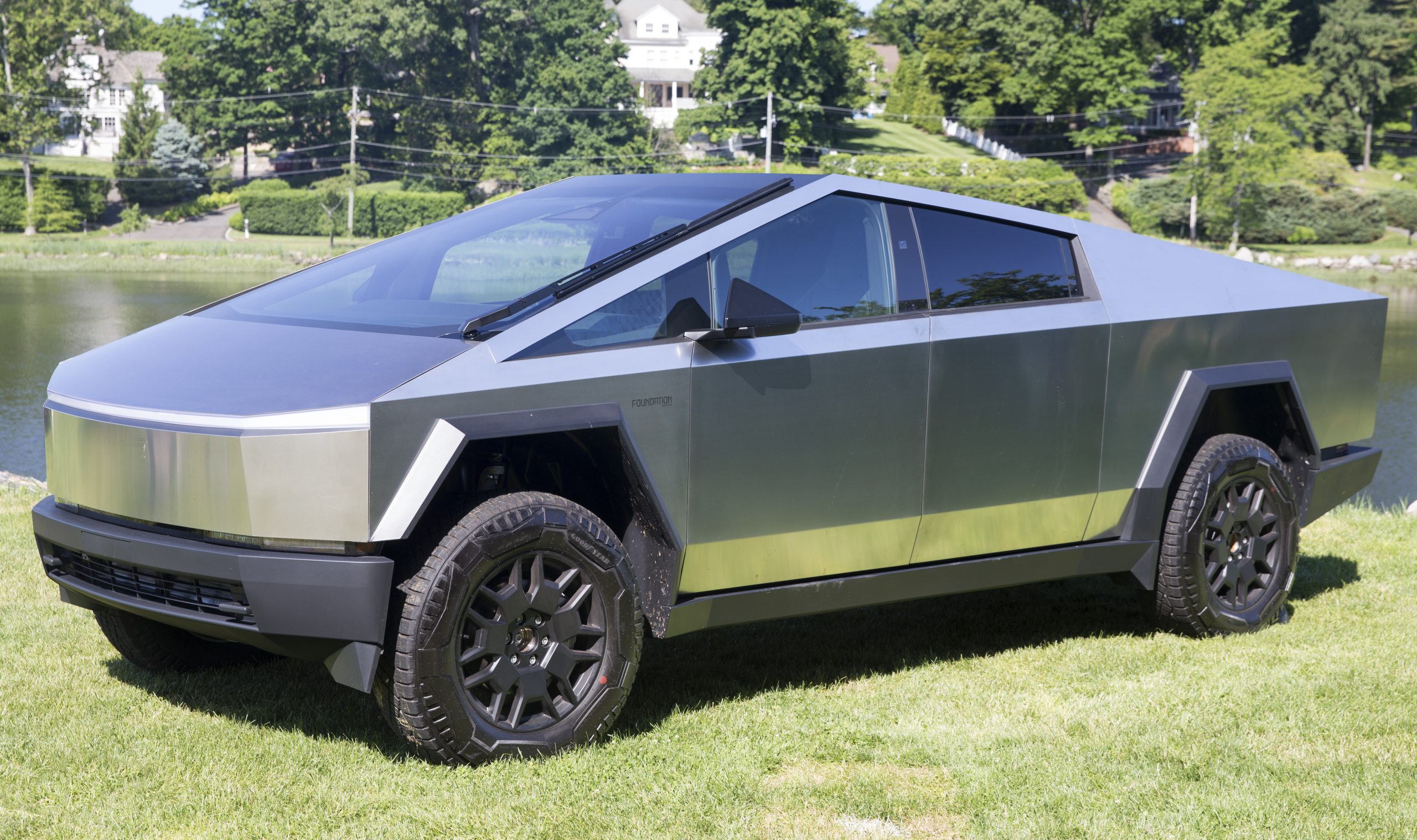
4. Tesla Cybertruck: A Bold Experiment in Automotive Design
The Tesla Cybertruck is one of the most polarizing vehicles in recent memory, and that divisiveness is exactly what makes it fascinating. Unlike the countless mid-size SUVs that blend into traffic, the Cybertruck demands attention with its radical design and futuristic claims.
While many of Tesla’s promises, such as extreme durability, bulletproof glass, and immense towing capacity, remain either exaggerated or unfulfilled, the Cybertruck’s purpose seems less about practicality and more about making a statement.
Its wedge-shaped stainless steel body challenges automotive conventions in the same way products like the Nintendo Virtual Boy or Apple Pippin once did in their industries: bold, unusual, but not necessarily successful.
In practice, the Cybertruck struggles to deliver on its most ambitious promises, with real-world range topping out at 334 miles, far short of the hyped 400-mile mark once teased with a bed-mounted extended-range battery pack.
That option, priced at $16,000, has quietly disappeared from Tesla’s website, suggesting an indefinite delay or cancellation. Still, there is hope for improvement with Tesla’s upcoming 4680 battery technology, which promises greater efficiency, energy density, and cost reduction.
Whether or not the Cybertruck matures into a truly capable electric pickup, its value lies in sparking conversation and challenging norms. It is not just a vehicle; it is a cultural lightning rod simultaneously admired, ridiculed, and endlessly debated. In that sense, the Cybertruck succeeds where most vehicles fail: it forces people to care.
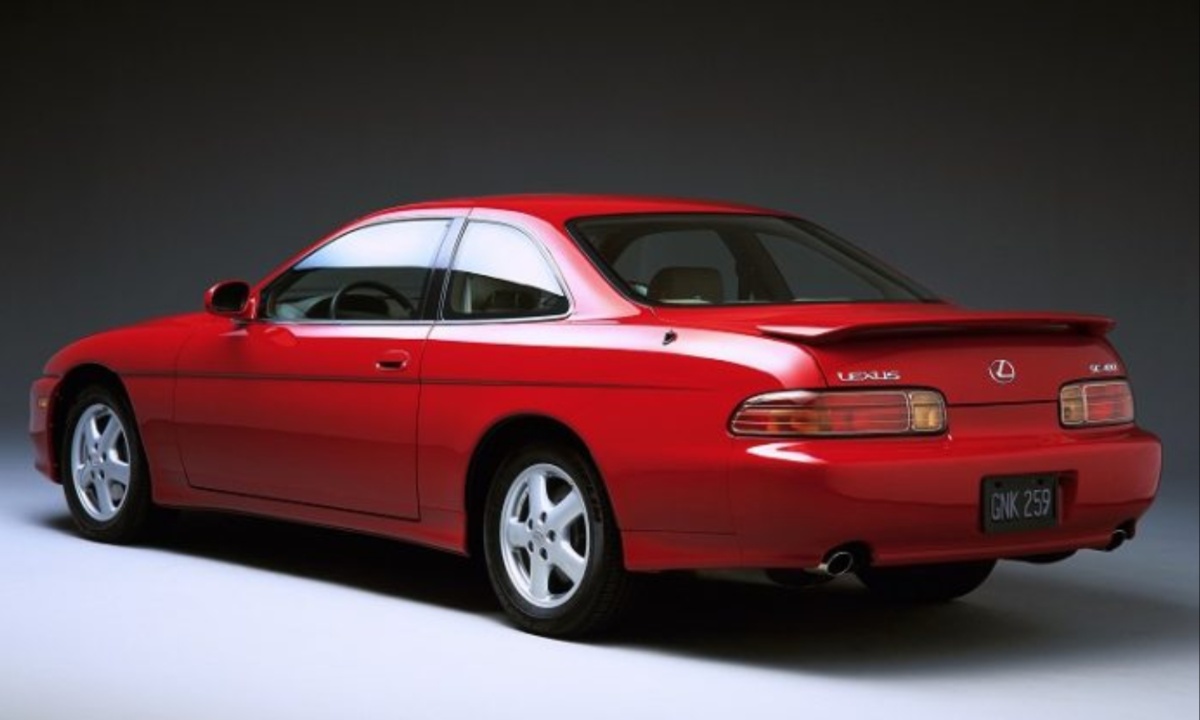
5. Lexus SC (Second Generation): Understated Elegance with Lasting Reliability
The second-generation Lexus SC, introduced in the early 2000s, has aged far better than many initially expected. Though its rounded styling didn’t win over everyone at launch, time has revealed a quiet elegance in its design.
Unlike its German contemporaries, the Mercedes SL or BMW 6 Series, the SC focused less on flamboyance and more on effortless luxury and reliability. Under the hood, it packed a smooth and powerful V8 engine, making it not just a cruiser but also a capable performer when pushed.
Inside, the SC offered Lexus’s trademark refinement: comfortable seats, high-quality materials, and a stress-free ownership experience. Where European rivals often burden owners with expensive repairs, the SC earned a reputation for being dependable and relatively low-maintenance.
This makes it an attractive option for enthusiasts seeking a balance of style, performance, and peace of mind. While the car’s reputation suffered somewhat from critics who dismissed its looks as uninspired, those who own and drive the SC know it delivers a satisfying blend of class and durability.
Today, it is seen as an affordable entry point into the world of luxury coupes, and it has developed a cult following among those who appreciate its understated strengths. Rather than chasing trends, the SC carved its own path, and in hindsight, it is far more respected now than during its production years.
It represents a timeless alternative to flashier but more troublesome rivals, embodying Lexus’s philosophy of quiet excellence.
In the mountains, hype fades, and capability becomes clear. Trucks that consistently deliver uphill, like the Land Cruiser, Hilux, and Patrol, have earned their status through decades of proven durability in some of the toughest environments on earth. They may not always be the flashiest or fastest, but when the climb gets steep, they get the job done.
On the other hand, trucks like the Cybertruck, Range Rover L405, or other style-driven models reveal their limitations when pushed beyond smooth highways. Bold design, luxury, or marketing promises can’t replace the fundamentals: torque, traction, and rugged engineering.
Mountain driving exposes those weaknesses instantly, reminding us that dependability is measured in performance, not presentation.
For those who venture into high-altitude terrain, the right choice is clear: invest in a truck that values resilience over image. The mountains don’t forgive compromises, and neither should you. Pick a machine proven to endure, and it will reward you with the strength, safety, and reliability to climb higher and return with confidence.
Also Read: 5 Cars That Rarely Need Transmission Work vs 5 That Constantly Do