
The SUV market in the United States has exploded over the past two decades, offering everything from luxury crossovers to rugged off-road warriors.
For off-road enthusiasts, choosing the right SUV can mean the difference between conquering rough trails and getting stuck, or worse, facing constant mechanical headaches.
While some modern SUVs are engineered to endure extreme terrain, others are more suited to city streets and may struggle, or even fail, when taken off-road.
In this article, we’ll examine five modern SUVs that excel in off-road conditions and five that tend to fall apart when pushed beyond the pavement. This guide is designed for U.S. drivers who value durability, reliability, and performance in challenging environments.
5 SUVs Built for Off-Road Abuse
For adventure seekers and off-road enthusiasts in the United States, not all SUVs are created equal. While many modern SUVs look rugged, only a select few are engineered to handle challenging terrain like rocky trails, mud, sand, and steep inclines without breaking a sweat, or breaking down.
Choosing the right SUV can mean the difference between a thrilling off-road experience and a costly, frustrating trip back to the shop.
In this article, we’ll highlight five SUVs built for off-road abuse. These vehicles combine advanced 4×4 systems, durable suspensions, and robust construction to tackle the toughest trails with confidence.
Whether you’re planning weekend adventures, overlanding trips, or serious trail exploration, these SUVs prove that modern design and off-road capability can go hand in hand.
1. Jeep Wrangler
No discussion of off-road SUVs is complete without the Jeep Wrangler. Known for its legendary 4×4 capabilities, solid axles, and high ground clearance, the Wrangler is engineered to handle rocks, mud, and steep inclines with ease.
Modern Wranglers come with advanced off-road technology, including locking differentials, sway-bar disconnects, and terrain-specific drive modes. For U.S. adventurers, the Wrangler is essentially a benchmark for off-road durability and reliability.
If your weekends are spent exploring backcountry trails, or even if you just want to look like you do, the 2024 Jeep Wrangler is built to get you nearly anywhere. Jeep has evolved far beyond its military origins, offering a surprising amount of creature comforts, and some higher trims could almost be called luxurious.
That said, don’t expect a plush ride or a cushioned commute to the trailhead: the Wrangler remains a truckish vehicle with road manners to match. Its ride can be jarring over rough pavement, and the steering requires constant attention to keep it tracking straight.
The 2024 Wrangler receives mild updates in both style and technology. A refreshed grille and ten new wheel designs give it a subtle visual boost, while inside, a 12.3-inch infotainment display replaces the smaller 5.0- and 7.0-inch screens from last year.
This new screen features Jeep’s latest software, wireless Apple CarPlay and Android Auto, and onboard navigation that includes mapping for over 2,000 trails, with the option to download more. Jeep has also improved active noise cancellation to help quiet the cabin for phone calls and reduce interior road noise.
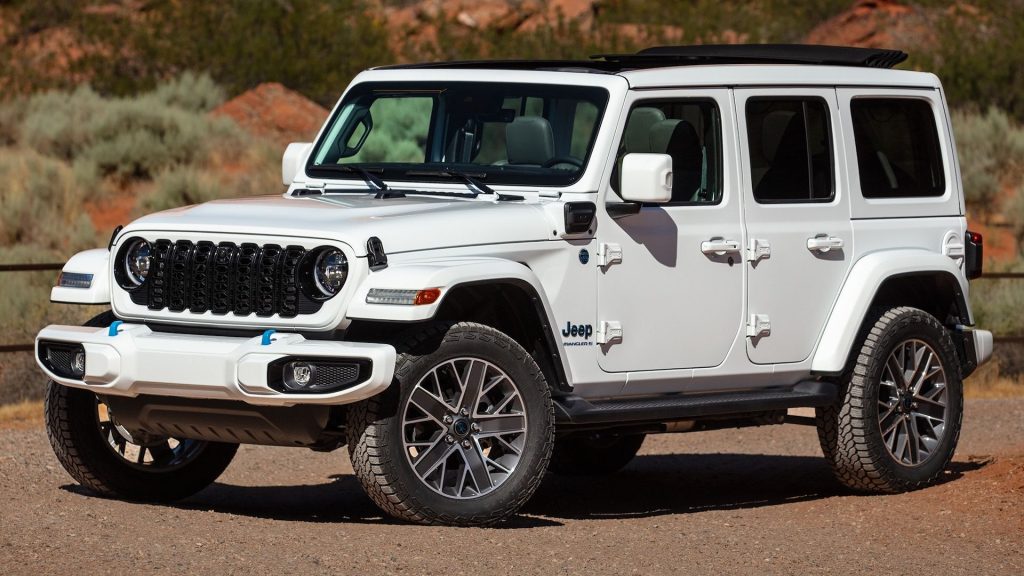
The base Sport trim appeals to off-road purists on a budget, while the top-tier Rubicon 392 caters to all-terrain speed enthusiasts. Our recommendation is to embrace the Wrangler’s simple roots without overspending.
The two-door Wrangler with a removable cloth top makes a solid starting point, and upgrading to the Willys trim adds useful features like 17-inch wheels with 33-inch all-terrain tires, a locking rear differential, LED exterior lighting, and auxiliary switches for accessories like a winch or light bar.
For power, the 270-hp 2.0-liter turbocharged four-cylinder delivers 295 lb-ft of torque, 35 more than the standard V-6, and comes paired with an eight-speed automatic, offering a low-stress combination for trail driving.
The standard 285-hp 3.6-liter V-6 carries over from the previous-generation Wrangler and can be paired with a six-speed manual or a smooth-shifting eight-speed automatic.
Optional powertrains include a turbocharged four-cylinder with hybrid assist, a 3.6-liter V-6 with hybrid assist, a 3.0-liter diesel V-6, the 375-hp plug-in hybrid 4xe, and a 6.4-liter V-8. All Wranglers come with part-time four-wheel drive operated via a center-console lever.
While handling has improved, the Wrangler still feels trucklike compared to more refined SUVs and pickups. The four-door’s ride is reasonably smooth over rough terrain, though braking distances were inconsistent in testing.
Also Read: 12 Toyotas That Have Passed 500K Miles in the U.S.
2. Toyota 4Runner
The Toyota 4Runner has been a mainstay in the U.S. SUV market for decades, celebrated for its body-on-frame construction and rugged suspension. Its TRD Pro variant is specifically tailored for off-road use, featuring skid plates, reinforced shocks, and all-terrain tires.
Reliability is another strength; many 4Runners surpass 200,000 miles with minimal major repairs, even under tough off-road conditions. The 4Runner proves that a modern SUV can balance comfort, reliability, and extreme durability.
Most 4Runner enthusiasts are likely aware that the latest model is now four-cylinder only. The lower trims come with a turbocharged 2.4-liter engine producing 278 horsepower and 317 lb-ft of torque, while the upgraded option is a four-cylinder hybrid generating a stronger 326 hp and 465 lb-ft.
That same hybrid setup is also used in the Toyota Land Cruiser, delivering identical power and torque figures. This isn’t particularly surprising, given that the last 4Runner we tested in 2022, which had two extra cylinders, reached 60 mph in 8.5 seconds.
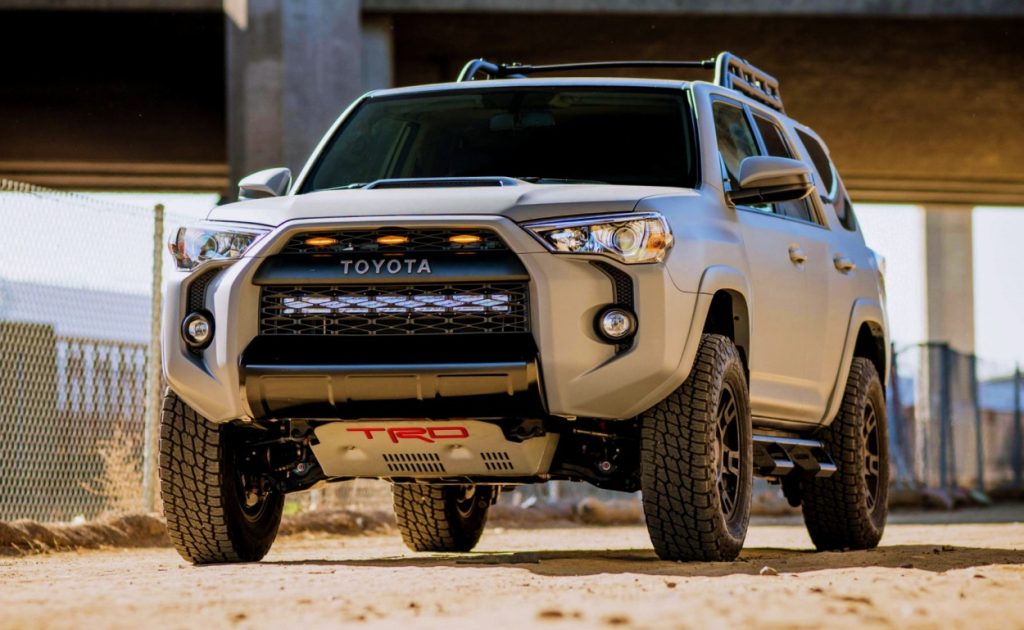
I drove both the standard and hybrid 4Runner on public roads to gauge the difference. The hybrid’s extra torque is noticeable, especially at low speeds, but once the SUV reaches highway speeds, both powertrains must work harder to maintain cruising pace.
All new 4Runners come equipped with an eight-speed automatic transmission, delivering power either to all four wheels or just the rear wheels in lower-end trims.
Fuel economy improvements are modest with the hybrid, but the four-cylinder engines themselves are more efficient than previous generations.
A last-generation 4Runner was rated at 17 mpg combined, while all trims of the new model achieve at least 21 mpg combined. Smaller engines may not thrill everyone, but they do contribute to better efficiency.
3. Land Rover Defender (New Generation)
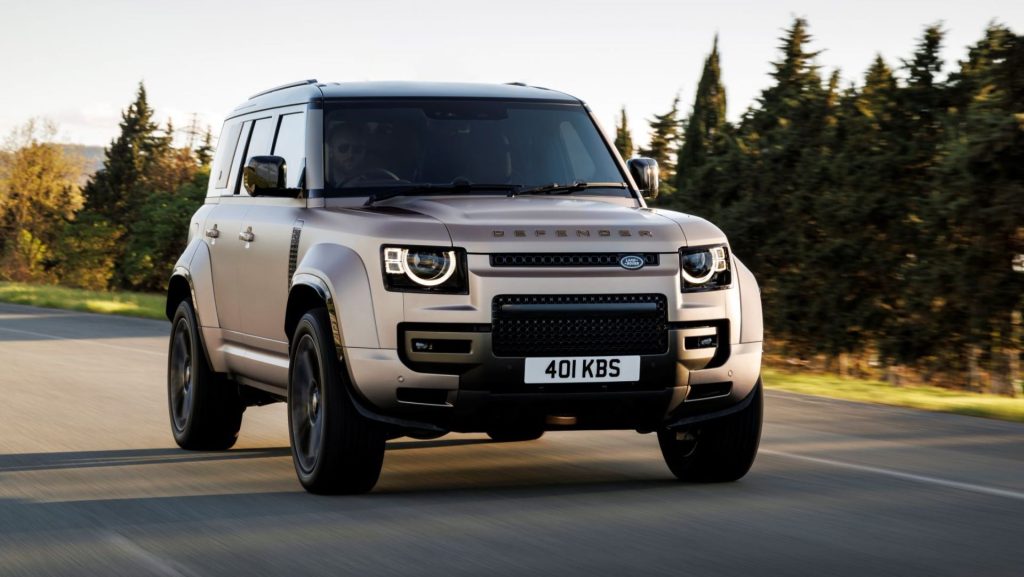
The redesigned Land Rover Defender combines classic off-road heritage with modern engineering. Its all-wheel-drive system, electronic traction control, and air suspension allow it to tackle deep mud, uneven rocks, and water crossings.
While Land Rover has historically had some reliability issues, the latest generation has improved dramatically, making it a capable and resilient choice for U.S. drivers seeking a luxury off-road experience.
4. Ford Bronco
Ford’s revived Bronco has quickly become a favorite among off-road enthusiasts in the U.S. Its rugged chassis, advanced 4×4 system, and terrain management features make it one of the most capable modern SUVs for abuse.
Options like the Sasquatch Package include upgraded tires, locking differentials, and a lifted suspension, ensuring the Bronco can handle extreme trails with confidence.
The 2022 Ford Bronco delivers a design that sparks nostalgia while offering a rare combination of composed on-road manners and serious off-road capability. Its versatility is a key reason the Bronco has become so popular.
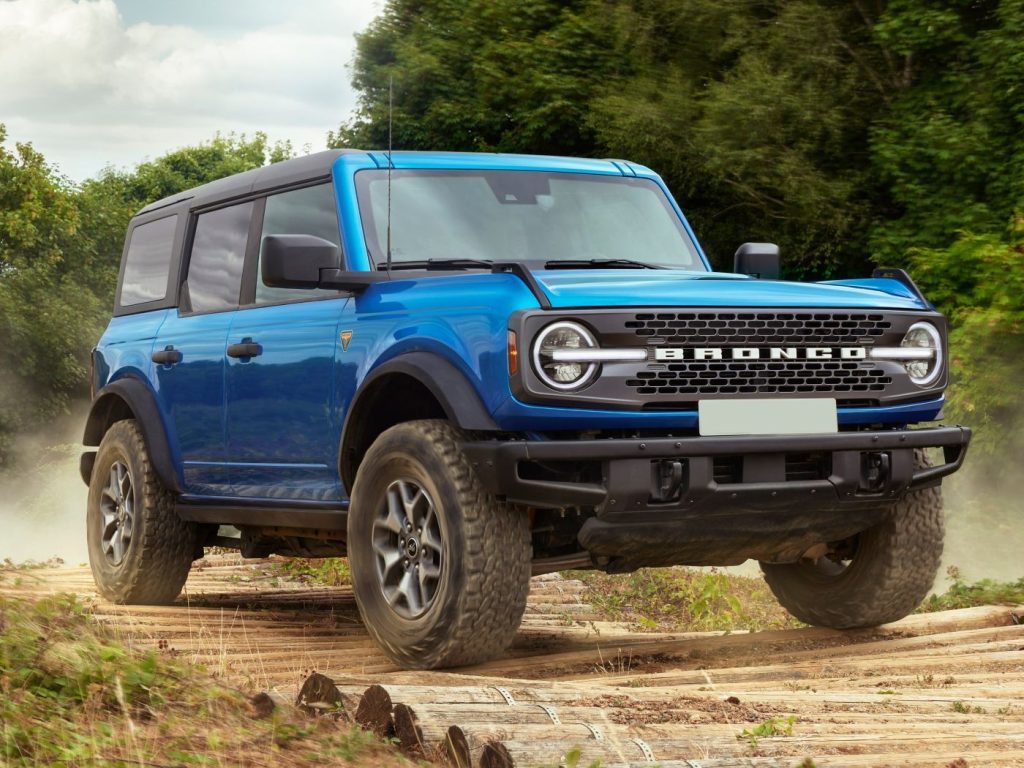
While the Jeep Wrangler has long dominated the off-road segment as the go-to SUV for those chasing genuine trail prowess, even if they rarely leave paved roads, the Bronco offers a similarly flexible package with options like a convertible top, two- or four-door body styles, and removable doors.
Inside, the Bronco’s interior features durable materials and a straightforward layout that pay homage to the original, classic Bronco. That said, the cabin design can feel inexpensive in higher trim levels.
All Broncos come standard with all-wheel drive and are powered by either a turbocharged four-cylinder or a twin-turbo V-6. While neither engine is especially fuel-efficient or refined in terms of sound, both deliver quick and responsive performance that keeps the Bronco lively both on and off the trail.
5. Toyota Land Cruiser (or Lexus LX in some markets)
Though it’s considered a premium SUV, the Toyota Land Cruiser (and the closely related Lexus LX) is legendary for its durability under the harshest conditions.
Body-on-frame construction, a reliable V8 engine, and sophisticated off-road systems have made it a favorite for desert, mountain, and jungle expeditions worldwide.
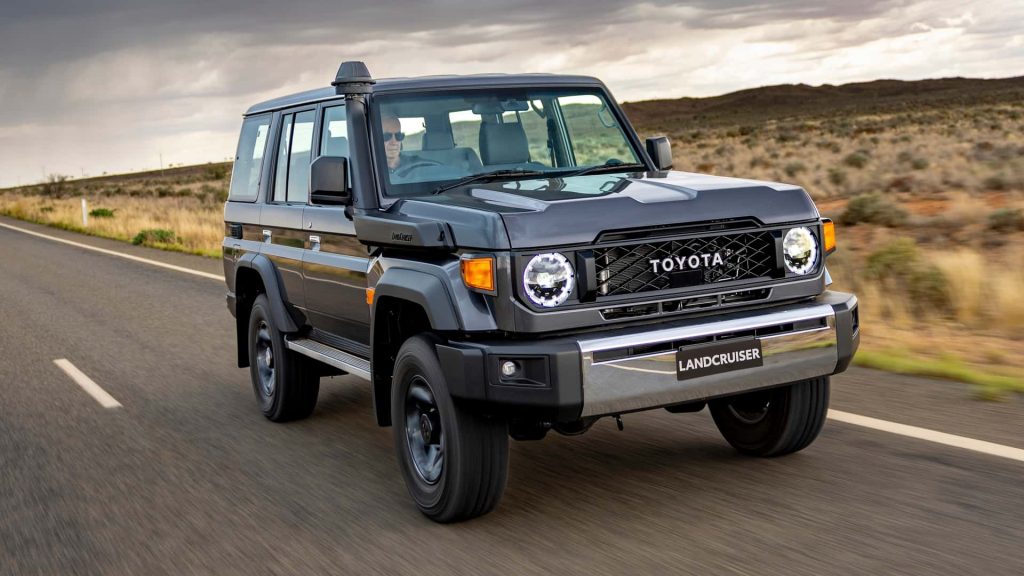
In the U.S., the Land Cruiser is both a luxury vehicle and an indestructible off-road machine, often running hundreds of thousands of miles with minimal issues.
Also Read: 5 SUVs That Keep Families Happy for 200k vs 5 That Don’t
5 SUVs That Tend to Fall Apart Off-Road
Not every SUV on the market is built to survive the rigors of off-road driving. Many modern SUVs are designed primarily for city streets, highways, and suburban commutes, and taking them off-road can quickly expose their weaknesses.
Low ground clearance, delicate suspensions, and untested drivetrain systems can turn what should be an adventure into costly repairs and frustration.
In this article, we’ll explore five SUVs that tend to fall apart off-road. By highlighting the vehicles that struggle under rough conditions, this guide can help U.S. drivers make informed choices and avoid costly mistakes.
If you’re planning to tackle trails, rocky paths, or mud, knowing which SUVs aren’t up to the task is just as important as knowing the ones that are built to endure.
1. Cadillac XT5
The Cadillac XT5 is a comfortable and refined crossover, but it’s designed primarily for city streets and highways. Its unibody construction, limited ground clearance, and lack of true 4×4 capability make it ill-suited for serious off-road use.
Taking it onto rough trails often results in undercarriage damage and strain on the suspension. While it excels in comfort and luxury, the XT5 is not built for abuse.
The Cadillac XT5 comes standard with a turbocharged four-cylinder engine that delivers 235 horsepower, while an optional V-6 boosts output to 310 horsepower.
Neither engine competes with high-performance rivals like the 340-hp Porsche Macan S, but the XT5 holds its own against more comfort-oriented competitors such as the Lexus RX350 and Volvo XC60.
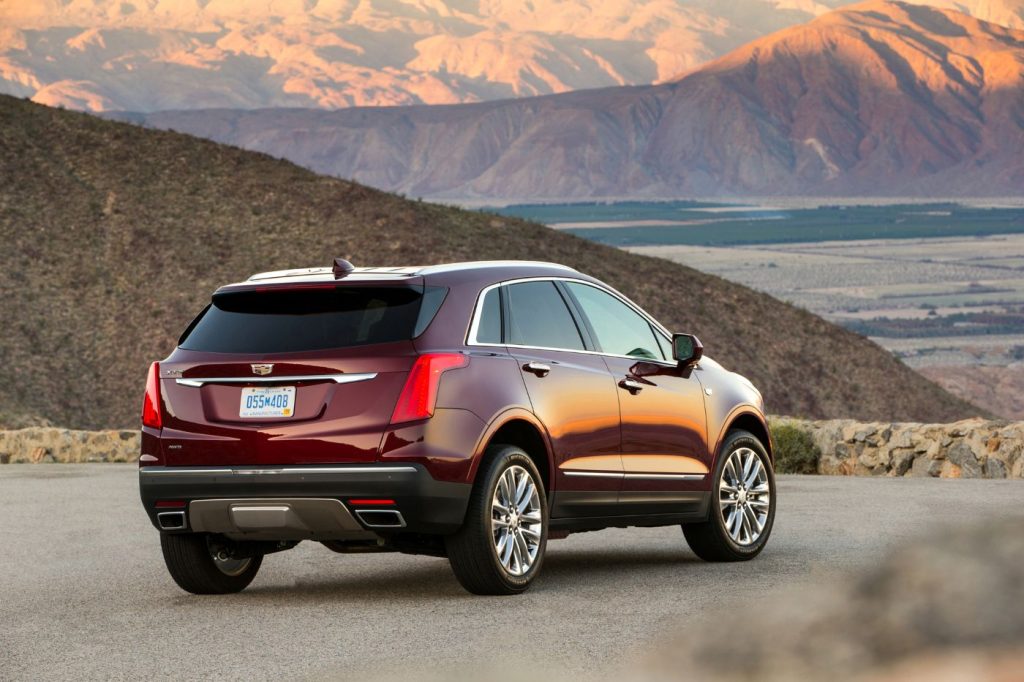
In everyday driving, the V-6 is notably quiet and well-isolated from the cabin, offering a serene experience. Under heavy acceleration, though, the larger engine’s presence becomes audible in a way that isn’t particularly refined.
On winding roads, the XT5 handles confidently, yet even with the optional adaptive suspension, it won’t excite enthusiasts. Body roll is controlled, and the SUV feels substantial and planted, which provides reassurance on long highway drives.
That said, rough or broken pavement can make the ride feel jittery, with sharper impacts transmitted through the cabin. Steering is precise but offers little feedback, leaving the XT5 competent yet emotionally muted for those seeking a more engaging driving experience.
2. Lincoln Nautilus
The Lincoln Nautilus offers a smooth ride and modern luxury features, but its off-road credentials are minimal. Like many luxury crossovers, it lacks locking differentials and robust skid protection.
Drivers who attempt trails with rocks, mud, or uneven surfaces may quickly encounter mechanical or cosmetic issues. The Nautilus is better suited for suburban driving than trailblazing adventures.
Beyond these standout features, the five-passenger Nautilus nails the basics: spacious seating, a quiet and comfortable ride, and standard all-wheel drive. This redesign elevates the Nautilus from a moderately upscale domestic SUV to a model capable of competing with luxury offerings from Japan and Europe.
The midrange Reserve trim is a sweet spot, offering excellent value. For a modest increase over the base trim, it includes the Jet appearance package with adaptive suspension, a Revel Audio premium sound system, and 22-inch dark wheels with chrome inserts. Additional cosmetic upgrades include paint-matched cladding, fenders, wheel arches, and a black-painted roof.
The standard Nautilus is powered by a turbocharged 2.0-liter inline-four producing 250 horsepower and 275 lb-ft of torque, paired with an eight-speed automatic transmission and standard all-wheel drive.
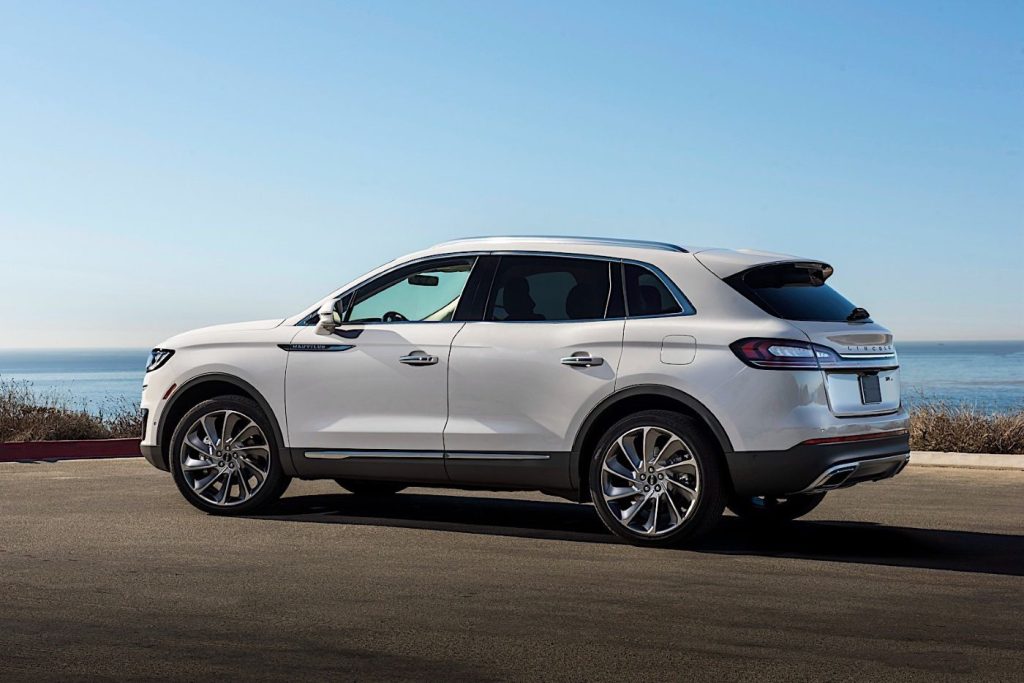
The hybrid variant pairs the same 2.0-liter engine with a 100 kW electric motor, producing a combined 310 horsepower. The previous 330-hp twin-turbo V-6 has been dropped, reflecting a trend toward more fuel-efficient powertrains.
On the road, the Nautilus is serene and composed. In Normal drive mode, the suspension absorbs most imperfections, while Excite mode firms up the setup to reduce body roll in corners—though ride harshness can be felt, particularly on the largest 22-inch wheels.
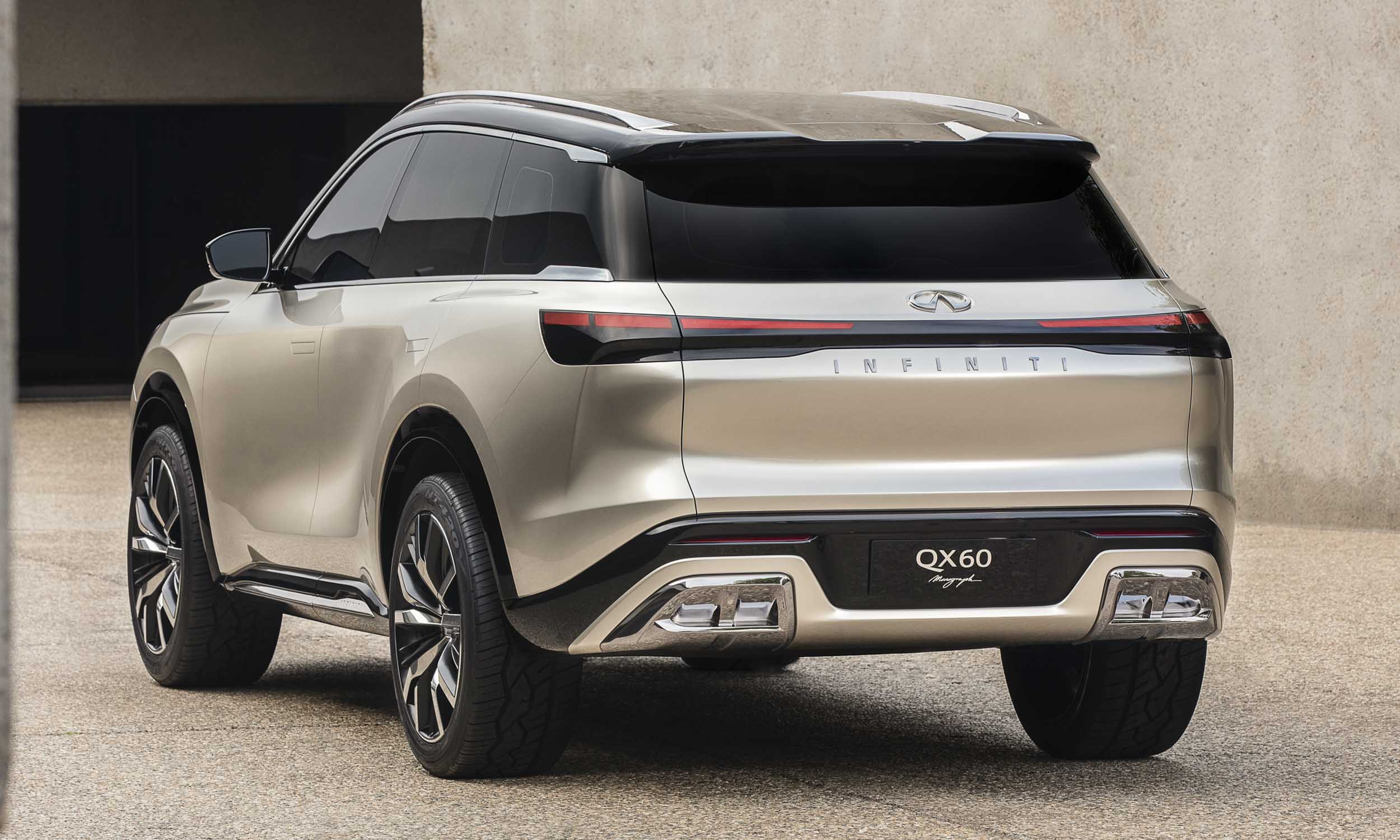
3. Infiniti QX60
The Infiniti QX60 is a midsize luxury SUV that prioritizes comfort, tech features, and fuel efficiency over ruggedness. Its front-wheel-biased all-wheel-drive system cannot replicate the capabilities of true 4×4 SUVs.
Off-road use stresses components like the suspension and drivetrain, often resulting in premature wear. For U.S. drivers seeking an adventurous off-road SUV, the QX60 is a poor choice.
The Infiniti QX60 is equipped with a 295-hp V-6 engine paired with a nine-speed automatic transmission. Front-wheel drive comes standard, while all-wheel drive is available as an option.
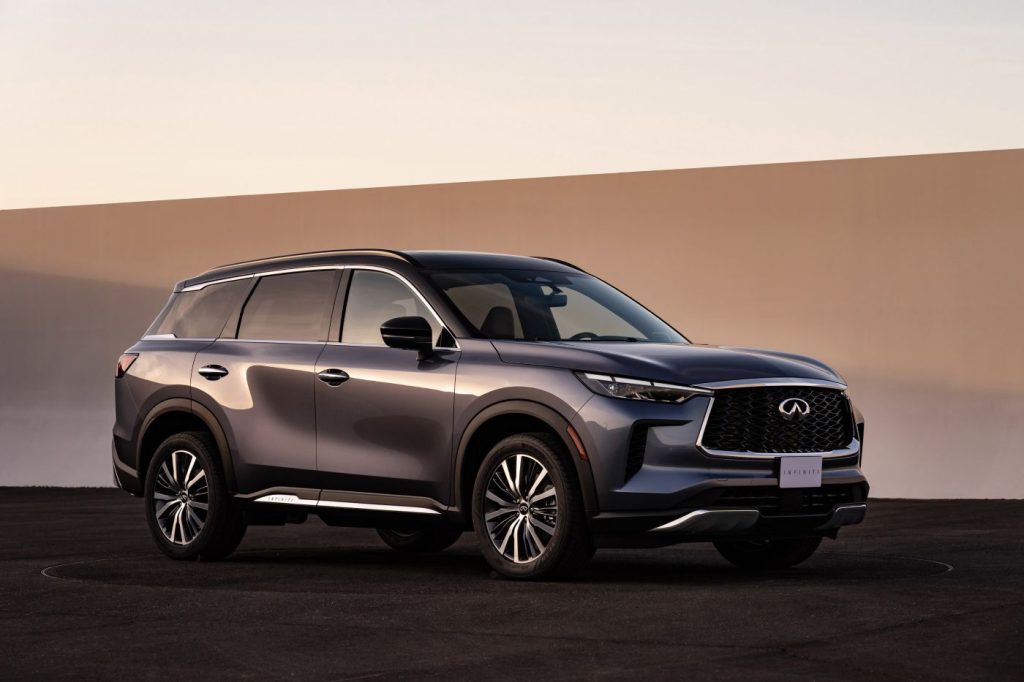
Towing capacity has improved, now reaching up to 6,000 pounds, 1,000 pounds more than the previous generation. On our initial test drive of the 2022 QX60, we noted the nine-speed automatic’s smooth shifts and the chassis’ well-controlled body motions during cornering.
The ride, however, feels a bit stiffer than expected for what is otherwise a comfortable cruiser, particularly when outfitted with the optional 20-inch wheels. At our test track, the QX60 sprinted to 60 mph in a solid 6.2 seconds and proved noticeably quieter than its corporate cousin, the Nissan Pathfinder.
That said, the 3.5-liter V-6 could use some refinement; compared with the silky-smooth engines from luxury competitors like BMW and Mercedes-Benz, the Infiniti’s powerplant sounds somewhat gritty under heavy throttle.
4. Volvo XC90
The Volvo XC90 is a sophisticated European SUV, offering excellent safety features and a smooth driving experience. However, it’s not designed for extreme terrain.
Low ground clearance, limited approach and departure angles, and delicate electronic systems mean that off-road excursions can quickly lead to expensive repairs. While perfect for city commuting or long road trips, the XC90 is ill-equipped for abuse in off-road conditions.
The Volvo XC90 is powered by a range of efficient engines, including mild-hybrid four-cylinder and plug-in hybrid options, paired with an eight-speed automatic transmission.
Front-wheel drive is standard, while all-wheel drive is available on most trims. The XC90 balances luxury and practicality, offering a quiet, composed ride and an upscale cabin with high-quality materials, intuitive tech, and plenty of seating for up to seven passengers.
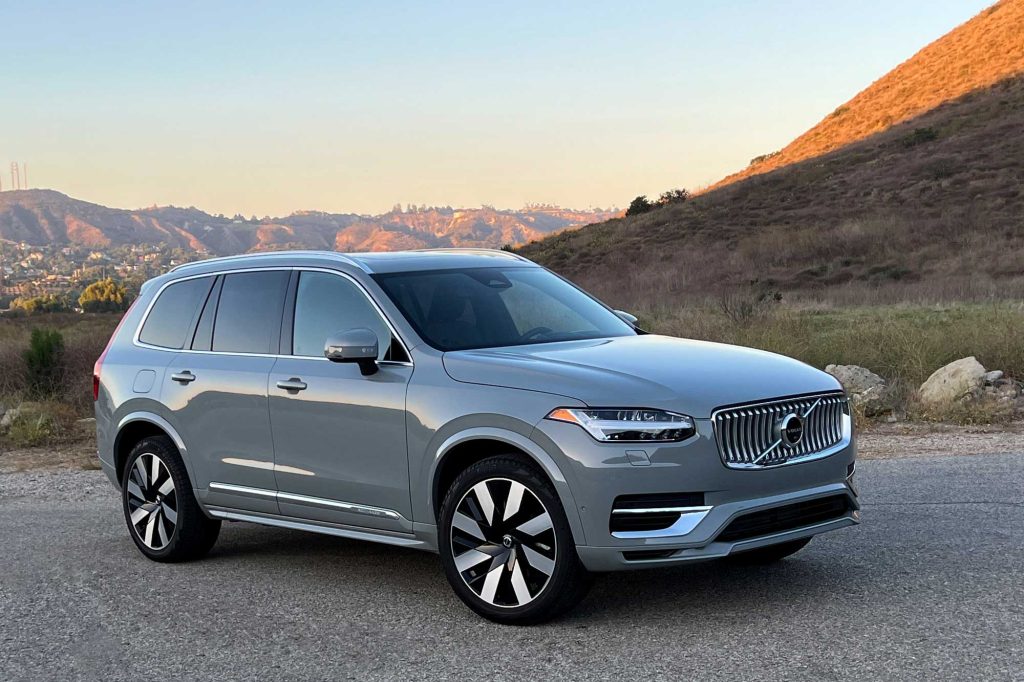
Performance is smooth, with sufficient power for daily driving and highway merging, though the base four-cylinder can feel modest when the SUV is fully loaded.
The plug-in hybrid variant provides extra power and the benefit of limited electric-only driving. Towing capacity varies by powertrain, generally maxing out around 5,000 pounds.
On the road, the XC90’s handling is composed rather than sporty, emphasizing comfort and stability. Steering is precise, and the suspension absorbs bumps well, making it a refined choice for long drives.
Interior space is generous, with flexible cargo arrangements and supportive seats. Advanced safety features come standard, including adaptive cruise control, lane-keeping assist, and collision mitigation systems, reinforcing Volvo’s reputation for safety.
The XC90 is a well-rounded luxury SUV that blends comfort, technology, and family-friendly practicality with the brand’s signature Scandinavian design.
5. Acura MDX
The Acura MDX blends luxury and technology but is primarily a paved-road SUV. Its AWD system is tuned for traction on wet or snowy roads, not for rocks, mud, or sand.
Off-road excursions can lead to suspension issues, underbody damage, and potential drivetrain strain. While the MDX excels in comfort, handling, and reliability on-road, it’s not an off-road warrior.
When choosing an SUV for off-road adventures, it’s crucial to understand the distinction between vehicles engineered for rugged terrain and those built for comfort and style.
The 2025 Acura MDX represents a significant step forward in tech and usability, addressing one of the biggest criticisms of the previous generation: the touchpad-based infotainment system.
With a new 12.3-inch touchscreen featuring Google-built tech, standard wireless charging, and improved storage thanks to the removal of the touchpad, the MDX aims to win back buyers who were frustrated with the old interface.
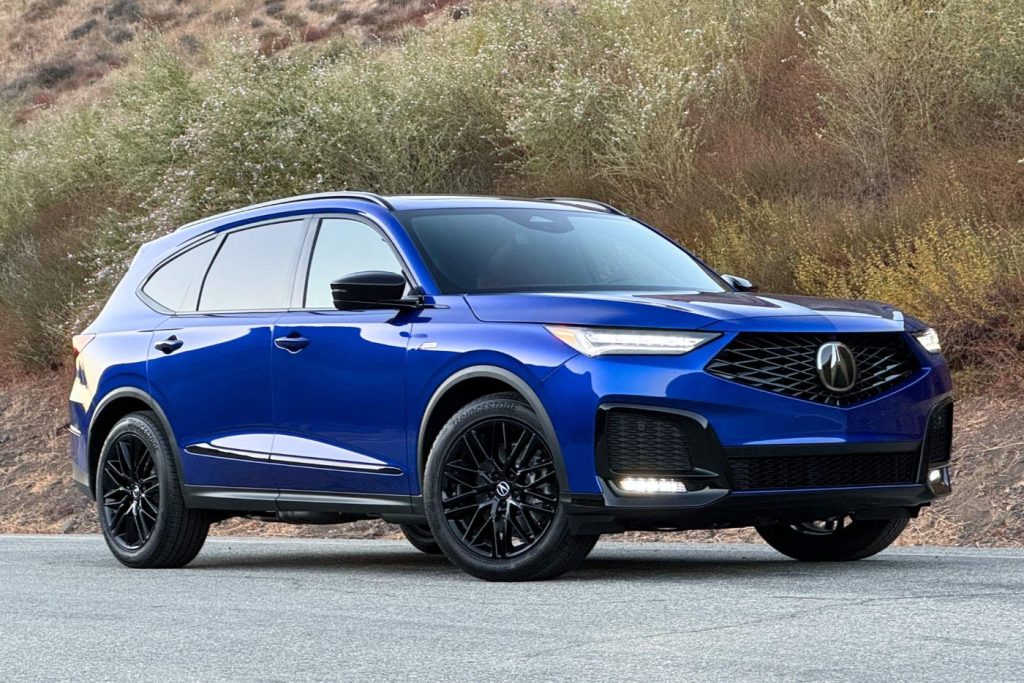
Alongside these tech upgrades, Acura has refreshed the MDX’s styling and added new features, helping it compete more effectively against luxury three-row rivals like the Lexus TX, Infiniti QX60, and Volvo XC90.
Visually, the MDX has always been attractive, and the 2025 updates enhance its timeless design. While third-row space is compact, buyers generally understand this compromise in exchange for maneuverability.
Value remains strong, with the MDX offering a competitive features-per-dollar proposition versus segment leaders like the BMW X5 and Mercedes-Benz GLE.
The biggest improvement lies in the cockpit experience. The Type S model, despite its higher performance aspirations, was slower in testing than the standard-engine MDX, highlighting that “Type S vibes” are more aesthetic than performance-driven.
Braking feel has been retuned on non-Type S models, though pedal modulation remains tricky. Acceleration and braking have improved slightly.
The switch to a touchscreen allows for more practical storage and integrates updated safety technology alongside Acura’s already strong safety record, making the 2025 MDX a more compelling option in the segment.
The base MDX uses a 3.5-liter naturally aspirated V-6 delivering 290 hp and 267 lb-ft of torque, paired with a 10-speed automatic and available all-wheel drive, achieving 0-60 mph in 5.7 seconds.
The sportier Type S uses a 3.0-liter twin-turbo V-6 producing 355 hp and 354 lb-ft. In testing, however, it clocked 0-60 mph in 5.9 seconds, slower than the BMW X5 with its standard six-cylinder.
Efficiency is also better in competitors; the MDX maxes out at 19/26 mpg with a 407-mile range, whereas the X5 reaches 23/27 mpg with a 548-mile range.
The MDX sits above the compact RDX and below the all-electric ZDX in Acura’s SUV hierarchy. The RDX features a 2.0-liter turbocharged I-4, all-wheel drive, and a 10.2-inch infotainment display.
The MDX remains the brand’s flagship three-row offering, now upgraded with a 12.3-inch touchscreen and available twin-turbo Type S engine. The ZDX, Acura’s newest SUV, is an all-electric, two-row option with RWD or dual-motor AWD, and a sporty Type S variant as the top trim.
In summary, the 2025 Acura MDX strengthens the brand’s presence in the luxury three-row SUV market by fixing prior tech frustrations, enhancing style, and improving cabin usability, making it a highly competitive option for buyers seeking a premium family SUV.
SUVs like the Jeep Wrangler, Toyota 4Runner, and Ford Bronco are designed to withstand the challenges of extreme trails and abusive conditions, making them reliable and durable choices for U.S. off-road enthusiasts.
Conversely, luxury crossovers such as the Cadillac XT5, Lincoln Nautilus, and Volvo XC90 are better suited to urban streets and highways, where their suspension, drivetrain, and underbody are less likely to be stressed.
Ultimately, the key is to match your vehicle to your lifestyle. If your goal is to tackle backcountry trails, river crossings, or rocky mountain roads, investing in a purpose-built off-road SUV will save money, frustration, and potential repairs in the long run.
On the other hand, if you primarily drive in urban or suburban areas, a luxury crossover may offer comfort and technology without the need for off-road durability.
Understanding these distinctions ensures that you get an SUV that meets your needs, whether for adventure, daily commuting, or a mix of both.
