Trucks have long symbolized strength, resilience, and the ability to go where other vehicles can’t. But not all pickups are built equally, especially when it comes to extreme off-roading.
Some trucks are designed with rugged trails, steep inclines, and unpredictable terrain in mind, while others struggle to perform once they leave the pavement. That’s where this comparison comes in. In this guide, we’re breaking down 5 Trucks That Can Handle Extreme Off-Roading vs 5 That Can’t Take It.
On one side, you’ll see modern engineering at its best, trucks like the 2025 Ford Ranger Raptor, Toyota Tacoma Trailhunter, and Ram 1500 RHO, built with advanced suspension systems, locking differentials, and enough ground clearance to climb over boulders without breaking a sweat. These vehicles aren’t just about raw power; they’re about smart design that balances capability, comfort, and practicality.
On the other side, we’ll explore models that fell short of the mark. From the flashy but impractical Lincoln Blackwood to the quirky Subaru BRAT, these trucks prove that style and novelty don’t always translate into trail-ready toughness.
Whether you’re looking for your next adventure rig or simply curious which trucks deserve their off-road reputations, this breakdown reveals the true winners and pretenders.
5 Trucks That Can Handle Extreme Off-Roading
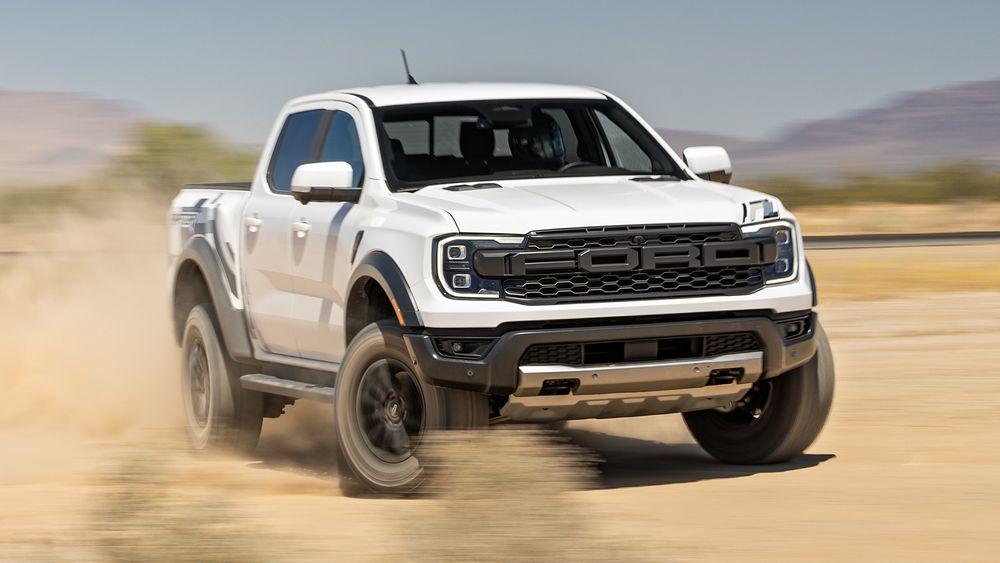
1. 2025 Ford Ranger Raptor
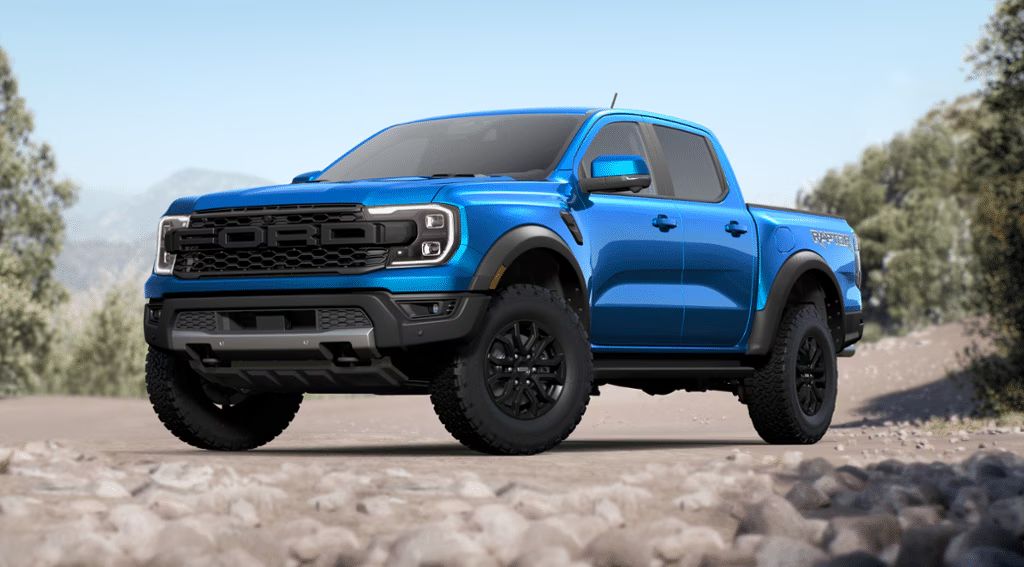
The 2025 Ford Ranger Raptor raises the bar for midsize off-road trucks. With more ground clearance, advanced suspension travel, and a strong twin-turbo V6, it delivers capability and comfort in equal measure. Though priced higher than competitors, it stands out for refinement and serious trail performance.
Under the hood, the Ranger Raptor packs a 3.0-liter twin-turbocharged V6 paired with a 10-speed automatic transmission. It generates 405 horsepower and 430 lb-ft of torque, with standard four-wheel drive and locking differentials designed for difficult terrain.
Acceleration is brisk for a truck this size. In testing, it sprinted from 0–60 mph in 6.2 seconds, edging out the Toyota Tacoma and Chevrolet Colorado. While low-speed response can feel sluggish, highway passing and merging are strong. Steering has a natural weight, making the truck stable on highways yet manageable in tighter spots.
Off-road performance is its hallmark. With a 33.0-degree approach angle, 26.4-degree departure angle, and 10.7 inches of clearance, the truck handles steep climbs and obstacles with confidence. Suspension travel has also been extended to 10 inches up front and 11.5 inches in the rear, giving it superior articulation.
The Ranger Raptor is unusually comfortable for such a rugged truck. Its suspension smooths out rough roads better than rivals, while the seats provide long-distance support. Raptor models add bolstered seating that keeps drivers secure during off-road use.
Noise is the main drawback, as the engine becomes coarse at full throttle. Even so, refinement and ride quality exceed those of the Tacoma and Colorado.
The cabin is functional yet accommodating. The driver’s seat and steering wheel offer wide adjustability, making it easy to settle into a good position. Visibility is improved thanks to the Ranger’s low hood line. Rear seating is tighter than in a Honda Ridgeline or Jeep Gladiator, but it works fine for kids or short trips with adults.
Technology is a strong point. The infotainment system supports wireless Apple CarPlay and Android Auto, with quick-access shortcuts for essential features. While some touchscreen-based climate controls can be distracting, the system is user-friendly.
Driver-assist systems are another highlight. Features such as adaptive safety tools and an available surround-view camera stand out. The forward-facing view even displays projected tire paths, making off-road driving more precise.
The Ranger Raptor comes in a single-cab-and-bed layout, but Ford makes it versatile. The widened short bed provides 4 feet between wheel wells, enough for a sheet of plywood. The Raptor trim supports a 1,411-pound payload and 5,510-pound towing capacity, slightly lower than the Chevrolet Colorado but still competitive.
Ford’s Pro Trailer Backup Assist simplifies trailer handling by letting drivers steer with a console-mounted knob, giving it an edge in towing technology.
Fuel efficiency is modest at 16/18 mpg city/highway, which trails the standard Ranger’s 22 mpg combined. This trade-off is expected, given the Raptor’s stronger performance.
Pricing sits above most competitors, but the Ranger Raptor offers higher-quality materials, a refined design, and unmatched off-road credentials. For buyers prioritizing capability and advanced features, the premium feels justified.
The 2025 Ford Ranger Raptor strikes a balance between power, comfort, and modern features. While less efficient and pricier than rivals, it outshines them in refinement, suspension travel, and trail ability. For those seeking a midsize truck ready for both adventure and daily use, the Raptor delivers.
2. Toyota Tacoma Trailhunter
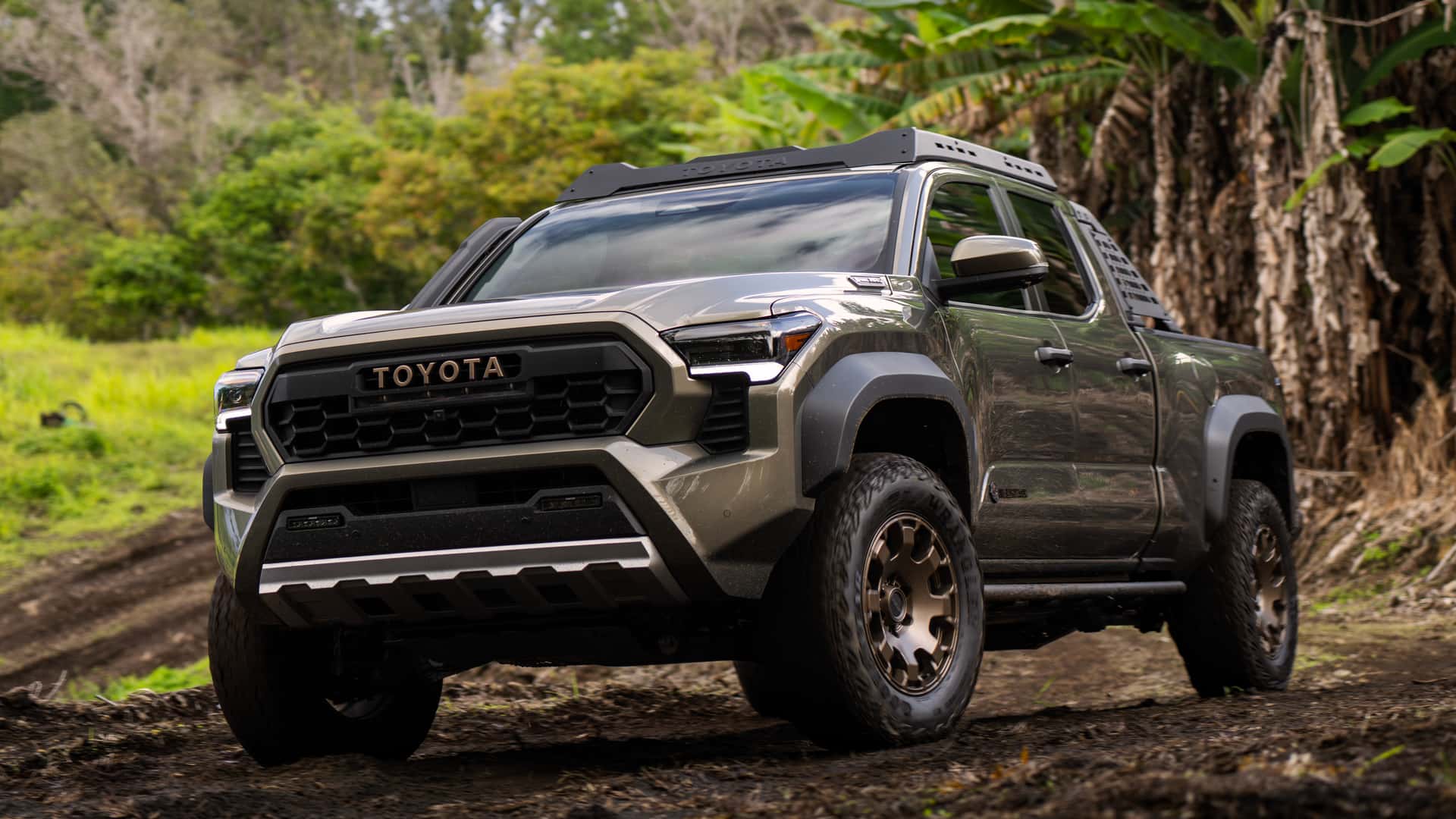
The 2025 Toyota Tacoma Trailhunter is the newest flagship trim in the Tacoma lineup, designed specifically for overlanding and rugged adventures.
With 11 inches of ground clearance, unique suspension tuning, and specialized off-road hardware, it blends modern technology with Toyota’s proven durability. Positioned just below the TRD Pro, the Trailhunter is tailored for slower, technical terrain and extended journeys into remote areas.
The Trailhunter is powered by a 2.4-liter turbocharged four-cylinder hybrid engine paired with an 8-speed automatic transmission, delivering 326 horsepower and 465 lb-ft of torque through a 4WD system. This hybrid powertrain provides both strong acceleration and efficiency, posting an EPA-estimated 22/24 mpg city/highway.
Towing capacity reaches 5,950 pounds, and payload capability stands at 1,425 pounds. While slightly behind some competitors in towing, the Trailhunter compensates with advanced trail features such as an electronic locking rear differential, selectable drive modes, and disconnecting anti-roll bars for greater wheel articulation.
Off-road geometry is impressive, with a 35.2-degree approach angle and a 22.3-degree departure angle, making it well-suited for steep climbs and rocky terrain.
Toyota differentiates the Trailhunter with Old Man Emu 2.5-inch shocks with remote reservoirs, designed for slow, controlled off-roading and heavier overlanding loads. Unlike the TRD Pro’s suspension, which favors high-speed desert running, the Trailhunter is tuned for technical trails.
Additional hardware includes:
- Steel skid plates covering critical components
- Rock rails for body protection
- 33-inch all-terrain tires
- A high-mounted snorkel air intake for water crossings
- ARB sport bar and utility bed rail system
- High-clearance rear bumper and exhaust
Together, these elements ensure the Trailhunter can handle rocky paths, deep ruts, and stream crossings with ease.
Inside, the Trailhunter offers a blend of rugged durability and modern tech. SofTex-trimmed heated and ventilated front seats provide comfort on long trips, while the 14-inch Toyota Audio Multimedia screen dominates the dash. This system supports wireless Apple CarPlay and Android Auto, plus a suite of connected services.
Storage is mixed. While door pockets, a glovebox, and small shelves are handy, the shallow center console limits capacity. Rear seating is tight, offering limited legroom compared to rivals like the Honda Ridgeline or Jeep Gladiator.
Toyota equips the Trailhunter with Toyota Safety Sense 3.0, including adaptive cruise control, lane departure warning, and pre-collision braking. Available towing technology adds a trailer backup assist camera system for easier maneuvering.
Despite its off-road focus, the Trailhunter delivers a surprisingly smooth ride on pavement, thanks to its coil-spring rear suspension. The setup reduces body shake over broken surfaces and enhances comfort on highways.
During testing, the hybrid engine impressed with strong torque delivery, though engine and intake noises became noticeable under heavy throttle. The snorkel generates a distinct whooshing sound, while the exhaust produces a deeper note that mimics larger engines.
In off-road trials, the truck excelled in sand, dirt, and rocky terrain. Low-range gearing, disconnectable anti-roll bars, and downhill assist all worked seamlessly, giving the Trailhunter confidence in demanding environments.
The Trailhunter is available with either a five-foot or six-foot bed, unlike the TRD Pro, which is short-bed only. The long-bed configuration improves cargo space and towing stability but reduces maneuverability, with a wider turning radius that complicates U-turns and parking.
Toyota offers the Tacoma in multiple body styles, Xtra Cab and Double Cab, and across 11 trim levels. The Trailhunter sits near the top at an MSRP of $64,230, slightly below the TRD Pro.
The Trailhunter’s hybrid powertrain improves efficiency compared to traditional off-road trucks, but real-world testing yielded around 20 mpg combined, short of its EPA rating. Still, this is competitive in the midsize segment given its performance and capability.
Value is where the Trailhunter shows its dual nature. At over $64,000, it’s an expensive midsize truck, but buyers gain premium hardware, advanced safety tech, and a purpose-built overlanding platform. For adventurers planning extended trips off the grid, it offers equipment that would otherwise require costly aftermarket upgrades.
The 2025 Toyota Tacoma Trailhunter represents a new direction for midsize trucks, focusing on overlanding and technical off-road travel rather than just high-speed desert running.
With its hybrid powertrain, specialized suspension, protective hardware, and thoughtful features, it’s a highly capable, adventure-ready pickup. While pricey and less spacious in the rear, it stands as one of the most complete overlanding-focused midsize trucks available today.
3. 2025 Jeep Gladiator Rubicon X
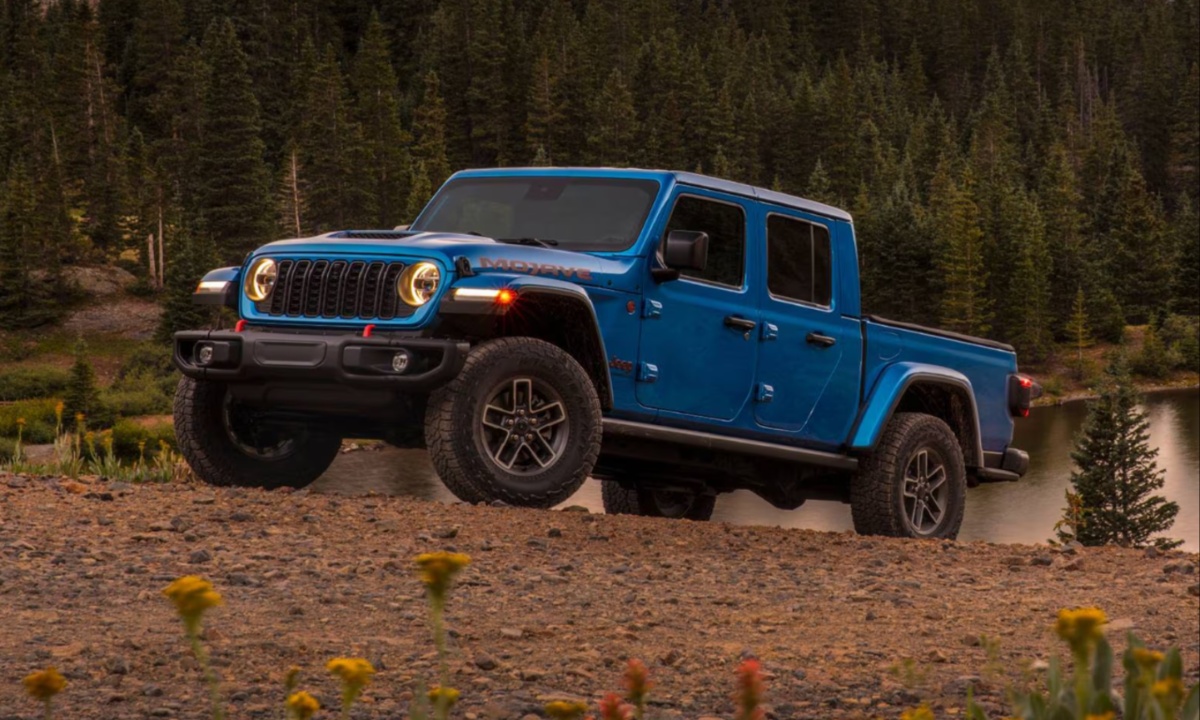
The 2025 Jeep Gladiator Rubicon X blends the Jeep Wrangler’s legendary off-road ability with the practicality of a pickup truck. With removable doors and roof, high ground clearance, and strong towing capacity, it offers adventure-ready flexibility few rivals can match. While it sacrifices some on-road comfort and refinement, its unique character sets it apart in the midsize pickup segment.
The Gladiator Rubicon X uses Jeep’s proven 3.6-liter Pentastar V6 engine, paired with an 8-speed automatic transmission. This setup produces 285 horsepower and 260 lb-ft of torque, sent to all four wheels through a standard 4WD system.
Although acceleration is modest, taking 8.5 seconds to reach 60 mph, the Gladiator feels capable in daily driving. Its real strength lies off-road, with an impressive 43.4-degree approach angle, 26-degree departure angle, and 11.1 inches of ground clearance. These specs make it one of the most trail-capable midsize pickups on the market.
When it comes to utility, the Rubicon X can tow 7,000 pounds, beating most off-road-focused rivals. Payload capacity is limited to 1,200 pounds, which trails competitors like the Ford Ranger Raptor and Toyota Tacoma Trailhunter, but still covers light-duty hauling needs.
On pavement, the Gladiator feels less refined than most midsize trucks. Its solid front axle and oversized off-road tires compromise handling, leading to imprecise steering and sensitivity to crosswinds and road ruts. While serviceable for daily use, it requires more attention than competitors.
Off-road, however, the Rubicon X shines. With locking differentials, high clearance, and an Off-Road+ drive mode, it is ready for rocky climbs, mud, and sand. The longer wheelbase makes it slightly less nimble than a Wrangler on tight trails, but it remains remarkably capable for a pickup.
Despite its rugged nature, the Gladiator is more comfortable than expected. Nappa leather seats come standard on the Rubicon X, offering firm but supportive cushioning for long drives. Headroom is abundant, though rear-seat legroom is only average compared to some rivals.
Noise is a common issue. Removable body panels and large tires allow more road and wind sounds into the cabin, even with the hardtop. Entry can also be tricky; the tall step-in height and narrow rear door openings create awkward access, compounded by rear door latches that can snag clothing.
Still, the upright seating position, physical switchgear, and Jeep’s thoughtful design touches give the cabin a distinctive charm.
The Rubicon X features a 12.3-inch Uconnect 5 touchscreen with wireless Apple CarPlay and Android Auto. The display is bright and clear, but the system sometimes lags, particularly during startup. While modern rivals include features like wireless charging and phone-as-key capability, the Gladiator focuses more on practicality and ruggedness.
Standard USB ports provide ample connectivity, and optional safety aids such as blind-spot monitoring and adaptive cruise control are available. Due to its heavy-duty steering rack, the Gladiator lacks some of the more advanced driver-assist suites offered by competitors.
Inside, the Gladiator’s storage layout is clever but limited. The rear seat folds in a 40/60 split, allowing access to a lockable bin even with a child seat installed. This thoughtful design boosts usability, but the glovebox and center console are small, and door storage consists of simple netting.
The pickup bed is well-designed, with low sides and a power-locking tailgate. Towing-focused buyers may want aftermarket tow mirrors, as the Gladiator’s narrow body can make it hard to see around wide trailers.
With EPA ratings of 17 mpg city and 22 mpg highway (19 mpg combined), fuel efficiency is average for an off-road-focused truck. Real-world testing often dips lower, especially with all-terrain tires, averaging closer to 15 mpg.
Pricing depends heavily on configuration. While other midsize trucks climb the trim ladder by adding luxury features, the Gladiator’s value lies in its off-road hardware, which comes standard even at lower trims.
At higher trims, including the Rubicon X, which can approach $70,000, buyers are paying primarily for enhanced trail capability and Jeep’s unique character rather than luxury.
Few trucks carry as much personality as the Gladiator. Its Wrangler DNA, open-air options, and unmistakable design give it an appeal unmatched by competitors. Yes, it is noisy, expensive, and not the easiest to drive on pavement, but it makes up for its shortcomings with undeniable charm and off-road dominance.
The 2025 Jeep Gladiator Rubicon X is not the most refined or fuel-efficient midsize pickup, but it delivers unmatched off-road ability, strong towing capacity, and a one-of-a-kind driving experience. For buyers prioritizing adventure and personality over comfort and efficiency, it remains one of the most distinctive choices in the segment.
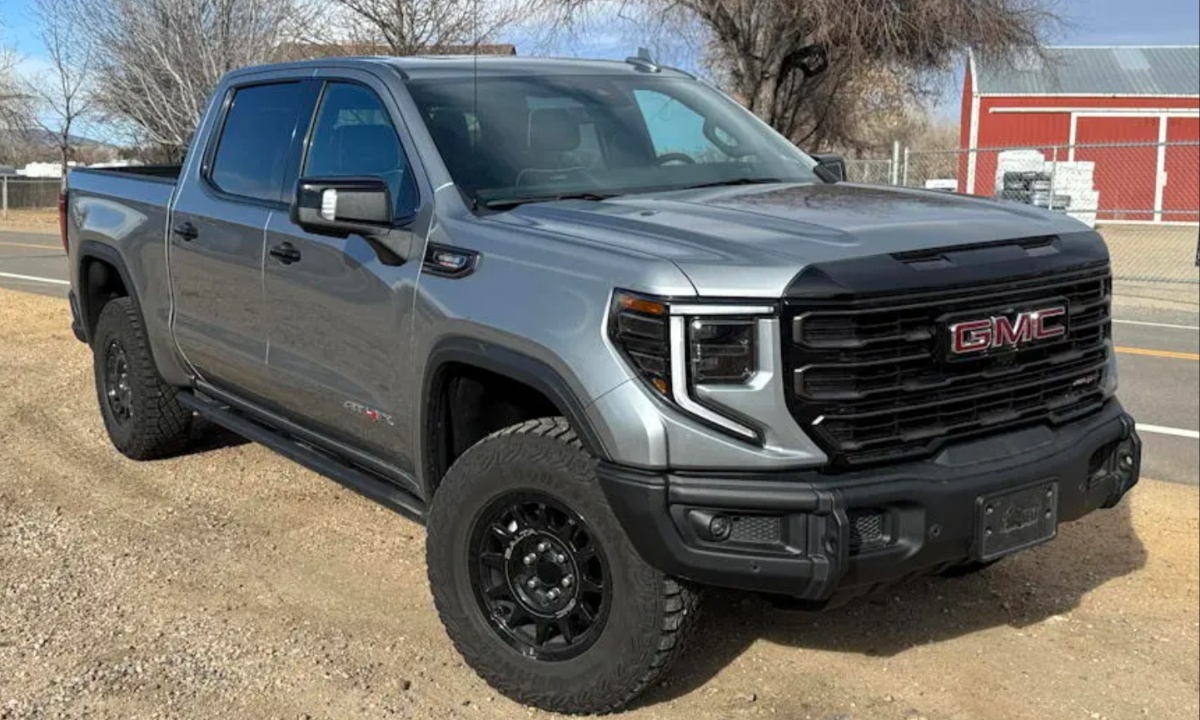
4. 2025 GMC Sierra AT4X
The 2025 GMC Sierra AT4X blends rugged off-road engineering with premium features, offering a full-size truck that can handle trails while still delivering comfort and modern technology. With two strong engine options, advanced suspension, and luxury touches, it’s designed for adventurers willing to pay a premium.
Buyers can choose between a 3.0-liter Duramax turbo diesel inline-six (305 hp, 495 lb-ft) or a 6.2-liter V8 (420 hp, 460 lb-ft). Both are paired with a 10-speed automatic transmission and standard 4WD. Towing is rated at 8,700 pounds, while payload capacity reaches 1,380 pounds.
Fuel efficiency depends on the engine: 19/20 mpg with the diesel and 15/19 mpg with the V8. The AT4X also delivers impressive off-road geometry, with a 31.8-degree approach angle, 23.3-degree departure angle, and 11.2 inches of ground clearance.
The AT4X is equipped with Multimatic DSSV spool-valve dampers, front and rear electronic locking differentials, rock sliders, increased suspension travel, and a Terrain mode for one-pedal trail driving. The available AEV Edition adds heavy-duty steel bumpers, winch compatibility, and additional skid protection, elevating trail capability further.
Inside, the cabin emphasizes comfort with high-quality materials, massaging front seats, and a Kicker audio system. Rear passengers benefit from abundant legroom, while multiple camera views and driver-assist tech, including adaptive cruise control and parking aids, enhance usability on and off the road.
Pros: Exceptional off-road hardware, luxurious cabin, strong engine options, and advanced camera systems.
Cons: High price, reduced payload compared to standard Sierra models, bouncy on-road ride from off-road suspension, and tricky entry/exit due to lifted height.
The 2025 GMC Sierra AT4X is ideal for buyers who want extreme off-road capability paired with luxury. Less aggressive-looking than rivals like the Ford Raptor, it’s a refined yet trail-ready truck for those who prioritize adventure without giving up comfort.
5. 2025 Ram 1500 RHO
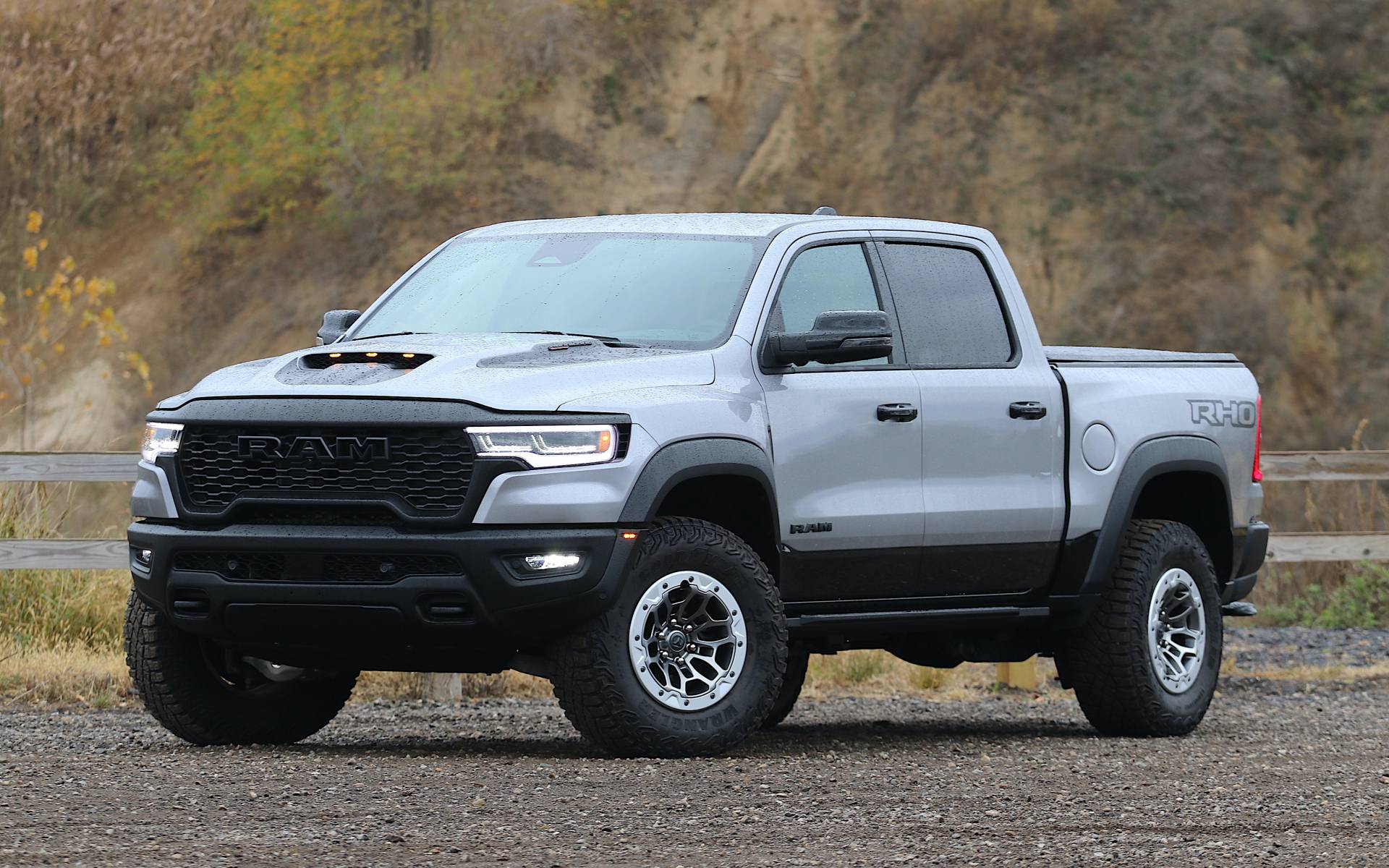
The 2025 Ram 1500 RHO arrives as the successor to the legendary TRX, carrying forward much of its character while introducing a new engine. It maintains the intimidating presence and immense off-road capability that made its predecessor iconic, while offering a modernized balance of power, refinement, and comfort.
Under the hood, the RHO is powered by a 3.0-liter twin-turbocharged inline-six Hurricane engine. This motor delivers 540 horsepower and 521 pound-feet of torque, paired with an eight-speed automatic transmission and standard four-wheel drive.
While it replaces the TRX’s supercharged V8, the Hurricane proves to be a highly capable alternative, offering remarkable acceleration and allowing the truck to sprint from zero to sixty in just 4.6 seconds.
The fuel economy is rated at 14 miles per gallon in the city and 16 miles per gallon on the highway, making it competitive within its class. Practicality remains part of its package, with a towing capacity of 9,920 pounds and a payload rating of 1,520 pounds. Although these numbers fall slightly below some rivals, they remain more than adequate for a performance-focused off-road pickup.
The RHO shines brightest in its off-road credentials. With 11.8 inches of ground clearance, a 31-degree approach angle, and a 25.2-degree departure angle, the truck is built to tackle some of the toughest terrains. Suspension is managed by Bilstein e2 Blackhawk shocks, delivering 13 inches of front wheel travel and 14 inches at the rear.
The system is complemented by a retuned Active Terrain Dynamics setup that ensures quicker response times and smoother handling over rough ground. Aggressive fenders, skid plates, and 35-inch off-road tires complete the package, cementing the RHO as one of the most capable off-road trucks available today.
From the outside, the RHO strongly resembles the outgoing TRX. Subtle changes such as a revised front clip, refreshed wheels, and a lightly modified rear end differentiate it from its predecessor, but its appearance still projects a bold and aggressive presence. Covering the new RHO badges might fool even seasoned enthusiasts into mistaking it for the TRX, a testament to how much of its design language has been retained.
The cabin of the RHO is designed with both luxury and practicality in mind. High-quality materials such as Alcantara, leather, and metal accents contribute to a premium atmosphere, though the mix of textures and finishes can feel a little busy.
A vertically oriented 14.5-inch touchscreen dominates the center console, complemented by a 12.3-inch digital instrument cluster and a 10.3-inch passenger display. Storage solutions are abundant, making the truck practical for daily use as well as long trips.
Comfort is a highlight, as the suspension smooths out imperfections both on- and off-road, while supportive seating and a quiet cabin make highway driving more pleasant despite the presence of knobby off-road tires.
The 2025 Ram 1500 RHO successfully keeps the spirit of the TRX alive. While the Hurricane six-cylinder lacks some of the visceral character of the Hellcat V8, it still delivers extraordinary speed and capability.
The truck looks as aggressive as ever, remains supremely comfortable on the road, and possesses all the hardware necessary to dominate the trails. For buyers who crave an off-road machine with immense power and a premium interior, the RHO stands out as one of the most capable and exciting trucks in today’s market.
Also Read: 5 Cars That Look Cheap But Last Long and 5 That Don’t
5 Trucks That Can’t Take It
1. The Hummer H2 SUT
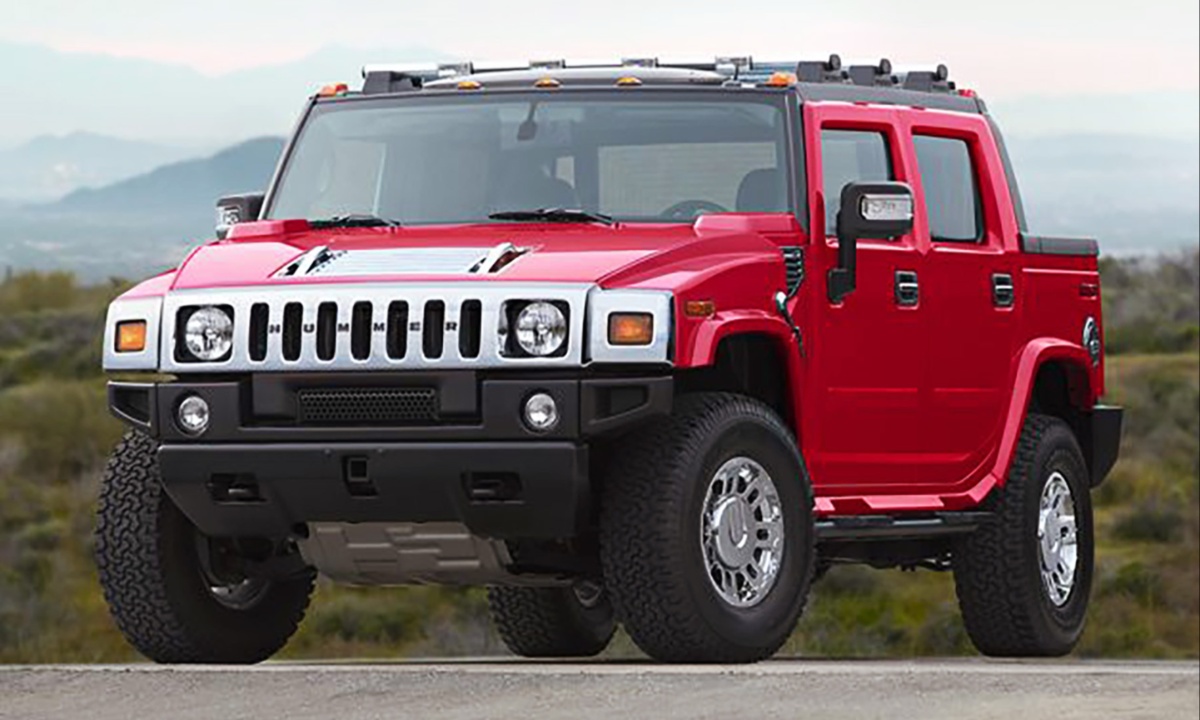
The Hummer H2 SUT attempted to carry the torch of its military-inspired predecessor, the H1, but failed to deliver the rugged credentials enthusiasts expected. On paper, it had the right ingredients: a 6.0–6.2-liter V-8 producing up to 398 horsepower, a 4-speed automatic transmission, and 4WD with a locking differential.
Its approach and departure angles were respectable at over 40 degrees, but the break-over angle of just 25.8 degrees and an excessive curb weight made it nearly useless on rough terrain. Acceleration was slow, averaging nearly 10 seconds to 60 mph, and fuel economy was dismal.
The SUT’s small truck bed further limited its practicality, leaving buyers with a bulky vehicle that was neither a capable off-roader nor a functional pickup.
Instead, it became a status symbol of excess, remembered more for its flashy presence than its performance. With an average used price of $21,575 today, it remains a controversial model that epitomized poor utility and overindulgence in the early 2000s.
2. GMC Syclone
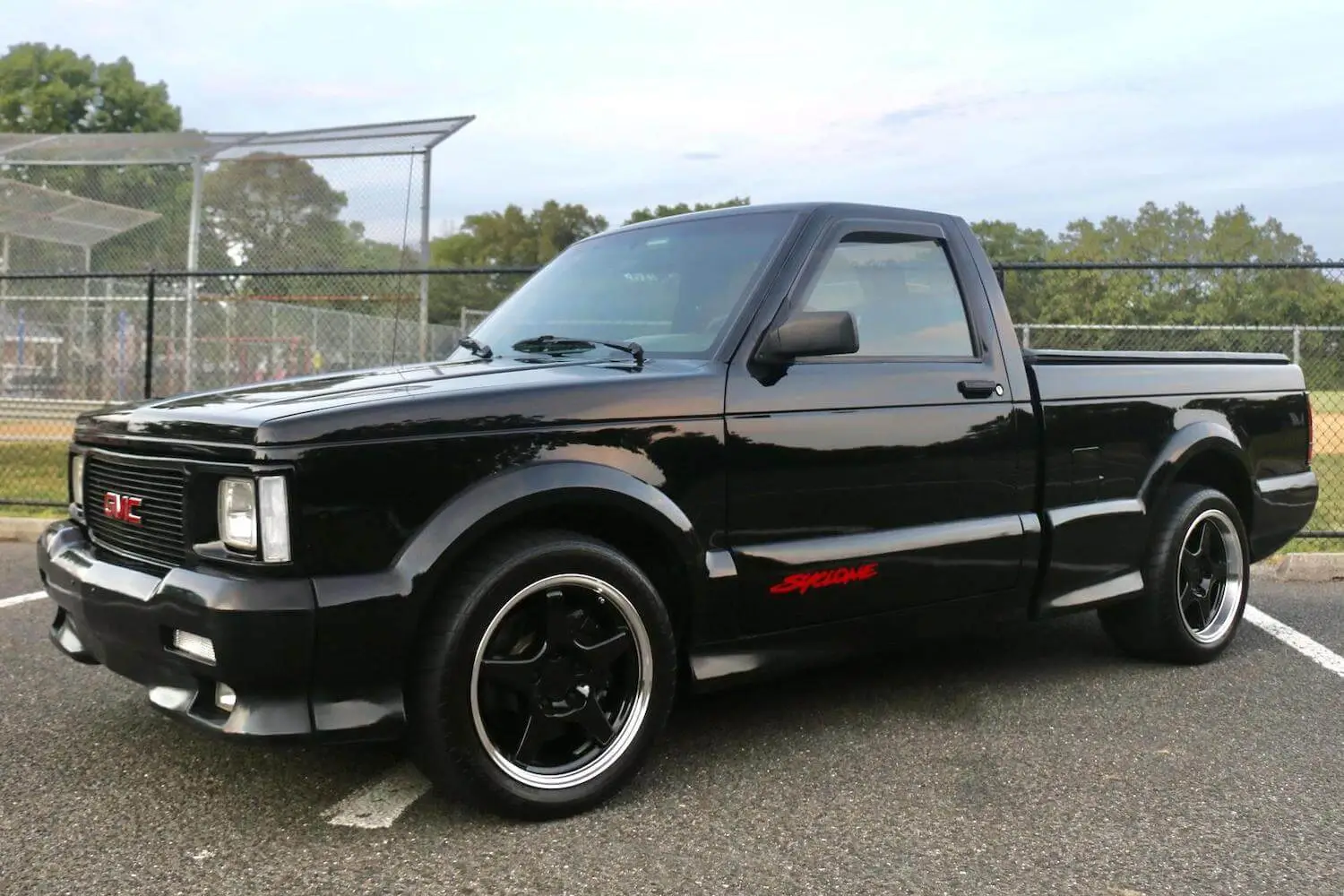
In contrast, the early 1990s GMC Syclone offered genuine performance, even if it sacrificed utility. Based on the humble GMC Sonoma, the Syclone packed a turbocharged 4.3-liter V-6 that produced 280 horsepower and 350 lb-ft of torque.
Though the factory claimed modest figures, dyno tests revealed much higher outputs, helping it sprint from 0 to 60 mph in just 4.3 seconds, quicker than a Porsche 911 of the same era. With standard all-wheel drive, the Syclone excelled in straight-line performance but struggled in traditional truck duties.
Its payload capacity was a mere 500 pounds, and towing maxed out at 2,000 pounds, undermining its role as a workhorse. The aggressive body kit also reduced ground clearance, effectively removing any off-road potential.
Priced at around $18,500 on today’s used market, the Syclone is now a cult classic that embodies early ‘90s American performance ingenuity. It proved that a pickup could humiliate supercars, even if it couldn’t haul much more than groceries.
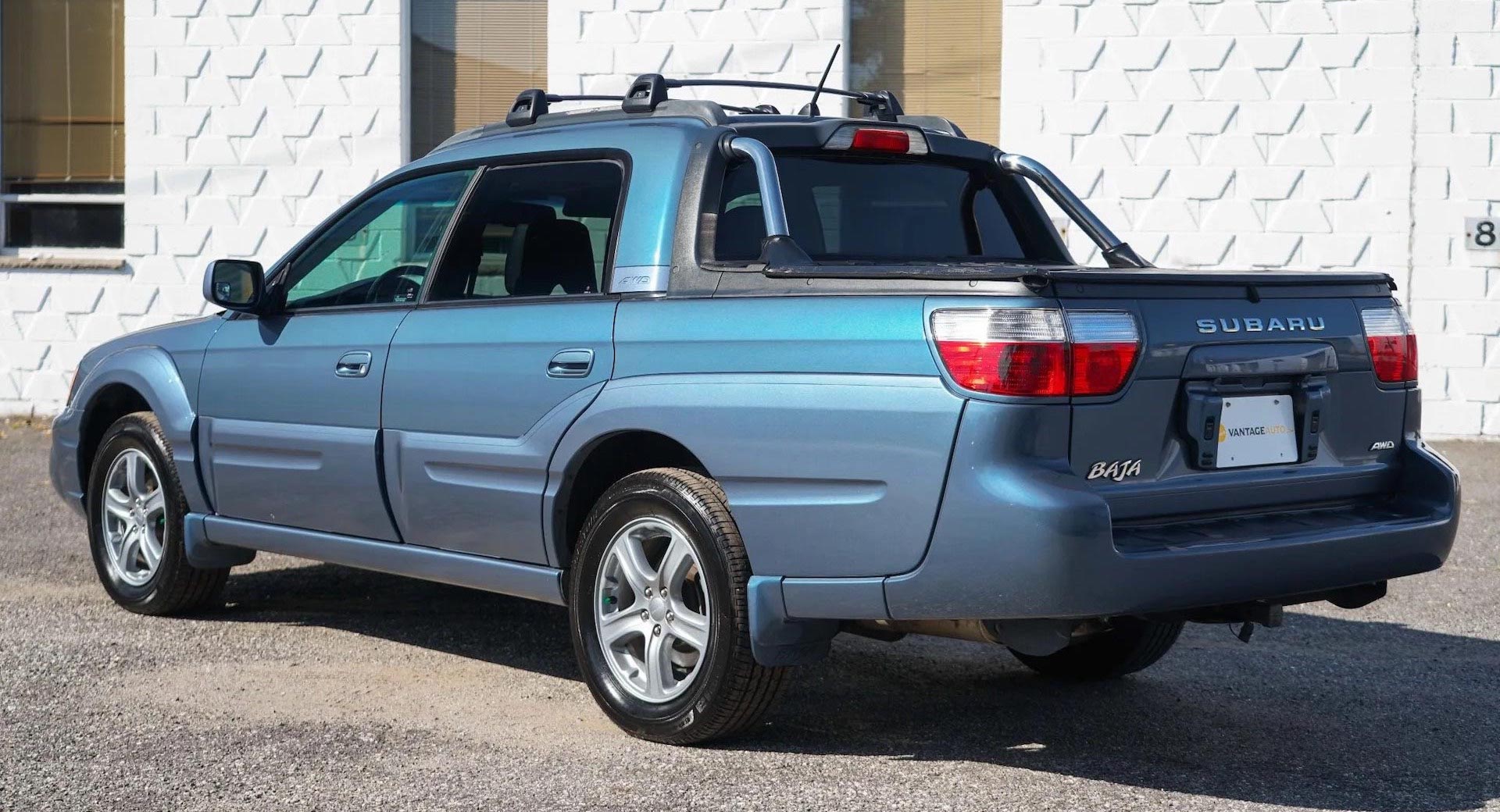
3. Subaru Baja: The Outback’s Quirky Cousin
The Subaru Baja attempted to fuse the practicality of a truck with the comfort and agility of a passenger car. Sharing its platform with the Subaru Outback, the Baja carried a 2.5-liter flat-4 engine, available in naturally aspirated and turbocharged versions.
Producing up to 210 horsepower and 235 lb-ft of torque, it accelerated to 60 mph in 7.3 seconds, making it fairly quick for its size. Equipped with Subaru’s signature symmetrical all-wheel drive and a locking center differential, it handled light off-road duties better than expected.
However, its approach and departure angles of just 18 and 19 degrees limited its trail credibility. With a payload capacity of just over 1,000 pounds and towing capped at 2,400 pounds, it was no true work truck either. Priced today at around $13,145, the Baja remains a niche vehicle.
While it flopped in sales due to its unusual design and limited utility, it has since gained a cult following for its quirkiness and versatility, standing out as one of Subaru’s most eccentric creations.
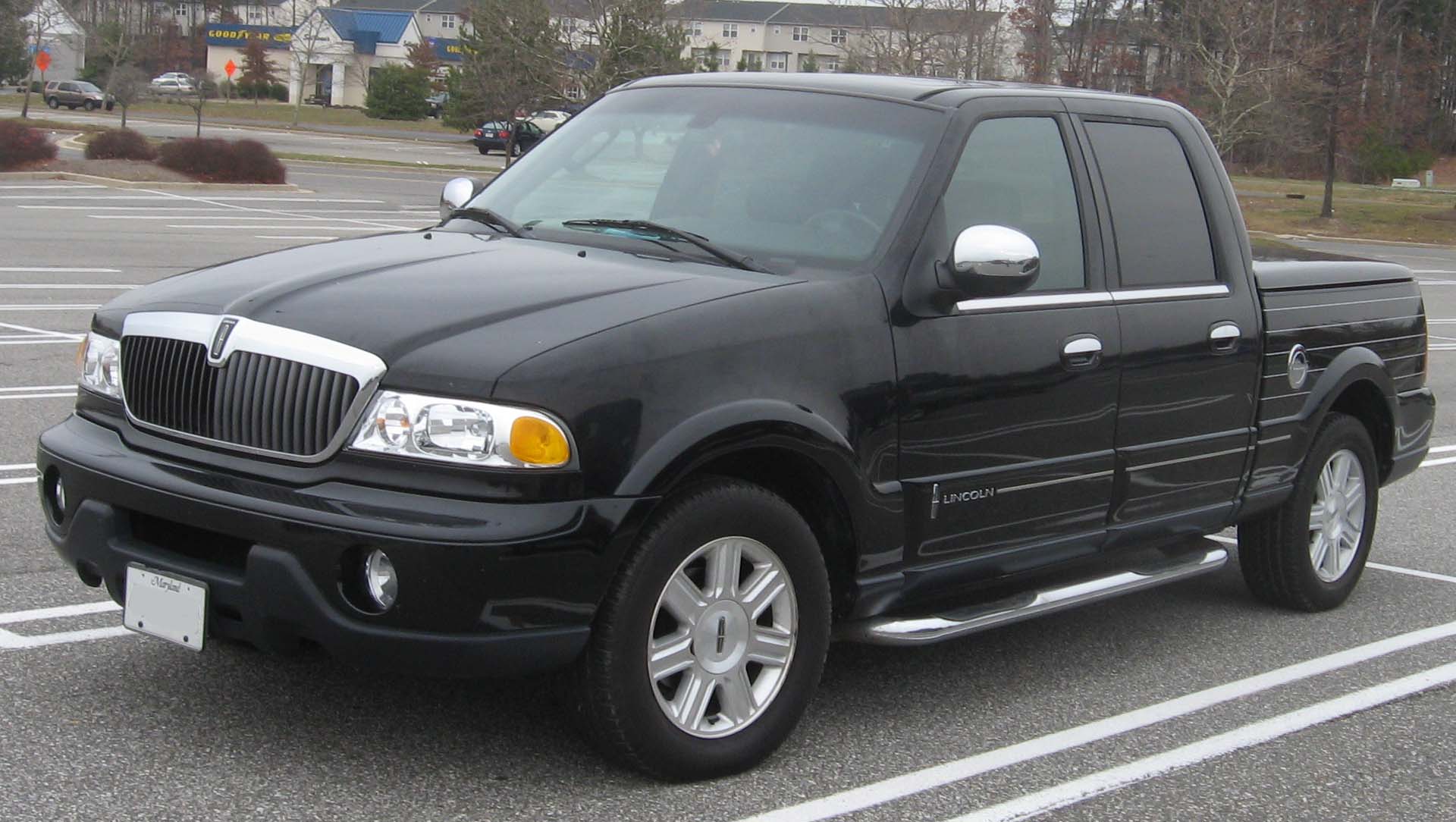
4. Lincoln Blackwood
In 2002, Lincoln tried to blend luxury with pickup utility, but the Blackwood turned into one of the brand’s biggest flops. Borrowing elements from the F-150 and Lincoln Navigator, it offered a 5.4-liter V-8 with 300 horsepower and 355 lb-ft of torque, giving it a decent 0–60 mph time of 6.4 seconds.
However, the Blackwood was rear-wheel-drive only, immediately disqualifying it as an off-road contender. Its ground clearance was too low, and the 138.5-inch wheelbase worsened the break-over angle.
Though it had a strong towing capacity of 8,700 pounds, the interior leaned toward luxury rather than practicality, with leather, chrome, and faux wood replacing rugged utility features. Even its truck bed was unconventional, lined with carpet and LED lighting, making it more suited for showcasing champagne than carrying cargo.
With an average used price of $12,435 today, the Blackwood is remembered as a misstep in the luxury truck segment. It showcased how form could outweigh function, with Lincoln prioritizing comfort and image over real versatility.
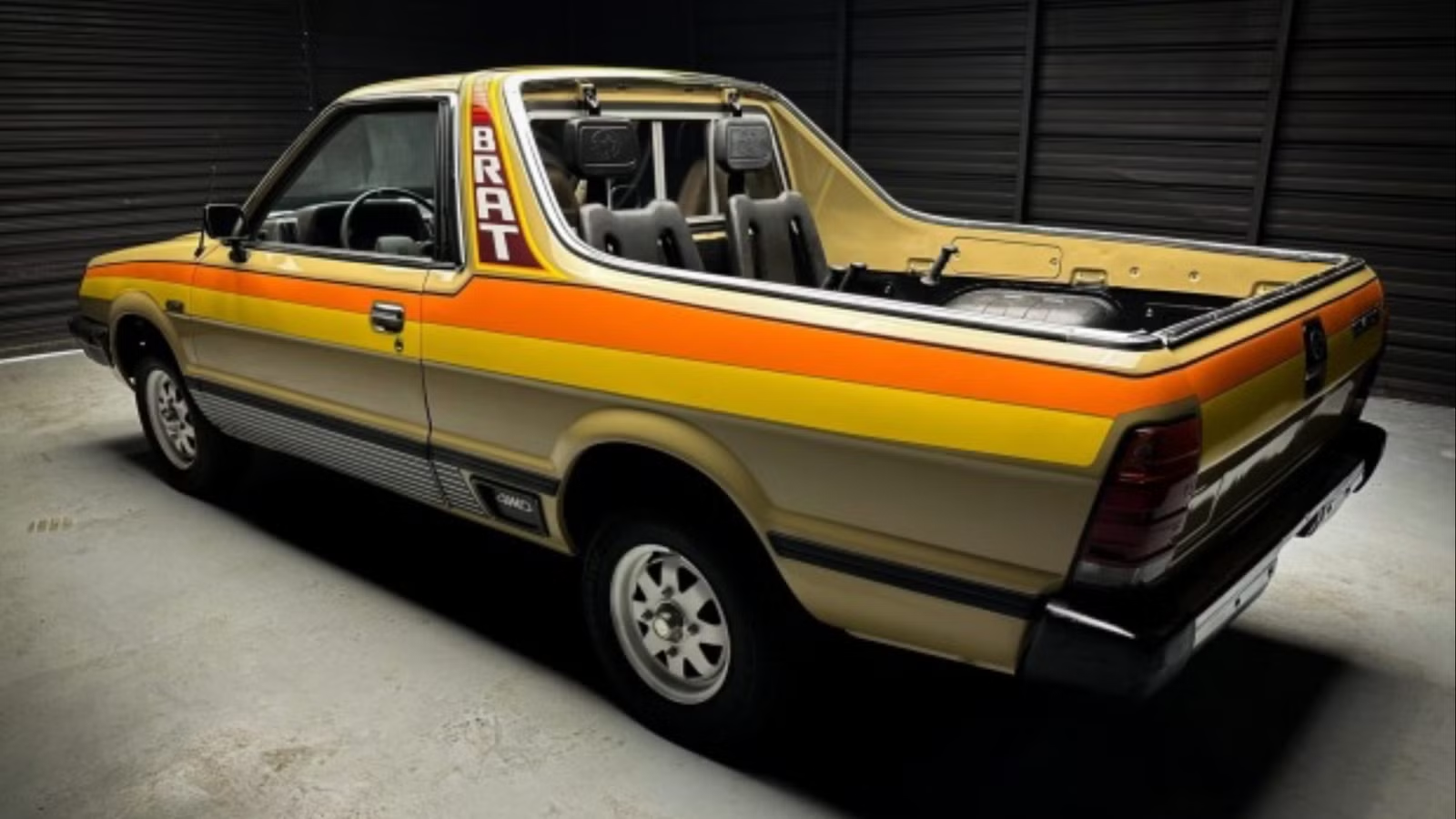
5. Subaru BRAT
Among the quirkiest pickups ever made, the Subaru BRAT (Bi-drive Recreational All-terrain Transporter) was based on the Subaru Leone and stood out with its rear-facing jump seats in the truck bed.
Produced across two generations, it offered small flat-4 engines ranging from 1.6 to 1.8 liters, with some turbocharged options producing up to 94 horsepower. Acceleration was slow, with even the turbo model taking over 14 seconds to reach 60 mph.
While front-wheel drive was standard, optional 4×4 versions existed, making it at least suitable for light off-road use. However, its ground clearance matched the Leone sedan it was based on, leaving it at a disadvantage in rough terrain.
Payload capacity was tiny at just 300–350 pounds, though its lightweight frame, under 2,200 pounds, helped it skim over certain surfaces. Today, with an average used price of $10,200, the BRAT is a nostalgic oddball.
Though never a true off-roader, its uniqueness, lightweight charm, and Subaru’s rally DNA have kept it alive in enthusiast circles as a fun yet impractical piece of automotive history.
The world of trucks is full of bold claims and rugged marketing, but true off-road capability requires more than big tires and aggressive styling. The difference between the top 5 off-road machines and the 5 that couldn’t take it comes down to engineering choices, utility, and long-term durability.
The Ranger Raptor, Tacoma Trailhunter, and Ram RHO showcase what happens when automakers prioritize performance and practicality, equipping their trucks with specialized hardware that thrives in mud, sand, and rock. These vehicles prove that modern trucks can balance toughness with refinement, delivering both everyday usability and trail dominance.
In contrast, the Hummer H2 SUT, Lincoln Blackwood, and others highlight how easily a truck can miss the mark. Heavy curb weights, limited suspension travel, and impractical designs left them struggling on terrain they were supposed to conquer. While some, like the GMC Syclone, carved out unique niches, they ultimately lacked the versatility needed to stand alongside true off-road legends.
For buyers and enthusiasts, the lesson is clear: capability isn’t just about horsepower, it’s about geometry, suspension, drivetrain, and real-world usability. The best trucks earn their reputations by proving themselves where the pavement ends, while others remain footnotes in truck history.
Also Read: 5 Cars With Trusted AWD Systems and 5 With Systems That Fail