In the world of automobiles, time can either be a friend or a foe. For most cars, age brings rust, reliability issues, and eventual obsolescence.
But then there are those rare gems that only seem to get better with time classic cars that have not only held onto their charm but have grown more desirable as the years roll on.
Like a bottle of fine wine, these machines develop character, allure, and a timeless appeal that makes enthusiasts crave them decades after their debut.
For car lovers in the United States, these classics represent more than just vehicles they are cultural icons, investments, and living pieces of automotive history.
Below, we take a closer look at ten classic cars that continue to age with grace, blending design, performance, and emotional connection in ways modern cars often struggle to replicate.
1. 1967 Chevrolet Camaro
The first-generation Camaro was Chevrolet’s bold answer to the Ford Mustang, and it did more than just compete, it became a legend in its own right. The 1967 model marked the birth of a pony car that combined muscle with elegance.
The first-generation Chevrolet Camaro represents one of the most dramatic and successful introductions in the automotive world. It became an enduring American icon, a car that continues to hold the attention of enthusiasts more than five decades later.
When Ford unveiled the Mustang in April 1964, it created an entirely new “pony car” segment, catching the industry off guard and forcing GM to mount a rapid response. The company began work on a secretive program called the “Panther” project, pushing development through an unprecedented 24-month schedule.
During this period, when curious journalists pressed for details, Chevrolet managers famously explained that a Camaro was “a small, vicious animal that eats Mustangs.”
The car needed to reach across a wide spectrum of buyers, from those looking for a stylish everyday driver to those in search of serious high-performance capability.
To accomplish this, the Camaro was built on GM’s brand-new F-body platform. Its construction combined a unibody structure extending from the firewall back with a separate steel subframe at the front.
This hybrid design gave the car excellent rigidity while making the engine more accessible and reducing cabin noise compared to a full unibody layout.
The base model came equipped with a 230 cubic-inch (3.8L) inline-six producing 140 horsepower, but the real heart of the lineup was found in the wide variety of V8 engines.
Buyers could choose from a 327 cubic-inch (5.4L) small-block with outputs ranging from 210 to 275 horsepower, a 350 cubic-inch (5.7L) small-block producing 295 horsepower in SS versions, a 396 cubic-inch (6.5L) big-block generating 325 to 375 horsepower, or the formidable 427 cubic-inch (7.0L) big-block delivering more than 425 horsepower in COPO models.
Chevrolet offered the Camaro in three main performance tiers to suit different tastes. The standard lineup included the basic sport coupe and convertible, while the Rally Sport (RS) added luxury flair with its concealed headlights.
For those seeking muscle, the Super Sport (SS) package delivered enhanced performance and styling. However, the most significant development came in 1967 with the introduction of the legendary Z/28 package.
Designed specifically to homologate the Camaro for Trans Am racing, the Z/28 carried a unique 302 cubic-inch V8, created by combining a 327 crankshaft with a 283 bore.
This special model also featured upgraded suspension and braking systems, along with distinctive racing stripes, cementing its reputation as one of the most celebrated performance packages of its era.
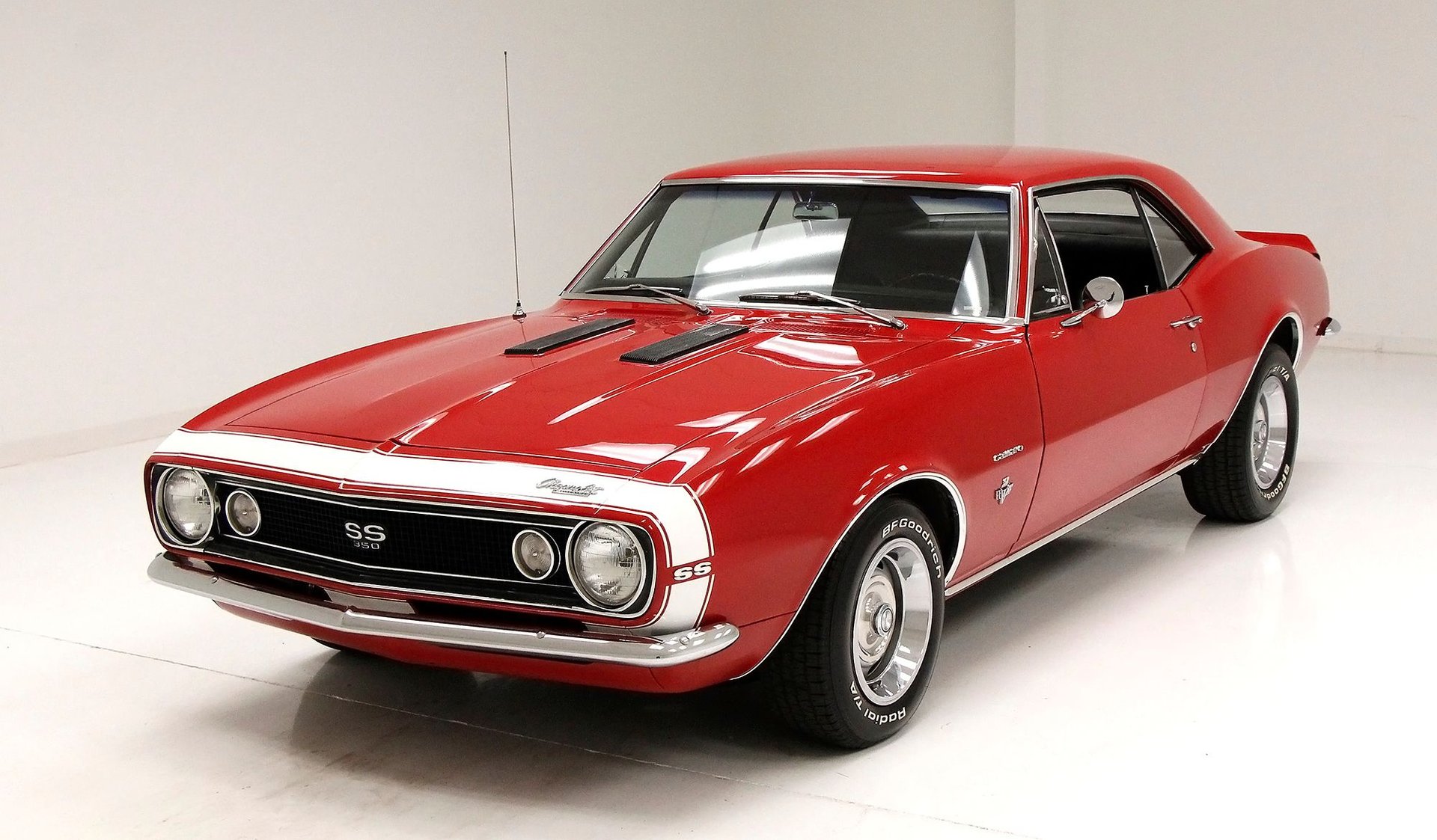
Its long hood, aggressive stance, and wide range of trims from the inline-six base models to the thundering SS and Z/28 gave buyers options to match their budget and appetite for performance.
Today, collectors prize the ’67 Camaro not only for its looks but also for its role in shaping American car culture. Its values continue to rise steadily, proving that this Chevy is aging better than most wines ever could.
2. 1965 Ford Mustang Fastback
Few cars embody Americana like the Ford Mustang, and the 1965 Fastback is perhaps the most enduring version. While the Mustang debuted in 1964, the Fastback introduced that iconic sweeping roofline, instantly making the car look sportier and more refined.
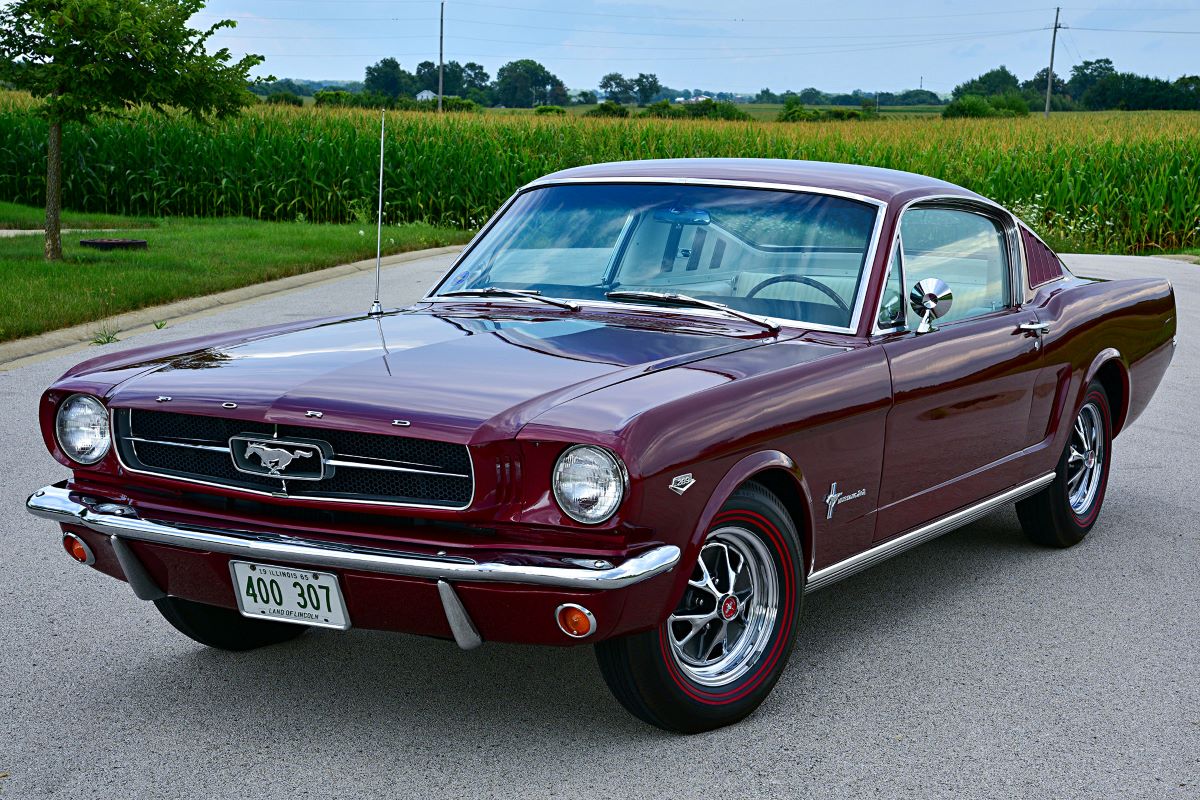
Under the hood, buyers could choose from modest six-cylinders to small-block V8s that offered plenty of power for the era. What makes the ’65 Fastback special today is its ability to balance performance with everyday usability.
It remains one of the most collected and restored classic cars in the US, its value driven by both nostalgia and timeless style.
3. 1963 Chevrolet Corvette Sting Ray (C2)
The second-generation Corvette is often regarded as one of the most beautiful American cars ever made, and the 1963 split-window Sting Ray coupe is the holy grail.
Designed under Bill Mitchell’s leadership, the Sting Ray introduced a sharp, futuristic design that still looks ahead of its time today. With independent rear suspension and potent small- and big-block V8 options, it also elevated Corvette’s performance credentials.
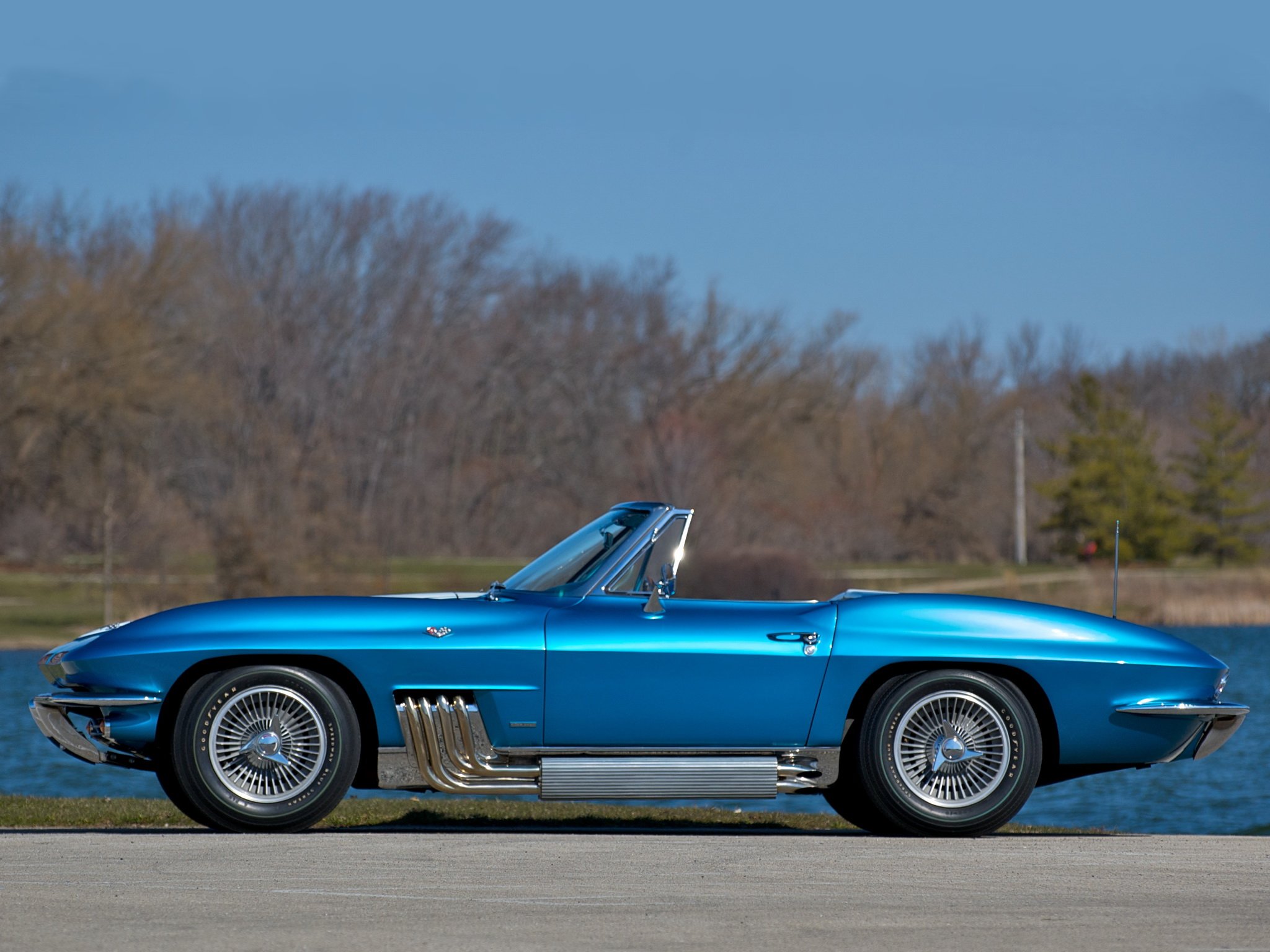
Collectors see the split-window coupe as not just a car but an art piece on wheels, and its desirability has only grown. Prices have skyrocketed, cementing its place as a true fine-wine classic.
4. 1969 Dodge Charger R/T
Muscle cars defined the late ’60s, and the Dodge Charger R/T stands tall among them. Immortalized by pop culture from Bullitt to The Dukes of Hazzard the Charger’s fastback roofline and bold front grille make it instantly recognizable.
The R/T, especially when equipped with the legendary 426 Hemi, was a performance monster, able to dominate the drag strip.
Today, restored models are fetching six-figure prices at auctions, and the Charger remains one of the most lusted-after Mopars. Its enduring appeal proves that muscle cars, when done right, never go out of style.
A blue Dodge that outlasted the lawn it sank into, a $100 deposit slip, and a VIN that still sparks excitement, this is the kind of Mopar story that makes collectors’ wallets twitch and their hearts skip. Dodge may not have invented the fastback, but in 1966 it perfected the name.
The Charger arrived as a personal-luxury coupe with bucket seats all around, a long-hood/short-deck profile, and big ambitions. Sales, however, were modest at first.
Everything changed with the second generation in 1968. Coke-bottle curves, flying buttresses, and hidden headlights transformed the Charger into a cultural icon, rewiring America’s sense of style and speed. By 1969, Dodge refined the design further.
The facelift introduced a split grille that looked more aggressive, a cleaner full-width taillamp, and a broader model lineup. Buyers could choose between the standard Charger, the upscale SE, the NASCAR-inspired Charger 500, or the wild Daytona. The R/T sat firmly in the middle, exuding both muscle and menace.
Engines set the pecking order. Entry-level models carried the 318, while the 383 did most of the heavy lifting. The R/T came standard with the L-code 440 Magnum producing 375 horsepower and 480 lb-ft of torque.
Above it sat the legendary 426 Hemi, delivering 425 horsepower and 490 lb-ft. Buyers could pair these with either the A833 four-speed manual or the TorqueFlite automatic, sending power to the rear wheels.
Performance packages added further bite, the most notable being the A33 Track Pak for four-speed cars. This package included a 3.54 Sure Grip Dana 60 rear end, the heavy-duty 18-spline gearbox shared with Hemi cars, a maximum-cooling 26-inch radiator, upgraded suspension, and a seven-blade fan.
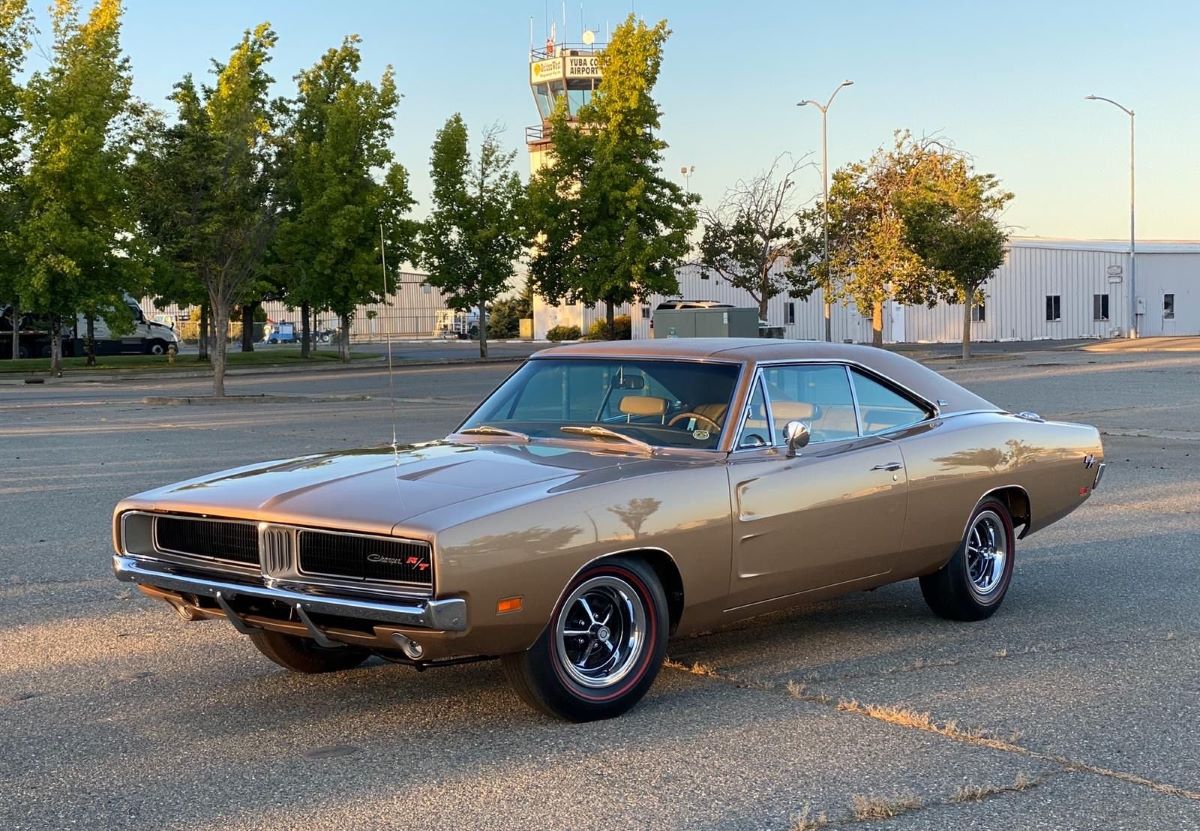
Properly tuned, a 440 R/T with Track Pak could reach 60 mph in the six-second range and run the quarter-mile in the mid-14s when traction allowed.
Production was strong in 1969, with roughly 89,000 Chargers built, including around 20,000 R/Ts. A base Charger cost about $3,126, while the R/T started between $3,575 and $3,592 before options. High-spec Daytonas and Hemi cars quickly climbed far higher.
That brings us to the car recently unearthed in Humble, Texas, by Mopars5150. Bought new by Lawrence Childress at Dependable Motors in Austin on August 19, 1968, this B5 Bright Blue Metallic Charger R/T four-speed came home on a $100 deposit that still feels like a dare. He finalized the purchase later that month, kept the title, and held onto the car until just last week.
The factory combination remains intact: B5 blue paint on the outside, B7 Dark Blue interior on the inside. Ordered with a stripe delete and no vinyl roof, the car avoided the moisture traps that often plague its peers.
The options list was purposeful. It’s a console-shift four-speed with the A33 Track Pak, including the Dana 60 rear end.
Beyond that, Childress kept it simple: no power steering, manual 11-inch heavy-duty drum brakes, an R11 AM radio with dual rear speakers, a rear fader, two-speed wipers, a clock, and a driver’s remote mirror. The original 14-inch 1969 Road Wheels still sit beneath it.
Equally important, the numbers match. The 440 Magnum corresponds to the VIN, the transmission is original, and the 3.54 Dana 60 remains dated to 1969. While the fender tag has succumbed to Texas heat, a search for a build sheet is underway. If found, it will confirm the car’s factory codes.
Time has left its marks. Photos show a Charger that sat long enough to sink to its rims, with deteriorated hood insulation dangling like moss.
Yet the dash VIN plate remains crisp, the B7 interior survives, and the 440 still wears its pie-pan air cleaner. The Dana rear end shows surface corrosion but is correct, and the car’s structure appears worthy of restoration.
Childress’s original paperwork also adds value. While an R/T base price was around $3,600, his final bill reached the high $3,900s, exactly what a lightly optioned Track Pak four-speed should cost in 1969. He paid for performance, not luxury. More than half a century later, that decision stands as a clear statement of intent.
Bringing this Charger back to life will demand both labor and investment. Expect metal repairs to the lower quarters, a full brake system rebuild, replacement of the fuel system, radiator, and hoses, along with fresh bushings, bearings, and electrical work.
The reward, however, is undeniable: a numbers-matching 440 car with one-owner provenance and a configuration collectors covet.
As it sits, this Charger is both artifact and opportunity. Built in Hamtramck, sold in Texas, and ordered with performance in mind rather than vanity, it carries a factory spec, B5/B7 colors, four-speed, A33 Track Pak, and stripe delete, that enthusiasts describe with passion.
In today’s market, numbers-matching 1969 Charger R/T four-speeds with their paperwork intact command serious money when restored. A sympathetic restoration that preserves originality while addressing the car’s needs is the smart play. The market rewards honesty, and this example has authenticity stamped in both its paperwork and its steel.
5. 1957 Chevrolet Bel Air
The ’57 Chevy Bel Air is perhaps the quintessential symbol of 1950s America. With its chrome accents, tailfins, and two-tone paint schemes, it embodies the optimism of the postwar era.
Beneath its flashy looks, the Bel Air offered V8 performance that was ahead of its time, making it more than just a pretty face.
Today, the ’57 Bel Air is a staple at classic car shows, and enthusiasts love customizing them while others preserve them in original form. No matter the approach, the Bel Air’s iconic design ensures it has aged with grace, standing as a timeless representation of mid-century American style.
This 1957 Chevrolet Bel Air two-door hardtop received a repaint during a refurbishment that was completed prior to the selling dealer’s acquisition in 2024. Now finished in red with a contrasting white roof, the car is powered by a 283ci V8 engine equipped with a Rochester four-barrel carburetor.
The interior features front and rear bench seats upholstered in red vinyl with patterned cloth inserts, while amenities include an AM radio and a heater.
Power is delivered to the rear wheels through a two-speed automatic transmission, and additional equipment consists of rear fender skirts along with 14-inch steel wheels fitted with faux knock-off covers. The vehicle is now offered by the dealer with a duplicate Illinois title.
Originally, this Bel Air left the factory painted in India Ivory and Matador Red, but the exterior was refinished during the earlier refurbishment under prior ownership.
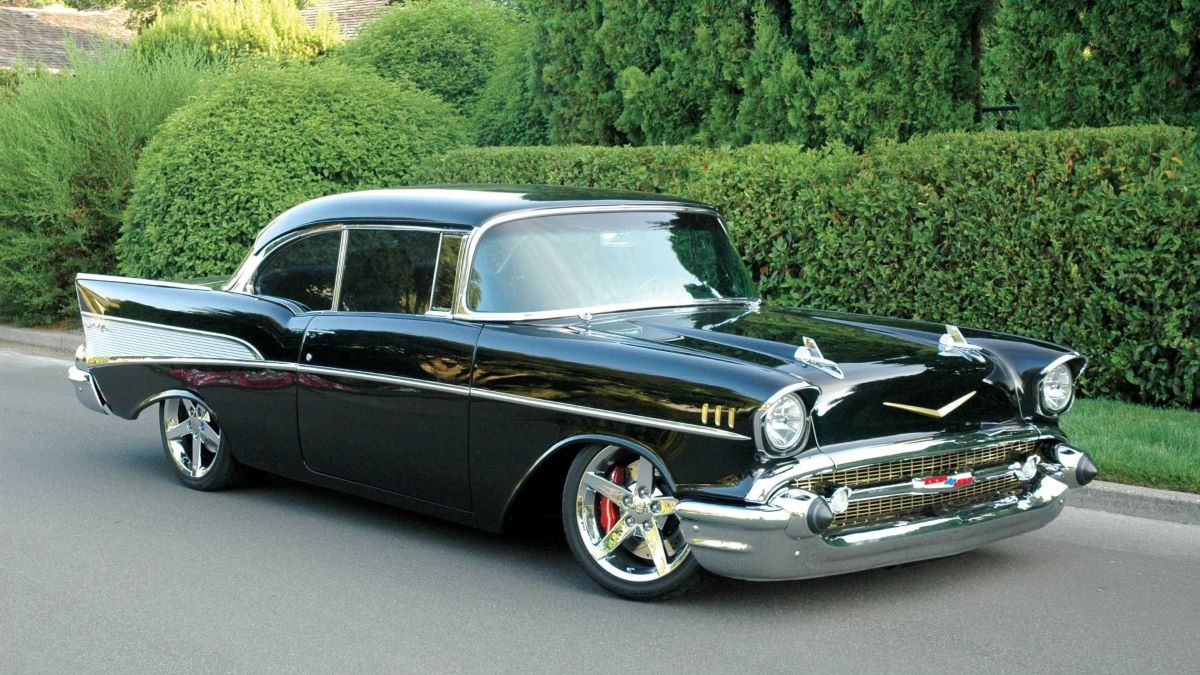
Notable styling elements include twin wind splits, hooded headlights, rear fender skirts, back-up lights, and a concealed fuel filler located above the left taillight. The car is further distinguished by its gold badging, aluminum quarter-panel trim inserts, and bright chrome bumpers.
The 14-inch steel wheels are painted red and accented with faux knock-off covers, wrapped in 205/75 Coker Classic whitewall tires.
Stopping power is provided by drum brakes at both the front and rear. Inside, the cabin maintains its vintage appeal with bench seating trimmed in red vinyl and patterned black-and-red cloth. Additional interior features include an AM radio, an analog clock, and a heater.
A two-spoke steering wheel with a chrome horn ring frames a 120-mph speedometer, which is flanked by gauges for coolant temperature and fuel level.
The five-digit odometer shows 80,000 miles. Under the hood, the 283ci V8 is paired with its Rochester four-barrel carburetor, and power is routed to the rear wheels through a two-speed automatic transmission.
6. 1961 Jaguar E-Type
Enzo Ferrari once called the Jaguar E-Type “the most beautiful car ever made,” and few would disagree. The 1961 debut of this British roadster stunned the world with its sleek curves, long bonnet, and aerodynamic design.
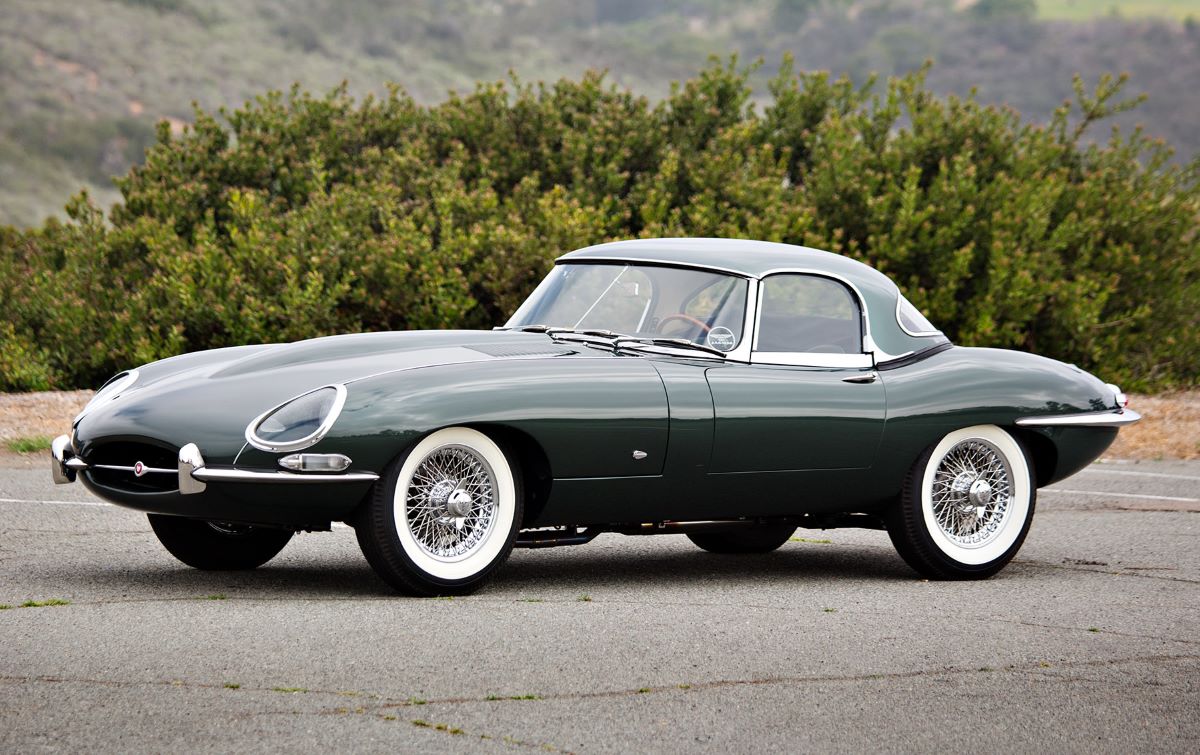
With a 3.8-liter inline-six under the hood, it wasn’t just beautiful it was blisteringly fast for its time, capable of hitting 150 mph. In the US, the E-Type became an instant hit, capturing the imagination of those who wanted European elegance paired with racing pedigree.
Today, the E-Type’s values reflect its beauty and rarity, and it continues to be celebrated as one of the greatest classics of all time.
7. 1970 Plymouth Barracuda
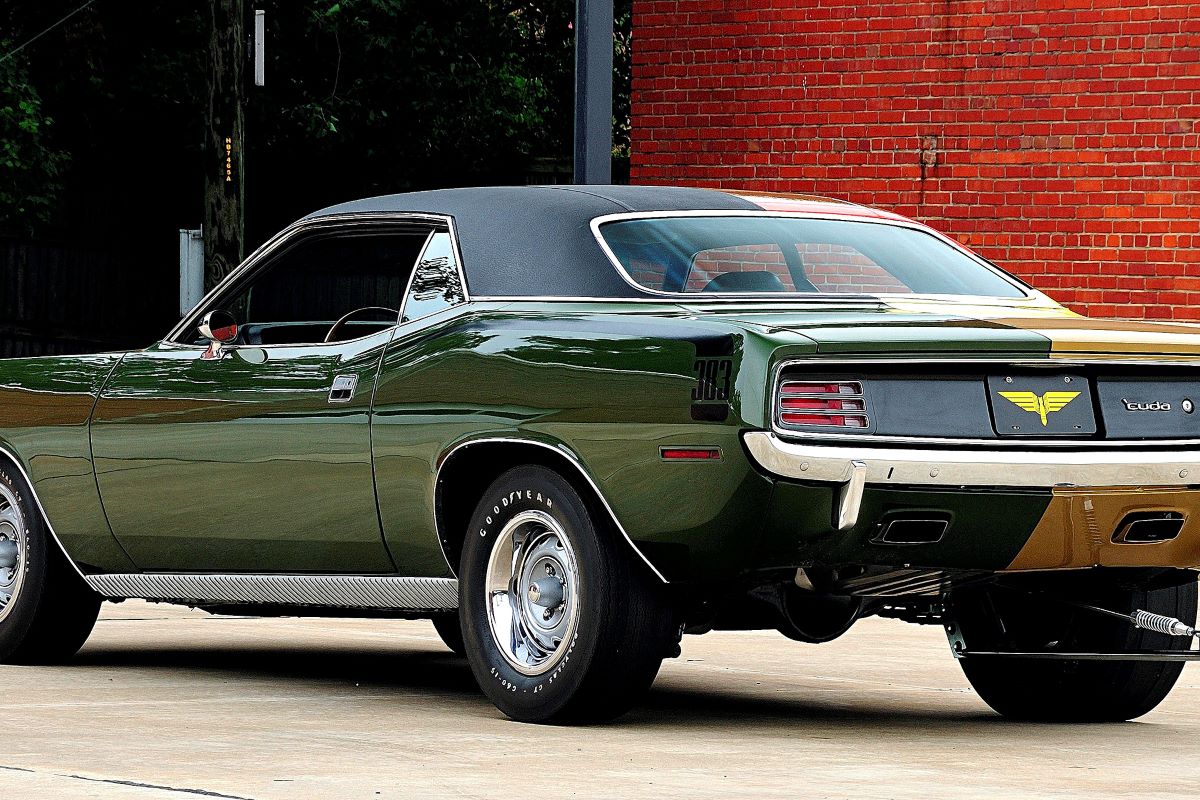
The Plymouth Barracuda, especially the 1970 model, is one of the most desirable muscle cars ever built. With its aggressive styling, wide stance, and legendary Hemi V8 option, the ’Cuda was both a street machine and a collector’s dream.
These cars were rare even when new, and today, they’re among the most valuable muscle cars on the market, with pristine examples commanding astronomical sums. The combination of scarcity, power, and style has helped the ’70 Barracuda age into one of the crown jewels of the Mopar world.
The 1970 model year brought a wider selection of styles and engines to the Plymouth Barracuda lineup, giving buyers more choices than ever before. In total, three body styles were offered with nine different engine options.
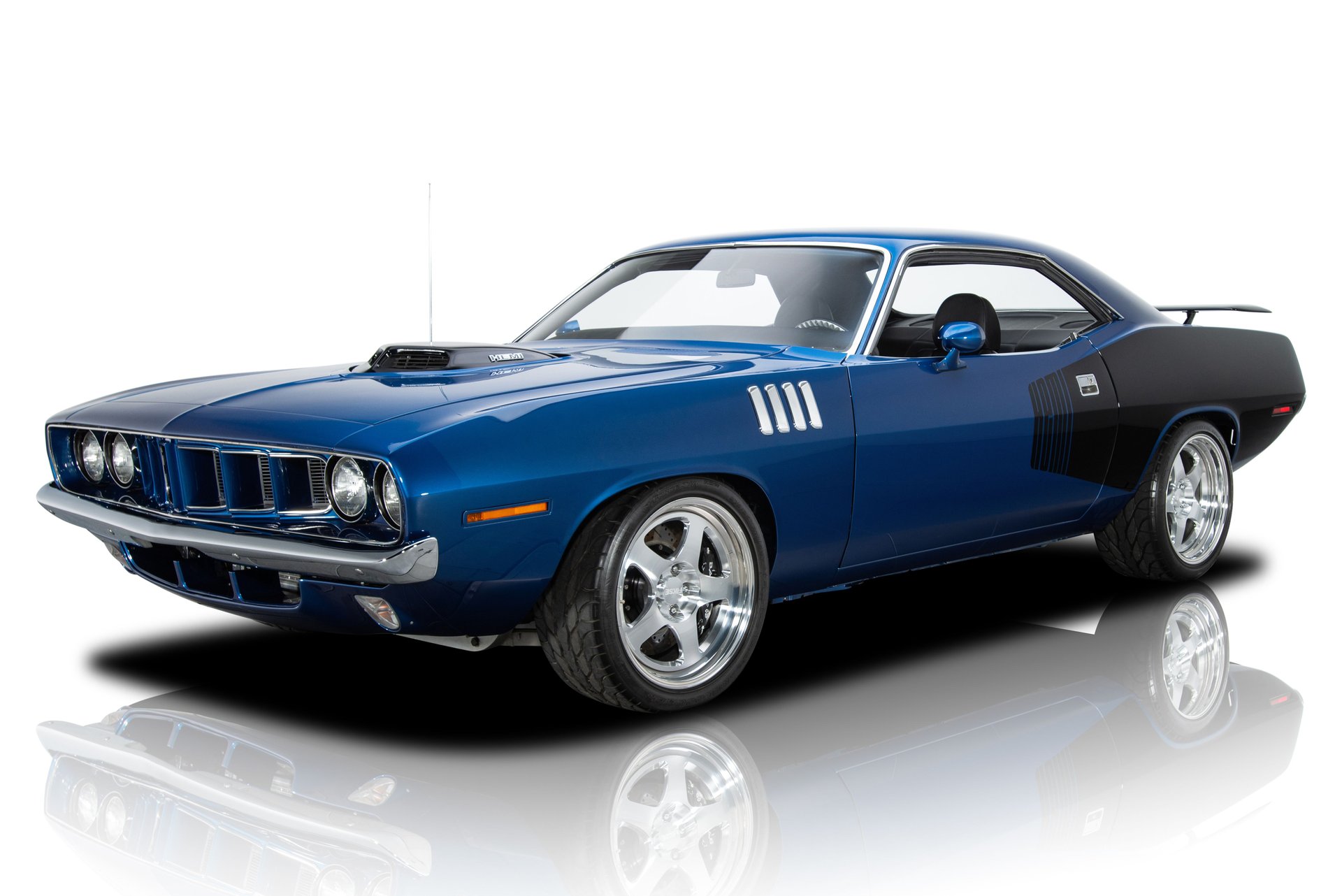
Designers emphasized the sporty image with long hoods, short rear decks, and sharply raked windshields, while the high-performance ’Cuda variant added flair with the available “shaker” hood that protruded through the engine bay and vibrated with throttle input.
At the top of the range, the legendary 426-cubic-inch Street Hemi was made available, though it was built in limited numbers. The lineup consisted of three main versions: the standard Barracuda (Code BH), the upscale Gran Coupe (Code BP), and the performance-oriented ’Cuda (Code BS).
Midway through the year, Plymouth introduced another option, the “Barracuda Coupe” (Code A93), positioned as a budget-friendly entry model. This version came with the base 198-cubic-inch inline-six engine, a simpler interior, and fixed rear quarter glass in place of roll-down windows, distinguishing it from the other trims.
Buyers of the Barracuda and Barracuda Gran Coupe could select from two slant-six engines: the new 198-cubic-inch unit or the larger 225-cubic-inch version.
For those wanting more power, four small- and big-block V8s were offered, starting with the 318. The 383 came in two forms: one with a two-barrel carburetor and single exhaust, and another with a four-barrel carburetor and dual exhaust rated at 330 horsepower.
8. 1969 Pontiac GTO “The Judge”
Known as the car that defined the muscle car era, the Pontiac GTO already had a strong reputation by the late ’60s. But when Pontiac introduced “The Judge” package in 1969, it created a legend.
With bright paint options, bold stripes, and a 400-cubic-inch Ram Air engine, The Judge was unapologetically loud and brash.
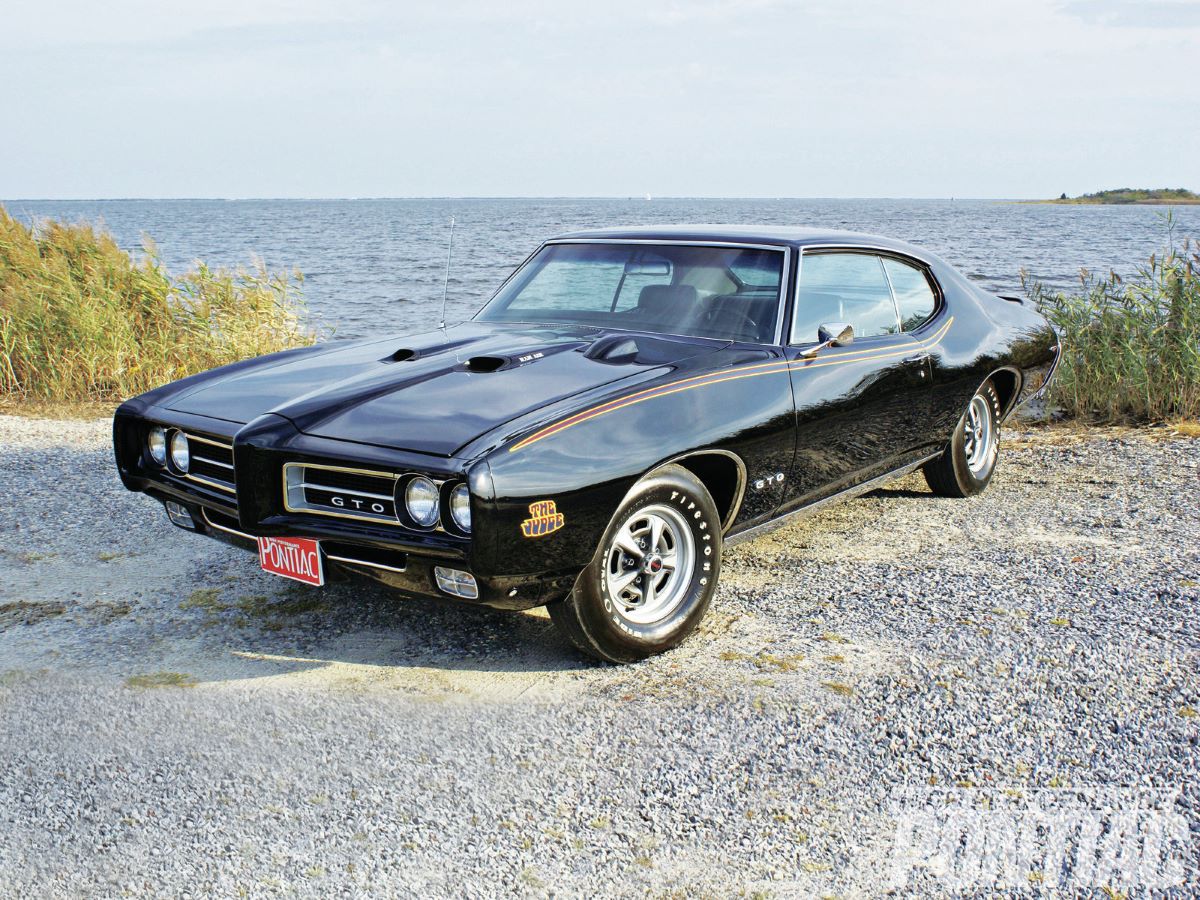
Today, it’s celebrated as one of the most colorful personalities in classic car history. Collectors love its bold styling and muscle pedigree, making it a car that continues to appreciate with each passing year.
9. 1971 Datsun 240Z
While Detroit was busy building big V8s, Japan quietly launched a sports car that would change the market: the Datsun 240Z. Affordable, stylish, and reliable, the 240Z proved that sports cars didn’t need to be expensive or fragile.
With a smooth inline-six engine and lightweight handling, it was a hit among American buyers. Today, the 240Z has become a highly desirable collector’s car, with prices rising as enthusiasts rediscover its charm. Its mix of Japanese reliability and European-inspired design ensures it has aged with remarkable elegance.
In 1970, Nissan executed a masterstroke with the introduction of the Datsun 240Z to the American market, forever altering the sports car landscape.
The formula was spot on: the car carried the sleek, exotic look of a scaled-down Ferrari, the durability and dependability of a Toyota pickup, and a price tag within reach of the average buyer. It was a perfect storm that made the 240Z irresistible.
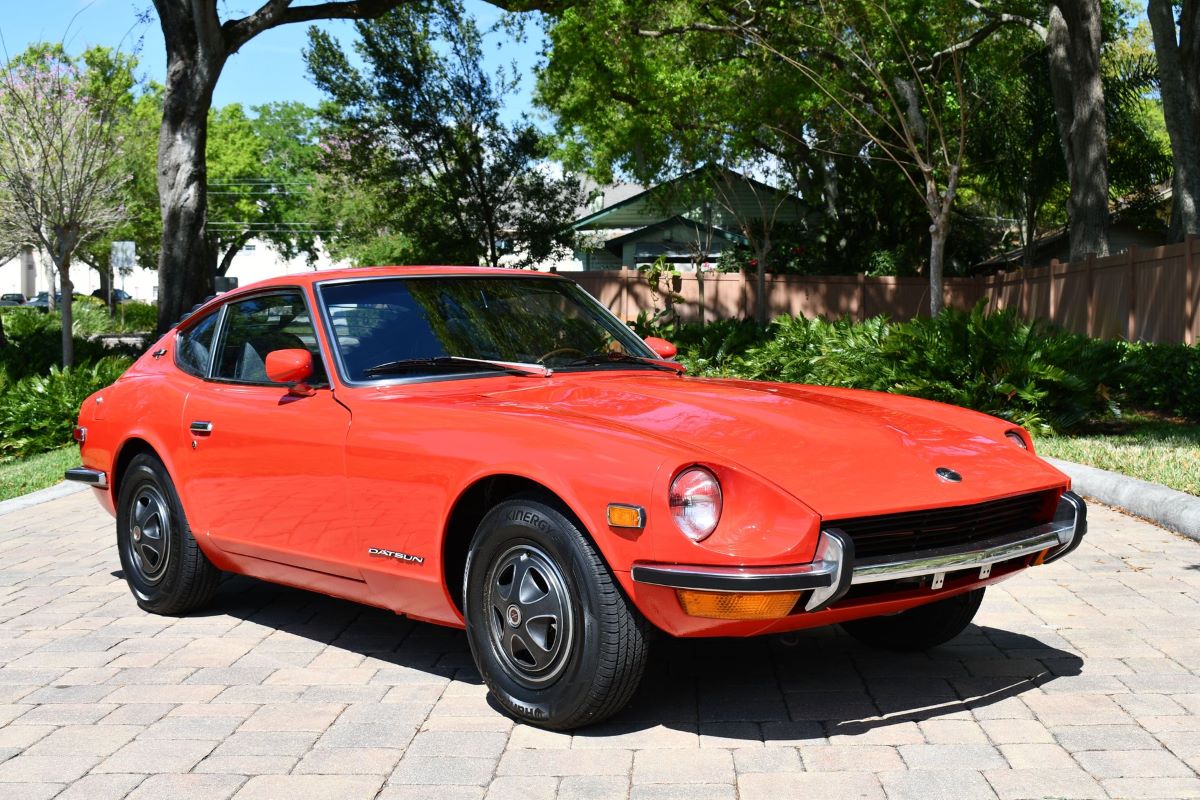
Much of the credit belongs to Yutaka Katayama, affectionately known as “Mister K,” who recognized that American drivers wanted a car with European flair but without the endless headaches and costs of European maintenance.
The earliest examples, referred to as Series I cars, are particularly prized among collectors today for their distinctive quirks. These early-production touches included chrome “240Z” badges on the sail pillars, twin rear hatch vents, and trim details that appeared before federal regulations began altering the design.
A 1971 Series I model, such as the one profiled here, showcased these features and, at the time of publication, represented an exceptional buy at just $6,000 on the auction block.
Of course, the 240Z’s appeal was not limited to its styling. The engineering beneath the hood proved equally impressive. Powering the car was the L24 engine, a 2.4-liter inline-six featuring an iron block, aluminum cylinder head, twin SU-type Hitachi carburetors, and a seven-bearing crankshaft.
This setup produced 151 horsepower at 5,600 rpm and 146 lb-ft of torque at 4,400 rpm, delivering spirited performance for the lightweight coupe.
With this combination, the 240Z was capable of sprinting from 0 to 60 mph in roughly 8 seconds and reaching a top speed of 125 mph, numbers that helped cement its reputation as a sports car bargain of the decade.
10. 1964 Porsche 911
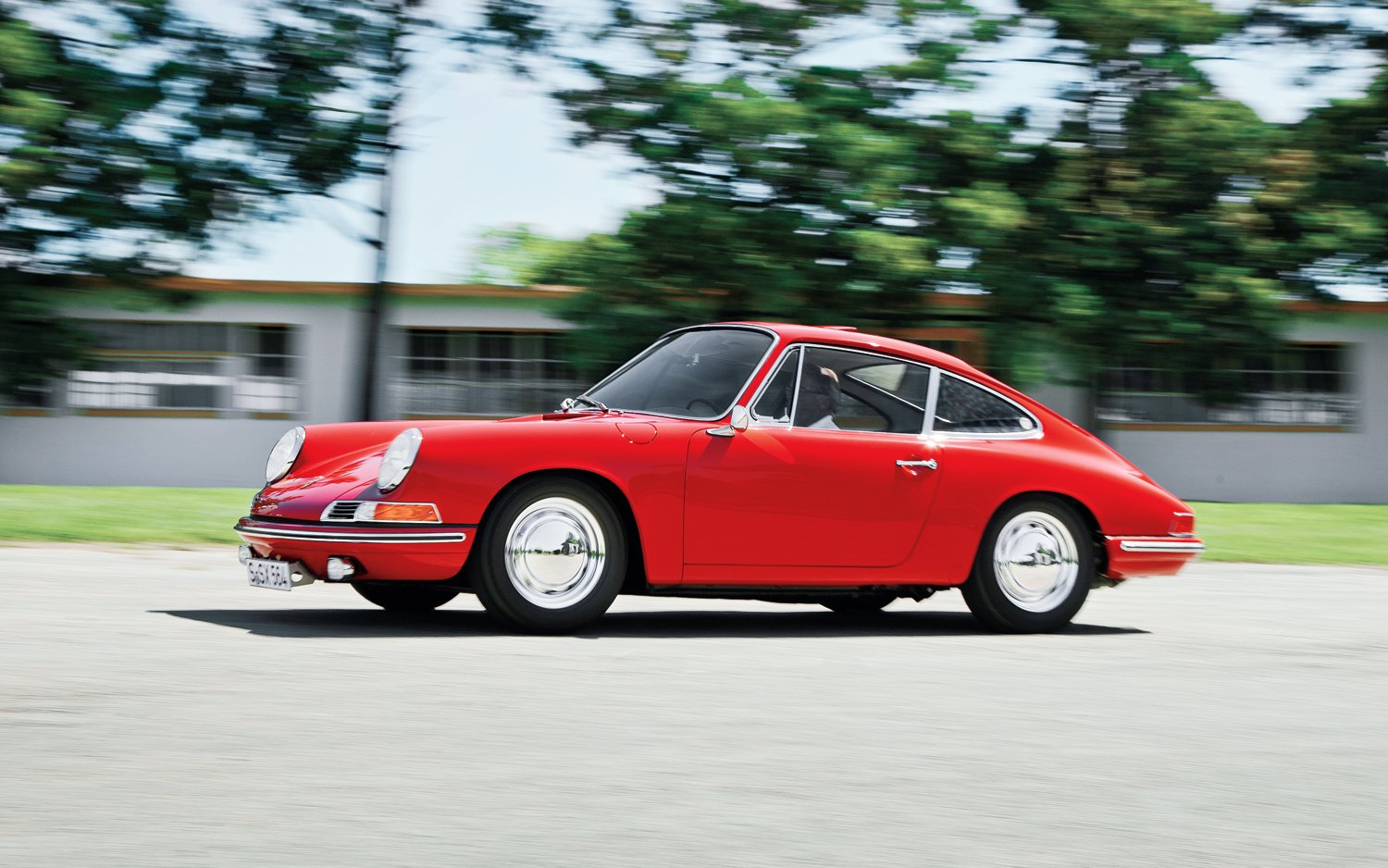
The Porsche 911 has evolved over six decades, but the original 1964 model still holds a special place in automotive history.
With its distinctive rear-engine layout, timeless silhouette, and air-cooled flat-six, the early 911 set the stage for one of the most successful sports cars ever produced.
Early models, once overlooked, are now some of the most collectible classics, prized for their purity and connection to Porsche’s racing heritage. The fact that modern 911s still carry the same DNA shows just how perfectly the original design has aged.
Classic cars that age like fine wine are rare, but when you see one, you know it. They carry stories, history, and a level of craftsmanship that modern vehicles often lack.
From American muscle icons like the Camaro and Charger to European legends like the Jaguar E-Type and Porsche 911, these ten classics have transcended time.
They’re more than just machines they’re rolling art pieces that remind us why we fell in love with cars in the first place. And as long as enthusiasts continue to preserve and celebrate them, their legacy will only grow stronger with age.