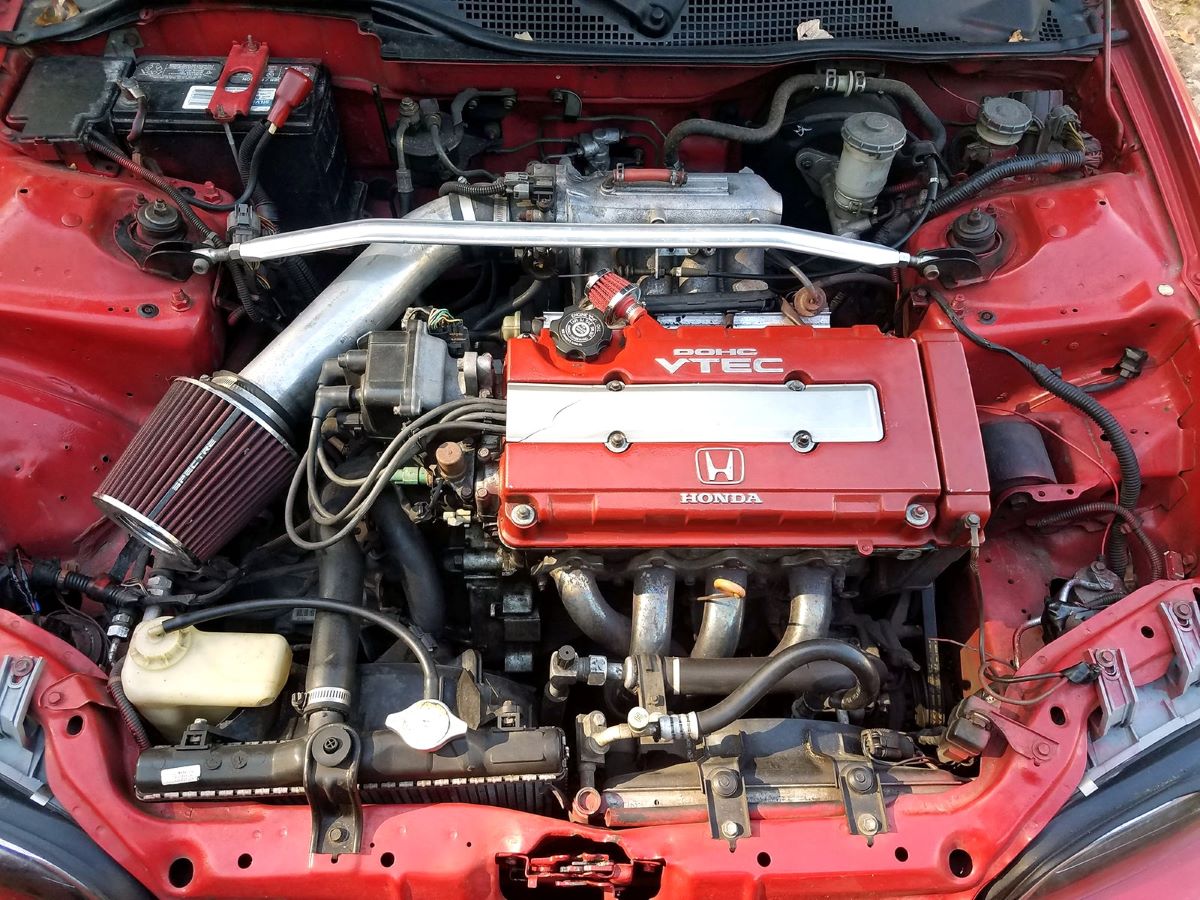
In an era where automakers are increasingly turning to turbocharged four-cylinders, hybrid setups, and even fully electric powertrains, there’s something undeniably appealing about engines from the past.
The simplicity, raw sound, mechanical honesty, and bulletproof durability of older powerplants make them stand out even in today’s high-tech automotive world.
Many engines built before 2005 weren’t just reliable; they defined entire generations of cars and remain beloved by enthusiasts, collectors, and daily drivers alike.
For many Americans, these engines carry memories of road trips, garage tinkering, and the golden age of automotive engineering before downsizing and electronics took center stage.
While some engines from that era were notorious for quirks and failures, the ones on this list have proven their worth by standing the test of time. They are still praised by mechanics, sought after by gearheads, and in some cases, continue to be modified for racing or off-road use.
From Japanese icons to American V8 workhorses and European masterpieces, these 15 engines built before 2005 prove that greatness doesn’t fade with age.
1. Toyota 2JZ-GTE
Ask any car enthusiast to name a legendary engine, and the Toyota 2JZ-GTE will almost certainly come up. Introduced in the early 1990s and famously powering the Mk4 Supra, this twin-turbocharged inline-six has become a global icon thanks to its immense tuning potential.
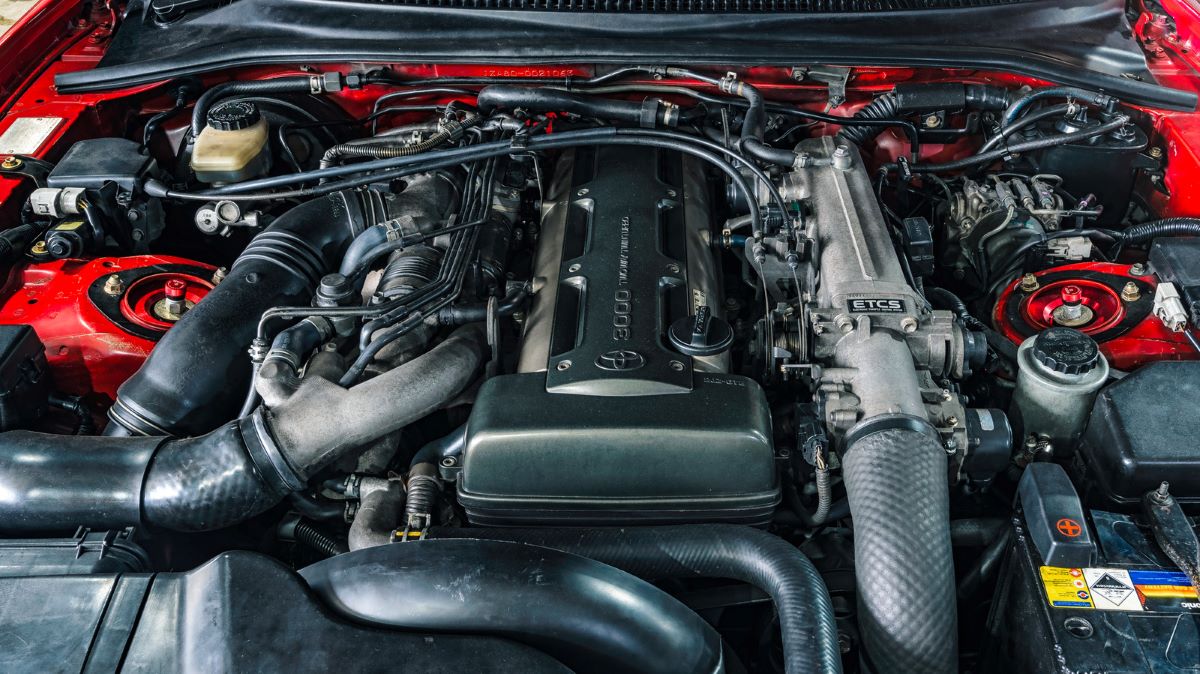
While it was rated at around 320 horsepower in stock form, enthusiasts quickly learned it could handle 800–1000 horsepower with upgraded turbos and internals.
Even today, drag racers and tuners in the US import Supras and Aristo engines just to build monster machines around the 2JZ. More than just fast, it’s remarkably durable, proving Toyota engineered it to last.
2. Honda B16
Honda’s B-series engines were a revelation in the 1990s, introducing many Americans to the magic of high-revving VTEC power. The B16, used in the Civic Si and Integra overseas, stood out with its willingness to scream past 8,000 RPM while still offering everyday reliability.
For many young enthusiasts, this engine was their first taste of modifying cars, with bolt-ons and ECU tuning unlocking new levels of fun.
Even today, the B16 is respected in the tuner community, and clean examples of Civics with these engines are climbing in value as millennials look to recapture their youth.
At present, the spotlight shines on Honda’s K-series engines, but back in the 1990s and early 2000s, it was the B-series that set the benchmark for performance and reliability.
True to its reputation, the B16 was a compact 1.6L powerhouse that managed an impressive 100+ horsepower per liter, a figure that turned heads at the time.
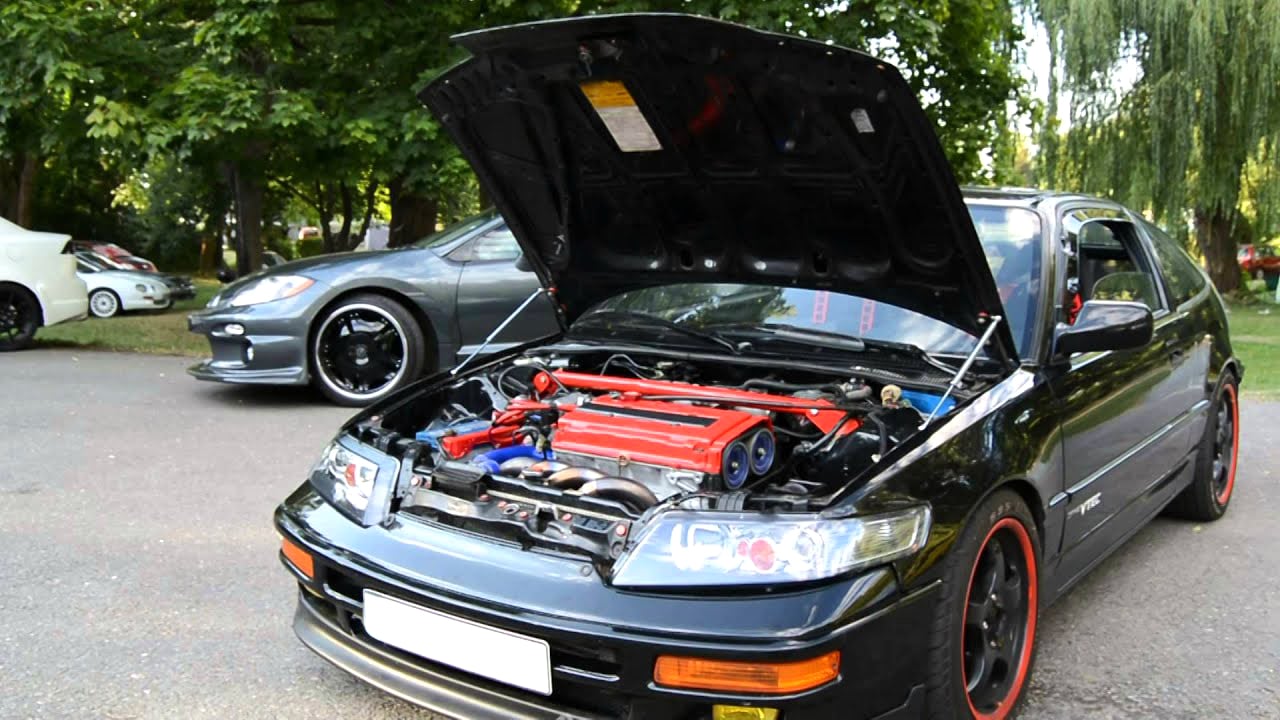
Torque, however, was modest, ranging from 110 to 150 lb-ft depending on the version, and much of its power only arrived as the tach needle neared the redline. Drivers had to keep the revs high to extract its full potential, but that was part of the thrill.
The B16 thrived in lightweight platforms such as the Honda CR-X and various Civic trims, most famously the Civic EK9 Type R. The combination of a rev-happy engine and a nimble chassis created one of the most rewarding driver experiences of its era.
Durability was another hallmark of the B16, and it didn’t take long for the global car community to uncover its tuning potential. From naturally aspirated builds to forced-induction projects, the B16 became a canvas for endless modification.
Few engines have enjoyed the level of aftermarket support and cult following that the B16 still commands today.
Also Read: 12 Cars With Engines Stronger Than Their Bodies
3. Ford 5.0 Windsor V8
Before the rise of Ford’s modern Coyote V8, the Windsor 5.0 was the engine that kept the Mustang relevant through the 1980s and early ’90s. Known for its simplicity and torquey nature, the 5.0 became a favorite for American hot-rodders who appreciated its ease of modification.
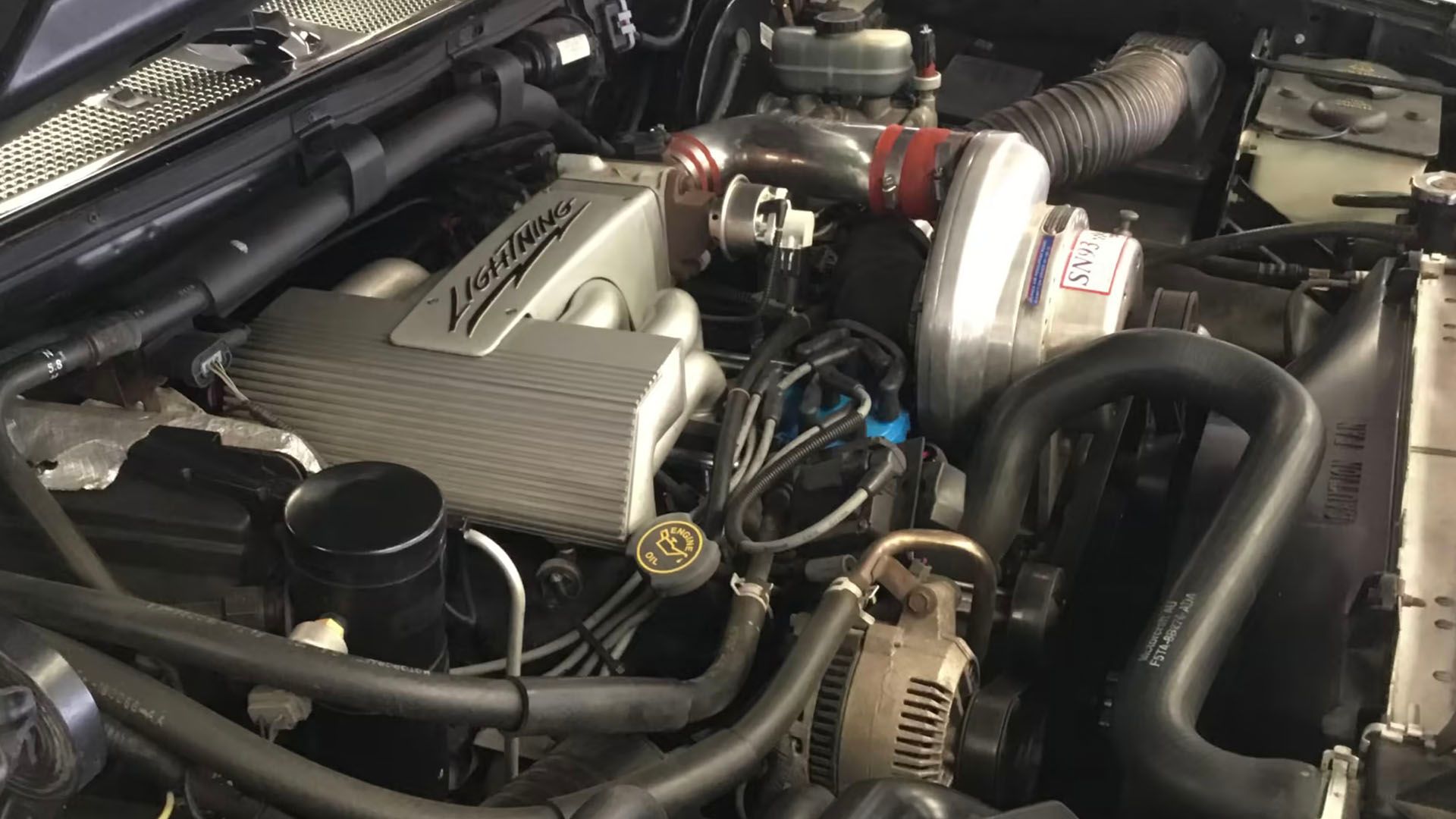
Affordable, plentiful, and straightforward to work on, the 5.0 earned its place in muscle car history. Even though its stock output wasn’t earth-shattering, it was the engine that carried the Mustang through an era when horsepower was scarce, and it still enjoys a strong aftermarket following.
4. Chevrolet LS1
Chevy’s LS1, debuting in the 1997 Corvette, completely reshaped the American V8 landscape. Compact, lightweight, and highly versatile, the LS1 delivered 345 horsepower while offering efficiency and durability.
Its design made it a favorite swap candidate for everything from Miatas to pickup trucks. Today, the LS family has grown into an entire dynasty, but it was the LS1 that set the foundation.
Even two decades later, LS swaps remain the most common way to bring reliable V8 power to any project car, proving the LS1’s enduring influence.
The 5.7L LS1 marked the beginning of General Motors’ third-generation Small Block V8 family. While it carried over a similar displacement, external dimensions, and rod bearings from the Gen II LT1 it replaced, the LS1 was largely a clean-sheet design that set the foundation for the modern LS engine line.

The LS1 debuted in the 1997 Chevrolet Corvette C5 with an output of 345 horsepower (257 kW) at 5,600 rpm and 350 lb-ft of torque (470 Nm) at 4,400 rpm.
In 2001, GM revised the intake and exhaust manifolds, bumping performance to 350 horsepower (260 kW) and 365 lb-ft (495 Nm). The LS1 powered the Corvette from 1997 through 2004, cementing itself as one of the most iconic Corvette engines.
In 1998, GM expanded the LS1’s reach to its F-Body lineup, the Chevrolet Camaro Z28/SS and Pontiac Firebird/Trans Am. These models received a slightly lower rating of 305–310 horsepower, though many enthusiasts believe GM deliberately underrated them. The LS1 remained in F-Body production until the platform’s discontinuation in 2002.
Beyond North America, the LS1 saw use in the Pontiac GTO as well as several Holden models, including the Commodore, Ute, and Caprice.
The LS1 not only redefined GM’s V8 lineup but also laid the groundwork for the entire LS family, which remains a favorite among tuners, racers, and engine swappers to this day.
5. BMW S54
The BMW M3 has always been about balance, and the S54 engine in the E46 generation embodied that philosophy. This naturally aspirated 3.2-liter inline-six revved past 8,000 RPM and made 333 horsepower impressive numbers for the early 2000s.
When the BMW E46 M3 debuted in October 2000, it quickly earned legendary status, thanks in large part to its heart, the S54 inline-six engine. For many enthusiasts, the combination of high-revving power, razor-sharp response, and everyday usability made it one of the greatest BMWs ever built.
BMW has a long tradition of engineering outstanding engines across many configurations, four-, six-, eight-, ten-, and even twelve-cylinder powerplants. But none are more closely tied to the brand’s identity than the straight-six.
The story dates back to 1917 with the company’s first engine, the IIIa, an inline-six designed for aircraft. More than two decades later, the first production car inline-six, the M78, made its debut. From that point on, BMW developed over 20 different straight-six engines, the majority of which were naturally aspirated.
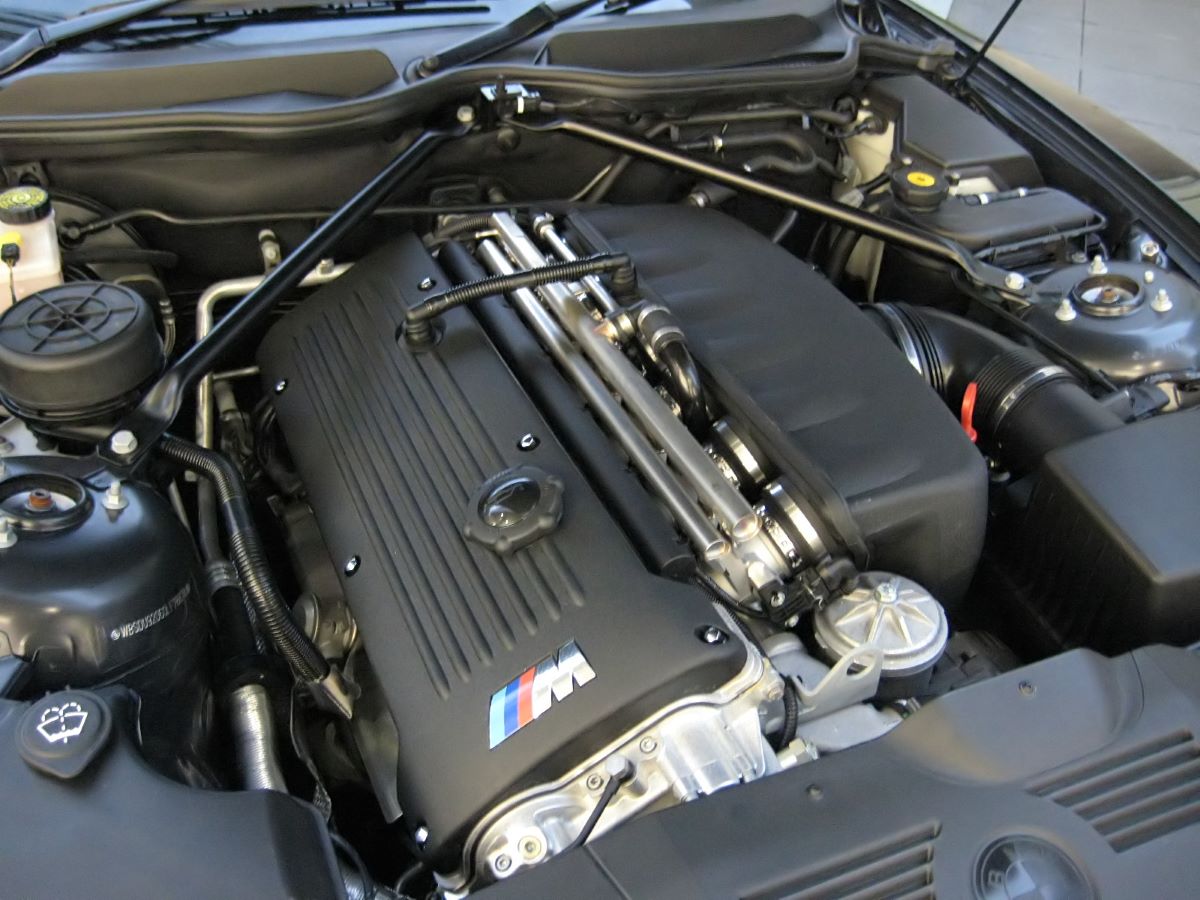
Interestingly, the very first M3 (the E30 M3, produced from 1986 to 1991) didn’t use a straight-six at all. Instead, BMW engineers opted for the S14 four-cylinder, a lightweight, high-revving unit designed specifically for motorsport. It proved to be a brilliant choice, powering the E30 M3 to become the most successful touring car of all time.
By the time the E36 M3 arrived in 1992, BMW had shifted toward six-cylinder performance. The lineup included the S50, starting as a 282-hp 3.0L and later evolving into a 316-hp 3.2L, and the S52, a 3.1L producing 240 hp for North American models.
The E36 M3 built on the success of its predecessor and, with more than 71,000 units sold by 1999, became even more popular.
That history set the stage perfectly for the E46 M3 and its S54 engine, a combination that many still consider the pinnacle of BMW’s naturally aspirated performance.
Beyond the stats, it was the way it delivered power smooth, linear, and intoxicating that made it special.
Even now, the S54 is celebrated as one of BMW’s finest engines, with enthusiasts restoring E46 M3s to keep this masterpiece alive. While maintenance can be pricey, owners argue the experience is worth every penny.
6. Toyota 22R/22RE
For truck owners, the Toyota 22R and 22RE engines became synonymous with reliability. Found in Toyota pickups and the early 4Runner, these four-cylinders weren’t about speed they were about lasting forever.
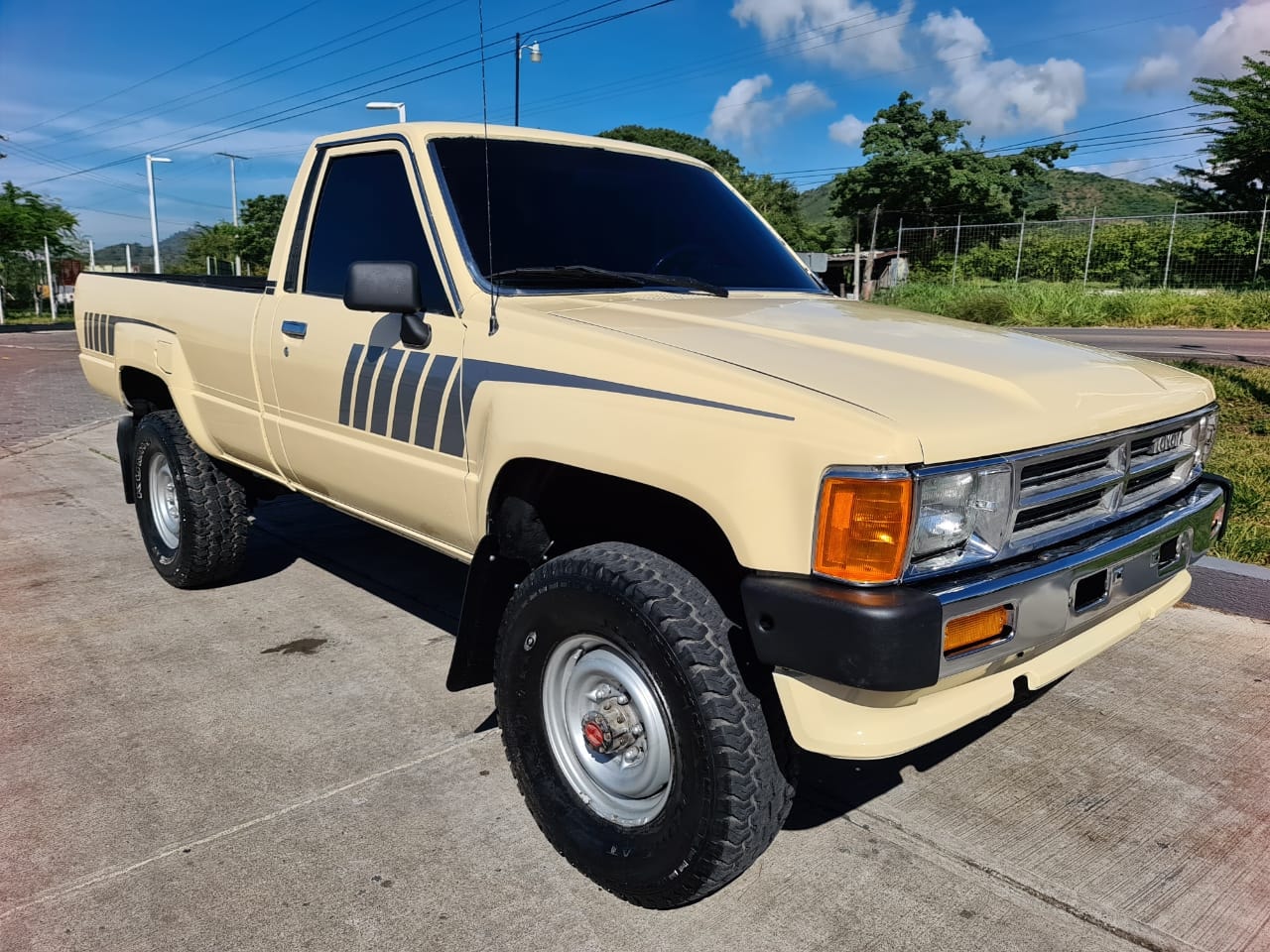
Farmers, off-roaders, and tradesmen all swore by them because they kept running no matter what punishment they endured.
Even today, you’ll find 22RE-powered trucks with over 300,000 miles still earning their keep. In an era of complex turbocharged engines, the simplicity of the 22RE feels refreshing and timeless.
Also Read: 5 Best Hybrids That Rarely Need Battery Replacements vs 5 That Do
7. Mazda Rotary 13B
The Mazda 13B rotary engine may not have the reputation for bulletproof reliability like others on this list, but its unique design and performance have earned it legendary status.
Used in the RX-7, it delivered a power-to-weight ratio that gave American sports cars a run for their money in the ’80s and ’90s.
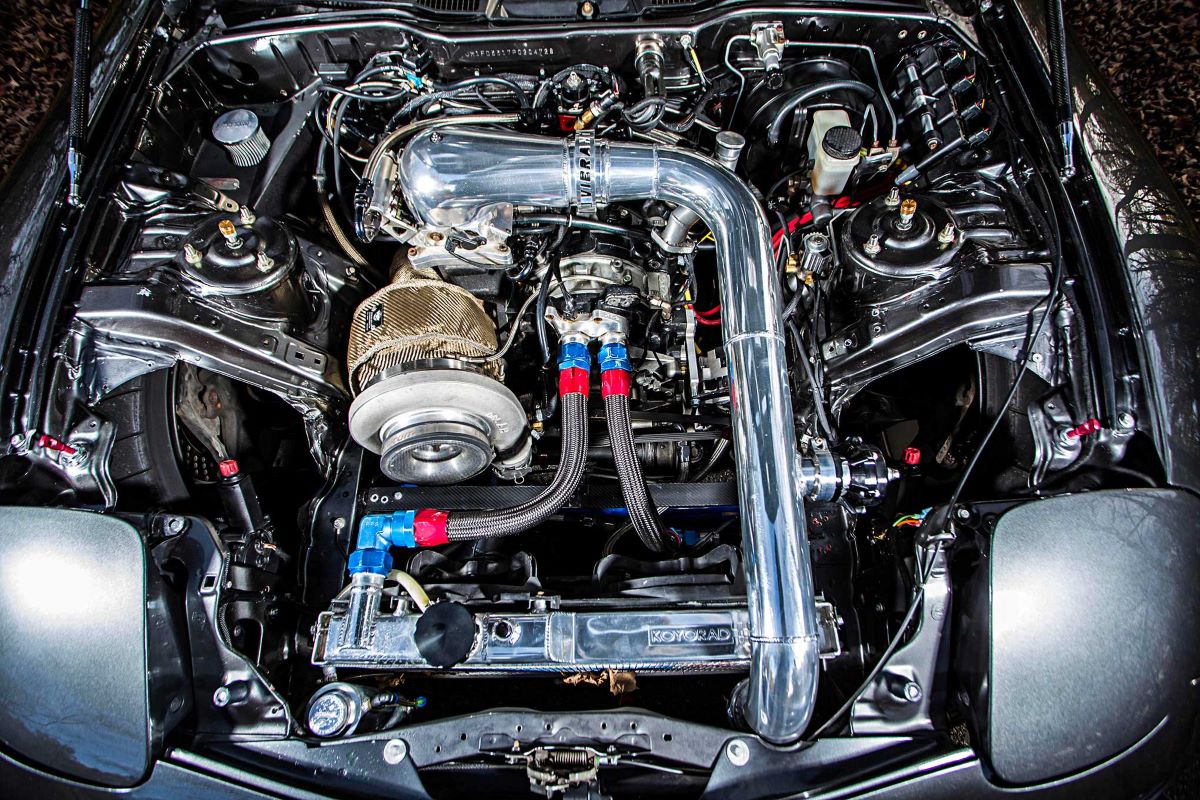
Its high-revving nature and smooth delivery made it unforgettable for those who experienced it. Today, rotary enthusiasts remain fiercely loyal, rebuilding and tuning 13Bs to keep the flame alive despite their quirks.
8. Mercedes-Benz M119 V8
Mercedes built its reputation on over-engineering, and the M119 V8 from the 1990s is proof of that. Found in models like the 500E and S-Class sedans, this DOHC V8 combined smoothness with brute force.
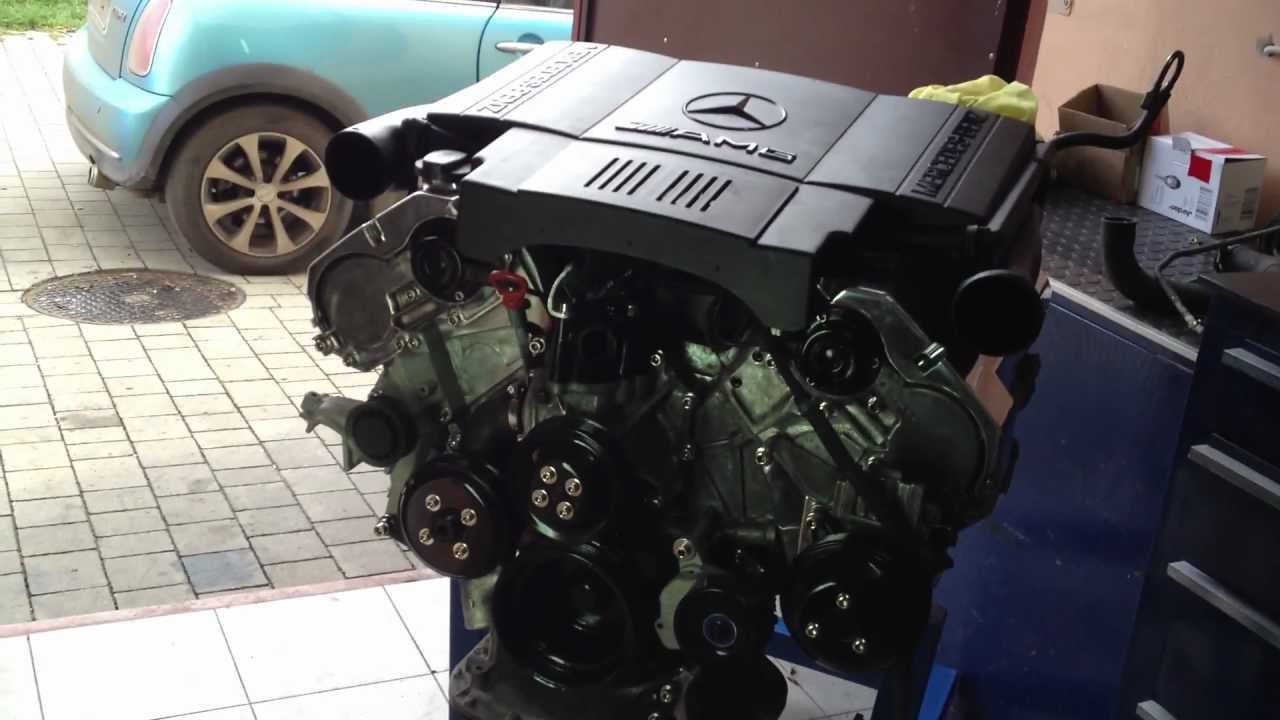
It was ahead of its time, featuring advanced variable valve timing and delivering impressive durability. Even today, an M119-powered Mercedes feels refined yet powerful, reminding us of an era when the brand built cars to last generations.
9. Subaru EJ25
The Subaru EJ engines powered a generation of rally legends, including the Impreza WRX and WRX STI. The EJ25, in particular, brought turbocharged flat-four power to the US market, giving enthusiasts a taste of rally performance at an affordable price.
Known for its distinctive boxer rumble and tuning potential, the EJ25 carved out a loyal fanbase. While some owners struggled with head gasket issues, many EJ25s have proven incredibly durable with proper care, and they remain central to Subaru’s performance identity.
The Subaru EJ25, introduced in 1995, is the largest engine in the EJ family, offering 2.5 liters of displacement compared to the smaller EJ15, EJ16, EJ18, EJ20, and EJ22. It shares the same basic cylinder block design as the EJ20 but achieves its larger displacement through a bigger bore of 99.5 mm and a longer stroke of 79 mm.
While the connecting rods remained the same length, Subaru shortened the piston compression height from 32.7 mm to 30.7 mm, which allowed for the displacement increase. These adjustments gave the EJ25 a balance of improved output and broader application across Subaru’s lineup.
The first version, the EJ25D, featured DOHC aluminum cylinder heads with four valves per cylinder and a timing belt drive system. Initially, it produced 155 horsepower at 5,600 rpm, but a piston revision in 1997 raised the output to 165 horsepower.
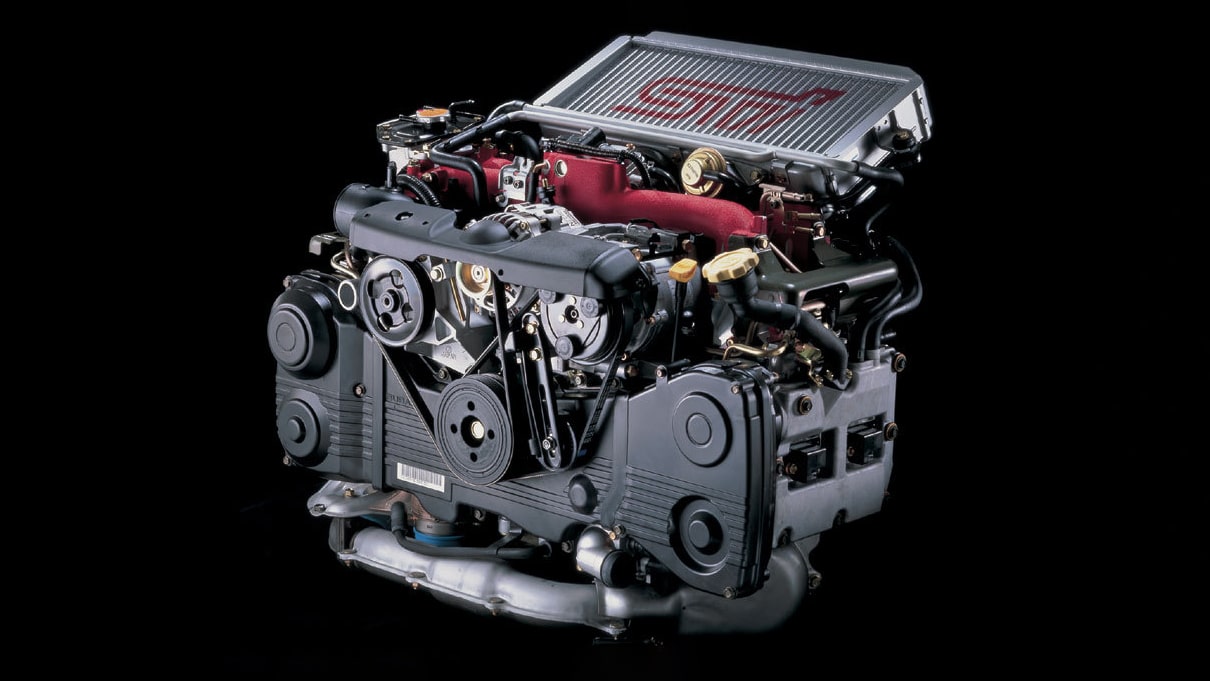
By 1998, the EJ25D was replaced with the EJ251, which featured SOHC heads, redesigned pistons, and a higher 10.1:1 compression ratio for better efficiency. Around the same time, Subaru also developed the EJ252 as a California-specific version that included a different intake manifold and throttle valve to meet stricter emissions regulations.
Another key variant was the EJ253, introduced in 1999 and produced well into the 2010s. It adopted a MAF-based fuel system and added Tumble Generator Valves in the intake manifold to optimize combustion.
Later, in 2006, Subaru integrated the i-AVLS (active valve lift system), which adjusted intake valve lift for improved performance and efficiency. By 2009, the EJ253 received further refinements, including lightweight pistons, revised exhaust headers, a plastic intake manifold, and updated spark plugs.
Overall, the EJ25 became one of Subaru’s most widely used engines, evolving through multiple generations to meet performance expectations while adapting to tightening emissions standards. Its balance of size, power, and continuous improvement helped solidify its role as a cornerstone of Subaru engineering.
10. Dodge 5.9 Magnum V8
Before the era of HEMIs, Dodge’s trucks and SUVs often carried the 5.9 Magnum V8. It wasn’t the most refined engine, but it was a dependable workhorse, delivering plenty of torque for towing and hauling.

These engines could take abuse on job sites or in farm trucks, and many are still running strong today. For those who appreciate old-school American truck power, the Magnum remains a symbol of Dodge’s no-nonsense approach to building engines.
The Chrysler/Dodge 360 Magnum, part of the LA/Magnum engine family, is a 5.9-liter (5,899 cc or 360 cu.in.) naturally aspirated V8 that was produced from 1992 through 2003. Built on a traditional 90° V8 layout, the engine quickly became one of Chrysler’s most recognizable powerplants during the 1990s and early 2000s.
Constructed with a durable cast-iron block and matching cast-iron cylinder heads, the 360 Magnum used a single camshaft in an overhead valve (OHV) configuration, featuring two valves per cylinder for a total of 16 valves.
It was equipped with a multi-point fuel injection system for improved fuel delivery compared to older carbureted designs, as well as a mechanically timed electronic ignition system paired with a conventional ignition coil and distributor setup. This combination gave the Magnum a balance of reliability and performance while keeping maintenance relatively straightforward.
The engine carried a compression ratio of 9.1:1, with a bore of 101.6 mm (4.0 in) and a stroke of 90.9 mm (3.58 in). In its standard form, the 5.9L Magnum produced 230 horsepower (172 kW) at 4,000 rpm and 329 lb-ft (447 Nm) of torque at 3,250 rpm.
In 1998, Chrysler upgraded the engine, raising output to 245 horsepower (183 kW) and 334 lb-ft (454 Nm) of torque at the same rev ranges. The performance-focused R/T version pushed torque even further, delivering 245 horsepower alongside 345 lb-ft (468 Nm), making it one of the strongest variants in the Magnum lineup.
The 360 Magnum powered a wide range of Dodge and Chrysler trucks, vans, and SUVs, where its robust torque output and proven design made it a favorite among enthusiasts and workhorse owners alike. Despite being phased out in the early 2000s as more modern engines arrived, the Magnum 5.9L remains an iconic V8 in Chrysler’s history.
11. Nissan SR20DET
The Nissan SR20DET became a favorite among tuners in the 1990s, powering cars like the Silvia and 180SX. In the US, it gained cult status through imports and engine swaps, especially within the drifting scene.
Known for being rev-happy, turbocharged, and surprisingly robust, the SR20 could handle serious modifications while still offering reliability. Even now, it’s one of the most sought-after JDM engines for enthusiasts looking to relive the golden era of Japanese performance.
The Nissan SR20DE is a 2.0-liter (1,998 cc or 121.92 cu.in.) inline-four, four-stroke gasoline engine from Nissan’s SR family, produced between 1989 and 2002. It became one of Nissan’s most widely used engines during that era, powering more than 15 different mid-sized Nissan models.
Designed as a replacement for the older CA20 engine, the SR20DE featured a more modern architecture, swapping out the CA20’s cast-iron block in favor of a lighter aluminum block reinforced with steel sleeves for added strength and durability.
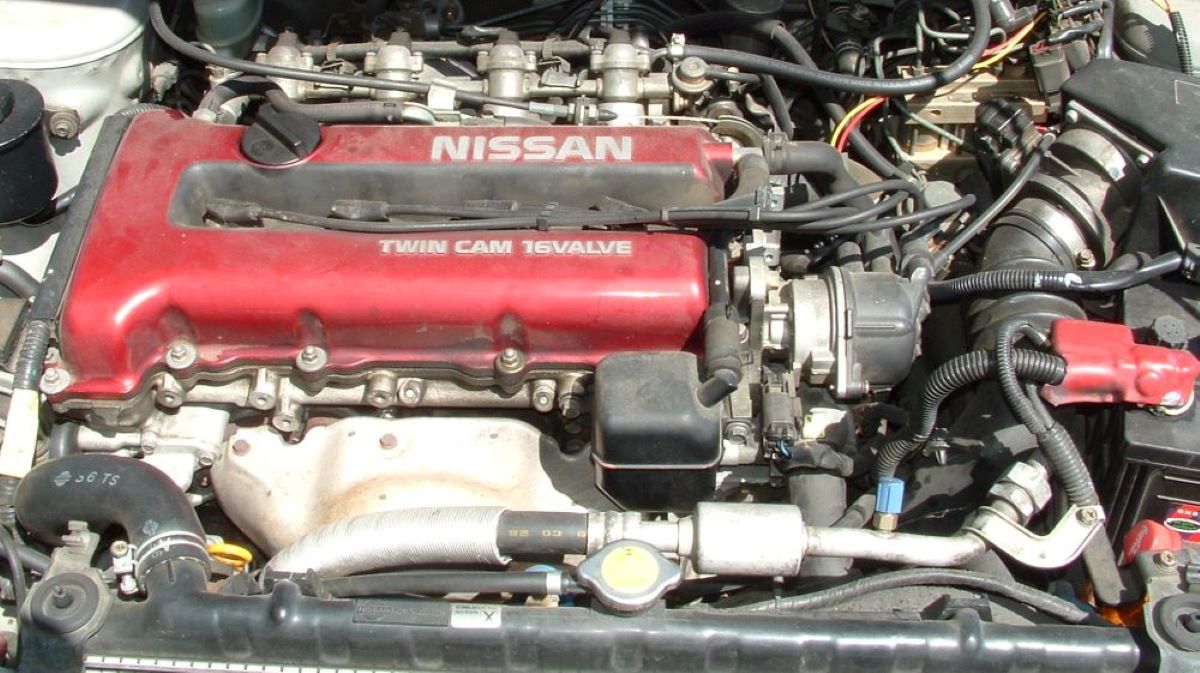
The SR20DE was engineered with performance and efficiency in mind. It came with an aluminum cylinder head and employed a dual overhead camshaft (DOHC) design, incorporating four valves per cylinder, two intake and two exhaust, for improved breathing.
The camshafts were driven by a durable timing chain, while fuel was delivered through a multi-point fuel injection system. With a perfectly square configuration, an 86 mm (3.39 in) bore and 86 mm (3.39 in) stroke, the SR20DE offered a balanced blend of rev-happy characteristics and solid torque delivery.
Compression ratio varied slightly depending on the generation. Earlier versions built before 2000, often referred to as the “Red Top” and “Black Top” variants, came with a 9.5:1 compression ratio.
Later models introduced around 2000, known as the “Roller Rocker” (RR) versions, increased compression to 10:1 for improved efficiency and performance.
Overall, the SR20DE gained a strong reputation for being both reliable and tunable, making it a favorite among enthusiasts for decades. Its durable construction, chain-driven camshafts, and versatile design ensured its place as one of Nissan’s most respected four-cylinder engines.
12. Jeep 4.0 Inline-Six
If durability were a competition, the Jeep 4.0 inline-six would be in the running for the crown. Introduced in the 1980s and used until 2006, this engine powered Cherokees, Wranglers, and other Jeep models with legendary toughness.
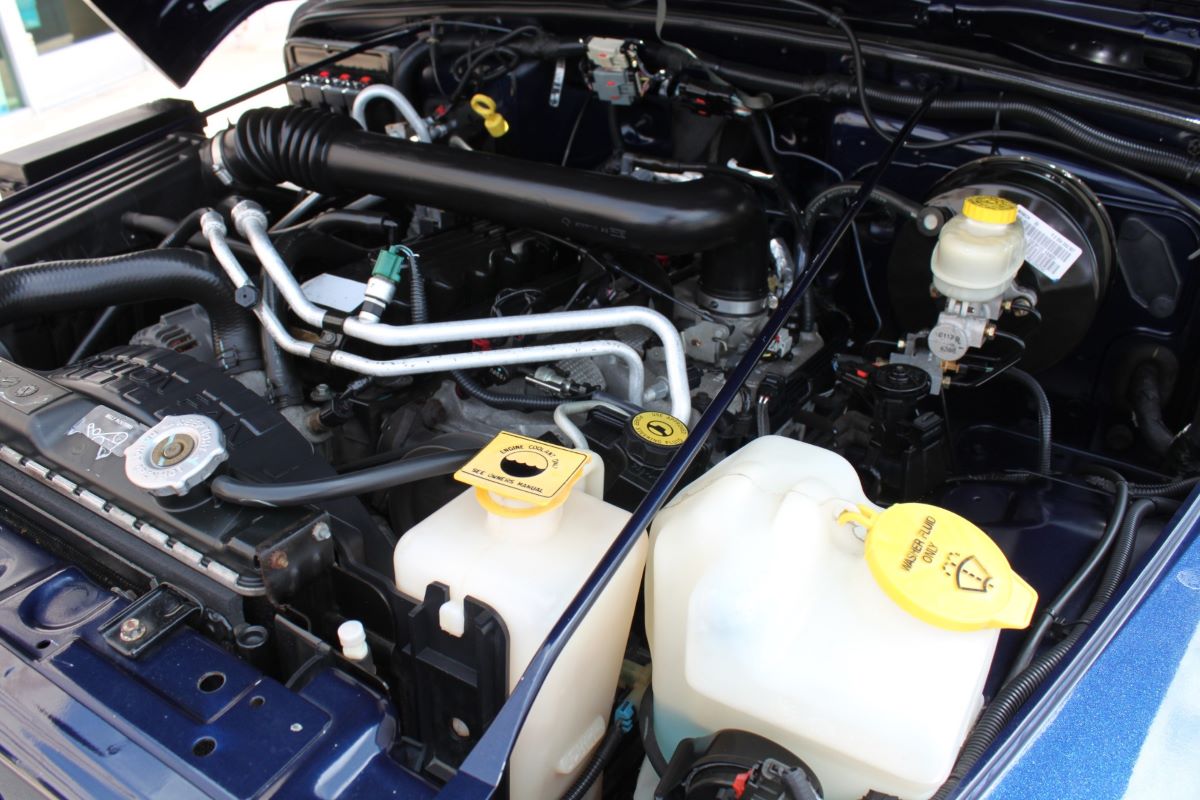
Many owners report these engines crossing 400,000 miles without major issues. For off-roaders, the 4.0 remains a trusted companion thanks to its low-end torque and simple design. Even today, finding a Cherokee XJ with the 4.0 is like finding a golden ticket in the used market.
13. Mitsubishi 4G63T
Made famous by the Mitsubishi Eclipse and Lancer Evolution, the 4G63T was a turbocharged four-cylinder that punched far above its weight.
With rally pedigree and massive aftermarket support, it became a favorite for tuners chasing big horsepower numbers.

Known for its iron block and robust internals, the 4G63T could handle extreme builds while still serving as a daily driver. Even now, Evo enthusiasts consider it one of the greatest four-cylinder engines ever made.
14. GM 3800 V6
The GM 3800 V6, especially in its supercharged form, became a staple in cars like the Pontiac Grand Prix GTP and Buick Regal GS. While it may not have had the glamour of a high-performance import engine, it was nearly indestructible.
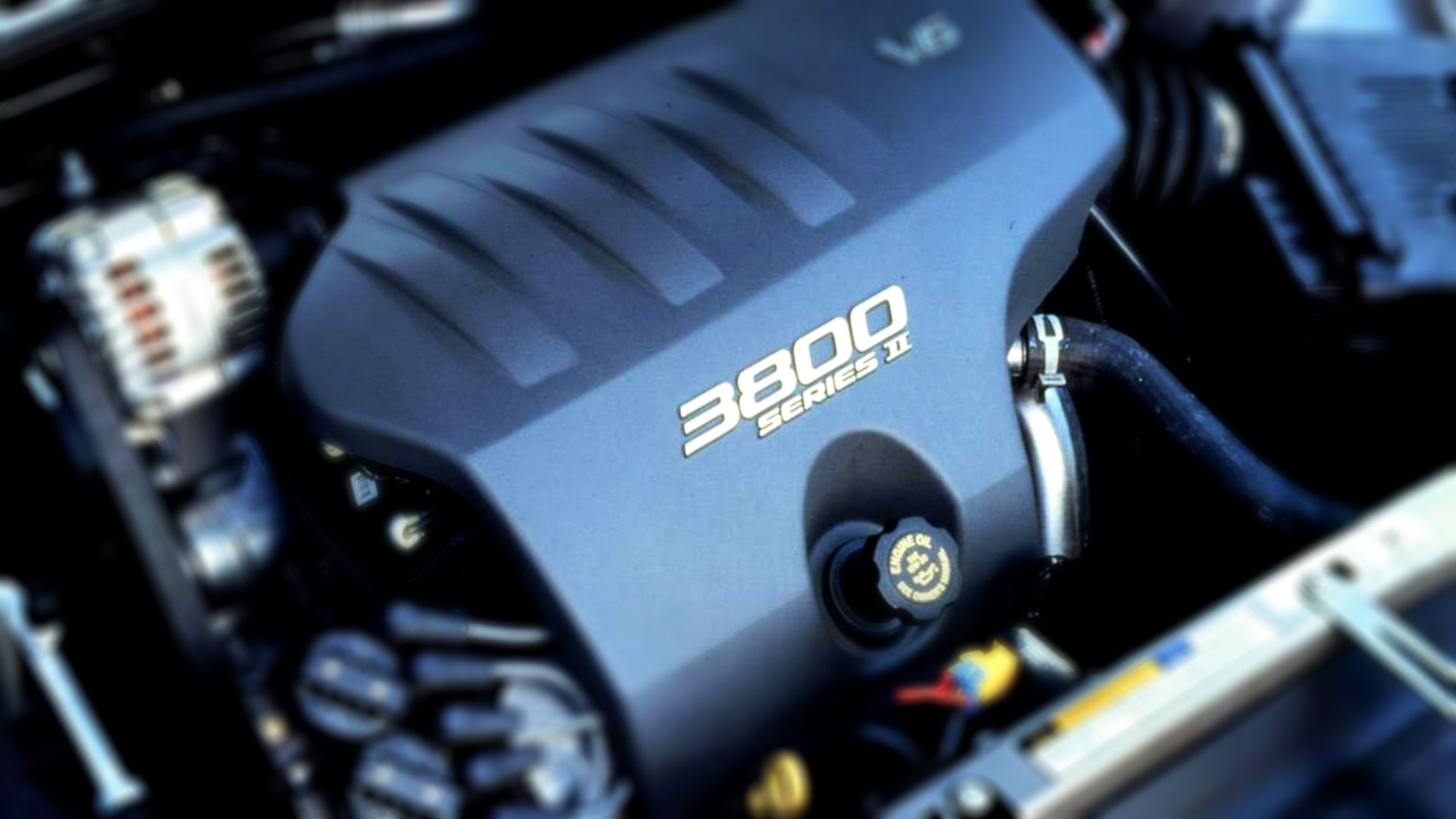
Mechanics often point to the 3800 as one of the best American V6 engines ever built, capable of running hundreds of thousands of miles with minimal maintenance. For many families in the US, this engine powered their daily commute for decades.
15. Porsche Mezger Flat-Six
Rounding out the list is the Porsche Mezger engine, used in the 911 GT3 and 911 Turbo models before 2005. Derived from Porsche’s racing heritage, the Mezger flat-six was revered for its durability and performance.
Unlike some later Porsche engines plagued by reliability issues, the Mezger design was robust and track-tested. Today, Mezger-powered Porsches are highly sought after, commanding premium prices as enthusiasts recognize their unmatched combination of sound, performance, and longevity.

Engines built before 2005 represent a different era one where simplicity, mechanical toughness, and character often mattered more than meeting emissions targets or maximizing fuel economy.
Whether it’s the bulletproof Toyota 22RE, the endlessly tunable 2JZ, or the iconic American V8s that powered muscle cars and trucks, these engines continue to shine today.
Many are still on the road, others live on in swap projects, and some have reached collector status. But all of them prove one point clearly: great engineering never goes out of style.