
Taking a road trip across the United States is a rite of passage for many drivers. Whether it’s cruising along Route 66, tackling the winding roads of the Rockies, or pushing through long stretches of interstate, the one thing every driver needs is trust in their car.
Reliability is more than just about avoiding costly repairs it’s about peace of mind, knowing your vehicle won’t leave you stranded in the middle of nowhere.
While plenty of cars claim to be dependable, only a select few have earned reputations for going the distance without drama. These eight cars are celebrated by mechanics, long-time owners, and road trip warriors for their ability to keep going, mile after mile, with minimal fuss.
1. Toyota Camry
When Americans think of reliability, the Toyota Camry almost always comes to mind. Known as the “set it and forget it” car, the Camry has a long history of delivering dependable performance with little need for repairs.
It’s not the flashiest sedan, but that’s exactly the point it was engineered to withstand years of heavy commuting and cross-country travel.
Its four-cylinder engines are legendary for crossing the 300,000-mile mark without drama, provided owners keep up with basic oil changes. The Camry’s reputation is so strong that it has been a staple in taxi fleets and rideshare services, where vehicles face relentless use.
On long drives, owners know they can count on the Camry’s smooth ride, great fuel economy, and the comforting fact that it’s among the least likely cars to break down in the middle of a trip.
The Toyota Camry remains one of the most enduring and best-selling midsize sedans in America, even as SUVs continue to dominate the market.
For over two decades, the Camry has held the title of the nation’s top-selling passenger car thanks to its reputation for reliability, practicality, and strong resale value.
While the midsize sedan segment has shrunk, the Camry continues to appeal to families and commuters alike with its blend of safety features, fuel efficiency, and comfortable interior.
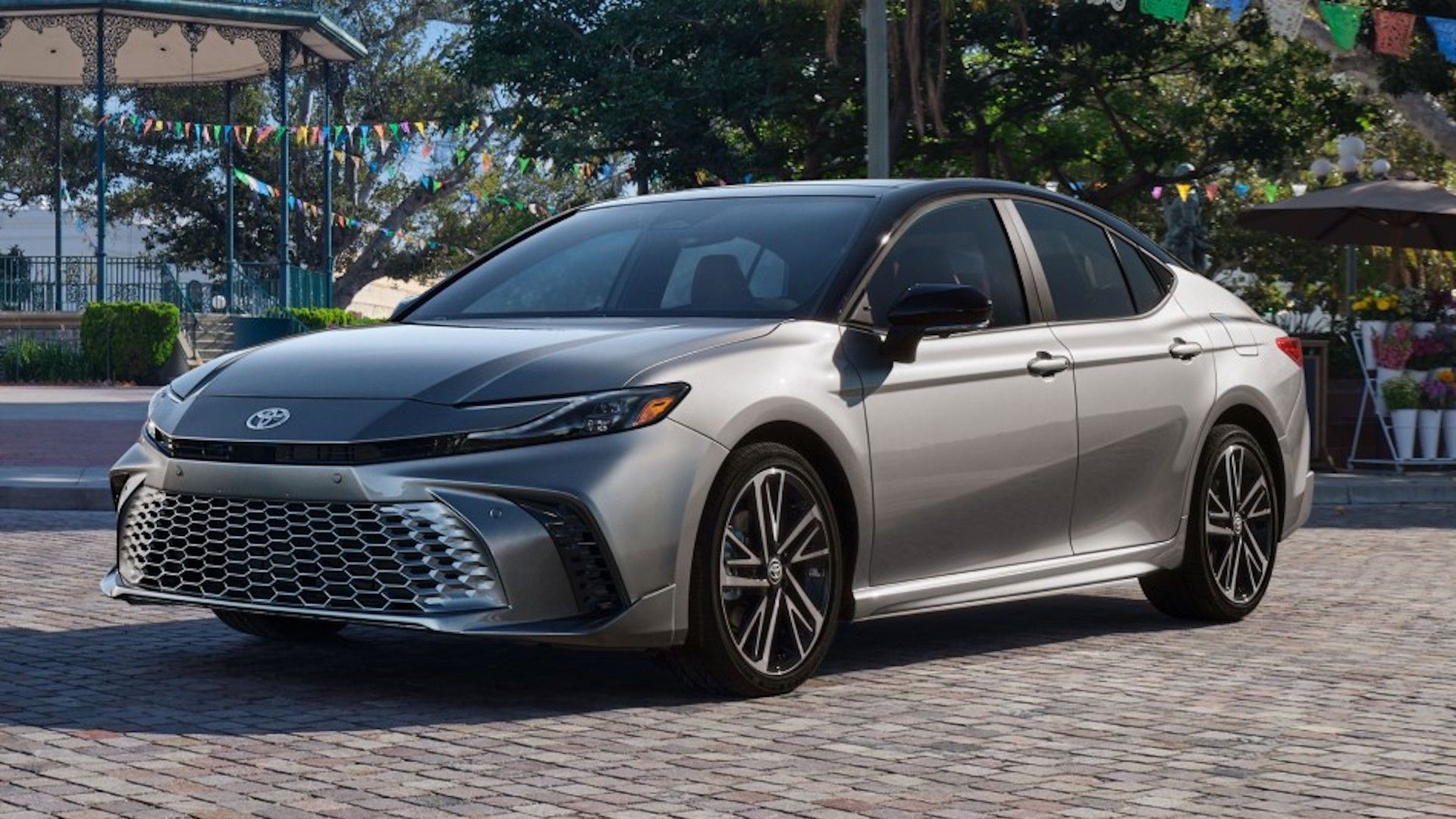
A hybrid version is available for those seeking exceptional fuel economy, while higher trims still offer a powerful 301-hp V6, something many rivals have phased out.
Styling has also become more dynamic, especially with options like the sporty TRD trim or the Nightshade package, which for 2023 brings blacked-out accents and bronze 19-inch wheels.
For the 2023 model year, Toyota has made subtle updates across the Camry lineup. The SE Nightshade trim now includes black headlight and taillight surrounds, complementing the darker exterior elements and available Reservoir Blue paint.
On the road, the Camry delivers a balanced driving experience. The base four-cylinder engine paired with an eight-speed automatic provides adequate but unexciting performance, while the hybrid variant emphasizes fuel savings without sacrificing daily usability.
The standout option remains the 301-hp V6, which adds a level of refinement and power not often found in this segment. Handling is composed, the steering feels natural, and the ride quality is comfortable for both short commutes and long trips.
Overall, the 2023 Toyota Camry is not the flashiest midsize sedan, but it doesn’t need to be. Its wide range of trims and powertrains, reputation for dependability, and balance of comfort and efficiency make it a consistently strong contender in a segment that has seen many competitors fade away.
2. Honda Accord
The Honda Accord has been America’s sweetheart sedan for decades, blending efficiency, comfort, and dependability into one package.
Known for its bulletproof engines and manual transmissions that outlast even the car’s body, the Accord has consistently been rated one of the most reliable cars on the market.
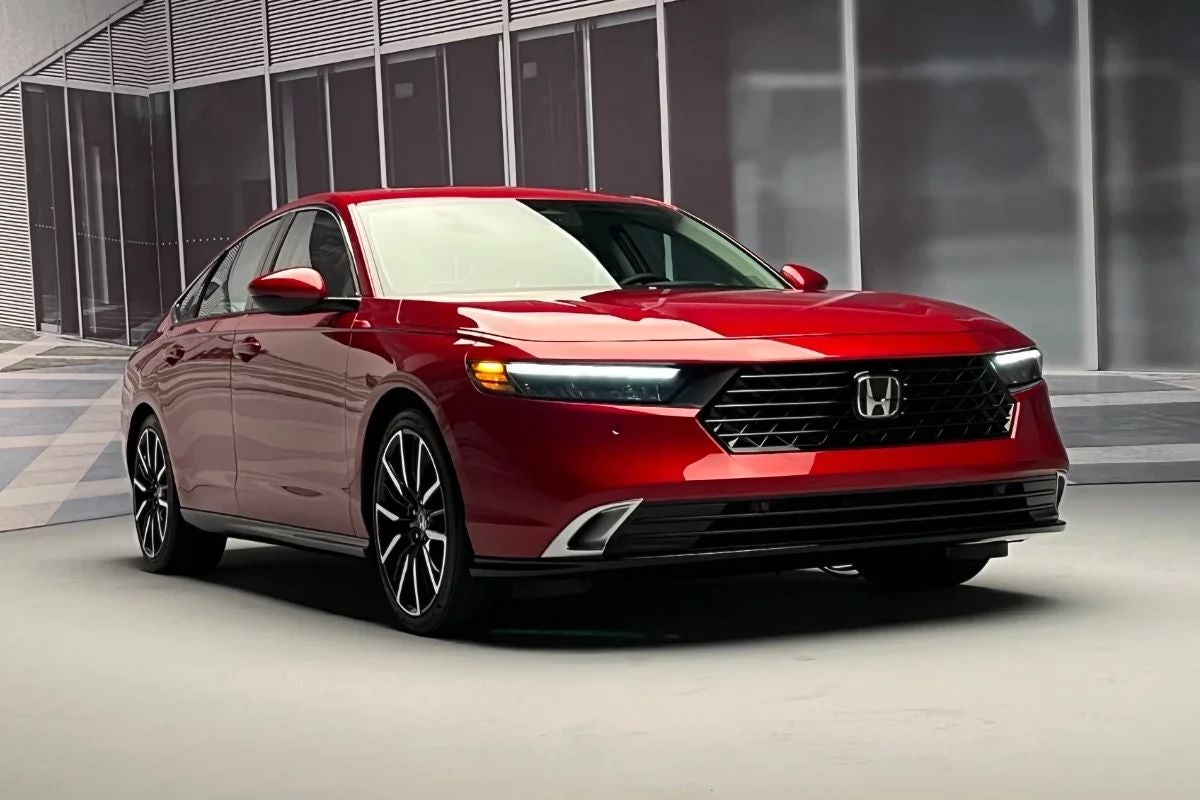
What makes the Accord particularly road-trip friendly is its balance between performance and comfort it’s engaging enough to keep drivers from feeling fatigued but practical enough to handle hundreds of miles without strain.
Many Accords from the early 2000s are still on the road today, often crossing 250,000 miles with little more than routine maintenance. If you’re planning a long highway stretch, the Accord is one of those rare cars that feels as solid at mile 10 as it does at mile 1,000.
3. Toyota Corolla
The Corolla is the global symbol of longevity. It’s not the biggest, fastest, or most stylish car, but it has reliably transported millions of drivers for decades.
For road-trippers, the Corolla’s appeal lies in its simplicity its engines are notoriously over-engineered, meaning they can handle abuse and still keep running.
Owners regularly report odometers climbing past 300,000 miles without any major failures, a feat that puts many modern vehicles to shame.
It’s also incredibly fuel-efficient, saving drivers money when covering long distances. If there’s any car that embodies the phrase “it just works,” it’s the Toyota Corolla. On a long drive through rural highways or crowded interstates, it’s a car you know won’t flinch when the miles add up.
The 2024 Toyota Corolla stays true to its reputation as a dependable, predictable compact car rather than a performance standout. It’s not designed to thrill like some of its rivals, but instead to deliver consistent, efficient, and comfortable transportation for daily driving.
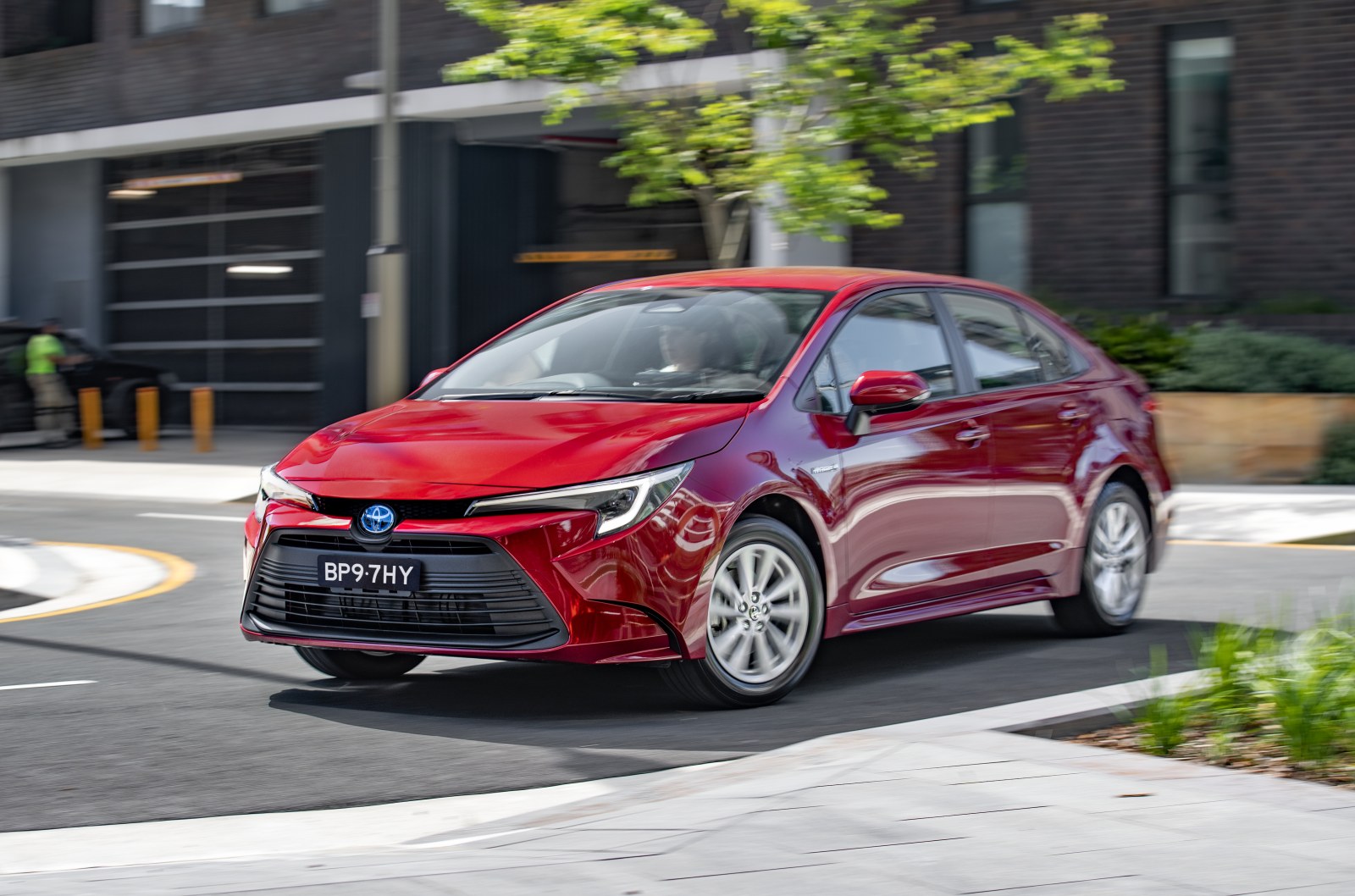
While its strongest powertrain, a 169-hp 2.0-liter four-cylinder, provides adequate performance, it lags behind competitors such as the Honda Civic and Mazda 3 in acceleration and driving engagement. The Corolla is available as both a sedan and hatchback, with the sedan also offering a hybrid option that emphasizes fuel economy.
For 2024, Toyota reintroduces the Nightshade Edition, an appearance package based on the SE trim. This version adds bronze wheels, dark badging, and, for hatchback models, a black roof with a vented sport wing, giving the otherwise conservative Corolla a more striking presence.
Pricing for the Corolla lineup starts at $23,185 for the LE sedan and stretches up to $29,475 for the Hybrid Nightshade Edition.
Among the trims, the SE sedan strikes a solid balance of value and driving enjoyment, thanks to its sport-tuned suspension, 18-inch wheels, LED headlights, an 8.0-inch touchscreen with Apple CarPlay and Android Auto, and a leather-trimmed steering wheel.
Under the hood, the Corolla sedan and hatchback both use the same 169-hp 2.0-liter four-cylinder paired with a CVT, while the sedan also offers hybrid variants for maximum fuel efficiency.
In testing, the Corolla’s acceleration proved modest, with the hybrid all-wheel-drive model taking 9.0 seconds to reach 60 mph and the hatchback managing a slightly quicker 8.3 seconds. Ride quality is a strong suit, as the Corolla absorbs bumps well and maintains composed body control.
SE and XSE models add sharper handling with sport-tuned suspensions and larger wheels, but even so, the Corolla still trails behind more dynamic competitors. Steering is predictable and braking performance is reliable, though stopping distances from 70 mph (174 to 183 feet) are not class-leading.
Overall, the 2024 Corolla remains a safe, practical, and efficient choice in the compact car segment. It may not stir excitement like its sportier rivals, but for buyers prioritizing reliability, comfort, and affordability, the Corolla delivers exactly what it promises.
4. Subaru Outback
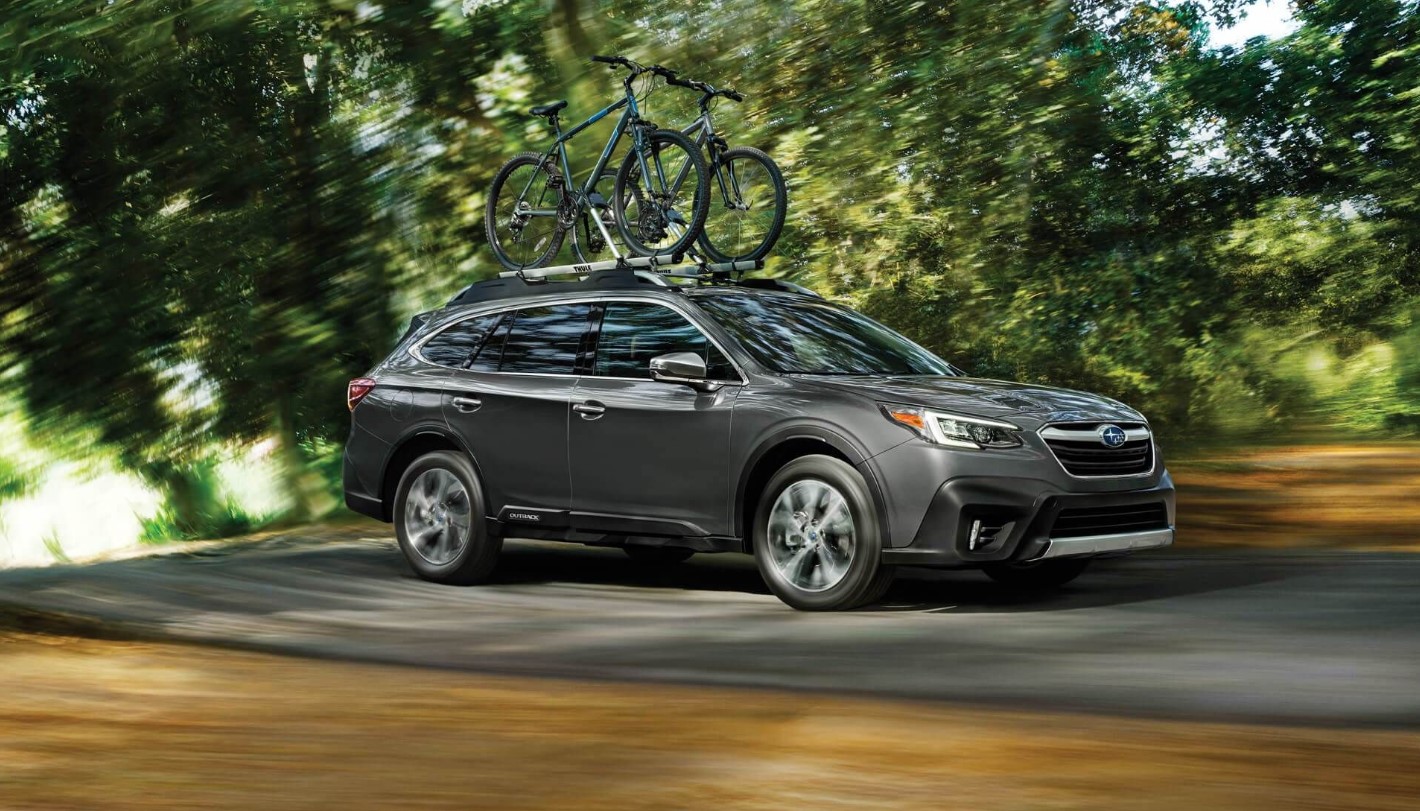
For adventurers who crave long drives beyond the interstate, the Subaru Outback has become a trusted companion.
With its rugged build, standard all-wheel drive, and ample cargo space, the Outback has been the go-to choice for outdoorsy types who need to get from city streets to remote trailheads without worry.
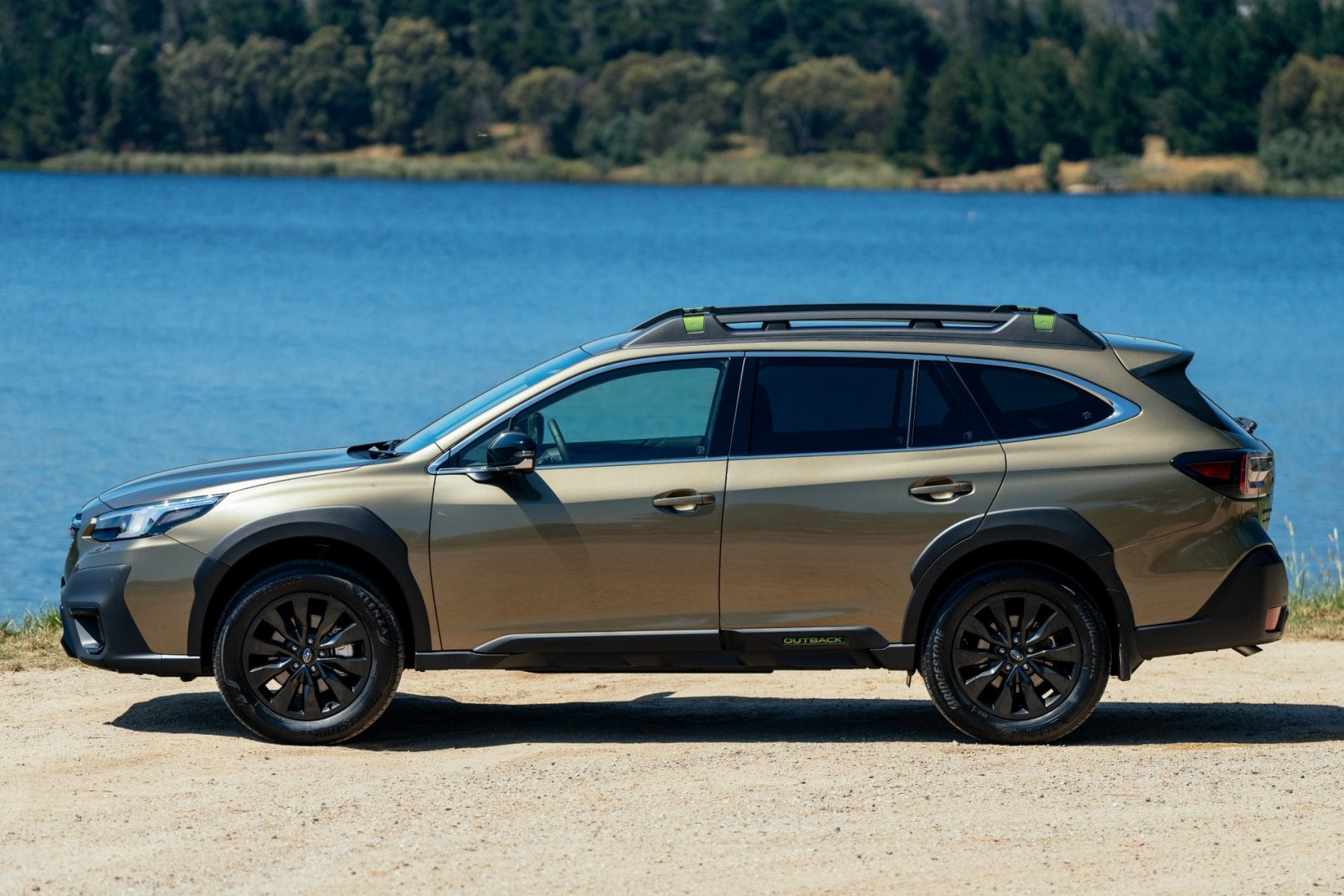
What makes the Outback stand out is its ability to remain reliable across diverse conditions. Whether it’s snow-packed mountain passes in Colorado or rain-slick roads in the Pacific Northwest, the Outback doesn’t just keep going it thrives.
Subaru’s flat-four engines, when maintained properly, are known for lasting well over 200,000 miles. For long road trips that sometimes turn into off-road detours, the Outback has earned its reputation as a car that won’t leave you stranded.
5. Lexus RX
Luxury vehicles aren’t always associated with reliability, but the Lexus RX is a major exception. Built on Toyota’s proven engineering foundation, the RX combines long-haul dependability with premium comfort.
Owners praise it for its smooth and quiet highway ride, making it perfect for cross-country road trips where fatigue can become an issue.
Because Lexus emphasizes durability in addition to luxury, the RX has an excellent track record of making it past 250,000 miles without major failures.
It’s also loaded with features that enhance long drives, such as supportive seating, strong air conditioning, and intuitive technology that doesn’t overwhelm drivers. The Lexus RX proves that reliability doesn’t have to come at the expense of comfort.
The 2023 Lexus RX marks the start of a new generation for the brand’s bestselling midsize luxury SUV, arriving after seven successful model years of the outgoing version. For now, it’s offered only in a two-row configuration, though the outgoing RX L’s three-row capability will likely be replaced by the upcoming Lexus TX.
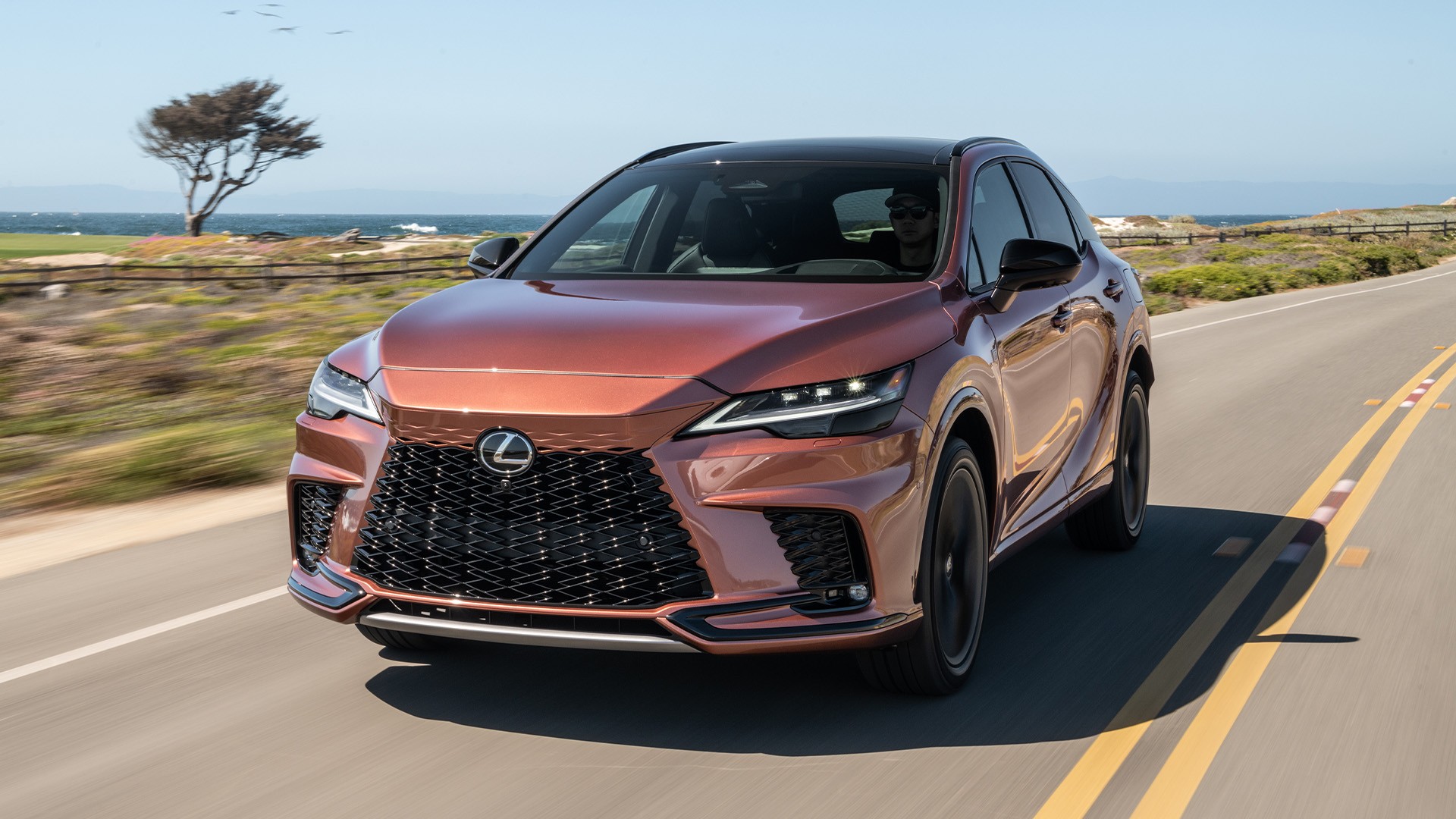
The redesign introduces a sharper exterior with updated lighting elements and a reworked grille that modernizes the RX’s familiar look. The SUV rides on a new platform that reduces weight, increases rear legroom, and improves cargo capacity despite keeping the same overall length as before.
A shorter rear overhang improves proportions, while the interior benefits from a sleeker center console and an available 14.0-inch touchscreen. Safety and driver-assistance technologies have also been updated, and Lexus’ Advanced Park system is now available.
What sets the RX apart is its philosophy. Instead of trying to dazzle with bold design or ultra-luxurious trimmings, Lexus continues to prioritize relaxation and comfort.
The cabin is upscale, well-built, and modern, though not as flashy as those in some competitors. While the materials and design aren’t on the cutting edge, many buyers may find the RX’s reputation for dependability, comfort, and value more appealing than extravagance.
On the road, the RX remains consistent with its heritage as a smooth, composed cruiser. The long-familiar V-6 engine has been retired in favor of a four-cylinder-based lineup, including gas and hybrid options.
Although some drivers may notice a bit of vibration or noise at higher revs, these smaller engines do little to diminish the RX’s overall refinement.
In fact, the hybrid variants improve efficiency and broaden the SUV’s appeal. Rather than chase outright performance, Lexus has kept the RX true to its core mission: providing a serene, feature-rich driving experience that makes everyday use effortless.
6. Honda CR-V
For those who need the practicality of an SUV without sacrificing reliability, the Honda CR-V is a standout. Known for its efficient engines and low maintenance costs, the CR-V has built a reputation as a crossover that just keeps going.
Families, commuters, and retirees alike have trusted the CR-V for everything from daily errands to 2,000-mile vacations. Owners often report that the vehicle feels nearly the same at 200,000 miles as it did at 50,000, a testament to Honda’s commitment to durability.
With ample cargo space, comfortable seating, and a reputation for never leaving its driver stranded, the CR-V has become a staple for road trip enthusiasts across the U.S.
The 2023 Honda CR-V makes a strong entrance into its sixth generation, bringing a complete redesign inside and out to better compete in the highly competitive compact SUV market.
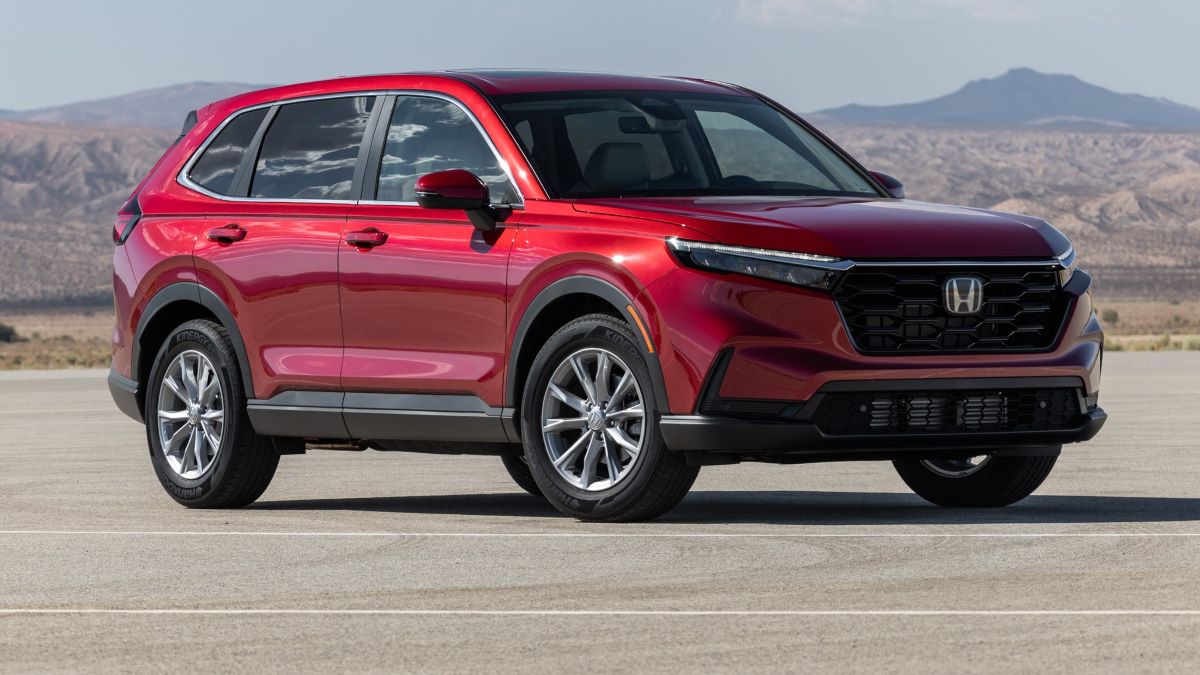
Bigger and bolder than before, the new CR-V offers more passenger space, improved refinement, and modernized styling that builds on Honda’s recent design direction. Its cabin takes inspiration from the Civic, with a clean, upscale layout, higher-quality materials, and user-friendly technology.
Available features include a 9.0-inch touchscreen with wireless Apple CarPlay and Android Auto, as well as a full suite of driver-assistance technologies such as adaptive cruise control, blind-spot monitoring, and lane-keeping assist, all standard across the lineup.
Under the hood, the CR-V continues with a 190-hp turbocharged 1.5-liter four-cylinder engine paired with a continuously variable transmission (CVT). Front-wheel drive comes standard, while all-wheel drive is available.
Honda has retuned the powertrain for better efficiency and responsiveness compared to the previous generation, though performance remains modest for the class. In testing, the EX-L trim reached 60 mph in 8.1 seconds, a bit slower than rivals and noisier under heavy throttle due to the CVT.
Still, the CR-V redeems itself with confident handling, a smooth ride, and everyday drivability that suits most buyers. For more power and efficiency, Honda offers a 204-hp hybrid setup in higher trims, reviewed separately.
The CR-V’s trim lineup has been simplified for 2023. The LX, EX, and EX-L trims feature the gas-only turbo engine, while the Sport and Sport Touring trims come exclusively with the hybrid powertrain. Pricing starts at $29,760 for the LX and tops out at $35,060 for a fully loaded EX-L on the gas side.
The EX-L stands out as the best pick among the nonhybrids, thanks to its leather upholstery, power tailgate, upgraded infotainment, and overall balance of features and value.
On the road, the new CR-V doesn’t deliver the sharp driving dynamics of the Mazda CX-50 or Volkswagen Tiguan, but it makes up for it with comfort, refinement, and predictability.
Hill-descent control is now standard, aiding stability on slippery or steep roads, while most trims ride on 18-inch wheels that balance style with ride comfort.
7. Toyota Highlander
For drivers who want something bigger than a sedan but still crave Toyota’s famed reliability, the Highlander is the perfect middle ground. Built to carry families and their luggage across long stretches of road, the Highlander has proven itself in both comfort and durability.
Its V6 engine, in particular, is celebrated for being one of the longest-lasting powerplants in Toyota’s lineup.
On long drives, the Highlander provides peace of mind with its dependable drivetrain and spacious interior, ensuring that everyone in the car remains comfortable no matter how many hours the trip takes.
It’s a favorite among families who prioritize reliability above all else when planning long road adventures.
The 2023 Toyota Highlander is a capable and family-friendly midsize SUV, but in such a crowded segment, it lands somewhere in the middle of the pack.
Toyota has retired the long-running V6 in favor of a new turbocharged 2.4-liter four-cylinder that delivers 265 horsepower and 309 pound-feet of torque. Power is routed through an eight-speed automatic transmission with either standard front-wheel drive or available all-wheel drive.
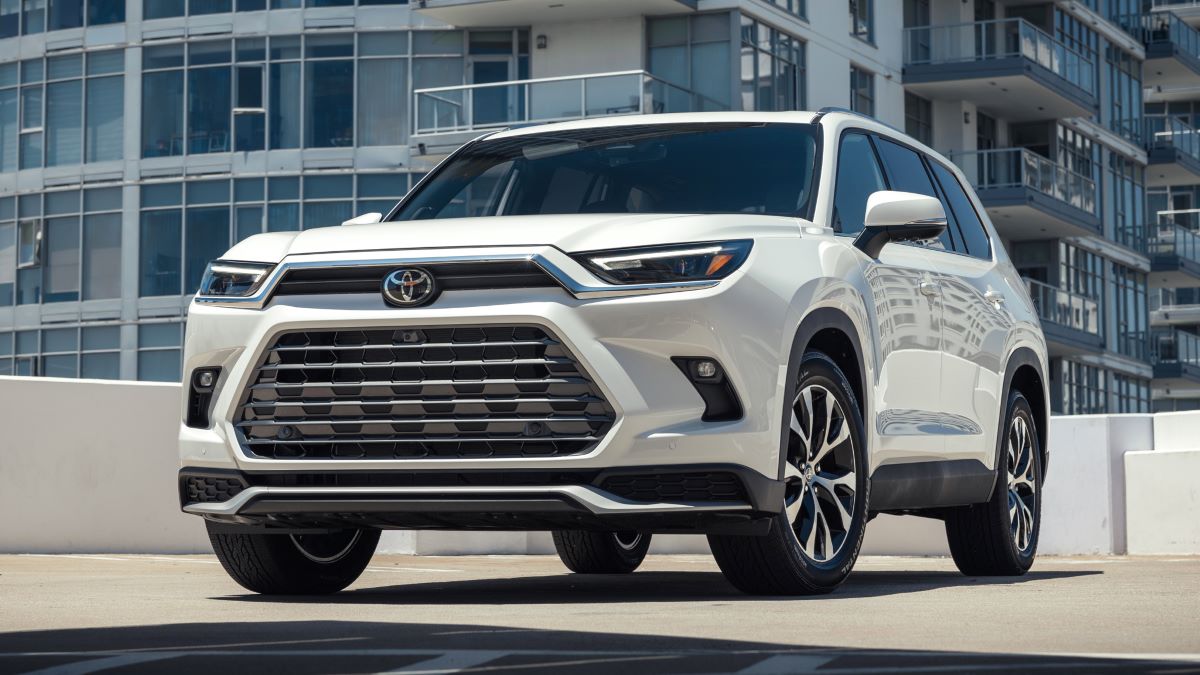
Toyota claims fuel economy remains on par with the outgoing V6 at a combined 24 mpg, though performance is modest, an AWD Highlander with this engine reached 60 mph in 7.2 seconds in testing. Handling is predictable rather than sporty, making the Highlander well suited for smooth family commuting rather than spirited driving.
Inside, the Highlander comes well equipped, even in its base L trim, which includes modern infotainment and Toyota’s full suite of driver-assistance technologies. A new 12.3-inch infotainment screen is also available for 2023, along with convenience features like hands-free power liftgates and power-folding exterior mirrors.
Pricing starts at $38,015 for the entry-level L and stretches to $51,070 for the top-tier Platinum. While the base model is affordable, it feels stripped-down compared to the rest of the lineup.
Overall, the Highlander is comfortable, safe, and dependable, but it faces stiff competition. Rivals like the Kia Telluride and Hyundai Palisade offer more third-row space and near-luxury interiors, the Mazda CX-9 delivers sharper handling and a richer cabin, and the Jeep Grand Cherokee L brings genuine off-road capability.
For buyers who value Toyota’s reputation for reliability and want a family SUV that’s easy to live with, the Highlander is a solid choice, but those seeking maximum space, luxury, or driving excitement may find stronger alternatives in this class.
8. Mazda MX-5 Miata
While most cars on this list are practical sedans or SUVs, the Mazda MX-5 Miata earns its place for a different reason it’s one of the most reliable sports cars ever built.
Known for its simplicity, lightweight design, and robust four-cylinder engines, the Miata has a reputation for going the distance with minimal maintenance.
Enthusiasts often daily-drive their Miatas for years and then take them on long road trips without hesitation. Unlike many performance-oriented cars, the Miata doesn’t suffer from frequent breakdowns or finicky electronics.
On a long drive, it delivers not only dependability but also pure driving joy, proving that reliability doesn’t have to be boring.
When it comes to long drives across the United States, the last thing any driver wants is to end up stranded on the side of the road waiting for a tow truck.
The 2025 Mazda MX-5 Miata continues its legacy as one of the most engaging and lightweight sports cars on the market, offering a pure driving experience at an attainable price.
With a starting MSRP of $29,330, the Miata emphasizes balance, agility, and connection to the road rather than raw power. Under the hood, it carries a 2.0-liter SKYACTIV-G inline-four engine producing 181 horsepower at 7,000 rpm and 151 lb.-ft. of torque at 4,000 rpm.
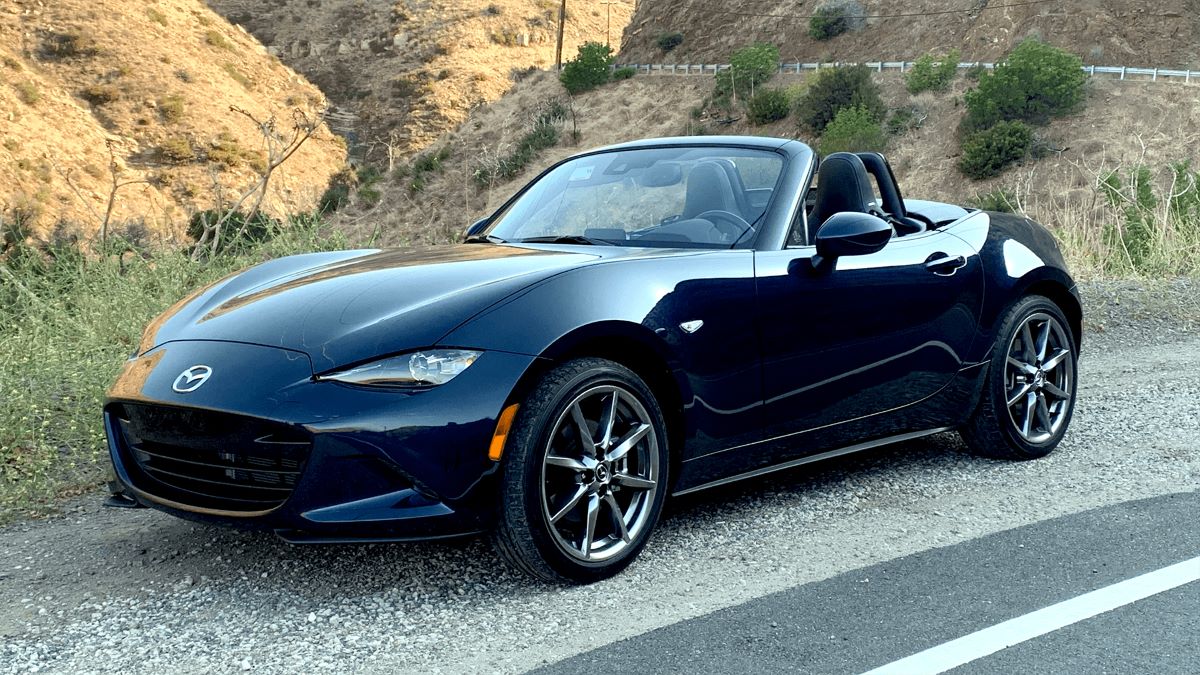
Paired with a standard SKYACTIV-MT six-speed manual transmission, the Miata delivers responsive performance with an EPA-estimated 26 mpg city, 34 mpg highway, and 29 mpg combined.
Weighing just 2,366 pounds, the MX-5’s light curb weight and short 90.9-inch wheelbase contribute to sharp handling and an agile driving character.
The car sits low with a height of just 48.8 inches and offers 5.3 inches of ground clearance. Exterior dimensions are compact, 154.1 inches long and 68.3 inches wide, making it ideal for both spirited drives and tight urban streets. Trunk space is minimal at 4.6 cubic feet, reinforcing the Miata’s sports car-first philosophy.
Inside, the Miata seats two and focuses on driver engagement. Standard leather-trimmed sport bucket seats, a navigation system, WiFi hotspot, heated front seats, and keyless entry/start come equipped even on higher trims, blending simplicity with modern convenience.
With 43.1 inches of front legroom, 37.4 inches of headroom, and supportive bolstered seating, the cabin is snug but purpose-built for driving enthusiasts.
On the outside, 17 x 7-inch aluminum wheels with painted accents complete its athletic stance. The Miata also includes practical touches like power mirrors and a remote trunk release, but the emphasis remains firmly on performance and style.
Mazda backs the MX-5 with a 36-month/36,000-mile basic warranty, a 60-month/60,000-mile powertrain warranty, and corrosion protection for up to 60 months with unlimited mileage. Roadside assistance is included for the first three years or 36,000 miles.
The 2025 Mazda MX-5 Miata is not about hauling families or maximizing cargo, it’s about joy. With its lightweight body, precise handling, and manual transmission, it delivers one of the purest sports car experiences available today at a price that undercuts more powerful rivals.
The cars on this list have earned their reputations by consistently delivering reliability where it matters most: the open road.
From the bulletproof Toyota Camry and Honda Accord to the adventurous Subaru Outback and luxurious Lexus RX, each of these vehicles provides peace of mind for drivers who value dependability.
Whether you’re crossing the desert highways of Nevada or cruising through the Appalachian Mountains, these eight cars ensure the journey is as worry-free as the destination.
