

In the collectable cars world, the most valuable vehicles often defy expectations. While many 1990s sedans were initially purchased as practical daily drivers, a select few have appreciated dramatically over the years, transforming from overlooked models into highly sought-after classics.
Among these, the Lexus GS 300 stands out as a shining example. Originally launched in 1993, this mid-size luxury sedan entered a competitive market dominated by European brands like BMW and Mercedes-Benz.
At the time, it was admired for its reliability, smooth ride, and understated elegance, but it lacked the immediate cachet that its German rivals commanded.
Fast forward three decades, and the Lexus GS 300 has achieved a status that few would have predicted: pristine examples now sell for three times their original price, making it a rare and highly prized collectible.
The reasons behind this surge in value are multifaceted. To begin with, the GS 300 represents a unique intersection of engineering excellence and timeless design.
Unlike many vehicles from the 1990s that have aged poorly, this sedan has maintained its visual appeal and performance capabilities.
Its clean, aerodynamic lines, well-proportioned body, and restrained luxury details give it an elegance that has not only survived the passage of time but continues to resonate with modern enthusiasts.
The interior is equally impressive, featuring high-quality materials, ergonomic layouts, and durable finishes that allow these vehicles to remain in near-original condition decades later.
Another crucial factor contributing to the GS 300’s appreciation is its mechanical reliability. Powered by the legendary 2JZ-GE inline-six engine, the sedan offers smooth, consistent performance while maintaining remarkable durability.
While many European sedans of the same era are now prone to costly repairs and electronic failures, the GS 300 has proven itself capable of reaching high mileages with minimal intervention.
Its robust construction, straightforward engineering, and rear-wheel-drive chassis create a driving experience that is both enjoyable and dependable qualities that collectors increasingly value.
Additionally, the GS 300 has benefited from a growing appreciation of Japanese luxury cars from the 1990s.
As the market for classic vehicles evolves, enthusiasts are beginning to recognize that Japanese sedans of this era often combine quality, performance, and longevity in ways that rival their European contemporaries.
Low production numbers for well-preserved models, along with the scarcity of vehicles in original condition, have further driven prices upward.
Ultimately, the Lexus GS 300’s appeal lies in its rare combination of understated elegance, engineering reliability, and long-term investment potential.
It is a sedan that transcends its era, offering collectors and enthusiasts not only a functional vehicle but also a piece of automotive history that continues to grow in value.
In the following sections, we will explore the rise of the Lexus GS 300, its engineering and design, and the factors that make it a highly desirable collectible.
Also Read: 12 SUVs With Interiors That Refuse to Fall Apart
Introduction and the Rise of the Lexus GS 300
When Lexus introduced the GS 300 in 1993, few could have predicted the cultural and financial significance it would hold decades later.
At the time, the automotive landscape was dominated by German luxury sedans, particularly the BMW 5 Series and Mercedes-Benz E-Class, which set benchmarks for refinement, performance, and prestige.
Lexus, a relatively new luxury division of Toyota established in 1989, was still carving out its identity.
The brand had made waves with the LS 400, a flagship sedan that impressed with its refinement and reliability, but to compete more broadly in the global market, Lexus needed a strong mid-size luxury contender. The GS 300 was their answer.
Styled by the renowned Italian designer Giorgetto Giugiaro, the first-generation GS 300 combined European aesthetics with Japanese engineering precision.
Its sleek, aerodynamic body carried an elegance that allowed it to stand apart from the sharper, boxier profiles of its German counterparts.
Subtle curves, balanced proportions, and an understated grille gave it an aura of sophistication without the brashness that sometimes defined its rivals.
For buyers in the early 1990s, the GS 300 offered a fresh alternative: a luxury sedan that carried prestige without ostentation.
At its launch, the GS 300 was powered by the 3.0-liter 2JZ-GE inline-six engine. This naturally aspirated powerplant was smooth, refined, and exceptionally durable.
It wasn’t the most powerful engine in its segment, but it delivered its 225 horsepower with a level of polish that appealed to luxury buyers.
More importantly, it was built on the same engine family as the legendary 2JZ-GTE, which later powered the Toyota Supra, a fact that has only increased its desirability among collectors.
Despite its technical strengths and luxurious appointments, the GS 300 initially lived in the shadows of its European competition. Buyers looking for driving prestige gravitated toward BMW, while those seeking heritage and tradition often chose Mercedes.
Lexus’s reputation in the 1990s, though rapidly growing, was still that of a newcomer. The GS 300 sold steadily but not spectacularly, with most buyers appreciating it for its comfort, reliability, and restrained luxury. For many years, it was seen as a solid but unspectacular choice.
However, time has revealed the true value of the GS 300. Where many of its contemporaries have succumbed to mechanical issues, costly repairs, or dated designs, the GS 300 has proven to be a timeless survivor.
Owners discovered that the car aged gracefully, with interiors that resisted wear and drivetrains that delivered hundreds of thousands of miles with little more than routine maintenance.
While European sedans often became financial burdens in their second or third decades, the GS 300 remained dependable, offering a balance of refinement and durability that few others could match.
The turning point in the GS 300’s perception came as collectors began to re-evaluate Japanese cars from the 1990s. Once dismissed as purely practical, these vehicles started to gain recognition for their engineering brilliance and long-term durability.
Cars like the Toyota Supra, Acura NSX, and Nissan Skyline GT-R became icons of the era, fetching record prices at auctions. While the GS 300 did not have the same performance credentials, it shared the engineering ethos of that golden era of Japanese design.
Collectors realized that it represented the luxury side of the same story: a car that demonstrated how Japan could compete head-to-head with Europe, not only in sports cars but in executive sedans.
Another reason for its rising popularity is scarcity. Many GS 300s were used as daily drivers and accumulated high mileage. Some were modified by enthusiasts chasing Supra-inspired performance, often compromising originality.
As a result, well-preserved, unmodified examples with low mileage have become increasingly rare. Collectors now compete to secure these pristine vehicles, driving values to levels few imagined possible.
Where a clean GS 300 might have been found for under $10,000 a decade ago, today some examples fetch prices well over $60,000, with showroom-quality cars crossing into six figures.
The GS 300’s rise is also tied to its broader cultural footprint. It became a quiet icon in communities that valued reliability and understated elegance.
In markets such as North America, it offered buyers an alternative to costly German maintenance while still providing prestige. Its subtle design appealed to professionals who wanted luxury without excess flash.
Over the years, it gained a reputation as the car that “just kept running,” cementing its status as a practical yet aspirational vehicle.
What makes the GS 300’s rise especially remarkable is how it has outpaced modern luxury vehicles in terms of collectibility. A brand-new BMW 5 Series may carry more advanced technology, but depreciation quickly erodes its value.
In contrast, the GS 300, once considered second-tier, has reversed the usual trajectory of cars: instead of losing value, it has gained it, becoming an appreciating asset. This reversal has caught the attention of collectors, investors, and enthusiasts alike.
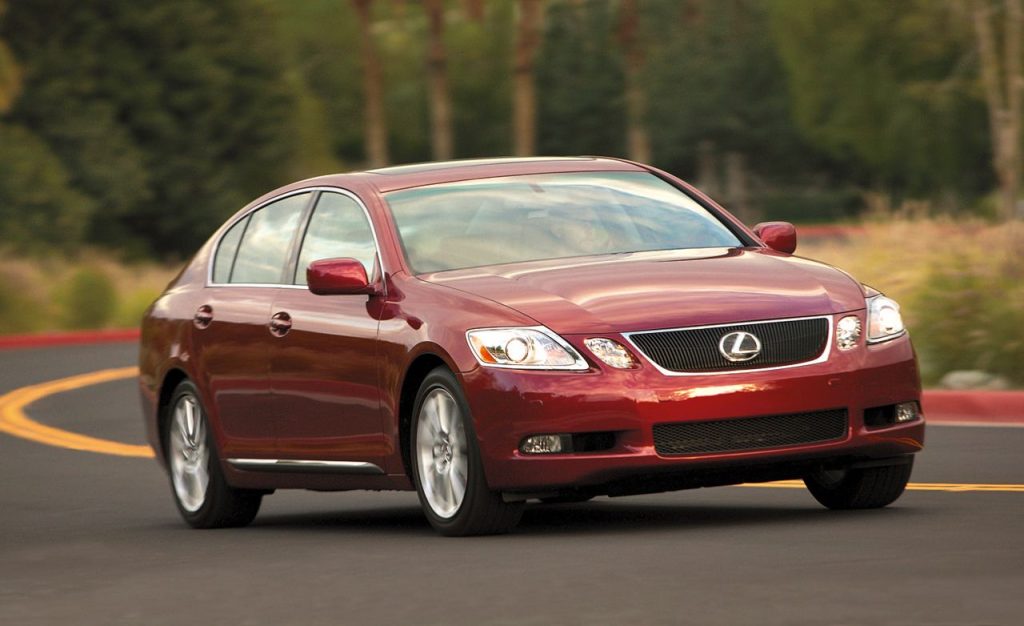
The story of the GS 300 is, in many ways, the story of Lexus itself. It illustrates how Lexus transitioned from being the newcomer in the luxury segment to an established global player.
The GS 300 proved that Japanese craftsmanship, when combined with design sophistication, could produce a vehicle that not only competed but endured. Today, it stands as a symbol of an era when cars were built with durability and refinement in equal measure.
In summary, the rise of the Lexus GS 300 from a respectable but overlooked sedan to a triple-value collectible is the result of several converging factors: timeless design, robust engineering, a legendary engine lineage, and a re-evaluation of 1990s Japanese vehicles.
What was once an understated luxury car has now become a cherished classic, commanding respect and value far beyond what its creators could have imagined. Its journey is proof that true quality, even when overlooked at first, will eventually shine through.
Engineering Excellence and Design of the Lexus GS 300
When assessing the Lexus GS 300’s transformation from a respectable mid-size luxury sedan into a sought-after collectible, one cannot overlook the engineering and design that made it stand apart.
The GS 300 was not simply a product of the early 1990s it was a carefully crafted machine that reflected Toyota and Lexus’s relentless pursuit of perfection.
Its appeal lies in how seamlessly it merged performance, reliability, and design into a package that was both practical for daily driving and elegant enough for luxury markets.
Exterior Design: Italian Elegance Meets Japanese Precision
The GS 300 owes much of its exterior styling to Giorgetto Giugiaro, one of the most celebrated automotive designers of the 20th century.
Known for penning iconic vehicles such as the BMW M1 and the Maserati Ghibli, Giugiaro brought a European sensibility to Lexus’s design language. The result was a car that looked timeless from the day it was released.
Unlike some 1990s sedans that leaned heavily on sharp angles or excessive chrome, the GS 300’s design embraced fluidity. Its aerodynamic shape, smooth body panels, and proportional stance gave it an understated elegance.
The front fascia featured projector-style headlights and a modest chrome-accented grille, avoiding the aggressive posturing of its German rivals. The side profile was sleek yet muscular, while the rear carried wraparound taillights that blended seamlessly into the bodywork.
This design language made the GS 300 age gracefully. While many contemporaries from the 1990s now appear dated, the GS 300 retains a dignified, modern look.
It embodies a rare balance: luxurious without being ostentatious, sporty without being brash. Collectors today are drawn to this timeless aesthetic, which has helped the GS 300’s value appreciate dramatically.
Interior Design: A Luxury Sanctuary
Step inside the GS 300, and the attention to detail becomes even more apparent. Lexus prioritized comfort and craftsmanship, creating an interior that still rivals many modern sedans in quality.
Leather seating, real wood trim, and soft-touch materials were standard, elevating the cabin’s sense of refinement. The ergonomics were carefully thought out, with controls positioned intuitively and a driver-focused layout that enhanced usability.
The GS 300 was also designed with durability in mind. While luxury cars often struggle with interior components that deteriorate over time, the GS 300’s materials were selected to withstand years of use.
As a result, many examples today boast interiors that remain remarkably well-preserved. Collectors recognize this as a sign of Lexus’s commitment to long-term quality, adding to the car’s allure.
Engine: The Legendary 2JZ-GE
At the heart of the GS 300 lies the 2JZ-GE, a naturally aspirated 3.0-liter inline-six engine producing around 225 horsepower and 210 lb-ft of torque.
While not as aggressive as the twin-turbocharged 2JZ-GTE found in the Toyota Supra, the 2JZ-GE became legendary in its own right for its durability and smoothness.
Built with an iron block and robust internals, the engine was designed to withstand stress far beyond what most owners demanded.
Its reputation for reliability has made it one of the most respected powerplants in automotive history. Stories of GS 300s surpassing 300,000 or even 400,000 miles on the original engine are common, provided the vehicles were properly maintained.
Performance-wise, the 2JZ-GE delivered linear power delivery and a refined driving experience. It wasn’t about blistering acceleration but about providing effortless, confident performance that matched the luxury ethos of Lexus.
Even today, the engine remains one of the biggest draws for collectors who appreciate both its legendary status and its real-world dependability.
Transmission and Drivetrain
The GS 300 was offered with a five-speed automatic transmission, though some markets saw limited manual availability. The automatic was tuned for smoothness rather than sportiness, aligning with the car’s luxury focus.
However, the rear-wheel-drive platform gave the GS 300 excellent handling balance, setting it apart from front-wheel-drive competitors of the era.
The suspension setup further enhanced the driving experience. A double-wishbone front suspension and a multi-link rear design provided both comfort and agility.
Lexus engineered the GS 300 to absorb road imperfections gracefully while maintaining composure during spirited driving. This dual character luxury sedan comfort with sports sedan handling, helped define its identity.
Safety and Technology
The GS 300 incorporated advanced safety features for its time. Dual airbags, anti-lock brakes, and traction control were standard, while later models received side airbags and stability control. These features, combined with Lexus’s meticulous build quality, made the GS 300 one of the safest luxury sedans of the 1990s.
In terms of technology, the GS 300 offered premium audio systems, climate control, and power-adjustable seating. While modest by today’s standards, these features were cutting-edge in the 1990s.
More importantly, Lexus focused on functionality and durability, ensuring that electronics were reliable over the long term. This stands in contrast to many European competitors whose complex systems often became failure points.
Durability and Engineering Philosophy
Perhaps the most defining quality of the GS 300 is its durability. Lexus’s philosophy of kaizen continuous improvement meant that every component was engineered with longevity in mind. From the engine to the suspension, the focus was on creating a vehicle that would deliver consistent performance over decades.
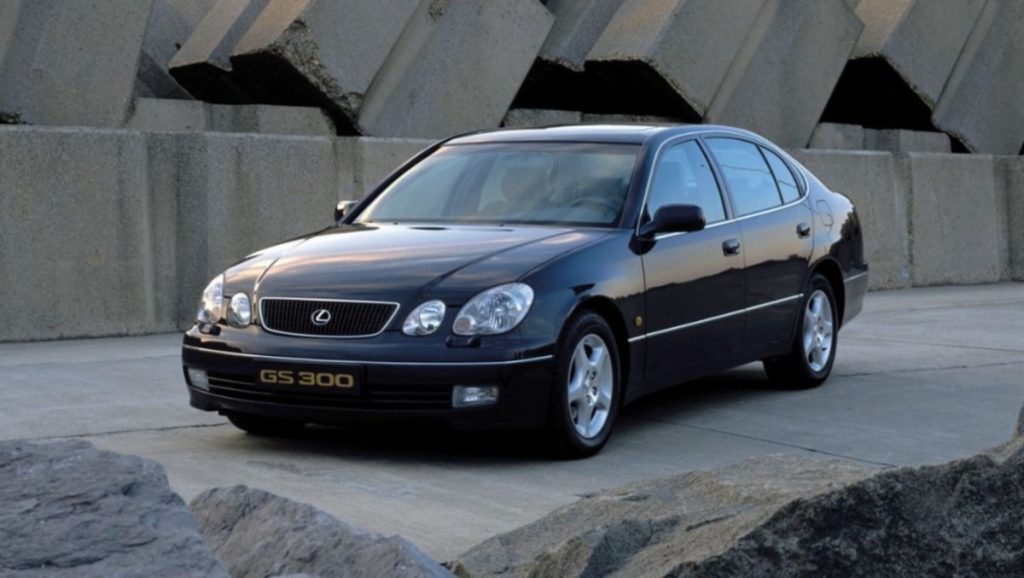
This approach has paid dividends in the collector market. While many 1990s European sedans are now considered financial liabilities due to expensive repairs, the GS 300 is celebrated for its ability to keep running with minimal fuss.
The car’s reputation for reliability is a cornerstone of its modern appeal and a key reason it now commands premium prices.
Why Collectors Value the Engineering
Collectors often look beyond aesthetics when evaluating vehicles. Engineering integrity plays a significant role in determining long-term desirability.
In the case of the GS 300, the combination of the legendary 2JZ engine, robust transmission, and balanced chassis makes it a standout. It is a car that not only looks good but continues to deliver a rewarding driving experience decades later.
Furthermore, its relative rarity adds to its value. While Lexus sold a respectable number of GS 300s, few have survived in original, unmodified condition.
Many were either driven extensively or altered by enthusiasts. Finding a well-preserved GS 300 today is a challenge, which makes them highly desirable in collector circles.
The engineering excellence and design of the Lexus GS 300 have played a pivotal role in its rise from overlooked sedan to valuable collectible.
Its timeless styling, luxurious interior, legendary 2JZ engine, and balanced chassis make it a car that embodies both elegance and endurance.
Lexus’s commitment to reliability ensured that these vehicles would remain functional and desirable long after many of their contemporaries faded away.
For collectors, the GS 300 represents not just a piece of automotive history but a celebration of design and engineering done right. Its appreciation in value is a direct reflection of the qualities that made it special from the start qualities that remain just as relevant today.
Ownership Experience, Market Value, and Collectible Status
The Lexus GS 300 has transcended its role as a luxury sedan of the 1990s to become one of the most intriguing collector vehicles of its generation.
While many cars from the same era have faded into obscurity, struggling with reliability issues, outdated styling, or declining relevance, the GS 300 has enjoyed a resurgence in popularity.
This renaissance is not just due to nostalgia; it is a reflection of the sedan’s unique qualities, its bulletproof engineering, and its growing reputation as a classic that delivers real-world usability. In this section, we explore what it means to own a GS 300 today, why the market has valued it so highly, and what makes it a true collectible.
The Ownership Experience
Owning a GS 300 today is much more than maintaining an older car it is about embracing a piece of automotive history that continues to outperform expectations.
Owners often speak about how the GS 300 manages to blend modern usability with old-school craftsmanship.
Unlike many European rivals from the 1990s, which often demand extensive upkeep and specialized servicing, the Lexus requires only routine maintenance to remain reliable.
Oil changes, timing belt replacements, and brake servicing are usually the extent of ownership costs. Parts availability remains strong, thanks to Toyota’s extensive supply network, which further eases the experience of keeping one on the road.
Beyond practicality, there is the sheer driving enjoyment. The smoothness of the 2JZ-GE engine, combined with rear-wheel drive balance and supple suspension, gives the GS 300 an almost timeless driving character.
It doesn’t feel overly digital or disconnected, as many newer cars do, but neither does it feel outdated. The cabin’s ergonomics, low levels of noise, and excellent visibility make it a genuinely pleasant place to spend hours behind the wheel.
Owners frequently report that the GS feels “new” even after decades, a rare compliment for a car of this age.
Another overlooked part of ownership is the community. Online forums, owner groups, and enthusiast clubs have built a strong culture around the GS 300, often intersecting with the Supra community due to the shared 2JZ heritage.
This camaraderie not only makes ownership more enjoyable but also provides invaluable resources for restoration projects, modification ideas, and sourcing rare parts.
Market Value and Appreciation
The headline-grabbing fact about the GS 300 is its dramatic rise in value. In the 1990s, the car’s original MSRP hovered around $35,000–$40,000 depending on trim and year.
For many years afterward, used examples depreciated like most luxury sedans, often dipping into the low thousands by the early 2010s. At one point, it was possible to find clean GS 300s for less than $5,000—a price that now seems absurd given their current trajectory.
Over the last decade, market dynamics have shifted. A combination of nostalgia, increased recognition of Japanese engineering, and the halo effect of the Supra’s rising values has pulled the GS 300 upwards.
Today, pristine, low-mileage examples can easily command over $30,000 nearly triple their original selling price when adjusted for inflation. Even higher-mileage cars in good condition often fetch surprising sums, as buyers are willing to pay a premium for originality and documented maintenance history.
One important factor driving this appreciation is scarcity. Many GS 300s were used as daily drivers and racked up high mileage, while others were modified heavily during the 2000s and early 2010s, particularly by tuners who saw the 2JZ engine as a blank canvas.
Finding an unmodified, well-preserved GS 300 today is increasingly difficult, which means that the few remaining examples are commanding collector-level prices.
Comparison with Rivals
The GS 300’s appreciation looks even more impressive when compared with its contemporaries.
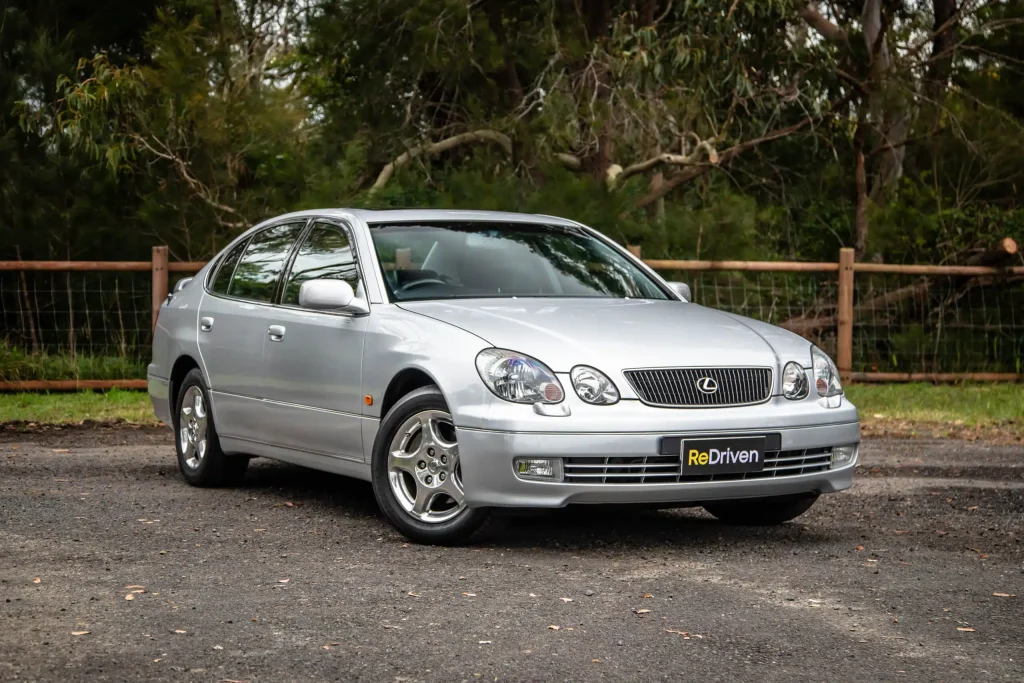
Cars like the BMW 5-Series (E39) and Mercedes-Benz E-Class from the 1990s remain collectible, but they often suffer from expensive repair needs, rust issues, or electronic gremlins that make ownership daunting.
The Lexus, by contrast, offers similar refinement but with far fewer headaches. Collectors are increasingly recognizing this difference, and it has translated directly into rising values for the GS 300.
Similarly, Japanese sedans like the Infiniti Q45 or Acura RL have not captured the same attention. While they too were competent cars, they lacked the combination of Italian styling, 2JZ engine heritage, and Lexus brand reputation that the GS 300 enjoyed.
In this sense, the GS 300 occupies a unique niche: it blends global design influences with bulletproof Toyota engineering, and it carries a nameplate that has only grown stronger over time.
The GS 300 as a Collectible
What makes a car collectible is often more emotional than rational. It is about the stories it carries, the way it connects with enthusiasts, and the memories it evokes.
The GS 300 checks all of these boxes. For many buyers, it recalls an era when Lexus was still proving itself against established European giants, and when Japanese engineering was rapidly redefining the luxury market.
The car represents both a technical achievement and a cultural shift one that resonates with collectors today.
Moreover, the GS 300 is accessible. Unlike six-figure classics that only a handful of buyers can afford, the GS offers enthusiasts a chance to own a piece of history without entering the stratosphere of collectible pricing.
Yes, values have tripled, but they are still within reach compared to many German or Italian classics of the same era. This accessibility, combined with reliability and usability, makes the GS 300 one of the most practical classics available.
Long-Term Prospects
Looking forward, the GS 300 shows no signs of slowing in its appreciation. As fewer unmolested examples remain, the market will likely continue rewarding originality.
Collectors are already snapping up low-mileage cars, and as the Supra market continues to skyrocket, the GS will benefit by association.
It wouldn’t be surprising to see pristine GS 300s break into the $40,000–$50,000 range within the next decade, especially if Japanese classics continue their trajectory of rising values.
For owners, this means that keeping the car in original condition is now more important than ever. Modified cars may appeal to a niche, but the true collector value lies in preservation. Documentation of service history, careful storage, and authentic parts all play a role in maximizing long-term appreciation.
The Lexus GS 300 is no longer just a 1990s luxury sedan it is a cultural artifact, an engineering triumph, and a financial asset. Its combination of reliability, elegance, and timeless engineering has earned it a place among the most respected Japanese classics.
For those lucky enough to own one, the experience is as rewarding behind the wheel as it is in watching the car’s value steadily rise.
For collectors searching for the next appreciating gem, the GS 300 stands as proof that sometimes the most overlooked cars of yesterday become the most desirable of today.
Also Read: 12 SUVs That Can Run on Neglect Alone
