

When mechanics talk about cars that are “unstoppable,” they don’t mean indestructible in a Hollywood action movie sense. Instead, they’re pointing to vehicles that shrug off high mileage, endure years of wear and tear, and rarely leave their owners stranded.
In a U.S. market where vehicles are often judged by flashy tech, comfort, or luxury branding, the cars that earn the respect of seasoned mechanics are usually the ones that just keep going year after year, decade after decade.
Reliability and longevity are not just about engineering but also about smart design, easy-to-source parts, and drivetrains that resist abuse.
American drivers who want cars they can rely on for road trips, commutes, or rural work duty often seek models that don’t break the bank with constant repairs.
These “unstoppable” cars become favorites because they combine durability, simplicity, and the ability to rack up hundreds of thousands of miles without major issues.
Here are 10 cars that mechanics across the U.S. consistently describe as unstoppable.
1. Toyota Camry
If there’s one car that mechanics unanimously nod at when talking about unstoppable reliability, it’s the Toyota Camry. Since the 1980s, the Camry has built a reputation for being the safe bet.
Mechanics love its naturally aspirated four-cylinder engines, which are over-engineered and can survive neglect better than most competitors.
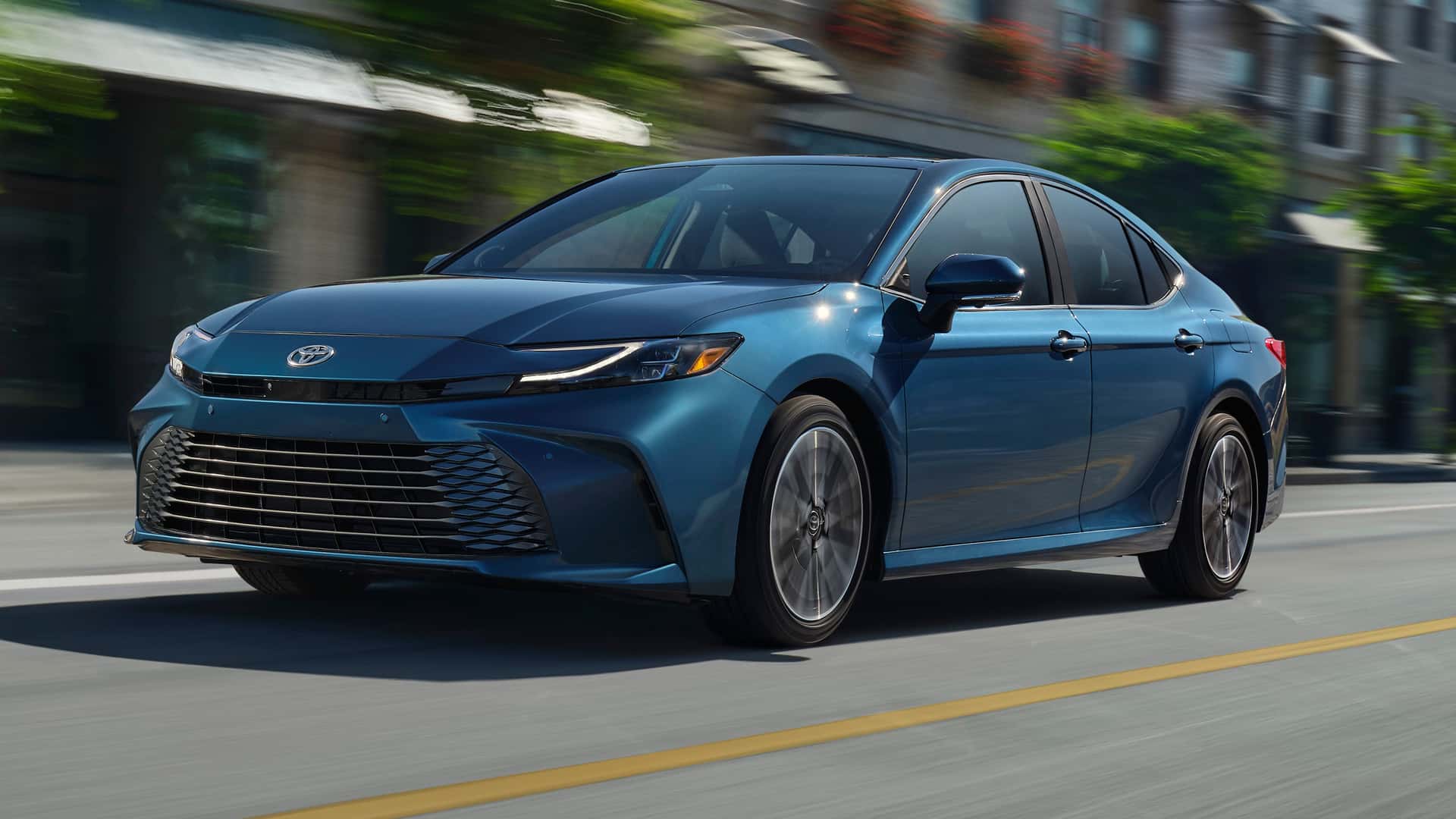
Timing chain designs instead of belts on later models also reduce maintenance headaches. It’s common to see Camrys hit 300,000 miles with routine care, which makes them a staple in American driveways, taxi fleets, and ride-share platforms.
2. Honda Accord
The Honda Accord is another mid-size sedan that mechanics consider nearly bombproof. From the late ‘90s to the early 2010s, the Accord featured engines that could take a beating while delivering excellent fuel efficiency.

Its transmissions, especially in manual form, are famously durable. Honda’s focus on parts interchangeability also means older Accords are easy to repair, keeping costs low.
Many mechanics say they’d put their own families in an Accord for cross-country trips without hesitation, which says everything about its reputation.
After receiving a midcycle refresh in 2021, the Honda Accord enters the 2022 model year with only minor changes. The most notable update comes to the Accord Hybrid, where the EX trim has been replaced by the Sport trim.
This version adds 19-inch alloy wheels, wireless Apple CarPlay and Android Auto, heated front seats, sport pedals, an eight-speaker sound system, and Honda Sensing driver-assist technology. B
eyond that, the Accord continues to offer buyers a choice between two gasoline engines and the hybrid option, ensuring there is a model to suit a variety of needs. Competing directly with strong rivals like the Toyota Camry, Hyundai Sonata, Kia K5, and Subaru Legacy, the Accord continues to make a strong case as one of the most well-rounded midsize sedans on the market.
The Accord has consistently impressed critics and buyers alike, and the 2022 model upholds that reputation. Thanks to Honda’s clever packaging, the Accord offers some of the most generous rear-seat and cargo space in its class, while also delivering driving dynamics that few competitors can match.
This balance of practicality and performance is one reason the Accord has remained undefeated in comparison tests. Not only has it managed to outperform its chief rival, the Toyota Camry, in both entry-level and higher trims, it even held its own against the Audi A4 in a direct head-to-head, proving that luxury-level refinement and capability don’t necessarily require a premium badge.
While the Accord excels in many areas, it is not without shortcomings. More road noise makes its way into the cabin than some drivers would prefer, the infotainment screen feels small compared to the latest offerings from rivals, and some competitors provide more advanced active safety systems. Even so, until the fully redesigned 2023 Accord arrives, the 2022 model remains an excellent pick for sedan buyers.
Performance for the 2022 Accord carries over unchanged from last year. The standard engine is a 1.5-liter turbocharged four-cylinder that produces 192 horsepower and 192 lb-ft of torque, paired with a continuously variable automatic transmission.
This setup provides solid acceleration, reaching 60 mph in 7.2 seconds, and achieves an EPA-rated 29–30 mpg in the city and 35–38 mpg on the highway. For those seeking more power, Honda offers a 2.0-liter turbocharged four-cylinder that generates 252 horsepower and 273 lb-ft of torque.
Paired with a 10-speed automatic transmission, this version is considerably quicker, sprinting to 60 mph in just 5.7 seconds, though fuel economy drops to 22 mpg in the city and 32 mpg on the highway.
Buyers focused on efficiency can opt for the Accord Hybrid, which combines a 2.0-liter four-cylinder engine with an electric motor for a total output of 212 horsepower, delivering strong mileage while maintaining the Accord’s well-rounded driving experience.
Overall, the 2022 Honda Accord remains one of the most complete and desirable midsize sedans available. Its combination of spaciousness, sharp handling, strong value, and a variety of powertrains makes it a standout in its class.
While the segment is full of capable competitors, the Accord continues to set the benchmark, holding onto its position as one of the top recommendations for sedan shoppers until its next-generation redesign arrives.
3. Toyota Corolla
The Corolla may not win awards for excitement, but it wins for being unkillable. As one of the best-selling cars worldwide, the Corolla has always prioritized simplicity.
Mechanics praise its ease of repair, cheap parts, and engines that seem to run forever if you just keep oil in them.

In the U.S., it’s often the car parents hand down to their kids because it’s virtually guaranteed to last through high school, college, and a first job. That level of trust has made it a household name in dependability.
4. Ford Crown Victoria
Ask any mechanic who’s worked with police departments or taxi fleets, and they’ll likely sing praises for the Ford Crown Victoria.
Built on the old-school Panther platform, it’s a full-size sedan with body-on-frame construction, rear-wheel drive, and a V8 engine basically a tank disguised as a sedan.
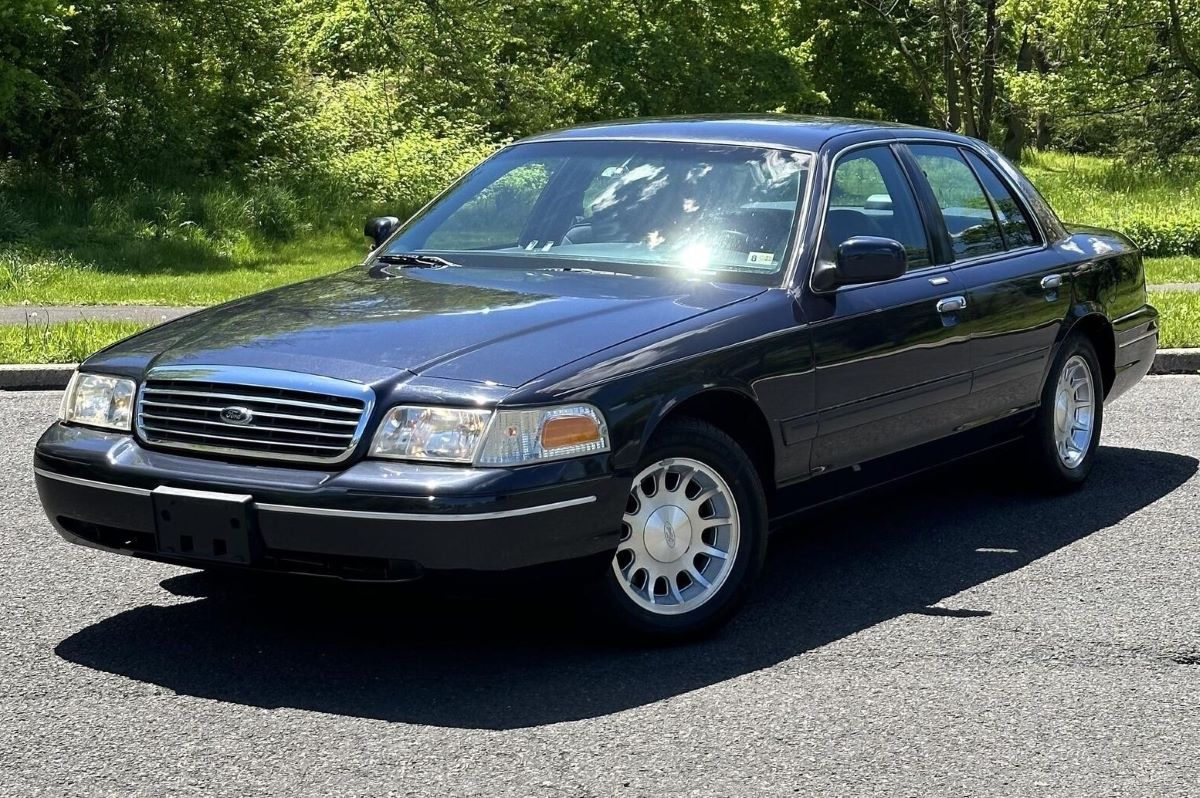
Mechanics love how forgiving the car is to abuse, whether that’s curb-hopping during police duty or racking up 500,000 miles as a cab. While discontinued in 2011, the Crown Vic’s legend as one of the most unstoppable American cars lives on.
5. Honda Civic
The Civic is often the first car for American teens, and for good reason. It’s cheap to run, parts are plentiful, and mechanics know them inside and out.
The Civic’s small-displacement engines can last decades, and its manual gearboxes are among the most durable in automotive history.

Even when owners modify them sometimes poorly the cars just keep running. Many mechanics point to Civics from the 1990s and early 2000s as some of the most indestructible small cars ever built.
Honda restricts its hybrid powertrain offering to the Civic Sport and Civic Sport Touring trims, and as noted in our recent buying guide, the pricier Sport Touring is the model we recommend.
This trim not only adds premium amenities such as heated leather seats and a full suite of driver-assistance technologies but also introduces a 9-inch touchscreen system running Google Built-In apps, making it a clear step above the base Sport Hybrid.
The hybrid setup is available on both the Civic sedan and hatchback, though we favor the hatch for its added practicality and sharper styling, which makes it a strong alternative to higher-riding compact SUVs.
Pricing starts at $28,600 for the Civic Sport hatchback, including a $1,150 destination charge, while the Sport Hybrid comes in at $32,300. Our Sport Touring Hybrid test car was priced at $34,300.
Powering the Civic Hybrid is a 2.0-liter four-cylinder engine paired with two electric motors, delivering a combined 200 horsepower and 232 lb-ft of torque, figures that surpass even the performance-oriented Civic Si.
Interestingly, this made the hybrid 0.2 second quicker to 60 mph than the last Civic Si we tested, though the Si reclaimed its edge over the quarter mile by completing it 0.2 second faster and reaching a higher trap speed of 91.5 mph.
Much of this difference can be attributed to tires: the Si is fitted with grippier summer rubber, while our hybrid test car ran on all-season tires.
That distinction became even more evident during handling and braking tests, where the Si achieved 0.99 g of lateral grip on the skidpad compared to the hybrid’s 0.85 g. Likewise, braking distances favored the Si, stopping from 60 mph in just 106 feet versus the hybrid hatch’s longer 131-foot result.
6. Subaru Outback
In regions with tough winters, especially across the northern U.S., the Subaru Outback has become synonymous with reliability. Mechanics admire its symmetrical all-wheel drive system, which handles snow and rough backroads better than most SUVs.
Subaru engines do require attention to head gaskets in older generations, once that’s sorted, these cars regularly exceed 250,000 miles. For outdoorsy drivers who need an unstoppable daily driver with off-road confidence, the Outback is often the go-to recommendation.
The Subaru Outback can be thought of as the mid-weight trail-hiker boot of the automotive world, casual, comfortable, and capable enough to handle moderately challenging terrain when needed.
While plenty of crossovers make the same claim, the Outback stands apart as a station wagon at its core, lending it a relaxed, approachable personality that it has leaned on for more than thirty years.

That wagon foundation not only ensures more car-like ride and handling than most SUVs but also provides generous cargo space and seating for up to five passengers.
Power comes from a 182-horsepower four-cylinder engine paired with a continuously variable automatic transmission (CVT) and standard all-wheel drive, though buyers in search of stronger performance can opt for a 260-horsepower turbocharged version.
Inside, the cabin is logically arranged, the materials feel a cut above average, and higher trims even approach true luxury territory. Still, the Outback maintains its easygoing and down-to-earth character, which may leave shoppers used to high-end luxury brands and their premium pricing looking instead toward rivals like the Audi A4 Allroad or Volvo V60 Cross Country.
Ultimately, the Subaru Outback remains a well-rounded, versatile choice that has earned its loyal following by delivering exactly what it promises.
7. Lexus LS400
When Toyota launched Lexus in 1989, it stunned the luxury market with the LS400. Beneath its polished exterior sat one of the most over-engineered V8 engines ever built.
Mechanics often marvel at the LS400’s longevity many examples are still running smoothly past 400,000 miles.

Unlike German luxury sedans of the same era, the LS400 doesn’t come with complicated electronics that cripple long-term ownership. It’s proof that luxury and unstoppable reliability can coexist.
8. Jeep Cherokee (XJ)
From 1984 to 2001, the Jeep Cherokee XJ became a cult favorite among mechanics and off-roaders alike. Its 4.0-liter inline-six engine is legendary for reliability and torque.
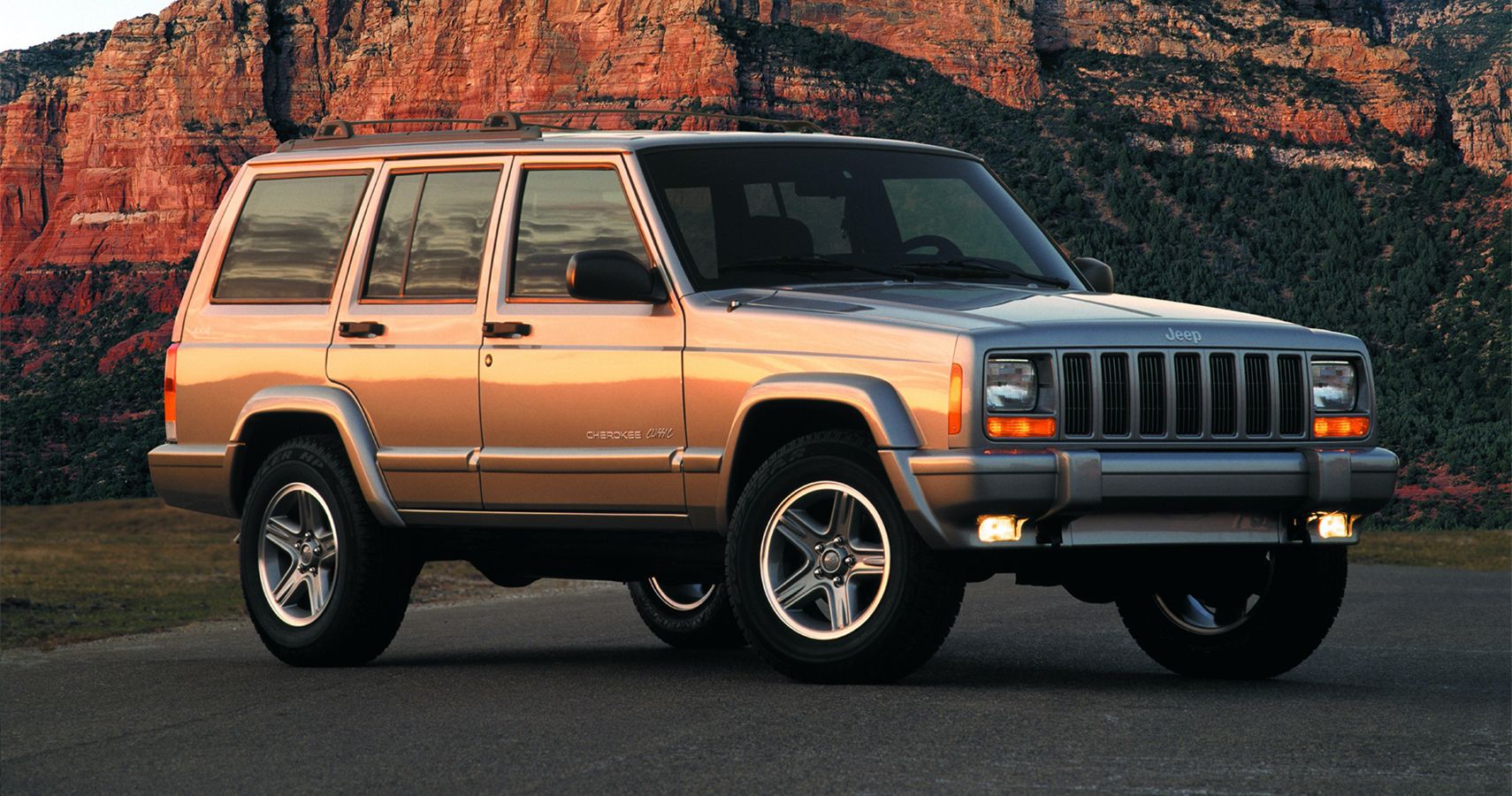
Simple, rugged, and easy to fix, the XJ was unstoppable both on city streets and off-road trails. Mechanics often note that while the body may rust away, the engine and drivetrain keep going. For many Americans, the Cherokee XJ is the definition of old-school utility that never dies.
The Jeep Cherokee has had a long and somewhat turbulent production history. Originally introduced in 1974 on the SJ platform, it would later evolve into the iconic Jeep Cherokee XJ in 1984, produced by AMC before Chrysler’s acquisition.
The XJ quickly became a favorite among off-road enthusiasts, earning a reputation for its durability and capability. Its legendary 4.0-liter inline-six engine solidified its status as one of the most reliable Jeeps ever built, and it remains celebrated today as the embodiment of what fans love about the brand.
Although the first-generation Cherokee ceased production in 2001, these vehicles continue to be a common sight on the road and remain staples at off-road parks and mudding events across the country.
The Cherokee nameplate returned for the 2014 model year with a new generation that attempted to blend modern crossover utility with Jeep’s off-road heritage. It featured equipment such as a locking rear differential, multiple drive modes, skid plates, and tow hooks, giving it genuine trail credentials.
Still, despite these capabilities and a production run that lasted through 2023, this modern Cherokee struggled to capture the rugged spirit and loyal following of the XJ. It was seen more as a conventional crossover than a true off-road legend.
Looking forward, Stellantis and Jeep are aiming to restore the Cherokee’s reputation with the introduction of a brand-new model, expected to debut later this year.
This upcoming Cherokee promises a return to its roots, emphasizing serious off-road performance while aligning with Jeep’s renewed commitment to adventure-ready vehicles. If successful, it could mark the revival of a storied nameplate and reaffirm Jeep’s standing among off-road purists.
9. Toyota 4Runner
When it comes to SUVs, the Toyota 4Runner is in a class of its own. Mechanics regularly see 4Runners with 300,000+ miles still going strong, especially when equipped with the bulletproof 4.0-liter V6.

Built on a truck platform, the 4Runner resists the wear-and-tear of rough use and remains a favorite among outdoor enthusiasts who need a dependable off-road companion.
Unlike many modern crossovers, the 4Runner is old-school in the best sense solid, capable, and unstoppable.
10. Mercedes-Benz W123
Though older now, the Mercedes-Benz W123 (produced from 1976 to 1985) remains one of the most respected vehicles in mechanic circles. Its diesel engines, especially the 240D, are nearly unbreakable.
These cars were built during an era when Mercedes prioritized durability over profit margins, and the results speak for themselves many are still in service today around the world.
Mechanics call the W123 unstoppable because it’s proof that great engineering can outlast generations of owners.
What unites these cars is not just reliable parts but thoughtful design. Mechanics appreciate vehicles that aren’t needlessly complex, that use durable drivetrains, and that have widely available parts.
The Mercedes-Benz W123, produced between 1976 and 1985, remains one of the most iconic vehicles in the brand’s history. Widely regarded as a milestone in both design and engineering, the W123 offered a broad lineup of sedans, coupes, and station wagons, each reinforcing Mercedes-Benz’s reputation for quality and durability.
Arriving at a time when consumers increasingly demanded reliability and sophistication in family cars, the W123 set new benchmarks in comfort, safety, and performance. Its refined interiors, solid construction, and advanced safety innovations helped it stand out in the market, while its enduring reliability has ensured that many examples are still on the road today.
Development of the W123 was heavily influenced by Mercedes-Benz’s growing focus on engineering excellence and design elegance. Led by Bruno Sacco, the design team crafted a distinctive, clean silhouette that balanced style with practicality.
Advanced engineering further reinforced its appeal, with innovations like a self-supporting body structure and crumple zones that greatly improved crash safety.
At the time, these features positioned the W123 as one of the safest vehicles available, while still retaining the powerful performance expected from the brand. Technological progress also played a role, with a range of efficient diesel and gasoline engines, along with emerging features such as electronic fuel injection, contributing to both reliability and reduced emissions.

The W123 lineup offered a variety of models to cater to different buyers. The sedan, available in configurations such as the 230, 240D, 300D, and 280E, quickly became the most recognized variant, blending space, comfort, and durability with multiple engine choices ranging from modest four-cylinders to robust six-cylinder powerplants.
The coupe, with its elegant two-door styling and models like the 230C and 280CE, targeted customers who valued sophistication with sportier handling.
Meanwhile, the wagon, or T-model, provided a practical yet luxurious option, offering generous cargo space and versatility for families and professionals alike. Together, these variants showcased Mercedes-Benz’s ability to deliver a vehicle for every lifestyle while maintaining consistent standards of engineering excellence.
The W123’s cultural impact was just as significant as its technical achievements. It became a symbol of prestige and reliability across Europe, North America, and Asia, frequently appearing in films, television, and advertisements as the car of choice for professionals and successful families.
Its association with dependability and longevity made it especially popular in regions where durability was paramount, further cementing its reputation as a global success. Even decades after production ended, the W123 continues to inspire car clubs, enthusiast gatherings, and restorations, ensuring its place as a beloved classic.
Performance varied across the W123 range, but each model balanced durability with capable driving dynamics. Gasoline engines like the 2.0-liter inline-four offered efficiency for everyday use, while the 2.8-liter inline-six provided up to 185 horsepower and stronger highway performance.
Diesel options, especially the 240D and 300D, became legendary for their unmatched longevity, often surpassing hundreds of thousands of miles with minimal issues. Combined with advanced suspension design and Mercedes-Benz’s focus on ride comfort, the W123 delivered a driving experience that was both smooth and reassuring.
Ultimately, the Mercedes-Benz W123 was more than just a car, it was a statement of engineering philosophy that continues to define the brand to this day.
Its blend of safety, performance, luxury, and reliability reshaped consumer expectations for what a premium vehicle should offer. As one of the most influential models in automotive history, the W123 remains a benchmark against which timeless design and engineering durability are measured.
In the U.S., where cars often serve as daily lifelines across long commutes or rural distances, dependability matters more than luxury features.
These unstoppable cars have proven their worth in harsh climates, high-mileage scenarios, and everyday family use. For American drivers who want to avoid constant repair bills and enjoy peace of mind, these models remain shining examples of what it means to build a car that lasts.
