
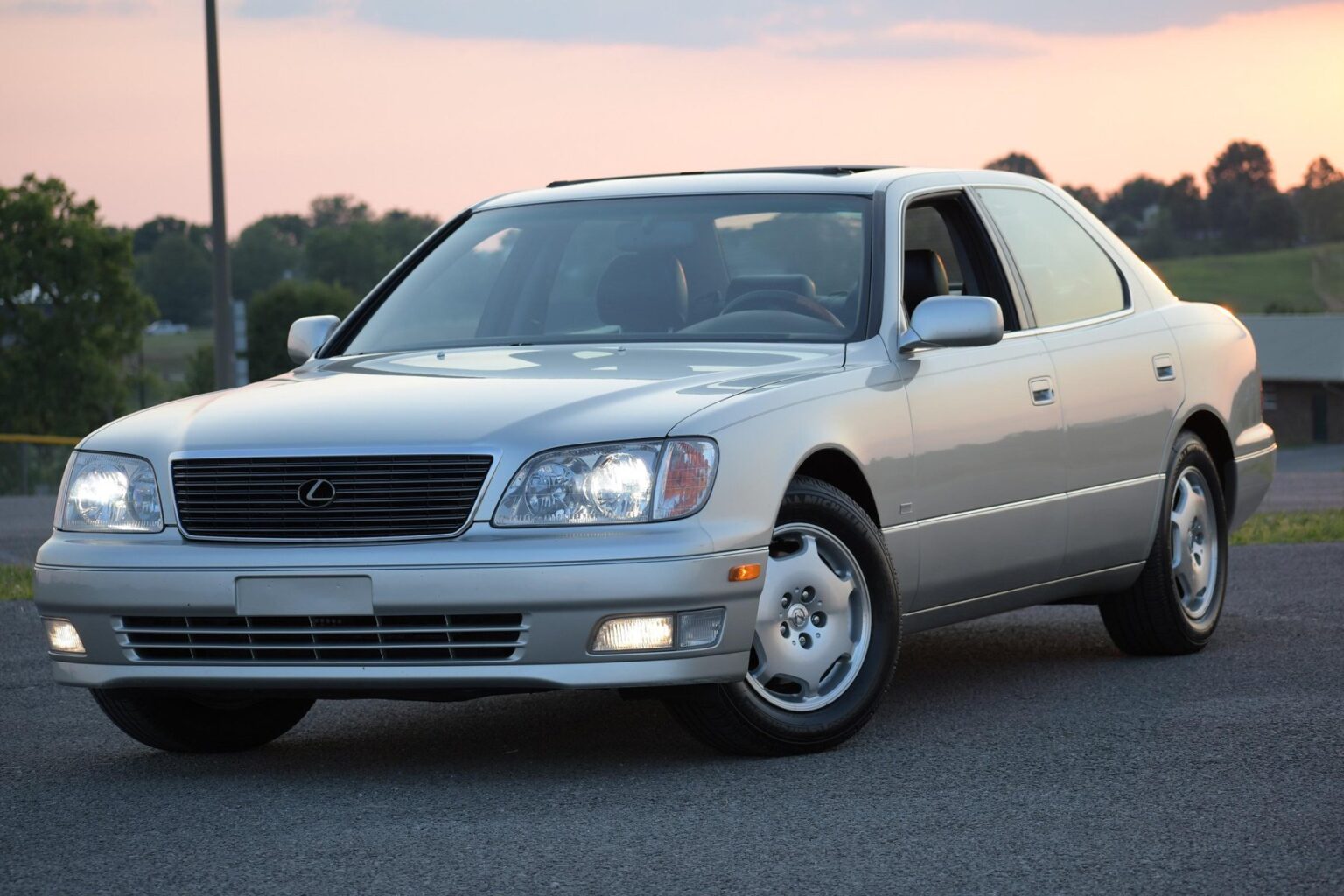
The early 2000s were an era of transition for the automotive world.
It was a time when analog driving sensations began to merge with digital innovation when vehicles still had hydraulic steering feel, naturally aspirated engines, and bulletproof build quality, yet started to incorporate the luxuries and technologies we now take for granted.
Many of these sedans from that decade were built with a level of craftsmanship that modern cars, focused on cost efficiency and emissions compliance, rarely replicate.
Surprisingly, one of those 2000s-era sedans has aged not just gracefully but lucratively it’s now worth more than a modern BMW, and collectors can’t stop talking about it.
That sedan is the Lexus LS 400, particularly the final years of its second generation and the early third-generation models from the early 2000s.
What was once considered an understated executive cruiser a quiet alternative to German luxury has transformed into a symbol of durability, precision, and timeless design.
Today, clean examples of these Lexus sedans can fetch prices well above $40,000 on the used market in some cases, exceeding the cost of a new BMW 3 Series.
To understand why, we need to look deeper into how a 20-year-old Japanese sedan managed to dethrone modern European luxury in both value and desirability.
When Lexus debuted the LS 400 in 1989, it completely disrupted the luxury car market. It was quieter, smoother, and more reliable than the Mercedes S-Class and BMW 7 Series of its time yet sold for tens of thousands less.
The first generation set a new benchmark for refinement, but the 2000s LS models took that formula to perfection. These sedans were overengineered to a degree that borders on obsessive.
Every panel gap, switch, and component was meticulously tested. The engineers behind the LS series didn’t just want to make a luxury car they wanted to make the world’s most perfect sedan.
The 2000s LS, especially the LS 430 (produced from 2001 to 2006), was the ultimate expression of that obsession. Powered by a 4.3-liter V8 producing 290 horsepower, it wasn’t a car designed to win drag races it was designed to outlive its owner.
The engine was renowned for its smoothness and longevity, with many examples surpassing 400,000 miles without ever needing major repairs. The interior was hand-assembled in Japan with an attention to detail that bordered on artisanal.
Even the door seals were triple-layered to ensure silence at highway speeds, while the suspension was tuned for perfect composure over rough roads.
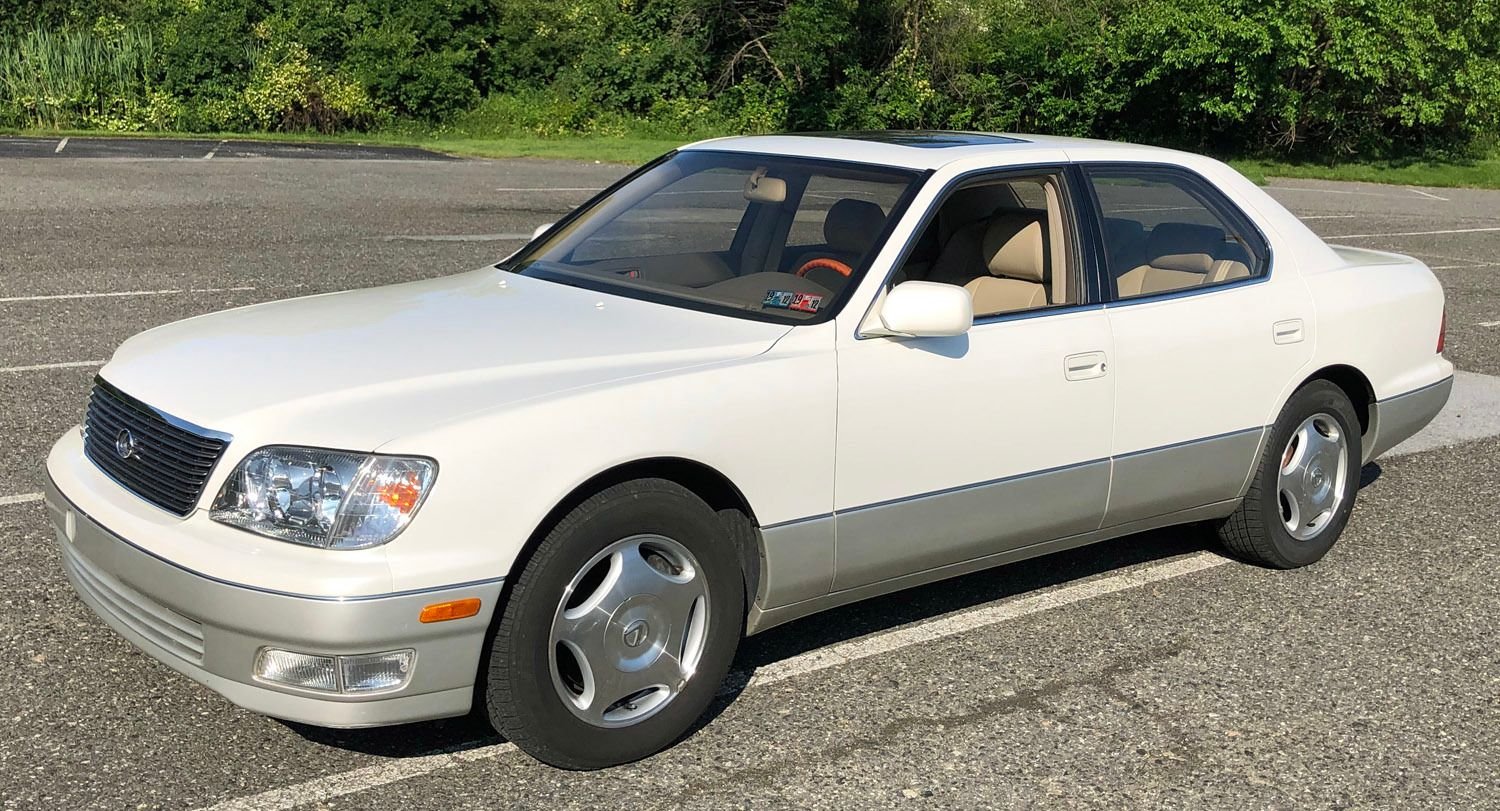
Owners and collectors today point out how the LS 430 feels more “authentic” than many modern luxury cars. Where newer BMWs often rely on software updates, turbocharged four-cylinders, and stiff suspensions to feel “sporty,” the Lexus focuses on effortlessness.
It was built for serene travel, where the driver barely feels the road imperfections and the cabin isolates you from the world outside. In an era when cars are becoming more digital, this analog smoothness has become priceless.
So how did a 20-year-old Lexus sedan become more valuable than a 2025 BMW 3 Series, which starts around $45,000?
The answer lies in the shift in car culture enthusiasts and collectors are now prioritizing craftsmanship, reliability, and mechanical purity over new tech and performance gimmicks.
Modern BMWs, while fast and well-equipped, have lost much of the mechanical honesty that once defined the brand.
Many models now use turbocharged four-cylinder engines and rely heavily on software-driven systems that feel disconnected. Maintenance costs are high, and depreciation hits fast.
In contrast, the LS 430 represents an era when cars were designed to last forever. It’s not uncommon to find owners who have had their LS for 20 years and still daily drive it.
The car’s value has appreciated because it represents the pinnacle of a philosophy that no longer exists in modern manufacturing.
Collectors have taken notice a pristine LS 430 Ultra Luxury trim can now command as much or more than an entry-level 3 Series, and low-mileage examples are selling at auction for prices previously unimaginable for a 2000s sedan.
Another reason the LS 430 has held its value is its design. While BMW and Mercedes of the same era leaned toward aggressive, angular lines that now look dated, the LS maintained a clean, understated aesthetic.
Its body proportions are balanced, with no unnecessary creases or gimmicks. The car looks just as elegant parked in front of a modern house today as it did 20 years ago. Its design philosophy echoes that of classic luxury quiet confidence rather than loud performance.
Even the interior has aged remarkably well. The leather remains soft, the wood trim retains its polish, and the analog gauges still exude precision.
Lexus built the LS’s cabin with high-quality materials that resist wear, a stark contrast to some German competitors whose interiors show cracks, faded plastics, or pixelated screens after years of use.
For collectors, this level of preservation is another reason the LS continues to command strong resale prices.
Perhaps the biggest factor behind the LS 430’s skyrocketing value is its reputation for longevity. This is one of the few luxury sedans ever made that can reliably reach a million miles with routine maintenance.
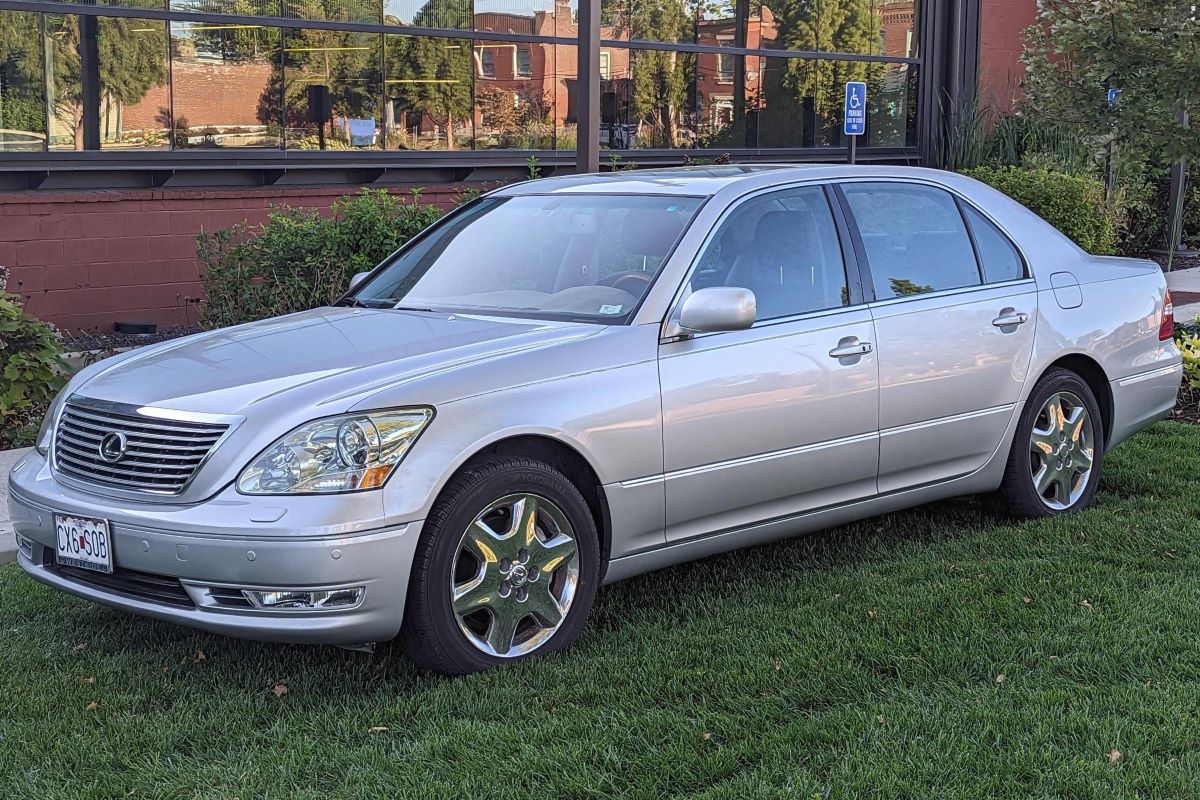
There are numerous verified cases of owners surpassing 500,000 or even 1,000,000 miles on the original engine and transmission. That kind of reliability is unheard of in modern luxury vehicles, where complex electronics and turbocharged systems often fail long before six-figure mileage.
This bulletproof reputation has transformed the LS from a “used luxury bargain” into a collectible piece of automotive history.
Younger car enthusiasts particularly millennials and Gen Z buyers are discovering these models and appreciating them for what they are: the last truly indestructible luxury sedans.
What’s fascinating is that the LS 430’s rising value isn’t driven by nostalgia alone. It’s being fueled by a real collector’s market.
Auction platforms like Bring a Trailer and Cars & Bids have seen bidding wars for low-mileage LS 430s, with final sale prices sometimes rivaling those of much newer luxury vehicles.
A well-preserved 2005 LS 430 with fewer than 50,000 miles recently sold for nearly $48,000 more than the MSRP of a brand-new BMW 330i.
This phenomenon mirrors what’s happening with other early-2000s icons, like the Toyota Land Cruiser and Honda S2000, but the LS’s case is especially interesting because it’s not a sports car or SUV it’s a luxury sedan.
It proves that build quality and timeless design can make even a “boring” four-door car a highly desirable collector’s item.
Automakers today face intense pressure to meet emissions regulations, safety standards, and consumer demand for digital features. As a result, they’ve moved away from the kind of overengineering that defined cars like the LS 430.
Modern BMWs are faster and more connected, but they’re also more complex and less reliable. Drivers are beginning to miss the days when a car simply did everything perfectly without needing an app or software patch.
The LS 430 belongs to that golden generation of cars that merged analog craftsmanship with modern comfort before everything became digital and disposable. It’s a physical representation of what happens when engineers, not accountants, design a vehicle.
The Lexus LS 430 has defied all expectations. What started as a quiet luxury sedan for executives in the early 2000s has now become a collectible masterpiece worth more than some brand-new German cars.
Its rise in value isn’t just about nostalgia it’s a reflection of changing consumer values. Americans are rediscovering the joy of owning something built to last, and the LS 430 embodies that spirit better than almost any modern vehicle on the road.
So while BMW may still dominate in marketing and performance metrics, the real winner in long-term value, craftsmanship, and reliability is a 20-year-old Lexus sedan a car that proves true luxury isn’t about how new your vehicle is, but how well it stands the test of time.
