Trucks have evolved far beyond their utilitarian roots. Once built purely for farm work and hauling, these machines have become rolling investments cultural artifacts that capture an era of American grit, design, and engineering.
Today, collectors aren’t just chasing muscle cars and exotics; they’re hunting down the rare, the rugged, and the historically significant trucks that helped define entire generations.
With the collector market booming in the U.S., certain pickups have transcended their blue-collar beginnings and are now commanding auction prices that rival vintage sports cars.
From classic Chevys to high-performance Fords, these are the eight trucks that collectors are currently paying top dollar for.
1. 1969–1972 Chevrolet C10
The second-generation Chevrolet C10 has become the darling of truck collectors, thanks to its clean styling, solid build quality, and endless customization potential.
The “Action Line” design, introduced in 1967, modernized Chevy’s image and turned a simple pickup into an American design icon.
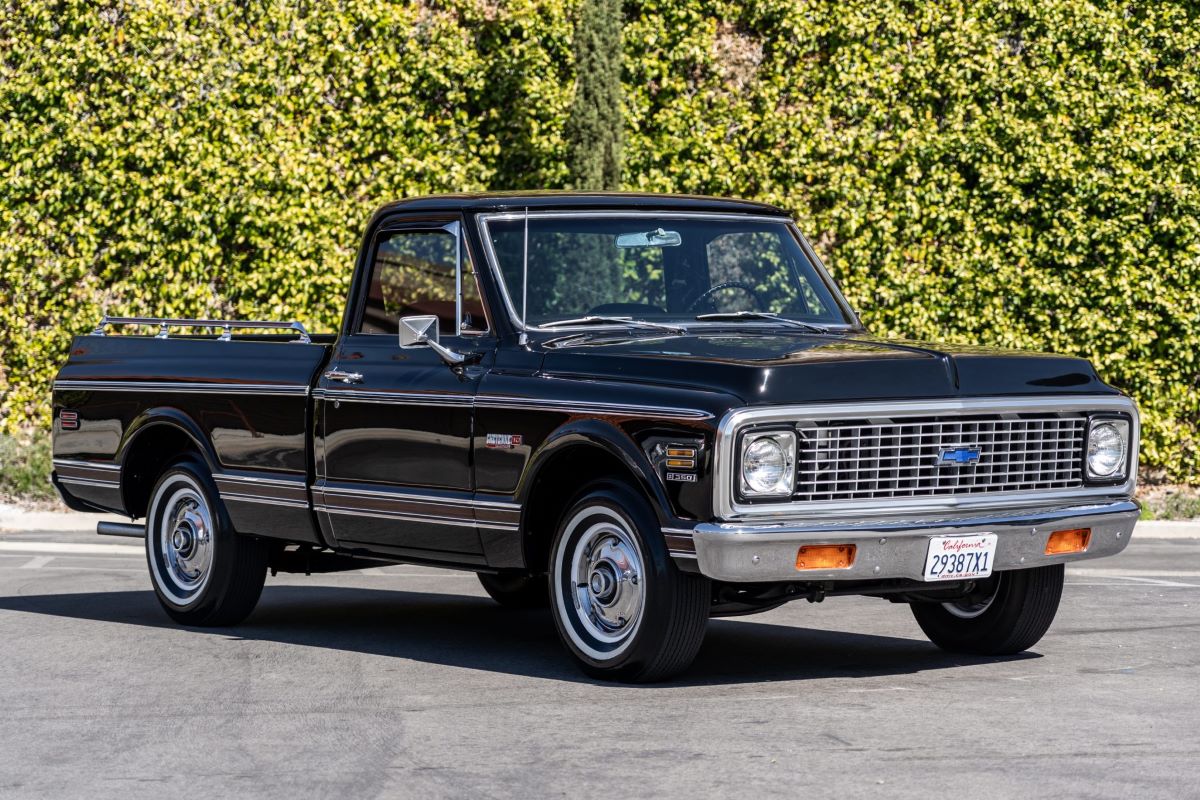
The 1969–1972 models, in particular, are highly sought after due to their improved suspension, better cabin comfort, and available big-block V8 engines.
Collectors love that the C10 combines vintage charm with everyday drivability. Restored examples can sell for over $60,000, while rare models like the Cheyenne Super 10 or those equipped with factory air conditioning can push into six-figure territory at auctions like Barrett-Jackson.
Minor updates were made to the 1969 Chevrolet pickups. The new grille prominently featured the Chevrolet nameplate across the center, while the iconic bow tie logo was relocated to the front and center of the hood.
Buyers could choose between C10 or K10 models, with either a 115-inch wheelbase paired with a 6½-foot cargo box, or a 127-inch wheelbase with an 8-foot cargo box, available in Fleetside or Stepside configurations. Standard engines included the 155-horsepower 250 cubic-inch inline-six.
Standard features for 1969 pickups included a panoramic rear window, padded dashboard, heater and defroster, padded sun visors, low-profile control knobs, safety glass, painted front bumper (chrome bumpers were offered as an optional upgrade), two-speed windshield wipers, windshield defrosters, a low-profile steering wheel, directional signals, and more.
The CST (Custom Sport Truck) trim, identifiable by the CST/10 badge on the front fender, added unique touches such as a custom woodgrain insert and front side marker lamps with chrome trim.
Also Read: 5 SUVs Where Silence Rules vs 5 That Can’t Stop Making Noise
2. 1993–1995 Ford F-150 SVT Lightning
Before “Lightning” became an electric badge, it was Ford’s muscle truck a product of the automaker’s Special Vehicle Team (SVT).
The first-generation F-150 Lightning took the bones of a work truck and gave it a Mustang’s heart, courtesy of a 5.8-liter Windsor V8 producing 240 horsepower. W
hile that may sound modest by modern standards, in the early 1990s it made the Lightning one of the fastest pickups on the road.
Only about 11,500 units were produced, giving it an instant collectible edge. Pristine, low-mileage examples now fetch over $50,000, especially those in original red or black paint.
Collectors prize them for their raw simplicity a time before turbochargers and touchscreens, when “performance truck” really meant something visceral.
The first-generation Ford F-150 SVT Lightning made its debut to considerable fanfare as one of the earliest street-focused performance pickups available, even if by today’s standards it isn’t exactly a speed demon.
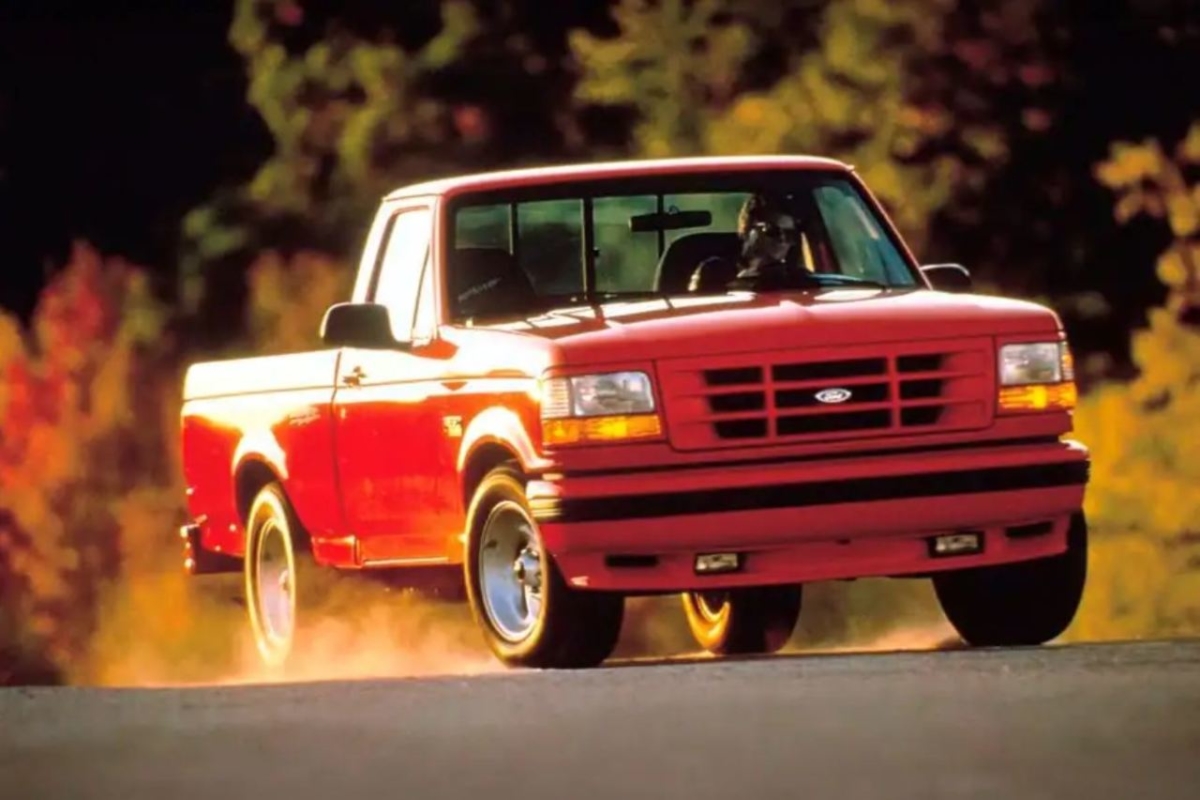
Nonetheless, in the current collector car market, these SVT Lightning pickups remain highly sought after, thanks to their historical significance, relatively low production numbers, and undeniable cool factor. Now, a 1993 Ford F-150 SVT Lightning is entering the scene as one of the lowest-mileage examples we’ve seen in quite some time.
This 1993 Ford F-150 SVT Lightning is currently listed for auction at Bring a Trailer, showing just 150 miles on the odometer. It spent its entire life with the original owner until the selling dealer acquired it earlier this year. Some minor fading had occurred on the tailgate and rear bumper, which were refinished to restore their original appearance, and the truck was fitted with new tires.
A photo showcases the 1993 Ford F-150 SVT Lightning from a rear three-quarter angle. The interior is a true time capsule of the ’90s, appearing factory fresh with Dark Charcoal cloth seats, a center console with cupholders, a cassette stereo, air conditioning, and cruise control.
Power comes from the strengthened 351 cubic-inch V8, factory-rated at 240 horsepower and 340 pound-feet of torque, paired with a four-speed automatic transmission.
While first-generation SVT Lightning pickups frequently appear at auction today, few have mileage as low as this example. That said, there are other low-mileage survivors, such as a 1993 model with 33,000 miles, and a 1994 version that had covered 26,000 miles when it came up for sale.
3. 1979 Toyota Pickup (Hilux)
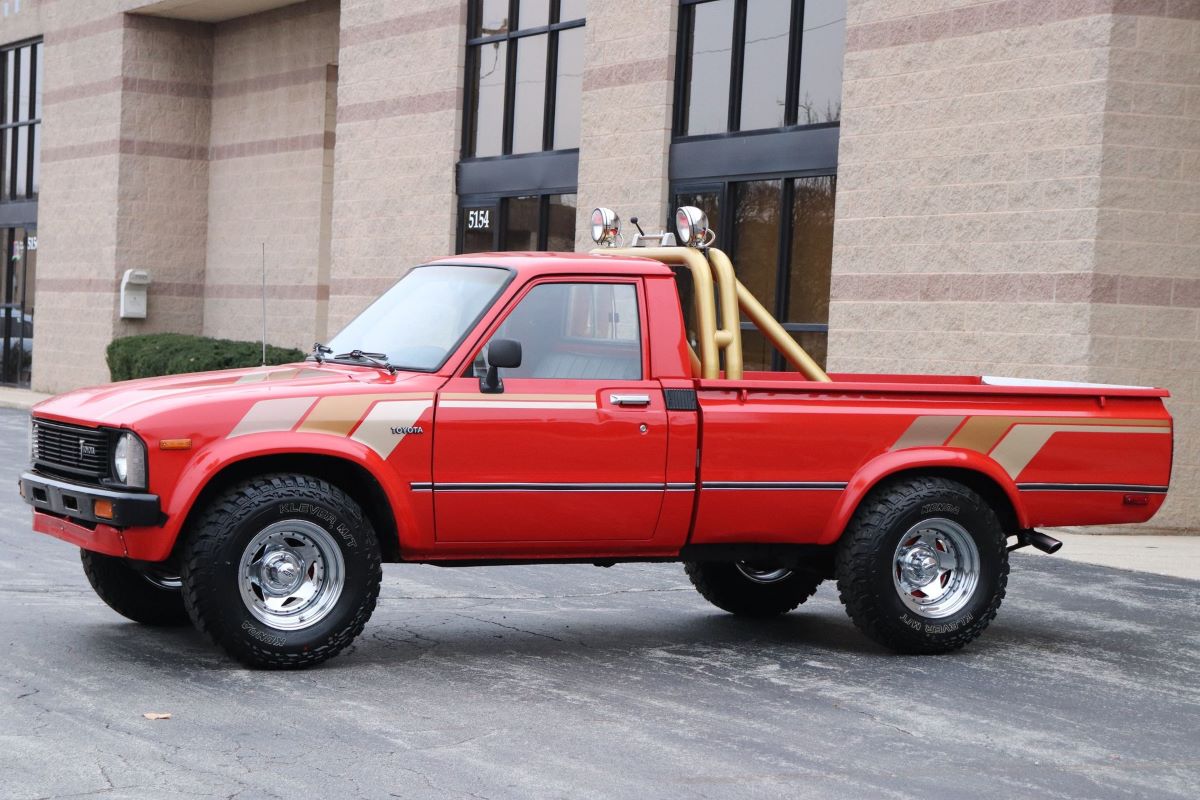
While American brands dominate the collector truck conversation, Toyota’s legendary Hilux has quietly built a cult following. Immortalized by movies like Back to the Future, the late-1970s Hilux models have become symbols of durability and off-road toughness.
The 1979 model was especially important, marking the debut of a solid front axle and four-wheel drive. These trucks are nearly indestructible, with many still running strong after decades of abuse.
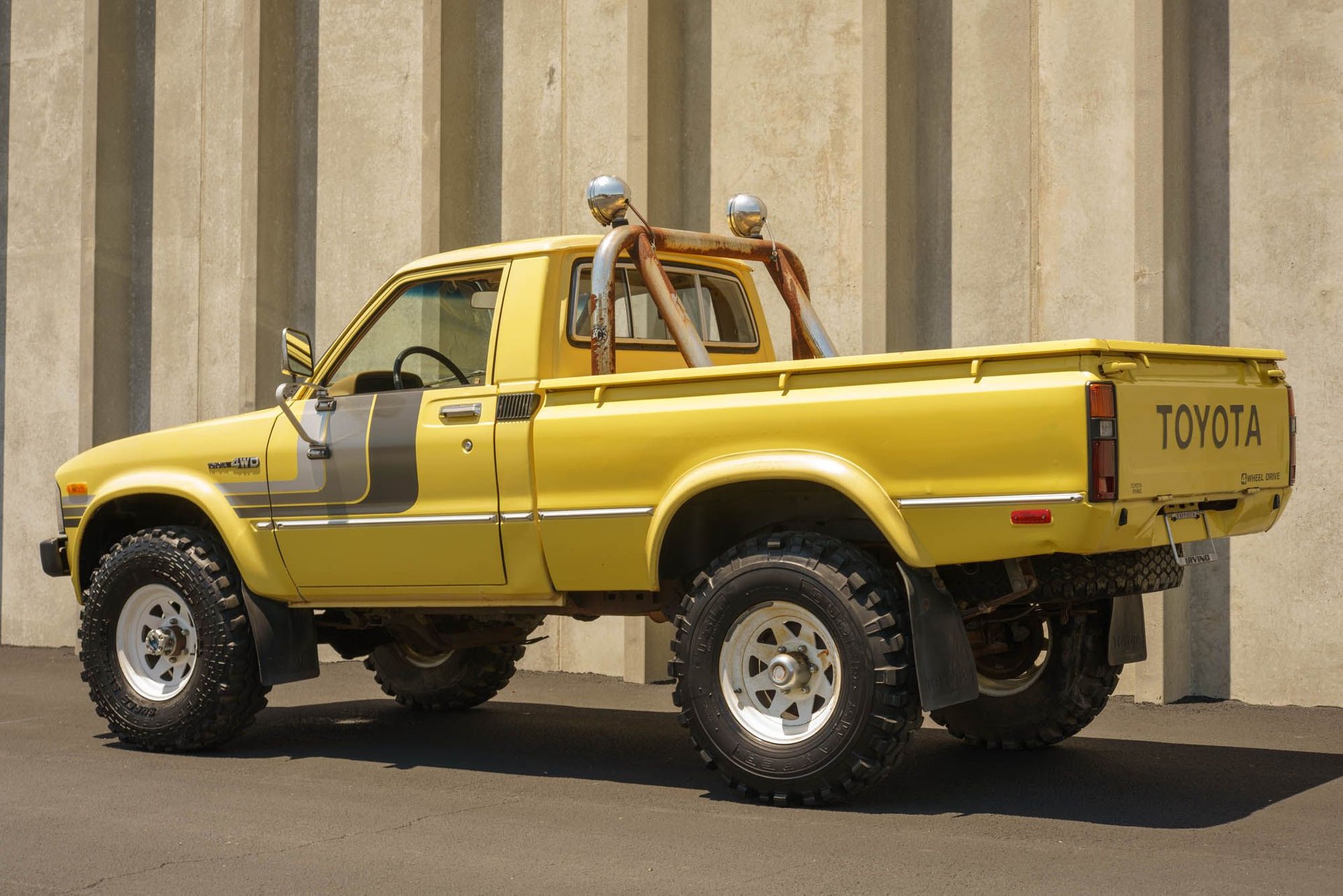
Collectors appreciate their no-nonsense design and the global heritage that made the Hilux a legend from the deserts of Africa to the streets of California. Pristine examples have sold for $30,000–$40,000, with custom restorations often exceeding that.
The original 20R engine sounds solid, with no unusual noises, smoke, or significant leaks. The 4×4 system operates smoothly in both high and low ranges, with the 4WD dash light functioning correctly.
The truck is likely overdue for a full service and tune-up. Occasionally, it idles a bit roughly and can be hard to start if over-fueled, but it always starts if you avoid pressing the gas pedal. I’ve driven it around town for about a month, but haven’t pushed it past 60 mph. There is no overdrive, so it’s not ideal as an interstate cruiser.
4. 1989 Dodge Power Ram W250 Cummins
The late 1980s brought diesel power into the American truck mainstream, and Dodge was at the forefront with the introduction of the Cummins-powered W250.
This was a turning point for heavy-duty pickups, giving Dodge a torquey, reliable engine that transformed its reputation overnight. The 5.9-liter inline-six turbo diesel became legendary for its longevity and brute strength.
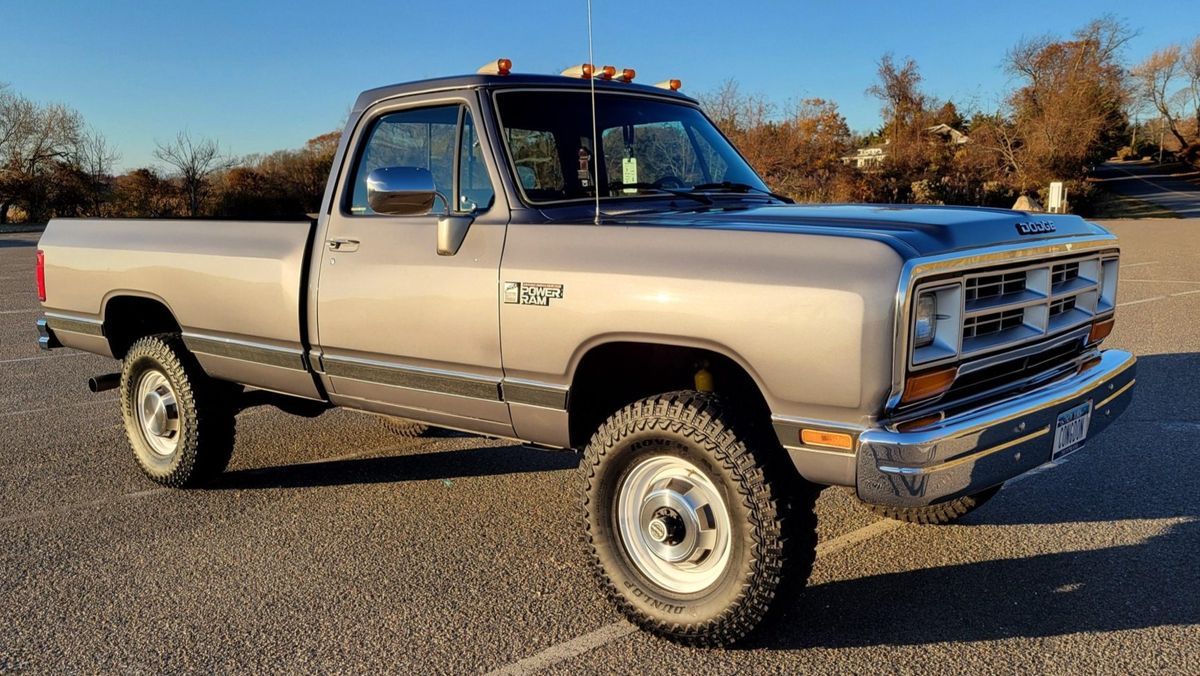
Early examples of the Power Ram W250 are now collector gold, especially those with manual transmissions and original paint. Restored or low-mileage models can easily bring in $40,000 to $60,000, and rare factory options or special editions command even more.
These trucks represent the beginning of the diesel performance era a turning point in American truck culture.
By the late 1980s, Chrysler’s heavy-duty pickup truck lineup was teetering on the edge of obsolescence. The loss of big-block gasoline V8 options, the discontinuation of crew cab configurations, an exterior that had remained largely unchanged since 1972, and an aging overall platform all painted the picture of a product nearing the end of its life.
The market responded enthusiastically. For the 1989 model year, Chrysler produced just 16,750 Cummins-powered Rams, selling them almost instantly. Demand outpaced supply to the point where Chrysler had to temporarily halt orders until production could be ramped up in 1990.
From axles to transmissions, brakes, and suspension, these trucks offered a combination of towing capacity, payload capability, and fuel efficiency that permanently altered expectations for the segment.
In a follow-up article, we’ll explore the 1994 Ram 2500 and 3500, which once again set new benchmarks for heavy-duty pickups.
The 5.9L Cummins turbodiesel has often been called the engine that saved Dodge trucks. While this claim may be debatable for half-ton pickups, it is unquestionably true for the automaker’s ¾-ton and larger offerings.
The Cummins name carried instant recognition, boasting the only turbocharged diesel in its class, the only direct-injection diesel option available, and the segment’s highest torque output along with the most horsepower per cubic inch among diesel competitors.
The diesel option also came with Dodge’s 7-year/100,000-mile warranty, enhancing its appeal. The engine produced a modest 160 hp at 2,500 rpm, yet delivered a class-leading 400 lb-ft of torque at 1,700 rpm, making it a true game-changer for towing and heavy-duty capability.
5. 1955–1957 Chevrolet Cameo Carrier
The Cameo was Chevrolet’s attempt to merge style and utility, introducing car-like refinement to the pickup world. With its fiberglass bed panels, two-tone paint, and chrome trim, the Cameo Carrier was the first “luxury” truck before that term even existed.
It may not have been a commercial success at the time, but collectors today view it as a design masterpiece. It bridged the gap between Chevrolet’s passenger cars and its workhorses, showcasing America’s growing fascination with personal-use trucks.
Restored examples routinely exceed $70,000, and the best ones especially those with matching-numbers V8s can surpass $100,000. It’s a reminder of when automakers first realized that a pickup could also be a statement of style.
The 1955 Chevrolet Cameo Carrier is a classic example of mid-1950s pickup innovation, blending the rugged utility of a truck with design cues more commonly found on passenger cars.
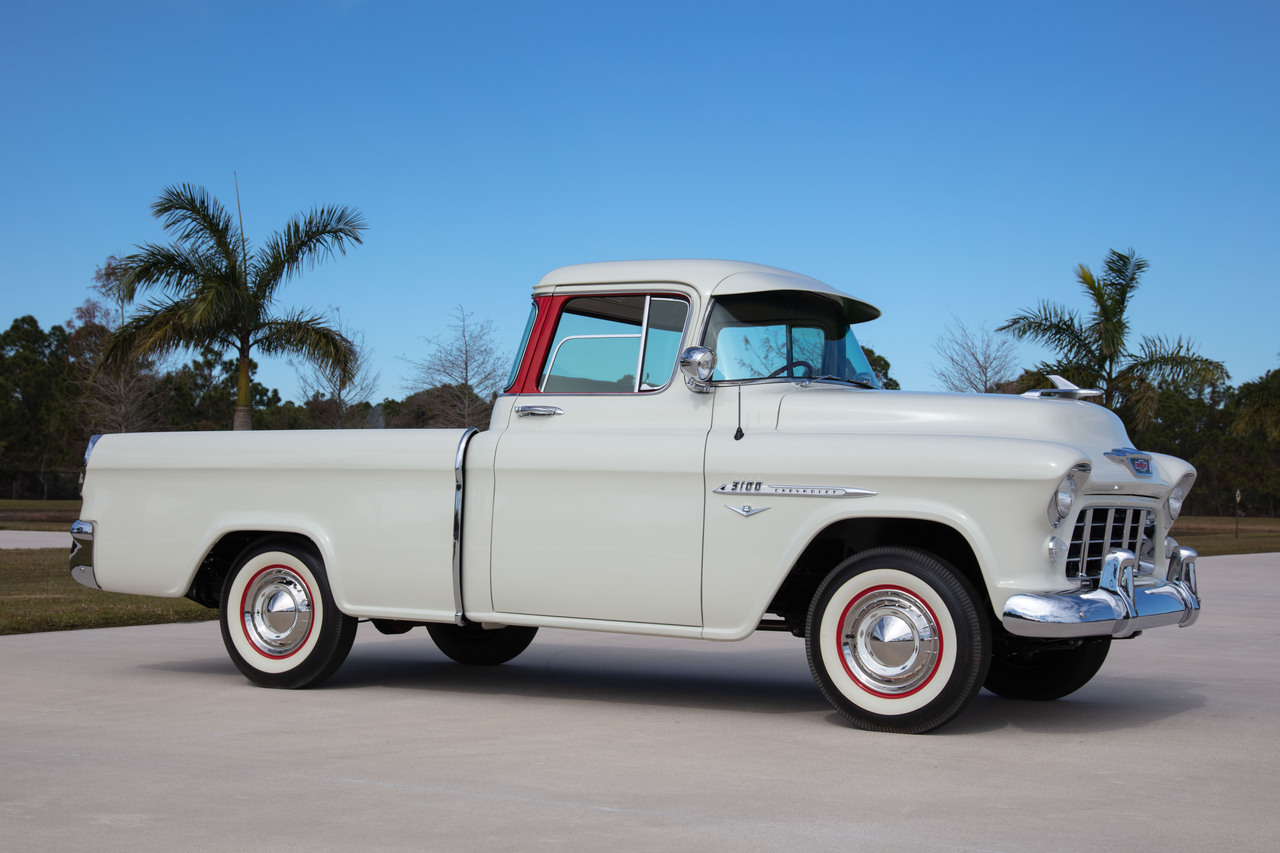
Produced from 1955 to 1958, the Cameo Carrier debuted in 1955 with a price tag of $1,980 and a total weight of 3,335 pounds (1,512.7 kg). The vehicle featured a front-mounted V8 engine with a displacement of 4,343 cc, delivering 145 BHP (106.7 kW) of power.
Transmission options included a 3-speed manual heavy-duty, 3-speed automatic with overdrive, 4-speed manual, or the all-synchro Hydra-Matic.
The Cameo Carrier was built with rear-wheel drive and offered seating for three passengers within its two-door configuration.
Dimensions included an overall length of 185.7 inches (4,717 mm), a wheelbase of 114 inches (2,896 mm), a front track of 60.5 inches (1,537 mm), and a rear track of 61.0 inches (1,549 mm).
Despite the relatively low production volume compared to Chevrolet’s overall output, 1,704,667 vehicles in 1955, the Cameo series itself saw a total production of 2,224 units between 1955 and 1958, with 5,220 units produced in its first year alone.
The Cameo Carrier stands out as a rare blend of style, performance, and utility, offering a unique snapshot of Chevrolet’s approach to mid-century pickup trucks.
Also Read: Top 10 Cars That Are Built Like Tanks
6. 1991 GMC Syclone
The GMC Syclone is one of the wildest trucks ever made a turbocharged, all-wheel-drive missile that could outrun Ferraris of its time.
Built in limited numbers (just 2,995 units), the Syclone took the compact Sonoma platform and turned it into a street weapon.
Powered by a 4.3-liter turbo V6 producing 280 horsepower and 350 lb-ft of torque, it sprinted from 0–60 mph in under 5 seconds, a shocking feat for 1991. Collectors view the Syclone as a misunderstood masterpiece a truck that was decades ahead of its time.
Prices have surged in recent years, with top-condition examples fetching over $70,000. For enthusiasts who grew up in the ’90s, owning a Syclone isn’t just about performance; it’s about nostalgia for an era when automakers weren’t afraid to experiment.
The 1991 GMC Syclone remains one of the most distinctive performance trucks of its era. The most popular configuration is the 2-door Regular Cab with a short bed, equipped with a 4.3-liter V6 turbocharged engine and a four-speed automatic transmission.
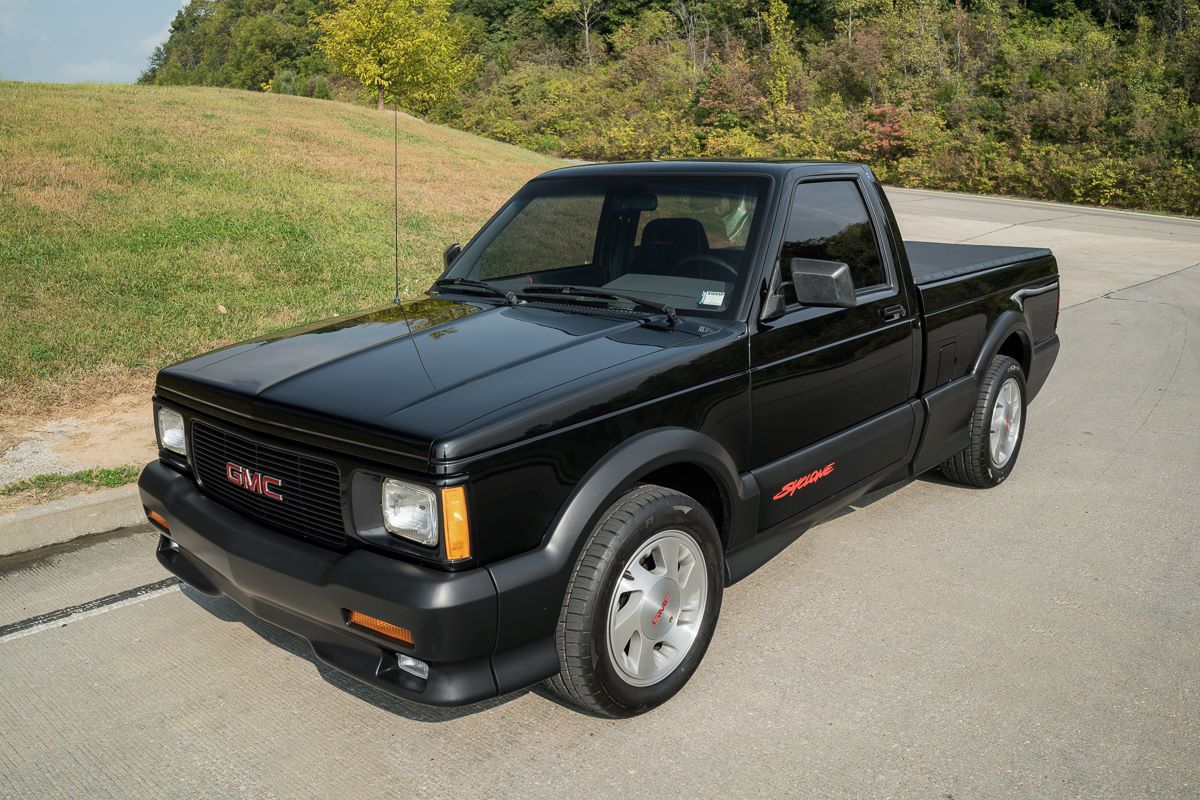
Power is delivered to all four wheels via an all-wheel-drive system, providing impressive traction and acceleration for a pickup of its time.
In terms of fuel efficiency, the Syclone runs on regular unleaded gasoline and achieves an EPA-estimated 13 MPG in the city and 16 MPG on the highway, translating to a combined rating of approximately 14 MPG. Ownership costs are estimated at around $274 per month for fuel, giving buyers a realistic picture of what it takes to drive this high-performance truck.
The truck’s engine was a 4.3-liter V6, turbocharged for added performance, paired with a 4-speed automatic transmission. Its all-wheel-drive system ensured capability across different driving conditions, while the short-bed Regular Cab design maintained the truck’s agile and athletic appearance.
7. 1966 Ford Bronco Roadster
While the Bronco has become a massive name in modern off-roading, its first-generation models especially the rare Roadster are collector royalty. The 1966 Bronco Roadster came with removable doors, no roof, and a simple utilitarian interior designed for adventure.
Only a few thousand were produced, making them one of the rarest configurations in Ford’s history. These trucks appeal to both vintage SUV fans and collectors chasing originality.
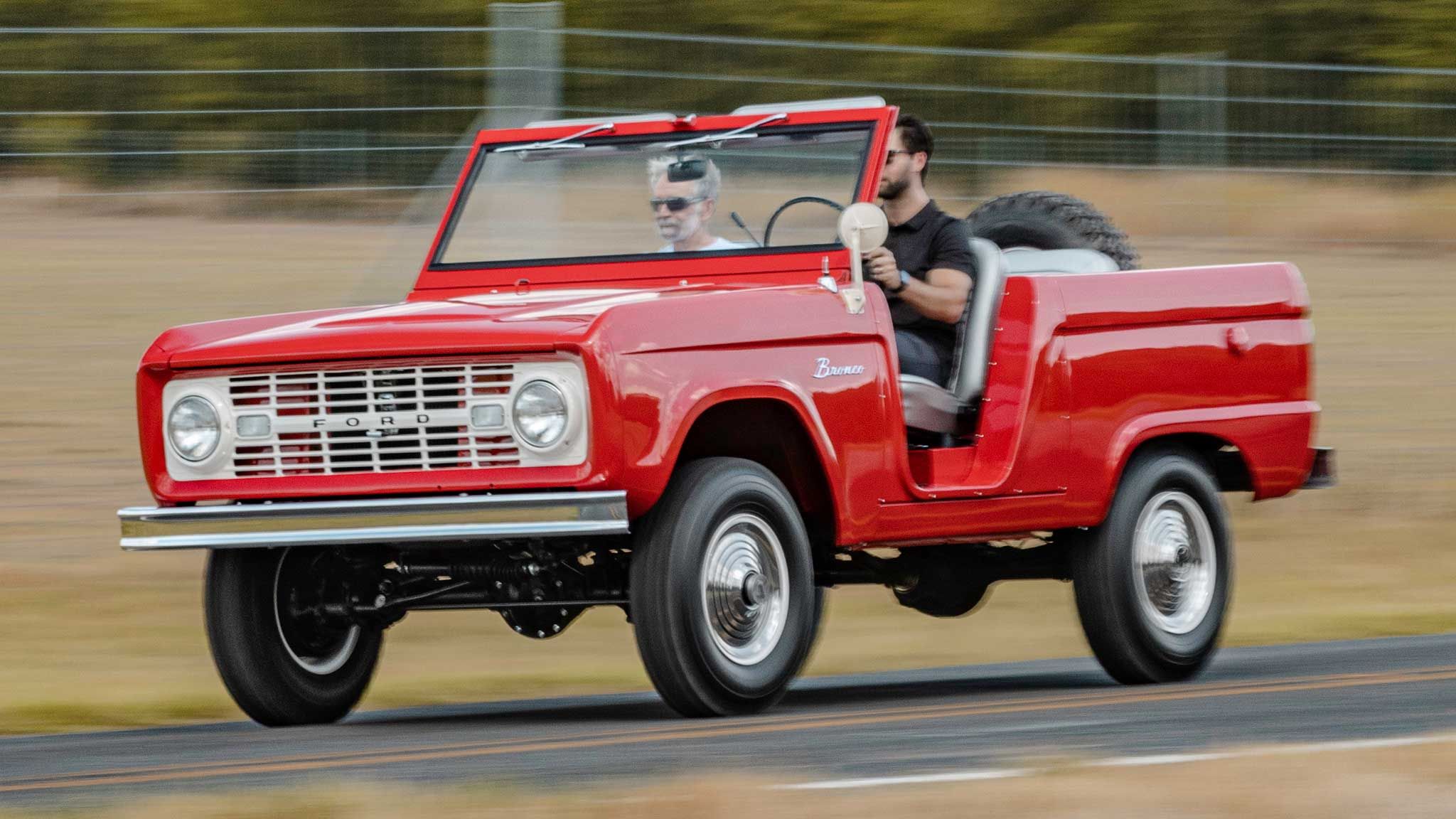
Prices have skyrocketed since Ford revived the Bronco name, with clean Roadsters now commanding well over $100,000.
The Bronco represents the beginning of the recreational 4×4 trend, which today defines a huge part of the American automotive lifestyle.
The 1966 Bronco Roadster stands out as a unique vehicle in its own right. The standard, basic version was an all-purpose model, featuring neither a top nor doors. Across all early ’66 Broncos, the standard powertrain consisted of a 170-cubic-inch six-cylinder engine producing 105 hp. By mid-March, Ford introduced an optional 289-cubic-inch V-8 engine with 200 hp.
A three-speed column-shift transmission and Dana 20 transfer case were standard as well. Initially, a ball-style transfer case shifter was used, but it was replaced mid-year with a T-handle lever to address customer complaints that the original shifter was often mistaken for a typical transmission lever and to help prevent four-wheel-drive “jump out.”
On the Roadster, the door openings were typically filled with fiberglass inserts as standard equipment, giving the vehicle its classic, contoured, sporty Roadster appearance. Dealers also offered vinyl doors and a convertible top in black or white. Hard doors were available as well, either with or without glass and frame, eliminating the need for the inserts entirely.
Another noteworthy feature of the Ford Bronco was its ability to fold the windshield flat onto the hood. When in this position, it could be secured using a loop catch on the hood and a spring-loaded pin mounted on the windshield.
This setup held the windshield firmly in place over rough terrain, allowing for a true open-air driving experience. Vacuum wipers were standard on all Bronco models.
For mirrors, a driver’s side, single-stemmed “Outside Rear View Mirror” was standard. It was round in shape and mounted on the fender. A factory-installed passenger-side mirror was also available as an option.
8. 1977–1980 Jeep J10 Golden Eagle
The Jeep J10 might not have the mainstream recognition of a Ford or Chevy, but its collectible value is rising fast.
The Golden Eagle trim, offered in the late 1970s, featured distinctive decals, unique color schemes, and the legendary 360-cubic-inch AMC V8.
As part of the “Full-Size Jeep” (FSJ) family, the J10 blended rugged off-road ability with bold personality a formula that resonates strongly with collectors today.
Restored examples of the Golden Eagle can now bring $40,000–$60,000, especially those that retain their original graphics and interior. Its rarity and retro-cool factor make it a standout in the growing vintage 4×4 scene.
Truck collecting has evolved into one of the hottest corners of the automotive world, driven by nostalgia, design appreciation, and mechanical simplicity.
From the artful curves of the ’50s Chevy Cameo to the muscular lines of the ’90s Lightning, each of these eight trucks represents more than a mode of transport they’re cultural touchstones.
Anyone who lived through the 1970s will recall just how rapidly the automotive landscape evolved. The golden age of muscle cars effectively came to an end in 1973, when a wave of federal emissions regulations took effect.
Yet, while the U.S. auto market was trending toward compact, economical cars, another transformation was quietly taking place.
Pickup trucks, which had long been regarded purely as utilitarian work vehicles, were starting to attract attention from buyers outside the farm and blue-collar sectors for the first time.
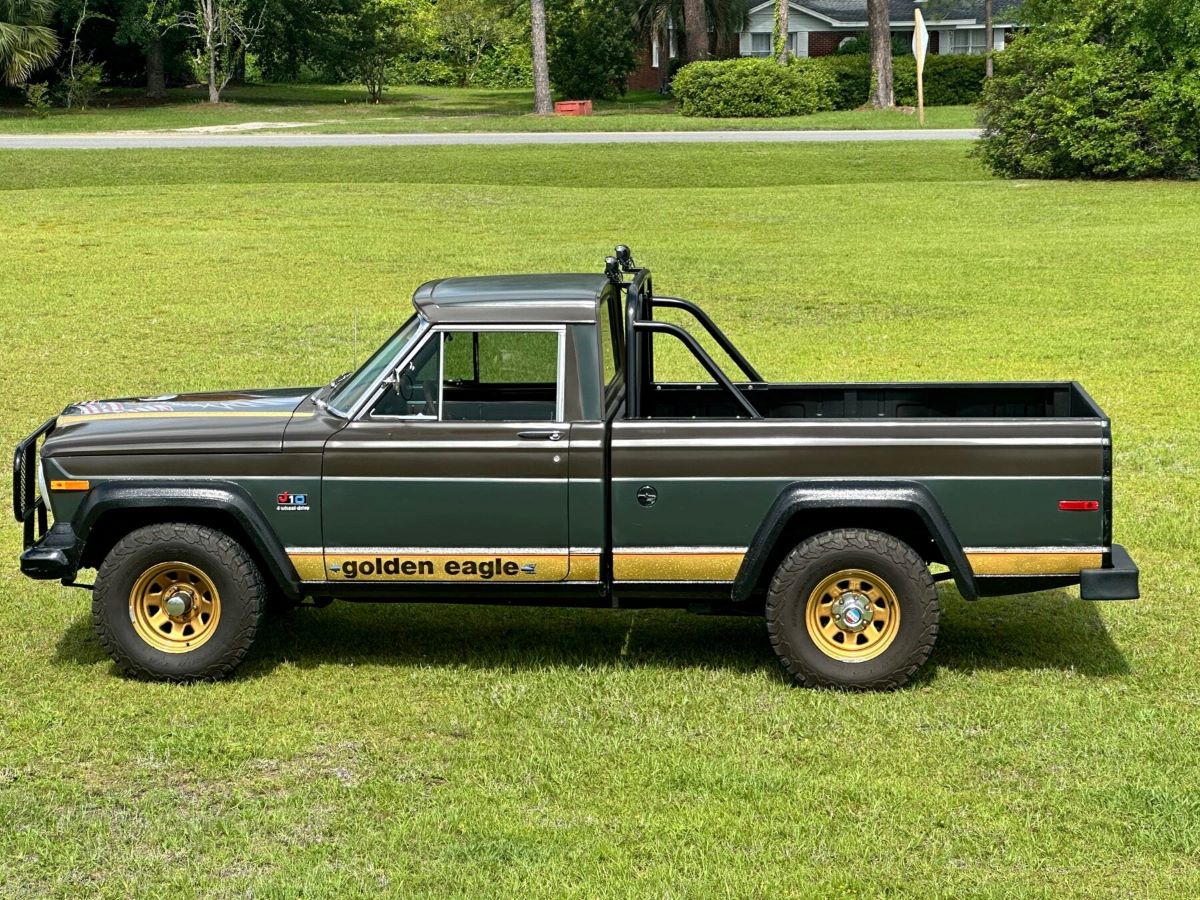
While Jeep pickups rarely command the spotlight today and are seldom seen as particularly noteworthy, there was a time when they held a certain significance. The original Jeep pickup emerged shortly after World War II, produced by Willys-Overland with a one-ton frame.
Yet even before the Willys-Overland pickup was retired, Jeep was already developing its own in-house pickup.
By 1960, the automaker was testing an as-yet-unnamed truck based on the Jeep Wagoneer’s frame, which would eventually be named the Gladiator.
Introduced in 1962, it saw its first model year in 1963 and offered a variety of inline-six and V8 engines, along with both rear-wheel- and four-wheel-drive options.
By 1971, Jeep dropped the Gladiator name, rebranding its pickup as the J-Series. At launch, three models were available: the J2000, J3000, and J4000. The J3000 was discontinued even before the lineup itself evolved into the J10 and J20 in 1973.
It wouldn’t be until 1977, however, that the American automotive market received what would become one of the most celebrated Jeep pickups ever produced.
Whether restored to perfection or kept in original survivor condition, these pickups are commanding premium prices across U.S. auctions and private sales alike.
For collectors, owning one isn’t just about profit it’s about preserving a piece of American history on four wheels.