
As electric vehicles (EVs) continue to surge in popularity across the United States, buyers are starting to look beyond just brand prestige or horsepower figures. Today’s informed consumer wants value and in the EV world, that often translates to range per dollar.
After all, what’s the point of a sleek design or cutting-edge tech if you’re constantly hunting for a charger on your daily commute? Fortunately, the EV market has matured to the point where there are plenty of models that balance affordability and impressive range.
Whether you’re looking for a practical commuter or a long-distance cruiser, these ten EVs offer the most miles for every dollar spent.
1. Tesla Model 3 Long Range
When it comes to maximizing range for your investment, the Tesla Model 3 Long Range remains one of the most compelling options on the market.
Priced around $47,000, the Model 3 delivers an EPA-rated 341 miles of range, translating to roughly 7.25 miles per $1,000.
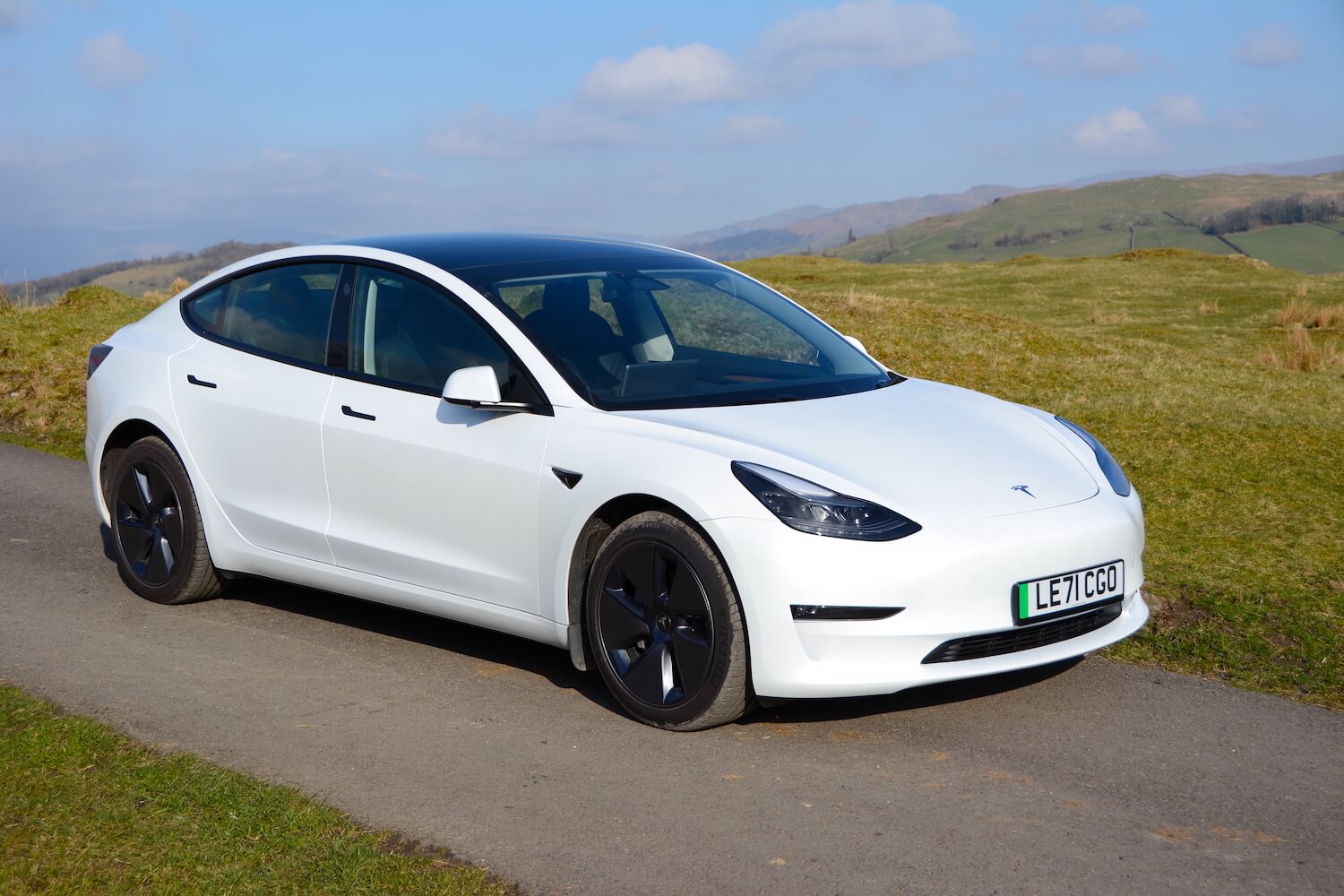
Beyond the numbers, the Model 3 offers the efficiency and performance Tesla is known for, plus access to the company’s unmatched Supercharger network.
Its sleek minimalist interior, responsive handling, and regular software updates make it feel as fresh in 2025 as it did when it first arrived.
2. Hyundai Ioniq 6 SE Long Range
Hyundai’s Ioniq 6 isn’t just a stylish sedan it’s a genuine range champion. The SE Long Range trim costs around $43,600 and offers an astounding 361 miles of EPA-rated range, giving buyers 8.28 miles per $1,000 spent.
That’s one of the best ratios in the industry. The Ioniq 6’s aerodynamic silhouette and advanced battery management system maximize efficiency, while its spacious cabin and tech-forward interior make it a standout among non-luxury EVs.
For those seeking cutting-edge design and efficiency without Tesla’s price tag, the Ioniq 6 is hard to beat.
Even though electric vehicles (EVs) made up just 5.8 percent of all U.S. car sales last year, a significant portion of car buyers are now wondering if an EV could fit into their daily lives. For most, the deciding factor is range.
With EVs, buyers want a big range number to cover those rare long trips. While the logic of this can be debated, and it should be, for this discussion, let’s simply accept that range anxiety is a defining factor in the American car buyer’s mindset.
The go-to solution for many manufacturers is to add more batteries. But more batteries also mean more weight, which in turn reduces efficiency.
It offers a 329-mile range from its massive 212-kWh battery pack, which alone weighs about 2,932 pounds, roughly the same as a Honda Civic, and achieves a combined EPA rating of 47 MPGe.

The Ioniq 6’s 77.4-kWh battery isn’t exactly small, but it’s far from excessive, and the car itself weighs around 4,300 pounds.
Hyundai has achieved remarkable results by being smart rather than relying on brute force, proving that ingenuity can surpass sheer size in reaching beyond the 300-mile benchmark.
Nearly the entire underside of the Ioniq 6 is covered to smooth airflow, and active grille shutters open only when cooling is needed, otherwise staying closed to redirect air toward “curtain” vents that guide it cleanly around the front wheels.
The SE model rides on mostly flat 18-inch wheels, smaller than the 20-inch ones used on other trims, to further improve airflow.
Just beneath the taillights, a flow-separation trap helps maintain air attachment at the rear, complemented by the subtle trunk spoiler mentioned earlier.
The SE’s smaller wheels are paired with lower rolling-resistance Hankook Ventus S2 all-season tires, sized 225/55R18. The result is an exceptional drag coefficient of 0.219, making the Ioniq 6 one of the most aerodynamic cars on the market today.
By comparison, the SEL and Limited trims use wider 245/40R20 Pirelli P-Zero All Seasons, increasing both drag and rolling resistance.
Their drag coefficient rises to 0.246, and range drops to 305 miles for rear-wheel drive and 270 miles for all-wheel drive.
In testing around Phoenix, on long, straight roads and in cool, rainy mid-60-degree weather, the Ioniq 6 SE Long-Range RWD consistently proved capable of reaching its 361-mile target.
Efficiency readings hovered in the low 5 miles/kWh range during relaxed driving, dipping only slightly to around 4.8 mi/kWh after spirited canyon runs. In my experience, few EVs come close to these numbers.
Driven carefully and in favorable conditions, the Ioniq 6 could likely exceed 400 miles on a single charge.
When it hits dealerships, the Ioniq 6 SE Long-Range RWD will tie the Lucid Air Pure and Touring as the most efficient new cars sold in the U.S.
Both Lucid models deliver over 400 miles of range, but they rely on larger 92-kWh batteries and come at nearly twice the price of the Hyundai.
That makes the Ioniq 6 not just a triumph of design and engineering, but a far more accessible and impactful vehicle in the larger EV landscape.
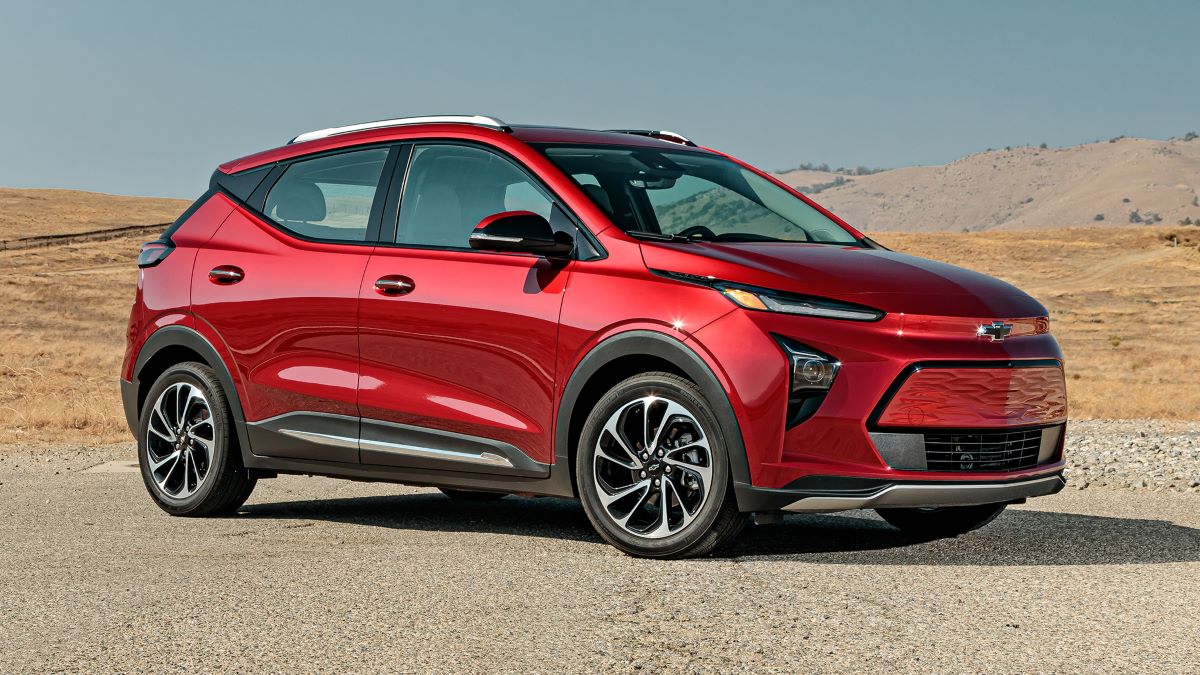
3. Chevrolet Bolt EUV
Even as Chevrolet transitions to its new Ultium platform, the Bolt EUV remains one of the most cost-effective EVs on the market.
With a base price of $27,800 and a range of 247 miles, you get about 8.88 miles per $1,000 spent an exceptional figure for an American-built electric vehicle.
The Bolt EUV may not be as flashy as higher-end EVs, but it’s practical, reliable, and equipped with modern features like Super Cruise. It’s the ideal EV for budget-conscious drivers who still want real-world usability.
The Chevrolet Bolt, General Motors’ pioneering compact electric vehicle, is set for a remarkable return. While the original model fell short in fast-charging performance, its unbeatable value and practicality made it a cornerstone of GM’s EV strategy, dominating sales in 2023.
Its discontinuation sparked widespread public backlash, prompting GM to bring the model back, a rare move that even the iconic Camaro never achieved. Now, all eyes are on the reimagined 2026 Chevrolet Bolt EUV and what it promises to deliver.
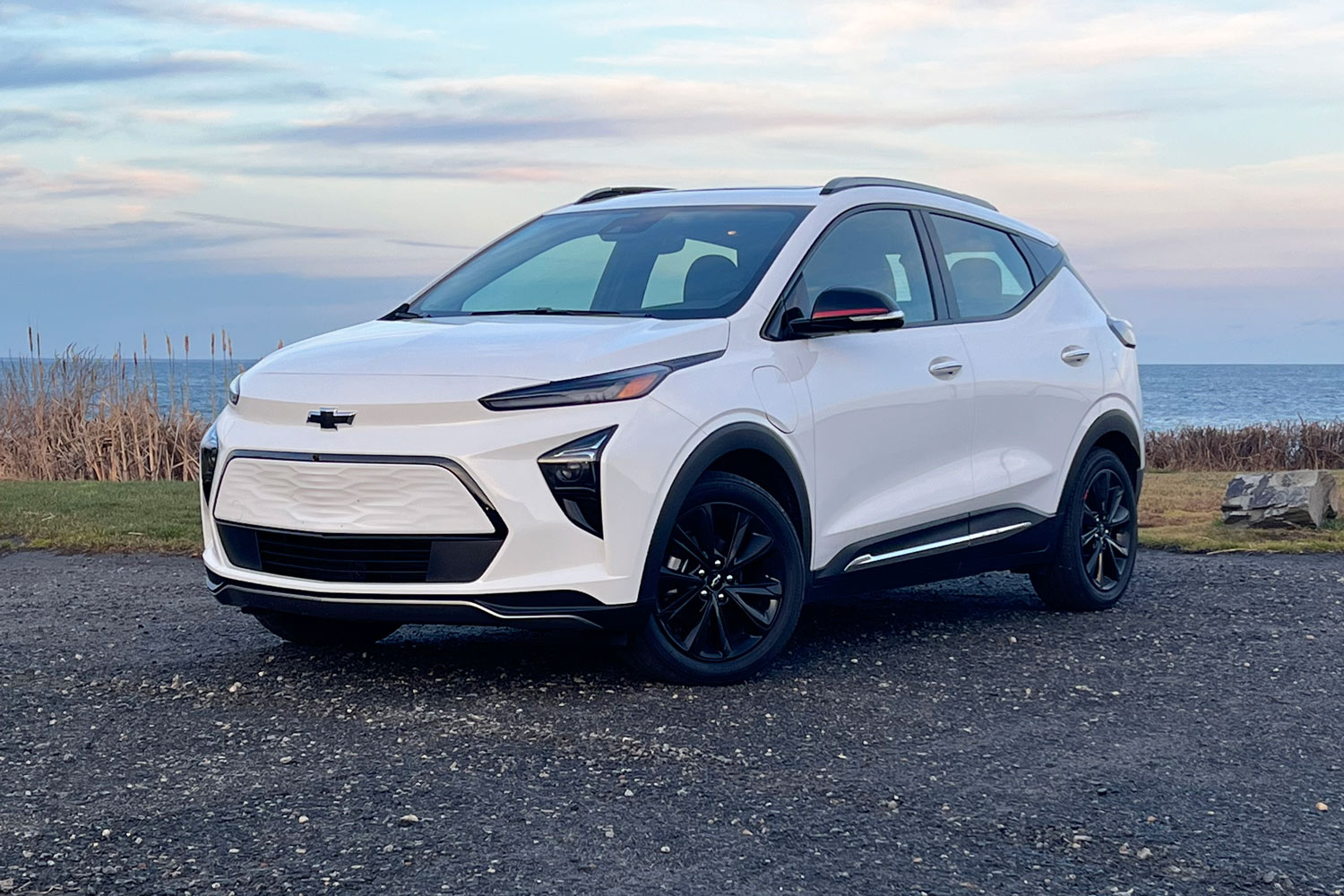
The first-generation Bolt EV debuted in 2016 as a 2017 model, designed by GM’s Korean team and assembled in Michigan. Though it lacked the sporty flair of the Tesla Model 3, the Bolt carved out its own niche as an affordable and efficient electric option.
The later introduction of the larger Bolt EUV provided extra space and comfort, catering to buyers seeking a bit more versatility. By December 2023, production of both models came to an end.
The Bolt EV and EUV wrapped up their runs with ranges of 259 and 247 miles, respectively, powered by GM’s now-retired 65.0-kWh battery pack.
The 2026 Chevrolet Bolt EUV will mark an evolution rather than a complete redesign. Built on GM’s advanced Ultium platform, the new Bolt promises enhanced range, improved performance, and cutting-edge safety features, along with Super Cruise hands-free driving technology.
By leveraging Ultium batteries and components shared across GM’s EV lineup, the Bolt EUV will strike a more effective balance between cost and capability.
The upcoming Bolt EUV will feature the North American Charging Standard (NACS) port, giving it access to Tesla’s expansive Supercharger network for faster and more convenient charging.
With its blend of innovation, affordability, and improved efficiency, the 2026 Chevrolet Bolt EUV aims to build on the success of its predecessor, bringing back the spirit of the original while meeting the demands of the next generation of EV buyers.
4. Tesla Model Y Long Range
The Model Y Long Range continues to dominate the midsize electric SUV segment with its versatility and efficiency. With a price tag of around $49,000 and a 320-mile range, it offers approximately 6.53 miles per $1,000.
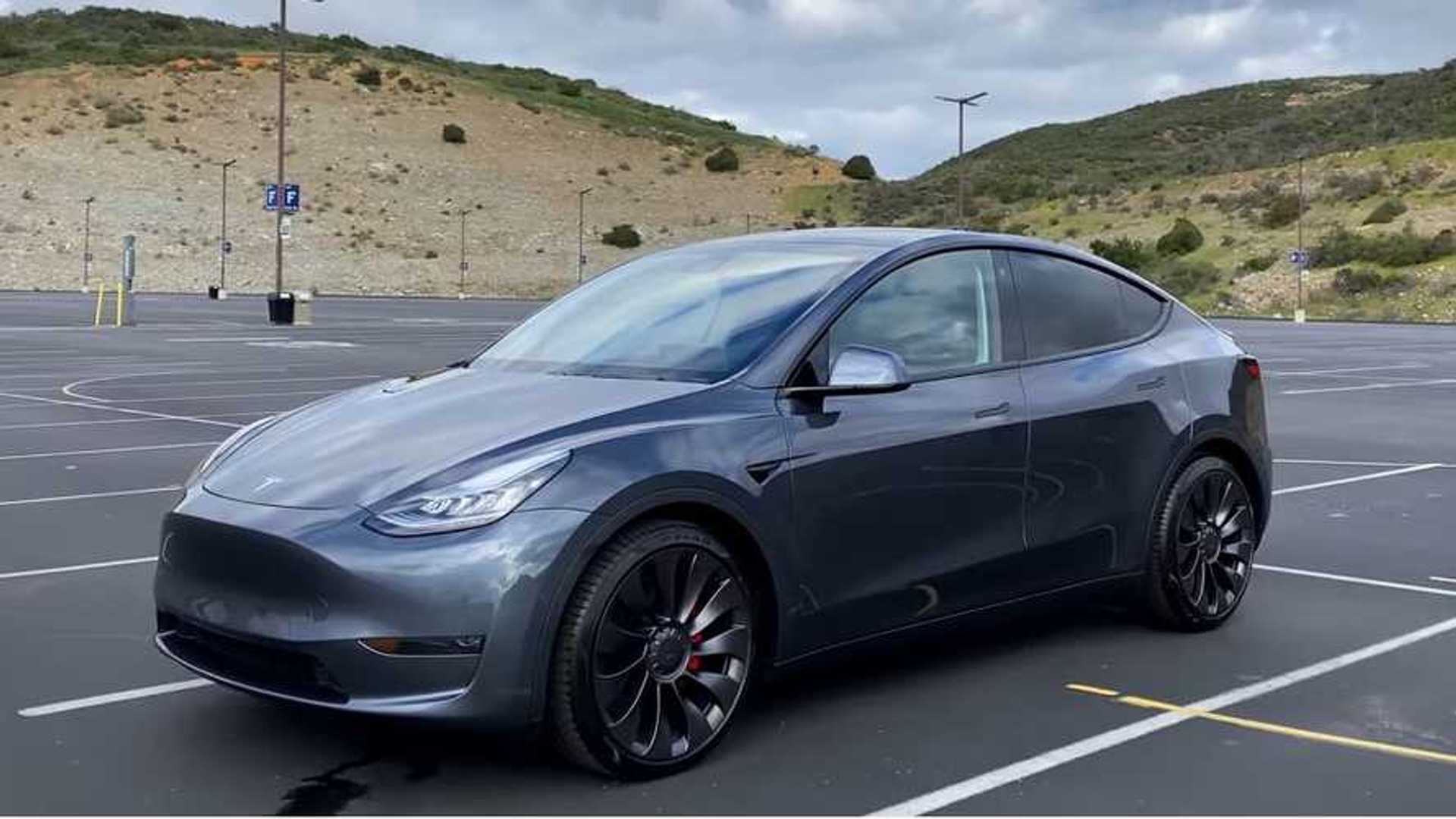
It’s not the cheapest, but when you factor in Tesla’s charging infrastructure, software updates, and resale value, the Model Y delivers long-term value that few competitors can match.
Families love its roomy interior, panoramic roof, and near-instant torque that makes highway merges effortless.
5. Hyundai Kona Electric
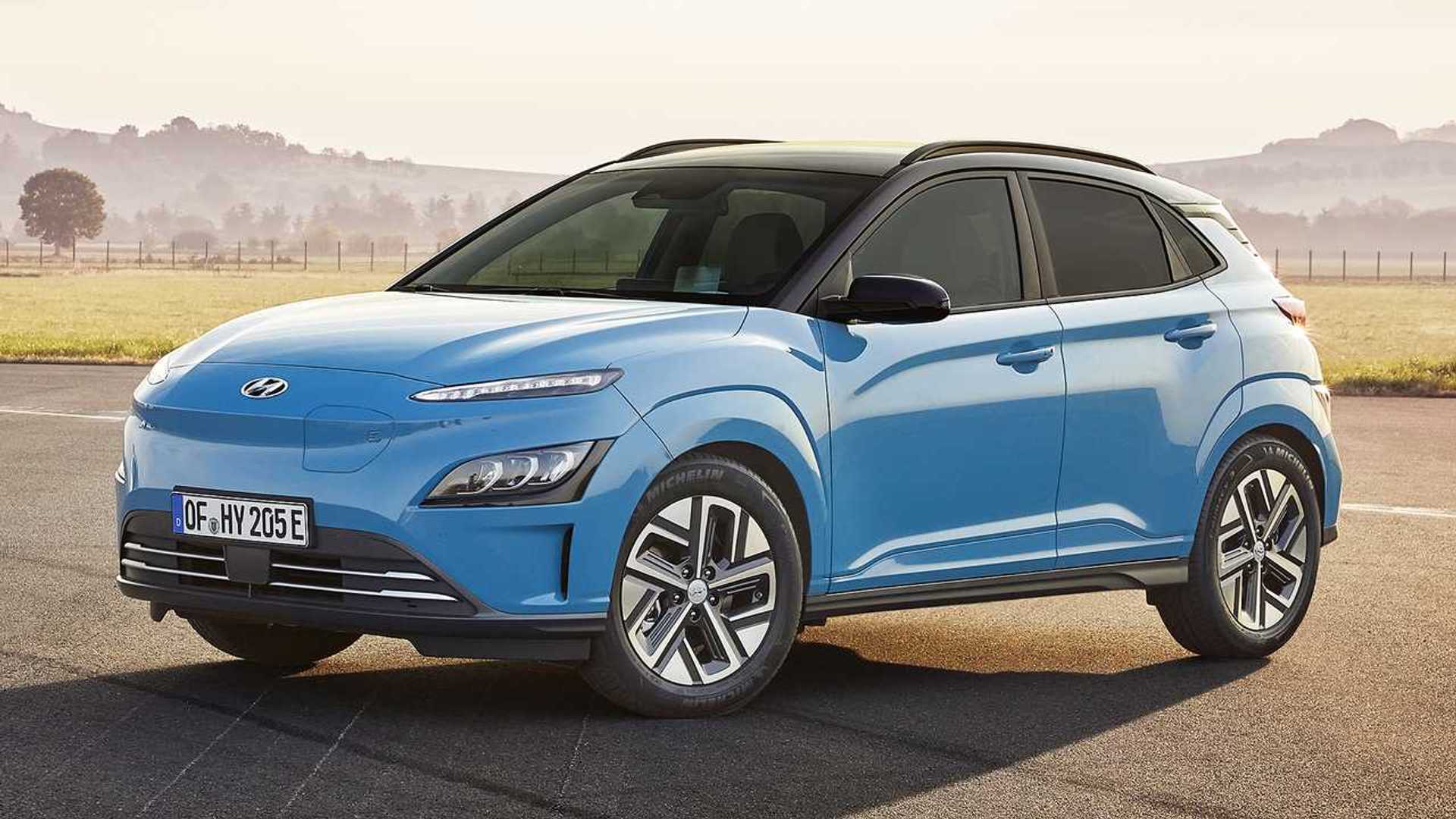
The Hyundai Kona Electric has quietly become one of the most range-efficient small crossovers in the U.S. market. Starting at about $34,000 with a 261-mile range, the Kona Electric offers 7.67 miles per $1,000 spent.
It’s the perfect compact EV for city dwellers who occasionally take longer trips. Hyundai’s warranty coverage remains one of the best in the industry, and with an updated design for 2025, the Kona looks sharper and drives smoother than ever.
This isn’t a reflection of your communication skills. The confusion comes from the fact that the Kona Electric is still a relatively new and lesser-known model in Hyundai’s lineup.
The Kona first arrived for the 2018 model year, and Hyundai followed it up with the all-electric version just a year later.
That said, awareness is steadily growing, and it’s only a matter of time before the Kona Electric earns the recognition it deserves, because it truly ranks among the best EVs available today.
The Kona Electric brings together everything most EV shoppers are looking for. It offers an impressive 258 miles of range, standard fast-charging capability, and a generous suite of technology and safety features.
The Kona Electric delivers lively acceleration and feels confident and composed through corners. It’s genuinely fun, something you might not expect from an electric crossover.
Of course, there are a few drawbacks. The Kona’s styling may be a bit too busy for some tastes, though that’s largely a matter of opinion.
The more objective limitation lies in its interior space, the rear seats and cargo area are on the smaller side, making it less practical as a full-time family hauler.
But if you can look past these minor issues, you’ll find that the Hyundai Kona Electric is a capable, efficient, and thoroughly enjoyable EV that more people should know about.
6. Nissan Ariya Engage FWD
Nissan may have pioneered mainstream EVs with the Leaf, but the Ariya marks its evolution into a more refined electric crossover.
The Engage FWD trim starts at $39,590 and delivers 216 miles of range, translating to about 5.45 miles per $1,000.

While not the most efficient ratio, the Ariya makes up for it with a premium interior, quiet ride, and Nissan’s proven reliability. It’s a well-balanced EV for buyers who want comfort and technology wrapped in a stylish design.
Nissan expands its growing lineup of electric vehicles with the introduction of the 2023 Ariya SUV. Joining the long-running Leaf hatchback in Nissan’s EV family, the Ariya delivers an impressive driving range of up to 304 miles, outpacing the Leaf’s maximum of 226 miles.
The Ariya’s sleek and modern design marks a departure from the sharper, more angular styling found on many of Nissan’s current models. With its low, wide stance, the Ariya distinguishes itself from the Rogue and exudes a sportier, more refined presence.
The 2023 Nissan Ariya is an all-new model for the brand and represents a major step forward in Nissan’s electric future.
It debuts the company’s latest driver-assistance suite, ProPilot 2.0, which was first introduced on the Japanese-market Nissan Skyline sedan.
When equipped with front-wheel drive and the larger 87.0-kWh battery pack, the Ariya achieves an estimated range of up to 304 miles per charge, offering a compelling mix of efficiency and capability for an electric SUV.
Unlike the Leaf, which is exclusively front-wheel drive, the Ariya draws from Nissan’s high-performance engineering, specifically the GT-R sports car’s torque-split technology, to offer optional all-wheel drive through a dual-motor setup.
On the road, the Ariya delivers a smooth, composed ride with a focus on comfort and stability, appealing to everyday drivers, though it doesn’t quite offer the sporty engagement some enthusiasts might desire.
The base Engage trim, which uses the smaller battery pack, provides up to 216 miles per charge. Opting for the dual-motor all-wheel-drive system lowers the range slightly, with a maximum of 272 miles.
In real-world testing, a front-wheel-drive Empower+ achieved 240 miles on a 75-mph highway route, while the e-4ORCE Platinum+ recorded 210 miles under the same conditions.
Charging is flexible and convenient, with support for standard 110- and 240-volt home outlets, public Level 2 charging stations, and DC fast-charging networks for quicker top-ups.
7. Kia EV6 Light Long Range (RWD)
Kia’s EV6 combines futuristic styling with impressive electric performance, and the Light Long Range RWD trim provides excellent bang for the buck.
Priced at $42,600 and offering 310 miles of range, the EV6 achieves about 7.28 miles per $1,000.

Built on the same E-GMP platform as the Ioniq 6, it supports ultra-fast 800V charging, allowing you to replenish from 10% to 80% in just 18 minutes. For road trippers who value both speed and range efficiency, the EV6 is a stellar option.
8. Ford Mustang Mach-E California Route 1
The Mach-E California Route 1 is Ford’s long-range specialist, designed for drivers who want maximum distance between charges. With a base price near $51,000 and a 320-mile range, it comes out to 6.27 miles per $1,000.
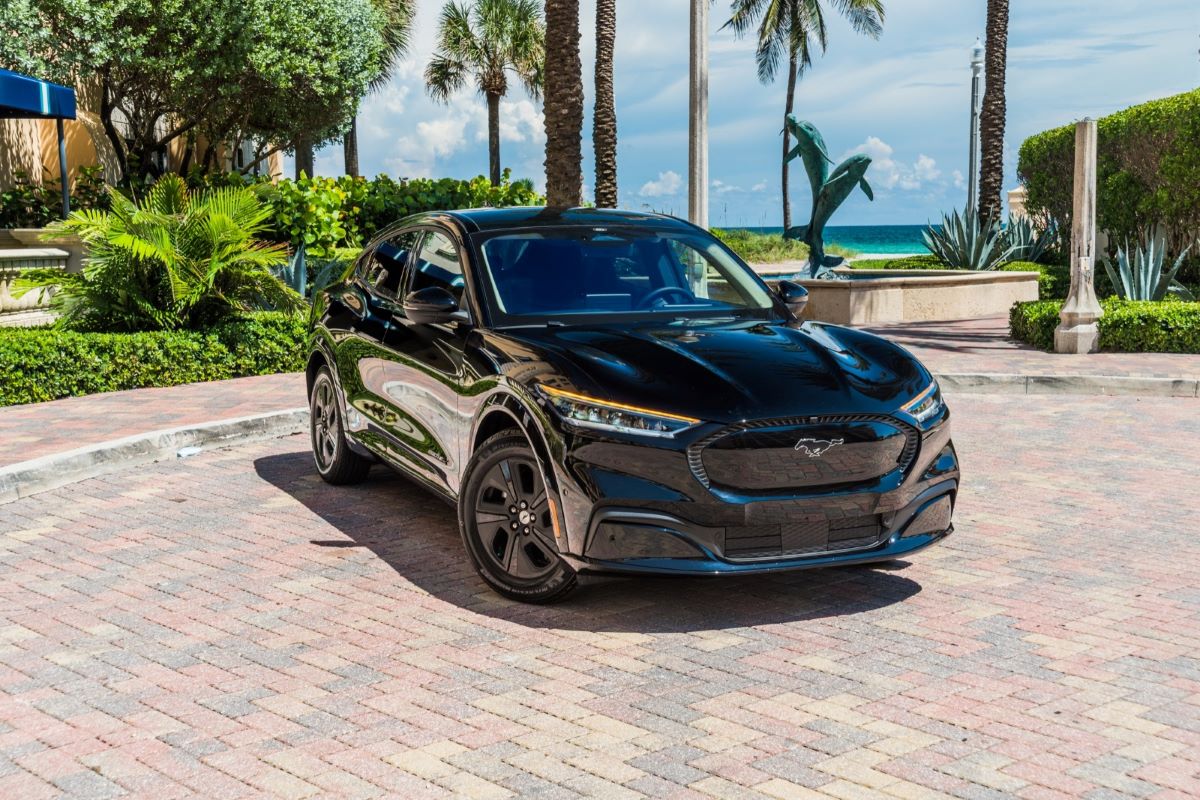
What makes the Mach-E special is how it balances its EV credentials with classic Mustang DNA engaging to drive, sporty in design, and practical for families.
Plus, Ford continues to expand access to Tesla’s Supercharger network, which improves real-world usability dramatically.
Now entering its fourth model year, the Ford Mustang Mach-E continues into 2024 with minimal changes, though it does welcome the addition of an exciting new Rally variant. However, it appears Ford isn’t entirely finished making adjustments to the 2024 Mustang Mach-E lineup.
According to sources familiar with the matter, the California Route 1 trim, which previously filled the gap between the Select and Premium models, will be discontinued for the new model year.
It also featured a panoramic fixed-glass roof with an Infrared Reflective (IRR) windshield, a cargo area cover, heated front seats, a heated steering wheel, power-folding side mirrors with heated glass, LED turn signal indicators, pony projection lamps, black mirror caps, and a memory driver’s seat.
With its removal, the 2024 Mustang Mach-E lineup is expected to consist of four trims: Select, Premium, GT, and the all-new Rally.
The rally-inspired Mach-E Rally steps in as the latest addition to the lineup, bringing even greater performance than the range-topping GT Performance Edition. It delivers 480 horsepower and 650 pound-feet of torque, slightly surpassing the GT Performance’s 480 horsepower and 634 pound-feet.
Additional features include protective shielding for both motors and exclusive appearance enhancements that set it apart from the rest of the lineup.
With the departure of the California Route 1 trim and the arrival of the Rally variant, the 2024 Ford Mustang Mach-E lineup reflects a refined focus, balancing performance, technology, and style while expanding the electric SUV’s appeal to a broader range of drivers.
9. Rivian R1T Dual-Motor Large Pack
The Rivian R1T is a different kind of value a premium adventure EV that still manages a strong range-to-cost ratio. The Dual-Motor Large Pack variant starts around $71,000 and offers 410 miles of range, yielding 5.77 miles per $1,000.
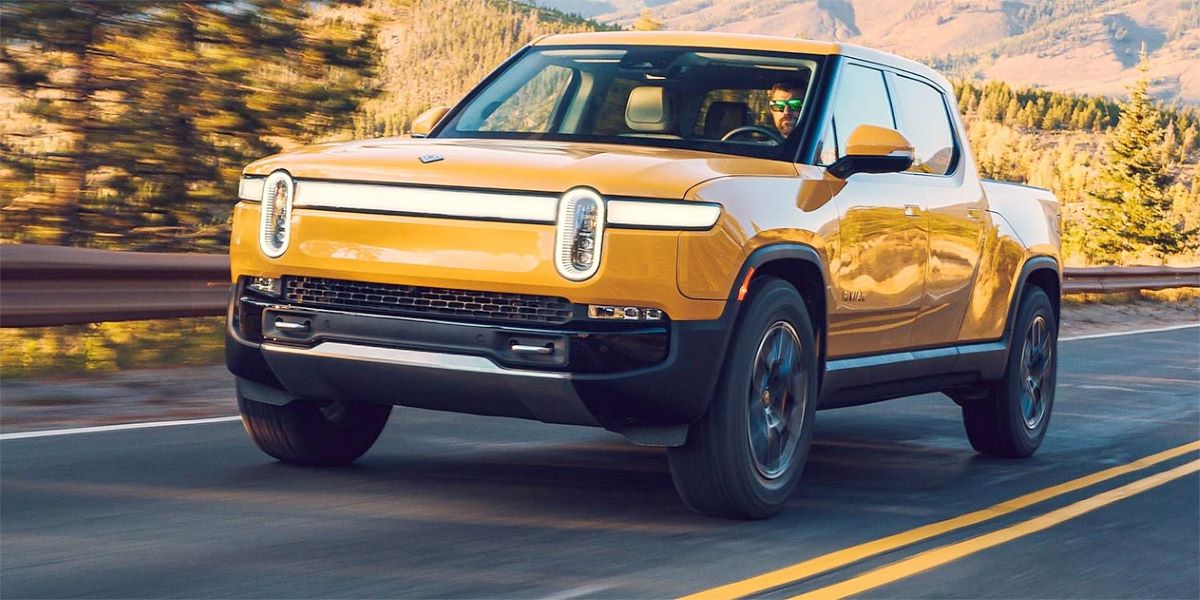
For an all-electric pickup that can tow, off-road, and haul serious cargo, that’s impressive. Rivian’s build quality and design ethos set it apart in the EV truck space, and for buyers seeking a do-it-all electric adventure vehicle, it’s worth every penny.
Each year, millions of new pickup trucks are sold across the U.S., but among the few fully electric options available, none can match the sheer quickness of the Rivian R1T.
Delivering up to 835 horsepower, the R1T rockets from 0 to 60 mph in just 3.0 seconds, making it a few tenths faster than the Ford Mustang Shelby GT500, while also being capable of towing up to 11,000 pounds in near silence.
Inside, the R1T’s cabin exudes a refined, outdoorsy vibe that will feel instantly familiar to anyone who’s ever shopped at REI. Dominating the dashboard is a large 15.6-inch touchscreen, complemented by finely stitched leather seats and premium materials throughout.
Although the electric pickup market remains relatively niche, the R1T does have a few key competitors, including the Ford F-150 Lightning, Chevrolet Silverado EV, and GMC Hummer EV SUT.
Still, none offer the same combination of innovation and practicality as the Rivian, which features a clever gear tunnel for extra storage between the bed and cabin.
With a maximum DC fast-charging rate of 220 kW and an EPA-estimated range of up to 410 miles, the R1T delivers both speed and endurance.
A new Drive Cam feature now allows drivers to record video footage of their entire journey onto a USB-C drive, effectively replacing the need for an external dashcam. However, Rivian has removed the driver-facing camera, as well as the 12-volt outlets previously found in the cabin and front trunk.
The 2024 Rivian R1T lineup starts at $71,700 and tops out at $84,800, depending on trim and options. The Adventure trim, priced at $71,700, is our recommended pick thanks to its array of premium features such as a Meridian sound system, heated and ventilated front seats, and wood interior accents.
For those seeking extended range, the Large battery pack upgrade costs $6,000 and offers more miles per charge. Likewise, the Quad-Motor all-wheel-drive setup adds $8,000 to the price tag, but the performance boost is well worth the investment.
Unless you plan to tow heavy loads regularly, it’s probably best to skip the Max battery pack, while it increases range by 27% over the Large pack, it comes at a hefty $16,000 premium.
Every Rivian R1T comes standard with all-wheel drive, offered in two configurations: Dual-Motor and Quad-Motor. The standard Dual-Motor setup produces 533 horsepower, while the Performance Dual-Motor version ups that figure to 665 horsepower and 700 pound-feet of torque.
Opting for the Quad-Motor model unleashes the full 835 horsepower, allowing the truck to sprint from 0 to 60 mph in just 3.0 seconds, making it the fastest pickup Car and Driver has ever tested. Even the Dual-Motor variant impresses, reaching 60 mph in 3.4 seconds.
The R1T’s standard air suspension system can adjust ground clearance from eight to 14 inches, enhancing both comfort and capability. During testing in Colorado’s Rocky Mountains, the R1T demonstrated its remarkable off-road prowess alongside its sharp, responsive on-road handling.
With its blend of jaw-dropping acceleration, rugged ability, and forward-thinking design, the 2024 Rivian R1T continues to set the benchmark for electric pickups.
10. Volkswagen ID.4 Pro
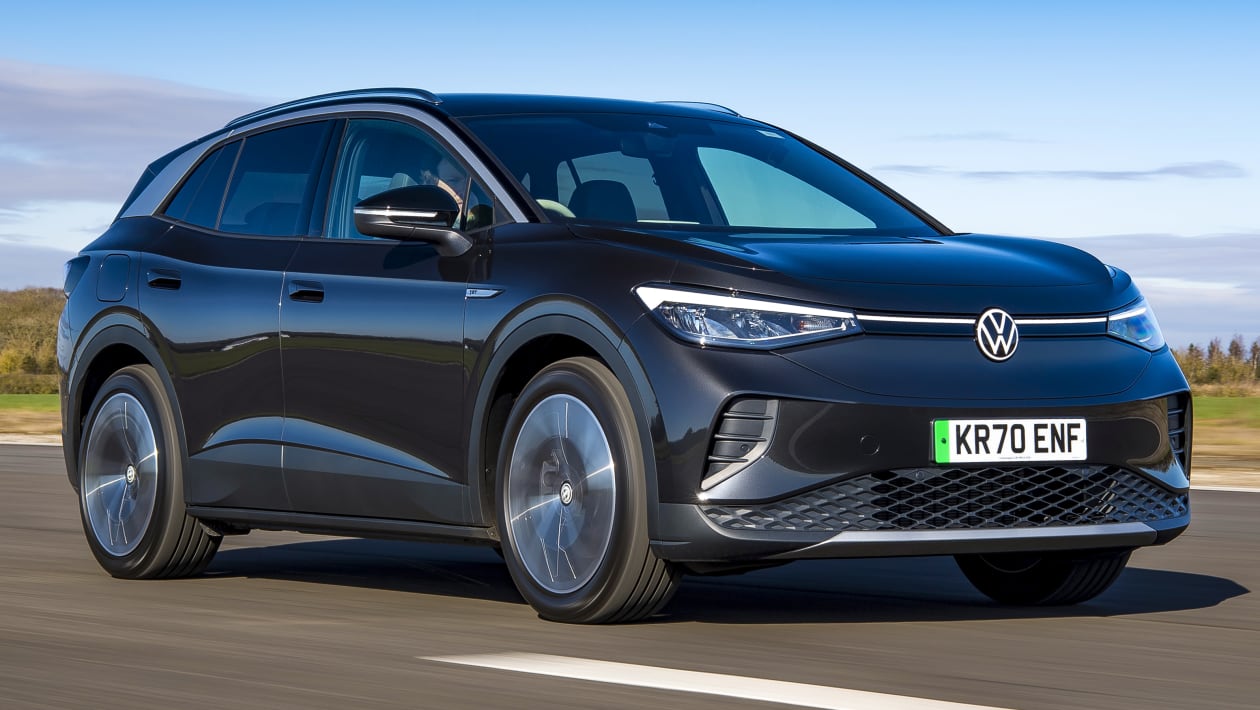
The Volkswagen ID.4 Pro combines German engineering with a practical, everyday approach to EV driving. Priced around $43,995 and offering 291 miles of range, it achieves 6.61 miles per $1,000.
The ID.4 delivers a comfortable ride, intuitive tech, and a spacious cabin that appeals to small families and commuters alike.
Volkswagen has improved software performance and charging speed with recent updates, making the ID.4 one of the most well-rounded EVs in its class.
The electric vehicle market in the United States is finally at a point where buyers don’t have to choose between affordability and practicality.
From budget-friendly models like the Chevrolet Bolt EUV and Hyundai Kona Electric to tech-rich options like the Tesla Model 3 and Kia EV6, there’s an EV to fit nearly every lifestyle and budget.
Evaluating range per dollar helps you find not just the most efficient car but the smartest buy for long-term ownership. As technology advances and competition grows, the best-value EVs of today may soon redefine what “affordable performance” means in the electric age.
