
Advanced Driver Assistance Systems (ADAS) have reshaped the safety and driving experience of family crossovers worldwide.
From adaptive cruise control to lane-keeping assistance and automated emergency braking, these features rely on sensors, cameras, and radar to accurately interpret the surrounding environment.
However, these delicate components require stability and precise calibration to function properly, and these requirements can vary significantly between vehicles.
Some crossovers retain their ADAS alignment even after years of use, windshield replacements, or light bumper impacts.
These are the ones that show consistent engineering, superior sensor housing, and durable mounting points that protect delicate systems from vibration or road shock.
Their drivers experience fewer dashboard warnings and service recalibration notices, keeping ownership costs low and confidence high.
On the other hand, certain crossovers struggle with calibration consistency. Even minor events like a tire change or small pothole impact can prompt warnings for radar misalignment or obstructed sensors.
These vehicles, while feature-rich on paper, end up demanding regular recalibrations that frustrate owners and inflate maintenance bills.
This comparison highlights both sides of the equation. We’ll start with seven family crossovers that have earned praise for keeping their ADAS sensors stable and trouble-free.
Then, we’ll turn to seven that require frequent recalibration, exploring why design choices, placement, or build tolerances make them less dependable over time. The goal is to help families choose not just safe cars, but smartly engineered ones that stay that way for years.
Also Read: 5 Trucks With Long-Life U-Joints vs 5 That Vibrate at 60 mph
7 Family Crossovers That Keep ADAS Sensors Stable
A truly dependable family crossover doesn’t just protect its occupants during emergencies; it also keeps its safety systems reliable in everyday life.
ADAS components like front radar sensors, forward cameras, and ultrasonic detectors can lose alignment when exposed to vibration, thermal expansion, or structural flex.
Yet, some automakers have mastered how to keep these systems robust, even through years of varied driving conditions.
These crossovers tend to use rigid sensor mounts integrated into the vehicle frame rather than the bumper fascia. Their calibration software is more tolerant of minor variances, meaning everyday bumps or replacement glass don’t instantly trigger warnings.
Many also benefit from tighter body tolerances and better-protected sensor housings, particularly behind grilles or emblems.
For families, this translates into fewer workshop visits and greater long-term safety assurance. The difference becomes clear during ownership: while others are recalibrating sensors after routine maintenance, these vehicles quietly keep their ADAS modules in check without fuss.
In this section, we look at seven such family crossovers spanning Japanese, European, and American brands that have proven resilient against misalignment and calibration drift.
Each entry combines good engineering, consistent assembly quality, and real-world reliability data. The result is smoother, stress-free ownership where the safety systems work as expected every time you start the engine.
Let’s begin with one of the most respected examples of ADAS stability: Toyota’s dependable RAV4 Hybrid.
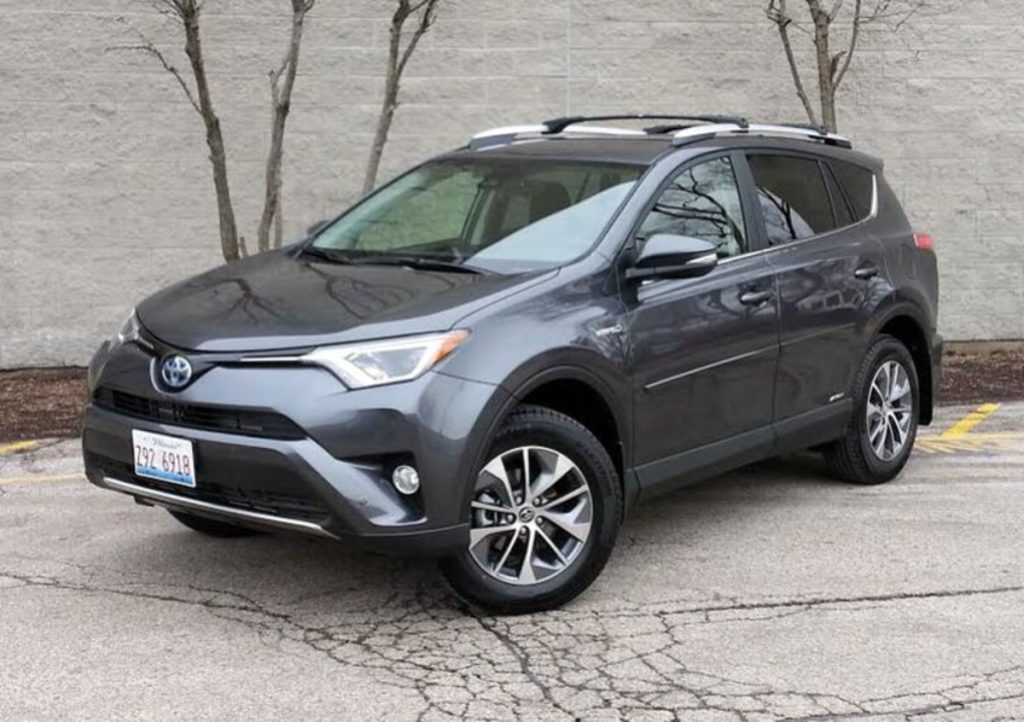
1. Toyota RAV4 Hybrid
Toyota’s RAV4 Hybrid has built a reputation for blending efficiency and technology, but its ADAS stability is equally impressive.
Owners report that its radar and camera-based systems rarely lose calibration, even after thousands of kilometers of mixed driving or minor body repairs.
The reason lies in Toyota’s sensor integration philosophy. The forward radar is securely mounted behind the emblem, shielded by reinforced brackets that absorb vibration from the front subframe.
The monocular camera, located at the top of the windshield, sits within a sealed housing that resists fogging and temperature changes. This minimizes drift and keeps lane-tracking consistent in rain or bright sunlight.
Toyota also designs its software to adapt to minor deviations without issuing unnecessary recalibration warnings. That means a windshield replacement at a non-dealer shop doesn’t always trigger a full system reset, saving owners both time and cost.
Real-world reliability surveys have shown minimal ADAS complaints among RAV4 owners, especially in hybrid variants.
Families appreciate the quiet reliability systems like adaptive cruise control and pre-collision braking simply work without fuss. This consistency makes the RAV4 Hybrid not only a fuel-saver but also a benchmark for stable driver-assist performance.
It’s one of those rare cases where everyday dependability meets smart sensor engineering, keeping both drivers and passengers secure with minimal maintenance hassle.
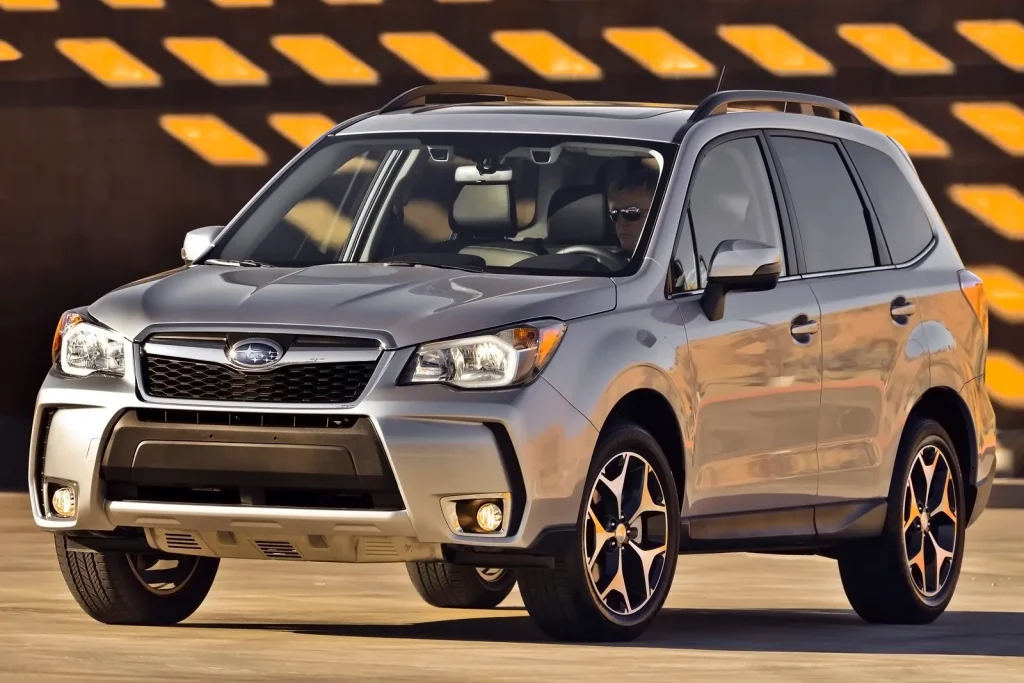
2. Subaru Forester
Subaru’s Forester has earned a loyal following not just for its rugged practicality but also for the durability of its EyeSight driver-assistance system. This dual-camera technology, mounted high near the rear-view mirror, avoids the radar-related misalignment issues that often trouble front-bumper sensor setups.
Since EyeSight relies on vision-based detection rather than low-mounted radar sensors, it’s less likely to require recalibration after minor fender repairs or road debris impacts.
The cameras sit behind the windshield in a vibration-resistant frame, ensuring steady image capture even on rough terrain or during long highway drives.
Subaru’s structural design also contributes to this stability. The brand’s symmetrical all-wheel-drive layout reduces chassis twist, which helps maintain camera angles over years of use. Even after windshield replacements, most systems return to perfect operation without a full service recalibration.
Owners frequently report consistent adaptive cruise, lane-keep assist, and collision warning performance with almost no false alerts. The system’s real-world reliability makes the Forester one of the most trustworthy family crossovers for maintaining ADAS precision over time.
In a market where many systems lose calibration quickly, the Forester shows how robust engineering and camera-based sensing can eliminate frequent recalibration hassles for good.
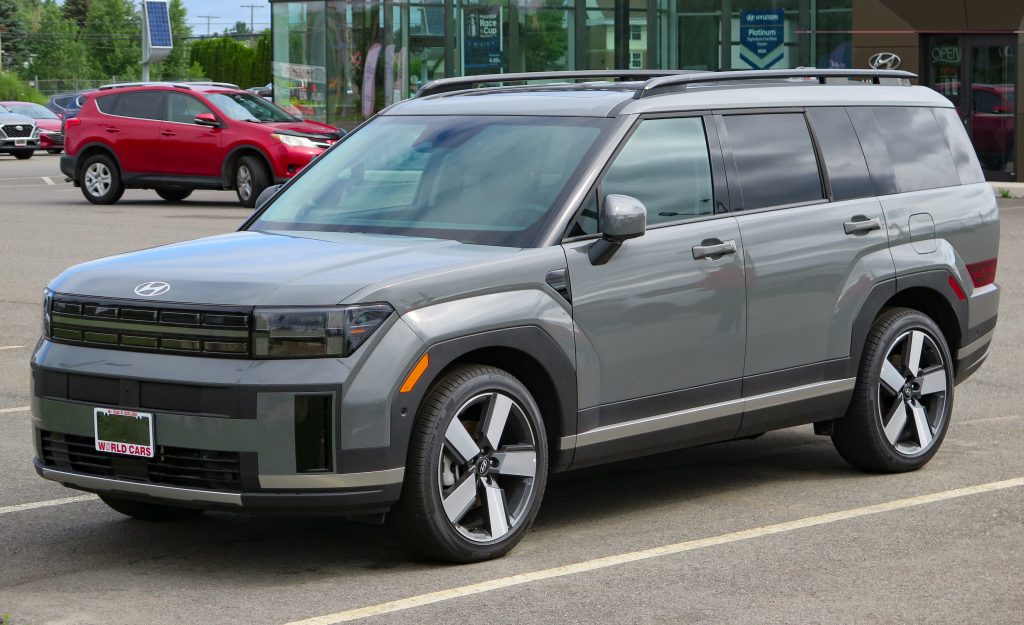
3. Hyundai Santa Fe (2021–Present)
The Hyundai Santa Fe has quietly become one of the most balanced family crossovers on the road, thanks to smart packaging and thoughtful sensor placement.
Hyundai engineers moved the forward radar module higher into the grille area and enclosed it in a reinforced frame that absorbs vibration without affecting alignment.
This repositioning helps the radar maintain accuracy even after small front-end impacts or temperature changes.
The SmartSense ADAS suite, which includes adaptive cruise and lane-centering, rarely suffers from the “sensor blocked” warnings that owners of other models experience.
Hyundai also improved its internal calibration algorithms. The Santa Fe can detect and correct small positional changes automatically during system startup, reducing the need for manual recalibration after tire or windshield work. The radar and camera modules are also well-shielded, limiting interference from paint or moisture.
Long-term owners appreciate how steady the safety systems remain over time. Features like forward collision avoidance and blind-spot assist continue to work seamlessly even after years of use.
This reliability makes the Santa Fe one of the few modern crossovers that balance technology with real-world dependability.
It’s a model that proves consistent ADAS performance doesn’t depend solely on premium pricing it depends on smart design and precise engineering.
4. Mazda CX-5
The Mazda CX-5 has consistently stood out for its refined driving feel, but what often goes unnoticed is how stable its ADAS calibration remains even after years of ownership. Mazda’s i-Activsense suite, which integrates radar, cameras, and ultrasonic sensors, benefits from careful hardware positioning and rigid body construction.
The forward radar is mounted behind the Mazda emblem within a sturdy cradle attached to the frame, not the bumper skin.
This eliminates flex that can cause signal drift after minor bumps. The front camera, located at the top of the windshield, sits in a sealed and vibration-dampened housing, ensuring alignment even under extreme temperatures.
Mazda’s attention to weight distribution and structural rigidity helps maintain calibration indirectly. Because the CX-5’s front subframe and firewall are engineered for low flex, ADAS sensors retain their reference points longer.
The result is a vehicle that holds its calibration through seasons, road wear, and small repairs without the constant need for dealer intervention.
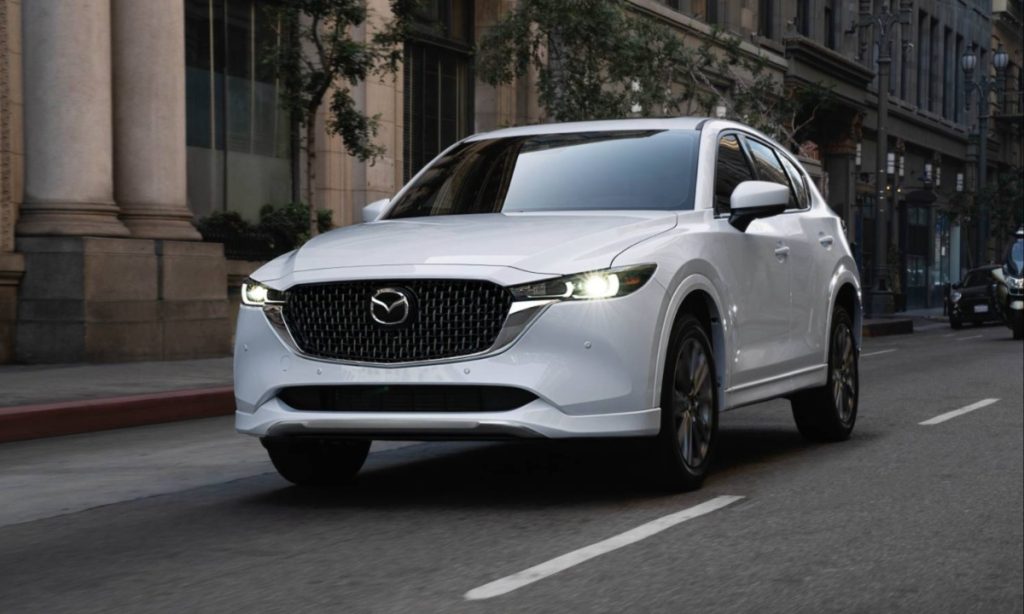
Owners also note fewer false lane-departure alerts and smoother adaptive cruise transitions compared to competitors. The CX-5’s ADAS reliability mirrors its overall engineering philosophy precise, minimalistic, and human-centered.
For families that want sophisticated safety tech without recurring recalibration costs, the CX-5 is a strong choice that quietly excels in the background, making every drive safer with minimal fuss.
5. Volkswagen Tiguan
The Volkswagen Tiguan combines European engineering with understated reliability, and its ADAS sensors reflect that same balance of precision and durability.
VW integrates its radar units deep within the grille’s internal structure, shielded from external shock and dirt exposure. This secure positioning keeps alignment steady across long ownership cycles.
The Tiguan’s adaptive cruise and front assist systems benefit from radar and camera synchronization that rarely drifts.
Volkswagen uses high-tolerance brackets and multi-point fasteners to prevent micro-movement of sensors under vibration one of the most common reasons for recalibration needs in other models.
The camera unit at the windshield top operates with a wide field of view, calibrated to function even if the glass is replaced with OEM-grade equivalents. In most cases, alignment checks show minimal deviation, saving owners from frequent recalibration visits.
What also helps is the Tiguan’s solid build quality. Its rigid front-end design and controlled suspension motion limit the forces that can alter radar aim. Even after small cosmetic repairs, ADAS sensors tend to remain properly aligned.
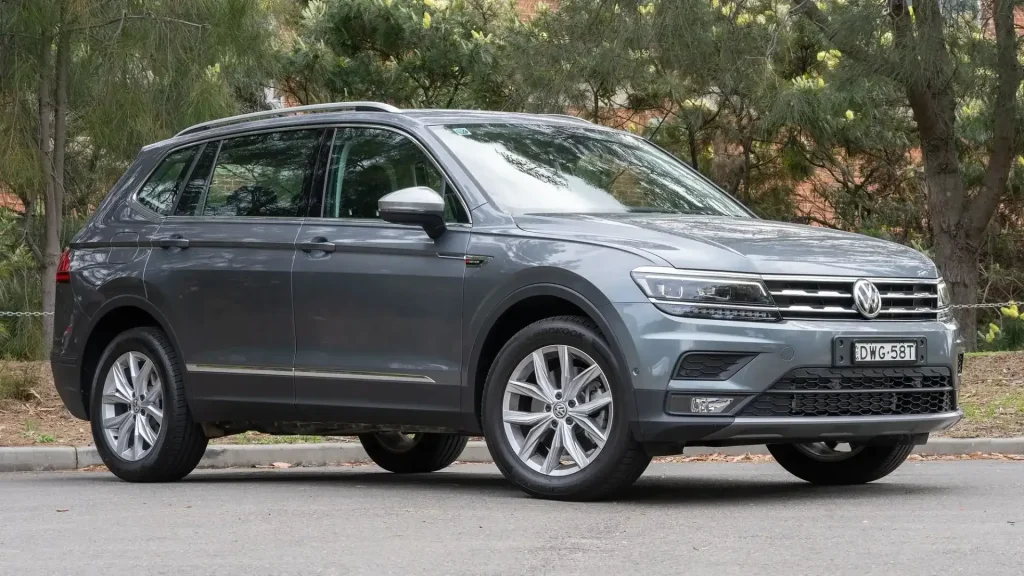
Real-world user data reinforces this reliability, with very few complaints of sensor instability over the years. The Tiguan proves that with tight assembly standards and robust mounting systems, ADAS technology can remain dependable through the vehicle’s entire life cycle.
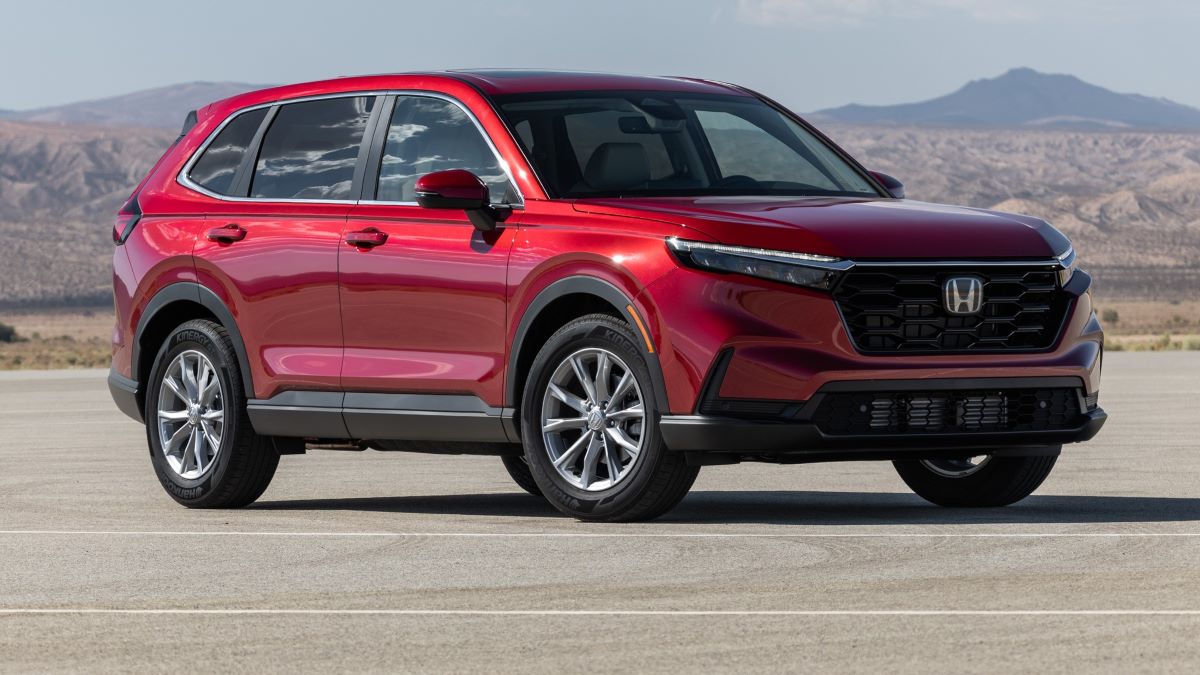
6. Honda CR-V
The Honda CR-V has long been a benchmark in the family crossover segment, and its ADAS reliability only strengthens that reputation.
Honda Sensing, the suite behind its safety tech, uses radar and camera systems that are exceptionally well-integrated into the body structure. The result is rare recalibration needs and consistently dependable performance.
The radar sensor sits behind the Honda badge within a rigid section of the grille. This mount design resists flex from vibration and temperature shifts, two common causes of alignment drift.
Meanwhile, the forward camera, placed high on the windshield, is protected within a solid housing that limits light interference and movement.
What sets the CR-V apart is how well its ADAS calibration tolerates normal wear. Whether it’s a windshield change, a minor front-end repair, or long highway use, most systems return to correct operation automatically.
This is due to Honda’s software logic that continuously self-verifies sensor alignment and performs subtle recalibration on its own.
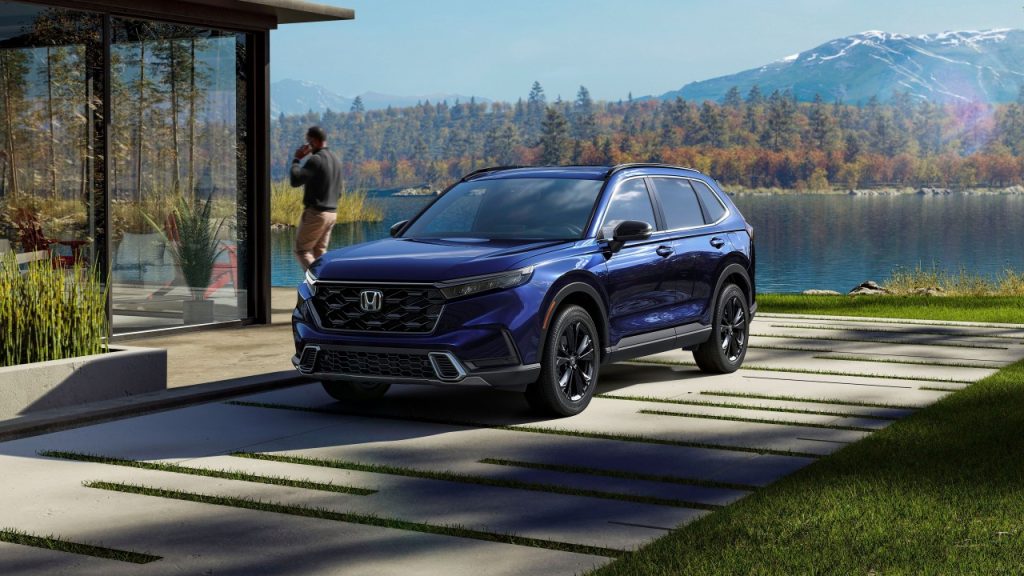
Owners often remark how consistent adaptive cruise and lane-keeping assistance remain over years of use. Few warning lights, few service visits, and a track record of reliability make the CR-V’s driver-assist setup one of the most stable in the industry.
For families that value safety without added maintenance headaches, the CR-V stands as a dependable and well-engineered choice that keeps technology quietly working behind the scenes.
7. Peugeot 5008
Peugeot’s 5008 may not be as globally known as some Japanese rivals, but in markets where it’s sold, it’s recognized for its strong design and impressive ADAS stability.
The French automaker engineered its large family crossover with a focus on rigid sensor integration and balanced front-end design, which has resulted in rare alignment issues over time.
Its radar sensors are housed deep behind the front grille, encased in vibration-damping brackets that stay solid even on uneven European roads.
The camera systems are mounted higher than average, reducing the chance of contamination or misalignment from debris and temperature variations.
Peugeot also uses robust wiring harnesses and sealed connectors that limit the effects of moisture an often-overlooked cause of sensor inconsistency.
Combined with strong body rigidity from the EMP2 platform, these factors help the 5008 retain sensor alignment over long-term ownership.
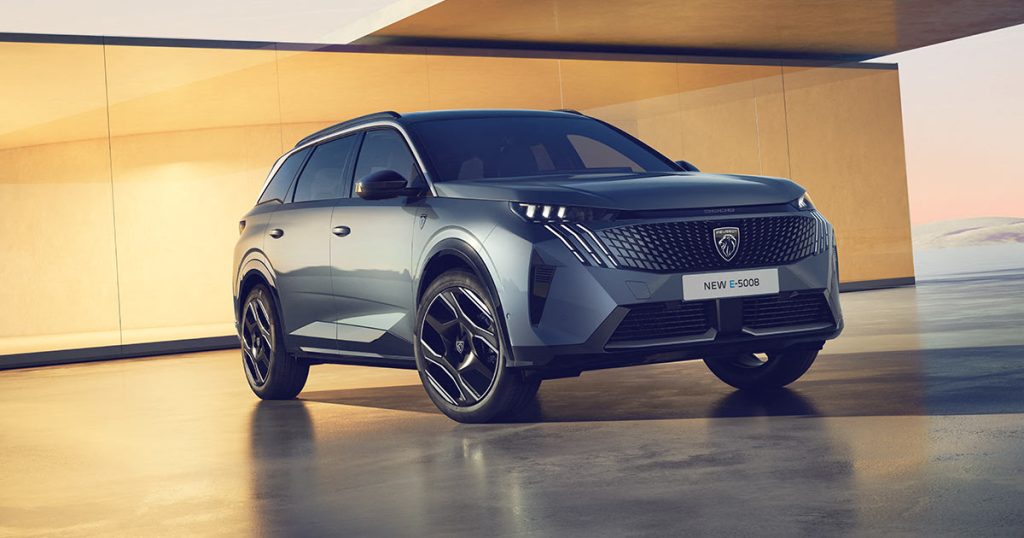
Drivers appreciate the predictability of systems like adaptive cruise control, automatic emergency braking, and lane position assist. Unlike some rivals, these systems rarely flash error codes after body repairs or wheel alignments.
The Peugeot 5008 demonstrates that even non-luxury brands can achieve high ADAS stability through precise assembly and intelligent hardware placement.
It’s a solid example of how thoughtful European engineering can keep a family car’s safety tech dependable well into its lifespan.
7 Family Crossovers That Need Constant Recalibration
While many family crossovers maintain their ADAS accuracy for years, others struggle to keep their sensors correctly calibrated. These vehicles often deliver impressive technology on paper but falter in real-world consistency.
Minor fender impacts, windshield replacements, or suspension work can throw radar or camera units slightly off-angle, leading to frequent warnings or malfunction messages.
Frequent recalibrations don’t just cause frustration they also drive up maintenance costs. Many modern systems require specialized alignment equipment that only dealerships or certified shops can handle.
Even small deviations can disable key features like adaptive cruise control or collision mitigation until recalibration is performed.
In most cases, the root cause is either poor sensor placement or excessive front-end flex. Some designs place radar units on movable bumper panels instead of rigid structural mounts, leaving them vulnerable to vibration or heat distortion.
Others rely on overly sensitive software that flags false errors at the slightest variance. For families, these problems add up over time. A vehicle that frequently loses calibration isn’t just inconvenient it undermines confidence in the technology meant to enhance safety.
In this section, we look at seven crossovers that tend to need regular recalibration based on owner reports, service data, and engineering patterns.
They’re not bad vehicles overall, but their ADAS setups can be demanding to maintain. We start with a well-known example of radar sensitivity issues the Nissan Rogue, followed by the otherwise capable Ford Edge.
1. Nissan Rogue
The Nissan Rogue remains a popular family crossover for its comfort and practicality, but its ADAS system has earned a mixed reputation when it comes to sensor stability.
Owners frequently report “Front Radar Obstructed” or “Unavailable” messages after even minor weather changes or simple bumper scuffs.
The issue largely stems from the radar sensor placement. It sits low in the front grille area, mounted to a plastic fascia rather than a fixed frame component.
This makes it vulnerable to vibration and alignment drift after small impacts or bodywork. Moisture buildup behind the emblem can also interfere with radar signal clarity, leading to false warnings.
Adding to the problem, Nissan’s calibration system is highly sensitive. Even if the radar deviation is minimal, the onboard computer disables features like ProPILOT Assist, adaptive cruise control, and emergency braking until a full recalibration is performed at the dealership. This often costs time and money, frustrating owners who rely on the tech daily.
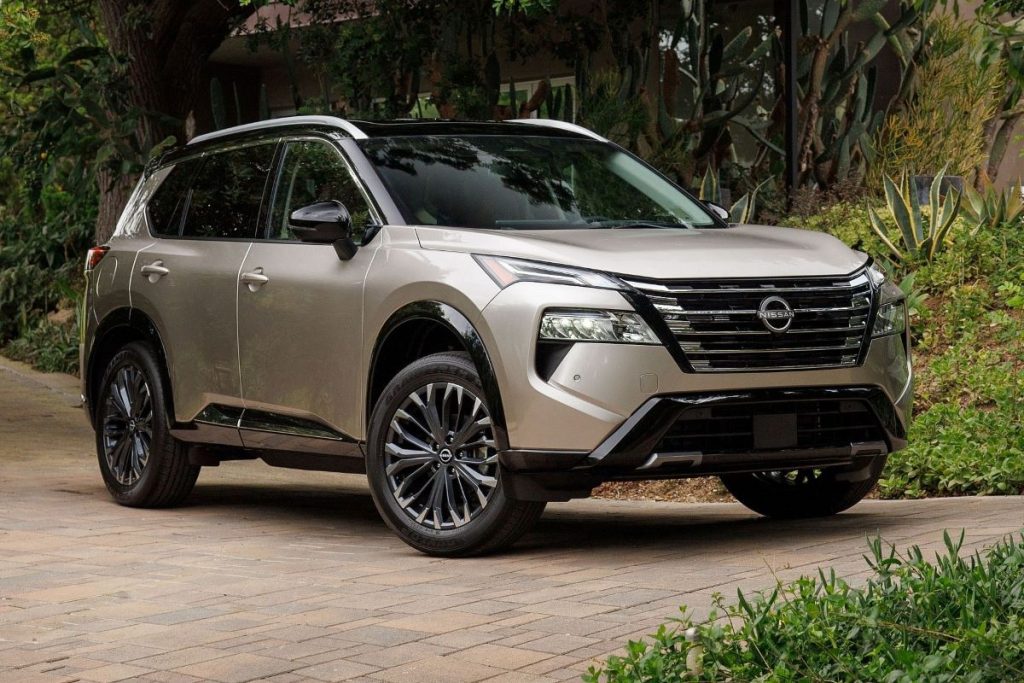
To Nissan’s credit, newer models have seen incremental improvements, with better sealing and stiffer brackets. However, real-world reports still suggest the Rogue’s ADAS systems remain prone to misalignment under regular urban driving and seasonal weather conditions.
It’s a capable, family-friendly vehicle overall but its radar calibration fragility highlights how small design compromises can create recurring headaches for long-term owners.
2. Ford Edge
The Ford Edge offers strong performance and comfort, but its ADAS calibration record tells a different story. Owners and service technicians frequently cite recurring sensor alignment issues, especially with adaptive cruise control and collision warning systems.
The main cause is the radar sensor’s position within the lower grille section. This spot exposes it to bumper flex and vibration during daily driving, which gradually alters the sensor angle.
Even minor front-end bumps or bumper replacements can throw off its calibration. As a result, warnings like “Front Sensor Blocked” or “Adaptive Cruise Not Available” appear more often than expected.
The windshield-mounted camera also tends to lose focus alignment after glass replacement or extreme temperature fluctuations.
Ford’s recalibration process for the Edge can take several hours, and sometimes requires both static and dynamic alignment procedures to restore proper function.
For families who count on consistent ADAS performance, this constant need for attention becomes tiring. Despite solid mechanical reliability, the Edge’s safety technology doesn’t maintain calibration as well as rivals like the CR-V or RAV4.
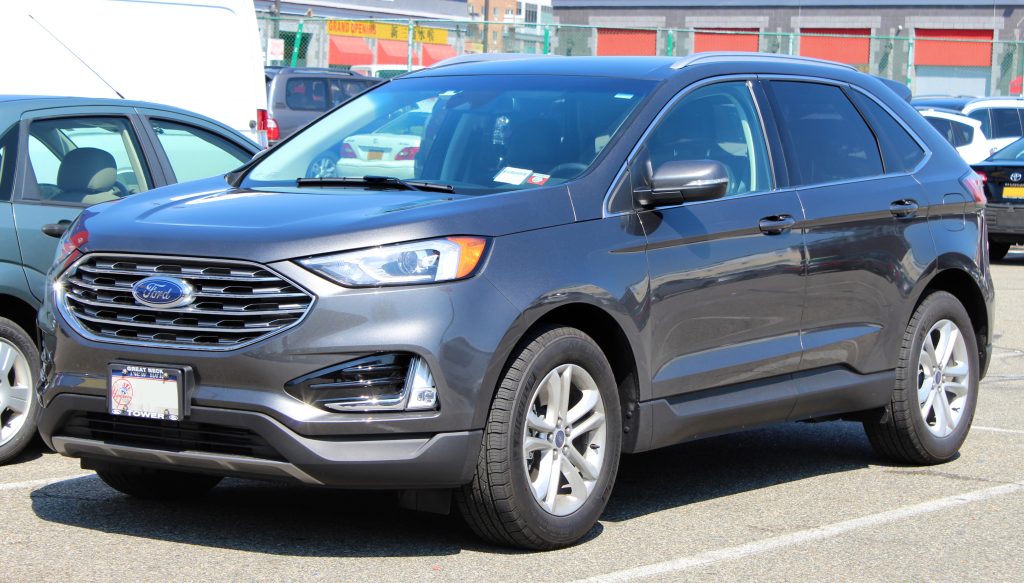
Ford has acknowledged the issue in service bulletins and introduced bracket reinforcements in later years, but many earlier models still require recalibration after relatively minor events. It’s a strong vehicle let down by the sensitivity of its otherwise capable driver-assist systems.
3. Kia Sorento
The Kia Sorento has evolved rapidly in recent years, adding a wide range of ADAS features through its Drive Wise package.
While the technology is advanced, many owners and technicians have reported frequent sensor calibration issues, particularly after routine maintenance or minor body repairs.
The forward radar module, located behind the lower grille, tends to be vulnerable to alignment drift because it’s attached to a section of the bumper that flexes slightly under heat or vibration.
Even small changes, such as replacing a bumper cover or repainting, can alter the sensor’s aim just enough to trigger error messages.
The windshield-mounted camera also shows sensitivity after glass replacement. Kia’s calibration process for the Sorento can be strict, often requiring both static and dynamic realignments, which can only be performed with factory-level equipment. This makes even simple repairs more expensive for owners.
In humid or dusty environments, moisture condensation behind the radar emblem can also interfere with signal clarity, prompting system shutdowns until recalibration is performed.
These frequent interruptions affect features like smart cruise control and forward collision avoidance, frustrating drivers who depend on them daily.
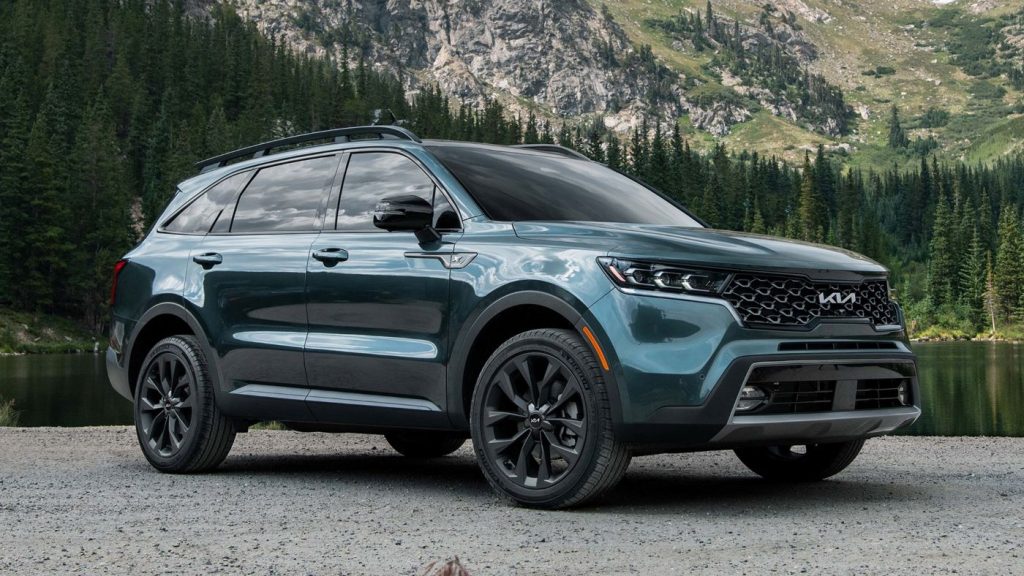
While Kia’s latest updates have improved system stability, older model years still experience recurring calibration alerts.
The Sorento remains a practical family SUV, but its sensor layout and sensitivity can make ADAS maintenance a constant concern for owners wanting hassle-free safety assistance.
4. Chevrolet Equinox
The Chevrolet Equinox delivers good fuel economy and a comfortable ride, yet its ADAS reliability often falls short compared to competitors. Owners frequently report calibration problems following windshield replacements, alignment work, or even software updates.
The radar sensor is positioned in the lower front fascia, mounted on a lightweight bracket that can shift slightly with temperature fluctuations or small front-end impacts. This design leaves the system prone to drift over time, leading to false alerts or temporary feature deactivation.
Cameras positioned behind the windshield are also sensitive to variations in glass thickness or tint, which can throw off focus. When this happens, the vehicle may flash “Service Front Camera” or “Collision Alert Unavailable” messages, requiring dealership recalibration.
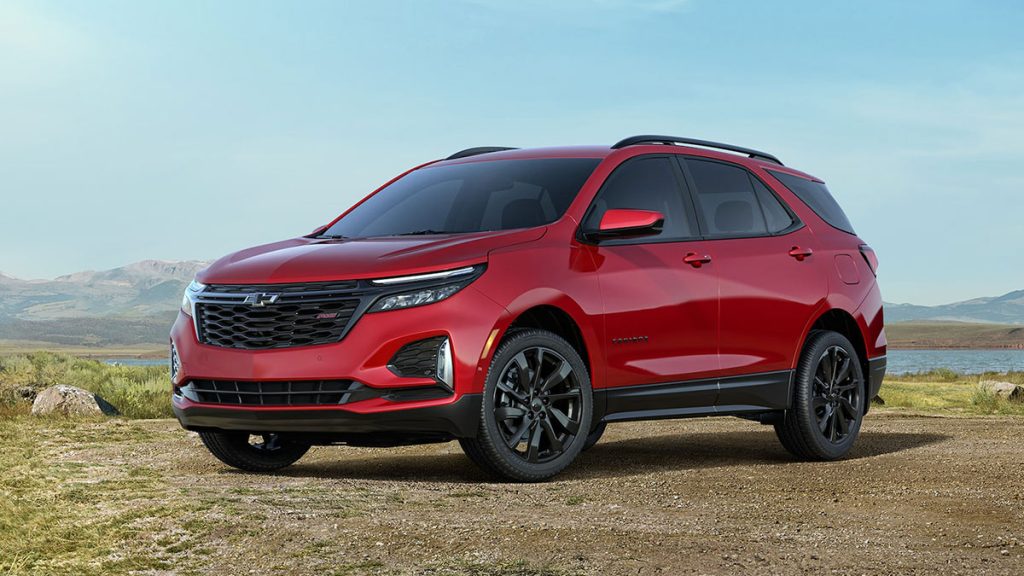
Adding to the inconvenience, GM’s recalibration process often involves both physical alignment and software verification steps, making it time-consuming and costly. Even small deviations can prevent adaptive cruise control or lane assist from operating properly.
In real-world conditions, these issues surface more frequently than they should, particularly in regions with rough roads or extreme weather swings. Despite improvements in newer models, the Equinox still has a reputation for being overly sensitive to minor sensor disturbances.
It’s a reminder that while ADAS can greatly enhance safety, the true test lies in how well those systems stay calibrated and here, the Equinox often demands more attention than most families would prefer.
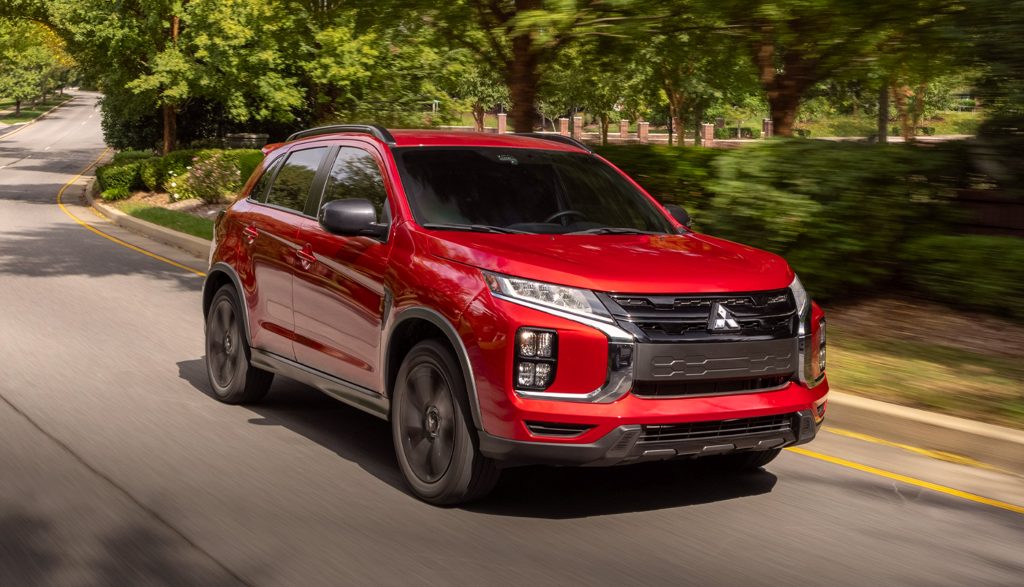
5. Mitsubishi Outlander
The Mitsubishi Outlander, particularly the recent hybrid and gasoline models, offers an appealing mix of value and technology.
However, its ADAS systems have developed a reputation for frequent recalibration needs, especially after minor service work. Owners often report issues with adaptive cruise and collision-mitigation features losing functionality until recalibration is performed.
One of the main causes lies in the placement of its radar sensor, which sits behind the large front emblem on a section of the grille that experiences noticeable vibration.
This positioning exposes it to misalignment after bumper removal, slight impacts, or even regular driving on rough roads. Over time, this can cause the radar to read incorrect distances, leading to warning lights or disabled driver-assist functions.
The front camera, installed near the windshield’s upper edge, is also sensitive to replacement glass. Mitsubishi’s recalibration requirements are strict, meaning even aftermarket windshield installations can cause the system to go offline until professionally reset.
Many Outlander owners find these recalibration sessions inconvenient and costly. Service centers must use specific targets and dynamic testing on the road, often turning a small repair into a full-day appointment.
While the Outlander performs well once properly calibrated, its ADAS stability remains one of the more high-maintenance in its class.
It’s a capable family vehicle but one that illustrates how sensitive sensor placement can translate into frequent upkeep, reducing long-term convenience for busy owners.
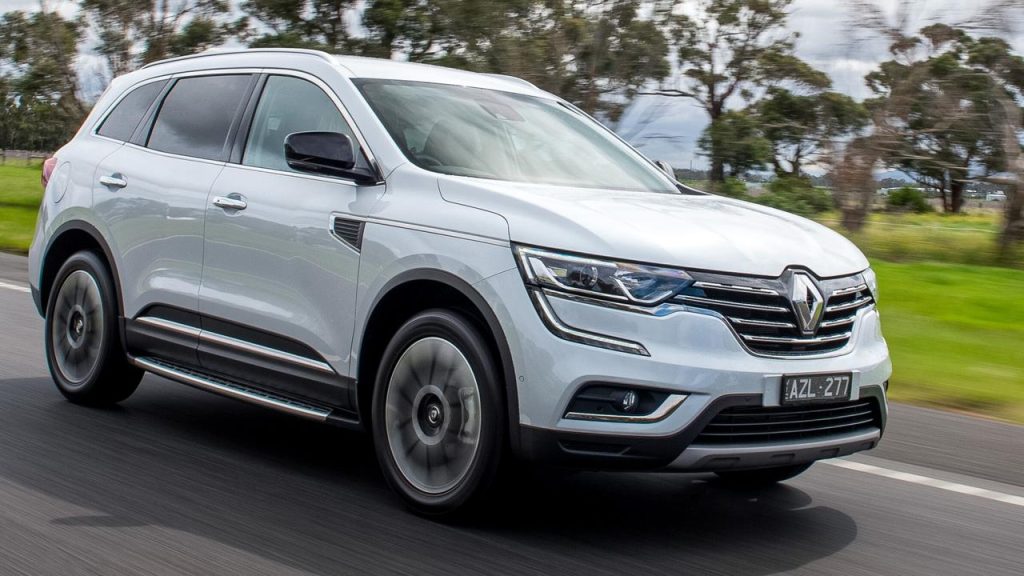
6. Renault Koleos
The Renault Koleos, developed alongside the Nissan X-Trail, shares much of its engineering DNA including some of its sensor calibration weaknesses. While it offers European comfort and a robust list of ADAS features, sensor stability is one area where it tends to struggle over time.
The radar sensor sits low within the front bumper’s central section, a location that’s highly vulnerable to road vibration and debris buildup.
Even small changes in ride height or suspension alignment can cause the radar’s aiming point to shift, leading to system errors such as “Front Radar Not Available.”
The camera-based systems also have a reputation for sensitivity. After a windshield replacement or repair, the calibration tolerance is so tight that even minimal misalignment disables lane-departure and emergency braking features until the system is reprogrammed at a dealership.
Compounding the issue, the Koleos’ bumper design allows slight thermal expansion gaps, which can subtly alter sensor angles under heat. This leads to intermittent warnings that frustrate owners, particularly in warmer climates.
Although Renault’s technicians can restore function through careful recalibration, the need for it occurs more frequently than in rival crossovers like the CR-V or Forester. These recurring interruptions can undermine confidence in what is otherwise a well-equipped and comfortable vehicle.
For families expecting a low-maintenance ADAS experience, the Koleos demonstrates how even a well-built European SUV can fall short when sensor tolerance is too fine and mounting rigidity too light.
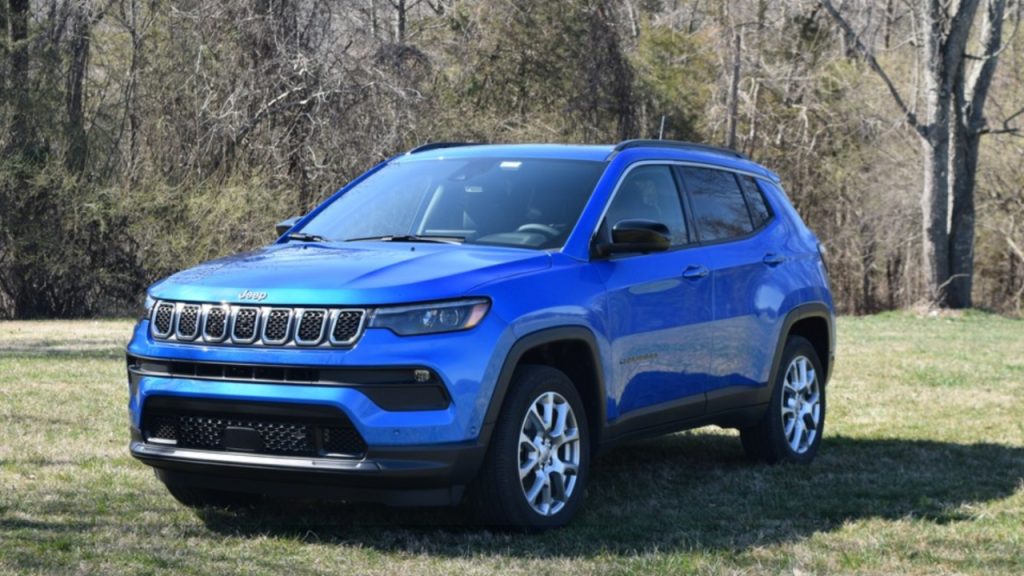
7. Jeep Compass
The Jeep Compass has modern styling and capable off-road manners, but its ADAS calibration stability often leaves owners less than impressed.
Despite being marketed as a tech-forward compact SUV, its sensor systems tend to require recalibration more often than most rivals, particularly after everyday maintenance or minor bumps.
The forward radar sensor is mounted behind the Jeep badge on a flexible grille section. While this design choice improves aesthetic integration, it sacrifices rigidity.
Over time, vibration from rough surfaces or temperature expansion can slightly shift the sensor’s position. This leads to warning messages such as “Adaptive Cruise Temporarily Unavailable” or “Sensor Blocked.”
Even simple services, like front bumper replacements or suspension alignment, can trigger recalibration alerts.
The windshield camera, responsible for lane-keeping and collision alerts, also proves sensitive to even minor deviations in glass fitment. Aftermarket windshields often require dealership-level recalibration to restore proper function.
Jeep’s calibration process is thorough but time-consuming, requiring both static and dynamic verification.
This adds cost and inconvenience, especially for families using the Compass as a daily driver. The combination of soft mounting points and sensitive software thresholds makes the system prone to overreacting to minimal shifts.
Once recalibrated, the ADAS suite performs well smooth adaptive cruise, clear lane guidance, and responsive braking.
However, its tendency to lose alignment too easily keeps the Compass from achieving the reliability expected in family-focused crossovers. It’s a capable SUV let down by over-sensitive sensor architecture that demands frequent attention.
Also Read: 5 SUVs With Real Underbody Protection vs 5 With Plastic Skid Plates
