Electric vehicles have rapidly evolved beyond efficiency and sustainability, moving into a new era defined by craftsmanship, comfort, and sophistication. The days when EVs were viewed as minimalist or utilitarian are long gone.
Today, top manufacturers are creating cabins that rival or even surpass traditional luxury vehicles, combining fine materials, thoughtful design, and cutting-edge technology. Drivers no longer need to choose between performance and refinement; they can experience both in harmony.
In 2025, premium electric interiors are more diverse than ever, reflecting the personalities of their brands. Some focus on serene simplicity, while others emphasize futuristic flair or traditional opulence.
Across this range, attention to detail has become a defining trait. From the tactile precision of BMW’s controls to the ambient elegance of Mercedes-Benz lighting or the sustainable artistry of Volvo’s materials, the finest interiors express the essence of modern luxury in unique ways
This list of 12 EVs With Interior Quality That Feels Premium highlights the models that best capture that balance of innovation, comfort, and design excellence. Each vehicle demonstrates how the electric revolution is not only transforming what powers our cars but also how we experience every moment behind the wheel.
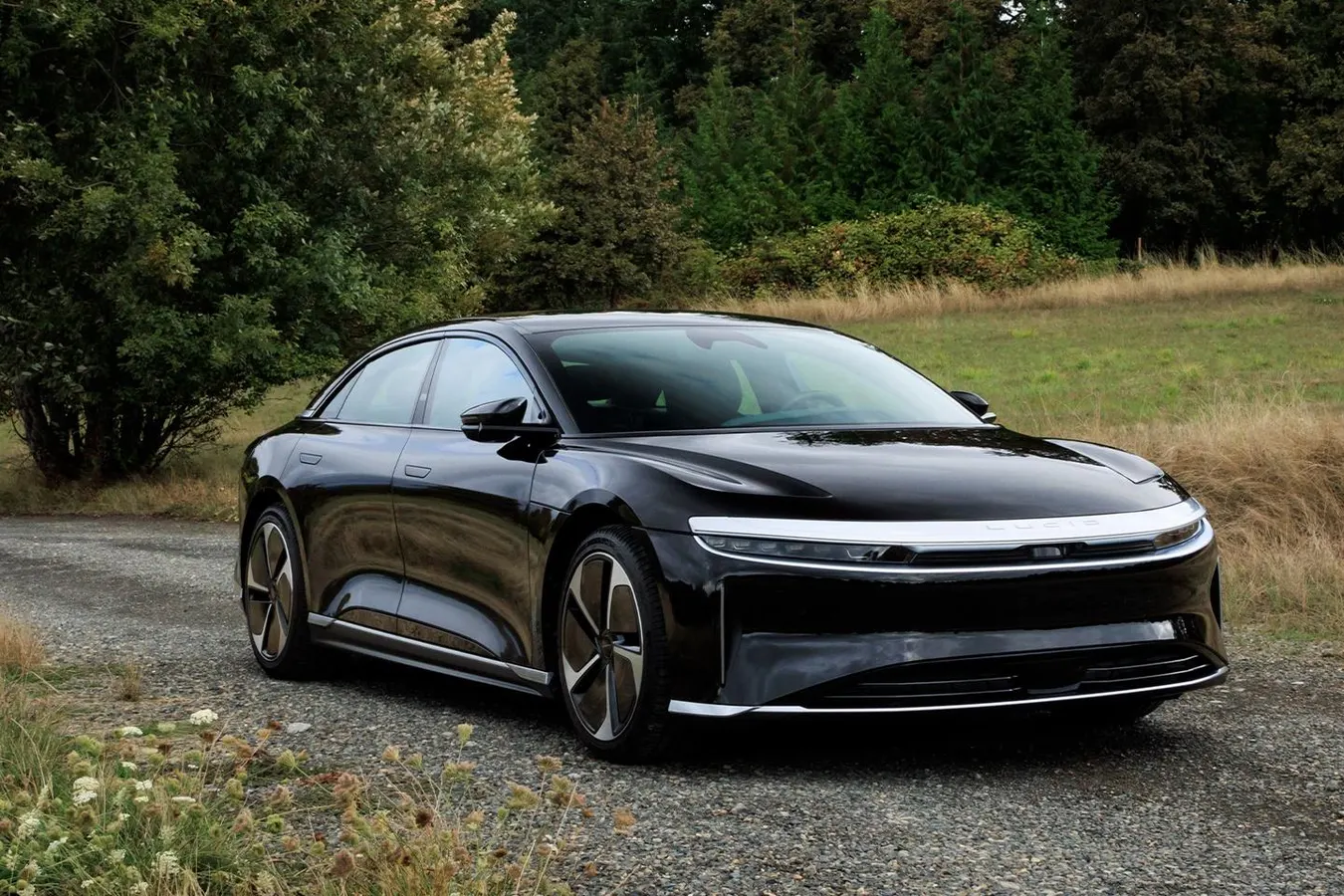
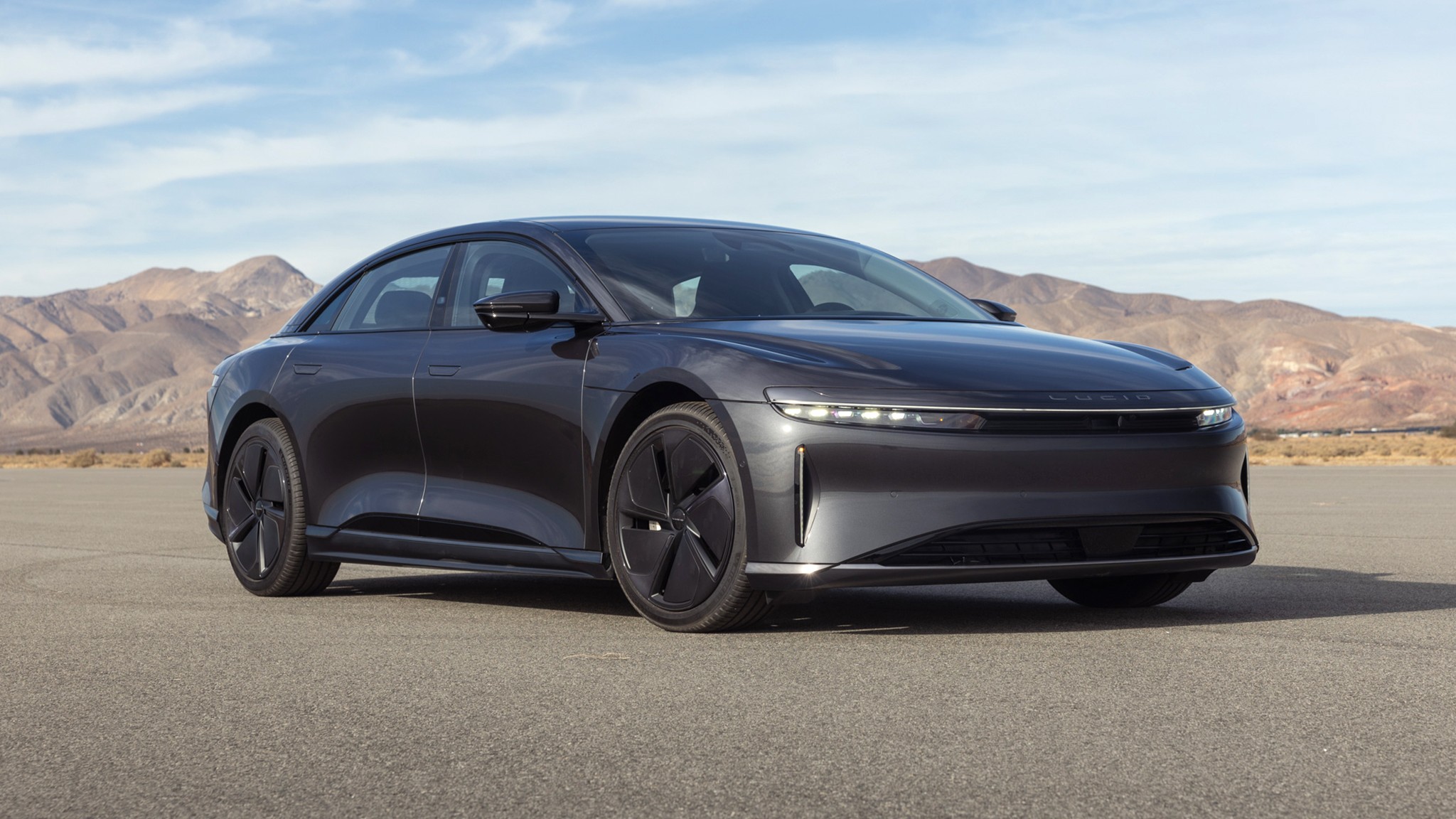
1. 2025 Lucid Air
Lucid Motors may be a newer entrant in the electric vehicle market, but the company has quickly established itself as a major contender. The 2025 Lucid Air continues this momentum with an ideal mix of power, efficiency, and sophistication. Starting at $69,900, this full-size luxury sedan demonstrates that simplicity and elegance can coexist with advanced performance and technology.
The Lucid Air is among the fastest sedans available. The base Pure trim delivers 480 horsepower and accelerates to 60 mph in 4.6 seconds, while higher trims cut that figure to about three seconds.
The flagship Sapphire trim, with its tri-motor setup, achieves the sprint in an astonishing 2.2 seconds. Despite its impressive power, the Air maintains a composed and controlled demeanor. Steering feels precise, braking is strong, and the regenerative braking system can bring the car to a stop without using the brake pedal.
Ride comfort is excellent for long drives, with smooth highway performance and a firm but manageable feel over rougher streets. Seats provide extensive adjustment options and come upholstered in Lucid’s PurLuxe leather alternative, with genuine leather available on higher trims.
The cabin remains quiet under most conditions, though wind noise can increase at high speeds. The climate control system works efficiently and combines touchscreen and physical buttons for ease of use.
Inside, the Air embodies modern luxury. A 34-inch curved glass panel spans the dashboard, integrating the driver’s display and infotainment screens. A secondary touchscreen on the center console adds further functionality while maintaining a clean and futuristic design.
Passenger space is generous, with ample legroom and headroom in both rows. Visibility is excellent thanks to large windows and a comprehensive camera system that aids in parking and low-speed maneuvers.
For 2025, Lucid has refined its technology package. The infotainment system now operates faster and more reliably, with standard wireless Apple CarPlay and Android Auto.
USB-C ports are available in both seating rows, and the Air supports vehicle-to-vehicle charging, allowing it to share power with other EVs. The suite of driver-assistance systems, including adaptive cruise control and lane centering, functions more smoothly and with fewer false alerts.
The Lucid Air continues to lead in range. Depending on configuration, it can travel between 349 and over 500 miles on a single charge, surpassing most competitors. Cargo space totals 26.1 cubic feet, divided between a 16.2-cubic-foot rear trunk and a 9.9-cubic-foot front trunk, both offering generous storage.
With its reduced price, exceptional range, and refined design, the 2025 Lucid Air stands out as one of the most capable and desirable electric sedans on the market. It blends performance, comfort, and advanced technology in a package that delivers true luxury without excess.
2. 2025 Audi e-tron GT
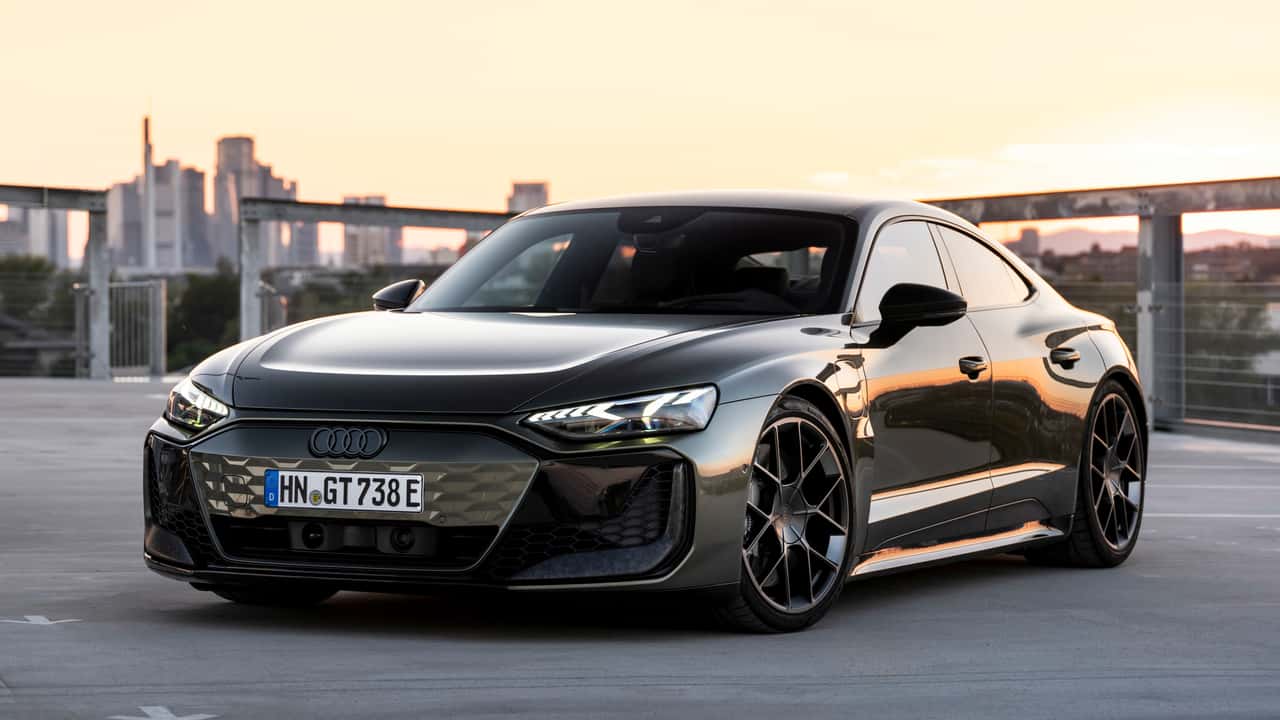
Audi’s 2025 e-tron GT continues to push boundaries, blending futuristic design with electrifying performance. As one of the brand’s most advanced models, this midsize luxury sedan delivers sports car acceleration, long-range capability, and an interior that embodies modern sophistication. Starting at $106,500, the e-tron GT redefines what an electric Audi can be.
Audi has refined the e-tron GT’s cabin for 2025, creating a space that feels both high-tech and inviting. The dashboard features sharp, angular lines with a 10.1-inch central touchscreen integrated into a minimalist layout.
Unlike many modern EVs, Audi maintains a balance between touch-sensitive surfaces and traditional controls for a more tactile experience. Ambient lighting, leather upholstery, and an all-new steering wheel design complete the contemporary look.
Buyers can also choose a sustainable, leather-free interior made from recycled materials, while options such as ventilated and massaging front seats, a head-up display, and a Bang & Olufsen sound system add comfort and luxury.
Every e-tron GT uses a dual-motor setup that powers all four wheels, creating an electric version of Audi’s legendary Quattro all-wheel-drive system. The standard model delivers 670 horsepower, while the range-topping RS e-tron GT Performance produces an incredible 912 horsepower.
A two-speed rear transmission ensures both explosive acceleration and efficient cruising. The RS version sprints from zero to sixty miles per hour in just 2.1 seconds, quicker than the Porsche Taycan Turbo Cross Turismo.
Audi’s updated adaptive air suspension and available all-wheel steering give the e-tron GT precise handling and a smooth ride. Carbon-ceramic brakes provide impressive stopping power, and the steering feels direct and responsive whether driving through tight curves or at highway speeds.
Audi avoids aggressive one-pedal driving, instead focusing on a more natural and balanced feel that appeals to those who prefer traditional dynamics.
All trims now feature a 97.0-kWh battery pack, which is larger than before and supports faster charging. The e-tron GT can recharge from ten to eighty percent in just eighteen minutes using a 320-kW DC fast charger. The estimated range reaches up to 300 miles for the S model on 20-inch wheels and 294 miles with larger 21-inch wheels. In real-world testing, the RS e-tron GT achieved 280 miles, exceeding its EPA rating.
The infotainment system supports voice commands, steering-wheel controls, and wireless connectivity for Apple CarPlay and Android Auto. Wireless charging and a Wi-Fi hotspot are also available. Audi’s suite of driver-assistance systems includes adaptive cruise control, blind-spot monitoring, lane-keeping assist, and remote self-parking via a smartphone app.
Audi’s warranty coverage matches luxury rivals with a four-year or 50,000-mile limited warranty and an eight-year or 100,000-mile battery and powertrain warranty.
The 2025 Audi e-tron GT combines striking design, advanced engineering, and thrilling performance. It stands as one of the most capable and visually distinctive electric sedans in the world, perfectly capturing Audi’s vision of aggressive sophistication in motion.
3. 2025 Porsche Macan Electric
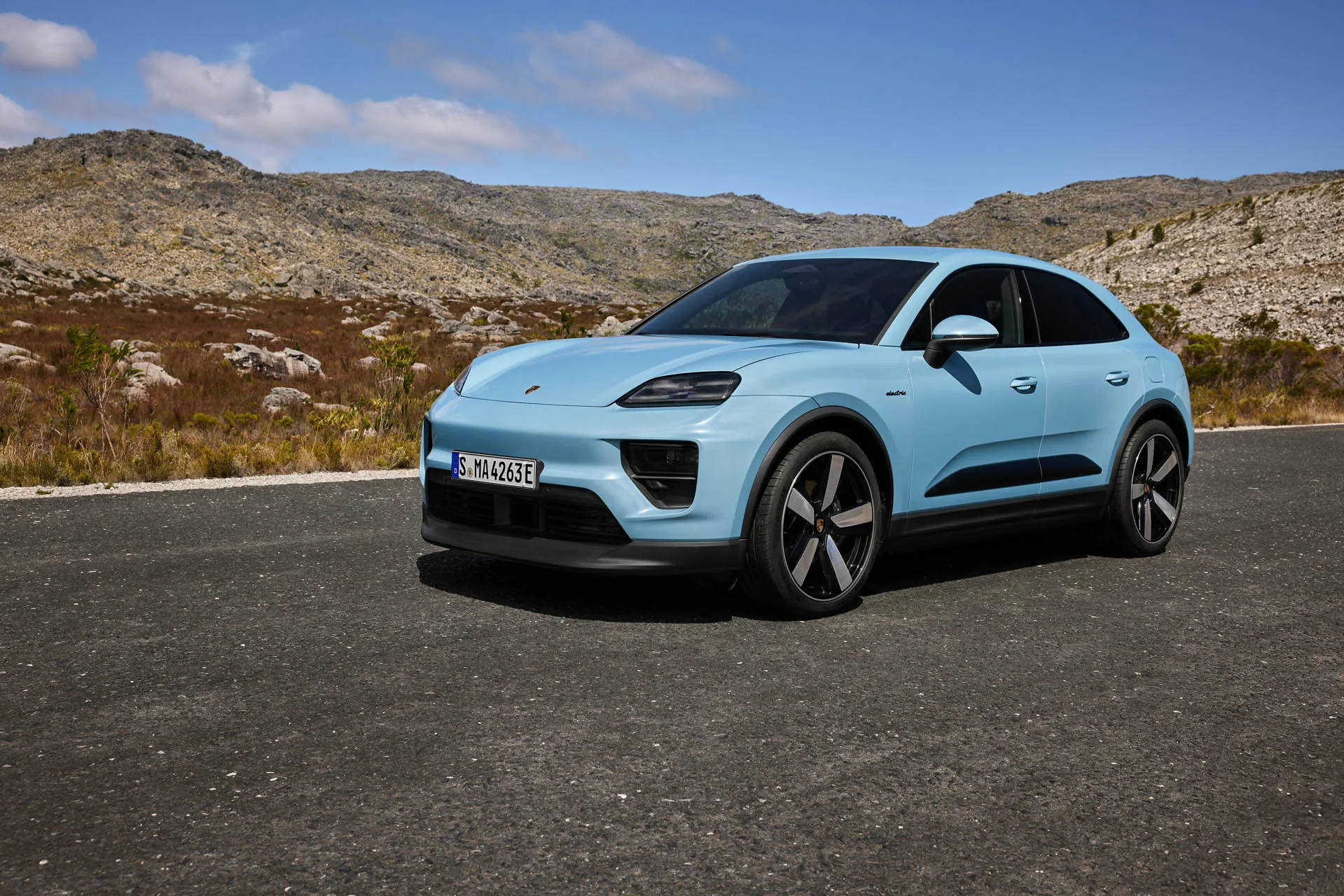
The Porsche Macan has long been a defining model in the luxury performance SUV market, and the 2025 electric version pushes the brand further into the future. Building on the strengths of the gasoline-powered model, the Macan Electric combines precise handling, strong range, and modern refinement. Starting at $75,300, it demonstrates Porsche’s ability to deliver performance and practicality in an all-electric form.
The 2025 Macan Electric retains the familiar proportions of the traditional model while introducing a more advanced cabin layout. The interior focuses on simplicity, with a 10.9-inch central touchscreen and an additional display for the front passenger. The lack of a gear shifter gives the center console a cleaner appearance and opens up extra space.
Porsche’s attention to materials and craftsmanship ensures a premium experience that feels both minimal and functional. The front seats are supportive and easy to access, while the rear seats are tighter and less accommodating for taller passengers. Despite this, the Macan’s cabin remains stylish, comfortable, and distinctly Porsche.
True to Porsche tradition, the Macan Electric delivers an engaging drive. The base Macan 4 accelerates from 0 to 60 miles per hour in 4.8 seconds, while the Turbo version accomplishes the same sprint in a thrilling 3.1 seconds.
Both models provide instant power delivery and balanced control on the road. The Turbo model, fitted with high-performance tires, achieved an impressive 1.01 g of grip during testing, confirming its sports car-level dynamics.
Porsche avoids full one-pedal driving, opting for a more natural braking response that gives drivers a familiar and connected feel. Steering precision and chassis balance make the Macan Electric both agile and composed, offering confidence on winding roads and comfort during city drives.
Inside, the Macan Electric offers a refined, quiet environment. Optional insulated glass further reduces noise, while the four-zone climate control system maintains comfort for all passengers. The manually adjustable vents make the system intuitive to use.
The infotainment setup includes Porsche’s latest interface, featuring wireless Apple CarPlay and Android Auto, detailed navigation, and an optional head-up display. Multiple USB-C ports and wireless charging add convenience for modern users.
The Macan Electric delivers impressive range and charging performance. The Macan 4 has an EPA-estimated range of 308 miles, while the Turbo is rated at 288 miles. Independent testing showed even better results, with the Macan 4 reaching 351.7 miles and the Turbo covering 301 miles. Charging speeds are exceptional, as the SUV can recover 100 miles of range in under ten minutes using a 285-kilowatt DC fast charger.
Cargo capacity measures 19.1 cubic feet in the rear and an extra 3 cubic feet in the front trunk. The Macan can also tow up to 4,409 pounds, making it more capable than several direct rivals. Though it carries a premium price, the build quality, performance, and technology justify the investment. Warranty coverage includes four years or 50,000 miles for the vehicle and eight years or 100,000 miles for the battery.
The 2025 Porsche Macan Electric captures the essence of Porsche’s driving spirit while embracing electric innovation. It combines elegance, capability, and driver engagement to set a high standard for performance-oriented electric SUVs.
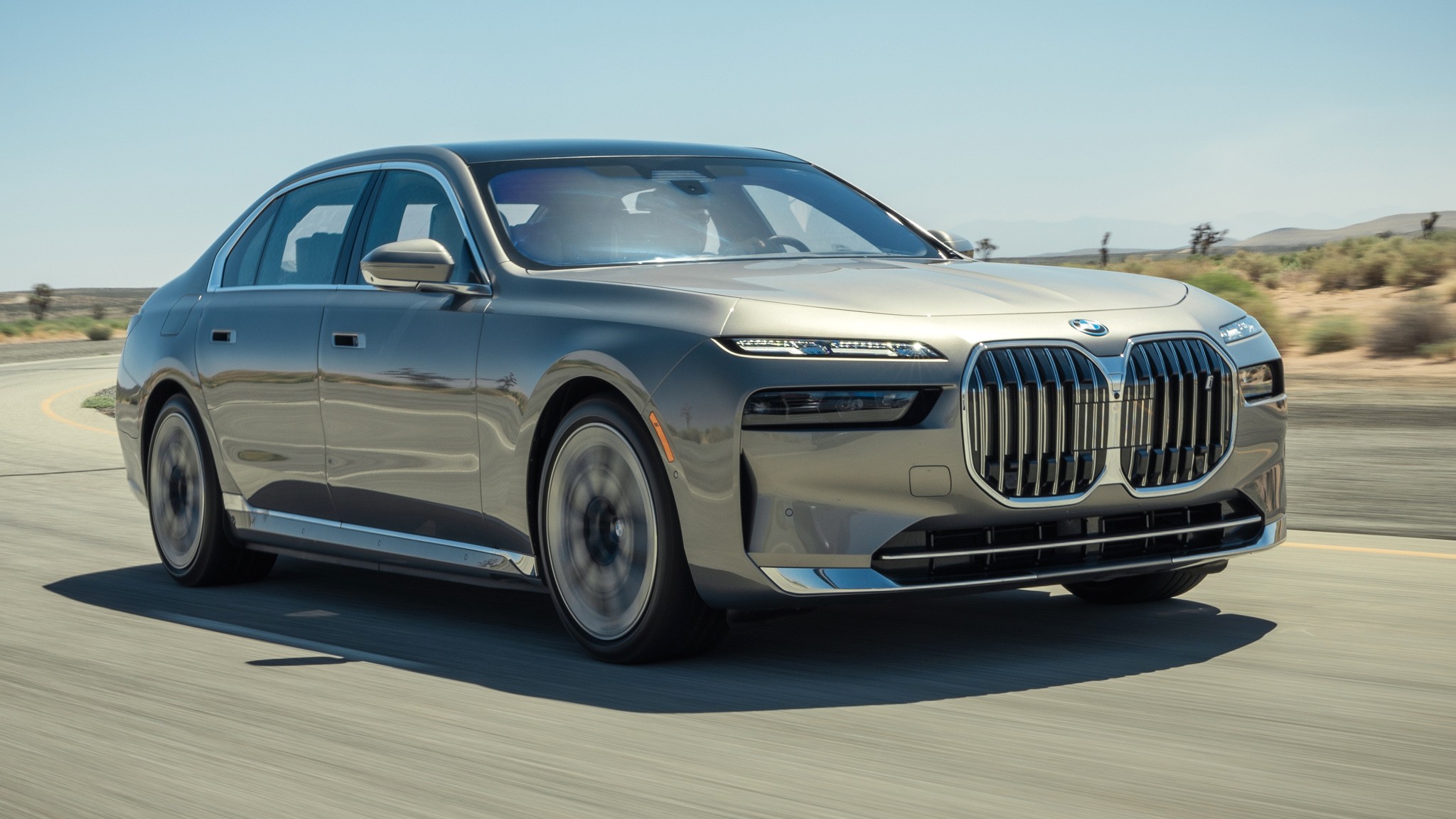
4. 2025 BMW i7
The 2025 BMW i7 represents the height of BMW’s electric innovation and craftsmanship. Designed as the electric counterpart to the flagship 7 Series, the i7 focuses on ultimate comfort, advanced technology, and refined performance. Priced from $105,700, it demonstrates how BMW blends luxury and engineering precision in an electric package that rivals the very best from Mercedes-Benz and Lucid.
The i7’s cabin sets a new benchmark for BMW interiors. A sweeping glass panel connects a 12.3-inch digital instrument cluster and a 14.9-inch central touchscreen, creating a seamless digital interface. Ambient lighting and crystal-like accents highlight the modern aesthetic.
Leather upholstery comes standard, while the rear-seat experience is the true showstopper. The available 31-inch 8K “Theater Screen” transforms the back seat into a cinematic lounge, complete with Amazon Fire integration and HDMI support for gaming or streaming.
Entry and exit are effortless thanks to the optional automatic doors included in the Executive package. Inside, both rows offer generous space, with even the tallest passengers finding comfort. The i7’s air of serenity is enhanced by excellent insulation and precise climate control.
Visibility is strong, although the rear window becomes blocked when the theater screen is lowered, a situation remedied by multiple high-resolution camera views.
Despite its size and weight, the i7 maintains BMW’s signature focus on driving pleasure. The xDrive60 variant accelerates from 0 to 60 miles per hour in 4.3 seconds, delivering smooth yet forceful acceleration through its dual-motor system.
Handling is remarkably composed, with well-controlled body movements and an abundant grip. The suspension minimizes roll, keeping the sedan balanced through sharp corners. Regenerative braking transitions smoothly to mechanical braking, creating a natural feel in daily driving.
The standard air suspension, coupled with a road preview system, reads upcoming imperfections and adjusts damping instantly. This setup gives the i7 one of the most comfortable and quiet rides available, even on rough pavement.
Technology is central to the i7 experience. The infotainment system may take time to learn, but its voice control system responds accurately to natural speech. Rear passengers enjoy touchscreen controls for seat functions, climate settings, and entertainment. BMW’s Highway Assistant allows hands-free driving at speeds up to 85 mph, managing lane centering and adaptive cruise with precision.
With 21-inch wheels, the i7 achieves an EPA-estimated range of 308 miles and managed 320 miles in testing. Energy use is rated at 35.5 kWh per 100 miles, keeping it competitive among luxury EVs. The i7 supports 195-kW DC fast charging, enabling quick top-ups during long journeys.
The i7’s build quality and features justify its premium price. BMW includes four years or 50,000 miles of basic coverage, an eight-year or 100,000-mile battery warranty, and complimentary maintenance for three years or 36,000 miles. Buyers also receive three years of free fast charging at Electrify America stations.
The 2025 BMW i7 captures the essence of luxury motoring with cutting-edge technology, dynamic capability, and comfort that rivals the finest sedans in the world. It stands as the clearest expression yet of BMW’s vision for electric luxury.
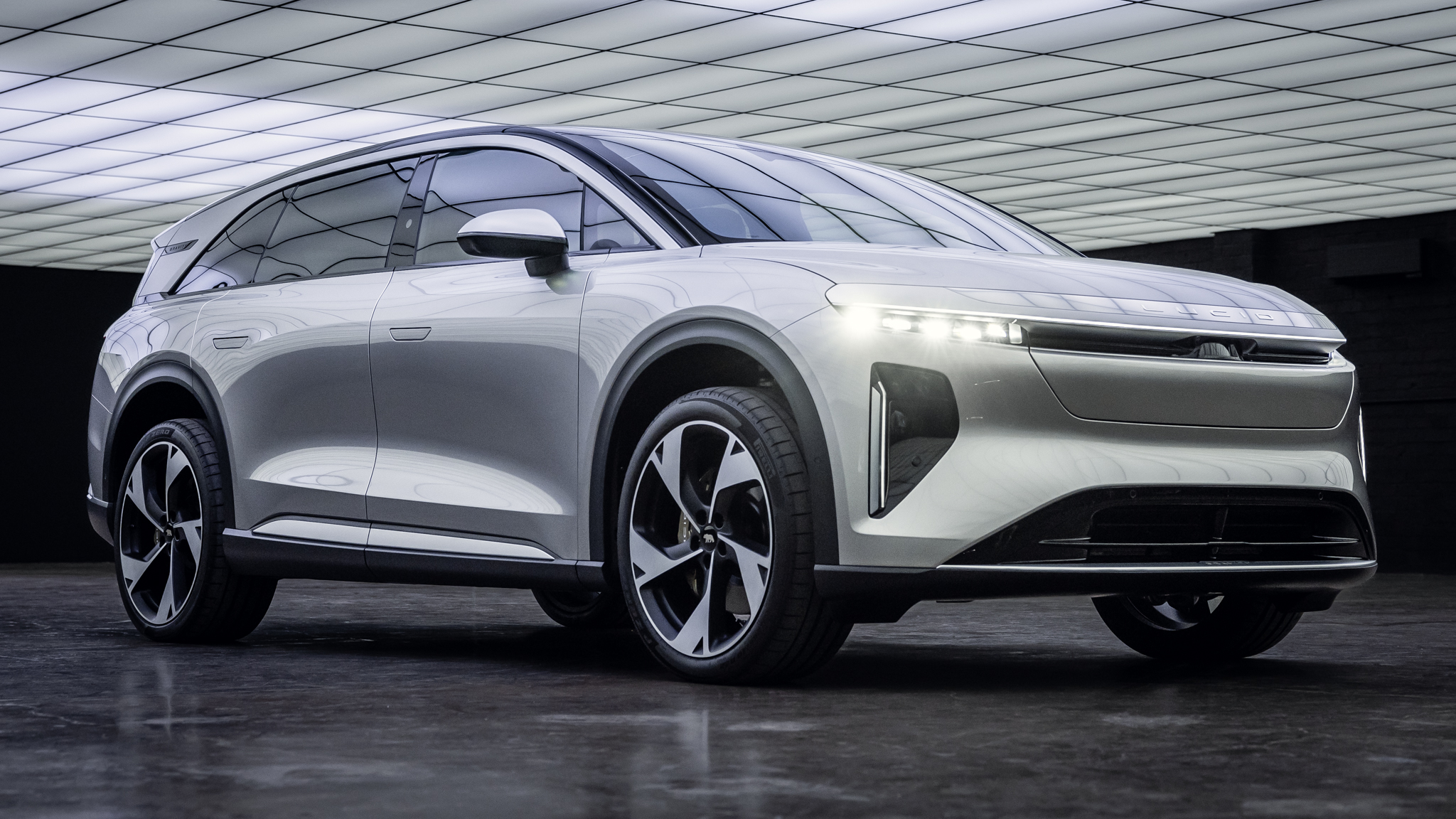
5. 2025 Lucid Gravity
Lucid’s follow-up to the Air sedan, the 2025 Gravity, marks the company’s bold step into the luxury electric SUV market. With a starting price of $94,900, the Gravity combines powerful performance, impressive range, and futuristic design in a package aimed at redefining what an electric family SUV can deliver.
While it shares much of its DNA with the Air, it introduces its own refinements to match its larger size and utility-focused mission.
The Gravity adopts a sleek yet practical design, featuring the Air’s signature 34-inch curved display ahead of the driver and a larger 12.6-inch central touchscreen. The cabin emphasizes minimalism while adding warmth through wood accents and two-tone trims available in higher-spec models.
Space is abundant across both seating rows, and buyers can opt for either a five- or seven-seat layout. The seats provide excellent support, and the front seats include massaging functions for long-distance comfort.
Rear passengers enjoy plenty of legroom, and the power-sliding second-row bench enhances flexibility. Entry is easy thanks to wide-opening doors and a low step-in height. However, some elements, such as the door handles and certain plastic controls, fall below expectations for a six-figure SUV. Cabin insulation is exceptional, keeping road and wind noise to a minimum even at highway speeds.
With up to 828 horsepower and 909 lb-ft of torque, the Gravity is no slouch. In testing, the Grand Touring model hit 60 miles per hour in just 3.3 seconds performance that places it among the quickest SUVs on the market. The steering is sharp and responsive, and the rear-wheel steering system gives the large SUV a surprisingly agile feel in tight spaces.
Ride quality is supple and controlled, aided by adaptive air suspension that absorbs bumps with ease. Every day, driving is smooth and composed, although the driver-assistance systems occasionally feel inconsistent. The adaptive cruise control can brake late, and the lane-centering feature sometimes disengages unexpectedly.
Lucid’s technology remains a highlight. The Gravity’s dual-screen setup integrates navigation, driver information, and vehicle controls seamlessly, though full Apple CarPlay and Android Auto support are not yet available. Multiple USB-C ports and a wireless charging pad for two devices ensure convenience for passengers.
Cargo space is generous, offering 48 cubic feet behind the second row and up to 120 cubic feet total. The large front trunk adds versatility, even doubling as a bench for outdoor use. The SUV can tow up to 6,000 pounds, putting it close to top competitors like the Rivian R1S.
In real-world testing, the Gravity achieved between 388 and 400 miles of range, slightly below the EPA’s 450-mile estimate but still impressive for an all-wheel-drive SUV. Energy consumption averaged 35.8 kWh per 100 miles. Its charging system stands out, averaging 229 kW for peak sessions, which translates to adding over 640 miles of range per charging hour, placing it among the fastest-charging EVs available.
The 2025 Lucid Gravity blends remarkable engineering with exceptional performance and practicality. While build quality and missing tech features leave room for improvement, its range, speed, and comfort position it as one of the most capable and forward-thinking electric SUVs on the road today.
Also Read: 10 Cars That Outsell Competitors Despite Weak Marketing
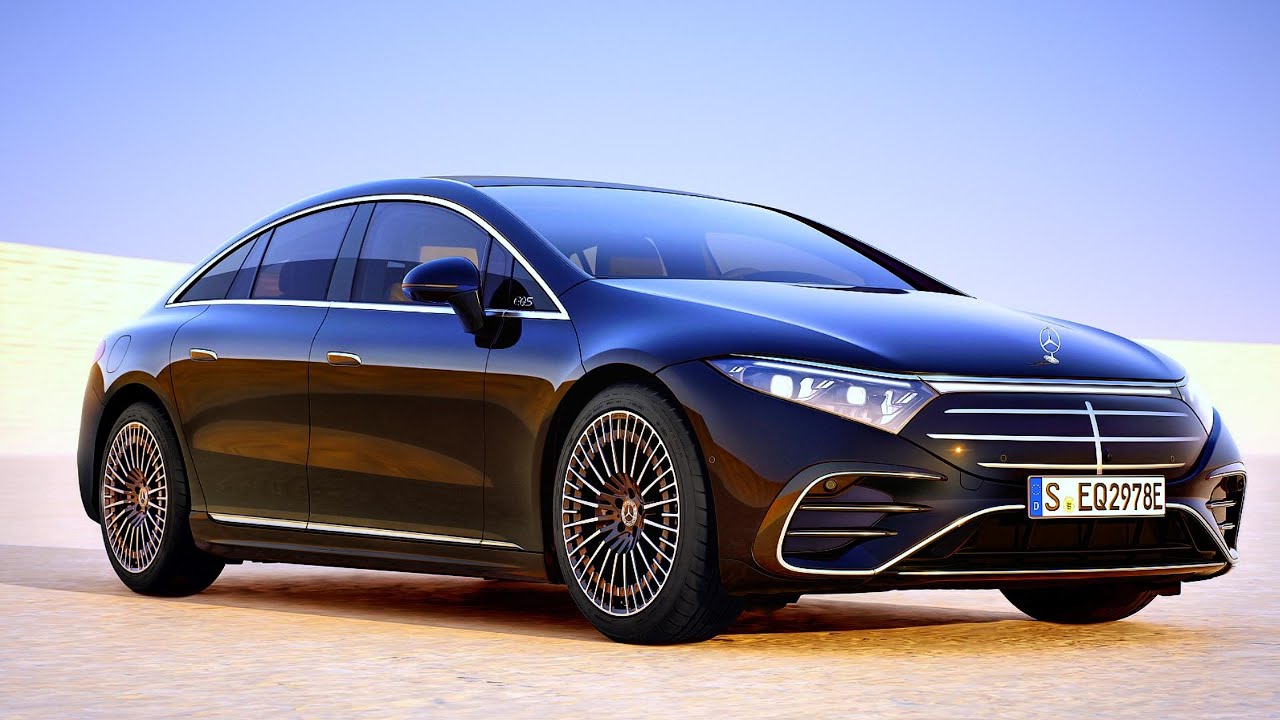
7. 2025 Mercedes-Benz EQS
The 2025 Mercedes-Benz EQS represents the pinnacle of electric luxury from the German automaker, offering advanced technology, serene comfort, and impeccable craftsmanship. Starting at $99,900, the EQS stands as the electric counterpart to the S-Class, carrying forward its reputation for sophistication and innovation while bringing a distinctly futuristic identity to the road.
Mercedes has created an interior that perfectly blends technology with luxury. The cabin uses premium materials, including standard leather and available Nappa leather upholstery.
Ambient lighting wraps around the interior, setting an elegant tone. The most striking feature is the optional MBUX Hyperscreen, which combines three digital displays across a single glass panel that stretches nearly the full width of the dashboard. Even the standard configuration provides crisp visuals and intuitive controls.
Passenger comfort remains a key focus. Rear occupants have generous legroom, though headroom is limited by the car’s sleek roofline. Visibility from the driver’s seat is strong, supported by large windows and an excellent surround-view camera system. Cargo capacity is another strength, with 22 cubic feet available in the rear and foldable seats that expand space for longer items.
The EQS 450+ delivers power smoothly and quietly. Its single electric motor produces 355 horsepower and 419 lb-ft of torque to the rear wheels. In testing, it accelerated from zero to 60 mph in 5.7 seconds, which feels more than adequate for daily driving. The EQS glides along highways with a calm, stable demeanor, its light and precise steering giving drivers a sense of control.
The braking system performs well but takes some adjustment. Regenerative braking changes how far the pedal travels depending on the setting, which can feel inconsistent at first. Stopping distances, however, are short and predictable, allowing for confident driving in all situations.
Ride comfort is among the EQS’s greatest strengths. Adaptive air suspension smooths out road imperfections and provides an exceptionally quiet cabin. The front seats are supportive and highly adjustable, offering heating, ventilation, and an optional massage function.
The climate control system, though operated mainly through the touchscreen, includes an air-quality monitor and maintains a comfortable environment. Rear passengers have fewer controls unless equipped with the top Pinnacle trim.
The MBUX infotainment system remains one of the finest available. Its voice assistant understands natural speech and can adjust numerous settings on command. The Burmester audio system produces crisp, immersive sound, and the navigation system efficiently routes drivers to charging stations. Wireless Apple CarPlay and Android Auto are standard, supported by eight USB ports throughout the cabin.
Mercedes continues to lead in driver assistance. Features such as adaptive cruise control, lane keeping, blind-spot monitoring, and automated parking enhance convenience and safety with smooth, predictable operation.
The 2025 Mercedes-Benz EQS redefines modern electric luxury through advanced design, superb comfort, and unmatched technology. While it may not be the quickest EV on the market, its refinement, elegance, and engineering excellence ensure it remains one of the most desirable choices in the luxury sedan segment.
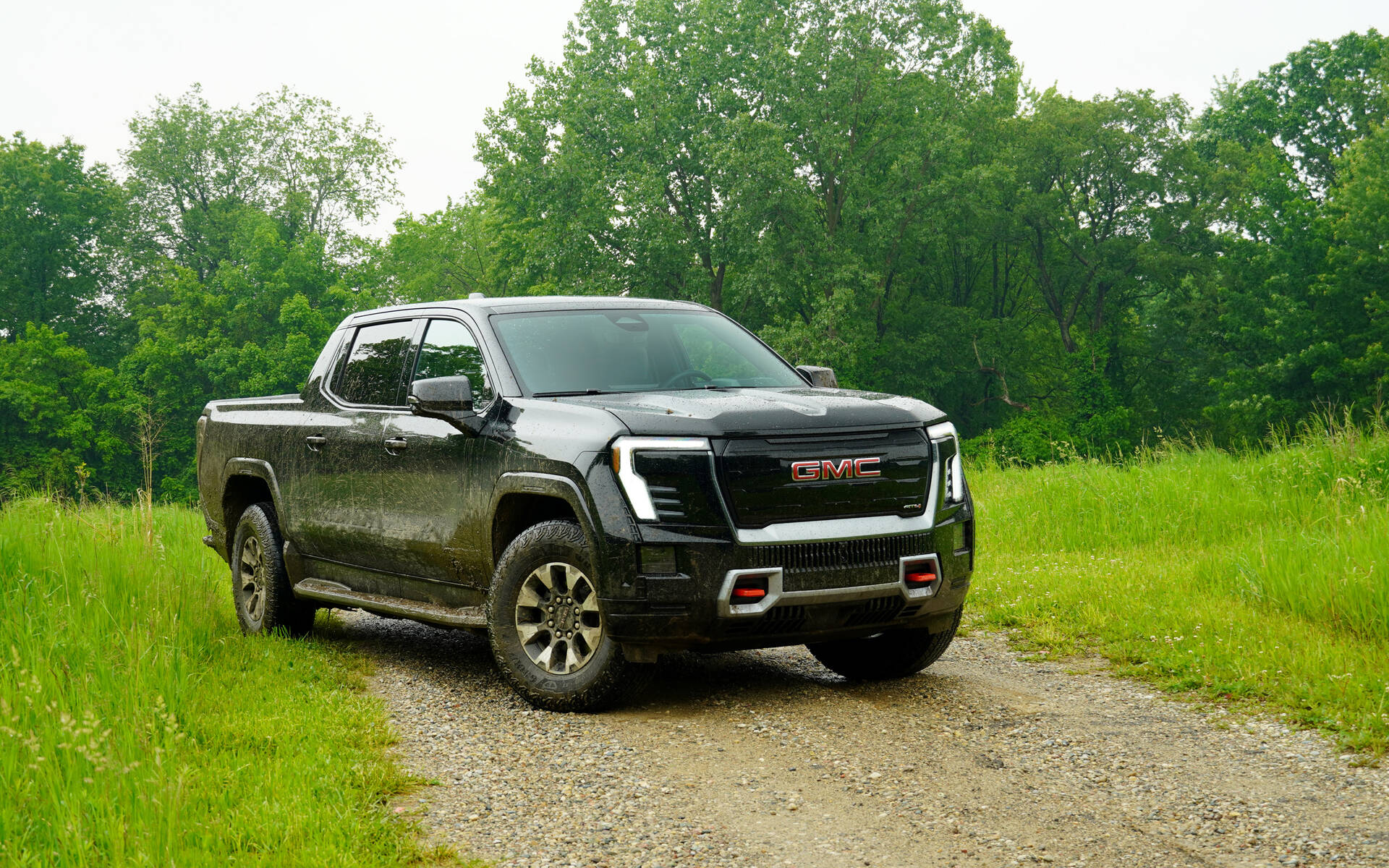
8. 2026 GMC Sierra EV
The 2026 GMC Sierra EV represents a major advancement in the brand’s full-size pickup lineup, blending traditional toughness with modern electric innovation. Starting at $62,400, it preserves the familiar design of the gasoline-powered Sierra while introducing a reengineered electric platform that enhances performance, comfort, and everyday practicality.
At first glance, the Sierra EV maintains the bold presence expected of a GMC truck. Its muscular stance and clean lines create a familiar look, while details such as a closed grille and unique lighting accents distinguish it as an electric model.
The cabin takes a more modern approach, centered around a large 16.8-inch vertical touchscreen paired with a digital instrument cluster. Physical buttons remain for essential controls, which adds welcome convenience for quick adjustments.
The dashboard design is flat and uncluttered, helping the interior feel more open. Materials are sturdy and refined, emphasizing durability and quality. Higher trims like the Denali feature soft-touch surfaces and upscale finishes.
The front seats provide heating, ventilation, and strong support, while the rear seats offer generous space for adults or child seats. Noise levels are low, creating a calm cabin environment even at highway speeds.
With 510 horsepower and 490 pound-feet of torque, the Sierra EV accelerates to 60 mph in just over four seconds. This makes it one of the quickest trucks in its class. Handling feels confident, and the available rear-axle steering improves maneuverability in tight spaces. The ride can be firm when equipped with larger wheels, but adaptive dampers on upper trims help smooth out uneven roads.
One-pedal driving works efficiently, allowing smooth deceleration when lifting off the accelerator. Braking feels steady and controlled, even under heavy loads. GMC’s Super Cruise driver-assistance system enables hands-free driving on compatible highways, performing with precision and consistency.
The Sierra EV’s infotainment system is powered by Google’s built-in software, featuring Google Maps, Assistant, and other native applications. Although it lacks Apple CarPlay and Android Auto, the interface is intuitive and easy to navigate. Multiple USB ports and wireless charging support add convenience for passengers.
Practicality remains one of the Sierra EV’s strongest traits. It includes a large front trunk, generous cabin storage, and a versatile bed with a folding midgate that extends the load space into the cabin. The truck can tow up to 10,000 pounds and carry a payload of 1,500 pounds.
Buyers can choose from three battery options offering between 283 and 478 miles of range, depending on configuration. Real-world testing shows the truck can often exceed its official estimates. Charging times are competitive, with rapid-charging capability for long trips, though energy consumption is higher than some rivals.
The 2026 GMC Sierra EV combines powerful performance, advanced technology, and practical usability in a package that feels both capable and refined.
It maintains the toughness expected from a full-size truck while delivering the benefits of modern electric engineering. With its strong towing capacity, comfortable interior, and innovative design, the Sierra EV stands among the most capable electric pickups available today.
9. 2025 Volvo EX90
The 2025 Volvo EX90 represents a major milestone in the brand’s electric journey, bringing Scandinavian elegance, sustainable craftsmanship, and strong electric performance into a family-friendly SUV. Starting at $79,995, it replaces the XC90 as Volvo’s flagship model, combining minimalist design with advanced features and impressive range.
The EX90’s cabin embodies Scandinavian simplicity with a focus on calmness and comfort. A 14.5-inch vertically oriented touchscreen sits at the center of the dashboard, surrounded by soft materials, natural wood accents, and clean geometric lines.
The minimalist layout exudes serenity, while the use of recycled and sustainable materials reflects Volvo’s eco-conscious approach. Buyers can choose between premium leather or wool-blend upholstery, though selecting the latter removes seat ventilation.
The first two rows offer excellent comfort, with ergonomic seats designed for long drives. The third row, however, is best reserved for children due to limited legroom and headroom. Visibility is excellent, and the airy cabin design enhances the sense of space. The absence of physical buttons creates a sleek aesthetic, though it can be inconvenient when adjusting basic settings like climate control.
The dual-motor setup produces 510 horsepower and 671 pound-feet of torque, allowing the EX90 to sprint from 0 to 60 mph in 4.7 seconds. Despite its size, the SUV feels composed and stable on the road, with accurate steering and predictable handling.
The ride is smooth on most surfaces, though the suspension can feel firm over larger bumps. One-pedal driving is responsive and well-tuned, making city driving effortless.
Volvo’s advanced driver-assistance suite offers adaptive cruise control, lane centering, and collision avoidance, though some features experienced occasional software issues during testing. These reliability hiccups slightly detract from an otherwise refined and confident drive.
The infotainment system is powered by Google’s built-in software, providing seamless access to Maps, Assistant, and app-based controls. Wireless Apple CarPlay, Android Auto, and six USB-C ports ensure strong connectivity for all passengers.
A wireless charging pad and the Volvo Cars app, which offers remote access and digital key functionality, add convenience. However, the reliance on the central touchscreen for most functions can make simple tasks take longer than necessary.
Cargo space is adequate but smaller than in rivals like the Rivian R1S and Tesla Model X. The seats fold flat with a button press, and a small front trunk provides extra storage for small items. Towing capacity is rated at 4,850 pounds.
In testing, the EX90 achieved 310 miles of range, outperforming its EPA estimate. Energy use was measured at 38.8 kWh per 100 miles, showing strong efficiency for its class. Charging speeds reach 201 kW, adding about 100 miles of range in 15 minutes.
The 2025 Volvo EX90 blends Scandinavian refinement, sustainability, and modern technology into a cohesive electric SUV. It’s quick, comfortable, and elegantly designed, offering a serene driving experience for families. While software bugs and a high starting price temper its perfection, the EX90 remains one of the most distinctive and sophisticated electric SUVs available.
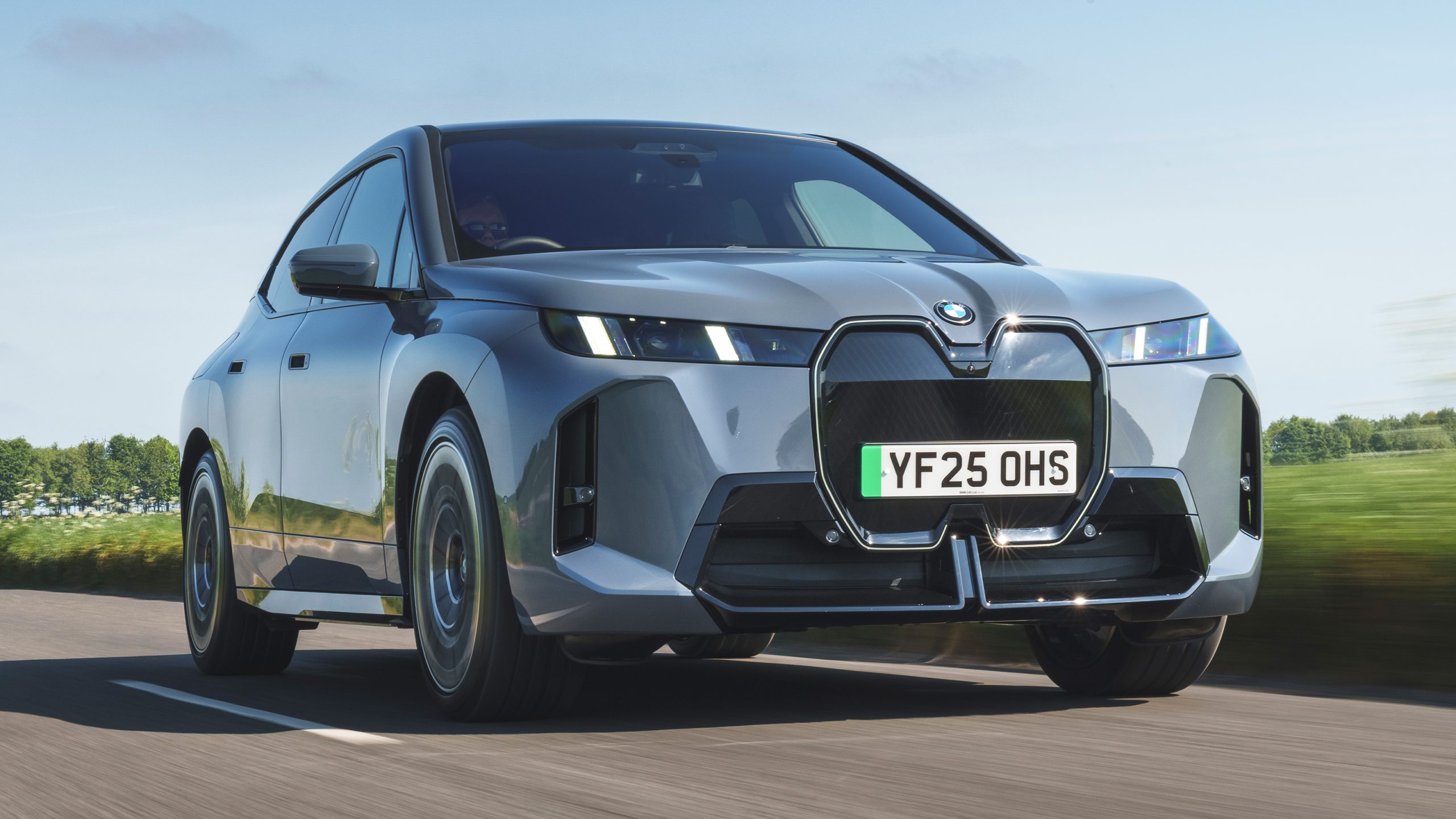
10. 2025 BMW iX
The 2025 BMW iX represents a refined expression of electric luxury, blending advanced technology, comfort, and power in a futuristic yet distinctly BMW form. Starting at $87,250, it showcases the brand’s ongoing commitment to performance and innovation in the electric vehicle space.
The iX’s cabin draws clear inspiration from BMW’s i7 sedan, offering a balance of elegance and modern simplicity. A digital instrument cluster and a 14.9-inch infotainment display sit beneath one curved glass panel, giving the dashboard a seamless, high-tech appearance.
The minimalist approach is complemented by premium materials, such as leather or fabric, and a floating center console that opens up floor space and adds a lounge-like atmosphere.
The seats are both visually striking and supportive, featuring multiple adjustments, heating, and optional ventilation. Sound insulation is excellent, keeping the cabin calm even at higher speeds. The climate system operates efficiently, maintaining a comfortable temperature in all conditions.
Rear passengers enjoy generous legroom and headroom, and the wide doors make entry and exit effortless. Small-item storage is limited, but cabin usability remains strong for daily life.
The iX delivers impressive performance across its trims. The xDrive50 version produces 516 horsepower and 564 pound-feet of torque, reaching 60 mph in just 4.2 seconds, while the M60 pushes output to 610 horsepower and hits the mark in 3.5 seconds.
Despite its size, the iX handles with precision and agility. Steering feels light yet accurate, and the adaptive suspension system provides a smooth, composed ride on a variety of surfaces.
Regenerative braking is natural and consistent, making city driving intuitive. BMW’s suite of driver assistance systems, including adaptive cruise control, lane keeping, and limited hands-free capability, performs with confidence. The 360-degree camera system enhances safety and helps with tight parking maneuvers.
BMW’s iDrive 8 infotainment system anchors the tech experience. While it can seem complex at first, it quickly becomes intuitive once configured. The curved display is crisp and responsive, and the voice command system works well for navigation and media. Standard features include a digital key, wireless charging, and four USB-C ports.
Cargo space measures 35.5 cubic feet behind the rear seats, more than the Cadillac Lyriq and Mercedes-Benz EQE SUV. The iX xDrive50 achieved 377 miles of range in testing, using 32 kWh per 100 miles, ranking among the most efficient luxury EVs. Fast charging replenishes roughly 432 miles of range per hour on a compatible DC charger.
The 2025 BMW iX combines dynamic performance, serene comfort, and cutting-edge technology in one sophisticated package. Its refined interior, long range, and confident handling make it a standout choice for those seeking a premium electric SUV experience.
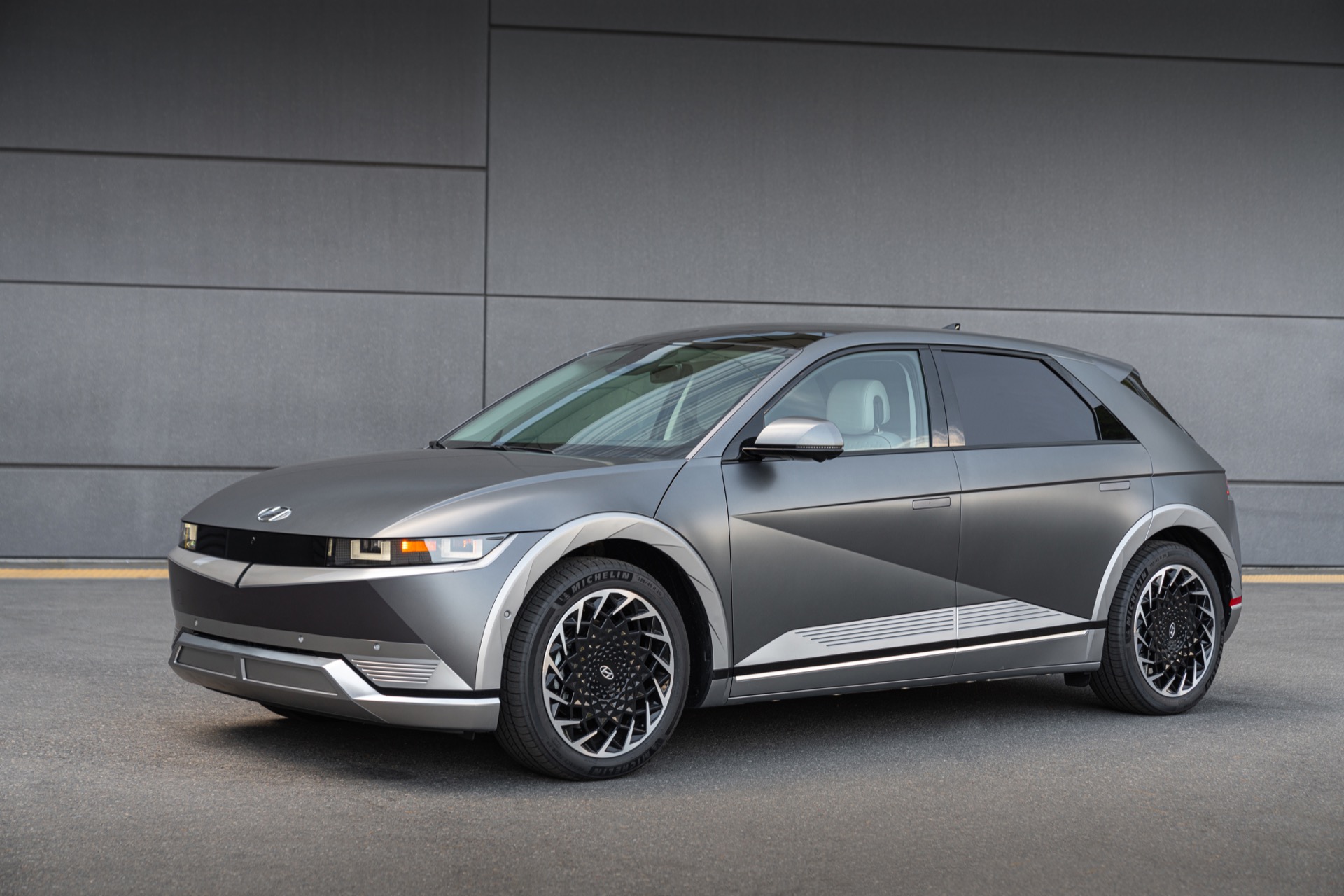
11. 2025 Hyundai Ioniq 5
The 2025 Hyundai Ioniq 5 continues to be one of the most appealing electric SUVs available, combining futuristic design, impressive performance, and thoughtful practicality. With its blend of technology and comfort, the Ioniq 5 has played a key role in Hyundai’s electric success story, offering a well-balanced experience for both city and highway driving.
The Ioniq 5’s interior feels open and sophisticated, featuring two 12.25-inch digital displays that dominate the dashboard. One serves as the infotainment touchscreen controlling media, navigation, and climate settings, while the other provides essential driving information such as speed and battery status. The minimalist layout, high-quality materials, and flat floor enhance the sense of space inside the cabin.
The seats are soft and supportive, making long journeys comfortable. Climate control works efficiently, and cabin insulation keeps noise levels low even at highway speeds. Rear passengers benefit from generous legroom, sliding and reclining seats, and easily accessible child seat anchors. Despite the minimalist approach, the cabin offers practical storage options, including a movable center console and several small compartments for personal items.
Although the Ioniq 5 is not a dedicated performance model, it delivers plenty of excitement. The dual-motor Limited trim accelerates from 0 to 60 mph in just 4.7 seconds, while the single-motor version remains capable and responsive. Handling is precise and confident, with a well-balanced suspension that keeps the ride smooth over uneven roads.
The XRT variant adds extra ground clearance and all-terrain tires, making it capable of light off-road adventures without sacrificing comfort. Regenerative braking is adjustable and feels natural, contributing to a composed driving experience. Hyundai’s SmartSense suite of safety technologies, including adaptive cruise control, lane centering, and blind-spot monitoring, works smoothly with minimal false alerts.
For 2025, the Ioniq 5 features upgraded software with sharper graphics, improved navigation accuracy, and expanded customization options. The infotainment system includes wireless Apple CarPlay and Android Auto, and multiple USB-C ports keep devices charged. The premium Bose audio system available on the Limited trim adds clear and powerful sound quality.
Cargo space behind the rear seats is 27.2 cubic feet, which trails some competitors like the Tesla Model Y but remains practical for daily needs. The rear seats fold flat to accommodate larger items. The small front trunk offers limited storage, mainly for the charging cable, but interior cubbies provide extra convenience.
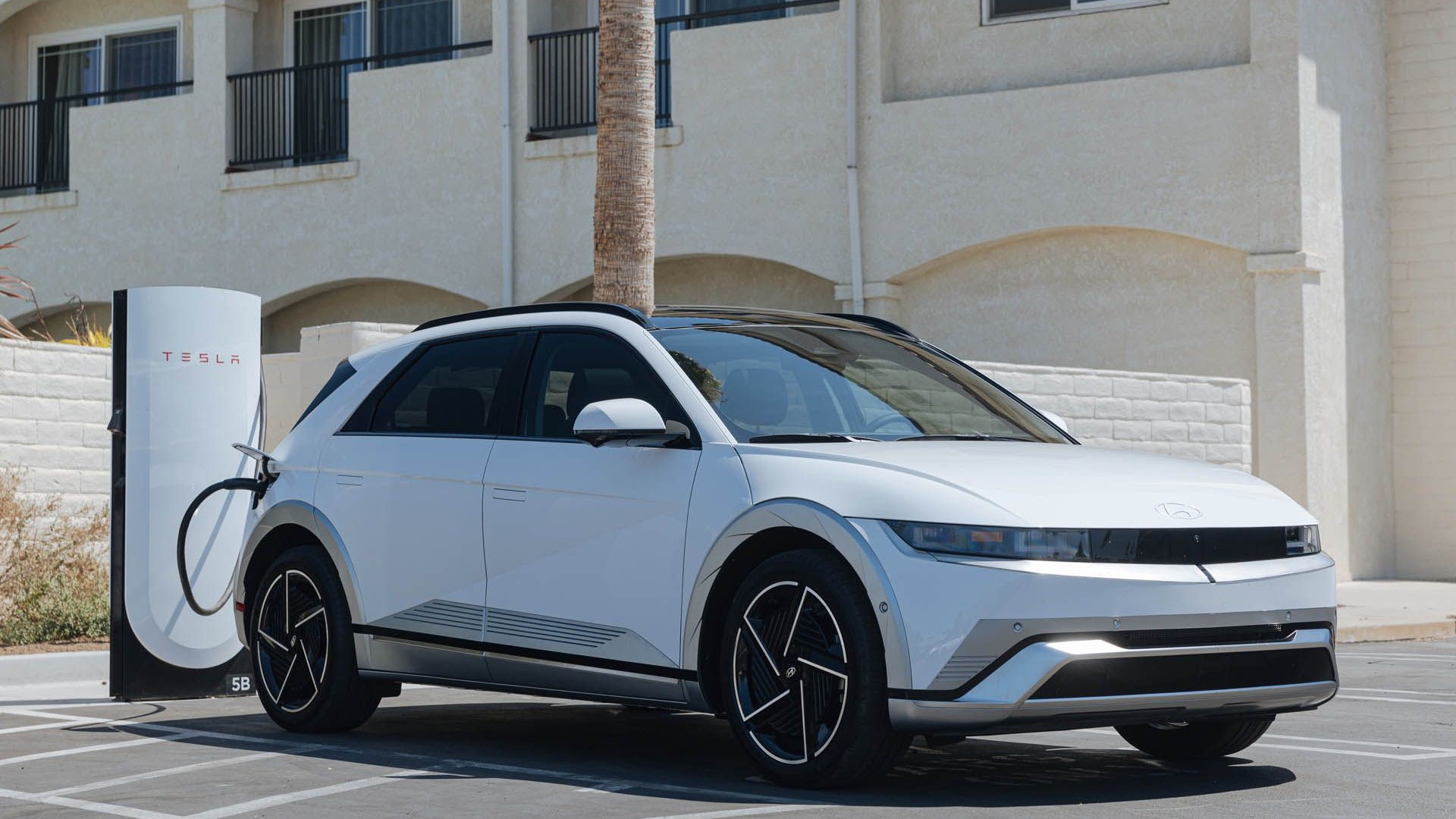
For 2025, Hyundai increased the Ioniq 5’s battery capacity, improving both range and efficiency. In independent testing, the XRT achieved 259 miles, while the dual-motor Limited reached 282 miles, both exceeding EPA estimates. The vehicle supports 350-kW fast charging, capable of restoring a significant range in under 20 minutes. The new NACS port allows access to Tesla’s Supercharger network, expanding charging flexibility.
The Ioniq 5’s solid build quality, long warranty, and generous list of standard features make it an excellent value in its class. Hyundai’s reputation for reliability further strengthens its appeal.
The 2025 Hyundai Ioniq 5 stands out for its blend of retro-inspired design, modern technology, and enjoyable driving dynamics. With its fast-charging capability, refined comfort, and practical interior, it remains one of the most well-rounded electric SUVs on the road today.
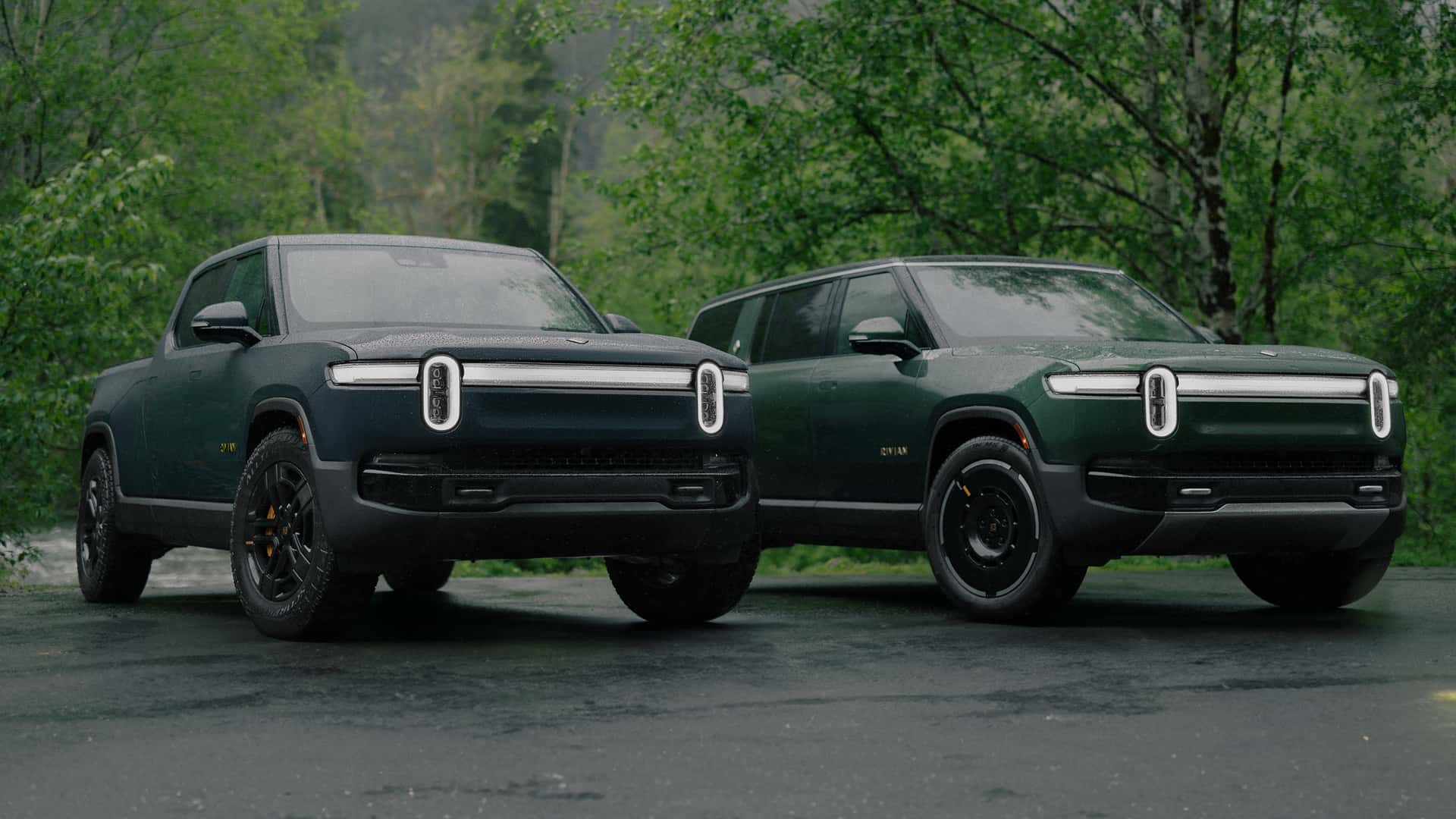
12. 2025 Rivian R1S and R1T
The 2025 Rivian R1S SUV and R1T pickup continue to prove why Rivian has become one of the most successful electric vehicle startups in America. With the R1T debuting in 2021 and the R1S following soon after, both models blend futuristic design, sustainable materials, and exceptional performance with everyday practicality and adventure-ready capability.
For 2025, Rivian introduces major updates beneath the familiar exterior of its R1 lineup. The brand now offers four powertrain configurations: Dual-Motor, Performance Dual-Motor, new Tri-Motor, and an improved Quad-Motor setup. The base Dual-Motor produces 533 horsepower and 610 pound-feet of torque, while the Performance version generates 665 horsepower and 829 pound-feet.
The new Tri-Motor setup delivers 850 horsepower and 1,103 pound-feet, reaching 60 miles per hour in under three seconds. The top-tier Quad-Motor now produces an incredible 1,025 horsepower and 1,198 pound-feet of torque, cutting the zero-to-sixty time to an estimated 2.5 seconds for the R1T and 2.6 seconds for the R1S.
Rivian has also introduced updated battery packs, offering ranges between 270 and 420 miles for the R1T and 258 to 410 miles for the R1S, depending on configuration. The company will adopt Tesla’s North American Charging Standard, with new R1 models including an adapter for access to Tesla Supercharger stations.
Ride comfort has improved significantly thanks to revised suspension hardware and tuning. With new spring rates and dampers, the R1T feels more compliant while maintaining its precise steering and agile handling. Although it is not quite as smooth as the Ford F-150 Lightning on pavement, it easily outperforms it in terms of handling and off-road ability.
Both models include Rally and Drift modes that provide greater control on loose surfaces. The adjustable air suspension offers up to 14.7 inches of ground clearance, while the R1S’s shorter wheelbase gives it superior approach and departure angles for trail driving.
Inside, the R1 lineup retains its clean and modern design but adds new color schemes, refined trims, and a Premium package with upgraded materials and an electrochromic glass roof. Comfort remains a highlight, with spacious seats, a deep center console, and generous storage space.
The 15.6-inch central touchscreen now features a refreshed interface powered by Epic Games’ Unreal Engine. The graphics are now cel-shaded for a stylish, animated look. While Apple CarPlay and Android Auto are still missing, Rivian’s native apps for music and navigation offer a smooth and capable experience.
Rivian’s Highway Assist system has been enhanced for 2025 with automated lane changes and improved camera clarity. A hands-free highway driving feature is currently under development.
The R1T and R1S face tough competition from electric models such as the Ford F-150 Lightning, Tesla Cybertruck, and Chevrolet Silverado EV, while the R1S competes with premium SUVs like the BMW iX, Mercedes-Benz EQS SUV, and Tesla Model X.
Despite the growing field, Rivian’s unique blend of immense power, high-tech innovation, and impressive off-road ability keeps the R1 lineup among the most capable and distinctive electric vehicles available.
Luxury in electric vehicles has reached a remarkable stage of maturity, where refinement and technology merge seamlessly. The models featured here redefine what it means to travel in comfort, proving that electric mobility can be both exhilarating and elegant.
Each of these twelve vehicles delivers a distinctive approach to interior quality, whether through the meticulous craftsmanship of the Lucid Air, the immersive ambiance of the BMW i7, or the eco-conscious artistry found in the Volvo EX90.
What unites them is a dedication to creating an environment that enhances every journey. Premium materials, quiet operation, and intelligent design foster a sense of calm and connection that extends beyond driving itself. Even the most performance-focused models, like the Porsche Macan Electric and Audi e-tron GT, manage to balance power with poise, offering cabins that feel purpose-built for modern luxury.
As automakers continue to refine their electric offerings, interior design remains the truest measure of how far the industry has progressed. These twelve EVs stand as benchmarks for a new generation of drivers who seek sophistication, innovation, and sustainability in equal measure. They remind us that the future of driving is not only electric but also profoundly refined.
Also Read: 10 Cars That Outsell Competitors Despite Weak Marketing