
Luxury sedans promise comfort, power, and status but when the odometer climbs and the warranty expires, not all of them keep their charm.
Some luxury models gracefully age like fine wine, rewarding long-term ownership with reliability and refinement.
Others, however, turn into expensive headaches, draining wallets with never-ending electrical gremlins, air suspension failures, and repair bills that rival car payments.
For US buyers looking to enjoy upscale motoring without signing up for future financial pain, it’s important to know which luxury sedans endure and which ones implode after their warranty period.
Let’s take a look at five luxury sedans that age exceptionally well, followed by five that tend to fall apart once factory coverage ends.
Luxury Sedans That Age Well
When it comes to luxury sedans, style and performance are only part of the story. True value shines through in the long run, cars that retain their comfort, reliability, and elegance even as they age are the ones that leave a lasting impression.
From refined interiors to engines built to endure, some luxury sedans manage to combine sophistication with longevity, proving that high-end doesn’t have to mean high maintenance headaches. In this article, we explore the luxury sedans that stand the test of time and continue to impress years down the road.
1. Lexus LS 460 / LS 500
Few luxury sedans in history have earned the kind of reliability reputation the Lexus LS enjoys. Built with Toyota’s obsessive engineering standards, the LS remains whisper-quiet, smooth, and dependable even after 150,000 miles.
The 2007–2017 LS 460, in particular, is a masterclass in mechanical durability, with a V8 engine that rarely falters and an interior that shrugs off wear better than German rivals.
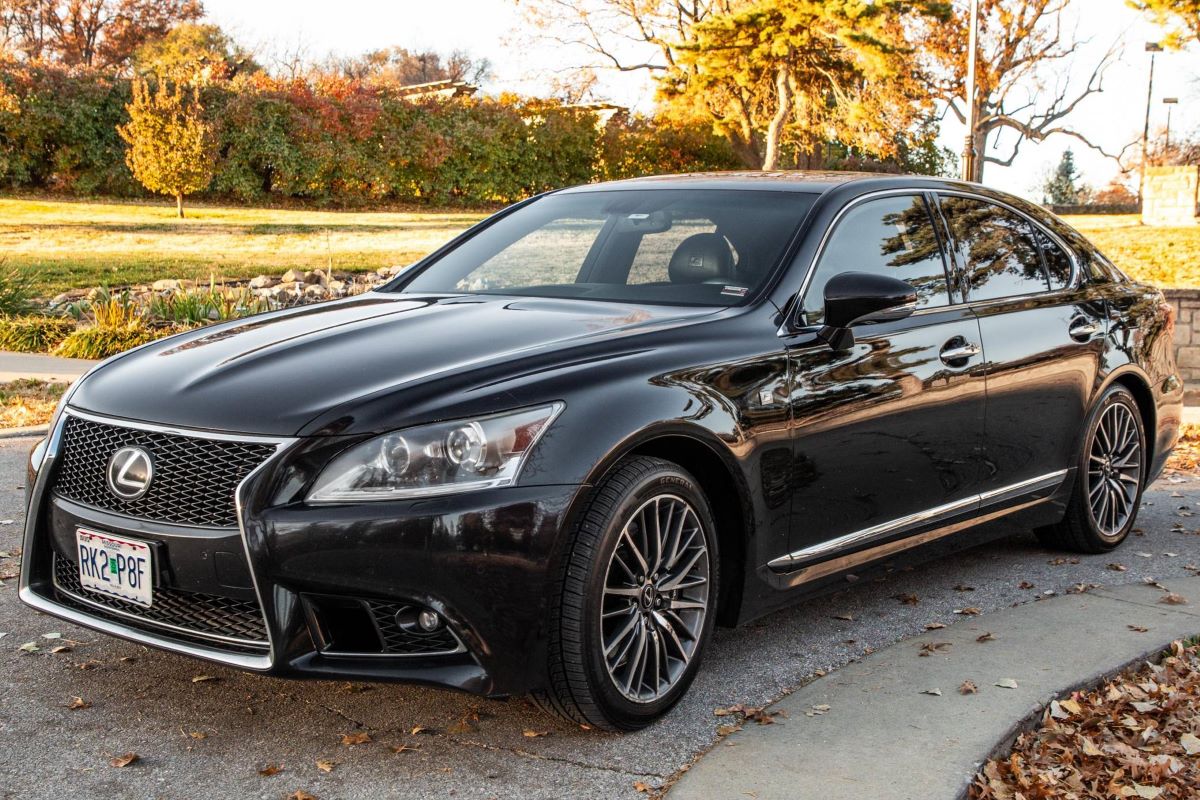
Even the newer LS 500, while more complex, maintains excellent build quality. Parts availability is strong in the US, and owners often report far lower maintenance costs than comparable S-Class or 7 Series sedans.
Simply put, the LS proves that “luxury” and “longevity” don’t have to be opposites.
The 2015 Lexus LS 460 is a full-size luxury sedan offered in both short and long wheelbase versions, with choices of rear- or all-wheel-drive. Under the hood, it comes standard with a 4.6-liter V-8 delivering 386 hp and 367 lb-ft of torque (360 hp and 347 lb-ft for all-wheel-drive models), paired with an eight-speed automatic transmission.
Lexus also offers the LS 600h L hybrid, which combines a 5.0-liter V-8 with an electric motor for a total system output of 438 hp. Fuel efficiency is reasonable, rated at 16/24 mpg city/highway for rear-wheel drive, 16/23 mpg with all-wheel drive, and 19/23 mpg for the LS 600h L hybrid.
With the F Sport package, the 2015 LS 460 offers more engaging handling thanks to a sport-tuned suspension, yet its primary goal remains comfort, isolating occupants from road imperfections.
Acceleration is adequate due to the carryover engines from the previous generation, but refinement is classic Lexus: the chassis absorbs bumps effortlessly, delivering a smooth, fatigue-free ride for both driver and passengers.
Seating accommodates five with the standard rear bench, while long-wheelbase models offer a two-passenger executive rear setup with massage and reclining functions.
Build quality is strong for the segment, featuring premium materials such as soft leather, genuine wood trim, and substantial plastics throughout the cabin.
Tech amenities are abundant, highlighted by a 12.3-inch widescreen display for navigation and infotainment, controlled via Lexus’ signature mouse-style interface used across multiple models.
2. Acura RLX
Honda’s luxury arm doesn’t always grab headlines, but the RLX remains one of the most underrated long-term luxury sedans. Its 3.5-liter V6 engine and SH-AWD system are both proven, low-maintenance technologies.
While it doesn’t carry the badge cachet of Mercedes or BMW, the RLX offers a premium experience without the looming dread of $3,000 repair invoices.
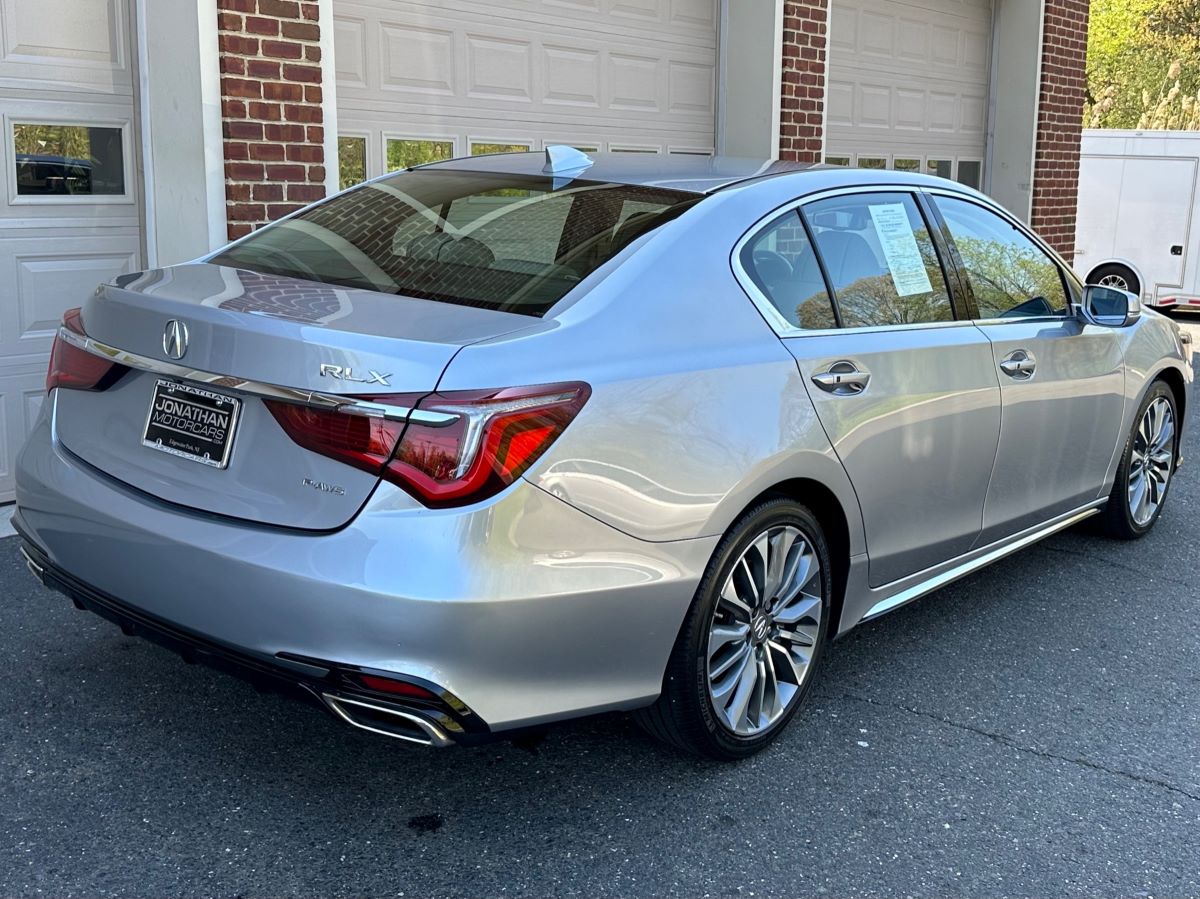
Inside, the cabin materials age gracefully, and electronic systems tend to stay functional well beyond the 100,000-mile mark something not every luxury sedan can claim.
For drivers who value quiet reliability over flash, the RLX is a hidden gem that rarely lets owners down.
The standard RLX comes with a 310-hp V-6, paired to a 10-speed automatic transmission and front-wheel drive. It also features rear-wheel steering, which helps enhance cornering performance. The Sport Hybrid variant combines a 3.5-liter V-6 with three electric motors for a total output of 377 horsepower.
Notably, this hybrid powertrain is derived from the one used in the Acura NSX supercar. Thanks to its rapid acceleration and smooth operation, the Sport Hybrid makes city driving effortless and highway stretches exhilarating. However, the RLX feels less nimble in corners, as much of its weight is concentrated at the front.
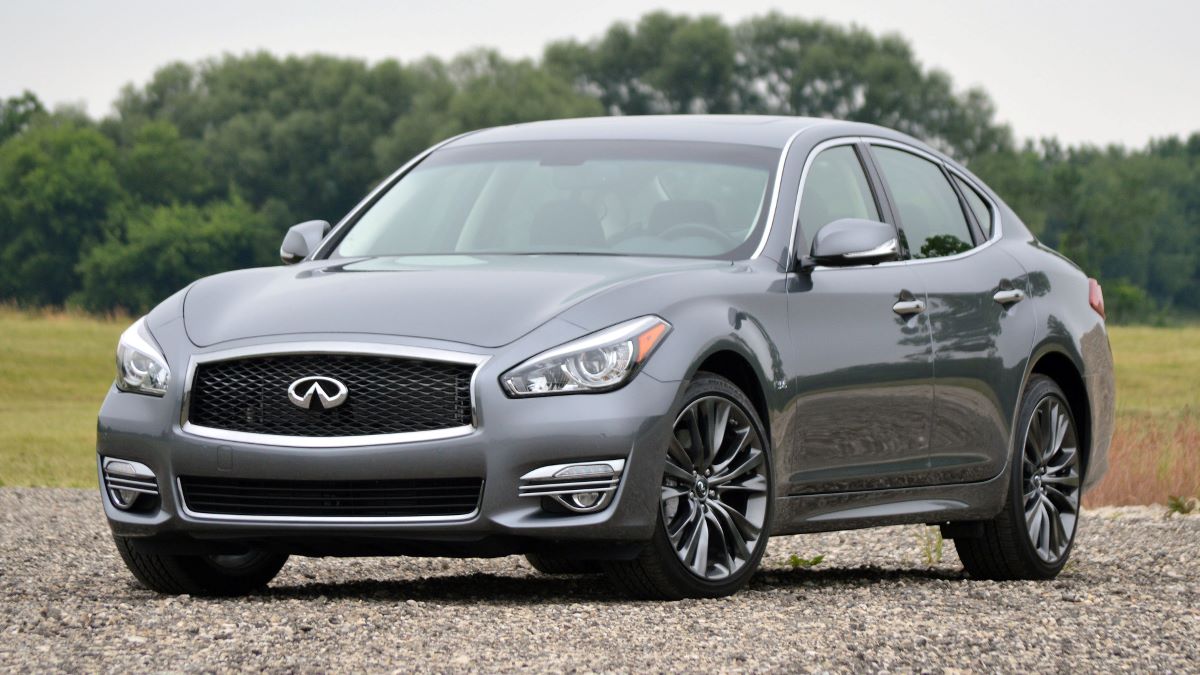
3. Infiniti Q70
Before Infiniti pivoted to crossovers, the Q70 was its flagship sedan and a surprisingly resilient one. Powered by either a 3.7-liter V6 or a hearty 5.6-liter V8, the Q70 combines old-school mechanical robustness with Japanese build quality.
It lacks the overcomplicated tech that plagues many European luxury cars, which means fewer things to fail after warranty.
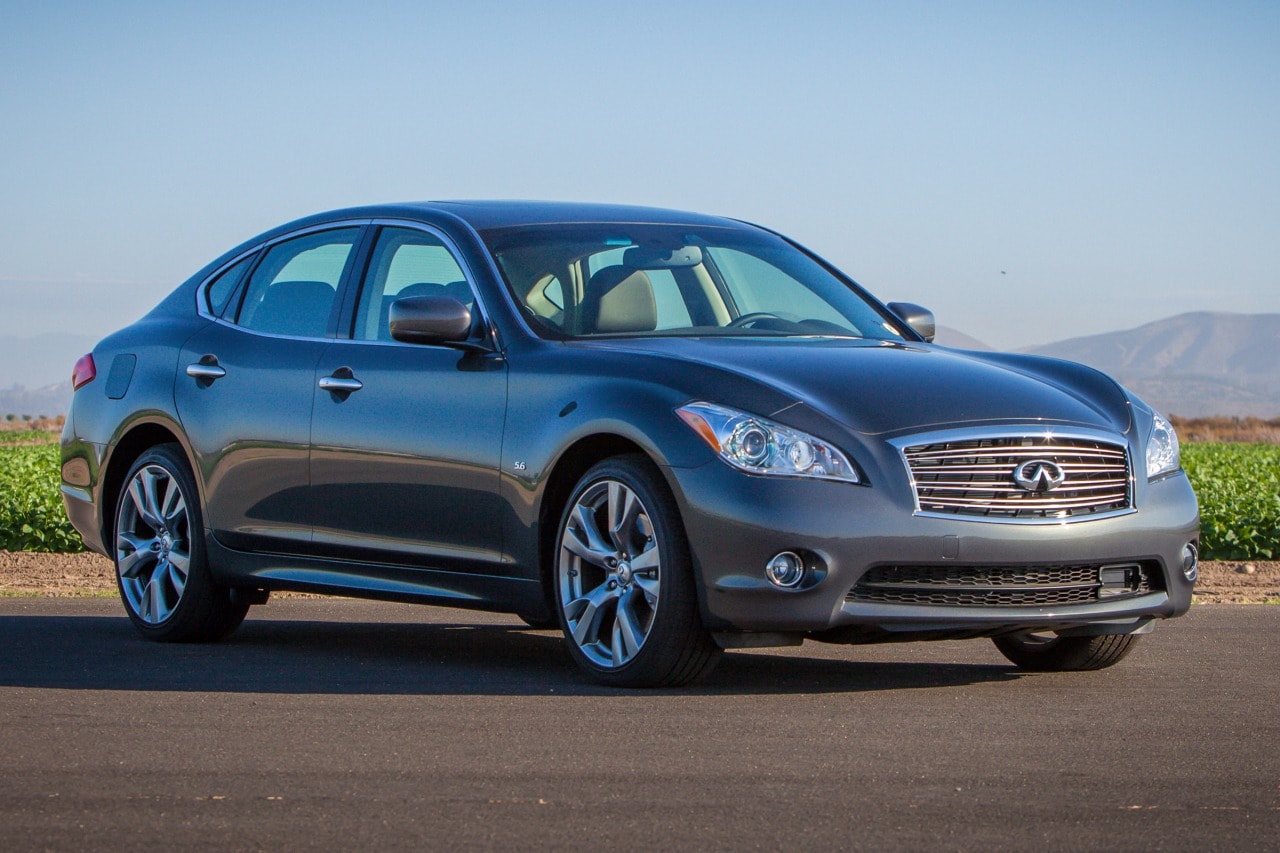
Even today, used Q70s from the mid-2010s can be found with over 120,000 miles running strong. Routine maintenance costs are moderate, and the rear-wheel-drive dynamics give it a sporty yet comfortable personality.
It’s a perfect example of how simplicity can make a luxury sedan age gracefully.
In case you haven’t heard, Infiniti has renamed its M midsize luxury sport sedan the Q70 for this year. Otherwise, the 2014 Infiniti Q70 remains largely unchanged from the models formerly known as the M35h, M37, and M56.
While it’s likely to go unnoticed by most luxury car shoppers, the 2014 Q70 is worth a closer look if you’re seeking a premium midsize sedan with a sportier edge than most competitors.
From the outside, the Q70’s design is understated, almost to a fault. Its styling resembles the smaller Q50, yet compared with other sedans in this segment, it lacks a bit of visual flair. Step inside, however, and the interior impresses with high-quality materials and meticulous assembly.
Even in base trim, the Q70 leans toward performance, with muscular V6 and V8 engines and a sporty, agile feel through corners, something many German rivals struggle to achieve without relying heavily on electronic handling aids.
Of course, this performance comes at a cost: fuel economy on the 2014 Q70 3.7 and 5.6 models is only average. The 2014 Q70 Hybrid, however, stands out with a 31 mpg EPA combined rating while still delivering brisk acceleration.
Ride quality is another concern, as the Q70 feels stiffer than most premium sedan buyers might expect. Infiniti has adjusted suspension tuning on Sport package models this year, but anyone considering a Q70 Sport should take a thorough test drive to ensure it meets comfort expectations.
There are also several midsize luxury sedans that may offer a more well-rounded experience. The 2014 BMW 5 Series and 2014 Mercedes-Benz E-Class set the benchmark in this segment with diverse engine options, elegant interiors, advanced tech, and exceptional ride comfort.
For something slightly different, the 2014 Audi A6 and 2014 Cadillac CTS provide refined styling and impressive handling. While the 2014 Infiniti Q70 may lag slightly behind these rivals in a few areas, it remains a solid choice for buyers seeking a premium midsize sedan that isn’t flashy or ostentatious.
The 2014 Infiniti Q70 3.7 is powered by a 3.7-liter V6 rated at 330 horsepower and 270 lb-ft of torque. All 2014 Q70 models come standard with a seven-speed automatic transmission featuring four shift modes: Standard, Sport, Snow, or Eco.
Also Read: 5 Cheap Cars That Offer Top-Tier Build Quality vs 5 That Don’t Work
4. Genesis G80
Hyundai’s luxury brand Genesis has quickly built a reputation for reliability and craftsmanship, and the G80 is its strongest long-term contender.
Owners in the US consistently report fewer major repairs compared to European counterparts. The G80’s engines especially the 3.8-liter V6 are sturdy, and the interior materials are built to last.
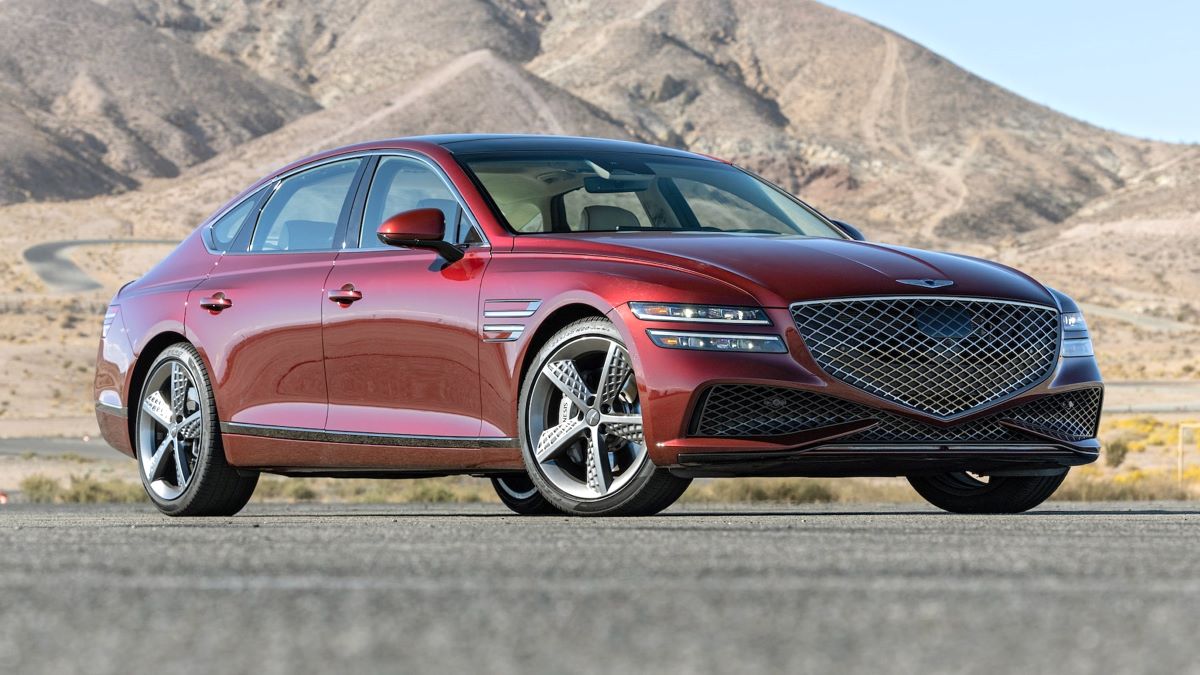
Even more impressive, Genesis backs its vehicles with one of the best warranties in the business (10 years/100,000 miles for the powertrain), giving buyers confidence during the early ownership years.
But what makes it stand out is how well it holds up after the warranty ends with few chronic issues and affordable service costs.
5. Lexus ES 350
The Lexus ES isn’t as ostentatious as an S-Class or A8, but it might be the smartest luxury sedan buy for long-term ownership. Underneath, it shares much with the Toyota Avalon, one of the most reliable full-size cars ever made.
The ES 350’s V6 engine is nearly bulletproof, and the transmission is known for smooth, trouble-free operation for hundreds of thousands of miles.
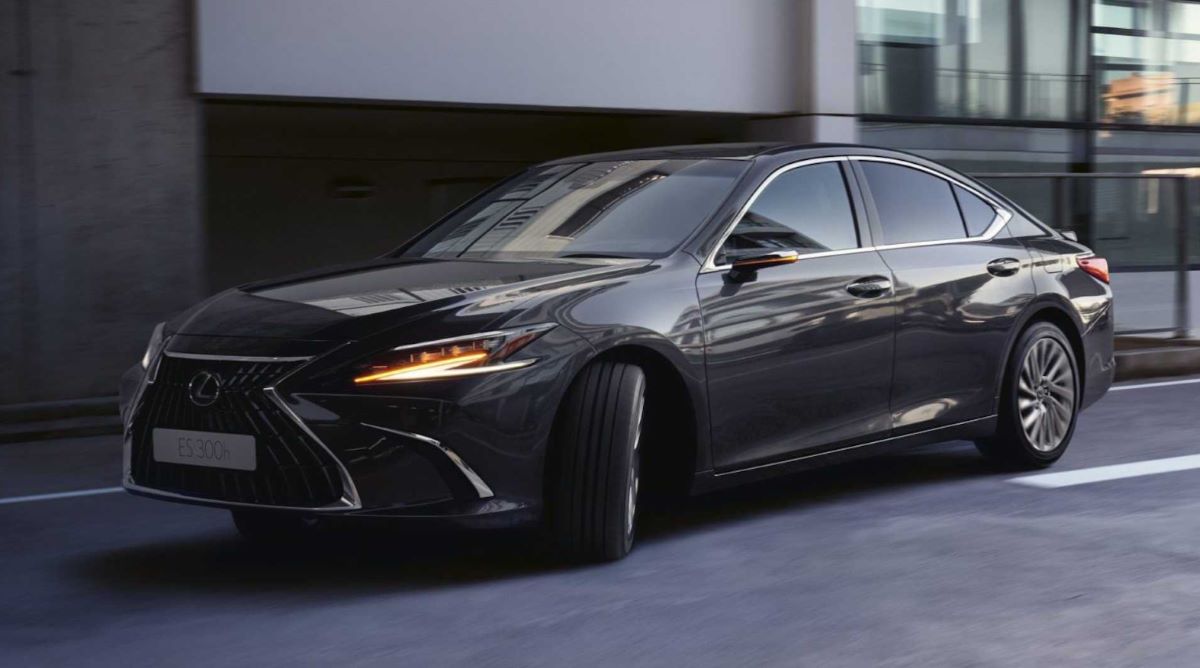
Owners frequently report minimal interior wear even after a decade, and the infotainment and climate systems tend to age without major issues. For anyone who wants a luxury car that still feels new after 10 years, the ES is the gold standard.
Luxury Sedans That Implode After Warranty
Luxury sedans are built to impress, boasting opulent interiors, advanced technology, and smooth, powerful rides. But sometimes, what looks flawless in the showroom can become a costly headache once the warranty expires.
For some high-end models, reliability issues emerge, repairs skyrocket, and maintenance demands can quickly outweigh the initial prestige of ownership.
In this article, we take a close look at luxury sedans that tend to crumble after the warranty period, highlighting the pitfalls that buyers need to be aware of before investing in that sleek, expensive ride.
1. BMW 7 Series
The BMW 7 Series is a technological masterpiece until it isn’t. Once the warranty expires, that cutting-edge tech often turns into a money pit.
Complex air suspension systems, electronic steering, and active body controls are notorious for failure, and repairs can easily reach thousands.
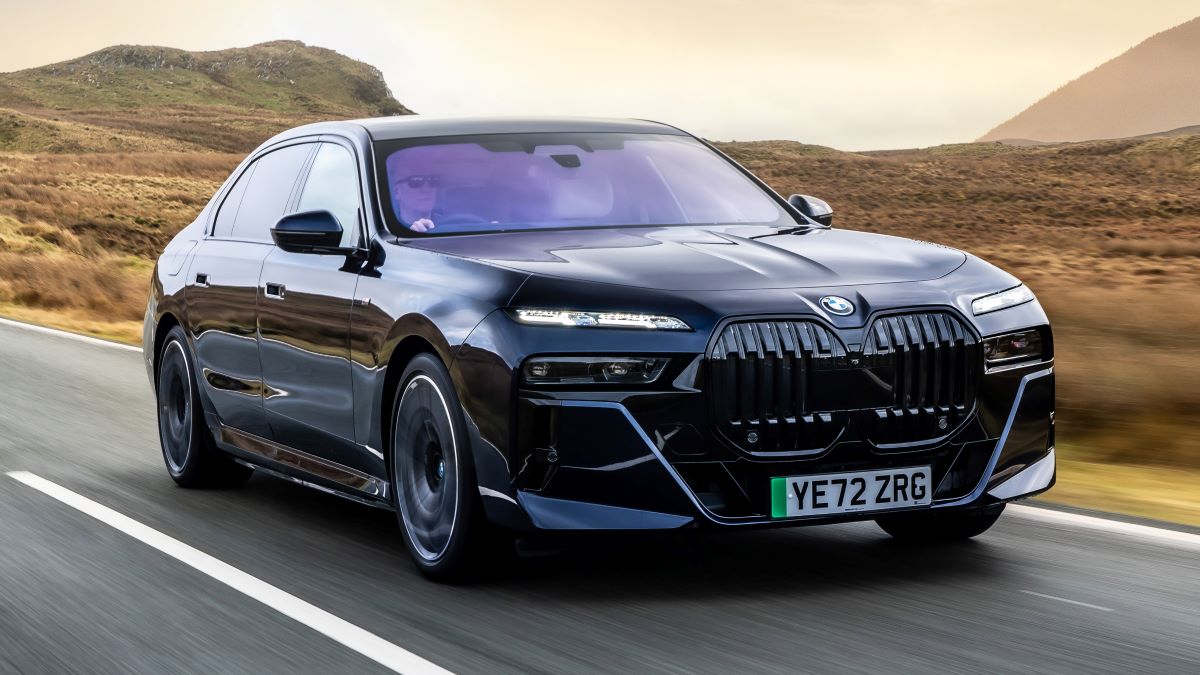
Models like the F01-generation (2009–2015) and even newer G11 models (2016–2022) have a reputation for astronomical maintenance costs. When these cars work, they’re sublime; when they don’t, they remind owners why extended warranties exist.
The 2020 BMW 7 Series hits all the marks for a flagship luxury sedan. True to its class, it comes loaded with nearly every feature BMW has to offer, starting with a spacious interior crafted from high-quality materials, meticulous attention to detail, a suite of advanced technology, and a range of powertrains delivering impressive performance.
Opt for the top-trim M760i xDrive loaded with nearly every available option, and you’re looking at a $180,000 sedan. That said, you don’t need to go that far: a base 7 Series with its turbo six-cylinder engine and generous standard feature list still delivers a high-end experience for well under six figures.
For 2020, the 7 Series receives a refreshed appearance, starting with a bold new grille that some call boldly comical, others comically bold. All engines in the 7 Series see power upgrades, with the turbocharged V8 in the 750i producing a remarkable 523 horsepower, a nearly 20% increase over its predecessor.
Our primary gripe remains, though it has become less pronounced: the 7 Series is no longer the driver-focused luxury sedan it once was. Successive updates and added weight have softened its agile handling in favor of greater comfort, isolation, and straight-line performance.
Even so, the results are impressive, and the 7 Series continues to perform well across the board. Coupled with its opulent and spacious interior, it remains an excellent choice for those seeking a flagship luxury sedan.
2. Mercedes-Benz S-Class
The S-Class is the ultimate symbol of luxury and also the ultimate test of your bank account once it’s out of warranty.
From failing air suspensions to malfunctioning COMAND infotainment systems, the repair list can be overwhelming.
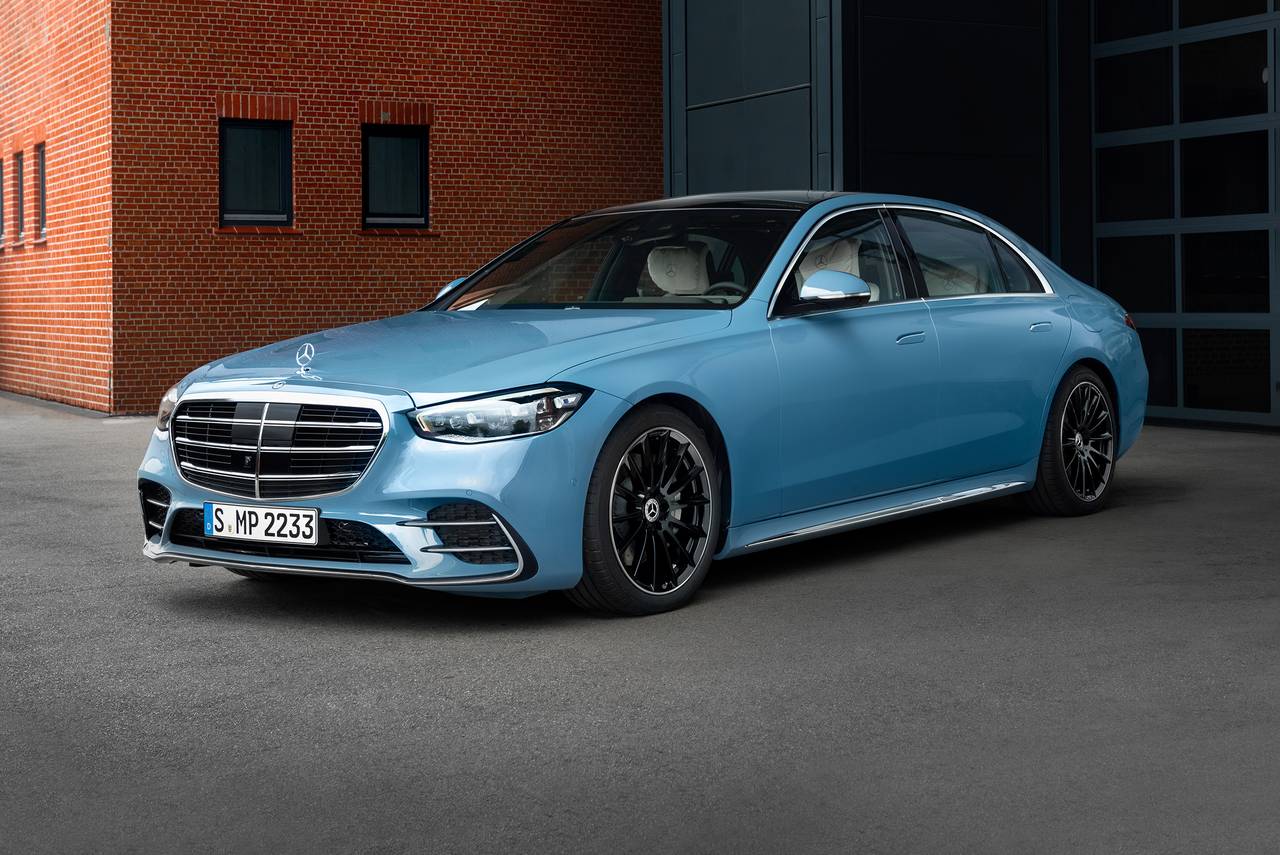
Older S550 and S600 models are especially troublesome, as the combination of aging electronics and complex hydraulics (like ABC suspension) means constant maintenance.
Even newer models, packed with advanced driver-assist systems, suffer from costly sensor and module issues after five years.
There is a new S-Class convertible (the Cabriolet) for 2017, which is not only a new S-Class model, but as a full-size, four-person convertible, it’s new to the Mercedes lineup as well.
Other noteworthy updates are the new nine-speed automatic transmission standard on the S550 along with the Magic Sky Control dimming sunroof now optional on the sedan. The S550 coupe comes standard with the former Sport package’s body styling and 19- or 20-inch AMG wheels.
Simply put, the 2017 Mercedes-Benz S-Class is one of the finest cars in the world. There’s no need for qualifiers like “for the money” or “within its class.” Now available in sedan, coupe and convertible body styles, every Mercedes S-Class delivers a world-class blend of engineering, technology and luxury that permeates everything from the suspension to the seats.
This is a car that can scan the road ahead for bumps and actually alter the suspension to make sure you don’t feel them. It can help you avoid collisions and drive for you on the highway. And, for good measure, you can sample from six seat massage settings, four fragrance scents, as many as 24 speakers and five powertrains that range from 436 to 621 horsepower.
Really, we could continue waxing poetically about the S-Class, but the fact of the matter is its greatness is evident. Just look at the multitude of available features, its eye-opening performance figures and pictures of its elegant interior.
The only way it falls short relative to other flagship luxury sedans is the driving experience; if you want some driver engagement, you can do better than the isolating S-Class.
Indeed, the S-Class sedan also seems a little closer to that upper echelon of luxury automobiles than other flagship sedans out there. Everything about it just seems a little more advanced and overtly luxurious than an Audi A8, BMW 7 Series or Jaguar XJ.
Even the Bentley Flying Spur, which is as decadent as it gets, can’t match the master Benz’s technology and engineering. So, you won’t find many reasons to not buy an S-Class here because it’s impossible to imagine being disappointed by one of its many gilded models.
Few cars on Earth are available with as many safety features as the Mercedes S-Class. Standard equipment includes stability and traction control, crosswind assistance, front and rear side airbags, side curtain airbags, front side pelvic airbags and a driver knee airbag.
3. Jaguar XJ
The Jaguar XJ blends British charm with athletic handling, but reliability has never been its strong suit. Electrical failures, cooling system problems, and transmission issues are common after 60,000 miles.
Even simple parts can be hard to source, and dealership service costs in the US tend to be high.
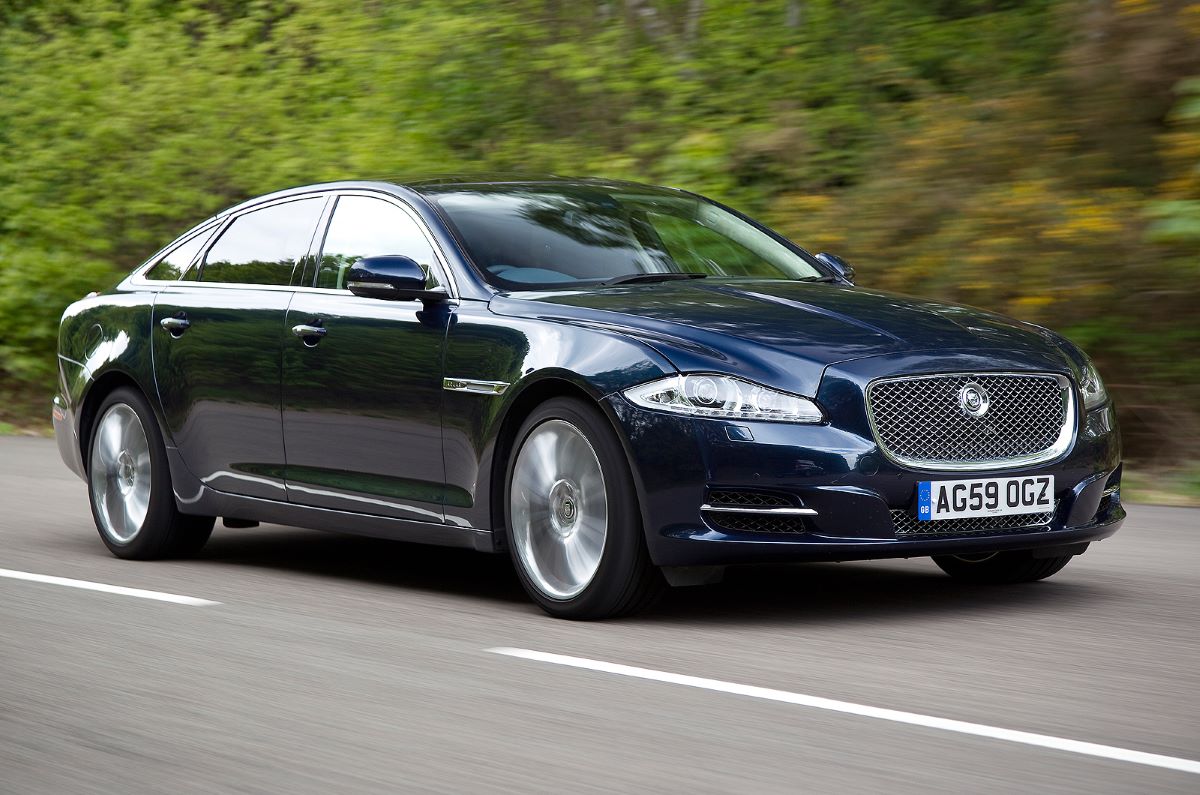
The aluminum body also complicates repairs, making even minor bodywork surprisingly expensive. While the XJ is gorgeous to drive, ownership beyond the warranty period is best left to enthusiasts with deep pockets and a backup vehicle.
Jaguar introduced the all-new XJ in 2009, following the sale of the British brand by Ford to India’s Tata Group in 2008.
Work on the new flagship began in 2005 under Ford’s direction, with Ian Callum leading the design. The resulting model marked a complete break from the classic XJ lines, leaning more toward a sport-executive sedan than a conventional luxury car.
Its design paid homage to Jaguar’s motorsport heritage, giving it a distinctive presence in the premium segment.
With styling closer to a four-door coupe than a traditional luxury sedan, the XJ featured a bold front end with a silver mesh grille. Cat-like headlights swept back, each accented by eight LEDs serving as daytime running lights, emphasizing the model’s flagship status.
The front fascia resembled that of a GT vehicle, with a lower apron featuring a center grille and two side scoops. Along the sides, the long, sloped rear windshield and narrow windows reinforced the sleek profile, while the short trunk lid was flanked by vertical taillights and adorned with Jaguar’s iconic flying emblem.
Inside, Ian Callum drew inspiration from luxury boats, incorporating a continuous wood veneer that wrapped from the door panels to the upper dashboard.
The front bucket seats prioritized comfort while providing adequate side support, and the tall center console housed the rotary gear selector. The rear bench accommodated two passengers comfortably, though the high transmission tunnel restricted legroom for a third occupant.
Under the hood, Jaguar offered a range of gasoline and turbo-diesel engines shared with the XF lineup. At launch, the XJ came with a 3.0-liter V6 diesel and a 5.0-liter V8 gasoline engine, with additional options introduced later to expand the powertrain lineup.
4. Audi A8
The A8 delivers serene comfort and a tech-laden cabin, but Audi’s reputation for reliability drops sharply after the factory warranty expires. Air suspension failures, timing chain tensioner issues, and oil leaks plague higher-mileage models.
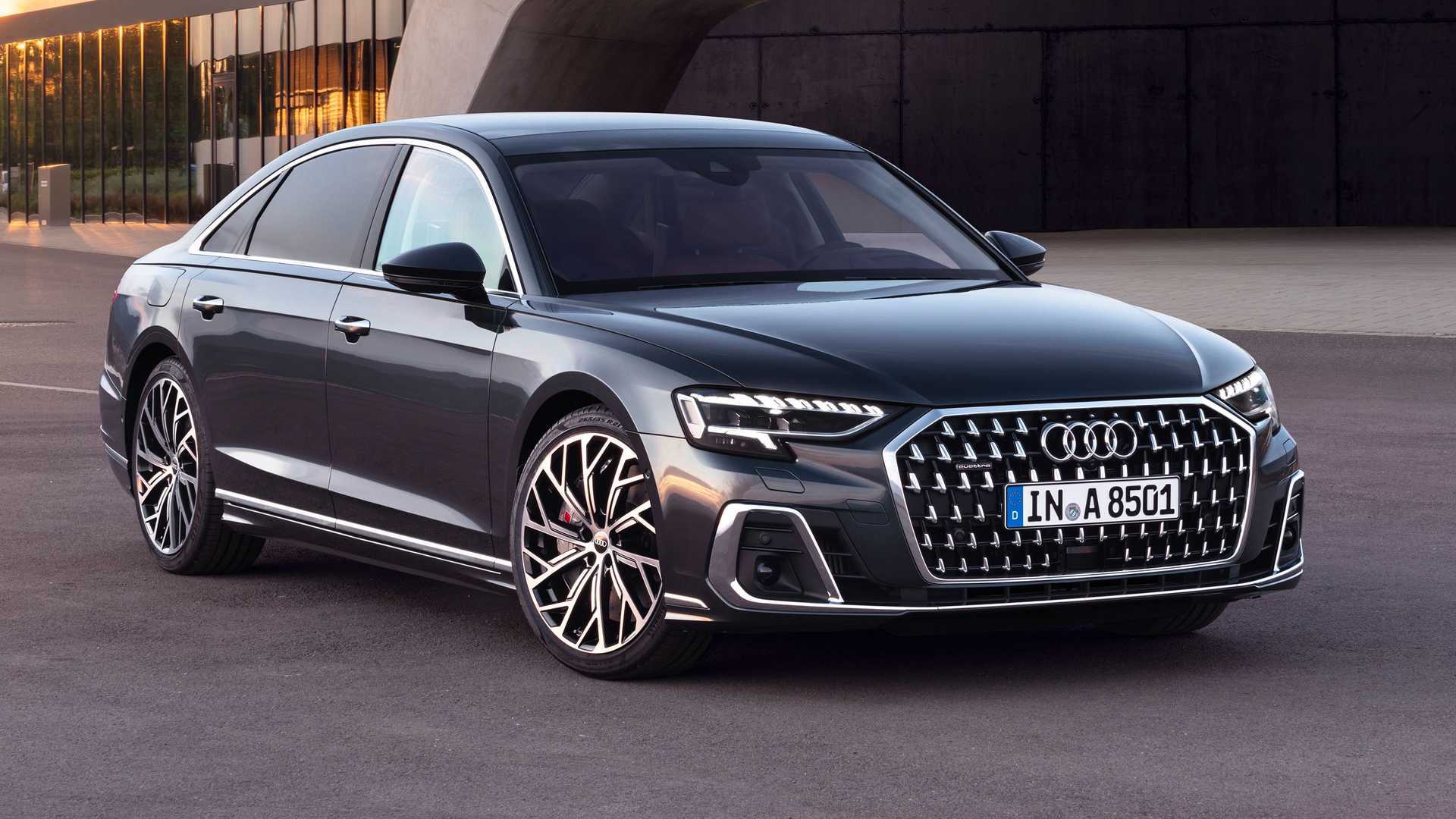
Audi’s advanced electronics once a selling point often become liabilities as the car ages. Even small malfunctions, like a broken MMI controller, can lead to expensive repairs due to the vehicle’s tightly integrated systems.
For those who buy used A8s, a pre-purchase inspection and extended warranty are non-negotiable.
Within Audi’s sedan lineup, the 2025 A8 sits above the A6 sedan and A7 Sportback, making it the largest and most luxurious sedan the brand offers.
That’s debatable, as it shares many components and design cues with the more affordable Audis sporting the four-ring emblem. Still, when it comes to comfort and quiet refinement, the A8 stands at the top of Audi’s lineup.
While it resembles an oversized A6, the spacious A8 sacrifices some distinctive styling and exclusive technology in favor of supreme comfort. Its extended wheelbase creates exceptional passenger room, and the Comfort Rear Seat package further enhances rear accommodations with power-adjustable outboard seats featuring heating, ventilation, and massage functions.
5. Maserati Quattroporte
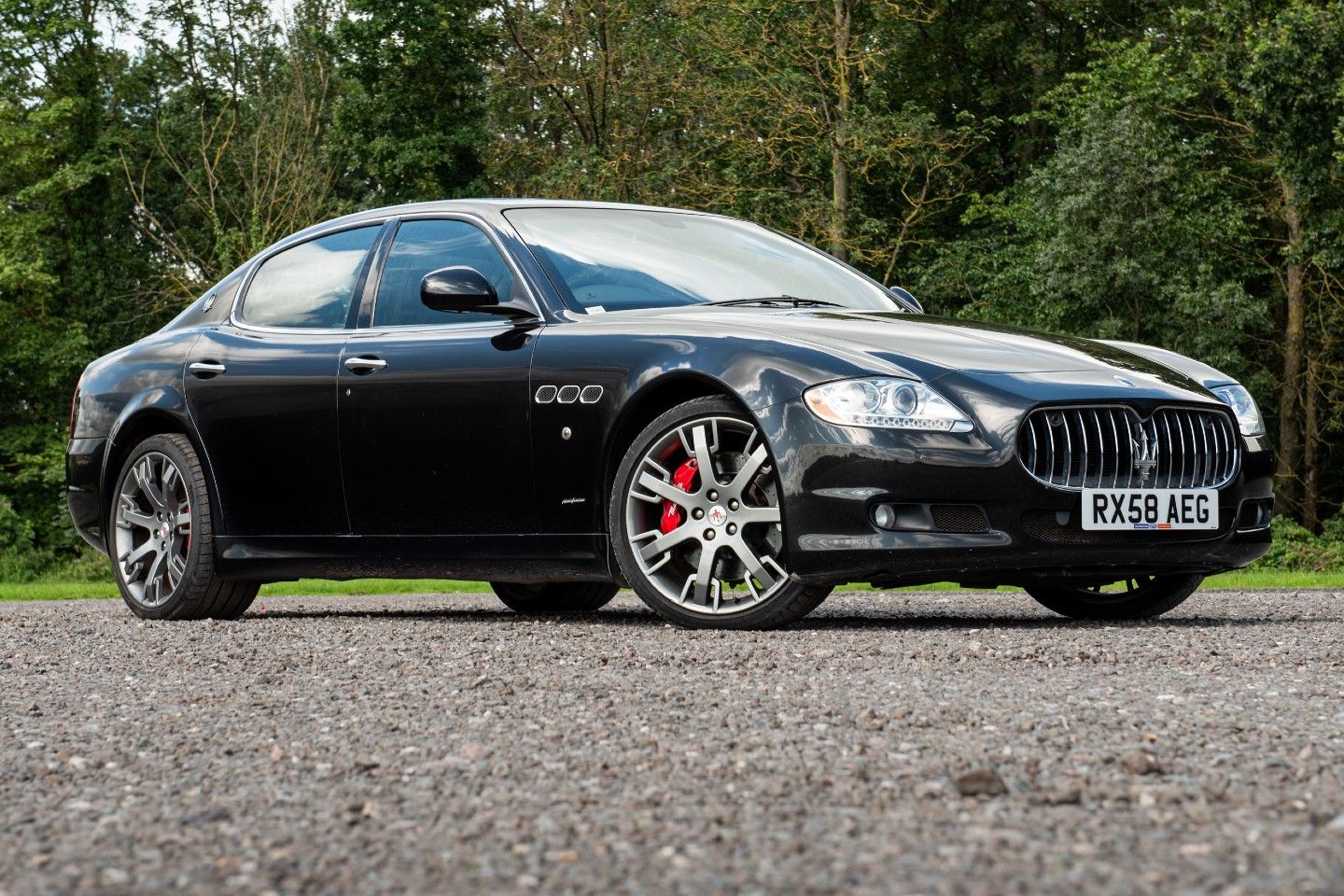
On paper, the Maserati Quattroporte offers Italian performance and style with a Ferrari-inspired heart. In practice, it’s a maintenance nightmare once out of warranty.
Early models in particular (2005–2014) are notorious for transmission failures, suspension wear, and expensive brake jobs.
Even the newer versions suffer from parts scarcity and sky-high service costs. The interior, while stunning, tends to wear quickly, and resale value plummets after just a few years. It’s the quintessential example of a luxury sedan that seduces you early then breaks your heart (and wallet) later.
Luxury sedans are meant to deliver comfort, sophistication, and prestige, but longevity often depends on the brand’s philosophy.
Japanese manufacturers like Lexus and Acura prioritize engineering simplicity and build quality, allowing their cars to age gracefully with minimal drama. Meanwhile, some European and Italian brands chase innovation at the expense of long-term reliability.
If you want a luxury sedan that stays luxurious long after the warranty expires, go with the likes of the Lexus LS, Genesis G80, or Acura RLX.
But if your dream car involves a three-pointed star, Bavarian badge, or trident logo, make sure you set aside a maintenance fund because with those sedans, the real price of ownership starts after the warranty ends.
