
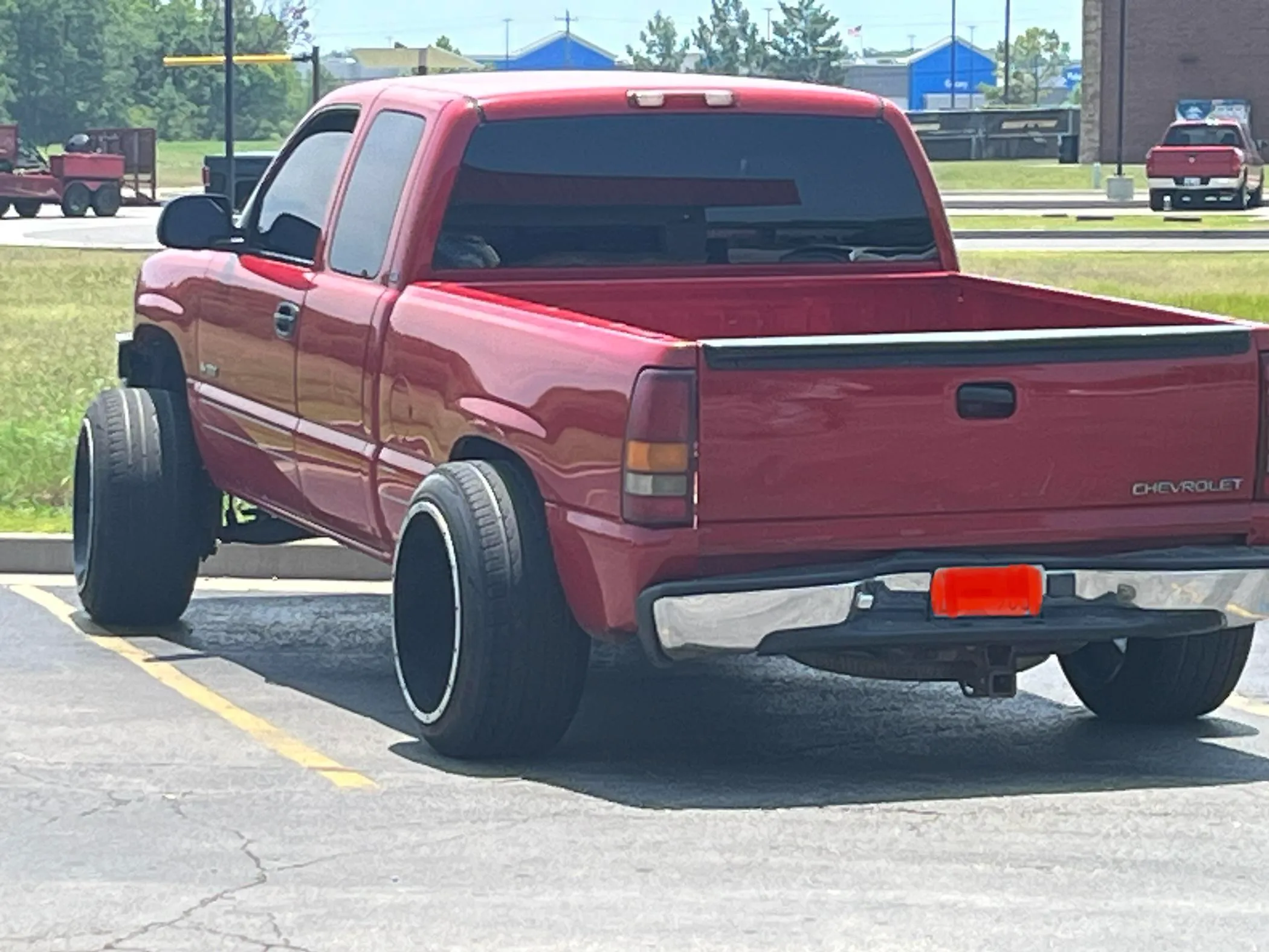
Nothing eats money faster than replacing front tires every 15,000 miles because your truck can’t hold proper alignment.
You hook up a trailer, drive a few hundred miles, and suddenly your tires are wearing on the edges like someone took a belt sander to them. That aggressive scrubbing isn’t just annoying; it’s a symptom of suspension geometry that falls apart under towing loads.
Here’s what truck owners discover too late: not all trucks are created equal when it comes to maintaining alignment during towing. Some have suspension designs that stay true and keep tires wearing evenly, no matter how heavy the trailer.
Well, they start scrubbing tires the moment you add tongue weight, sending you back to the tire shop every season, wondering why you’re burning through expensive rubber.
This problem costs serious money. A full set of quality truck tires runs $800 to $1,500, and when you’re replacing them twice as often as you should, that’s real cash disappearing.
Add alignment corrections every few months at $100 a pop, and you’re spending thousands extra just because your truck’s suspension can’t handle what it was supposedly designed to do.
Suspension geometry under load separates trucks that work from trucks that just look tough. When engineers design suspension properly, components maintain correct angles even when thousands of pounds press down on the hitch.
Poor designs let geometry change dramatically under load, creating toe and camber changes that scrub tires flat in record time.
Whether you tow occasionally or professionally, knowing which trucks hold alignment and which ones destroy tires could save you thousands of dollars and countless headaches.
7 Trucks That Keep Alignment While Towing
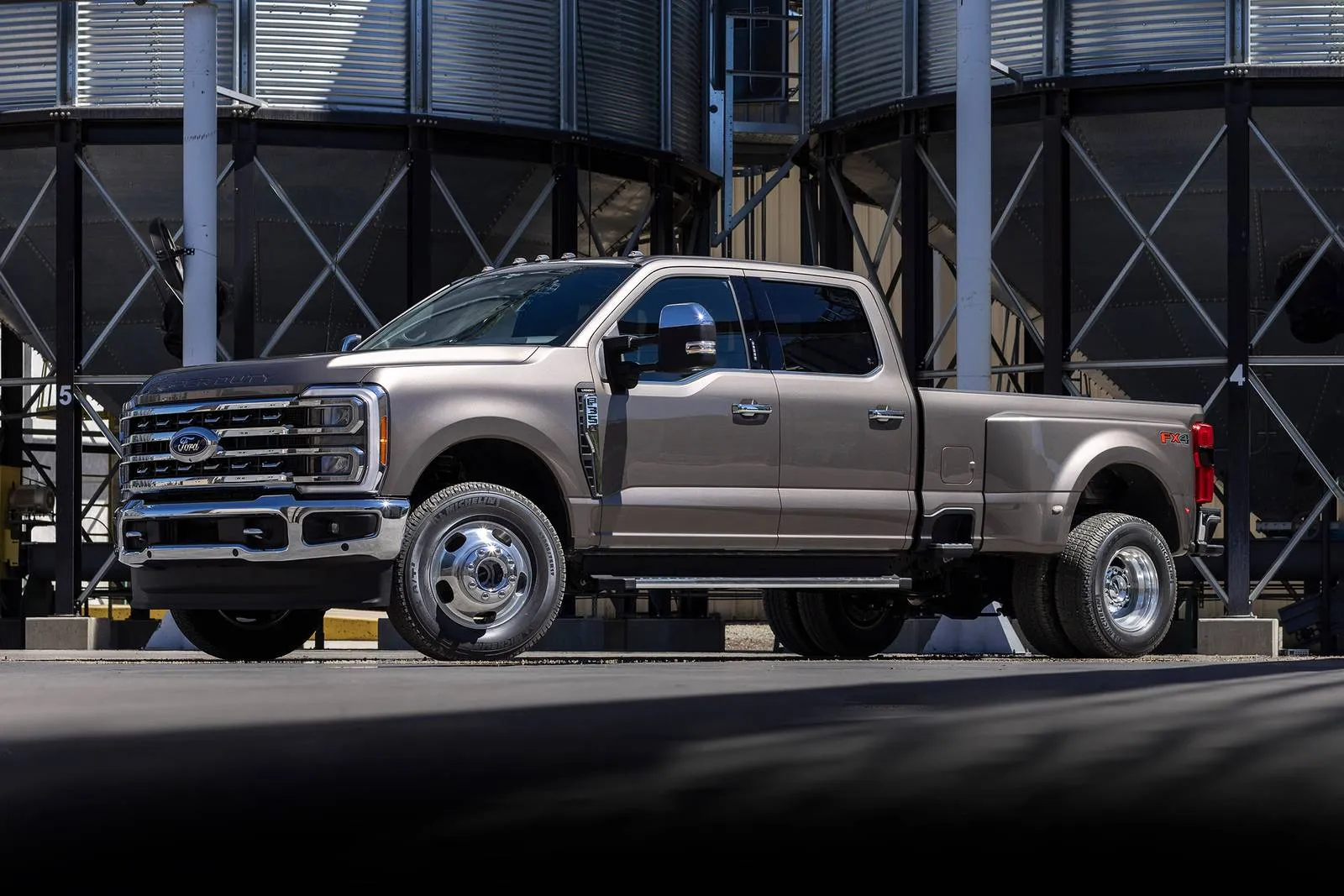
1. Ford F-350 Super Duty King Ranch (2023)
Heavy-duty engineering means Ford designed this F-350 suspension to handle maximum loads without geometry changes.
Suspension components are massive compared to light-duty trucks, with control arms, ball joints, and tie rods sized to resist deflection under extreme loads.
Steering linkage uses a robust design with minimal compliance under load. Many trucks have steering components that flex when towing, allowing toe angles to change and causing tire scrubbing.
Ford’s Super Duty uses thick steel tie rods and a reinforced center link that stays rigid regardless of tongue weight or trailer sway. This rigidity keeps wheels pointed straight, preventing the toe changes that destroy tires.
Ball joint design incorporates features specifically for towing applications. Rather than using standard ball joints that wear quickly under heavy loads, Ford specifies heavy-duty joints with larger bearing surfaces and improved sealing.
These components maintain tight tolerances even after 100,000 miles of towing, preventing the play that causes alignment drift and tire wear.
Spring rates are calibrated to minimize suspension compression when loaded. Stiffer springs mean less suspension travel when you add tongue weight, which keeps suspension geometry closer to its designed positions.
When suspension doesn’t compress excessively, angles stay within specifications, and tires wear normally. This careful spring selection separates trucks that work from those that just look capable.
Real-world experience proves the F-350’s alignment stability. Professional haulers who tow daily report 50,000+ miles on front tires with proper rotation and maintenance.
That’s exactly what should happen when suspension geometry is correct, showing Ford engineered this truck properly for its intended heavy-duty towing work.
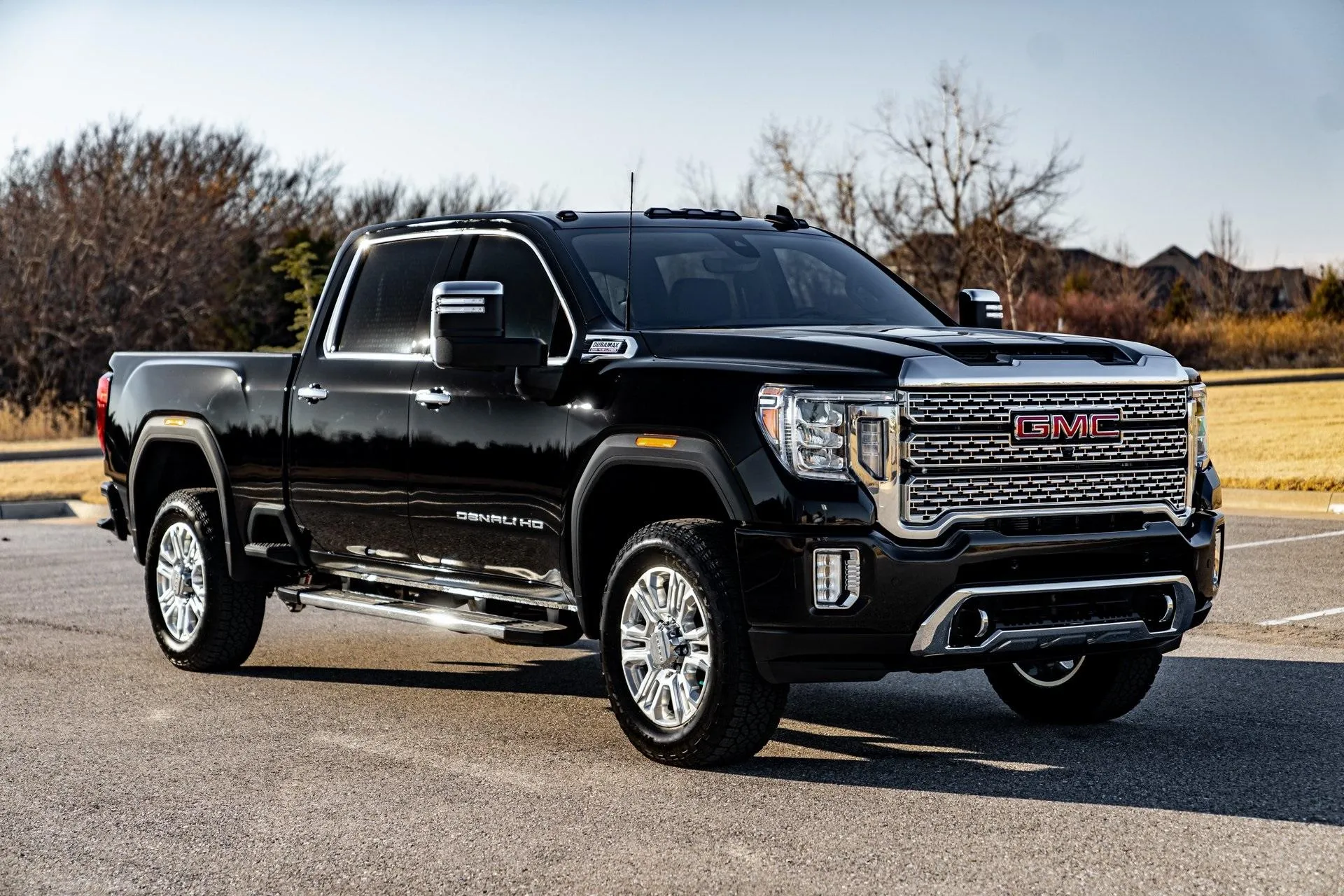
2. GMC Sierra 2500HD Denali (2022)
Advanced suspension technology gives this Sierra advantages that many competitors lack. Magnetic Ride Control adjusts damping in real-time based on load and driving conditions.
When you hook up a trailer, the system stiffens damping to control suspension movement, maintaining better alignment under load than passive suspensions can achieve. This active control prevents the excessive movement that causes geometry changes.
Control arm design uses stamped steel with reinforced stress points. GMC engineers analyzed where control arms flex under towing loads and added material exactly where needed.
This strategic reinforcement costs little but dramatically improves rigidity, preventing deflection that would change suspension angles and scrub tires. Smart engineering beats throwing metal everywhere.
Steering gear mounting uses a reinforced frame section that prevents flex during hard cornering with trailers.
When frame rails flex, steering geometry changes even if suspension components don’t move. GMC’s boxed frame and reinforced crossmembers keep everything aligned properly, maintaining correct tire angles regardless of loading or driving conditions.
Factory alignment specifications account for typical towing loads. GMC sets initial alignment slightly tighter than empty vehicle specs, knowing the truck will see tongue weight regularly.
This pre-compensation keeps alignment within ideal ranges when loaded, even though it might look slightly off on alignment machines when empty. This approach shows thoughtful engineering for actual use cases.
Tire wear patterns on used Sierra 2500HDs tell the real story. Browse classified ads and you’ll see trucks with 60,000+ miles showing even tread wear across all positions.
When used trucks have good tires after serious work, it proves the suspension design maintains proper geometry. That’s what separates true work trucks from pretenders.
Also Read: 5 Trucks With Long-Life U-Joints vs 5 That Vibrate at 60 mph
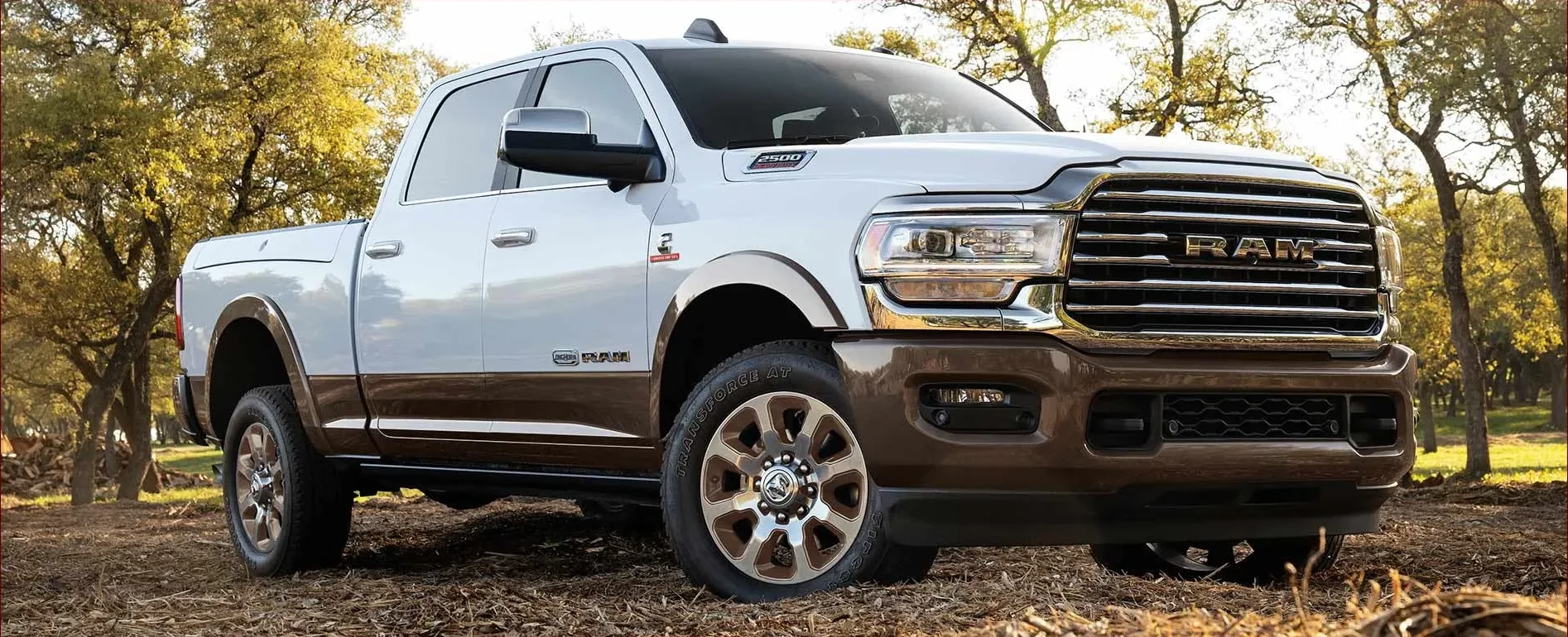
3. Ram 2500 Laramie Longhorn (2021)
Link-coil rear suspension gets attention, but Ram’s front suspension deserves equal praise. Heavy-duty control arms use forged steel rather than stamped or cast components.
Forging creates parts with superior strength and minimal flex, maintaining suspension geometry even under extreme towing loads. When control arms don’t bend, alignment stays true and tires wear evenly.
The steering system uses a hydraulic assist that provides a consistent feel and control regardless of trailer weight. Electric power steering systems can feel vague or inconsistent when towing, but Ram’s hydraulic setup delivers a predictable response.
This consistency helps maintain straight tracking, reducing the constant corrections that cause scrubbing and uneven tire wear.
Coil spring front suspension provides better ride quality than leaf springs while maintaining load capacity. Springs are wound from thick steel bar stock at a sufficient rate to prevent excessive compression under load.
When suspension doesn’t bottom out or compress excessively, geometry stays within specifications, and tire wear remains normal. This spring selection shows Ram balanced comfort and capability properly.
Ball joints use a design with replaceable wear surfaces rather than sealed units. When wear develops, you can replace just the wearing components rather than complete assemblies.
This serviceability keeps joints tight throughout vehicle life, preventing the looseness that causes alignment changes and tire scrubbing. Smart design that saves money and maintains performance.
Commercial users choose Ram 2500s specifically for their towing stability and alignment retention. Contractors and trailer services buy these trucks knowing they’ll handle daily towing without eating tires or requiring constant alignment corrections.
When professionals trust a truck for their livelihoods, it proves the engineering works in real-world conditions.
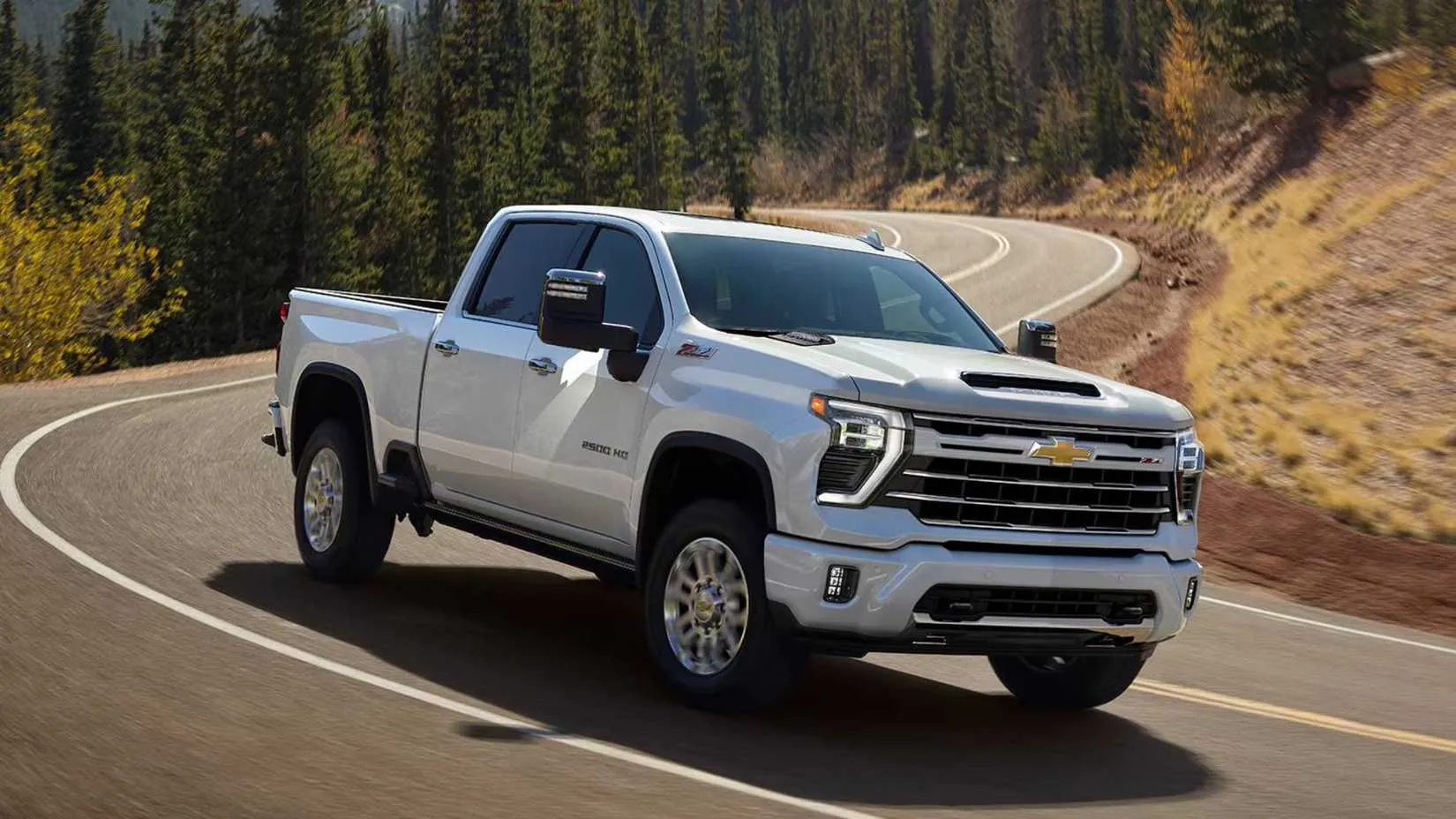
4. Chevrolet Silverado 3500HD High Country (2023)
Dual rear wheels change the weight distribution and improve towing stability. DRW configuration puts more weight on the rear axle, reducing front-end loading when towing.
Less weight on the front suspension means less compression and deflection, maintaining better alignment under load. This fundamental advantage helps explain why dual configurations typically show better tire wear than single-rear-wheel configurations.
Front suspension components are sized for one-ton truck duty. Control arms, ball joints, tie rods, and springs all use heavier-duty specifications than lighter trucks.
These robust parts resist the deflection and wear that cause alignment drift in smaller trucks. When components are properly sized for their loads, they maintain alignment and last longer.
The steering stabilizer comes factory-installed to reduce vibration and improve straight-line tracking. This damper smooths steering inputs and reduces the oscillations that cause drivers to make constant small corrections.
When you’re not sawing at the wheel, you’re not creating the tire scrub that comes from perpetual steering adjustments. Smoother tracking means better tire life.
Axle strength prevents the bending that causes camber changes under load. Some trucks experience front axle deflection when heavily loaded, changing wheel camber angles, and causing edge wear.
Silverado 3500HD uses a front axle designed to stay rigid under maximum loads, maintaining proper camber regardless of how much weight sits on the front wheels.
Long-term reliability data shows Silverado 3500HD trucks maintaining front-end alignment through high mileage.
Used truck markets are full of high-mileage examples still wearing original suspension components without excessive play or wear. This durability proves the components were sized correctly and maintain tight tolerances throughout their service lives.
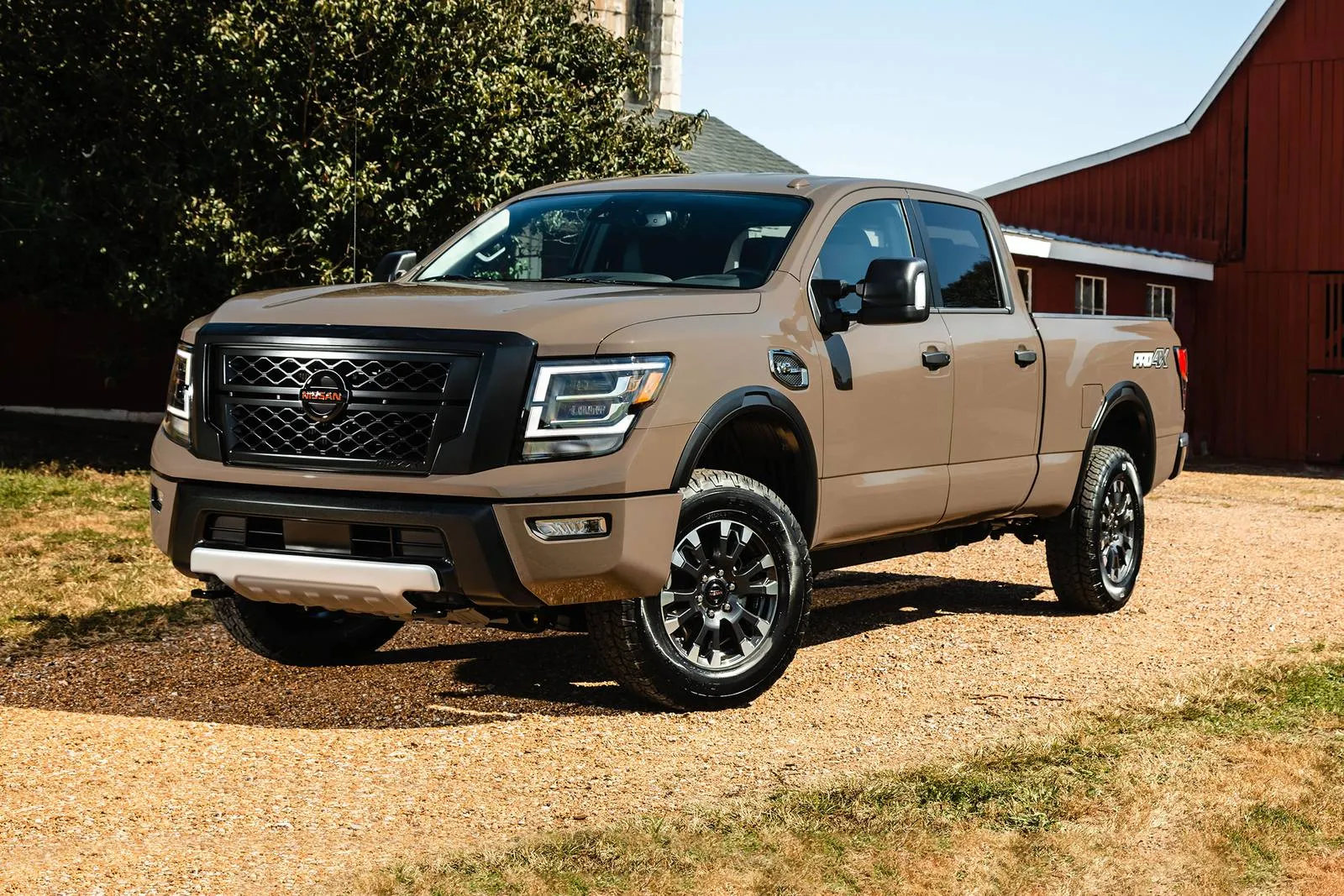
5. Nissan Titan XD Platinum Reserve (2020)
Unique positioning between half-ton and three-quarter-ton trucks gave Titan XD suspension engineers different design parameters.
Front suspension uses components stronger than half-ton trucks but with geometry optimized for Titan XD’s specific weight and towing ratings. This tailored approach allowed engineers to maintain alignment better than one-size-fits-all designs.
Independent front suspension provides better ride quality and more precise alignment control than solid axles.
When each wheel moves independently, alignment changes from suspension compression are minimized. Load on one wheel doesn’t affect the other, keeping both wheels properly aligned even when weight distribution varies during towing and maneuvering.
Factory spring rates are stiff enough to prevent excessive nose-down sag when towing. Many trucks squat dramatically under tongue weight, compressing front suspension and changing alignment angles.
Titan XD’s springs maintain ride height better, keeping suspension geometry closer to design specifications. This stiffness might create a firmer empty ride, but it pays dividends when towing.
Steering linkage uses quality components with tight manufacturing tolerances. Precision fit prevents the slop that develops in loose-fitting parts, maintaining accurate steering response and proper toe angles.
When steering components maintain tight tolerances, alignment stays true and tire wear remains even throughout the tire’s life.
Owner reports from towing enthusiasts show Titan XD maintaining good tire wear when used within rated capacities.
Forums and review sites contain numerous accounts of owners getting 40,000+ miles from front tires while towing regularly. This real-world experience validates the suspension design and proves Nissan engineered this truck properly for its intended use.
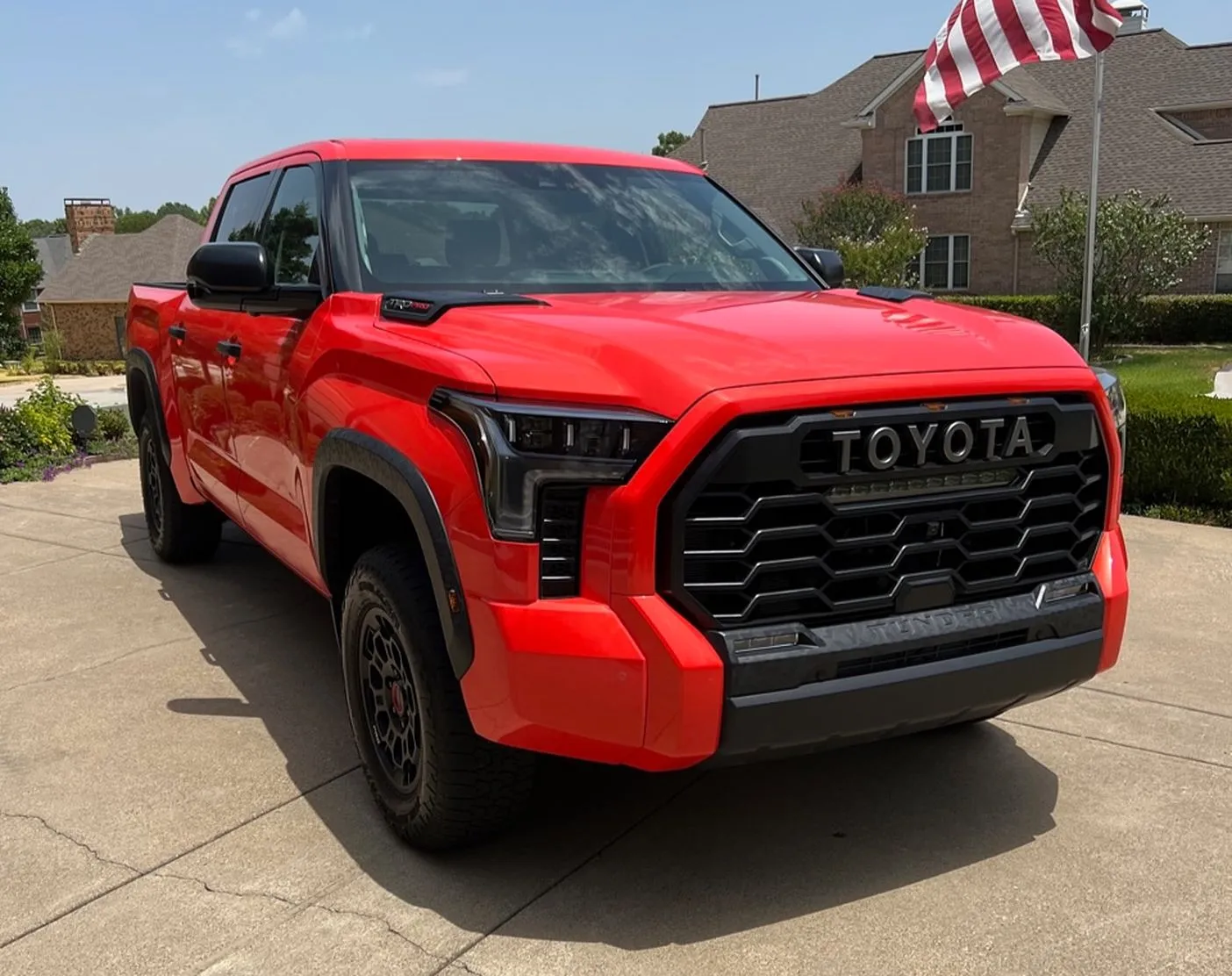
6. Toyota Tundra TRD Pro (2022)
Redesigned suspension for 2022 addressed weaknesses in previous generations. Engineers used computer analysis and real-world testing to identify where old Tundra suspensions flexed under load.
New designs reinforce those areas while maintaining ground clearance and off-road capability. This targeted improvement approach fixed problems without compromising Tundra’s other strengths.
Coil spring front suspension replaced torsion bars, improving ride quality and load-carrying capacity. Coil springs provide more progressive resistance to compression, maintaining better geometry through the suspension’s travel range.
When suspension compresses under load, coil springs keep alignment angles within acceptable ranges better than torsion bars do.
Control arm design uses hydroformed steel tubing for optimal strength-to-weight ratio. Hydroforming creates seamless structures that resist twisting and bending better than welded assemblies.
These rigid control arms maintain suspension geometry precisely, preventing the deflection that causes alignment changes and premature tire wear when towing heavy trailers.
Ball joint design incorporates better sealing and larger bearing surfaces than previous Tundra generations. These improvements extend service life and maintain tighter tolerances longer.
When ball joints stay tight, suspension geometry remains accurate and tire wear stays even. This attention to joint design shows Toyota learning from past shortcomings.
Early adoption data shows 2022+ Tundra owners reporting excellent alignment stability when towing.
While long-term data is still accumulating, initial experiences suggest that Toyota succeeded in creating a suspension that handles towing loads without geometry problems. This positive early feedback indicates proper engineering that should deliver good results throughout vehicle life.
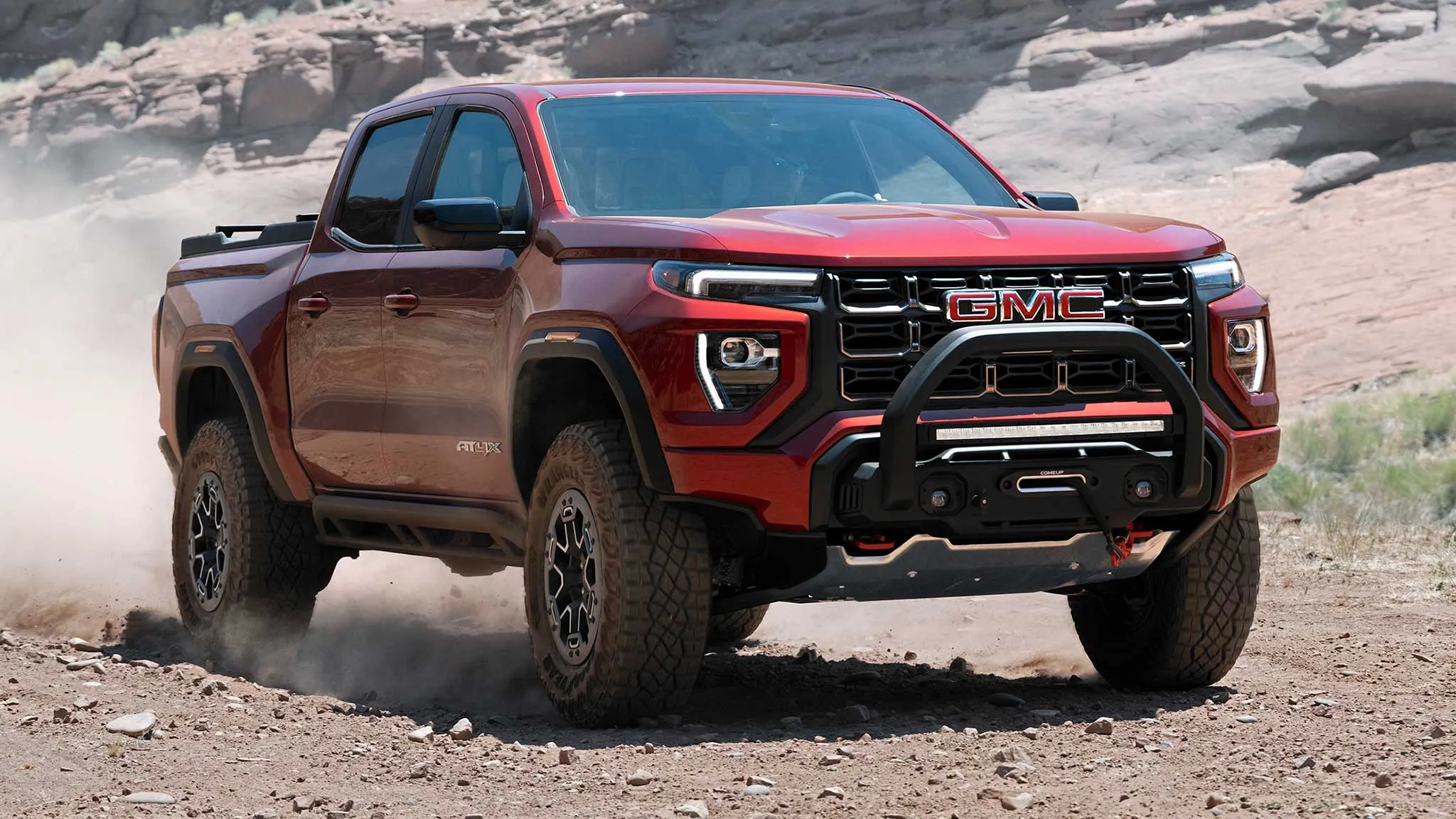
7. GMC Canyon AT4X (2023)
Mid-size dimensions don’t mean compromised engineering. Canyon AT4X uses suspension components proportional to its size and towing ratings.
Engineers designed the front suspension to maintain alignment when carrying maximum tongue weight, ensuring the truck delivers on its towing promises without destroying tires through poor geometry under load.
Multimatic DSSV dampers provide exceptional control during loaded and unloaded driving. These position-sensitive dampers resist compression progressively, preventing harsh bottoming while maintaining good ride quality.
Better damping control means less suspension movement and more stable geometry when towing. This sophisticated damping costs more but delivers real benefits.
Factory alignment specifications are tighter than standard Canyon models. AT4X settings optimize geometry for the worst-case loading this model will see.
While this might look aggressive when unloaded, it ensures alignment stays within ideal ranges when towing at capacity. This thoughtful pre-compensation prevents problems rather than just reacting to them.
Market positioning as a serious mid-size towing option demanded engineering to back up marketing claims. GMC couldn’t sell AT4X as a capable tower if it ate tires whenever owners actually towed.
Real-world use by early adopters shows the engineering works, with owners reporting even tire wear despite regular towing at or near rated capacities.
7 Trucks That Scrub Front Tires
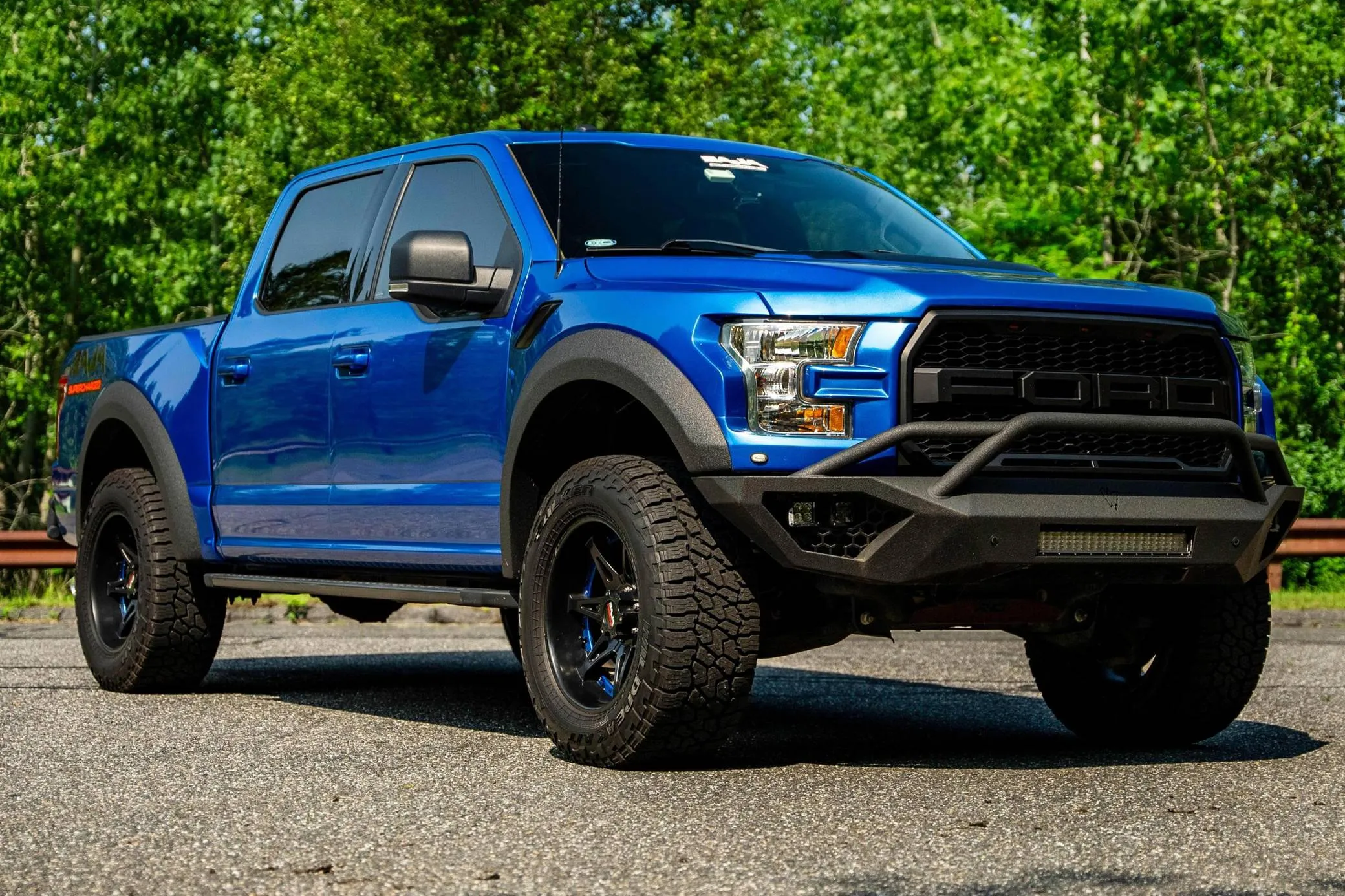
1. Ford F-150 XLT 4×4 (2016)
Light-duty suspension components struggle under maximum towing loads. While the F-150 can tow impressive amounts on paper, the front suspension wasn’t built as robustly as heavier trucks.
Control arms flex under tongue weight, changing alignment angles and causing aggressive tire scrubbing. This flex is invisible but costly, eating tires faster than most owners expect.
Independent front suspension design prioritizes ride quality over load stability. When engineers optimize for comfort, they often compromise the stiffness needed for maintaining geometry under load.
This F-150 rides smoothly empty, but the suspension compresses excessively when you add trailer tongue weight, changing camber and toe angles that scrub tires rapidly.
Ball joint wear accelerates when towing regularly. Standard F-150 ball joints are adequate for empty truck duty, but wear quickly under constant heavy loading.
As joints develop, play, alignment drifts, and tire scrubbing increase. Many F-150 owners find themselves replacing ball joints and tires simultaneously after 40,000 miles of regular towing.
Factory alignment specifications don’t account for typical towing loads. Ford sets alignment for empty vehicle dynamics, which means angles go out of spec immediately when you add tongue weight.
This oversight causes premature tire wear that owners discover too late. Better initial alignment targeting could prevent much of this problem.
Owner complaints about tire wear when towing fill F-150 forums and review sites. Countless owners report replacing front tires at 20,000 to 30,000 miles when towing regularly.
This consistent pattern proves suspension geometry problems rather than isolated defects. When thousands of owners report identical issues, it indicates design problems Ford should address.
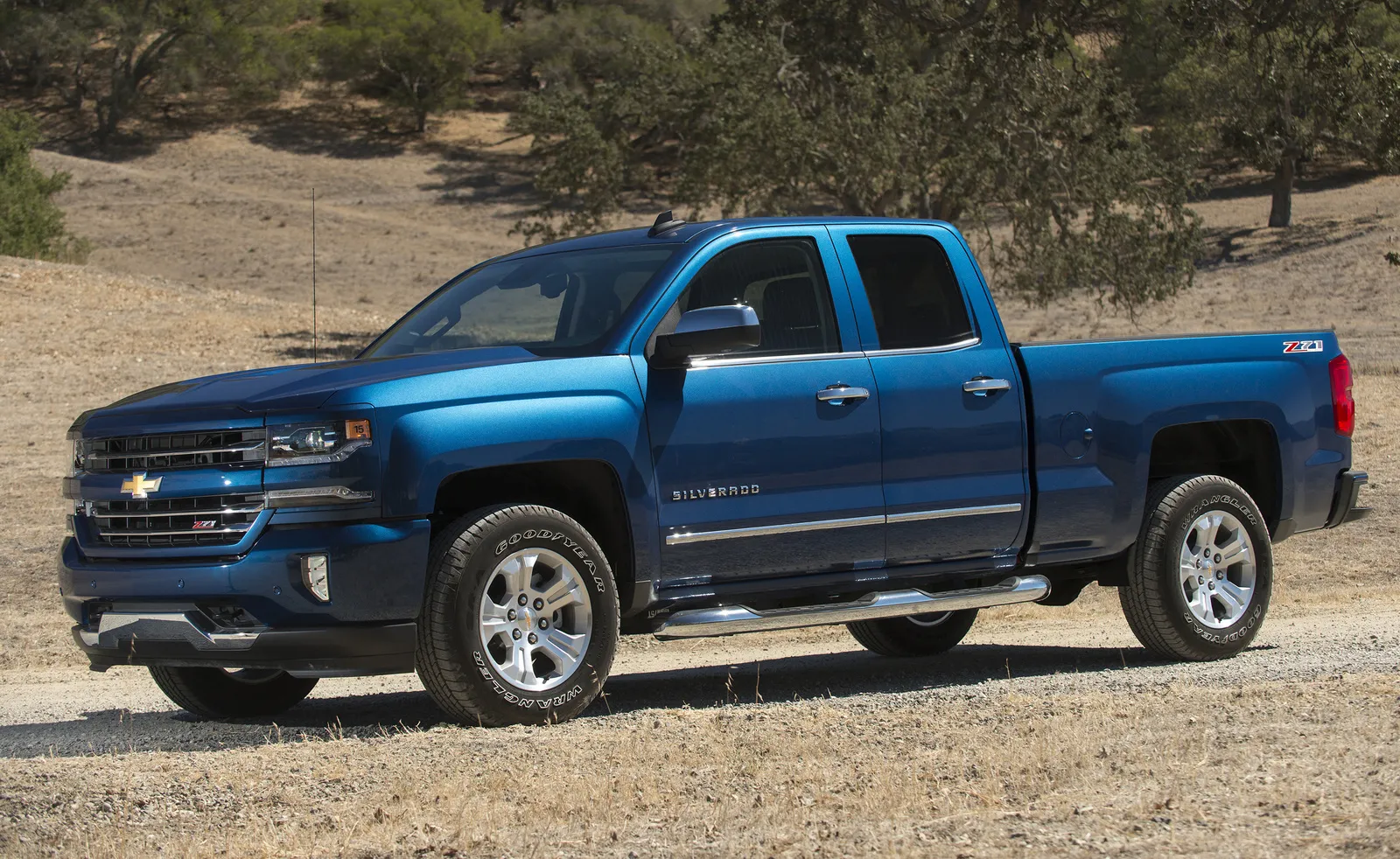
2. Chevrolet Silverado 1500 LT (2017)
Half-ton truck suspension struggles with heavier towing loads despite marketing claims. Silverado 1500 can tow substantial trailers according to spec sheets, but the front suspension geometry changes dramatically under that loading.
Control arms deflect, ball joints wear quickly, and alignment drifts out of specification, causing aggressive tire scrubbing.
Stamped steel control arms lack the rigidity needed for maximum towing duty. These parts flex under load, allowing suspension geometry to change.
When control arms bend even slightly, toe and camber angles drift from specifications. This drift causes tires to scrub rather than roll properly, wearing them prematurely and costing owners hundreds in replacement costs.
Steering linkage wears faster than expected when towing regularly. Tie rod ends and center links develop play as they’re stressed beyond normal use patterns.
This looseness allows toe angles to wander, causing tire scrubbing even when ball joints are still tight. Complete steering system rebuilds become necessary at surprisingly low mileages.
Spring rates allow excessive front-end sag under tongue weight. When loaded, the Silverado 1500 front ends compress noticeably, changing suspension geometry dramatically.
This compression moves components through their travel range where angles change most rapidly, creating toe and camber variations that destroy tires through aggressive scrubbing.
Tire shops see Silverado 1500s constantly for alignment corrections and premature tire replacement.
Mechanics report these trucks rarely maintain alignment for more than 10,000 miles when used for towing. This frequent need for service proves the suspension geometry can’t handle the loads Chevrolet claims these trucks can tow.
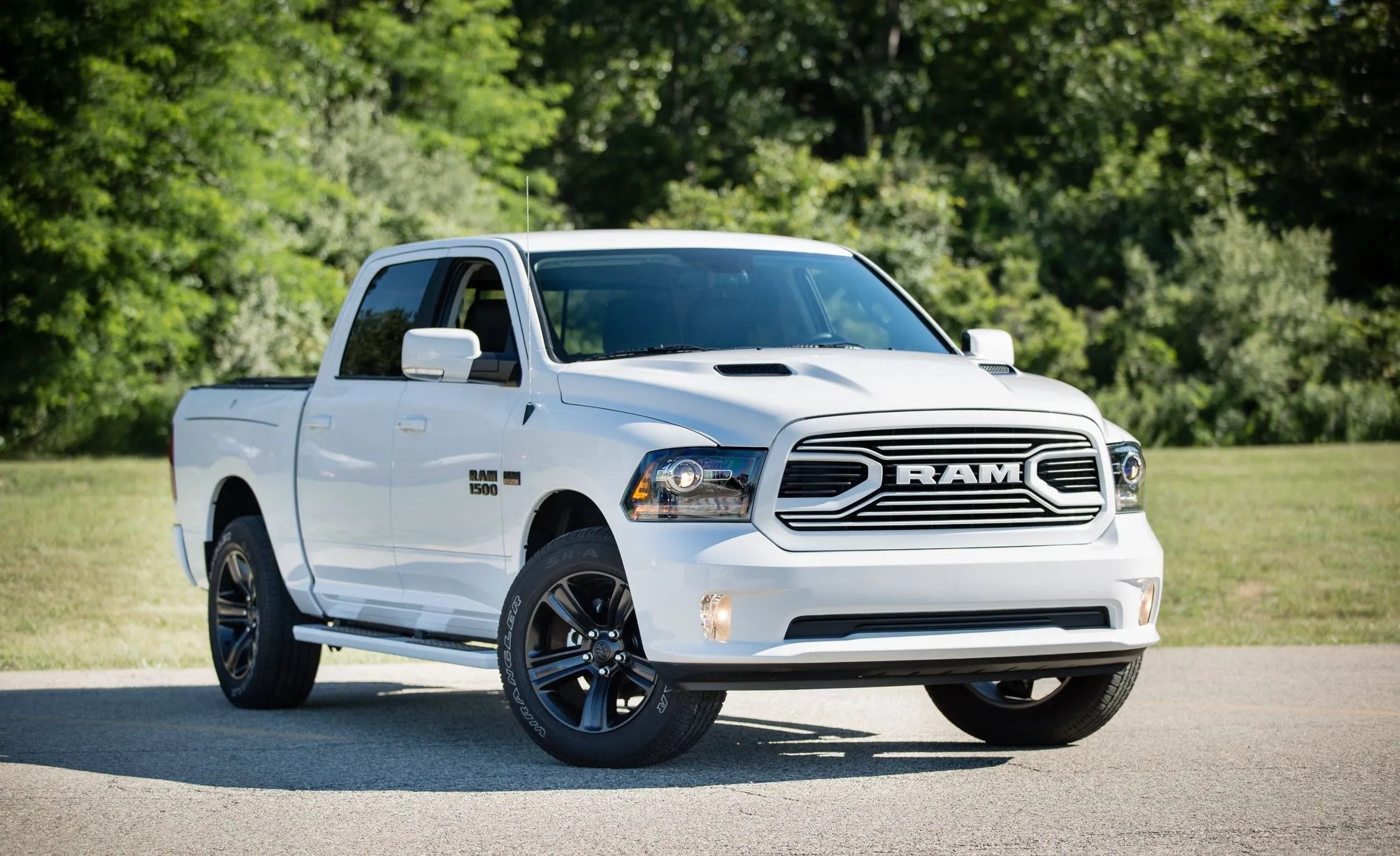
3. Ram 1500 Big Horn (2018)
Coil spring front suspension provides excellent ride quality, but geometry stability suffers under towing loads. These changes cause tires to lean and scrub, wearing edges aggressively while centers remain relatively unworn.
Control arm bushings wear quickly when towing regularly. Ram uses rubber bushings that deteriorate under the constant stress of loaded operation.
As bushings wear, they allow control arms to move excessively, changing alignment angles unpredictably. This bushing wear happens invisibly to owners until tire scrubbing becomes obvious.
Ball joint design uses a configuration that wears faster under heavy loads. While adequate for empty truck operation, these joints deteriorate quickly when stressed by trailer tongue weight.
Worn ball joints allow wheels to move in ways they shouldn’t, creating alignment variations that scrub tires flat rapidly. Replacement becomes necessary before 60,000 miles in many towing applications.
Factory alignment specifications target empty vehicle performance. When loaded with trailer tongue weight, alignment goes outside acceptable ranges immediately.
Ram doesn’t provide alternate alignment specs for loaded operation, leaving owners to discover through tire wear that something’s wrong. This oversight costs customers money and damages Ram’s reputation.
Service records at Ram dealers show front-end work as common on trucks used for towing. Alignments, ball joints, control arm bushings, and tie rod ends get replaced frequently on 1500s that actually work.
This pattern of premature wear proves the suspension wasn’t adequately designed for the towing duties Ram markets these trucks to perform.
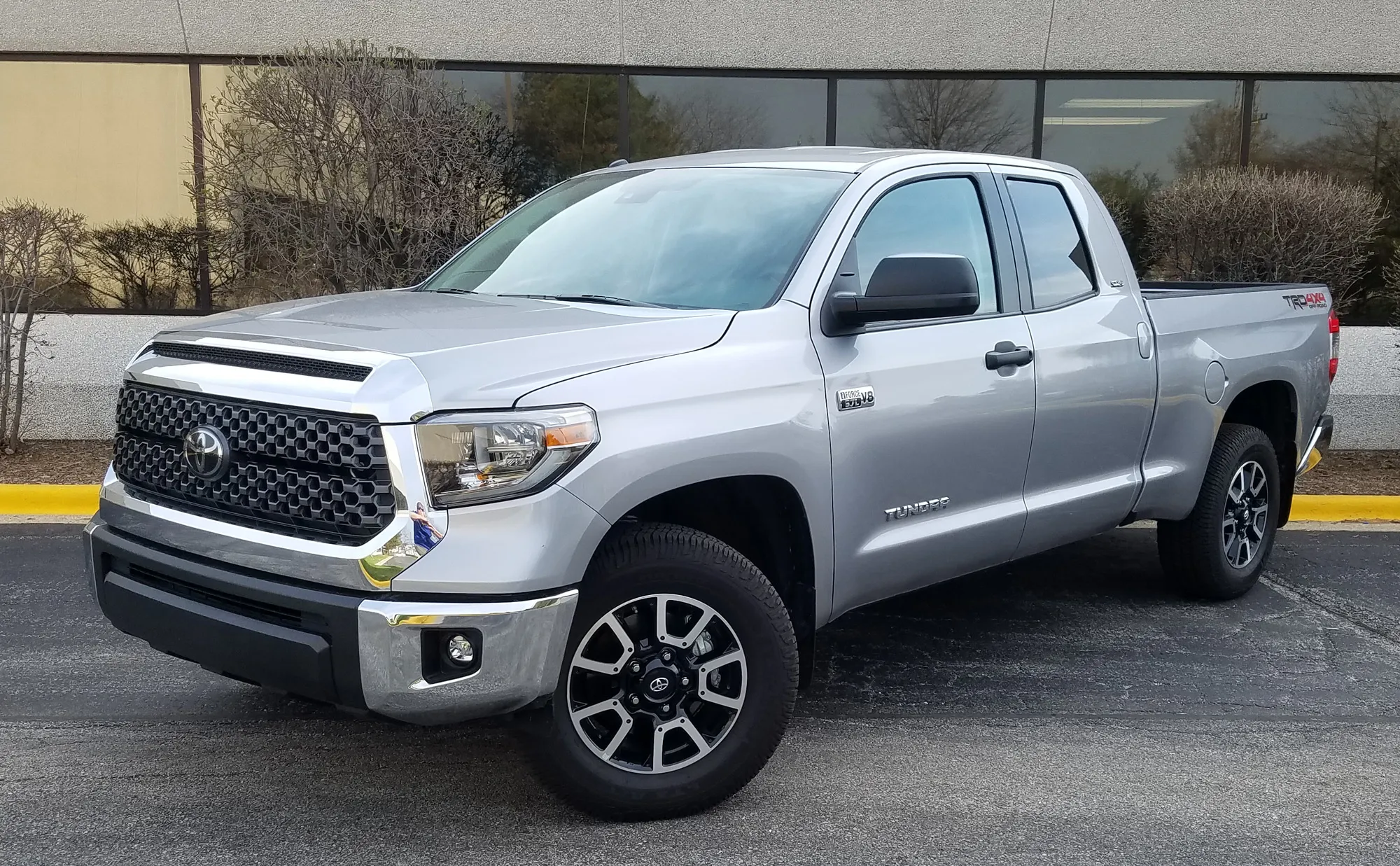
4. Toyota Tundra SR5 (2018)
Torsion bar front suspension dates from previous decades and shows its age when towing. This design was adequate when introduced, but doesn’t match modern independent suspensions for maintaining alignment stability under varied loading conditions.
Control arm design uses cast components that flex more than forged or stamped alternatives. When towing, these control arms bend slightly under load, changing suspension angles enough to cause noticeable tire scrubbing. This flex is inherent to casting manufacturing processes that prioritize cost over ultimate rigidity.
Ball joints use an older design that requires frequent lubrication to maintain. Many owners neglect this maintenance, causing accelerated wear.
Worn ball joints create play in suspension that changes alignment constantly as you drive. This variation causes tires to scrub in changing directions, wearing them rapidly and unpredictably.
Steering linkage geometry creates bump steer during suspension compression. When towing compresses the front suspension, the tie rod angles change relative to the control arms
. This geometric relationship causes steering angle changes just from suspension movement, creating tire scrubbing during normal driving as the suspension cycles through its travel.
Used Tundra markets show trucks with heavy towing use having front-end wear and recent tire replacements. Smart buyers inspect carefully for ball joint play, control arm bushing condition, and tire wear patterns.
Many towing-used Tundras need complete front-end rebuilds before 100,000 miles, proving the suspension doesn’t handle loads well.
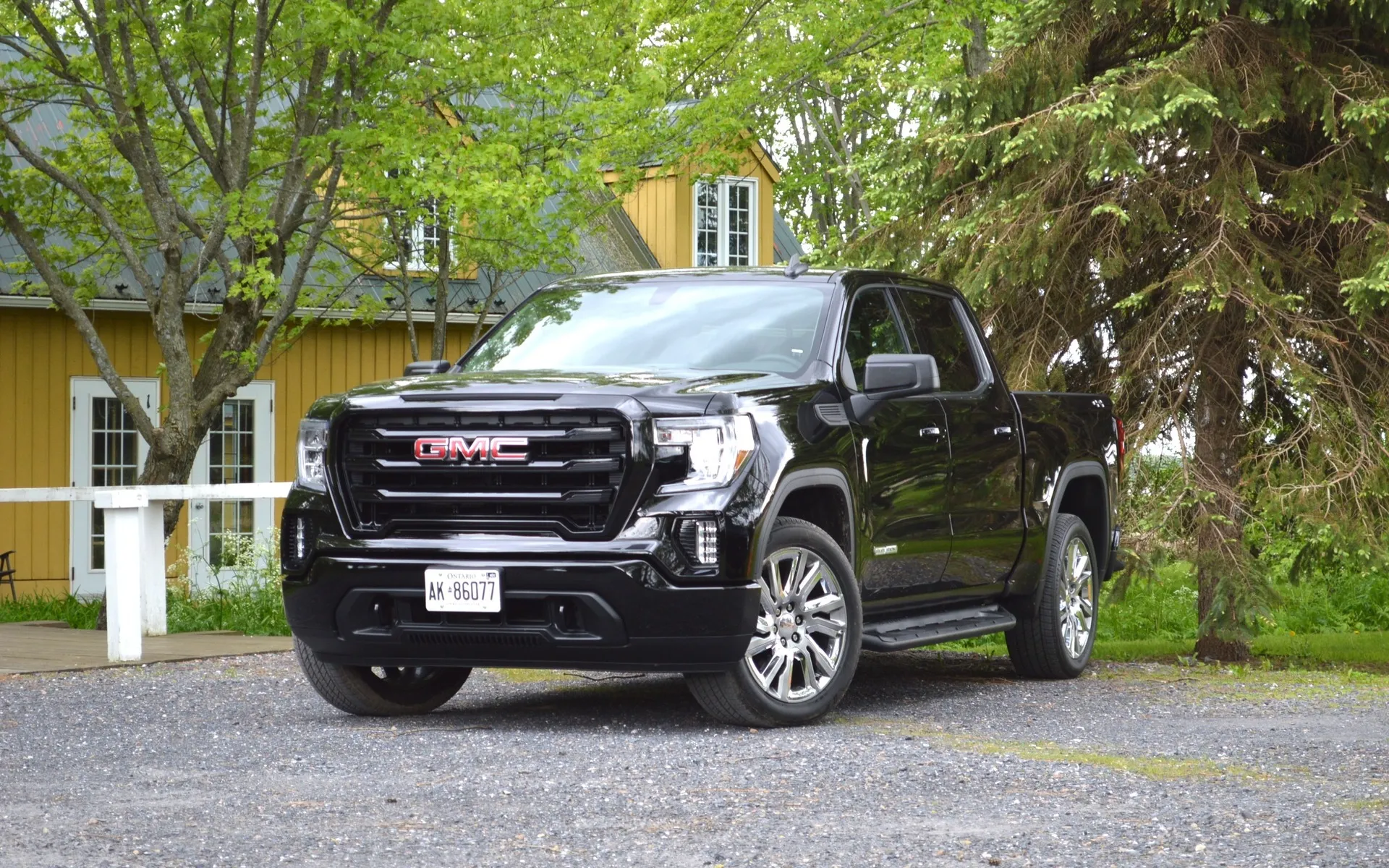
5. GMC Sierra 1500 Elevation (2019)
Light-duty engineering compromises load-handling capability. Sierra 1500 front suspension uses components adequate for daily driving but marginal for maximum towing loads.
When stressed continuously by trailer tongue weight, parts deflect and wear faster than designed, causing alignment drift and aggressive tire scrubbing.
Aluminum control arms reduce weight, but flexibility increases compared to steel. Under heavy loading, these arms flex more than steel equivalents, changing suspension geometry.
This flex causes camber and caster variations that scrub tires, especially on inside and outside edges, where improper angles cause most wear.
Steering gear mounting allows flex during cornering and load changes. Frame deflection near the steering gear changes the mounting angle, affecting the steering geometry.
These small changes create toe angle variations that scrub tires without being obvious to drivers. Reinforced steering gear mounts could prevent this, but aren’t provided.
Dealer service records show a pattern of front-end replacements on towing-used Sierra 1500s.
Ball joints, tie rod ends, and alignments happen frequently on trucks that actually work for a living. This repair pattern indicates components wear faster than expected when trucks are used for their advertised towing capabilities.
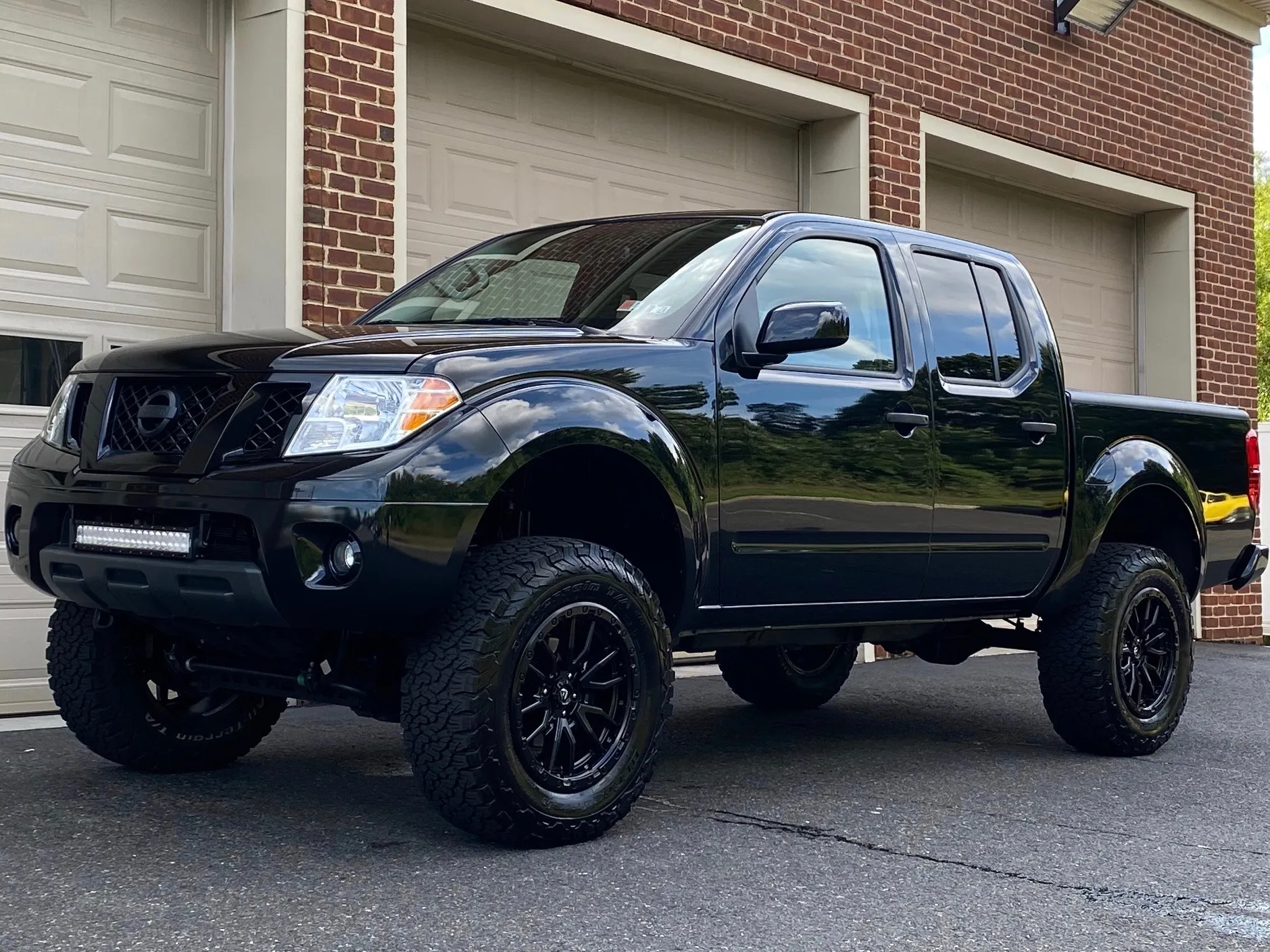
6. Nissan Frontier SV (2020)
The dated design shows in suspension engineering that hasn’t kept pace with the competition.
Frontier’s front suspension maintains geometry that causes tire scrubbing when towing, using designs from when this platform was introduced nearly two decades ago. What was acceptable then doesn’t match modern standards for alignment stability.
Control arm construction uses thin stamped steel that flexes under load. Cost considerations during original design led to lighter components that save manufacturing costs but compromise performance under towing loads.
This flex changes suspension geometry enough to cause noticeable tire wear patterns showing clear scrubbing.
Ball joint size is marginal for towing duty. While adequate for empty truck operation, these smaller joints wear quickly when stressed by trailer tongue weight pressing down continuously.
Worn ball joints create play that changes alignment randomly, causing unpredictable tire scrubbing and rapid wear.
Resale market shows Frontiers with towing history needing front-end work before sale. Sellers often replace worn suspension components and tires before listing trucks because wear is so obvious.
This pattern proves the suspension doesn’t handle towing loads without excessive component stress and premature failure.
Also Read: 5 Trucks With Brakes That Don’t Fade Towing vs 5 That Smell Hot
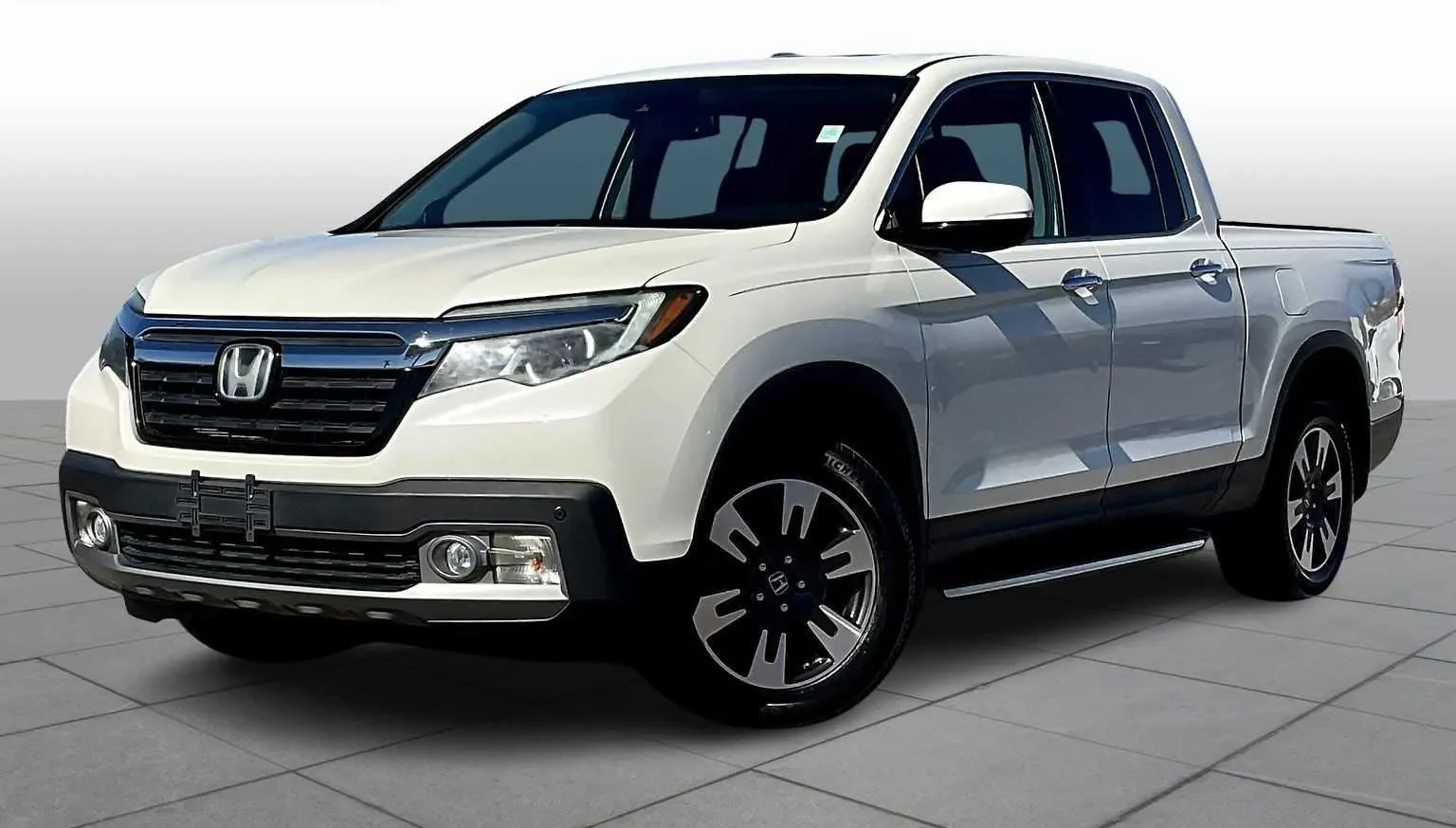
7. Honda Ridgeline RTL-E (2019)
Unibody construction and independent suspension prioritize car-like ride quality over load stability. When engineers design for comfort and handling, maintaining alignment under heavy loads becomes secondary.
Control arm design uses aluminum components optimized for weight savings. While this reduces unsprung mass and improves empty vehicle dynamics, rigidity suffers compared to steel components.
Under towing loads, these arms flex more, allowing geometry changes that cause tire scrubbing and premature wear.
Ball joints are sized for crossover-like duty rather than truck applications. These smaller joints wear faster when stressed by towing loads, developing play that causes alignment drift. Worn ball joints combined with flexible control arms create substantial geometry variations that destroy tires through aggressive scrubbing.
Factory alignment specifications target empty vehicle handling characteristics. Honda set alignment for best handling and ride quality without load, which means angles go out of specification immediately when you add trailer tongue weight.
This oversight causes premature tire wear that could be minimized with different initial alignment settings.
Owner feedback indicates Ridgeline handles light towing adequately, but front tire wear increases noticeably with heavier trailers.
When used at maximum towing capacity, front tires show edge wear, indicating alignment problems under load. This pattern confirms suspension geometry changes excessively when stressed by heavy tongue weight.
