
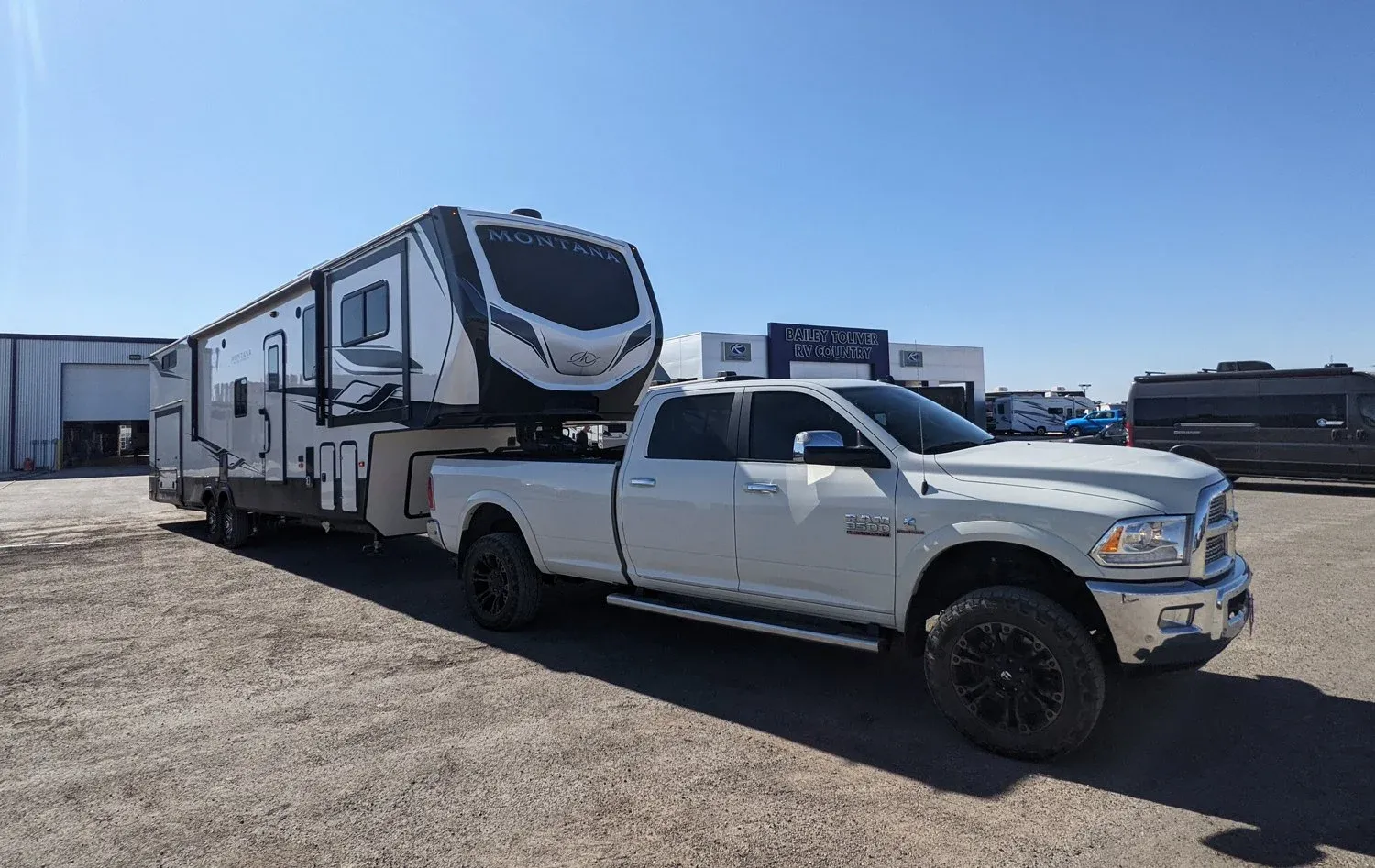
Towing a camper can turn into either a peaceful journey or a nerve-racking challenge, depending on the truck behind the wheel. A strong towing vehicle keeps the trailer steady, brakes smoothly, and moves with balance even when wind or traffic tries to push things out of line.
But when the wrong truck takes the job, you start to feel that uneasy sway in your mirrors, the wheel becomes heavier, and your confidence disappears with every kilometre. People who enjoy outdoor trips or cross-country holidays know how much the right truck can make a difference.
A good towing machine doesn’t just rely on raw horsepower. It combines a stable suspension, good weight distribution, strong braking, and an engine torque that keeps it moving without straining.
The harmony between these parts determines whether you will enjoy your drive or end up fighting your steering wheel all day.
We will look at five trucks that handle campers confidently, giving owners the balance, traction, and control they deserve.
Then, we will turn to the five that struggle under load, swaying, slowing down, or draining fuel faster than expected. Each vehicle has its own story; some rise above expectation, while others fall short despite the badge they carry.
Whether you tow for work, family vacations, or weekend adventures, understanding which trucks deliver genuine towing confidence can save time, money, and frustration. Let’s begin with the dependable machines that make towing feel easy and safe.
5 Trucks That Tow Campers Confidently
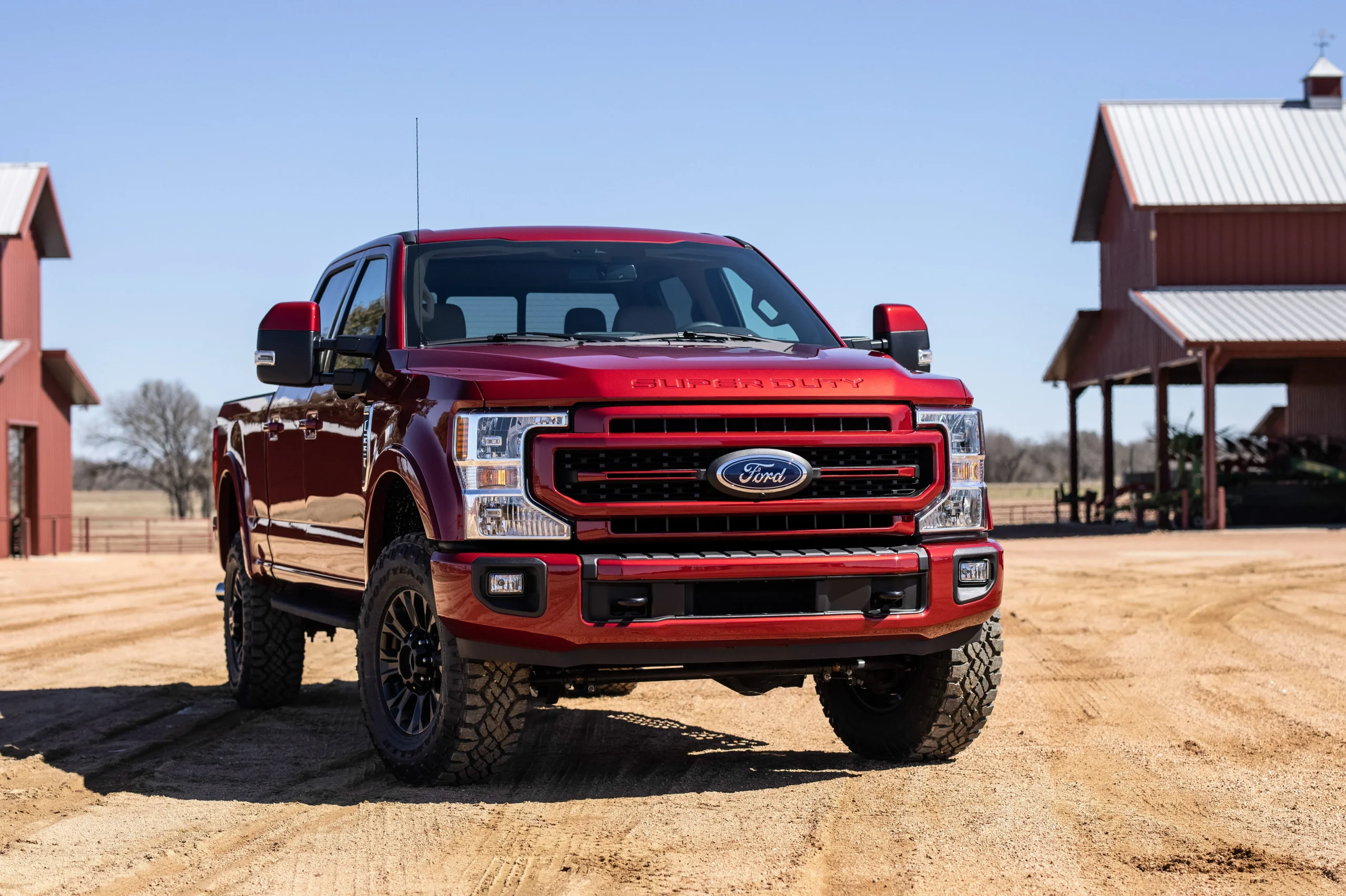
1. Ford F-250 Super Duty (2022)
When people talk about serious towing power, the Ford F-250 Super Duty often sits near the top of the list. This truck has earned that respect through pure strength and reliability.
Its large diesel engine provides more than enough torque to pull heavy campers without strain. Drivers appreciate how easily it handles steep roads and long journeys with trailers attached.
One important reason for its success lies in the suspension design. The F-250 uses heavy-duty springs and dampers that prevent sagging when weight presses down on the rear axle.
This stability translates to a calm drive where the trailer stays aligned even at highway speeds. Many owners describe it as a “truck that feels planted,” which is exactly what you need when towing a full camper through cross-winds or winding routes.
Braking confidence also matters. Ford equipped this model with advanced trailer brake control systems that work together with the vehicle’s main braking system. When you hit the brake pedal, both truck and trailer slow down smoothly rather than jerking separately. That feeling of balance gives comfort to both new and experienced drivers.
Cabin comfort deserves a mention, too. Long journeys feel easier when seats support your back properly and noise levels remain low. The Ford F-250 manages to stay quiet despite its size.
You can carry your family, luggage, and camper gear knowing the vehicle can handle it all without losing composure. It is the kind of truck that turns heavy towing into an easy-going drive.
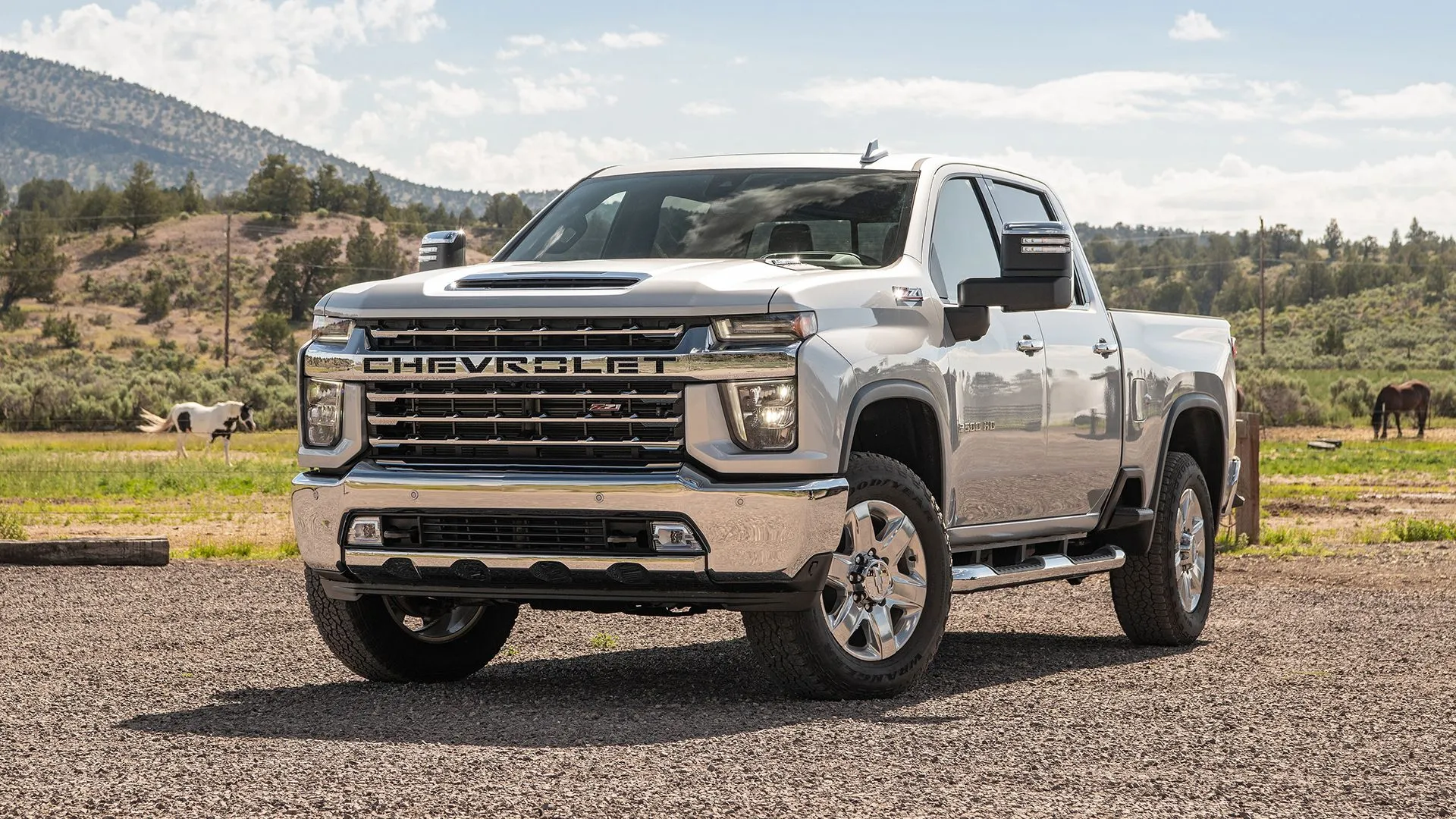
2. Chevrolet Silverado 2500HD LTZ (2021)
Chevrolet has spent years perfecting its heavy-duty lineup, and the Silverado 2500HD LTZ stands as proof. This truck combines technology, strength, and durability in a way that many towing enthusiasts admire.
Its refined diesel powertrain produces smooth torque delivery, which means less gear hunting and more consistent pulling force while towing up steep inclines.
The Silverado 2500HD’s stability system plays a large role in its towing confidence. With an integrated sway control program and electronic trailer brake assist, it constantly monitors movement behind the truck.
When it senses the camper shifting or swinging, it makes subtle adjustments through the brakes to keep everything steady. The driver rarely notices the corrections, but the result is a calm and predictable ride.
What makes this truck special is how it balances work and comfort. Inside, it feels premium with leather seats, smart infotainment, and plenty of visibility.
But under that comfort lies a strong frame built from high-strength steel designed specifically to resist bending under heavy loads. The rear suspension holds campers with ease, preventing tail sag and uneven weight distribution.
Another aspect many users appreciate is how well the Silverado manages heat under continuous towing. Its cooling system ensures the engine remains within safe limits even on hot days, keeping performance consistent.
With such dependable design, it’s easy to see why many long-distance travellers choose this truck as their go-to towing companion. It is steady, strong, and unbothered by long hours of pulling.
Also Read: 5 Trucks With Cabins That Don’t Creak vs 5 That Sound Like Ships
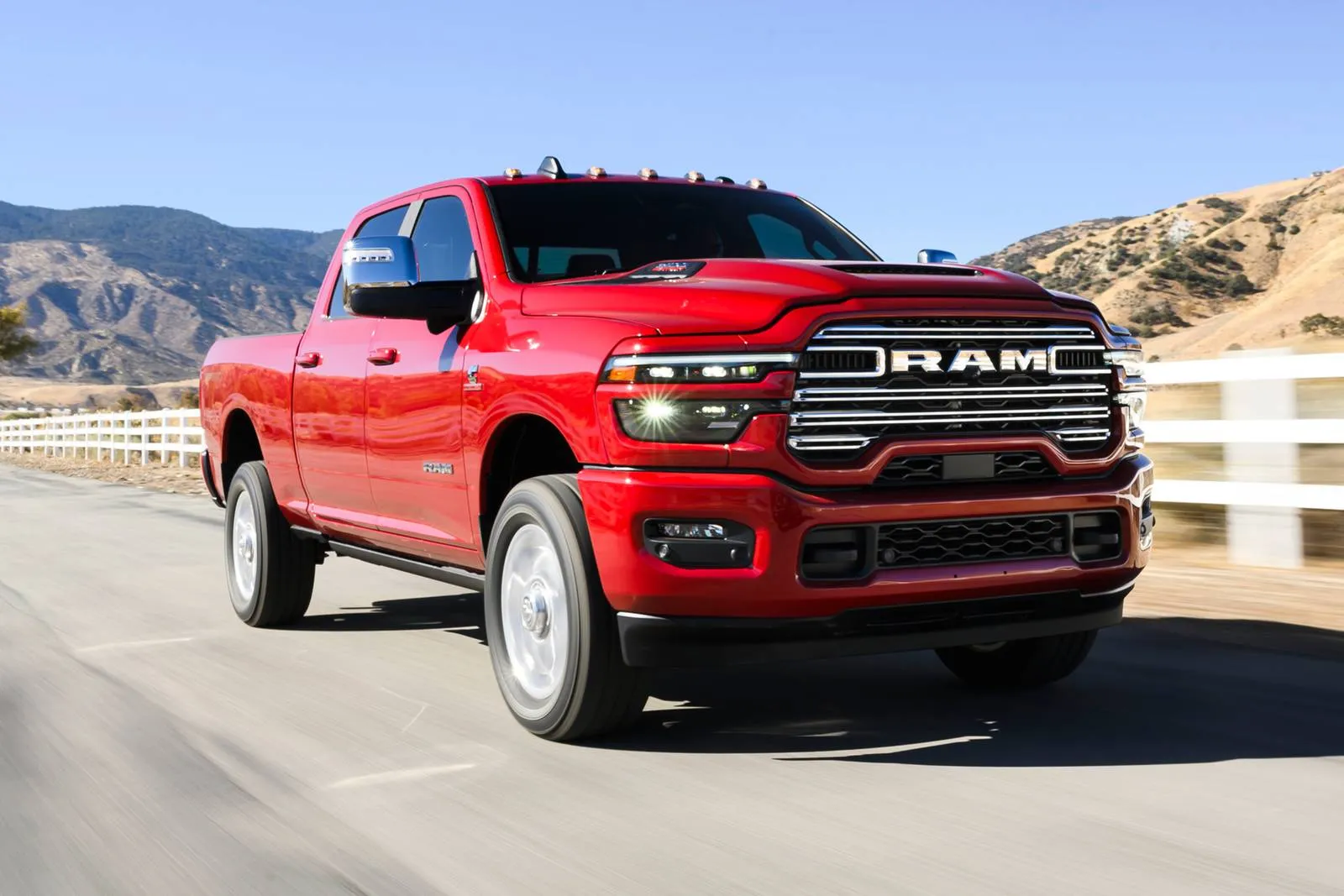
3. Ram 3500 Laramie Longhorn (2020)
The Ram 3500 Laramie Longhorn is the kind of truck that earns respect at first sight. Its bold exterior hides a refined engineering focus that delivers immense towing confidence. Under the hood sits a Cummins turbo-diesel engine that produces enormous pulling strength, but what truly makes this truck shine is how it controls that power.
Ram’s engineering team paid attention to suspension geometry and axle balance. The truck’s rear coil-spring setup (or available air suspension) ensures the trailer weight spreads evenly, reducing bouncing and jerking.
Whether you are towing on flat highways or mountain routes, it maintains a steady posture and comfort. Many owners describe it as driving “like a train on rails,” steady and predictable even when crosswinds appear.
Interior luxury matches its performance. Drivers can handle long hours behind the wheel without fatigue. The steering stays firm and responsive even under full load. Its large mirrors, backup cameras, and trailer assist features make connecting and reversing with a camper easier for solo travellers.
Another factor that separates the Ram 3500 is its transmission calibration. It changes gears seamlessly, holding torque without unnecessary movements.
This behaviour keeps the truck composed when moving uphill or overtaking slower traffic. Combined with exhaust braking control, downhill drives also feel secure because speed remains steady without constant brake use.
For people who treat towing as part of their lifestyle, the Ram 3500 delivers that calm strength that lets you relax knowing your camper follows faithfully without wandering.
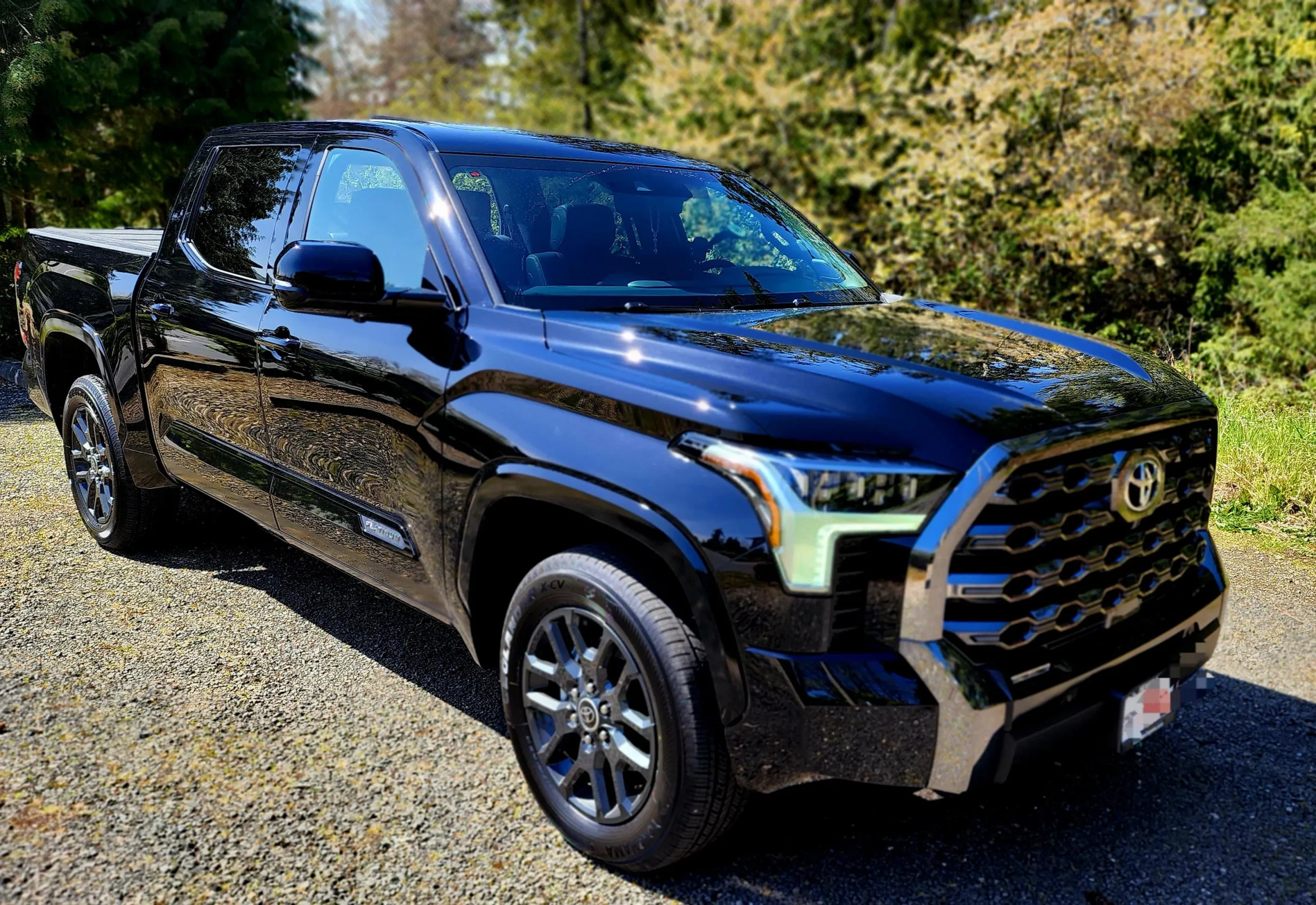
4. Toyota Tundra Platinum (2022)
Toyota has always built vehicles known for dependability, and the Tundra Platinum extends that reputation into heavy towing territory. Though classified as a full-size pickup rather than a heavy-duty one, it performs impressively when attached to mid-sized campers.
Its new twin-turbo V6 engine replaces the old V8 but still provides strong low-end torque, giving drivers smooth acceleration even when pulling uphill. Beyond raw power, the Tundra’s composure comes from a well-balanced chassis.
Toyota redesigned this generation with a stiffer frame and improved rear suspension, reducing trailer sway and body roll. The truck feels confident at highway speeds, with steering that keeps its direction without constant correction. This steady handling gives peace of mind to anyone towing through long stretches.
Inside, the Tundra Platinum offers comfort that rivals SUVs. Long drives become less tiring thanks to ventilated leather seats and quiet cabin insulation. Its digital display shows real-time towing data like trailer brake pressure and weight distribution so drivers can make adjustments easily.
Toyota’s reputation for reliability also adds long-term assurance. Owners who tow frequently appreciate knowing that the truck’s components, engine, gearbox, and brakes are built to last. Even after years of heavy use, many Tundras continue to perform with minimal issues.
For anyone who needs a balance of strength, comfort, and reliability in a single truck, the Toyota Tundra Platinum remains a trusted choice that handles towing tasks with grace and steady control.
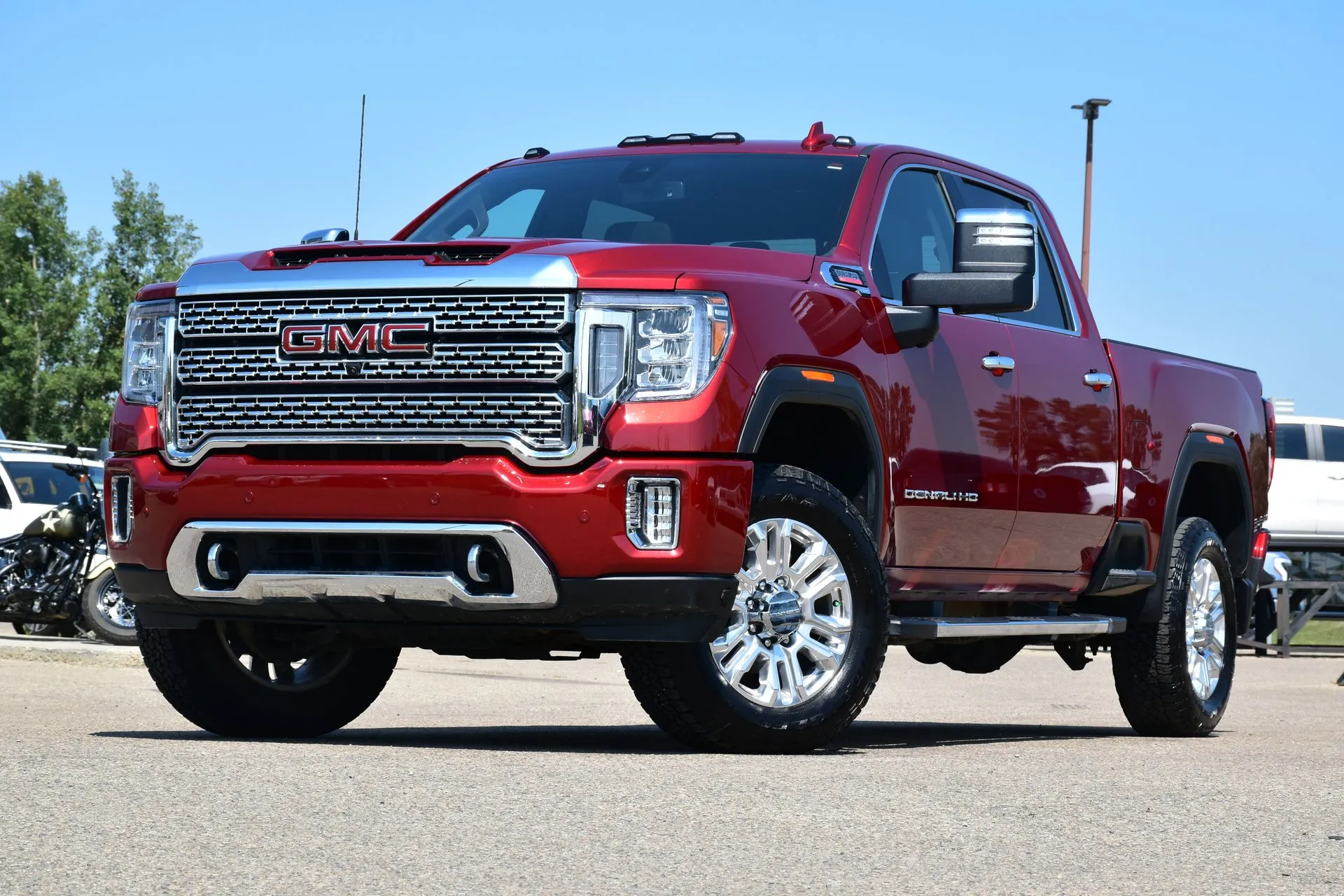
5. GMC Sierra Denali 3500HD (2023)
Among modern heavy-duty pickups, the GMC Sierra Denali 3500HD represents class and control in equal measure.
Built for both power and refinement, this truck delivers remarkable towing performance while keeping passengers wrapped in quiet luxury. Its diesel engine generates immense torque, yet the delivery feels smooth and measured rather than harsh or jerky.
What truly defines this truck is how it stays composed even under stress. The Sierra’s frame uses reinforced steel with extra cross-members to resist twisting under heavy trailer loads.
Paired with an advanced suspension setup, it maintains an even stance, preventing the rear end from dipping under pressure. Drivers feel the stability through the steering wheel, solid and direct, without nervous movement.
Another strong feature is its adaptive camera system. Multiple cameras provide different angles of the trailer and surroundings, allowing safer turns and lane changes.
It takes away the anxiety of blind spots, especially on narrow roads. The integrated trailer sway control ensures that the truck makes minor braking adjustments when it senses instability, keeping the combination aligned.
Inside the Denali cabin, comfort meets craftsmanship. The seats, dashboard, and controls reflect attention to detail, while sound insulation ensures minimal vibration or engine drone. For long trips with a camper, this kind of comfort turns exhausting hauls into enjoyable experiences.
Drivers who use the GMC Sierra Denali 3500HD often describe it as “effortless towing.” That phrase fits perfectly; it carries heavy campers with calm strength, turning challenging routes into smooth adventures.
5 Trucks That Sway and Struggle
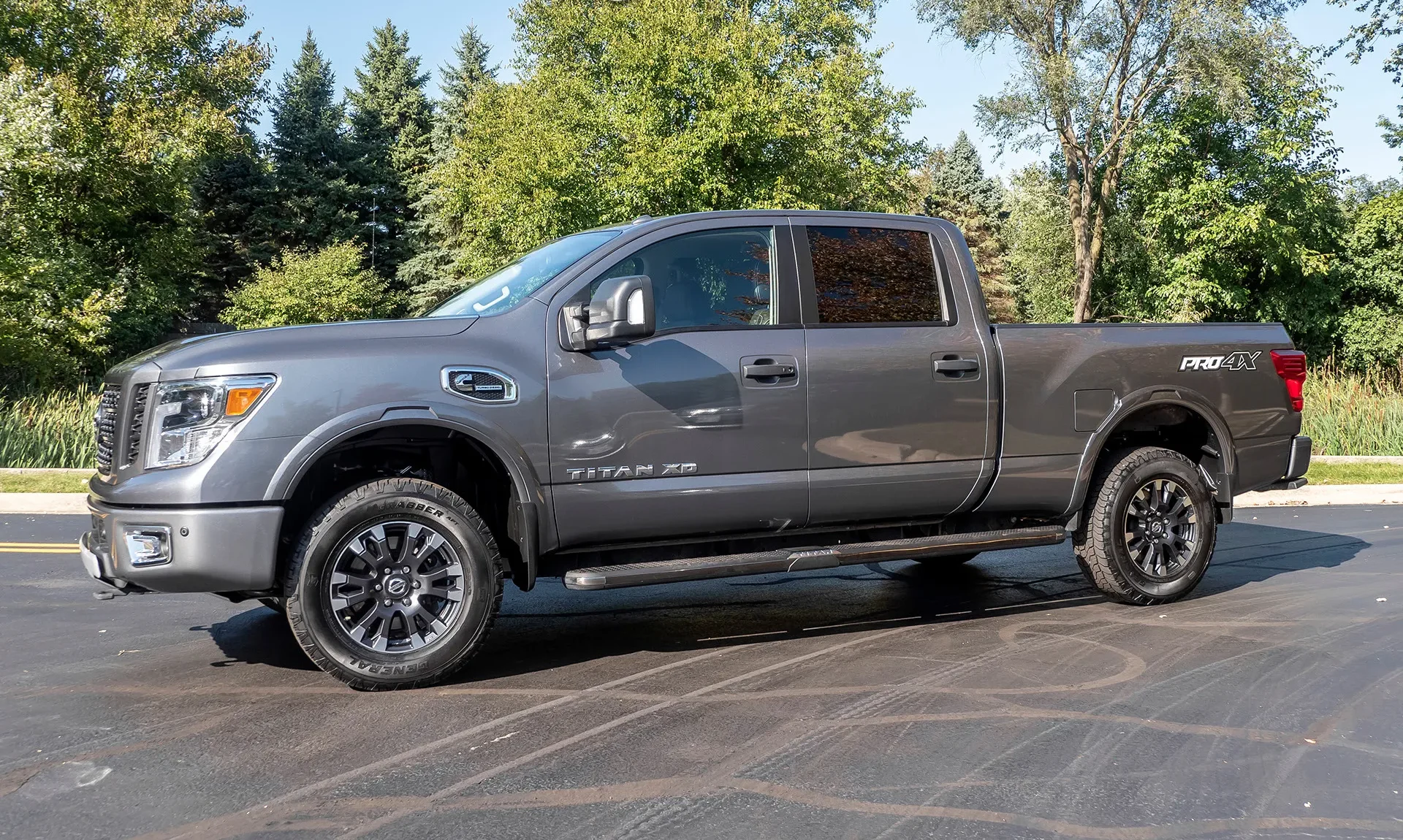
1. Nissan Titan XD PRO-4X (2017)
When Nissan introduced the Titan XD PRO-4X, the brand wanted to create something that would fill the gap between standard half-ton pickups and full heavy-duty trucks. On paper, it sounded like a smart balance of power and comfort.
However, once drivers started towing larger campers, it became clear that the Titan XD struggled to live up to that goal. It looks rugged, it feels solid, but when the load grows serious, its composure begins to waver.
Its diesel engine, supplied by Cummins, produces respectable torque figures, yet real-world towing doesn’t always feel as steady as those numbers suggest. Drivers often describe the experience as slightly unsettled, especially on highways or uneven roads.
The suspension, designed to handle both off-road duties and everyday comfort, leans more toward softness than stiffness. That softness translates into noticeable rear-end bounce when pulling heavy trailers, which can quickly lead to sway.
When crosswinds pick up or larger vehicles pass, the motion of the camper becomes more obvious, and the driver must make frequent steering adjustments to keep the setup straight. The transmission adds another frustration. During uphill climbs or overtaking situations, it sometimes hesitates before selecting the right gear.
That momentary pause creates uneven acceleration, which disrupts the truck’s rhythm and makes towing feel less controlled. Instead of smooth, predictable power delivery, drivers get inconsistent surges that make managing the trailer more demanding.
Inside the cabin, comfort remains good by truck standards, but under heavy towing, engine and road noise become intrusive.
Steering also feels lighter than ideal, leaving drivers with a sense that the front wheels aren’t fully connected to the road. It’s manageable for small trailers or weekend towing, yet once the camper grows larger, the truck feels out of its depth.
The Titan XD PRO-4X succeeds as a comfortable, capable pickup for light loads and off-road adventures, but it doesn’t provide the firm control or rock-solid stability that dedicated heavy-duty trucks deliver.
Drivers who frequently tow large campers often end up wishing for a sturdier truck that offers more confidence and less correction behind the wheel.
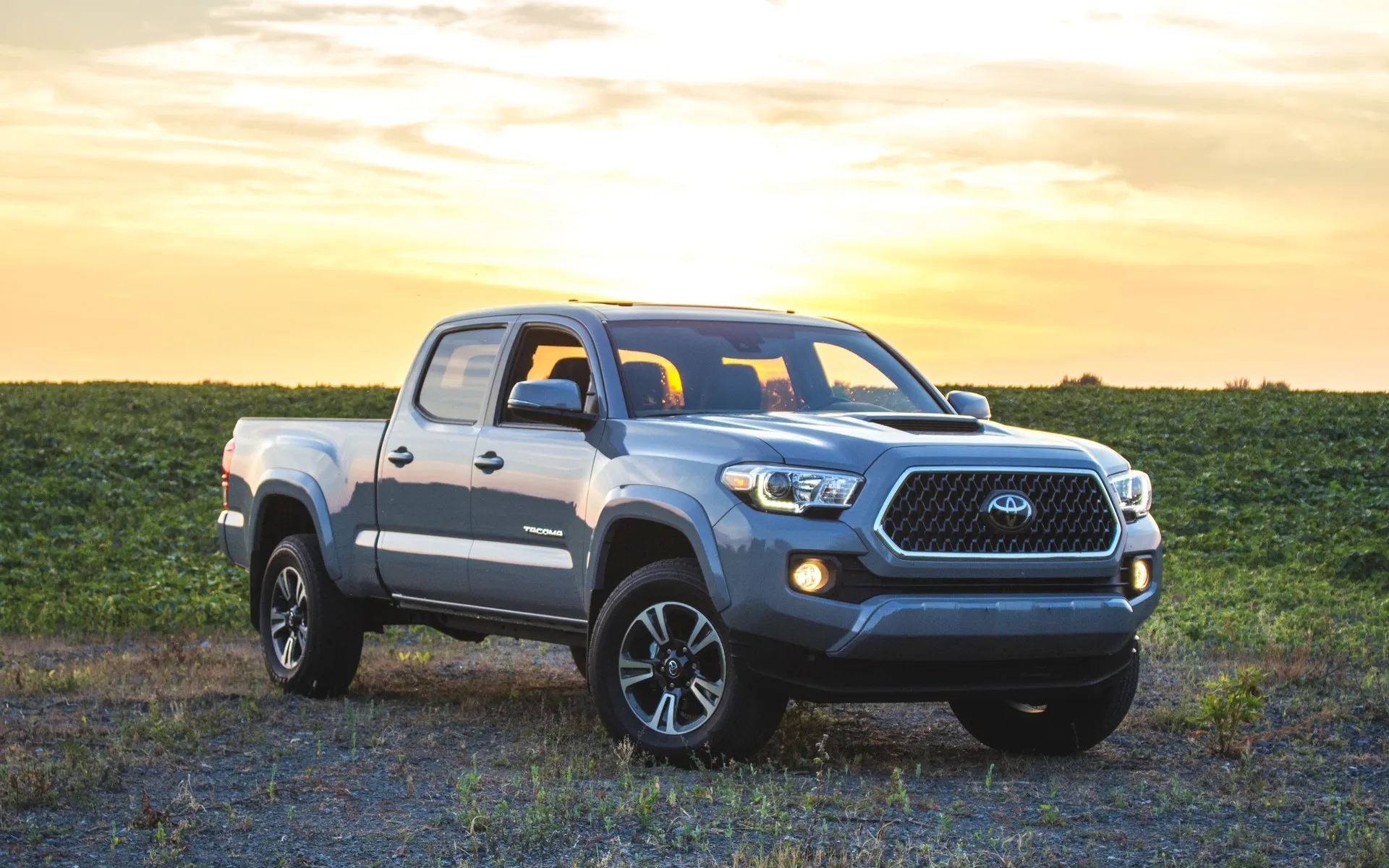
2. Toyota Tacoma TRD Sport (2018)
The Toyota Tacoma TRD Sport remains a favourite among drivers who enjoy adventure, off-road trails, and daily reliability. However, once a large camper is attached, its confidence begins to fade. This mid-size truck was never meant to carry the full burden of heavy towing.
Its smaller frame and moderate powertrain mean that when the load gets serious, the Tacoma starts feeling strained. Drivers often complain that acceleration becomes weak and steering control grows loose, especially when the trailer begins to sway behind them.
Its shorter wheelbase makes stability harder to maintain. Trucks with longer frames naturally handle trailers better because their extended stance keeps movements more balanced. The Tacoma, being compact, tends to rock and sway when wind gusts or large vehicles pass by.
It demands constant steering corrections, forcing the driver to stay alert and sometimes tense throughout the trip. Those long highway journeys quickly become exhausting, especially with a heavy camper pushing behind.
Under the hood, the V6 engine delivers steady reliability, but it lacks the low-end torque needed for serious towing. Climbing steep hills or overtaking on the highway requires heavy throttle input.
The automatic gearbox also struggles, frequently shifting up and down as it searches for power. This behaviour creates inconsistent acceleration and leaves the truck feeling restless.
The suspension, tuned for comfort and off-road movement, lacks the firmness required for heavy trailers. The rear tends to sag slightly, shifting the truck’s balance forward and making steering feel vague.
Many owners eventually upgrade to a full-size pickup after realizing that while the Tacoma handles light tasks beautifully, it simply does not inspire confidence with large campers. It remains dependable, but its towing abilities are clearly limited once loads grow beyond a moderate size.
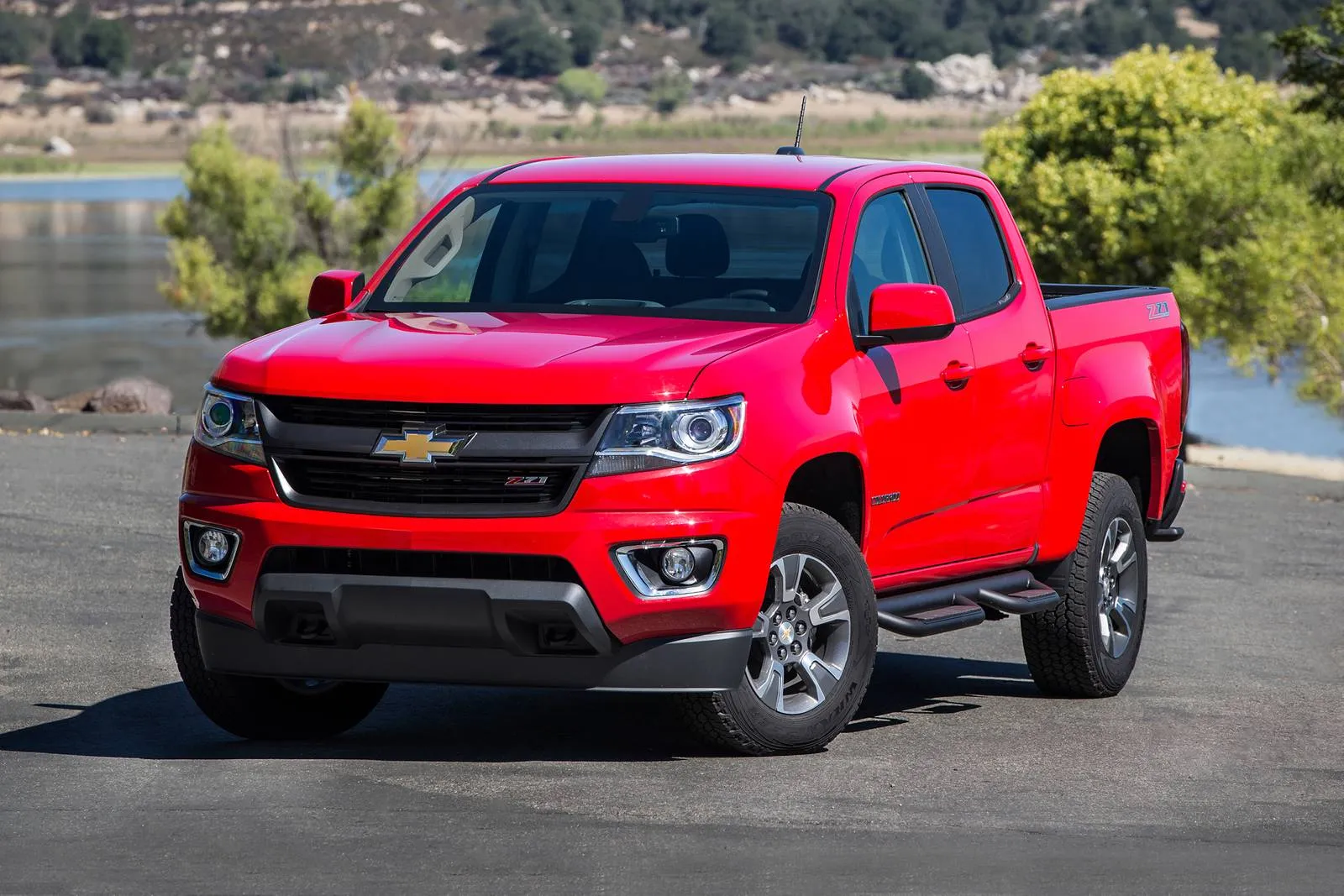
3. Chevrolet Colorado Z71 (2019)
The Chevrolet Colorado Z71 brings adventure styling and off-road credentials, but when you put a heavy camper behind it, things start to get tricky. Many drivers enjoy its comfortable ride and practical size, yet towing exposes weaknesses that are hard to ignore.
Once speeds climb or wind conditions change, the trailer’s motion becomes unpredictable. The truck feels less grounded, forcing drivers to make small steering adjustments to keep everything straight.
Weight balance plays a major role in these challenges. Colorado’s light structure cannot counter the pull of a large camper effectively. Even with proper towing gear like sway bars or distribution hitches, the rear end compresses too much under load.
This compression lifts the front slightly, reducing traction on the steering wheels and making control less precise. In heavy winds, the steering often feels nervous, which can make long-distance towing uncomfortable and tiring.
The powertrain also shows strain under heavy load. While the V6 engine performs well in daily use, its strength feels limited with a camper attached.
Uphill drives force constant downshifts, and engine noise increases as it struggles to maintain pace. Fuel consumption rises quickly, turning what should be an efficient truck into a thirsty tower.
Braking introduces another concern. The smaller discs, designed for light to medium loads, extend stopping distances significantly once the trailer weight adds pressure. Drivers need to plan braking earlier and leave more room on busy roads.
Owners pulling small campers or light trailers find the Colorado manageable, but once the load gets serious, its stability and confidence fade. The Z71 badge gives it off-road appeal, yet towing large campers shows that it’s better suited for adventure weekends than for hauling heavy holiday homes.
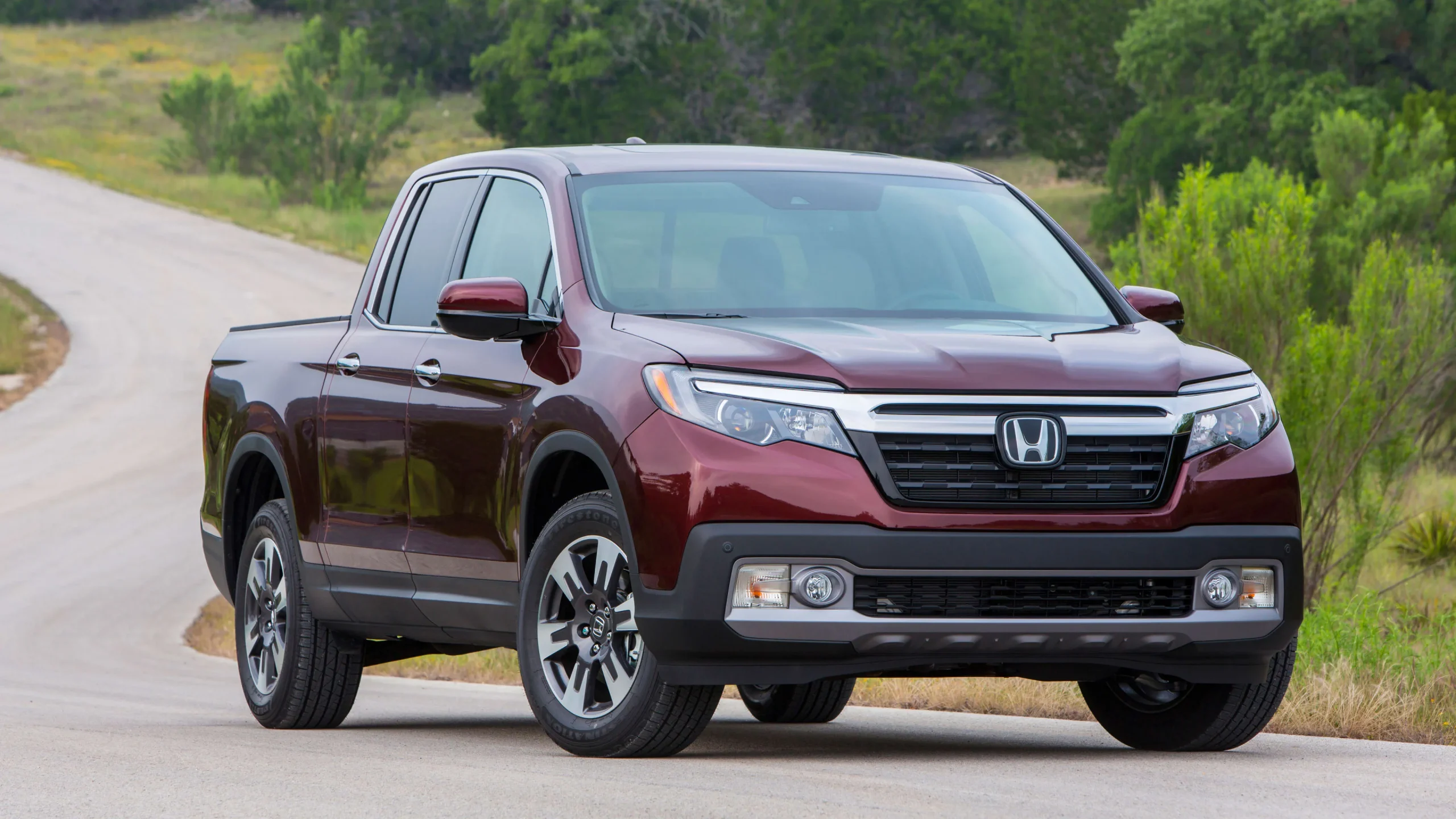
4. Honda Ridgeline RTL-E (2020)
The Honda Ridgeline RTL-E stands out for its refined feel and clever design. Built like a car rather than a truck, it rides smoother than most competitors.
But that comfort comes at a cost; its towing ability falls short when faced with large campers. Drivers who switch from traditional pickups notice immediately that it doesn’t have the same firmness or control when pulling heavy loads.
Its unibody construction, while excellent for daily driving comfort, lacks the rigid backbone of a body-on-frame design. Under towing pressure, this flexibility shows itself in small ways: slight body movements, reduced trailer stability, and more sway during crosswinds.
Even minor bumps can cause the camper to tug at the back of the truck. Honda’s suspension, built for quietness and smoothness, doesn’t offer the stiffness needed to hold a heavy trailer steady. The engine also plays a role in limiting towing confidence.
Though it delivers dependable performance for light duties, it doesn’t produce the deep torque found in stronger pickups. On steep inclines or when merging onto highways, it feels like the Ridgeline has to work harder than it should. The automatic transmission frequently shifts between gears, producing heat and reducing efficiency.
Braking feels balanced but not commanding. Even with trailer brake assist, the Ridgeline can feel overwhelmed during sudden stops. The weight from the trailer sometimes causes slight pushback, reminding drivers that this isn’t a traditional truck underneath.
Honda clearly designed this vehicle for people who want comfort and flexibility rather than raw strength. For towing small boats, jet skis, or light campers, it performs with grace. But when the trailer size increases, it starts to reveal its gentle nature.
The Ridgeline RTL-E behaves more like a family SUV wearing a truck’s uniform, comfortable and dependable, but never meant for heavy-duty towing challenges.
Also Read: 5 Trucks With Bulletproof V8s vs 5 Problematic Engines
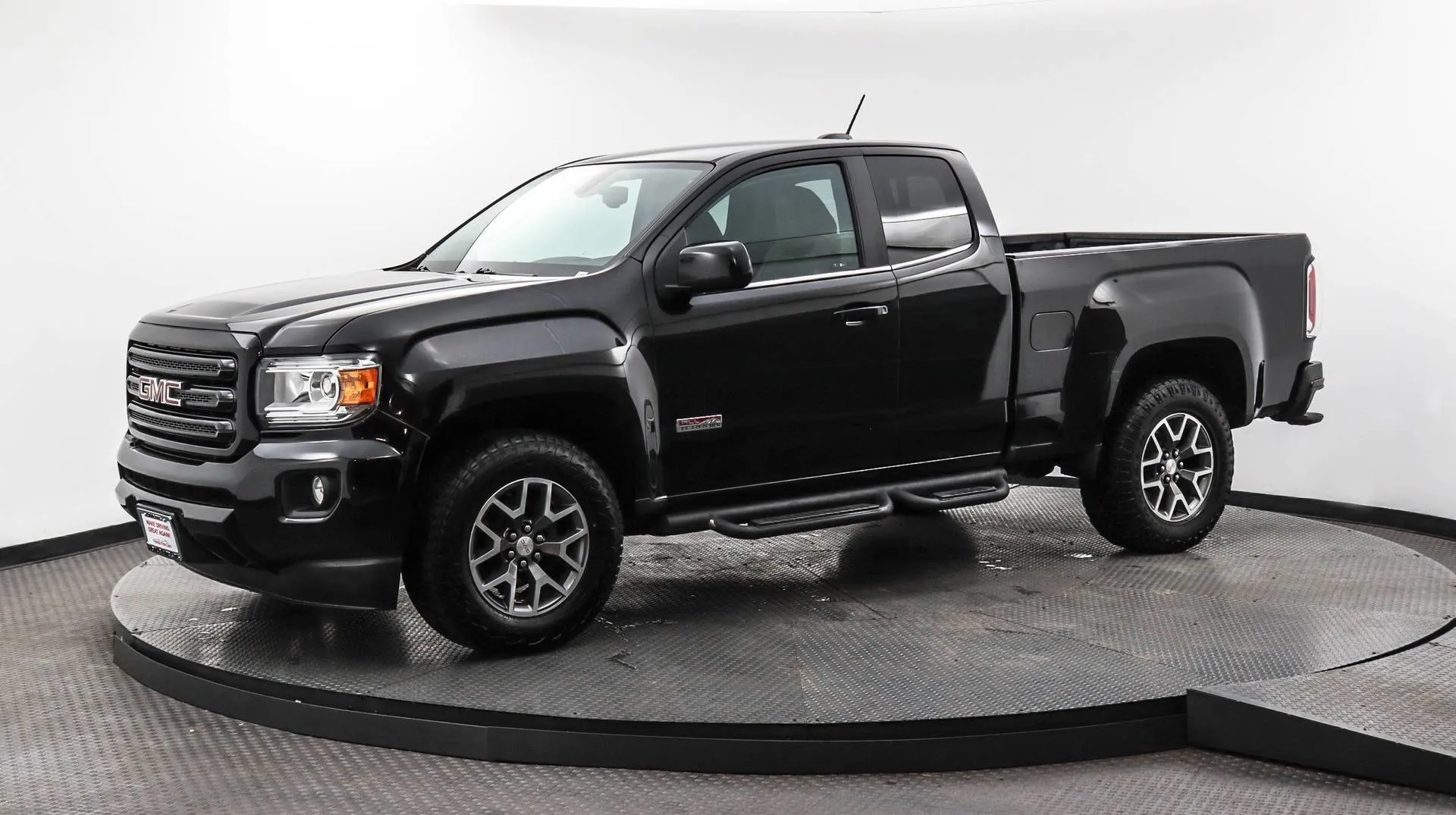
5. GMC Canyon All Terrain (2018)
The GMC Canyon All Terrain carries a rugged image, yet its real-world towing experience doesn’t fully live up to that reputation. While it shares much with the Chevrolet Colorado, its setup leans slightly toward comfort rather than pure utility. When towing heavier campers, that comfort bias becomes a disadvantage.
Drivers describe noticeable sway at highway speeds, especially when passing larger vehicles. Even small steering inputs feel magnified through the trailer, requiring careful correction. This shows how sensitive the truck’s balance becomes once the rear suspension compresses under heavy weight.
Power is another limiting factor. The available V6 engine produces decent output on paper, but when combined with a heavy camper, it struggles to maintain speed on inclines. The transmission downshifts often, creating a restless feel. This constant shifting affects both performance and fuel efficiency, making long journeys tiring.
Inside, the Canyon provides good comfort, but vibration increases when towing. The cabin that feels quiet during solo driving becomes louder as the drivetrain works harder. Drivers also report more movement in crosswinds, suggesting the frame and suspension lack the stiffness of larger trucks.
For small trailers and day trips, the GMC Canyon remains practical. But for anyone planning to tow a full-sized camper across long distances, it lacks the steady control that makes towing enjoyable. The difference between this truck and heavy-duty models becomes clear once weight starts pressing down and wind begins to push back.
Choosing the right truck for towing goes beyond brand preference or horsepower numbers. True towing confidence comes from how the truck handles weight, resists sway, and responds to the driver’s commands.
The Ford F-250 Super Duty, Chevrolet Silverado 2500HD, Ram 3500 Laramie Longhorn, Toyota Tundra Platinum, and GMC Sierra Denali 3500HD all provide this assurance, power combined with balance and stability.
By comparison, lighter or comfort-oriented trucks such as the Nissan Titan XD, Toyota Tacoma, Chevrolet Colorado, Honda Ridgeline, and GMC Canyon reveal their weaknesses when faced with real towing stress. They work fine within limits, but heavy campers quickly expose their soft suspensions and weaker frames.
For drivers planning long trips with full campers, the choice is simple: pick a truck that feels planted, not one that fights to stay in line. Strength without control is tiring, but balance with power brings peace of mind every kilometre of the journey.
