The electric vehicle market is accelerating faster than ever, and charging speed has become one of the most important factors for buyers. For many, the convenience of adding significant range in a short amount of time can make or break the EV experience.
This guide highlights seven standout electric vehicles capable of charging from 10 percent to 80 percent in under 25 minutes, combining practicality, performance, and technology. From full-size luxury sedans like the BMW i7 xDrive60 to more affordable options such as the Hyundai Ioniq 6 Limited Long Range AWD, these vehicles demonstrate that fast charging is no longer limited to premium EVs.
Each car on this list offers a unique balance of power, range, and design. The BMW iX and i7 exemplify refined luxury with rapid charging that rivals their gas-powered predecessors, while the Genesis Electrified GV70 delivers strong acceleration and comfort despite a more limited range.
Tesla continues to set benchmarks for speed and efficiency with the Model 3, and Lucid’s Air Pure and Air Touring trims bring premium features and impressive performance to the table.
Even more accessible models, like the Hyundai Ioniq 6, prove that sub-$60,000 EVs can still provide fast-charging capabilities suitable for road trips. These vehicles represent the forefront of EV convenience, making long-distance travel easier and everyday use more seamless than ever before.
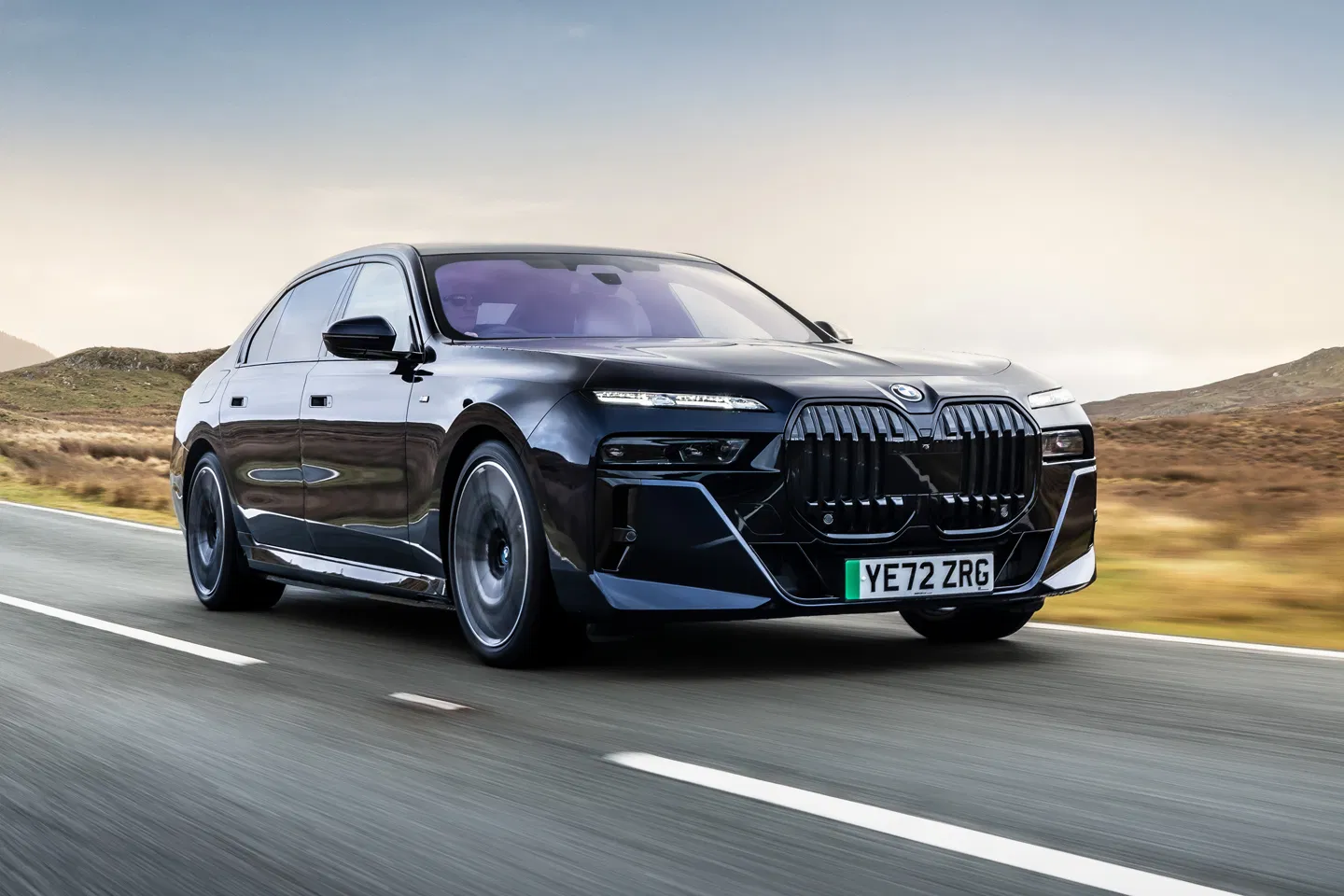
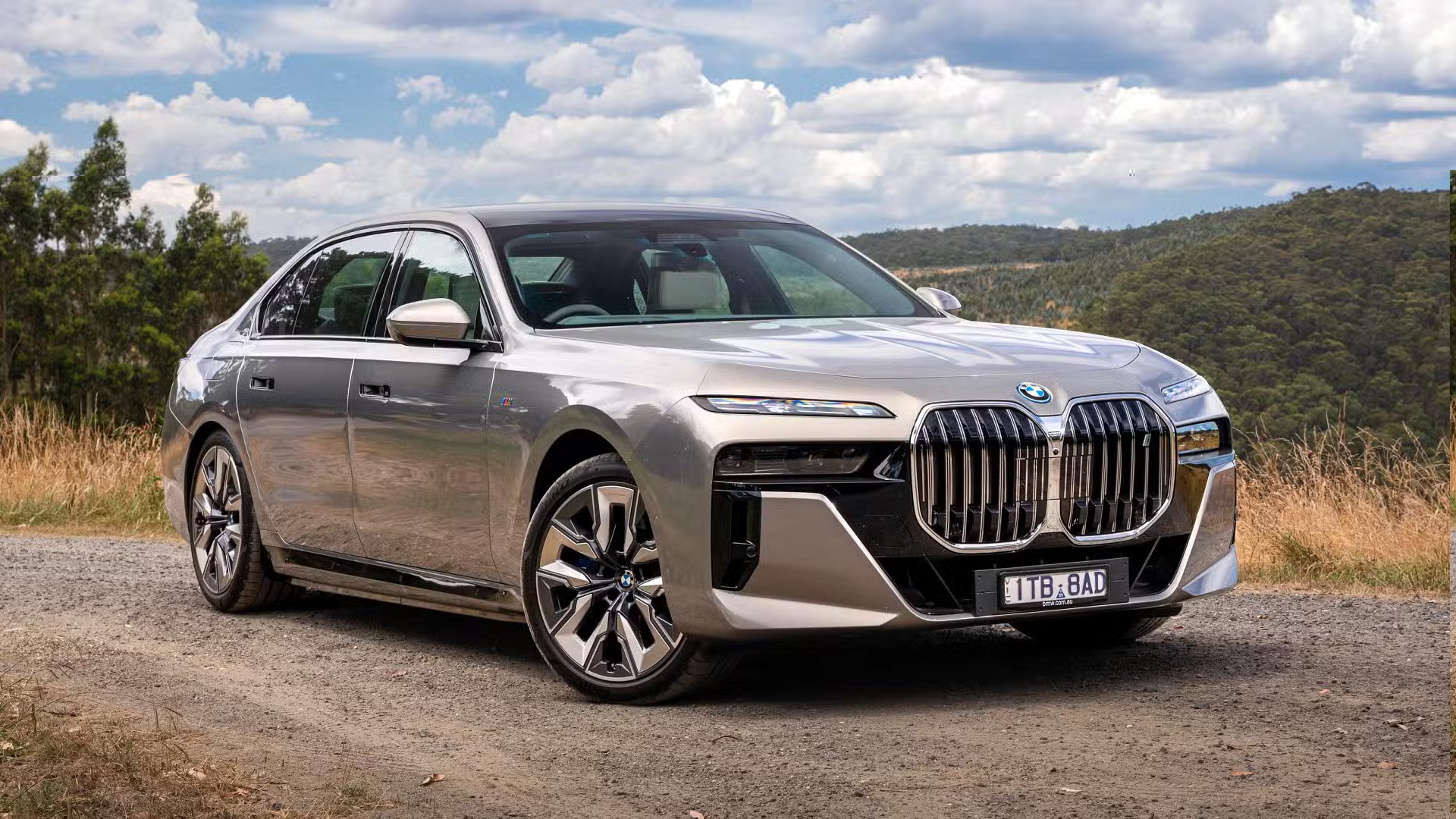
1. 2023 BMW i7 xDrive60: A Technologically Advanced Electric Luxury Flagship
The 2023 BMW i7 xDrive60 serves as the electric version of BMW’s prestigious 7 Series and blends high-end luxury with an advanced EV driving experience. Its charging performance is competitive, allowing the sedan to add 120 miles in 15 minutes, 203 miles in 30 minutes, and up to 289 miles in one hour.
With a peak charging power of 196 kW, the i7 can complete a 5 to 80 percent charge in 37 minutes and reach 5 to 100 percent in 65 minutes. These numbers are solid but fall short of the fastest charging benchmarks set by Lucid and Tesla. The BMW’s large 101.7 kWh battery and significant curb weight contribute to this difference.
Despite weighing 6,061 pounds, the dual-motor AWD layout with 536 horsepower and 549 pound-feet of torque delivers strong acceleration. The i7 reaches 60 mph in 4.3 seconds, which is slower than the quickest luxury EVs yet still more than adequate for daily and long-distance driving.
BMW launched the i7 in the xDrive60 configuration to match the output of the gas-powered 760i, creating a quiet and refined electric alternative to the V-8 model.
Driving range changes depending on wheel selection. The EPA estimates 308 miles with 21-inch wheels, 318 miles with 19-inch wheels, and 296 miles with 20-inch wheels. Although the i7 is less efficient than several rivals, its range capabilities easily support typical commuting and road trip needs, especially for drivers with home charging.
On the road, the i7 distinguishes itself with excellent braking and confident handling. It requires only 109 feet to stop from 60 mph, which ties the Lucid Air and outperforms both the Mercedes EQS580 and the Mercedes S580.
Testers noted that the i7 feels smaller to drive than its large footprint suggests, and its balanced steering contributes to composed performance on the figure-eight handling loop. While the EQS580 may offer a more cushioned ride, the i7 delivers a more engaging driving feel while maintaining the comfort expected of a flagship luxury sedan.
The interior elevates the experience further with a blend of premium materials, contemporary technology, and thoughtful comfort features. The rear seats are especially impressive thanks to a natural seating position, easy entry, and available reclining functions.
The optional Bowers and Wilkins Diamond audio system with 1,965 watts and 39 speakers provides a level of sound quality unmatched by competitors in this class. High-quality Merino leather and optional cashmere wool upholstery add richness to the cabin.
Practical technology, such as the Parking Assistant package with a 360-degree camera system, enhances convenience for everyday use. Styling remains the most polarizing aspect of the i7, yet the sedan stands as a strong and compelling choice within the executive luxury EV segment.
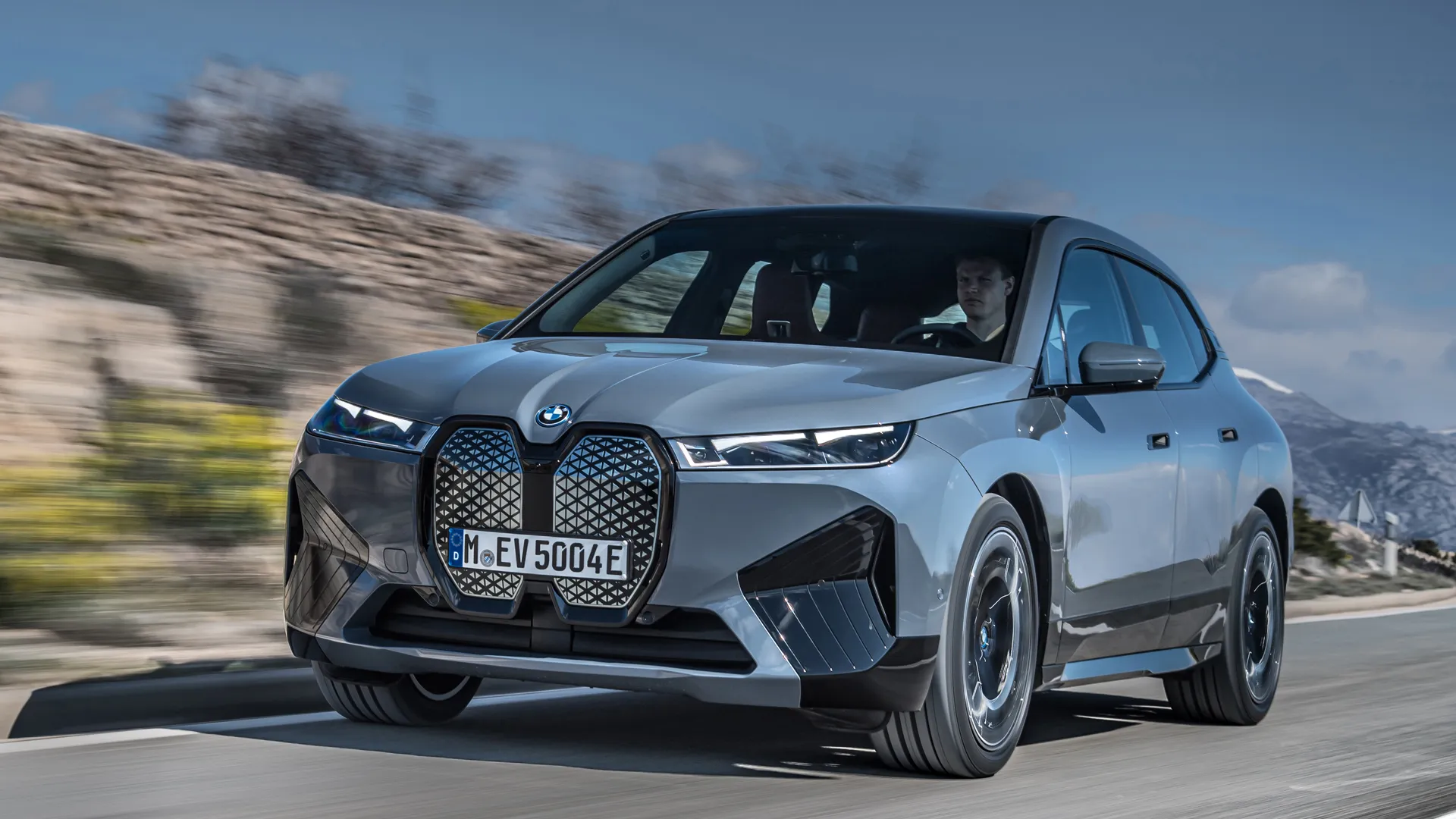
2. 2022 BMW iX xDrive50: A Bold Electric SUV Blending Luxury, Range, and Engaging Dynamics
The 2022 BMW iX xDrive50 stands out as one of the brand’s most ambitious electric vehicles, offering strong charging performance, impressive range, and a high level of refinement. In testing, the iX added 122 miles of range in 15 minutes, 207 miles in 30 minutes, 266 miles in 45 minutes, and 302 miles in one hour.
A 5 to 80 percent charge requires 39 minutes, while a full 5 to 100 percent charge takes 73 minutes. These results come from a peak charging power of 195 kW and a large 105 kWh battery that supports a MotorTrend road trip range of 312 miles, nearly matching the EPA combined rating of 315 miles.
Design is a key talking point for the iX. The oversized kidney grille and futuristic shape create a polarizing appearance, yet the vehicle maintains a cohesive and modern presence on the road. The iX follows the now-discontinued i3 and i8 and serves as BMW’s flagship electric SUV, intended to compete with the Tesla Model X, Mercedes EQS SUV, and Audi E Tron.
Beneath its unconventional exterior, the iX uses a carbon-intensive structure and a dual motor setup featuring new brushed electromagnetic motors. These motors generate 516 horsepower and 564 pound-feet of torque, stored within a 111.5 kWh battery pack that supports rapid charging and a long driving range.
Performance testing reveals the iX to be both quick and engaging. It accelerates from zero to 60 mph in 4.0 seconds and completes the quarter mile in 12.3 seconds at 115.8 mph. These figures surpass several rivals, including the E Tron and the EQS580 SUV.
Braking performance is solid with a best stop of 120 feet from 60 mph, and handling results on the figure eight course place the iX in competitive territory. Beyond the numbers, the iX delivers an unexpectedly lively driving character.
Steering is light and precise, accelerator response is immediate, and the optional air suspension maintains a comfortable ride while controlling body motion. Some drawbacks include a soft brake pedal and limited one-pedal driving capability, along with a user interface that requires extra steps for simple actions.
Interior quality is among the iX’s strongest attributes. The cabin combines unique textures, quilted seating, crystal controls, wood trim, and high-resolution displays.
Space is generous, especially in the back seat, and cargo capacity is strong despite the absence of a front trunk. Prices begin at $84,195 and can exceed $100,000 with options. Even at this level, the iX offers strong value when compared to similarly sized luxury electric SUVs.
The 2022 BMW iX xDrive50 represents an important return to form for BMW, delivering style, technology, and driving enjoyment in an electric package that is both distinctive and highly capable.
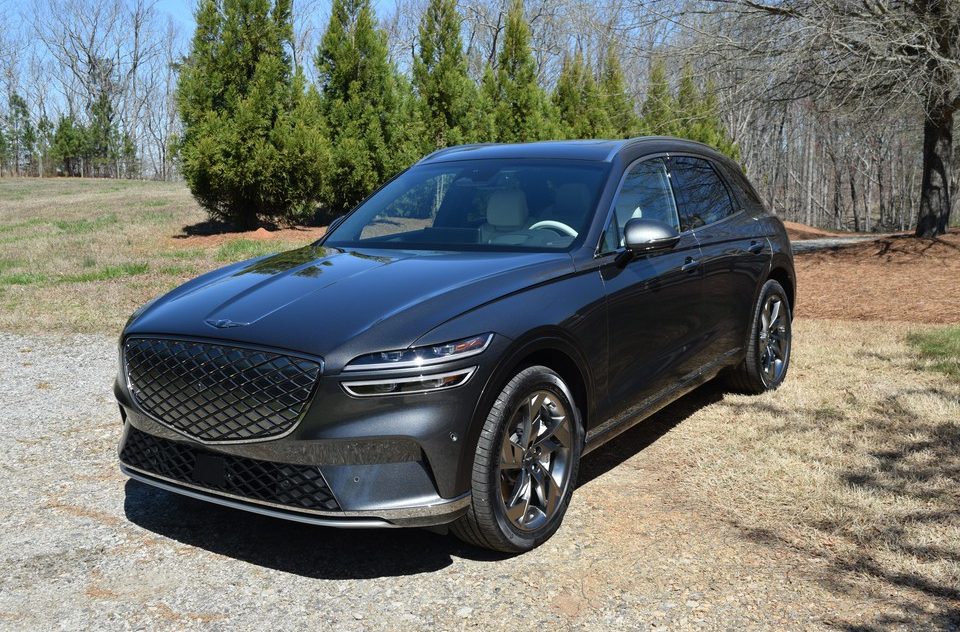
3. 2023 Genesis Electrified GV70: Luxury, Refinement, and Speed Held Back by Limited Range
The 2023 Genesis Electrified GV70 is the fully electric version of the award-winning gas-powered GV70, and it impresses immediately with strong charging capability and polished driving dynamics. In testing, the SUV added 123 miles of range in 15 minutes, 173 miles in 30 minutes, 189 miles in 45 minutes, and 191 miles in one hour.
A 5 to 80 percent charge requires only 20 minutes, while a full 5 to 100 percent charge takes 37 minutes. Its peak charging power of 232 kW exceeds that of many competitors and helps offset its modest EPA-estimated driving range of 236 miles.
Range remains the Electrified GV70’s biggest shortcoming. During MotorTrend’s road-trip test, the SUV delivered a real-world range of 191 to 199 miles at freeway speeds.
Judges in the 2024 SUV of the Year competition praised the vehicle’s refinement, comfort, and performance, yet most agreed that such limited range is a significant drawback in a segment where rivals regularly exceed 300 miles per charge. Several testers considered overlooking the short range due to its fast charging, but real-world results made the limitation difficult to ignore.
Apart from range, the Electrified GV70 performs exceptionally well. Its dual-motor setup produces 483 horsepower and 516 pound feet of torque, enabling a rapid 0 to 60 mph sprint of 3.7 seconds. Braking distance from 60 mph is 118 feet, and handling results on the figure-eight course remain competitive for a luxury compact SUV.
The motors deliver instant response and lively acceleration, although some torque steer appears during full-throttle launches. Ride quality is among the best in its class, with the cabin remaining quiet and composed even on rougher surfaces.
The interior continues Genesis’ reputation for standout design. Materials, textures, and build quality create an upscale feel that matches or exceeds many luxury competitors. The cabin is serene, with excellent noise isolation and supportive seating. However, judges noted a few usability concerns.
The rotary shifter and infotainment control knob are similar in size, making them easy to confuse. Wireless Apple CarPlay and Android Auto are missing despite their availability in less expensive Hyundai and Kia vehicles. Rear legroom is adequate but could be slightly better, and the lack of a front trunk limits utility.
Visually, the Electrified GV70 remains nearly identical to its gas-powered counterpart. Some judges praised Genesis for maintaining the successful original design, while others wished for more EV-specific styling. Even so, the SUV’s appearance remains elegant and modern.
The Electrified GV70 ranks among the most enjoyable vehicles to drive in its segment, and its combination of comfort, craftsmanship, and performance is compelling. With an additional 50 miles of real-world range, it likely would have dominated the competition.
4. 2022 Tesla Model 3 Dual Motor: Long Range, Rapid Charging, and Refined Driving Dynamics
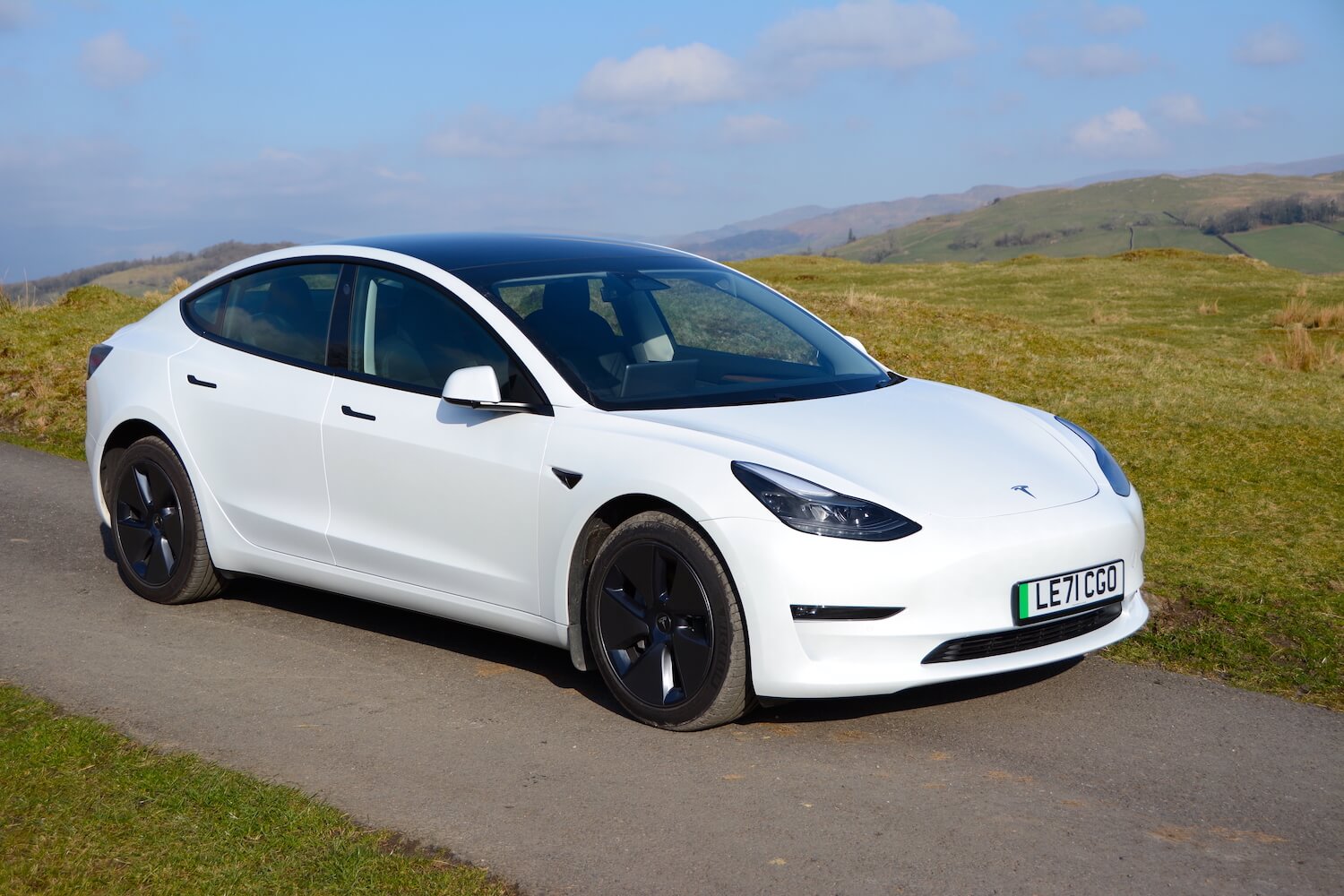
The 2022 Tesla Model 3 Dual Motor Long Range combines impressive driving range, fast charging, and refined performance into one of the most compelling electric vehicles on the market. Its peak charging power of 248 kW allows the Model 3 to add 130 miles in 15 minutes, 201 miles in 30 minutes, 239 miles in 45 minutes, and 255 miles in 60 minutes.
A 5 to 80 percent charge takes 31 minutes, while a full 5 to 100 percent charge takes 66 minutes. Tesla’s extensive Supercharger network ensures these charging rates are consistently accessible, giving owners a significant advantage on long trips compared to other EVs.
With a large 75 kWh battery and dual electric motors, the Model 3 Long Range features all-wheel drive and 443 horsepower, producing secure traction and rapid acceleration. It reaches 0–60 mph in 4.2 seconds, with the Performance variant achieving 3.1 seconds, and completes the quarter mile at 115.8 mph in testing.
Its low center of gravity and revised suspension contribute to agile handling and a more comfortable ride than early Model 3 versions or the Model Y, addressing previous criticisms regarding stiff suspension and rattles. Braking and stability are secure, and the car feels well-balanced around corners.
Tesla’s minimalist interior design is dominated by a 15-inch central touchscreen that controls virtually all vehicle functions, including steering, regenerative braking, climate control, and infotainment. While this allows for over-the-air updates and a clean, uncluttered cabin, some drivers may find accessing essential controls through the touchscreen cumbersome.
There are no physical buttons for common tasks, and the driver must glance at the central screen to check speed. Storage is practical with a rear trunk and under-bonnet space, combining for 542 liters. Rear headroom is somewhat limited due to the fastback roofline, but folding rear seats enhance cargo flexibility.
The Model 3 also benefits from advanced driver assistance via Autopilot, which uses eight cameras, twelve ultrasonic sensors, and a forward-facing radar for a 360-degree view of the surroundings. Safety ratings are exceptional, achieving a 5-star NHTSA rating and the highest score in Safety Assist tests.
Real-world range closely matches Tesla’s EPA estimates, with averages around 348 miles, maintaining consistency even at highway speeds. The car can also charge at CCS public chargers in addition to Superchargers, increasing flexibility for owners.
Pricing starts at $54,990 for the Long Range variant, with the Performance model at $59,990, making the Model 3 a competitively priced EV with high efficiency and excellent driving dynamics.
Its combination of rapid charging, long range, advanced technology, and improved ride quality reinforces its status as a benchmark for affordable luxury electric vehicles. The Tesla Model 3 remains a highly desirable choice for those seeking a long-range, fast-charging EV with engaging performance.
Also Read: 10 Cars With Sunroofs That Dont Squeak or Leak
5. 2023 Lucid Air Touring: Balanced Performance, Range, and Luxury at a Competitive Price
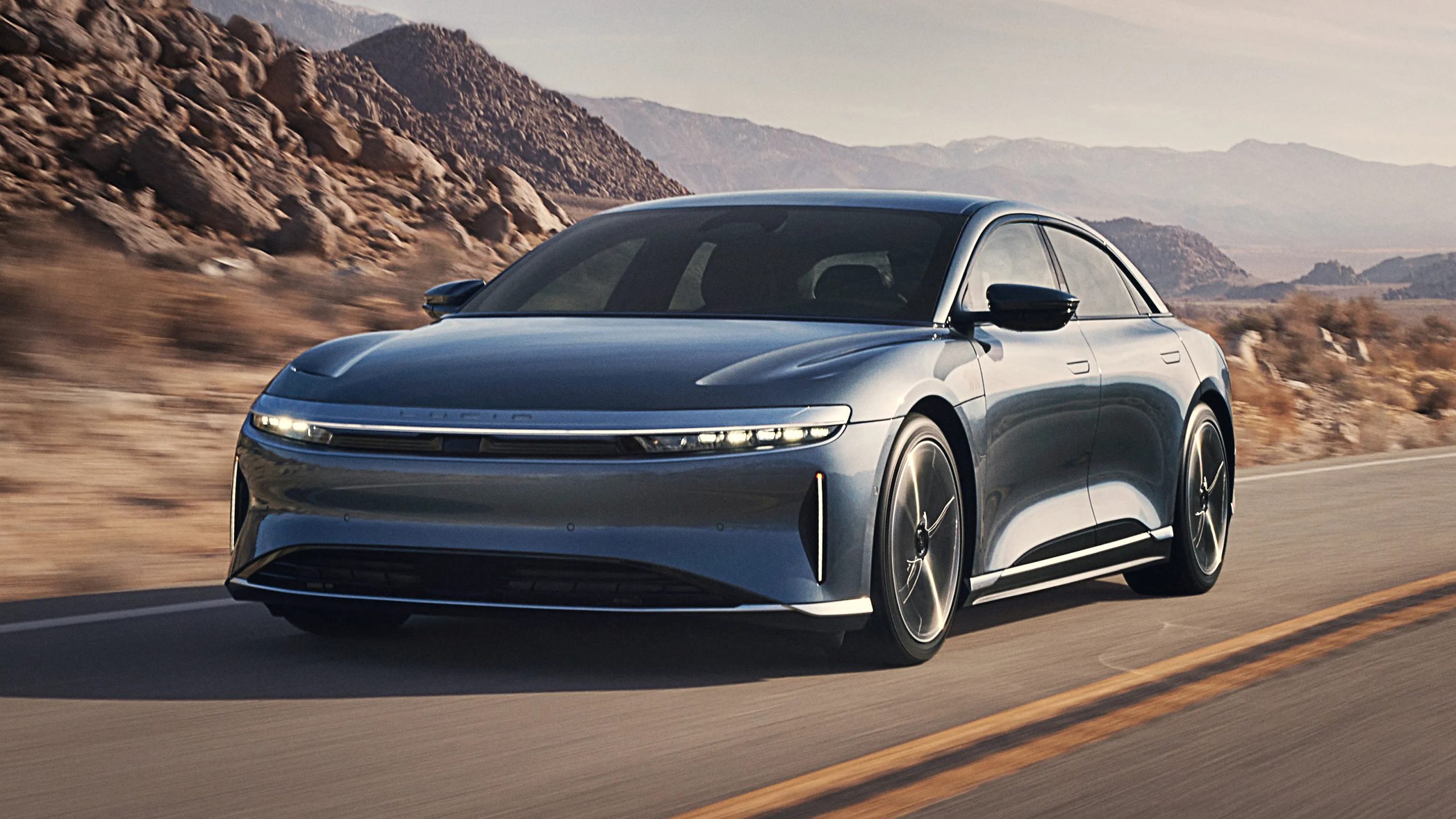
The 2023 Lucid Air Touring combines high-end luxury, strong performance, and fast-charging capability in a midgrade trim that is arguably the most practical choice within the Lucid Air lineup.
Its peak charging power of 229 kW allows it to add 132 miles of range in 15 minutes, 197 miles in 30 minutes, 232 miles in 45 minutes, and 261 miles in 60 minutes. A 5 to 80 percent charge requires 40 minutes, while a full 5 to 100 percent charge takes 89 minutes, enabling convenient long-distance travel without the anxiety of frequent stops.
The Air Touring is a slightly detuned version of Lucid’s higher-end Grand Touring, featuring a 92 kWh battery instead of the 112 kWh pack in the GT. Despite this, it delivers a substantial 425 miles of range with 19-inch wheels, and even with 20-inch wheels, it achieves 384 miles, outperforming competitors such as the Mercedes-Benz EQS 580 4MATIC (340 miles) and BMW i7 (300 miles).
Its dual permanent-magnet motors generate 620 horsepower and 885 pound-feet of torque, routed through all four wheels via a single-speed automatic transmission. This allows the Touring to sprint from 0–60 mph in 3.4 seconds and reach a top speed of 155 mph, offering nearly the same real-world performance as the pricier GT.
Visually, the Touring is nearly identical to other Lucid Air trims, maintaining the same sleek exterior, color options, and wheel designs. Optional features include a metal roof, which reduces cabin heat, improves headroom, and lowers the price by $4,500 compared with the standard glass canopy.
The Touring’s interior retains the high-quality materials and layout of the Grand Touring, including a 34-inch curved main display, premium two-tone Nappa leather from a carbon-neutral supplier, and thoughtful tech integration with Apple CarPlay and Android Auto. Passenger comfort benefits from the smaller battery pack, providing extra space and legroom in the rear seats.
The Lucid Air Touring also impresses in ride and handling. It employs steel springs, adaptive dampers, and three drive modes Smooth, Swift, and Sprint which adjust stiffness to suit driving conditions.
The Touring weighs 250 pounds less than the Grand Touring, improving agility and braking performance with six-piston front brakes and 14.8-inch rear discs. The sedan feels comfortable, quiet, and easy to maneuver through city streets while retaining composure on highways.
Pricing for the Air Touring starts at $109,050, including destination, with test vehicles reaching $128,550 with optional features. This positions it as a strong value proposition compared with similarly equipped competitors such as the BMW i7 and Mercedes EQS 580 4MATIC.
By pairing most of the Grand Touring’s interior, technology, and chassis with a slightly smaller battery, the Touring delivers a highly practical, luxurious, and exhilarating EV for most drivers, offering more than enough performance and range for daily commuting and long-distance travel.
6. 2024 Lucid Air Pure: Luxury and Performance in a Base EV
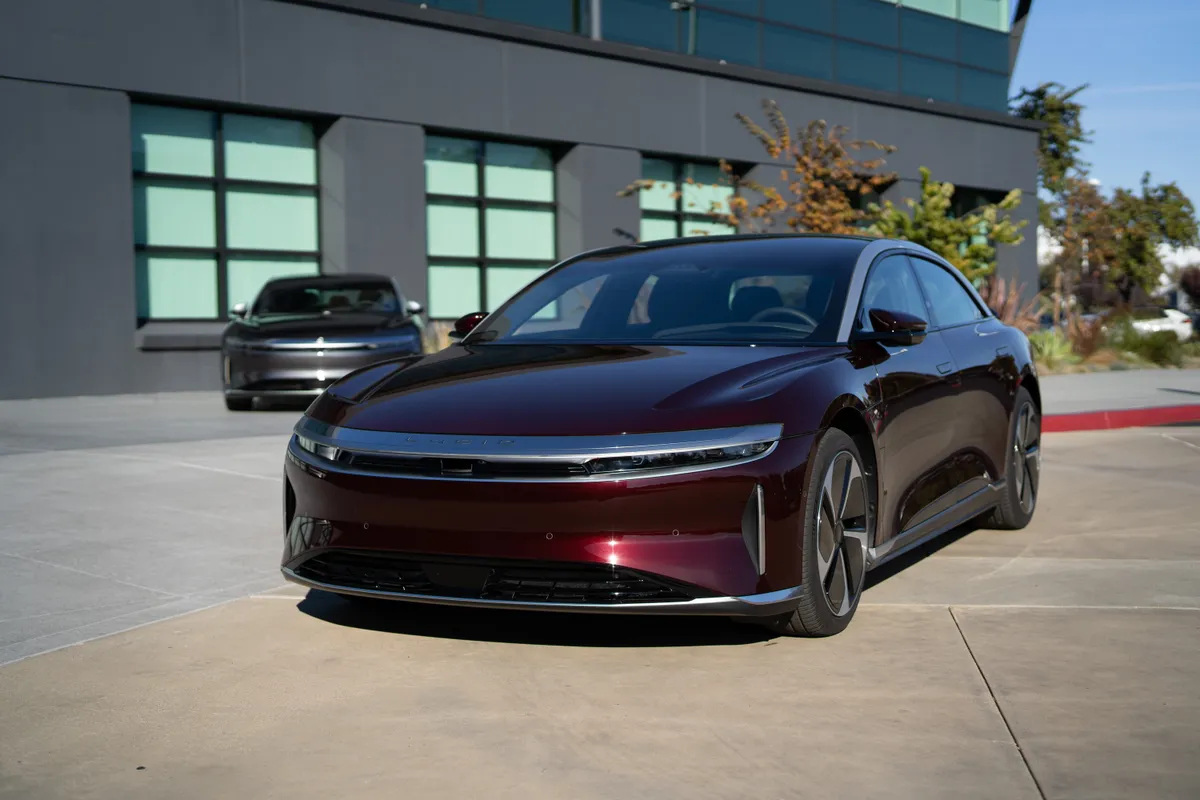
The 2024 Lucid Air Pure, available in rear-wheel-drive (RWD) and all-wheel-drive (AWD) configurations, represents the entry point into Lucid’s luxury electric sedan lineup. Despite being the base model, the Air Pure impresses with rapid charging, strong performance, and long-range capability.
The RWD model adds 149 miles of range after 15 minutes of charging, while the AWD adds 150 miles. At 30 minutes, the RWD reaches 243 miles, and the AWD 219 miles. By 60 minutes, the RWD hits 320 miles and the AWD 279 miles, with peak charging power of 214 kW for RWD and 258 kW for AWD. A 5–80 percent charge takes 34 minutes for RWD and 44 minutes for AWD, while full 5–100 percent charging takes 104 minutes for RWD and 97 minutes for AWD.
The Air Pure’s 88-kWh battery pack is slightly smaller than the Touring’s 92 kWh, yet it still delivers a notable EPA-rated range of 394 miles with 19-inch wheels, extending to 419 miles under optimal conditions.
The RWD model accelerates from 0–60 mph in 4.2 seconds, while the AWD version achieves it in 3.6 seconds, offering performance that easily surpasses competitors such as the Mercedes EQE350 4MATIC. Braking is also excellent, with the RWD model stopping from 60 mph in 116 feet, outperforming some rivals.
Lucid has focused on creating a sedan that is not only quick but also enjoyable to drive. The Air Pure feels lighter than its weight, with precise steering, agile handling, and well-tuned suspension that balances comfort with control. On the street or track, it delivers a refined driving experience that remains confidence-inspiring.
Inside, the Air Pure combines premium materials with spacious seating, especially in the rear, where legroom benefits from the smaller battery pack. The cabin is predominantly dark gray and black on the base trim, but remains stylish and functional.
The Air Pure includes a large infotainment screen, dedicated climate controls, and Apple CarPlay and Android Auto integration, though some software quirks and minor hardware issues persist. Storage is impressive with a 16.2-cubic-foot trunk, 9.9-cubic-foot frunk, and additional compartments throughout the cabin, accommodating passengers and cargo effectively.
Lucid enhances ownership value with a competitive warranty: four years/50,000 miles basic coverage, eight years/100,000 miles powertrain warranty, and three years of free DC fast charging at Electrify America stations. The Air Pure starts at $78,900, rising to $81,200 with options, making it a compelling alternative to Tesla, BMW, and Mercedes in the luxury EV segment.
The 2024 Lucid Air Pure combines long-range capability, strong acceleration, and premium comfort in a stylish package at an accessible entry price. While minor software and hardware refinements remain, its driving experience, charging speed, and interior design firmly establish it as a leading base model in the luxury electric sedan market.
7. 2023 Hyundai Ioniq 6 Limited Long Range AWD: Affordable Performance with Fast Charging
The 2023 Hyundai Ioniq 6 Limited Long Range AWD demonstrates that a compelling electric sedan does not need an $80,000 price tag. With a 0–60 mph time of 4.4 seconds and a peak charging power of 237 kW, it can add 152 miles of range in just 15 minutes on a DC fast charger.
A full 5–100% charge takes 47 minutes, making it well-suited for road trips. The Ioniq 6 Limited AWD has a MotorTrend Road-Trip Range of 229 miles, and its efficiency benefits from a sleek, low-slung sedan body that outperforms the boxier Ioniq 5 in both range and charging performance.
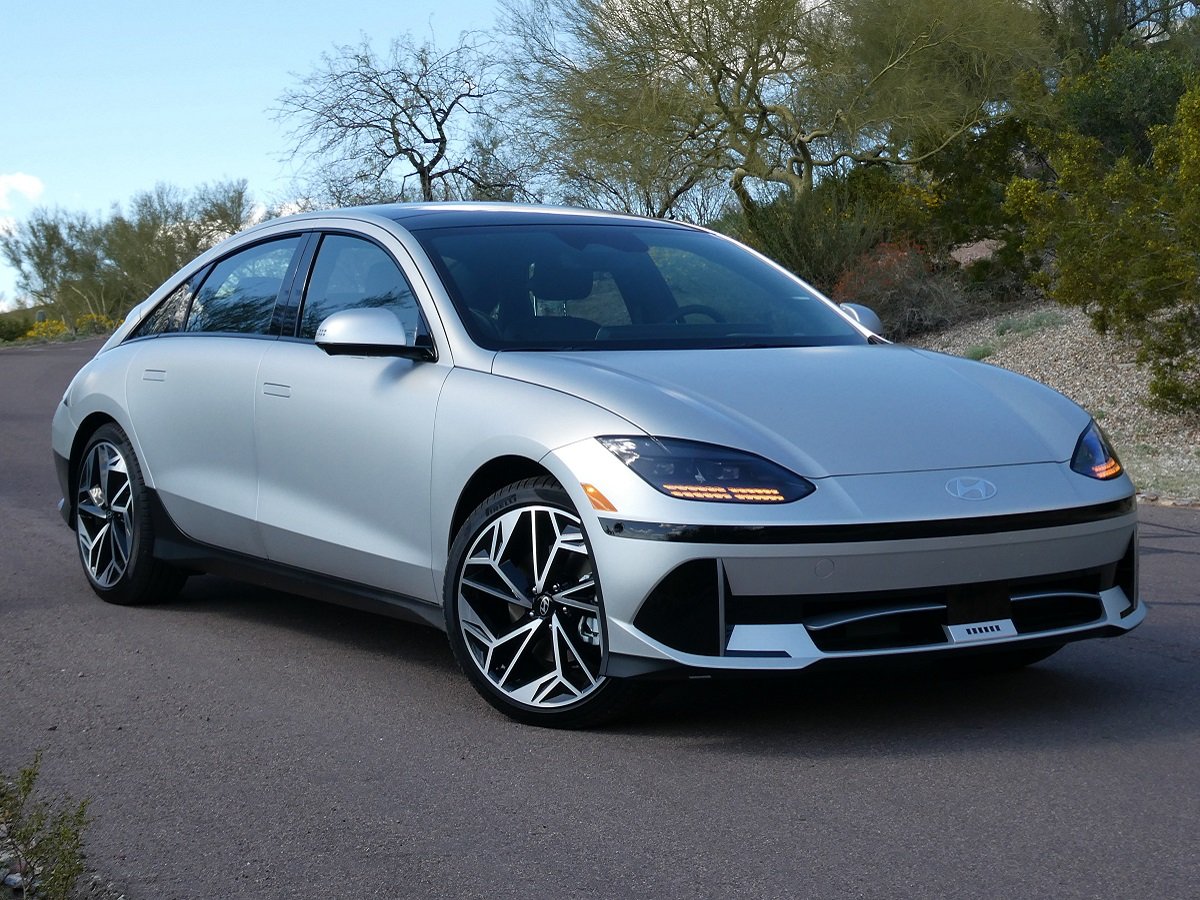
The Ioniq 6 stands out with its bold design, featuring a rounded roofline, pixel LED lighting, and flowing proportions. Opinions on its styling vary, but it draws attention and is visually distinct. Mechanically, it provides 320 horsepower and 446 pound-feet of torque, delivered through dual electric motors in an all-wheel-drive setup.
The car offers three drive modes: Sport, Normal, and Eco. Sport mode maximizes acceleration, while Eco extends battery range by approximately 20 miles. Its low center of gravity gives the sedan a solid, controlled feel in turns, though it carries a somewhat heavy presence in cornering.
The interior is modern and functional, with dual 12-inch screens forming a continuous panel that houses both infotainment and instrument displays. Haptic climate controls are straightforward, though some features like heated seats and steering wheel heating require using the touchscreen controls.
The front seats are heated and cooled, supportive, and comfortable, while rear-seat headroom is slightly limited due to the sloping roofline. Cargo space includes 11 cubic feet in the trunk, and the rear seats fold to provide additional storage. Ambient blue lighting along the door panels adds both style and convenience. Additional features include a wireless phone charger, Bose audio system, and a power sunroof with shade.
Safety and convenience features are comprehensive, including blind-spot monitoring, cross-traffic alert, lane-keeping assist, front-collision prevention, and adaptive cruise control. The Ioniq 6 allows a smartphone to act as a digital key and includes reverse charging for small devices. While standard 110-volt outlets provide slow charging, upgrading to a 240-volt setup reduces full charging to 7.5 hours.
With a price of $57,215 including delivery, the Ioniq 6 Limited AWD combines affordable luxury, fast charging, strong range, and engaging performance. Minor drawbacks include a firm ride, some electric whine, and no heated rear seats. Its combination of design, technology, and speed make it a strong competitor among electric sedans under $60,000, rivaling the Tesla Model 3 and other mid-range EVs.
Quick Specs: Two electric motors, 77.4 kWh battery, 320 hp / 446 lb-ft, 0–60 mph in 4.4 seconds, 270-mile range, 4,222 lbs, 116.1-inch wheelbase, 11 cubic feet cargo, 111/94 MPGe, direct-drive transmission.
Fast charging has become a defining feature of modern electric vehicles, and these seven models highlight what is possible today. They allow drivers to add hundreds of miles of range in the time it takes to enjoy a short break, reducing downtime and increasing the practicality of electric mobility.
Luxury sedans like the BMW i7 and Lucid Air Touring combine comfort, performance, and speed, while the Hyundai Ioniq 6 offers an affordable option without sacrificing fast-charging capability.
These EVs demonstrate that rapid charging does not compromise driving enjoyment, style, or technology. With advanced battery and charging systems, drivers can cover longer distances with confidence, knowing stops are minimal.
As EV technology continues to develop, charging efficiency will become standard across the segment, offering convenience, performance, and accessibility. These seven vehicles set a strong benchmark for the next generation of electric cars, showing that speed, range, and practicality can coexist in a single, compelling package.