
Modern crossovers promise more safety than ever, but not all driver-assistance tech works equally well in real-world conditions.
Blind-spot monitoring, in particular, has become a nearly universal feature but owners frequently report that some systems are fast, consistent, and confidence-building, while others beep at shadows, warn at random, or confuse rain, road grime, or reflective surfaces for actual vehicles.
For American shoppers who spend a lot of time commuting on multilane highways, a trustworthy blind-spot sensor isn’t just a convenience it’s a major factor in reducing lane-change anxiety and preventing sideswipe collisions.
This list breaks down five crossovers with some of the most reliable blind-spot sensors on the market, based on owner satisfaction, sensor calibration stability, and real-world testing.
Then we’ll look at five crossovers whose sensors have a reputation for false positives or inconsistent behavior, causing drivers more annoyance than peace of mind.
Crossovers With Reliable Blind-Spot Sensors
Blind-spot monitoring has become a crucial safety feature for modern drivers, helping prevent collisions and giving extra confidence on busy roads. While most new crossovers offer this technology, not all systems are created equal, some sensors are finicky, slow to react, or prone to false alerts.
That’s why reliability matters. In this article, we highlight crossovers with blind-spot monitoring systems that consistently perform well, combining accuracy, responsiveness, and ease of use to keep you safer and more aware behind the wheel.
Also Read: 5 Compact Crossovers With Hardy ABS Sensors vs 9 That Trip Lights in Winter
1. Toyota RAV4
Toyota’s Safety Sense suite has matured over the years, and the RAV4 stands out for how consistently its blind-spot system behaves.
Unlike some competitors whose radar units are mounted in vulnerable spots, Toyota places sensors deeper within the rear bumper structure, shielding them from road spray.
Drivers report that the RAV4 rarely “ghost alerts,” even in heavy rain, and the system maintains proper calibration for years without needing dealer resets.
The warning timing is also well-tuned early enough for a cautious lane change, but not so premature that it misleads. For long-term owners, the RAV4’s blind-spot monitor is one of the few systems they trust implicitly.
It’s the Toyota RAV4, the mid-sized SUV that seems to be everywhere you look. Its ubiquity is so extreme that it even outsold the Ford F-150 in early 2025, a feat no other vehicle has managed in nearly 50 years.
Now in its sixth generation, the RAV4 debuts with a comprehensive redesign, expanding on what already works and adding new trims like the Woodland and GR Sport to broaden the appeal of this already popular utility vehicle.
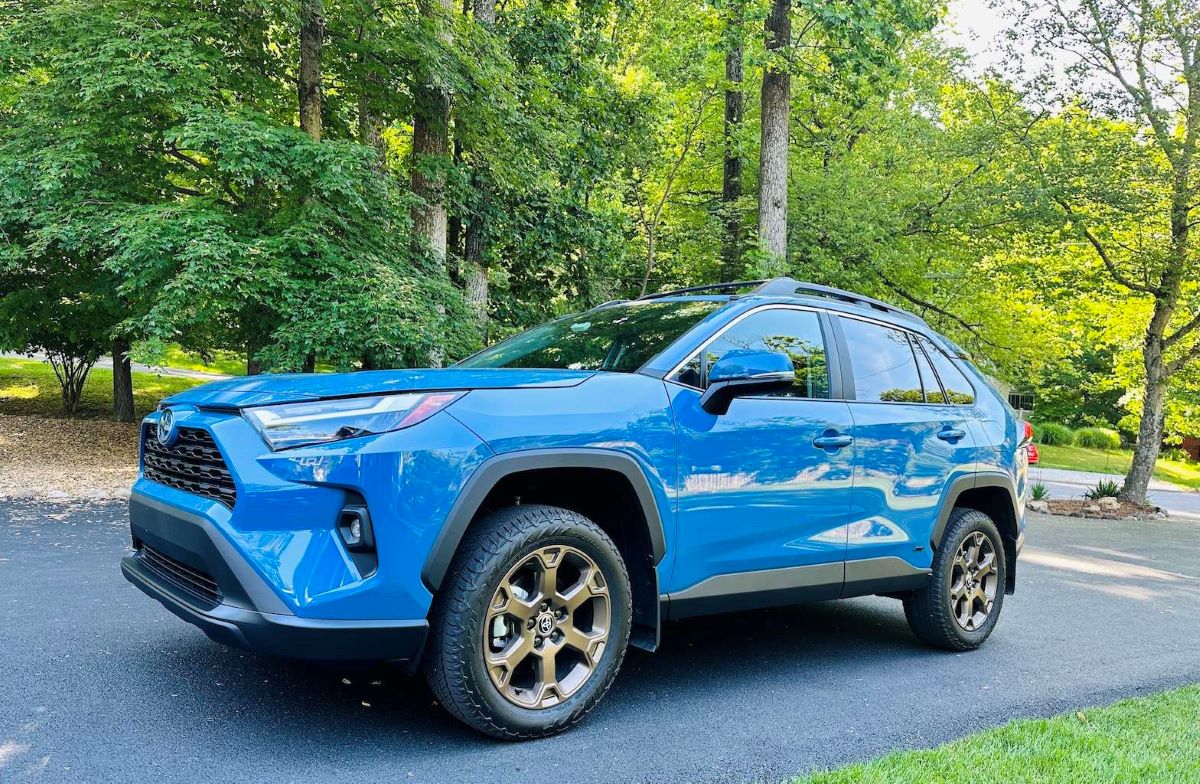
The RAV4 comes with two powertrain options: the standard hybrid setup and a more powerful plug-in hybrid. The standard hybrid combines a 2.5-liter four-cylinder engine with an electric motor up front and a continuously variable transmission, delivering 226 hp and 163 lb-ft of torque on front-wheel-drive models, or 236 hp on all-wheel-drive versions, which add a motor at the rear axle.
The plug-in hybrid uses the same 2.5-liter engine but adds a larger battery and a more robust electric motor to achieve a combined output of 324 hp and 172 lb-ft of torque.
The plug-in RAV4 is equipped with a 22.7 kWh battery that can recharge from 10% to 80% in about 35 minutes using a DC fast charger.
SE and GR Sport trims feature a 7 kW onboard charger, which restores the same charge in roughly 3.5 hours on a Level 2 outlet, while Woodland and XSE trims come with an 11 kW charger that completes the same charge in approximately 2.5 hours.
When it comes to driving on electric power alone, the plug-in RAV4 can cover 48 to 52 miles depending on trim level and conditions.
Fuel economy for the PHEV RAV4 reaches about 41 combined MPG at its best, while performance-oriented trims like the GR Sport achieve around 37 combined MPG. For the standard hybrid, the RAV4 delivers a combined fuel efficiency ranging from 39 to 42 MPG.
2. Subaru Forester
Subaru’s reputation for safety tech is largely built on its EyeSight camera system, but its blind-spot monitoring is radar-based and very good.
The Forester has one of the widest detection zones in the segment, catching motorcycles, fast-approaching vehicles, and even lane-splitting traffic earlier than some rivals.
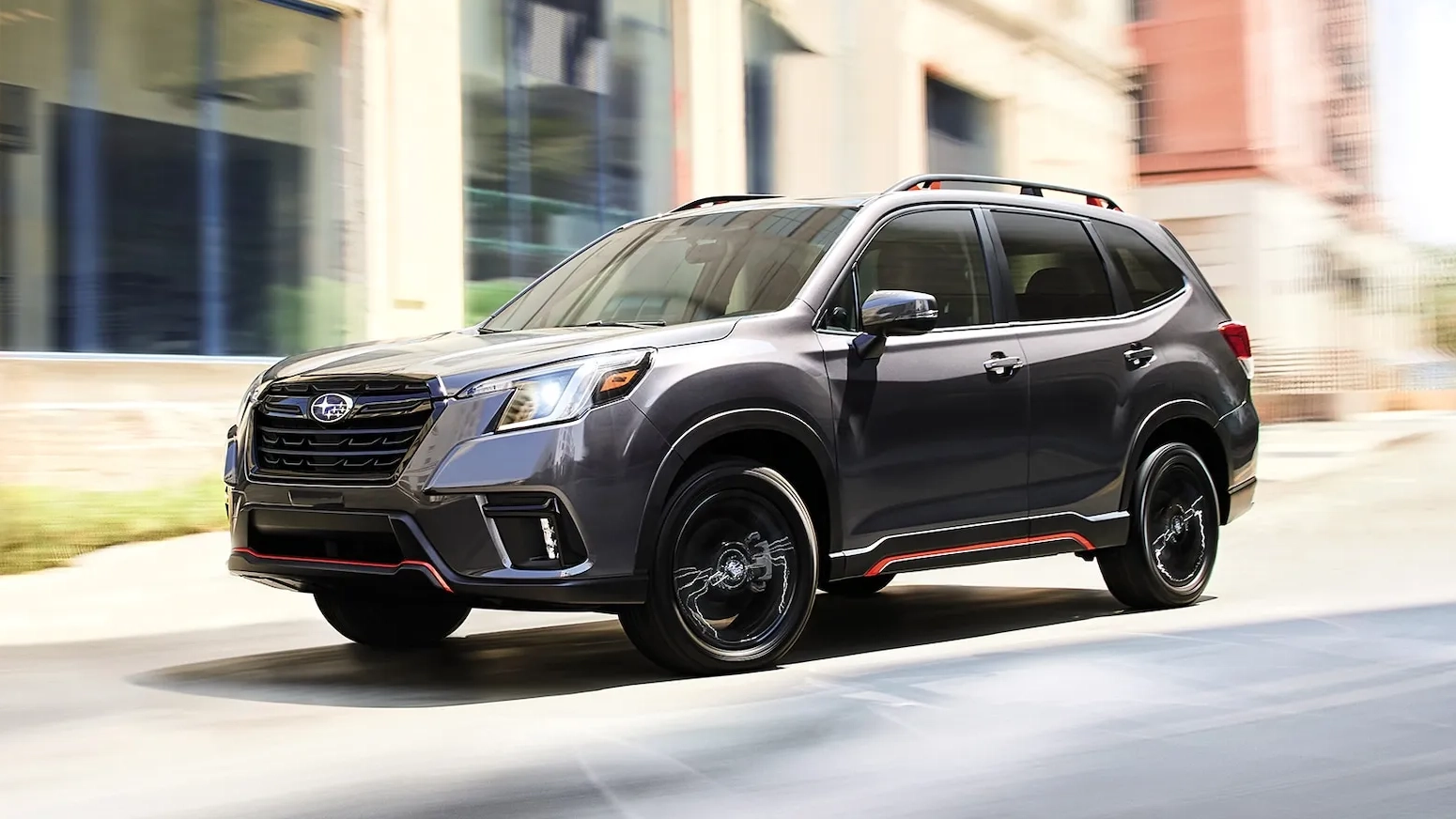
More importantly, this system almost never gives unnecessary warnings. Subaru calibrates the detection logic to ignore roadside barriers and reflective metal guardrails, which tend to confuse cheaper implementations.
For drivers in mountainous or rural US areas, where multilane roads twist and curve, the Forester remains impressively accurate.
3. Honda CR-V
Honda’s latest CR-V uses upgraded rear-corner radar that handles rain, fog, and dirty winter roads better than earlier generations.
Owners appreciate that it doesn’t flicker warnings constantly a problem that plagues some crossovers when passing large trucks or driving next to concrete dividers.
The CR-V also excels at identifying high-closing-speed vehicles, meaning it’s less likely to miss a fast-approaching sedan in the next lane.
In long-term reliability surveys, CR-V owners consistently rank the blind-spot monitor as one of the least problematic features in the vehicle, despite its complexity.
This crossover is designed for navigating the daily grind in quiet comfort, offering just enough performance without going over the top. Both available powertrains provide sufficient thrust to reach highway speeds smoothly, and they handle two-lane passing adequately. Excitement, however, is not their strong suit.
The standard nonhybrid CR-V features a turbocharged 1.5-liter four-cylinder engine producing 190 horsepower and 179 pound-feet of torque. It pairs with a continuously variable automatic transmission (CVT).
In this configuration, the CR-V accelerates from 0 to 60 mph in roughly 9 seconds, according to my unscientific tests. The engine responds reasonably well at higher speeds but can become noisy under full throttle.
The hybrid CR-V uses a turbocharged 2.0-liter four-cylinder engine coupled with two electric motors, delivering a combined 204 horsepower through an unusual single-speed automatic transmission.
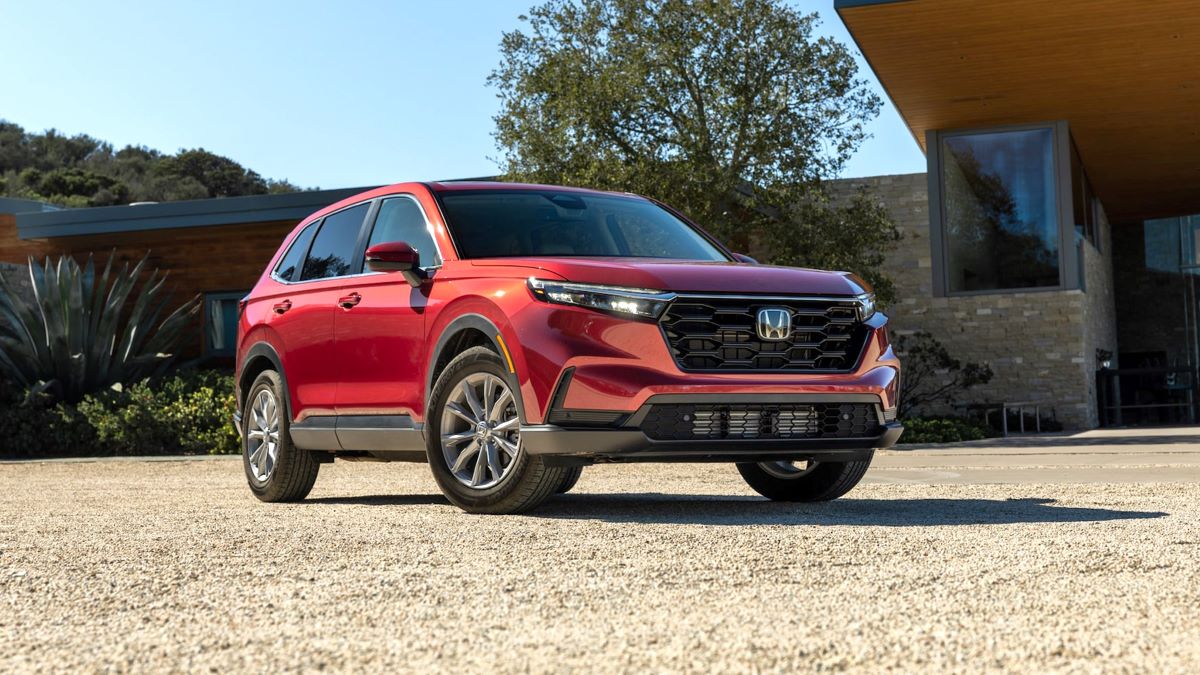
This setup resembles what you might find in an electric vehicle, but it incorporates a clutch-lockup mechanism that allows the gasoline engine to contribute power under certain conditions.
Unlike hybrid systems from Toyota, Hyundai, and Subaru, this design relies more on the electric motor than the gasoline engine. The gas engine assists the wheels, but the primary driving force comes from the electric motor.
Power delivery feels seamless compared with the hybrid RAV4 or Tucson, although it can result in the engine revving to relatively high RPMs without input or noticeable changes in speed.
This occurs when the gasoline engine works to charge the battery pack. With the extra boost, the hybrid CR-V accelerates quicker, but 0 to 60 mph still takes about 8 seconds. Both powertrains are shared with the Civic and Civic Hybrid, but the CR-V is larger and heavier. It offers sufficient speed for most drivers, but only marginally.
Steering in the CR-V is light yet precise, providing ample feedback from the road. While it handles nearly as deftly as Mazda competitors, it is tuned more for comfort, exhibiting slightly more understeer and a softer ride than the Civic. The experience isn’t thrilling, but it feels confident and secure.
Braking performance is solid, and hybrid CR-Vs now feature multiple brake regeneration modes, allowing drivers to adjust the level of regenerative braking. The most aggressive setting delivers an almost electric vehicle-like experience, essentially enabling one-pedal driving.
4. Mazda CX-5
Mazda tunes its safety systems with the same precision as its driving dynamics. The CX-5’s blind-spot sensor is proof: it focuses on genuine lane-change threats rather than every object nearby.
While some systems scream every time a car sits two lanes over, Mazda’s remains composed. The CX-5’s rear radar units refresh very quickly, which helps the system correctly track vehicles entering and exiting the blind zone.
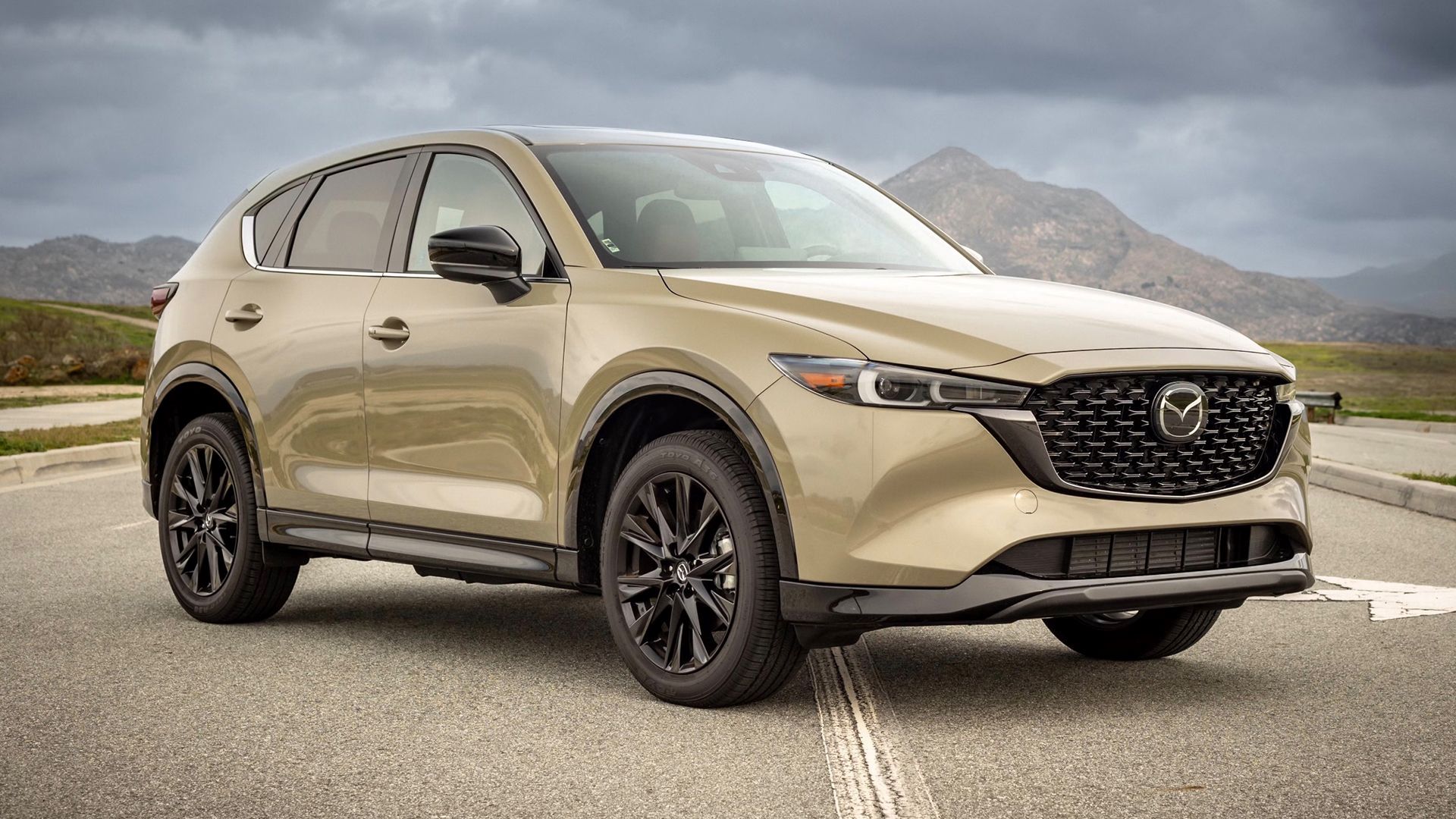
Motorcyclists in particular praise Mazda’s accuracy, noting fewer missed detections compared with competitors. Even more impressive, the system tends not to degrade with age, keeping the CX-5 feeling modern even after years of ownership.
5. Hyundai Tucson
Hyundai’s tech reputation has skyrocketed, and the Tucson shows why. Its blind-spot detection has strong resistance to false positives thanks to refined filtering algorithms.
The system is also one of the clearest in the segment, pairing visual indicators with subtle, well-timed chimes.
What brings the Tucson onto this list is how seamlessly the blind-spot warnings integrate with lane-keeping and steering assist: when a vehicle is detected, steering nudges feel natural rather than abrupt.
For busy suburban commuters navigating frequent merges and off-ramps, this system strikes a near-perfect balance of sensitivity and restraint.
The 2026 Tucson comes equipped with a 2.5-liter four-cylinder engine producing 187 horsepower and 178 pound-feet of torque. All models use an eight-speed automatic transmission, with front-wheel drive as standard and all-wheel drive offered as an option.
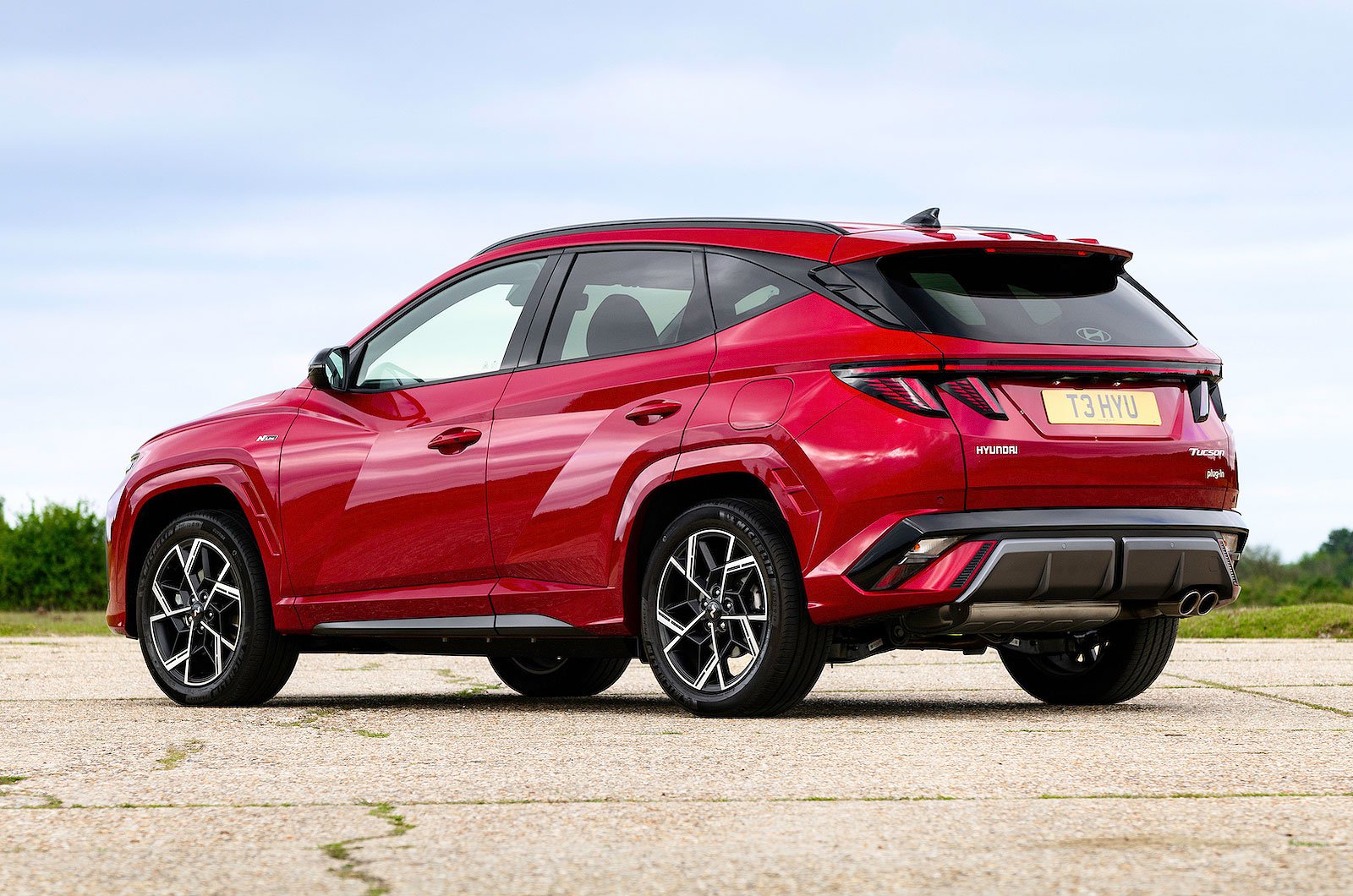
Those horsepower and torque figures don’t promise blistering acceleration, and indeed, the Tucson delivers exactly what you’d expect. It reaches 0 to 60 mph in roughly 9 seconds, but Hyundai’s choice of an eight-speed automatic over a continuously variable transmission (CVT) enhances the driving experience, avoiding the usual drone and “stuck-in-a-gear” feel that can plague many CVTs.
While the Tucson isn’t a speed demon, it reaches freeway speeds and handles highway merging smoothly and without drama. In stop-and-go traffic, the brakes perform confidently, offering strong stopping power and well-modulated feedback.
Despite its smooth ride, the Tucson surprises on twisty roads. Soft suspension setups often lead to excessive body lean and loose handling, but the Tucson maintains composure through corners, delivering neutral and predictable responses.
Its suspension absorbs nearly all pavement imperfections, offering a level of ride comfort that’s genuinely impressive for the compact SUV segment. Likewise, the light steering effort doesn’t come at the cost of precision; the Tucson communicates road feedback effectively, providing admirable accuracy and confidence behind the wheel.
Also Read: 10 Crossovers That Actually Deserve Their Popularity
Crossovers With Blind-Spot Sensors That “Cry Wolf”
Blind-spot monitoring is supposed to be a helpful safety net, alerting you when a vehicle sneaks up beside you so you don’t change lanes into danger. But not all systems are created equal. Some crossovers are plagued by overly sensitive or poorly calibrated blind‑spot sensors that trigger warnings when there’s nothing there.
These false alarms can erode driver confidence and eventually lead people to disable the feature entirely. In this article, we’ll call out crossovers whose blind‑spot monitoring systems frequently misfire, examine the common causes, and help you decide whether the risk of a “cry‑wolf” system outweighs the safety benefits.
1. Nissan Rogue
The Rogue is comfortable and popular, but its blind-spot monitoring is not its strongest asset.
Owners regularly report that the system triggers alerts even when no vehicle is present often when driving beside a guardrail or passing semi trucks.
Heavy rain and snow only amplify the issue, causing unpredictable warning lights and chimes. Although the system rarely misses actual vehicles, the number of false positives makes drivers wonder whether the sensor has degraded.
Nissan has issued technical service bulletins for recalibration, but long-term stability remains inconsistent across model years.
We’re fans of the Outlander plug-in hybrid, and the Mitsubishi-inspired design elements give this otherwise unremarkable compact SUV some added flair. Similarly, the Rogue plug-in hybrid will offer seating for seven passengers, whereas the standard Rogue models only include two rows of seats.
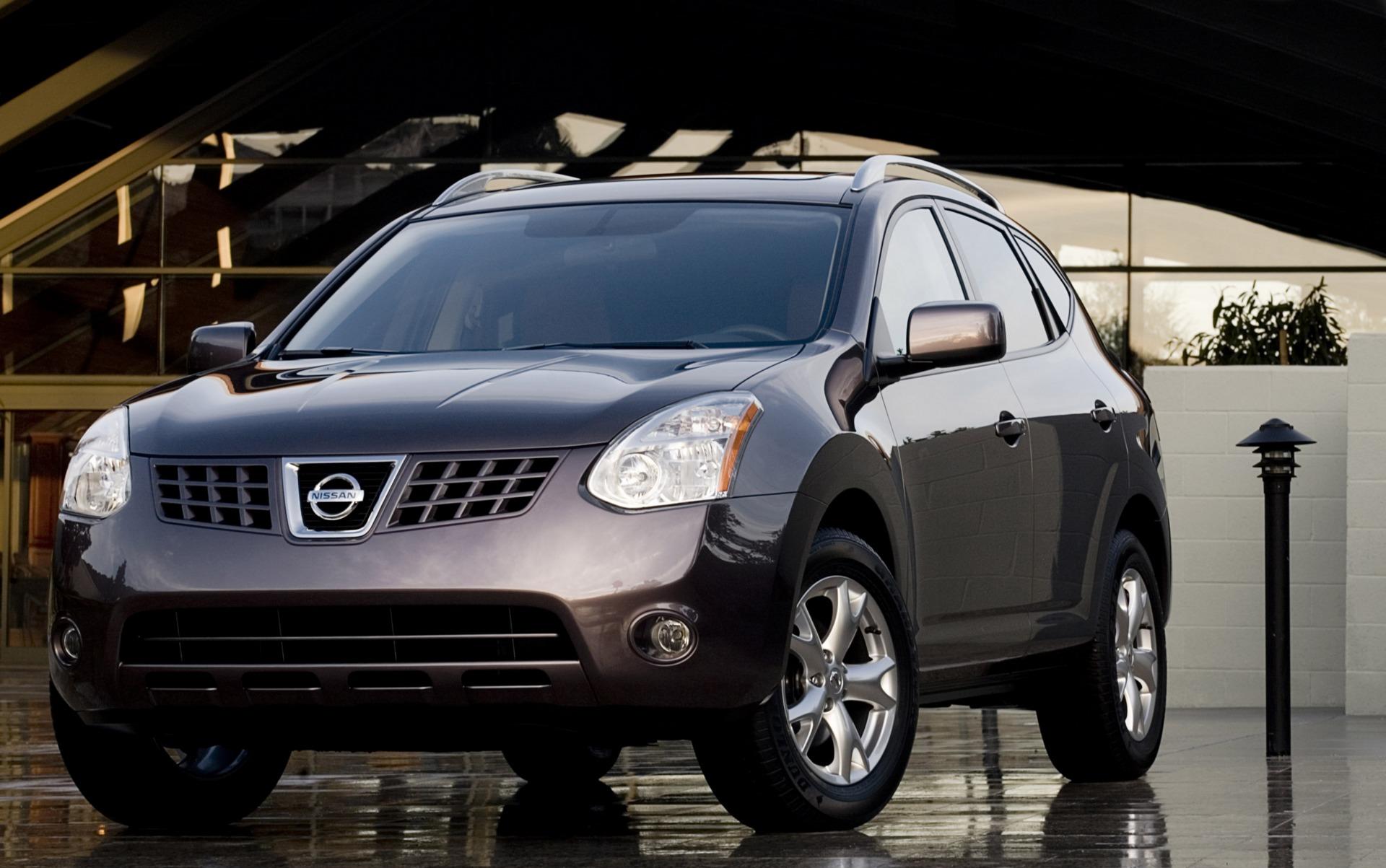
The Rogue PHEV’s powertrain combines a 2.4-liter four-cylinder engine with two electric motors, all powered by a 20-kWh battery. The system produces a total of 248 horsepower and 332 lb-ft of torque, which is plenty for a compact crossover.
All-wheel drive is standard, and every Rogue plug-in hybrid rides on 20-inch wheels. When fully charged, Nissan estimates about 38 miles of electric-only driving, with a total range of 420 miles.
One significant drawback compared to the Outlander is charging. The Mitsubishi Outlander supports DC fast-charging, though it uses the older CHAdeMO plug, which can be harder to find.
The Rogue PHEV, on the other hand, can only be charged using a Level 1 household outlet or a Level 2 wall charger. When using a Level 2 charger, Nissan reports that it takes a sluggish 7.5 hours to fully replenish the battery.
The 2026 Nissan Rogue plug-in hybrid makes its public debut this week at the Los Angeles Auto Show, with the first customer deliveries expected early next year.
2. Ford Escape
The Ford Escape’s blind-spot sensors are positioned low on the rear bumper, which makes them vulnerable to road grime and winter salt common issues in northern US states.
When dirty, the system tends to either under-report (missing vehicles) or drastically over-report (constant flashing).
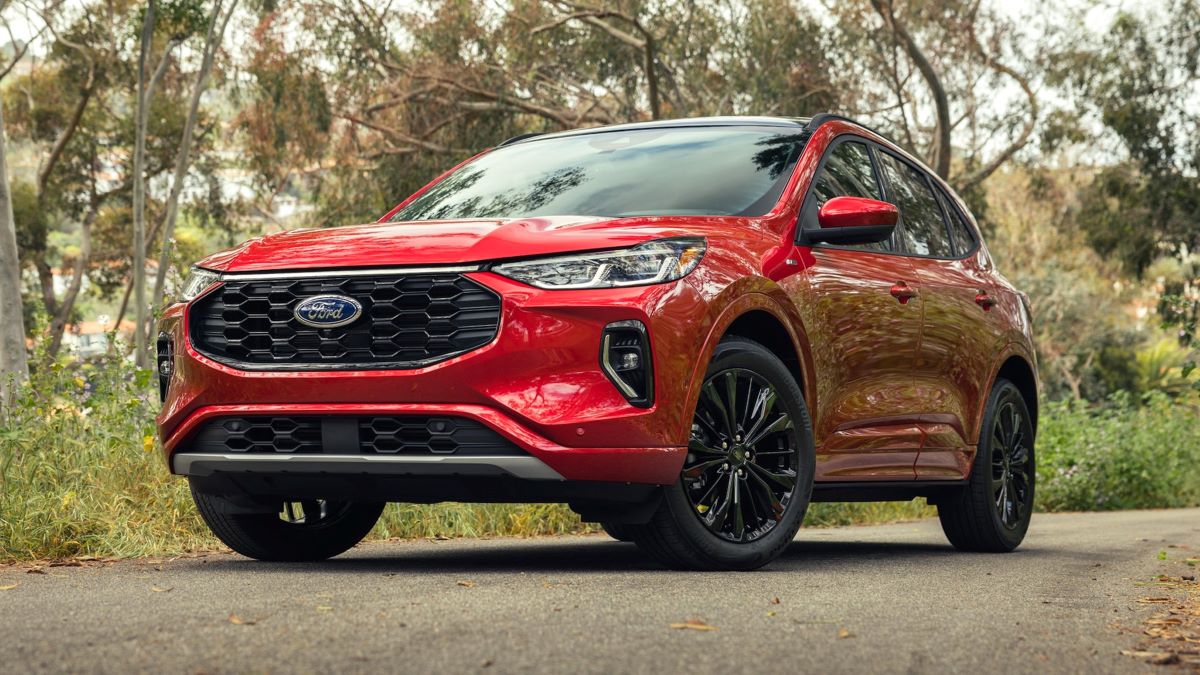
Many drivers complain about warnings when overtaking slow vehicles on two-lane highways or when merging near reflective barriers.
Even after cleaning, the system sometimes needs several minutes of driving before recalibrating itself, which can be frustrating during winter commutes.
The 2025 Ford Escape is easy to maneuver, thanks to its compact size and light steering effort. That said, the handling feels somewhat numb, and the ride quality is merely adequate.
Under the hood, the Escape comes standard with a 180-horsepower turbocharged three-cylinder engine. It performs fine for everyday driving, but it may leave you wanting a bit more power for passing on the highway.
The standard eight-speed automatic transmission can occasionally struggle to select the optimal gear. For those seeking stronger acceleration, higher trims come equipped with a 250-horsepower turbocharged four-cylinder engine that delivers a noticeably peppier performance.
The EPA has not yet released fuel economy figures for the 2025 Escape, but the comparable 2024 model demonstrates solid efficiency for a compact SUV. With the base engine and standard front-wheel drive, it achieves roughly 27 mpg in the city and 34 mpg on the highway.
3. Chevrolet Equinox
Chevy equips the Equinox with a blind-spot monitor that tends to lean too cautious. At highway speeds, the system frequently warns about vehicles that are either already fully visible in the mirror or a full lane over.
The behavior is especially noticeable during heavy traffic, where the Equinox seems to light up constantly, even when no immediate lane-change threat exists.
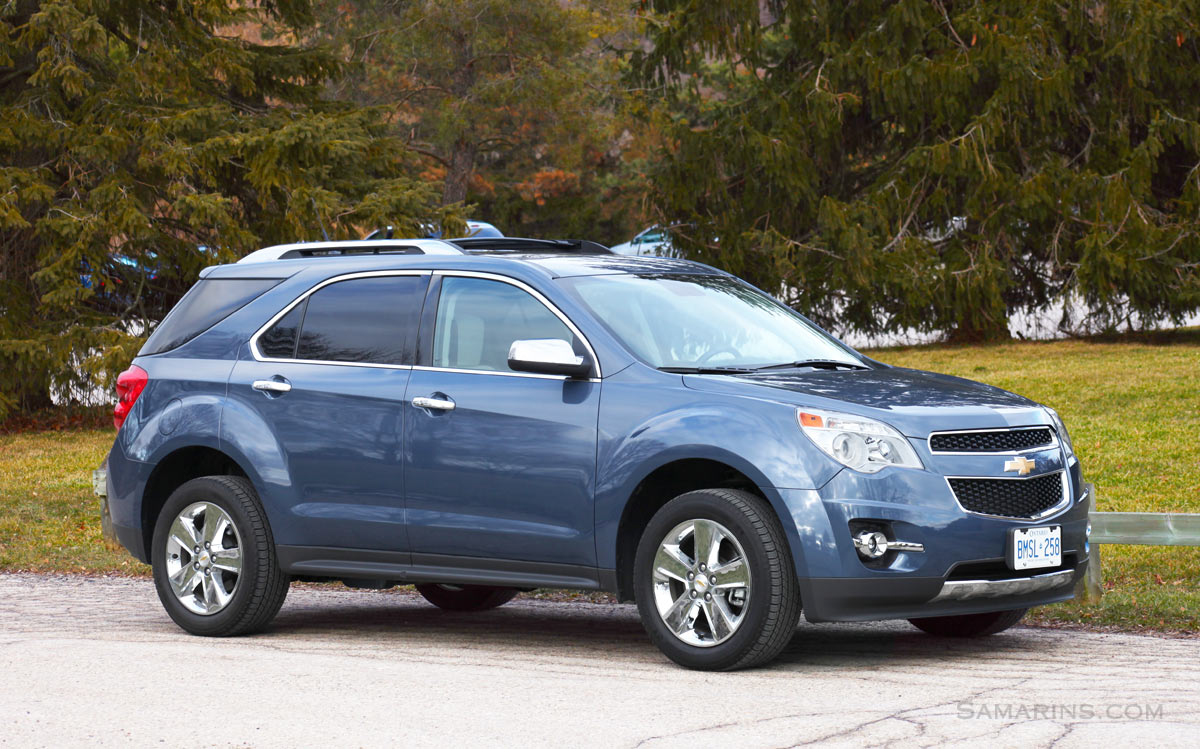
Owners say the system is reliable at detecting cars in the true blind zone but struggles with filtering out harmless adjacent-lane movement. For drivers in crowded metro areas, the constant nagging becomes tiring.
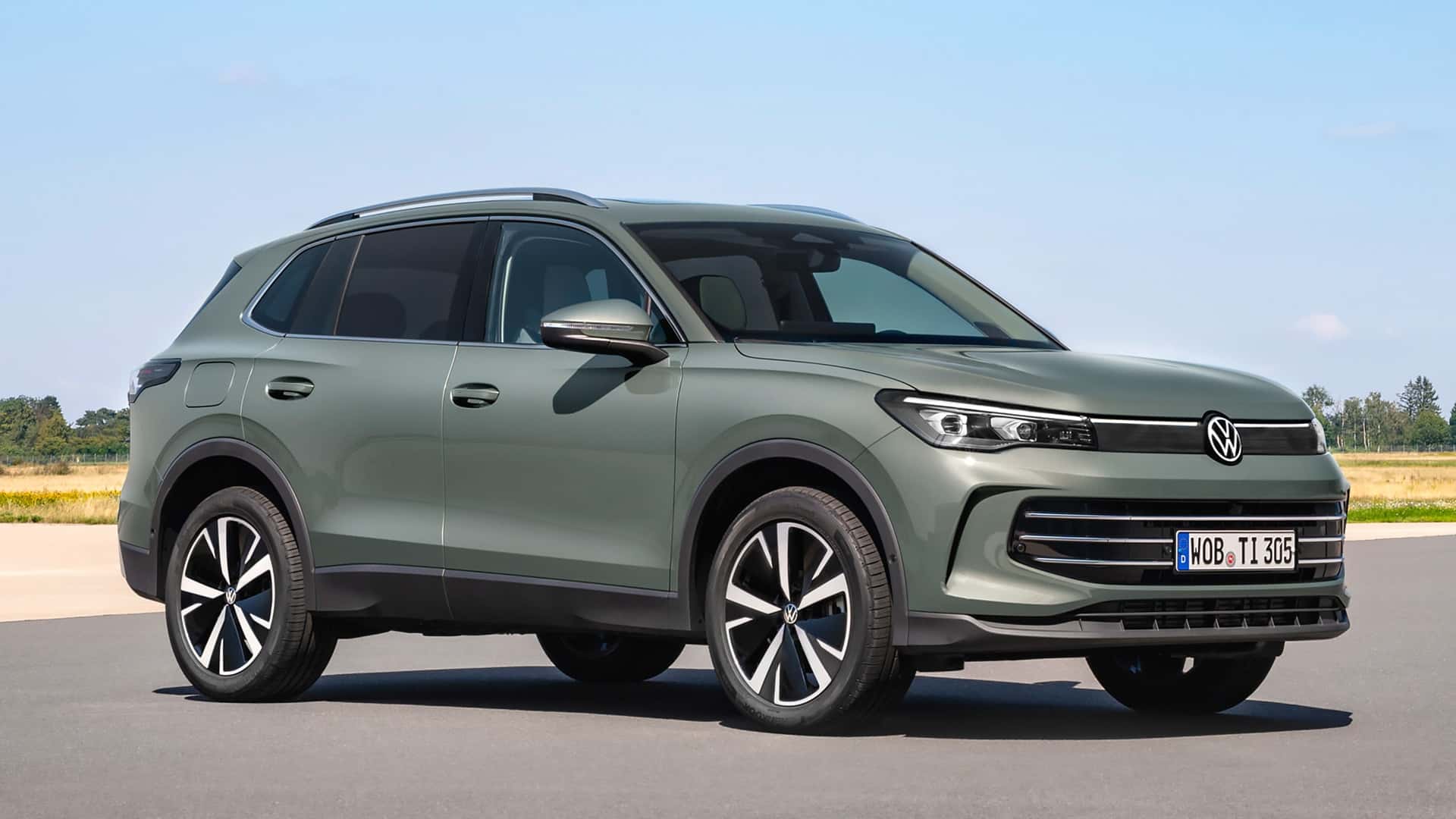
4. Volkswagen Tiguan
The Tiguan delivers a comfortable European ride, but its blind-spot sensors struggle with US weather patterns.
When moisture builds on the bumper, the system may trigger warnings for non-existent vehicles or disable itself altogether. Some drivers also report inconsistent detection of motorcycles, especially at night.
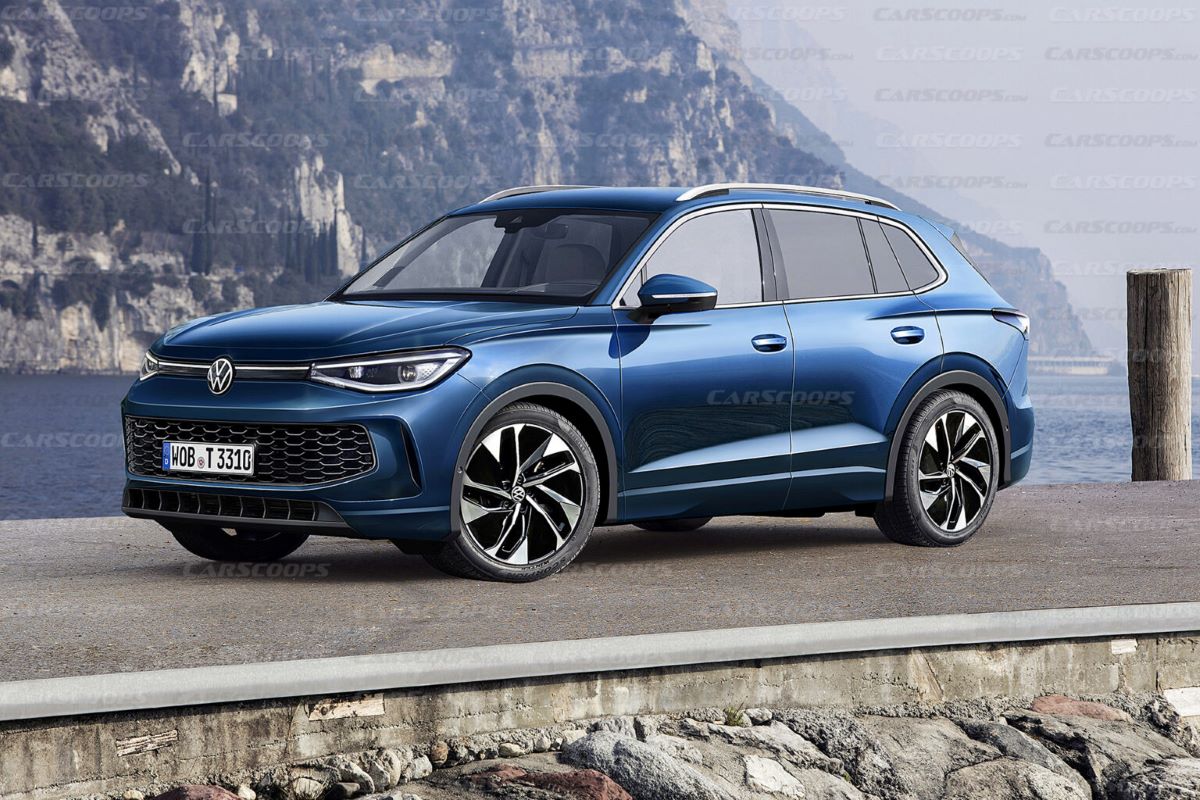
While Volkswagen’s radar hardware is generally solid, the detection logic seems overly sensitive to reflective water surfaces and wet pavement conditions that are everyday realities in much of the US.
The result is a system that works wonderfully on clear days but becomes less trustworthy in bad weather.
Among compact crossovers, the 2023 Volkswagen Tiguan stands out as the one that delivers a distinctly European driving experience, combining precise handling with refined, elegant styling. Its sole engine offering is a smooth, turbocharged 2.0-liter four-cylinder, which provides adequate performance while excelling in fuel efficiency.
Every Tiguan comes equipped with a wide range of tech features, including a digital gauge display, modern infotainment connectivity, and driver-assistance systems.
The interior, while conservatively styled, is roomy for both passengers and cargo. A third row of seats is available as an option, a rarity in this segment, matched only by the Mitsubishi Outlander. Above all, the Tiguan earns praise for being engaging and enjoyable to drive.
All 2023 Tiguans come with a turbocharged four-cylinder engine producing 184 horsepower. Front-wheel drive is standard, while Volkswagen’s 4Motion all-wheel-drive system is optional.
This SUV delivers an engaging driving experience with a smooth, responsive engine and well-matched automatic transmission. While the Tiguan is not especially fast, it compensates with a taut ride, nimble handling, and precise steering, a nod to VW’s respected GTI heritage.
The brake pedal feels softer than the firm, progressive feel of other Volkswagen models, and at the test track, the Tiguan recorded a zero-to-60-mph time of 9.1 seconds.
On real-world roads, however, it doesn’t feel as slow as the numbers suggest. Its low-end torque keeps city driving lively, though highway merging is the one area where more power might be appreciated.
5. Jeep Compass
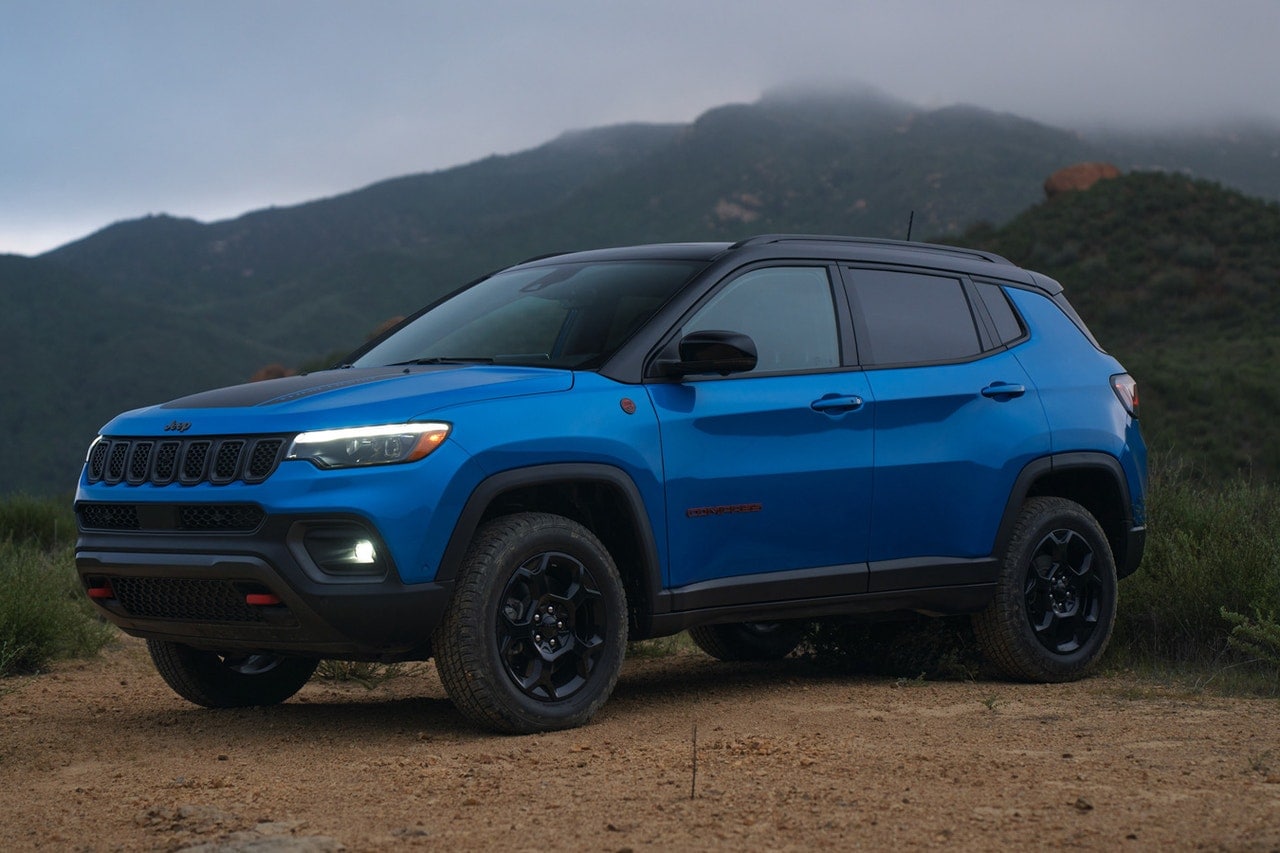
The Jeep Compass uses rear sensors placed very close to the outer edges of the bumper.
While this improves the detection of vehicles lingering just outside the driver’s view, it also increases false positives on narrow roads or when passing large objects like trailers, utility boxes, or even tall shrubs.
Some owners say the Compass alerts at random during city driving, where tight lanes and parked cars confuse the system. At highway speeds, the detection range is acceptable, but suburban drivers often describe the system as “jumpier than it needs to be.”
Blind-spot monitoring is no longer a luxury it’s a crucial piece of the modern driving experience, especially in the US where multilane highways, aggressive merges, and dense suburban traffic make lane-change safety a daily concern.
But as this list shows, not every crossover implements the technology equally well. Reliable systems like those in the RAV4, Forester, CR-V, CX-5, and Tucson deliver consistent performance regardless of weather or traffic conditions.
With the discontinuation of the Renegade and Cherokee in 2023, the Compass has become Jeep’s smallest and most affordable SUV. Despite its compact size, it is among the priciest vehicles in its segment and is also one of the oldest models in the lineup.
The Compass offers a robust engine, available all-wheel drive, and a spacious interior, but it struggles to keep pace with more contemporary competitors.
For those planning to venture off-road, the Trailhawk model remains highly capable. For 2025, Jeep eliminated the Latitude Lux trim and upgraded the Latitude trim with heated seats, a heated steering wheel, and remote engine start.
If you’re considering a Compass, a test drive is worthwhile, but it’s smart to compare it with rival models before committing. The Compass hasn’t seen a redesign since 2017, which makes it less competitive in terms of technology, comfort, and fuel efficiency.
Most newer subcompact SUVs offer better features at a lower price, so unless you find an exceptional deal, one of those alternatives may be a smarter choice. The Trailhawk, however, is a notable exception—ideal for off-road enthusiasts or anyone who enjoys an SUV with off-road styling and capabilities.
Meanwhile, the least reliable systems often overwhelm drivers with false alerts, reducing trust and encouraging people to ignore warnings altogether.
For shoppers evaluating their next crossover, test-driving with an eye on blind-spot behavior is essential.
A well-tuned system can make every commute smoother, while a glitchy one becomes a constant distraction. Choosing wisely could mean the difference between confidence and frustration behind the wheel.
