Wagons have always held a special place in automotive history, offering the rare combination of practicality and style that few vehicles can match. From family haulers to performance machines, American automakers once built wagons that appealed to enthusiasts and everyday drivers alike.
Over the decades, however, wagons largely disappeared from U.S. roads, replaced by SUVs and crossovers. Yet these vehicles left an indelible mark, blending cargo capacity with driving enjoyment, unique designs, and even high-performance engines.
Cars like the Chevrolet Chevelle SS Wagon, AMC Eagle, and Oldsmobile Vista Cruiser demonstrated that wagons could be more than just utilitarian vehicles. They inspired passion and loyalty among drivers.
This list celebrates ten wagons that Americans should bring back, whether for their innovative engineering, bold styling, or rare ability to combine family practicality with spirited driving. These vehicles remind us that the wagon still has untapped potential in today’s automotive market.
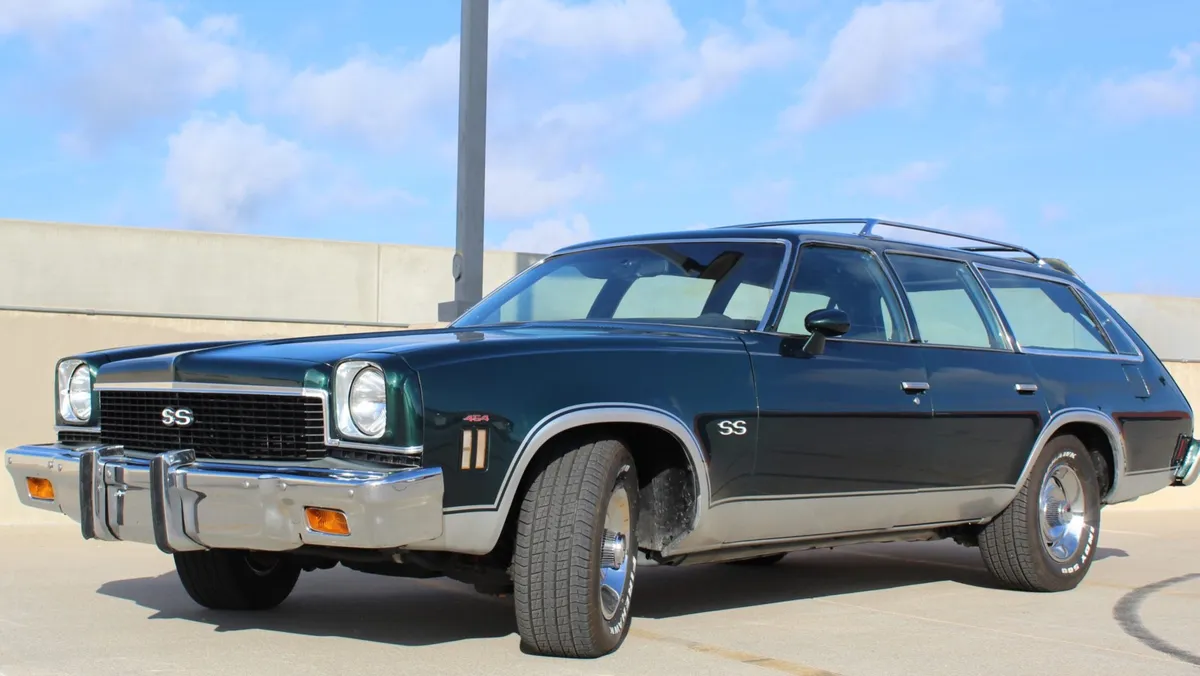
1. Chevrolet Chevelle SS Wagon: Muscle Meets Practicality
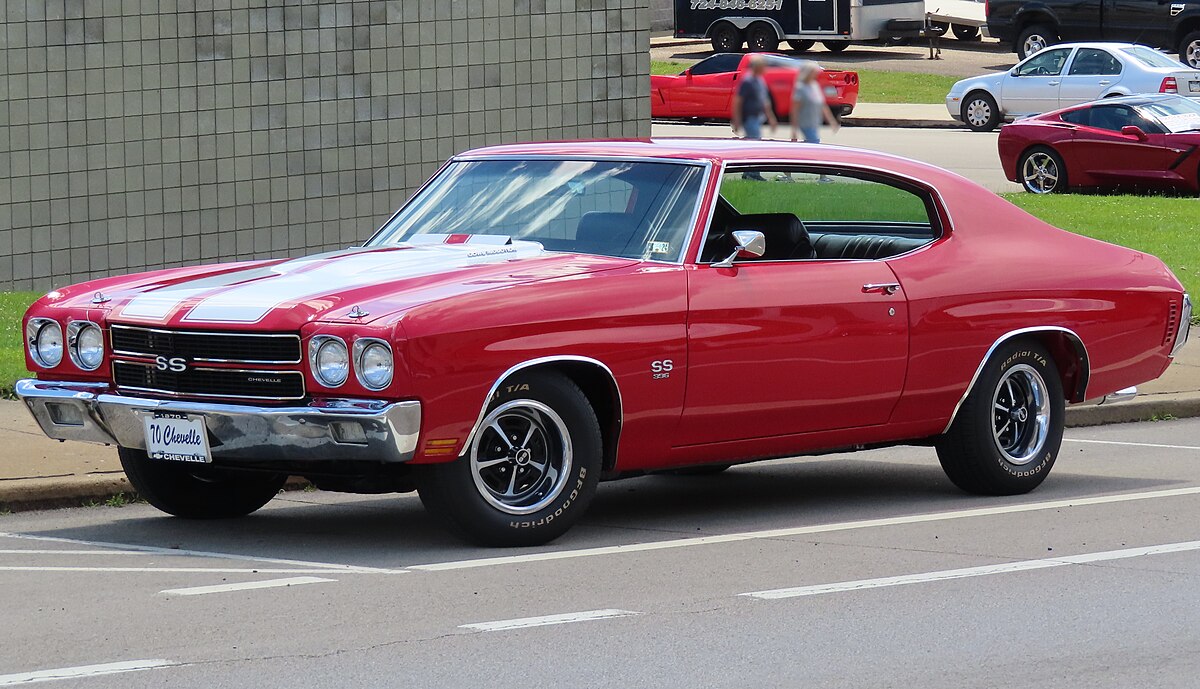
The Chevrolet Chevelle has long stood as an emblem of the golden era of American muscle cars. Produced from 1963 to 1977 across three generations, the Chevelle became synonymous with power, style, and performance. While two-door hardtops were the most celebrated models, the lineup also included sedans and wagons, offering practical options for families who wanted muscle-car performance.
The real heart of the Chevelle lay in its V8 engines, with big-block options available even in wagon form, delivering the performance that cemented its legendary status.
One particularly rare example is the 1973 Chevelle SS wagon. Offered with the formidable 454 big-block V8, official SS badging inside and out, and factory Rallye rims, this model combined straight-line muscle with family-friendly utility.
While the 454 produced a modest 245 horsepower in this iteration, it represented a unique marriage of raw performance and practicality a muscle car suitable for a parent needing cargo space without sacrificing speed. The SS wagon’s rarity and distinctive blend of traits have made it a sought-after collector’s item.
Performance-wise, the Chevelle SS wagon offered thrilling acceleration and an engaging, driver-focused experience, though its handling and ride quality reflected the muscle-car ethos of the time rather than modern refinements.
Its wagon body provided generous cargo space, earning it the reputation of a “hot-rod parent’s dream machine.” Well-maintained or restored examples are praised for straight bodies, clean interiors, and powerful engines, though maintenance can be demanding due to the specialized nature of classic muscle cars.
While the modern Chevrolet SS saloon based on the Holden Commodore delivers strong V8 power, agile handling, and a comfortable ride, it is a completely separate vehicle from the classic Chevelle SS wagon. The modern SS was short-lived in the U.S., highlighting the enduring uniqueness of the original Chevelle SS wagons.
The Chevrolet Chevelle SS wagon remains an iconic and rare muscle car that blends performance with practicality. Its powerful big-block engines, distinctive styling, and utility make it a standout among classic American vehicles. While it may require care and is not ideal for daily driving, the Chevelle SS wagon represents a rare era when muscle cars could serve both the thrill-seeker and the family driver.
2. Mazdaspeed3: A Hot Hatch Icon That Deserves a Comeback
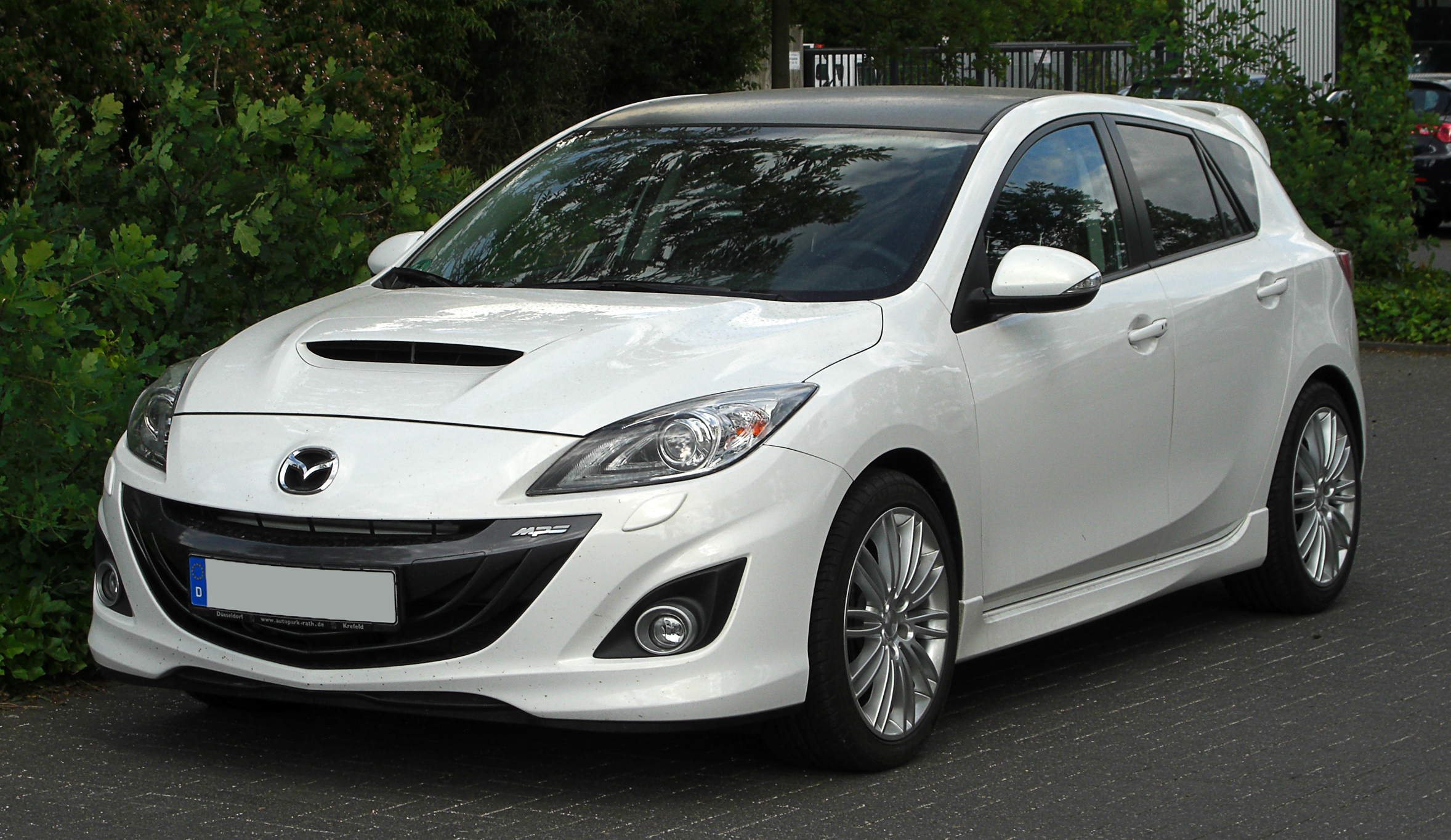
The Mazdaspeed3 represents one of Mazda’s boldest and most memorable performance creations. Introduced in 2006, it delivered a unique blend of everyday practicality and impressive power. Its direct-injected and turbocharged 2.3-liter engine produced 263 horsepower, which allowed it to compete confidently in the growing hot hatch segment.
The lightweight chassis featured upgraded suspension and brakes, giving the car strong performance value. The second generation arrived in 2010 with a distinctive hood scoop that fed the intercooler and helped make the car instantly recognizable. Despite being front-wheel drive, Mazda tuned the traction control system well enough to keep torque steer at manageable levels.
Production ended after the 2013 model year as Mazda shifted toward a more upscale direction. Many driving enthusiasts still hope the company will revisit its performance heritage, since a modern version of the Mazdaspeed3 would likely attract significant interest.
The 2013 Mazdaspeed3 used a 2.3-liter turbocharged four-cylinder engine that produced 263 hp and 280 lb-ft of torque. Power was sent to the front wheels through a six-speed manual transmission.
Testing showed a zero to sixty time of 6.3 seconds, which made it one of the quicker cars in its class. Fuel economy was less competitive with EPA estimates of 18 mpg city, 25 mpg highway and 21 mpg combined.
Standard safety equipment included antilock brakes, stability and traction control, front side airbags and full-length curtain airbags. The optional Technology package added blind-spot monitoring and an automatic emergency notification system.
Braking performance was excellent with a stop from 60 mph in 113 feet. Government and IIHS crash testing for the related Mazda3 platform delivered strong results in several categories.
On the road the Mazdaspeed3 provided sharp steering, confident grip and a highly engaging driving experience. Torque steer could appear during hard acceleration, although many drivers considered this part of the car’s character. Ride quality was acceptable for a performance hatch but not as smooth as some competitors.
Inside, the Mazdaspeed3 featured sport seats, upgraded gauges and unique upholstery. The cabin felt less refined than those of the GTI or Focus ST but better than the Subaru WRX and Scion FR-S. The updated touchscreen navigation system added for 2013 improved usability. Hatchback versatility remained a strong advantage with 17 cubic feet of cargo space that expanded to 42.8 with the rear seats folded.
3. Chevrolet Nomad: The Tri-Five Shooting Brake That Became a Legend
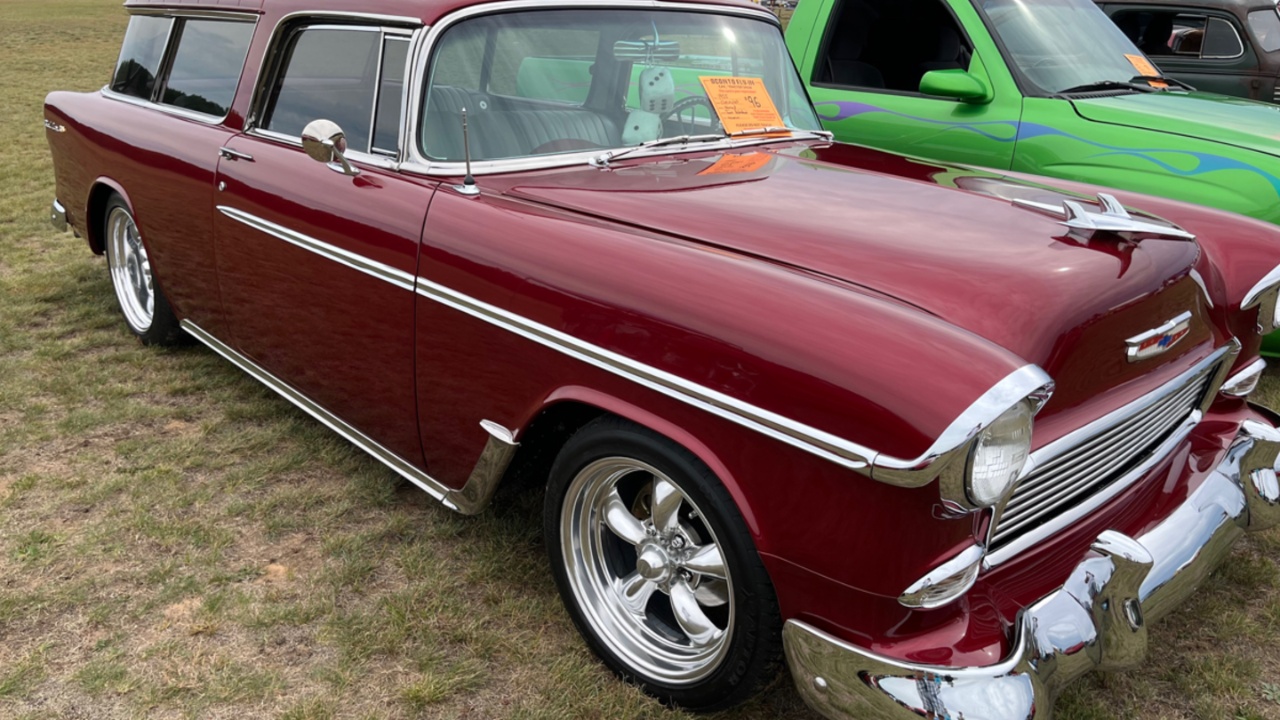
The Chevrolet Nomad holds a special place in classic American car culture. While the 1950s Chevrolet hardtops often steal the spotlight, the Nomad offered something more distinctive. Designed as a two-door station wagon with the stylish proportions of the era’s most iconic Chevys, it delivered the rare combination of sporty lines and practical cargo space.
The most celebrated examples belong to the 1955 through 1957 model years, known as the Tri-Five generation. These cars remain highly prized for their clean design, balanced handling, and roomy interiors. Their enduring appeal sparks the idea that a modern interpretation could thrive today, offering retro charm paired with contemporary technology and comfort.
Enthusiasts debate what makes the Nomad so compelling. Some point to its unique two-door shooting brake layout, while others appreciate its blend of sportiness and utility. Chevrolet produced only 7,886 Nomads in 1956, making them relatively rare.
Powertrain options ranged from a modest 140 horsepower engine to a far more appealing 225 horsepower V8, which gave the ’56 Nomad a lively reputation. Although its weight exceeded 3,300 pounds, the car delivered strong performance for its day thanks to an impressive power-to-weight balance.
The Nomad’s legacy continues partly through custom builds, which showcase how adaptable the platform is. One of the most striking examples is the “Green Machine,” a seven-year project by Steve and Cindy Bryant. Starting with a full frame-off rebuild, Steve integrated a custom front clip, a torque-arm rear suspension, and components sourced from a 1996 Impala.
After smoothing and shaving the body, he equipped the wagon with four-wheel disc brakes and AFCO coilovers. Power came from a GM 502 cubic-inch big-block V8 producing 497 horsepower at 5,000 rpm, paired with a GM 4L80E transmission.
Inside, the Green Machine received a full leather interior, custom gauges, a Bel Air–style steering wheel, and high-end audio equipment. Steve even chose an unconventional wheel setup, running 20-inch wheels in front and 18-inch wheels in the rear, giving the Nomad a bold stance.
Finished in Electric Metallic Green with Pearl White accents, the build demonstrates how the Nomad’s timeless shape can be transformed into a modern performance cruiser while preserving the spirit that made the original Tri-Five wagons so beloved.
4. Oldsmobile Vista Cruiser: The Original American Lifestyle Wagon
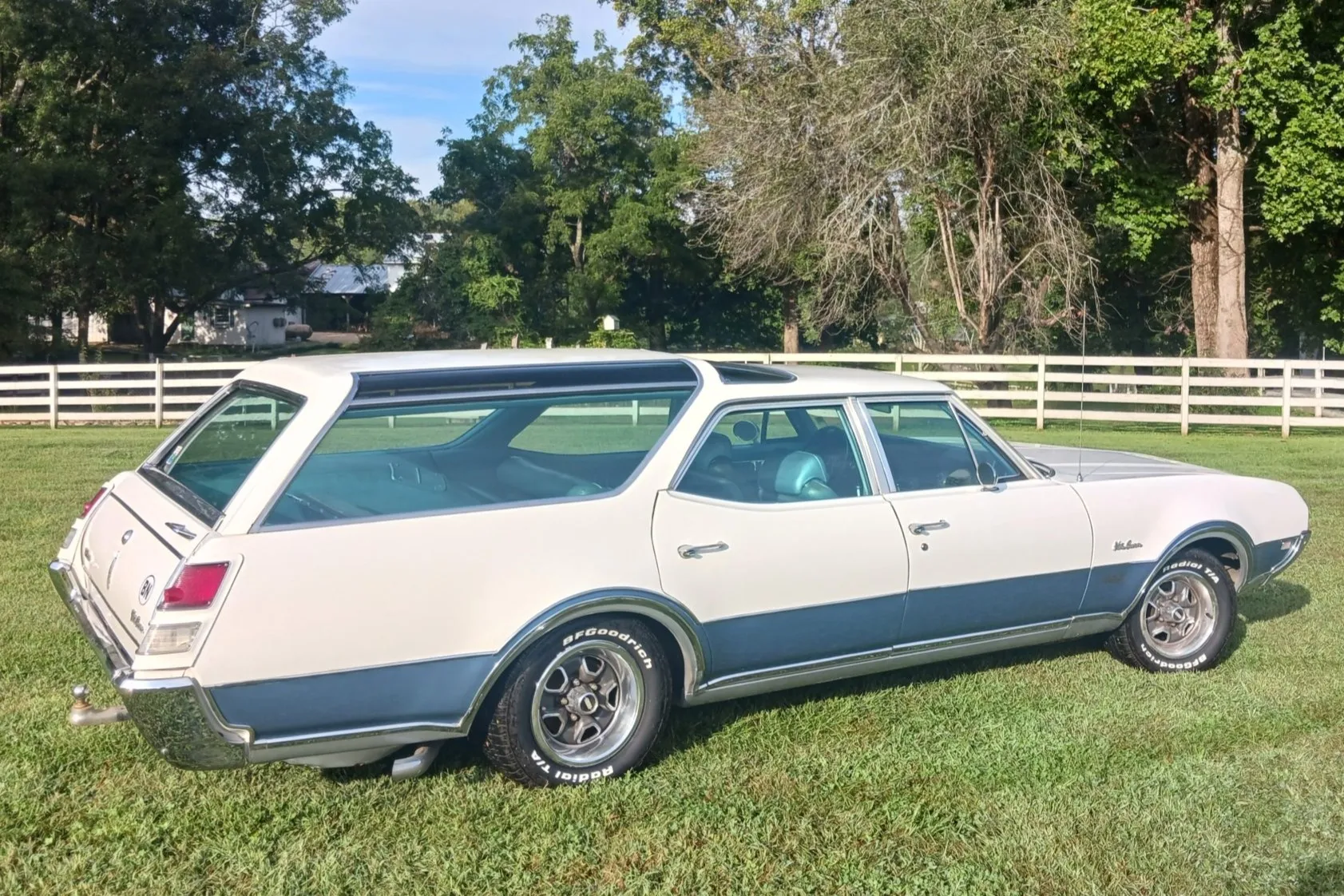
The Oldsmobile Vista Cruiser earned a special place in automotive and pop culture history. Known for its distinctive roofline and panoramic “Vista Roof” skylight panels, it offered passengers a scenic view that helped set it apart from other family wagons of its era. Its recurring presence in That ’70s Show cemented its identity as a symbol of suburban American life.
Produced from 1964 to 1977, the Vista Cruiser was based on the Cutlass but sold as a stand-alone model. Most versions left the factory with modest V8 engines suitable for relaxed family travel, although a few lucky buyers chose the powerful 455 cubic-inch V8, creating an unexpectedly quick family hauler.
The earliest Vista Cruisers embraced the spirit of American road travel. Inspired by the Greyhound Scenicruiser bus, Oldsmobile designed the wagon with generous interior space and an available three-row layout. The first generation’s 120-inch wheelbase grew to 121 inches for the second generation in 1968, which also introduced a clever tailgate that could be opened in two different ways.
These features signaled a focus on family comfort and highway capability. Engine choices ranged from a 250 horsepower 330 V8 to a 325 horsepower 400 V8, but the real transformation came in 1970 when Oldsmobile gave the Vista Cruiser true muscle-car credentials.
For the 1970 through 1972 model years, buyers could equip the Vista Cruiser with a 365 horsepower 455 V8 producing around 500 lb-ft of torque. This made the car one of the earliest and most powerful American muscle wagons, predating the famous performance estates from Europe by decades.
Transmission options included two automatics as well as a rare four-speed manual. Though its large size and weight kept it from being a natural drag racer, estimates suggest it could approach the acceleration of other 455-powered Oldsmobile models, which reached 60 mph in under six seconds.
Despite its rarity, 455-equipped Vista Cruisers remain surprisingly affordable, with some examples selling for well under $15,000. The rarest and most intriguing versions are the Hurst Vista Cruisers built for the 1972 Indianapolis 500.
Fitted with high-performance 455 engines and special equipment packages, these few cars served officials and medical staff during the event and now stand as near-mythical artifacts from a time when even family wagons could carry true muscle under the hood.
5. Mercedes-Benz S124: The Pinnacle of Over-Engineered Luxury
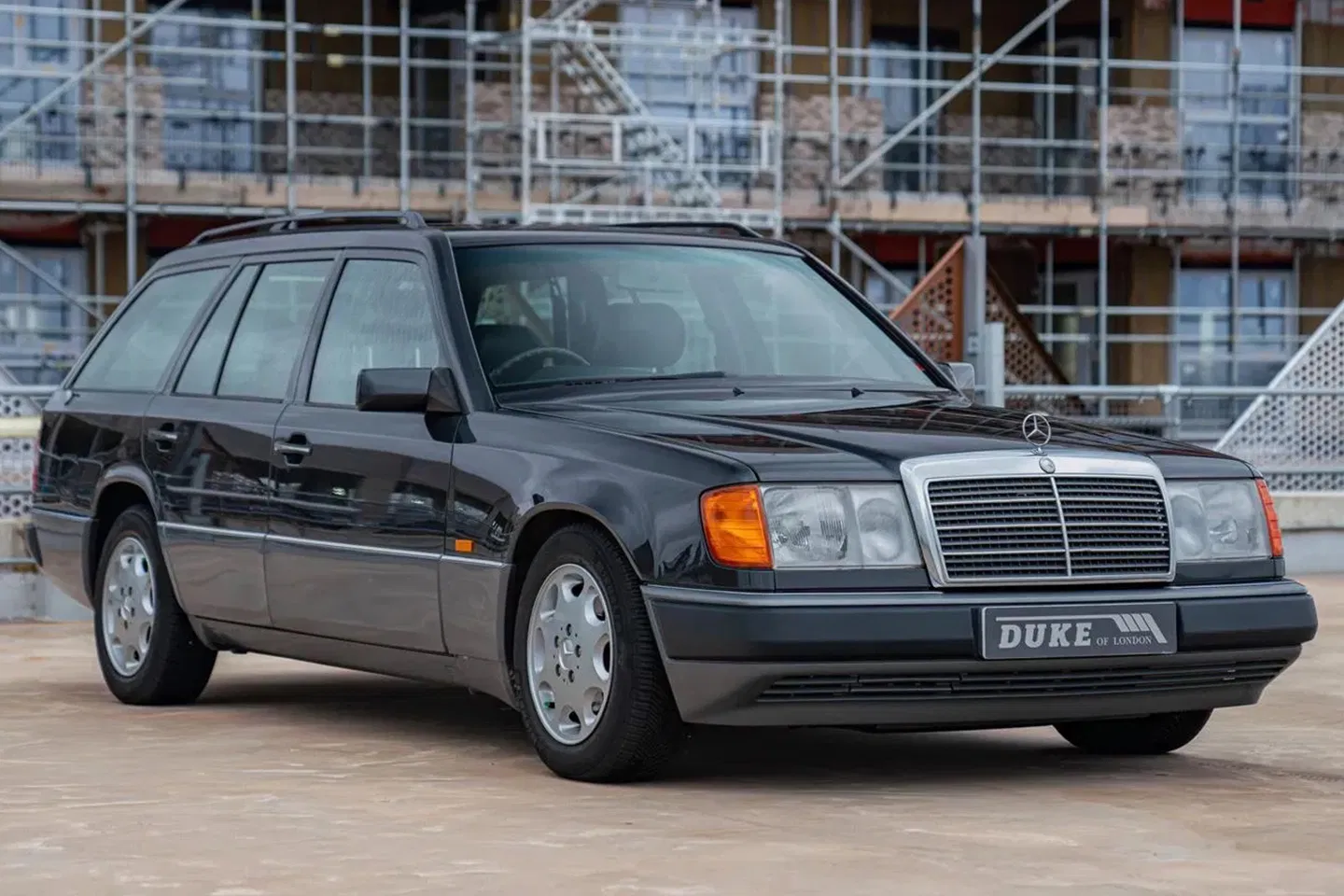
The Mercedes-Benz S124, the wagon variant of the W124 series, remains one of the most admired products in the brand’s history. Sold from 1986 to 1996 as the 300TE (gasoline) and 300TD (turbodiesel), it earned a reputation for reliability, durability, and refined comfort.
Many enthusiasts still regard it as one of Mercedes’ finest achievements, shaped during a period when the company prioritized engineering excellence above cost.
The S124 arrived shortly after Mercedes underwent a period of transformation during the early to mid 1980s. The brand sought to combine efficiency, new technology, and stronger dynamic capability with traditional Mercedes virtues. The W124 sedan, introduced as a successor to the long-running W123, reflected this shift.
It carried a fresh aerodynamic design, reduced weight, and a structure that delivered impressive rigidity. Features like a low drag coefficient of 0.28 and a distinctive tapered rear set new standards for sedan shaping, influencing car design across the world.
Powertrain developments also marked a major step forward. The new 3.0-liter M103 straight-six made the 300E one of the quickest four-door cars of its era with a 140 mph top speed.
Later variants, such as the 400E V8 and the Porsche-assisted 500E, expanded the lineup with higher performance and added refinement. Diesel offerings continued for global markets with models like the 300D Turbo and 250D Turbo, both respected among long-distance drivers.
A key highlight of the W124 platform was the pioneering multi-link rear suspension, which produced exceptional stability under braking, acceleration, and rough road conditions. This system contributed significantly to the car’s reputation for secure high-speed composure. Combined with early safety features like ABS, air bags, and advanced crumple zones, the W124 set benchmarks in its class.
Inside, the cabin followed a functional European design philosophy with intuitive ergonomics and durable materials. The S124 wagon variant added impressive practicality, cementing its place as a beloved choice among families and enthusiasts alike.
Though early production models experienced minor quality issues, Mercedes resolved them quickly. Many W124 and S124 examples still feel solid decades later, a testament to the platform’s engineering depth.
Today, enthusiasts continue to celebrate the S124 for its timeless design, its mechanical integrity, and its balanced blend of comfort and capability.
Also Read: 5 Cars With Helpful Front Cameras Vs 5 Scuffed Bumpers
6. Buick Roadmaster: The Final American Land Yacht
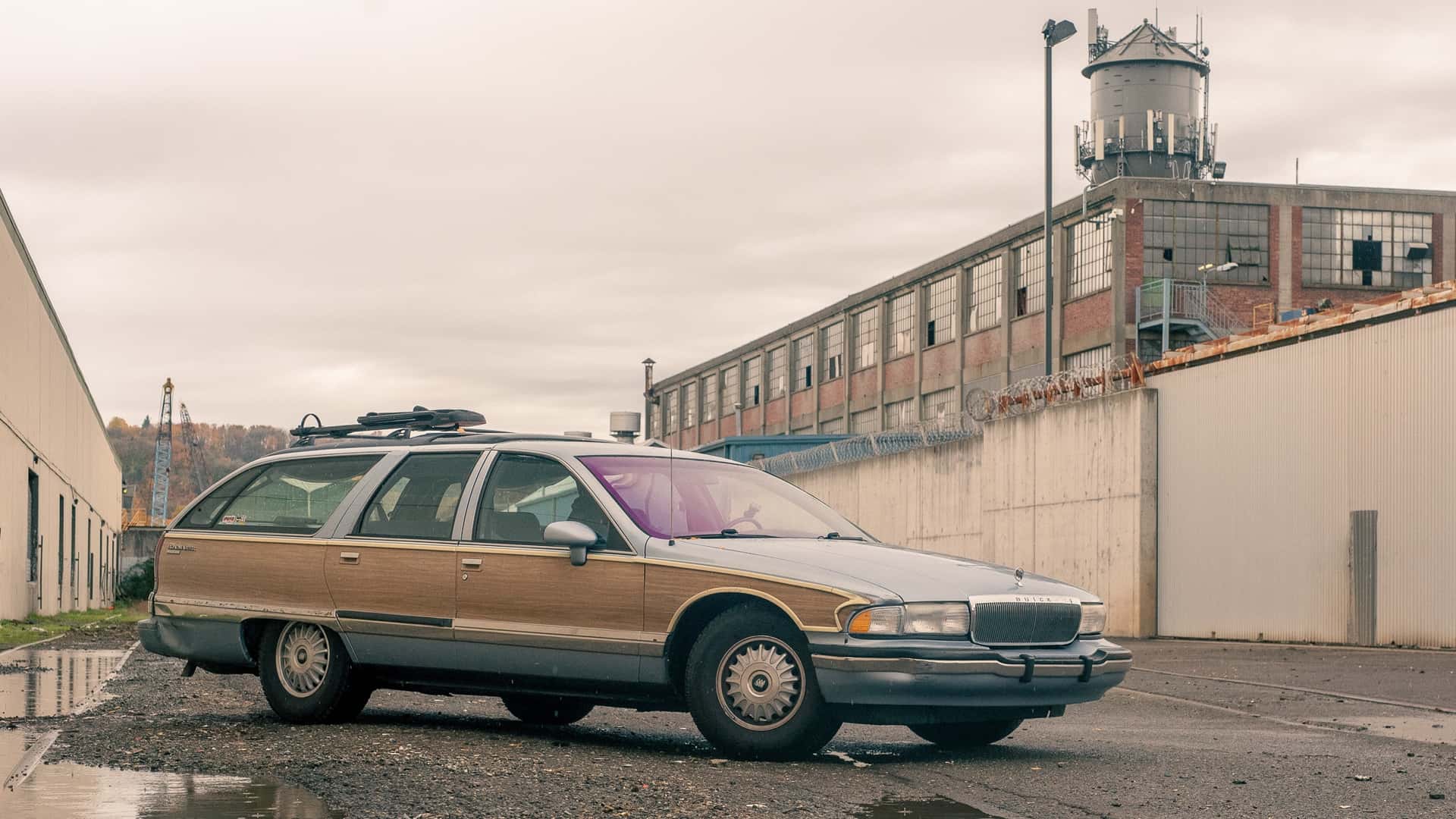
The Buick Roadmaster name dates back to 1936, but the final generation produced from 1991 to 1996 is the version most enthusiasts remember. Offered as both a sedan and a wagon, this last iteration represented the classic full-size American family hauler at a time when large, rear-wheel-drive V8 cars were fading from the market.
The Roadmaster shared its chassis with the Chevrolet Caprice and Oldsmobile Custom Cruiser, which gave it generous interior space and traditional body-on-frame strength.
Early models used the 5.0-liter L03 V8, followed shortly by an upgrade to the 5.7-liter L05. The most desirable examples arrived in 1994, when Buick installed the LT1 small block V8 borrowed from the Corvette.
This engine transformed the car into a surprising performer, offering strong acceleration and easy tuning thanks to extensive aftermarket support. With the LT1, the large wagon could spin its rear tires with little effort and reach 60 mph with unexpected eagerness. Handling and braking, however, remained limited by the Roadmaster’s considerable size and weight.
The Roadmaster appealed to traditional Buick buyers who appreciated its comfort, smooth ride, and cavernous interior. It offered genuine long-distance capability along with the charm of a classic American V8.
Despite its strengths, the model faced an industry shifting toward SUVs. General Motors decided to discontinue the Roadmaster, along with the Caprice and Cadillac Fleetwood, to convert the Arlington, Texas plant to truck production where profit margins were higher.
For 1996, the final model year, all Roadmasters carried Collector’s Edition badging. Updates were minimal but included revised cupholders, standard premium speakers, electronic climate controls, and extended-life coolant rated for five years or 100,000 miles. The Smokey Amethyst vinyl top option was removed after years of mixed reception.
While the Roadmaster offered impressive V8 performance, its interior quality lagged behind expectations for a premium Buick priced around $25,000. The cabin featured abundant plastic, fake wood trim, awkward ergonomics, exposed screws, and bulky seat adjustment controls that made entry and exit inconvenient.
These flaws did little to deter fans of the model, many of whom appreciated its combination of size, power, and nostalgia. With 1996 marking the end of production, the final Roadmaster stands as a symbol of the last era of traditional American full-size wagons.
7. Citroën DS Break: The Wagon That Redefined Automotive Innovation
The Citroën DS arrived in 1955 as one of the most advanced cars ever produced, a dramatic departure from the simple postwar vehicles France had been building. Its hydropneumatic suspension used pressurized fluid and gas to deliver an exceptionally smooth and stable ride, while the same system powered the clutch and brakes.
The DS introduced groundbreaking safety concepts and even protected French Prime Minister Charles de Gaulle during an assassination attempt, cementing its place in automotive history.
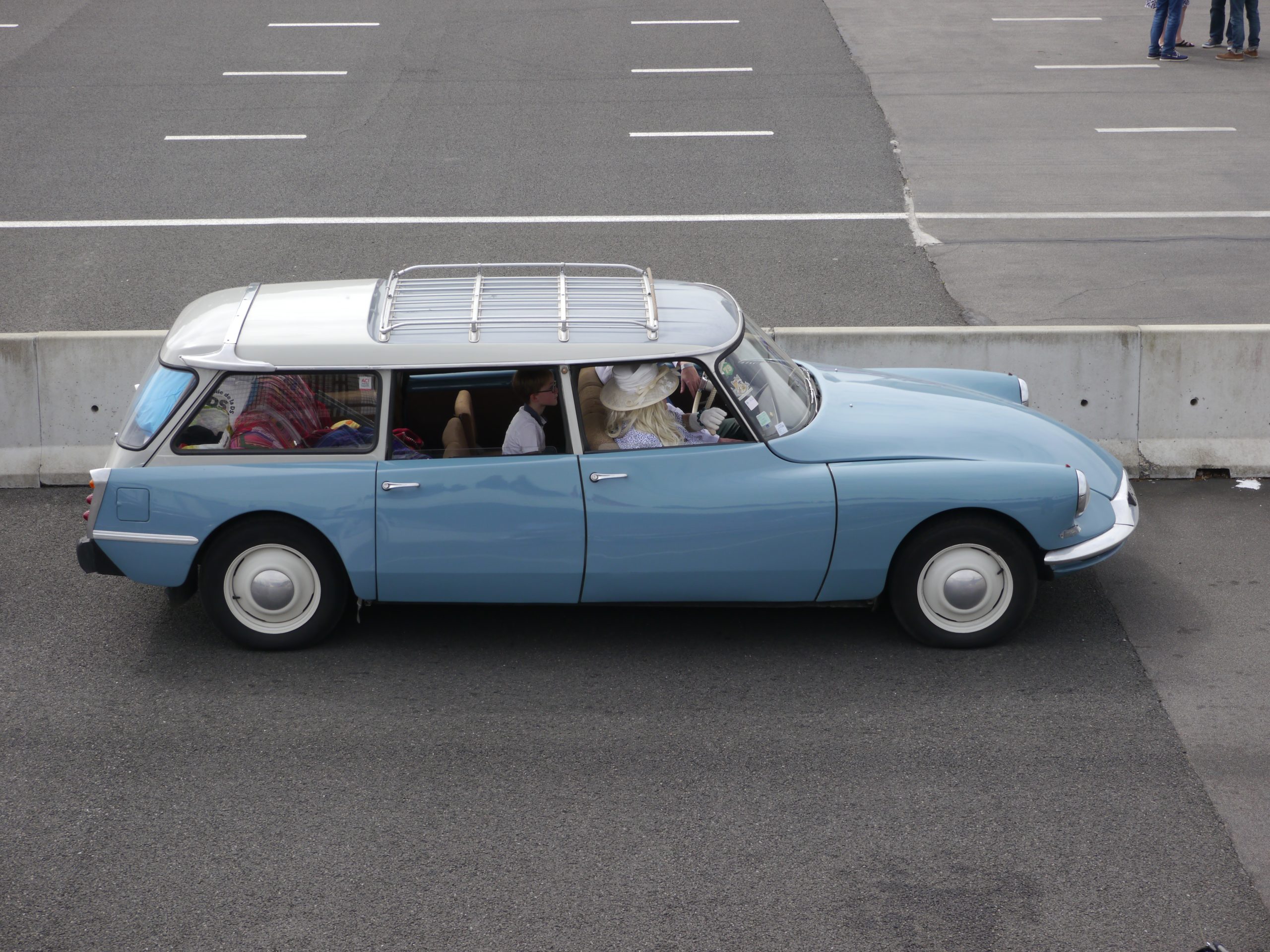
Citroën expanded the DS lineup with several wagon versions known as the DS Break, Break Confort, Familiale, and Commerciale. These long-roof models offered seating for up to eight people plus significant cargo space.
The hydropneumatic suspension gave the wagon a major advantage because it automatically leveled itself regardless of load, making it ideal for hauling passengers or heavy cargo without compromising comfort or handling.
Although its engineering was decades ahead of its time, the DS relied on engines that now feel modest by modern standards. A contemporary reissue with a modern fuel-injected powerplant would likely spark strong interest among American enthusiasts who appreciate unusual cars with character. The DS Break continues to inspire admiration as a uniquely useful and stylish classic.
A modern encounter with a DS Break in North Carolina illustrates how beloved these cars remain. A family of Citroën enthusiasts daily-drives a ’72 DS21 Break along with several other vintage Citroëns. The DS Break offers a massive, flat cargo floor, folding jump seats, and sofa-like comfort in both front and rear seats. Its distinctive design features include a clamshell tailgate, two-tone paint, and a futuristic silhouette that still turns heads.
Driving the DS Break reveals just how unusual it is. The hydropneumatic suspension glides over rough surfaces, the pressure-sensitive brake “mushroom” offers excellent stopping power once mastered, and the car handles with surprising precision for a long wagon. The engine’s performance is modest, yet it suits the DS’s character, which is defined more by its engineering brilliance than outright speed.
Today, DS Break models remain collectible due to their rarity, practicality, and unmistakable personality. With a loyal following and rising values, the DS Break stands as one of the most fascinating wagons ever built.
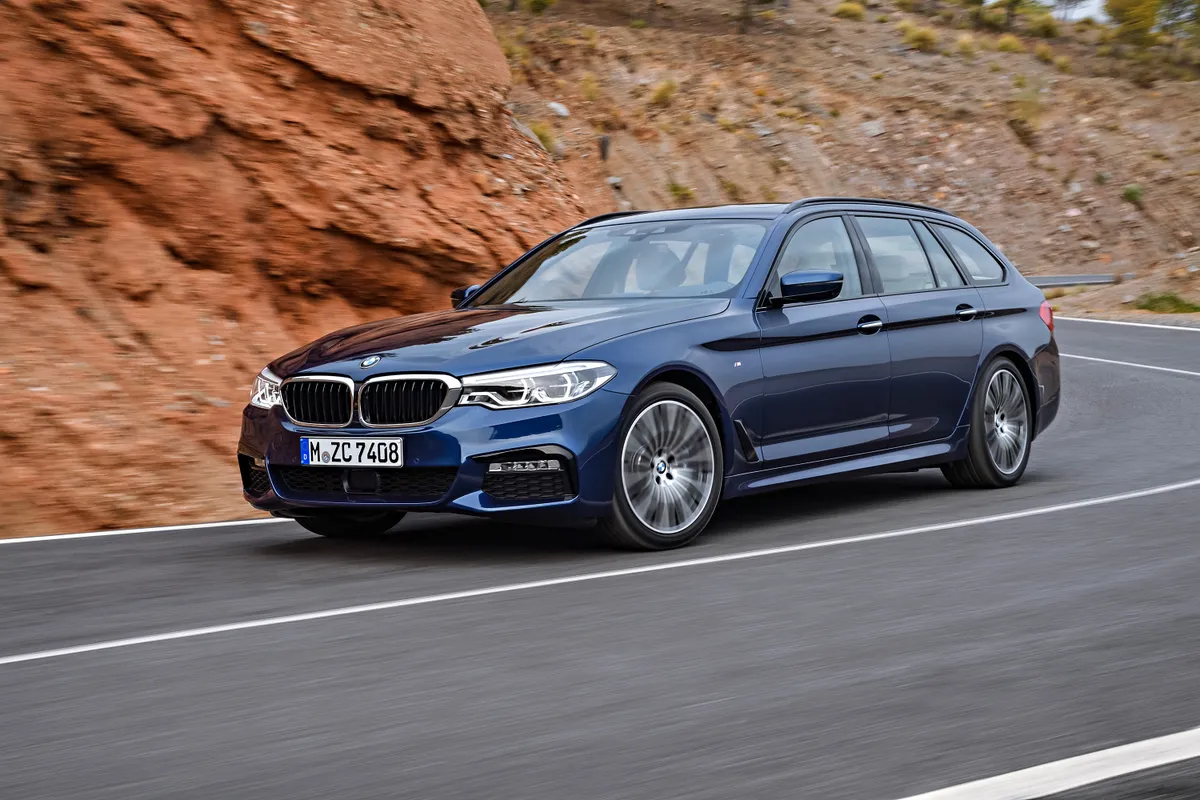
8. BMW 5-Series Touring: The Driver’s Wagon That Defined an Era
BMW has long been recognized for building luxury cars with true enthusiast appeal, and the 5-Series Touring stands as one of the brand’s finest examples of this philosophy. The E34 Touring, produced from 1989 to 1995, blended refined family-car practicality with the sharp handling and balanced dynamics that shaped BMW’s reputation in the ’90s.
Its steering response, poised chassis, and understated exterior design made it an ideal long-distance cruiser as well as an engaging daily driver. Many enthusiasts still prefer these clean, classic lines over the aggressive styling trends seen on modern BMWs.
One of the most notable highlights of the E34 era was the availability of the M5 Touring in 1992. While American manufacturers largely ignored performance wagons, BMW delivered a hand-built, high-performance estate that remains rare and highly coveted.
Its existence underscores a sentiment shared by many enthusiasts today: the market needs more performance wagons and fewer oversized performance SUVs. A modern revival of this formula, lightly updated with contemporary navigation and safety features, would likely be met with enthusiastic approval.
The succeeding E39 Touring, built from 1997 to 2004, is often considered one of the greatest BMWs ever made. It offered an exceptional combination of comfort, balance, and build quality.
The interior featured high-grade materials and ample space for passengers, while the large cargo area and 40/20/40 split-folding seats added real-world practicality. Luxury touches like rain-sensing wipers, auto-dimming mirrors, and power-adjustable seats made it feel ahead of its time, even if it lacks the broader technology suite modern cars provide.
On the road, the E39 Touring delivered a refined and composed ride. Its aluminum suspension components contributed to balanced handling, and both six-cylinder and V8 engines provided smooth, satisfying power. Manuals were available, though the long throw may challenge some drivers. Automatics of the era performed well but feel more relaxed than modern units.
Common concerns for aging models include rust, especially on tailgates and rocker panels, along with the need for thorough maintenance records. Well-kept examples continue to command higher prices.
Both the E34 and E39 Touring exemplify BMW’s golden era of engineering, offering a blend of dynamics, practicality, and understated luxury that enthusiasts still celebrate today.
9. AMC Eagle: The Original American Crossover
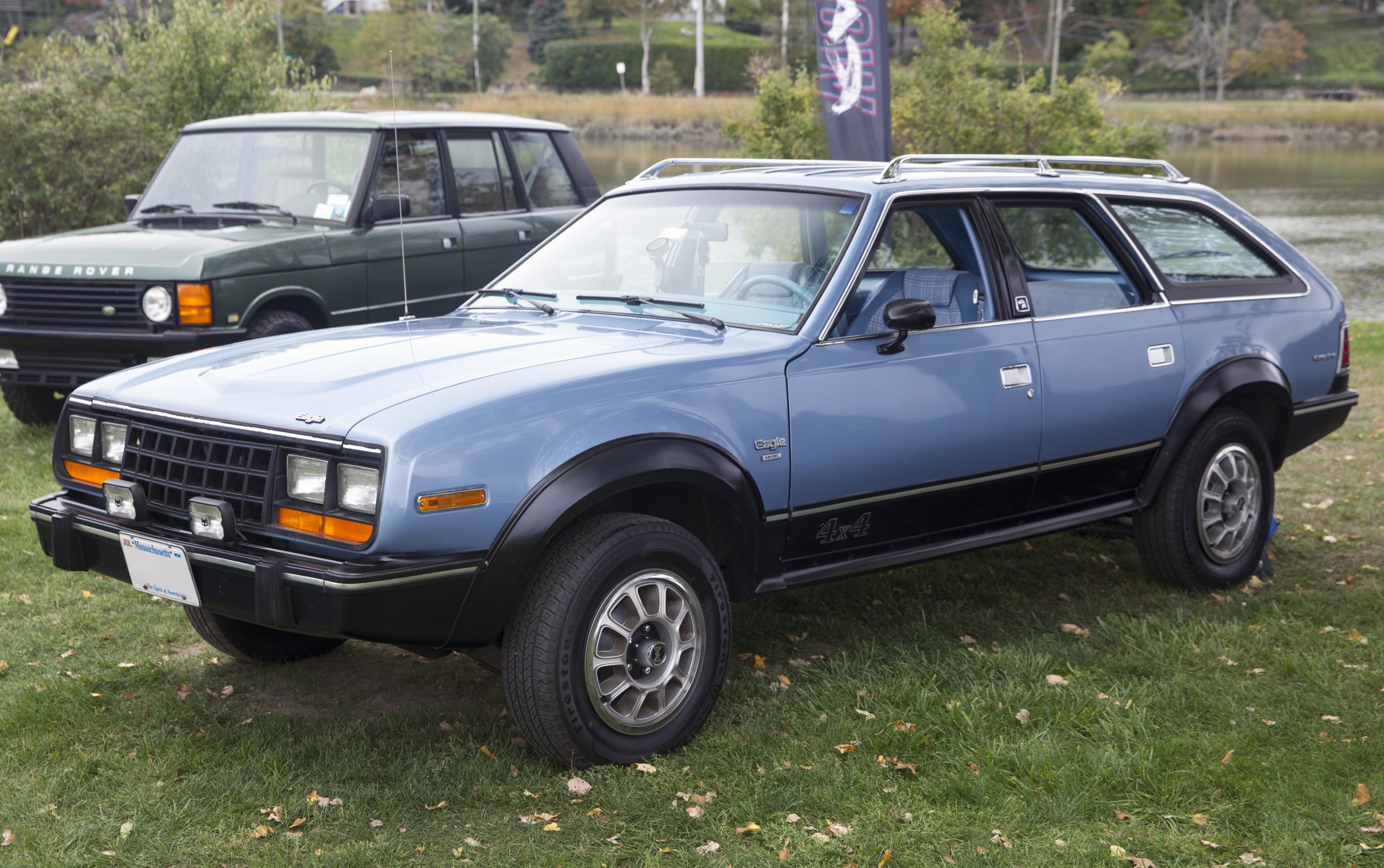
Long before the term crossover became common, AMC created a lifted, all-wheel-drive station wagon that blended carlike comfort with genuine rough-road capability. The AMC Eagle arrived in 1980 as a bold experiment from a small automaker working with limited resources.
Engineers combined the familiar Concord platform with Jeep-inspired AWD technology, producing a family car that could handle snow, mud, and unpaved backroads with surprising confidence. Subaru already offered AWD cars, but none matched the size, comfort, and domestic familiarity of the Eagle wagon.
The Eagle exceeded early sales projections and resonated with buyers who needed capability without the heft of a truck or Jeep. Production continued until 1987, ending shortly after Chrysler acquired AMC. Yet the Eagle’s influence is still felt, as it previewed the formula that defines the modern crossover: a car platform paired with raised suspension, larger tires, and year-round traction.
Period testers were stunned by how well the Eagle performed. Car and Driver staff drove prototypes at AMC’s preview event and returned impressed by its ride quality, stability, and composure.
Testers praised the Eagle’s stiffened suspension, independent front setup, and excellent all-season Goodyear radials, noting that it felt more European than American. Full-time AWD provided confident braking, sure-footed handling, and secure maneuvering on slippery surfaces, while the vehicle remained smooth and quiet on the highway.
The wagon stood out as the most convincing body style, offering practical load space and an easy one-handed rear seat fold mechanism. Interior quality showed typical AMC quirks, with unusual materials and dated styling, but the Eagle’s comfort and capability overshadowed such flaws.
Despite modest power from the 4.2-liter inline-six and a slight fuel economy penalty caused by the AWD system, the Eagle delivered a uniquely satisfying driving experience on pavement and dirt alike.
Demand quickly outstripped supply, leading AMC to boost production and even discontinue the Pacer to free up factory capacity. Reviewers consistently described the Eagle as a transformative vehicle that elevated AMC’s reputation and filled a segment no other American manufacturer had explored.
By blending carlike comfort with year-round capability, the AMC Eagle became a pioneer of the crossover concept. It remains an important and influential chapter in automotive history, illustrating how innovation can come from unexpected places.
10. Saab 9-5 SportCombi: A Promising Wagon That Never Fully Landed
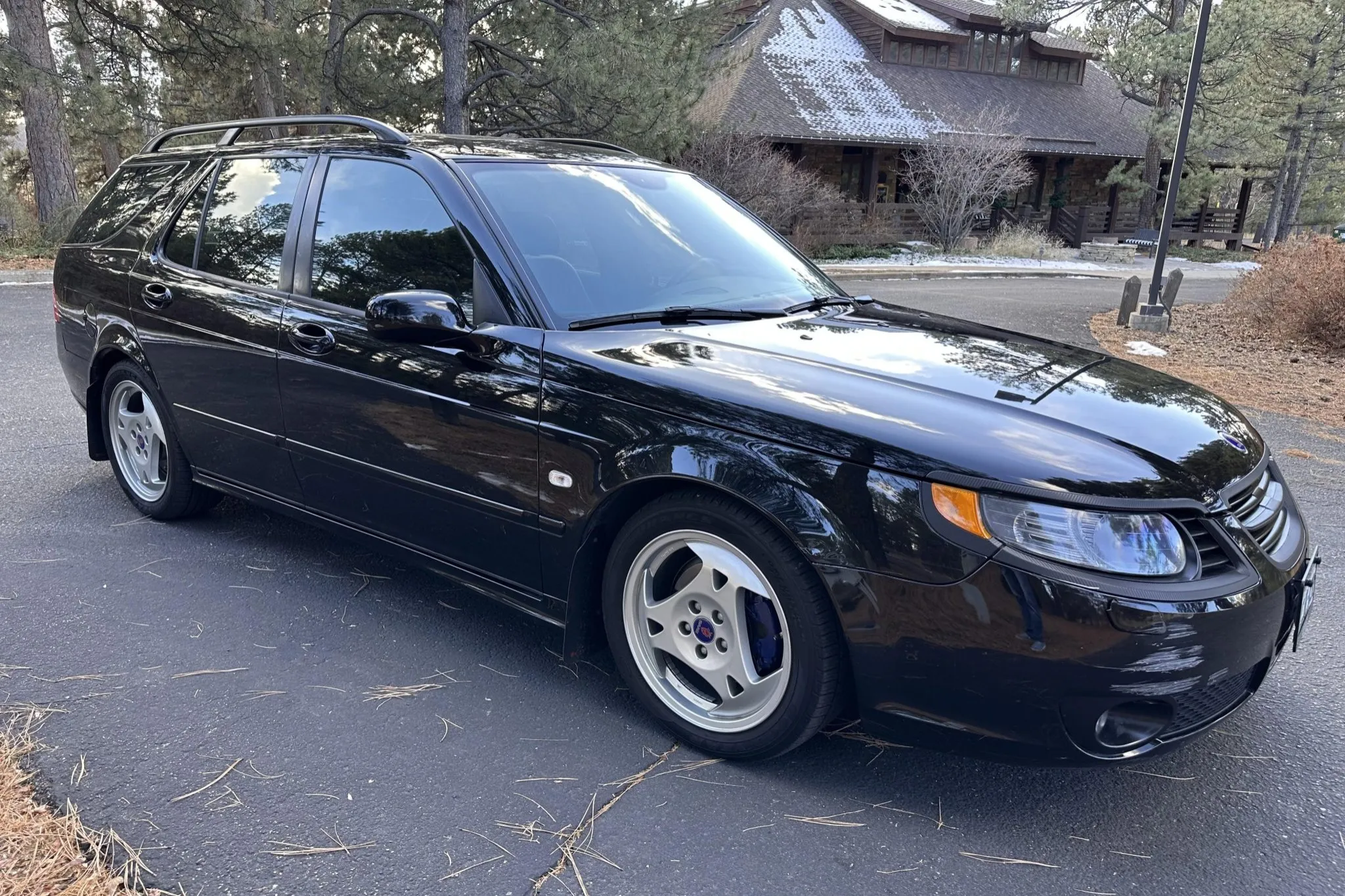
The Saab 9-5 SportCombi represents what could have been the Swedish automaker’s bold entry into the premium wagon segment before the company’s financial collapse. Saab had prepared the second-generation 9-5 for production in 2010, with a SportCombi wagon already prototyped.
Unfortunately, Saab’s sale to Spyker Cars and ongoing financial pressures prevented the SportCombi from reaching dealerships, leaving it as a lost prototype. Despite its unrealized potential, the 9-5 SportCombi offers insight into Saab’s ambitions and quirks.
Visually, the SportCombi struggles to impress. Its design, characterized by a low greenhouse, swooping rear windows, and oversized C-pillars, has been criticized as awkward, even clunky, and falls short of the Scandinavian elegance perfected by competitors like Volvo.
Inside, the cabin blends Saab’s driver-focused ergonomics with budget-conscious compromises. The dash is cleaner than previous layouts, offering modern gauges and intuitive HVAC controls.
The steering wheel combines style with function, though some materials and paneling feel cheap, mismatched, or dated for a vehicle priced between $36,000 and $45,000. Saab’s reliability rankings and low-quality plastics further undermine its interior appeal.
Under the hood, the SportCombi is powered by a 2.3-liter turbocharged inline-four producing 260 hp. While acceleration is adequate, the engine suffers from rough vibrations, torque steer, and an unrefined auditory experience.
The automatic transmission pairs better with the turbo, delivering responsive power, while the manual struggles to fully exploit the torque. Handling is improved with the Aero Package, which offers supportive seats, a lowered chassis, and stiffened anti-roll bars. On smooth roads, the SportCombi is comfortable and controlled, but its dynamics in corners reveal understeer and a lack of agility.
The Saab 9-5 SportCombi’s innovative intentions were overshadowed by design missteps, interior compromises, and underwhelming performance. While Saab enthusiasts might appreciate its quirks and aerodynamic styling, it cannot realistically compete with rivals such as the BMW 535i xDrive Sports Wagon or Volvo V70, which offer superior refinement, reliability, and handling.
The SportCombi stands as a poignant reminder of Saab’s lost potential, a wagon that might have carved a unique niche in the premium market but was undone by timing, limited resources, and fierce competition.
Reintroducing these iconic wagons would reconnect modern drivers with a lost era of automotive ingenuity. From the raw muscle of the Chevelle SS Wagon to the pioneering all-wheel-drive capability of the AMC Eagle, these vehicles combined performance, practicality, and style in ways that today’s crossovers only hint at.
Luxury, innovation, and family utility also shone in models like the Mercedes-Benz S124 and Saab 9-5 SportCombi, showing that wagons could serve both enthusiasts and everyday users. Reviving these concepts with modern technology, safety, and efficiency could fill a market niche many drivers crave, providing versatile cars that handle like sports sedans yet carry the cargo of a family vehicle.
Bringing back these wagons would honor the heritage of American and international automotive design while giving drivers a truly engaging alternative to SUVs. The wagon deserves a second chance to reclaim its rightful place on the road.
Also Read: 5 Cars With Helpful Front Cameras Vs 5 Scuffed Bumpers