
When buying an SUV, many shoppers focus on passenger comfort, cargo space, and towing capacity, but handling is just as important. SUVs have historically been associated with a top-heavy feel, where body roll becomes noticeable in curves, sometimes making even moderate turns feel unstable.
For U.S. drivers navigating winding roads, from California’s Pacific Coast Highway to the curvy backroads of the Appalachians, handling isn’t just about driving enjoyment; it’s a matter of safety.
Today, however, advancements in suspension, chassis design, and electronic systems have narrowed the gap between SUVs and smaller cars, yet differences remain significant across models. In this article, we explore five SUVs that impress with composure through corners and five that, despite other strengths, still feel top-heavy in turns.
SUVs That Don’t Feel Top-Heavy
When it comes to SUVs, many drivers assume that a higher ride height automatically means a top-heavy, unstable feel in corners. While it’s true that some SUVs can lean noticeably in curves, modern engineering has allowed many models to combine the commanding presence of an SUV with surprisingly agile handling.
For drivers who value confidence on winding roads, whether it’s a mountain pass, a curvy suburban street, or a sweeping highway, handling is just as important as comfort, cargo space, or technology.
In this article, we highlight SUVs that defy the stereotype, staying composed and balanced through turns without sacrificing the practicality that makes them so popular in the U.S. market.
1. Mazda CX-5
The Mazda CX-5 has consistently earned praise for its car-like handling. Its suspension strikes a balance between comfort and sportiness, minimizing body roll while making highway ramps and twisty roads engaging. Drivers get responsive steering and solid feedback, allowing the CX-5 to corner with confidence without sacrificing daily comfort.
The front seats are well-contoured and offer generally good comfort. The rear bench, however, has a flat bottom, which could make longer trips less comfortable for passengers in the back. On the upside, the rear seatback reclines, providing an extra measure of comfort when needed.
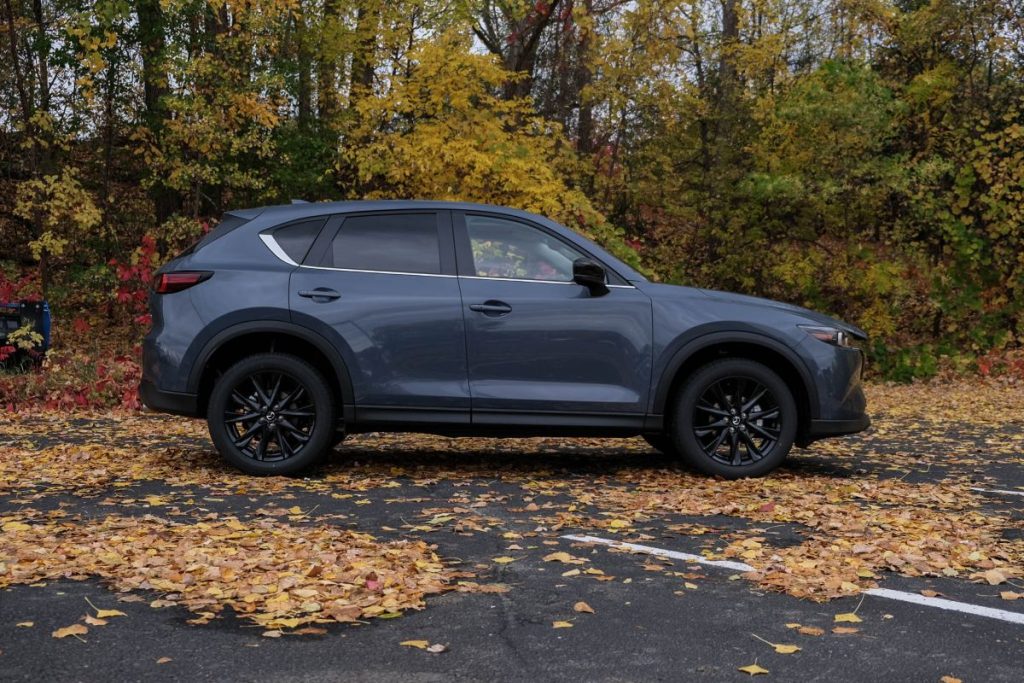
The CX-5 delivers a ride that is firm yet never uncomfortable. Bumps encountered mid-corner are barely noticeable, and the vehicle never feels floaty.
It handles road imperfections with immediate composure. Cabin noise is mostly minimal, becoming noticeable only at highway speeds, but even then, you won’t need to raise your voice to carry on a conversation with passengers.
Also Read: 10 Crossovers That Actually Deserve Their Popularity
2. BMW X3
BMW’s X3 combines rear-wheel-drive dynamics with a well-tuned chassis, offering sharp steering and composed handling. Even with an SUV’s taller stance, the X3 feels stable in turns, providing both agility and luxury refinement. For drivers seeking a sporty experience without compromising space, it’s an ideal choice.
The front seats provide the comfort and support needed for long periods behind the wheel, and a wide range of adjustments allows nearly any driver to find a good fit.
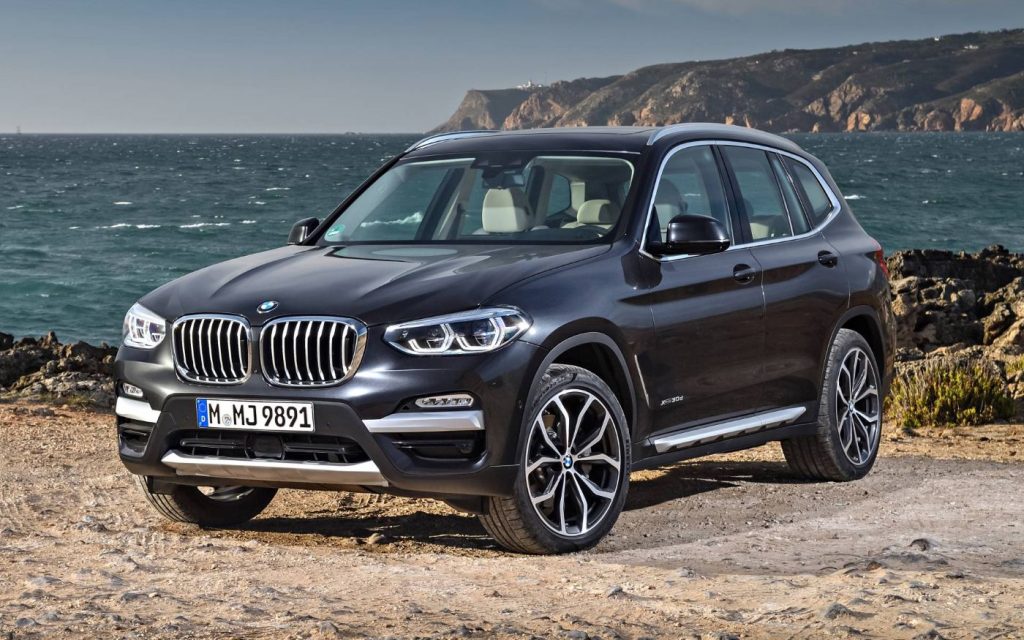
On rough or uneven roads, our test X3 exhibited a somewhat busy ride, which we attribute in part to the optional Dynamic Handling package. Despite this, the SUV maintains a solid sense of control, you feel the impacts, but they don’t reverberate through the cabin or jostle your head.
When idling, the engine is so quiet that you may feel compelled to check the tachometer to confirm it’s running. At freeway speeds, there is a slight amount of wind noise from the driver-side window. Under moderate to hard acceleration, engine noise becomes more noticeable, though it remains far from unpleasant.
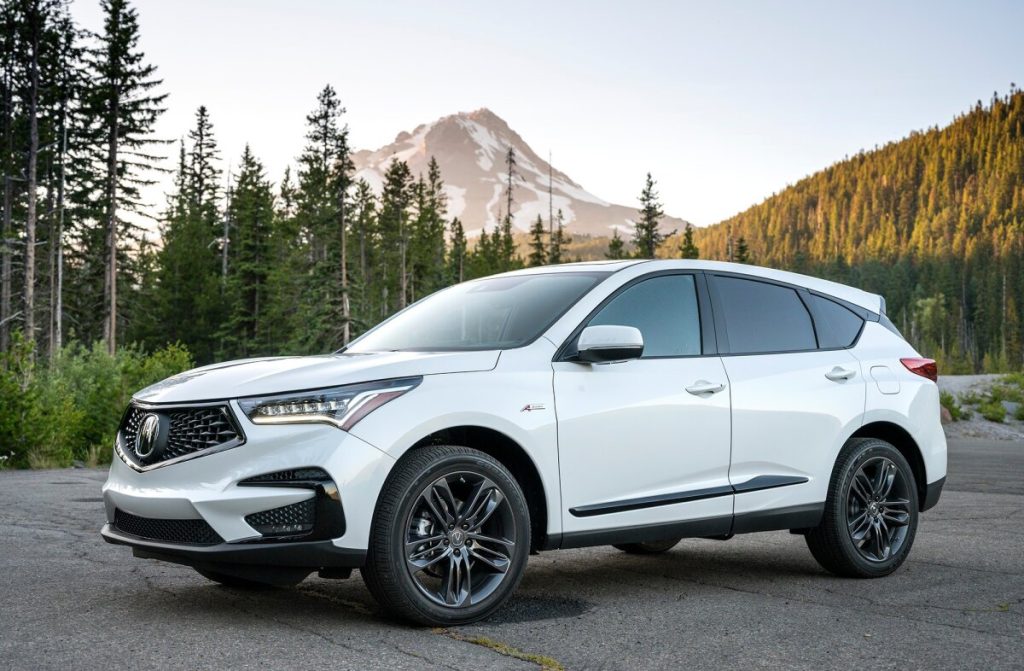
3. Acura RDX
The Acura RDX benefits from a torque-vectoring all-wheel-drive system that enhances cornering precision. Minimal understeer and responsive steering make it feel more like a sporty sedan than a traditional SUV. Its suspension absorbs bumps well while maintaining composure in curves, a rare combination in its class.
Inside, the center stack feels a bit busy, featuring numerous buttons, a touchpad, and a large rotary drive-mode selector prominently positioned in the center. The model we tested was equipped with the A-Spec package, which includes striking red seats and several other exclusive styling touches.
While the cabin’s strong build quality and desirable standard features, such as ambient lighting, power-adjustable heated front seats, and dual-zone climate control, are appreciated, the RDX doesn’t quite feel luxurious. Instead, Acura leans toward a sportier character compared with something like the Honda CR-V.
Nothing in the cabin feels cheap or poorly made, and the driving position strikes a balance: high enough for SUV enthusiasts and low enough for those who prefer a sportier feel.
A handle on the outboard rear seats allows the back row to fold flat, and the second row can also be released from the rear of the cargo area. With the seats upright, we were able to fit eight carry-on bags in the RDX; folding the seats expanded capacity to 22 bags.
4. Volvo XC60
Volvo’s XC60 impresses with adaptive chassis technology and balanced weight distribution. Its handling is precise, and body roll is well-controlled, giving drivers a sense of stability that instills confidence. Despite being a luxury SUV, it doesn’t feel soft or floaty in corners, offering a composed ride across varied road conditions.
The Volvo XC60 may not be the sportiest SUV in its segment, but it stands out as one of the most comfortable vehicles in its class. Seating comfort is a particular strength, thanks to generously padded surfaces and available features such as massaging seats.
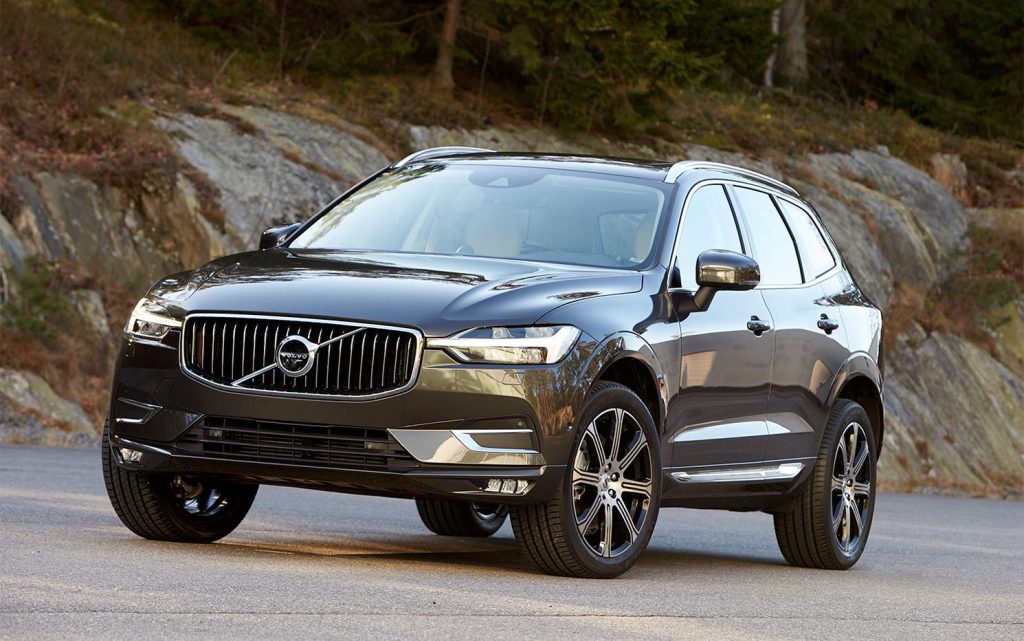
The optional four-zone climate control adds a touch of luxury, effectively regulating temperature across all zones, even if it takes a moment to reach the coldest A/C settings.
Cabin noise is generally well-controlled, though some supercharger whine can be heard at low speeds if the stereo is off. Unfortunately, Volvo has not fully optimized the air suspension for ride comfort, and the XC60’s ride can feel busy when traversing uneven or broken surfaces.
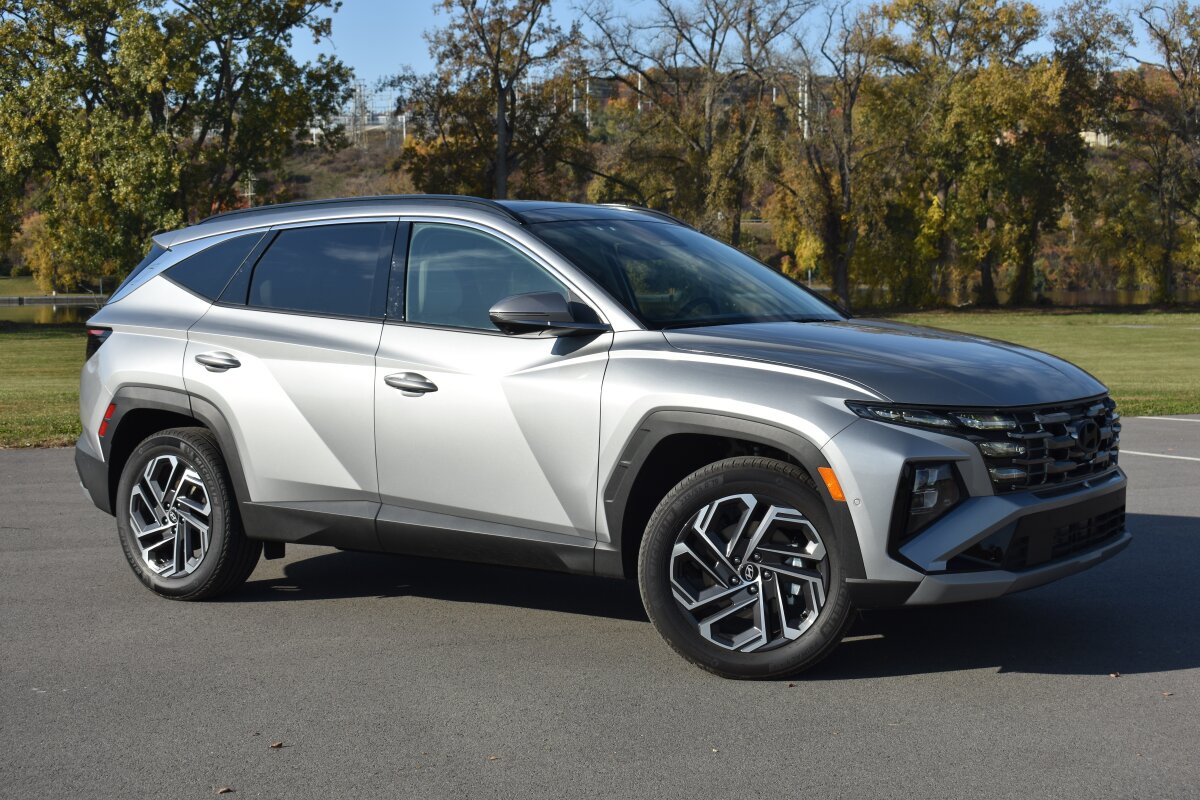
5. Hyundai Tucson Hybrid
The Tucson Hybrid surprises with its cornering ability. Its suspension and steering calibration help reduce top-heaviness, and the hybrid powertrain doesn’t interfere with handling. The Tucson feels agile for a compact SUV, making it an excellent option for drivers seeking a practical, eco-friendly vehicle that remains confident through turns.
The Tucson approaches luxury-level quality when it comes to comfort. It has a supple suspension that provides an excellent ride, and bumps and cracks in the road are absorbed very well. It’s among the best rides in the class.
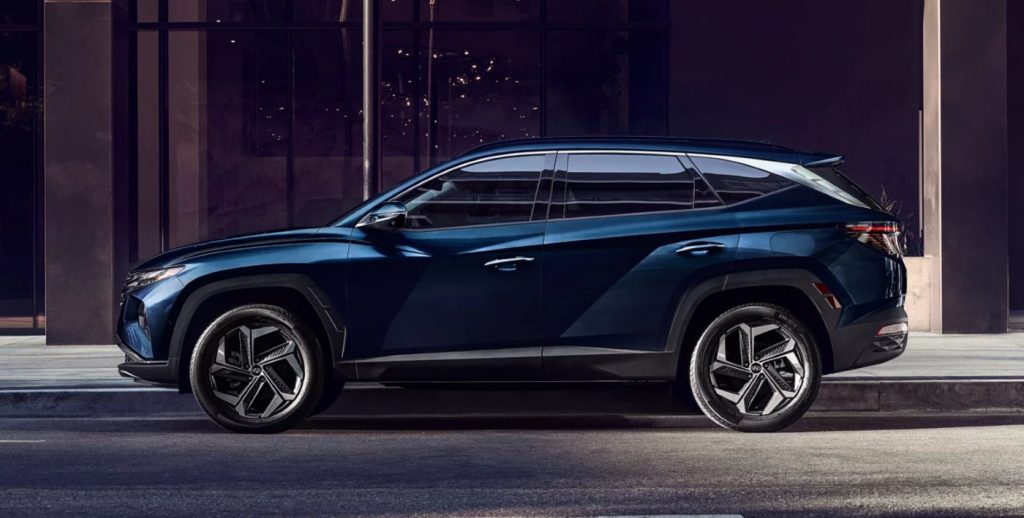
We found the front seats on our Limited trim test vehicle to be excellent. They featured plush and supportive cushions covered in nice material and provided good lateral support and power lumbar adjustments.
We also appreciate the level of quiet and insulation provided while the Tucson’s in motion. It keeps noise outside of the cabin out better than most rivals, and even when the wind kicks up you won’t strain to hold a conversation or enjoy the radio.
SUVs That Feel Top-Heavy
While SUVs are prized for their spacious cabins, commanding driving positions, and versatility, not all handle curves with the same poise. Some models, particularly larger three-row or full-size SUVs, can feel top-heavy, leaning noticeably in corners and giving drivers a sense of instability.
For U.S. drivers navigating winding highways, suburban curves, or mountain roads, this can affect both confidence and comfort behind the wheel.
In this article, we highlight SUVs that tend to feel top-heavy in turns, exploring how design, suspension, and weight distribution influence their handling and what drivers should know before taking these vehicles onto twisty roads.
1. Ford Explorer
The Explorer delivers comfort and strong engine options but exhibits noticeable body roll in sharp corners. Its tall design and soft suspension, while excellent for long trips, make it feel less stable on winding roads. Steering feels less precise, demanding slower entry speeds through curves.
Base, XLT, and Limited trims of the Explorer are powered by a 300-hp turbocharged 2.3-liter four-cylinder engine, which provides the SUV with ample authority.
For drivers who prefer more performance, the Platinum trim comes with a 365-hp twin-turbocharged 3.0-liter V-6, while the sporty Explorer ST takes it a step further with a 400-hp variant of the same engine.
A hybrid option joined the lineup in 2020, pairing a 3.3-liter V-6 with an electric motor to produce a combined 318 horsepower. Properly equipped, the Explorer can tow up to 5,600 pounds.
The Explorer rides on a completely redesigned rear-wheel-drive platform, though all-wheel drive remains available as an option. A 10-speed automatic transmission is standard across all trims.
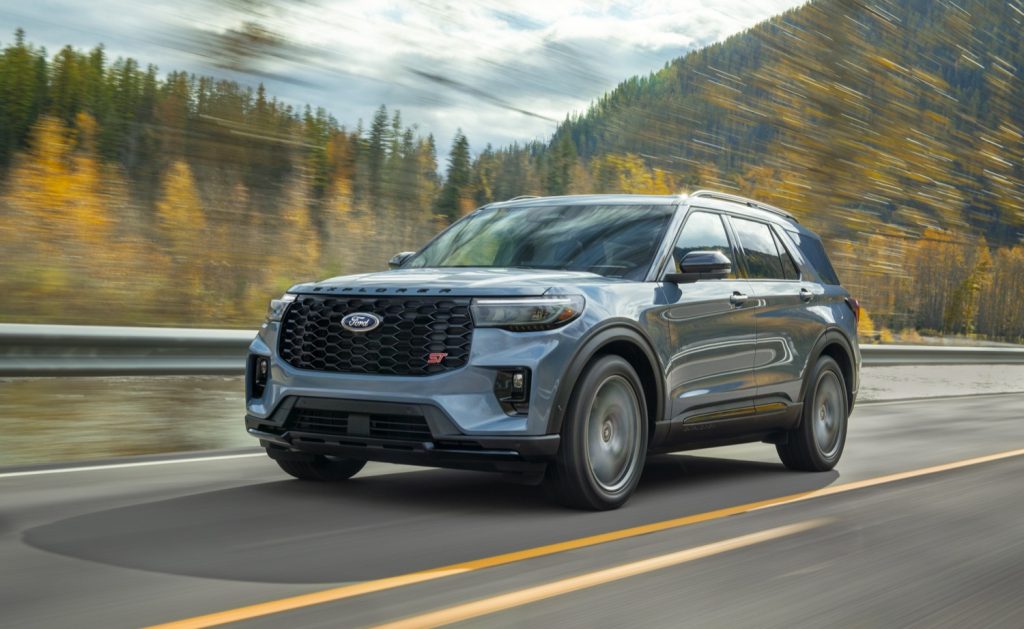
The ride and handling are composed and agreeable for daily driving, but far from thrilling. The Explorer ST, on the other hand, is significantly more athletic; its additional power and stiffer suspension transform it into a genuine performance-oriented SUV.
Though the interior design may verge on uninspired, the Explorer’s cabin is practical and comfortable, particularly for occupants in the first two rows.
Access to the standard third row is now easier thanks to a new mechanism that moves the second-row seat out of the way at the push of a button. Once seated, however, older children and adults may find the third row too close to the floor for comfort.
Competitors such as the Chevrolet Traverse and Volkswagen Atlas offer a more comfortable third row. In terms of cargo, we managed to fit four carry-on suitcases behind the third row, and with both rear rows folded flat, the Explorer accommodated a total of 31 bags.
Also Read: 5 Vehicles with Steady Highway Tracking vs 5 With Constant Corrections
2. Chevrolet Traverse
Spacious and family-friendly, the Traverse prioritizes interior room over handling. Its front-heavy design and higher ride height contribute to understeer in turns, and while its large footprint provides highway stability, cornering feels cumbersome, especially at higher speeds.
The Traverse offers roomy accommodations for seven or eight passengers, with a third row that is genuinely sized for adults. Chevrolet’s six-tier model lineup enables the Traverse to appeal to a wide spectrum of buyers, reaching various segments of the market.
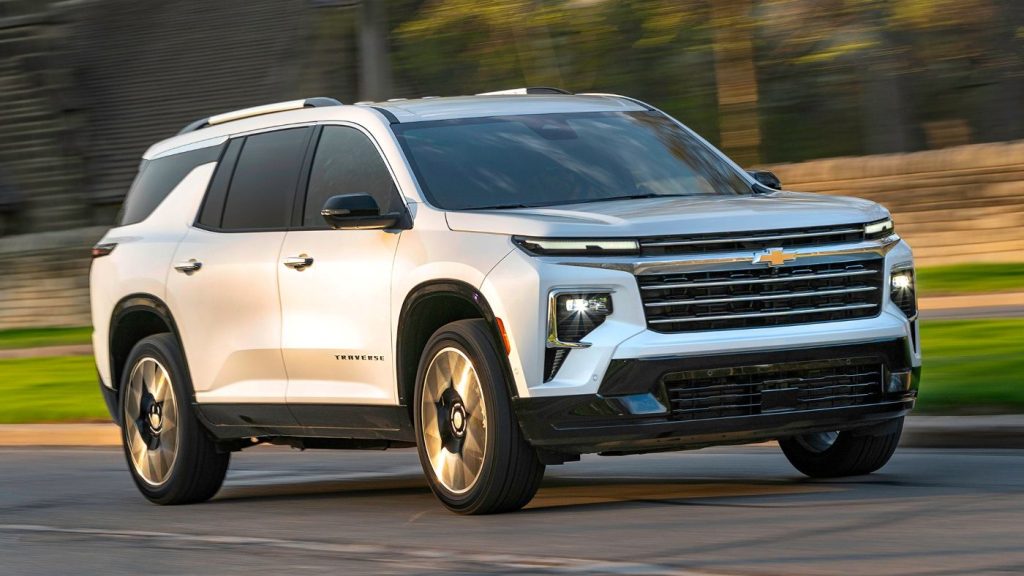
While the materials in the top-of-the-line High Country trim are attractive, they fall just short of what might be expected given the vehicle’s premium price. Folding down the second- and third-row seats transforms the Traverse into a cargo-hauling powerhouse, providing more space than many of its competitors.
Behind the third row, six carry-on suitcases fit comfortably, allowing the Traverse to excel at transporting both passengers and their luggage. Additionally, it offers the most first-row cubby storage in its class.
3. Toyota Highlander
The Highlander is refined, safe, and comfortable, yet it shows body lean in aggressive turns. Non-hybrid models with larger engines tend to accentuate top-heavy characteristics, and steering response can feel disconnected compared with more agile SUVs in the same segment.
Comfort, efficiency, and safety are essential selling points for any family-oriented three-row SUV, and the 2025 Toyota Highlander easily meets those expectations, bolstered by Toyota’s long-standing reputation for reliability.
The challenge for the Highlander is that many other midsize three-row SUVs also excel in these areas while offering advantages in other aspects.
Beyond Toyota, the Kia Telluride has dominated this segment since its debut in 2020 and has regularly appeared on our 10Best Trucks and SUVs list, while the related Hyundai Palisade and the stylish Mazda CX-90 are also strong alternatives.
Although the Highlander gets most of the basics right, its cramped, kids-only third row, modest cargo capacity, and unremarkable driving experience leave us leaning toward these other options.
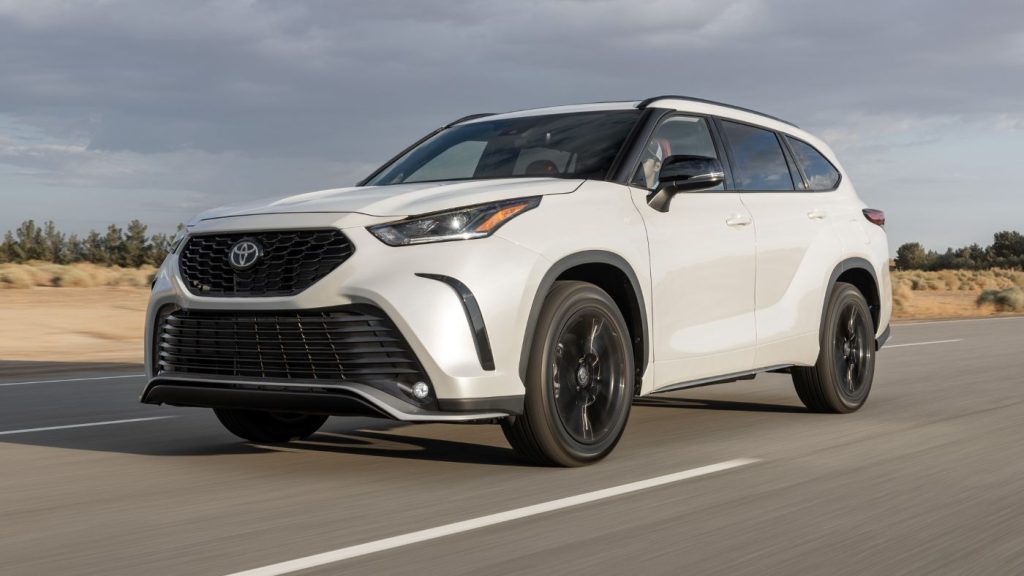
For 2025, all-wheel drive is now standard on the XSE and Platinum trims. Heavy Metal and Cement paint colors are new to select trims, while the LE Nightshade trim, Moondust exterior, and Harvest Beige interior have been discontinued. Additionally, the XSE trim now defaults to Sport drive mode at startup.
Pricing for the Highlander ranges from $41,815 to $54,220 depending on trim and options. The XLE remains our preferred choice, representing an appealing value. It adds heated front seats, second-row captain’s chairs with sunshades, a wireless smartphone charging pad, and a power sunroof to the long list of standard features on the LE.
All-wheel drive costs $1,600, and we would also opt for the Premium Audio with Dynamic Navigation package, which brings in-dash navigation and an upgraded stereo system.
The gas version is powered by a 265-hp turbocharged 2.4-liter four-cylinder paired with an eight-speed automatic transmission and is available with either front- or all-wheel drive.
It provides stable and predictable ride and handling characteristics that suit family-chauffeur duties. While the driving experience isn’t particularly exciting, drivers who prioritize a smooth, composed ride will find the Highlander delivers exactly that.
4. Volkswagen Atlas
As a three-row SUV, the Atlas trades agility for passenger and cargo space. Its size and soft suspension make it less precise in curves, with noticeable body roll. It handles highway sweeps competently but struggles with tighter turns, revealing the challenges of balancing space and stability.
Think of the Volkswagen Atlas as a modern interpretation of the station wagon: this family-friendly SUV offers three rows of seating for up to seven passengers, a towing capacity of up to 5,000 pounds, and a handsome, if not particularly exciting, exterior.
Legroom in the second row is generous, as is the overall cargo space with the second and third rows folded flat. While the interior is highly functional and accommodating, it lacks any true style or wow factor.
The Atlas is powered by a single engine: a 269-hp turbocharged inline-four paired with an eight-speed automatic transmission, providing adequate acceleration without being overly spirited.
Front-wheel drive is standard on the SE and SE with Technology trims, while all-wheel drive is available; the Peak Edition SE and higher trims come with all-wheel drive as standard.
The Atlas is a fully capable people hauler, yet competitors such as the Kia Telluride, Jeep Grand Cherokee L, and Mazda CX-90 continue to raise the bar for style and appointments. For those drawn to the Atlas but seeking a sportier look, the Atlas Cross Sport offers a sleeker profile at the cost of the third row.
After a significant refresh in 2024, the 2025 Atlas sees only minor changes. Upgraded wireless device charging is now standard, and the SEL Premium R-Line trims gain additional luxury touches, including perforated headrest upholstery, four-way adjustable lumbar support, and a front-seat massaging function.
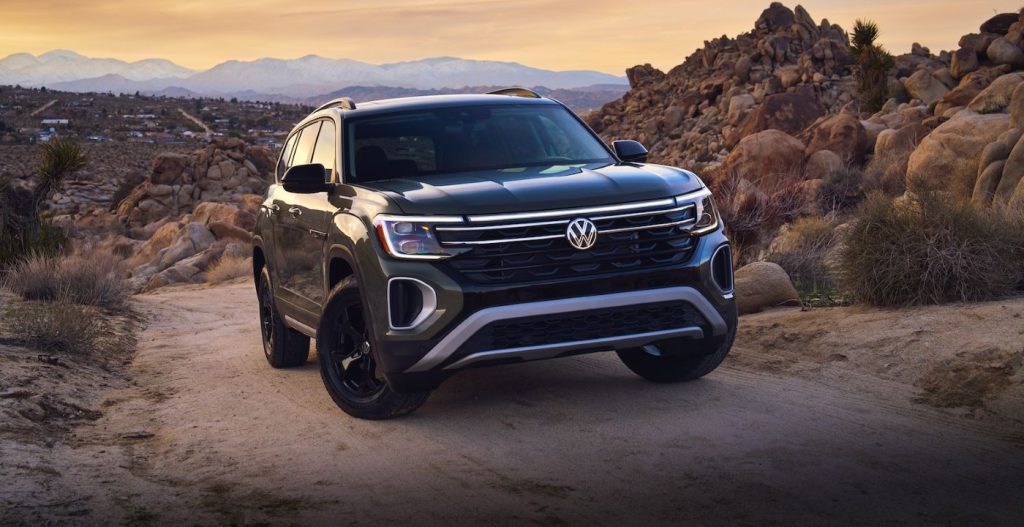
Two new available colors, Mountain Lake Blue, Avocado Green, and Pure Grey, expand the palette, with the latter two previously exclusive to the Peak Edition trim.
Pricing ranges from $39,625 for the 2.0T SE up to $54,630 for the 2.0T SEL Premium R-Line. We recommend the Atlas SE with Technology and 4Motion all-wheel drive, which adds 20-inch wheels, a trailer hitch package, remote start, USB charging ports for the third row, and the option for second-row captain’s chairs for added comfort.
Every Atlas comes with the same 269-hp turbocharged 2.0-liter four-cylinder engine producing 273 pound-feet of torque. It is paired with an eight-speed automatic transmission and available in front- or all-wheel drive.
Compared with the previous 276-hp V-6 used in 2023 and earlier models, the turbo four-cylinder delivers improved throttle response, and the retuned transmission gives the engine a livelier feel.
The Atlas responds well to steering inputs but can feel somewhat clumsy and unfocused when driven aggressively around corners. On the highway, it is composed, and it remains reasonably nimble in city driving, offering a generally smooth ride except over the harshest potholes.
Despite these minor improvements, the updates do not elevate the Atlas’ chassis to the more engaging driving experience offered by competitors like the Mazda CX-90.
5. Jeep Grand Cherokee
While the Grand Cherokee shines off-road, it can feel top-heavy on paved roads. Traditional suspension setups and a tall body contribute to body roll, and steering can feel less connected. Even modern trims with electronic aids cannot fully counter the natural dynamics of a full-size SUV.
The Grand Cherokee lineup has grown into a model range of its own within Jeep’s expanding SUV portfolio. The two-row Grand Cherokee is joined by a plug-in-hybrid 4xe variant as well as the three-row Grand Cherokee L.
With nine trim levels ranging from the relatively basic Laredo to the fully loaded Summit Reserve, there is a Grand Cherokee for nearly any buyer. The nonhybrid two-row model is powered by a capable 293-hp 3.6-liter V-6 and offers a variety of all-wheel-drive systems, though rear-wheel drive is standard on the lower trims.
Despite its inherent off-road ability, the Grand Cherokee remains comfortable on paved roads, and its interior is spacious and thoroughly modern. With its wide range of trims, the Grand Cherokee competes with an array of vehicles, from more modest SUVs like the Honda Passport to luxury two-rows from BMW and Mercedes-Benz.
Standard features on the Limited include leather upholstery, a power-operated liftgate, heated front and rear seats, power-adjustable front seats, ambient interior lighting, automatic high beams, and remote start.
All Grand Cherokees come with a 293-hp 3.6-liter V-6 paired with an eight-speed automatic transmission. Rear-wheel drive is standard, with several all-wheel-drive systems available, including one equipped with an electronically locking limited-slip rear differential.
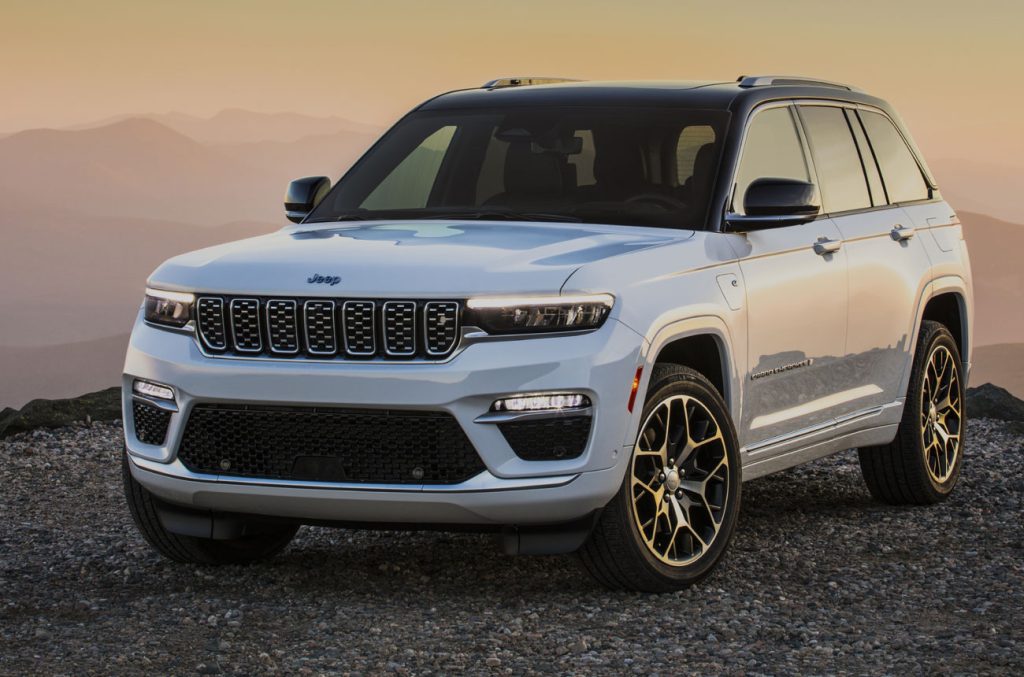
The TrailHawk model combines the top-tier Quadra-Drive II all-wheel-drive system with a front anti-roll bar disconnect, providing enhanced wheel articulation for off-road adventures.
On pavement, the Grand Cherokee remains impressively composed, delivering an exceptionally smooth ride, especially in higher-level trims equipped with air springs and adaptive dampers.
Handling differences often come down to center of gravity, track width, weight distribution, and suspension tuning. SUVs with a lower center of gravity and wider stance tend to corner with less body roll.
Adaptive or sport-tuned suspensions can further reduce top-heaviness, as seen in the BMW X3 and Mazda CX-5. Conversely, taller three-row SUVs prioritize passenger comfort and cargo space, which can compromise agility and make them feel less confident on twisty roads.
Hybrid and plug-in hybrid SUVs also introduce considerations. Battery placement can raise the center of gravity, but models like the Hyundai Tucson Hybrid and Toyota RAV4 Prime mitigate this with well-tuned suspension, preserving stability in curves. Full-size hybrid SUVs, however, may still feel top-heavy despite advanced stability features.
Technology also matters. Modern electronic aids, such as stability control, torque vectoring, and adaptive dampers, help improve cornering confidence.
Luxury SUVs leverage these systems effectively, allowing vehicles like the Volvo XC60 and Acura RDX to feel agile, while mainstream or larger SUVs may have these technologies but still struggle due to inherent design limitations.
For drivers who frequently encounter winding roads or prioritize driving enjoyment, compact and luxury SUVs with low centers of gravity, responsive steering, and well-tuned suspensions are ideal.
Meanwhile, those who prioritize interior space, passenger comfort, or towing may accept some top-heavy tendencies in exchange for utility. Tires, wheel size, and suspension type also influence cornering performance, low-profile tires and sport-tuned setups improve grip, while tall sidewall tires favor comfort but reduce agility.
