
Finding a family SUV that works well for all three rows is not always easy. Many so-called three-row SUVs have cramped rear seats, limited cargo space, or awkward access that makes loading children and gear difficult.
This list highlights nine 2025 models that are designed for families who will actually use every seat. From the spacious and well-appointed Kia Telluride to the practical and versatile Honda Pilot, these SUVs combine comfort, utility, and thoughtful features for all passengers.
Whether you are looking for off-road capability, fuel efficiency, or a near-luxury interior, these three-row SUVs show that you do not have to compromise on style or driving enjoyment.
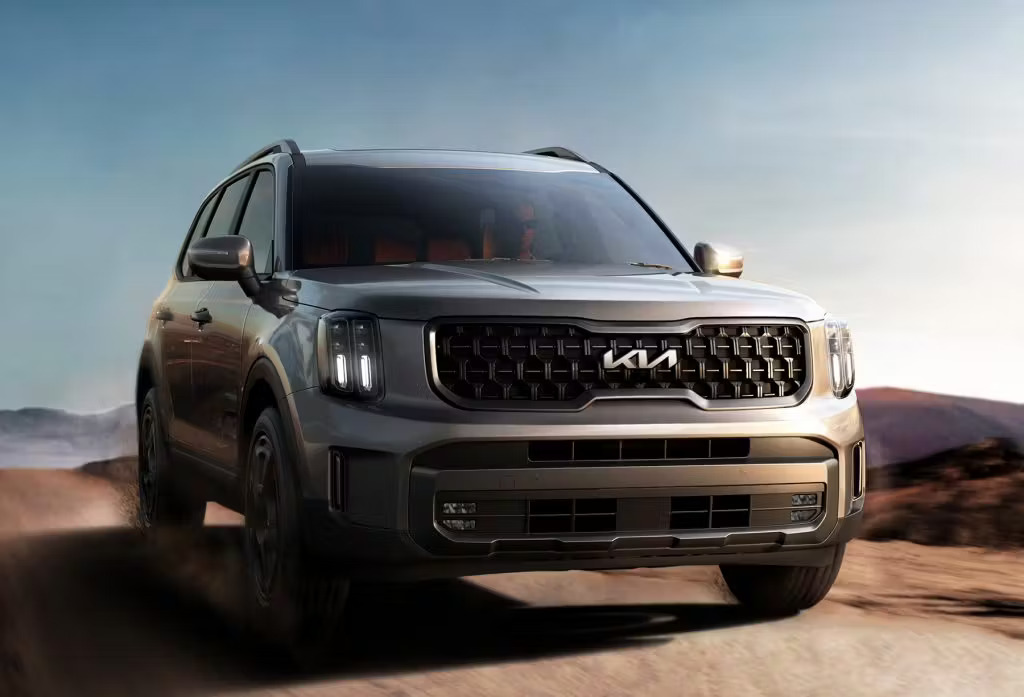
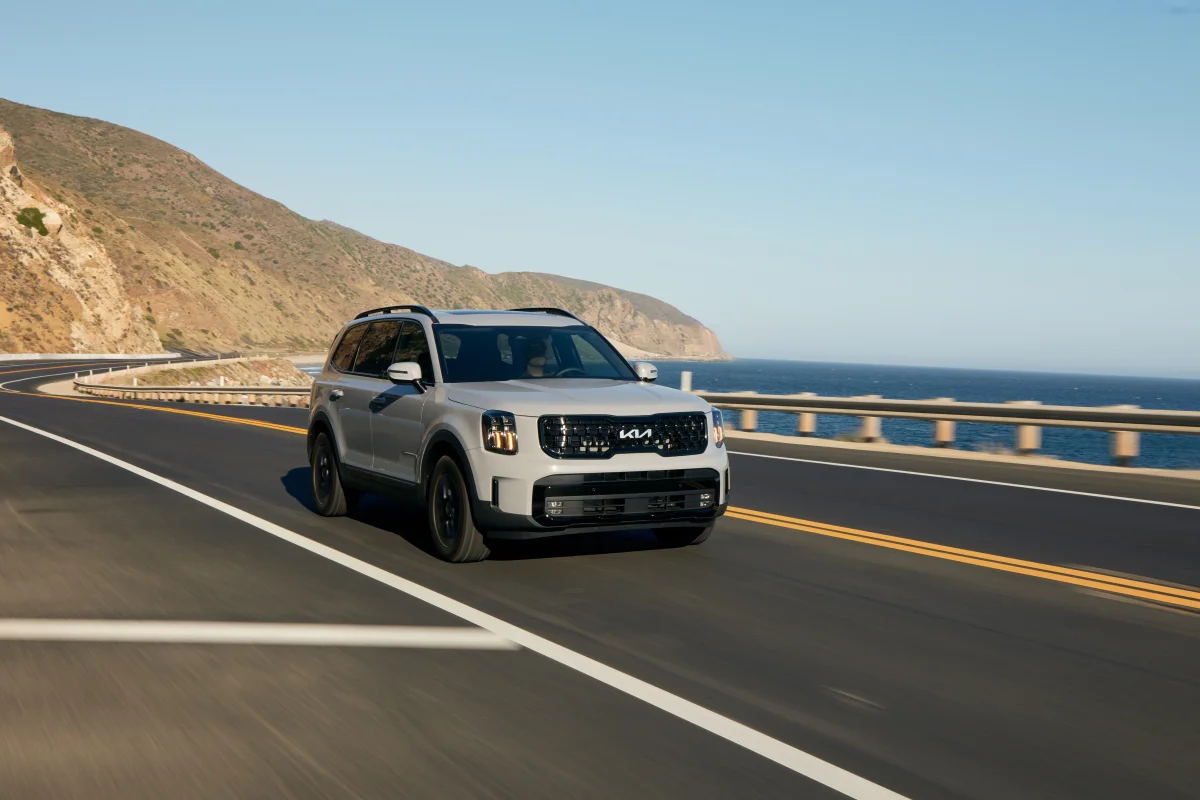
1. 2025 Kia Telluride: A Class-Leading Three-Row SUV
The 2025 Kia Telluride continues to dominate the three-row SUV market, maintaining its reputation for exceptional build quality, spaciousness, and style. Launched in 2020 as a competitor to the Toyota Highlander, it quickly became a favorite for families and SUV enthusiasts alike. The Telluride combines practicality with a premium feel, making it one of the most compelling options in its class.
Under the hood, the Telluride features a 3.8-liter naturally aspirated V6 engine producing 291 hp and 262 lb-ft of torque, paired with an 8-speed automatic transmission. Buyers can choose between front-wheel drive and all-wheel drive.
Acceleration is average for a three-row SUV, but the vehicle offers responsive steering, strong brakes, and a well-tuned suspension, ensuring a comfortable ride even in off-road X-Line trims. Visibility is excellent, enhanced by an available surround-view camera system, while adaptive cruise control and other safety features make driving effortless.
The Telluride’s cabin impresses with a quiet, luxury-like atmosphere, supportive seats, and easy access to all three rows. Climate control works effectively across the cabin, and heated and ventilated seats are available for the first and second rows.
The low step-in height and well-designed captain’s chairs enhance accessibility, and the interior quality feels far above its starting MSRP of $37,755, with solid panel gaps and durable materials.
While the infotainment system is functional, it lags behind newer Kia models, lacking wireless Apple CarPlay/Android Auto. Top trims, however, offer six USB ports, including five Type-C, and a wireless charging pad. The system prioritizes ease of use over flashy graphics, keeping controls intuitive and straightforward.
The Telluride provides 21 cubic feet of cargo space behind the third row, expanding to 87 cubic feet with both rear rows folded. It can tow up to 5,500 pounds and offers thoughtful storage solutions, though small-item organization is limited.
With its combination of quality, comfort, and features, the Telluride delivers excellent value, further backed by Kia’s 5-year/60,000-mile basic and 10-year/100,000-mile powertrain warranties.
The AWD Telluride averages 20 mpg combined, with real-world performance closer to 23 mpg, using regular fuel. Its design, driving experience, and spacious interior give it a “baby Land Rover” luxury feel without the premium price. The 2025 Kia Telluride remains a standout in the three-row SUV segment.
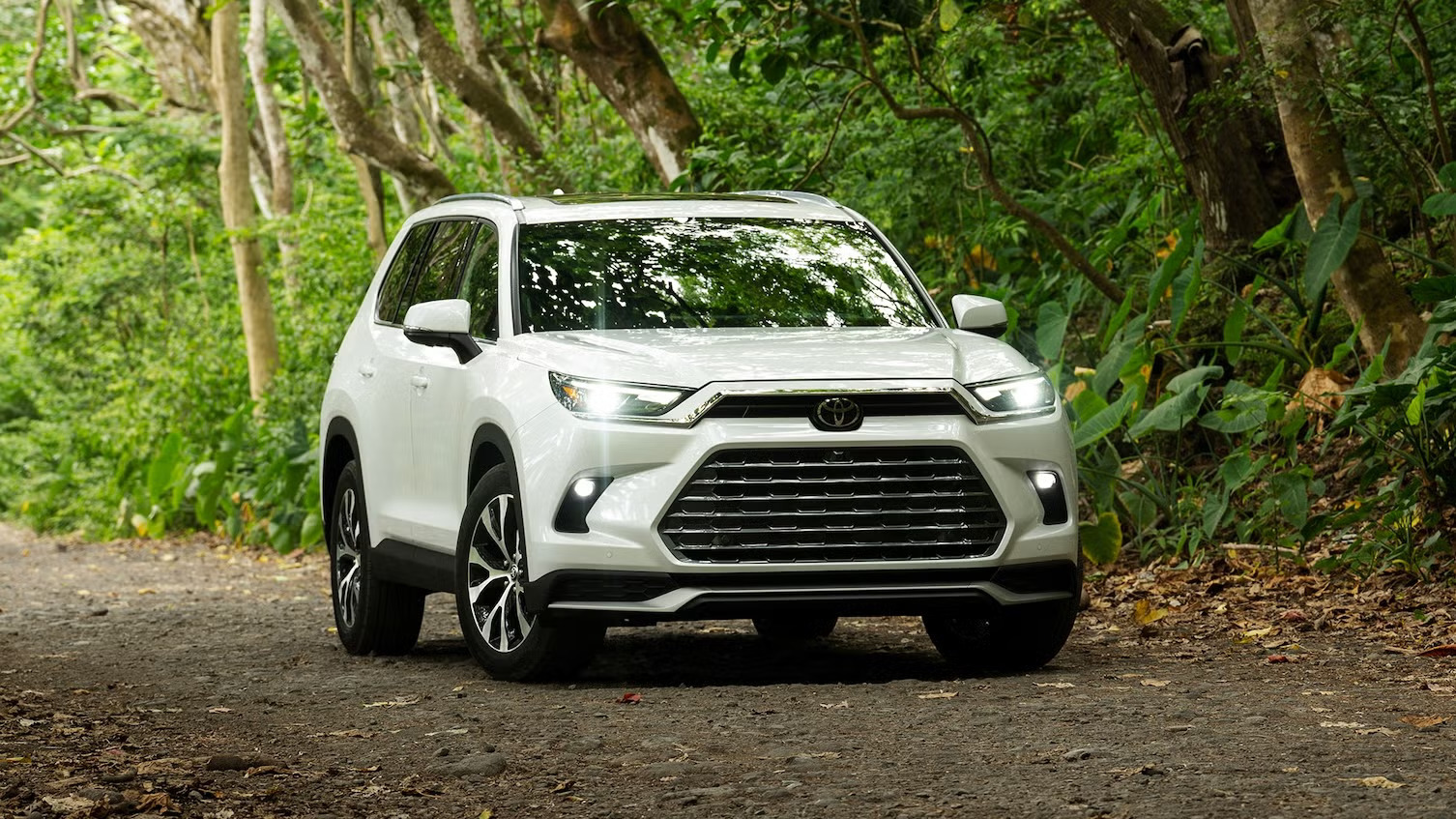
2. 2025 Toyota Grand Highlander: Spacious and Comfortable Three-Row SUV
The 2025 Toyota Grand Highlander solves one of the main limitations of the standard Highlander by offering significantly more space. Its longer and larger body provides generous room for passengers and cargo, making it the ideal choice in the Highlander lineup for families who need comfort and versatility. The base MSRP starts at $42,310, reflecting its size and upgraded features.
The Grand Highlander comes with a 2.5-liter four-cylinder or a 2.4-liter turbocharged four-cylinder engine, producing 245 to 362 horsepower and 175 to 400 lb-ft of torque. Both engines are paired with an eCVT transmission, and buyers can choose front-wheel drive or all-wheel drive.
On the Edmunds test track, the AWD model accelerated from 0 to 60 mph in 8 seconds, which is slower than most V6 three-row midsize SUVs. Handling is confident, supported by an available torque-vectoring AWD system, and the compliant suspension smooths road imperfections.
Visibility is strong thanks to thin front pillars, and optional camera-based rearview mirrors enhance rear visibility. Standard Toyota Safety Sense 3.0 includes adaptive cruise, lane-keeping, and other advanced driver aids that perform well in daily driving.
The cabin features soft, padded surfaces, tri-zone climate control, and comfortable seating. The second-row captain’s chairs and the higher third row provide sufficient legroom for adults.
Sliding second-row seats allow easy access to the rear, and car seat installation is simple. The climate system maintains a comfortable temperature in all rows. Road and engine noise are noticeable during hard acceleration, but cabin quietness is acceptable for long trips.
The optional 12.3-inch touchscreen infotainment responds quickly and includes excellent voice recognition. Reflections and some confusing menu options can be minor inconveniences. Cargo space is 20.6 cubic feet behind the third row, 57.9 behind the second, and 97.5 with both rows folded. Small-item storage is improved, with cupholders and compartments in every row.
The Grand Highlander is more expensive than the Kia Telluride but offers generous space, comfort, and features. Warranty coverage includes 3 years or 36,000 miles bumper-to-bumper and 5 years or 60,000 miles for the powertrain, with two years of free scheduled maintenance.
Fuel economy is 24 mpg combined for FWD models and 22 mpg for AWD models. Hybrid variants return up to 36 mpg, providing an efficient option for families.
The Grand Highlander delivers a roomy, well-equipped three-row SUV experience, although its styling is conservative and lacks distinctive character.
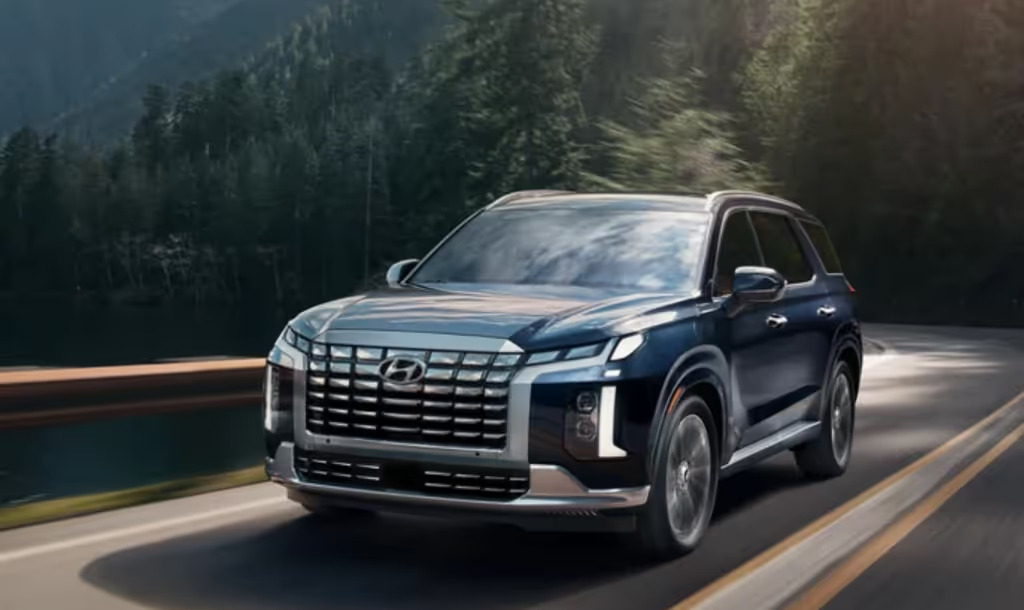
3. 2025 Hyundai Palisade: Comfortable and Feature-Rich Three-Row SUV
The 2025 Hyundai Palisade remains one of the most spacious and well-equipped three-row SUVs on the market. Redesigned recently, it offers a modern cabin, adult-friendly third-row seating, and a wealth of standard features. It competes with rivals like the Kia Telluride and Toyota Grand Highlander, starting at $38,675 MSRP, with seating for up to eight passengers.
The Palisade is powered by a 3.8-liter V6 producing 291 horsepower and 262 lb-ft of torque, paired with an 8-speed automatic transmission. Buyers can choose front-wheel drive or all-wheel drive. Acceleration from 0 to 60 mph takes 7.6 seconds, which is average for the class.
The Palisade handles confidently around corners, though steering and braking feedback are less sharp than some rivals. Highway driving is made easier with adaptive cruise control, lane centering assistance, and the Highway Driving Assist II suite, which provides additional support on longer trips.
The cabin is quiet, with minimal road and wind noise, and the engine is nearly silent at idle. Front seats offer support for long drives, while second-row captain’s chairs and the third row provide ample space for adults on shorter trips.
Ventilated second-row seats, heated third-row seats, and tri-zone climate control enhance passenger comfort. Entering and exiting the first two rows is simple, though climbing into the third row may require more effort for adults.
The infotainment system is functional but not class-leading, featuring responsive screens and intuitive navigation, though it requires plugging in a phone for Apple CarPlay or Android Auto.
Device integration is strong, and there are multiple USB ports throughout the cabin. Cargo space measures 18 cubic feet behind the third row and expands to 87 cubic feet with the rear rows folded. Small-item storage is excellent, and the Palisade offers 14 cupholders throughout the interior.
The Palisade provides strong value with features rarely seen in non-luxury SUVs, such as ventilated second-row seats, a massaging driver’s seat, and premium interior materials in higher trims. Hyundai also offers a generous warranty. Fuel economy for the AWD V6 is 21 mpg combined, running on regular gasoline, making it competitive for its class.
The 2025 Hyundai Palisade combines spaciousness, comfort, and premium touches to deliver a three-row SUV that feels close to luxury while remaining practical and family-friendly.
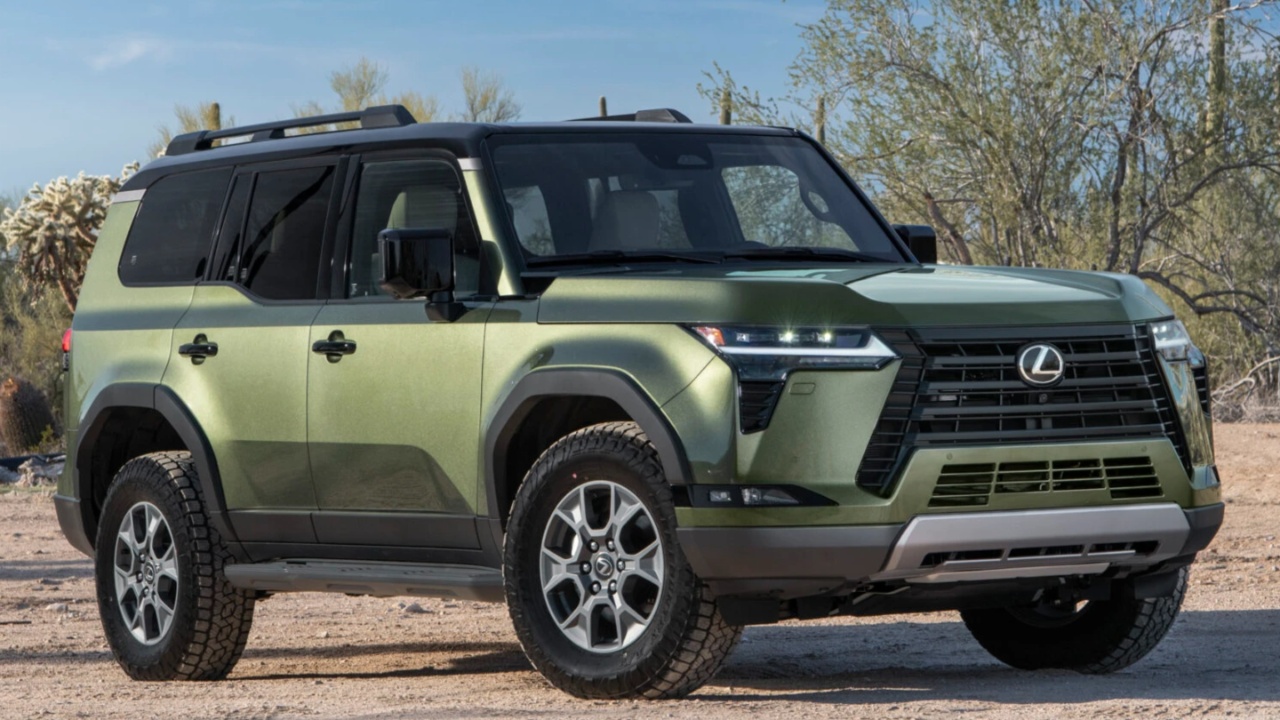
4. 2025 Lexus GX: Luxury Meets Serious Off-Road Capability
The 2025 Lexus GX combines luxury appointments with genuine off-road prowess, making it unique among three-row SUVs. Interiors feature premium leather, soft-touch materials, and Lexus’ high-quality sound system.
Unlike most competitors, the GX can tackle technical trails and heavy obstacles while carrying passengers and cargo, especially in the Overtrail trim. Pricing starts at $65,285 for the base 550 Premium and $72,930 for the Overtrail model.
The GX is powered by a turbocharged 3.4-liter V6 producing 349 horsepower and 479 lb-ft of torque, paired with a 10-speed automatic transmission and standard all-wheel drive. It accelerates from 0 to 60 mph in 6.7 seconds, providing ample power for highway merging and passing.
Handling exhibits noticeable body roll, but stability remains solid. Off-road performance shines with features like locking differentials and off-road tires in the Overtrail trim. On-road driver aids are extensive, including hands-free driving up to 25 mph, although the system can be inconsistent. Surround-view and off-road cameras are highly effective.
The cabin is quiet at highway speeds, with supportive front and second-row seats. The third row is cramped and mounted low, making it suitable mostly for short trips. Running boards simplify entry into the elevated cabin.
Physical buttons on the steering wheel are intuitively laid out, and climate controls combine a touchscreen interface with a physical dial for convenience. Car seat installation is straightforward, though tighter door openings make access slightly more challenging.
A 14-inch touchscreen with crisp graphics controls infotainment, while wireless smartphone connectivity is standard. Navigation requires a paid subscription after the trial period. USB-C ports and a wireless charging pad are available, but small-item storage is limited, particularly if the cooled center console is selected.
Cargo space is 10.3 cubic feet with all rows up, 40.2 cubic feet with the third row folded, and 76.9 cubic feet with the second row down. The GX can tow over 9,000 pounds, outperforming some larger luxury SUVs.
The GX delivers a luxurious and capable off-road experience but comes at a premium price. The four-year/50,000-mile warranty is competitive, though some features require ongoing subscription fees. Fuel economy is 17 mpg combined, typical for a luxury off-roader.
The 2025 Lexus GX blends luxury, refinement, and rugged off-road capability, offering a rare combination for buyers who want comfort and adventure in one SUV.
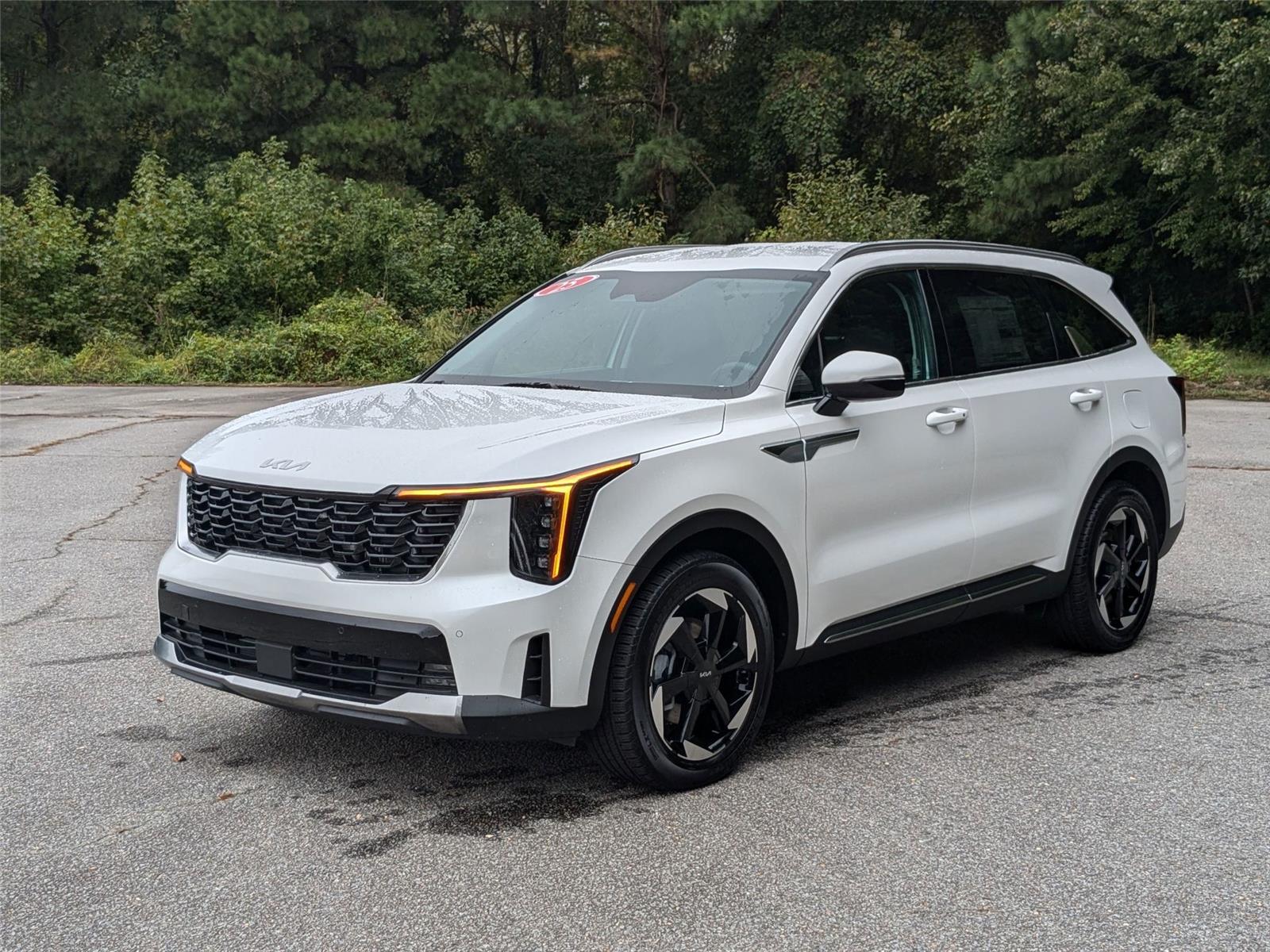
5. 2025 Kia Sorento: Compact, Efficient, and Feature-Packed
The 2025 Kia Sorento offers an affordable three-row SUV option, starting at $33,405. Hybrid and plug-in hybrid models are available, achieving 34 combined MPG and 72 MPGe, respectively. While smaller than the Telluride or Palisade, the Sorento makes the most of its compact footprint with well-designed interiors, user-friendly technology, and an efficient powertrain.
The Sorento comes with a turbocharged 1.6-liter four-cylinder paired with a permanent-magnet electric motor, producing 227 horsepower and 258 lb-ft of torque. A 6-speed automatic transmission and available front- or all-wheel drive provide smooth performance.
Acceleration to 60 mph takes 6.7 seconds, competitive for a small three-row SUV. Braking is confident, with a 121-foot stop from 60 mph. Steering is precise, though ride comfort at lower speeds can feel jittery, especially with 20-inch wheels. Optional driver aids include automatic lane changing and a surround-view camera system, both of which enhance safety and convenience.
All three rows are surprisingly comfortable for a smaller SUV. Front seats offer heating, ventilation, and multiple adjustments, while second-row captain’s chairs provide better support than standard benches.
The third row is low to the floor but still accommodates adults for short trips. Dual-zone climate control is efficient, and visibility is aided by large windows and good sight lines. Entry and exit are straightforward for the first two rows, with the third row requiring more effort.
The Sorento includes a standard 12.3-inch touchscreen, an available digital instrument cluster, and wireless Android Auto and Apple CarPlay across all trims. USB-C ports are available in every row, and a wireless charging pad is optional.
Cargo space measures 12.6 cubic feet behind the third row and expands to 38.5–45 cubic feet with the second row adjusted forward. Thoughtful storage compartments and a towing capacity of 3,500 pounds (up to 4,500 in X-Pro trims) make the Sorento practical.
The Sorento combines affordability with premium-feeling features and strong warranties, including 5 years/60,000 miles bumper-to-bumper and 10 years/100,000 miles powertrain coverage. Fuel economy for the AWD turbocharged model is 24 mpg combined, with a tested average of 25.2 mpg, running on regular gasoline.
With its turbocharged engine, compact size, and well-equipped cabin, the 2025 Kia Sorento delivers a practical and fun three-row SUV experience that resembles a smaller, nimble version of the Telluride, with the X-Pro trim adding a touch of personality.
Also Read: 10 Cars That Don’t Show Dirt After a Rain
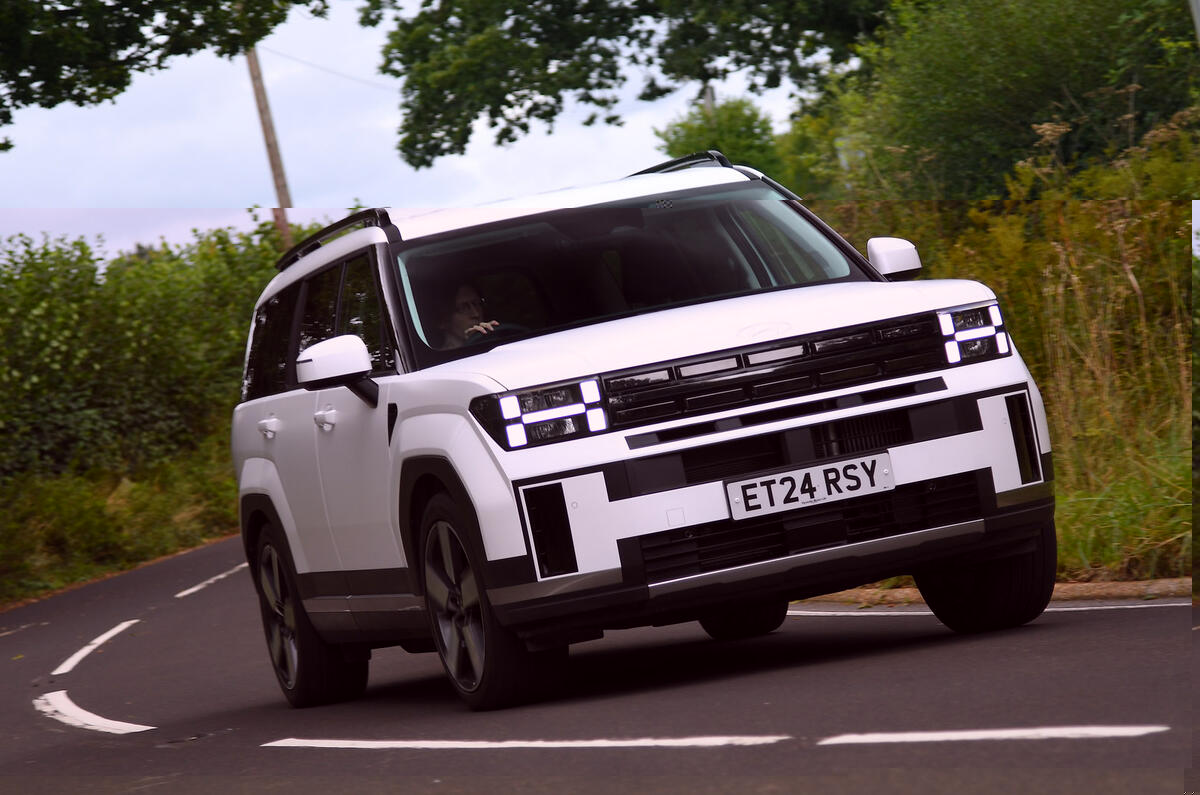
6. 2025 Hyundai Santa Fe: Stylish, Versatile, and Feature-Rich
The 2025 Hyundai Santa Fe is a slightly larger and more versatile SUV compared to the Kia Sorento, offering a range of powertrains, including a turbocharged 2.5-liter inline-four and a 1.6-liter turbocharged hybrid option. Pricing starts at $35,755, making it about $2,000 more expensive than the Sorento, but it delivers additional features, a wider cabin, and a standout design.
We tested the Santa Fe XRT, the more off-road-oriented trim with all-terrain tires and extra ground clearance. Its 277-horsepower turbocharged engine accelerates from 0 to 60 mph in 7.2 seconds.
The 8-speed dual-clutch transmission shifts quickly and effortlessly, though initial responsiveness and passing performance can feel slightly muted. The SUV is stable around corners, with competent brakes, though emergency stopping distances are slightly longer due to the off-road tires.
Visibility is limited by large pillars and a small rear window, but surround-view cameras, a rearview camera mirror, and blind-spot monitoring compensate effectively. Adaptive cruise control and automatic lane changes work smoothly, integrating with navigation cues for curves.
Front and second-row passengers enjoy supportive and well-padded seating, while the third row is more suitable for short trips or children. Wide rear doors simplify entry and car seat installation. The cabin remains quiet, and physical controls for climate and infotainment are intuitive. The Santa Fe balances comfort and utility with thoughtful touches like easy-reach control layouts.
The 12.3-inch touchscreen is responsive and clearly organized, with wireless smartphone integration standard. Higher trims feature dual wireless charging pads, multiple USB-C ports, and even a household outlet.
Cargo space behind the third row is limited, but folding the second row creates 40.5 cubic feet, expanding to nearly 80 cubic feet behind the front seats. Clever storage solutions, including a double-hinged center console tray, enhance practicality.
The Santa Fe blends upscale materials with strong assembly quality, offering a premium feel without an excessive price. Warranty coverage includes 5 years/60,000 miles basic, 10 years/100,000 miles powertrain, and three years of free maintenance. Fuel economy for the turbo XRT is slightly below its 22 mpg EPA estimate, while hybrid trims provide improved efficiency.
The 2025 Hyundai Santa Fe combines bold styling, versatility, and thoughtful features, making it a compelling choice for buyers seeking a midsize SUV that balances utility, comfort, and design.
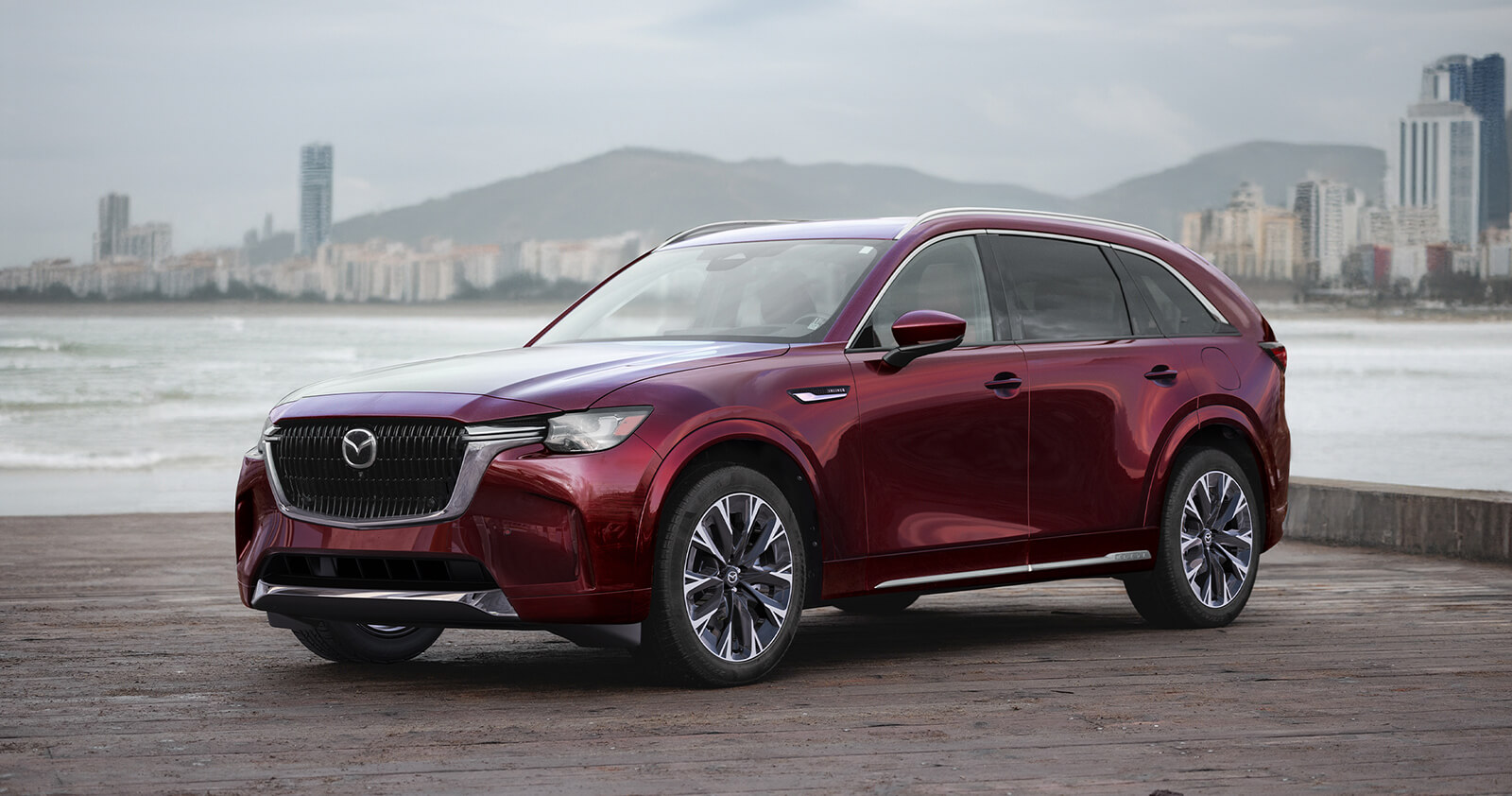
7. 2025 Mazda CX-90: Stylish, Fun-to-Drive, and Upscale
The 2025 Mazda CX-90 offers luxury-level design and a sporty driving experience at a price point below many comparable luxury SUVs. Standard all-wheel drive enhances traction and composure, while interior materials feel premium, exceeding the $39,300 starting price.
Its blend of performance, refinement, and style makes it stand out, although cargo space is more limited than rivals like the Kia Telluride or Hyundai Palisade.
The CX-90 features a 3.3-liter inline-six with a 48-volt mild-hybrid system, producing 340 horsepower and 369 lb-ft of torque, paired with an 8-speed automatic transmission. Acceleration from 0 to 60 mph takes 6.5 seconds, delivering lively passing and merging capabilities.
Steering is slightly heavy but provides a substantial, engaging feel, while the brake pedal is responsive yet touchy, requiring careful modulation in city driving. The suspension smooths out most bumps, though larger wheels on higher trims can make the ride firmer.
Visibility is generally good once drivers adjust to the longer hood, and advanced driver aids such as adaptive cruise control, lane-keeping assistance, and blind-spot monitoring perform consistently.
The cabin is quiet, with minimal road and wind noise. Front seats are supportive for long drives, though second-row captain’s chairs are only moderately comfortable.
The third row fits adults for short trips but lacks the comfort of competitors like the Telluride. Wide rear doors simplify car seat installation, and physical buttons for key functions are clearly labeled. The push-button climate control system is intuitive and set-and-forget.
The CX-90 includes a low-profile center screen and an available digital instrument cluster. Native infotainment is limited to the rotary control knob, while Apple CarPlay and Android Auto support touch functionality.
Cargo capacity is 15.9 cubic feet behind the third row, 40.1 behind the second, and 75.2 cubic feet with all seats folded, less than some mainstream rivals. An available towing package raises capacity from 3,500 to 5,000 pounds.
Starting just under $40K, the CX-90 delivers near-luxury quality for less than a Lexus GX or Lincoln Aviator. Top trims can exceed $60K, however. Warranty coverage is standard, and roadside assistance is included for three years/36,000 miles, but no free maintenance is offered. Fuel economy is rated at 25 mpg combined, with our testing averaging 25.7 mpg.
The Mazda CX-90 is distinguished by its upscale interior, engaging performance, and design flair. It is best suited for buyers seeking a luxury-oriented three-row SUV that prioritizes style and driving enjoyment over maximum cargo space.
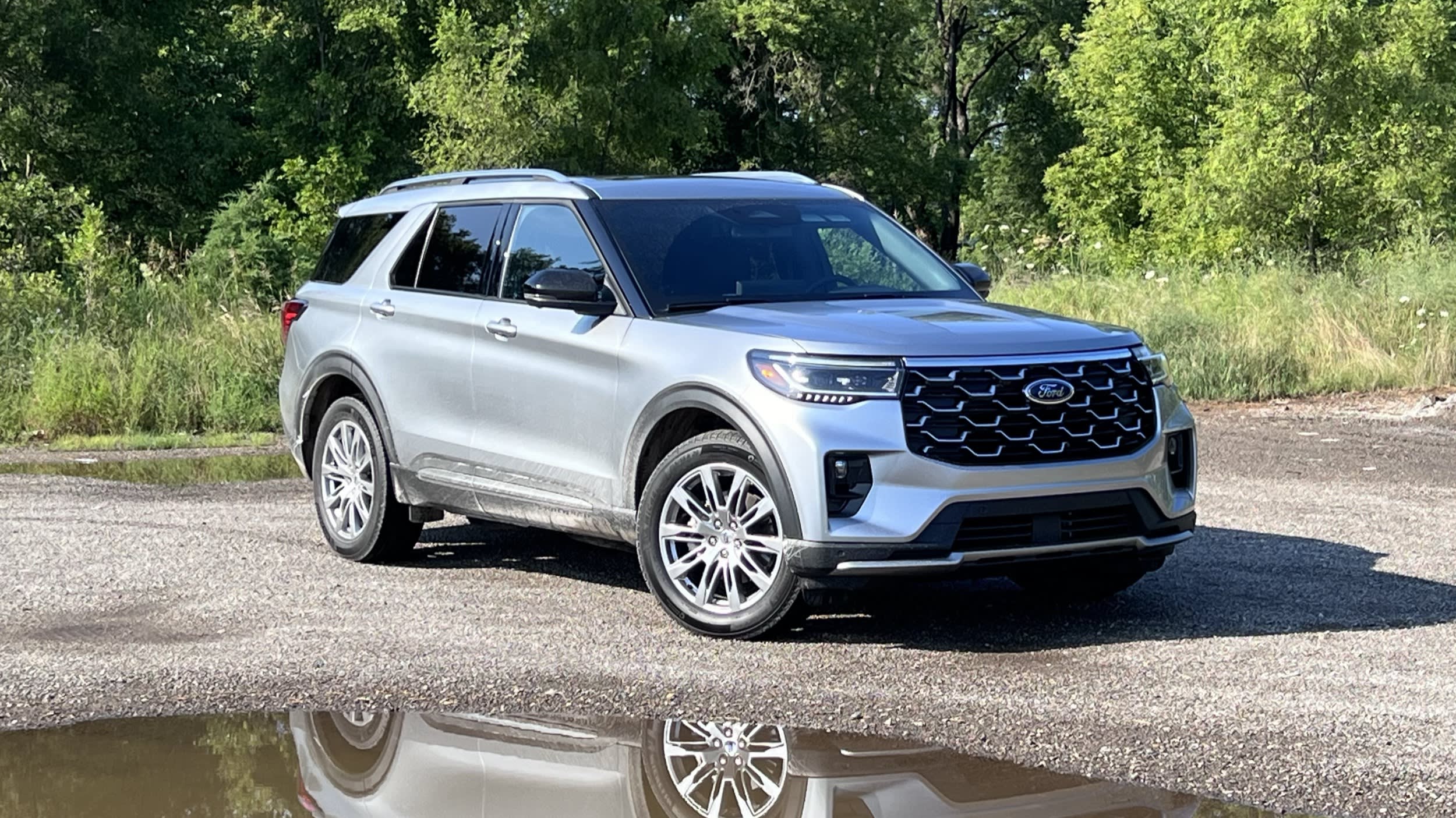
8. 2025 Ford Explorer: Sporty Midsize SUV with Modern Tech
The 2025 Ford Explorer brings a refreshed interior and updated technology while maintaining the athleticism that has long defined the model. Starting at $41,350, it offers a midsize SUV experience with some capability for third-row use, though it is smaller than competitors like the Kia Telluride or Volkswagen Atlas.
The new standard displays a 12.3-inch instrument cluster and a 13.2-inch center touchscreen, modernizing the cabin and improving usability.
Powering the Explorer is a twin-turbo 3.0-liter inline-six producing 400 horsepower and 415 lb-ft of torque, paired with a 10-speed automatic transmission and all-wheel drive. The ST trim accelerates from 0 to 60 mph in just 5.6 seconds, making it one of the fastest three-row SUVs in the segment.
Steering is precise, and handling feels sporty and stable. The ride is smooth on regular trims, but the performance-oriented ST rides stiffly, transmitting more bumps and road imperfections. Driver aids function unobtrusively, and Ford’s BlueCruise hands-free system is available for highway driving with certain conditions, though it requires a subscription.
Front seats are supportive and comfortable, with optional heating, ventilation, and massaging functions. Second-row and third-row seats are less comfortable, with limited cushioning and narrow dimensions, making them more suitable for children. Third-row legroom is restricted, as the seats sit low to the floor. Ride quality varies depending on trim level, with the ST feeling firmer than non-performance models.
The Explorer’s new infotainment system integrates Google Maps and Google Assistant for intuitive navigation and voice controls. Wireless Apple CarPlay and Android Auto are standard.
Cargo space behind the third row is 16.3 cubic feet, expanding to 85.3 cubic feet with both rear rows folded. There are practical storage solutions like underfloor bins and cubbies, though space for second- and third-row passengers is limited.
The Explorer offers strong performance and technology for the price, though its warranty is not as competitive as rivals like the Hyundai Palisade or Kia Telluride. Fuel economy ranges from 24 mpg combined with the base engine to 20 mpg with the V6 and AWD, with aggressive driving lowering efficiency.
The 2025 Ford Explorer excels as a fun-to-drive midsize SUV with modern tech and strong performance, though passenger comfort in the rear rows and interior cargo space are more limited than some competitors.
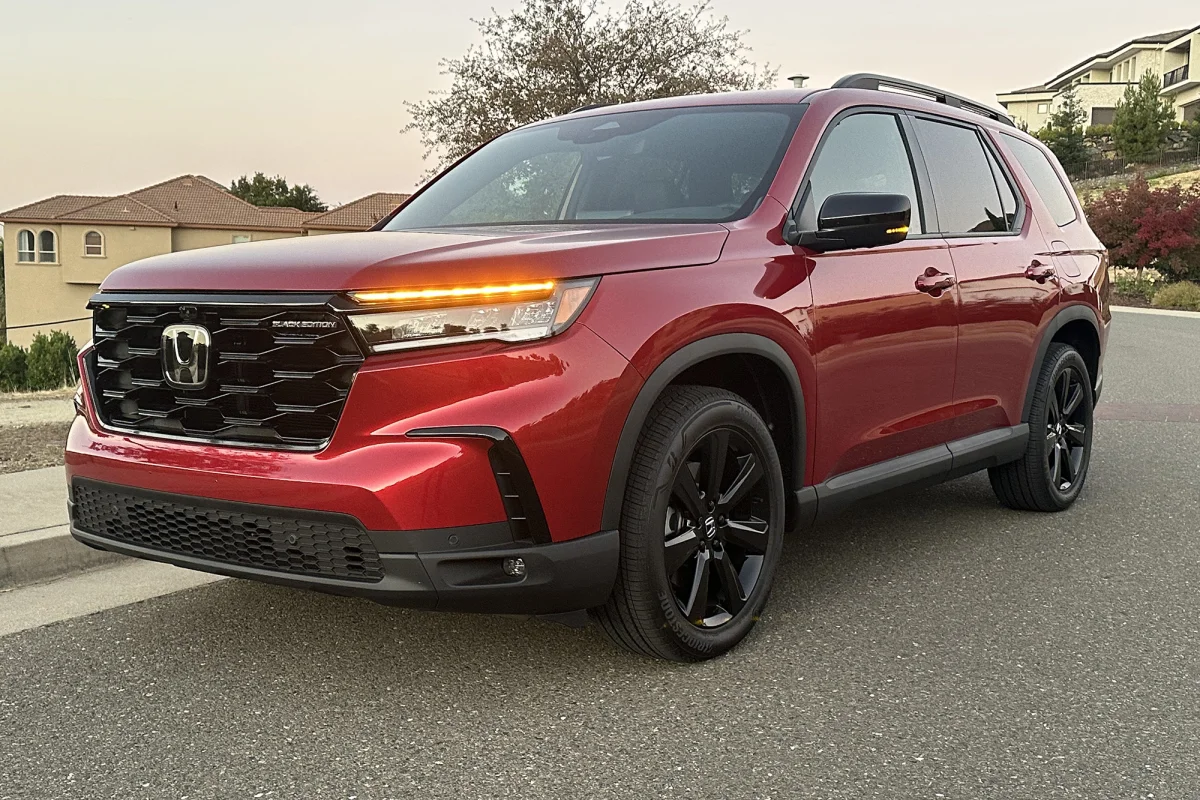
9. 2025 Honda Pilot: Practical Family SUV with Versatile Trims
The 2025 Honda Pilot offers a traditional three-row SUV experience with a range of six trims and both front- and all-wheel-drive options. Starting at $41,595, it balances utility, comfort, and moderate off-road capability, particularly in the TrailSport trim, which features rugged styling, enhanced all-wheel-drive dynamics, and off-road tires.
Under the hood, the Pilot is powered by a 3.5-liter V6 producing 285 horsepower and 262 lb-ft of torque, paired with a 10-speed automatic transmission. Acceleration is average for the class, with the TrailSport reaching 0 to 60 mph in 7.8 seconds.
The V6 provides a snarly exhaust note, but the transmission frequently shifts in stop-and-go traffic, creating sensitivity to pedal inputs. Braking is consistent, though emergency stopping distances are slightly longer than some rivals.
Ride quality is smooth over bumps and rough roads, and visibility is aided by large windows, though the surround-view camera system suffers from low resolution. Adaptive cruise control and lane-centering assist work effectively on highways.
Front seats and optional second-row captain’s chairs are soft and supportive, though the Pilot’s front seats lack the adjustability found in competitors. Entry and car seat installation are straightforward thanks to large doors and roomy second-row access.
The third row is best for children or short trips, as legroom is limited. Noise levels are low, but not as quiet as the Kia Telluride. Climate controls are intuitive, with physical buttons and knobs for easy adjustment.
The Pilot comes with wireless phone integration and multiple USB ports, including a household-style outlet. Infotainment screens range from 7 to 9 inches, which feel small in the spacious cabin. Cargo capacity reaches 87 cubic feet with both rear rows folded. The 50/50 third-row split allows flexibility, and small-item storage is abundant, with cupholders and cubbies accessible to all passengers. Towing capacity is 5,000 pounds.
While durable and family-friendly, the Pilot is less competitive on features and warranty. Its three-year/36,000-mile basic and five-year/60,000-mile powertrain coverage lags behind Hyundai and Kia rivals. Fuel economy ranges from 20 mpg combined for AWD TrailSport models to 22 mpg combined for FWD variants.
The Pilot delivers reliability, versatility, and a comfortable ride for families, but it lacks standout traits, making it competent yet unremarkable in a crowded midsize SUV segment.
These nine family SUVs prove that third-row seating can be comfortable, functional, and enjoyable. Models like the Hyundai Palisade and Toyota Grand Highlander provide enough space for adults, while options such as the Mazda CX-90 and Ford Explorer offer a more engaging driving experience.
More affordable choices such as the Kia Sorento and Hyundai Santa Fe balance features, efficiency, and comfort. Each SUV has its strengths in technology, towing capacity, or interior quality, making it easier for families to find a vehicle that suits their lifestyle. These 2025 three-row SUVs are built for families who will use every seat regularly.
Also Read: 5 Cars With Rear Cameras You Can See at Night vs 5 Blurry Views
