
For many American drivers, the appeal of the all-wheel-drive wagon has never faded. Long before today’s crossover boom, wagons offered the same blend of cargo flexibility, stable road manners, and all-weather capability, without the bulk or fuel costs of an SUV.
And while the wagon market has shrunk over the years, used models from the late 1990s through early 2010s remain surprisingly popular among budget-conscious buyers, outdoor enthusiasts, and drivers in snow-belt states.
But not all AWD wagons from these eras are created equal. Some were engineered with advanced drivetrains that still inspire confidence on snow-covered mountain passes or during heavy winter storms.
Others were marketed as “AWD” but lacked the traction, torque management, or reliability needed to keep up when roads turned slick. Below, we break down five older AWD wagons that still stay planted in bad weather, and five that can feel loose, hesitant, or underwhelming when traction really matters.
5 Older AWD Wagons That Stay Planted in Bad Weather
Before crossovers took over American driveways, the all-wheel-drive wagon was the go-to choice for families and commuters who needed year-round stability without sacrificing fuel economy or everyday practicality.
These long-roof machines delivered the perfect mix of cargo space, car-like handling, and all-weather confidence, qualities that still make them appealing on the used market today.
And for drivers in snow-prone regions like the Northeast, Upper Midwest, and mountain states, an older AWD wagon can be a smart, budget-friendly way to get dependable winter traction without buying a newer SUV.
But among the many wagons sold in the late ’90s through early 2010s, some models stand out for their rock-solid winter performance.
These are the cars that dig in when the snow piles up, stay composed on icy back roads, and keep traction steady when lesser AWD systems begin to slip. Below are five older AWD wagons that still stay planted in bad weather, offering confidence and control long after their original sticker prices have faded.
1. Subaru Outback (2005–2009)
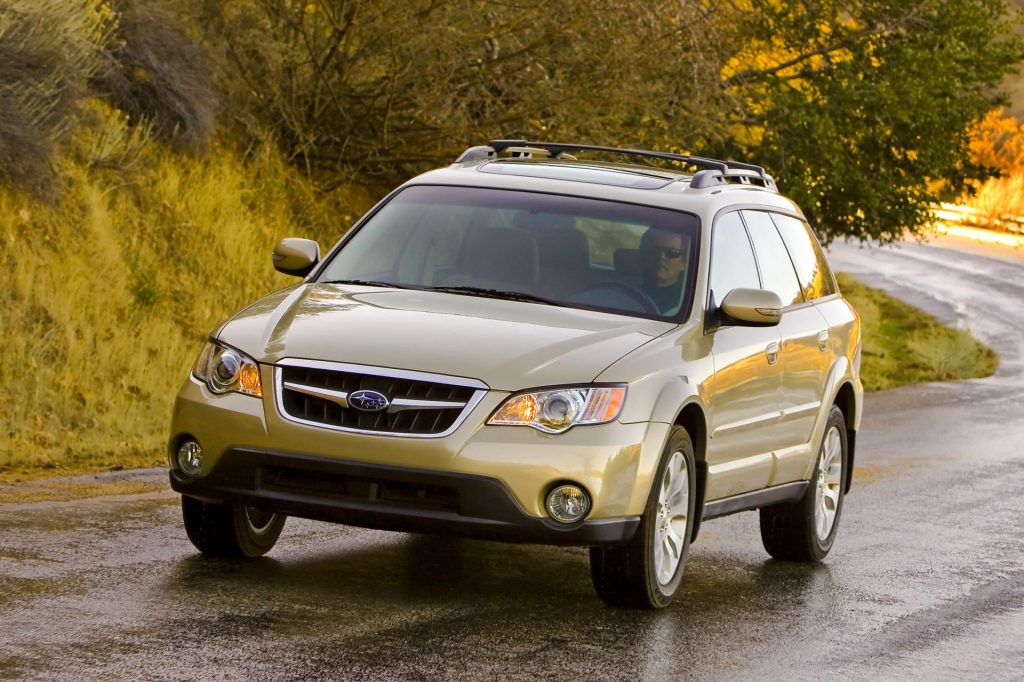
The mid-2000s Outback is one of the most confidence-inspiring older AWD wagons you can buy. Subaru’s symmetrical all-wheel-drive system was already well-proven by this generation, using a longitudinal engine layout and full-time torque delivery to all four wheels.
Unlike many crossovers that rely on front-biased systems with delayed rear engagement, the Outback keeps all four wheels working all the time.
Paired with good ground clearance and the option of the 3.0-liter flat-six, this era of Outback handles deep snow, icy driveways, and unplowed roads with ease. For US buyers in the Northeast, Rocky Mountains, and Upper Midwest, it’s still a top pick for winter reliability.
The Outback isn’t particularly quick, but that’s really its only major drawback in this category. Our tested Outback Limited, equipped with the standard four-cylinder engine, needed 8.8 seconds to reach 60 mph. That’s respectable but noticeably slower than rivals such as the Honda Passport and Ford Edge.
Drivers who want stronger passing power or more confident highway acceleration will want to step up to the available turbocharged engine, which brings performance more in line with competitors. On the bright side, the transmission responds promptly and shifts smoothly, helping the Outback keep pace in everyday traffic.
In corners, there’s a bit of body roll, but overall the Outback remains composed and easy to manage. The steering has a reassuring on-center feel and sends enough feedback to keep the driver connected to the road.
Best of all, the Outback’s 8.7 inches of ground clearance and standard all-wheel drive give it genuine go-anywhere appeal. It can tackle many of the same trails, back roads, and winter conditions as its SUV competitors, and in some cases, it can go places they can’t.
Inside, a quality audio system and abundant charging options add to the Outback’s appeal, but Subaru’s large 11.6-inch vertical touchscreen is a missed opportunity. It looks modern, but the interface is more confusing than it should be. While most features are easy enough to locate, the layered menu structure slows down simple tasks.
Connecting a smartphone doesn’t help much either; Apple CarPlay and Android Auto occupy only the top half of the screen, leaving the lower half wasted. Subaru’s built-in voice controls are another weak point, often struggling to respond to even basic commands.
Subaru’s EyeSight driver-assistance suite remains one of the most capable systems in the segment, yet it can also be one of the most intrusive. Features like adaptive cruise control and lane keeping operate smoothly and reliably, but the constant stream of alerts and beeps can quickly become tiresome, even for drivers who appreciate advanced safety tech.
Also Read: 10 Best EVs That Don’t Feel Jerky in Traffic
2. Volvo XC70 (2003–2007)
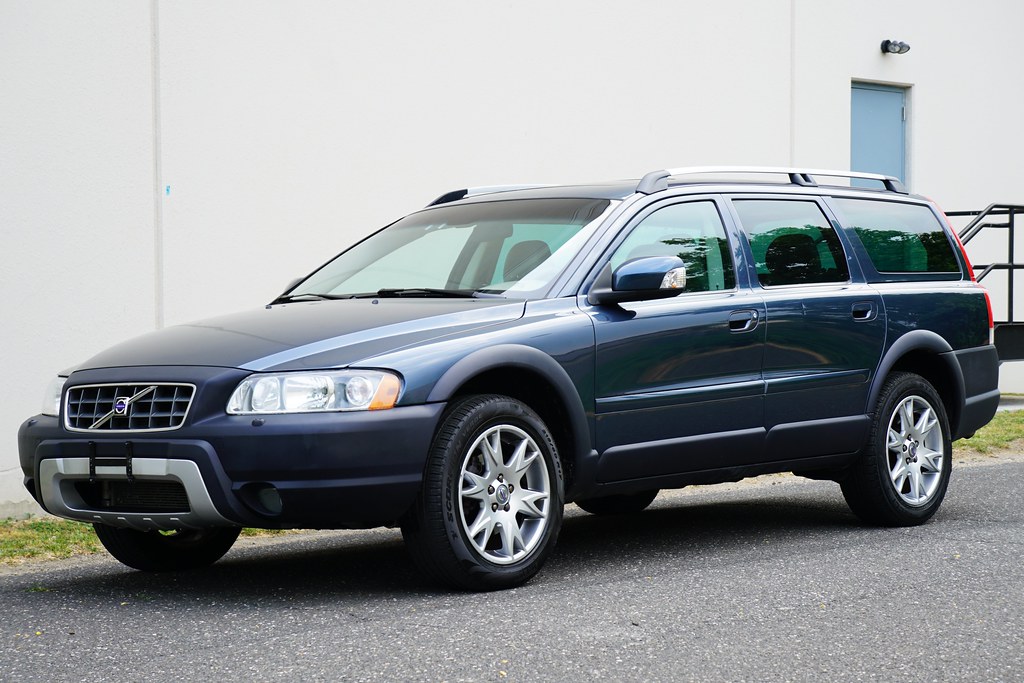
Volvo’s P2-chassis XC70 blended upscale comfort with legitimate foul-weather capability. Although it uses a Haldex-based AWD system rather than full-time engagement, its tuning during this era was excellent, fast-acting, predictable, and smart about torque distribution.
Combined with Volvo’s strong stability control programming and a planted highway feel, the XC70 remains one of the best-mannered older wagons in winter weather. Its raised ride height and rugged cladding weren’t just for show; this wagon confidently handles slushy highways and snowy rural roads without feeling floaty or nose-heavy.
It’s been nearly a decade since Volvo retired the XC70 to clear space for the V60 Cross Country. Now, the nameplate is making a surprising comeback, but not as the rugged long-roof wagon many enthusiasts hoped for. Instead, Volvo, under Geely ownership, is preparing to launch yet another SUV wearing the XC70 badge.
The new model will debut in China later this year and may expand to other markets afterward. As the name implies, it will slot just above the XC60, offering a roomier cabin and a slightly larger footprint.
Volvo’s plug-in hybrid lineup has been gaining momentum, with sales rising 11 percent through April to 56,722 units. The returning XC70 will build on that progress by introducing the brand’s first “extended-range” PHEV.
Volvo claims the new model can travel up to 124 miles (200 kilometers) on electricity alone, far beyond the XC60’s 36-mile EPA estimate in the U.S. and more than double its 50-mile WLTP figure in Europe.
However, these numbers require context. That 124-mile estimate comes from China’s CLTC cycle, which is known for being far more optimistic than EPA or WLTP standards. Real-world ranges will be noticeably lower, though still significantly longer than Volvo’s current PHEV offerings.
Even with the adjusted expectations, Volvo emphasizes that the XC70 represents its first true long-range plug-in hybrid. The improvement is enabled by the company’s new Scalable Modular Architecture (SMA), which supports faster charging and a more advanced powertrain layout, though detailed specifications remain undisclosed.
One possibility is that Volvo equipped the XC70 with a substantially larger battery than the 18.8-kWh pack used in the XC60.
But the term might hint at something different altogether. Geely has been developing a range-extender powertrain in which a combustion engine operates only as a generator to keep the battery charged, much like Mazda’s rotary-assisted MX-30 or the upcoming Ram 1500 Ramcharger.
This next-generation powertrain comes from Horse, a joint venture between Geely and Renault. According to early details, the system is capable of delivering up to 124 miles (200 kilometers) of electric driving on a battery roughly half the size of a traditional full-EV pack.
If these claims hold true, the revived XC70 won’t be the wagon fans were hoping for, but it could become one of Volvo’s most technologically interesting SUVs yet.
3. Audi A4 Quattro Wagon (B6/B7, 2002–2008)
Audi’s Quattro system is legendary for a reason. The B6 and B7 A4 wagons are among the most balanced AWD platforms from the early 2000s, delivering an almost rear-biased driving feel that stays composed on icy roads and tight winter corners.
The torsen-based system in these models distributes torque dynamically and instantly, preventing wheel slip before it occurs rather than reacting afterward.
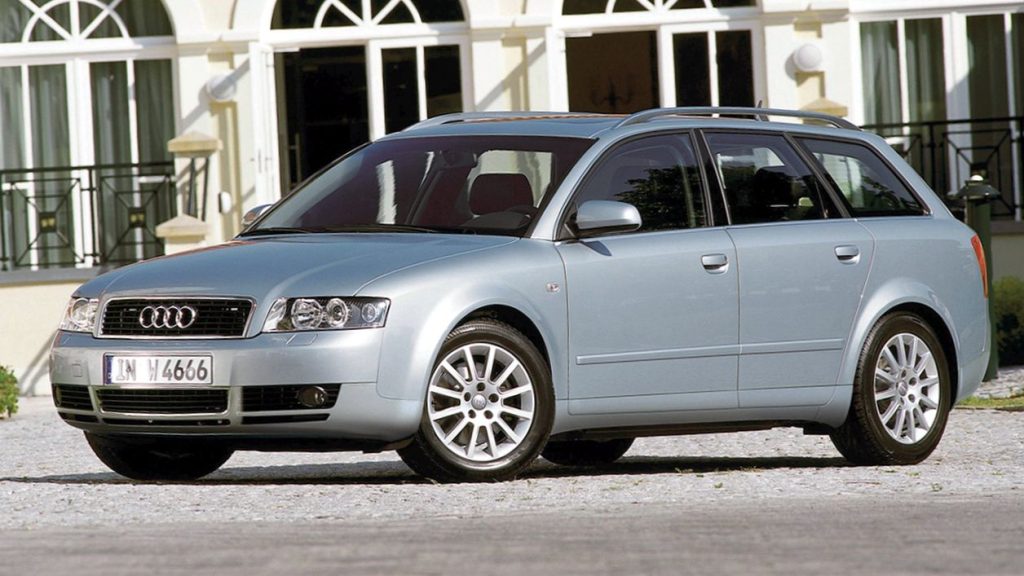
When paired with winter tires, these A4 wagons give drivers a sense of total control, even in harsh conditions that would challenge many modern crossovers. Their only downside is the higher maintenance cost, but the traction payoff is significant.
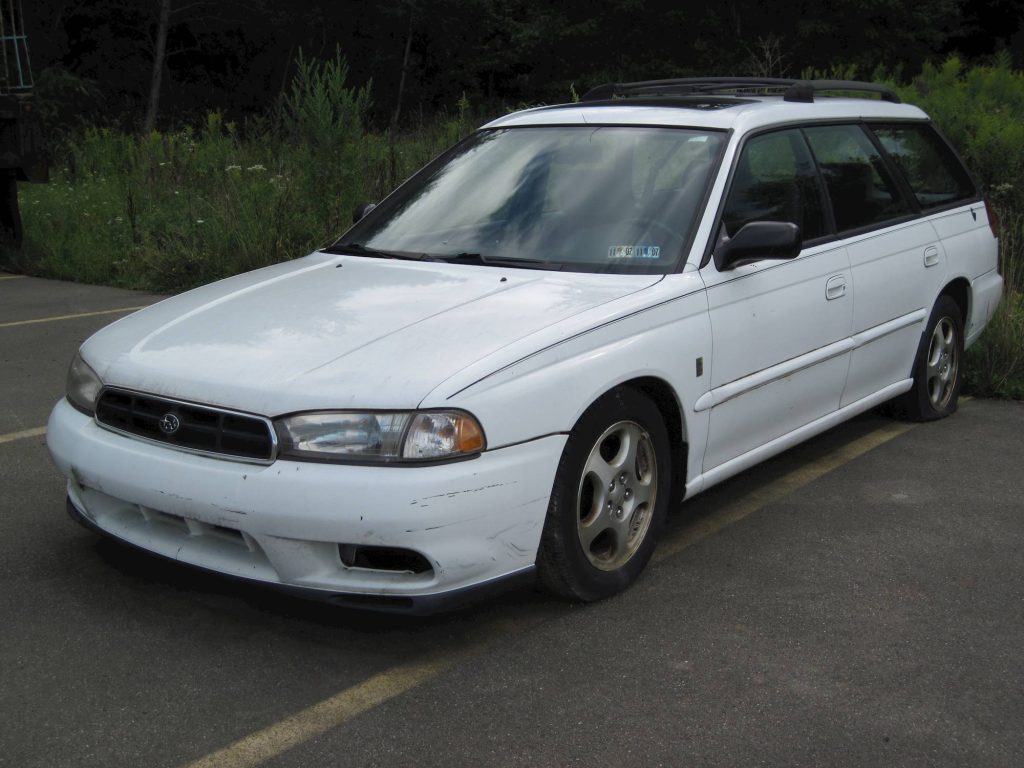
4. Subaru Legacy Wagon (2000–2004)
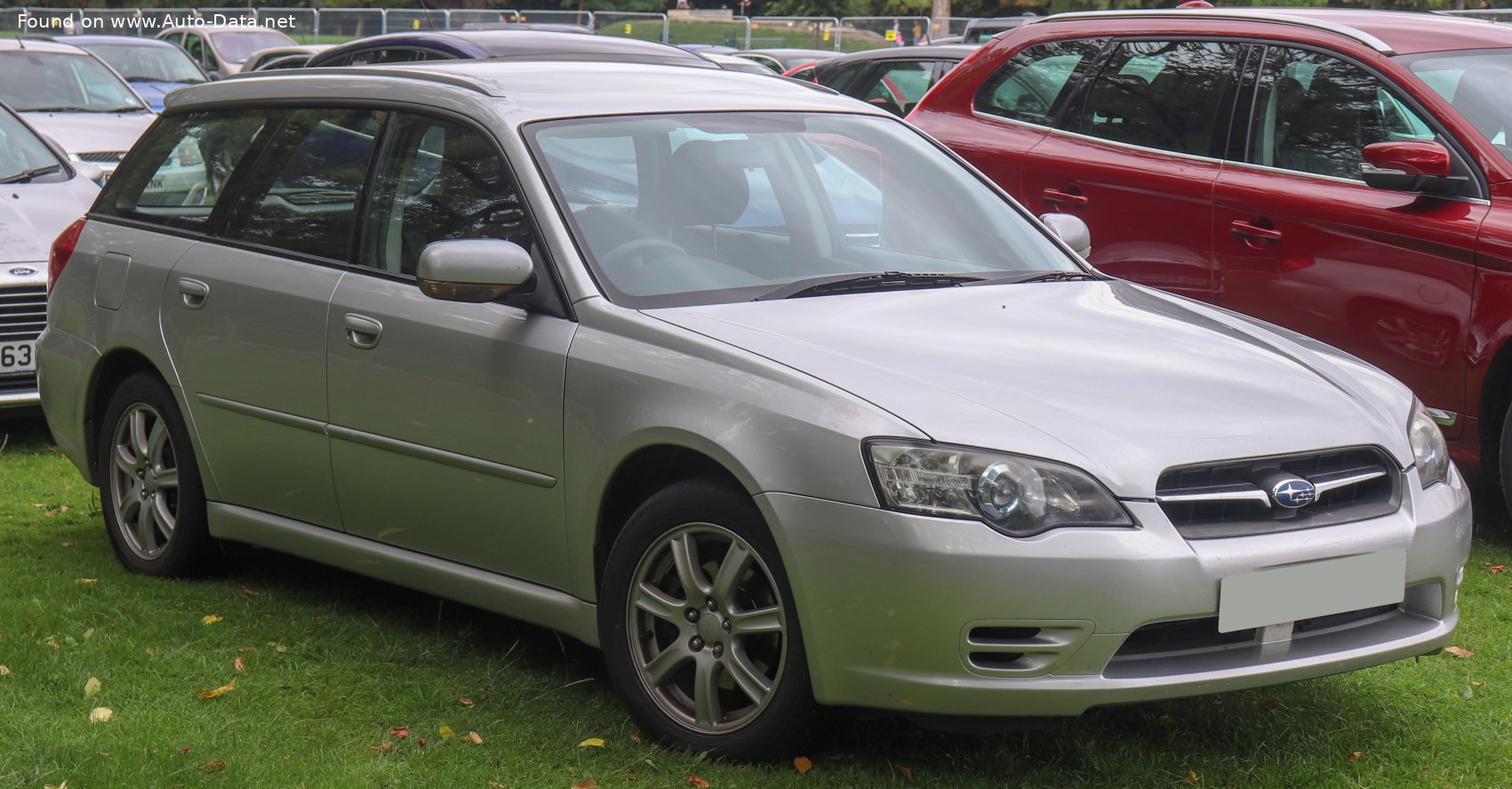
Before Subaru phased out the regular Legacy wagon in the US, it remained a go-to choice for families wanting reliable year-round traction without stepping up to the taller Outback. Its symmetrical AWD system offers the same full-time stability, and older Legacy wagons often feel even more planted thanks to their lower center of gravity.
This era especially shines in consistency: there is no noticeable delay, no complicated modes to choose from, and no torque gaps under hard acceleration on slick surfaces. For buyers seeking a winter-ready used wagon under $6,000, the early-2000s Legacy is a standout.
All-wheel drive has long been Subaru’s calling card, and every model the brand sells in the U.S. proudly carries that capability. The Legacy lineup, spanning both sedans and wagons, embodies this philosophy by blending traditional passenger-car styling with the kind of all-weather traction usually found in SUVs.
For the 2000 model year, Subaru updated the Legacy in several meaningful ways while preserving the qualities that made it a standout in its segment.
This wasn’t a complete ground-up redesign, but enough has changed to confidently call the 2000 Legacy new. The sedan range now includes the base L, the sport-oriented GT, and the upscale GT Limited. Wagon buyers can choose from the budget-friendly Brighton, the midlevel L, or the fully loaded GT.
Power comes from Subaru’s Phase II 2.5-liter boxer four-cylinder, producing 165 horsepower and 166 lb-ft of torque at 4,000 rpm. The engine now uses a single overhead cam instead of the previous dual-cam setup, resulting in more responsive performance. All models are available with either a five-speed manual or a four-speed automatic transmission.
The Legacy’s exterior has also been refined, with a new body shape and grille that improve aerodynamics to an impressive 0.31 drag coefficient for the sedan and 0.32 for the wagon.
Subaru has added thoughtful touches as well, such as a hidden exhaust tip, breakaway mirrors, and upgraded cupholders. All-weather packages now include a limited-slip rear differential, while the GT gains multi-reflector headlights and the GT wagon features a dual moonroof.
Safety upgrades include daytime running lights, seatbelt pre-tensioners with load limiters, and a three-point belt for the center rear seat. Side-impact airbags are standard on the GT Limited, Brighton wagons get ABS with rear drums, and most other models add rear headrests for outboard and center positions.
Structural improvements play a major role in this redesign. Subaru incorporated its “Ring-Shaped Reinforcement” architecture, which enhances crash protection from nearly every angle, frontal, offset, side, and rear. Additional safety beams in the doors further improve side-impact protection, illustrating Subaru’s ongoing commitment to occupant safety.
Inside, the changes are even more noticeable. Subaru replaced the frustratingly tiny audio controls from the previous generation, making the stereo far easier to use.
The instrument panel is larger, and the power lock and window switches are now conveniently located on the door panel. The dashboard, center stack, and gauge cluster feature a more cohesive, organic design, and the interior materials have been upgraded for a more refined feel.
Subaru clearly understands what makes the Legacy appealing. It remains roomy, comfortable, and practical, with the added benefits of standard all-wheel drive and a reputation for long-term reliability.
The 2000 model’s blend of added safety features, improved engineering, and thoughtful interior updates makes it an even stronger contender. For buyers seeking an affordable, versatile vehicle with true all-weather capability, the Legacy continues to offer something for nearly everyone.
Also Read: 5 Rides With Best Apple CarPlay/Android Auto UX vs 5 Glitchy Setups
5. BMW 3-Series xi Wagon (E46, 2001–2005)
BMW’s E46 xi wagon is one of the most underrated AWD wagons of the 2000s. The xDrive system from this period is mechanical enough to feel predictable but advanced enough to keep traction steady during snow-covered commutes.
While BMWs are better known for rear-wheel-drive dynamics, the AWD wagon versions grip impressively on slick roads, offering confident cornering stability and surprisingly strong acceleration in bad weather.
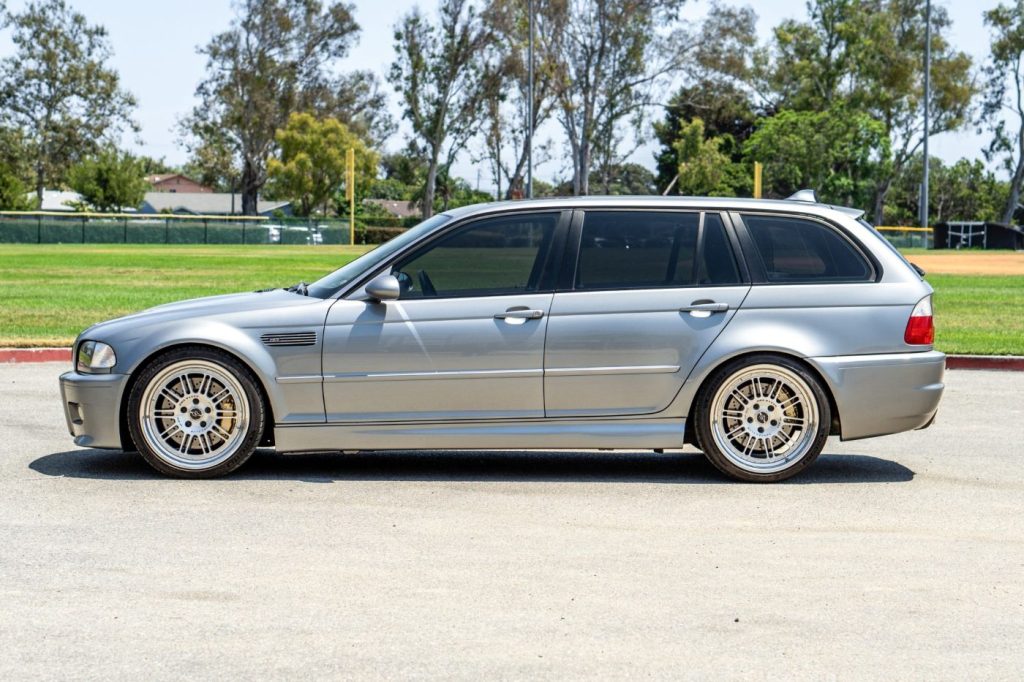
The chassis balance is excellent, and the engine options are robust. For drivers in mountainous regions or snowy suburbs who still want a sporty feel, the E46 xi wagon is a reliable cold-weather performer.
5 Older AWD Wagons That Struggle for Traction
While some older AWD wagons are winter champions, others don’t inspire the same confidence once the weather turns ugly. During the late ’90s and 2000s, several manufacturers offered wagons with all-wheel-drive systems that sounded promising on paper but didn’t quite deliver in real-world snow and ice.
Some relied on slow-reacting viscous couplings, others used front-biased layouts that hesitated before sending torque rearward, and a few struggled simply because their systems aged poorly over time.
And as any American driver who lives in the snow belt knows, hesitation or inconsistency in slippery conditions can turn a routine commute into a frustrating, or even risky, experience. The following five older AWD wagons are known for being less sure-footed in winter weather, making them models to think twice about if you’re shopping for a budget-friendly snow car.
1. Chrysler Pacifica (2004–2007 AWD)
Often mistaken today for the modern Pacifica minivan, the original Chrysler Pacifica was actually a large wagon-crossover hybrid, and its AWD system wasn’t especially strong. While it provided some additional grip, the system was reactive, slow to send torque to the rear, and prone to wheelspin on steep or icy inclines.
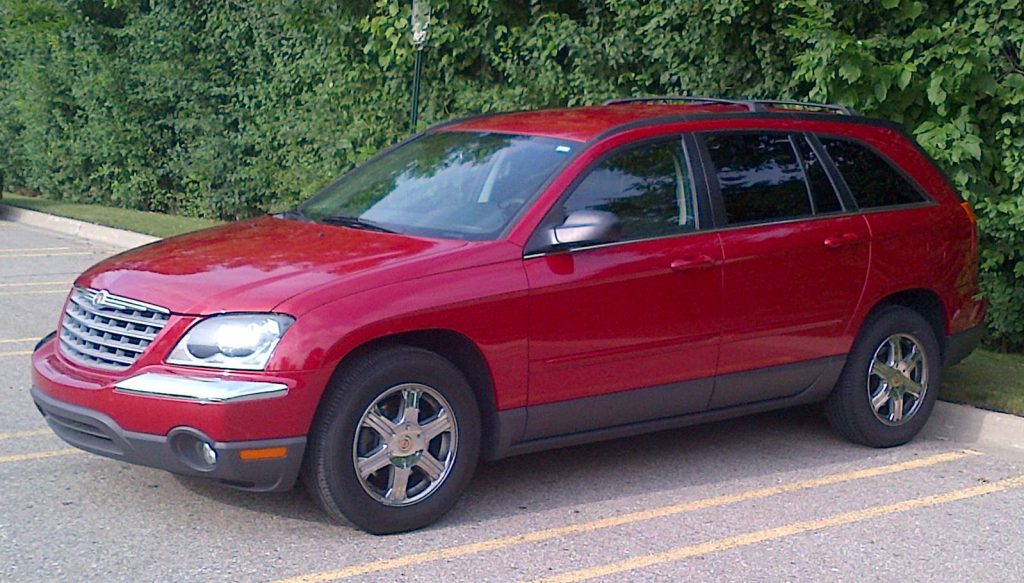
Combined with the vehicle’s heavy curb weight and modest power, this generation struggles in bad weather compared to Subaru or Volvo competitors. Many US owners in snow-belt states reported difficulty getting moving from a stop on slick roads, especially with worn tires.
2. Chevrolet Malibu Maxx AWD (2004–2005)
The Malibu Maxx was an innovative idea, a stretched hatch-wagon version of the Malibu, but the rare AWD variants weren’t known for great traction. The on-demand AWD system felt more like an “assist” than a full stability solution, often engaging too late or inconsistently during slippery conditions. Its front-heavy weight distribution further reduced winter confidence.
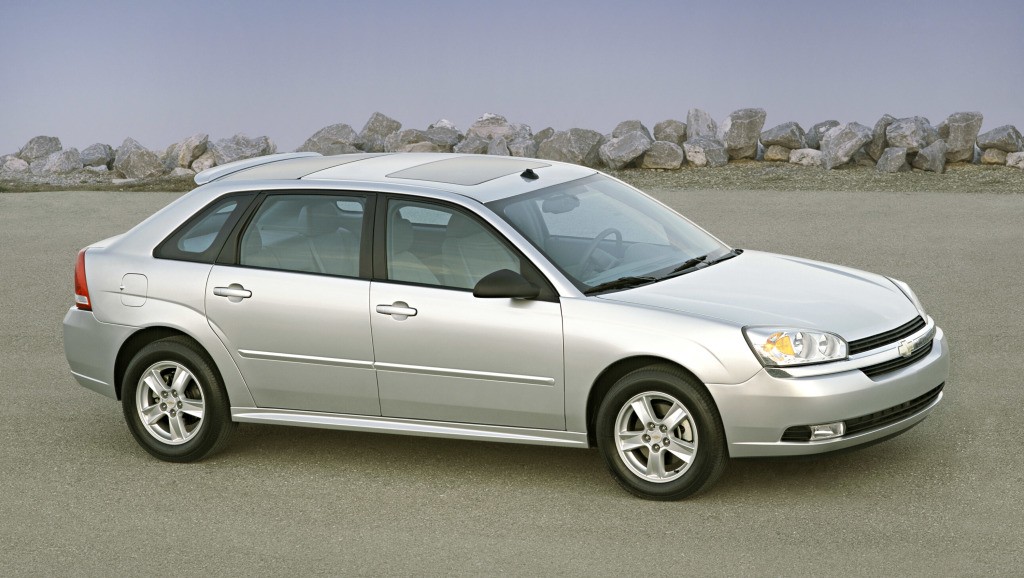
While it’s a practical and family-friendly used option, it simply doesn’t match the predictability or snow-belt durability of wagon leaders like the Outback or XC70.
3. Volvo V70 AWD (1998–2000)
While later Haldex-based Volvos earned a reputation for winter excellence, the late-’90s viscous-coupling AWD V70 struggled with reliability and traction consistency. Engagement was slow, and the system couldn’t always keep up with rapid traction changes on icy roads.
Many owners experienced unexpected wheelspin at low speeds and difficulty climbing slick hills. On top of that, early AWD V70 models faced mechanical issues that weakened system performance over time. If you’re in a snowy US state, it’s better to look at the 2003+ XC70 or later V70 models instead.
The turbocharged engine takes a moment to gather itself before building boost, but once the turbocharger is fully spooled, the Volvo surges forward with enough force to pin you back in your seat.
Braking performance is excellent, and the steering feels firm and predictably linear. Every mechanical system communicates clearly, giving the driver a confident sense of what the car is doing at all times.
Comfort, however, remains one of Volvo’s defining strengths. The company’s seats continue to set the benchmark for the entire industry. You can spend hours behind the wheel without experiencing discomfort—unless, perhaps, you spent too much quality time with José Cuervo the night before. Long-distance trips are simply easier in a Volvo.
These qualities, performance, comfort, and a deep-seated sense of security, are what keep Volvo owners loyal to the brand. Buyers willingly overlook minor ergonomic quirks and the somewhat conservative styling because the cars deliver where it counts.
For 1998, Volvo has given longtime customers even more reason to return. The bread-and-butter 850 series has been thoroughly updated with more power, additional safety features, improved comfort, and a touch of visual flair. The refreshed models also receive new names: the S70 for the sedan and the V70 for the wagon.
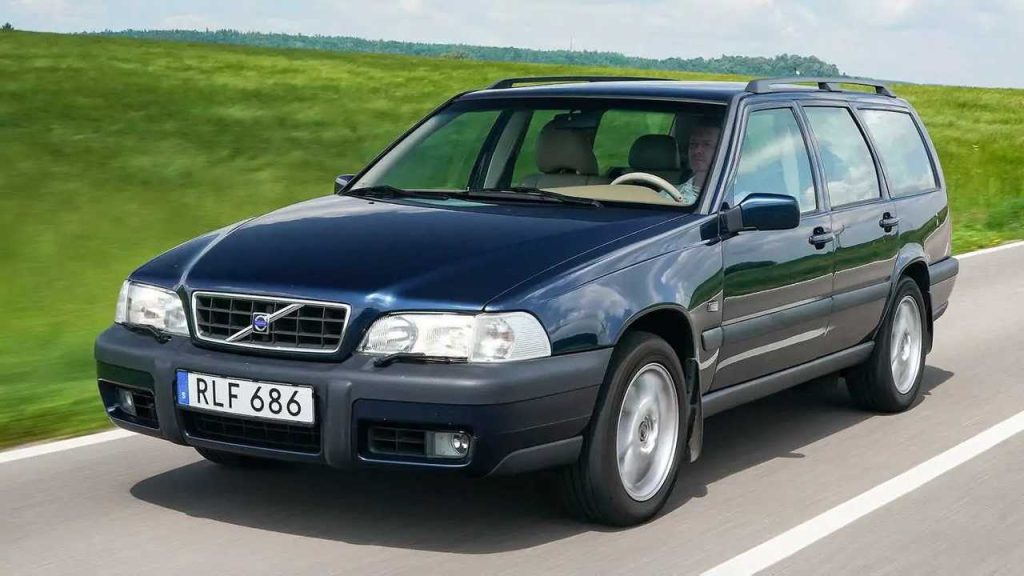
Three trims are offered. The base and GT models carry over the 1997 850’s naturally aspirated 2.4-liter inline-five, producing 168 horsepower and paired with either a five-speed manual or a four-speed automatic transmission.
A light-pressure turbocharged version of this engine, making 190 horsepower, is reserved for the GLT sedans, Base AWD wagons, and Cross Country AWD wagons. These turbocharged trims are automatic-only and feature a four-speed gearbox with a second-gear winter start mode.
Performance enthusiasts will gravitate toward the T-5, which comes equipped with a high-pressure turbocharged 2.3-liter inline-five making 236 horsepower. The AWD R wagon uses this same engine. Notably, the T-5 is now available with a manual transmission, giving drivers a more engaging experience.
Safety upgrades are a key part of the 1998 improvements. Strengthened B-pillars help side airbags deploy more effectively in a collision, seatbelt tensioners have been enhanced, and the redesigned steering column offers better crash protection.
Inside, the cabin receives a full overhaul. Power window and mirror switches move to the driver’s door panel for better ergonomics, and the dashboard takes on a more rounded, modern appearance. While some controls remain in less-than-ideal locations, echoing the quirks of the old 850, the overall layout and refinement are notable improvements.
With added performance, a stronger focus on safety, and a more contemporary interior, the updated S70 and V70 models build on Volvo’s long-standing reputation for comfort, quality, and confidence.
4. Saab 9-3 SportCombi XWD (2008–2010)
Saab’s XWD system was ambitious, featuring advanced rear torque vectoring and Haldex technology. On paper, it should have been brilliant. But the early system was plagued by hardware issues such as failing rear drive modules and inconsistent torque delivery in cold climates.
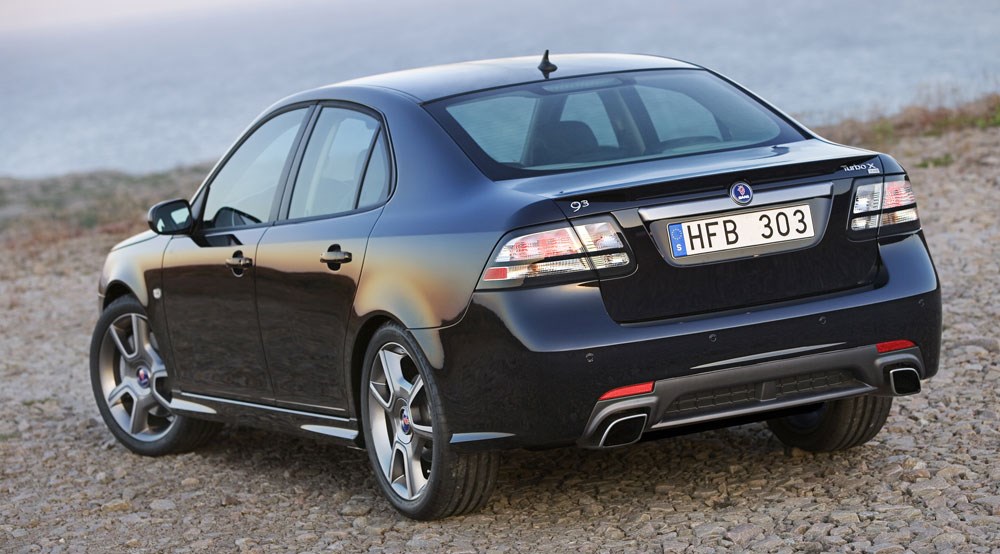
As these cars aged, their performance in snow became less predictable, with some owners reporting delayed rear engagement or traction control intervention that cut power aggressively. While charming and stylish, the 9-3 XWD wagon isn’t the most confidence-inspiring option for harsh winters.
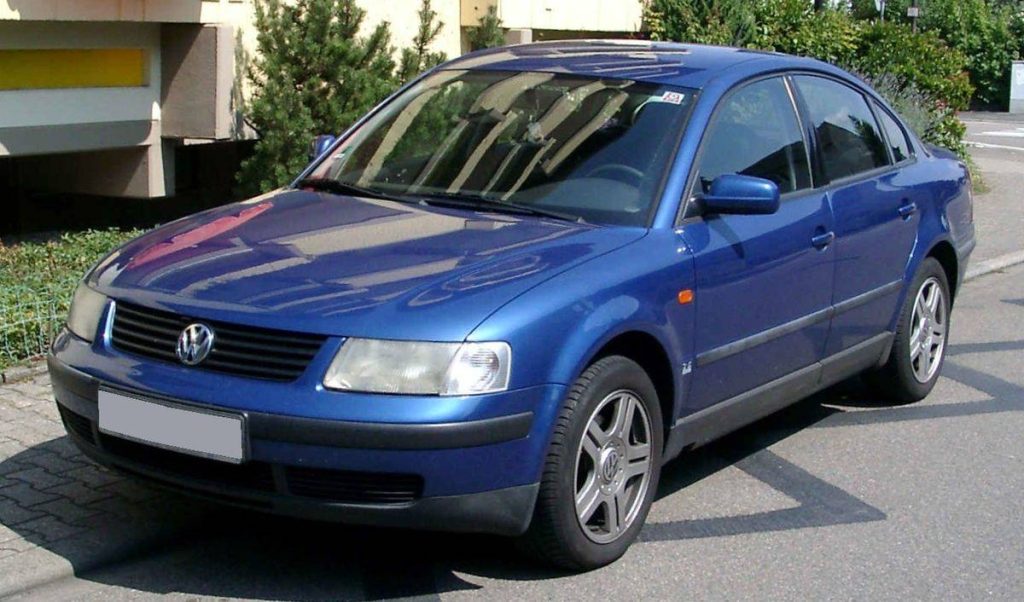
5. VW Passat 4Motion Wagon (1999–2005 V6)
Volkswagen’s early 4Motion system was capable in certain conditions, but the heavier V6 Passat wagons often felt nose-heavy and sluggish on slick roads. While traction was decent once moving, the system didn’t always respond quickly from a stop, especially on packed snow or ice.
Many US drivers in winter regions reported that the Passat required very good tires to perform adequately, while competitors like Subaru and Audi felt more sure-footed even on mid-grade rubber. Reliability concerns with the AWD components also held it back.
The older AWD wagon market is full of gems and disappointments, especially for US drivers who routinely face snow, sleet, or muddy spring conditions. The strongest performers, Subaru’s wagons, Volvo’s mid-2000s XC70, Audi’s Quattro models, and even BMW’s xi wagons, remain excellent choices for staying planted in foul weather.
Meanwhile, some wagons with less sophisticated or aging AWD systems may leave drivers wishing for more stability when the roads get slick.
As always, condition, maintenance history, and proper winter tires play huge roles, but drivetrain engineering matters just as much. For buyers hunting for a dependable, affordable winter wagon, focusing on the proven models above will pay off every time.
