
In today’s automotive market, small SUVs are the sweet spot for many American drivers. They provide the versatility and cargo space of larger SUVs while remaining compact enough for city driving and suburban parking.
But as fuel prices fluctuate, one question becomes increasingly important: do I really need premium gas? Choosing a vehicle that runs efficiently on regular unleaded can save hundreds of dollars annually without compromising performance or comfort.
Here, we highlight nine small SUVs that deliver practicality, reliability, and fun all without the need for premium fuel.
1. Volkswagen Tiguan
The Volkswagen Tiguan blends European styling with practicality, making it a solid choice for drivers who want something a little different in the compact SUV segment.
The Tiguan’s 2.0-liter turbocharged four-cylinder engine is tuned to run on regular gasoline, producing 184 horsepower.
Despite its turbo setup, it achieves competitive fuel economy at around 23 mpg city and 29 mpg highway.
Inside, the Tiguan offers a refined cabin with available third-row seating, advanced safety features, and a spacious cargo area making it a versatile option for families and commuters alike.
The Volkswagen Tiguan brings a welcome touch of European style to the crowded compact SUV segment. Completely redesigned for 2025, it features refreshed styling both inside and out, improved interior design and materials, and updated infotainment with larger 12.9- and 15.0-inch touchscreens.
On the mechanical side, the Tiguan now rides on VW’s EQB evo platform, the same one that underpins the GTI hot hatch, a promising sign for driving enthusiasts. The familiar turbocharged 2.0-liter four-cylinder engine has been boosted by 17 horsepower, now producing 201 hp.
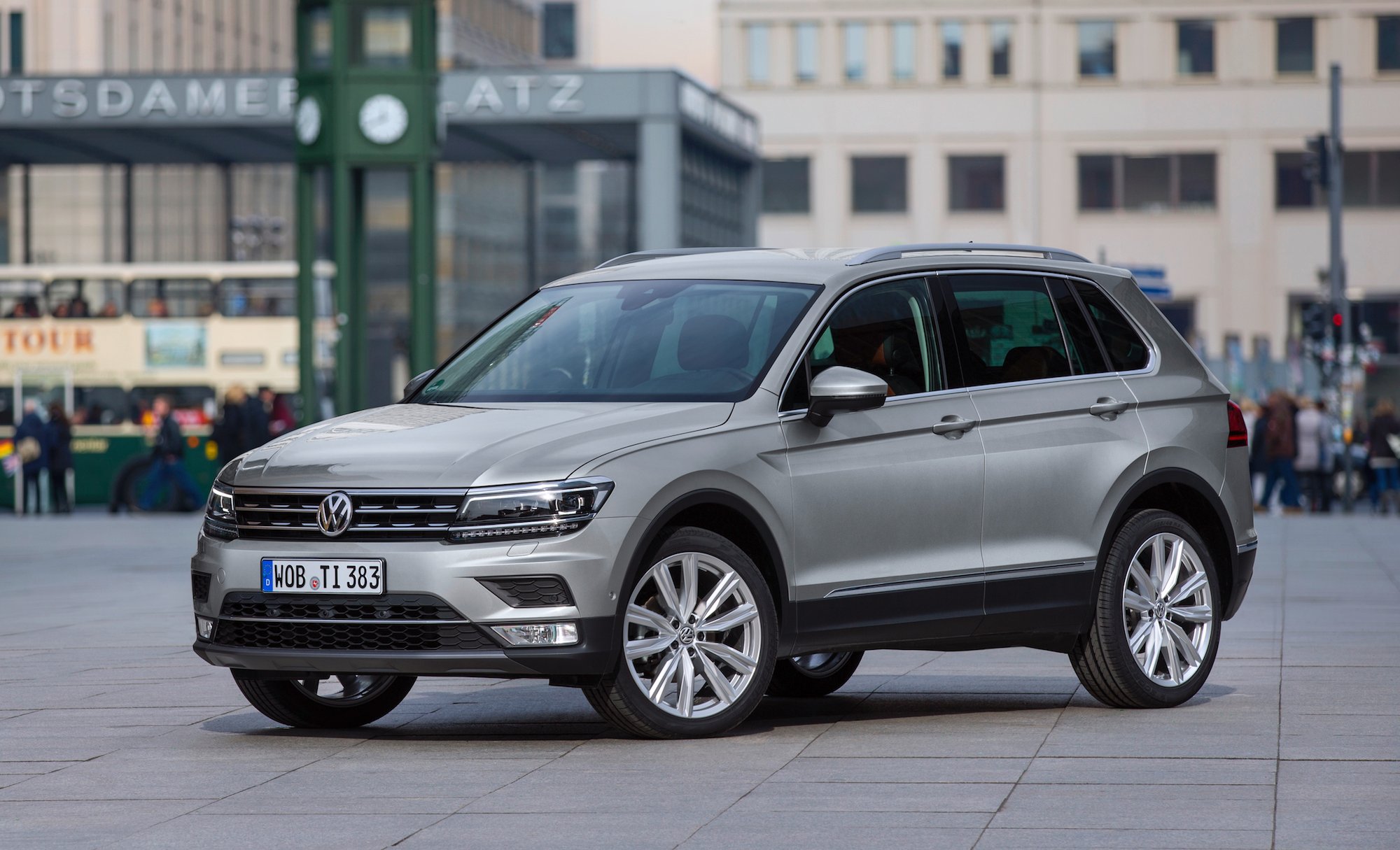
The wheelbase and overall length have increased by roughly an inch, which should translate into more cargo space, though the optional third-row seating from the previous model is no longer offered.
The new Tiguan benefits from the classic enthusiast formula of more power and reduced weight. The turbocharged 2.0-liter four-cylinder engine now produces 201 hp, up from 184, while weight savings come from increased use of aluminum in the suspension and high-strength steel in the revised sheetmetal.
During our test drive, the Tiguan retained its eager handling, with steering that feels appropriately weighted. The turbo-four is smooth and pleasant, though we would like a touch more responsiveness from a standstill. Volkswagen plans to introduce a more powerful version of this engine in the 2026 R-Line Turbo trim.
2. Mitsubishi Outlander Sport
The Mitsubishi Outlander Sport is an underrated player in the small SUV world. Its 2.0-liter four-cylinder engine, producing 148 horsepower, runs on regular gas, keeping ownership costs down.
Fuel economy hovers around 24 mpg city and 30 mpg highway, which is solid for the segment.
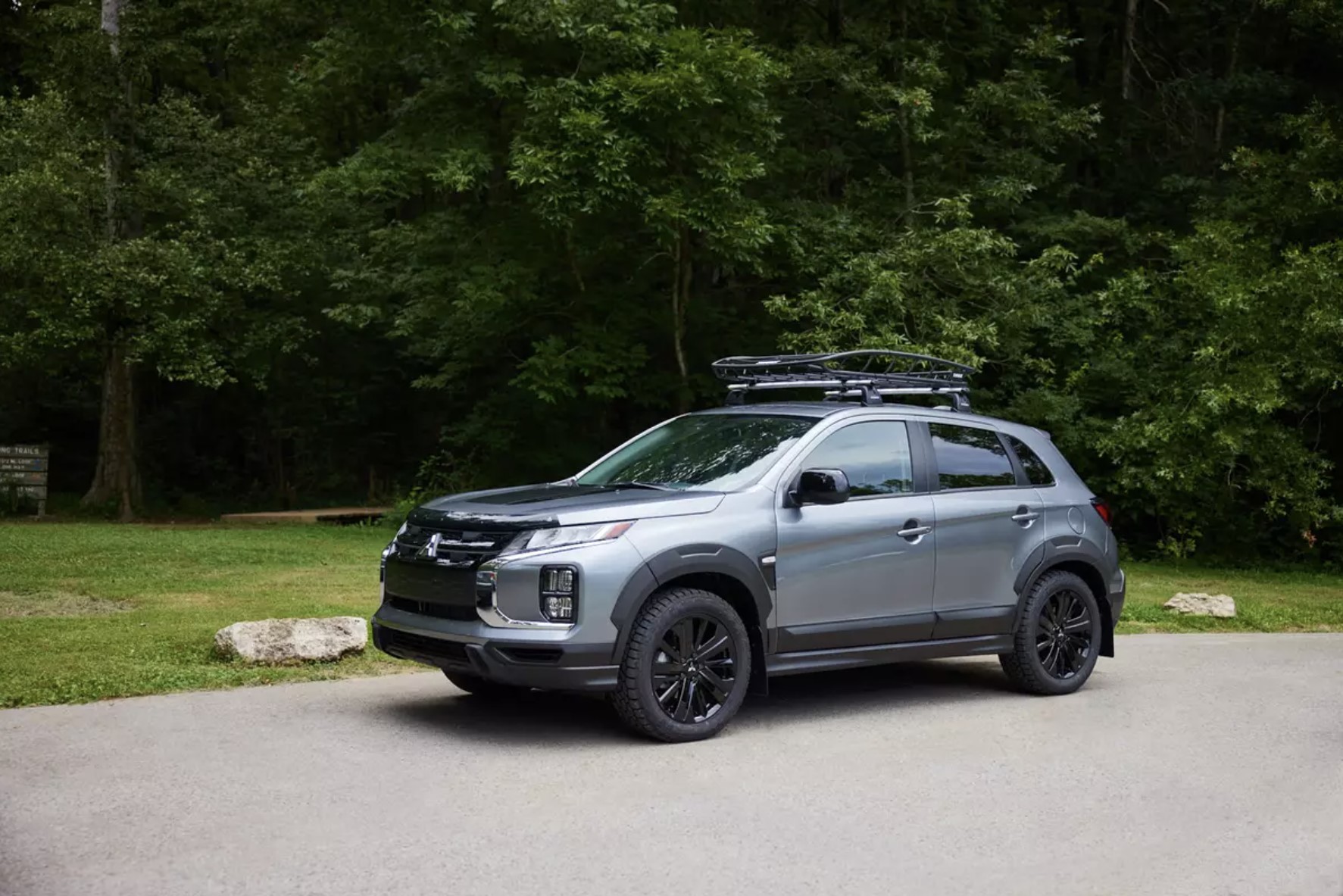
While it’s smaller than some competitors, the Outlander Sport offers nimble handling, a comfortable ride, and a surprisingly well-equipped interior.
For budget-conscious buyers seeking an efficient, reliable SUV, the Outlander Sport is a smart, often overlooked choice.
As its rating suggests, the Mitsubishi Outlander Sport gives very few reasons for recommendation. This compact SUV has not aged well since its debut in 2011.
Updates have been sporadic, and when we last tested one in 2020, we noted that it was largely a rehash of the original model. Time has not been kind to the Outlander Sport, and neither has Mitsubishi, leaving it with a pair of unrefined powertrains and a minimal feature set. The long warranty and distinctive styling are about the only positives.
For roughly the same money, buyers can find more modern small SUVs with better interiors, more space, and improved fuel efficiency. The Chevrolet Trax is a prime example of an affordable option done right, offering a contemporary cabin, strong fuel economy, and a solid suite of standard safety features. Many other vehicles in this class outperform the Outlander Sport, but the point is clear.
The Outlander Sport’s powertrain choices are, in essence, a selection between the lesser of two evils. The base 148-hp 2.0-liter four-cylinder is painfully slow, while the more potent 168-hp 2.4-liter engine delivers better acceleration but suffers in fuel efficiency and is limited to the top-tier SEL trim. Both engines are paired with a CVT that is rough around the edges.
The Outlander Sport is far from sporty, yet it will reliably transport you from point A to point B. Body roll in corners is noticeable, though not excessive enough to make the SUV feel unstable or top-heavy. Braking performance is typical for the segment: the pedal initially feels soft but firms up quickly, providing responsive stopping power.
3. Jeep Compass
Jeep may be known for off-road toughness, but the Compass proves that capability can come without a premium gas requirement. Its 2.4-liter inline-four engine produces 180 horsepower and runs efficiently on regular fuel.
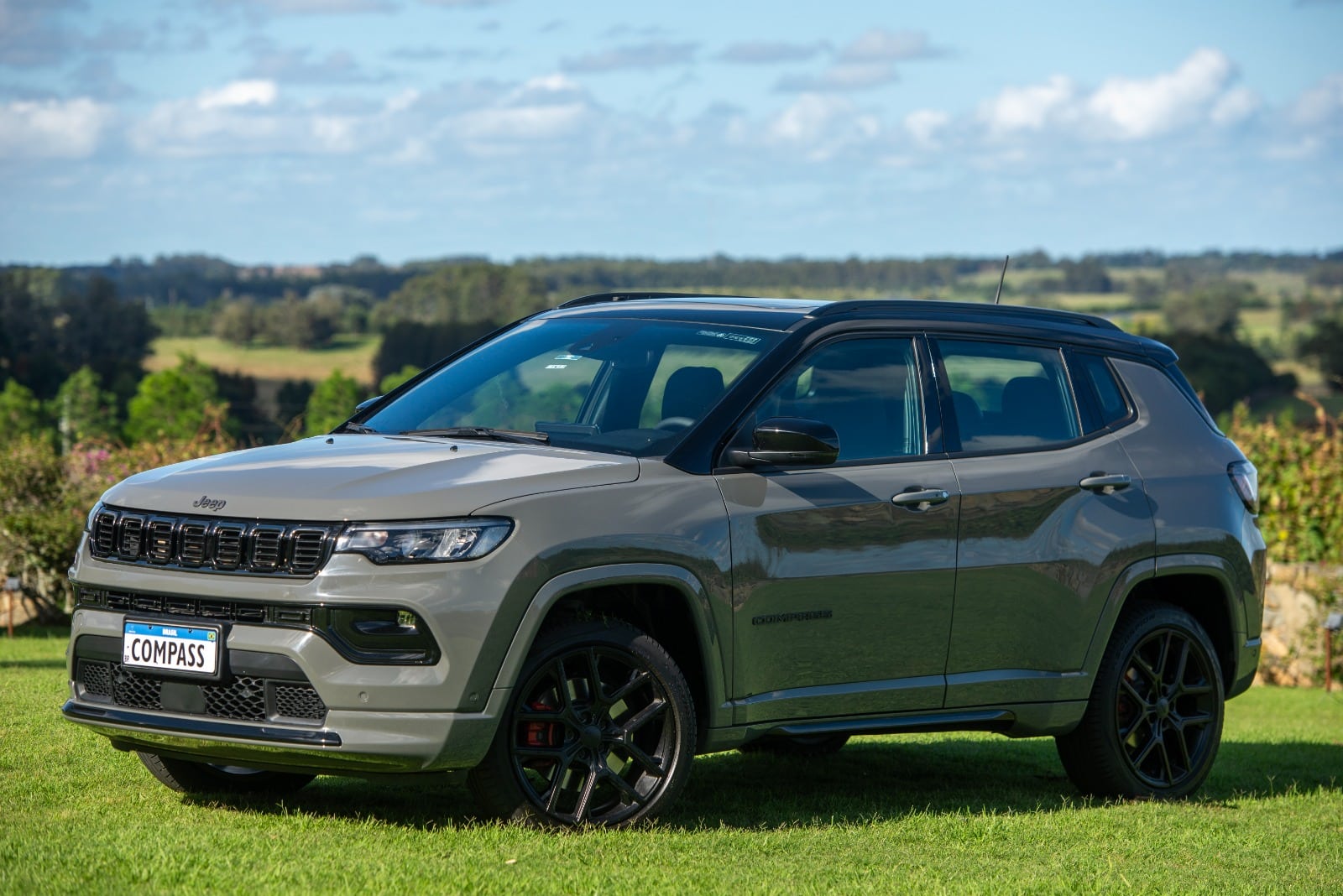
Fuel economy is competitive, at 22 mpg city and 31 mpg highway. The Compass also offers true Jeep styling, available all-wheel drive, and a surprisingly comfortable interior.
For Americans who want rugged appeal without spending extra at the pump, the Compass hits the mark.
4. Buick Encore GX
The Buick Encore GX brings luxury touches to the small SUV category while remaining practical and fuel-friendly. Its 1.3-liter turbocharged three-cylinder engine generates 155 horsepower and is designed to run on regular gas.
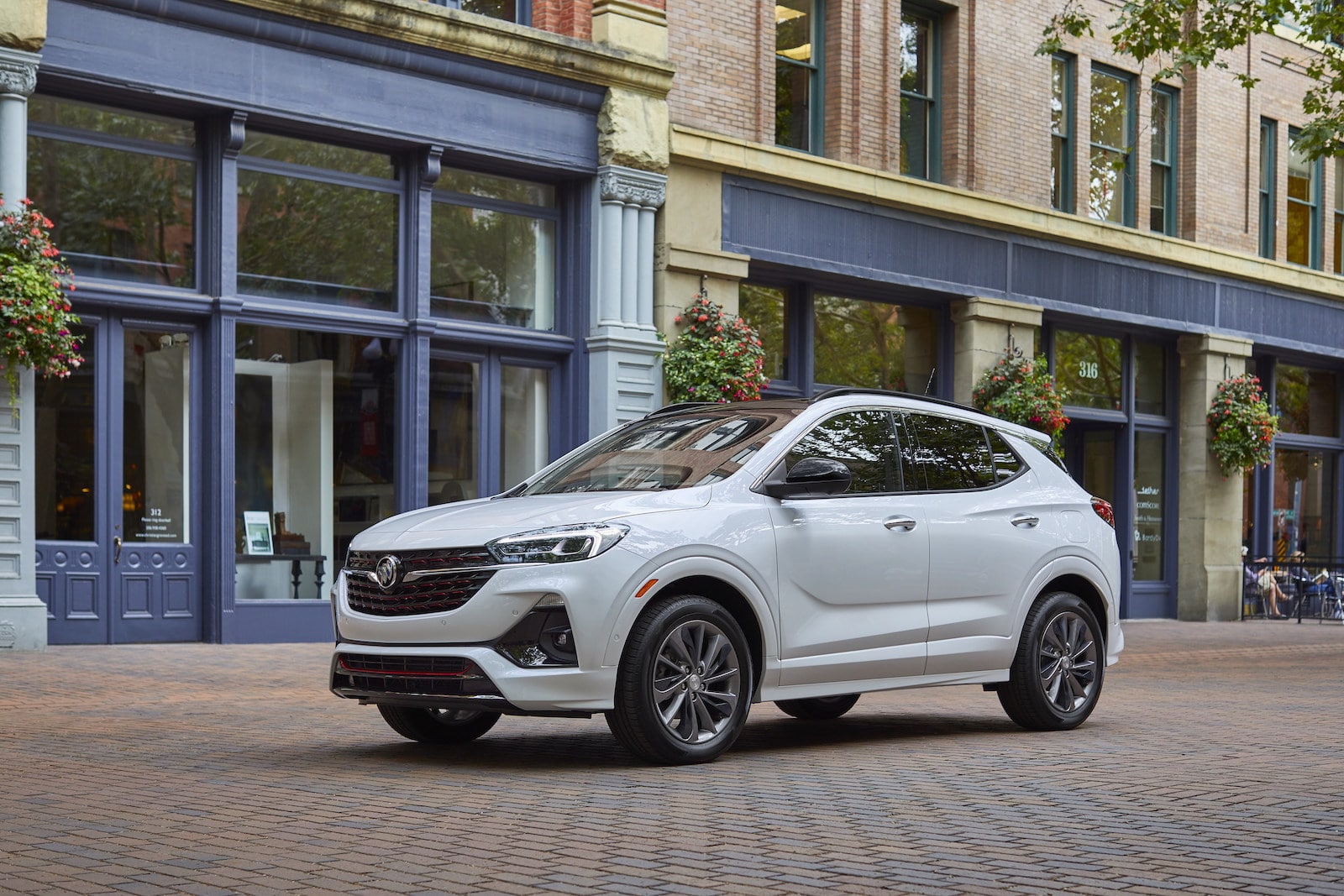
With fuel efficiency rated at 26 mpg city and 31 mpg highway, it’s a cost-conscious choice for suburban drivers.
The Encore GX’s interior is quiet, comfortable, and outfitted with modern infotainment technology, making it a compelling option for buyers who want a premium feel without premium gas prices.
The Encore GX proves to be a surprisingly engaging subcompact SUV. Body roll is minimal when cornering, and grip levels are reassuring.
Steering is on the lighter side, which makes city maneuvering easy, yet it remains accurate and predictable. Acceleration from the turbocharged 1.3-liter three-cylinder engine is slightly above average for the class; in our testing, the model we drove reached 0–60 mph in 9.2 seconds.
The brake pedal is fairly sensitive, making smooth stops a little tricky to execute consistently. The nine-speed automatic transmission can be slow to select the correct gear when more power is needed, and the engine stop-start system causes a noticeable jolt when reactivating at a stoplight, fortunately, it can be turned off.
Ride quality is well controlled, with most road imperfections absorbed by the suspension. You may feel a sharper jolt over square-edged bumps, but overall the cabin remains comfortable.
Visibility through the rear side windows is somewhat restricted by the sweeping beltline. An available 360-degree camera system helps alleviate parking challenges. Most of the driver-assistance features are well implemented, though the forward collision warning can be a bit overzealous.
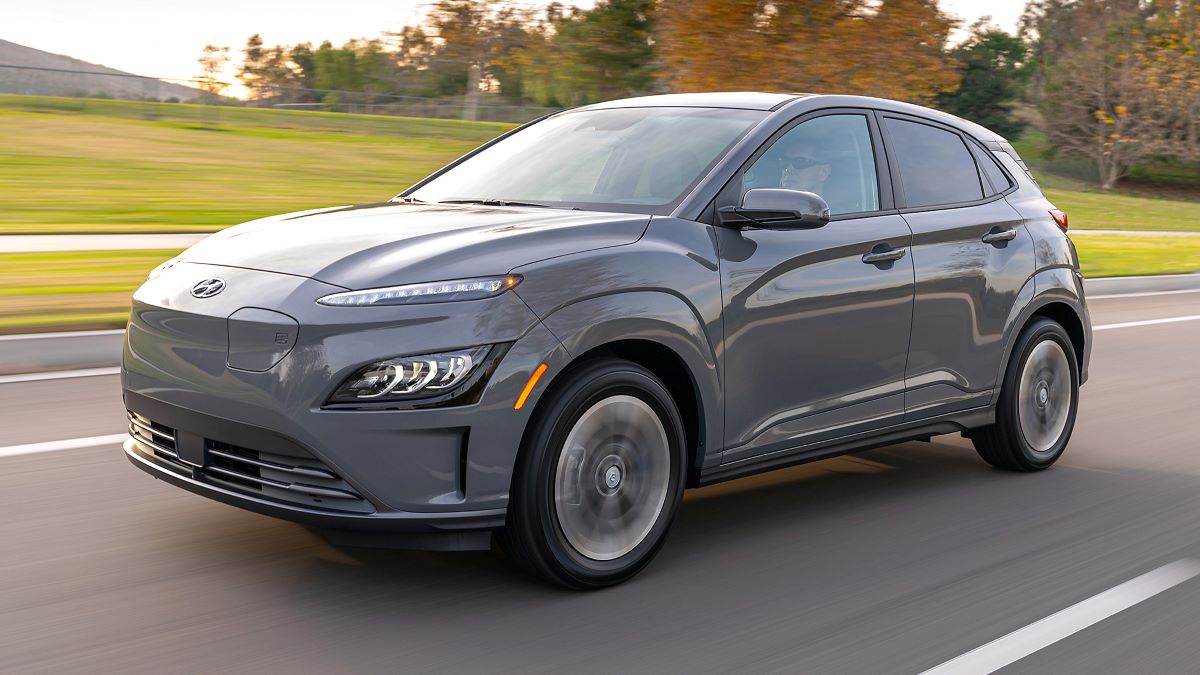
5. Hyundai Kona
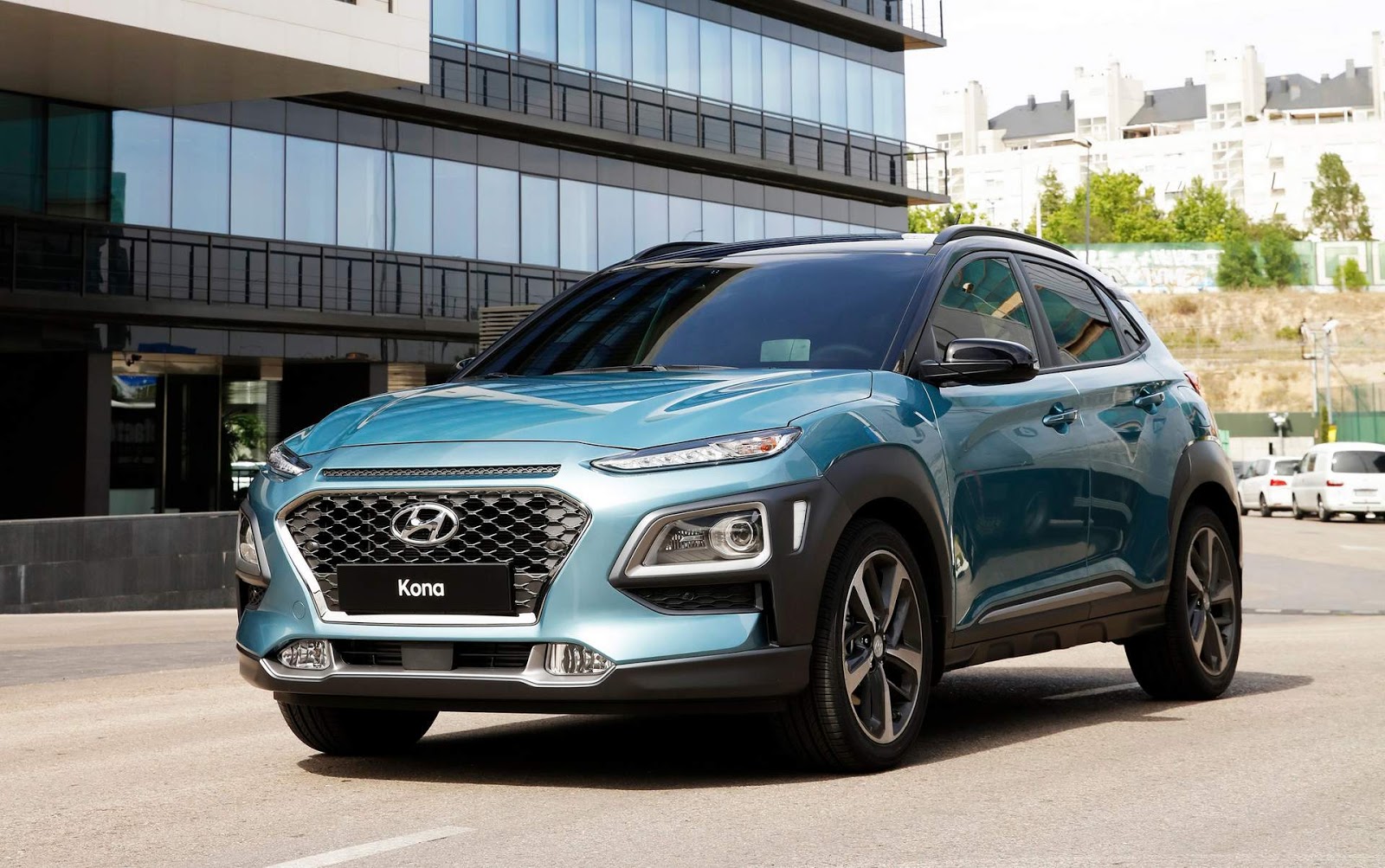
The Hyundai Kona has gained popularity for its bold styling and agile handling. Its 2.0-liter four-cylinder engine produces 147 horsepower and runs on regular fuel, delivering around 28 mpg city and 32 mpg highway.
Beyond efficiency, the Kona is fun to drive, with responsive steering and a surprisingly spacious cabin for its size. It also offers advanced safety features and user-friendly tech, making it a strong contender in the U.S. small SUV market.
If the standard Encore feels too cramped, the 2022 Buick Encore GX is worth considering, offering a slightly larger footprint and a more contemporary design. The Encore GX comes with a choice of two turbocharged three-cylinder engines: a 1.2-liter or a 1.3-liter.
Acceleration is sufficient for most daily driving, but neither engine will satisfy drivers who prefer a brisk pace. Handling is stable, and the ride quality is smooth. Depending on trim and equipment, the Encore GX competes either with mainstream subcompact SUVs like the Mazda CX-30 and Hyundai Kona or with small luxury crossovers such as the BMW X1 and Mercedes-Benz GLA.
Its interior is roomy and well-equipped, which gives it an edge against non-luxury competitors, though it lacks the premium flair of the German models.
The Encore GX is powered by two turbocharged three-cylinder engines. The base 1.2-liter delivers 137 horsepower, while the optional 1.3-liter engine produces 155 hp. The smaller engine is paired with a CVT and front-wheel drive, whereas the 1.3-liter engine comes standard on all-wheel-drive models and is matched with a nine-speed automatic.
In our testing, the Encore GX equipped with all-wheel drive, the larger 1.3-liter engine, and the nine-speed automatic took a leisurely 9.3 seconds to accelerate from 0–60 mph. Luxury competitors such as the Audi Q3, BMW X1, and Volvo XC40 offer more powerful engines and significantly quicker acceleration.
On the road, however, the Encore GX feels livelier than its track numbers suggest, especially in city driving, where the turbo three provides strong low-end torque. The ride remains smooth and composed, though the Encore GX does not deliver any real excitement in handling.
6. Kia Seltos
Kia’s Seltos combines SUV practicality with crossover efficiency. The standard 2.0-liter engine, producing 146 horsepower, operates smoothly on regular unleaded fuel, and fuel economy comes in at 27 mpg city and 31 mpg highway.
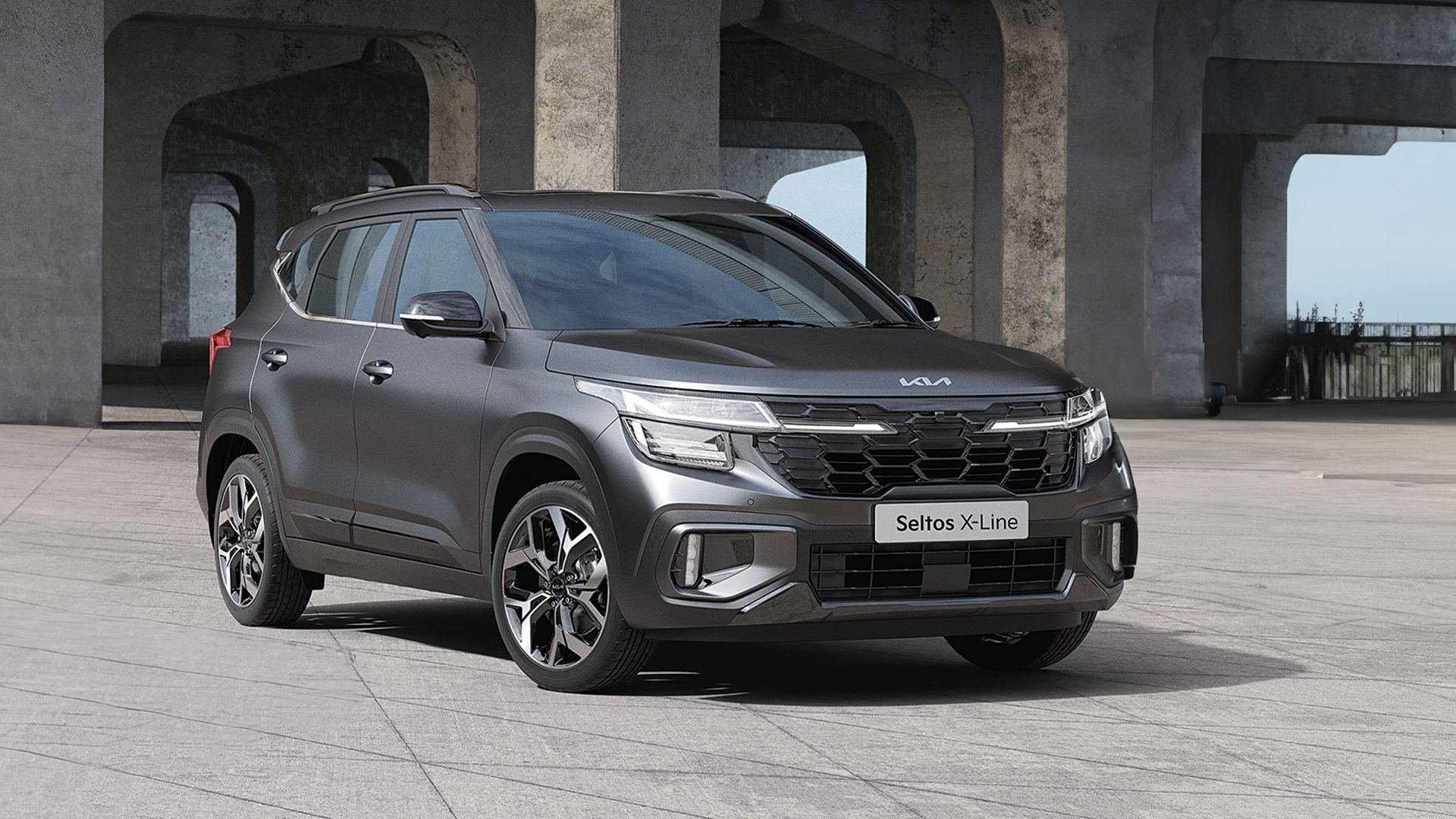
With a roomy interior, clever storage solutions, and available all-wheel drive, the Seltos is versatile enough for city streets and weekend trips. Its sharp styling and tech-forward cabin also make it a favorite for drivers seeking value and modern amenities.
The Kia Seltos comes with two four-cylinder engine options: a 2.0-liter producing 146 horsepower or a turbocharged 1.6-liter that delivers 190 horsepower. The base 2.0-liter is paired with a continuously variable automatic transmission (CVT), while the turbocharged engine uses an eight-speed automatic.
All-wheel drive is standard on every trim except the S and EX. The Seltos rides firm yet generally smooth, and its handling is sharp for a compact SUV, making it noticeably more engaging and composed than competitors like the Jeep Compass and Mitsubishi Outlander Sport.
7. Chevrolet Trailblazer
The Chevrolet Trailblazer is a compact SUV that balances efficiency and style. The 1.2-liter turbo three-cylinder engine in most trims runs on regular gas, producing 137 horsepower while achieving around 29 mpg city and 33 mpg highway.
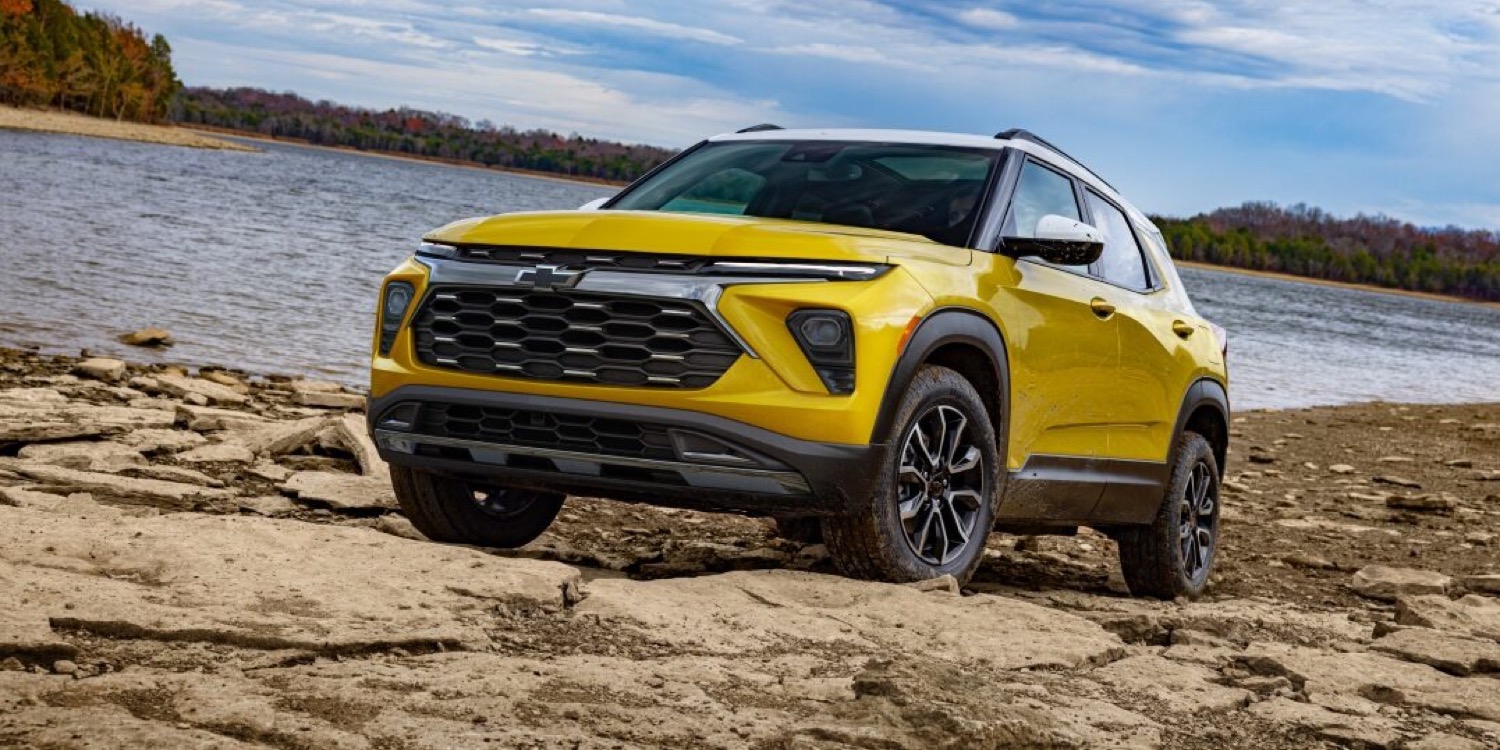
Its compact footprint makes city parking easy, yet it still offers ample cargo space and a comfortable ride. With a variety of trims and available tech features, the Trailblazer caters to Americans who want a stylish SUV that doesn’t require premium fuel.
The automatic transmission helps keep the engine in its optimal power range, though downshifts aren’t as quick as we’d like when passing.
We also found the brake pedal overly sensitive, which can make smooth stops challenging. While nimble handling isn’t a strong suit, the steering is reasonably accurate and inspires confidence behind the wheel.
Ride comfort is a strong point for the Trailblazer, particularly on the highway. In urban driving, you’ll notice some jostling over rough surfaces, but the suspension never feels harsh or uncontrolled. On highways, the small SUV offers a notably smooth and composed ride.
One area that slightly drags down the Trailblazer’s score is its limited suite of advanced driver-assistance features. Forward collision mitigation and lane-keeping assistance are standard, but blind-spot monitoring, adaptive cruise control, and rear parking sensors are optional.
The features that are included work effectively; for example, the adaptive cruise control maintains a steady gap between the Trailblazer and the vehicle ahead.
8. GMC Terrain
The GMC Terrain delivers American SUV comfort and efficiency in a small package. The base 1.5-liter turbocharged engine produces 170 horsepower and runs on regular gasoline, with an EPA rating of 26 mpg city and 30 mpg highway.
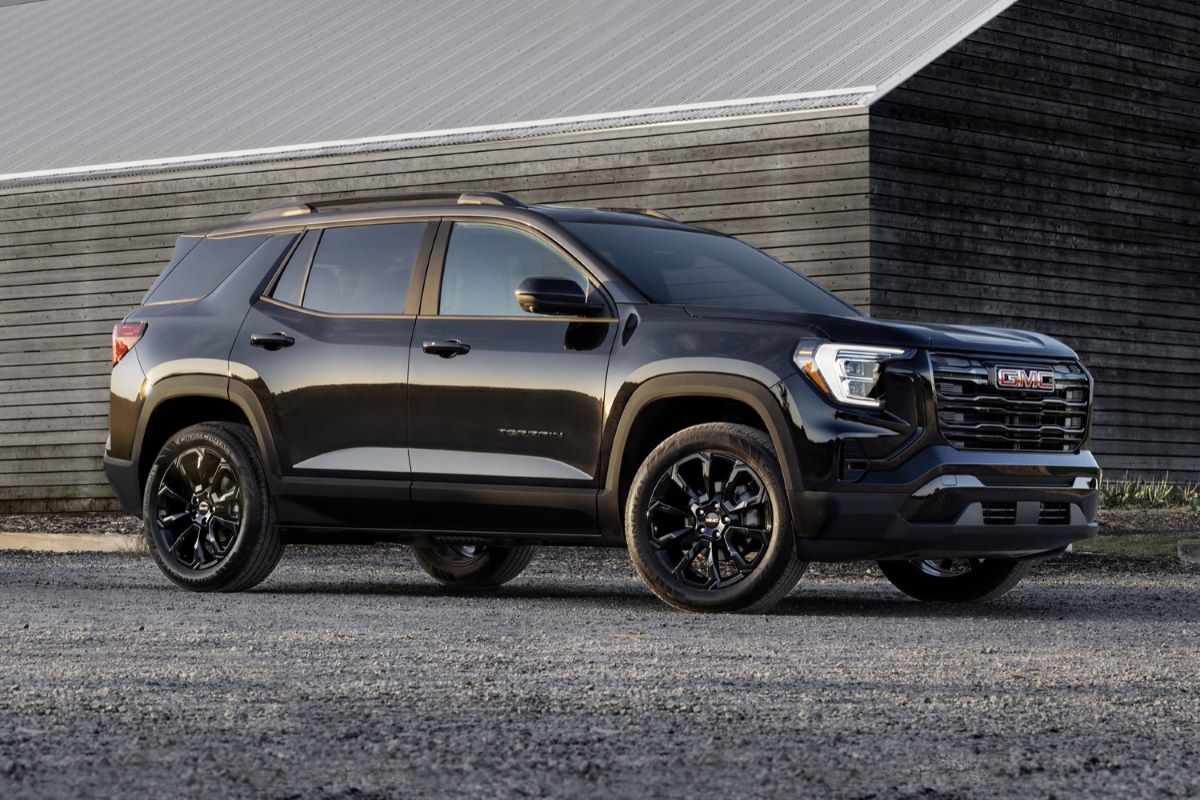
The Terrain features a spacious cabin, intuitive infotainment, and a smooth, composed ride. Its premium-like interior materials make it feel upscale without requiring premium gas, appealing to drivers who want a refined SUV without extra fuel costs.
The latest GMC SUV to receive a refresh is the 2025 Terrain, which anchors the compact end of the truck maker’s lineup. Along with all-new sheetmetal, the Terrain features headlamps that echo the design of the larger Yukon SUV.
Like the previous-generation model, the new Terrain shares a platform with the Chevrolet Equinox, and both SUVs are powered by the same 175-hp turbocharged 1.5-liter four-cylinder engine with front- or all-wheel drive.
The Terrain takes a slightly more upscale approach than the Equinox, offering a refined interior and a larger 15.0-inch infotainment display mounted vertically in the center of the dashboard. Pricing for the 2025 Terrain starts at $31,395 for the Elevation FWD and goes up to $33,395 for the Elevation AWD.
For 2025, only the base Elevation trim is offered, but it comes well-equipped with features such as aluminum wheels, heated front seats, adaptive cruise control, remote start, and the large infotainment display. GMC plans to add a rugged AT4 trim and a luxury-focused Denali for the 2026 model year.
All 2025 Terrains use a turbocharged 1.5-liter four-cylinder engine that produces 175 hp. Front-wheel-drive models are paired with a continuously variable automatic transmission, while all-wheel-drive versions come with an eight-speed automatic. Both setups are shared with the mechanically similar Chevrolet Equinox, and acceleration is leisurely in either configuration.
At our test track, the AWD Terrain Elevation we tested reached 60 mph in 8.6 seconds. Around town, acceleration is adequate, though merging onto highways requires careful planning and a firm right foot. Ride quality is comfortable, and handling is stable, but the Terrain offers little excitement for the driver.
The EPA estimates 26 mpg city and 28 mpg highway for FWD models, while AWD trims drop to 24 mpg city. In our real-world highway testing, the AWD Terrain Elevation achieved 30 mpg.
Inside, the Terrain is a two-row SUV with seating for five. Its interior blends rugged GMC styling cues with modern convenience features, anchored by the vertically oriented 15.0-inch infotainment touchscreen.
All models come with heated seats, a heated steering wheel, and remote start. Interior materials appear solid in photos, though full evaluation will require hands-on testing. Cargo space behind the rear seats looks generous, and we will provide detailed measurements after testing.
The infotainment system runs GM’s latest Google-based interface, with Google Maps for navigation and the ability to add apps via a 5G connection. Apple CarPlay and Android Auto are standard, and an 11.0-inch digital gauge display is included across the lineup.
Safety features are plentiful, with standard automated emergency braking that includes pedestrian and cyclist detection, blind-spot monitoring, rear cross-traffic alert, and adaptive cruise control.
A system that watches for bicyclists on the side of the road is also included. GMC’s warranty matches most competitors in the class, with a three-year/36,000-mile limited warranty, a five-year/60,000-mile powertrain warranty, and complimentary maintenance for the first visit. Shoppers seeking additional coverage might consider rivals such as the Kia Sportage or Hyundai Tucson.
The 2025 Terrain offers a comfortable, well-equipped, and refined compact SUV option, though acceleration and driving engagement remain modest compared with more spirited competitors.
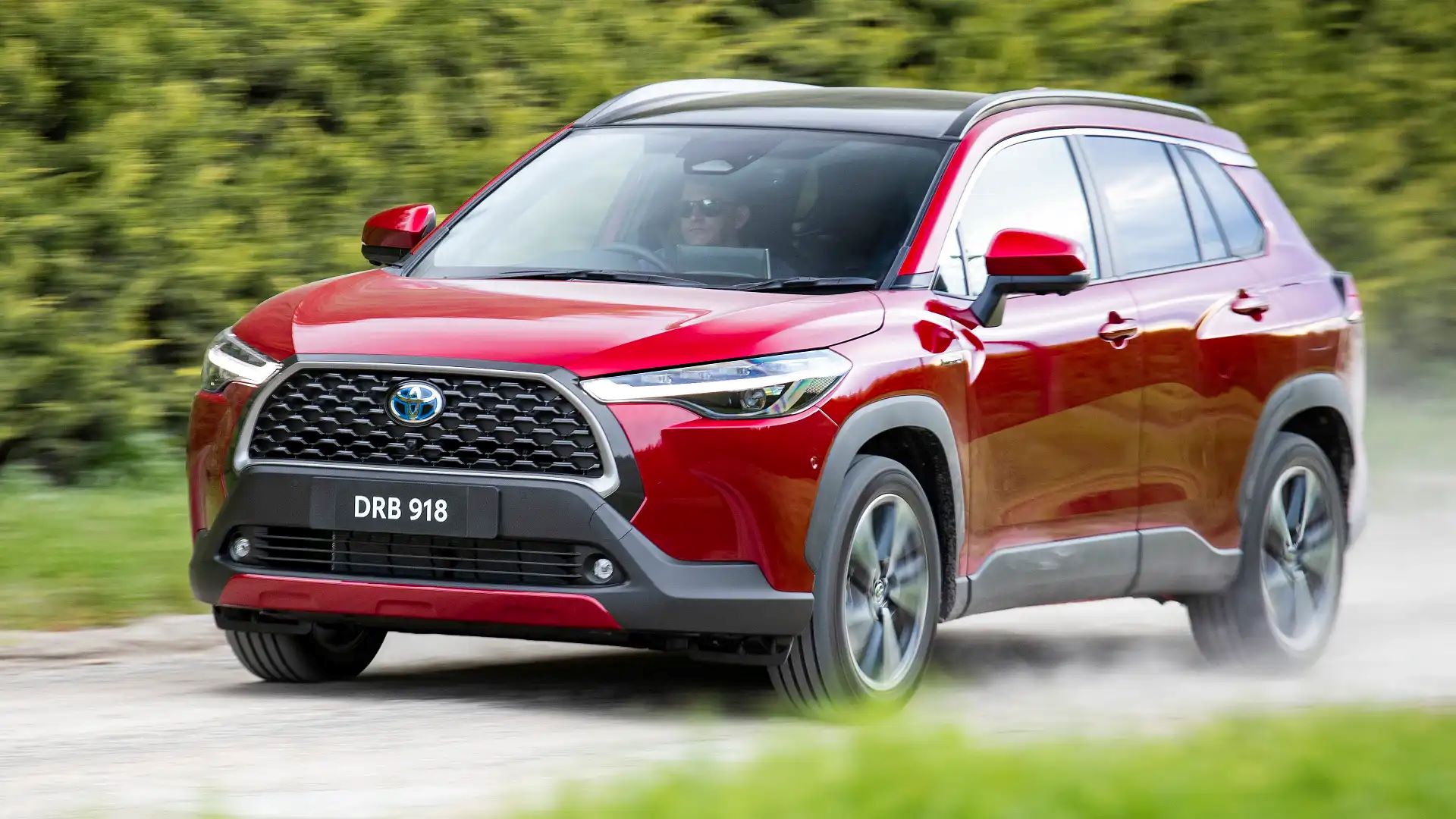
9. Toyota Corolla Cross
Toyota’s newest addition to the small SUV segment, the Corolla Cross, combines efficiency with practicality. Powered by a 2.0-liter four-cylinder engine producing 169 horsepower, it runs on regular unleaded gas while achieving 31 mpg highway and 31 mpg city in front-wheel-drive trims.
The Corolla Cross features a comfortable cabin, user-friendly tech, and Toyota’s renowned reliability. It’s a modern, economical choice for drivers who value long-term ownership costs and everyday convenience.
For American drivers, choosing a small SUV that doesn’t require premium gasoline can make a noticeable difference in annual fuel costs.
Vehicles like the Volkswagen Tiguan, Hyundai Kona, and Toyota Corolla Cross deliver reliable performance and efficiency while avoiding the extra expense of high-octane fuel.
The Toyota Corolla Cross is competent but unremarkable from a driving standpoint. Our all-wheel-drive test model accelerated from 0 to 60 mph in 9.6 seconds, which is slow but typical for this segment. The crossover is smooth and manageable at city speeds, though passing at freeway speeds requires some planning.
The Corolla Cross handles most road imperfections without issue, but it can feel overly soft and floaty on roads with consistent undulations. Unlike some small SUVs that benefit from nimble handling, the Corolla Cross prioritizes comfort over agility. Its steering and braking are tuned accordingly, which makes for a pleasant, if uninspiring, driving experience.
On the safety and technology front, the Corolla Cross comes with an impressive array of standard driver-assistance features, most of which performed reliably during our testing.
The adaptive cruise control, however, maintains a somewhat conservative following distance, which can be challenging in stop-and-go traffic. Forward and side visibility are generally good, though the rearview camera’s grainy image quality is less impressive.
The Corolla Cross offers generous cargo space, with 21.5 cubic feet behind the rear seats in our AWD test vehicle. Front-wheel-drive models provide slightly more room.
While the rear seats fold down to accommodate longer items, they do not lie completely flat with the load floor, unlike some competitors. The wide rear liftgate makes loading easy, and the cabin includes adequate storage for front passengers, with multiple water-bottle-sized pockets and a few modest compartments.
Fuel economy is competitive for the class. Our fully loaded XLE AWD test model has an EPA-estimated rating of 30 mpg combined, slightly above average, while the front-wheel-drive version is rated at 32 mpg combined. During our mixed-driving evaluation, our AWD test vehicle achieved 33 mpg, suggesting the EPA estimate is realistic.
Ultimately, the Corolla Cross is a practical and comfortable SUV, but it lacks excitement. It is a vehicle of necessity rather than emotional appeal, with reliability being its primary standout feature.
For the 2026 model year, the Corolla Cross is offered in L, LE, and XLE trims, all powered by a 2.0-liter four-cylinder engine producing 169 hp and 151 lb-ft of torque, paired with a continuously variable automatic transmission and either front-wheel or all-wheel drive.
We recommend the XLE trim for the best mix of features, which includes a 12.3-inch digital instrument panel, a 10.5-inch touchscreen, dual-zone climate control, and heated front seats.
Meanwhile, SUVs such as the Jeep Compass, GMC Terrain, and Buick Encore GX combine style, comfort, and practicality for everyday life.
Whether navigating city streets, suburban roads, or weekend getaways, these nine small SUVs prove that drivers don’t need premium gas to enjoy capability, versatility, and modern features.
For anyone prioritizing economy, convenience, and smart ownership in the U.S., these options offer a perfect balance of performance and value.
