
Electric vehicles often raise questions about charging access, especially for drivers who want simplicity during daily use and long-distance travel. Many shoppers worry that they will need uncommon connectors or specialized equipment before they can recharge confidently on the road.
7 EVs That Don’t Require Searching for Rare Plugs focuses on models that remove those concerns through broad compatibility and practical charging solutions. These vehicles support the most common connectors used across North America and can rely on easily accessible Level 1 and Level 2 sources in homes, workplaces, and public stations.
Some also include portable charging equipment that works with basic household outlets, giving drivers dependable options in places without dedicated infrastructure. This guide highlights seven EVs that blend convenience with performance, comfort, and modern technology. They offer straightforward charging and allow drivers to enjoy electric mobility without stressing about finding the right plug.
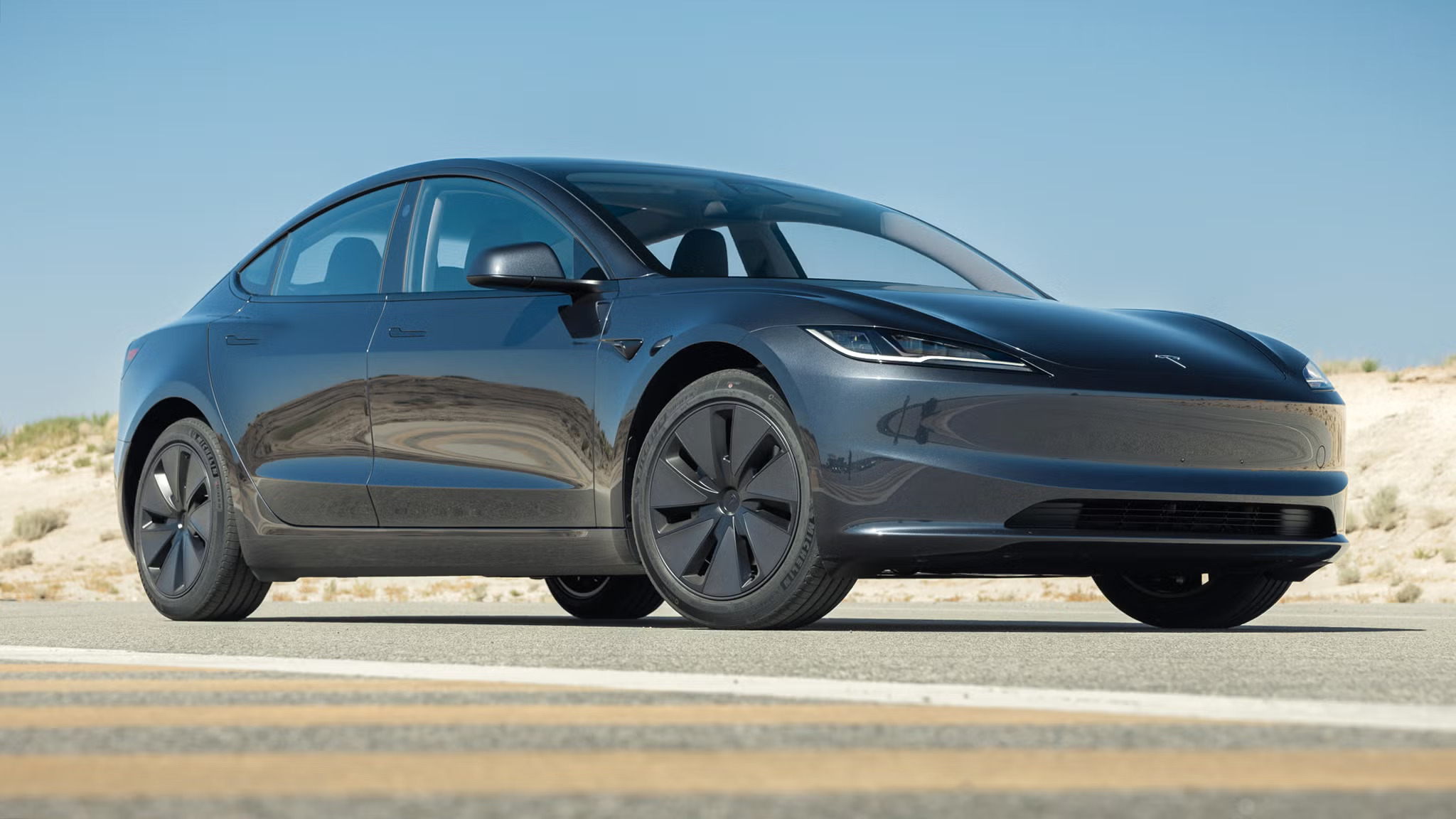
1. Tesla Model 3
The Tesla Model 3 is one of the most versatile electric vehicles in terms of charging access. Although Tesla uses a proprietary connector in North America, every Model 3 includes an adapter that works with the widely used J1772 plug.
This allows owners to charge at most public stations or from simple household outlets with the correct cable. Whether it is a friend’s garage or a remote cabin using a basic wall socket, the Model 3 can stay powered in a wide range of environments.
Tesla’s Supercharger network adds another major advantage. This network was originally exclusive to Tesla vehicles but is gradually opening to other electric brands. For Model 3 drivers, the large number of Superchargers across highways and cities makes long trips easier and more predictable.
The mobile charging kit that comes with the car supports both Level 1 and Level 2 charging, enabling use of common 120V outlets, 240V dryer sockets, or dedicated home charging equipment.
The onboard charging system is designed to identify the type of plug automatically and adjust power intake for the safest and fastest charging rate that the plug can support. Drivers do not need to worry about voltage, amperage, or compatibility details.
In locations with limited EV infrastructure, the Model 3 can still draw power from standard household sources at slower charging speeds. As long as an electrical supply is available, the vehicle can recharge without special installation, which sets it apart from many competing models.
The Model 3 accelerates quickly, quietly, and smoothly due to its electric powertrain. The placement of the battery under the floor creates a low center of gravity that improves stability and handling. Steering response is precise, and drivers can choose between three effort settings. The ride feels firm without being uncomfortable, and cabin noise has been reduced in recent testing.
The 2024 Performance trim raises capability with adaptive dampers, upgraded brakes, and a powerful all-wheel-drive system that produces 510 horsepower. It reaches 60 mph in 2.8 seconds. The rear-wheel-drive Long Range model completes the same run in 4.6 seconds.
Range differs by trim. The RWD Long Range model delivers about 363 miles, the AWD Long Range model provides about 346 miles, and the Performance model offers about 296 miles per charge. Real-world tests show slightly lower numbers. EPA efficiency ratings fall between 113 and 138 MPGe, and aerodynamic wheel covers help improve efficiency more than expected.
The interior is minimalist, with most functions controlled by a large central touchscreen. Front seats are supportive, but the low rear seats feel cramped for adults. Cargo space is generous thanks to foldable rear seats and numerous storage compartments.
The infotainment system includes navigation, Bluetooth, USB support, streaming services, and entertainment apps, but not Apple CarPlay, Android Auto, AM radio, or SiriusXM. Safety features include automated emergency braking, lane departure warning, and adaptive cruise control. Warranty coverage includes four years or 50,000 miles for basic components and eight years or 100,000 miles for the powertrain.
2. Chevrolet Bolt EV
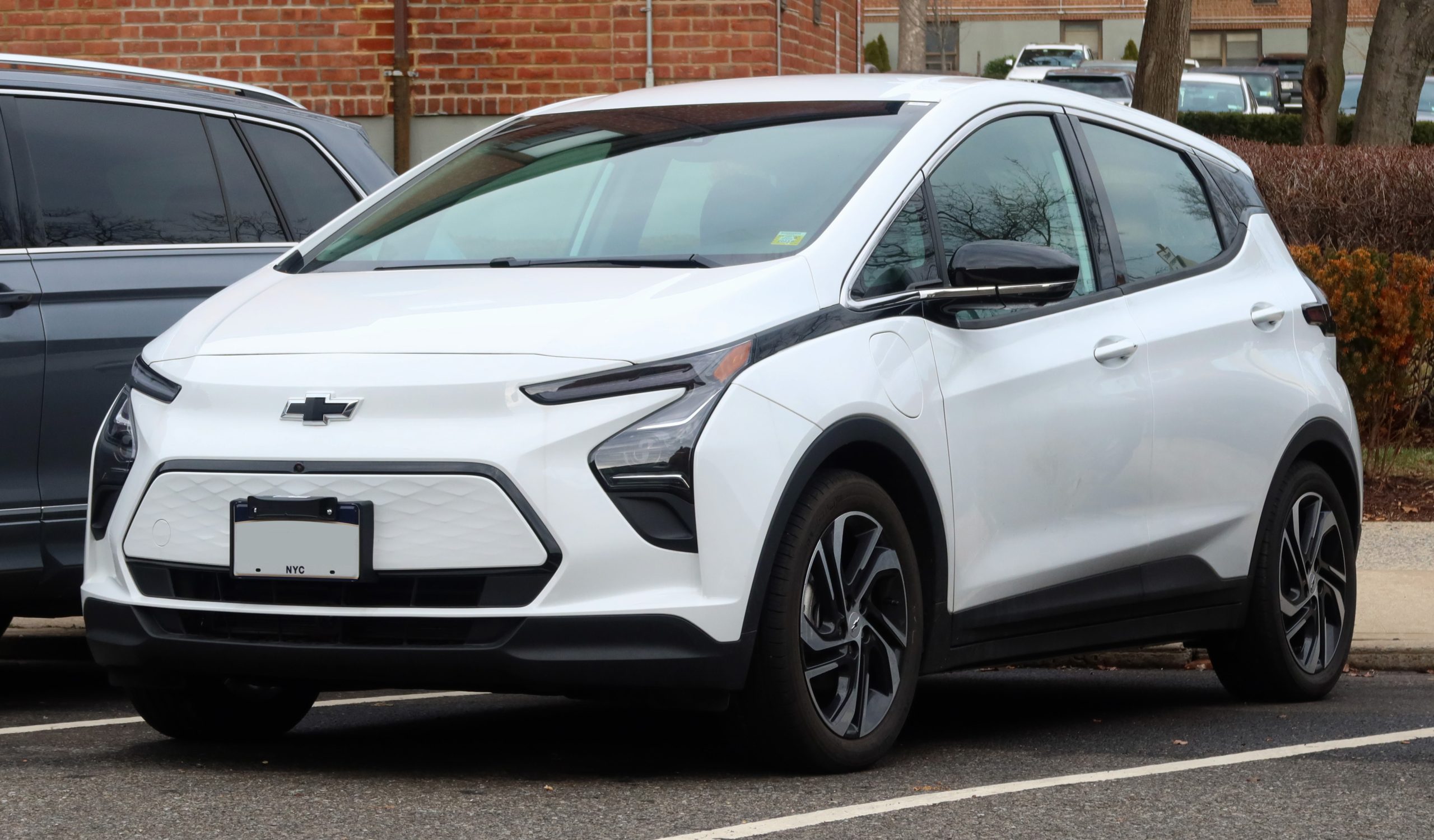
The Chevrolet Bolt EV is designed to give drivers simple, accessible, and adaptable charging options. It uses the widely available J1772 connector for Level 1 and Level 2 charging, making it compatible with the majority of public stations across North America. Drivers can plug into workplace chargers, commercial networks, or even a basic wall outlet at home without needing specialized equipment.
The Bolt also supports the CCS system for DC fast charging. This gives owners access to fast-charging networks such as EVgo and Electrify America, allowing the battery to gain a significant boost in 30 to 45 minutes, depending on the station’s output.
Chevrolet includes a portable charging cord that works with both 120V and 240V outlets, which makes home charging straightforward and often removes the need for installing a separate home charger.
Efficiency further strengthens the Bolt’s appeal. Even when charging from a regular 120V wall outlet that takes longer, most drivers still get enough daily range for commuting. This makes the Bolt suitable for apartment dwellers, rural residents, and anyone in an area with limited charging infrastructure.
You are not tied to fast-charging networks to keep the vehicle useful. GM offers additional support through tools such as the myChevrolet app, which locates charging stations and tracks charging status. These features ensure that Bolt EV owners enjoy reliable access to charging wherever they travel.
The 2023 Bolt EV carries over the same motor and chassis as previous models. It’s 200 horsepower and 266 pound-feet of torque go to the front wheels and provide brisk low-speed acceleration.
The quick response from a stop makes city driving engaging, while highway passing remains confident and easy. A one pedal driving mode increases regenerative braking so effectively that drivers can slow the car without frequent use of the brake pedal.
The EPA estimates the Bolt EV’s driving range at 259 miles. Real-world testing typically lands close to this figure, with 220 miles observed during a 75 mph highway test. In more favorable conditions, the Bolt has exceeded its official estimate. With Level 2 charging at 11 kW, the battery can reach a full charge in about seven hours. DC fast charging can add roughly 100 miles of range in about 30 minutes.
Fuel economy ratings reach 120 MPGe according to the EPA. Real-world results vary but remain strong, especially at lower speeds around town.
The Bolt EV’s cabin features improved materials, new seat designs, and a modern layout. An 8-inch digital gauge cluster and a redesigned steering wheel complement the spacious seating for four adults. Cargo space measures 17 cubic feet behind the rear seats and expands to 57 cubic feet when folded.
A 10.2-inch touchscreen includes wireless Apple CarPlay and Android Auto, along with built-in apps, Wi Fi capability, and physical knobs for easy control. Safety features include forward collision warning, automated emergency braking, lane departure warning, and lane keeping assist.
Chevrolet’s warranty includes three years or 36,000 miles of basic coverage and eight years or 100,000 miles for the powertrain, plus one complimentary maintenance visit.
3. Nissan Leaf
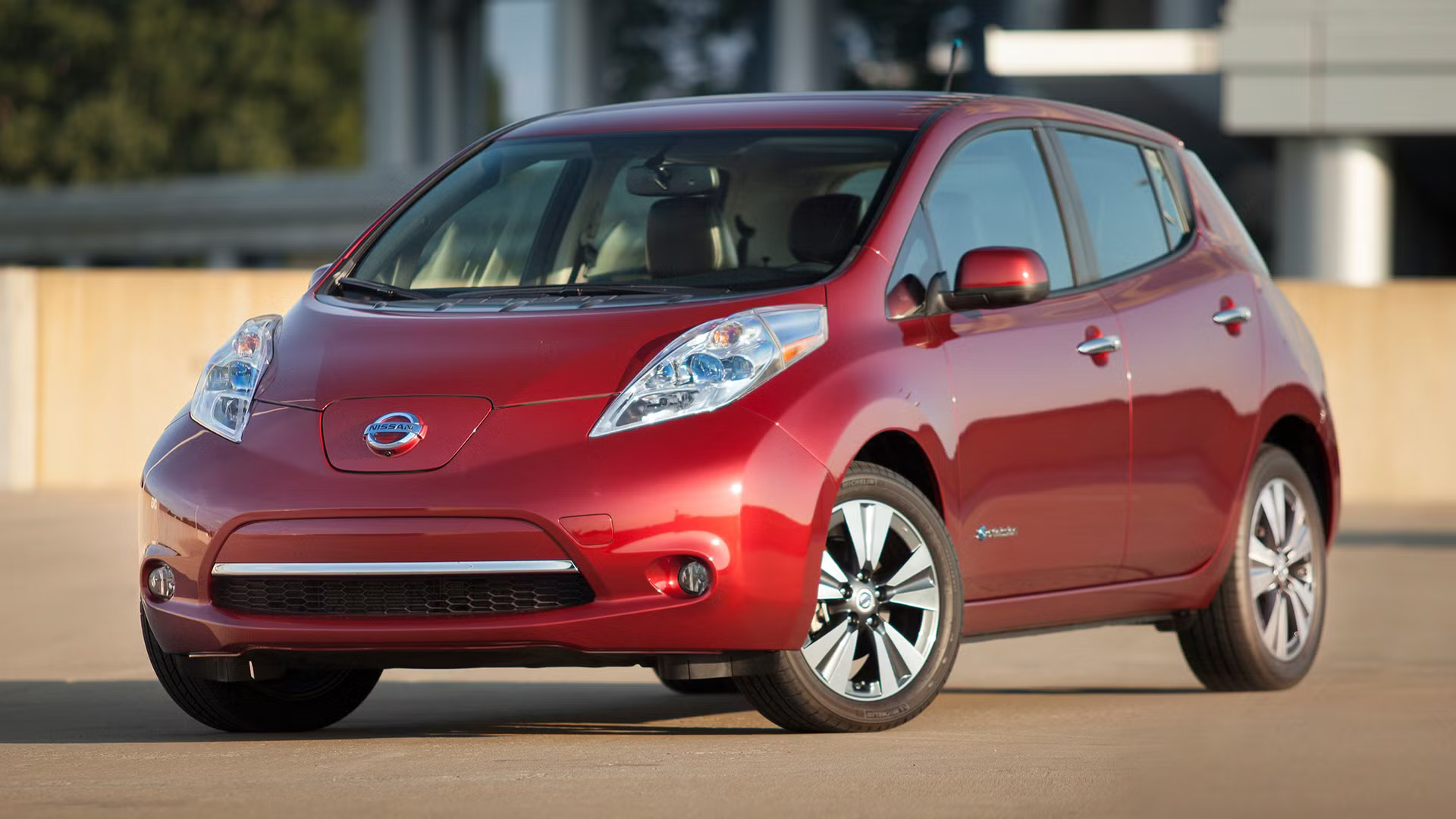
The Nissan Leaf is designed to make electric driving approachable for anyone transitioning from a traditional vehicle. It uses the common J1772 connector for Level 1 and Level 2 charging, allowing owners to plug in at nearly any public or home charging station in North America.
This universality makes daily charging straightforward, whether the vehicle is parked in a residential driveway, a workplace lot, or a public parking structure.
Although newer EVs are shifting toward CCS fast charging, the Leaf continues to support the CHAdeMO fast charging standard. This system is not as widespread as it once was, but many fast charging stations still offer it, giving Leaf owners reasonable access to quick top-ups.
For most drivers, Level 2 home charging remains the primary method, replenishing the battery overnight with minimal setup. Nissan includes a 120V portable charging cable for Level 1 charging, which adds range slowly but is convenient for those who do not travel long distances each day.
A key advantage of the Leaf is its low entry barrier for home charging. Many households can charge the vehicle without installing new hardware. When owners choose to upgrade to a Level 2 home charger, the process is simple.
Nissan supports drivers through partnerships with charging networks and a mobile app that helps locate stations, track availability, and plan routes. The Leaf’s ability to work with both older and modern infrastructure keeps it flexible for a wide range of drivers.
Performance varies between the two available Leaf versions. The standard Leaf S includes a 147-horsepower motor paired with a 40 kWh battery, while the Leaf SV Plus increases output to 214 horsepower with a larger 62 kWh battery.
Both models operate with Front Wheel Drive. The Leaf features e-Pedal functionality, allowing drivers to switch between light regenerative braking and stronger regenerative braking for near one pedal driving.
Acceleration is smooth and responsive in city environments, with the Leaf S reaching 60 mph in 7.4 seconds. The SV Plus improves on that performance with a 6.8-second sprint. Range also differs between trims.
The base model provides 149 miles on a full charge, making it suitable for shorter commutes. The SV Plus extends driving capability to 212 miles. Level 2 charging takes about seven hours for a full charge, and DC fast charging is standard across the lineup.
Efficiency remains one of the Leaf’s strengths. Highway testing has shown results slightly above its EPA rating, along with dependable real-world range at moderate speeds.
Inside the cabin, the Leaf offers comfortable seating and solid build quality. The interior design includes a mix of durable plastic and soft-touch surfaces, a configurable digital gauge display, and a spacious rear seat that can fit adult passengers comfortably. Cargo capacity is impressive for a compact EV, providing generous storage with the rear seats folded.
All models come equipped with an 8-inch touchscreen supporting Apple CarPlay and Android Auto. Nissan’s Safety Shield 360 system is standard and includes automated emergency braking with pedestrian detection, blind spot monitoring, and rear cross traffic alert.
Warranty coverage includes three years or 36,000 miles for the basic vehicle, five years or 60,000 miles for the powertrain, and eight years or 100,000 miles for the battery.
Also Read: 10 Cars With Rear Headrests That Don’t Block Mirrors
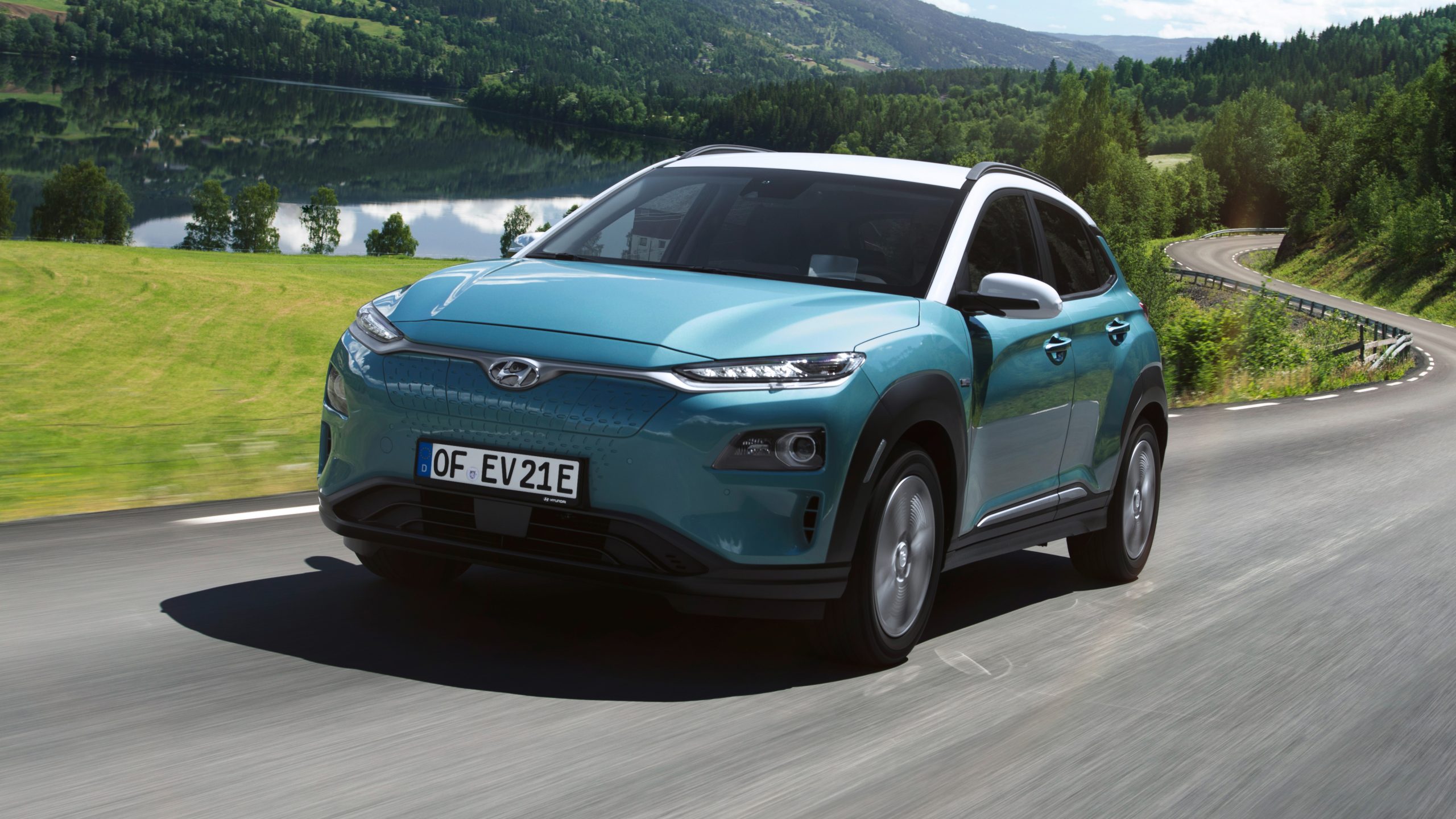
4. Hyundai Kona Electric
The Hyundai Kona Electric is designed to offer a smooth and adaptable charging experience for drivers who need reliable options at home or on the road. It supports Level 1 and Level 2 charging through the J1772 connector and uses the CCS connector for fast charging.
This combination ensures compatibility with nearly all public and residential charging stations across the United States. Owners can confidently recharge at home, at work, or while traveling without worrying about unexpected plug incompatibility.
Hyundai includes a portable charging cable that works with a standard 120V wall socket. This option charges slowly but is convenient for topping up overnight. Drivers who install a 240V outlet achieve faster Level 2 charging, making it easy to start each day with a full battery.
Hyundai enhances the charging experience through the Bluelink app, which lets users schedule charging sessions, monitor charging status, and locate nearby stations. At DC fast charging stations, the Kona Electric can add more than 200 miles of range in under an hour. Its battery system also manages heat effectively, ensuring consistent charging performance even in warm climates or unfamiliar setups.
This convenience makes the Kona Electric appealing to first-time EV buyers as well as experienced electric drivers who want stress-free charging on city commutes and longer road trips.
All Kona Electric models use Front Wheel Drive and a single electric motor. The lineup begins with a 133-horsepower version, while a more powerful 201-horsepower model is also available.
The stronger version provides responsive acceleration, although it does not deliver the intense force found in some higher-performance EVs. The Kona Electric prioritizes comfort, featuring quiet operation, smooth handling, and a well-insulated cabin that makes daily driving relaxing.
In testing, the Kona Electric equipped with the larger battery and the 201-horsepower motor reached 60 mph in 7.0 seconds. This makes it slightly slower than the previous generation but still quick enough for highway merging and city driving.
The Kona Electric offers two battery sizes. The base 48.6 kWh pack provides about 200 miles of driving range. The larger 64.8 kWh version increases the estimate to 260 miles. Real-world testing places the larger battery’s range at around 230 miles.
With DC fast charging, Hyundai reports that the vehicle can go from 10 percent to 80 percent charge in roughly 43 minutes. EPA efficiency ratings reach 129 MPGe in the city and 103 MPGe on the highway. Highway testing produced an impressive 110 MPGe result.
The 2024 redesign gives the Kona Electric a more refined cabin, improved materials, and a modern layout. Ambient lighting and a wide center pad create an open feel, while cargo space reaches 25.5 cubic feet behind the rear seats. A small front trunk provides storage for charging cables.
Hyundai equips the model with two 12.3-inch screens for infotainment and instrumentation. Wireless Apple CarPlay, Android Auto, and a Wi Fi hotspot come standard.
Safety features include automated emergency braking, blind spot monitoring, lane departure warning, and available adaptive cruise control. Hyundai’s warranties remain among the best in the industry, complemented by three years or 36,000 miles of complimentary maintenance.
5. Ford Mustang Mach-E
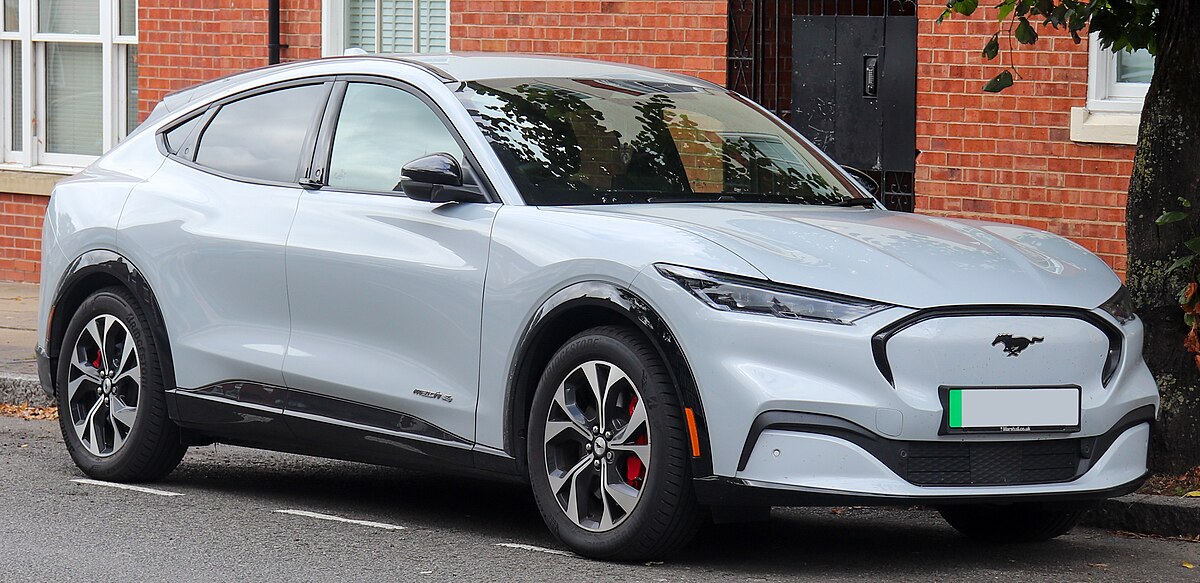
The Ford Mustang Mach-E delivers strong appeal through its charging flexibility, accessible technology, and wide performance range. It supports Level 1 and Level 2 charging through the widely used J1772 connector and relies on CCS for fast charging. This setup grants access to a broad charging network that spans residential locations, workplace stations, and national fast-charging providers.
Ford equips every Mach-E with a mobile charging cable compatible with 120V and 240V outlets. Drivers staying somewhere without dedicated chargers can still replenish the battery as long as a standard outlet is available.
Although 120V charging works at a slower pace, it remains useful for overnight use or steady range gains. When paired with a 240V source, the pace increases enough to restore most of the battery before morning.
Ford’s collaboration with networks such as Electrify America further expands charging options. Through the FordPass app, owners can locate stations, plan routes, and monitor charging sessions. The system automatically adjusts to the detected power source, allowing smooth charging without requiring special settings or accessories. This adaptability makes the Mach-E a dependable traveler in both cities and rural areas.
The model lineup includes a standard-range 70.0-kWh pack and an extended-range 91.0-kWh pack. Rear-wheel drive versions use a single motor, while all-wheel drive variants employ two. Output varies widely, starting at 266 horsepower and rising to 480 horsepower in the GT and GT Performance versions.
With the Performance upgrade or the Rally model, torque reaches 700 pound-feet. Testing shows strong acceleration, with the Mach-E Rally achieving 60 mph in 3.3 seconds. Even lower-powered trims provide smooth, quiet operation with a responsive driving feel.
Driving range spans from 250 to 320 miles, depending on battery size and configuration. The mobile charging unit can add up to 30 miles of range overnight when plugged into a 120V outlet, while a 240V connection restores roughly 80 percent capacity overnight. Ford also offers an upgraded home charging station that provides up to 28 miles of range per hour.
The Mach-E’s interior benefits from its battery placement beneath the floor, freeing up cabin space. A large vertical touchscreen runs Ford’s next-generation Sync system, supporting multiple profiles and over-the-air updates. Cargo capacity is generous at 29 cubic feet with the rear seats up, expanding to 60 cubic feet when folded. A washable front trunk provides added utility.
Safety offerings include automated emergency braking, blind-spot monitoring, and available hands-free driving through BlueCruise. Warranty coverage includes three years or 36,000 miles for the basic plan and eight years or 100,000 miles for electrical components.
6. Mercedes-Benz EQS
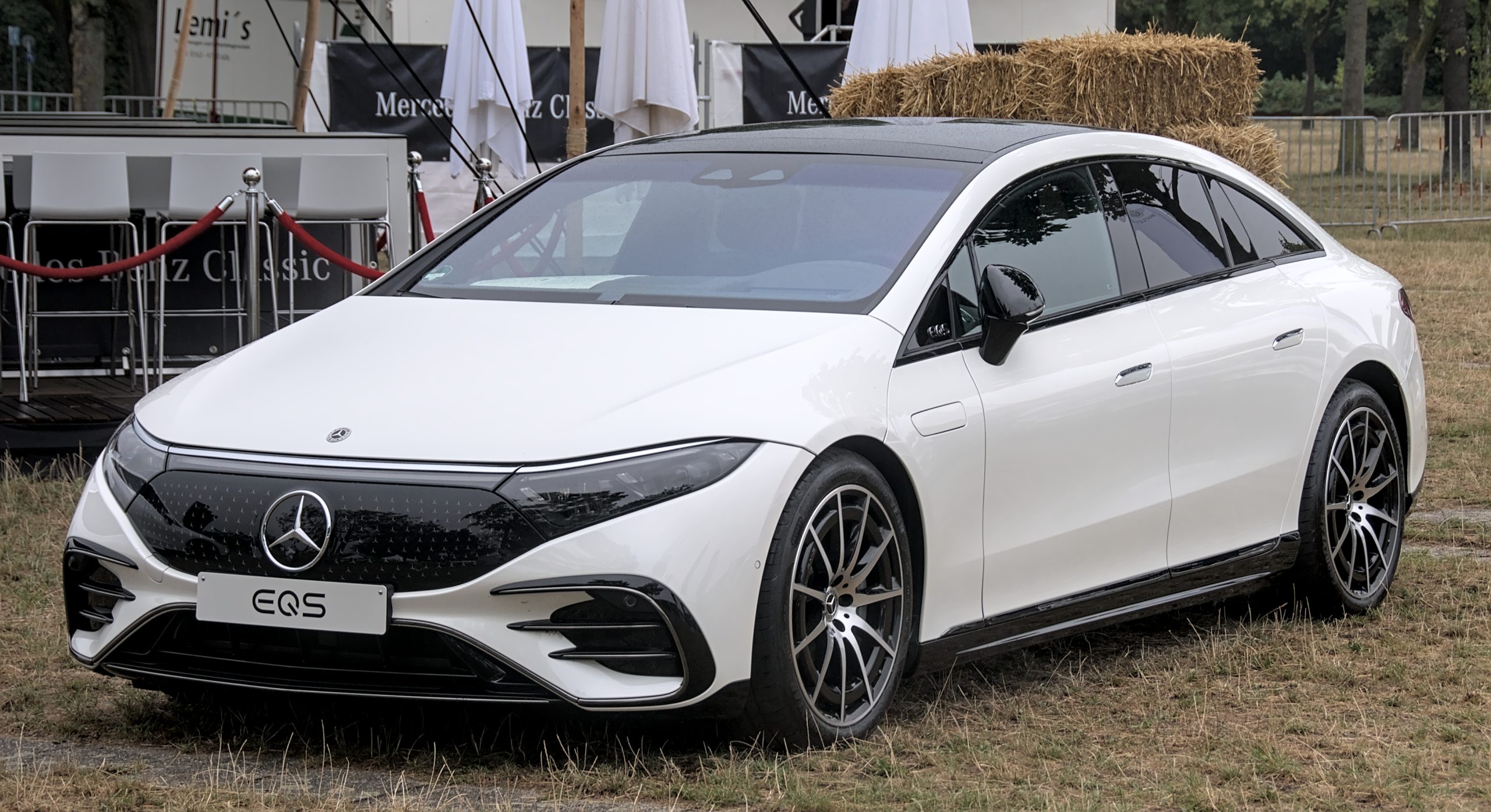
The Mercedes-Benz EQS delivers a high-end electric sedan experience centered on comfort, technology, and long-distance capability. It can charge from 10 to 80 percent in roughly 31 minutes at a 200-kW DC fast charger, allowing drivers to relax in a cabin that feels more like a lounge than a vehicle interior. With a starting price around $105,000, the EQS aims to combine premium comfort with advanced EV engineering.
The lineup includes several power configurations. The EQS450+ uses a single rear motor with 335 horsepower and 419 pound-feet of torque. The EQS450 4Matic adds a front motor, keeping horsepower unchanged but increasing torque to 590 pound-feet. The EQS580 4Matic boosts output to 516 horsepower and 611 pound-feet.
All variants use adaptive air suspension, and standard rear-axle steering allows the large sedan to maneuver easily despite its length. Ride quality meets expectations for a flagship luxury EV, though earlier models showed some brake pedal inconsistency that Mercedes aims to improve for 2025. Acceleration varies by trim, with the EQS450+ reaching 60 mph in 5.4 seconds and the EQS580 completing the sprint in 3.7 seconds.
For 2025, the EQS receives a 118.0-kWh usable battery capacity, delivering an estimated range increase of about 11 percent. Based on Mercedes’ projections, the EQS450+ could travel up to 390 miles per charge.
Previous testing of the EQS580 with the older battery returned 350 miles at highway speeds, suggesting the updated pack should perform even better. A 240-volt Level 2 charger takes about 11.5 hours to fill the battery from 10 to 100 percent.
Efficiency varies by model, with the EQS450+ achieving an EPA estimate of 98 MPGe in both city and highway driving. The EQS580 4Matic returns a combined 93 MPGe, a respectable figure for a powerful luxury sedan.
The cabin reflects Mercedes’ approach to premium EV design, offering generous passenger space, a flat floor, and a long wheelbase that results in excellent legroom. Even the base model is equipped with features such as a panoramic roof, augmented-reality navigation, 64-color ambient lighting, Burmester 3D audio, wireless smartphone integration, and adaptive cruise control.
A standout feature is the standard 56-inch-wide Hyperscreen, which integrates three displays into a seamless glass panel across the dashboard. The EQS also includes a fingerprint scanner for personalized profiles, the “Hey Mercedes” voice assistant, and multiple USB-C ports. Over-the-air updates will expand entertainment capability, adding apps and enhanced audio options.
Safety offerings include automated emergency braking, lane-keeping assistance, and adaptive cruise control with lane centering. Warranty coverage includes four years or 50,000 miles for both the limited and powertrain plans, while electrical components receive protection for 10 years or 155,000 miles.
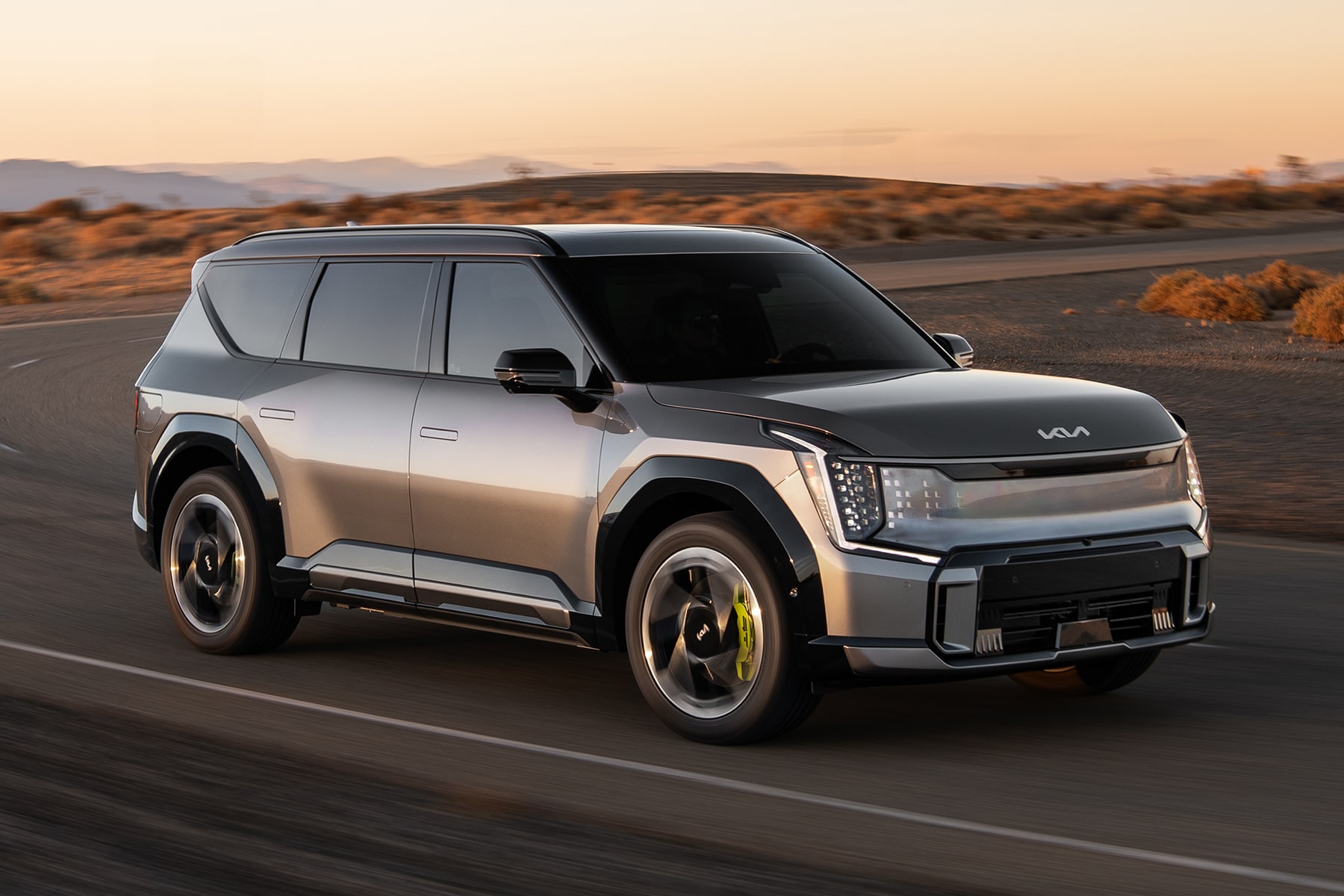
7. Kia EV9
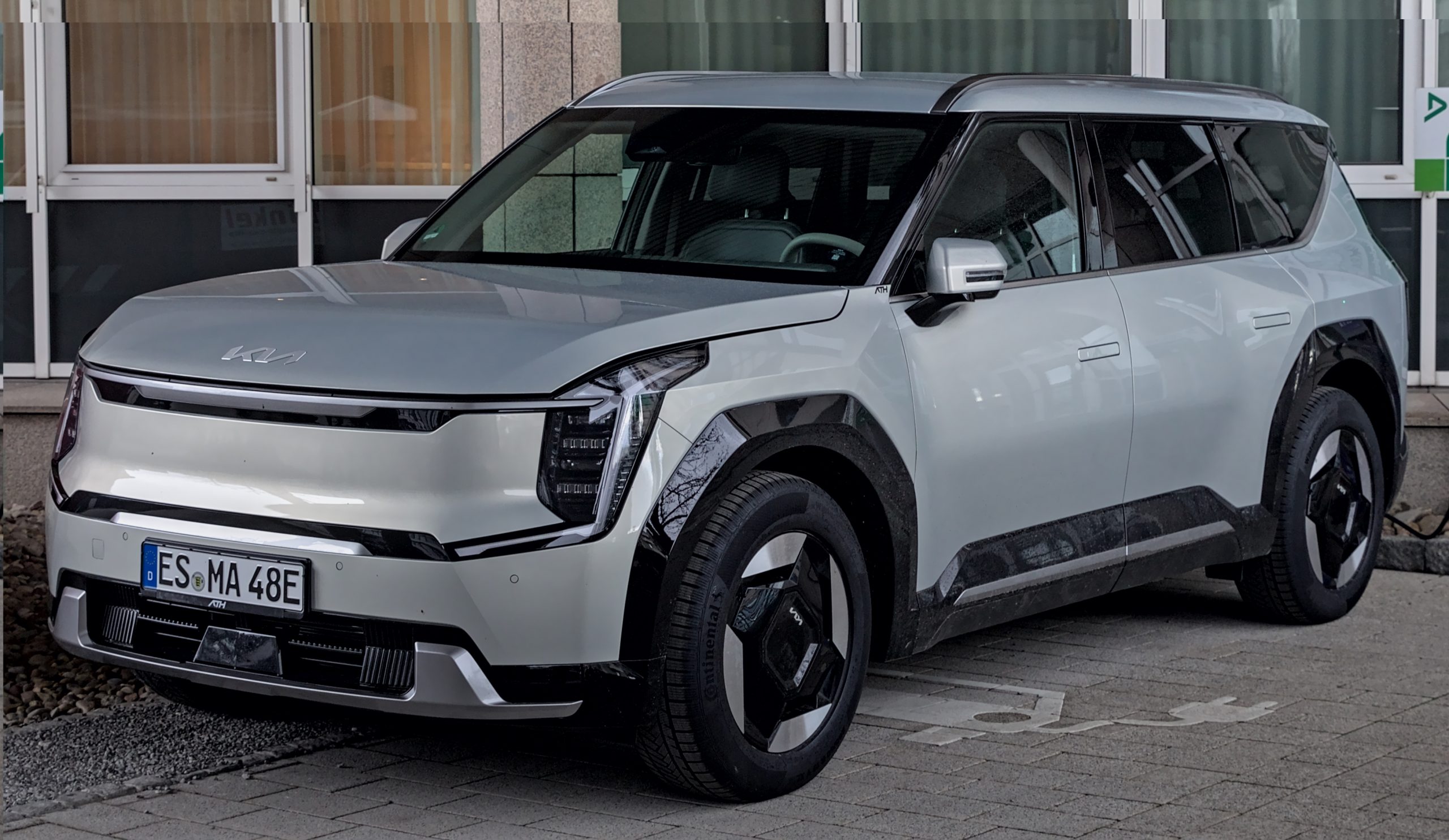
The Kia EV9 positions itself as a family-focused electric SUV designed for road trips, offering remarkable charging speed and strong value. With its 800-volt architecture, the EV9 can charge from 10 to 80 percent in about 24 minutes, an impressive figure for a three-row model. Pricing begins around $65,000, appealing to shoppers who want space, technology, and fast charging without entering luxury-brand territory.
Power varies across the lineup. The standard rear-wheel-drive Light trim uses a single motor with 215 horsepower, while the Light Long Range version reduces output slightly to 201 horsepower but adds a larger battery. All-wheel-drive versions introduce dual motors that generate 379 horsepower.
A Boost feature increases available torque for stronger acceleration, and the Nightfall Edition enhances this effect even further. A high-performance GT model is expected for 2026 with a dual-motor setup producing around 501 horsepower.
Early impressions show that the EV9 delivers a smooth driving experience with a soft highway ride, and upcoming adaptive suspension tuning on the GT should keep comfort intact while improving responsiveness. Testing of a 2024 AWD model produced a 4.5-second sprint to 60 mph, making it quicker than Kia’s initial estimate.
Battery capacity ranges from 76.1 kWh in the entry Light trim to 99.8 kWh in the Long Range and AWD variants. The smaller pack provides an estimated 230 miles per charge. The larger battery enables 304 miles in the Light Long Range version, 280 miles in the Wind and Land AWD trims, and 270 miles in the GT-Line.
Real-world testing of the GT-Line returned 240 miles at highway speeds. Charging performance is a standout strength. The EV9 supports up to 230 kW at DC fast chargers and can add 100 miles of range in roughly 13 minutes, with one of the highest average charging speeds observed among current EVs. Its 11-kW onboard charger provides typical Level 2 rates when charging at home.
Efficiency ratings range from 80 to 89 MPGe depending on drivetrain. The most efficient configuration is the Light trim with the larger battery, while the performance-oriented GT-Line is the least efficient at 80 MPGe.
Inside, the EV9 seats six or seven passengers, depending on configuration. Higher trims offer heated, ventilated, and massaging second-row captain’s chairs, along with soft synthetic leather and sturdy construction.
The third row accommodates adults with some cooperation from the second-row passengers. Cargo space measures 20 cubic feet behind the third row and up to 82 cubic feet with both rear rows folded, offering generous practicality.
Technology includes twin 12.3-inch screens for gauges and infotainment, a dedicated climate display, and touch-sensitive controls. Driver-assistance features such as automated emergency braking, blind-spot monitoring, lane-keeping assist, and adaptive cruise control come standard, with a hands-free driving mode available on the GT-Line.
Kia supports the EV9 with a strong warranty: five years or 60,000 miles for the basic plan and 10 years or 100,000 miles for the powertrain.
Choosing an electric vehicle becomes far easier when charging flexibility is part of the design. The models featured in 7 EVs That Don’t Require Searching for Rare Plugs were selected because they give drivers dependable access to common connectors, user-friendly charging equipment, and networks that support daily routines as well as long trips.
Each vehicle offers a different blend of range, performance, interior space, and technology, yet all share a focus on convenience. They eliminate the need to hunt for uncommon plugs and allow owners to charge wherever power is available. From compact commuters to luxury sedans and spacious family SUVs, these EVs prove that practicality and electric capability can work together smoothly.
Drivers can plan travel with confidence, recharge without complicated setups, and enjoy the advantages of electric driving in familiar environments. These seven models represent strong choices for anyone seeking an EV that works easily with today’s widely accessible charging infrastructure.
Also Read: 10 Cars With Factory Roof Rails That Actually Help
