Electric vehicles (EVs) have rapidly transitioned from niche curiosities to mainstream contenders in the automotive market. Yet, for many drivers, the thought of switching to an EV can still trigger hesitation.
Concerns about unfamiliar driving dynamics, regenerative braking that feels abrupt, or a throttle that responds differently than a traditional gasoline car are common.
Fortunately, not all EVs feel alien behind the wheel. Some models are engineered to emulate the familiar driving sensations of internal combustion vehicles, offering a seamless transition for drivers who want the benefits of electric mobility without the learning curve.
Here, we explore seven EVs that feel like normal cars to drive, combining comfort, predictability, and the familiar driving experience many Americans appreciate.
1. Tesla Model 3
The Tesla Model 3 has become a household name in the EV market, and for good reason. Beyond its cutting-edge technology and impressive electric range, the Model 3 offers a driving experience that’s surprisingly conventional.
Unlike some EVs with heavy regenerative braking that slows the car dramatically when you lift off the accelerator, the Model 3 allows drivers to tailor braking strength or even disable “one-pedal driving” entirely.
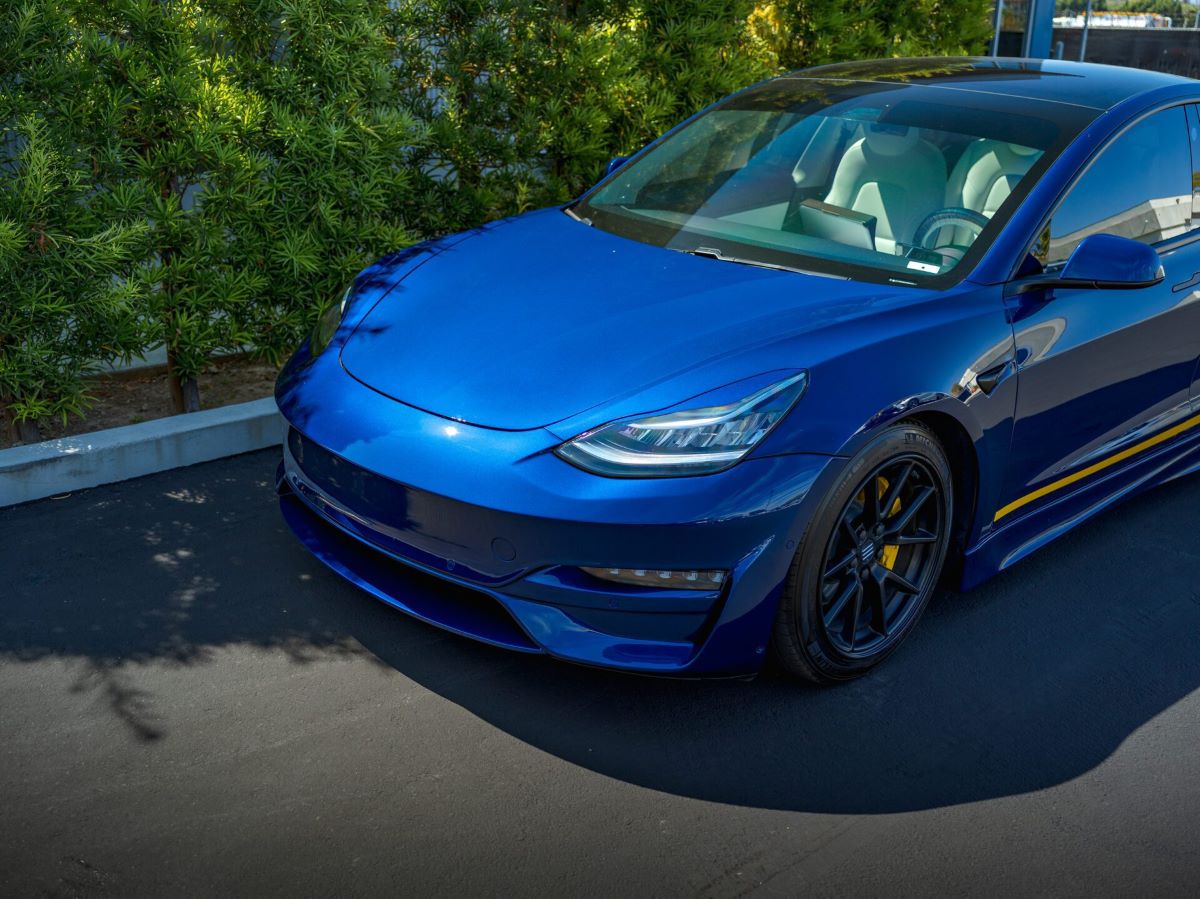
The steering is precise, responsive, and weighted similarly to a sporty gasoline sedan, which makes highway cruising or navigating city streets intuitive.
For drivers used to a BMW 3 Series or an Audi A4, the Model 3 feels like a familiar sedan with the perks of instant electric torque and quiet operation.
The Tesla Model 3 essentially created the modern electric compact sedan segment, and it continues to be one of the most compelling options for EV buyers today. The latest round of “Highland” updates resolved several longtime criticisms, including a smoother, more refined suspension and upgraded interior materials.
Despite these changes, performance remains a strong point; the Performance trim offers ferocious acceleration, and even the slowest version, the rear-drive Long Rangeachieves a 4.6-second 0–60 mph run.
All models include heated and ventilated front seats, built-in navigation, and Tesla’s Autopilot driver-assistance suite. Rear-wheel drive with a single motor is standard, while dual-motor all-wheel drive is available. We recommend either Long Range version for their estimated ranges of 363 miles (RWD) and 346 miles (AWD).
Like most EVs, the Model 3 accelerates quickly, smoothly, and virtually without noise, delivering strong off-the-line thrust. Its low-mounted battery pack lowers the center of gravity and contributes to sharp turn-in, composed handling, and a planted feel through corners. Steering is precise and offers three selectable effort levels.
The ride remains firm but controlled, and cabin quietness has noticeably improved in testing. The new-for-2024 Performance model further elevates the driving experience with its adaptive sport-tuned suspension, upgraded brakes, and staggered wheels and tires. Its all-wheel-drive system produces a combined 510 horsepower, making it the most aggressive and capable Model 3 yet.
Also Read: 10 Sedans With Quiet Cabins on Rough Asphalt
2. Chevrolet Bolt EV
The Chevrolet Bolt EV is a standout in the compact EV category, particularly for those seeking a traditional driving feel. The Bolt offers a linear power delivery that feels similar to a small gasoline hatchback.
There’s minimal artificial braking feedback, so drivers won’t feel like they’re fighting the regenerative braking system on every stop.
Its handling is predictable, with moderate body control and responsive steering that makes it comfortable for both urban commutes and highway trips.
For US drivers who want an affordable EV without the quirks of ultra-modern electric performance, the Bolt delivers a familiar and user-friendly experience.
Chevrolet is officially reviving its budget-friendly Bolt EV hatchback. The upcoming model is expected to deliver more than 300 miles of driving range and will offer Super Cruise, GM’s hands-free highway driving technology. Production is slated to begin in late 2025.
The original Chevy Bolt EV was one of the most affordable electric cars on the market, so it was disappointing when General Motors announced its discontinuation. That changed in 2023 when GM CEO Mary Barra confirmed a new Bolt EV was on the way, and now the first prototypes have been spotted by spy photographers undergoing public-road testing.
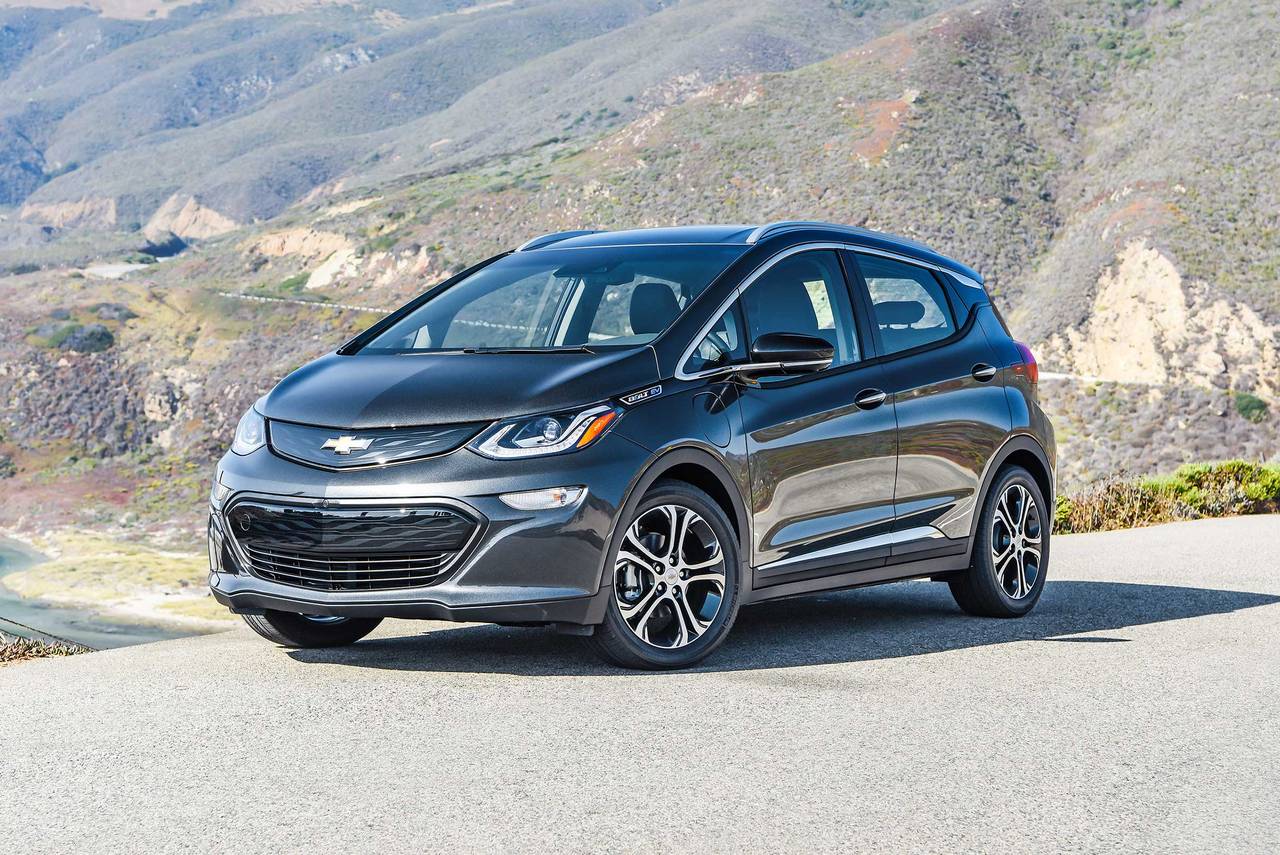
Based on these new spy images, the upcoming Bolt EV won’t stray too far from the styling of the outgoing model. The refreshed front end will feature a bold LED light strip, a design cue shared with Chevy’s other electric offerings, while the rear end will appear as a mildly updated interpretation of the previous version.
In general, the design should take on a slightly more mature look compared to the last Bolt, incorporating styling influences from Chevy’s small SUVs like the Trax and Equinox.
Although our photographers couldn’t capture any interior shots, we expect the cabin to represent a much bigger departure, likely featuring a digital instrument cluster and a large center display/
The 2026 Bolt EV will utilize a version of GM’s Ultium battery platform found in its other EVs, offering quicker charging and more range than before. GM is reportedly using more cost-effective lithium-iron-phosphate battery chemistry, which helps lower production costs and shorten development time but may slightly impact maximum range. Even so, a figure exceeding 300 miles is still anticipated, keeping the Bolt EV competitive in its segment.
Previously, Chevy sold the Bolt EV alongside the slightly larger Bolt EUV, which distinguished itself by offering GM’s Super Cruise hands-free driving system. For the new generation, this tech is expected to migrate to the standard Bolt EV, giving it a meaningful upgrade.
Production of the 2026 Chevy Bolt is scheduled to begin in late 2025, with the vehicle expected to reach dealerships sometime in early to mid-2026.
3. Ford Mustang Mach-E (Select Trim)
The Ford Mustang Mach-E has redefined the American EV crossover segment. While some trims emphasize performance, the standard Select trim is tuned for comfort and traditional driving dynamics.
The steering feedback and throttle response are balanced, resembling that of a conventional SUV more than a futuristic EV.
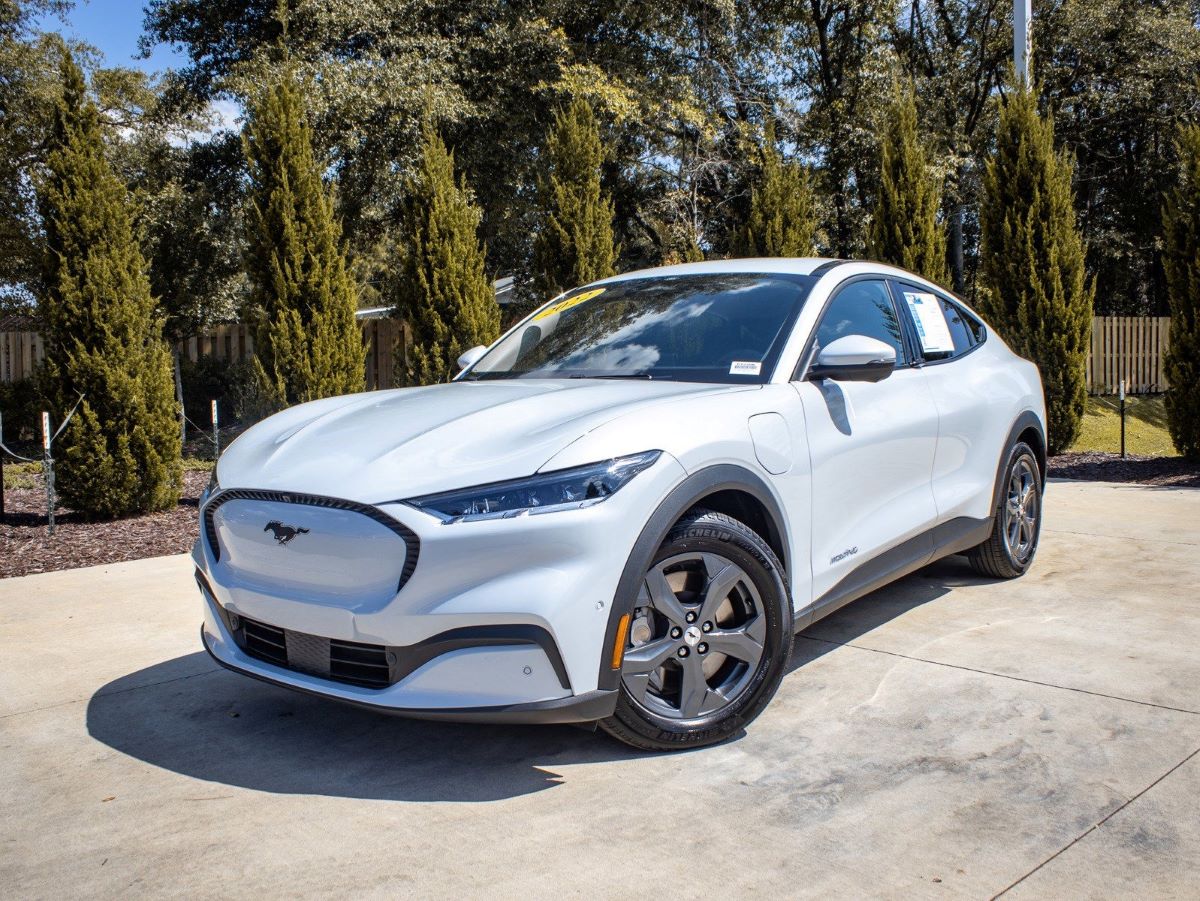
Drivers won’t experience jarring “regenerative braking creep,” and the suspension strikes a comfortable middle ground between sporty and cushioned.
For families and daily commuters looking to enter the EV market without giving up a familiar driving feel, the Mach-E Select provides a reassuring bridge from gasoline-powered vehicles.
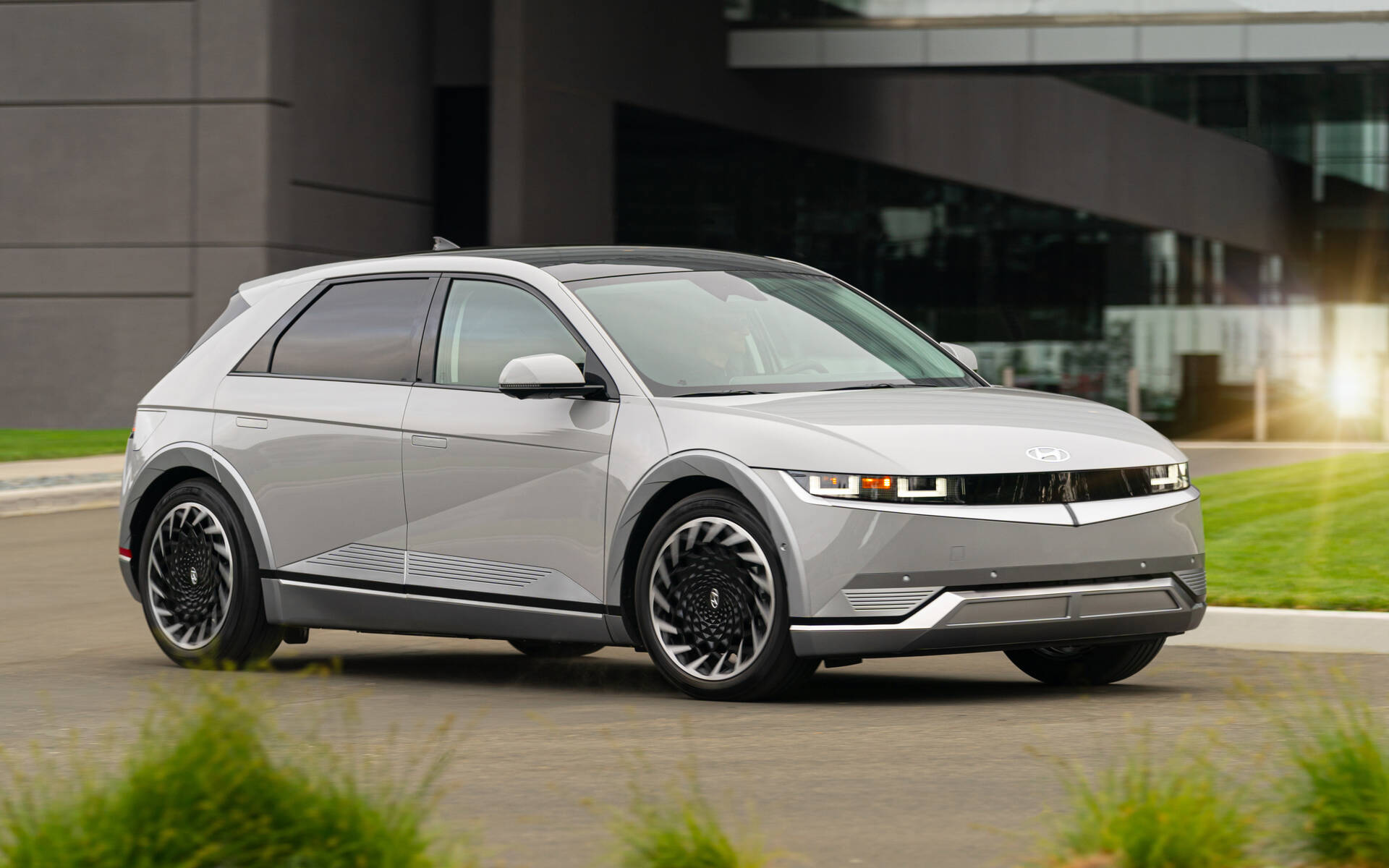
4. Hyundai Ioniq 5
The Hyundai Ioniq 5 brings a futuristic design but a surprisingly grounded driving experience. Despite its avant-garde styling and fast-charging capability, the Ioniq 5 rides like a midsize hatchback from a familiar gasoline era.
The steering is light but communicative, and regenerative braking is mild in its default mode, avoiding the abrupt deceleration that can feel unnatural to drivers new to EVs.
Its low center of gravity contributes to confident handling, while the cabin’s spacious layout and intuitive controls feel accessible to anyone accustomed to traditional cars.
For Americans seeking a combination of style, technology, and ease of driving, the Ioniq 5 is a smart, approachable option.
The Mustang Mach-E brings Ford’s legendary muscle-car spirit into an all-electric crossover package. First introduced in 2021, this compact SUV continues to evolve, adding more updates for the new model year after launching the wild off-road Rally variant last year.
It entered the electric compact SUV segment early, a category that now includes strong competitors such as the Hyundai Ioniq 5, Toyota bZ4X, and Tesla Model Y.
The Mustang Mach-E stands out for its lively driving dynamics. AWD models deliver strong corner-exit traction, while RWD versions offer flashes of playful oversteer. The vehicle responds well to driver inputs, but during highway travel we were surprised by the noticeable wind and road noise.
With the GT trim, performance fades after extended hard driving, but the optional Performance Edition upgrades are worth the added expense. Even though the Mach-E lacks true SUV-level ground clearance, the Rally model remains tremendous fun on loose surfaces.
Its range is average for the segment but still suitable for most drivers. Charging speeds, however, are slower than many rivals. On the practical side, owners will appreciate the Mach-E’s generous cargo space and usable front trunk.
Inside, the approach leans toward Tesla-inspired minimalism, but we feel the layout could be optimized more effectively. The massive 15.5-inch touchscreen also doesn’t use its size as efficiently as it could. The all-glass roof, while stylish, tends to heat the cabin excessively in direct sunlight, which often forces heavy air-conditioning use.
Overall, the Mustang Mach-E is a very capable electric SUV, though not the top pick in its class. Competitors from Tesla and Hyundai offer quicker charging and longer range.
The Mach-E comes with RWD or AWD and is available with either a standard-range or extended-range battery. Select and Premium trims offer the widest variety of configurations. Range spans from 240 miles for AWD models with the standard battery to 320 miles for RWD models equipped with the extended-range pack.
GT and Rally trims include the extended-range battery and AWD as standard. The GT delivers 280 miles of range, while the Rally manages up to 265 miles.
Standard-range versions support charging speeds up to 110 kW, and extended-range models can charge at up to 150 kW. On a capable public Level 3 charger, expect a 10–80% charge in around 38 minutes. A full charge on a Level 2 setup typically takes 12 to 14 hours.
The Mach-E’s output varies by configuration, starting at 246 hp for standard-range RWD models and climbing to 480 hp in the GT and Rally versions. AWD trims produce 325 hp with the standard battery and up to 365 hp with the extended-range unit.
It’s genuinely pony-car quick, the newest Rally model blasted from 0–60 mph in 3.3 seconds in MotorTrend testing, setting a new Mach-E benchmark.
Also Read: 10 Cars With Clear, Bright Headlights for Backroads
5. Kia EV6
Kia’s EV6 shares much of its underpinnings with the Ioniq 5 but leans slightly toward sportier driving dynamics without losing comfort.
In base trims, the EV6 offers a conventional driving feel that will be familiar to anyone who has driven a modern sedan or crossover.
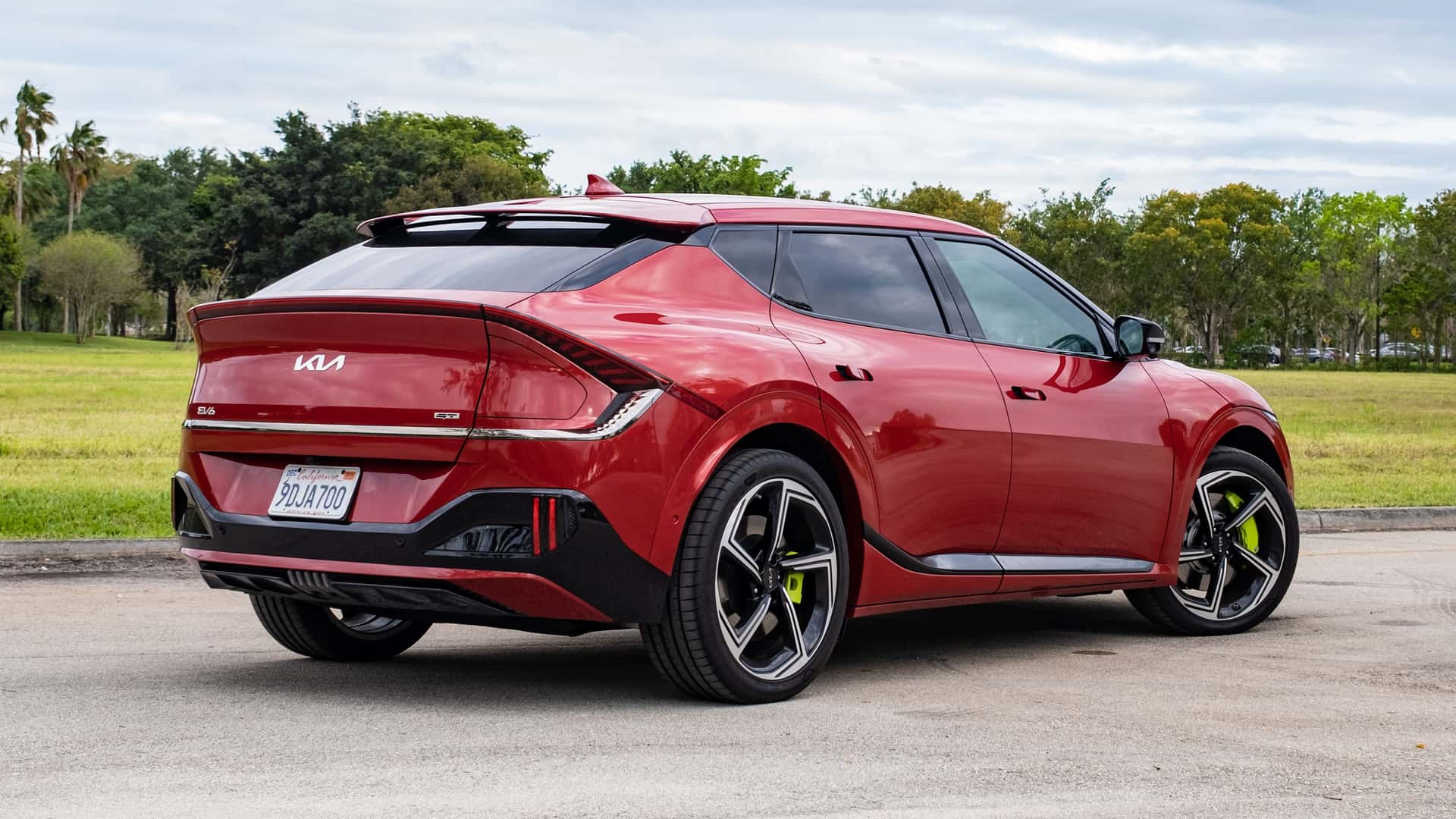
Acceleration is smooth and predictable, and regenerative braking can be adjusted or turned off, allowing a driving style similar to traditional cars.
Its ride quality is well-balanced, with suspension tuning that smooths out potholes without feeling floaty. The EV6’s combination of driving comfort and responsive handling makes it an appealing choice for US drivers who want a modern EV without straying from a traditional driving experience.
Rear-wheel drive comes standard, but opting for all-wheel drive brings a stronger punch and access to a larger battery capable of delivering up to 310 miles of range. Its responsive handling is impressive, especially for an SUV, making it genuinely enjoyable on winding roads.
Drivers seeking serious thrills will gravitate toward the new GT variant, which unleashes 576 horsepower, more than enough to make Stinger owners jealous as it rockets past them.
Yet despite its performance, the EV6 maintains a peaceful cabin and offers enough interior space to stand confidently against rivals like the Ford Mustang Mach-E, Hyundai Ioniq 5, and Volkswagen ID.4. It remains one of our top SUV picks because its combination of comfort, value, and driving enjoyment creates a well-rounded EV that’s easy to live with every day.
The brutally quick GT model joins the lineup this year, boasting 576 horsepower and an adaptive suspension system. A dedicated green steering-wheel button unlocks the powertrain’s full capability, which we estimate will send the EV6 to 60 mph in roughly 3.2 seconds during testing.
Along with its upgraded performance hardware, Kia has given the GT a sportier interior with bolstered seats and neon green accents. However, the extra power does come at a cost, the GT’s estimated driving range drops to just 206 miles per charge, a noticeable fall from the lineup’s most efficient 310-mile version.
Kia has also discontinued the base Light trim for 2023, making the rear-wheel-drive Wind model the new entry point and increasing the starting price by $7100.
While the range-topping GT is undeniably tempting, most EV buyers are more likely focused on maximizing driving range rather than outright speed. For that crowd, the all-wheel-drive Wind trim is the best choice.
It’s the most cost-effective way to get AWD capability, and its dual-motor setup produces 320 horsepower, significantly more than the single-motor version. Sticking with the standard 19-inch wheels helps maintain efficiency, and Kia estimates the EV6 Wind AWD can travel up to 282 miles on a charge.
The EV6 comes with either a single rear-mounted electric motor for rear-wheel drive, or dual motors—one on each axle—for all-wheel drive. AWD versions include a larger battery and make either 320 or 576 horsepower, while the base RWD model generates 225 horsepower.
We tested a GT-Line AWD model in Europe and were impressed by its quick acceleration, responsive handling, and customizable regenerative braking. On our own test track, the 320-hp GT-Line sprinted to 60 mph in a swift 4.5 seconds. The rear-drive version offers more range but required 6.7 seconds to reach 60 mph in our testing.
If top-tier straight-line performance is your priority, the 576-hp GT delivers exactly that; in our tests, it reached 60 mph in just 3.2 seconds. Sitting at the top of the lineup, the GT also adds upgrades like an electronic limited-slip differential, firmer suspension tuning, adaptive dampers, and more robust brakes.
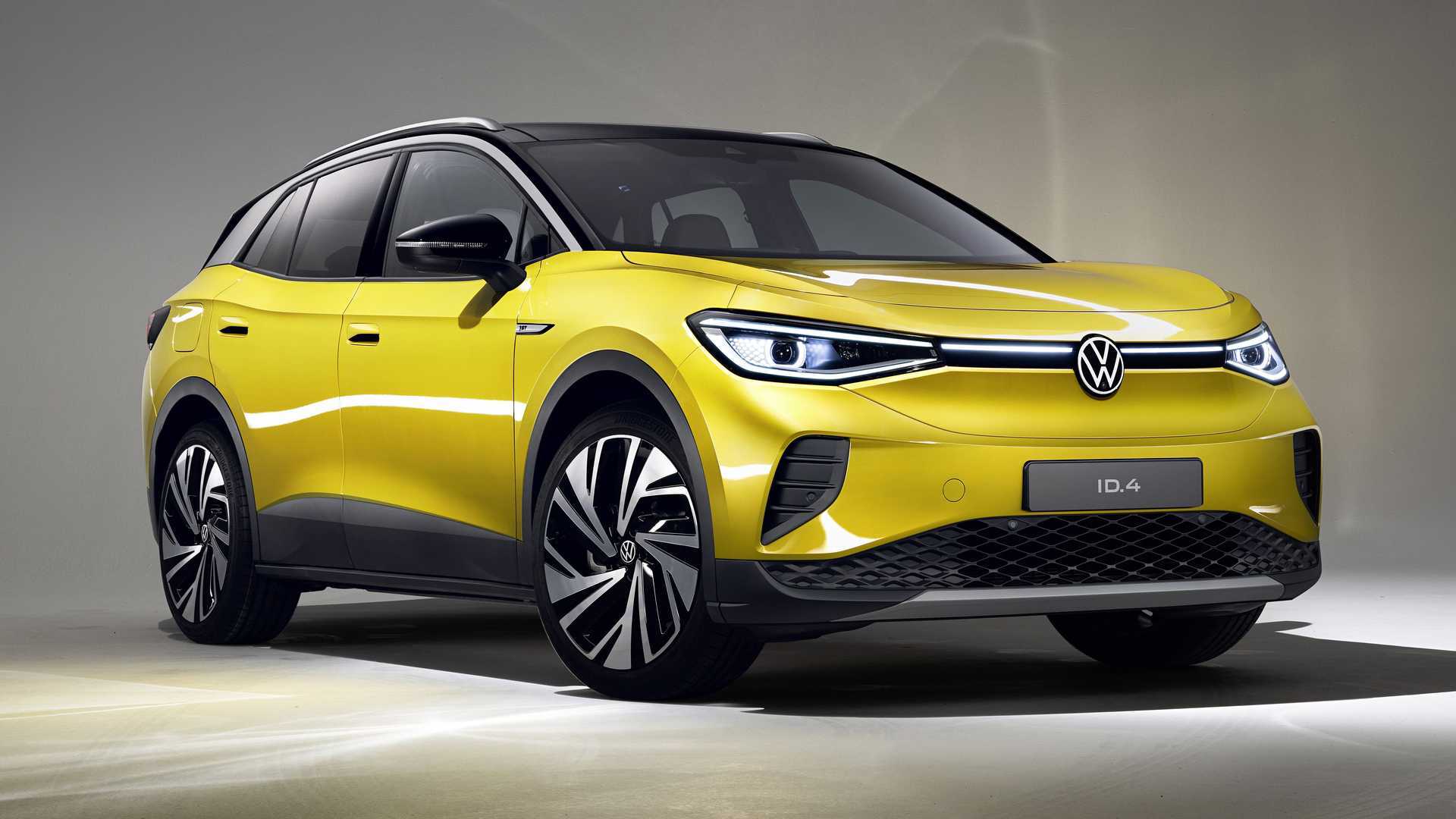
6. Volkswagen ID.4
The Volkswagen ID.4 has been a strategic entry in the EV market for those who prefer a conservative approach to electric driving.
With a focus on everyday usability and comfort, the ID.4 mimics the ride and handling of Volkswagen’s familiar gas-powered SUVs. The steering is direct, the brakes feel conventional, and the acceleration is predictable rather than aggressive.
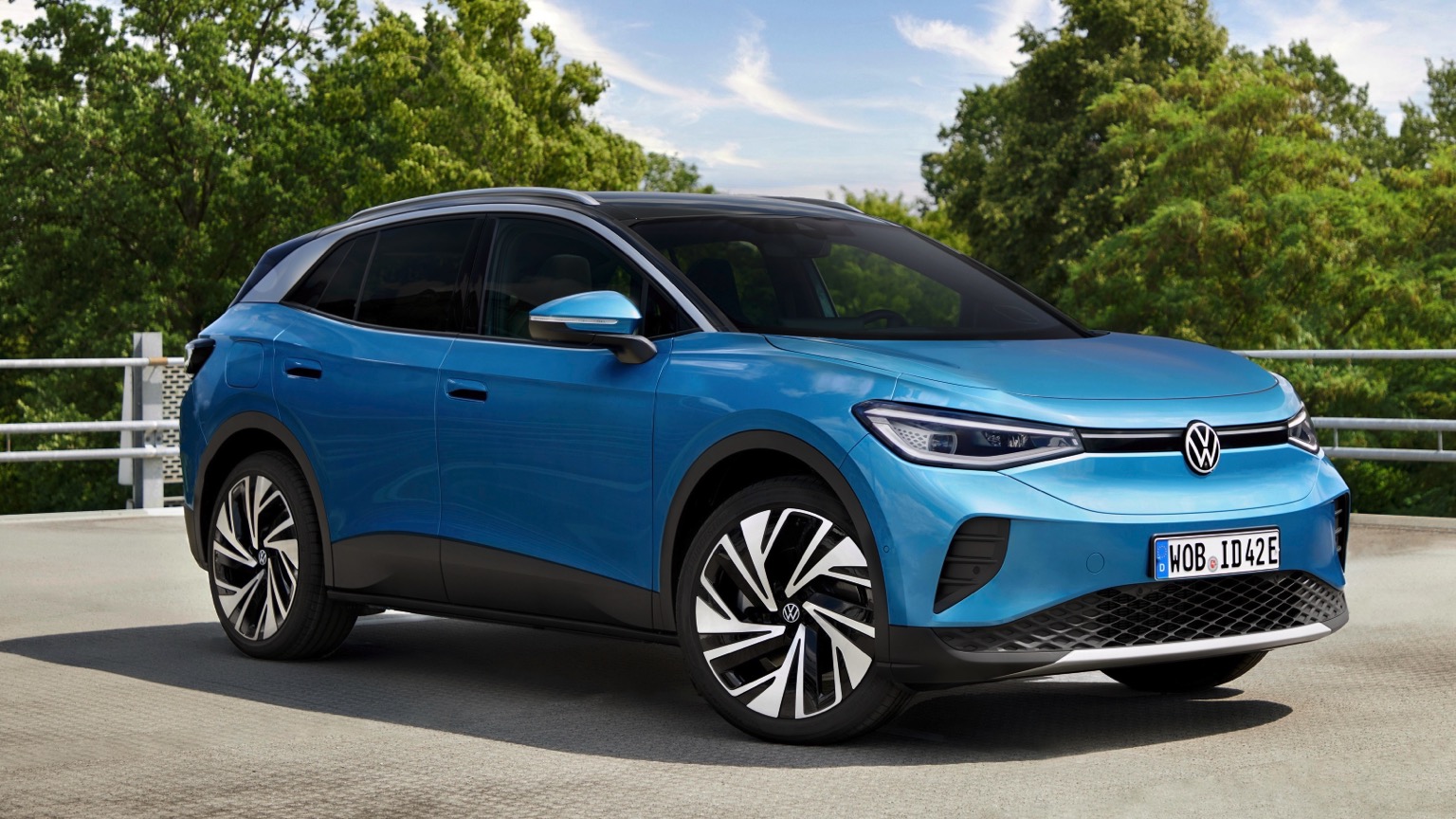
Its regenerative braking is subtle by default, providing a smoother transition for drivers used to gasoline-powered crossovers.
For American families and commuters who prioritize a no-surprise driving experience, the ID.4 offers a solid, familiar alternative to more aggressive or tech-forward EVs.
Volkswagen has shifted production of the U.S.-spec ID.4 to its Chattanooga, Tennessee facility for the 2023 model year. Joining the lineup this year is the entry-level Standard model, which boasts a compelling base price but comes equipped with a smaller 58-kWh battery pack, offering an estimated 209 miles of range.
At the top of the range, the new Pro S Plus trim adds luxury touches like heated rear seats, a three-zone automatic climate control system, distinctive 20-inch wheels, and a premium audio system. All ID.4 models now include the larger 12.0-inch infotainment touchscreen as standard, a feature that was optional last year.
Volkswagen has also made a series of subtle design updates, including gloss-black exterior accents, revised wheel designs, and new paint color options. Inside, the center console has been slightly reworked, interior upholstery options refreshed, and Pro S trims now feature illuminated Volkswagen badges on the front and rear.
While the Standard model is the most affordable, we’d recommend the mid-range Pro trim. It offers longer driving range and enables DC fast charging at public charging stations. Opting for the available dual-motor all-wheel-drive system is also worthwhile, as it boosts horsepower and enhances overall performance.
The ID.4 comes with a single rear-mounted electric motor producing 201 horsepower, while the dual-motor all-wheel-drive setup generates 295 horsepower. Maximum towing capacity is a solid 2,700 pounds.
Regenerative braking captures energy during deceleration, but the one-pedal driving experience many EV owners enjoy is largely absent, even in the most aggressive regen mode. Acceleration is less intense than typical EVs; the rear-wheel-drive ID.4 isn’t sluggish by compact-crossover standards, but our testing shows a 7.6-second sprint to 60 mph, reflecting a more relaxed pace.
Choosing the dual-motor AWD version sharpens performance, with our tests recording a 5.4-second run to 60 mph. While the ID.4 doesn’t handle as sharply as some rivals, it impresses with a smooth, composed ride and a quiet, refined cabin.
7. Nissan Leaf
The Nissan Leaf is often regarded as the original mainstream EV, and it still holds up today as one of the easiest to drive. The Leaf emphasizes predictability and ease of use over performance theatrics, making it feel like a conventional hatchback.
Its regenerative braking is mild and intuitive, and the steering provides enough feedback to feel natural without being overly sharp.
Drivers transitioning from small gasoline cars will appreciate the Leaf’s straightforward interface, simple controls, and manageable driving dynamics.
For those who want an electric car that behaves like a normal car in every way, the Leaf remains a dependable choice.
The EV market has matured to the point where drivers can enjoy the benefits of electric power without sacrificing the driving experience they know and love.
Proving that electric vehicles can be budget-friendly, the Nissan Leaf offers a gasoline-free driving experience for under $30,000. This affordability makes switching from fuel pumps to charging stations easier to justify.
However, despite its low price, the Leaf has some limitations, including a modest 50 kW maximum DC fast-charging capacity and a relatively short driving range of 180 miles on a single charge, based on our 75-mph highway testing.
While slower charging and limited range can frustrate long-distance drivers, the Leaf hatchback remains a practical choice for local and city driving. For a bit more range at a similar price point, we recommend checking out competitors such as the Hyundai Kona Electric and Chevrolet Bolt or Bolt EUV.
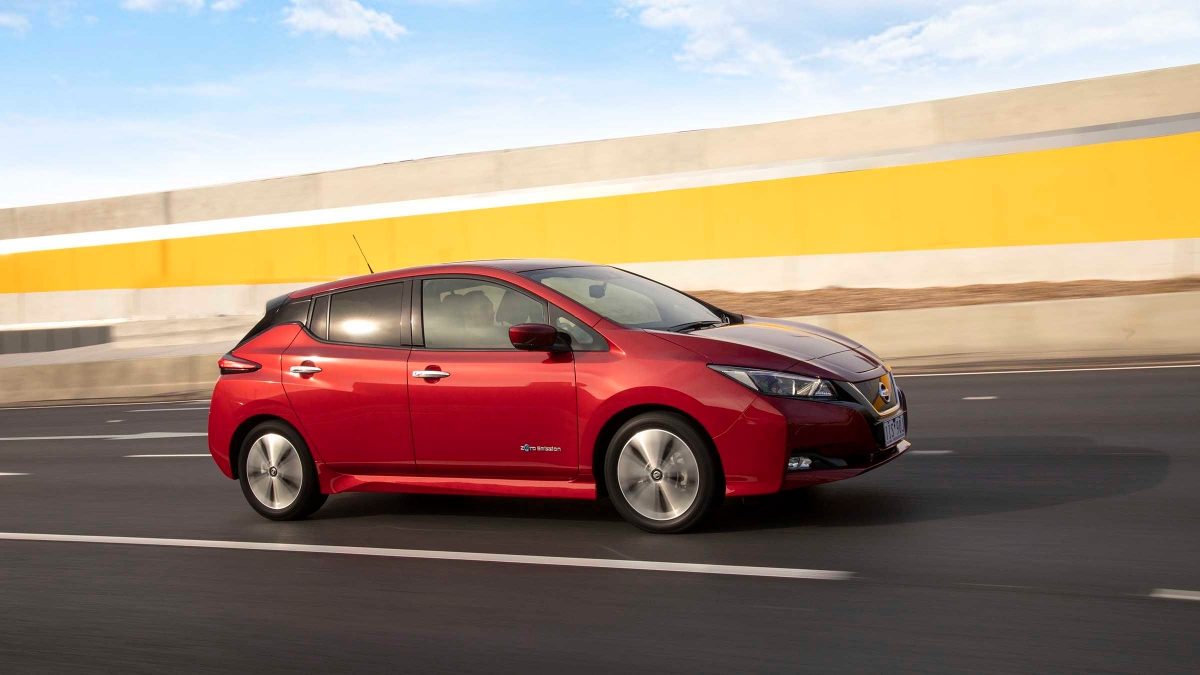
All Leafs are front-wheel drive. The base S comes with a 147-horsepower electric motor paired with a 40.0-kWh battery, modest numbers by today’s EV standards.
The SV Plus features a more robust 214-hp motor and a larger 62.0-kWh battery. During testing, an S trim reached 60 mph in 7.4 seconds, though the instantaneous torque of the electric motor makes it feel quicker than the stopwatch suggests.
While it lags behind competitors like the Bolt EV and Tesla Model 3 in acceleration, upgrading to the SV Plus should improve straight-line performance, though we have not yet tested it.
The Leaf also includes Nissan’s e-Pedal system, allowing drivers to switch between regenerative braking modes. One mode enables coasting when lifting off the accelerator, while the other slows the vehicle and captures energy to recharge the battery, enhancing efficiency in stop-and-go driving.
The Tesla Model 3, Chevrolet Bolt EV, Ford Mustang Mach-E, Hyundai Ioniq 5, Kia EV6, Volkswagen ID.4, and Nissan Leaf all prove that electric vehicles can feel remarkably normal to drive.
By selecting one of these models, American drivers can transition to electric mobility seamlessly, embracing a future of cleaner transportation without giving up the comfort and predictability of a traditional car.
Whether you’re a commuter, a weekend road tripper, or a family driver, these seven EVs show that going electric doesn’t have to mean going unfamiliar.
With thoughtful engineering and accessible driving dynamics, these vehicles provide a bridge between the old and the new, allowing drivers to experience the best of both worlds.