
One of the most persistent concerns among electric vehicle buyers is range anxiety the fear of running out of charge before reaching a destination.
While EPA range estimates provide a baseline, real-world highway driving often tells a different story. Wind resistance, speed, temperature, and aerodynamics all play crucial roles in determining how far an EV can actually travel on a single charge, especially during sustained highway cruising.
The gap between advertised range and highway reality varies dramatically across different electric vehicles. Some EVs suffer significant range loss at highway speeds, while others maintain impressively consistent performance that closely matches their EPA estimates.
This predictability becomes essential for long-distance travelers who need to plan charging stops with confidence.
Highway range consistency depends on several factors: aerodynamic efficiency minimizes energy loss from wind resistance, thermal management systems maintain optimal battery temperature, sophisticated software accurately predicts remaining range, and efficient powertrains maximize energy conversion.
The best highway EVs excel in all these areas, providing drivers with accurate range predictions that inspire confidence rather than anxiety.
In this comprehensive guide, we’ll explore seven electric vehicles that have proven themselves as highway champions, maintaining predictable range even during extended interstate travel.
These vehicles combine engineering excellence with real-world practicality, making long-distance electric driving not just possible, but genuinely enjoyable and stress-free.
1. Tesla Model 3 Long Range
The Tesla Model 3 Long Range has established itself as the gold standard for highway range predictability, consistently delivering performance that matches or exceeds its EPA rating of 341 miles.
This sedan’s remarkable highway efficiency stems from Tesla’s decade-plus experience in EV development, resulting in a vehicle that seems purpose-built for interstate cruising.
Aerodynamics play a starring role in the Model 3’s highway prowess. With a drag coefficient of just 0.23, the Model 3 slices through air with minimal resistance, requiring less energy to maintain highway speeds compared to boxier competitors.
This sleek profile translates directly into range consistency drivers frequently report achieving 90-95% of EPA range during 70-75 mph highway cruising, an exceptional figure in the EV world.
Tesla’s sophisticated battery thermal management system ensures optimal performance across varying conditions. The liquid-cooled battery pack maintains ideal operating temperatures, preventing efficiency losses from overheating during summer highway runs or cold-weather energy drain.
This active management means the Model 3’s range predictions remain accurate whether you’re driving through Arizona heat or Minnesota winter.

The vehicle’s onboard trip computer leverages Tesla’s vast fleet data to provide remarkably accurate range estimates. Unlike some competitors that offer overly optimistic predictions, the Model 3’s navigation system factors in elevation changes, speed, weather, and traffic patterns when calculating remaining range.
Many owners report that the predicted arrival battery percentage is typically within 1-2% of actual results, even on 200+ mile highway journeys.
Real-world testing consistently validates these claims. Independent tests at steady 70 mph speeds demonstrate the Model 3 Long Range achieving approximately 290-310 miles of highway range, representing 85-91% of its EPA estimate among the best highway efficiency retention in the industry.
The efficiency advantage becomes even more pronounced at 65 mph, where the vehicle can exceed its EPA rating. The rear-wheel-drive configuration of the base Long Range model contributes to its efficiency, though the all-wheel-drive variant only sacrifices about 10-15 miles of highway range while providing enhanced traction.
Tesla’s permanent magnet motors deliver excellent efficiency across a wide range of speeds, avoiding the efficiency cliff some EVs encounter at sustained highway velocities.
Charging infrastructure compatibility further enhances highway confidence. With access to Tesla’s extensive Supercharger network, drivers can plan routes knowing fast charging is readily available.
The vehicle’s navigation automatically suggests optimal charging stops, pre-conditioning the battery for maximum charging speeds when approaching stations.
2. Mercedes-Benz EQS 450+
The Mercedes-Benz EQS 450+ represents the pinnacle of luxury electric sedans, but its true achievement lies in delivering exceptional highway range predictability wrapped in opulent comfort.
With an EPA rating of 350 miles, this flagship EV combines long-distance capability with the refinement Mercedes-Benz customers expect, making it an ideal grand tourer for the electric age.
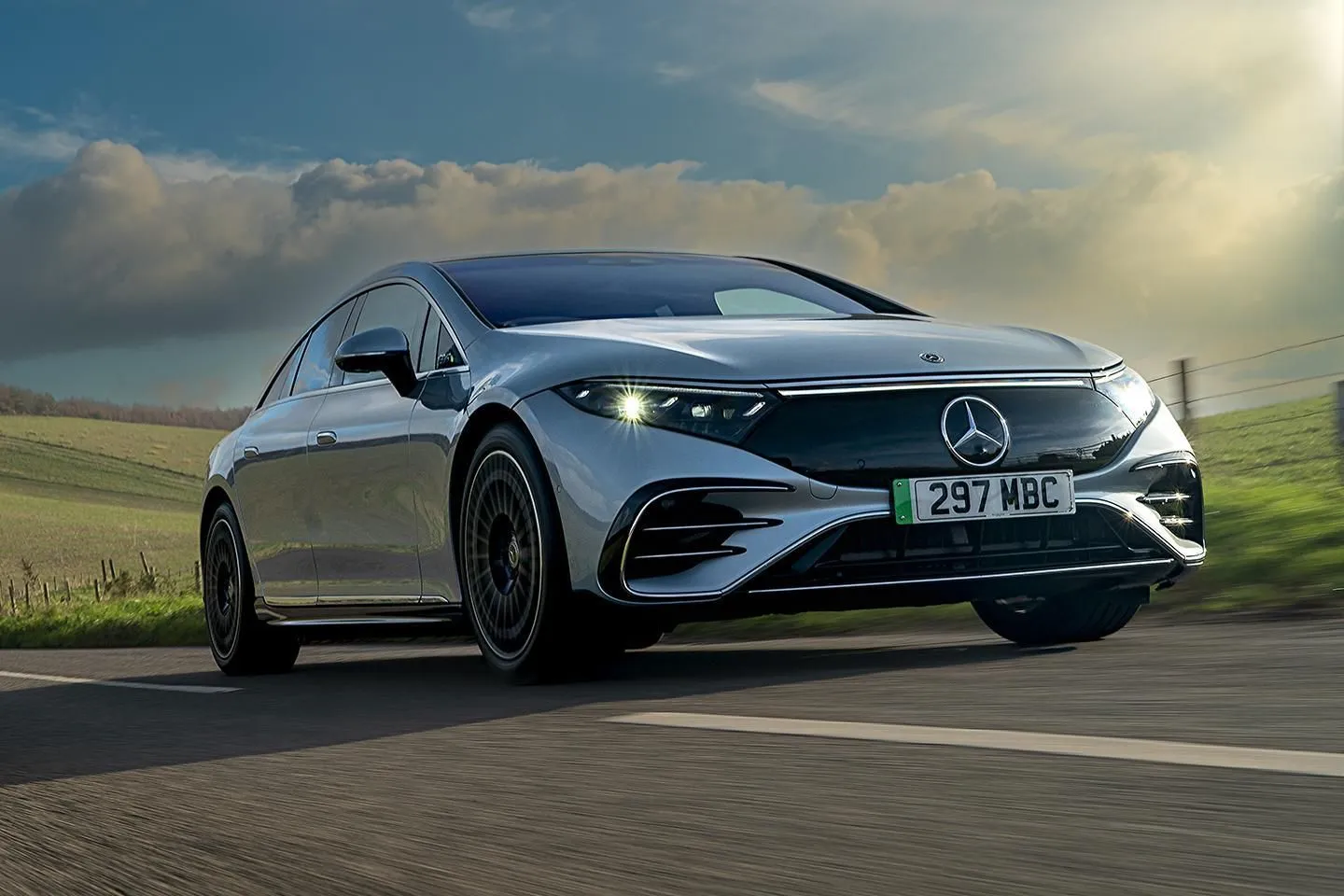
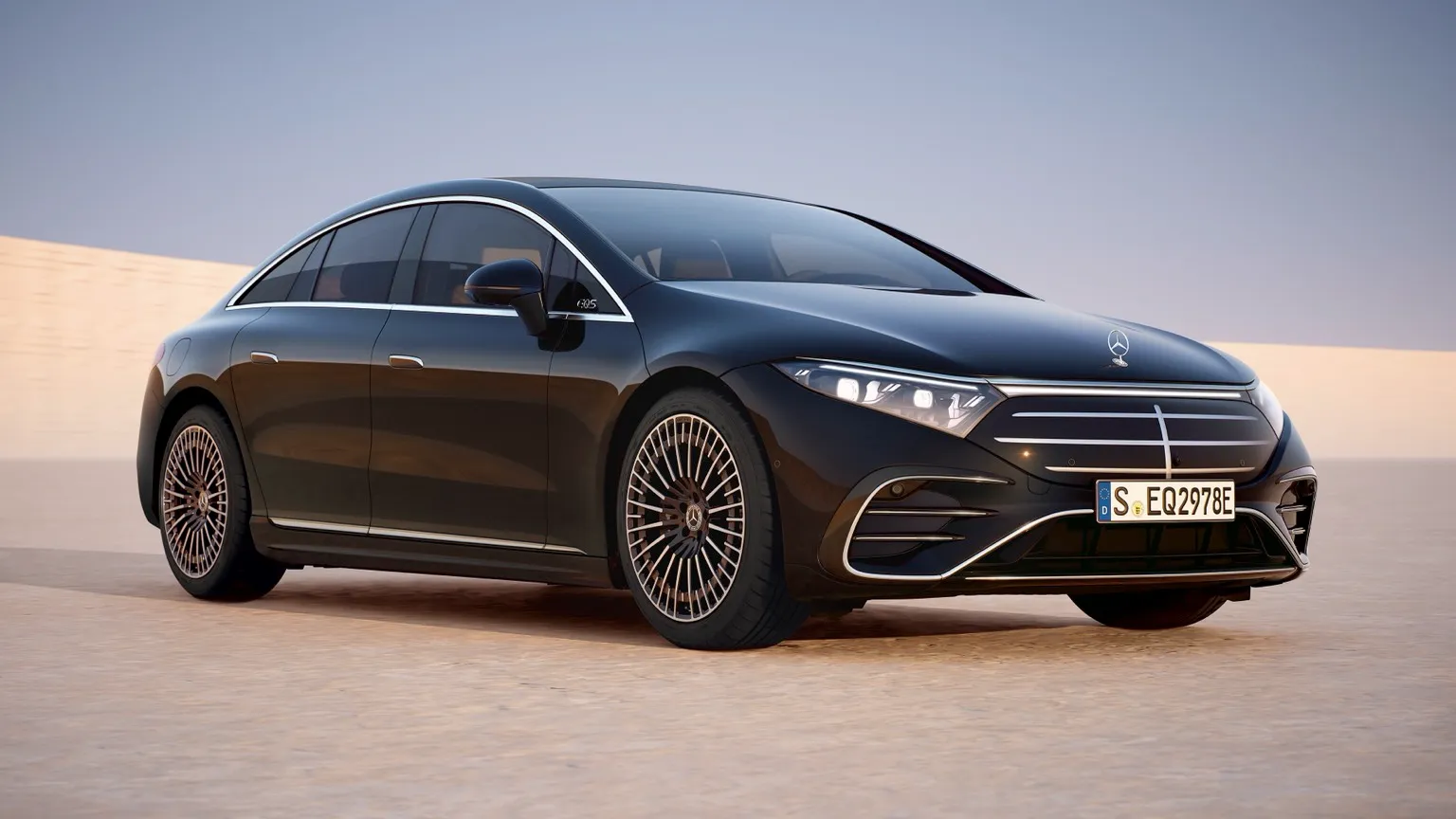
The EQS’s most impressive technical achievement is its record-breaking aerodynamics. With a drag coefficient of just 0.20, the EQS is one of the most aerodynamically efficient production vehicles ever created.
This sleek profile isn’t merely for aesthetics it translates into tangible highway efficiency. The smooth, flowing bodywork, active grille shutters, and optimized underbody panels work together to minimize energy waste at speed, allowing the EQS to maintain predictable range even during sustained 75-80 mph cruising.
Mercedes-Benz’s Electric Intelligence navigation system sets new standards for range prediction accuracy. The system analyzes topography, weather data, traffic patterns, and even planned charging stops to provide precise arrival estimates.
Before departing on a highway journey, drivers can review the entire route’s predicted energy consumption with remarkable granularity.
Real-world experience confirms these predictions are typically within 3-5% of actual consumption, inspiring confidence for long-distance travel.
The EQS’s 107.8 kWh battery pack provides substantial energy reserves, but capacity alone doesn’t ensure highway consistency. Mercedes-Benz’s sophisticated thermal management maintains optimal battery temperature through liquid cooling and heating systems.
During highway driving, the system prevents heat buildup that could trigger power limitations or efficiency losses, ensuring consistent performance throughout your journey.
Highway testing reveals the EQS 450+ maintains approximately 85-88% of its EPA range at steady 70 mph speeds, translating to roughly 300-310 miles of real-world highway range.
This consistency stems not just from aerodynamics but also from the vehicle’s highly efficient electric motor. The permanently excited synchronous motor delivers up to 329 horsepower while maintaining excellent efficiency across varying speeds and loads.
The EQS’s MBUX Hyperscreen interface displays energy flow information in intuitive formats, helping drivers understand consumption patterns and adjust driving style if needed.
Real-time efficiency displays show current and average energy usage, while the predictive range indicator continuously updates based on driving conditions. This transparency builds trust in the vehicle’s capabilities and helps drivers optimize their highway efficiency.
Comfort features enhance the highway experience without significantly impacting range. The air suspension with adaptive damping provides a remarkably smooth ride that isolates occupants from road imperfections, reducing fatigue during long drives.
The quiet cabin, thanks to extensive sound insulation and the absence of engine noise, creates a serene environment even at highway speeds.
3. BMW iX xDrive50
The BMW iX xDrive50 combines the practicality of an SUV with exceptional highway range predictability, proving that raised seating positions and spacious interiors needn’t come at the cost of efficiency.
With an EPA rating of 324 miles and real-world highway performance that consistently delivers 80-85% of that figure, the iX represents BMW’s engineering prowess applied to electric mobility.
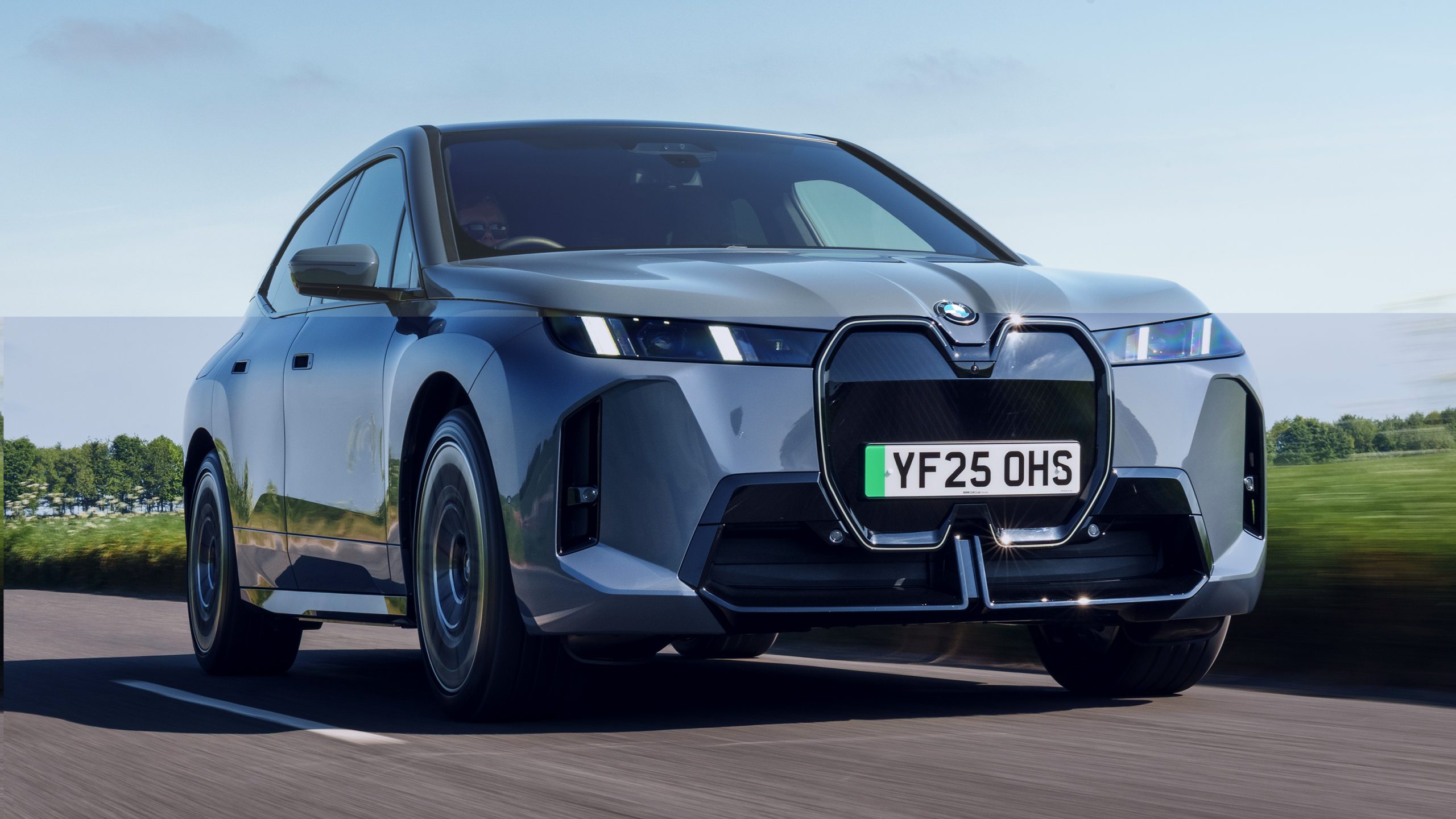
Despite its SUV proportions, the iX achieves a drag coefficient of 0.25 remarkably low for a vehicle in this category. BMW’s designers employed various aerodynamic tricks, including active air flaps, streamlined mirrors, flush door handles, and a sculpted underbody with active air curtains.
These features work together to minimize wind resistance, allowing the iX to maintain impressive efficiency even when cruising at 75 mph on the interstate.
The iX’s 111.5 kWh battery pack (105.2 kWh usable) provides substantial range reserves, but BMW’s intelligent energy management system maximizes every kilowatt-hour.
The liquid-cooled thermal management maintains optimal battery temperatures across a wide range of ambient conditions, preventing the efficiency penalties associated with overheating or cold-soaking. During extended highway drives, the system subtly adjusts cooling to maintain peak efficiency without driver intervention.
BMW’s range prediction system leverages detailed mapping data and real-time conditions to provide accurate estimates. The navigation calculates energy consumption based on planned route topography, speed limits, and even anticipated traffic patterns.
Drivers consistently report that the iX’s predicted remaining range closely matches actual results, typically within 5-8 miles on journeys exceeding 200 miles impressive accuracy for an SUV.
Real-world highway testing demonstrates the iX xDrive50 achieves approximately 270-285 miles at steady 70 mph speeds, representing about 83-88% efficiency retention compared to EPA estimates.
This performance places it among the most efficient luxury electric SUVs for highway travel. The dual-motor all-wheel-drive system contributes to this efficiency through intelligent torque distribution, primarily utilizing the rear motor during steady cruising and engaging the front motor only when additional traction or acceleration is needed.
The iX’s regenerative braking system can be adjusted through multiple levels, allowing drivers to optimize energy recovery during highway driving.
While maximum regeneration works well in traffic, the lighter settings feel more natural during sustained highway cruising while still recovering energy during deceleration. The “B” mode provides one-pedal driving capability that maximizes energy recovery without feeling overly aggressive.
BMW’s Driving Assistant Professional suite includes adaptive cruise control with stop-and-go functionality, making highway drives less fatiguing while optimizing efficiency.
The system maintains consistent speeds and following distances, avoiding the minor speed fluctuations that can impact range. Lane-keeping assistance and traffic jam assist further reduce driver workload during long interstate journeys.
4. Hyundai Ioniq 6 Long Range RWD
The Hyundai Ioniq 6 Long Range RWD stands as proof that affordable EVs can deliver premium-level highway range predictability.
With an EPA rating of 361 miles the longest range of any mainstream EV this aerodynamically optimized sedan consistently delivers real-world highway performance that matches or exceeds expectations, making it a standout value proposition in the electric vehicle market.
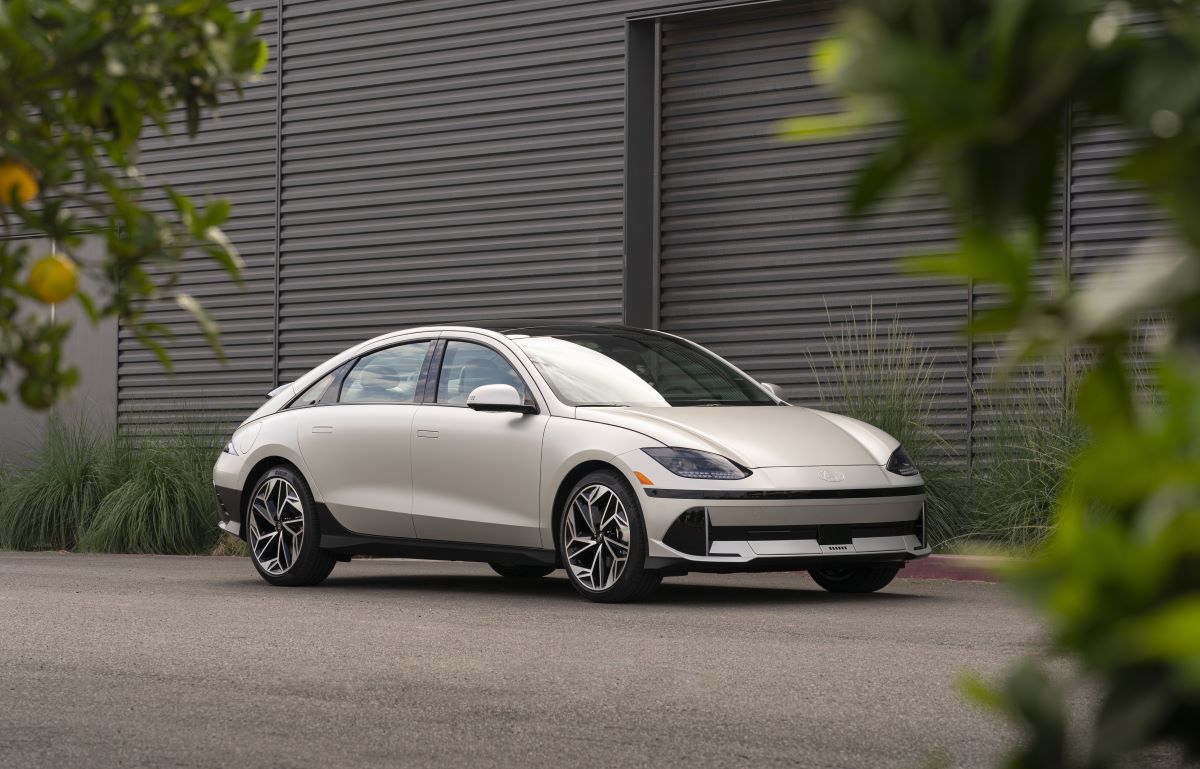
The Ioniq 6’s most striking feature is its dramatically sculpted body designed specifically for aerodynamic efficiency. With a drag coefficient of just 0.21, the Ioniq 6 rivals luxury sedans costing twice as much.
The streamliner-inspired design features a long, tapering tail, minimal ground clearance, smooth underbody panels, and carefully sculpted surfaces that guide airflow efficiently.
This obsessive attention to aerodynamics pays dividends during highway driving, where wind resistance is the primary energy drain. Hyundai’s E-GMP platform provides the Ioniq 6 with an 77.4 kWh battery pack and a highly efficient permanent magnet rear motor.
The rear-wheel-drive configuration eliminates the additional weight and drivetrain losses of a front motor, contributing to exceptional efficiency.
During highway cruising, independent tests consistently show the Ioniq 6 achieving 4.2-4.5 miles per kWh at 70 mph figures that translate to approximately 320-340 miles of real-world highway range, representing an impressive 89-94% of EPA estimates.
The vehicle’s battery thermal management system utilizes a heat pump for both cabin heating and battery temperature regulation. This innovative approach minimizes energy waste during cold-weather operation, maintaining range consistency even when ambient temperatures drop.
Highway drivers report the Ioniq 6 maintains predictable range in conditions where many EVs suffer significant penalties, making it reliable for year-round interstate travel.
Hyundai’s navigation system provides detailed energy consumption predictions when planning routes. The system displays anticipated battery level at destination, suggested charging stops, and estimated travel time.
While not as sophisticated as Tesla’s system, it provides sufficiently accurate predictions for confident trip planning. The real-time range display adjusts based on driving style, terrain, and climate control usage, helping drivers understand factors affecting efficiency.
The Ioniq 6’s regenerative braking offers multiple levels of adjustment, including an “Auto” mode that automatically varies regeneration based on traffic conditions.
During highway driving, the lighter regeneration settings feel more natural while still recovering energy during deceleration. The i-Pedal mode enables one-pedal driving that brings the vehicle to a complete stop, though most highway drivers prefer the moderate regeneration settings.
Real-world owners consistently praise the Ioniq 6’s ability to exceed EPA highway estimates under favorable conditions. Drivers maintaining 65 mph speeds frequently report achieving 380-400+ miles of range exceeding the EPA rating.
Even at 75-80 mph, where most EVs suffer significant range loss, the Ioniq 6 maintains respectable efficiency thanks to its aerodynamic advantage.
The vehicle’s 800-volt architecture enables ultra-fast charging when paired with compatible stations, with the ability to charge from 10-80% in approximately 18 minutes under optimal conditions. This rapid charging capability complements the long range, making the Ioniq 6 an exceptional choice for frequent highway travelers.
Also Read: 10 Cars With Simple Phone Apps That Actually Help
5. Tesla Model Y Long Range
The Tesla Model Y Long Range proves that compact SUVs can deliver excellent highway range predictability without sacrificing the versatility that makes crossovers so popular.
With an EPA rating of 310 miles and consistent real-world highway performance that typically achieves 80-85% of that estimate, the Model Y represents the sweet spot between practicality and efficiency for many families.
Despite standing taller than its Model 3 sedan sibling, the Model Y maintains respectable aerodynamics with a drag coefficient of 0.23. Tesla’s engineers carefully optimized the crossover’s shape to minimize the efficiency penalties typically associated with increased ride height and cargo space.
The sloped roofline, underbody panels, and active grille shutters work together to reduce wind resistance, allowing the Model Y to maintain competitive highway efficiency despite its larger frontal area.
The Model Y shares its powertrain architecture with the Model 3, featuring dual permanent magnet motors in the Long Range configuration.
The all-wheel-drive system intelligently distributes torque between front and rear axles, primarily relying on the rear motor during steady highway cruising for maximum efficiency.
The front motor engages primarily during acceleration or when additional traction is needed, minimizing energy waste during sustained interstate driving.
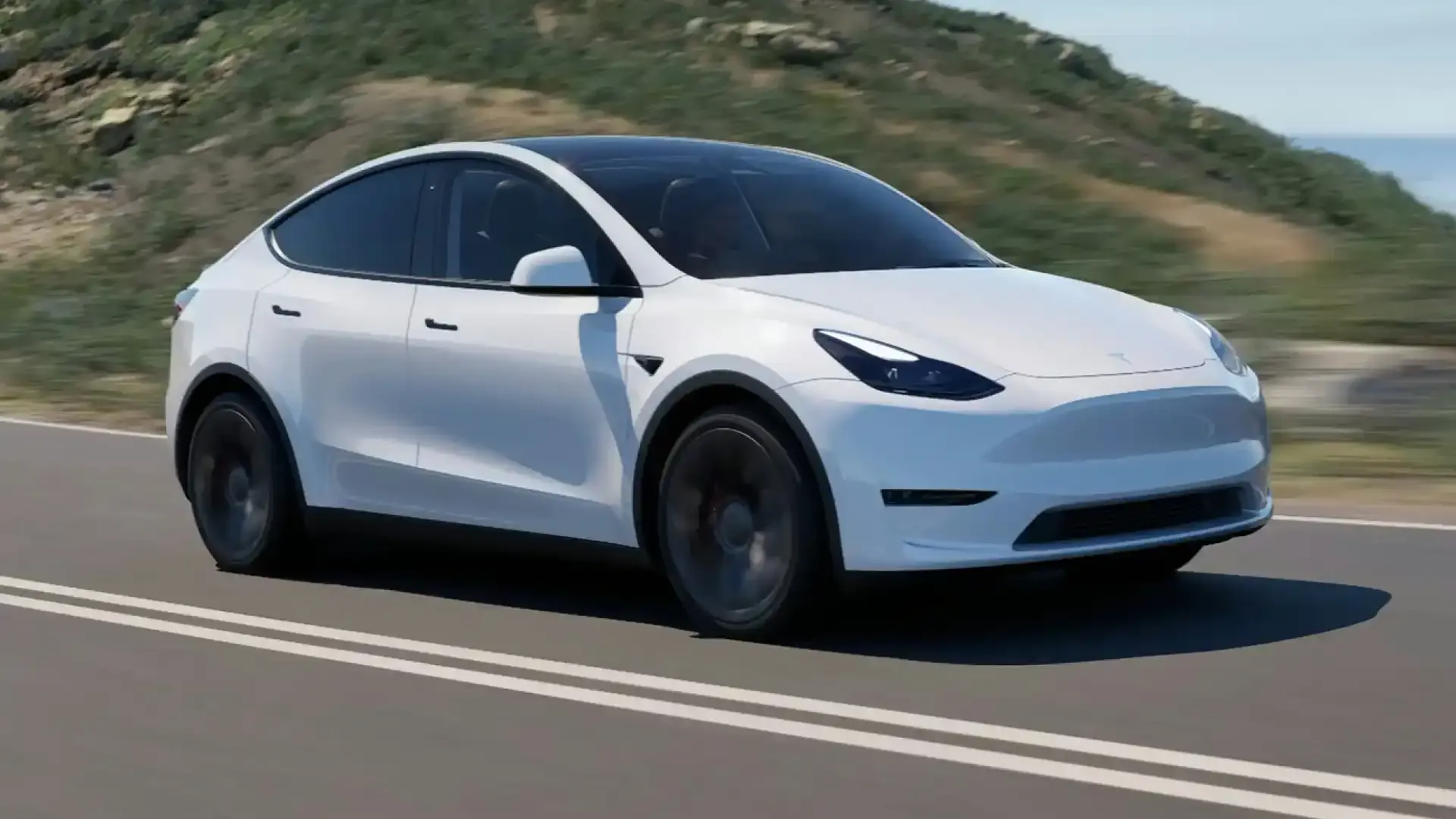
Tesla’s battery thermal management system actively maintains optimal operating temperatures through liquid cooling and heating. During extended highway drives, the system prevents battery overheating that could trigger power limitations or efficiency losses.
The active conditioning ensures consistent performance regardless of ambient temperature or sustained high-speed operation, maintaining predictable range throughout your journey.
Real-world highway testing consistently demonstrates the Model Y Long Range achieves approximately 250-270 miles at steady 70 mph speeds, representing about 81-87% of EPA estimates.
While this represents a slight decrease compared to the more aerodynamic Model 3, it remains competitive with similarly sized electric SUVs.
The efficiency advantage becomes more pronounced at 65 mph, where the Model Y can approach or exceed its EPA rating under favorable conditions.
The Model Y’s navigation system provides the same excellent range prediction capabilities as other Tesla models, leveraging fleet data to accurately estimate consumption based on route conditions.
The system factors in elevation changes, weather, traffic patterns, and planned charging stops to predict arrival battery percentage with impressive accuracy.
Drivers report predictions typically within 2-3% of actual results, even on multi-hundred-mile highway journeys. Cargo capacity doesn’t significantly impact highway efficiency unless heavily loaded.
The Model Y’s spacious interior and cargo area accommodate family road trip needs without the dramatic range penalties some EVs experience when fully loaded. The panoramic glass roof adds to the airy cabin feel without measurably affecting aerodynamics or efficiency.
Access to Tesla’s Supercharger network remains a significant advantage for highway travel. The extensive infrastructure means drivers can plan routes knowing fast charging is readily available along major corridors.
The vehicle’s navigation automatically suggests optimal charging stops and pre-conditions the battery for maximum charging speeds when approaching Supercharger stations.
6. Ford Mustang Mach-E Extended Range RWD
The Ford Mustang Mach-E Extended Range RWD demonstrates that traditional automakers can deliver competitive highway range predictability when they prioritize efficiency.
With an EPA rating of 312 miles and real-world highway performance that consistently achieves 75-82% of that figure, the Mach-E represents Ford’s serious commitment to electric mobility, combining the versatility of a crossover with respectable interstate capability.
The Mach-E’s design prioritizes style alongside efficiency, achieving a drag coefficient of 0.29 competitive for an SUV though not class-leading.
Ford’s designers incorporated various aerodynamic features including active grille shutters, underbody shields, and optimized airflow around the wheels.
While the Mach-E doesn’t achieve the ultra-low drag coefficients of more aerodynamically focused EVs, its reasonable wind resistance allows for acceptable highway efficiency.
Ford’s Extended Range battery pack provides 88 kWh of usable capacity, offering substantial energy reserves for highway travel. The rear-wheel-drive configuration maximizes efficiency by eliminating the weight and parasitic losses of a front motor.
During highway cruising, the permanent magnet rear motor operates in its efficiency sweet spot, delivering consistent power with minimal waste. Independent testing shows the Mach-E Extended Range RWD achieving approximately 3.5-3.8 miles per kWh at 70 mph.
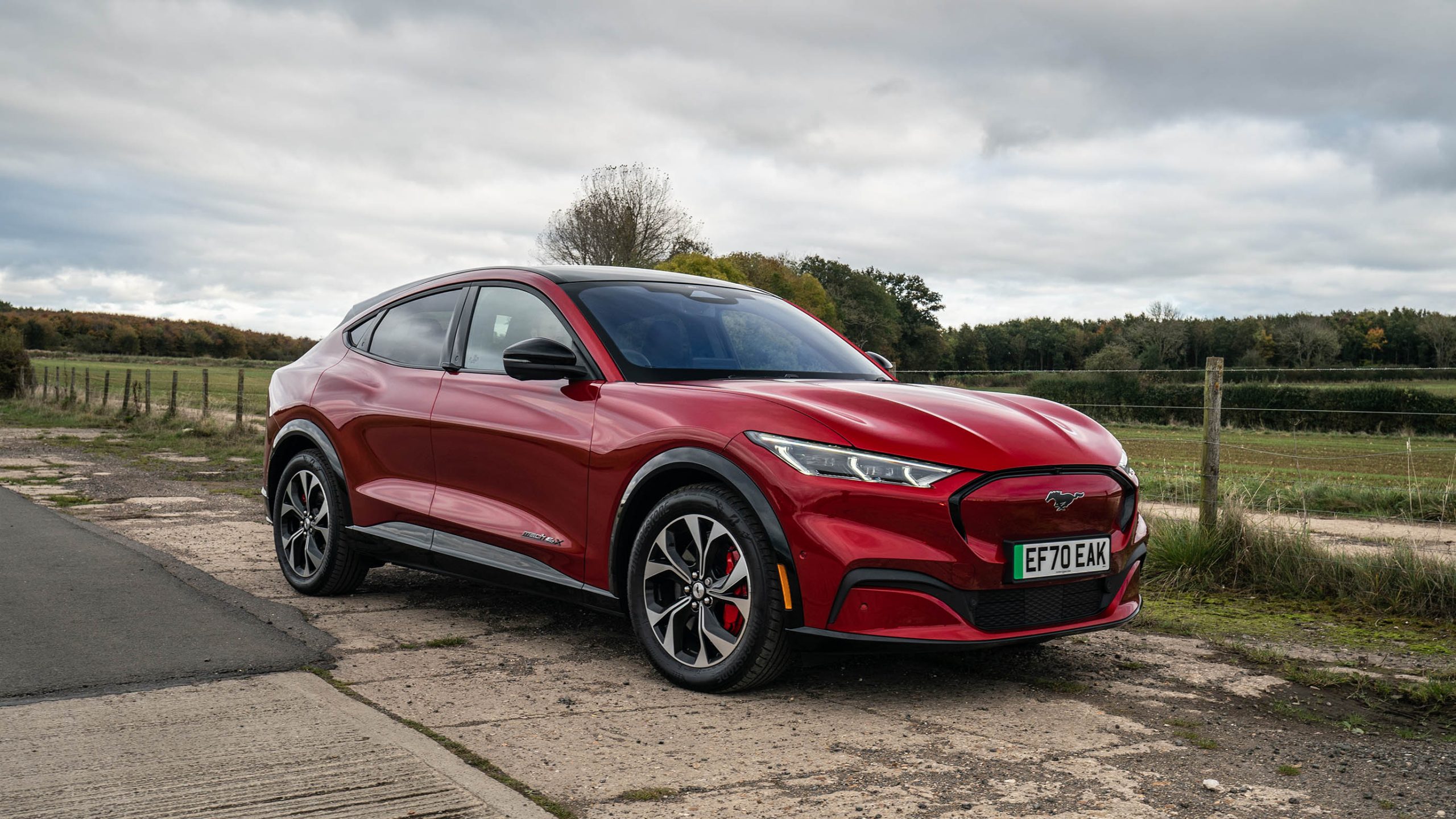
The Mach-E’s liquid-cooled battery thermal management system maintains appropriate operating temperatures during extended highway drives.
While not as sophisticated as some premium competitors, the system effectively prevents overheating during sustained high-speed operation and minimizes cold-weather efficiency losses.
Ford’s thermal management ensures predictable range across a wide range of ambient conditions, though cold-weather performance remains a challenge for all EVs.
Real-world highway testing demonstrates the Mach-E Extended Range RWD achieves approximately 235-255 miles at steady 70 mph speeds, representing about 75-82% of EPA estimates.
This performance places it slightly behind the most efficient EVs but remains competitive with many electric crossovers. Drivers who maintain 65 mph speeds report achieving closer to 85-90% of EPA range, demonstrating the significant impact of speed on highway efficiency.
Ford’s navigation system provides range estimates when planning routes, though the predictions tend to be slightly less accurate than Tesla’s system.
The SYNC 4A interface displays current and average efficiency, helping drivers understand consumption patterns. While the range prediction accuracy typically falls within 5-10% of actual results, some drivers report larger discrepancies under challenging conditions like strong headwinds or extreme temperatures.
The Mach-E offers multiple drive modes that affect efficiency. “Whisper” mode prioritizes range with more conservative throttle response and optimized climate control, while “Engage” and “Unbridled” modes sacrifice some efficiency for enhanced performance.
For highway travel, Whisper mode provides the best range while still delivering adequate passing power. The one-pedal driving mode maximizes regenerative braking, recovering energy during deceleration.
Ford’s BlueOval Charge Network provides access to multiple public charging networks through a single account, including Electrify America’s extensive fast-charging infrastructure.
While not as seamless as Tesla’s integrated Supercharger experience, the expanded access to public charging helps address range anxiety during highway travel. Ford’s partnership with Tesla to access Supercharger stations beginning in 2024 significantly enhances the Mach-E’s highway capability.
7. Chevrolet Blazer EV 2LT RWD
The Chevrolet Blazer EV 2LT RWD represents General Motors’ renewed commitment to electric vehicles, offering competitive highway range predictability at a more accessible price point.
With an EPA rating of 334 miles and real-world highway performance that typically achieves 78-85% of that estimate, the Blazer EV provides confident interstate capability wrapped in a spacious, comfortable crossover package.
Built on GM’s Ultium platform, the Blazer EV benefits from the automaker’s latest electric vehicle technology. The 85 kWh battery pack provides substantial capacity, while the rear-wheel-drive configuration maximizes efficiency by eliminating the additional weight and losses associated with a front motor.
The permanent magnet motor delivers smooth, quiet power while operating efficiently across a wide range of speeds, making it well-suited for sustained highway cruising.
The Blazer EV’s aerodynamics are competitive for the crossover segment, with various features designed to reduce wind resistance. Active grille shutters close at highway speeds to improve airflow, while underbody panels and wheel arch designs minimize turbulence.
The coefficient of drag hasn’t been officially published, but the Blazer EV’s highway efficiency suggests reasonable aerodynamic performance for a vehicle prioritizing interior space and cargo capacity over ultimate wind-cheating ability.
GM’s battery thermal management system actively maintains optimal operating temperatures through liquid cooling and heating. During highway driving, the system prevents excessive heat buildup that could limit performance or reduce efficiency.

The thermal management works in conjunction with the vehicle’s heat pump system to minimize energy waste during climate control operation, maintaining more consistent range across varying ambient temperatures.
Real-world highway testing demonstrates the Blazer EV 2LT RWD achieves approximately 260-285 miles at steady 70 mph speeds, representing about 78-85% of EPA estimates.
This performance places it competitively among electric crossovers, though slightly behind the most efficient EVs. The efficiency retention improves at lower speeds drivers maintaining 65 mph report achieving 88-92% of EPA range under favorable conditions.
Chevrolet’s navigation system provides range estimates and suggested charging stops when planning routes. The system considers route topography and current driving conditions to predict arrival battery level.
While not as refined as premium competitors, the predictions provide reasonable accuracy for trip planning, typically within 8-12% of actual results. The 17-inch infotainment display clearly shows current efficiency, average consumption, and estimated remaining range.
The Blazer EV offers multiple drive modes affecting performance and efficiency characteristics. “Tour” mode provides balanced performance suitable for most highway driving, while “My Mode” allows customization of various parameters including throttle response and regeneration level.
The regenerative braking system offers adjustable strength, with the “One Pedal” mode enabling full one-pedal driving capability that brings the vehicle to a complete stop when lifting off the accelerator.
GM’s investment in charging infrastructure, particularly through partnerships with charging network providers, helps support highway travel confidence.
The Blazer EV supports DC fast charging up to 190 kW, enabling 10-80% charging in approximately 40 minutes under optimal conditions.
Chevrolet’s collaboration with various charging networks and planned access to Tesla’s Supercharger network significantly enhances the Blazer EV’s highway travel capabilities, addressing one of the traditional concerns with non-Tesla EVs.
The spacious interior and cargo capacity make the Blazer EV practical for family road trips, while the comfortable seating and quiet cabin reduce fatigue during long highway drives.
The combination of competitive range, reasonable efficiency, and practical packaging makes the Blazer EV a compelling option for buyers prioritizing highway capability in their electric crossover.
