
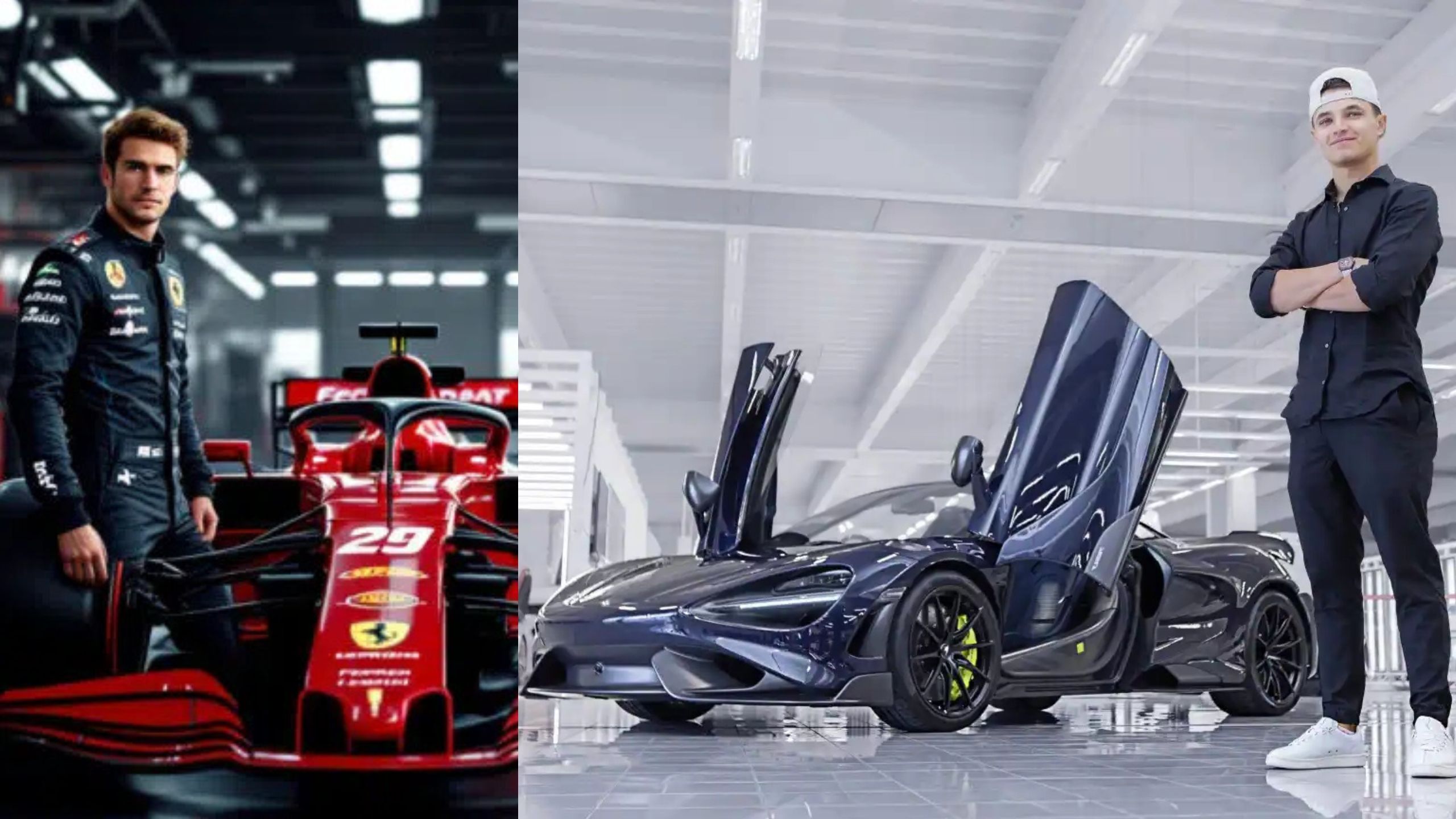
Formula 1 drivers represent the pinnacle of motorsport excellence, commanding some of the fastest and most technologically advanced racing machines on the planet.
However, their passion for speed and automotive perfection doesn’t end when they step out of their F1 cockpits. In 2025, the current grid features some of the most extraordinary private car collections ever assembled, showcasing everything from million-dollar hypercars to priceless vintage classics.
These elite athletes earn substantial salaries that enable them to acquire the rarest and most exclusive vehicles available, building garages that would make any automotive enthusiast green with envy.
The 2025 Formula 1 season has been particularly exciting, with Lando Norris claiming his first World Drivers’ Championship and McLaren securing back-to-back Constructors’ Championships. Meanwhile, Lewis Hamilton made his highly anticipated move to Ferrari, Max Verstappen continued his dominance, and Charles Leclerc remained the Prancing Horse’s loyal ambassador.
Each of these drivers brings their unique personality and preferences to their automotive collections, ranging from Hamilton’s former multi-million-dollar fleet that he recently sold to focus on art collecting, to Leclerc’s meticulously customized Ferraris adorned with Monaco’s flag colors, to Verstappen’s preference for Adrian Newey-designed hypercars.
These collections offer fascinating insights into what drives these champions when they’re not competing for podium finishes and championship points. From street-legal F1-derived hypercars to classic muscle cars worth millions at auction, the garages of F1’s elite tell stories of passion, success, and an unrelenting pursuit of automotive perfection.
Lewis Hamilton’s Legendary Collection (Former)
Lewis Hamilton’s car collection has become one of the most talked-about topics in Formula 1 circles, not just for what he owned, but for his surprising decision to sell his entire fleet in 2025.
The seven-time World Champion, who moved from Mercedes to Ferrari for the 2025 season, shocked the automotive world when he revealed at the Azerbaijan Grand Prix that he had disposed of all his personal vehicles to focus on collecting art, particularly works by emerging Black artists and African art.
This dramatic shift represents Hamilton’s evolving values and his increasing focus on sustainability and cultural investment over material automotive possessions.
Before this surprising change, Hamilton possessed an estimated collection valued at over $20 million, though some estimates suggested the total could have exceeded $50 million or even $100 million.
His garage once represented a masterclass in automotive excellence, spanning multiple continents with storage facilities in both Monaco and Los Angeles.
The collection featured an eclectic mix that perfectly captured Hamilton’s personality bold, flashy, performance-oriented, yet also appreciative of automotive heritage and innovation.
Perhaps the most iconic vehicle in Hamilton’s former collection was the bespoke Pagani Zonda 760 LH, custom-built specifically for him with his initials in its name.
This one-of-a-kind hypercar featured exposed carbon fiber, purple detailing, and a 7.3-liter naturally aspirated V12 engine mated to a manual gearbox at Hamilton’s insistence.
Despite its incredible sound and exclusivity, Hamilton himself admitted the car was terrible to handle, though he cherished it for years before selling it in 2021. The Zonda became synonymous with Hamilton’s image, frequently spotted cruising through Monaco’s streets.
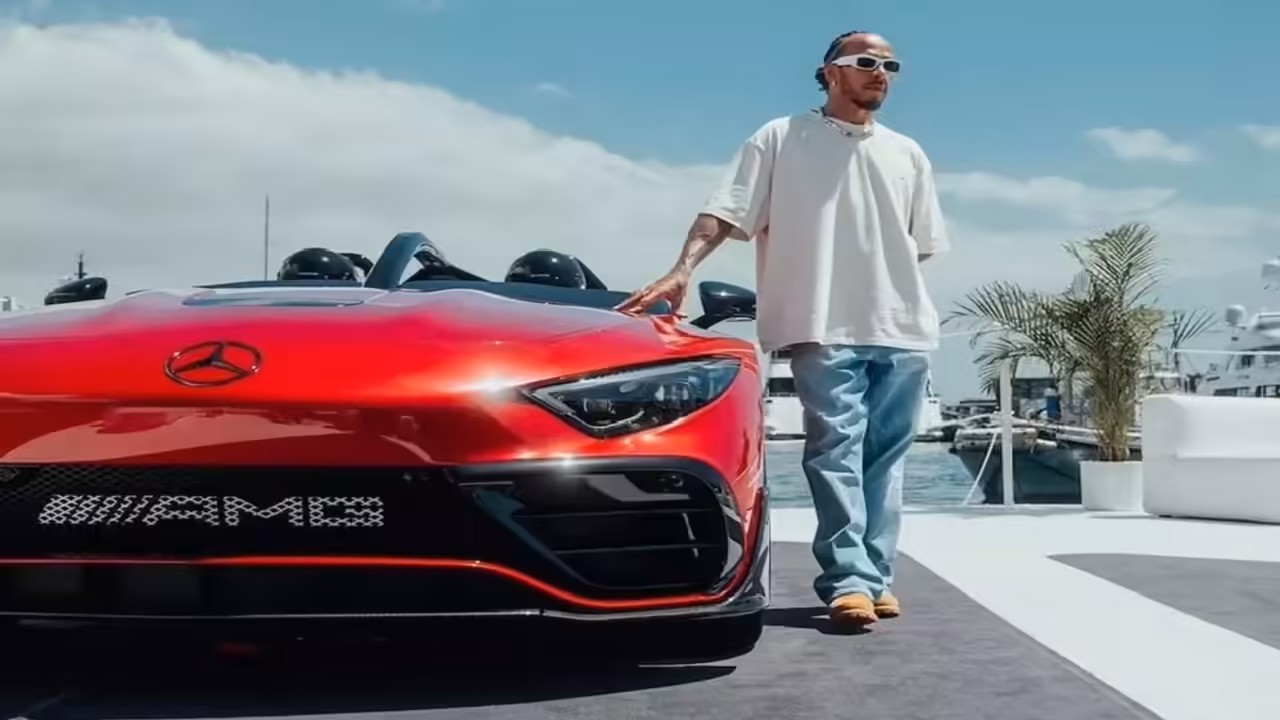
Hamilton’s ties to Mercedes naturally led to ownership of the Mercedes-AMG Project One, a $3 million hypercar featuring an actual F1-derived engine and hybrid system. Hamilton was involved in testing the prototypes and purchased two examples one for himself and another for his father Anthony.
This plug-in hybrid machine represented the pinnacle of Mercedes’ engineering prowess, capable of reaching nearly 220 mph while incorporating technology directly transferred from Hamilton’s championship-winning race cars. His former teammate Nico Rosberg also took delivery of one, creating an interesting connection between rivals.
Hamilton’s collection also paid homage to classic American muscle with several stunning examples. He acquired a 1966 Shelby Cobra 427, an American icon with a 7.0-liter V8 producing 425 horsepower, valued between $1.5 million and $2 million.
Additionally, he spent £1.1 million on a 1967 Ford Mustang Shelby GT500, customized to closely replica “Eleanor” from the film “Gone in 60 Seconds.” These muscle cars represented Hamilton’s appreciation for raw, unfiltered automotive power from a different era.
The McLaren connection remained strong even after Hamilton left the team in 2012. In 2015, he purchased a McLaren P1 in volcanic yellow, one of only 375 produced. The P1 combined a twin-turbo V8 with an electric motor for 903 horsepower, representing McLaren’s hybrid hypercar trilogy.
More significantly, Hamilton acquired what many consider the holy grail of supercars: a 1995 McLaren F1, Chassis 044, one of only 64 examples ever produced. Sold at Bonhams in 2017 for $15.62 million, speculation surrounded its ownership until reports confirmed Hamilton had purchased this silver example.
The F1 featured a central driving position and a 6.1-liter V12 engine, making Hamilton only the second owner of this particular chassis.
Hamilton’s commitment to sustainability was evident even before selling his collection, as he increasingly relied on electric vehicles for daily transportation. He frequently drove a Mercedes EQC SUV and considered the Mercedes-AMG EQS sedan his “dream car” for its zero emissions.
When asked if he might make an exception to his no-car policy, Hamilton mentioned only the Ferrari F40, calling it “a nice piece of art”, which is fitting given his new focus on art collection.
This evolution from one of motorsport’s most impressive automotive collections to complete divestment represents Hamilton’s journey toward more conscious consumption and his desire to make a positive environmental impact, even while racing in Formula 1.
His legacy as both a champion driver and car collector remains intact, even as he redirects his passion toward preserving and promoting artistic cultural heritage.
Charles Leclerc’s Ferrari-Focused Paradise
Charles Leclerc’s car collection stands as a testament to pure Ferrari devotion, representing one of the most cohesive and brand-focused garages on the current Formula 1 grid. The Monégasque driver, who signed a substantial $34 million contract extension with Scuderia Ferrari, has built a collection that perfectly mirrors his identity as both a Ferrari F1 driver and a proud Monaco native.
His vehicles consistently feature a signature aesthetic that makes them instantly recognizable: matte black paint complemented by red and white stripes representing the Monaco flag, along with his race number 16 prominently displayed.
The crown jewel of Leclerc’s collection is undoubtedly his custom Ferrari Daytona SP3, which he described as one of his favorite models from the brand. Only 599 units were produced, powered by a 6.5-liter V12 capable of 829 horsepower and a top speed of 211 mph. Leclerc had his example displayed at the Museo Enzo Ferrari in Modena so the public could appreciate its beauty.
He explained his design choices in detail, noting that the matte black color matched one of his Ferrari racing helmets, while the Monaco flag stripe runs from front to back, with additional red lines outlining the carbon fiber parts.
The large Ferrari scuderia shields painted on the car add racing heritage, and the interior features striking red seats that contrast beautifully with the aggressive exterior. This level of customization demonstrates Leclerc’s intimate involvement in creating vehicles that represent both his professional and personal identity.
Leclerc’s commitment to extreme Ferrari performance is evident in his ownership of the SF90 XX Stradale, which represents a significant milestone in Ferrari’s history.
The SF90 XX Stradale is the first road-legal model under Ferrari’s prestigious “XX” programme, generating 986 horsepower from three electric motors combined with a twin-turbocharged 4.0-liter V8. The car features a large fixed wing and aerodynamic bodykit capable of generating 530 kilograms of downforce at 250 km/h.
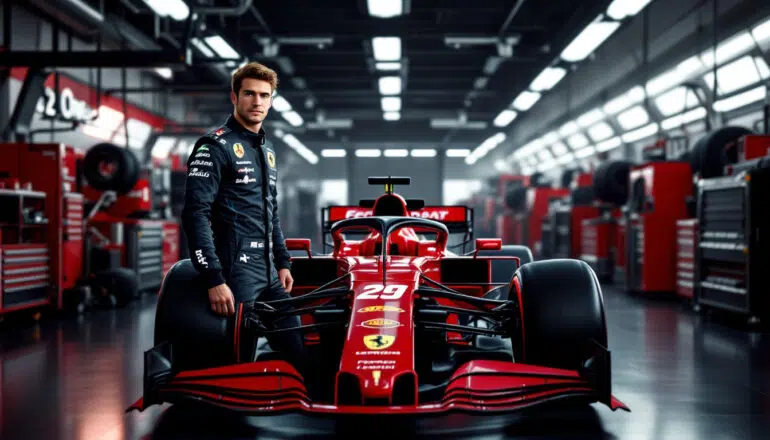
Leclerc’s example follows his signature specification with matte black paint, red stripes, and his number 16 decals. Photos and videos of him collecting this masterpiece went viral on social media, showcasing his genuine excitement about adding this track-focused weapon to his garage.
He also owns the standard SF90 Stradale, launched in 2019 to celebrate 90 years of Ferrari, with the hybrid system producing a combined 986 horsepower and achieving 0-60 mph in just 2.5 seconds.
The Ferrari 488 Pista Spider holds special significance as one of Leclerc’s most frequently driven vehicles. This track-focused Spider features Monaco flag stripes on its bonnet and his number 16 decal, with standard models retailing around £270,000, though his custom version is undoubtedly worth considerably more.
The 488 Pista can reach top speeds of 211 mph and accelerates from 0-60 mph in 2.9 seconds, powered by a twin-turbocharged 3.9-liter V8 producing 710 horsepower. Residents and visitors to Monaco frequently spot Leclerc driving this stunning machine through the principality’s streets, making it arguably his favorite daily driver among his supercar collection.
Adding classical Ferrari heritage to his modern lineup, Leclerc made headlines in 2025 when he was spotted driving a vintage Ferrari 275 GTB Series I. This 1965 sports car, worth approximately $2.5 million, features a 3.3-liter Colombo V12 engine producing 280 horsepower, representing only one of 200 units ever built.
The 275 GTB was revolutionary for its time, featuring Ferrari’s first road-going 5-speed gearbox and independent rear suspension, with timeless Pininfarina design.
Leclerc reportedly test-drove a restored example around Ferrari’s famous Fiorano test track in 2021 before acquiring his own Verde Scuro (dark green) example, though he was also seen in Paris with a black example featuring tan leather upholstery. This purchase demonstrates Leclerc’s appreciation for Ferrari’s golden era and Enzo-era grand touring excellence.
Also Read: 7 EVs That Keep Range Predictable on Highways
Max Verstappen’s Hypercar Heaven
Max Verstappen’s car collection reflects the mindset of a four-time Formula 1 World Champion who values raw performance, cutting-edge engineering, and vehicles that push technological boundaries. The Dutch driver, who clinched his fourth consecutive championship in 2025 before Lando Norris ultimately prevailed, has assembled an estimated $6.4 million collection that emphasizes hypercar exclusivity and track-focused capability.
Unlike some drivers who collect for display purposes, Verstappen actively drives his vehicles and maintains a relatively private approach to his automotive possessions, though certain standout machines have made very public appearances.
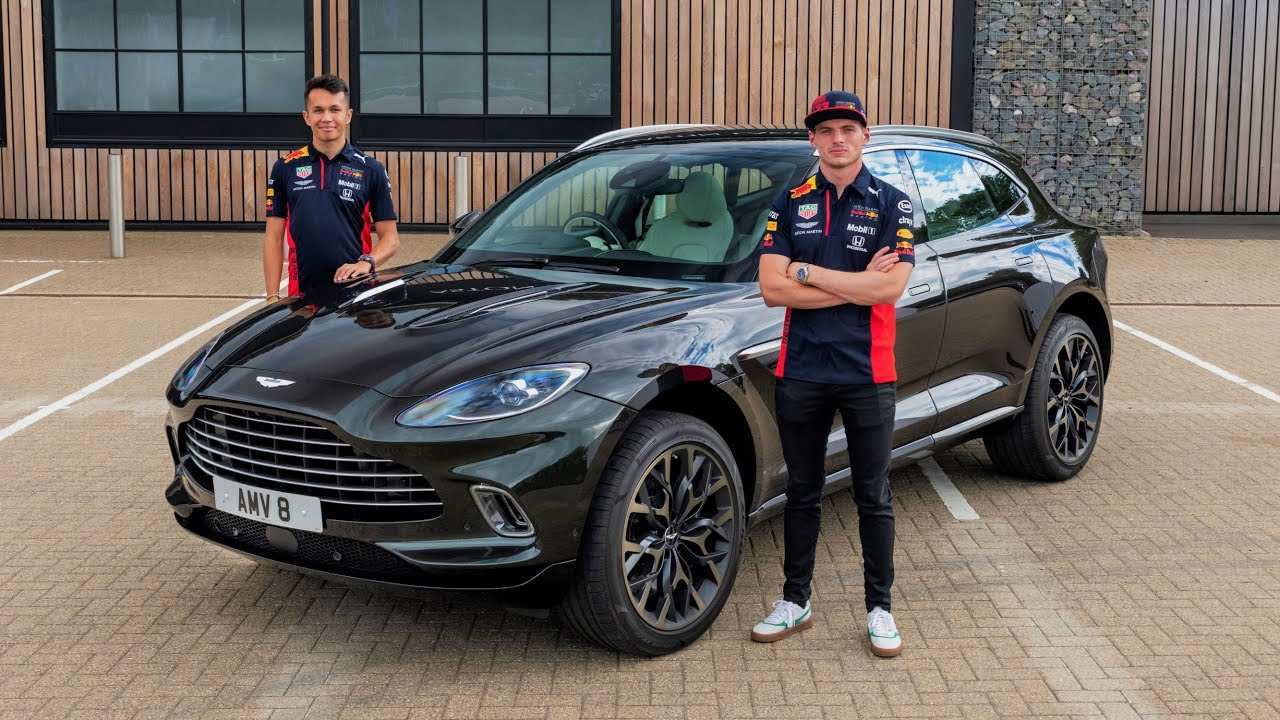
The undisputed centerpiece of Verstappen’s garage is the Aston Martin Valkyrie, a hypercar co-designed by Adrian Newey, the legendary Formula 1 designer who worked with Verstappen at Red Bull Racing for years.
The Valkyrie was designed to come as close as possible to being a Formula One car without being restricted to the track, and Verstappen actually helped develop the car, so it’s unsurprising he had a build slot reserved for him. This British Racing Green masterpiece produces over 1,100 horsepower from its Cosworth-derived 6.5-liter V12 engine that revs beyond 11,000 RPM, generating more than 2,000 pounds of downforce.
The Valkyrie accelerates to 60 mph in approximately 2.5 seconds and achieves a top speed exceeding 250 mph speeds that rival Verstappen’s fastest lap times in actual Formula 1 races. Videos of Verstappen driving his Valkyrie through Monaco’s tunnels went viral, with the V12’s screaming exhaust note echoing dramatically.
The Valkyrie’s $3.5 million price tag reflects its status as perhaps the closest road-legal approximation of an F1 car ever created, and only 275 examples were produced, making it one of the most exclusive vehicles in existence.
Verstappen’s appreciation for Aston Martin extends beyond the Valkyrie, thanks to Red Bull Racing’s long-standing partnership with the British marque. Over the years, he has owned multiple Aston Martin models, though he’s known to trade them in with some regularity as newer models are released.
His collection has included the DB11, which was succeeded by a Vantage, and then the DBS Superleggera with its 725-horsepower V12 engine that reaches 100 km/h in under 3.5 seconds.
The DBS Superleggera represents Aston Martin’s pinnacle grand tourer, combining brutal performance with refined elegance and the capacity to seat four adults making it one of the more practical vehicles in Verstappen’s collection for occasions when he needs to transport passengers.
Interestingly, reports suggest Verstappen barely drove his DBS Superleggera, with the odometer hitting less than 2,000 kilometers before he returned it, perhaps finding it too civilized for his tastes.
Despite being a Red Bull driver, Verstappen harbors significant appreciation for Ferrari’s road cars, owning multiple Prancing Horse models that showcase his respect for Maranello’s engineering excellence.
His Ferrari collection includes the Monza SP2, the 488 Pista, and the SF90 Stradale. The Ferrari Monza SP2 is particularly noteworthy, valued at approximately $1.8 million and limited to just a few hundred units worldwide.
This roofless, retro-inspired speedster pays homage to Ferrari’s 1950s Monza series barchettas with its naturally aspirated V12 engine, and it’s not road legal in the United States, requiring a Show or Display permit as it’s considered a piece of automotive art.
The ownership list for the Monza SP2 includes elite names like celebrity chef Gordon Ramsay and soccer legend Zlatan Ibrahimović, placing Verstappen in exclusive company.
The Ferrari 488 Pista represents track-focused fury with 711 horsepower from its 3.9-liter twin-turbo V8, achieving lap times around Ferrari’s Fiorano test track that bettered the legendary Enzo by 3.4 seconds. The SF90 Stradale adds hybrid technology to the mix, combining electric motors with a turbocharged V8 for stunning performance and representing Ferrari’s first plug-in hybrid supercar.
Verstappen’s Porsche passion dates back to his first major purchase after joining Formula 1. Swiss newspaper Blick reported that after becoming the youngest-ever race winner at age 18 in 2016, Verstappen celebrated by purchasing a Porsche 911 GT3 RS for approximately $400,000, though he needed approval from his father Jos and his manager before completing the purchase.
He still owns this sentimental first supercar, and more recently purchased additional examples after starting his own racing team, Verstappen.com. He later added a Porsche 911 GT2 RS to his collection, demonstrating his continued appreciation for Stuttgart’s finest track weapons.
The most recent addition to Verstappen’s garage represents German tuning excellence at its finest. He acquired an ABT Audi RS6 Legacy Edition, one of just 200 units specially tuned by Audi specialist ABT Sportsline, delivering an estimated 750 horsepower. This represents Verstappen’s first known Audi ownership and showcases his interest in high-performance estate cars that blend practicality with supercar-crushing straight-line speed.
The Legacy Edition features upgraded turbos, improved intercooler, carbon fiber front bumper inserts, and a stainless steel exhaust system. ABT also offers a 1,000-horsepower version, making Verstappen’s 750-hp variant look almost reasonable by comparison, though exact American market specifications remain undisclosed due to emissions regulations.
Verstappen’s collection includes several vehicles that commemorate his early career progression and relationships with teams. During Red Bull’s partnership with Renault, Verstappen received a Renault Sport R.S. 01, a rare GT racer featuring a unique 3.8-liter V6 engine taken from a Nissan GT-R mounted in a carbon fiber chassis.
This was one of his first car purchases after joining Formula 1 in 2015, when his Toro Rosso seat came with team partnership with Renault, and the machine cost approximately $400,000. The R.S. 01 was homologated for GT3 racing, and Verstappen enjoyed taking it to tracks for spirited driving sessions.
He also reportedly owns a Renault Clio RS 200, supposedly the first car he purchased shortly after obtaining his driver’s license, marking the beginning of his collection.
From Honda, which supplied engines to Red Bull, Verstappen received a Honda NSX, the Japanese manufacturer’s hybrid supercar capable of reaching 307 km/h. He briefly owned a Mercedes-AMG C63 S, valued at approximately $72,800, though this was one of the few cars in his collection he didn’t keep long-term, eventually putting it up for auction.
Interestingly, Verstappen and his girlfriend Kelly Piquet also own a Fiat Topolino together, adding an unexpectedly modest vehicle to his otherwise hypercar-heavy garage.
What distinguishes Verstappen’s collection from many other F1 drivers is its focused emphasis on vehicles that deliver genuine driving thrills rather than simply showcasing wealth or status. His garage represents performance-first mindset, with every vehicle handpicked to match his racing pedigree and pursuit of automotive excellence.
Each car, from the F1-derived Valkyrie to the track-weapon 488 Pista, tells a story about Verstappen’s uncompromising standards and his desire to experience the finest engineering achievements the automotive world has to offer.
As his career continues and his earnings grow, this already impressive collection will undoubtedly expand, though Verstappen’s relatively private nature means we may never know the full extent of his automotive paradise.
Lando Norris’s Eclectic Masterpieces
Lando Norris, the 2025 Formula 1 World Drivers’ Champion, has curated one of the most fascinating and diverse car collections on the current grid.
At just 25 years old, Norris has demonstrated impeccable taste in automotive excellence, focusing primarily on analog, driver-focused supercars that prioritize raw mechanical connection over digital assistance.
His collection of 16 vehicles showcases remarkable range, from pre-war vintage rarities to modern McLaren hypercars, Japanese tuner icons to Italian masterpieces.
What makes Norris’s garage particularly impressive isn’t just the monetary value, estimated at approximately $8 million, but the thoughtful curation that reveals a genuine enthusiast who appreciates automotive history, engineering purity, and visceral driving experiences.
The crown jewel of Norris’s collection is arguably his Lamborghini Miura P400, one of the world’s first true mid-engined supercars and a design masterpiece that revolutionized the automotive world.
He’s been spotted driving his Miura around Monaco, finished in tasteful dark blue with a striking orange interior two colors that pair surprisingly well. The Miura was Lamborghini’s first proper rival to Ferrari’s sports cars, powered by a 3.9-liter V12 that produced between 345 and 380 horsepower depending on the variant.
Valued at approximately $2.7 million in today’s market, Norris’s example represents automotive aristocracy from the 1960s. The fact that he actually drives this priceless classic rather than keeping it locked away as a museum piece speaks volumes about his appreciation for these machines as they were intended to be experienced.
However, Norris managed to one-up even the legendary Miura with another acquisition that enthusiasts consider among the greatest driver’s cars ever created.
He owns a Porsche Carrera GT, often regarded as one of Porsche’s best cars ever and the last hurrah for the truly analog supercar, featuring a 5.7-liter V10 that produces 603 horsepower and 435 pound-feet of torque paired with a proper 6-speed manual transmission.
His example is finished in dark green, and he’s been frequently spotted enjoying it around Monaco. The Carrera GT’s V10 was originally designed for racing at Le Mans, and the car has won numerous accolades as one of the finest supercars of the 2000s.
Values have skyrocketed to over $1 million, reflecting its status as the ultimate analog supercar before electronic intervention became standard. The Carrera GT demands skill, respect, and commitment from its driver characteristics Norris demonstrates daily in his F1 career.
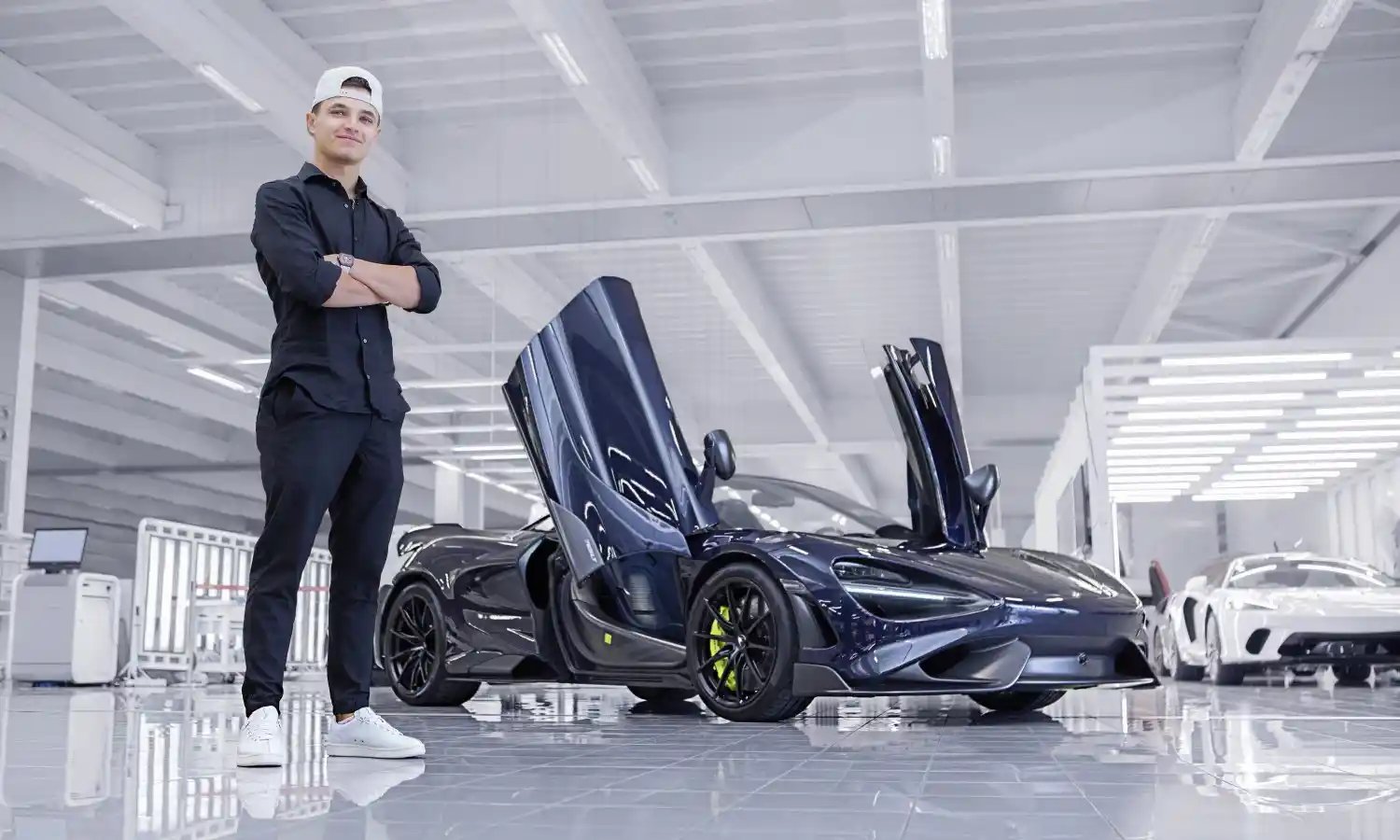
Norris’s McLaren collection naturally benefits from his position as a factory driver for the Woking-based team. His bespoke McLaren 765LT Spider, created in collaboration with McLaren Special Operations (MSO), stands as the most expensive vehicle in his collection.
The drop-top version of McLaren’s track-focused supercar produces 755 horsepower from a 4.0-liter twin-turbo V8, hitting 62 mph in 2.8 seconds with a top speed of 205 mph.
Norris’s example features stunning dark blue carbon fiber bodywork with brake calipers painted in the yellow of his racing helmet, creating a personalized specification that’s unmistakably his. The 765LT Spider originally retailed for around £300,000, though Norris likely received his as part of his McLaren contract, and with the MSO customization, its value is substantially higher.
Adding Italian flair beyond the Miura, Norris owns a Ferrari F40, one of the most iconic supercars ever created and the last car personally approved by Enzo Ferrari before his death. The F40 features a 2.9-liter twin-turbo V8 sending 471 horsepower through a manual gearbox, with precisely zero modern driver aids to tame that boost-heavy slug of power.
Just over 1,300 were built between 1987 and 1992, and the typical market value in 2025 approaches £2 million. The F40 represents the ultimate raw, analog supercar experience, and its inclusion in Norris’s collection aligns perfectly with his preference for mechanical purity over electronic assistance.
The F40 requires genuine skill to drive quickly, making it the perfect road car for an F1 champion who values the connection between driver and machine.
Norris recently added Japanese tuner culture to his diverse garage with a Liberty Walk-modified R32 Nissan Skyline GT-R, marking his first known Japanese car ownership. The R32 GT-R is an iconic performance car, and the Liberty Walk treatment adds aggressive widebody styling that turns heads wherever it appears.
This acquisition demonstrates Norris’s broad automotive interests extending beyond European exotics into JDM (Japanese Domestic Market) legends, and suggests an appreciation for tuner culture and the GT-R’s racing heritage.
The R32 GT-R earned the nickname “Godzilla” for dominating Australian touring car racing in the early 1990s, and Liberty Walk’s modifications make already aggressive styling even more dramatic.
For more practical (though still special) duties, Norris owns a Land Rover Defender 90, completely overhauled by restomod specialist Retro Automotive.
This open-top, short-wheelbase Defender has been restored from the ground up with a totally retrimmed interior featuring modern technology, powered by a fully rebuilt 3.9-liter Rover V8 while sitting on adjustable air suspension.
This represents Norris’s only SUV-type vehicle and serves as transportation when supercar performance isn’t required but style and capability remain important. The Defender customization shows his appreciation for British automotive heritage given a modern twist.
What sets Norris apart from other F1 drivers is his clear appreciation for raw, analog supercars the Miura, Carrera GT, and F40 all represent the pinnacle of mechanical connection before electronics intervened. These are cars that demand skill, attention, and respect from their drivers, characteristics that define Norris’s approach both on track and on the road.
His collection demonstrates sophisticated automotive knowledge beyond his years, with each vehicle representing a significant chapter in automotive history or engineering achievement.
As the newly crowned World Champion, Norris’s collection will undoubtedly evolve, though his focus on driver-focused excellence rather than merely expensive status symbols suggests his future acquisitions will maintain the same thoughtful curation that makes his current garage one of the coolest on the F1 grid.
Also Read: 12 Cars That Keep Rear Windows Clear of Fog
