Efficiency in hybrids often comes at the expense of practicality, especially cargo capacity. Many hybrids sacrifice trunk space to accommodate batteries, leaving families and adventurers with limited hauling options. However, several models prove that compromise is not necessary.
This list of 10 hybrids that don’t eat up trunk space highlights vehicles combining eco-friendly performance with generous storage. From compact crossovers like the Kia Niro Hybrid and Honda CR-V Hybrid to three-row options like the Toyota Grand Highlander Hybrid and Hyundai Santa Fe Hybrid, these vehicles offer versatile storage without limiting daily usability.
They can handle groceries, luggage, sports gear, and weekend trips while maintaining impressive fuel efficiency. These hybrids show that practicality and sustainability can coexist, making them ideal for families, commuters, and anyone seeking efficient driving without sacrificing space.
1. Kia Niro Hybrid
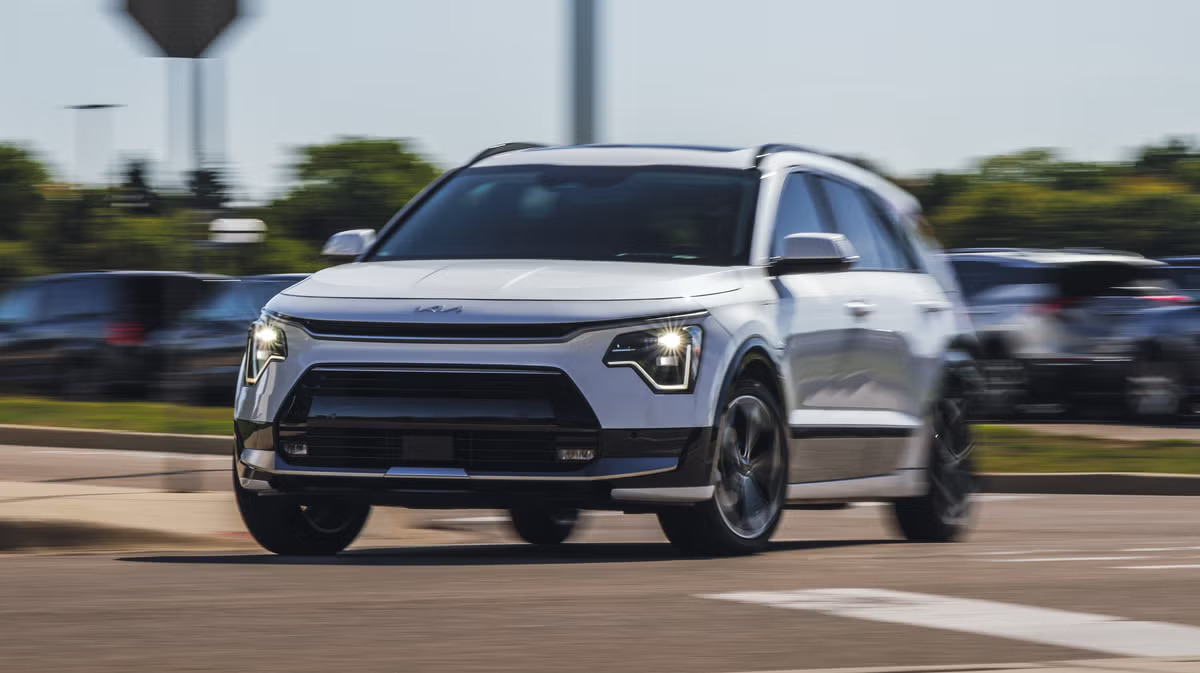
The Kia Niro Hybrid is a compact crossover designed with efficiency and practicality as its primary focus. Despite being one of the smallest crossovers in its segment, it delivers impressive cargo versatility. With the rear seats folded, the Niro Hybrid offers up to 63.7 cubic feet of cargo space, while 22.8 cubic feet are available with all seats in place, more than enough for groceries, luggage, or everyday hauling. However, its smaller size means it isn’t rated for towing, and Kia does not publish an official payload capacity.
Powering the Niro Hybrid is a 1.6-liter naturally aspirated four-cylinder engine paired with a single electric motor, producing a combined 139 horsepower and 195 lb-ft of torque. Power is sent to the front wheels through a six-speed dual-clutch automatic transmission.
Performance is modest rather than sporty, with a 0–60 mph time of about 8.9 seconds and a top speed of 101 mph. For buyers seeking more punch, Kia also offers a plug-in hybrid (PHEV) variant that boosts output to 180 horsepower and cuts the 0–60 mph time to around 7.5 seconds.
Efficiency is where the Niro Hybrid truly stands out. Kia prioritizes fuel consumption above all else, and the result is excellent EPA-estimated fuel economy. Base trims are rated as high as 53 mpg in the city and 54 mpg on the highway, making the Niro Hybrid one of the most fuel-efficient crossovers available.
Real-world testing shows lower numbers, especially at highway speeds, but efficiency remains a strong point. The plug-in hybrid version includes an 11.1-kWh battery that allows for roughly 30-plus miles of electric-only driving and can be recharged in under three hours using a Level 2 charger.
Inside, the Niro features a modern, eco-conscious cabin that uses recycled materials and natural fibers. Passenger space is snug but comfortable for up to four adults. Technology highlights include an available 10.3-inch infotainment screen with navigation, Apple CarPlay, Android Auto, wireless phone charging, and an optional Harman/Kardon sound system.
Standard safety features are generous, with forward-collision warning, automatic emergency braking, blind-spot monitoring, and lane-keeping assist included across the lineup. Finally, Kia backs the Niro Hybrid with an excellent warranty package, highlighted by a 10-year/100,000-mile powertrain warranty, reinforcing its value-focused appeal.
2. Toyota RAV4 Hybrid
The Toyota RAV4 Hybrid is one of the most versatile and practical hybrid crossovers available. Its cargo capacity is a major highlight, offering up to 69.8 cubic feet of space with the rear seats folded. Even with all seats in place, it provides a generous 37.5 cubic feet of storage, making it well-suited for daily errands, family use, and outdoor activities such as camping.
Power comes from a 2.5-liter naturally aspirated four-cylinder engine paired with electric motors, producing a combined 219 horsepower. An electronically controlled continuously variable transmission manages power delivery, and All Wheel Drive is standard, thanks to a rear-mounted electric motor.
This setup gives the RAV4 Hybrid real utility advantages, including a towing capacity of 1,750 pounds and a payload rating of 1,115 pounds, which are strong figures for a compact hybrid crossover.
Acceleration is brisk for the segment. Independent testing shows the RAV4 Hybrid can reach 60 mph in about 7.3 seconds, noticeably quicker than the gas-only RAV4. The electric motors deliver immediate torque, which improves responsiveness in city driving and when pulling away from a stop. For buyers who want more performance, the plug-in hybrid version increases total output to 302 horsepower and cuts the 0 to 60 mph time to approximately 5.4 seconds.
Efficiency remains one of the RAV4 Hybrid’s biggest strengths. EPA estimates it at 41 mpg city, 38 mpg highway, and 40 mpg combined, significantly outperforming the non-hybrid AWD model. Real-world testing shows highway efficiency close to these official figures. The plug-in hybrid variant adds an electric-only range of up to 42 miles, with charging times of about 2.5 hours on a 240-volt outlet.
Inside, the RAV4 Hybrid prioritizes function and comfort. The cabin offers abundant storage, easy-to-use controls, and a spacious layout. Standard technology includes an 8.0-inch touchscreen with wireless Apple CarPlay and Android Auto, while larger displays and premium audio systems are available on higher trims.
A wide range of advanced safety features comes standard, and Toyota backs the RAV4 Hybrid with strong warranty coverage and two years of complimentary maintenance.

3. Kia Sportage Hybrid
The Kia Sportage Hybrid is a strong contender in the compact hybrid crossover segment, combining generous cargo space, solid performance, and modern technology. It offers one of the largest cargo areas in its class, with a manufacturer claimed maximum of 73.7 cubic feet when the second row seats are folded.
With the rear seats upright, there is still a spacious 39.5 cubic feet available, making the Sportage Hybrid well-suited for family use, road trips, and hauling bulky gear.
Under the hood, the Sportage Hybrid uses a turbocharged 1.6-liter four-cylinder engine paired with an electric motor. This setup produces a combined 227 horsepower and 258 lb-ft of torque. Power is delivered through a six-speed automatic transmission, with Front Wheel Drive standard and All Wheel Drive available.
The hybrid system provides strong low-speed response, and the Sportage Hybrid feels noticeably quicker than its non-hybrid counterpart. Kia claims a 0 to 60 mph time of about 7.2 seconds, and independent testing has shown similar results. This makes it one of the quicker hybrid crossovers in its category.
Utility is another key strength. The Sportage Hybrid can tow up to 2,500 pounds using an unbraked trailer, which adds to its versatility for light recreational use. Fuel efficiency is competitive as well.
The EPA estimates up to 42 mpg city and 44 mpg highway for Front Wheel Drive models, while combined fuel economy sits around 38 mpg. Real-world highway testing shows slightly lower figures, particularly for All Wheel Drive versions, but efficiency remains respectable given the vehicle’s size and power.
Inside, the Sportage Hybrid stands out with its bold and modern interior design. A large curved digital display dominates the dashboard, combining a 12.3-inch infotainment screen with a 12.3-inch digital gauge cluster.
Wireless Apple CarPlay and Android Auto are standard, along with available features such as a head-up display, Harman Kardon audio system, wireless phone charging, and a Wi Fi hotspot. Passenger space is generous in both rows, though the seats are on the firmer side for long drives.
Safety technology is comprehensive, with standard forward collision warning, automatic emergency braking, lane departure warning, and lane keeping assist. Kia backs the Sportage Hybrid with a five-year or 60,000-mile limited warranty and an industry-leading 10-year or 100,000-mile powertrain warranty, though it does not include complimentary scheduled maintenance.
4. Hyundai Tucson Hybrid
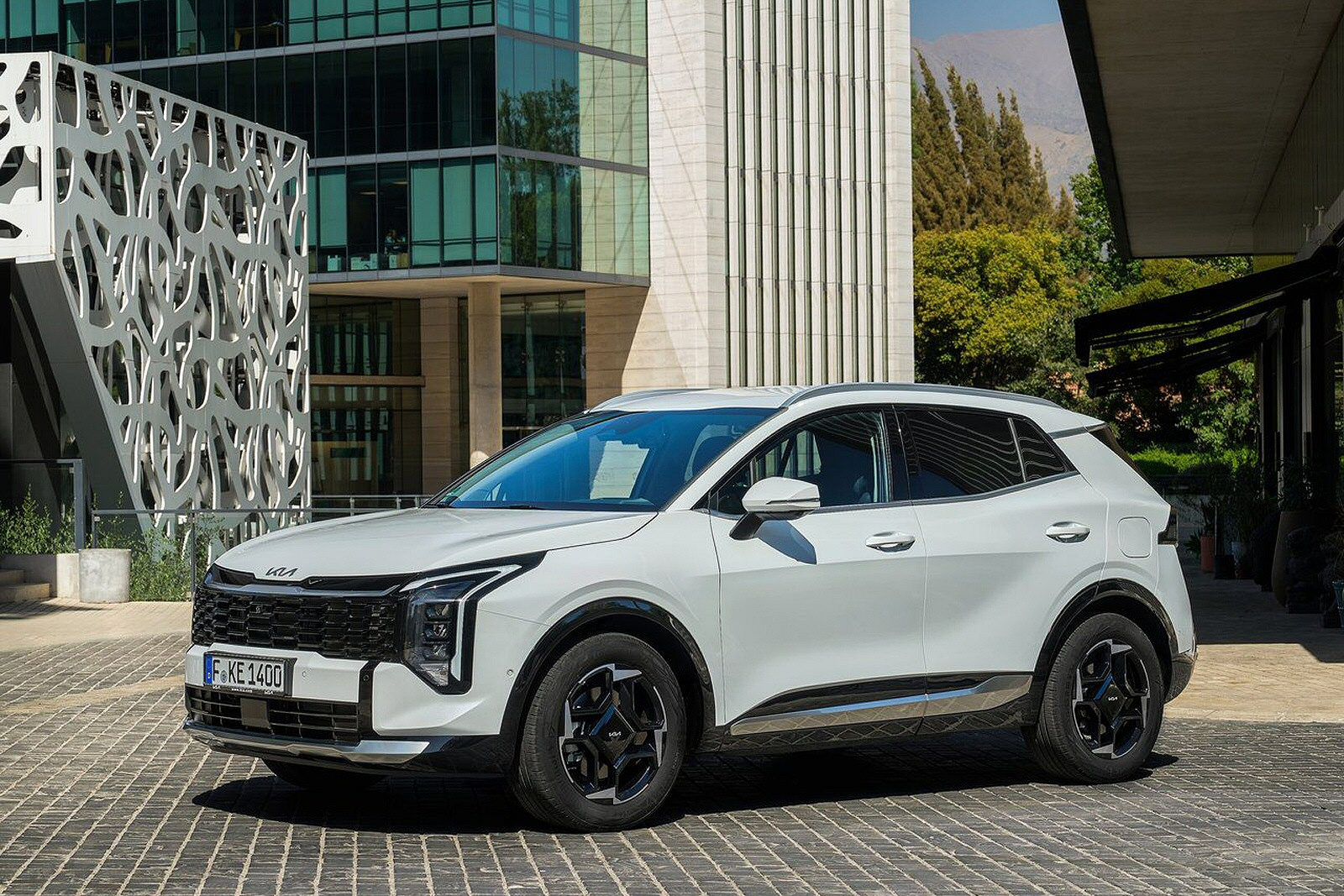
The Hyundai Tucson Hybrid is a compact hybrid SUV that pairs practicality with refined driving dynamics and advanced technology. Its slightly larger dimensions compared with the Kia Sportage Hybrid allow for up to 74.5 cubic feet of cargo space with the second-row seats folded. With the rear seats upright, the Tucson provides 38.7 cubic feet of storage, enough to accommodate daily errands, family outings, or weekend trips.
Powering the Tucson Hybrid is a turbocharged 1.6-liter four-cylinder engine combined with a single electric motor. Together, they deliver 227 horsepower and 258 lb-ft of torque through a six-speed automatic transmission. Front-wheel drive is standard, and all-wheel drive is available.
This powertrain allows the Tucson Hybrid to tow up to 2,500 pounds. Acceleration is competent, with a 0–60 mph time of roughly 7.2 seconds, making it quicker than the non-hybrid Tucson. The cabin remains quiet at cruising speeds, and the ride quality is smooth and composed, providing a comfortable driving experience without being sporty.
For those interested in a plug-in hybrid variant, the Tucson PHEV features a 13.8-kWh battery that delivers an EPA-estimated 33 miles of electric-only driving. A 7.2-kW onboard charger allows for a full recharge in about two hours using a Level 2 charger. The PHEV has a combined output of 268 horsepower, enhancing both acceleration and electric range.
Fuel economy is a key advantage. The Tucson Hybrid is rated at 38 mpg city and 38 mpg highway, while the PHEV earns an 80 MPGe combined rating. Real-world highway testing shows slightly lower results for the hybrid, but it still outperforms the gas-only Tucson.
Inside, the Tucson Hybrid features a modern and uncluttered cabin with optional dual 12.3-inch displays for instrumentation and infotainment. Physical knobs for HVAC and volume controls improve usability, while wireless Apple CarPlay, Android Auto, and available wireless charging add convenience.
Higher trims offer premium features such as Bose audio and Hyundai’s digital key smartphone app. Passenger space is comfortable for four adults, and luggage capacity is ample, holding nine carry-on suitcases behind the second row and 22 with seats folded.
Safety features are comprehensive, including standard automated emergency braking, lane-departure warning, and lane-keeping assist, with adaptive cruise control available. Hyundai backs the Tucson Hybrid with a five-year or 60,000-mile limited warranty, a 10-year or 100,000-mile powertrain warranty, and three years or 36,000 miles of complimentary scheduled maintenance, making it one of the most appealing ownership packages in its segment.
5. Kia Sorento Hybrid
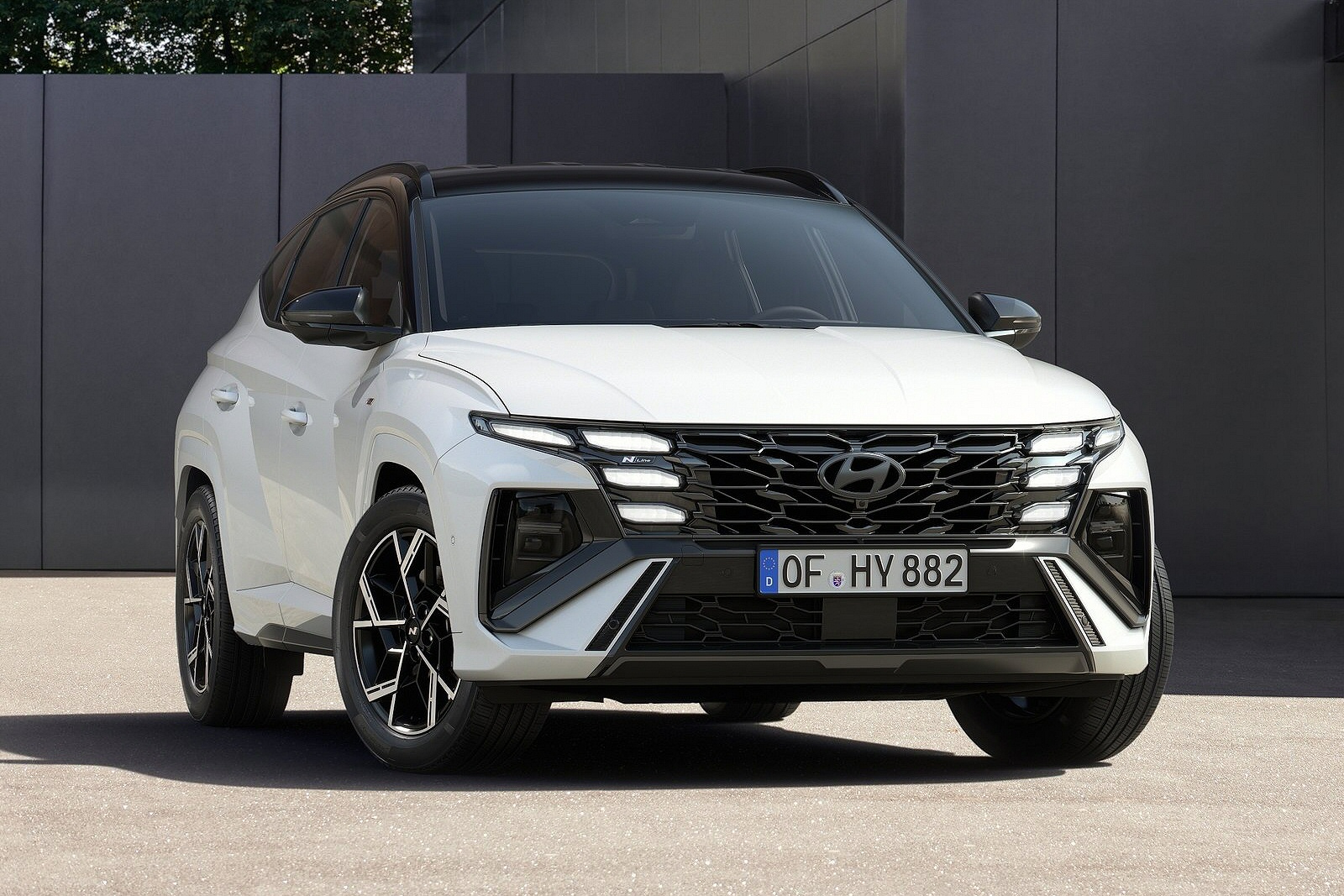
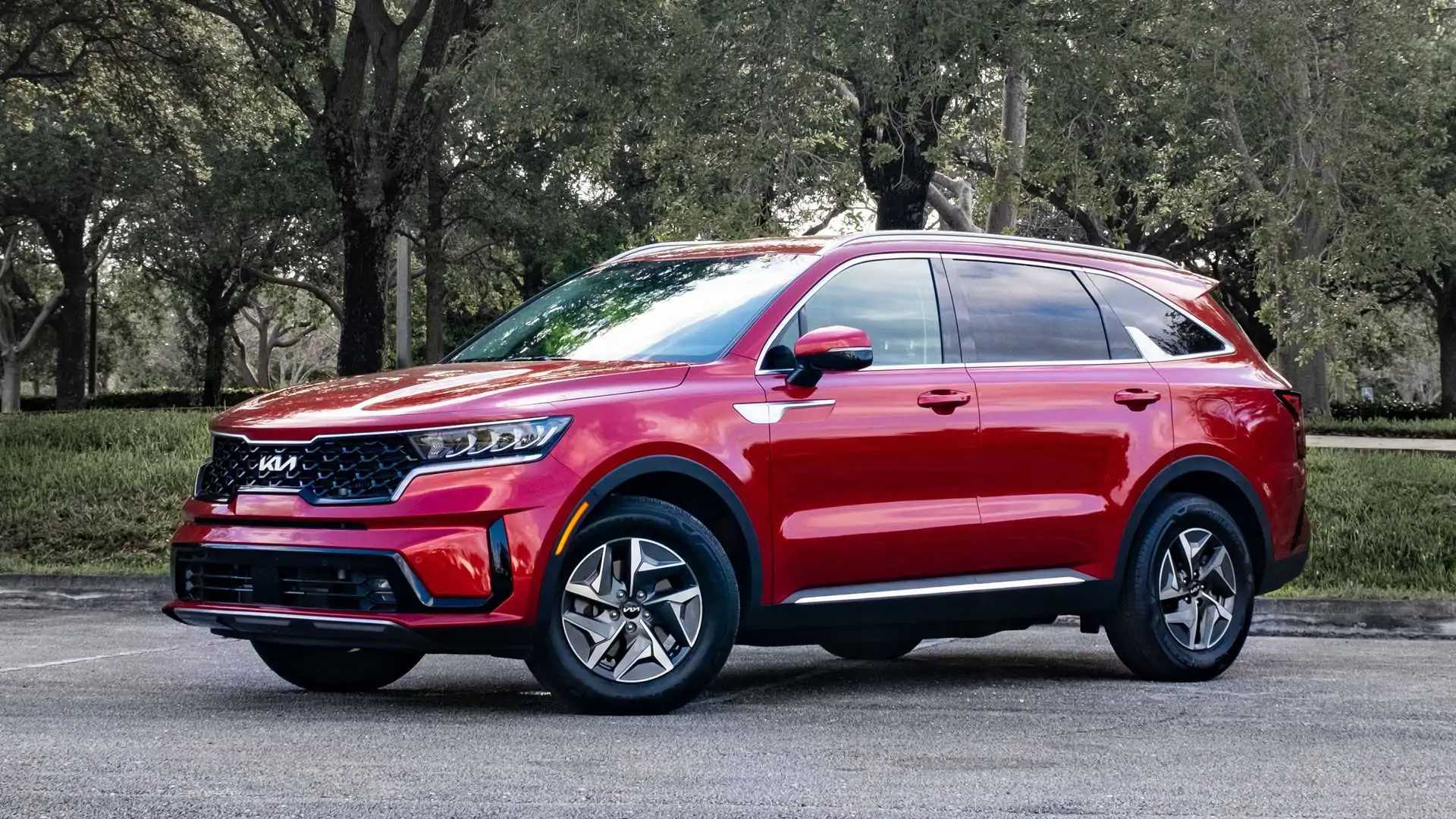
The Kia Sorento Hybrid is a three-row midsize SUV that blends practicality, fuel efficiency, and modern technology. Built on the same platform as the Sportage, the Sorento stretches its dimensions to provide more interior space and seating flexibility.
With both the second and third rows folded, the SUV offers 75.5 cubic feet of cargo space. Folding only the third row yields 45 cubic feet, while space behind the third row alone is 12.6 cubic feet, enough for shopping bags or small travel items.
Powering the Sorento Hybrid is a turbocharged 1.6-liter four-cylinder engine paired with a permanent-magnet electric motor, producing a combined 227 horsepower and 258 lb-ft of torque. A six-speed automatic transmission comes standard, with front-wheel drive as standard and all-wheel drive available. The plug-in hybrid variant increases output to 261 horsepower with all-wheel drive standard.
Acceleration is competent for a three-row SUV, with the hybrid hitting 60 mph in about 7.2 seconds, while the PHEV manages 7.6 seconds. The Sorento Hybrid provides a composed ride and stable handling, though heavy throttle in front-wheel-drive models can produce slight torque steer. Towing capacity is rated at 2,000 pounds due to the vehicle’s increased curb weight.
Fuel efficiency is a key advantage of the hybrid powertrain. The conventional Sorento Hybrid is rated at 36 mpg city and 36 mpg highway, while the PHEV offers a combined 79 MPGe with 32 miles of electric-only range. Real-world testing shows highway consumption slightly lower at 31 mpg for the hybrid and 25 mpg for the PHEV.
Inside, the Sorento Hybrid has an attractive, family-friendly cabin with quality materials, ambient lighting, and practical storage options. Second-row captain’s chairs and a two-person third-row bench are standard. Infotainment features include a 12.3-inch touchscreen, wireless Apple CarPlay and Android Auto, SiriusXM radio, and a six-speaker stereo. Upgrading to the SX Prestige trim adds a 12.3-inch digital gauge cluster and a 12-speaker Bose system.
Safety technology is comprehensive, with standard automated emergency braking, lane-departure warning, blind-spot monitoring, and available adaptive cruise control with lane-centering.
Kia provides a five-year/60,000-mile limited warranty, a 10-year/100,000-mile powertrain and hybrid component warranty, but no complimentary scheduled maintenance. The Sorento Hybrid delivers a practical, efficient, and well-equipped option for families seeking a midsize hybrid SUV.
Also Read: 5 Cars Best for Austin’s Stop-and-Start Traffic vs 5 That Drain Your Wallet
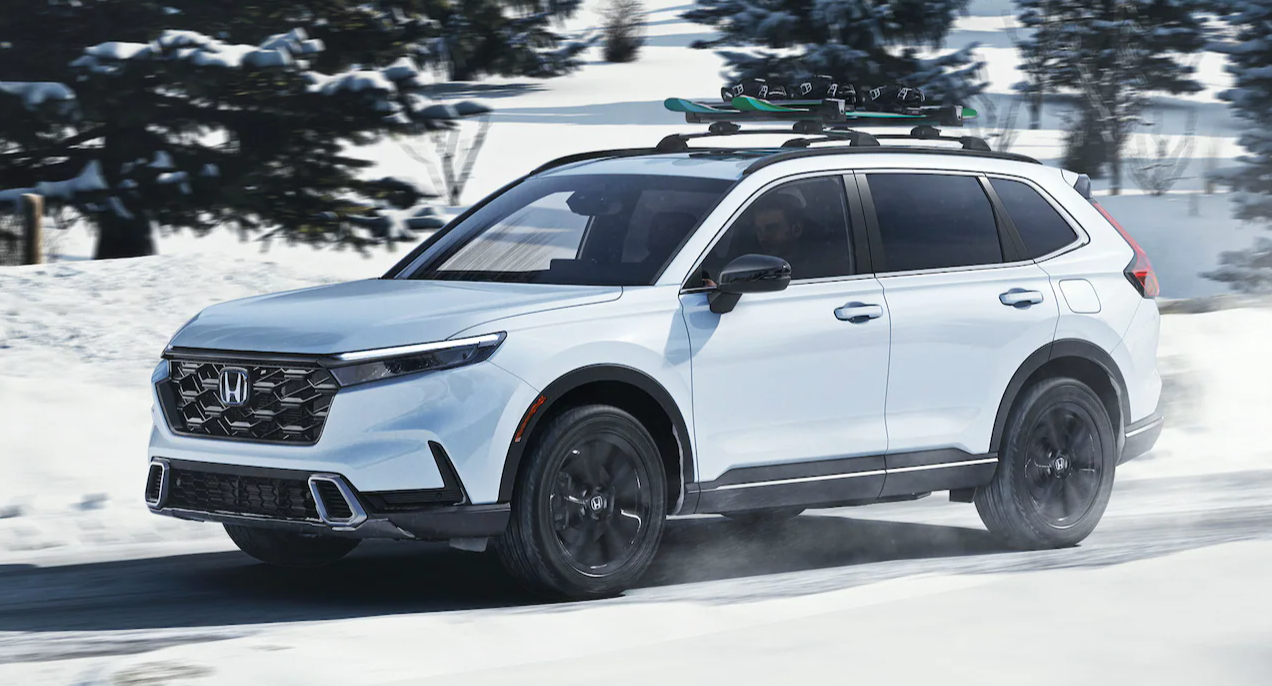
6. Honda CR-V Hybrid
The Honda CR-V Hybrid is a popular compact SUV that combines practicality, fuel efficiency, and modern technology. It offers a generous 76.5 cubic feet of cargo space behind the first row of seats, expanding storage capacity for larger loads.
With all seats in use, the cargo area still provides 36.3 cubic feet, making it a versatile choice for families, daily errands, or weekend trips. Despite its spacious interior, towing capability is limited to 1,000 pounds, and payload capacity is 850 pounds, reflecting the CR-V Hybrid’s focus on efficiency rather than heavy-duty performance.
Under the hood, the CR-V Hybrid pairs a 2.0-liter four-cylinder engine with two permanent-magnet electric motors. This combination produces 204 horsepower and 247 lb-ft of torque, driving all four wheels on the Sport Touring trim, while front-wheel drive is available on lower trims.
Acceleration is smooth rather than sporty, with a 0–60 mph time of approximately 8.0 seconds and a top speed of 110 mph. The hybrid system contributes to improved fuel economy, with EPA ratings of up to 43 mpg city and 36 mpg highway for front-wheel-drive models. All-wheel-drive Sport Touring trims are rated slightly lower, and real-world highway testing recorded 31 mpg at 75 mph.
Inside, the CR-V Hybrid cabin is spacious, comfortable, and thoughtfully designed. Materials are high quality, especially in the leather-equipped Sport Touring trim, and the dashboard features visually appealing honeycomb-textured accents.
The seating layout accommodates four adults comfortably, with logically arranged controls and a reconfigurable digital display. Cargo versatility is enhanced with easy-to-fold rear seats, allowing the SUV to carry up to 29 carry-on suitcases when the rear seats are folded.
Technology is abundant, with a 7.0-inch touchscreen standard and a 9.0-inch screen on Sport-L and Sport Touring trims. Features include wireless Apple CarPlay and Android Auto, built-in navigation, SiriusXM satellite radio, and a wireless phone charging pad.
Safety is a strong point, with standard automated emergency braking, lane-departure warning, lane-keeping assist, and adaptive cruise control. The Sport-L and Sport Touring add parking sensors and additional driver-assistance technologies.
Honda supports the CR-V Hybrid with a three-year/36,000-mile limited warranty, a five-year/60,000-mile powertrain warranty, and one year or 12,000 miles of complimentary scheduled maintenance, providing a reliable and low-maintenance ownership experience. The CR-V Hybrid offers a balanced package of space, efficiency, comfort, and safety, making it a top choice in its class.
7. Hyundai Santa Fe Hybrid
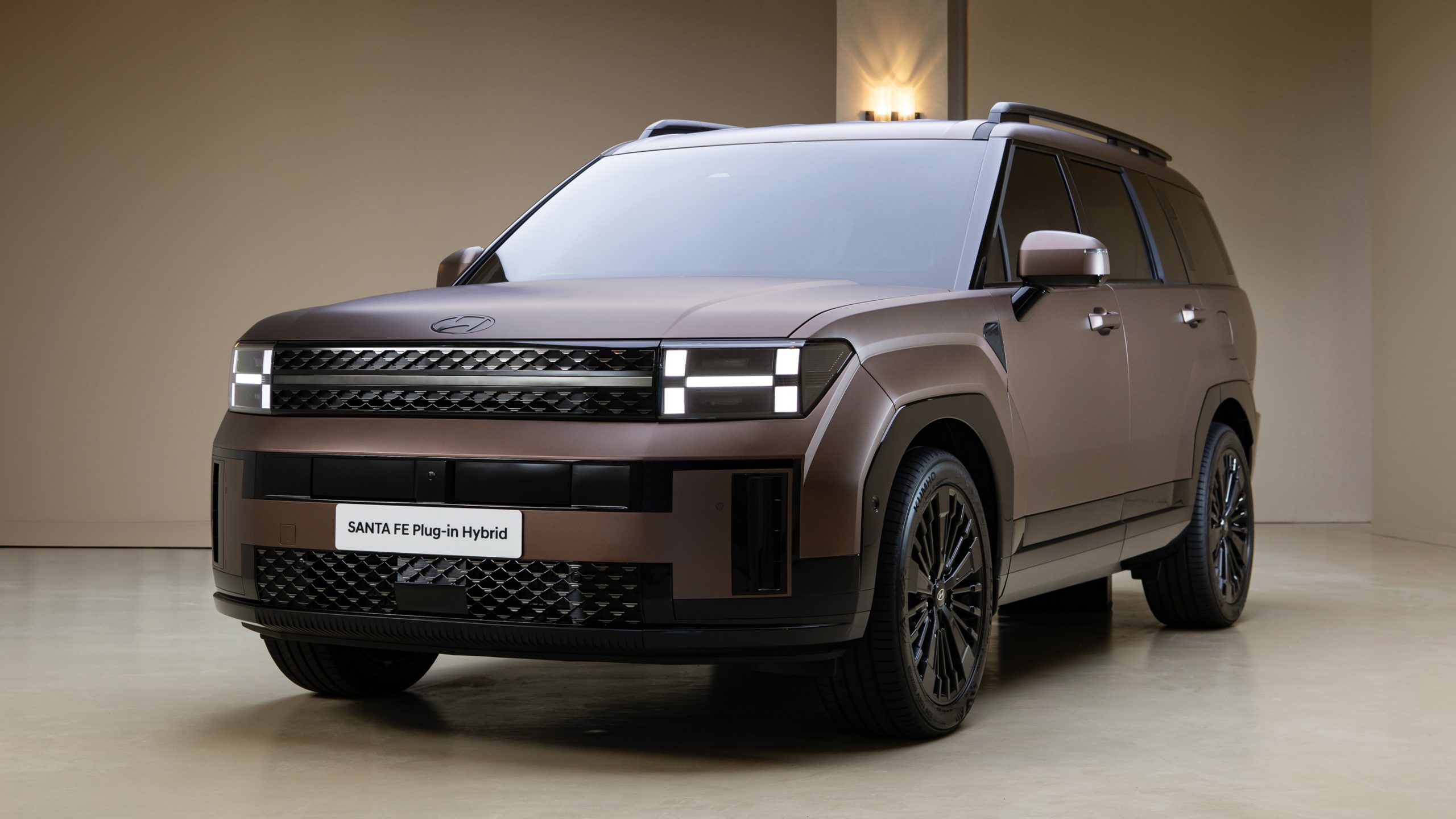
The Hyundai Santa Fe Hybrid is a midsize three-row SUV that prioritizes space, comfort, and efficiency. Its boxy design provides up to 79.6 cubic feet of cargo space with both the second and third rows folded, 40.5 cubic feet behind the second row, and 14.6 cubic feet behind the third row. Towing capacity is limited to 2,000 pounds, with no official payload rating.
Powering the Santa Fe Hybrid is a turbocharged 1.6-liter four-cylinder engine paired with a permanent-magnet electric motor, producing a combined 232 horsepower and 271 lb-ft of torque. A six-speed automatic transmission is standard, with front-wheel drive as the base option and all-wheel drive available.
The hybrid reaches 0–60 mph in 7.6 to 7.8 seconds, depending on configuration, and has a top speed of 120 mph. While acceleration is adequate for daily driving, the Santa Fe Hybrid can feel sluggish during highway merges and passing maneuvers. The EPA rates fuel economy at 36 mpg city and 35 mpg highway for front-wheel-drive models, and 35/34 mpg for all-wheel-drive versions.
The interior combines upscale design with practicality and technology. The Santa Fe Hybrid features three rows of seats, with optional captain’s chairs in the second row that can also recline. Sustainable materials, including eco-friendly leather, are used throughout the cabin. The third row is best suited for children, teens, or smaller adults. Cargo versatility is enhanced by folding seats, allowing for large loads while maintaining passenger comfort.
Technology is a highlight, with a 12.3-inch digital gauge cluster and touchscreen infotainment panel, plus a separate 6.6-inch climate-control screen. Wireless Apple CarPlay and Android Auto are standard, and two wireless charging pads, multiple USB-C ports, and an optional UV-C sterilization tray add convenience and hygiene features.
Safety features are comprehensive, with standard automated emergency braking, lane-departure warning, and lane-keeping assist. Optional advanced tech includes adaptive cruise control with lane-centering.
Hyundai backs the Santa Fe Hybrid with a five-year/60,000-mile limited warranty, a 10-year/100,000-mile powertrain warranty, and three years or 36,000 miles of complimentary scheduled maintenance, offering one of the strongest coverage packages in its class. The Santa Fe Hybrid delivers a balanced mix of space, efficiency, comfort, and safety, making it a solid choice for midsize hybrid SUV buyers.
8. Toyota Highlander Hybrid
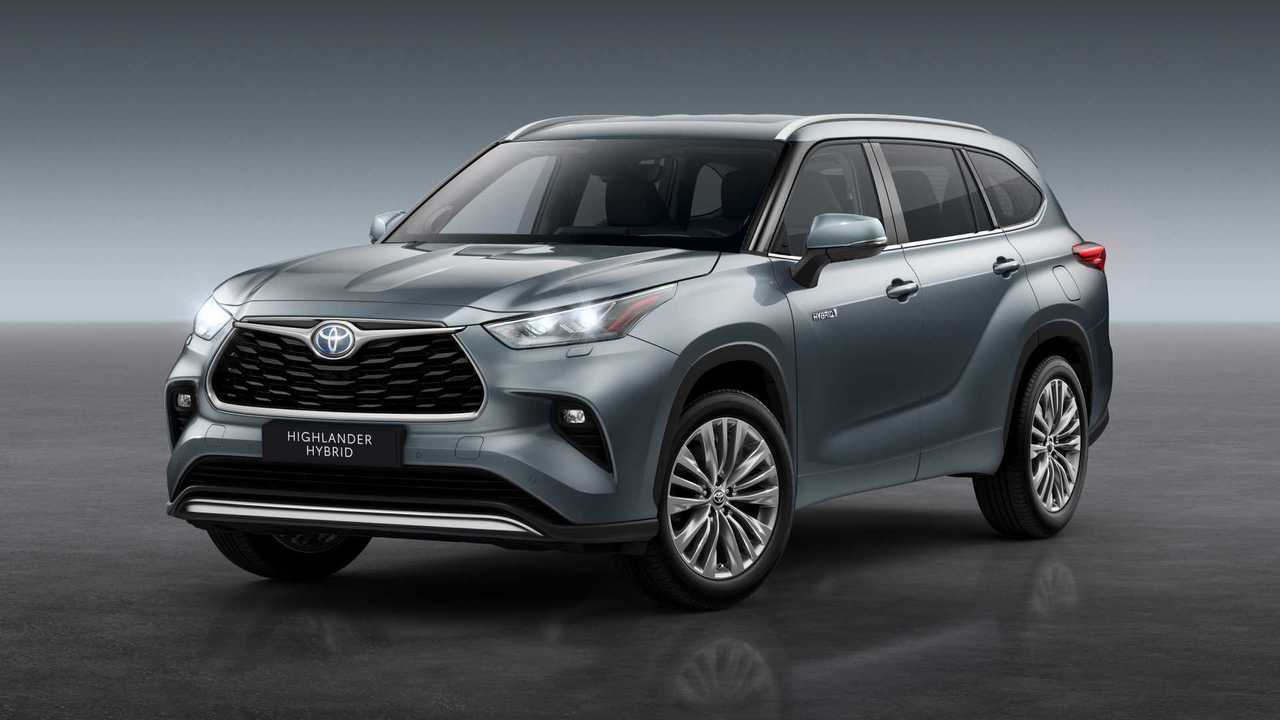
The Toyota Highlander Hybrid is a midsize three-row SUV offering a spacious interior and family-focused practicality. Its TNGA platform allows for up to 84.3 cubic feet of cargo space with the second and third rows folded. With the middle row upright, cargo space measures 48.4 cubic feet, and 16 cubic feet remain with all seats in use.
The Highlander Hybrid pairs a 2.5-liter four-cylinder engine with two permanent-magnet electric motors, producing a combined 243 horsepower and 175 lb-ft of torque. Power is sent through an eCVT, with front-wheel drive standard and all-wheel drive optional. The hybrid achieves 0–60 mph in 8.4 seconds and a top speed of 112 mph.
Towing capacity reaches 3,500 pounds with a 1,330-pound payload. Compared with the gas-only Highlander, the hybrid remains competitive in acceleration while offering higher fuel efficiency. The EPA estimates a combined 35 MPG.
The Highlander Hybrid seats up to eight passengers on the base LE trim, with optional second-row captain’s chairs reducing capacity to seven on higher trims. Interior materials are of good quality, though the design emphasizes function over flair. Upscale trims like Limited and Platinum provide leather seating, larger infotainment displays, ventilated seats, and additional comfort features. The third row is more suitable for children or teens.
Cargo versatility is a highlight, though smaller than some competitors; four carry-on suitcases fit behind the third row. Infotainment options include an 8.0-inch display on lower trims and a 12.3-inch screen on higher trims. A 12.3-inch digital gauge cluster is available on Limited and Platinum models.
All trims include Apple CarPlay, Android Auto, Amazon Alexa, and SiriusXM, while wireless smartphone charging is standard on XLE trims and above. Premium audio options include an 11-speaker JBL system.
Standard safety features include automated emergency braking with pedestrian detection, blind-spot monitoring, rear-cross-traffic alert, lane-keeping assist, and adaptive cruise control. The Highlander comes with a three-year/36,000-mile limited warranty, a five-year/60,000-mile powertrain warranty, and two years of complimentary scheduled maintenance, giving it an edge in convenience over many rivals.
The Toyota Highlander Hybrid balances space, safety, and comfort, making it a practical choice for families seeking a fuel-efficient three-row SUV.
9. Toyota Sequoia Hybrid
The Toyota Sequoia Hybrid is a full-size, off-road-capable SUV that combines high towing capacity, a spacious interior, and hybrid efficiency. Built on Toyota’s TNGA platform, it offers up to 86.9 cubic feet of cargo space with the middle and rear rows folded. With all rows in use, cargo ranges from 49 cubic feet behind the second row to 11.5–22.3 cubic feet in the adjustable third row.
The Sequoia Hybrid uses the iForce MAX powertrain, a twin-turbo 3.4-liter V-6 paired with a permanent-magnet electric motor, producing 437 horsepower and 583 lb-ft of torque. A 10-speed automatic transmits power to the wheels, with rear-wheel drive standard and four-wheel drive optional, standard on TRD Pro models.
Acceleration from 0–60 mph is 5.6 seconds, with a top speed of 107 mph. Towing capacity ranges from 8,400 to 9,520 pounds, depending on configuration, while payload capacity reaches 1,730 pounds. Fuel economy is estimated at 22 mpg combined for RWD and 20 mpg combined for 4WD.
TRD Pro versions feature off-road enhancements such as Fox dampers, skid plates, a locking rear differential, and 33-inch tires. Lesser trims can be equipped with the TRD Off-Road package, which includes Crawl Control, hill-descent control, and a locking differential. Road manners are comfortable, with a quiet cabin, though steering and brake feedback are less precise than expected for on-road handling.
Seating configurations allow for eight with a second-row bench or seven with captain’s chairs. Headroom is limited in the rear rows, especially with a panoramic sunroof, and the high floor reduces third-row legroom.
Interior materials vary by trim, with cloth and leather options, wood and chrome accents, heated and cooled seats, and premium audio available on higher trims. Cargo space is limited with all seats in use, though the third row can slide forward to slightly increase room.
The Sequoia features a 14-inch touchscreen infotainment system, wireless smartphone mirroring, Wi-Fi hotspot, and streaming options. Standard safety features include forward-collision warning, automated emergency braking, lane-keeping assist, and adaptive cruise control.
Toyota provides a three-year/36,000-mile limited warranty, a five-year/60,000-mile powertrain warranty, a ten-year/150,000-mile hybrid component warranty, and two years of complimentary maintenance, offering strong coverage in the full-size SUV segment.
The Sequoia Hybrid is ideal for buyers seeking a capable, off-road-ready SUV with high towing capability and hybrid efficiency without sacrificing interior space.

10. Toyota Grand Highlander Hybrid
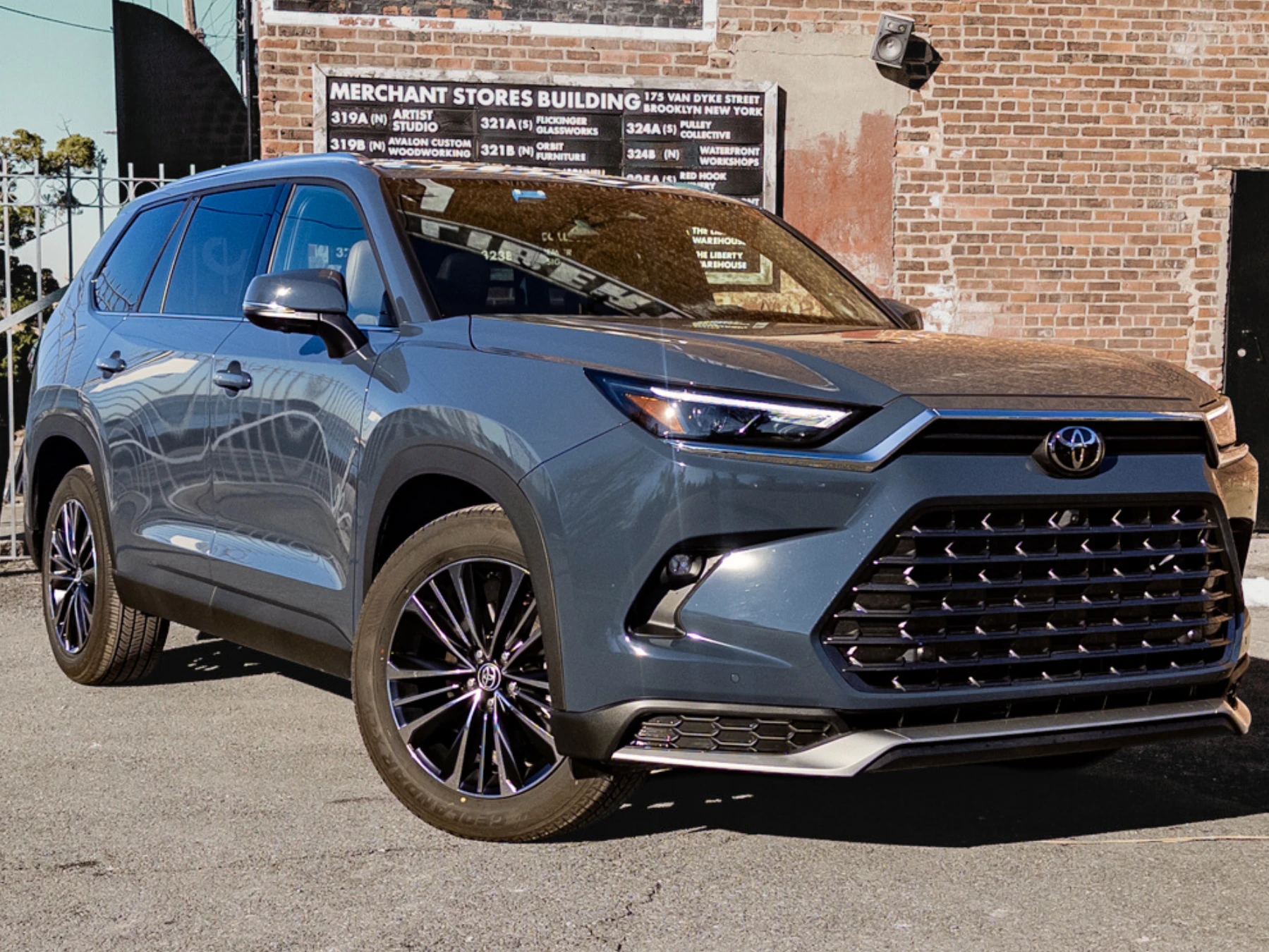
The Toyota Grand Highlander Hybrid is the largest and most spacious model in Toyota’s Highlander lineup, offering a maximum cargo capacity of 97.5 cubic feet with the second and third rows folded. With the second row up, cargo space measures 57.9 cubic feet, and behind the third row, it still provides 20.6 cubic feet, which surpasses many midsize SUVs.
The Grand Highlander Hybrid uses a 2.5-liter four-cylinder engine paired with two permanent-magnet motors, delivering a total output of 245 horsepower. It features a continuously variable automatic transmission (CVT) and an additional rear traction motor for all-wheel-drive capability.
While the system is fuel-efficient, achieving an average of 31 mpg, it is slower than other Highlander variants. Our 4,735-pound test model reached 60 mph in 7.8 seconds, compared with 7.0 seconds for the gas-only version and 5.6 seconds for the Hybrid Max. Top speed is limited to 112 mph, towing capacity is 3,500 pounds, and payload capacity is 1,420 pounds.
The Grand Highlander Hybrid prioritizes comfort over sportiness. Steering is muted, and the CVT produces occasional droning under load. Ride quality is cushioned, and braking and handling are comparable to those of other Highlanders. Sport mode mainly changes engine sound rather than responsiveness. The abundance of driver-assist technologies, including adaptive cruise control and automated braking, enhances safety but can feel overbearing at times.
This model excels in family-friendly accommodations. All three rows offer ample space, with multiple USB ports and charging points throughout. Visibility is strong for a vehicle of this size, and the cabin remains comfortable for adults in every row. The Nightshade Edition adds premium touches such as a panoramic sunroof, 360-degree camera, illuminated sills, and roof-rack crossbars, although similar trims are available at lower prices.
The Hybrid variant offers excellent fuel efficiency for a three-row SUV, with the potential to travel over 500 miles on a full tank. While the Hybrid Max delivers more power and a smoother CVT-less experience, the regular Hybrid balances utility, efficiency, and price effectively.
The Grand Highlander Hybrid is a spacious, family-focused SUV with impressive cargo capacity, fuel efficiency, and comfort. While it lacks the acceleration and refinement of the Hybrid Max, it remains a practical choice for families seeking maximum interior space and everyday usability at a moderate cost.
Selecting a hybrid no longer requires giving up cargo capacity. The 10 hybrids highlighted here demonstrate that efficient powertrains and spacious interiors can coexist. Vehicles like the Toyota Sequoia Hybrid and Kia Sorento Hybrid provide family-friendly layouts with three rows while still offering substantial storage for trips and daily use.
Compact options such as the Kia Niro Hybrid and Hyundai Tucson Hybrid deliver surprisingly generous cargo room for their size, making them ideal for urban lifestyles. With advanced safety features, modern infotainment, and strong fuel economy, these hybrids combine versatility, comfort, and eco-conscious driving. Whether prioritizing efficiency, passenger comfort, or practicality, these models show that hybrid efficiency can exist without sacrificing storage space.
Also read: 10 Cars With Clear, Bright Headlights for Backroads