The automotive world is full of evolutionary progress, with many vehicles refining existing ideas or perfecting a particular formula.
But every once in a while, a car comes along that doesn’t just compete it redefines the market entirely. These vehicles didn’t merely fill a niche; they created whole new categories that manufacturers continue to explore decades later.
For American drivers, these cars are more than historical footnotes they represent the bold moves and innovations that have shaped the driving landscape we know today.
From redefining utility to transforming performance expectations, these five iconic cars each opened doors to entirely new segments in the automotive world.
1. Jeep Cherokee XJ (1984)
Before the 1980s, sport utility vehicles (SUVs) were largely utilitarian trucks with added roofs, often uncomfortable for daily driving and inefficient on fuel. The 1984 Jeep Cherokee XJ changed all that.
With its unibody construction a departure from traditional truck-based frames the Cherokee offered the off-road capability Jeep was known for but packaged in a size and comfort level suitable for suburban life.
The XJ wasn’t just a practical four-wheel-drive vehicle; it was a statement. It proved that consumers wanted versatility: a car that could handle weekend adventures, grocery runs, and city streets without compromise.
The modern SUV segment, which now dominates US car sales, can trace its roots directly to this model. By blending rugged capability with daily usability, the Cherokee XJ created a new market segment that manufacturers from Ford to Toyota would chase for decades.
The 1984 Jeep Cherokee XJ was a groundbreaking vehicle that redefined the automotive landscape in the 1980s, becoming the world’s first unibody crossover SUV. At the time, American Motors Corporation (AMC) faced financial challenges, exacerbated by the Energy Policy and Conservation Act of 1975, which forced automakers to produce more fuel-efficient vehicles.
Most SUVs of the era were body-on-frame and powered by fuel-thirsty V8 engines. AMC had attempted to survive with small cars like the Pacer, whose controversial styling made sales difficult.
In 1979, Renault acquired AMC, injecting capital to help the automaker return to profitability. Among its strategic moves was the Jeep Cherokee, a vehicle initially proposed before the acquisition but launched in 1984. Its compact size, seating for five, and large rear cargo area made the Cherokee XJ a commercial success.
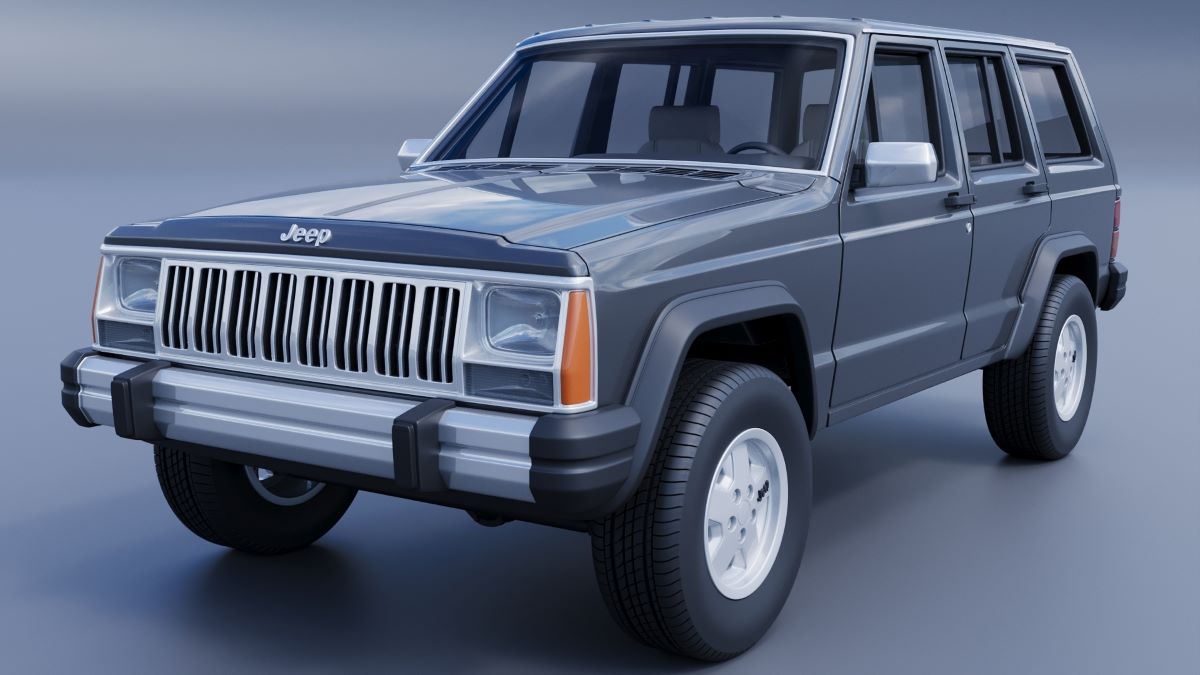
The design of the Cherokee XJ drew inspiration from its larger sibling, the Grand Wagoneer. It featured the classic Jeep seven-slot grille flanked by rectangular headlights, with a slim bumper mounted directly to the frame and protected by rubber blocks.
Unlike traditional SUVs, the Cherokee’s bodywork was welded onto the chassis, making it roughly 1,000 pounds lighter than its competitors while maintaining ruggedness.
The styling program had begun in the mid-1970s, but cost-cutting measures initially shelved it. With Renault’s investment, the automaker revived the project, utilizing simple, flat surfaces that were easy and inexpensive to manufacture. Some of AMC’s best engineers, along with Renault personnel, contributed to the development, ensuring both practicality and quality.
Inside, the Cherokee featured a square dashboard housing an instrument cluster with multiple dials, while the center stack accommodated the HVAC system and optional stereo.
The front bucket seats were separated by the transmission tunnel, and the rear flat-folding bench could seat three passengers comfortably. The Cherokee’s most notable advancements were under the hood and in its drivetrain.
Renault engineer François Castaing, formerly Technical Director of Renault Sport, led the development of the XJ’s front suspension, designing a four trailing-link setup that preserved its off-road capability. The SUV offered innovative features for its time, including shift-on-the-fly 4×2 to 4×4 capability and the all-wheel-drive Selec-Trac system.
To validate the XJ’s engineering, AMC entered two prototypes in the 1983 Paris-Dakar Rally. While the vehicles did not win, completing the grueling race demonstrated the durability of the new technical solutions. Initially, the Cherokee was available with a 2.4-liter AMC inline-four engine, with an optional GM-sourced 2.8-liter V6.
Both engines could be paired with a four- or five-speed manual transmission, while a three-speed automatic was also offered. As the XJ evolved, Renault’s distribution network brought the SUV to Europe, where buyers could choose from gasoline engines or one of two turbo-diesel options, further cementing the Cherokee XJ’s status as a versatile and pioneering small SUV.
2. Ford Mustang (1964)
The Ford Mustang isn’t just an American classic it practically invented a segment. Before 1964, American cars were either large family sedans or performance-oriented muscle cars with a lot of bulk.
The Mustang offered a new formula: a stylish, affordable, compact sports car that appealed to younger buyers.
Ford’s gamble paid off immediately, as the Mustang’s success spawned an entirely new category: the “pony car.” Competitors like the Chevrolet Camaro, Pontiac Firebird, and Dodge Challenger were direct responses to the Mustang’s overwhelming popularity.
Beyond sales, the Mustang set a template for marketing to a younger demographic, with sporty trims, customizable options, and aspirational branding a formula still in use today across performance-focused compact cars.
Despite not being the fastest or best-selling Ford, the Mustang may be the most iconic vehicle ever produced by the American automaker. The original Mustang debuted in 1964 as the first true pony car and originated from a personal luxury coupe project called “Allegro.” The name “Mustang” came from designer Philip T. Clark, who was inspired after seeing wild mustangs in Nevada.
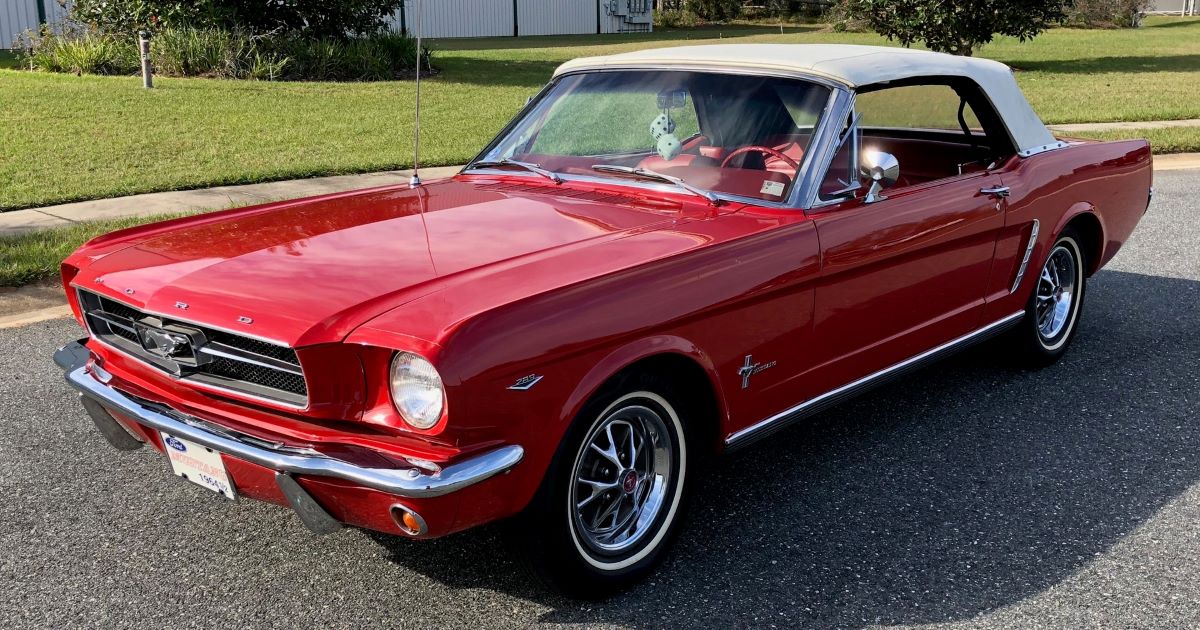
Clark designed the logo and presented it to Lee Iacocca, who embraced both the name and the idea of giving the car a distinct badge. Iacocca envisioned the Mustang as a personal vehicle, featuring two round headlights, a pushed-out grille, a long hood, a 2+2 cabin, and a short rear deck, all elements that captured the public’s imagination.
Designers added functional air intakes ahead of the rear wheels to cool the drum brakes, while the rear featured three vertical taillights that would become a signature design element of the Mustang.
Inside, the Mustang was equipped with two bucket seats and a four-on-the-floor gear stick. The instrument cluster mirrored the front fascia, with two round dials on either side, a linear speedometer in the center, and three indicator lamps at the bottom. Its three-box design and conventional greenhouse provided adequate headroom for two passengers.
Under the hood, the Mustang initially offered an inline-six engine producing 100 horsepower, paired with a three-speed manual transmission. Following praise from media and customers, Ford later introduced two V8 engine options, further enhancing the Mustang’s performance and cementing its status as an American automotive icon.
Also Read: Top 10 Budget-Friendly Cars Powered by V12 Engines
3. Tesla Model S (2012)
While electric cars existed before the Tesla Model S, they were often impractical, short-ranged, and positioned as economy vehicles.
Tesla’s Model S changed the game, showing that electric cars could compete with, and even surpass, traditional luxury sedans in performance, technology, and desirability.
With its impressive range, blistering acceleration, and minimalist tech-forward interior, the Model S didn’t just enter the luxury market it created the electric luxury sedan segment.
The car forced established brands like Mercedes-Benz, Audi, and Porsche to rethink their approaches to electric mobility. In the US, the Model S also helped normalize electric vehicles (EVs) for mainstream buyers, demonstrating that EVs could be aspirational, desirable, and practical all at once.
The 2012 Tesla Model S has rewritten the rule book and may have even raised the bar for conventionally powered cars. Unlike many electric vehicles of its time, the Model S is not a podlike commuter car nor a modified economy vehicle.
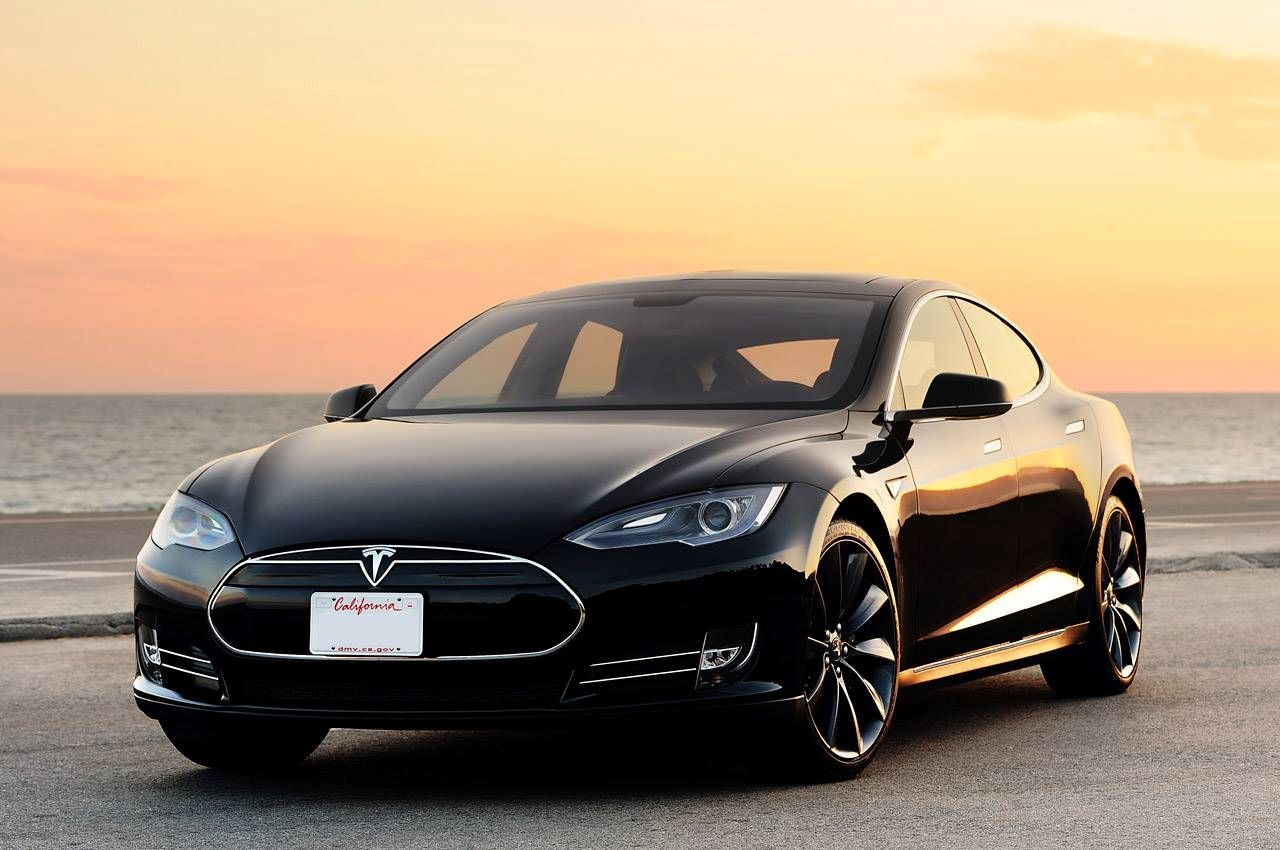
It is a large sedan with luxury aspirations, impressive performance, and striking good looks, widely regarded as one of the best cars available, electric or otherwise. Despite its capabilities, the Model S is not exclusively for the ultra-wealthy.
With a starting price around $60,000, before the $7,500 federal tax credit, the base 40 kWh model delivers 235 horsepower and a range of just over 100 miles.
For an additional $10,000, buyers can opt for the 60 kWh pack, producing 302 hp and 208 miles of range, or the 85 kWh pack for $10,000 more, which boosts output to 356 hp with 265 miles of range. Tesla also offered a Performance version at $87,400, featuring 416 hp and the same 265-mile range.
The 2012 Model S is thoroughly modern inside and out, fulfilling visions of what a 21st-century car should be. Its sleek exterior is complemented by flush-mounted door handles that deploy automatically, enhancing both style and convenience.
Inside, the cabin is a tasteful, tech-forward space dominated by a massive central touchscreen that replaces conventional knobs and buttons. Despite its futuristic design, usability and practicality are uncompromised, with intuitive systems and abundant cargo space.
The Model S stands apart from virtually every other car on the market, electric or otherwise, making competition minimal if not nonexistent. Tesla has not just rewritten the automotive rule book, they have arguably shredded it.
The Model S lineup features four distinct powertrains, all powered by a single water-cooled electric motor driving the rear wheels through a single-speed transmission, with lithium-ion battery packs throughout. The base 40 kWh model produces 235 hp and 310 pound-feet of torque, offering just over 100 miles of range and a 0-60 mph time of 6.5 seconds.
The 60 kWh variant increases output to 302 hp and 317 lb-ft, with an EPA-estimated range of 208 miles and a 0-60 mph time of 5.9 seconds. The 85 kWh model delivers 362 hp and 325 lb-ft, reaching 60 mph in 5.6 seconds with a 265-mile range.
In terms of efficiency, the EPA rates the Model S at 38 kWh city/37 kWh highway and 38 kWh combined per 100 miles, translating to 88 MPGe city, 90 MPGe highway, and 89 MPGe combined. The vehicle can be recharged from standard 110- and 240-volt household outlets or at public charging stations using Tesla’s Universal Mobile Connector and adapters.
4. Honda CR-V (1997)
By the late 1990s, the SUV segment was growing, but vehicles like the Ford Explorer and Chevy Blazer were still relatively large and gas-hungry.
Honda saw an opportunity for a smaller, more efficient vehicle that could still offer the versatility of an SUV. The 1997 Honda CR-V introduced the world to the compact crossover a vehicle that combined car-like handling with SUV-style practicality.
The CR-V’s clever packaging, fuel efficiency, and reliability appealed to urban families and suburban commuters alike. It set the stage for one of the most important vehicle categories today: the compact crossover, which now dominates US sales charts.
Every major manufacturer has since followed Honda’s lead with vehicles like the Toyota RAV4, Mazda CX-5, and Nissan Rogue, proving the CR-V’s lasting influence.
For years, Honda had been selling a sport-utility vehicle that many purists considered a fraud. While the original Honda Passport was based on the rugged and capable Isuzu Rodeo, diehard Honda fans did not consider it a “true” Honda, much like how the Porsche 914 is viewed by Porsche enthusiasts.
Consequently, the CR-V is often regarded as Honda’s first authentic sport-utility vehicle. Built on the Civic platform, the CR-V integrates familiar Honda components into an all-new design. It features Honda’s renowned four-wheel double-wishbone suspension, the first application of this technology on a sport-ute, alongside the familiar four-speed automatic transmission.
Under the hood, the 2.0-liter DOHC inline-four engine produces 126 horsepower and 133 pound-feet of torque. The CR-V’s real-time four-wheel-drive system is derived from the unit originally offered on the Civic wagon, resulting in a vehicle that looks and drives very much like a car, rather than a traditional SUV.
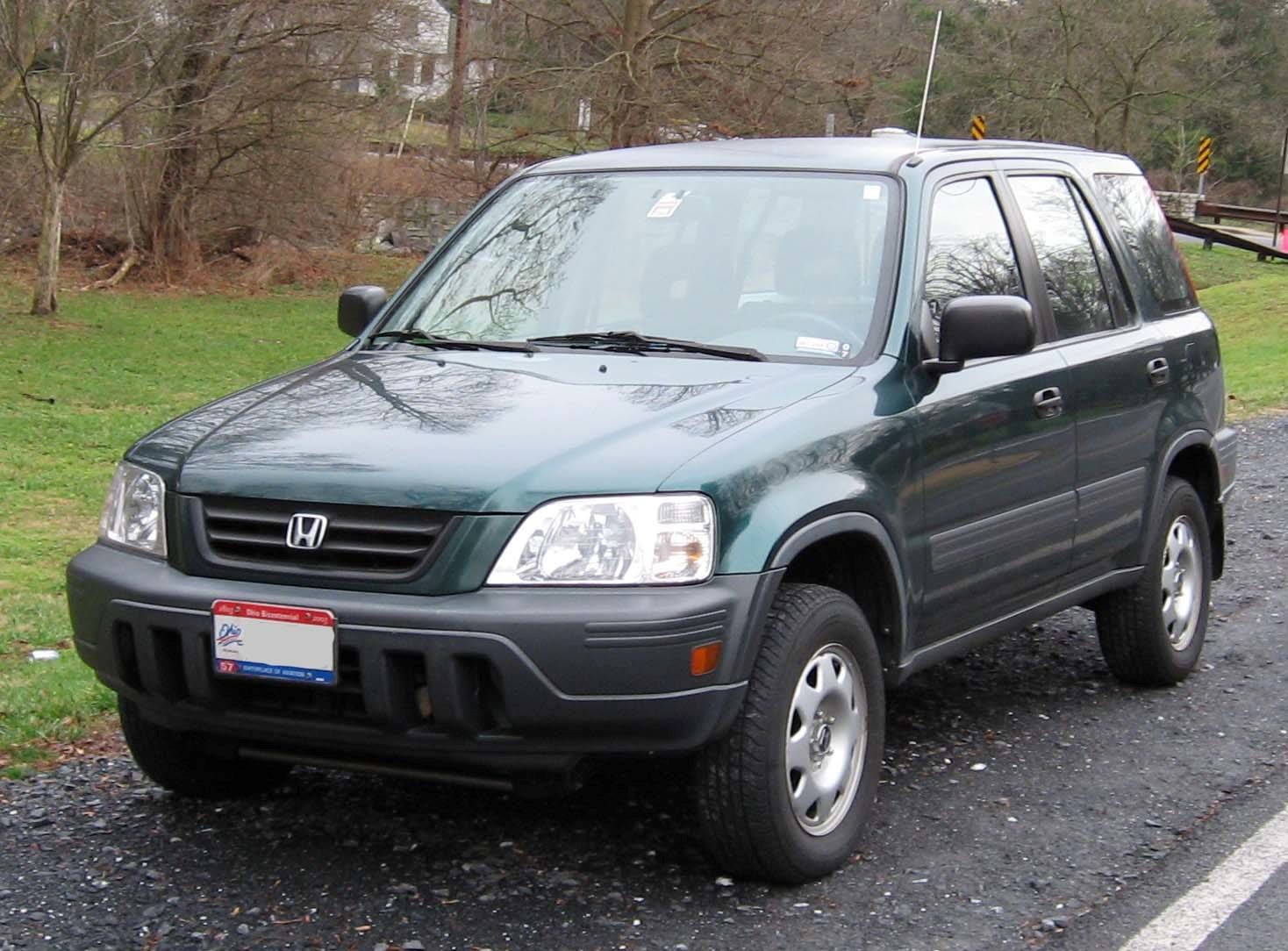
Inside, the CR-V’s cabin will be instantly recognizable to anyone familiar with Honda’s passenger cars. Functionality takes precedence over style, yielding easy-to-read gauges, well-placed controls, and high-quality, if somewhat unexciting, materials. Fit and finish rival the highly acclaimed Accord, and the seats provide excellent visibility, comfort, and the ability to recline on longer trips.
Cargo capacity is impressive at 67.2 cubic feet with the rear seats folded. Offered in only one trim level, the CR-V comes surprisingly well-equipped, including air conditioning with a micron filtration system, power windows, power door locks, a rear window wiper and defogger, an AM/FM stereo, and a folding picnic table that doubles as a cargo cover. Optional features include antilock brakes and alloy wheels.
The CR-V is not intended to replace hardcore recreational vehicles like the Jeep Wrangler or Toyota 4Runner. Instead, it caters to those who want the functionality of an SUV without paying a steep sticker price or consuming excessive fuel.
It will reliably get drivers to work, through inclement weather, and to weekend picnic spots, just not on trails like the Rubicon. Most importantly, the CR-V finally gives Honda enthusiasts a sport-utility vehicle they can truly call their own.
5. Porsche 911 (1964)
The Porsche 911 might seem like a luxury sports car icon today, but its introduction in 1964 represented a new approach to performance. At the time, most European sports cars prioritized speed and handling over practicality.
The 911 blended performance with usability, offering a daily-drivable coupe that could comfortably seat four passengers in a pinch and feature relatively practical luggage space.
This combination of speed, design, and everyday usability created a new sports car archetype: the high-performance, daily-drivable vehicle.
While many sports cars were dedicated weekend toys, the 911 proved that drivers could have an exhilarating experience without sacrificing all practicality. Its influence is visible today in cars like the Audi R8, Mercedes-AMG GT, and even higher-end models of the Chevrolet Corvette.
These five vehicles share more than fame they share vision. Each car challenged the norms of its time, taking risks that reshaped consumer expectations and forced competitors to follow suit.
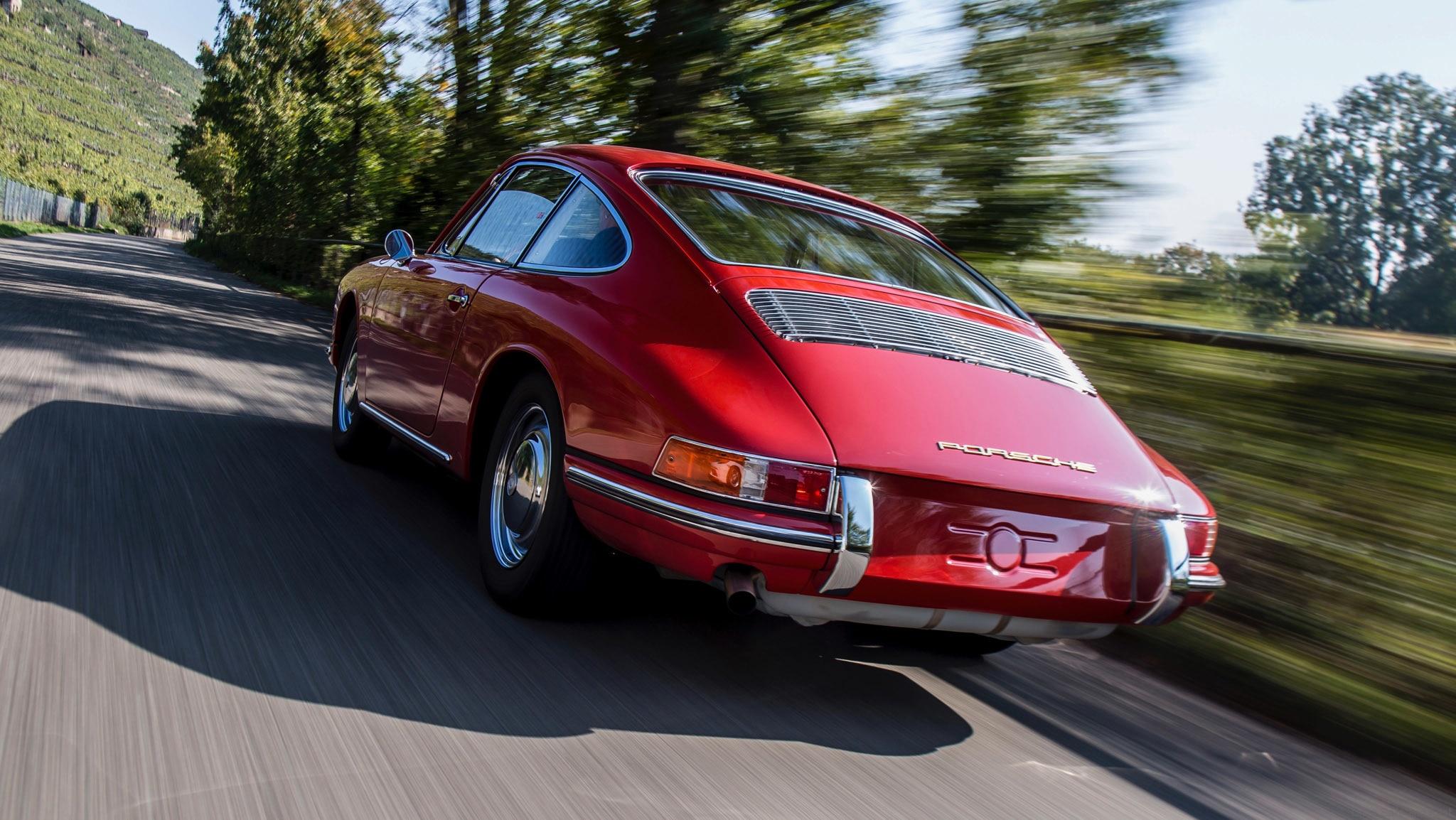
The iconic Porsche 911 was born in 1964 and quickly became one of the most celebrated sports cars in the world, renowned for its distinctive sloped rear engine bay that has endured through generations.
Its design evolved from the earlier Porsche 356, featuring new headlights, a higher greenhouse, and the signature rear slope that defines the classic 911 silhouette.
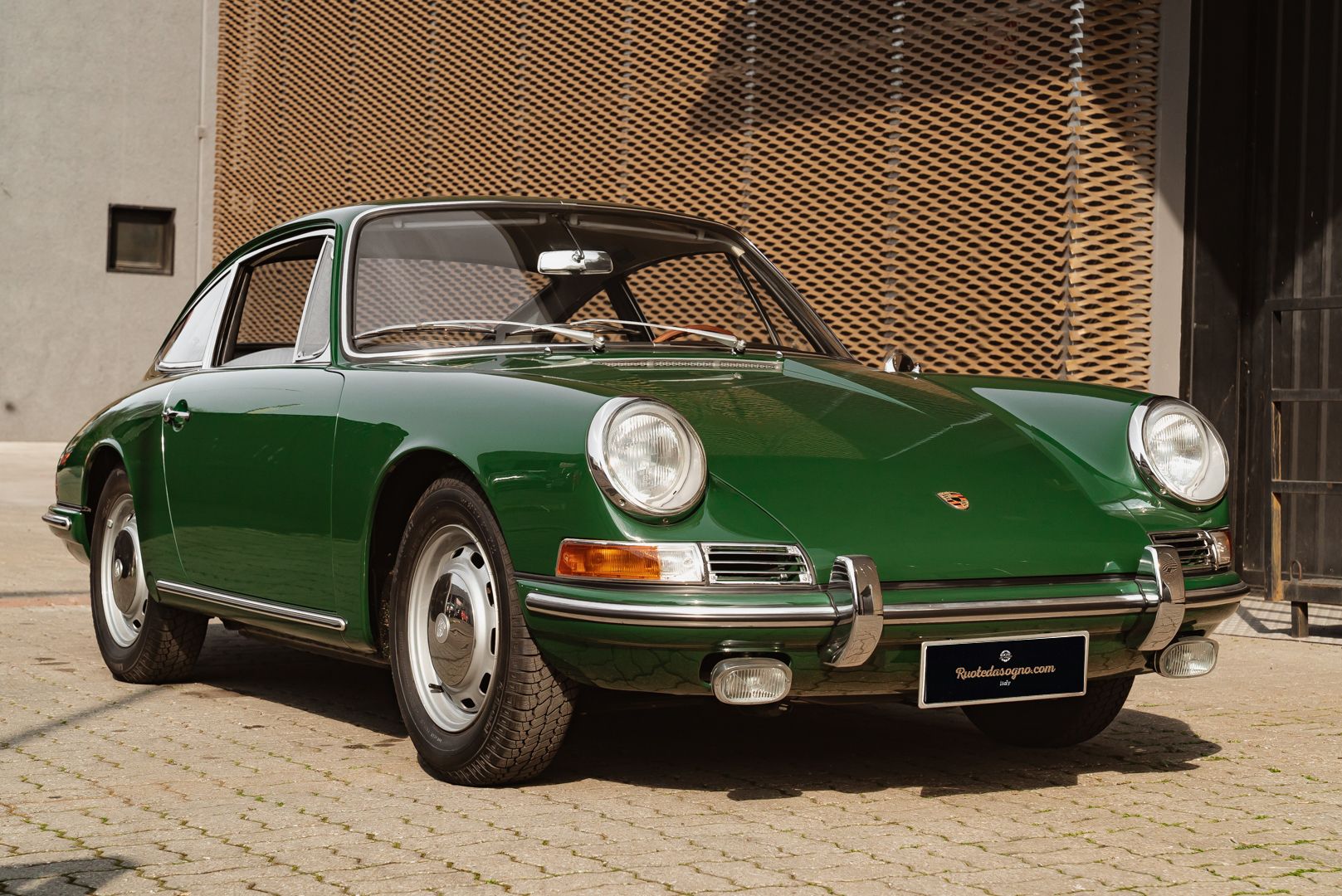
The car was designed by Ferdinand “Butzi” Porsche, son of Ferdinand “Ferry” Porsche, the creator of the 1936 Volkswagen Beetle. This lineage explains why the rear-mounted, air-cooled engine concept used in the 356 carried over to the first 911.
The 356 had been a commercial success, but by 1964, Porsche needed a modernized sports car, leading to the launch of the 911. While it retained the principles of the 356, including a flat-four air-cooled engine, the new design included a distinctive engine lid with large vents to aid cooling.
Inside, the cabin featured a simple, flat instrument cluster layout, with the five-dial configuration remaining a hallmark over the years. Uniquely, the starter key was mounted on the outside, near the window, while most vehicles had it inside the cabin. The 911 offered a luxurious interior for its time, with leather seats, wood paneling, and a dashboard-mounted stereo.
Mechanically, the 911 employed a four-wheel independent suspension, giving it superior cornering abilities and excellent rear-wheel traction due to its rear-biased weight distribution. The original 911 (known as the 901) was available with five gasoline engines, ranging from the 2.0L 5MT producing 140 horsepower to the 2.4L S 5MT delivering 190 horsepower.
The base 2.0L 5MT engine produced 130 horsepower at 6,100 RPM and 129 lb-ft of torque at 4,200 RPM, paired with a five-speed manual gearbox and rear-wheel drive. Performance figures included a top speed of 131 mph and 0-62 mph acceleration in 8.7 seconds.
Also Read: Top Wild Car Collections Owned by Formula 1 Drivers in 2025
The 911 featured disc brakes at both the front and rear, and rode on tires sized 185/70 VR15 at the front and 215/60 VR15 at the rear. Its dimensions were 163.9 inches in length, 63.4 inches in width, and 52 inches in height, with a wheelbase of 87 inches and ground clearance of 0.6 inches.
The car’s aerodynamics achieved a drag coefficient of 0.38, and it had an unladen weight of 2,381 pounds with a gross weight limit of 3,329 pounds. The combination of timeless design, thoughtful engineering, and engaging performance helped cement the Porsche 911 as one of the most revered sports cars ever built.
From the rugged Cherokee XJ defining modern SUVs to the Tesla Model S establishing electric luxury, these vehicles did more than sell they created entirely new automotive segments.
For American car enthusiasts, these models are benchmarks of innovation, reminding us that automotive progress often comes not from refinement, but from bold reinvention.
Understanding their impact is more than a history lesson; it’s a way to appreciate the dynamic and ever-evolving landscape of cars in the United States.
Whether it’s the stylish Mustang, the practical CR-V, or the groundbreaking Model S, these iconic cars didn’t just succeed they created the roads for others to follow.