
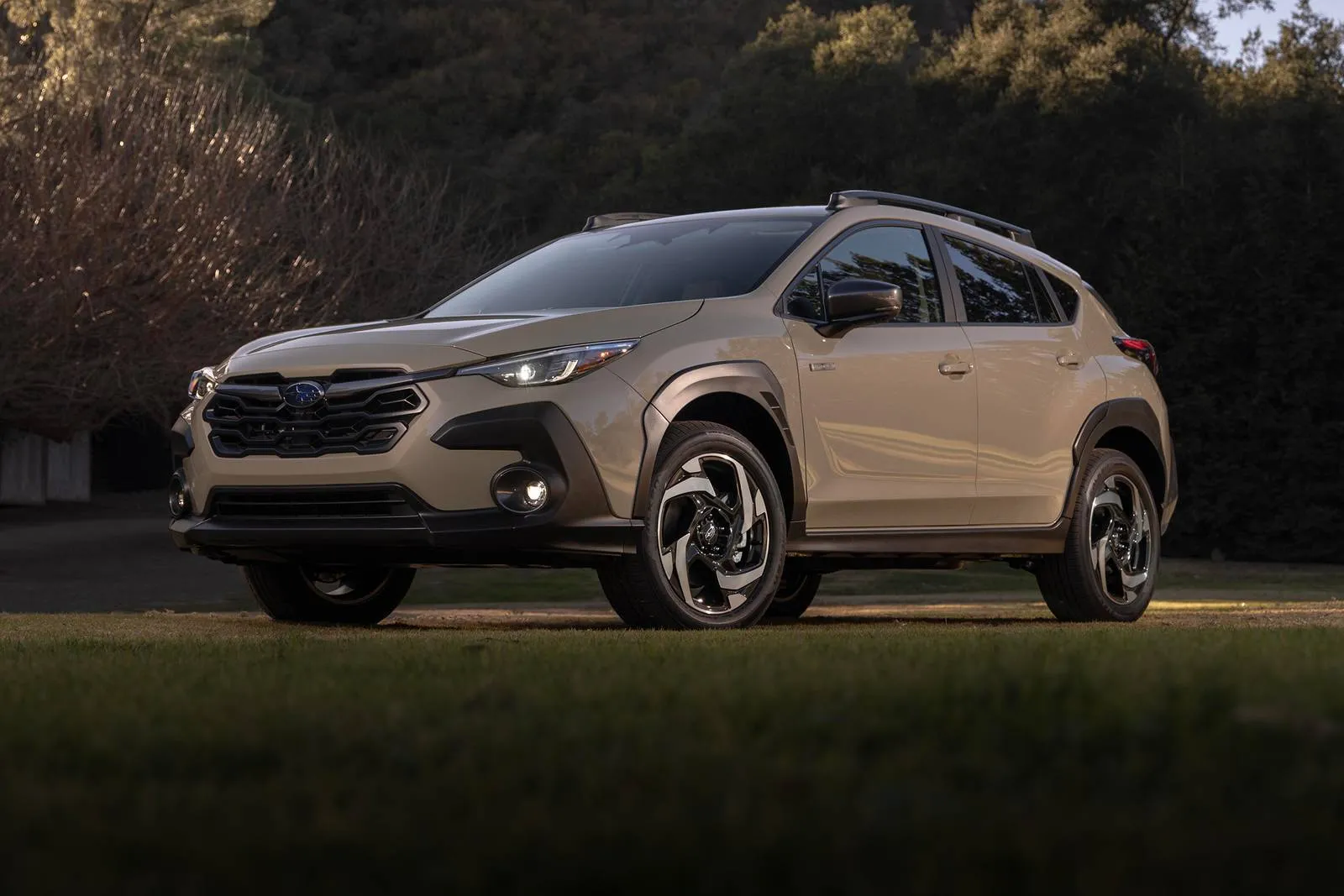
In the competitive world of compact and midsize crossovers, Subaru and Mazda have emerged as two of the most respected brands among drivers who value capability, design, and everyday usability.
Both manufacturers have developed loyal followings, but they approach crossover design with different philosophies that influence performance, versatility, and driver experience.
Subaru emphasizes all-weather confidence, practical functionality, and rugged reliability, while Mazda tends to focus on refined driving dynamics, premium aesthetics, and spirited performance.
This comparison explores how Subaru crossovers often hold meaningful advantages over their Mazda counterparts in areas that matter most to many crossover buyers.
Crossovers have become the go-to choice for families, outdoor enthusiasts, and commuters alike due to their blend of SUV-like space with car-like comfort. However, not all crossovers are created equal.
Mazda’s lineup is lauded for stylish design and engaging driving character, yet sometimes sacrifices utility and capability in favor of refinement.
Subaru, in contrast, builds vehicles that feel equally at home on city roads, rural routes, and light off-road trails thanks to standard all-wheel drive, generous ground clearance, and a strong reputation for durability. These foundational differences often translate into real-world advantages over time.
The following sections explore five Subaru crossovers that outshine five Mazda crossovers in specific, meaningful ways.
Each Subaru vehicle is chosen because it offers clear strengths whether in capability, safety, space, or long-term ownership value that make it a compelling choice when compared to a Mazda model targeting a similar segment or buyer profile.
This is not intended to discredit Mazda’s engineering, but to highlight where Subaru’s approach currently offers measurable benefits for a broad range of drivers.
By examining each model individually, this comparison helps prospective buyers identify the crossover that best aligns with their priorities, driving needs, and lifestyle demands.
Also Read: 5 Cars for Fremont Bay Area Commuting vs 5 That Cost a Fortune
5 Subaru Crossovers
Subaru has carved a unique identity in the automotive world by focusing on practicality, versatility, and all-weather confidence.
While many brands chase performance figures or luxury finishes, Subaru builds vehicles rooted in real-world usability especially for buyers who face varied driving conditions year-round.
This philosophy is most evident in its crossover lineup, where standard all-wheel drive, thoughtful interior design, and utility-friendly features set Subaru apart from many rivals, including Mazda.
One of Subaru’s greatest strengths is its symmetrical all-wheel drive system, which comes standard on nearly all models.
Unlike many competitors that offer all-wheel drive as an optional extra, Subaru’s commitment to full-time traction provides confidence for drivers in rain, snow, and light off-road terrain.
This dependable grip and balance often translate into both safety and peace of mind for buyers who prioritize capability in uncertain conditions.
Practicality is another hallmark of Subaru crossovers. Interiors are designed with storage and ease of use in mind, offering generous cargo space, thoughtful cubbies, and rear seats that accommodate passengers comfortably without feeling crammed.
Many Subaru models also offer higher ground clearance than comparable crossovers, allowing owners to explore rougher roads with less concern.
Safety remains a focal point for Subaru. The brand consistently equips its vehicles with advanced driver-assistance features and achieves strong safety ratings across the lineup. These attributes contribute to long-term satisfaction and resale value, factors that matter deeply for crossover buyers.
The following five Subaru crossovers are selected for their strengths relative to Mazda’s crossover offerings. Each vehicle delivers specific advantages, whether in capability, utility, or long-term ownership value, that justify its inclusion and demonstrate why many buyers gravitate toward Subaru when comparing across similar segments.
1. Subaru Forester
The Subaru Forester is widely regarded as one of the most well-rounded compact crossovers on the market, and it earns its place here because it combines a rare blend of capability, comfort, and everyday practicality.
Writing about the Forester matters because it highlights Subaru’s core strengths, particularly when compared to Mazda’s compact crossover offerings, which often prioritize design and driving dynamics over all-weather usability.
One of the Forester’s most notable advantages is its standard symmetrical all-wheel drive system, which provides confident traction in rain, snow, and light off-road conditions.
Unlike many compact crossovers that reserve all-wheel drive for higher trims or optional packages, the Forester makes it a standard feature across the lineup. This gives owners peace of mind year-round, especially in climates with unpredictable weather or rough road conditions.
In contrast, Mazda’s compact crossovers while capable on dry pavement, do not consistently offer the same level of inherent all-terrain confidence.
Interior space is another area where the Forester stands out. Its cabin is designed with practicality in mind, offering generous headroom, wide rear seating, and a cargo area that remains spacious even with passengers aboard.
This interior flexibility makes it ideal for families, pet owners, and outdoor adventurers who need space for gear without sacrificing comfort. Mazda’s compact crossovers tend to have more sculpted, stylish interiors, but they often compromise cargo space and rear legroom in the pursuit of sleek design.
Ground clearance further distinguishes the Forester. With higher ride height than many of its rivals, the Forester handles rough gravel roads, steep driveways, and uneven terrain with less concern. This extra capability appeals to buyers who enjoy weekend adventures or who simply encounter imperfect roads daily.
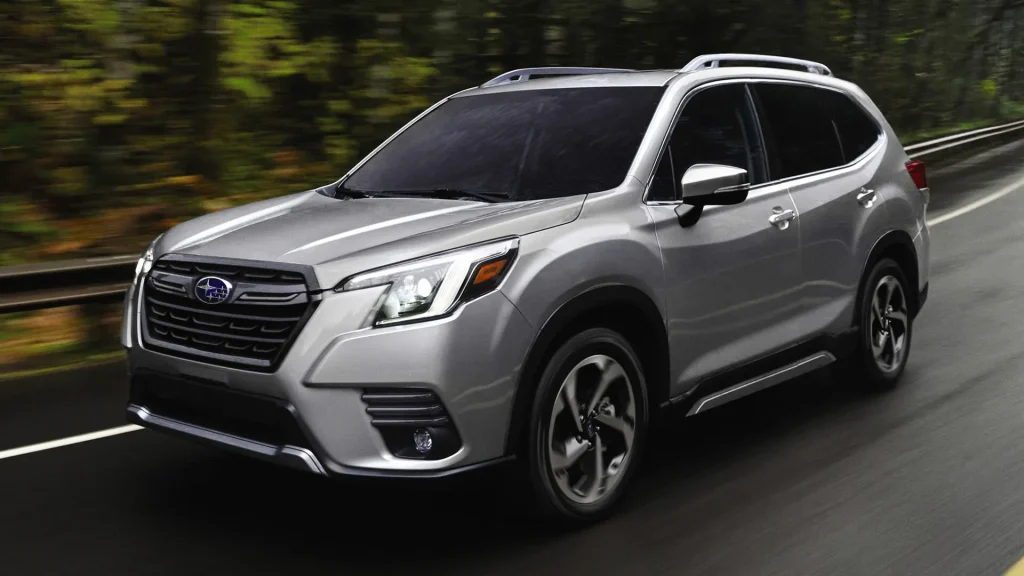
The reason the Forester outshines many Mazda crossovers is its holistic approach to real-world usability. It is not just a city cruiser it is a vehicle designed for life beyond smooth pavement.
For drivers who value confidence, comfort, and versatility over pure style or sporty handling, the Forester represents a well-balanced, dependable choice.
2. Subaru Outback
The Subaru Outback holds a unique place in the crossover segment, merging SUV-like capability with car-like comfort. Writing about the Outback matters because it illustrates how Subaru blurs traditional category lines to offer a vehicle that Mazda’s lineup does not directly rival with the same versatility and all-terrain confidence.
At its core, the Outback is designed for adventure without compromise. It comes standard with symmetrical all-wheel drive and boasts one of the highest ground clearances in its class features that enable confident travel over gravel roads, snow-covered paths, and uneven trails.
While Mazda offers capable crossovers with all-wheel drive options, none blend this capability with the Outback’s practicality and ride comfort in quite the same way.
Interior comfort is a standout strength. The Outback’s cabin is spacious, with supportive seats, intuitive controls, and ample cargo space that make long trips more enjoyable.
Rear seating accommodates adults comfortably, and the cargo area is easily accessible thanks to a low liftover height and wide rear opening. Practical features like available roof rails with integrated crossbars add functionality for outdoor gear, bikes, or cargo carriers further enhancing its utility.
Ride quality is another area where the Outback shines. Despite its off-road prowess, it remains composed and comfortable on paved highways, providing a smooth, quiet journey that rivals many pure road-focused crossovers.
This versatility makes it a strong choice for buyers who need a single vehicle capable of daily commuting, family errands, and weekend adventures.
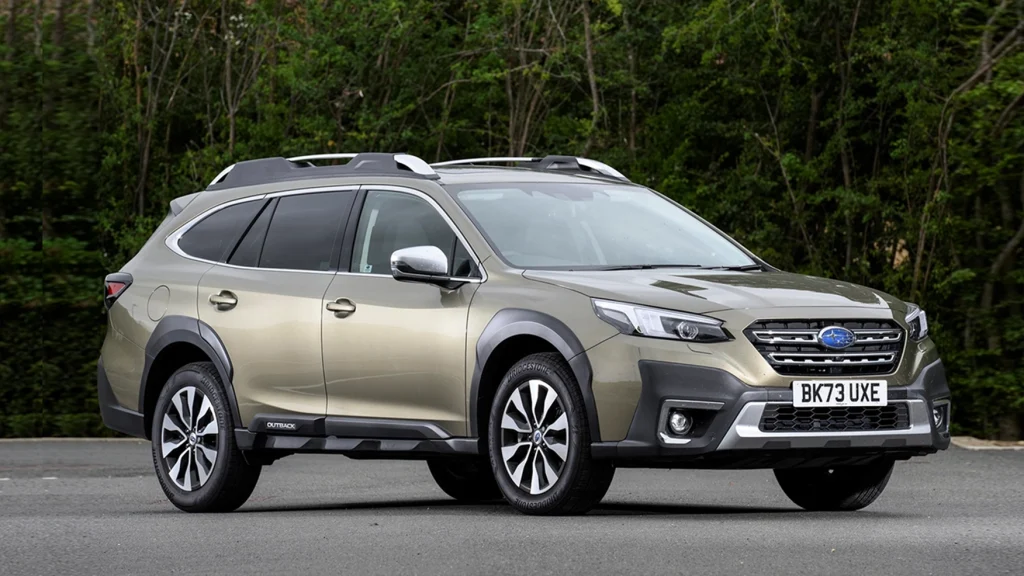
Safety features in the Outback are comprehensive, with advanced driver-assistance technologies included as standard. These systems improve confidence behind the wheel and contribute to strong safety ratings, which are important for family buyers.
The reason the Outback stands out against Mazda crossovers is its genuine versatility. It does not force owners to choose between capability and comfort. Instead, it delivers both in a package that feels inherently ready for varied driving conditions whether navigating city streets or exploring backcountry routes.
3. Subaru Crosstrek
The Subaru Crosstrek is one of Subaru’s most popular models, and it earns its place here because it delivers genuine crossover capability in a compact, affordable package.
Writing about the Crosstrek is important because it highlights how Subaru brings real-world versatility to a segment where many competitors, including Mazda, focus more on style than substance.
One of the Crosstrek’s biggest advantages is standard all-wheel drive paired with higher ground clearance than most subcompact crossovers. This combination allows it to confidently handle snow, rain-soaked roads, gravel paths, and light off-road terrain.
While Mazda’s smaller crossovers are composed on pavement, they often lack the same level of confidence once conditions deteriorate. For buyers who live in regions with rough roads or changing weather, this capability is a major differentiator.
Despite its compact size, the Crosstrek offers a surprisingly usable interior. Rear seats provide adequate space for adults, and the cargo area is practical enough for groceries, sports gear, or weekend luggage. Subaru’s focus on interior durability also stands out, with materials chosen to withstand active lifestyles rather than just look upscale in a showroom.
The Crosstrek’s ride quality strikes a balance between comfort and control. Suspension tuning absorbs bumps well, making it suitable for uneven roads, while steering remains predictable and easy to manage in urban environments. Fuel efficiency is competitive, helping keep ownership costs reasonable over time.
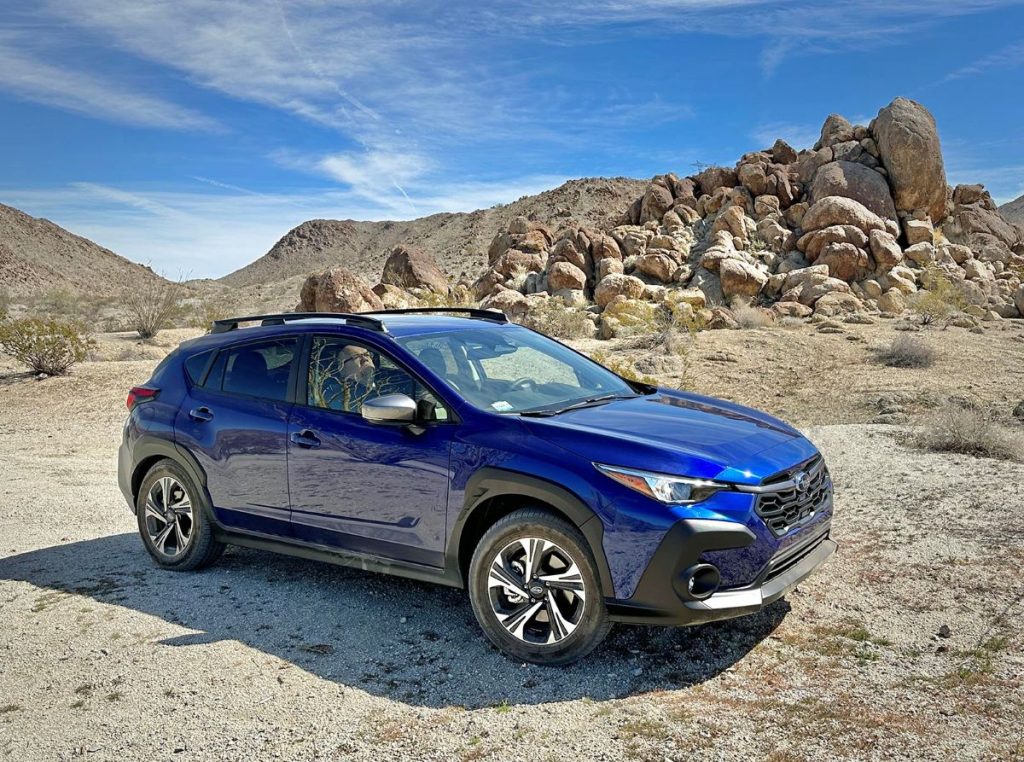
The reason the Crosstrek outperforms comparable Mazda crossovers is its authenticity. It does not pretend to be sporty or luxurious instead, it delivers dependable traction, usable space, and long-term reliability.
For buyers seeking a compact crossover that can genuinely handle varied conditions, the Crosstrek offers more practical value than many Mazda alternatives.
4. Subaru Ascent
The Subaru Ascent represents Subaru’s approach to the family-oriented crossover segment, and writing about it matters because it offers strengths that Mazda’s lineup does not fully match. As Subaru’s largest crossover, the Ascent prioritizes space, safety, and all-weather capability qualities that are crucial for family buyers.
One of the Ascent’s most notable advantages is its standard all-wheel drive system. In a segment where many three-row crossovers offer all-wheel drive only as an option, Subaru makes it standard, reinforcing its commitment to safety and stability.
This feature alone gives the Ascent an edge for families who travel in diverse weather conditions or on less-than-perfect roads.
Interior space is another strong point. The Ascent comfortably accommodates up to eight passengers, with a third row that is genuinely usable for adults on shorter trips. Cargo space is generous, and the cabin layout is designed with families in mind offering multiple storage areas, easy-to-access seating, and durable materials.
Safety is central to the Ascent’s appeal. Advanced driver-assistance systems come standard, providing features such as adaptive cruise control and lane-keeping assistance. These technologies enhance confidence for parents and contribute to strong safety ratings.

The reason the Ascent stands above Mazda crossovers is scope. Mazda does not currently offer a true three-row crossover with the same balance of space and standard all-wheel drive. For buyers who need seating capacity without sacrificing traction and safety, the Ascent fills a role Mazda cannot fully replicate.
5. Subaru Solterra
The Subaru Solterra rounds out this list by showcasing Subaru’s entry into the electric crossover market. Writing about the Solterra is important because it demonstrates how Subaru applies its core values stability, safety, and all-weather confidence, to emerging vehicle technologies.
The Solterra features standard all-wheel drive, a rarity among electric crossovers in its class. This provides improved traction and stability, especially in adverse weather conditions where many electric crossovers rely solely on rear- or front-wheel drive configurations.
This advantage aligns closely with Subaru’s long-standing identity and gives the Solterra a functional edge.
Interior design emphasizes practicality over flash. The cabin offers a clean layout, comfortable seating, and materials chosen for durability. While it may not feel as luxurious as some Mazda interiors, it is designed to be user-friendly and resilient qualities that matter over long-term ownership.
Ride quality is smooth and composed, with the electric drivetrain delivering quiet, predictable acceleration. The low center of gravity improves handling stability, while Subaru’s chassis tuning ensures confidence on varied road surfaces.
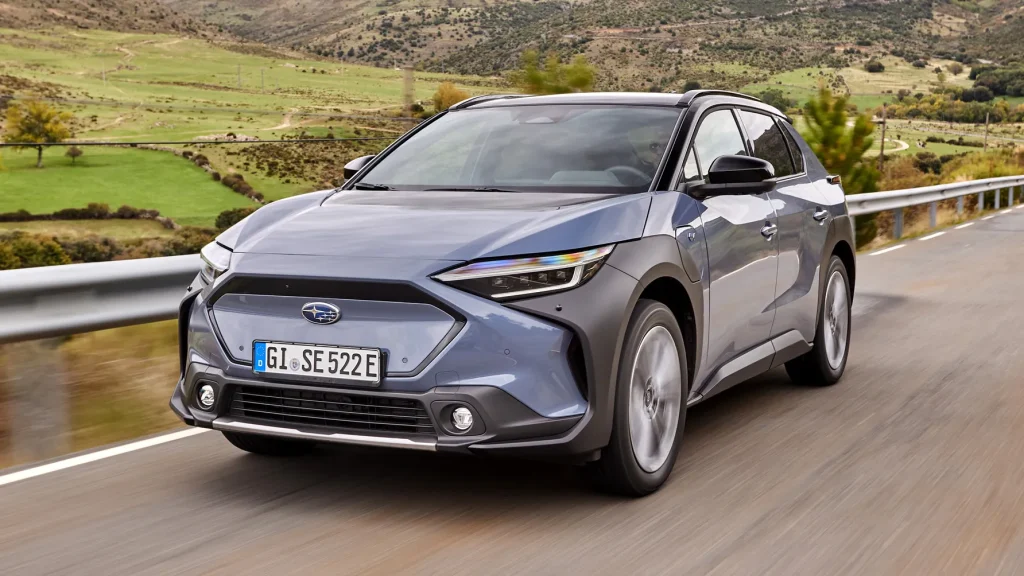
The reason the Solterra stands out against Mazda’s crossover lineup is philosophy. It is not just an electric vehicle it is a Subaru first, built around safety and traction.
As electric crossovers become more common, Subaru’s decision to retain standard all-wheel drive gives the Solterra a practical advantage for buyers who value capability alongside sustainability.
5 Mazda Crossovers
Mazda crossovers are widely respected for their refined design, engaging road manners, and upscale interiors relative to their price points. Mazda’s philosophy centers on delivering a premium driving experience without stepping fully into luxury-brand territory.
As a result, many Mazda crossovers feel more polished and car-like than competitors, appealing to buyers who value steering feel, exterior styling, and interior craftsmanship.
A defining characteristic of Mazda crossovers is their emphasis on on-road performance. Suspension tuning, steering response, and chassis balance are engineered to provide a more connected driving experience, particularly on paved roads.
This makes Mazda vehicles enjoyable for drivers who spend most of their time commuting or traveling on highways. Interiors further reinforce this appeal, with minimalist design, high-quality materials, and a focus on ergonomics.
However, this road-focused approach also introduces trade-offs. Compared to Subaru crossovers, Mazda models often place less emphasis on all-weather capability, ground clearance, and off-pavement versatility.
All-wheel drive, where available, is typically optional rather than standard, and many Mazda crossovers are tuned primarily for dry-road handling. For buyers who face snow, rough roads, or outdoor-oriented use, these differences can become noticeable over time.
Mazda also tends to favor sleek proportions and flowing design, which can slightly reduce interior volume and cargo flexibility. While the cabins look premium, they may not always be as adaptable or spacious as those in similarly sized Subaru models.
The following five Mazda crossovers represent the brand’s strongest offerings. Each model excels in refinement and driving enjoyment, even though they may fall short of Subaru’s crossovers in areas such as standard all-wheel drive, ground clearance, and real-world versatility.
This section explains why these Mazda vehicles remain appealing, while also clarifying where Subaru holds practical advantages.
1. Mazda CX-5
The Mazda CX-5 is Mazda’s best-known and most successful crossover, and it earns its place here because it exemplifies the brand’s strengths and limitations. Writing about the CX-5 is important because it is often cross-shopped directly with Subaru models like the Forester and Crosstrek.
The CX-5’s biggest strength lies in its driving dynamics. Steering is sharp, body control is excellent, and the vehicle feels composed and confident on winding roads.
For drivers who value a sporty, car-like feel in a crossover, the CX-5 delivers a level of engagement that few rivals can match. Mazda’s suspension tuning prioritizes smooth pavement performance, making the CX-5 especially enjoyable on highways and urban roads.
Interior quality is another standout area. The CX-5’s cabin feels premium, with well-chosen materials, supportive seating, and a clean, minimalist design.
The infotainment system is thoughtfully integrated, reducing distraction and maintaining a refined atmosphere. These qualities give the CX-5 an upscale feel that often exceeds expectations for the segment.
However, the CX-5’s focus on refinement comes with compromises. Cargo space and rear-seat room are more limited than in many Subaru crossovers.
Ground clearance is lower, and all-wheel drive, while available, is not standard. These factors reduce confidence in rough weather or uneven terrain compared to Subaru models that prioritize versatility.
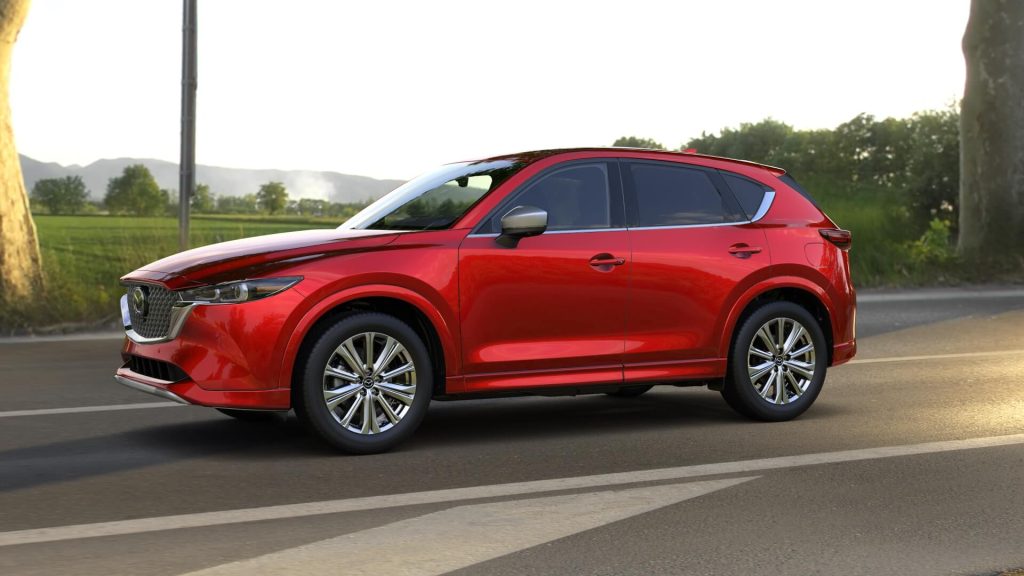
The reason the CX-5 appears here is balance. It is an excellent on-road crossover with strong design and driving appeal.
Yet when compared directly to Subaru crossovers, it highlights the philosophical divide: Mazda prioritises driving pleasure and aesthetics, while Subaru emphasises capability, practicality, and all-weather confidence.
2. Mazda CX-30
The Mazda CX-30 occupies the space between a hatchback and a compact SUV, and it is included here because it showcases Mazda’s design-first approach to crossovers. Writing about the CX-30 is important because it is often compared with smaller Subaru crossovers, yet the two brands prioritize very different buyer needs.
The CX-30’s strongest appeal lies in its premium feel. The interior design is refined, with soft-touch materials, a minimalist dashboard, and an overall sense of quality that exceeds expectations for a subcompact crossover.
Mazda focuses heavily on ergonomics and visual cohesion, which makes the CX-30 feel upscale and comfortable for daily commuting.
On the road, the CX-30 delivers a smooth, car-like driving experience. Steering response is precise, and suspension tuning favors stability and comfort on paved surfaces. For urban and highway driving, it feels controlled and easy to manage, appealing to drivers who want a crossover that behaves more like a sedan.
However, the CX-30’s limitations become clear when versatility is considered. Rear-seat space and cargo capacity are modest, making it less suitable for families or active lifestyles.
Ground clearance is also limited, and while all-wheel drive is available, it is not standard. In challenging weather or on rough roads, it cannot match the confidence offered by Subaru’s smaller crossovers.
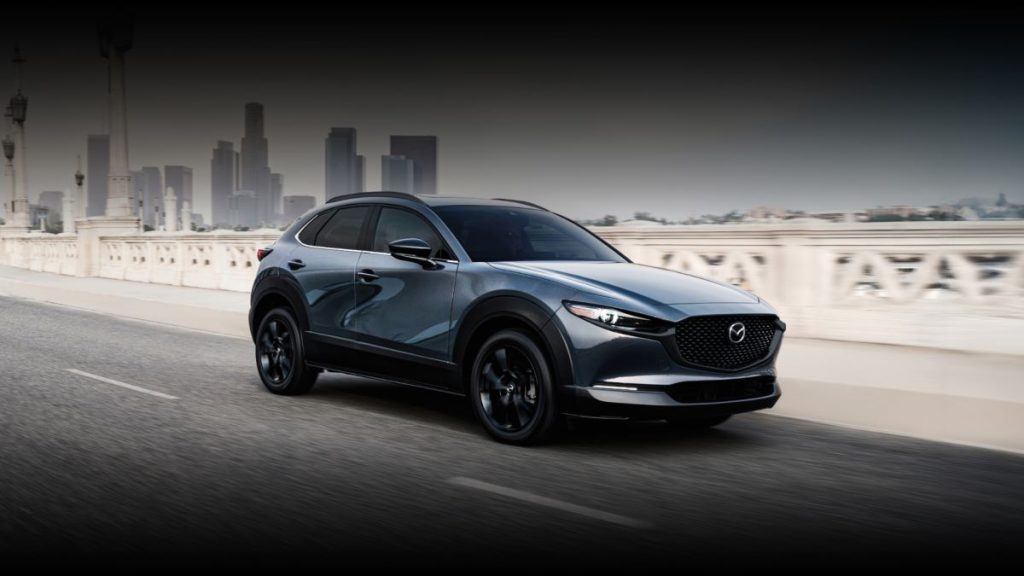
The reason the CX-30 is part of this comparison is contrast. It excels in refinement and aesthetics but sacrifices practicality and capability. Compared to Subaru’s offerings, the CX-30 feels more like a lifestyle vehicle for urban use, while Subaru’s crossovers are designed to adapt to a wider range of real-world conditions.
3. Mazda CX-50
The Mazda CX-50 represents Mazda’s attempt to appeal to adventure-oriented buyers while retaining its signature on-road refinement. Writing about the CX-50 matters because it comes closest to Subaru’s philosophy, yet still approaches versatility differently.
The CX-50 features a wider stance and more rugged styling than other Mazda crossovers, signaling its outdoor intentions.
It offers improved handling stability and a confident feel on highways, maintaining Mazda’s reputation for engaging driving dynamics. The steering remains precise, and body control is well-managed, especially on paved roads.
Interior quality continues to be a strength. The cabin feels thoughtfully designed, with premium materials and supportive seating. Mazda’s infotainment and control layout emphasize simplicity and reduce distraction, reinforcing the vehicle’s refined character.
Despite these improvements, the CX-50 still falls short of Subaru crossovers in key practical areas. Ground clearance is competitive but not class-leading, and all-wheel drive, while available is not inherent to every model. Off-pavement confidence and rough-road durability remain secondary to on-road performance.
Cargo flexibility and interior adaptability are also more limited than in comparable Subaru models. While the CX-50 looks adventurous, its engineering priorities still favor driving enjoyment over true all-terrain readiness.
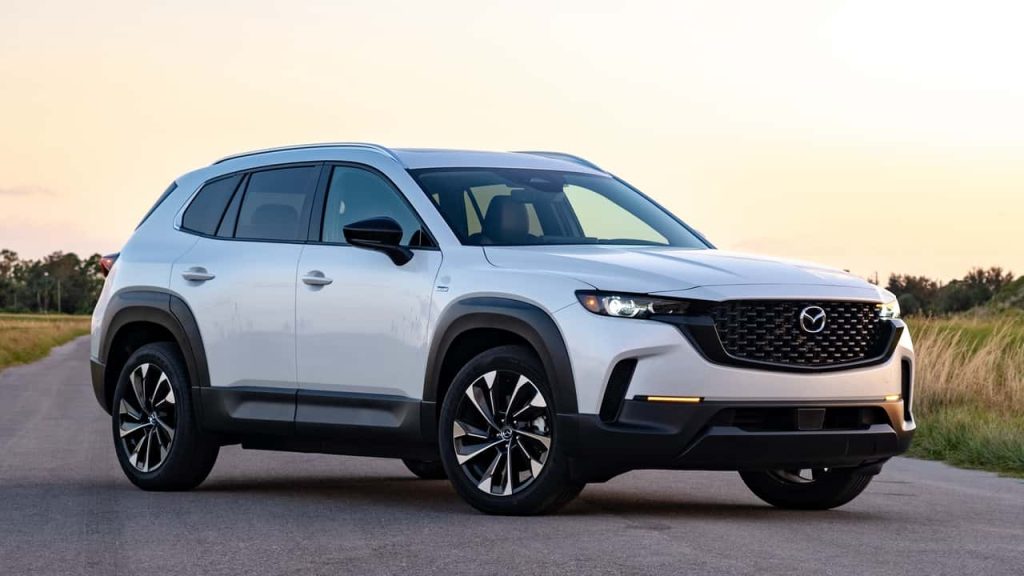
The reason the CX-50 is included here is perspective. It shows Mazda moving closer to Subaru’s territory but not fully embracing the same level of capability.
For buyers who want a crossover that looks rugged yet feels refined on the road, the CX-50 works well. For those who prioritize function over form, Subaru’s crossovers still offer broader real-world advantages.
4. Mazda CX-9
The Mazda CX-9 is Mazda’s flagship family-oriented crossover, and it earns its place in this comparison because it highlights Mazda’s strengths and limitations at the larger end of the crossover spectrum. Writing about the CX-9 matters because it is often cross-shopped with Subaru’s larger offerings by families seeking space, comfort, and safety.
The CX-9 stands out immediately for its refined on-road behavior. Despite its size, it drives with a level of composure and smoothness that feels closer to a premium sedan than a traditional SUV.
Steering is responsive, body roll is well-controlled, and highway cruising is quiet and comfortable. For drivers who prioritize road manners and a polished driving experience, the CX-9 excels.
Interior quality is another major strength. The cabin is thoughtfully designed, featuring upscale materials, supportive seats, and an elegant layout. Mazda places a strong emphasis on craftsmanship, and it shows in the CX-9’s interior ambiance. Passengers in the first two rows enjoy excellent comfort, making long trips pleasant.
However, practicality reveals the CX-9’s compromises. The third row is best suited for children or short trips, and cargo space becomes limited when all seats are in use.
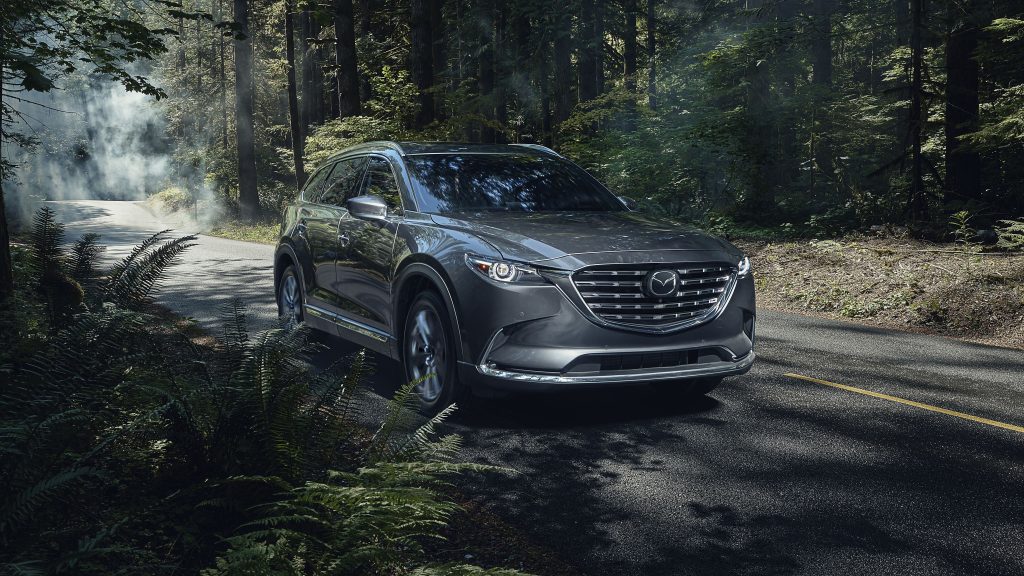
All-wheel drive is available but not standard, which reduces confidence in adverse weather compared to Subaru’s larger crossovers that prioritize traction and stability as core attributes.
The reason the CX-9 appears here is balance. It is refined, attractive, and enjoyable to drive, but its road-focused design limits overall versatility. Compared to Subaru’s more utilitarian approach, the CX-9 feels tailored for comfort and style rather than maximum adaptability.
5. Mazda CX-90
The Mazda CX-90 represents Mazda’s latest evolution toward a more premium crossover experience. Writing about the CX-90 is important because it showcases Mazda’s ambition to move upmarket while maintaining its signature driving character.
The CX-90 offers a powerful and refined driving experience, with a chassis tuned for stability and responsiveness.
On paved roads, it feels composed and confident, delivering smooth acceleration and excellent highway manners. Mazda’s focus on driving dynamics remains evident, even in a larger, family-oriented vehicle.
Interior design and material quality are highlights. The cabin feels modern and upscale, with attention to detail that rivals luxury brands.
Seating comfort is strong across all rows, and technology integration is clean and intuitive. For buyers seeking a crossover that feels premium without wearing a luxury badge, the CX-90 delivers a compelling experience.
Despite these strengths, the CX-90 still reflects Mazda’s road-centric philosophy. All-wheel drive is not standard across all trims, and off-pavement capability is not a primary focus. Ground clearance and ruggedness are adequate but not emphasized, which contrasts with Subaru’s approach of designing vehicles for varied terrain and weather from the outset.
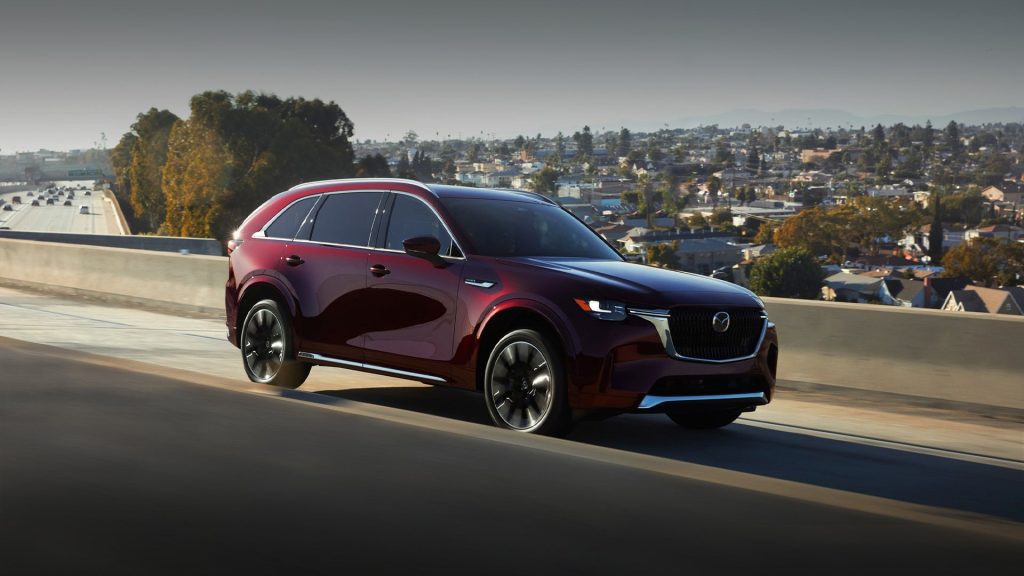
The reason the CX-90 is included is contrast and evolution. It shows how Mazda is expanding into higher segments through refinement and performance.
Yet when compared to Subaru’s crossovers, it reinforces the distinction: Mazda prioritizes driving pleasure and interior sophistication, while Subaru emphasizes all-weather confidence and real-world versatility.
Also Read: 5 Honda Hatchbacks That Are Better Than 5 Toyota Hatchbacks
