Ford has been building engines for well over a century, and they’ve made just about everything from simple workhorse mills to wild powerplants that changed the entire auto scene.
If you’ve hung around car geeks long enough, you already know how these engines tend to get talked about like mythological creatures. Some people hype them up, some pick them apart, and everyone has their favorite. But the funny part? Even the engines people argue about the most usually end up being the ones that matter the most.
Ford engines weren’t just pieces of metal that made wheels turn. They shaped drag racing trends, pushed truck culture forward, gave muscle cars their identity, and even dragged Ford back into eras where the brand was struggling.
Whether you’re into Mustangs, F-series trucks, old-school hot rods, or modern turbo tech, Ford’s catalog has produced something that likely inspired you at some point.
This list isn’t just a basic rundown. It looks at why each engine earned its reputation, what made it hit harder than the rest, and why enthusiasts still talk about them years sometimes decades, after the last one rolled off the line.
And trust me, some of these motors deserve the praise, while others made the cut simply because they changed the game in ways nobody saw coming.
We’re talking about engines that popped up in movies, crushed drag strips, proved their durability in the worst conditions, or kicked off entire tuning cultures.
Some were built in a time when engineers had barely any tech compared to today, yet they still hit like modern performance motors. Others show how Ford adapted sometimes stubbornly, sometimes brilliantly to new demands in power, efficiency, or just pure fun.
If you’re an enthusiast, a writer, or someone who just likes good car stories, knowing these engines gives you a real grasp on why Ford has stayed such a massive influence. So, let’s break down eight iconic engines what they did, how they earned their hype, and why they still matter today.
ALSO READ: Top Used Trucks Dominating Resale Value Charts Right Now
1. Ford Flathead V8 (1932–1953)
The Flathead V8 is the one that started all the trouble. Before it showed up, real performance was something only rich folks messed with. Ford basically walked in and said, “Here’s a cheap V8 that runs forever and makes modifying it stupidly easy.” And just like that, the whole hot-rodding scene exploded.
People were yanking these things out of old sedans and dropping them into anything with four wheels. It was simple, rugged, and easy to tear apart in a backyard with a couple of tools and way too much confidence.

What really pushed the Flathead into legend territory was how tunable it was for its era. You could bolt on better heads, add carbs, tweak ignition, and suddenly you had something that could outrun cars twice the price.
Even now, purists still hunt for original blocks because building a Flathead-powered rod just hits different. It’s not about chasing insane horsepower; it’s about the feel that smooth, low-rpm rumble that only an old-school V8 gives.
It overheated when you pushed it hard, airflow was restricted, and it didn’t love high RPMs. But none of that stopped early speed freaks from wringing it out anyway.
The funny thing is, the Flathead wasn’t even meant to be a performance motor. Ford just wanted something affordable that normal families could buy. Instead, they accidentally unleashed the backbone of American hot-rod culture.
Even if you’re not into vintage stuff, you gotta respect what this engine did. Without the Flathead, the whole idea of DIY performance culture would’ve looked totally different.
It taught people that building power wasn’t just for professionals it was for anyone willing to get their hands dirty. It set the tone for everything that came after, both for Ford and the rest of the industry.
So yeah, if you’re making a list of iconic Ford engines, this one has to sit near the top. It didn’t just matter mechanically; it mattered culturally. It shaped car enthusiasm long before social media, dyno clout, or turbo memes took over.
2. Ford FE 427 (1963–1968)
If the Flathead was the spark, the FE 427 was Ford showing up to the muscle-car fight swinging like it meant it. This thing wasn’t some gentle cruiser motor it was built for racing, full stop.
Ford wanted wins in NASCAR, drag racing, and basically anywhere people were keeping score. And the 427 delivered. It made serious power for the era, but its biggest flex was how it held up under constant beating. People revved the life out of these engines and they just kept asking for more.

The FE 427 came with big ports, strong internals, and a block that looked like it was carved out of stubbornness.
Depending on what setup you got single four-barrel, dual carbs, or the wild race versions the engine could go from tough street machine to full-blown track monster. And because it shared DNA with other FE engines, swapping parts around was easy, which made it a favorite among racers who liked experimenting.
One thing that always made the 427 stand out was the sound. Not the smooth thrum of the Flathead, but a deeper, harder growl that told you it wasn’t playing around. It was the kind of noise that made people stop mid-conversation, because they knew something serious had just pulled in.
Yeah, it had quirks. It wasn’t cheap, it wasn’t light, and it wasn’t made for daily commuting unless you enjoy chaos. But nobody ever bought a 427 because they wanted calm. They bought it because they wanted to go fast without apologizing for it.
Even today, collectors and builders treat the FE 427 like holy material. You see them in old Galaxies, Cobras, lightweight drag cars, and even restomod builds that want that raw, old-school punch.
It’s not the most practical Ford engine, but legendary engines rarely are. This one earned its reputation by proving Ford could play in the big leagues and win, sometimes by a ridiculous margin.
3. Boss 302 (1969–1970)
The Boss 302 is the kind of engine that makes people nostalgic in a way that borders on dramatic. And honestly, it deserves the love. This motor was built for one job helping Ford win the Trans-Am racing series.
To do that, Ford mashed up a high-revving 302 block with big-flowing Cleveland heads and created something that behaved more like a small-block race engine than a typical street V8.

The fun part? It loved to rev. Like, really rev. Where other muscle-car engines of the time were all about low-end grunt, the Boss 302 wanted to scream toward the top of the tach.
It felt energetic and twitchy, the kind of engine that dared you to keep your foot in it. Drivers who grew up on torque-heavy big-blocks didn’t always get it at first, but enthusiasts later realized Ford had built something ahead of its time.
The Boss 302 also had an attitude. It didn’t idle politely, and it didn’t try to be friendly. It acted like a track motor living in a street car, constantly reminding you that comfort wasn’t part of the deal.
But that became part of its charm. It made the Mustang feel sharper, more balanced, and honestly more interesting than some of the heavier big-block versions.
What really kept the legend alive was the aftermarket. People discovered the engine could take a ton of tuning, and once you opened it up, it really woke up. Even modern builds still use the Boss 302 layout as inspiration, because the breathing characteristics were just that good.
Ford later revived the Boss 302 name in the 2010s, but the original still hits differently. It represents a moment when Ford decided to think smarter instead of just bigger. The Boss 302 wasn’t the most powerful engine of its era, but it was one of the most fun. And that’s why it still has a loyal fanbase today.
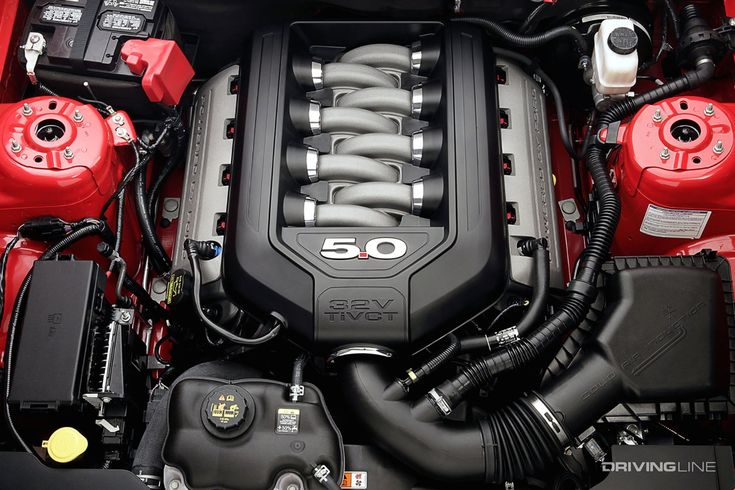
4. 5.0 HO (High Output) V8 — Foxbody Era (1982–1995)
If you’ve ever talked to someone who owned a Foxbody Mustang, you already know this engine has a cult following. The 5.0 HO wasn’t some exotic masterpiece it was a rough-around-the-edges small-block that Ford tuned just enough to wake it up.
But because it was simple, cheap, and incredibly easy to modify, it ended up becoming the “gateway drug” for a whole generation of car enthusiasts.

People don’t hype this engine because it was fast out of the box. They hype it because it responded to mods like it was begging for more power.
Exhaust, intake, cam swaps, gears suddenly you had a car that could embarrass much pricier machines. And the cool part was that anyone could work on it. Teenagers in the ’90s were building surprisingly quick 5.0s with junkyard parts and a little stubbornness.
Another big reason the 5.0 HO became legendary was how it changed the Mustang’s image. By the early ’80s, performance was basically dead thanks to emissions rules.
Ford bringing back a lively V8 at that time felt like someone finally turning the lights back on. The sound alone became iconic that deep, burbly idle that told you the car had personality.
Reliability-wise? It wasn’t bulletproof, but it was forgiving. You could beat on it at the strip, daily it to work, and still find the energy to do burnouts behind the grocery store (not that anyone’s admitting to that).
The 5.0 HO didn’t pretend to be refined. It was raw, noisy, slightly chaotic, and totally lovable. And because it was so accessible, it pulled a lot of people into the car hobby for the first time.
Today, clean Foxbody Mustangs with original 5.0 HO engines are climbing in value, mostly because nostalgia is real and because people remember how these cars made them feel: fast, loud, and a little reckless.
5. 7.3L Power Stroke Diesel (1994–2003)
Most legendary engines get their status from racing or performance, but the 7.3 Power Stroke earned its badge by refusing to die.
Seriously, this thing is famous for being almost annoyingly durable. Ask anyone who owns one, and they’ll tell you their truck has 300,000 miles and still tows like it’s fresh off the lot. And they say it with pride borderline smug pride.

Ford built this engine during a time when trucks were starting to shift toward serious work machines, not just farm equipment.
The 7.3 gave Ford a massive edge because it mixed old-school toughness with just enough modern tech (for the time) to make it efficient. It didn’t chase crazy horsepower numbers; it chased reliability. And it nailed it.
What really made the 7.3 stand out was the way it handled stress. Hauling heavy loads, pulling trailers up steep grades, idling for hours it didn’t complain. Fleet owners loved it. Ranchers loved it. And eventually, everyday truck guys loved it because suddenly diesel trucks became cool.
The aftermarket jumped in fast, offering tuners, injectors, and turbo upgrades that pushed the 7.3 far beyond what Ford ever intended. And even modded, the engine kept its reputation for lasting forever. It became such a trusted platform that people still hunt for old Super Duty trucks just to get their hands on a 7.3.
Whenever modern diesel engines get criticized for being overly complicated, expensive to fix, or too sensitive, the 7.3 Power Stroke gets brought up as the example of how things “used to be.” It’s basically the diesel version of a folk hero.
Even now, the engine’s value doesn’t drop much. A truck with a 7.3 can be twenty years old and still cost more than you’d expect, purely because buyers know what they’re getting: a workhorse that won’t fold under pressure.
This engine didn’t make history by being flashy. It made history by showing up, doing its job without drama, and outlasting most of the competition. That’s why it matters.
ALSO READ: 9 Bargain-Bin V8 Pontiacs That Deliver Serious Muscle for Pennies
6. 4.6L Modular V8 (1991–2014)
The 4.6 Modular V8 doesn’t get instant love like the 5.0 HO, but you can’t deny how important it was.
Ford built it to replace the old pushrod V8s, switching to overhead cams and a totally different design mindset. At first, people weren’t impressed. It didn’t sound the same, it didn’t make instant torque like the old small-blocks, and early versions felt kind of tame.

The 4.6 ended up in everything Mustangs, Crown Vics, F-150s, even luxury cars. And because Ford stuck with it for more than two decades, tuners eventually unlocked what it was capable of.
The high-performance versions like the Mach 1, Bullitt, and Terminator Cobra are now seen as modern classics. Once superchargers got involved, the 4.6 suddenly became a monster.
What people eventually appreciated was how smooth and rev-happy the engine was compared to the old-school V8s. It wasn’t trying to copy the old vibe; it brought its own flavor. And the fact that it powered police cars for years pretty much proves it could handle constant abuse.
It wasn’t perfect. Working on some variants felt like trying to fix an engine buried under a mile of plastic. Spark plug issues on certain years became memes. But when Ford dialed it in, especially in the DOHC versions, the 4.6 showed it could compete with anything its rivals were building.
Today, enthusiasts see the 4.6 as the bridge between classic and modern muscle. It helped bring Ford’s performance lineup into a new era one where engines needed to be cleaner, smoother, and more efficient while still giving drivers something to smile about.
Not everyone loved it during its early years, but the 4.6 earned its respect the long way: by proving itself over time.
7. 3.5L EcoBoost V6 (2011–present)
People doubted this engine before it even hit the streets. But Ford pushed forward anyway, claiming the EcoBoost would deliver V8 power with better efficiency. A lot of folks rolled their eyes until the numbers came out.

The 3.5 EcoBoost turned out to be a legit powerhouse. Twin turbos, direct injection, and smart tuning gave it torque everywhere, making it feel stronger in real-world driving than many old-school V8s.
It made towing easier, daily driving smoother, and performance surprisingly sharp. Before long, it became the main engine people ordered in F-150s something nobody expected.
The engine also anchored Ford’s move toward downsizing without losing performance. It showed that turbos weren’t just for sporty cars; they could completely reshape what a truck engine looked like.
And once the Raptor got the high-output EcoBoost, the entire conversation shifted. That version was punchy, loud enough to satisfy purists, and fast enough to shut down most critics.
Some early models had moisture issues, carbon buildup, and a few quirks that frustrated owners. But long-term, the engine has proven solid, and the aftermarket absolutely loves it. Tuners easily squeeze big gains out of it without compromising drivability. It’s the kind of engine that makes boosted power feel natural, not forced.
What makes the 3.5 EcoBoost truly important is the way it changed attitudes. It convinced a huge portion of the truck world that modern tech wasn’t something to fear. It pushed other manufacturers to rethink their game plans. And it proved that Ford could take a risk and have it pay off big.
This engine isn’t just popular it shifted an entire segment forward.
8. 5.2L “Voodoo” V8 (2015–2020)
Now we’re in modern Halo-engine territory. The 5.2 Voodoo is one of those rare engines that feels like it was built by engineers who genuinely wanted to impress enthusiasts, not accountants. The flat-plane crank alone made headlines, because that’s the kind of thing you usually see in high-end European supercars, not Mustangs.

The Voodoo revs like it’s trying to escape the engine bay. It screams past 8,000 rpm with a sharp, exotic tone that you don’t associate with American V8s.
Ford wanted the GT350 to feel sharper, lighter, and more precise than typical muscle cars, and the Voodoo was essential for that personality. It didn’t rely on big displacement or forced induction just clean breathing, clever engineering, and the willingness to spin high.
Performance-wise, the Voodoo made the GT350 feel special in a way you don’t get from the usual supercharged muscle monsters. It invited you to chase the redline, not just mash the throttle at low rpm. And that made it addictive.
Of course, it came with drama. Some engines had oil consumption issues, and replacing a Voodoo is not cheap. But even with the complaints, enthusiasts still love it because engines like this barely exist anymore. Everyone is moving toward turbos, hybrids, and soon EVs, so a high-revving flat-plane V8 feels like the last of its kind.
The Voodoo matters because it showed Ford could build an engine that plays in the same emotional space as exotic cars while keeping a Mustang badge on the fender. It wasn’t about bragging rights it was about driving feel. And that’s why people still call it one of Ford’s greatest modern engines.
Ford has built hundreds of engines over the years, but only a handful leave a mark deep enough that people still talk about them decades later.
These eight weren’t just good, they shifted something. Some sparked entire movements. Some saved performance when the industry felt stuck. Others changed minds about what a truck or muscle car could be.
The Flathead opened the door to affordable power. The 427 proved Ford could dominate racing. The Boss 302 showed that small, rev-happy V8s could be more fun than brute-force big-blocks. The 5.0 HO kept the car scene alive for young enthusiasts who needed something cheap and mod-friendly.
Then you have the engines that shaped real-world driving. The 7.3 Power Stroke set a standard for durability that new diesels still get compared against. The 4.6 Modular brought Ford into the modern era with smoother tech and long-term evolution.
The EcoBoost V6 changed the way people think about truck engines. And the Voodoo… well, that one reminded everyone that Ford still knows how to build something emotional when it wants to.
What ties all of these engines together is that they weren’t just about specs. They changed behavior. They changed attitudes. They created communities, arguments, and rivalries. They inspired builds, swaps, restorations, and questionable late-night decisions.
And even as the automotive world heads toward electric futures, these engines remain important. Enthusiasts keep them alive in garages, track cars, project builds, and weekend toys.
They carry history under their valve covers. They represent the kind of mechanical soul that makes people fall in love with cars in the first place.
Ford will keep building new powerplants, and eventually, the spotlight will shift again. But these eight engines earned their place in the conversation not through hype, but through the way they performed and the way they made people feel.
For any enthusiast trying to understand Ford’s story, these engines are the core chapters. They matter because they changed things. And legends don’t fade easily.