
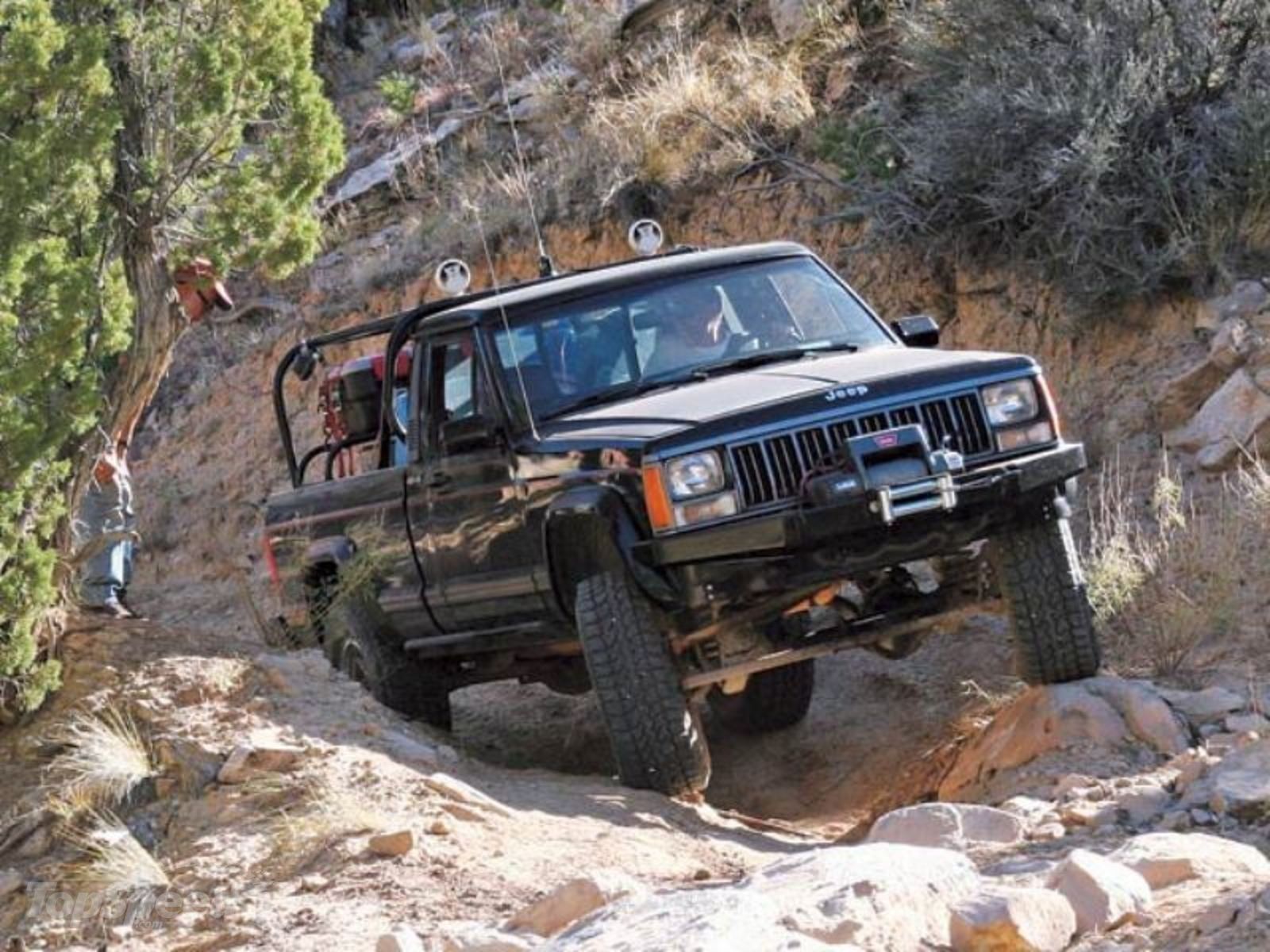
The manual-transmission pickup truck is quickly becoming an endangered species in the American used-car market.
As automakers shifted toward automatics in the 2000s and 2010s first for efficiency, then for convenience, and now because of advanced electronic control systems the manual gearbox slowly disappeared from new truck options.
But in the used market, especially under $10,000, there are still some standout choices that combine affordability, durability, and genuine driving engagement.
These are the trucks that give you more than just utility: they offer an old-school, mechanical feel that many modern pickups simply can’t replicate.
For budget-minded truck shoppers rural workers, off-road hobbyists, overlanders, or anyone who wants a simple vehicle they can wrench on manual pickups offer underrated value.
Parts are often cheap, the mechanical layouts are straightforward, and in many cases, they hold up better than their automatic counterparts in real-world abuse.
The challenge is finding models that are both worth buying and realistically available under $10K in today’s inflated used-market climate.
The following 10 manual pickup trucks fit the bill. They’re dependable, generally easy to maintain, and still attainable for buyers who want maximum capability without breaking the bank.
1. Toyota Tacoma (1995–2004)
The first-generation Tacoma remains one of the most coveted used trucks in America, and the manual-equipped versions are especially desirable.
Under $10,000, you’ll generally find four-cylinder 2.4L or 2.7L models, which are reliable workhorses known for running well past 300,000 miles with basic maintenance.
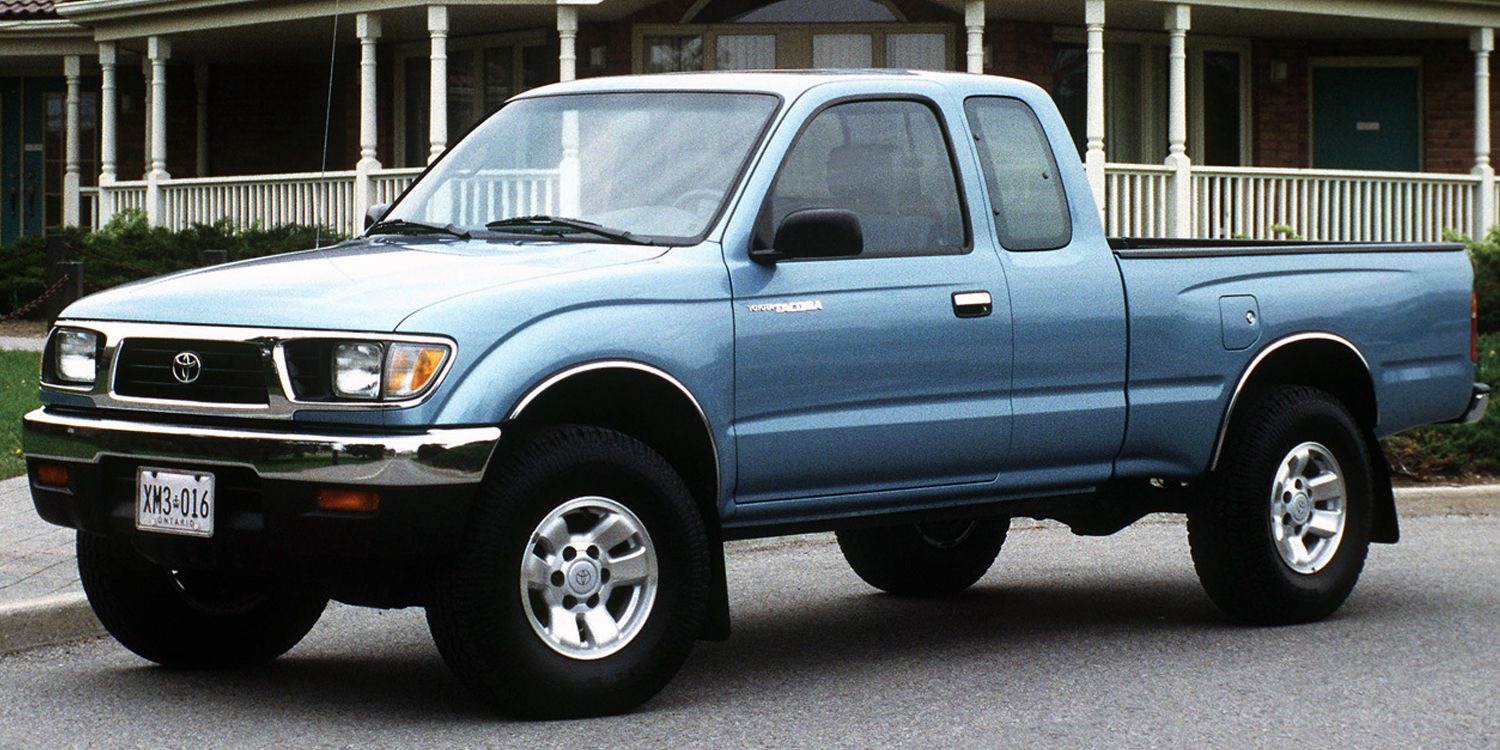
The manual gearbox in these trucks is light, precise, and nearly bulletproof, giving them a level of driver involvement that newer Tacomas lack.
While rust can be an issue in northern states, the mechanical longevity and massive aftermarket support make this Tacoma the top pick for buyers who want a long-lasting manual pickup without overspending.
2. Nissan Frontier (1998–2004)
The early Frontier is often overlooked, which is exactly why it’s one of the best manual bargains left in the used market.
Available with both 2.4L four-cylinder and 3.3L V6 engines, the manual transmission versions tend to be simpler and more reliable than their automatic equivalents.
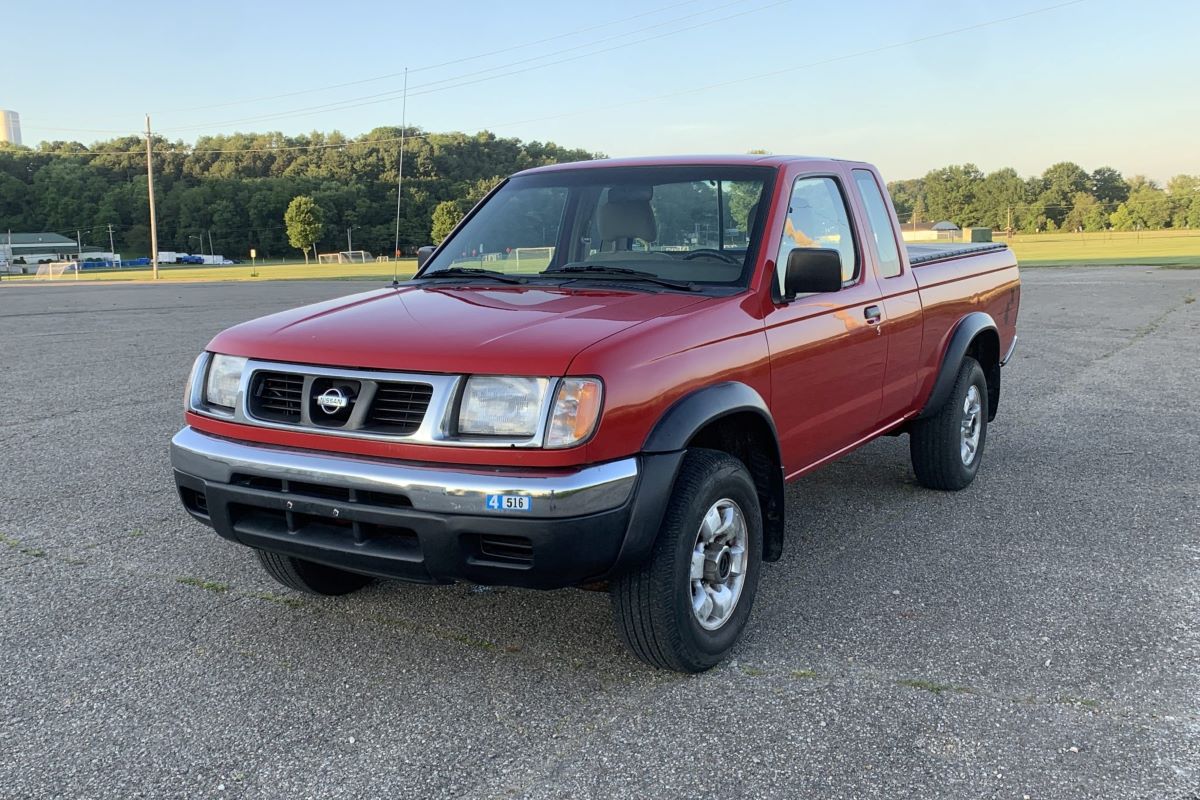
These trucks are tough, easy to maintain, and have strong frames that resist abuse well. They’re also less likely to have been beaten up by contractors compared to domestic work trucks from the same era.
For under $10K, a clean manual Frontier offers exceptional value for weekend hauling, daily commuting, or light off-roading.
When Nissan redesigned its compact pickup in 1998, the company introduced an all-new look and, for the first time, gave it a name: the Frontier.
Unfortunately, the name was applied to a fairly uninspiring truck that lacked the rugged character of the “Hardbody” model it replaced.
With a refreshed exterior and a supercharged engine, this version aimed to dominate the compact truck segment and stand out from its competitors.
Rejecting the trend of turning trucks into car-like “mommy-mobiles,” Nissan’s designers sought a bolder, more industrial aesthetic.
The larger front bumper, redesigned grille, and reconfigured headlights create a mechanical, purposeful look that replaces the previous model’s sedate styling.
The industrial theme continues with oversized fender flares, now standard even on 4×2 models, which feature visible divot holes and exposed bolts. Even the tailgate received upgrades, including a new cover plate, a more user-friendly latch handle, and a standard key lock, the first for a compact truck.
Nissan’s engineers contributed to the Frontier’s transformation by adding a Roots-type supercharger to the 3.3-liter V6, boosting output to 210 horsepower and 245 lb-ft of torque.
This SC V6 option is available on both King Cab and Crew Cab configurations, in two- or four-wheel-drive setups, including the Desert Runner off-road package. SC-specific upgrades include four-spoke 17-inch wheels wrapped in 265/55R17 off-road tires.
To accommodate the added weight of the larger wheels and tires, the Frontier receives higher-rate front springs and revised shock valving at both the front and rear.
For buyers seeking both performance and comfort, the Supercharged value package adds features such as leather seats with red-on-charcoal stitching, a six-disc in-dash CD changer with satellite steering wheel controls, a security system, cruise control, tilt wheel, and a flip-up glass sunroof.
While the cab itself remains largely unchanged from the previous year, subtle interior refinements complement the bold new exterior. The instrument panel features reversible black-and-white gauges for improved legibility, and larger knobs for the radio and climate controls make operation easier.
New seat fabrics, patterned to resemble woven metal, reinforce the industrial theme, while updated interior colors coordinate with newly available exterior paints.
For those who don’t want bulging fenders or a supercharged engine, Nissan offers a wide range of Frontier models. Regular Cab and Extended King Cab versions come in base XE or upgraded SE trims, powered by either a 143-hp 2.4-liter inline-four or a normally aspirated 3.3-liter V6 (the V6 is available in King Cab only).
Transmission choices include a five-speed manual or a four-speed automatic, and all Frontiers, except for the Desert Runner, offer two- or four-wheel drive. V6 Frontiers feature shift-on-the-fly four-wheel-drive systems, allowing drivers to engage 4WD at speeds up to 50 mph.
After introducing the first-ever compact Crew Cab in 2000, Nissan now faces stiff competition from other manufacturers launching their own four-door compact trucks.
While the Crew Cab’s four-door access adds convenience, interior space, especially for rear passengers, remains limited.
The Desert Runner continues as a two-wheel-drive V6 King Cab built on the four-wheel-drive Frontier chassis. Now available with the SC option and weighing 500 pounds less than its 4WD counterpart, the Desert Runner delivers the best power-to-weight ratio in the Frontier lineup.
With the supercharged engine, the 2001 Frontier stands out as a compact truck powerhouse. Even for buyers who skip the SC model, Nissan offers 11 additional Frontier variants, ensuring there’s a model to fit nearly every need in the compact truck segment.
3. Ford Ranger (1998–2011)
The Ranger has long been one of the most accessible trucks in the United States, and manual-equipped versions were produced in significant numbers.
Not all model years are equal, but the 2.3L and 3.0L engines paired with manuals are widely considered bulletproof.
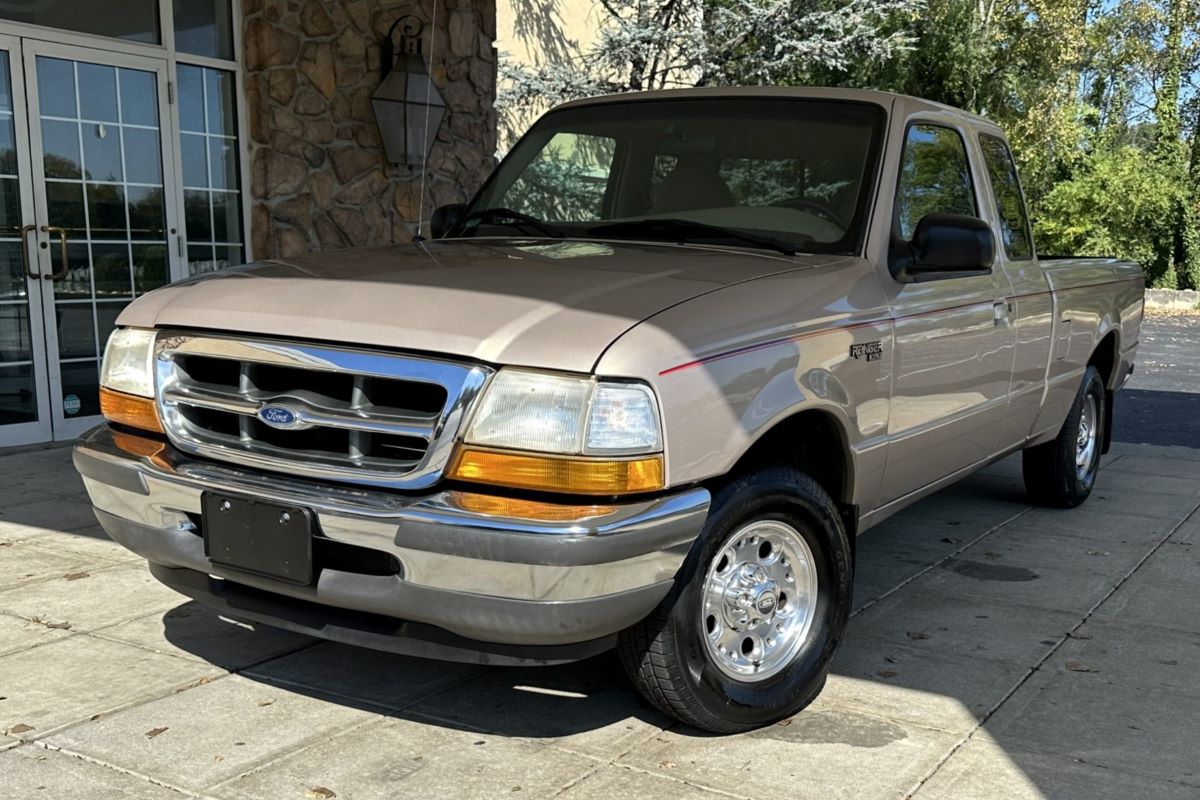
Parts availability is excellent, and the aftermarket is huge, offering everything from suspension lifts to off-road armor. Rangers are also easy to work on, making them ideal for first-time truck owners learning basic mechanics.
Under $10,000, a clean Ranger with a five-speed manual is one of the best value propositions in the entire used-truck market.
4. Chevrolet S-10 (1994–2004)
The Chevy S-10 is a classic small truck with an old-school personality, and manual versions can still be found at reasonable prices.
Most manual-equipped models come with the 2.2L four-cylinder engine, which is known for being simple, durable, and cheap to repair.
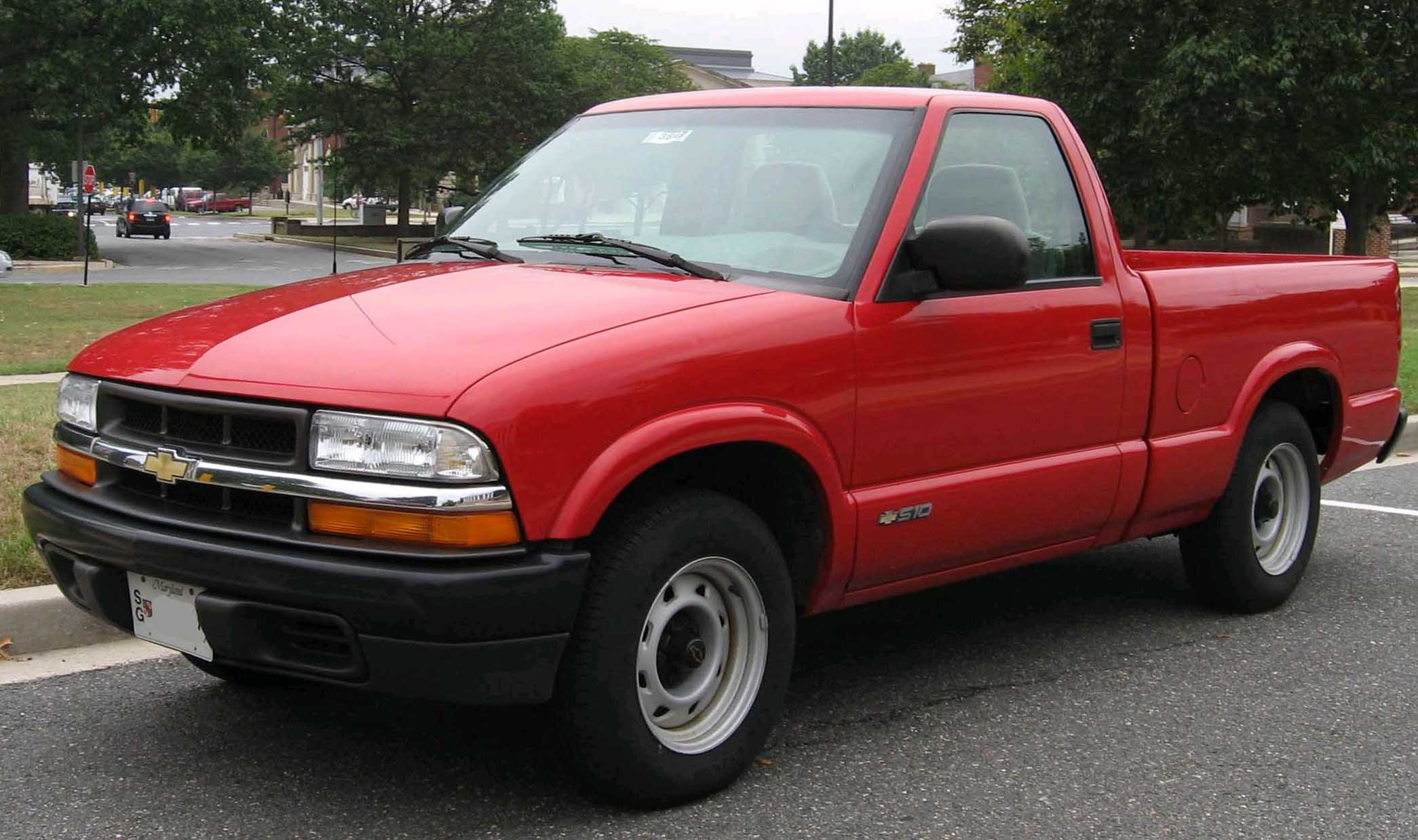
The S-10’s compact size also makes it appealing for city dwellers who need a capable truck that isn’t difficult to park or maneuver.
While interior quality isn’t great by modern standards, the S-10’s toughness and low running costs make it an easy recommendation for budget truck shoppers.
The all-new truck arrives with more powerful engine options and available four-wheel ABS. Side-door guard beams are standard across the lineup. Rear ABS comes standard on four-cylinder models, while V6 trucks feature the new four-wheel ABS system, functional in both two- and four-wheel-drive configurations.
For serious off-road enthusiasts, the ZR2 package is available, but only on regular-cab short-bed models. It adds a four-inch wider track, a three-inch suspension lift, off-road tires and suspension, wheel flares, and reinforced skid plates.
The base engine is a 118-horsepower 2.2-liter four-cylinder, while 4WD models come standard with a 165-horsepower 4.3-liter V6.
An optional high-output 195-horsepower 4.3-liter V6 is available across all models. The SS package pairs the high-output engine with sport-tuned suspension and alloy wheels for a more performance-oriented setup.
5. Mazda B-Series (1994–2009)
Mazda’s B-Series pickups share much of their DNA with the Ford Ranger, but they typically sell for even less on the used market. Manual transmissions were common, and the four-cylinder engine options are known to run reliably for decades.
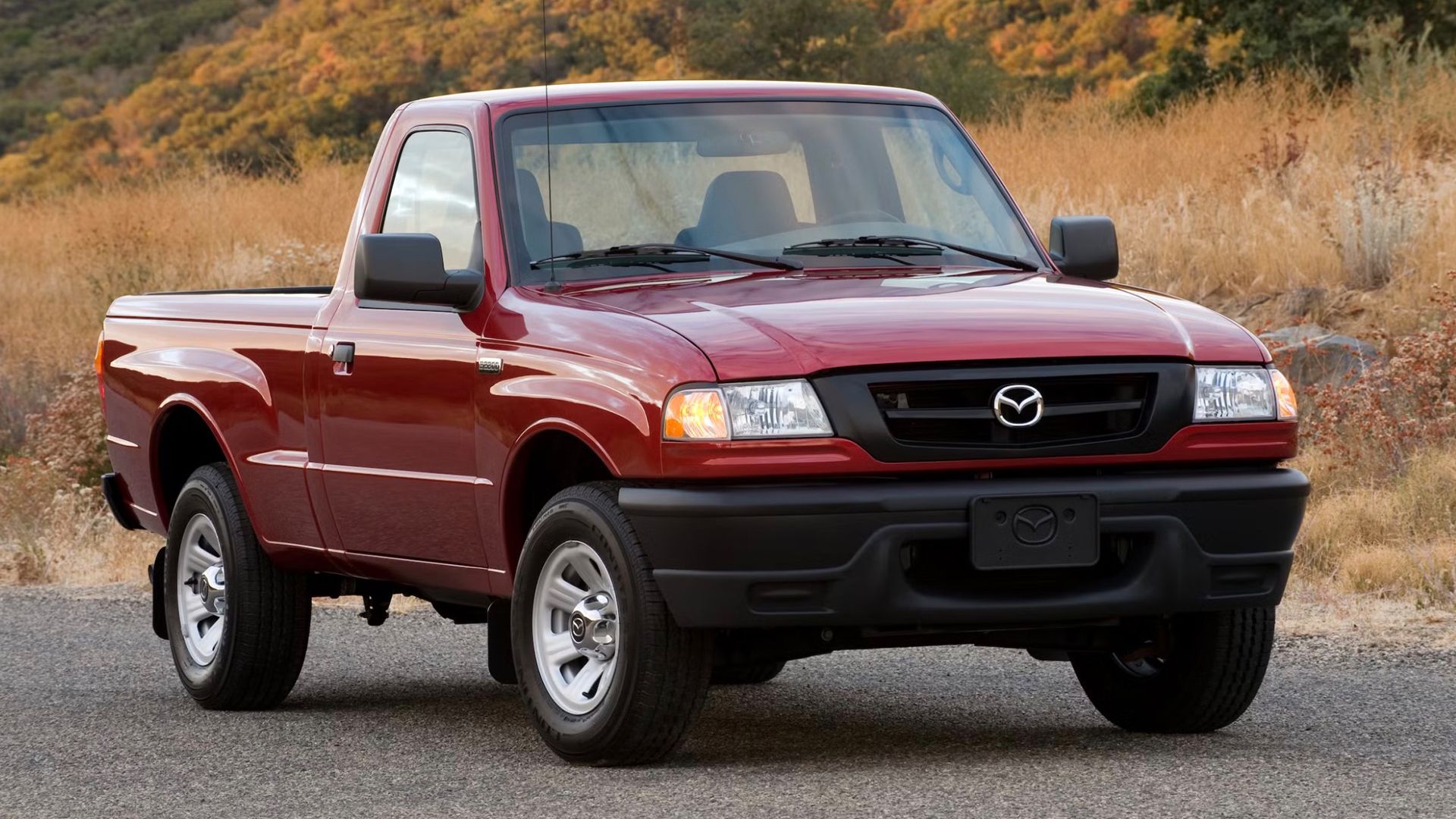
Because Mazda didn’t sell these trucks in the same numbers as Ford, they’re a bit harder to find yet the lower demand often means lower prices.
For buyers who don’t care about brand prestige and want a dependable manual truck under $10K, the Mazda B-Series is a smart alternative to the Ranger.
Both compact pickups are assembled at the same New Jersey factory, share the same basic design, and utilize nearly identical powertrains and four-wheel-drive systems.
While both are competent and visually appealing, the Mazda B-Series distinguishes itself from the Ranger primarily through styling cues and its pricing structure.
For 1998, Mazda has significantly updated the B-Series. The most noticeable change is its styling, refreshed from front to rear while maintaining a distinctively Mazda identity.
Research showed that import truck buyers favored a lower, more horizontal appearance. To achieve this, designers integrated the front grille and headlights into a single band that stretches across the truck’s front, serving as the starting point for a fender line that runs toward the rear. Blistered fenders add visual muscularity and enhance the truck’s overall stance.
The regular cab models have been extended by three inches, providing much-needed interior space. Other aspects of the cabin are carried over from the previous year, though the B-Series now comes standard with de-powered front airbags.
The passenger-side airbag can be deactivated for situations when children must ride in the front seat. Structurally, the forward section of the frame rails has been fully boxed, increasing frame stiffness by 350 percent. This improvement allowed engineers to retune the suspension, resulting in better ride comfort and handling.
The front suspension is a new short-long arm independent design, paired with rack-and-pinion steering for improved control and road feel. B4000 models offer the unusual option of a five-speed automatic transmission.
The updated shift-on-the-fly four-wheel-drive system uses pulse vacuum hub-lock technology, letting drivers engage 4WD at speeds up to 70 mph without stopping or reversing when shifting into or out of 4-Lo. This simpler, lighter system improves fuel efficiency and reduces maintenance requirements.
The B-Series is offered in SX or SE trims, with three engine choices and a variety of option packages. One notable interior feature is the optional Radio Broadcast Data System (RBDS) stereo, normally reserved for higher-end vehicles like Audi, BMW, and Cadillac.
Every Mazda B-Series pickup delivers rugged construction and appealing looks, and the B4000 adds a spirited powertrain for those seeking extra performance.
With one of the most comprehensive truck warranties in the industry, the B-Series remains a reliable and attractive choice for compact truck buyers.
6. Toyota Pickup (1989–1995)
Before the Tacoma existed, the Toyota Pickup earned a reputation for durability that bordered on mythic. Manual versions of these trucks are incredibly tough, with simple carbureted or early fuel-injected engines that can withstand extreme mileage and abuse.
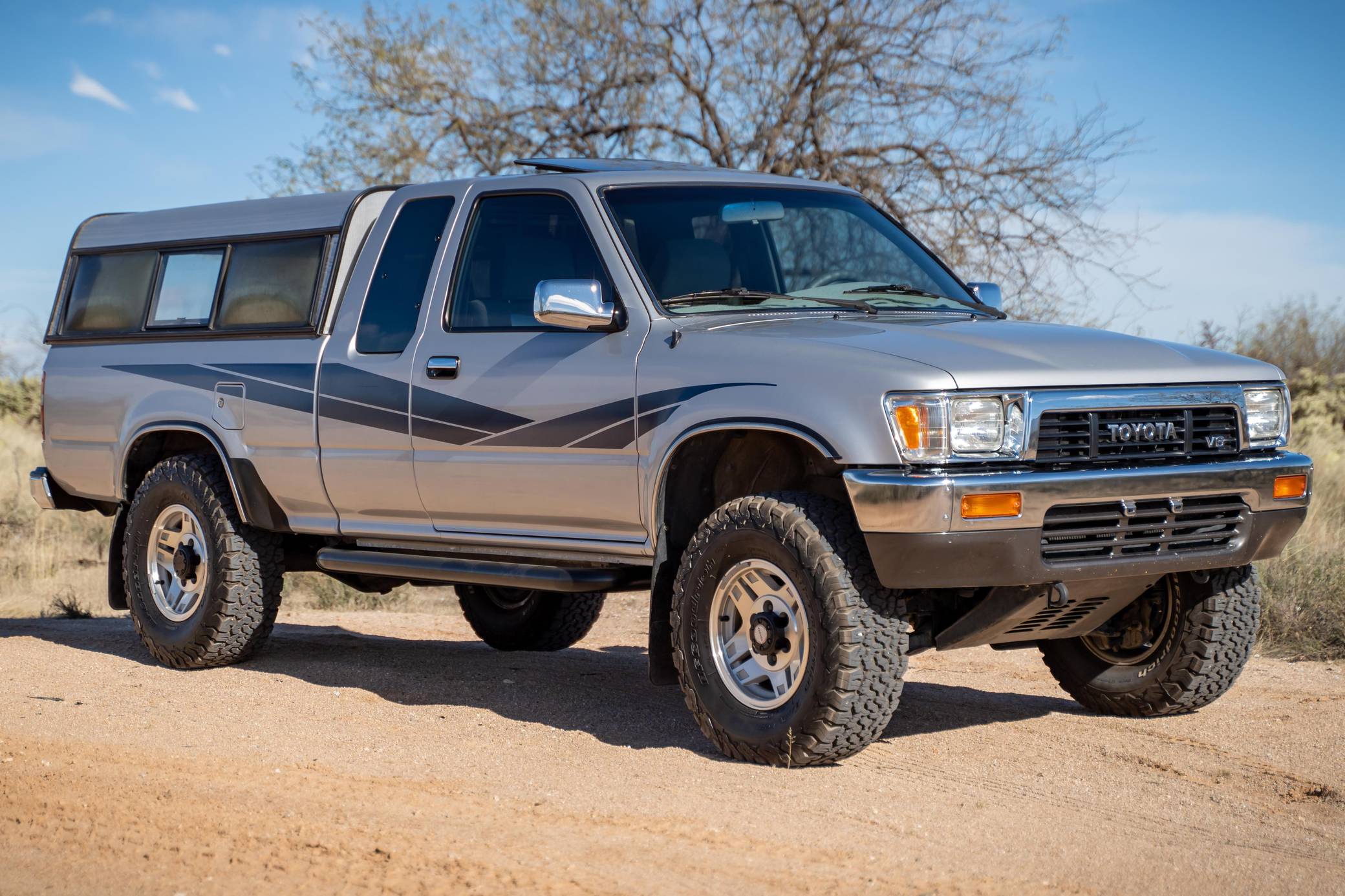
Rust is the biggest risk factor with these models, but a southern or western example can last nearly forever.
They’re also lightweight, easy to drive, and incredibly efficient for a truck. Although the used prices have risen due to collector interest, $10,000 is still enough to get a clean, mechanically solid example in many states.
7. Dodge Dakota (1997–2004)
The second-generation Dakota is larger than compact trucks but smaller than full-size pickups, creating a sweet spot for buyers who want real towing and hauling capability without massive fuel bills.
Manual versions were available with the 2.5L four-cylinder or the 3.9L V6. The V6/manual combination is especially appealing because it offers strong torque and a surprisingly enjoyable driving feel.
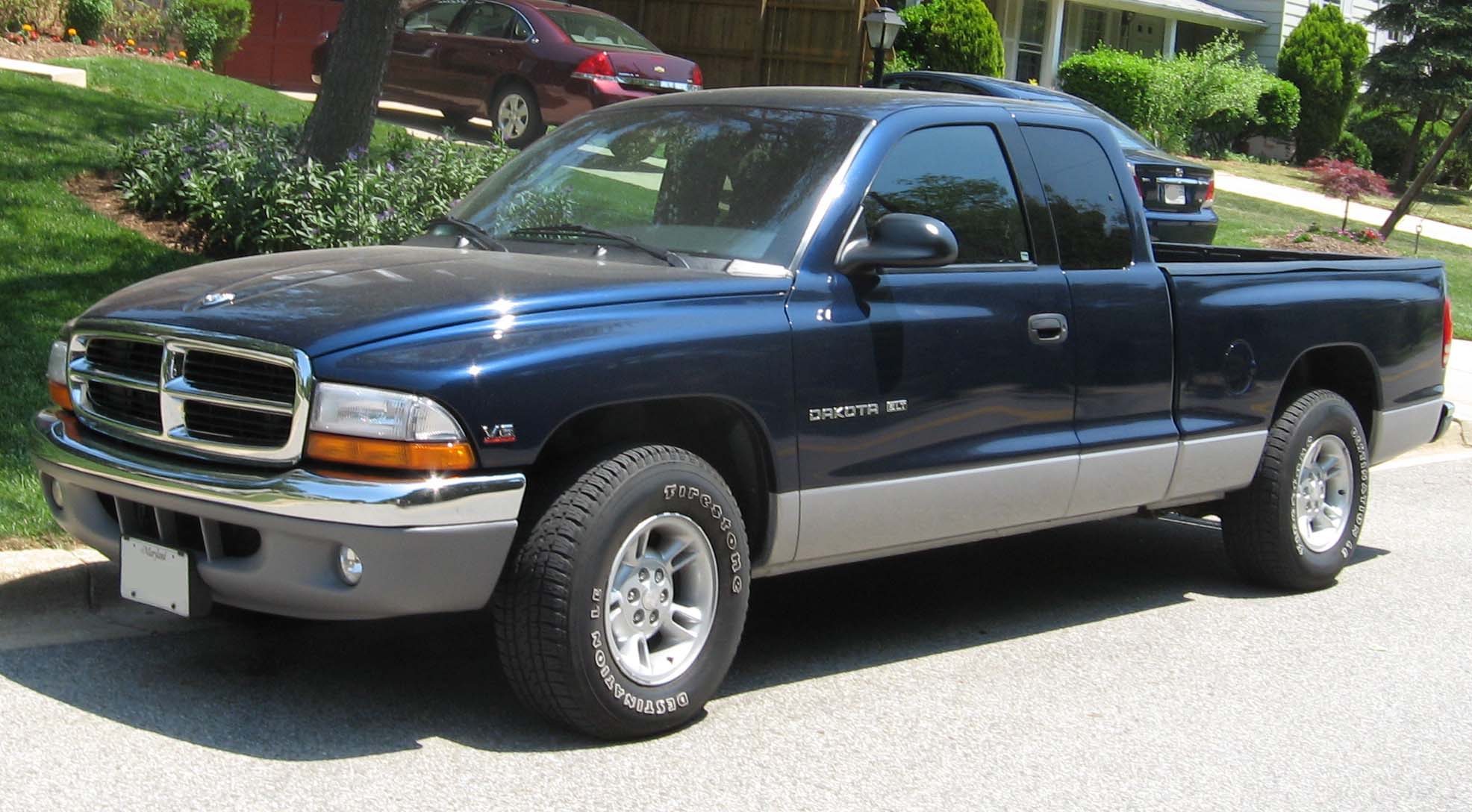
Dakotas aren’t as refined as modern trucks, but they’re sturdy, easy to service, and still affordable even in today’s market. For buyers needing mid-size capability under $10K, the Dakota deserves a look.
The Dakota’s exterior retained its rugged appeal, but the interior remained stuck in a 1980s-era design.
SLT models were plagued by faux wood trim that looked more suited to a ’70s tract home basement than a modern truck, and seat comfort was only marginal. The truck’s main redeeming features were an optional 5.2-liter V8 engine and a class-leading bed size.
With Chrysler in a strong financial position, the Dakota received a full redesign for 1997. The most obvious change is the styling, which has earned it the nickname “mini-Ram” inside and out.
While the exterior takes cues from the larger Ram, it isn’t as visually cohesive. The front end, in particular, suffers from a confusing array of cutlines around the grille and headlight assemblies.
From certain angles, the ellipsoidal grille appears tacked on rather than integrated with the lights and bumper, giving the truck slightly awkward proportions.
Inside, however, the Dakota shows significant improvement. Controls and displays are user-friendly, passing the same “work-glove ease-of-operation” test as the Ram. Seats are now elevated and far more comfortable, and the Club Cab accommodates up to six passengers.
Dual airbags are standard, but the passenger-side airbag cannot be turned off. This makes it impossible to safely use a rear-facing child seat in the front, meaning infants and young children must ride in the rear bench of the Club Cab.
For those who can’t afford a Club Cab, competitors like the Ford Ranger or Mazda B-Series offer passenger airbags with an on/off switch, highlighting a curious oversight by Chrysler.
Another puzzling omission is the lack of a third door on the Club Cab, despite Chrysler’s history of innovating four-door minivans and plans to offer a four-door full-size Ram Club Cab in 1998.
To get this convenience in a compact pickup, buyers must look at a Chevy S-10 or GMC Sonoma. While Dodge’s press materials mention side-door guard beams, they do not clarify whether these meet the 1999 side-impact standards for trucks.
One wonders why engineers didn’t implement stronger beams from the start. Chrysler had the opportunity to deliver a nearly perfect compact pickup, but the 1997 Dakota falls short in several key areas.
8. GMC Canyon / Chevy Colorado (2004–2012)
The first-generation Canyon and Colorado offered five-speed manuals on their four-cylinder and some five-cylinder engines. These early models aren’t as refined as later generations, but they’re rugged, fuel-efficient, and mechanically straightforward.
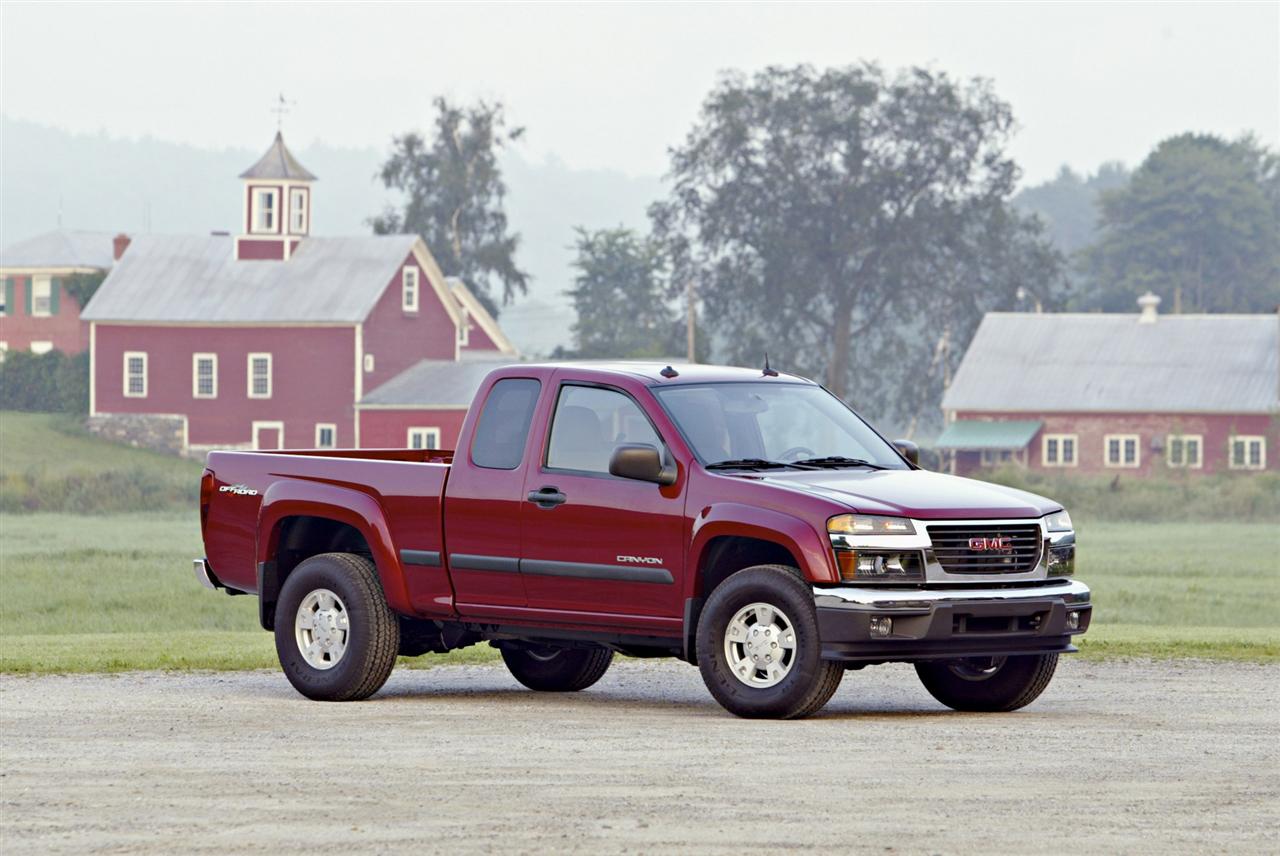
Their manual gearboxes tend to hold up exceptionally well, and GM’s parts supply remains strong nationwide.
Under $10,000, shoppers can find lightly used base models that are perfect for daily commuting or light-duty work without the overcomplicated electronics found in modern trucks.
9. Jeep Comanche (1986–1992)
The Jeep Comanche is becoming more of a collector’s item, but manual-equipped versions can still be found for under $10,000 if you search carefully.
Built on the legendary Cherokee platform and powered by the durable 4.0L inline-six, the Comanche offers unique appeal: it’s part classic Jeep, part hardworking pickup, and fully enjoyable with a manual gearbox.
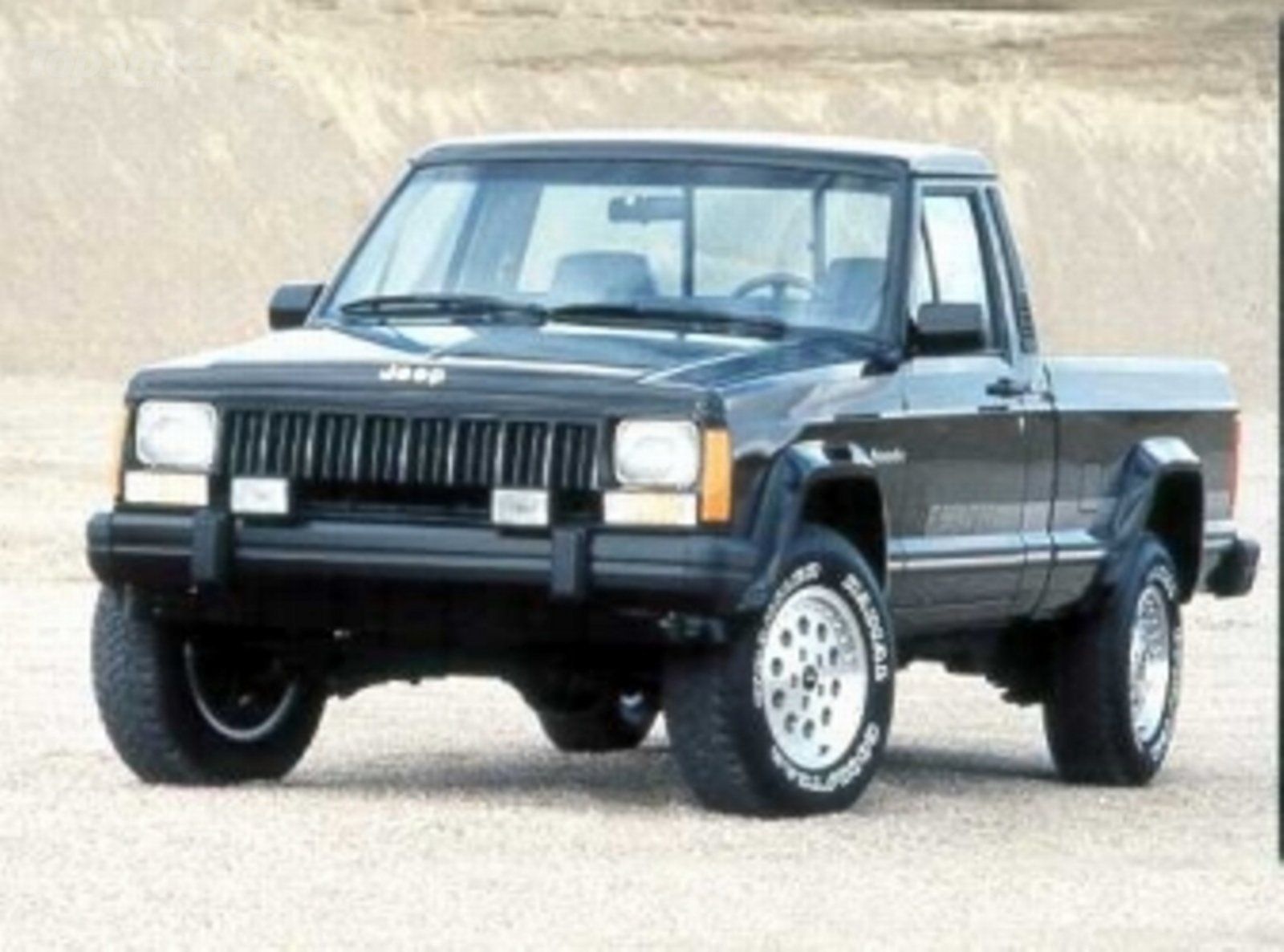
They’re also excellent off-road machines when properly equipped. While finding a rust-free example can be challenging, the Comanche remains one of the coolest manual trucks left in the sub-$10K category.
10. Ford F-150 (1990s Base Models)
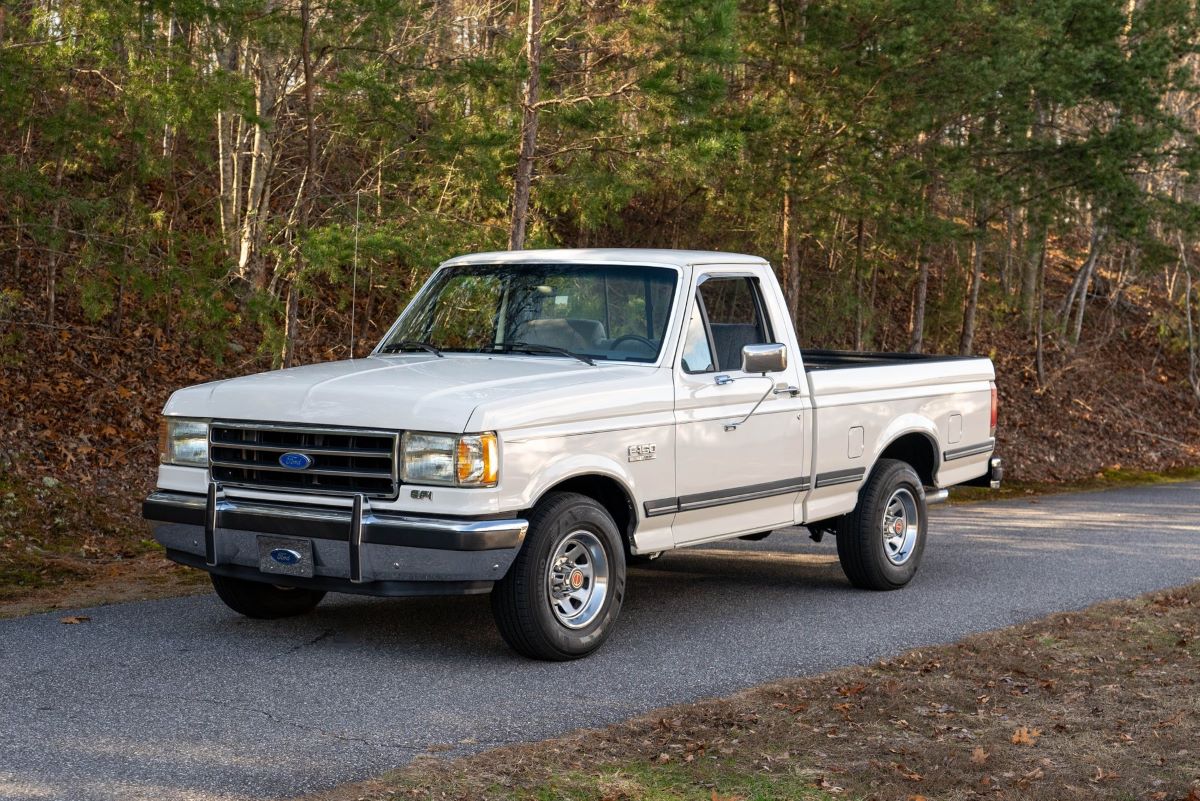
While most F-150s switched to automatics long ago, many fleet-spec models from the 1990s and early 2000s still came with manual transmissions.
These base trucks, usually equipped with the 4.2L V6 or older inline-six engines, are incredibly simple mechanically. They’re tough, affordable, and easy to fix exactly what a budget truck should be.
They’re also among the only full-size pickups with a manual transmission that remain accessible under $10,000. For buyers who need real towing and hauling capability but want to avoid the cost and complexity of automatics, these F-150s are a smart pick.
Finding a manual pickup truck under $10,000 is harder than it used to be, but the options that remain are genuinely worthwhile.
For nearly twenty years, the Ford F-Series has dominated the pickup truck market in the United States. For more than half of that time, it has also been the nation’s best-selling vehicle overall.
Naturally, Ford executives were hesitant to completely revamp their “Golden Child.” After all, the F-Series had been selling well without significant engineering updates since 1980. However, looming regulatory deadlines for stricter truck standards and the aging design meant a redesign was inevitable.
Following five million development miles, Ford unveiled a dramatically reimagined F-150 in January 1996. The new truck introduced bold styling, passenger-car-like comforts, overhead-cam engines, and a short- and long-arm front suspension.
Traditionalists, accustomed to the classic styling, utilitarian interiors, rugged pushrod engines, and Twin-I-Beam suspension of the previous model, might either embrace or reject these changes.
The new F-150 is longer across the board, and SuperCab models offer significantly improved rear passenger legroom and hip space.
A third door comes standard on SuperCab models, reflecting the growing number of full-size pickups purchased for personal use. Both Styleside and Flareside cargo boxes are available for all cab configurations.
Safety features include standard dual airbags, with the passenger-side restraint capable of being deactivated for rear-facing child seats.
The F-150 also meets the 1999 side-impact standards for trucks, and an optional four-wheel anti-lock braking system is available. Other new options include leather seats, a six-disc CD changer, and an anti-theft system.
Initially, two engines are available, with a third slated for release in the fall of 1996. The standard engine is a 4.2-liter V6 producing 210 horsepower at 5,000 rpm and 255 lb-ft of torque at 3,000 rpm, more than what GM, Dodge, or Toyota offered.
The optional 4.6-liter V8 produces similar horsepower, 210, but delivers it at a more usable 4,400 rpm and generates 290 lb-ft of torque at 3,250 rpm. The third engine, a 5.4-liter V8, makes 235 horsepower and 330 lb-ft of torque.
Thanks to platinum-tipped spark plugs, tune-up intervals are extended to 100,000 miles. Equipped with the 4.6-liter V8, a 2WD Regular Cab F-150 with an automatic transmission and 3.55 rear-axle ratio can tow up to 7,200 pounds. Standard wheels are 16 inches, with optional 17 x 7.5J rims fitted with P265/70R-17SL tires.
After driving several of the 1996 F-150s, it’s clear that Ford has designed this truck to appeal to personal-use buyers while still satisfying traditional truck customers who work their vehicles hard.
Styling is, as always, subjective, but we appreciate the clean lines, smooth contours, and uncluttered grille area. For anyone in the market for a full-size pickup, the redesigned F-150 clearly shows why it has been America’s best-selling truck for more than a decade.
These trucks represent a slice of automotive history vehicles built for durability, simplicity, and driver engagement rather than tech features or luxury add-ons.
Whether you’re looking for a dependable workhorse, an affordable off-road project, or just a fun-to-drive runabout that won’t drain your savings, the models on this list stand out as the best choices in today’s market.
