The 2000s were a golden era for supercars. Automakers were experimenting with new technologies, bold designs, and extreme performance numbers that would have been considered science fiction in the previous decade.
Cars like the Ferrari Enzo, Lamborghini Murciélago, and Porsche Carrera GT captured the imagination of enthusiasts around the world.
However, while many of these cars still command astronomical prices today, a select few from that era have, surprisingly, become affordable for everyday enthusiasts.
Thanks to depreciation, changing tastes, and the arrival of newer hypercars, some of these machines now offer a taste of exotic performance without forcing buyers to remortgage their homes.
If you’ve ever dreamed of owning a mid-engine Ferrari or a screaming V12 Lamborghini, now might be your chance. Here are seven real supercars from the 2000s that have become surprisingly cheap, and what makes each one a unique value proposition today.
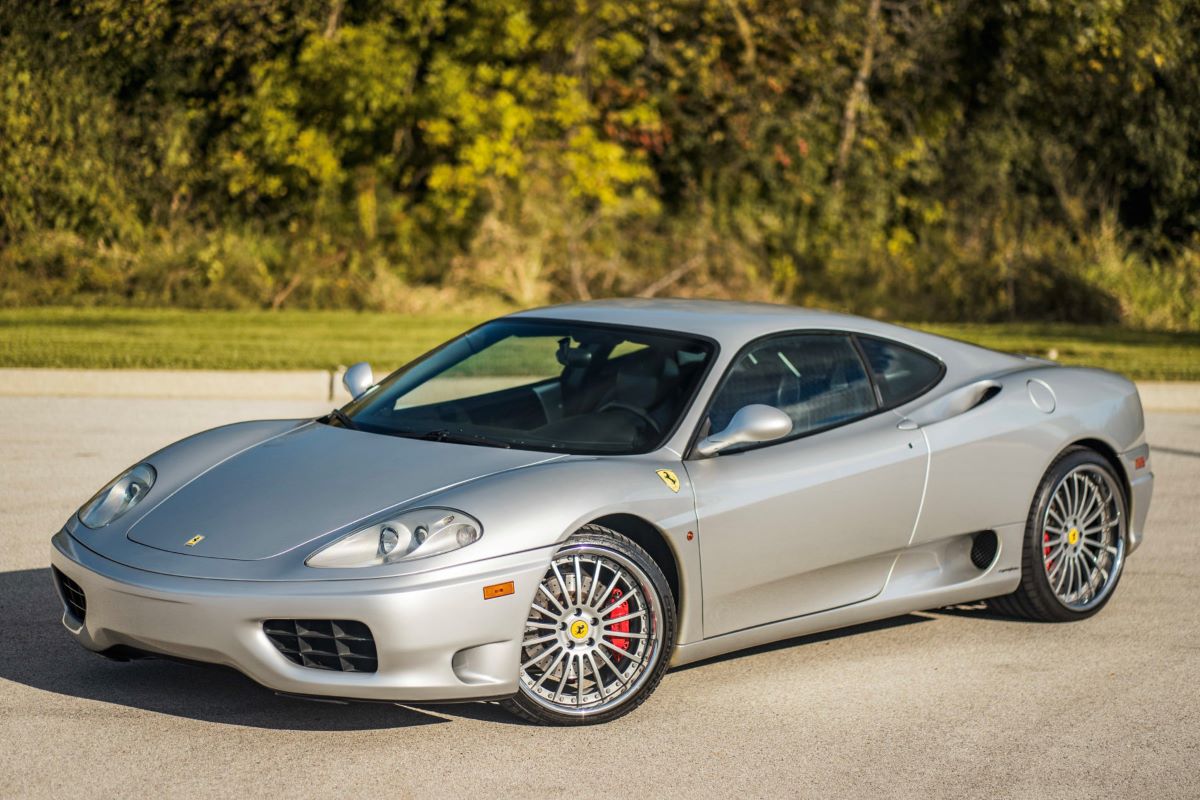
1. Ferrari 360 Modena (1999–2005)
The Ferrari 360 Modena is widely regarded as one of the most driver-friendly Ferraris ever built. It was Ferrari’s first production car to feature an all-aluminum chassis, which dramatically improved handling and reduced weight.
Powered by a 3.6-liter V8 producing around 400 horsepower, the 360 Modena offers exhilarating performance without being overwhelming.
In the US, early 360s with manual transmissions can now be found in the $60,000–$80,000 range a fraction of the original $130,000 price tag.
While maintenance costs are still notable, the car represents a perfect entry point for enthusiasts seeking a genuine Ferrari experience. Unlike its successor, the F430, the 360’s styling still turns heads but hasn’t aged as aggressively, making it a subtle classic.
The Ferrari 360, produced from 1999 to 2005, represented a watershed moment for Ferrari, bridging the gap between its classic V8 road cars and a more modern, technologically advanced era.
Designed as the successor to the F355, the 360 combined state-of-the-art engineering with Ferrari’s unmistakable styling, delivering a supercar that excelled both on the road and the track.
The 360 was a bold leap forward for Ferrari’s mid-engine V8 lineup. Designed in collaboration with Pininfarina and Ferrari’s engineering team, the 360 addressed several limitations of the F355 while introducing groundbreaking technology.
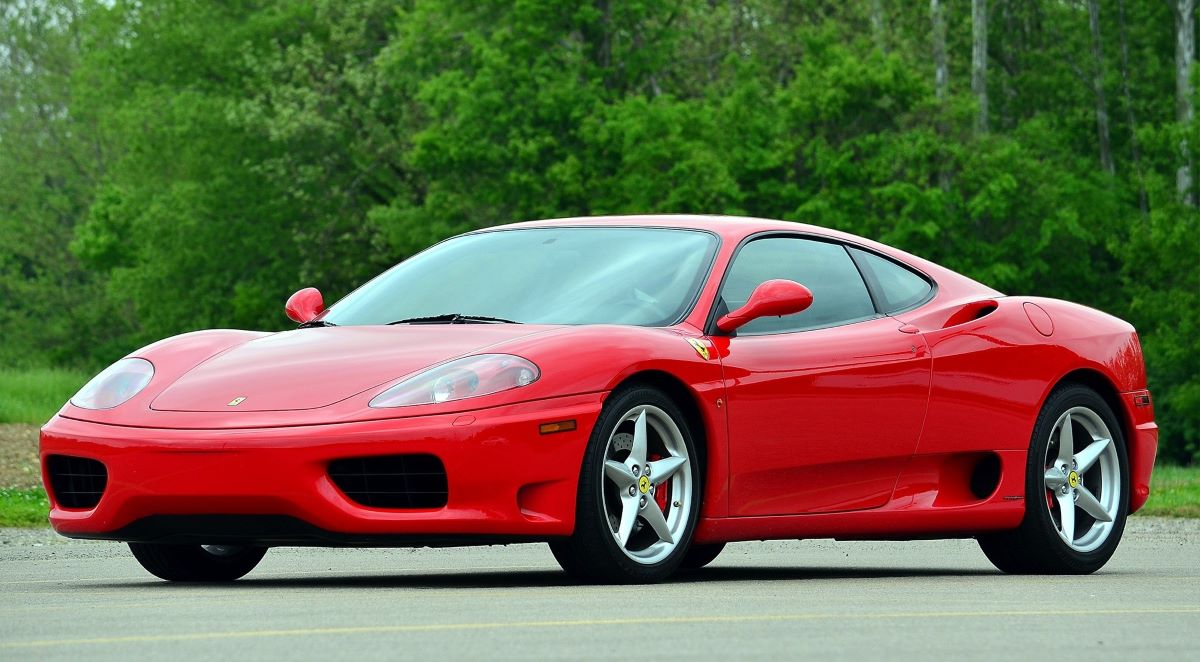
Its all-aluminum space-frame chassis was 40% stiffer and 28% lighter than the steel frame used in the F355. This focus on weight reduction and structural rigidity improved handling, safety, and overall driving dynamics.
The 360’s design perfectly blended aesthetics with performance. Pininfarina worked closely with Ferrari engineers to create a car that was visually striking yet aerodynamically efficient.
The 360 was Ferrari’s first road car with a fully flat underbody and rear diffusers, enhancing downforce without the need for a large rear wing.
The lightweight aluminum body and frame reduced overall weight while boosting torsional rigidity, improving both performance and durability.
Ferrari created a more spacious and comfortable cabin without compromising the driver-focused layout. The dashboard featured large round gauges, and the center console housed either the classic gated shifter or F1-style paddle shifters for the automated manual transmission option.
The 360 was powered by a naturally aspirated 3.6-liter V8 producing 400 horsepower at 8,500 rpm and 275 lb-ft of torque.
It was available with either a six-speed gated manual transmission or an F1-style automated manual with paddle shifters, marking one of Ferrari’s early uses of this technology in a road car.
The 360 Modena could sprint from 0 to 60 mph in roughly 4.5 seconds, with a top speed of 183 mph. Its lightweight aluminum chassis and potent V8 made it competitive with other contemporary supercars.
The 360 delivered superior handling and a more refined ride than the F355. Ferrari’s engineers calibrated the suspension to provide both agility on winding roads and comfort for daily driving.
Challenge Stradale: The track-focused variant offered an upgraded engine, reduced weight, carbon-ceramic brakes, and a race-tuned suspension.
The Ferrari 360 remains a defining V8 Ferrari, combining cutting-edge engineering, striking design, and driver-focused performance, a car that elevated Ferrari’s mid-engine lineup to new heights.
2. Lamborghini Gallardo (2003–2008)
The Lamborghini Gallardo was the brand’s first production car to sell in significant numbers, bringing Lamborghini into a more accessible price bracket.
Early models featured a 5.0-liter V10 with 493 horsepower, paired with either a six-speed manual or the innovative E-gear automated manual.
Thanks to its mass production and robust reliability compared to earlier Lamborghinis, early Gallardos have dropped into the $70,000–$90,000 range in the US.
While newer models like the LP560-4 command higher prices, first-generation Gallardos give drivers a real Lamborghini experience: loud, aggressive, and impossible to ignore. Just be prepared for higher service costs, as these cars love attention almost as much as they love speed.
Positioned as Lamborghini’s new entry-level model, it combined the brand’s iconic design language with modern engineering, ushering in a new era following Audi’s acquisition of the company.
The Gallardo’s design was a collaboration between Lamborghini and ItalDesign Giugiaro, blending Italian flair with precision engineering. Its low, wedge-shaped stance, sharp angular headlights, and short front overhang gave it an aggressive, purposeful look.

The arched greenhouse flowed into a flat engine lid at the rear, with functional vents for cooling the powerful V10 engine.
Massive rear fenders housed prominent air intakes, while squared, vertical taillights and a dual-exhaust setup punctuated the back, emphasizing the car’s performance-focused persona.
Inside, the Gallardo remained a true driver’s cockpit. Seating was tight, accommodating two passengers with a substantial center console dividing the cabin.
Leather trim enhanced the premium feel, though some buttons and switches borrowed from Audi interiors slightly detracted from the exclusivity. Depending on the version, the car featured either a short gearstick for the manual or buttons for the automatic transmission selector.
At the heart of the Gallardo was a 5.0-liter naturally aspirated V10 engine, capable of revving up to 8,050 rpm, with peak power achieved at 7,800 rpm.
Mated to an all-wheel-drive system, the Gallardo offered supercar performance with added everyday usability. This combination allowed it to challenge competitors like the Ferrari F360 and Porsche 911 Turbo, while promising stability and traction even in less-than-ideal driving conditions.
The Gallardo’s engine delivered a thrilling experience, blending screaming high-revving excitement with smooth power delivery.
The car’s chassis and suspension were tuned to offer a balance between raw Lamborghini performance and a manageable driving experience, making it a supercar that could, in theory, be driven on a daily basis.
The Gallardo not only redefined Lamborghini’s entry-level offering but also signaled the brand’s commitment to blending extreme performance with modern usability, setting the stage for future V10 models that would carry Lamborghini well into the next decade.
Also Read: Top 10 RWD Sports Cars You’ll Actually Want to Daily Drive
3. Porsche Carrera GT (2004–2006)
Arguably the ultimate driver’s supercar of the 2000s, the Porsche Carrera GT was built with no compromises. Its 5.7-liter V10 engine produces 605 horsepower, sent through a six-speed manual gearbox. The car is unforgiving, yet incredibly rewarding in the hands of a skilled driver.
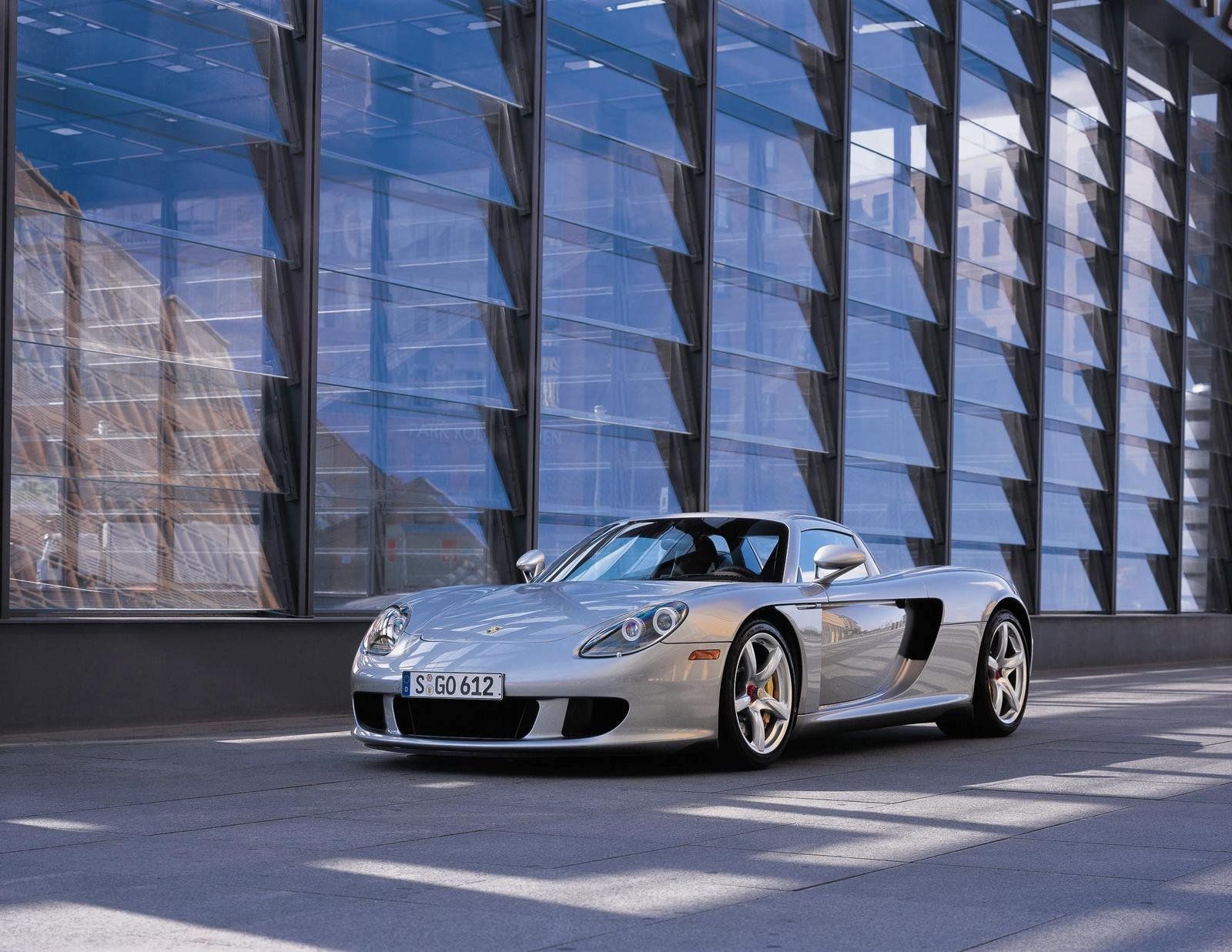
While Carrera GTs are generally considered collector cars and can fetch well over $500,000, some lower-mileage or slightly damaged examples have started to appear in the $250,000–$300,000 range a shocking bargain considering the engineering involved.
Its carbon-fiber monocoque and naturally aspirated V10 make it an iconic piece of Porsche history, and for a fraction of the price of modern hypercars, it offers an experience that no modern turbocharged car can replicate.
The Porsche Carrera GT is a supercar that blends cutting-edge racing technology with refined luxury, making it one of the most iconic models in modern automotive history. Initially revealed as a concept to steal the spotlight at an auto show, the overwhelming response from enthusiasts and collectors prompted Porsche to develop it for production, ultimately building fewer than 1,300 units due to evolving safety regulations.
Despite its race-car-inspired exterior, the Carrera GT’s interior is unmistakably Porsche in its focus on driver engagement and comfort. High-bolstered leather seats are separated by a slim center console, and a classic five-dial instrument cluster places the tachometer front and center, with the redline starting above 8,000 rpm.
The gearstick is mounted high on the center stack, above window controls and HVAC dials, ensuring that all essential functions are within easy reach of the driver.
The cabin balances the raw performance of a race car with luxury touches, making it suitable for both spirited driving and occasional longer trips in comfort.
At the heart of the Carrera GT lies a mid-mounted, naturally aspirated V10 engine. Its placement and design contribute to perfect weight distribution, exceptional handling, and incredible acceleration. Paired with a six-speed manual gearbox, the car delivers an analog, unfiltered driving experience that few modern supercars can match.
Its aerodynamics, including active rear wing deployment and underbody diffuser, allow the Carrera GT to maintain high-speed stability and cornering precision, making it as capable on the track as it is mesmerizing to behold.
The Porsche Carrera GT stands as a bridge between analog supercars and modern high-tech machines. It is a testament to Porsche’s ability to combine racing expertise with luxury and exclusivity.
Limited production numbers, advanced engineering, and iconic design have cemented the Carrera GT as one of the most sought-after and revered supercars of the 2000s, representing the pinnacle of Porsche’s performance and craftsmanship.
4. Maserati MC12 (2004–2005)
Though extremely rare in the US, the Maserati MC12 shares its chassis with the Ferrari Enzo and boasts a top speed north of 200 mph.
With its 6.0-liter V12, the MC12 was a homologation car designed for racing, and its performance credentials are as real as they come.
What makes it “surprisingly cheap” is relative to the ultra-exclusive Enzo. While most MC12s are still prohibitively expensive, a few homologation models and slightly modified race versions have occasionally shown up for under $1 million.
That might still sound high, but compared to other hypercars of the era, it’s a bargain for someone looking to own a piece of motorsport history combined with road legality.
The Maserati MC12, introduced in 2004, marked a triumphant return for the Modena-based brand to the world of supercars and racing homologation.
Though Maserati had retired from factory racing in 1957, it continued to supply race cars to privateers well into the late 1960s while concentrating on luxurious and sporty road cars that competed with Ferrari and Aston Martin. The MC12 represented a rare and ambitious modern supercar effort from Maserati.
The MC12 was developed as a homologation vehicle for Maserati’s FIA GT-spec race car, which meant it was built to meet the rules for competitive racing. Interestingly, it shared its chassis with Ferrari’s legendary Enzo supercar, launched in 2002, but the MC12’s design and aerodynamics were uniquely Maserati.
While the Enzo focused on raw performance for the road, the MC12’s bodywork was tailored to excel both on track and street, giving it distinctive proportions, a longer nose, and a wider stance.
Maserati’s engineers took a radically different approach to aerodynamics compared with Ferrari. The MC12 was longer, lower, and narrower than the Enzo, with a more pronounced front splitter and an enormous rear wing that emphasized downforce and stability at high speeds.
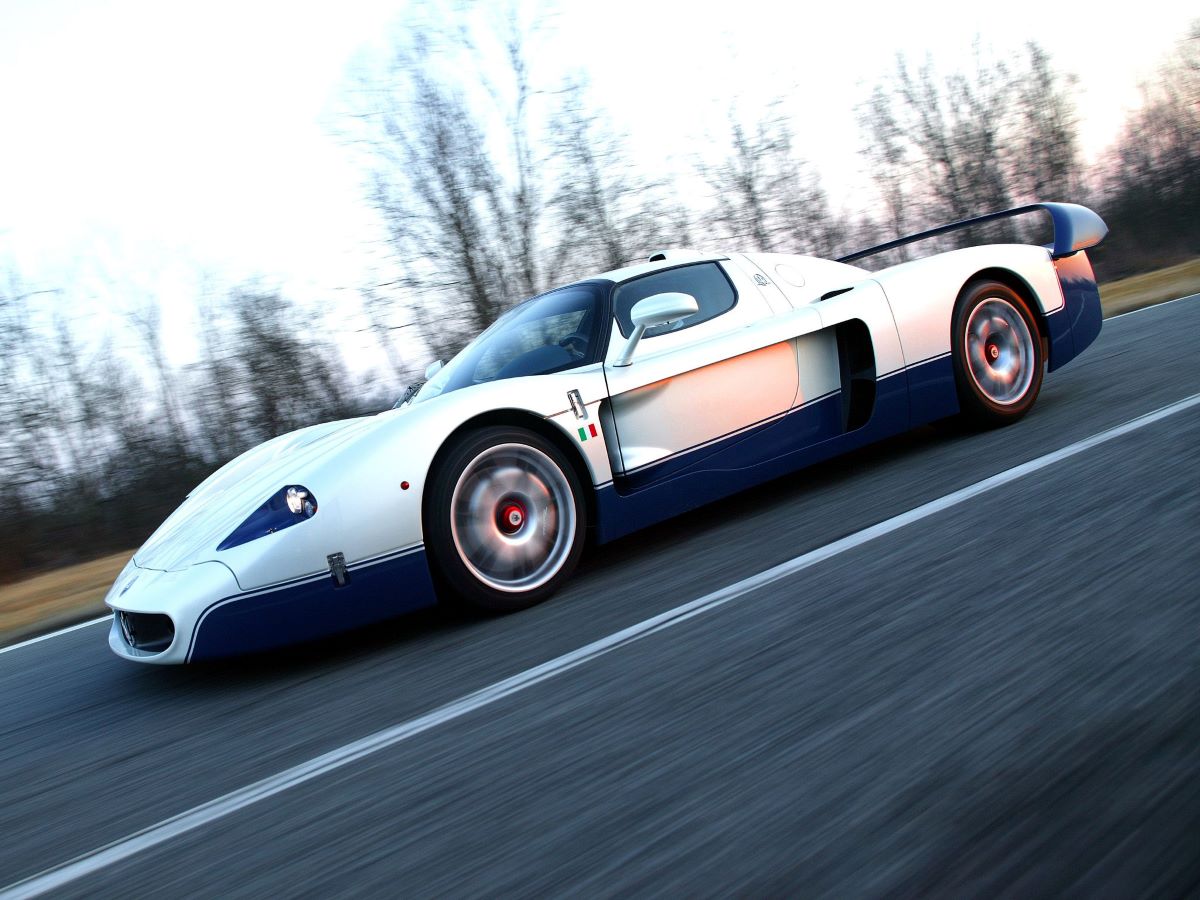
Unlike many road-going supercars of the time, which prioritized style over aerodynamic function, the MC12 was engineered with racing as a primary goal, ensuring exceptional handling and high-speed stability.
Despite its race-inspired form, Maserati incorporated subtle modifications, slightly softened suspension, improved ride comfort, and a refined interior, to make it suitable for road use.
Built in extremely limited quantities, the MC12 became an instant collector’s item. Its exclusivity was not just in numbers but in its purpose: a road car designed to mirror a competitive race car as closely as possible. Every MC12 had the bones of a full-fledged race machine, lacking only a roll cage for street legality.
The MC12 solidified Maserati’s return to high-performance automotive engineering and racing, proving that the Modena brand could produce a supercar capable of competing with Ferrari, Lamborghini, and other elite manufacturers, both on the road and on the track.
Its combination of racing pedigree, rare production, and Maserati’s signature Italian styling makes the MC12 one of the most revered supercars of the 21st century.
5. Ford GT (2005–2006)
Ford’s modern homage to the GT40, the 2005–2006 Ford GT, is a true American supercar icon. Its 5.4-liter supercharged V8 produces 550 horsepower, and the car’s aluminum space frame ensures a lightweight, balanced driving experience.
Unlike many European supercars, the Ford GT has relatively lower maintenance costs and parts are more readily available in the US.
Early models can now be found in the $120,000–$150,000 range, which is remarkable considering their original $150,000 price tag.
For enthusiasts who want a rare, dramatic supercar without venturing into Ferrari or Lamborghini territory, the Ford GT is arguably the most practical and usable choice.
The 2005 Ford GT stands as one of the most celebrated American supercars of the modern era, not just for its performance but also for its cultural and investment impact.
Conceived to mark Ford’s centennial, the GT drew direct inspiration from the legendary 1960s GT40 racers that dominated Le Mans, yet it was fully modernized with contemporary engineering and a bold, aerodynamic design.
Ford crafted the GT as a low, wide, and aggressive machine, with an aerospace-inspired clamshell body that was both functional and visually striking.

Designers and engineers emphasized simplicity and analog purity: no hybrid powertrains, no complex electronic aids, and minimal options beyond cosmetic touches like stripes, painted calipers, or BBS forged wheels. Its intent was clear, this was a car built for enthusiasts who wanted a pure driving experience.
At the heart of the GT was a 5.4-liter supercharged all-aluminum V8 producing 550 horsepower at 6,500 rpm and 500 lb-ft of torque at 3,750 rpm.
Power was delivered via a six-speed manual Ricardo transaxle to the rear wheels, ensuring that drivers felt fully connected to the car’s dynamics. This naturally aspirated and supercharged setup gave the GT strong acceleration, thrilling performance, and an analog feel increasingly rare in the mid-2000s.
Ford built just 4,038 units of the 2005–2006 GT, making it extremely limited by modern standards. Its relatively “affordable” starting price of $149,995, astonishing for a halo supercar of this caliber, made it accessible enough to be driven, yet rare enough to quickly become collectible.
Build slots filled almost immediately, and early owners found their cars appreciating in value within years, defying traditional depreciation trends for exotics.
The GT has become one of the best investment vehicles in the modern automotive era. Original examples purchased near list price around $140,000 have seen values skyrocket to $500,000–$700,000 in certain cases.
Its rarity, analog driving experience, and heritage connection to the GT40 have cemented its status as both an automotive icon and a blue-chip collectible.
In essence, the 2005 Ford GT successfully blended history, performance, and investment potential. It honored Ford’s racing legacy, offered a pure and visceral driving experience in an era increasingly dominated by electronic aids, and became a modern collectible whose value and cultural relevance continue to grow.
6. Nissan GT-R (R35) Early Models (2007–2009)
While the modern GT-R has become a performance legend, early R35 models are now surprisingly accessible.
Powered by a twin-turbo V6 producing around 480 horsepower, the GT-R brought Japanese engineering into the supercar league with a car that could out-drag many European rivals in a straight line.
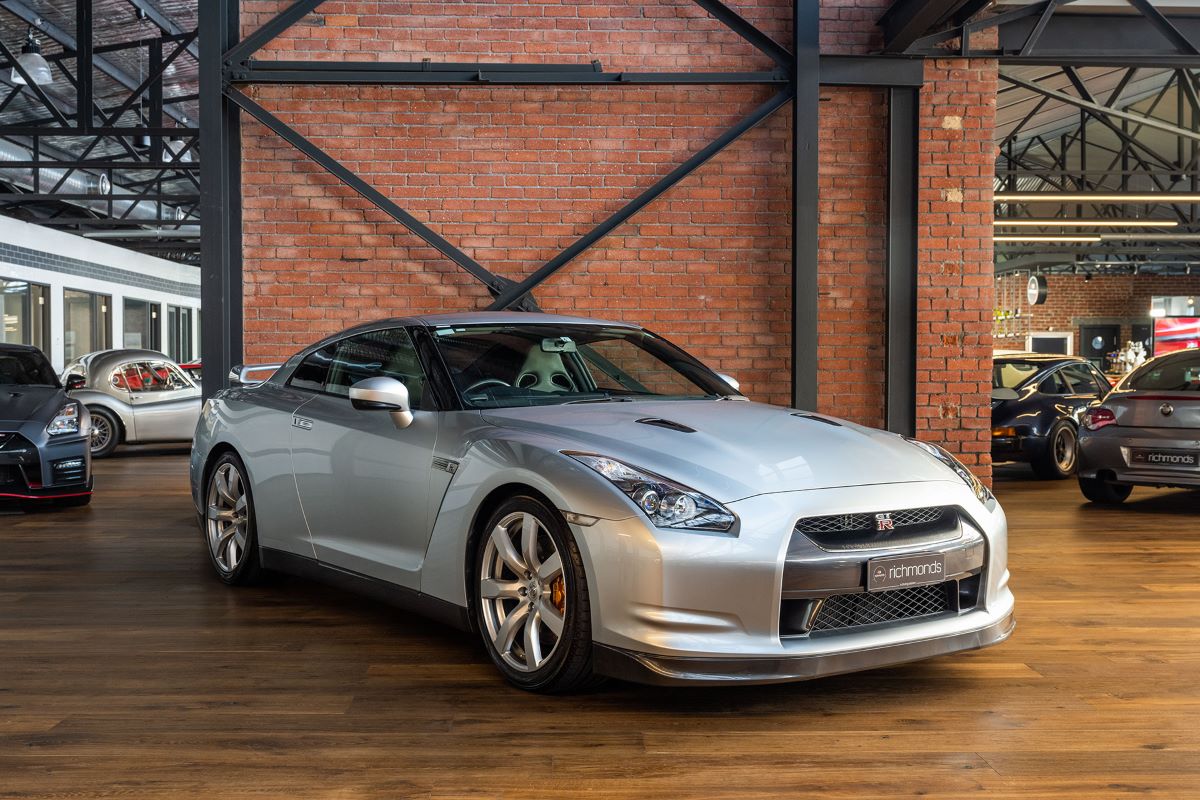
Prices in the US for early R35s hover between $40,000 and $60,000, making them arguably the best bargain on this list. Reliability is strong, and aftermarket support is enormous, meaning owners can tune their GT-Rs into extreme performance machines without breaking the bank.
The R35 might not have the exotic flair of an Italian supercar, but it delivers performance that rivals many much more expensive cars.
Also Read: 10 Best Budget Drift Cars for New Drivers and Thrifty Sliders
7. Aston Martin V8 Vantage (2005–2009)
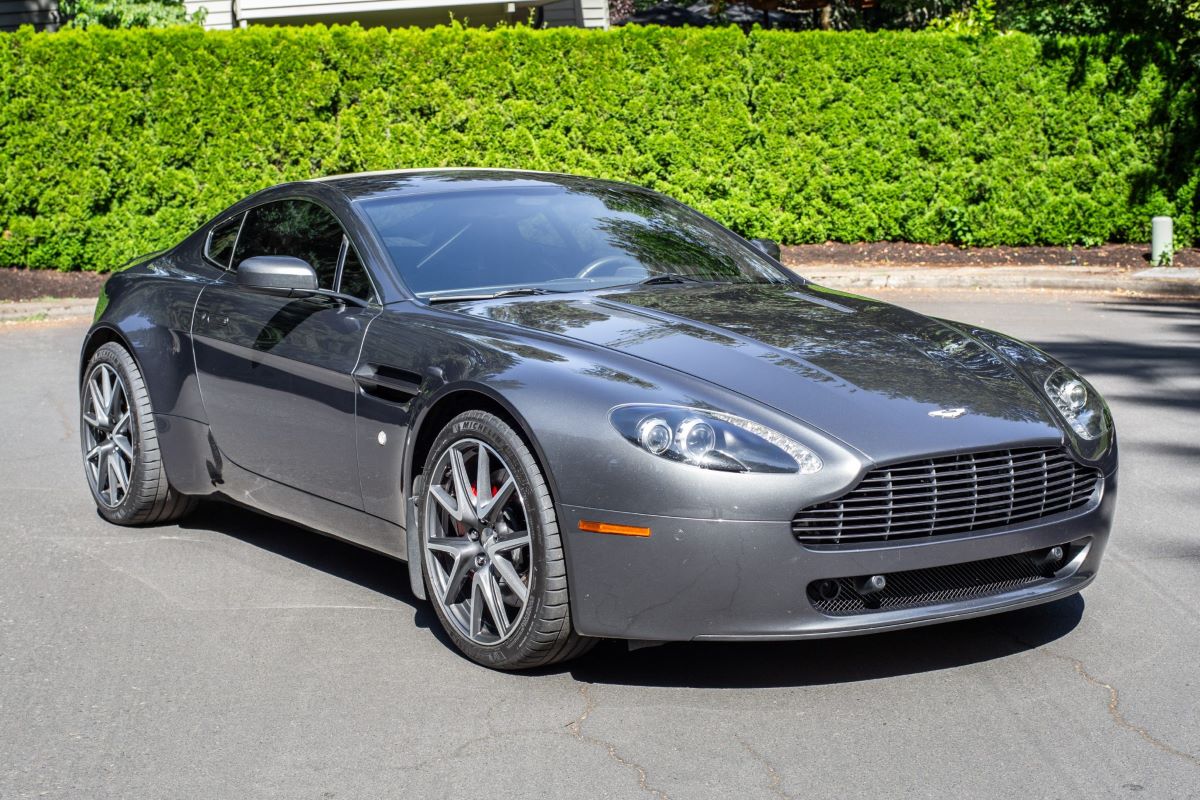
While Aston Martin isn’t typically thought of as “cheap,” the mid-2000s V8 Vantage is an exception. Its naturally aspirated 4.3-liter V8 offers 380 horsepower in a beautifully balanced chassis with classic British styling.
Unlike larger models like the DB9, the V8 Vantage is light, nimble, and feels genuinely sporty on twisty roads.
In today’s market, V8 Vantages can be found in the $50,000–$70,000 range, making them an attainable entry point into the Aston Martin world.
They combine exotic looks with enjoyable handling and a soundtrack that rivals many more expensive supercars. For collectors and enthusiasts alike, the V8 Vantage represents a perfect blend of accessibility and performance.
The 2000s were an unforgettable era for supercars, and now is one of the rare moments when some of these machines are financially accessible.
The 2005 Aston Martin V8 Vantage marked a bold statement from the storied British marque, blending handcrafted luxury with performance-oriented engineering in a compact grand tourer.
The V8 Vantage showcased Aston Martin’s signature design language while introducing distinctive elements unique to this model. Up front, a twin-grille setup included the traditional Aston Martin upper grille complemented by a wider lower bumper intake, giving the car an aggressive yet refined look.
The headlights incorporated twin bulbs with integrated daytime running lights, and the hood featured subtle vents near the windshield. Moving to the rear, the Vantage flaunted muscular quarter panels and round dual exhausts integrated neatly into the lower bumper. Horizontal V-shaped taillights reinforced its identity as a modern Aston Martin.
Inside, the V8 Vantage balanced sportiness with luxury. Leather-covered sport-bucket seats enveloped the driver and passenger, while the dashboard featured Aston Martin’s distinctive counter-clockwise tachometer.
Despite its bespoke character, the cabin included a few buttons carried over from Ford models due to the corporate linkages at the time. The layout remained driver-focused, prioritizing ergonomics and usability alongside premium materials.
The heart of the 2005 V8 Vantage was a hand-built 4.3-liter V8 engine crafted in Cologne, Germany. Equipped with a dry-sump lubrication system, it was engineered to withstand high-performance driving conditions and rigorously tested over 12,000 miles in extreme environments like Dubai.
Power was delivered through a 6-speed automatic transaxle mounted at the rear, balancing weight distribution for improved handling and providing a smooth yet responsive driving experience.
The V8 Vantage demonstrated Aston Martin’s ability to produce a compact, high-performance GT that married luxury and engineering excellence.
Its striking design, hand-built craftsmanship, and potent V8 made it a compelling choice for enthusiasts seeking both refinement and dynamic driving prowess in a relatively intimate grand tourer package.
The 2005 model laid the foundation for the V8 Vantage’s long-term success and established it as one of Aston Martin’s most desirable offerings.
From the driver-focused Ferrari 360 Modena to the brutally fast Nissan GT-R, each car on this list offers a unique experience that continues to thrill even decades after its debut.
For US enthusiasts looking to enter the supercar world without spending seven figures, these seven 2000s icons represent the perfect mix of performance, style, and surprisingly affordability.
Owning a 2000s supercar today isn’t just about nostalgia; it’s about enjoying some of the most exciting, extreme, and characterful machines ever built, at a price that feels almost like stealing.