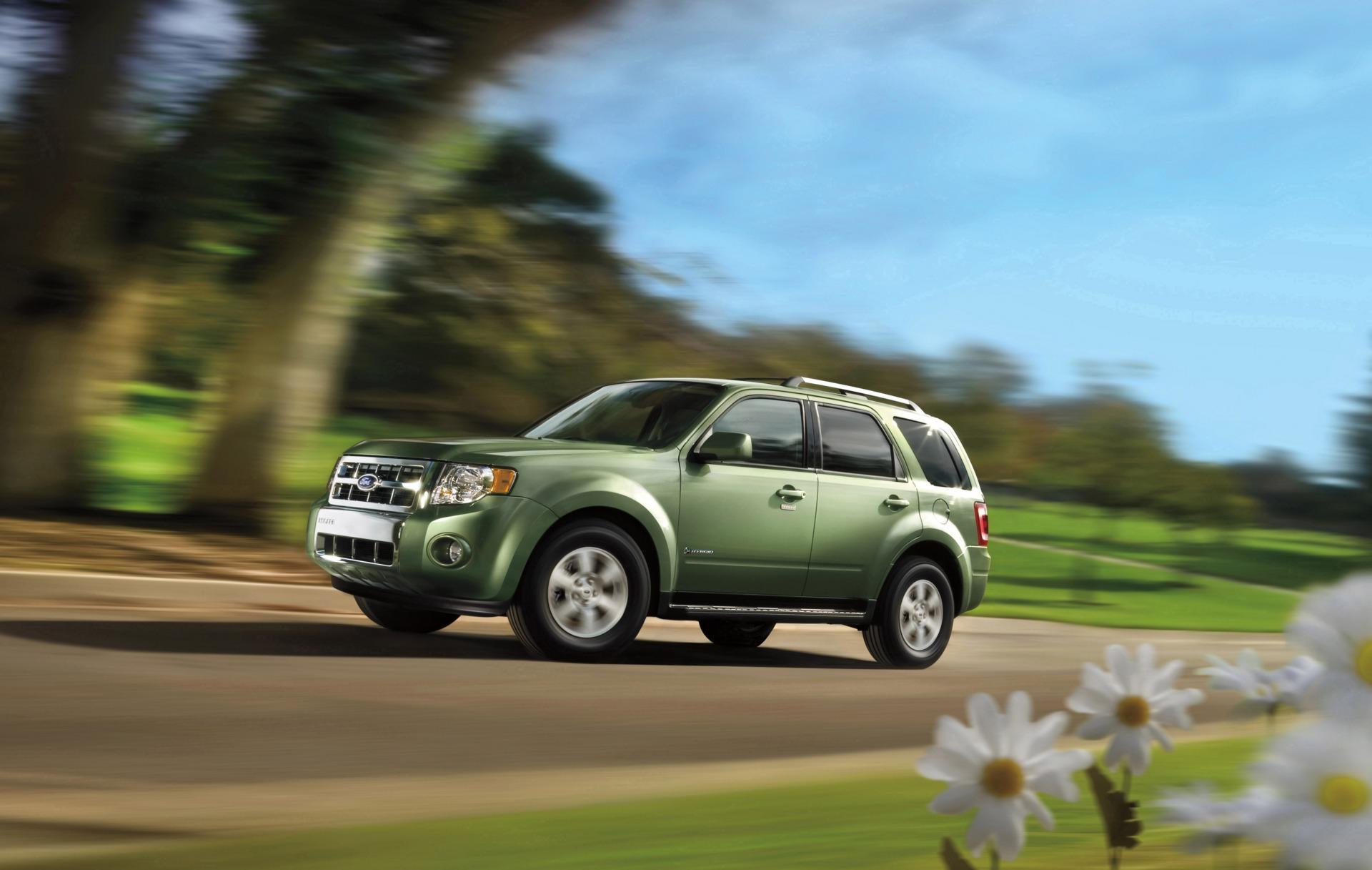
For decades, Ford has walked a fine line between innovation and controversy when it comes to reliability.
While the brand has produced some famously problematic vehicles, it has also quietly built a number of models that rack up high mileage, withstand abuse, and deliver dependable ownership experiences that rival Toyota and Honda.
The problem is perception: many buyers still assume “used Ford” equals risk, even when the data and real-world ownership stories say otherwise.
In the U.S. market, where pickup trucks, SUVs, and long commutes dominate daily life, reliability matters more than ever especially for buyers shopping used. Not everyone wants to pay the Toyota tax, and not every Ford deserves to be avoided.
Some models have proven so durable that they routinely cross 200,000 miles with basic maintenance, making them some of the smartest used buys available today.
Below are 10 used Ford models with shockingly good reliability vehicles that defy stereotypes, hold up under American driving conditions, and often cost far less than their Japanese rivals on the used market.
1. Ford Crown Victoria (1998–2011)
The Crown Victoria is the gold standard for reliable American sedans. Built on Ford’s Panther platform, this body-on-frame sedan was designed to survive police duty, taxi service, and fleet abuse and it shows.
The 4.6-liter naturally aspirated V8 is one of Ford’s most durable engines ever, often running well past 300,000 miles.
What makes the Crown Vic special is its mechanical simplicity. No turbochargers, no complicated electronics, and extremely overbuilt components.
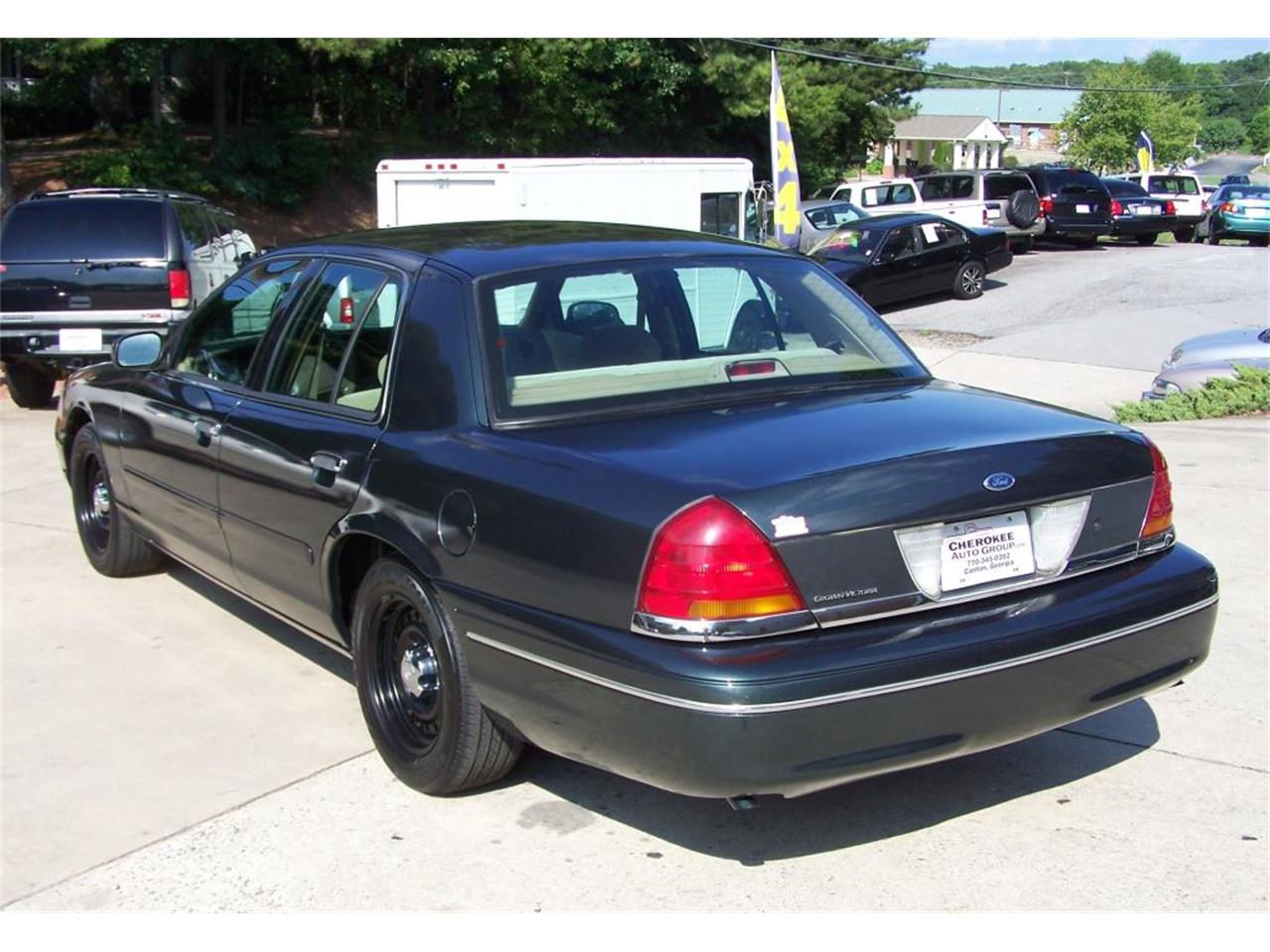
Repairs are cheap, parts are everywhere, and nearly every independent mechanic knows how to work on one. While fuel economy isn’t stellar, the trade-off is unmatched durability for the price.
For buyers who want bulletproof reliability and don’t care about modern styling, the Crown Victoria remains one of the safest used-car bets in America.
2. Ford F-150 (2011–2014, 5.0L V8)
The F-150’s reliability reputation depends heavily on engine choice, and the 5.0-liter Coyote V8 stands out as one of Ford’s best modern powerplants. Introduced for the 2011 model year, this engine combines strong performance with long-term durability when properly maintained.
Unlike early EcoBoost V6 models that sometimes struggled with timing chains and carbon buildup, the naturally aspirated 5.0 avoids many long-term complications.
These trucks are regularly used for towing, work, and high-mileage commuting and many continue performing reliably well beyond 200,000 miles.
Add in a robust chassis and widespread parts availability, and the 5.0-liter F-150 becomes one of the most dependable full-size trucks you can buy used in the U.S.
The F-150’s suspension tuning is nearly perfect when the truck is unladen: neither too stiff nor too soft. Even over broken pavement, it absorbs bumps and road imperfections more like a luxury car than a traditional pickup.
The six-speed automatic transmission is smooth, although it often executes multiple-gear downshifts in two distinct steps when passing, which slows acceleration slightly. The brake pedal is deliberate, and the F-150’s 194-foot stopping distance from 70 mph is typical for the segment.
Driving the F-150 from its exceptionally comfortable bucket seats is a pleasure, but attaching a 24-foot enclosed trailer revealed a few shortcomings.
The first concern is the steering. While its responsiveness is beneficial when the truck is unloaded, the wheel is slightly too sensitive on-center and loads up quickly with just a few degrees of movement. This results in a twitchy feel when towing, which seems out of place for a vehicle designed for work.
The second issue involves the suspension and chassis. Although rated to tow a maximum of 9,300 pounds in this configuration, the truck felt unsettled with less than half that weight.
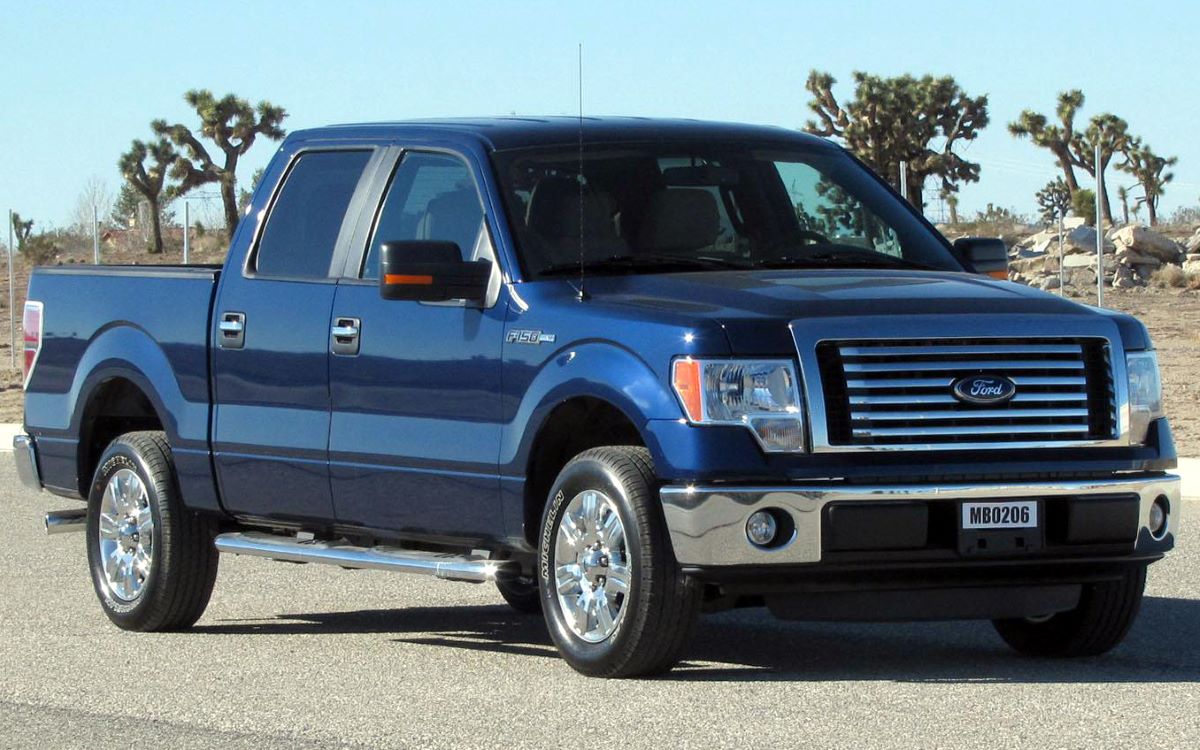
It bounced, bucked, and was pushed around, giving the impression that the F-150’s foundation is soft. While we have no complaints about the powertrain, especially when using the transmission’s tow mode, regular heavy towing would be better suited to an F-250.
The current F-150 has always performed well against competitors, but prior to 2011, it lacked a strong engine. The 310-hp, 5.4-liter V-8 with 365 lb-ft of torque was outmatched by rivals, and the 5.0-liter engine completes a well-rounded package.
On the track, the 5.0 reached 60 mph in 6.7 seconds and ran the quarter-mile in 15.1 seconds at 93 mph. For comparison, this is an improvement of 1.2 seconds to 60 mph and 1.1 seconds in the quarter-mile over the last similarly equipped 5.4-liter we tested.
It competes well with segment leaders like the Toyota Tundra 5.7-liter and Hemi-powered Dodge Ram. Interestingly, although the F-150 was 0.4 seconds slower to 60 mph than a 6.2-liter truck we recently tested, it posted an identical quarter-mile time with a trap speed that was 1 mph faster.
Aside from towing-related issues, our only other critique concerns the interior. While comfortable, our test truck’s dashboard featured five different colors and four distinct textures, creating a somewhat busy visual effect. That said, it does provide plenty of storage cubbies.
An F-150 equipped with the 5.0-liter engine can be had for as little as $24,765 in a regular-cab, two-wheel-drive short-bed configuration. Our test vehicle was an XLT with four-wheel drive and a crew cab, providing ample back-seat space.
The base price for this setup is $37,255. Options were minimal, including a towing package, the highly recommended bucket front seats, a keyless-entry pad, and the XLT Convenience Group, which adds adjustable pedals, Sync, heated and powered mirrors, and a power driver’s seat.
The total came to $38,505. Featuring a column shifter, this configuration is a refreshing change from the loaded King Ranch trims Ford often sends for review. We would personally forgo the keyless-entry pad and save $75, but otherwise, we would spec the F-150 5.0 exactly the same way.
Also Read: Top Used Trucks Dominating Resale Value Charts Right Now
3. Ford Fusion (2010–2012, 2.5L)
The first-generation Ford Fusion quietly earned a reputation for durability, especially when equipped with the 2.5-liter four-cylinder engine.
This engine, derived from a Mazda design, is known for its longevity and minimal issues compared to Ford’s more complex turbocharged options.
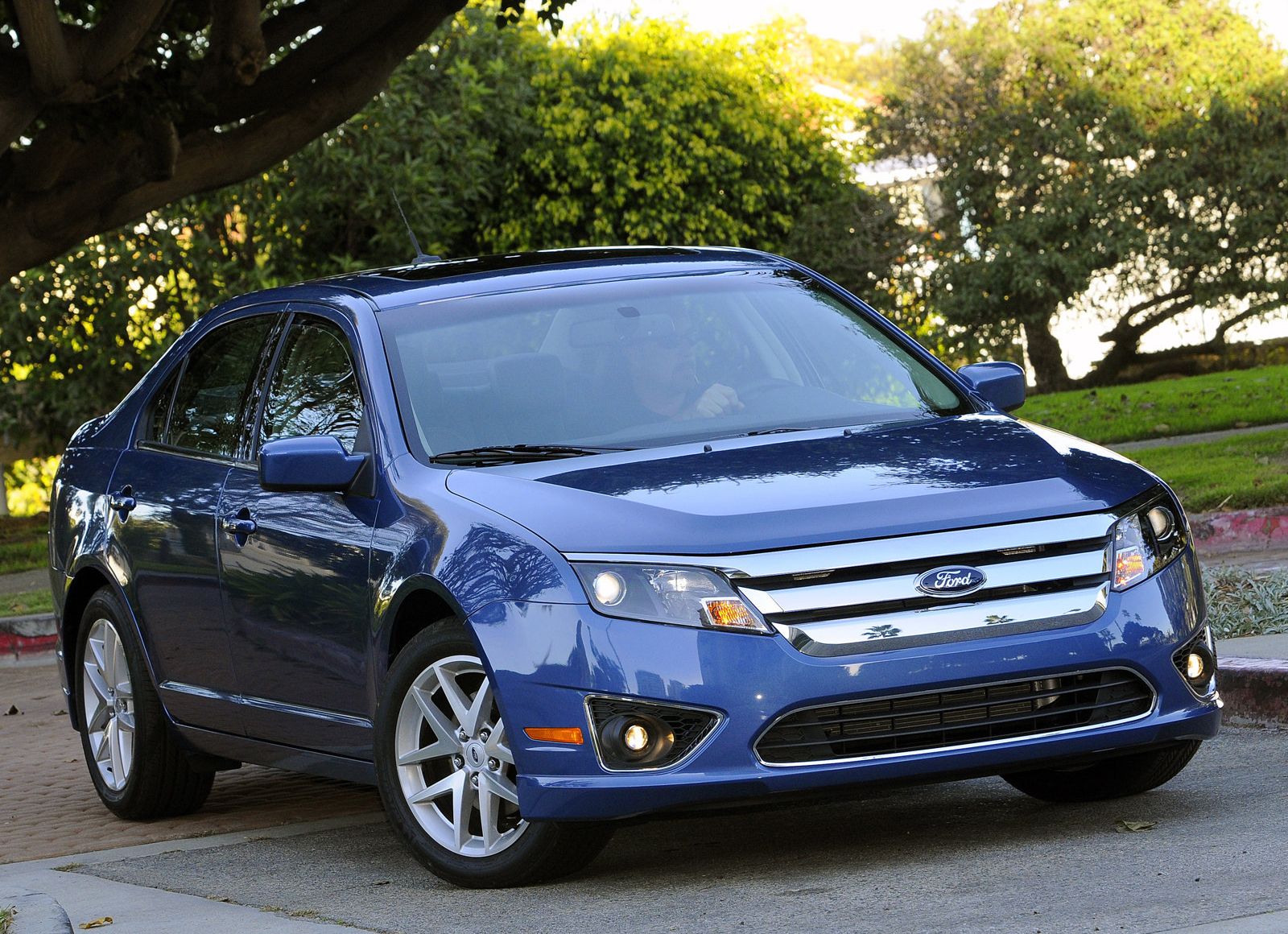
These Fusions were built before Ford’s heavy push into downsized turbo engines, which works in their favor today. The automatic transmissions in these years are generally reliable, and electrical issues are rare compared to later models.
For American commuters looking for a comfortable, affordable midsize sedan with low ownership costs, the early Fusion is an underrated gem.
4. Ford Escape (2009–2012, 2.5L)
The second-generation Ford Escape is one of the most dependable compact SUVs Ford has ever produced. Like the Fusion, reliability largely hinges on engine choice, and the 2.5-liter naturally aspirated four-cylinder is the one to get.
These Escapes were built during a period when Ford prioritized mechanical durability over cutting-edge tech.
The result is a vehicle that handles daily driving, road trips, and light utility work with very few surprises. Many owners report crossing 200,000 miles with nothing more than routine maintenance.
For families or solo drivers who want SUV practicality without modern reliability headaches, this Escape generation is a smart used buy.
Fast-forward to 2010, and while the Escape’s engines, steering, styling, and interior have evolved considerably since its debut during Bill Clinton’s final year in office, the 2010 model still bears a strong resemblance to the original. Not surprisingly, though, the Escape is beginning to show its age.
This is most noticeable inside, where the Escape lacks a few basic features that are now common among its modern competitors, such as a telescoping steering wheel and a backseat that both reclines and slides fore and aft.
As a result, the Escape isn’t as comfortable or versatile as more recent small SUVs. Even more concerning are the brakes, discs in the front but antiquated drums in the rear, which simply don’t provide the stopping power found in other compact crossovers.
Despite its aging underpinnings, the Escape still offers several high-tech features that make it worth a look. Ford’s Sync system is a standout, seamlessly integrating your cell phone and iPod or MP3 player into the vehicle’s controls.
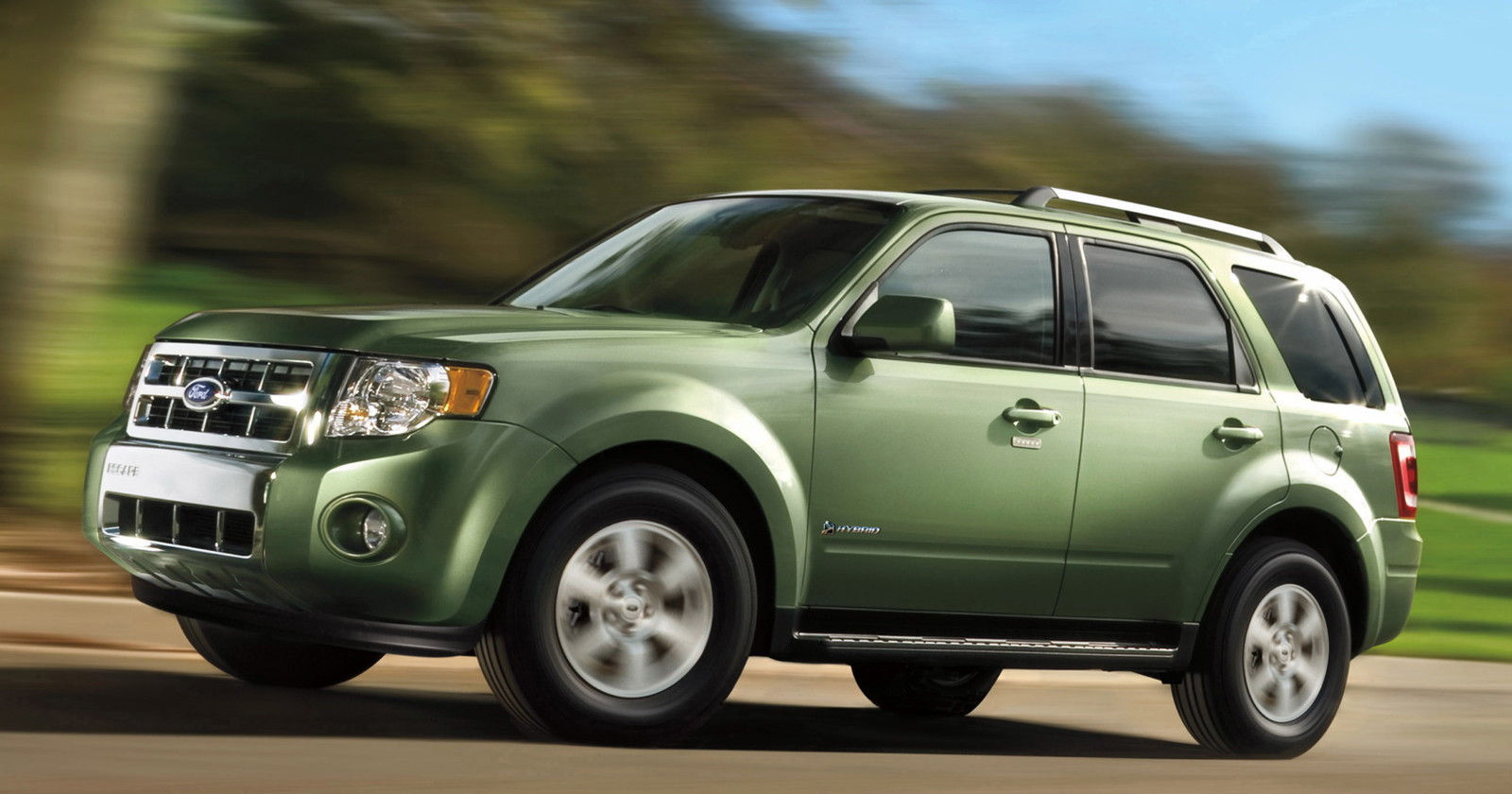
With the optional navigation system, the same unit found across Ford’s lineup, the Escape provides real-time information on traffic, weather, sports scores, movie times, and, if you ask nicely, even your horoscope.
Every trim level of the Ford Escape can be had with either front-wheel or all-wheel drive. A 171-horsepower 2.5-liter four-cylinder engine comes standard, while a 240-hp 3.0-liter V6 is optional on all trims except the XLS.
The 2.5-liter can be paired with a five-speed manual transmission (XLS only) or a six-speed automatic, while the V6 is available exclusively with the automatic. Properly equipped, the V6 Escape can tow up to 3,500 pounds.
Fuel economy for the four-cylinder, six-speed automatic, front-wheel-drive Escape is rated at 20 mpg city, 28 mpg highway, and 23 mpg combined.
Adding all-wheel drive lowers those numbers to 19/25/21 mpg. The six-cylinder front-wheel-drive model returns an estimated 18/26/21 mpg, while the all-wheel-drive version drops to 17/24/20 mpg.
5. Ford Ranger (2001–2011)
Before the Ranger returned as a midsize truck, the original compact Ranger built a legendary reputation for toughness. Engines like the 2.3-liter four-cylinder and 4.0-liter V6 are known for longevity, and the trucks themselves are simple, rugged, and easy to maintain.
These Rangers are especially appealing in the U.S. because of their versatility. They’re small enough for city driving yet capable enough for hauling, light towing, and weekend projects.
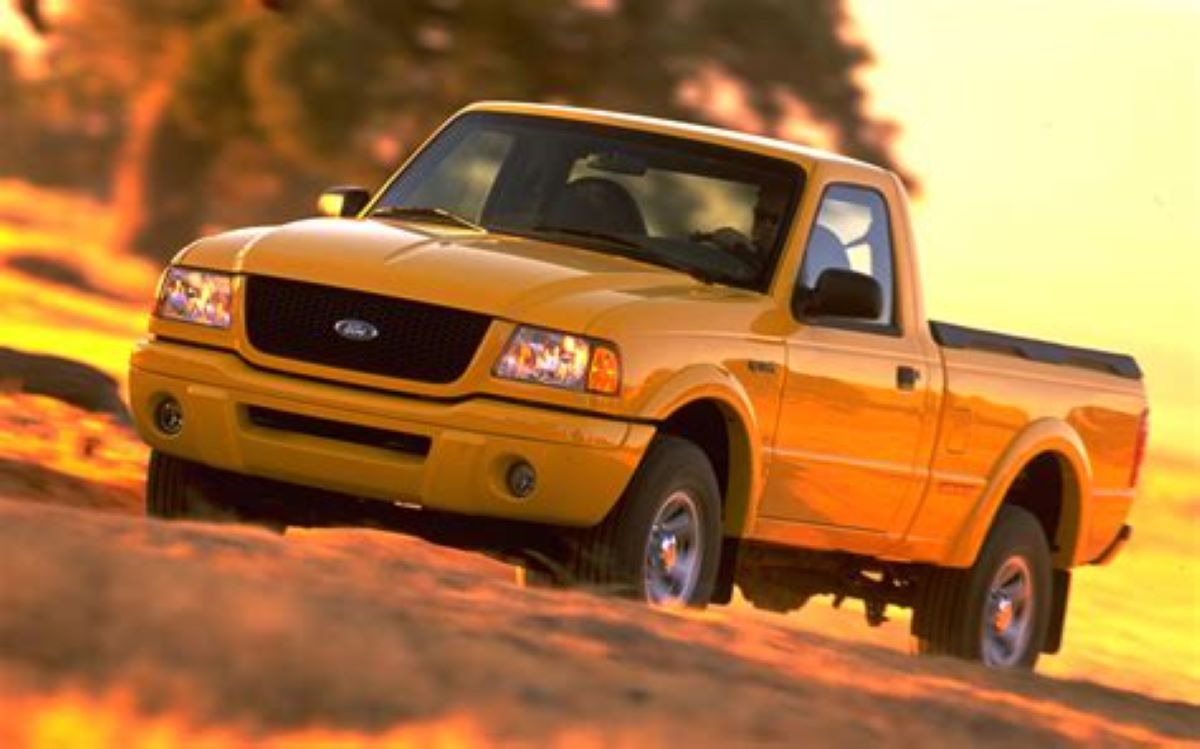
Rust can be an issue in northern states, but mechanically, these trucks are incredibly durable.
For buyers who want a no-nonsense pickup that won’t drain their wallet, an older Ranger remains one of Ford’s best reliability stories.
6. Ford Taurus (2010–2019, 3.5L V6)
The modern Taurus doesn’t get much love, but models equipped with the naturally aspirated 3.5-liter V6 are far more reliable than most people realize. This engine avoids the complexity of turbocharging while delivering strong performance and smooth operation.
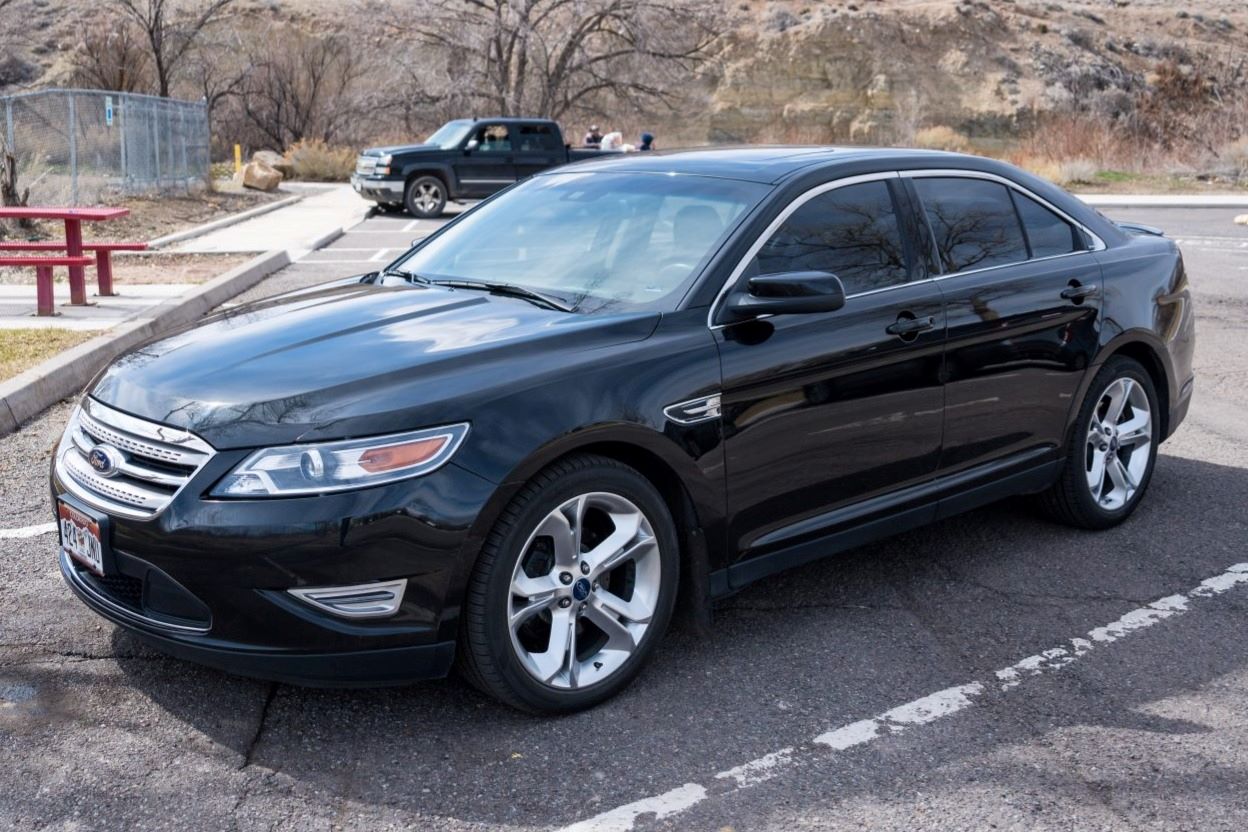
Fleet use including police and rental service has shown that the Taurus can handle high mileage when maintained properly. Interior quality is solid, ride comfort is excellent, and the platform is proven.
For buyers looking for a large, comfortable sedan with surprising durability and low used-market prices, the Taurus is a sleeper pick.
Also Read: 12 Affordable Sports Cars That Look Far More Expensive Than They Cost
7. Ford Expedition (2007–2014)
Full-size SUVs are often reliability nightmares, but the Expedition bucks that trend especially when equipped with the 5.4-liter V8 in its later, improved iterations. While early versions of this engine had issues, Ford addressed many of the worst problems by the late 2000s.
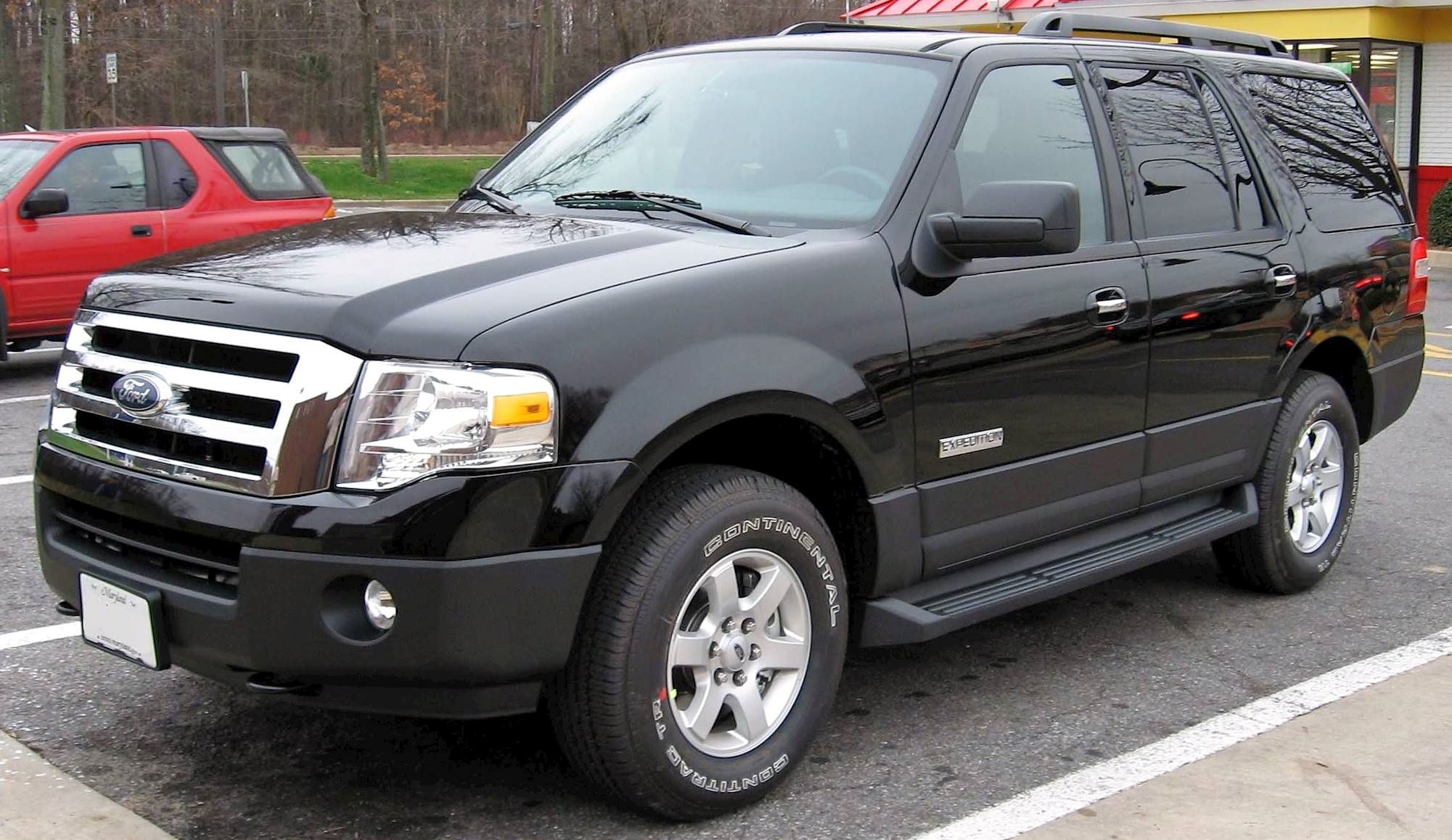
These Expeditions are built to haul families, tow boats, and survive long road trips across the U.S. Their body-on-frame construction contributes to durability, and many examples exceed 200,000 miles with proper maintenance.
If you need real space, towing capability, and proven long-term durability, a well-maintained Expedition is a far better used buy than its reputation suggests.
With high fuel prices remaining a concern, large SUVs have become harder to sell, even to buyers who value the ability to carry six to seven passengers comfortably.
For 2007, Ford has stepped up its game with the Expedition, making it quieter, more refined, and better equipped than ever before, all while lowering the base price to an appealing $30,000.
Although the 2007 Expedition isn’t a complete redesign, the updates are significant. Beneath the body lies a more rigid chassis that borrows its front frame section from the F-150 pickup, paired with revised front and rear suspension designs.
The rear driveshafts now run through the frame rails, which lowers the SUV’s center of gravity and creates more space for third-row passengers.
Other improvements include larger brake calipers and thicker rotors to reduce stopping distances, a new master cylinder for improved pedal feel, and a variable-assist power-steering pump that makes maneuvering in tight spots easier. Compared with the previous model, the ’07 Expedition rides more smoothly and feels more agile around corners.
The updated SUV carries roughly 200 pounds more curb weight, thanks to the new chassis, extra sound-deadening insulation, and added standard equipment, including front seat-mounted side airbags, three-row side curtain airbags, and AdvanceTrac stability control with Roll Stability Control. Despite the added weight, the Expedition’s 300-horsepower 5.4-liter V8 delivers solid, steady acceleration in most situations.
The new six-speed automatic transmission keeps the engine in its power band efficiently. Fuel economy, however, remains unchanged from last year, with the Expedition no more efficient than before. GM’s Chevrolet Tahoe and GMC Yukon can reach speed just as quickly and get better mileage.
Where the Expedition stands out, though, is in passenger accommodation. Neither GM’s full-size SUVs nor competitors like the Toyota Sequoia and Nissan Armada can carry seven to eight passengers as comfortably.
The Expedition also features a 60/40-split third-row seat with a power-fold function, a convenience its rivals lack. In addition, Ford has modernized much of the SUV’s electronics. The optional navigation system is now DVD-based with a touchscreen, and upgraded audio systems include MP3 input and satellite radio compatibility.
While these enhancements may not place the 2007 Expedition at the absolute top of the full-size SUV segment, they make it one of the strongest contenders. For buyers who need the size, utility, and passenger-friendly features that only a large SUV can provide, the Expedition is a vehicle worth serious consideration.
All 2007 Expeditions come standard with a 5.4-liter V8 producing 300 horsepower and 365 pound-feet of torque. The engine is paired with a new six-speed automatic transmission that features two overdrive gears and manual-shift capability.
Buyers can choose between two-wheel drive and four-wheel drive, with 4×2 models riding on all-season tires and 4×4 models equipped with all-terrain rubber. Properly equipped, the Expedition can tow up to 9,200 pounds. Ford estimates fuel economy at 14 mpg city/19 mpg highway for 2WD models and 14/17 for 4x4s, which mirrors last year’s ratings.
8. Ford Focus (2008–2011, Manual Transmission)
The Focus’s reliability reputation was damaged by later automatic transmission issues, but earlier models especially those with manual gearboxes are extremely dependable. The 2.0-liter four-cylinder engine is simple, efficient, and long-lasting.
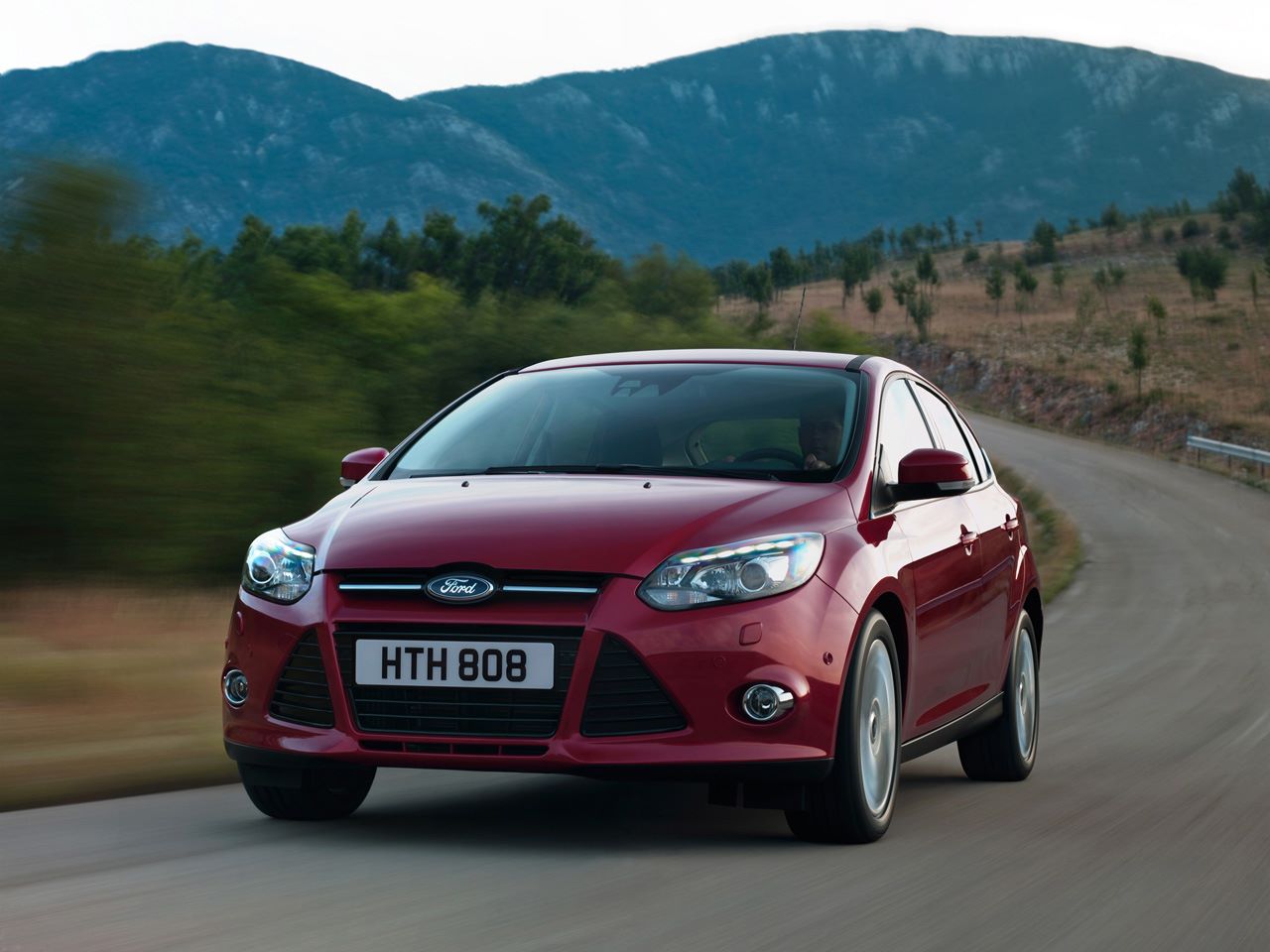
Manual Focus models avoid the problematic dual-clutch transmission entirely, making them one of the most reliable compact cars Ford has ever built. They’re cheap to maintain, easy to repair, and capable of very high mileage.
For budget-conscious American drivers who can drive stick, this generation of Focus is a shockingly smart used purchase.
9. Ford Flex (2009–2015)
The Ford Flex may look unconventional, but it’s one of the most practical and reliable three-row vehicles Ford has produced. Equipped with the naturally aspirated 3.5-liter V6, the Flex offers solid long-term dependability without the complexity of turbocharging.
Its boxy shape translates to excellent interior space, and families often find it more usable than traditional SUVs. Reliability data and owner reports consistently show strong longevity when maintenance schedules are followed.
In a used market dominated by overpriced crossovers, the Flex stands out as a reliable and underrated alternative.
Since its debut in 2009, the Ford Flex has been a favorite among our editors. We even kept one in our long-term test fleet for two years, and it proved just as popular with staff moms as it was with single staff members.
Interestingly, this acclaim hasn’t translated to the broader American public, Flex sales have consistently lagged behind its competitors. Perhaps the boxy, unconventional styling is too radical for some buyers, but those who overlook it are missing out on a uniquely practical and versatile vehicle.
The Flex’s distinctive boxy shape isn’t just for show; it translates to a spacious cabin that can comfortably accommodate both people and cargo.
Choosing the second-row captain’s chairs reduces seating from seven to six, but the added sliding feature improves comfort in that row and increases legroom for third-row passengers. As a result, the Flex is one of the rare crossovers that allows taller passengers, around six feet, to sit comfortably in all three rows.
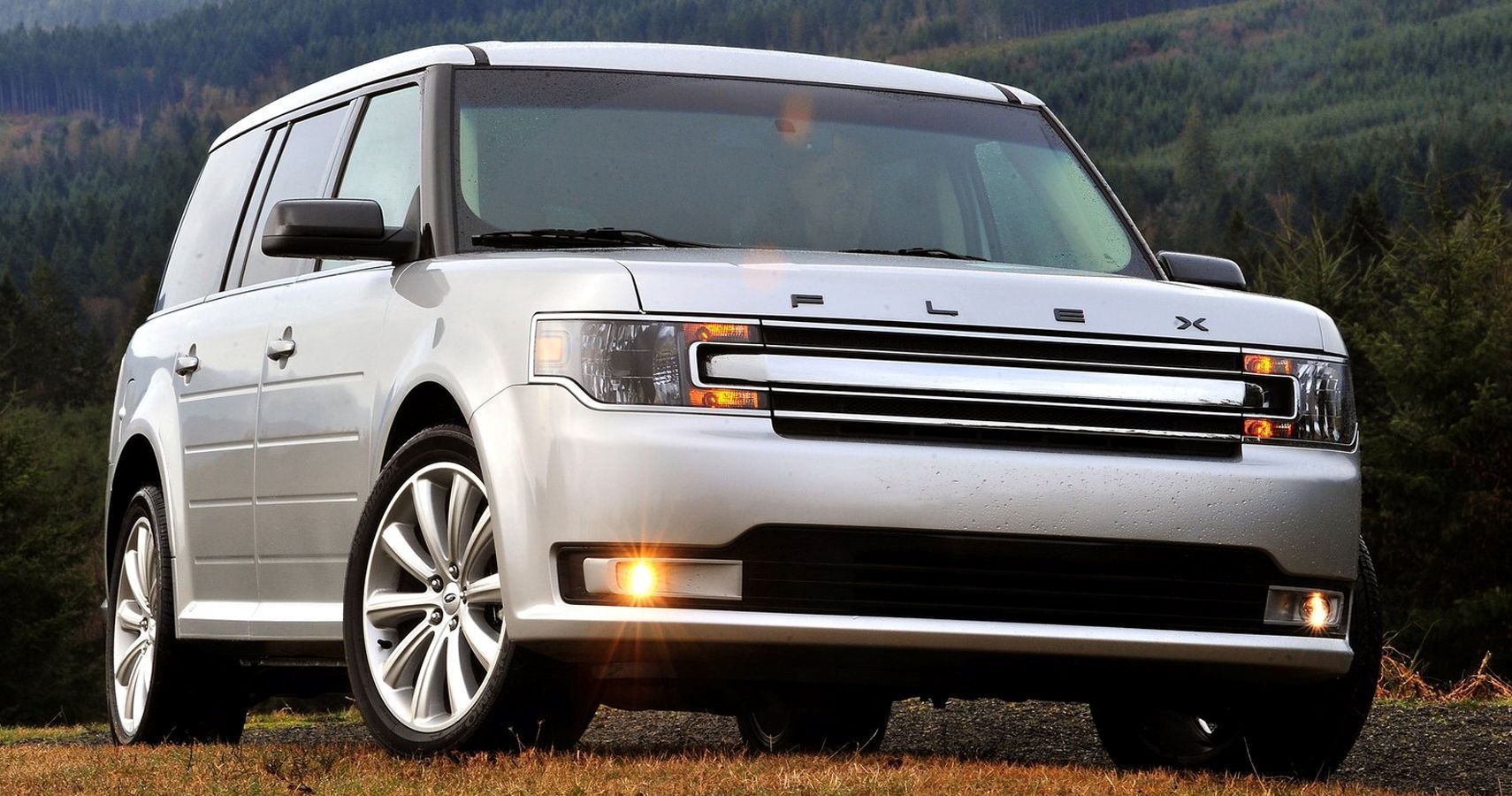
In addition to its generous space, the Flex comes equipped with a wide array of useful features. Even the base 2012 model is well appointed, while higher trims can rival a luxury car in terms of amenities.
High-tech features are abundant, including Ford’s Sync system for portable electronics and the automatic parking system. From a family perspective, the optional twin-screen entertainment system and second-row refrigerator make long drives more enjoyable for kids.
If the Flex’s styling isn’t your cup of tea, the mechanically related Ford Explorer is a viable alternative. While it can’t match the Flex’s interior space and versatility, it does offer a higher-quality cabin.
For a sportier choice, the 2012 Mazda CX-9 is a standout, while minivans like the 2012 Honda Odyssey offer maximum practicality. Still, if it were our money, the 2012 Ford Flex would likely end up in our driveway again.
Every 2012 Ford Flex comes standard with a 3.5-liter V6 engine producing 262 horsepower and 248 pound-feet of torque. A six-speed automatic transmission and front-wheel drive are standard, with all-wheel drive available as an option.
EPA-estimated fuel economy is 17 mpg city, 24 mpg highway, and 19 mpg combined for FWD models, while AWD versions drop slightly to 16/22/18 mpg.
Optional on the Flex Limited and Titanium trims is a turbocharged 3.5-liter V6, known as the EcoBoost, which produces 355 horsepower and 350 pound-feet of torque. This engine comes standard with all-wheel drive and a six-speed automatic transmission with paddle shifters.
The EcoBoost-equipped Flex accelerates to 60 mph in a brisk 6.6 seconds. Despite the additional power, fuel economy only drops slightly to 16 mpg city, 21 mpg highway, and 18 mpg combined.
10. Ford Mustang (2011–2017, V6)
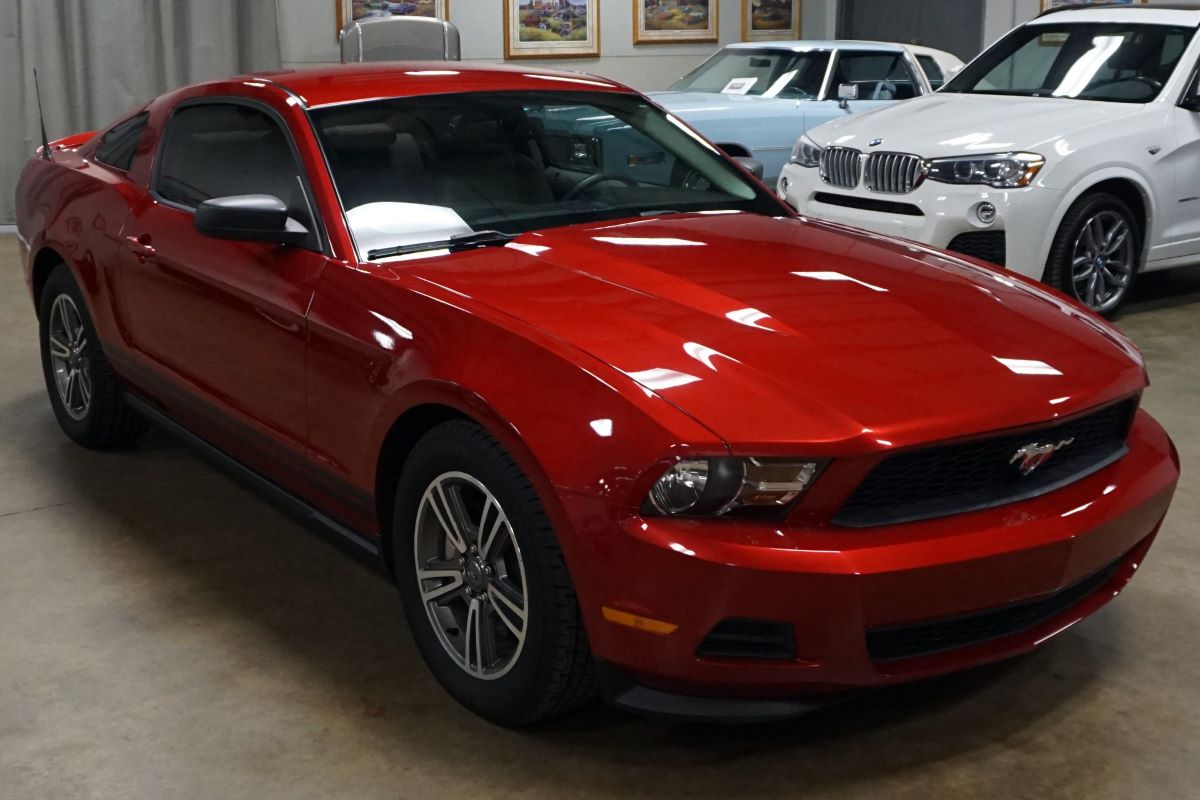
While the Mustang is often associated with performance rather than reliability, the 3.7-liter V6 models from this era are remarkably durable. This engine delivers strong power without the stress of forced induction and has proven capable of high mileage.
Many V6 Mustangs were daily driven rather than abused, making them safer used buys than some high-performance variants. Maintenance costs are reasonable, parts are plentiful, and mechanical issues are relatively rare.
For buyers who want style, performance, and reliability in one package, the V6 Mustang is one of Ford’s most pleasant surprises.
Ford’s reliability reputation is far more nuanced than most people realize. While some models and powertrains should absolutely be avoided, others quietly deliver exceptional durability, low ownership costs, and impressive longevity often at prices far below their Japanese competitors.
For U.S. buyers shopping used, understanding which Ford models get it right can unlock tremendous value. From fleet-tested sedans to workhorse trucks and family haulers, these 10 vehicles prove that reliability and the Blue Oval can absolutely go hand in hand when you choose wisely.