The thrill of a supercar lies not just in its design or exclusivity, but in its ability to accelerate from 0 to 60 in a heartbeat and dominate the roads or at least dream of it.
Yet, for all the jaw-dropping engineering marvels available around the world, many supercars remain illegal to drive on U.S. streets. Reasons range from emissions standards and safety regulations to crash-test requirements that these vehicles simply weren’t designed to meet.
For enthusiasts, these cars exist in a peculiar limbo: stunning in person, exhilarating on the track, but off-limits on public roads. If you have deep pockets and a love for extreme speed, these ten supercars are worth exploring just don’t expect to take them for a legal Sunday drive in America.
1. Ferrari FXX-K
The Ferrari FXX-K is more than a car; it’s a purpose-built track monster. With over 1,050 horsepower combining a turbocharged V8 with hybrid electric power, this limited-production hypercar can rocket from 0 to 60 mph in under 2.5 seconds.
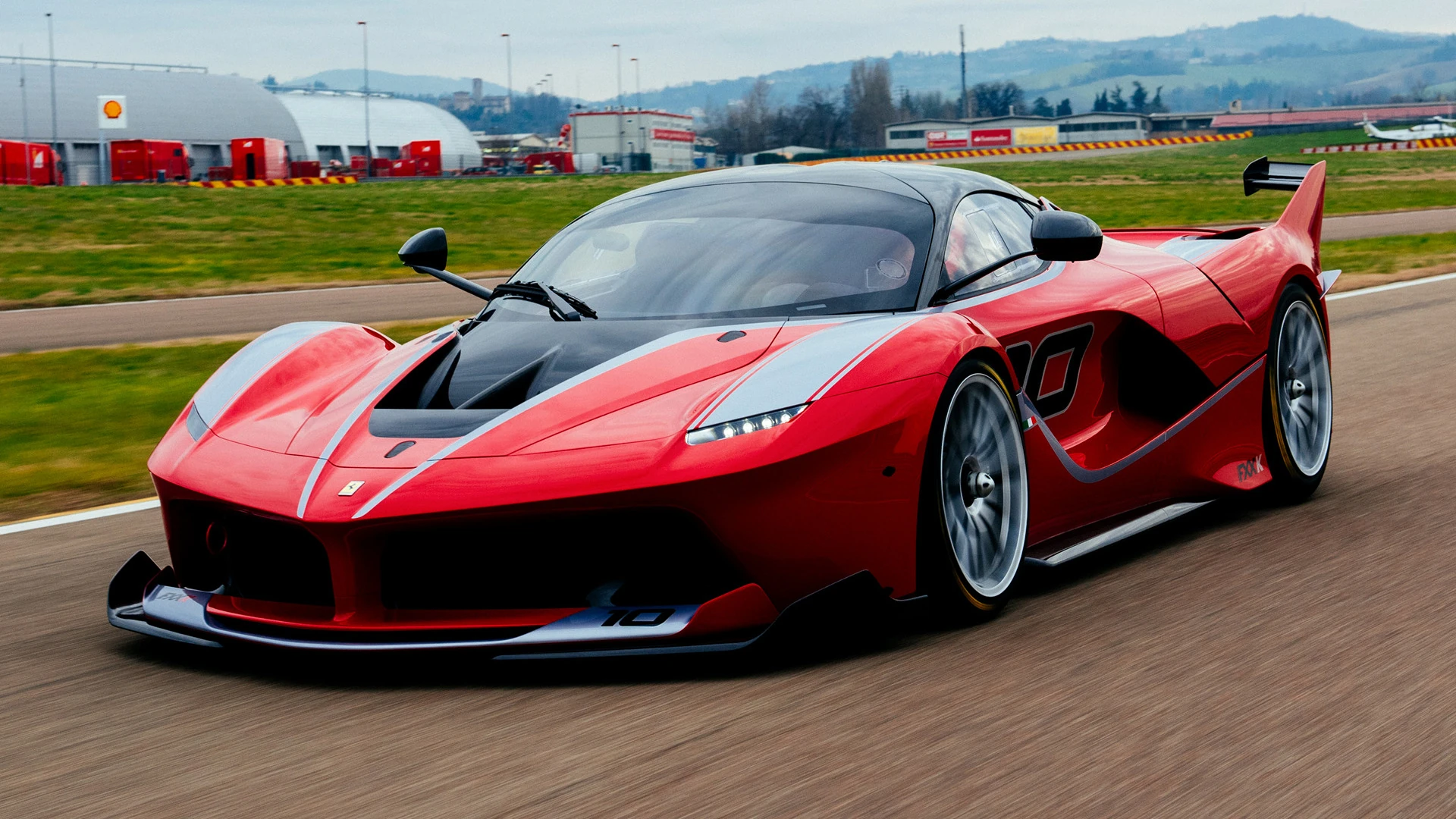
But its lack of street-legal certifications in the U.S., combined with extreme emissions and noise levels, makes the FXX-K a strictly track-only experience. Ferrari even restricts owners to attending manufacturer-sanctioned track events, making it a collectible as much as a vehicle.
2. McLaren P1 GTR
While the McLaren P1 is already a beast on public roads, the GTR version takes the car into a completely new league. Built for track domination, the P1 GTR features more aggressive aerodynamics, reduced weight, and a more powerful hybrid drivetrain than its street-legal sibling.
In the U.S., federal safety regulations prevent the P1 GTR from being registered for street use. Owners typically use it for track days or private circuits, enjoying McLaren’s engineering without violating traffic laws.
Originally designed as a track-only machine, the P1 GTR represents the apex of McLaren’s hybrid performance technology and motorsport engineering. This exclusive model now gives collectors and enthusiasts a rare opportunity to own a piece of automotive history capable of legal road use.
And if you were wondering about the price, it’s astronomical: roughly US$3,350,000, more than the cost of most people’s houses, or even the first five homes combined.
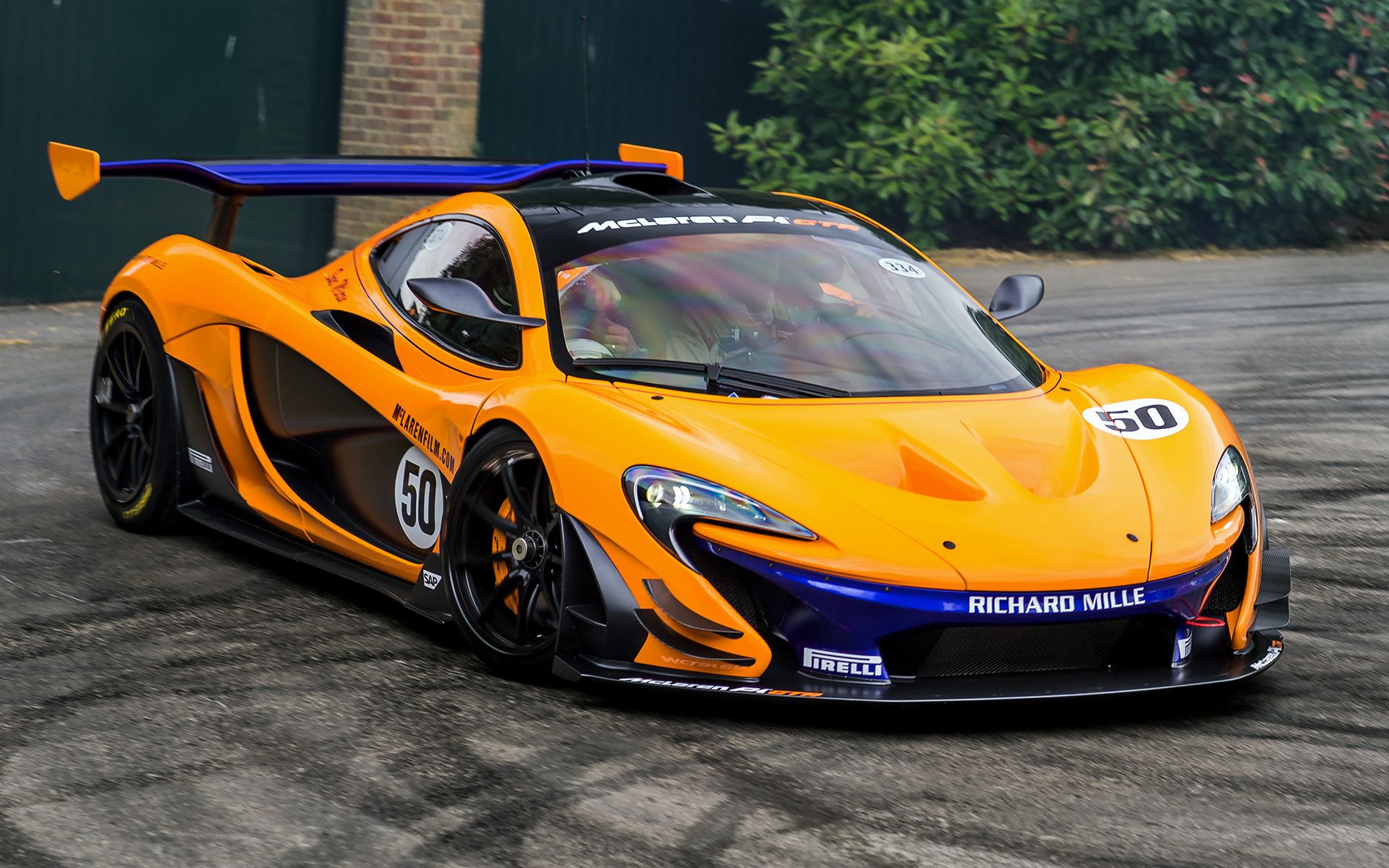
Finished in a striking black and orange livery, the P1 GTR immediately commands attention. Its wide stance, massive aerodynamic components, and race-inspired detailing leave no room for subtlety. Even at a standstill, the car looks fast, aggressive, and undeniably expensive.
What truly distinguishes the GTR from the standard McLaren P1 is its extreme performance upgrades. Beneath the sculpted bodywork lies a hybrid powertrain combining a twin-turbocharged 3.8-liter V8 with an electric motor, producing an astonishing 986 horsepower and 737 pound-feet of torque.
This allows the car to rocket from 0 to 60 mph in just 2.8 seconds and reach a top speed of 217 mph. Originally intended for racetracks such as Silverstone or Spa-Francorchamps, this example has been meticulously converted for street use without sacrificing its raw performance edge.
The P1 GTR’s interior remains laser-focused on the driver. The cabin is wrapped in black Alcántara, the preferred material of the elite, paired with extensive carbon fiber trim.
Aggressively bolstered racing seats and a minimalist dashboard prioritize function over comfort, making it ideal for high-speed driving without distractions. This Dubai-based GTR has been carefully maintained to preserve its race-inspired authenticity while still complying with road-legal requirements.
Compared to the standard road-going P1, the GTR variant delivers significant performance enhancements. It features increased horsepower, a fixed rear wing equipped with a Drag Reduction System (DRS), and a stripped-down interior focused on weight reduction.
The extensive use of carbon fiber throughout the chassis and body panels improves rigidity and responsiveness, ensuring peak performance at the limit. Originally offered exclusively to existing P1 owners through McLaren’s elite track program, these cars were never intended for public roads, making this street-legal example particularly exceptional and rare.
Also Read: 10 Best Big Trucks Built to Survive Harsh Canadian Winters
3. Pagani Huayra BC
The Pagani Huayra BC is a hypercar masterpiece, combining extreme aesthetics with one of the most powerful AMG-sourced V12 engines in the world. Its 800+ horsepower allows it to reach top speeds in excess of 230 mph.
Despite being technically “street-legal” in some countries, the Huayra BC fails to meet U.S. crash and emissions standards. Only a handful of owners attempt to import it under special exemption programs, making it nearly impossible to drive legally across the states.
With its sculpted fenders and sweeping rear wing, the Pagani Huayra exudes the aura of a race car built for the track. True to this intent, the hypercar is engineered to minimize curb weight, utilizing advanced materials such as carbon-titanium HP62, which is both lighter and stronger than standard carbon fiber.
The current Huayra is slated to be the final production model, although Pagani has a history of accommodating private collectors seeking one-off or limited-edition versions. With just 40 production models planned, the Huayra is as rare as it is breathtaking.
For the 2020 model year, Pagani has consolidated the Huayra lineup into a single, all-new trim, marking the hypercar’s approach to retirement. The sole offering is the Huayra BC roadster, a convertible that embodies the brand’s flair and performance heritage.
The BC designation honors the late Benny Caiola, Pagani’s very first customer and a renowned car collector. Specially designed Pirelli P Zero Trofeo R tires wrap 20-inch aluminum-alloy wheels in the front and 21-inch rims in the rear.
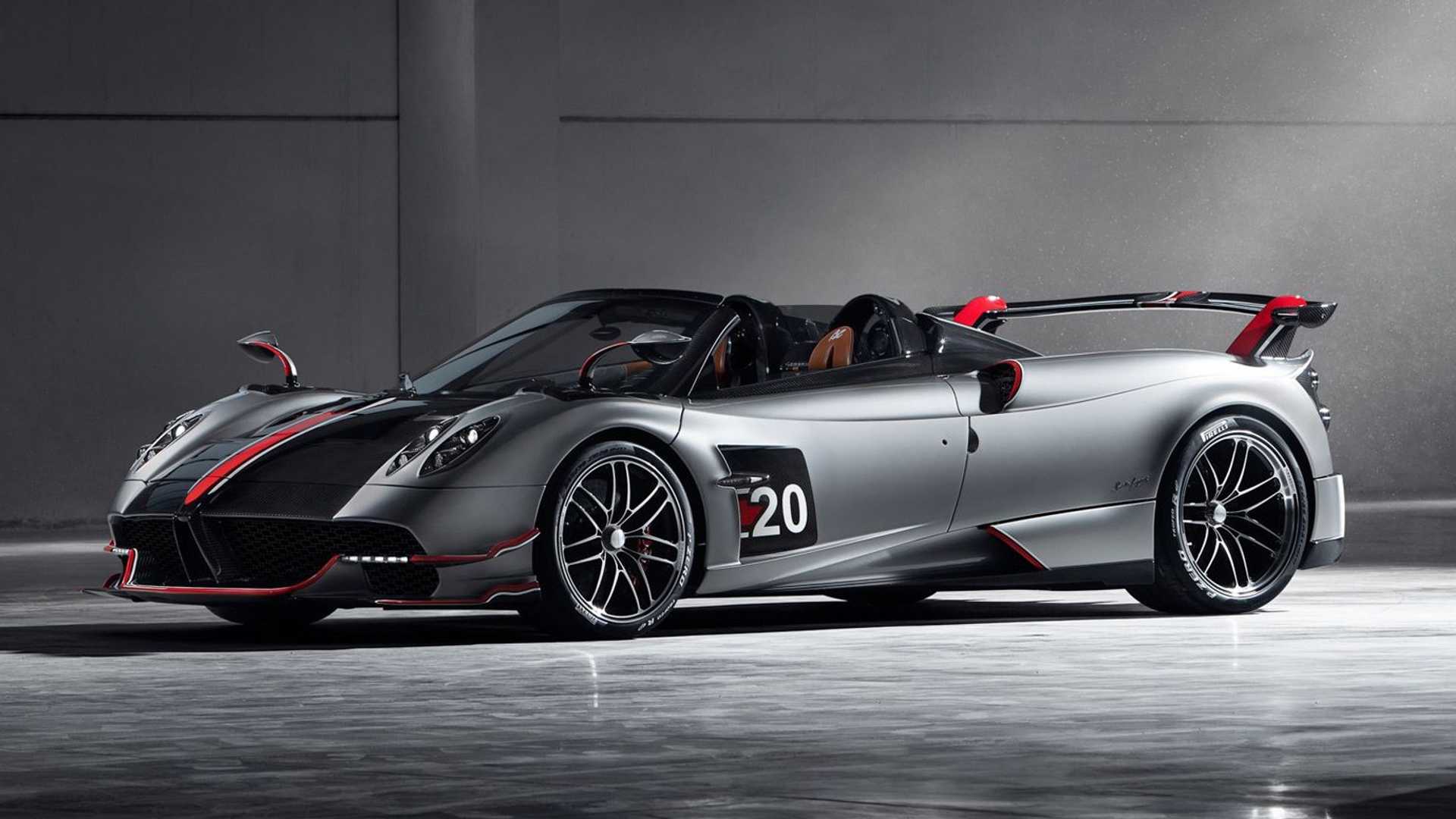
The Huayra BC comes equipped with aggressive lower-body aerodynamic elements and a massive rear wing, which, according to Pagani, generate up to 1,102 pounds of downforce at 174 mph. All models feature a titanium exhaust system that channels gases through a functional diffuser, inspired by the blown diffusers of Formula 1.
At the heart of the Huayra BC is a twin-turbocharged V-12 sourced from Mercedes-AMG, producing 791 horsepower and 775 lb-ft of torque. A seven-speed single-clutch automatic transmission drives the rear wheels, chosen for its lighter weight compared to a dual-clutch system.
Despite the car’s compact mass. approximately 2,755 pounds, the Huayra BC demonstrates breathtaking performance, accelerating from 0 to 60 mph in just 3.3 seconds on the test track.
Pagani reports the roadster can sustain up to 1.9 g’s of lateral acceleration through corners, with peaks reaching 2.2 g’s. Stopping power comes courtesy of carbon-ceramic Brembo brakes, capable of bringing this hypercar to a halt with precision and authority.
Priced from $3,400,000, the Huayra BC roadster is a rare, high-performance marvel that blends track-focused engineering with the artistry and exclusivity that Pagani is known for. It remains a machine that excites both the senses and the imagination, perfectly suited for collectors and enthusiasts who value extreme performance and craftsmanship.
4. Koenigsegg Jesko Absolut
Koenigsegg has long been a name synonymous with record-breaking speed, and the Jesko Absolut pushes those limits further. With a twin-turbo V8 producing up to 1,600 horsepower on E85 fuel, it is theoretically capable of exceeding 300 mph.
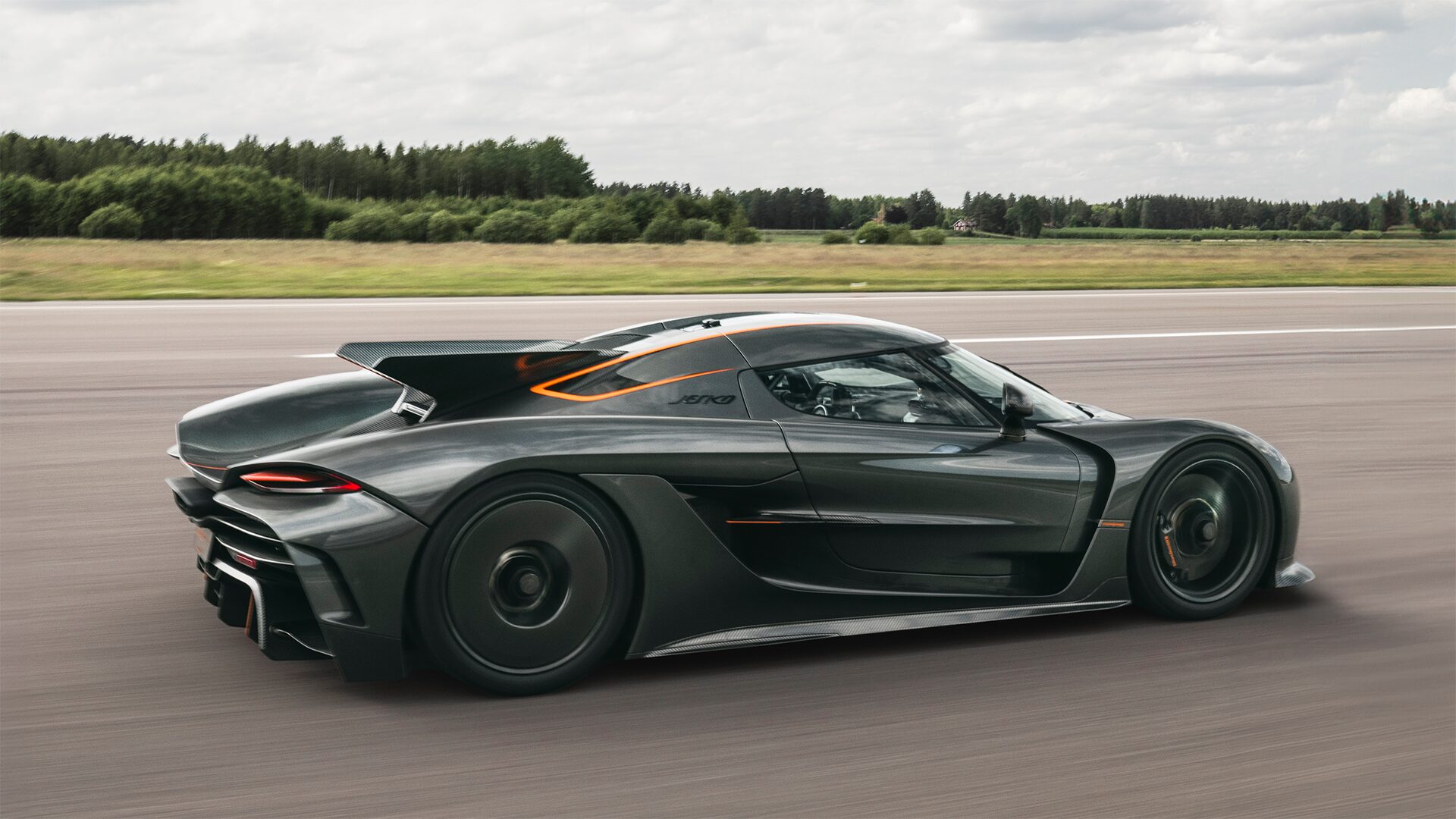
While Koenigsegg has managed street legality in select markets, the Jesko Absolut has not yet been approved by the U.S. Department of Transportation, rendering it a track-only marvel for now. Enthusiasts often ship it overseas to experience its full potential.
5. Aston Martin Vulcan
The Aston Martin Vulcan is a V12-powered supercar designed exclusively for the track. Only 24 units were ever built, making it an extremely rare collector’s item.
Its raw power, carbon-fiber construction, and advanced aerodynamics make it illegal for public roads in the U.S., as it doesn’t meet federal crash and emission standards. Owners cherish it for track-day sessions, where its full potential can be unleashed without legal repercussions.
Aston Martin Racing highlighted the remarkable potential of their 6.0-liter V12 from the Vantage GT3, noting that with extensive modifications, including increasing the displacement by a liter, the engine could meet one of their critical performance targets: over 800 bhp.
The final 6,949 cc naturally aspirated engine produced an astonishing 820 bhp at 7,750 rpm and 575 lb-ft of torque at 6,500 rpm, all delivered to the rear wheels through a six-speed Xtrac sequential transmission with paddleshift and a magnesium torque tube. The carbon-fiber chassis is borrowed from the One-77, serving as the foundation for the subframes and the basic suspension layout.
The Vulcan’s aerodynamic package is radically different from its road-going siblings. Its rear wing is massive, though the underbody diffuser produces even more downforce. Being front-engined, the Vulcan allows the diffuser to open further forward, generating significant suction at the front.
The AMR upgrade pack, fitted to the maroon prototype, added front dive planes, pressure-relieving vents over the front wheels, and a second element to the rear wing, likely to enhance stability at the claimed 1,350 kg of downforce at 190 mph.
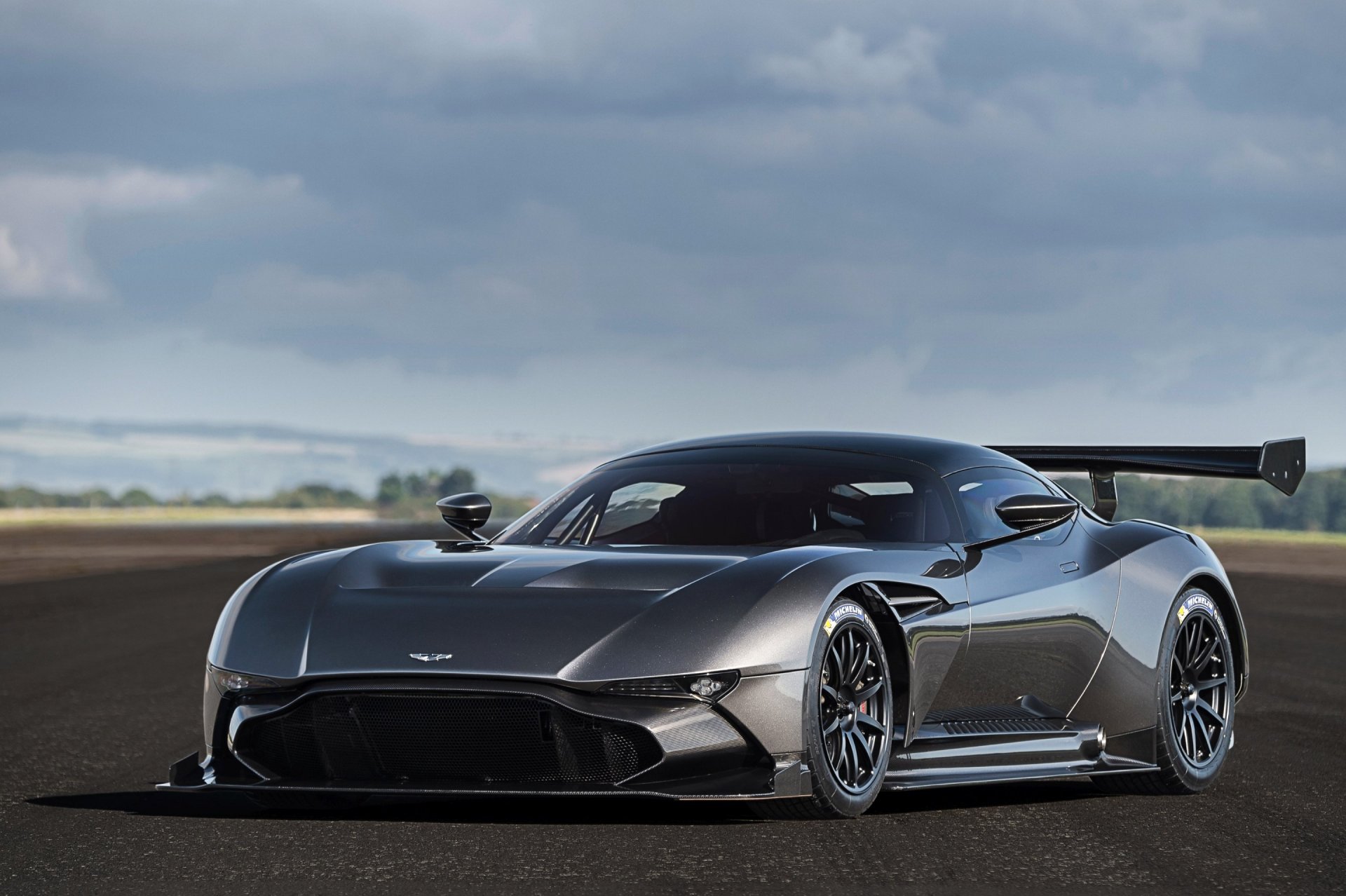
Stopping power comes from carbon Brembo brakes mounted behind 305 mm front wheels, shod in Michelin Pilot Sport Cup 2 tires. Full slicks are optional at £5,000, a relatively minor addition in the context of the £1.8 million car.
Aston Martin noted that during Nardò testing, the Vulcan was only four seconds slower on treaded tires compared to slicks, with a lap time of 2 minutes 7 seconds on slicks reportedly setting a track record.
The Vulcan’s visual presence is equally striking. Like many racing cars, it is more impressive from the rear than the front. From the low rear three-quarter view, the massive wing, carbon side-exit exhaust “bazooka,” and distinctive “lollipop” rear lights create a sensational and aggressive look.
With the Aston Martin Valkyrie soon arriving, it might seem like the Vulcan’s time in the spotlight is ending. Yet, this car is more than the sum of its components.
On track, rivals such as the Brabham BT-62 or McLaren Senna GTR may post faster lap times, but as an event, an experience, and a spectacle, the Vulcan remains unmatched, delivering an intoxicating blend of performance, drama, and engineering audacity.
6. Lotus Evija
As Lotus’ first all-electric hypercar, the Evija is a lightweight yet insanely powerful vehicle, boasting nearly 2,000 horsepower across four electric motors.

While it promises incredible acceleration and agility, it is not currently street-legal in the U.S. due to its pending compliance with safety and federal regulations. For collectors and tech enthusiasts, this hypercar represents the future of electric speed, even if it can’t legally grace American highways.
7. Mercedes-AMG One
The Mercedes-AMG One is essentially a Formula 1 car for the road but ironically, you can’t really drive it on U.S. streets. With a hybrid powertrain derived directly from F1 technology producing over 1,000 horsepower, it offers mind-bending performance.

However, emissions regulations and other federal compliance issues prevent its street registration. Owners typically use it on private tracks or specialized events, where its hybrid F1 technology can truly shine.
The Mercedes-AMG One is a 1,049 bhp marvel, showcasing what Mercedes can achieve when it pools its engineering genius to tackle a near-impossible challenge: putting a Formula One world championship-winning engine from 2016 into a road-legal vehicle. And selling it to drivers who aren’t exactly Sir Lewis Hamilton. Gulp indeed.
But the AMG One’s story is as complex as its engineering. First unveiled in 2017 with promised deliveries in 2019, or perhaps 2020, the car faced delays due to a global pandemic, critical parts shortages, and even as Mercedes’ F1 dominance began to wane in 2022, the British-built One still wasn’t ready.
Finally, production commenced, with the first of the 275 customers receiving their £2.3 million hypercars in autumn 2022 and the final deliveries completed by the end of 2023.
A brief interlude is necessary to appreciate just how intricate the AMG One is. At its core is a 1.6-liter single-turbocharged V6 engine.
The turbo is essentially split along a shaft between the intake and exhaust, allowing a 120 bhp electric motor to sit within it, spooling up boost long before exhaust pressure would naturally provide it. In F1 terminology, this is the MGU-H, and it effectively eliminates turbo lag.
Mounted behind the internal combustion engine, which produces 566 bhp (an astonishing 353 bhp per liter), is a larger 161 bhp electric motor (MGU-K, for Kinetic).
Both power the rear axle, while each front wheel gets an independent 161 bhp electric motor. Peak combined output is 1,049 bhp, though no official torque figure exists, partly because calculating it is too complicated. With half the work being done by electrons, suffice it to say: there’s plenty.
The car’s basic structure and bodywork are made entirely from carbon fiber, with the engine rigidly mounted to the tub. Very few cars do this due to the challenges: engine vibrations are transmitted directly into the chassis, the carbon amplifies them like a speaker, and drivers may feel the need for ear protection.
Over the past 30 years, only Aston Martin’s Valkyrie, the Ferrari F50, Caparo T1, and BAC Mono have followed a similar approach.
The benefit is enormous rigidity and light weight. There’s no need for a heavy rear subframe when the suspension can mount directly to the drivetrain.
The suspension is a sophisticated pushrod setup, the transmission is derived from F1 technology and built by Xtrac, and the car features substantial heaters to pre-warm the catalytic converters before start-up.
Mercedes claims 0–62 mph in 2.9 seconds, 0–124 mph in 7.0 seconds, and a top speed of 219 mph. While these numbers are impressive, in straight-line terms, the One isn’t any faster than a McLaren 765LT.
However, the 765LT can feel frighteningly rapid at times, and it raises an interesting point: there comes a threshold beyond which absolute speed isn’t the only measure of a car’s excellence.
The AMG One isn’t just about velocity, it’s a showcase of engineering sophistication, F1-derived technology, and hybrid performance that blurs the line between race car and road car.
Also Read: 10 Mercedes Cars That Outast The Owners’ Expectations
8. Rimac Nevera
The Rimac Nevera is an all-electric hypercar from Croatia, combining insane acceleration (0-60 mph in 1.85 seconds) with a range suitable for more than just track laps. Despite its electric drivetrain and cutting-edge tech, it is not fully approved for U.S. road use.
Federal safety standards, especially regarding crash testing and lighting, are the main barriers. Still, it’s a marvel of modern engineering, giving a glimpse of what the future of hypercars looks like.
The 2023 Rimac Nevera is a hypercar designed to push both human nerves and engineering limits. With an astonishing 1,813 horsepower, it’s a fully electric warhead that showcases the extremes of automotive performance and technology.
Built by Croatian startup Rimac, the Nevera uses a one-piece carbon-fiber monocoque chassis, with channels of battery cells strategically positioned underneath, between, and behind the seats to optimize weight distribution and rigidity. Limited to just 150 units and priced around $2.2 million, it’s a car whose exclusivity is as extreme as its performance.
Production of the Nevera began the previous year, and for 2023, Rimac continues to deliver the same jaw-dropping specification, fulfilling incoming orders while maintaining the model unchanged.
The Nevera’s heart is a four-motor, fully electric powertrain. Each wheel gets its own carbon-sleeved permanent-magnet AC synchronous motor, coupled to a one-speed direct-drive transmission.
Combined, the motors generate a maximum battery output of 1,877 hp, with 1,813 hp available at the wheels. The front motors produce 295 hp and 207 lb-ft of torque each, while the rear motors generate 644 hp and 664 lb-ft each.
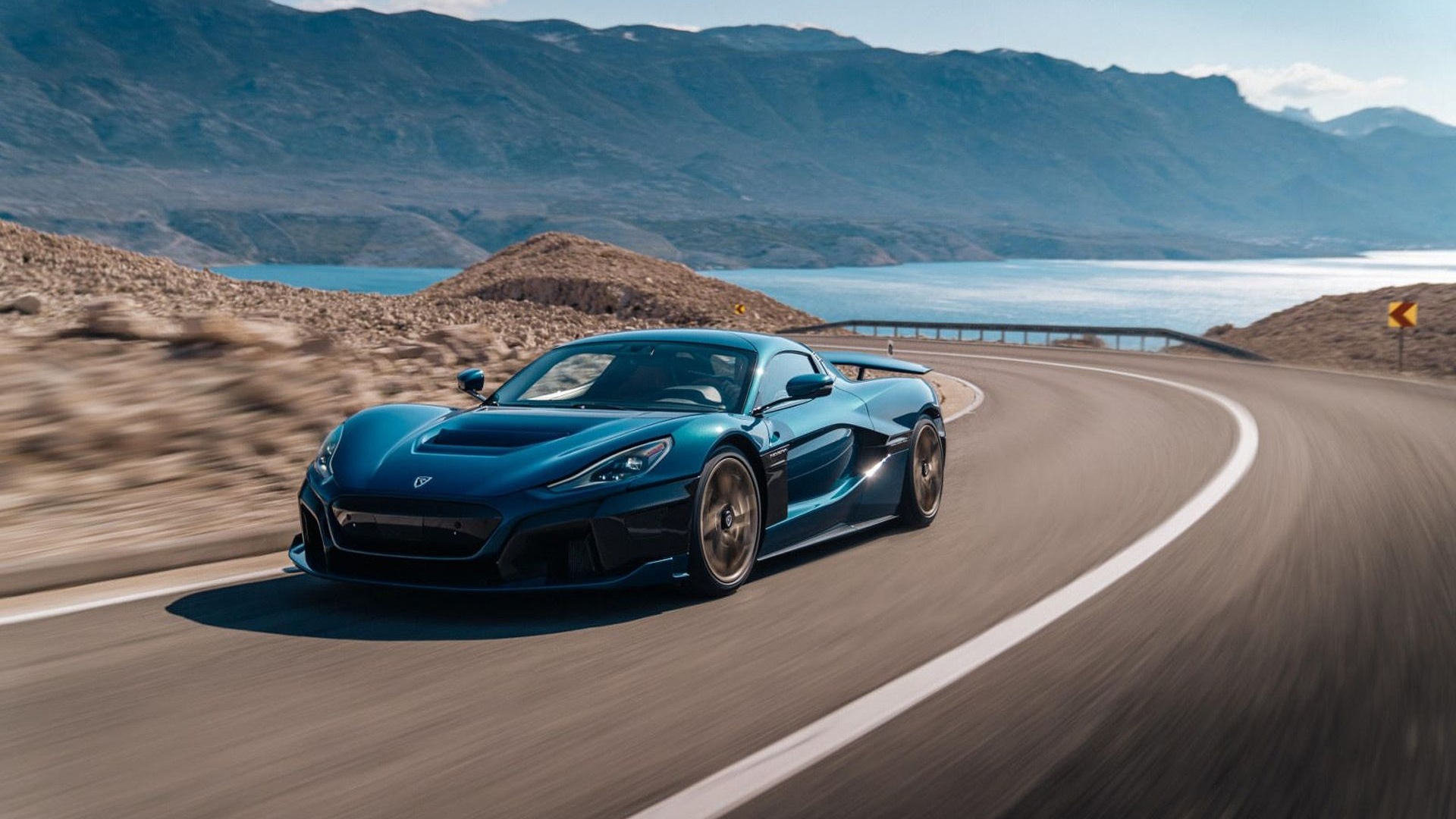
Performance figures are staggering: Rimac claims a 0–60 mph time of just 1.85 seconds and a quarter-mile in 8.6 seconds, though these are achieved on prepped drag strips. The top speed is an eye-watering 258 mph, likely more theoretical than practical for most owners.
Despite its F1-level performance, the Nevera carries a 117 kWh battery pack that provides an estimated 205 miles of range under EPA testing. That range is naturally reduced dramatically under spirited driving.
The battery is designed for ultra-fast DC charging at up to 500 kW, though publicly available infrastructure capable of such speeds remains scarce. Cells are distributed throughout the chassis for optimal weight balance, including under the seats, behind them, and beneath the footwells.
With only 150 units produced, the Nevera is as much a collector’s item as it is a hypercar. Its aerodynamic body and aggressive carbon-fiber construction, paired with this mind-bending performance, make it a car that valets would fight over to park.
The Nevera is Rimac’s statement: a hyper-electric machine that redefines what is possible in terms of speed, engineering, and exclusivity in the EV space.
It’s not just a car, it’s an all-electric missile, a showcase of cutting-edge tech, and a glimpse into the future of high-performance road vehicles.
9. Bugatti Bolide
The Bugatti Bolide takes the hypercar concept to extremes. Based on the Chiron but stripped down for track performance, the Bolide offers a quad-turbo W16 engine producing 1,850 horsepower in a car that weighs less than most SUVs.
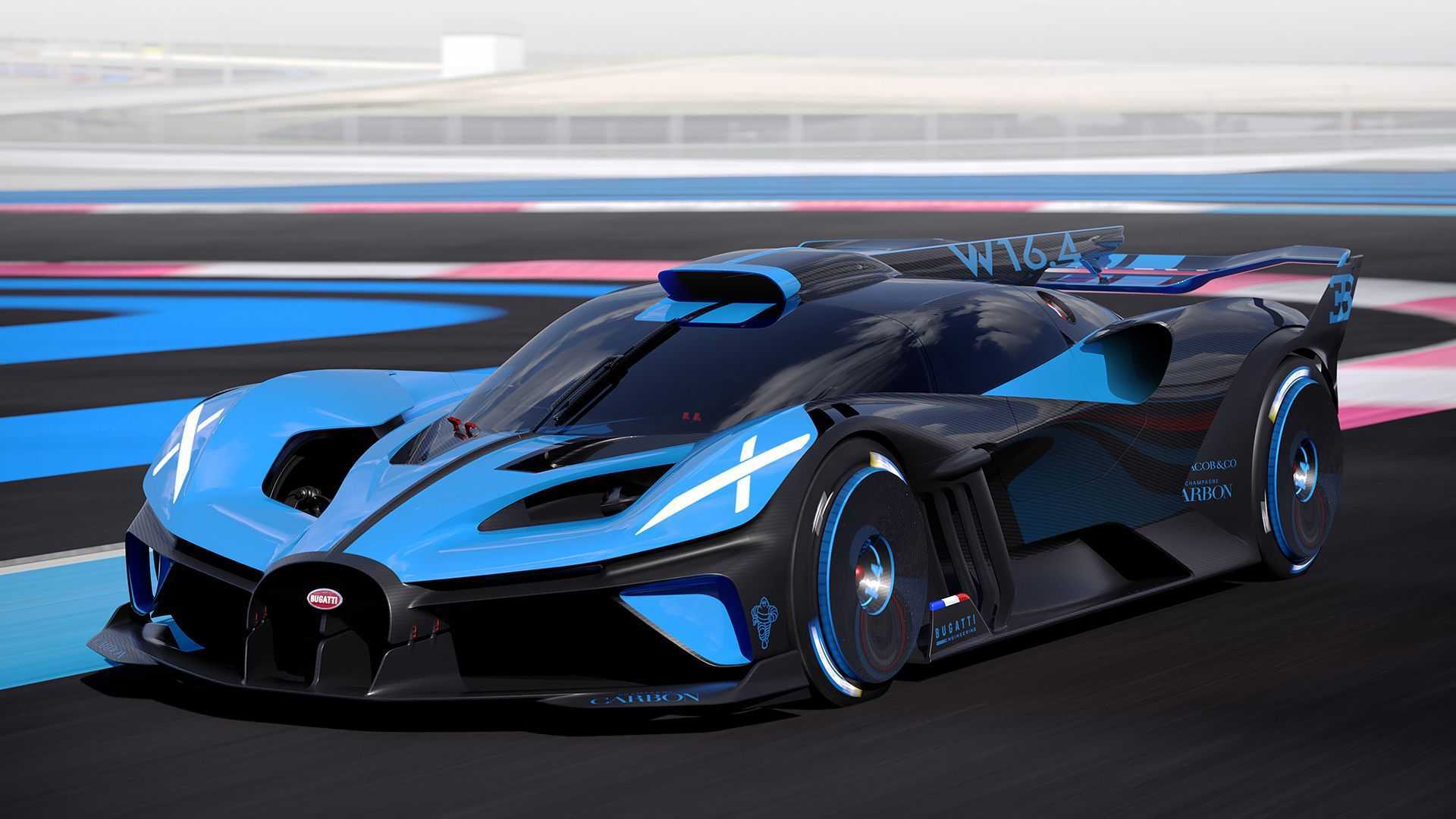
While street-legal in Europe, it fails to meet U.S. crash-test and emissions standards, meaning it can only be driven in controlled environments. Its rarity and extreme design make it a trophy for collectors who prioritize engineering excellence over daily usability.
The Bolide is the ultimate send-off for Bugatti’s 8.0-liter W16 quad-turbo engine, a powerplant that first made history in the Veyron with 1,000 horsepower back in 2005. For the Bolide, that engine now produces 1,600 metric horsepower (about 1,578 bhp) and is paired with a chassis capable of generating 2.5g of cornering force and 2,900 kg of downforce.
Unlike the Chiron, the Bolide sits on a completely bespoke carbon monocoque developed with Dallara, rather than adapting an existing platform, and it discards all non-essential road-car components to save weight.
Despite its radical engineering, the W16 is largely unchanged; fuel and oil pumps are mostly retained, with only minor modifications. The result is an automotive Frankenstein: half the car’s mass is the colossal powertrain, the rest is a delicate, race-ready chassis designed for extreme performance.
10. De Tomaso P72
The De Tomaso P72 is a nod to classic Italian design, combining retro aesthetics with modern engineering. Its carbon-fiber chassis and naturally aspirated V12 engine provide a thrilling experience, but the car has not yet undergone U.S. federal safety certification, rendering it street-illegal.
Like many of the cars on this list, the P72 shines as a collector’s item or track-day machine rather than a practical road car.

In conclusion, while these ten lightning-fast supercars may not be street-legal in the U.S., they embody the pinnacle of automotive engineering. They are not just vehicles; they are dream machines, collectible trophies, and engineering statements.
For the lucky few who can own them, the experience is less about driving on highways and more about indulging in the ultimate fantasy of speed, design, and exclusivity an aspiration that many enthusiasts are happy to chase, even if only on a private track or in their imagination.