
Tesla has become one of the most modded and polarizing brands in the automotive world. While many enthusiasts love the minimalist and futuristic design language straight from the factory, others push the envelope by making these high-tech electric vehicles look and perform in ways far beyond what Elon Musk envisioned.
One of the boldest trends in the Tesla aftermarket scene: widebody builds radical conversions that widen the stance, add aggressive aerodynamic parts, and absolutely change the perception of what an electric car or truck should look like.
From ultra-rare exotic builds to viral internet sensations, here are ten of the craziest widebody Tesla creations ever spotted all with real context for U.S. automotive fans.
1. Shaquille O’Neal’s Effortless Motors Cyberbeast Cybertruck
The king of jaw-dropping builds has to start with Shaquille O’Neal’s carbon fiber Cybertruck widebody, dubbed the “Cyberbeast.”
Built by Effortless Motors, this project took Tesla’s already bold stainless-steel pickup and turned it into something straight out of sci-fi.

Massive carbon fiber fender flares, colossal 26-inch wheels, and a black-on-black aesthetic give this truck an intimidating presence on the road even more so than stock Cybertrucks.
The fact that an NBA legend commissioned and owns it only amplifies its notoriety among U.S. car fans.
2. World’s First Waido 360 Cybertruck Widebody
Not satisfied with just one insane Cybertruck? Shaq also added another wild widebody the Waido 360 version which stands as one of the first commercial widebody kits for the pickup.
This build features dramatic fender extensions that add roughly six inches to the truck’s width, aggressive bumpers, and big forged wheels.
While production of the kit is extremely limited (only about 100 units), its impact on the custom EV community has been huge.

The 2024 Tesla Cybertruck looks like something straight out of a sci-fi movie, as if it were delivered by an alien civilization rather than rolled off an assembly line. Beneath its unconventional appearance, though, Tesla claims the electric pickup has the muscle to go head-to-head with some of the best-selling trucks on the market.
Its sharp-edged stainless-steel exterior is not only visually striking but is also said to be bulletproof, reinforcing the idea that this truck is built to take abuse. For 2024, buyers can choose between two all-wheel-drive versions: a Dual Motor model producing 600 horsepower and a Beast variant that uses three electric motors to generate a combined 834 horsepower.
A single-motor, rear-wheel-drive Cybertruck is planned to join the lineup in 2025. According to Tesla, the Cybertruck can tow up to 11,000 pounds and offers an estimated driving range of as much as 340 miles. When connected to a Tesla Supercharger, the truck is said to be capable of adding between 128 and 136 miles of range in just 15 minutes.
With the Cybertruck, Tesla is entering one of the most popular vehicle segments in the United States: the pickup truck market. From the outset, it faces stiff competition from established electric rivals such as the Ford F-150 Lightning, GMC Hummer EV, and Rivian R1T.
Chevrolet is also preparing to launch an electric Silverado, while the Ram 1500 REV is approaching its production debut, making this a crowded and competitive space right from the start.
Until the rear-wheel-drive Cybertruck arrives for the next model year with a starting price of $62,985, buyers are limited to the Dual Motor and Beast versions.
Given that driving range is likely to be a major concern for most shoppers, the Dual Motor model makes the most sense. It costs less than the Beast, delivers slightly better real-world range, and still offers more than enough performance for most needs.
Eventually, the Cybertruck will be available with three different powertrain configurations. At launch, Tesla is offering dual-motor and tri-motor setups, both of which provide all-wheel drive.
A single-motor, rear-wheel-drive variant is scheduled to arrive for the 2025 model year. For now, the Dual Motor Cybertruck delivers a combined 600 horsepower, while those seeking maximum performance can opt for the Cybertruck Beast, which uses three motors to produce a total of 834 horsepower.
Every Cybertruck comes equipped with an adjustable air suspension that can be raised or lowered as needed and offers up to 17 inches of ground clearance. Combined with approach and departure angles of 35 degrees and 28 degrees respectively, the electric pickup has the potential to be a serious off-road contender.
On pavement, it’s more nimble than its size suggests. Driving a Founders Edition Beast model revealed that its rear-wheel steering and variable-ratio steer-by-wire system make it noticeably easier to maneuver in tight urban settings than a traditional pickup truck.
Also Read: Top 10 Greatest Front-Engine Ferraris Ever Built
3. Billion Group Widebody Cybertruck
If you thought the Cybertruck couldn’t get any more outlandish, Mexican tuner Billion Group proved you wrong.
This widebody Cybertruck build wraps futuristic design in glossy black with flared arches, a custom bumper, LED light bars, and massive wheels that make it look almost lifted like a cross between an off-roader and a stealth fighter.
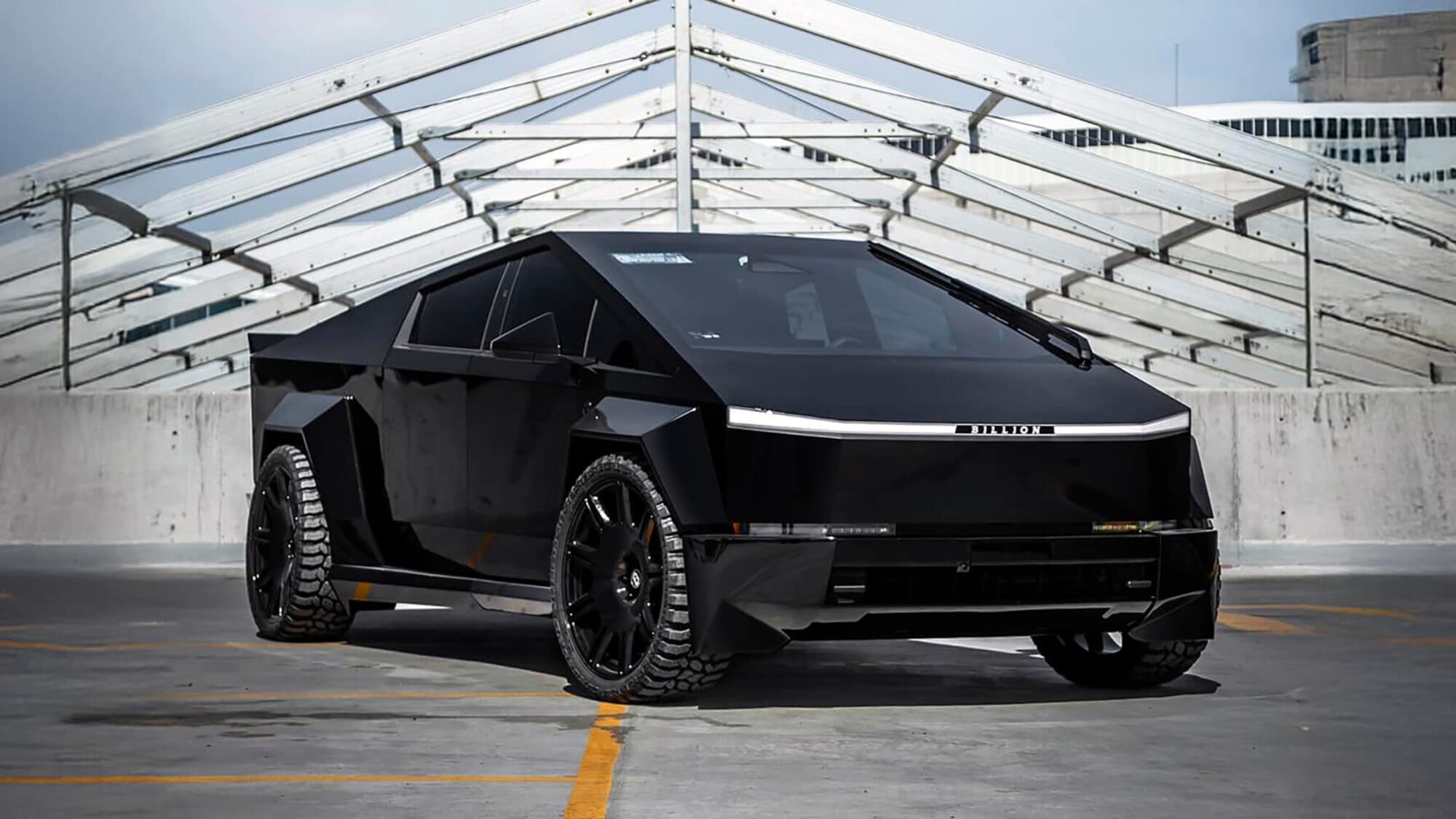
This isn’t just a simple accessory kit; integrating wider fenders required thoughtful planning around the Cybertruck’s unique stainless steel body lines and existing sensors.
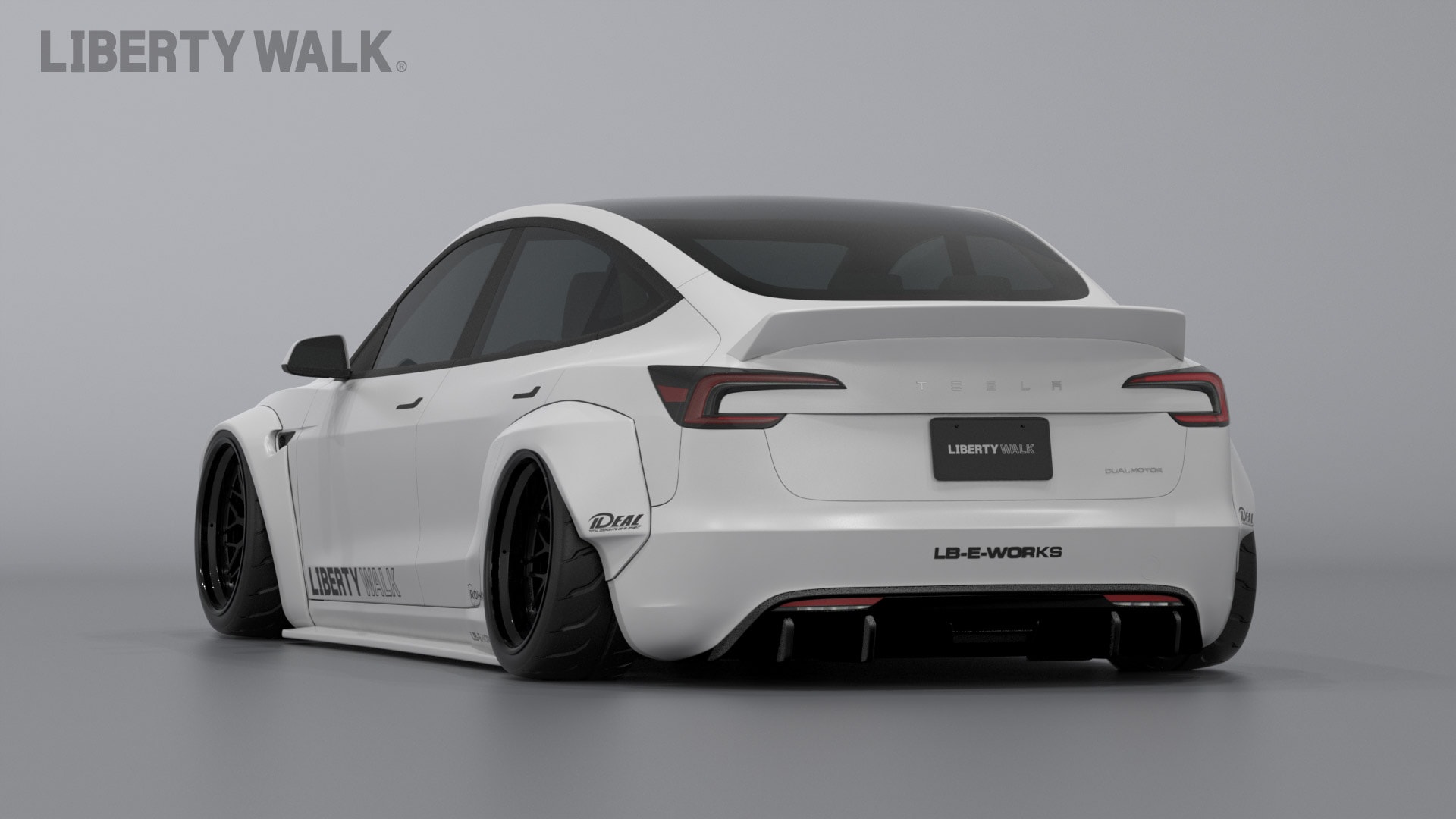
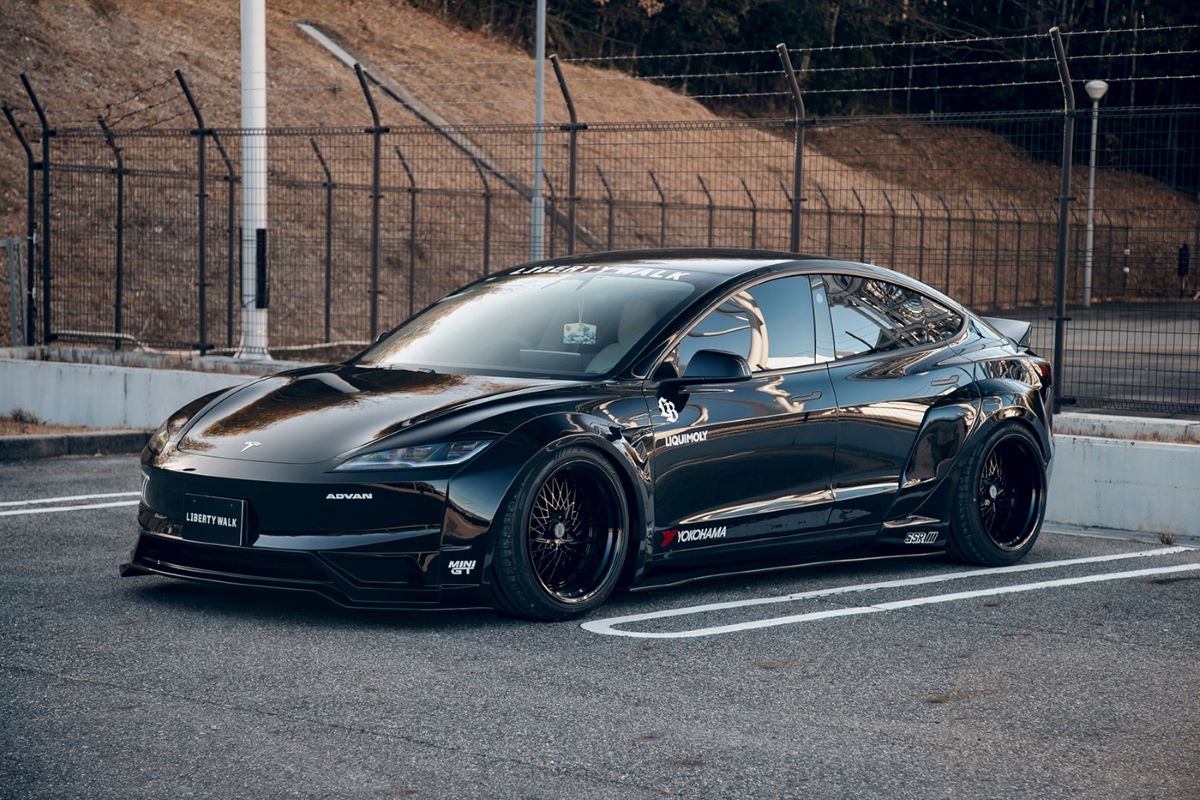
4. Liberty Walk Tesla Model 3 Widebody
Liberty Walk is a name many car enthusiasts instantly recognize especially for its unapologetically wide and bolted-on widebody kits. When they turned their attention to the Tesla Model 3, the result was equally dramatic.
The LB E Works widebody kit gives the compact EV a flared and aggressive look complete with oversized fenders, side skirts, and unmistakable Liberty Walk presence.
It’s one of the most polarizing Model 3 mods out there some love the audacity, others think it clashes with Tesla’s sleek lines but there’s no denying its impact at car shows and meets.
With a near-perfect mix of performance, driving range, and attainable pricing, the 2022 Tesla Model 3 is an electric vehicle that largely delivers on its reputation. It’s quick, especially in Performance trim, and impressively agile, making it an EV that driving enthusiasts can genuinely appreciate.
The mid-level Long Range version offers an excellent 358 miles of driving per charge, meaning daily charging isn’t a necessity for most owners. While the appealing entry-level price doesn’t fully showcase everything the Model 3 can do, and its fit and finish fall slightly short of rivals like the Chevy Bolt and Ford Mustang Mach-E, it remains the most affordable gateway into Tesla’s influential EV lineup.
For 2022, the former Standard Range model has been renamed Rear-Wheel Drive and now uses a different battery chemistry, switching to lithium-ion-phosphate instead of the previous nickel-cobalt-aluminum pack.
Although this battery is less energy-dense, the estimated driving range for the base model actually increases, now rated at 272 miles. The Long Range variant also benefits from a modest improvement, with its estimated range climbing to 358 miles per charge.
The base rear-wheel-drive version represents solid value, but its 272-mile estimated range may still leave some drivers concerned about range anxiety.
For that reason, the Long Range model is the more compelling choice, offering an estimated 358 miles of range per charge. Every 2022 Model 3 comes standard with heated front seats, built-in navigation, and Tesla’s Autopilot semi-autonomous driving system.
Like most electric vehicles, the Model 3 accelerates smoothly and quietly, delivering strong, immediate power from a standstill. It’s quick across the lineup, and genuinely fast in certain trims.
The rear-wheel-drive Long Range model we tested reached 60 mph in 5.1 seconds. Step up to the Performance version, and that sprint drops to just 3.5 seconds, which is half a second quicker than our long-term Model 3 Long Range.
As with other Teslas, the battery pack is mounted beneath the floor, creating a low center of gravity that helps the car feel stable and confident through corners. The Model 3 changes direction eagerly and remains composed when pushed.
Steering is precise and nicely weighted, with three selectable settings that adjust steering effort. Ride quality leans firm but never harsh, though the absence of a traditional engine means road noise is more noticeable, with tire sounds clearly transmitted over rough pavement.
5. Will.i.am’s West Coast Customs “Spaceship” Model S
This widebody Tesla build has as much celebrity flair as it does automotive creativity. Musician and tech enthusiast Will.i.am teamed up with West Coast Customs for a one-of-a-kind Model S transformation nicknamed “Spaceship.”
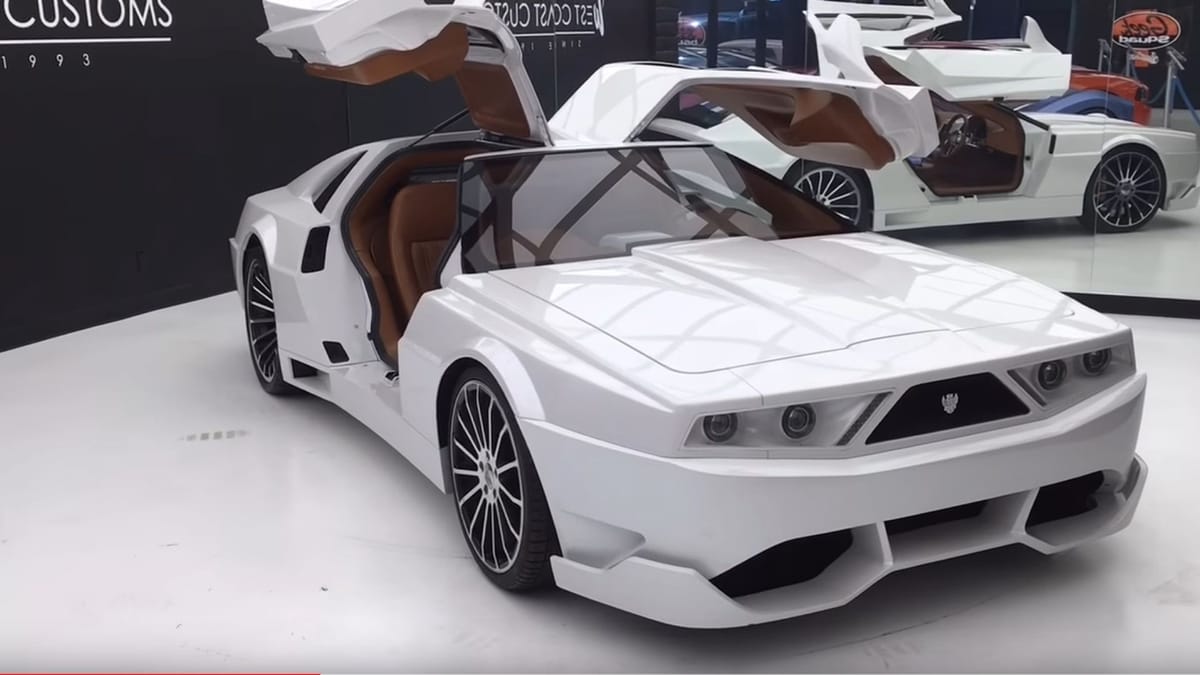
The kit includes exaggerated skirts, dramatic arches, custom doors, and a body shape that makes this Tesla look more like a futuristic supercar than a luxury electric sedan.
It’s a high-profile example of how broad the imagination goes when art meets electric machinery.
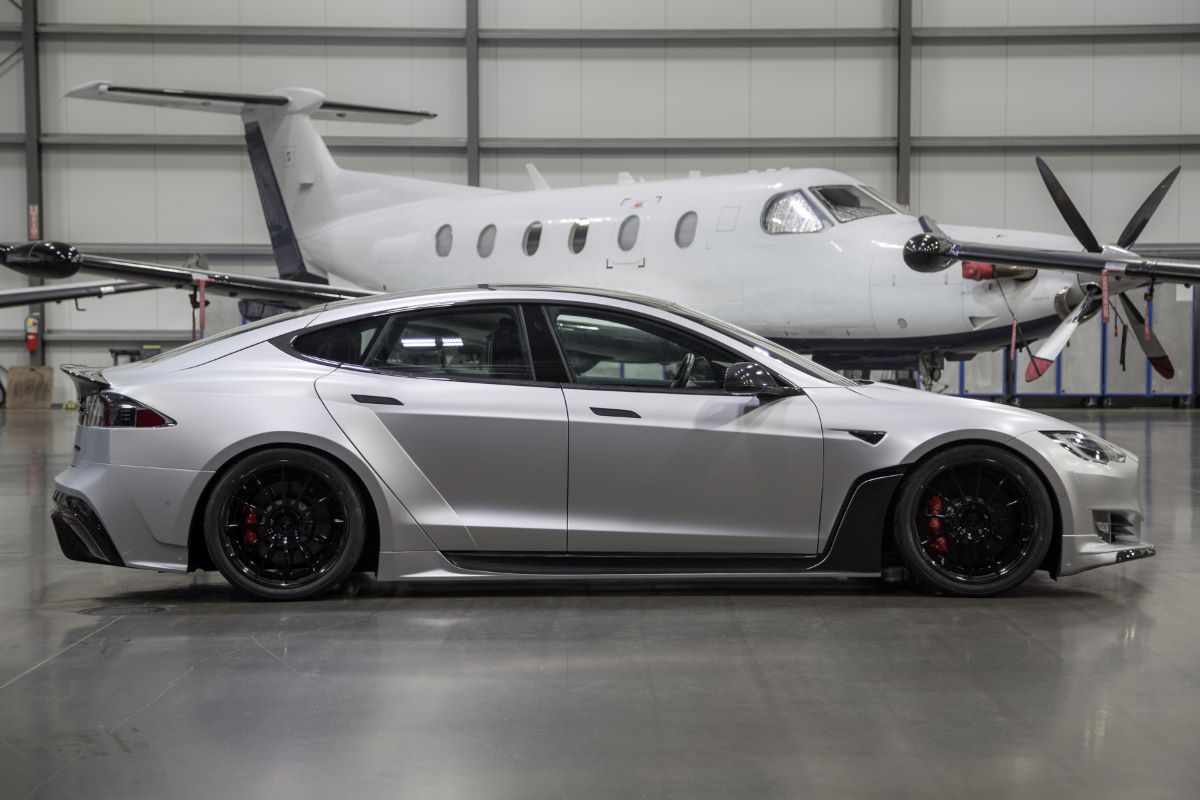
6. Unplugged Performance S-APEX P100D Tesla Model S
Long before streetwide Tesla builds became mainstream, Unplugged Performance was pushing the boundaries with their S-APEX widebody for the Model S P100D.
Introduced at SEMA and built for serious performance as well as visual impact, this carbon-fiber kit was more than just a body update it helped allow wider tires and improved handling.
The full conversion included race-ready suspension, carbon ceramic brakes, and bespoke interior touches that made it one of the most respected early widebody Teslas.
Without it, today’s expanding electric vehicle landscape likely wouldn’t exist, yet the 2022 Tesla Model S continues to stand out as one of the most appealing and desirable choices in the segment it helped create.
Offering up to an estimated 412 miles of driving range, depending on configuration, the Model S is well suited for long-distance travel. At the extreme end, the 1020-horsepower Plaid variant delivers supercar-level acceleration while still accommodating four adults.
Practicality remains one of the Model S’s strengths. It features a spacious rear cargo area along with a secondary front trunk that adds extra storage flexibility.
While newer luxury electric sedans such as the Porsche Taycan and Audi e-tron GT challenge the Model S on performance and comfort, Tesla’s advantage in driving range and the availability of semi-autonomous driving technology continue to attract buyers.
The Model S underwent a significant exterior and interior refresh last year, introducing the distinctive yoke-style steering wheel and the formidable 1020-hp Plaid performance model. For 2022, changes are expected to be minimal, although Tesla has confirmed a substantial price increase for the base version.
Pricing for the 2022 Tesla Model S starts at $106,440 and climbs to $137,440 depending on trim level and selected options.
We would recommend sticking with the standard Model S, which offers an estimated 412 miles of range per charge. While the Plaid model’s 1020 horsepower is undeniably tempting, its six-figure price tag delivers diminishing returns unless outright drag-strip-worthy performance is a top priority.
Every version of the Model S uses electric motors on both the front and rear axles, providing full-time all-wheel drive regardless of trim. Performance spans a wide spectrum, from very quick to outright brutal.
Although we haven’t tested the latest Model S Long Range, our previous 2020 Model S test car recorded an impressive 0–60 mph time of 2.4 seconds and showcased relentless acceleration thanks to its instant torque delivery.
The Plaid model adds a third electric motor, pushing total output to 1020 horsepower. In testing, that translates to a staggering 0–60 mph sprint of just 2.1 seconds.
Even in standard form, the Model S proves itself as a capable sports sedan, with well-managed body motions and precise steering. Drivers can choose between two steering weight settings, light or heavy, though neither provides much in the way of road feedback.
Ride quality strikes a solid balance, remaining comfortable without sacrificing control. Handling is sharp, highway manners are composed, and the Model S feels confident and almost serene at speed.
Also Read: The Best Custom Muscle Cars You Could Buy in 2024
7. Competition Carbon Widebody Tesla Model S Plaid
Tesla’s own performance flagship the Model S Plaid is a monster straight from the factory. But Competition Carbon took it to another level with a bespoke widebody kit designed to complement its blistering performance.
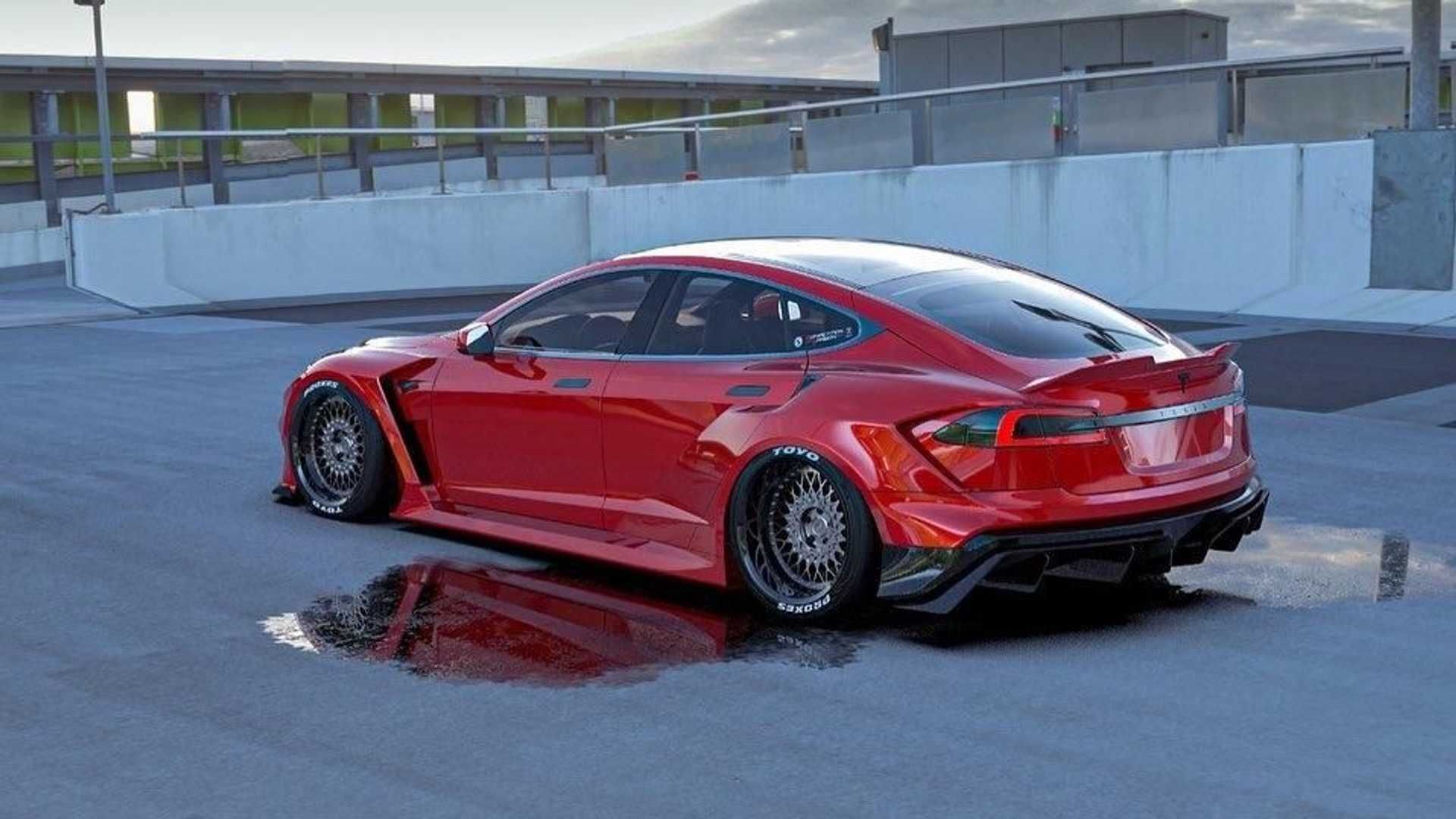
With reshaped front and rear fascias, deeper air intakes, and smoothly integrated flared arches, this Plaid widebody is one of the most refined yet still outrageous Tesla builds.
It balances aggressive aesthetics with aerodynamic purpose in a way that many aftermarket kits aspire to.
8. TSK Cyber3 Widebody Model 3
Some widebodies don’t just widen the car they totally reimagine it. The TSK Cyber3 kit for the Model 3 is one such example. It swaps out not just fenders but bumpers, headlights, and taillights to create an almost new identity for the EV.
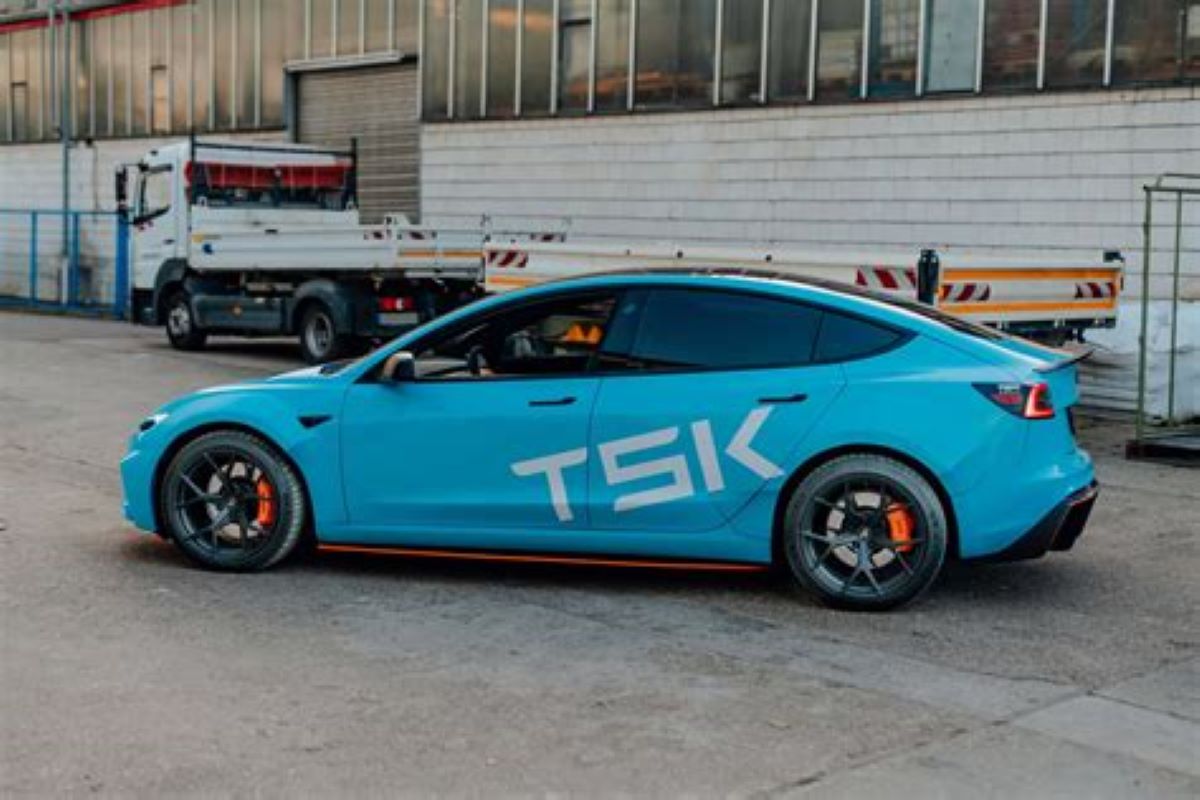
With full-width aggressive headlights and dramatic body changes, this build doesn’t just expand the track it makes the Model 3 look more like a bespoke machine than a production sedan.
9. Shambagged3 Model 3 Art Car Widebody
Pushing aesthetic experimentation even further, the Shambagged3 Model 3 is less about performance and more about art-car expression.
This build integrates a CMST widebody kit, towering rear wing with integrated lighting, and a riot of wrap and graphics that transform the understated Tesla into a moving canvas.
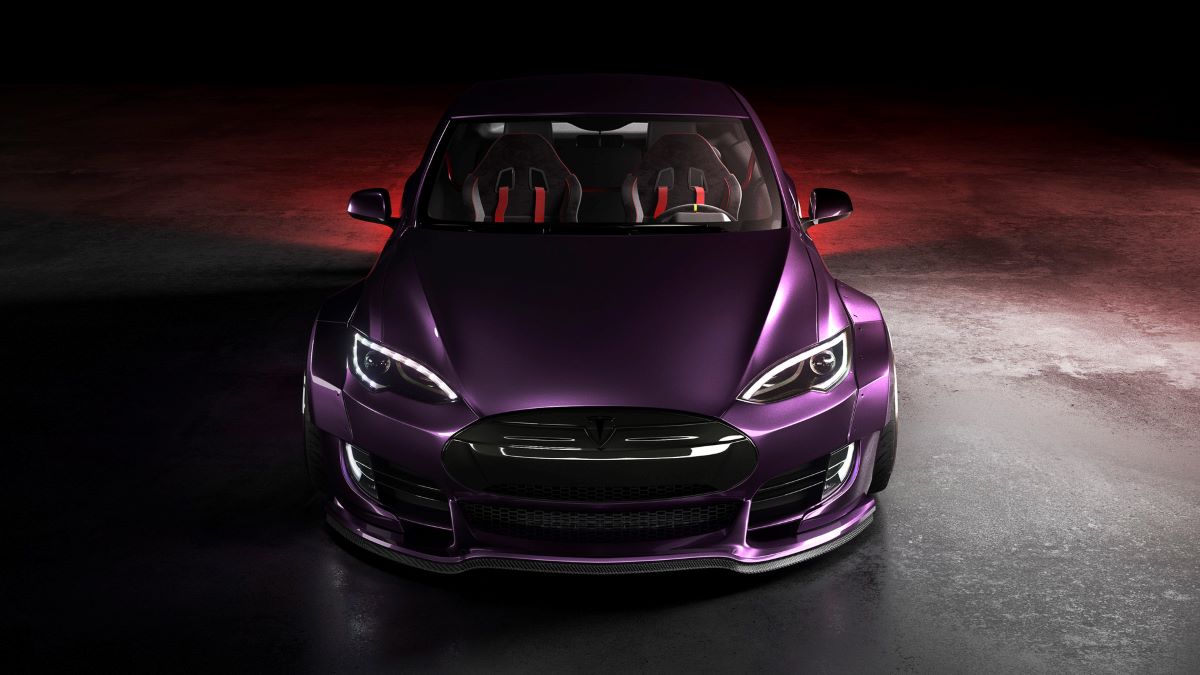
It even features playful additions like a roof box, fully embracing style over subtlety. For many in the U.S. scene, this build represents the creative spirit of customizing EVs beyond practical boundaries.
10. Drvn Mind Artisan Spirits Model 3
Finally, one of the cleaner but equally bold widebody builds comes from Drvn Mind’s Model 3 featuring an Artisan Spirits Black Label kit.
Seen at events like SEMA, this build dresses the smallest Tesla in the lineup with track-inspired aero, a front splitter, rear wing, and custom wheels turning the everyday electric commuter into a time-attack-style machine more at home on a canyon road or race environment than your typical urban commute.
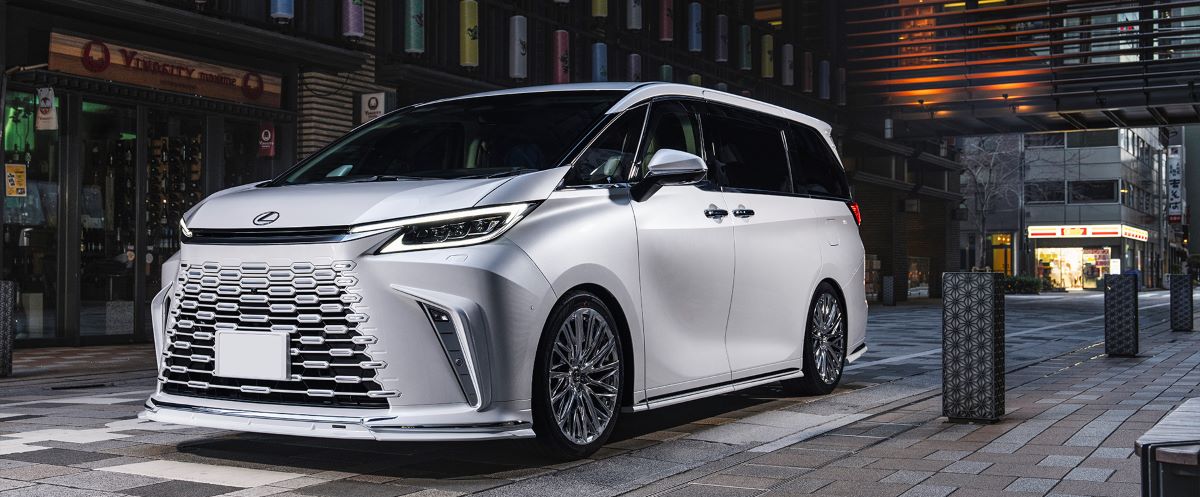
You might wonder why this trend has exploded after all, Teslas are known for their minimalist design language and advanced electric powertrains, not wide and angry bodywork.
The answer is cultural: as the EV revolution grows, enthusiasts in the U.S. and around the world are transplanting long-standing hot-rod and tuner culture into the electric age.
Widebody kits once the domain of Porsches and Japanese sports cars are now a symbol that EVs can be just as expressive, performance-oriented, and subculture-driven as internal combustion cars.
These conversions also speak to a growing industry around aftermarket EV parts, reminding everyone that electric cars, too, can be personalized in bold, jaw-dropping ways.
Some builds are about performance enhancement, some about aesthetics, and others about pure spectacle but all share one thing in common: they challenge what a Tesla “should” look like straight from the factory.
Whether you love them or hate them, the widebody Tesla movement is a loud and unmistakable part of the electric car ecosystem one that’s still evolving, and one that’s turning heads everywhere from Los Angeles to New York and beyond.
