
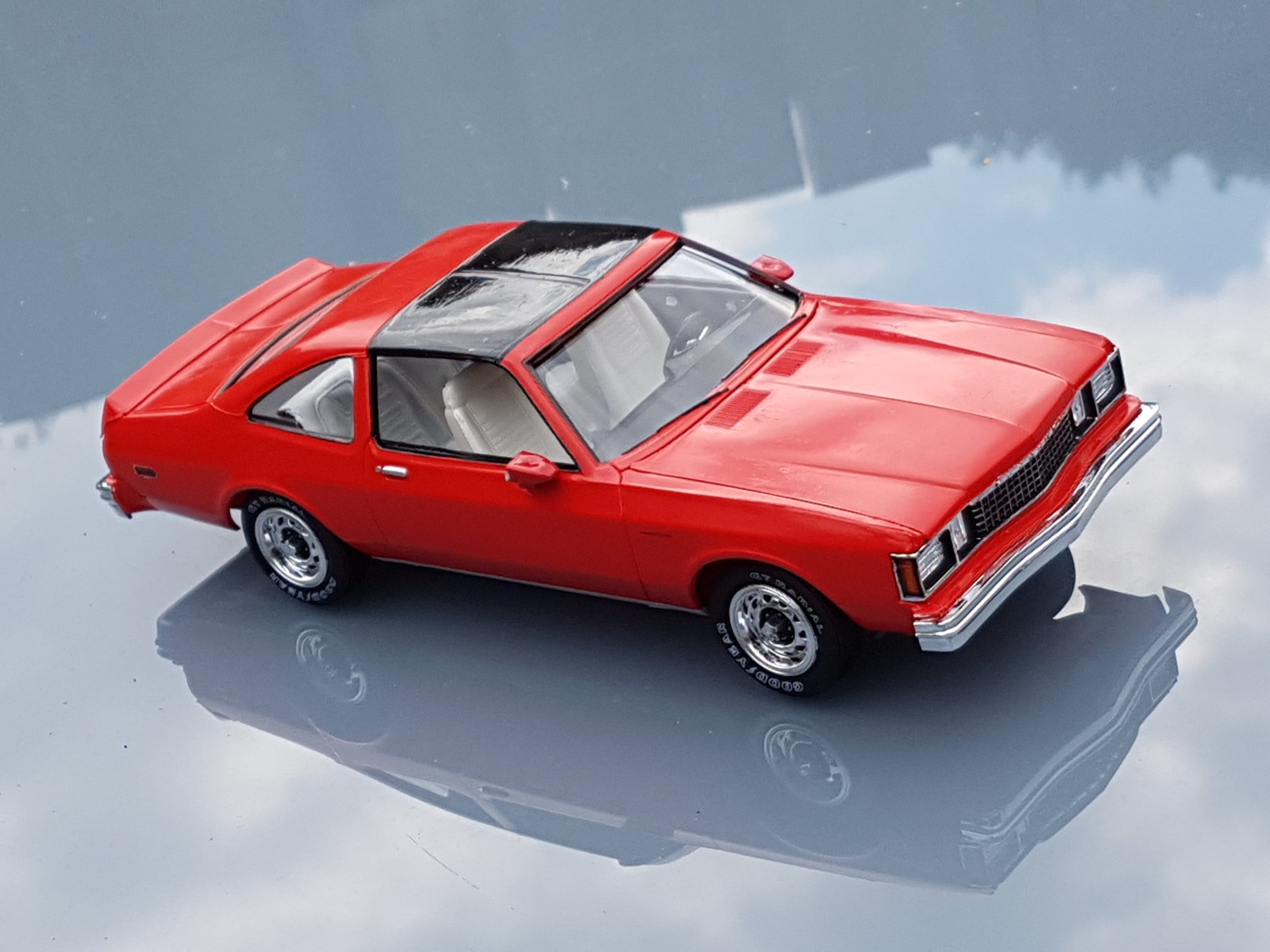
The 1980s were a turning point for American muscle cars. Rising fuel costs, tighter emissions regulations, and changing consumer preferences pushed manufacturers to rethink traditional high-performance vehicles, yet the desire for speed and style remained strong.
The Plymouth Volaré Road Runner made its final appearance during this era, preserving the legacy of one of America’s most iconic muscle cars.
Equipped with a 318 cubic-inch V8 delivering 120 horsepower and 245 lb-ft of torque, reinforced suspension, and subtle performance-focused styling, it provided drivers with a spirited driving experience despite the industry’s shift toward smaller, more economical cars.
Its originality, low mileage, and tasteful design cemented its place as a bridge between the golden age of muscle cars and a period of evolving priorities, proving that the essence of American performance cars could endure even during challenging times.
1980 Plymouth Volaré Road Runner: The Final Chapter of a Muscle Car Icon
The 1980 Plymouth Volaré Road Runner represents a unique moment in American automotive history, marking the last appearance of the legendary Road Runner name. By the early 1980s, the muscle car era had largely ended.
Rising fuel costs, stricter emissions regulations, and changing consumer priorities shifted the focus of the automotive industry. High-horsepower V8 coupes, once the pinnacle of American performance, were being replaced by smaller, more fuel-efficient vehicles that prioritized economy over raw power.
In this environment, Plymouth gave the Road Runner one final opportunity to shine as a performance-oriented trim of the Volaré coupe.
Despite its downsized role, the 1980 Road Runner retained a critical link to its muscle car heritage. Beneath the hood sat a 318 cubic-inch V8 producing 120 horsepower and 245 lb-ft of torque.
While these figures were modest compared with the output of earlier Road Runners, they were competitive for the period and provided a spirited driving experience. At a time when many performance trims were equipped with four- or six-cylinder engines, the presence of a V8 distinguished the Road Runner and maintained the muscle car spirit.
The drivetrain was supported by heavy-duty suspension components that improved handling compared with the standard Volaré. The TorqueFlite three-speed automatic transmission delivered power smoothly to a 2.47 rear axle, allowing the car to accelerate confidently while maintaining a comfortable ride.
A two-barrel carburetor and single-exhaust system kept emissions within regulatory limits while still producing the recognizable rumble of a V8.
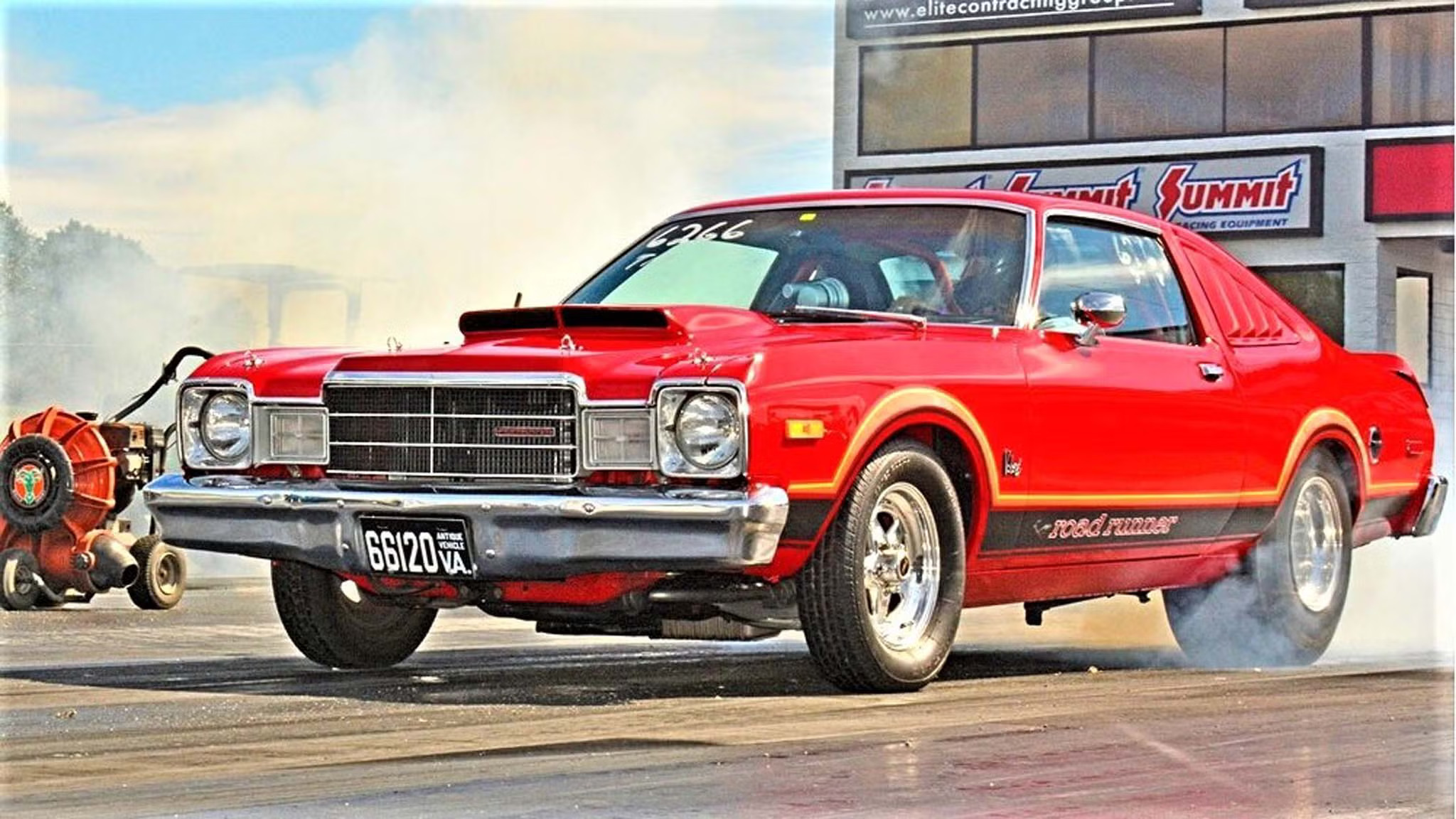
Visually, the 1980 Road Runner combined understated aggression with subtle performance cues. The exterior featured blacked-out trim, including the grille and other accents, creating a cohesive and slightly aggressive appearance. Square headlights replaced earlier round designs, modernizing the front end.
A small rear ducktail spoiler added a sporty touch, and Road Runner decals on the fenders and doors honored its heritage. Red pinstripes and accents on the hood, fenders, and around the windows signaled performance intent without being overbearing. Unlike earlier models, the cartoon bird emblems were removed, reflecting a more mature design.
This particular example is extraordinary due to its originality and exceptionally low mileage, showing only 9,290 miles. The black factory paint remains mostly intact, with only minor touch-ups, and all body panels are original.
Panel gaps are consistent with factory standards, and the rear spoiler shows only minor signs of age. An undercoating applied at the factory preserved the car’s structural integrity, protecting it from rust and maintaining its status as a genuine survivor.
Under the hood, the engine bay remains largely original and unmodified. Aside from routine service items and a recently replaced radiator, all components are factory-installed.
While not detailed to modern show standards, the engine compartment presents an authentic look, showing how a well-kept Road Runner would have appeared in the early 1980s. The undercarriage mirrors this condition, with intact suspension, exhaust, and drivetrain components, including the original catalytic converter and factory shocks.
The wheels and tires further enhance the period-correct appearance. The red-painted wheels with chrome accents and polished trim rings recall the classic Rallye wheels of earlier decades and are in excellent condition, having never been exposed to tire-changing equipment. The original FR70-14 Goodyear Eagle ST tires remain mounted, though they are now suitable for display rather than driving.
Inside, the Road Runner is remarkably preserved. The bucket seats are in excellent condition, upholstered in a material that resembles leather. Carpets remain plush and intact, and the dashboard features a brushed aluminum-style appliqué around rectangular instrument clusters, adding a sporty touch.
A center console separates the seats, and the steering wheel is wrapped in matching red leather. Door panels, headliner, and rear package shelf show minimal wear. The factory AM/FM radio and optional rear speaker remain functional, while additional features include a rear window defroster, factory floor mats, and a full-size spare tire housed in the original trunk.
Historical documentation adds to the car’s authenticity. Original window stickers, the factory invoice, and early registration paperwork provide verification of its provenance. Production numbers further underscore its rarity, with only 496 Road Runners built in 1980.
Collector’s interest in Volaré Road Runners has grown in recent years. As the value of classic muscle cars continues to rise, enthusiasts are drawn to lesser-known models that combine originality, rarity, and affordability.
While the 1980 Road Runner may not match the raw performance of earlier icons, it embodies the enduring spirit of American performance cars and demonstrates that the essence of the muscle car persisted even during a period dominated by smaller, more economical vehicles. Its combination of low mileage, originality, and tasteful styling makes it a standout example of a late-era performance coupe.
The 1980 Plymouth Volaré Road Runner stands as the final chapter in a celebrated line of performance cars. With its V8 engine, reinforced suspension, subtle yet distinctive styling, and extraordinary condition, it connects the golden age of muscle cars with an era of smaller, more practical vehicles.
Its rarity and preservation make it a compelling reminder of the dedication to performance that endured during challenging times for American manufacturers, proving that the spirit of muscle cars never truly disappeared.
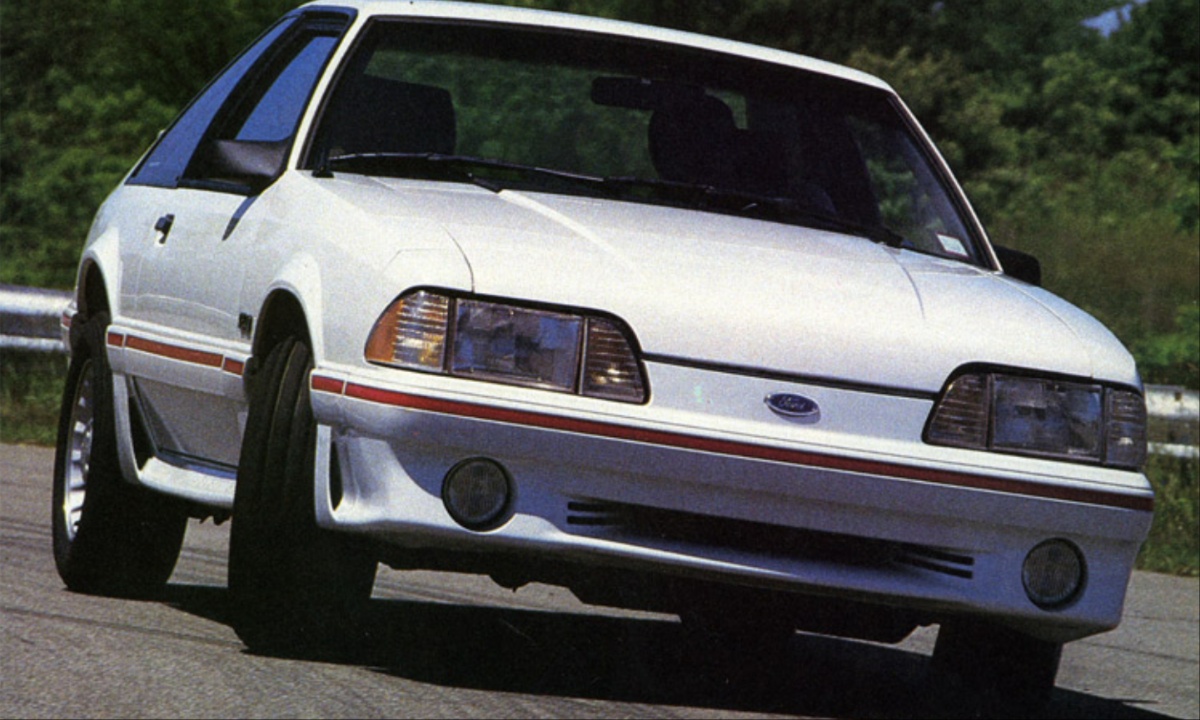
1987 Ford Mustang GT Foxbody: Returning the V8 to Glory
The 1987 Mustang GT marked a pivotal moment for the Foxbody Mustang, restoring the V8 to the forefront after several years dominated by turbocharged V6 engines.
During the early 1980s, Mustang sales had begun to decline, and enthusiasts were eager for a return to the traditional high-performance formula. Ford responded by reintroducing the 5.0-liter V8 GT, combining performance enhancements with updated styling cues inspired by the discontinued SVO model.
The 1987 GT reignited interest in the Mustang and set the stage for future high-performance variants, including the legendary 1993 Mustang Cobra R.
Under the hood, the 1987 Mustang GT was powered by a 305 cubic-inch V8 producing 225 horsepower and 300 lb-ft of torque. The engine featured a heavy-duty forged camshaft and aluminum pistons, which contributed to durability and performance.
Power was delivered through a five-speed manual transmission paired with a limited-slip differential, enhancing traction and control. The car also incorporated Ford’s Quadra-Shock rear suspension, progressive spring rates, and reinforced front and rear stabilizer bars.
These suspension upgrades improved cornering and handling while reducing body roll. The pedal layout was designed to facilitate heel-and-toe shifting, allowing drivers to maximize performance during spirited driving.
Styling updates for 1987 gave the Mustang GT a more aggressive and aerodynamic appearance. A redesigned front end was smoother and more streamlined, while the rear received a simplified design with a purposeful stance. Angular side skirts, a redesigned rear bumper, and a rear spoiler emphasized the car’s performance character.
Optional rear window louvers and a red pinstripe encircling the car provided subtle visual cues that distinguished the GT from standard Mustang models. These refinements helped the Foxbody Mustang remain attractive during a production run that spanned from the late 1970s to 1993.
The Foxbody Mustang, officially the third generation of the model, enjoyed the longest production run of any Mustang to date, lasting 14 years. Its lightweight design, despite a larger size than the outgoing Mustang II, contributed to improved handling and agility.
The introduction of MacPherson strut front suspension reduced curb weight and allowed the car to compete with European and Japanese sports cars of the era. The Foxbody corrected many of the shortcomings of the Mustang II, offering enthusiasts a vehicle that combined size, performance, and maneuverability.
The 1987 Mustang GT also became part of American pop culture. It was accessible to younger drivers and appeared in films and music, most notably in Vanilla Ice’s hit “Rollin’ in My 5.0.”
The Foxbody Mustang’s affordability and performance potential allowed it to resonate with a wide audience. Its popularity extended to racing and motorsports, with the Foxbody platform serving as a foundation for drag racing builds and other performance applications.
Collector interest in the Foxbody Mustang has increased significantly. Initially seen as a budget-friendly entry into performance cars, low prices and widespread availability meant that many early examples were poorly maintained or dismantled for parts.
Today, well-preserved, low-mileage, or limited-edition examples attract strong interest among collectors. Hagerty values indicate substantial appreciation, with excellent-condition 5.0 LX coupes rising from around $26,000 in 2023 to over $45,000 in 2024. Even fair-condition cars have increased in value, reflecting renewed recognition of the Foxbody’s significance.
Special editions added to the Mustang GT’s appeal. The 1987 Indy 500 Pace Car Edition celebrated the Mustang’s return to performance prominence, featuring a flip-up sunroof and distinctive graphics. Only 10,478 units were produced for public sale.
Another rare variant, the 1993 Cobra R, offered enhanced performance, unique bodywork, and limited production, becoming the most valuable Foxbody Mustang for collectors.
Early collaborations with McLaren produced the M81 Mustang, an ultra-limited run of ten units with extensive body modifications and turbocharged 2.3-liter engines. These examples highlight the versatility and enduring appeal of the Foxbody platform.
The Foxbody Mustang’s performance capabilities extended to law enforcement as well. Special Service Package (SSP) variants equipped for police use featured high-output 5.0-liter engines producing around 275 horsepower. These vehicles demonstrated the Mustang’s potential for high-speed pursuits and reinforced its reputation as a capable performance car.
With over 2.6 million units produced, the Foxbody Mustang was both a commercial and cultural success. It offered enthusiasts access to a performance vehicle at an affordable price, and strong aftermarket support encouraged modifications and upgrades.
The 1987 GT, in particular, represented a return to traditional Mustang values, combining V8 power, strong handling, and aggressive styling in a package that captured the essence of the brand’s heritage.
The 1987 Ford Mustang GT Foxbody stands as a key milestone in Mustang history. It restored the V8 to prominence, incorporated significant performance upgrades, and presented refreshed styling that maintained the Foxbody’s appeal through a lengthy production run.
Its cultural impact, collectibility, and versatility in street and motorsport applications have secured its place as a classic and influential muscle car. The 1987 GT bridged Mustang performance traditions of the past and established a foundation for future high-performance models, ensuring that the Foxbody Mustang remains an enduring symbol of American automotive achievement.
Also Read: 10 Cars That Look Stunning But Disappoint True Enthusiasts
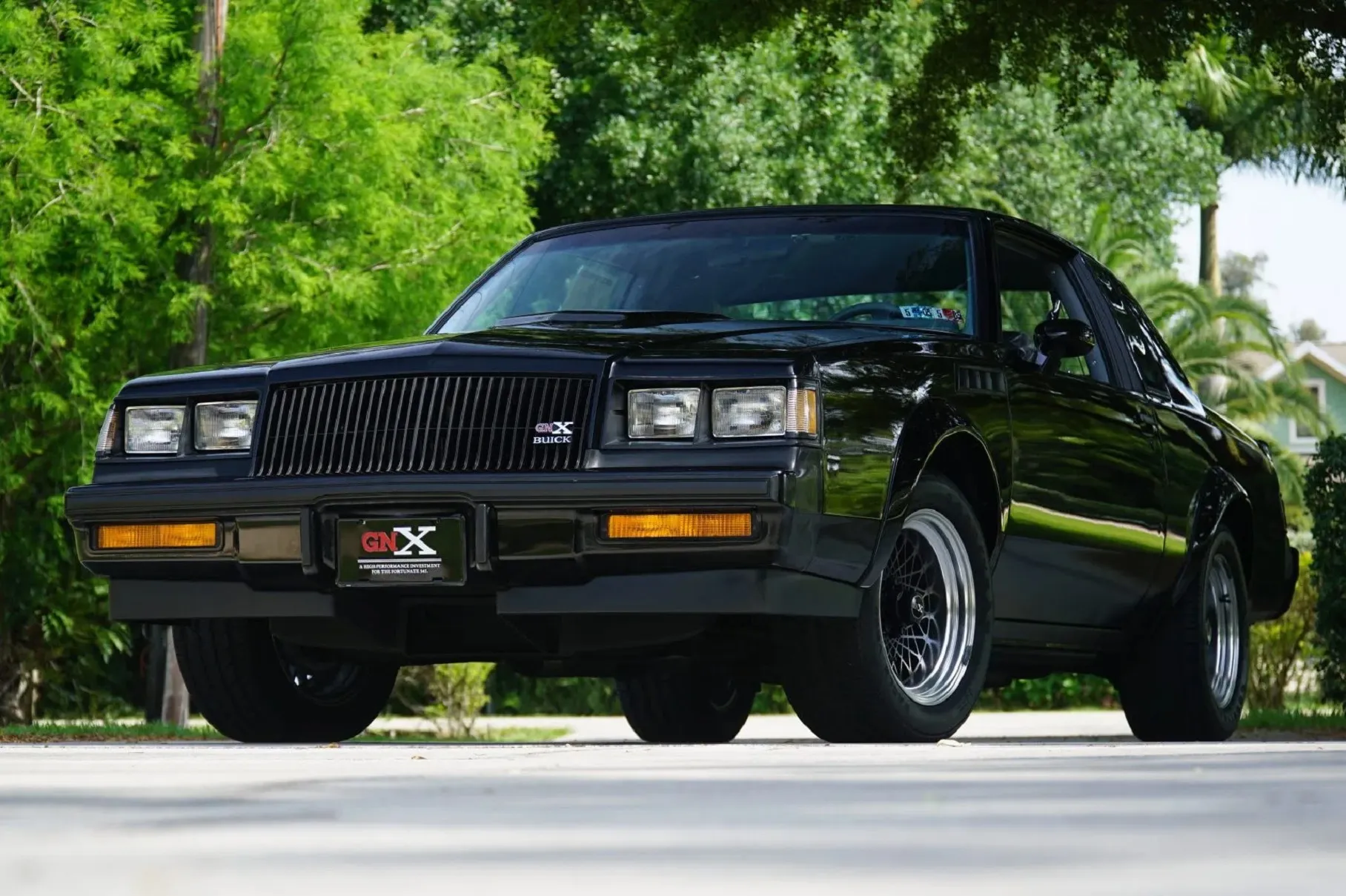
1987 Buick GNX: The Dark Side of American Muscle
The 1987 Buick GNX remains one of the most revered American muscle cars of the 1980s, despite not having a traditional V8 engine. Buick designed the GNX as a farewell to the second-generation, rear-wheel-drive Regal coupe, which was set to transition into a compact sedan the following year.
To create a memorable send-off, Buick began with the Grand National as a base and enlisted McLaren and the Automobile Specialty Company (ASC) for significant performance and handling upgrades. The result was a highly capable and aggressive turbocharged V6 powerhouse that earned a place among the decade’s most iconic performance cars.
At the heart of the GNX was a turbocharged 3.8-liter V6 engine, enhanced to produce 276 horsepower and 360 lb-ft of torque.
Modifications included ported and polished cylinder heads, a larger turbocharger with a ceramic turbine wheel, dual exhaust, a recalibrated PROM chip for the engine-control computer, and an insulated intercooler outlet tube.
Boost pressure increased to 16 psi, up from 14 psi on the Grand National, providing strong acceleration while the computer limited fuel flow above 124 mph to protect the chassis.
These engine improvements made the GNX capable of 0-60 mph in 4.7 seconds and the quarter-mile in 13.5 seconds at 102 mph, placing it among the fastest American production cars of its era. Only the Callaway Twin-Turbo Corvette and the Porsche 911 Turbo offered better acceleration in the United States at the time.
The GNX also received major chassis and suspension enhancements. ASC introduced a short torque arm and a Panhard rod in place of the Grand National’s diagonal locating links, which helped manage the increased torque at the rear axle.
A new frame crossmember provided attachment points for the torque arm, while a revised valve body for the automatic transmission kept shift points at the redline and improved downshift response.
Front suspension components remained unchanged, reflecting the expectation that most driving would involve straight-line performance.
To complement the increased traction, Buick equipped the GNX with Goodyear Eagle VR50 tires, 245/50VR-16 in front and 255/50VR-16 at the rear, mounted on bolt-together modular alloy wheels for testing, with production models using cast and welded wheels. Fiberglass fender flares protected the body from tire interference.
Styling for the GNX emphasized aggression and purpose. The car’s all-black paint scheme became one of its most recognizable features, reinforced by aggressive front-fender vents and the removal of Buick emblems from the front and rear.
These design choices created a menacing presence that earned the GNX the nickname “dark side” compared to competitors like the Ford Mustang and Pontiac Firebird. With its low-slung profile, blacked-out trim, and subtle aerodynamic enhancements, the GNX looked fast even when stationary, cementing its status as an icon of 1980s American muscle.
Inside, the GNX combined simplicity with driver-focused functionality. The cabin featured non-glitzy Stewart-Warner gauges for speed, RPM, boost, oil pressure, engine temperature, and fuel level. Seats were firm, supportive, and upholstered in grippy gray fabric, providing stability during spirited driving.
While the interior lacked refinement or luxury, it matched the car’s performance-oriented character, placing the focus squarely on driving engagement. The car’s throaty exhaust note and the sound of tires gripping the pavement provided an aural experience that echoed the muscle cars of the 1960s and 1970s.
The GNX’s exclusivity added to its legend. Buick limited production to just 500 units, all in black, making ownership a highly coveted opportunity.
The car represented a final evolution of the rear-wheel-drive Regal, combining turbocharged performance, rear-drive handling, and striking styling into a package that appealed to enthusiasts seeking raw speed and presence. Its rarity and performance helped ensure that the GNX became a prized collector’s item, with prices continuing to appreciate decades after production ended.
Performance, however, came with compromises. While the engine excelled in straight-line speed, the suspension could not fully match the output. On the skidpad, the GNX achieved 0.80 g of grip, comparable to the Grand National, but the chassis remained less composed on uneven or winding roads.
The car excelled at drag-strip performance but revealed the limits of a modified chassis when cornering or braking hard. This mismatch between power and handling became part of the GNX’s character, emphasizing its role as a high-powered, street-focused muscle car rather than a precision sports car.
The GNX also symbolized the end of an era. With the second-generation Regal retired after 1987, rear-wheel-drive American coupes were becoming increasingly rare. The turbocharged 3.8-liter V6, highly modified by McLaren and ASC, represented one of the final chapters in Buick’s performance story of the decade.
Enthusiasts regard the GNX as a last hurrah for the Regal and Grand National lineage, a machine that pushed the limits of what could be achieved with a V6 while maintaining classic muscle car aggression.
The 1987 Buick GNX stands as one of the most iconic American performance cars of the 1980s. Its turbocharged V6 delivered remarkable acceleration and torque, while chassis modifications allowed it to handle the power with relative stability.
Aggressive styling, limited production, and a bold, uncompromising character elevated the GNX above its peers, creating a lasting legacy in the muscle car community. It remains a celebrated example of raw, straight-line performance and a testament to Buick’s ability to craft an unforgettable performance coupe in an era increasingly dominated by smaller engines and more subdued styling.
1987 Chevrolet Camaro IROC-Z: A V8 Muscle Revival
The 1987 Chevrolet Camaro IROC-Z marked an important moment for American muscle cars, showcasing the return of the small-block V8 as a driving force in the late 1980s. While cars like the Buick GNX made headlines with turbocharged V6 engines, the IROC-Z reasserted the Camaro’s V8 pedigree and performance potential.
This model was part of the Z28 lineup but carried distinct upgrades and styling to celebrate its connection to the International Race of Champions (IROC), a racing series where drivers competed in identically prepared cars to test skill over horsepower.
In 1987, Chevrolet offered the IROC-Z with the Corvette’s 5.7-liter L98 V8, generating 230 horsepower and 330 pound-feet of torque, routed to the rear wheels through a four-speed automatic transmission. Although enthusiasts hoping for a manual shift had to settle for a less powerful 5.0-liter option, the L98 engine brought significant straight-line performance for the time.
The IROC-Z also included enhancements to steering and suspension, featuring quick-ratio steering, a revised MacPherson front setup, and Bilstein rear shocks tuned for maximum traction. These upgrades allowed the Camaro to handle curves with improved precision and responsiveness compared to previous models.
The IROC-Z’s design distinguished it from standard Camaros and emphasized its performance character. Chevrolet added a body kit with a large front air dam, lower side skirts, a rear spoiler, and prominent IROC-Z badging. A set of 15-inch aluminum wheels completed the look.
While not as iconic as the Buick GNX, the IROC-Z’s styling communicated speed and purpose, helping it gain recognition as a serious contender for performance enthusiasts. The trim also included subtle Corvette-inspired components, reflecting the shared design philosophy and reinforcing the car’s reputation as “a Camaro that thinks it’s a Corvette.”
Performance numbers were competitive for the era, though regulations limited the raw power compared to the muscle cars of the 1960s. The 5.7-liter IROC-Z could accelerate from 0 to 60 mph in under seven seconds, while the quarter-mile took around 15 seconds. Earlier Camaros had been quicker in the same test, but the IROC-Z’s focus was not just on straight-line speed.
Chevrolet emphasized handling, suspension tuning, and road manners, aiming to produce a muscle car capable of taking corners effectively while maintaining grip. This approach made it a track-friendly vehicle and a capable performer in skill-focused environments.
Chevrolet offered a range of engines for the IROC-Z over its production years, including the 5.0-liter L69 V8 producing 190 horsepower, the 305 TPI V8 with 215 horsepower, and the 5.7-liter L98 V8 with up to 245 horsepower in later versions.
Each engine shared rear-wheel drive architecture and was designed to balance power with drivability and fuel efficiency. Even with a more potent engine, the IROC-Z maintained reasonable fuel economy for the era, matching other cars on the road with averages of 15 to 17 miles per gallon in city driving.
The IROC-Z did have trade-offs. The body kit, suspension upgrades, and sway bars added weight, around 50 pounds, which slightly affected straight-line acceleration. Despite this, the car’s handling capabilities were enhanced, allowing it to corner at higher speeds with minimal loss of traction.
Comparisons at the time showed that the IROC-Z performed better on twisty roads than rivals like the Ford Mustang LX 5.0, confirming Chevrolet’s intent to make the car more than just a straight-line powerhouse.
The 1987 Chevrolet Camaro IROC-Z combined the raw appeal of a small-block V8 with improved handling and distinctive styling, bridging the gap between classic muscle cars and modern performance priorities.
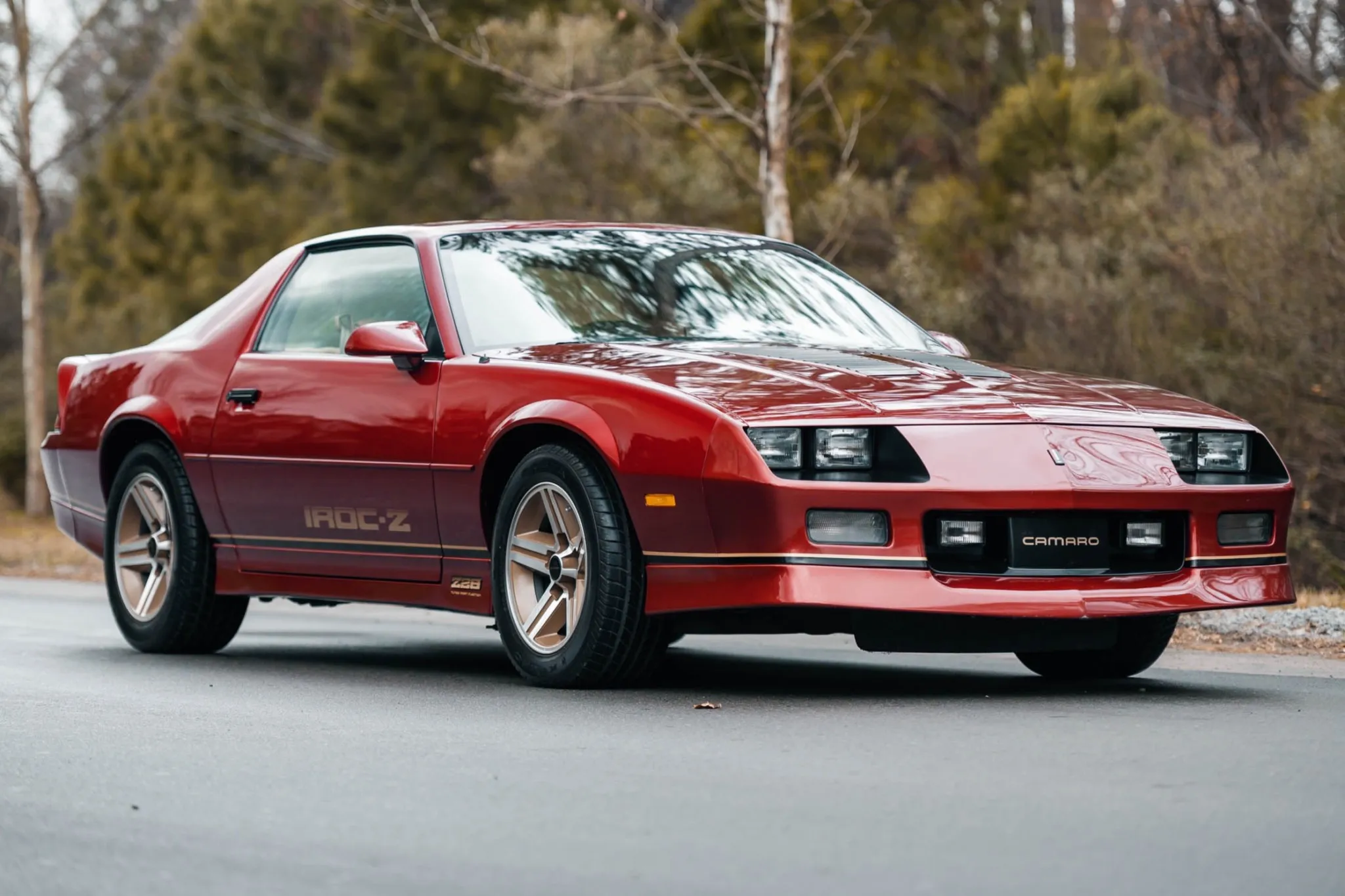
Its Corvette-inspired engine, tuned suspension, and aerodynamic bodywork made it one of the best-handling American performance cars of the late 1980s.
While it may not have matched the acceleration of muscle cars from earlier decades, it succeeded in delivering a complete driving experience that emphasized control, balance, and driver engagement. Today, the IROC-Z stands as a symbol of Chevrolet’s commitment to performance and remains a celebrated example of 1980s American muscle.
The 1980 Plymouth Volaré Road Runner stands as the final chapter in a storied muscle car heritage. With its V8 engine, strengthened suspension, and understated yet distinctive design, it preserved the character and excitement of classic American muscle.
Alongside contemporaries like the Ford Mustang GT, Buick GNX, and Chevrolet Camaro IROC-Z, the Road Runner demonstrates that manufacturers continued to offer thrilling performance and style despite regulatory and economic pressures.
Today, its rarity, originality, and well-maintained condition make it a prized collector’s piece. The Road Runner proves that even as the muscle car era was winding down, the pursuit of power, personality, and driving enjoyment remained alive.
Also Read: 10 Cars That Look Stunning But Disappoint True Enthusiasts
