
When most people think of off-roading, visions of brand-new Jeeps or lifted trucks often come to mind vehicles that carry hefty price tags and ongoing maintenance costs.
But the reality is that the off-road world is full of hidden gems, trucks, and SUVs that can handle dirt, rocks, and mud without breaking the bank.
In fact, some of these rugged machines are so affordable that they cost less than a used Toyota Corolla, making them perfect for adventurous drivers who want capability without debt.
Below, we’ll explore ten unstoppable off-roaders that deliver serious trail performance on a shoestring budget, all while remaining surprisingly practical for daily life.
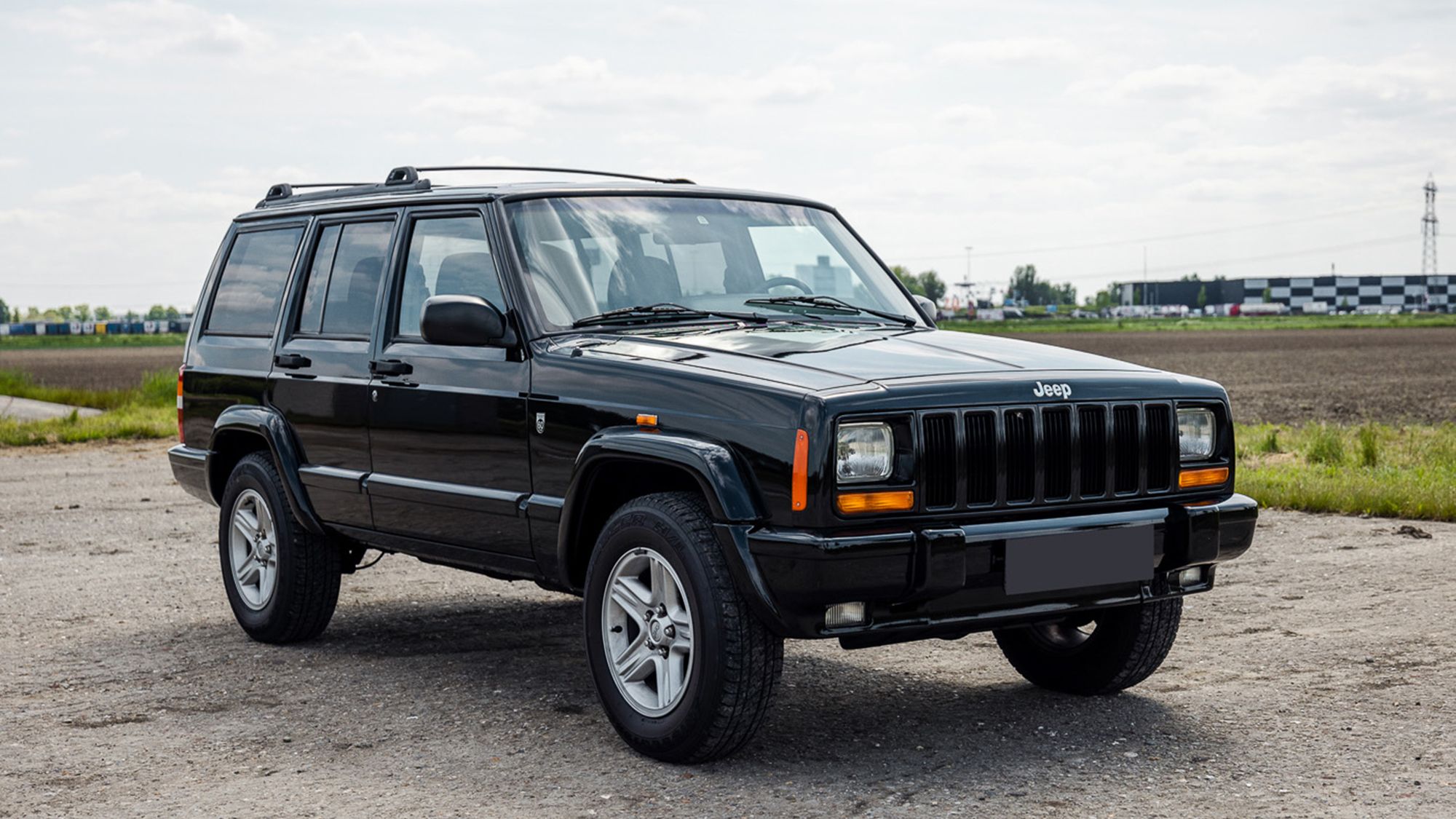
1. Jeep Cherokee XJ (1984–2001)
The Jeep Cherokee XJ is a legend in the off-road community for a reason. Its boxy design, solid front and rear axles, and lightweight frame make it a natural trail warrior.
Even with older models, you can find XJs with 4.0-liter inline-six engines for under $5,000, depending on condition.
With basic modifications think lift kits, larger tires, and skid plates the XJ can take on rocky trails and deep mud without hesitation.
Plus, the parts are abundant and inexpensive, so keeping it running is relatively stress-free for budget-conscious enthusiasts.
The arrival of the 4.0-liter inline-six in 1987 transformed the Jeep Cherokee, delivering 173 horsepower and cementing the model’s place in automotive history. It elevated the Cherokee into a rare category: a vehicle that was both a mainstream success and a true cult classic.
With its unibody construction, more akin to today’s crossovers, paired with solid axles rooted firmly in Jeep tradition, the XJ Cherokee bridged two automotive eras. It came to define rugged yet accessible American SUV capability for an entire generation.
The 4.0-liter engine is so central to the XJ Cherokee’s appeal that it’s fair to suggest ignoring any pre-1987 examples altogether. Before the introduction of the 4.0, Cherokees were equipped with a less inspiring mix of engines, including AMC’s 2.5-liter four-cylinder, General Motors’ 2.8-liter V-6, and even a Renault-sourced 2.1-liter turbo-diesel.
None offered the combination of strength and durability that would come to define the Cherokee’s reputation. Beyond its outright power, especially after the high-output version debuted in 1991 with 190 horsepower, the 4.0-liter stood out for its strong torque delivery and near-mythical durability.
In a 1990 comparison test, a four-door Cherokee equipped with an automatic transmission and rated at 177 horsepower outpaced all rivals, posting an impressive-for-its-time 0–60 mph run of just 10.5 seconds.
Even after the Cherokee itself exited production, the legendary 4.0-liter engine lived on in the TJ Wrangler until 2006. When Jeep eventually replaced it with the far less beloved 3.8-liter V-6, enthusiasts openly lamented the loss of one of the brand’s greatest powerplants.
While generally robust, the Cherokee isn’t without its weak points. The part-time four-wheel-drive system relies on a vacuum-operated front-axle engagement mechanism, which can fail without warning, often revealing itself only when traction is suddenly needed most.
The 4.0-liter engine can develop leaks at the rear main seal, and models built before 1997 used a fiberglass rear hatch that was prone to cracking. That said, the Cherokee is fundamentally tough, and most serious issues tend to stem from poor aftermarket modifications.
Buyers should be cautious of examples fitted with suspension lifts and oversized tires. Even a modest three-inch lift can alter rear driveshaft angles enough to destroy U-joints, and the Cherokee’s relatively light-duty axles were never designed to handle excessively large tires.
Cherokee pricing spans a massive range. High-mileage, heavily worn trail rigs can be found for as little as $1000, while clean, low-mileage, unmodified examples can command prices north of $30,000. Most Cherokees on the market fall somewhere in between, and their condition usually reflects the asking price.
A budget of around $5000 should secure a solid, usable example. The sweet spot is generally considered to be the 1997–2001 models, which benefited from a subtle exterior refresh and a more modernized interior.
If you’re lucky enough to find a two-door Cherokee equipped with the 4.0-liter inline-six and a five-speed manual transmission, you’ll have one of the most entertaining and desirable configurations available.
2. Toyota 4Runner (1990s models)
The 4Runner has long been synonymous with reliability and off-road capability. Older 1990s models with the solid rear axle setup are especially capable and can often be found for $6,000–$8,000 in good condition.
With the available four-wheel-drive system and a robust V6 engine, these 4Runners handle trails, snow, and sand effortlessly.
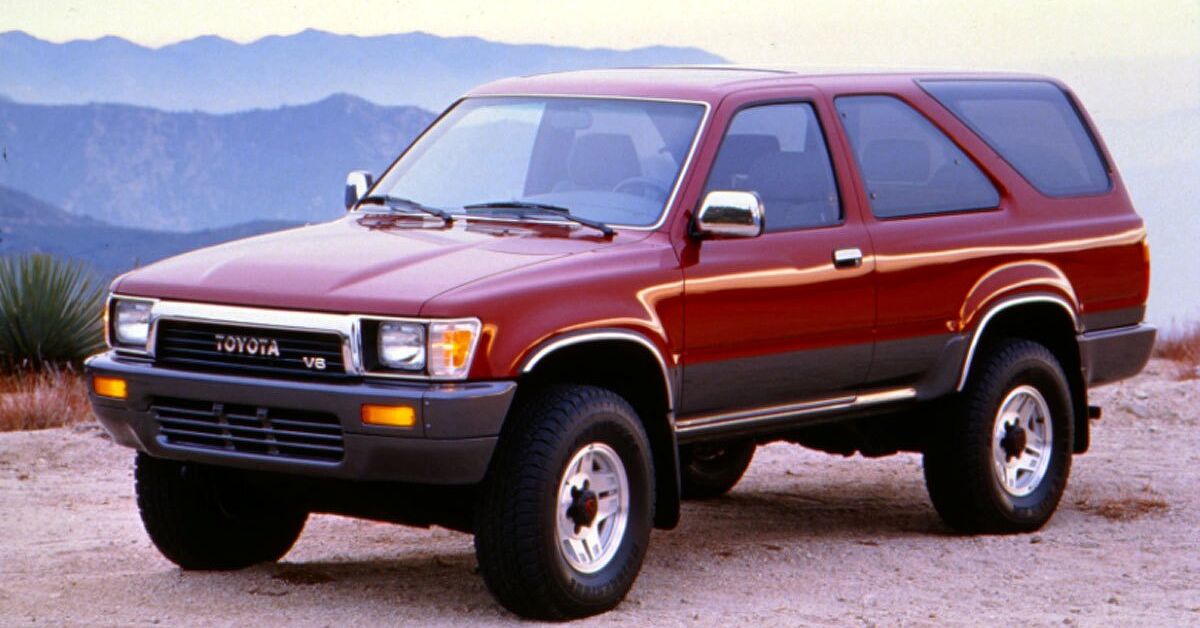
They’re also famous for longevity; many have well over 200,000 miles and are still performing strongly. For those seeking a mix of daily usability and serious trail performance, the 4Runner is hard to beat.
Also Read: Top 10 RWD Sports Cars You’ll Actually Want to Daily Drive
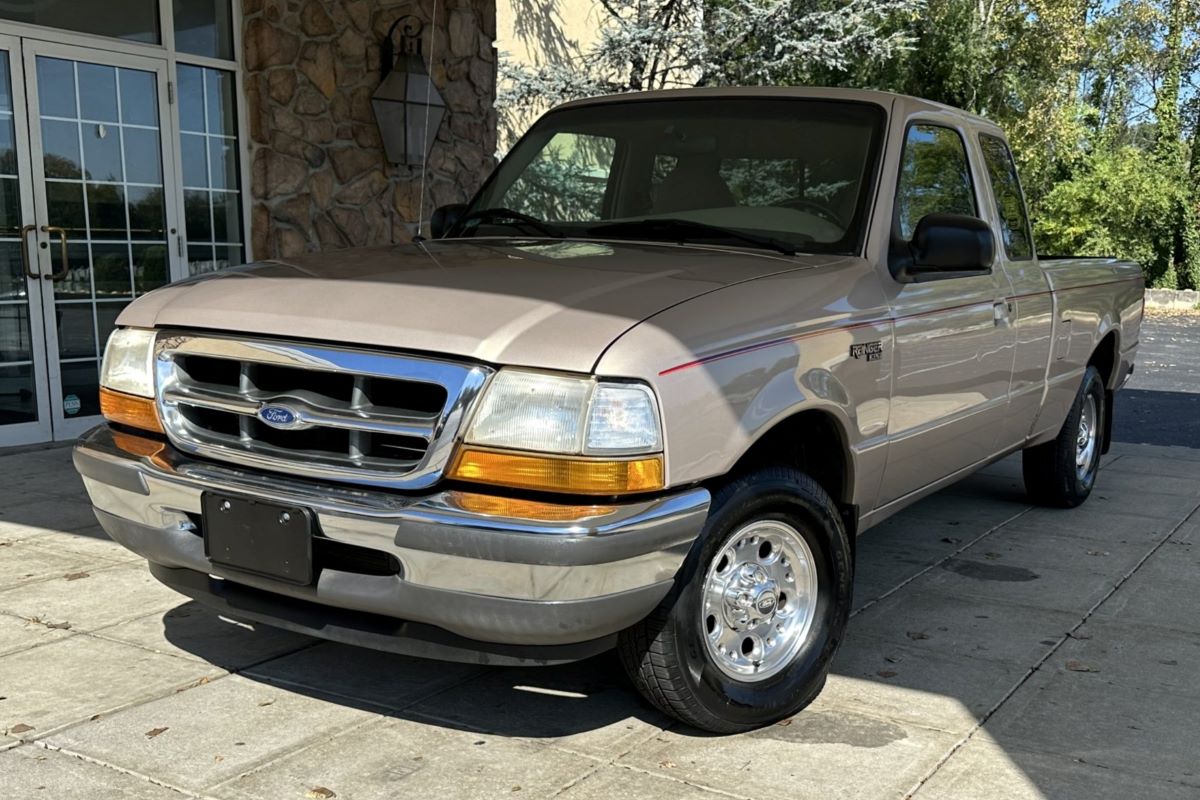
3. Ford Ranger (1998–2011)
Compact, durable, and surprisingly capable, the Ford Ranger has quietly become an off-road favorite.
While it may be smaller than a full-size truck, the Ranger can be equipped with four-wheel drive and a range of aftermarket upgrades, making it perfect for tight trails or rock crawling.
The older Ranger models can often be found under $5,000, particularly with high mileage. Its lightweight frame means that even modest engine power can push it through mud and sand, and parts are easy to source, keeping maintenance costs low.
The Ford Ranger’s standout feature is its turbocharged 2.3-liter four-cylinder engine. While it doesn’t lead the midsize-truck class in horsepower, it’s not far behind, delivering a surprisingly strong and responsive performance, particularly in Sport mode.
Outside of its engine, however, the Ranger shows its limitations. The 10-speed automatic transmission, excellent in other Ford models, feels sluggish and hesitant to downshift when the truck is in Normal mode.
Steering is overly light and lacking in feedback, the suspension can feel unsettled over bumpy corners, and the front end noticeably dips under hard braking.
Pricing can climb quickly if you opt for a reasonably equipped Ranger. That wouldn’t be as concerning if the truck’s interior reinforced the value, but the cabin suffers from mediocre materials and a design that feels dated.
On the plus side, warranty coverage aligns with what you’d expect from other vehicles in this segment, offering the same baseline peace of mind.
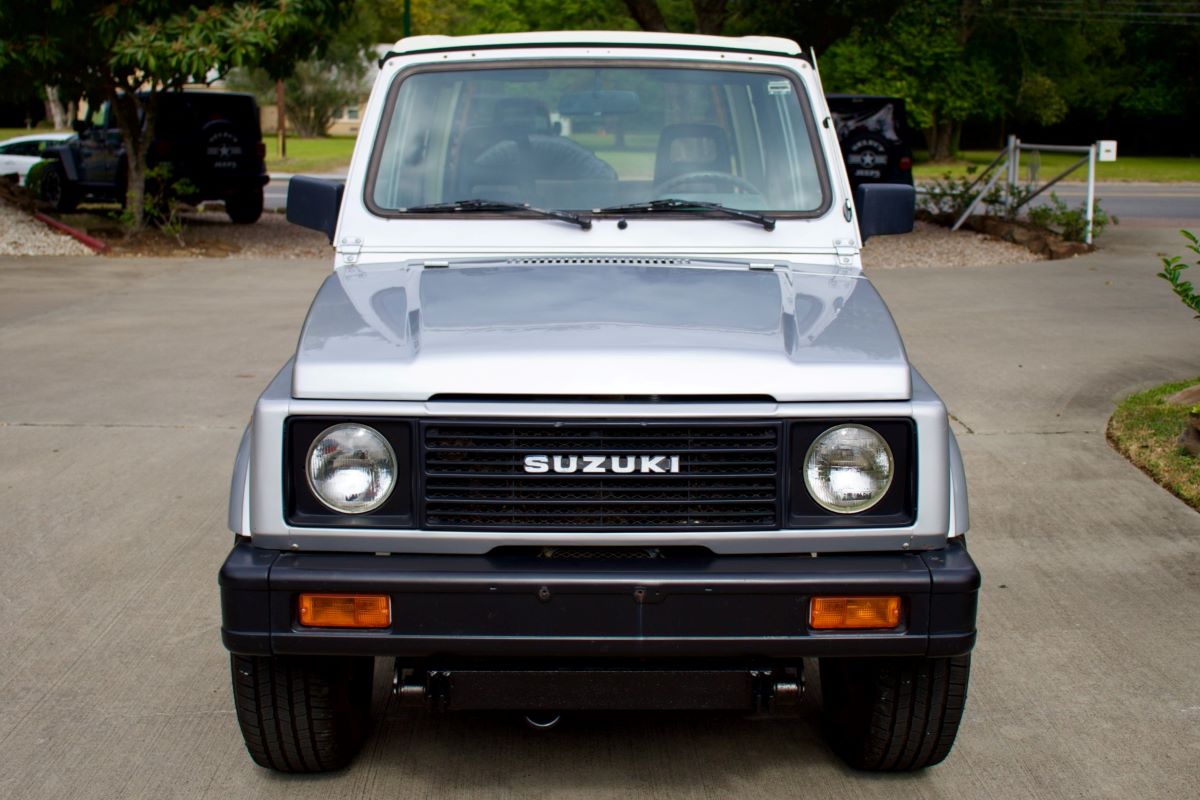
4. Suzuki Samurai (1986–1995)
The Suzuki Samurai is a tiny but mighty off-roader that has earned cult status. Its small size and short wheelbase make it extremely agile on tight trails, while the lightweight chassis allows it to climb rocks and cross obstacles that would stall larger vehicles.
Prices for these mini off-roaders often sit well below $5,000, and simple modifications like a suspension lift or better tires transform the Samurai into a true trail monster. They may not be luxurious, but they deliver pure, unadulterated off-road fun.
The Suzuki Samurai occupies a curious spot in automotive culture. Celebrated for its off-road prowess yet often mocked for its tiny proportions and somewhat quirky driving characteristics, it remains a divisive but fascinating vehicle.
Although Suzuki sold over 200,000 Samurais in the United States, a rebadged version of the globally sold Jimny, whose modern iteration is highly praised, finding a clean, unmodified example can be a challenge.
Nearly three decades have passed since the Samurai’s heyday, and the years have been unkind to a vehicle that was often treated as a disposable off-road toy.
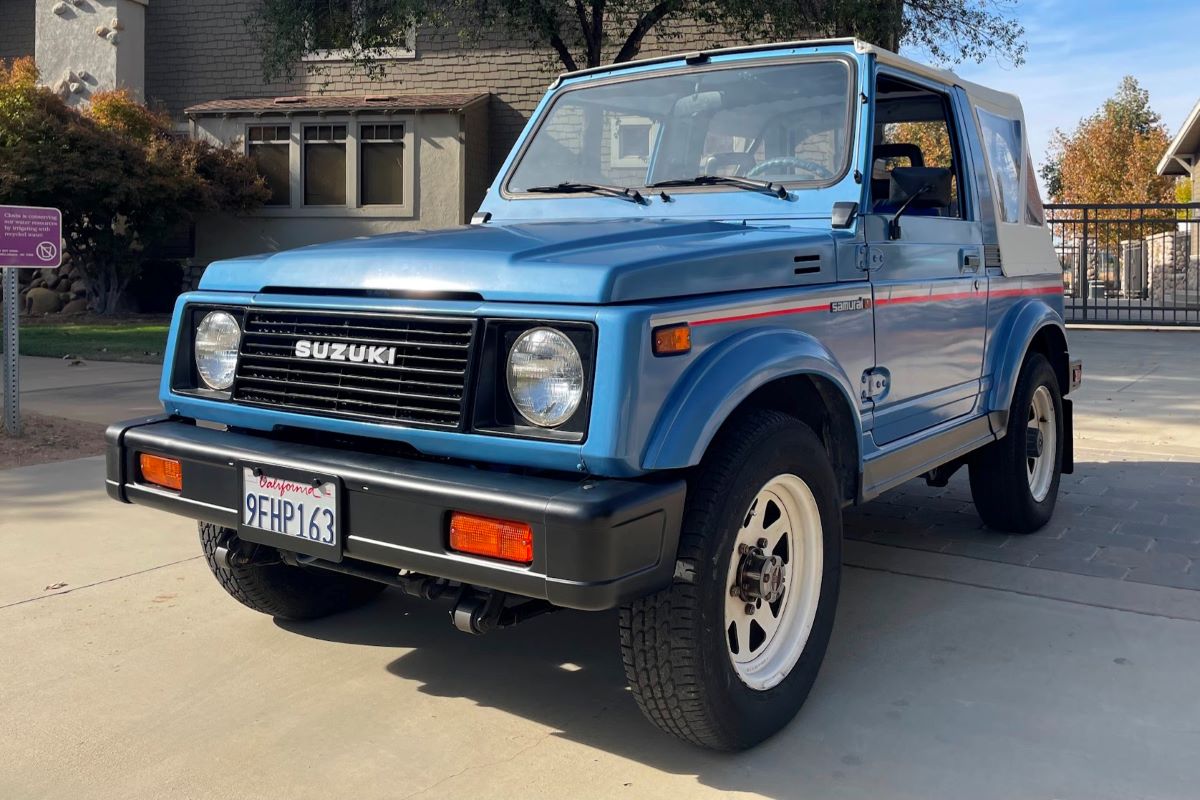
Judging by the number of lifted Samurais darting through forests across the country, owners clearly aren’t overly concerned about raising the already high center of gravity.
Strapping into Harper’s 1988 red Samurai, the first impression is how incredibly small the vehicle feels by modern standard, two-door Jeep Wrangler is roughly a foot wider and a foot and a half longer.
Its 33.4-foot turning circle makes it highly maneuverable, yet the view over its stubby hood serves as a reminder that modern safety standards didn’t factor into its design.
A full-sized truck barreling through an intersection could easily send the Samurai flying. Like riding a motorcycle or piloting a Lotus Elise, the Samurai’s diminutive scale fosters a healthy sense of vulnerability and encourages attentive driving.
That compactness also contributes to the Samurai’s charm. Despite modest specs, 63 horsepower and leaf-sprung solid axles, it delivers a surprisingly engaging on-road experience.
The ride is respectable on smooth pavement, and the unassisted recirculating-ball steering shows minimal on-center slack, a flaw common in larger trucks of the era. The 1.3-liter four-cylinder isn’t a powerhouse, but it feels sprightly enough around town.
Exposure to the elements and the five-speed manual gearbox enhances the sense of connection, allowing drivers to keep the engine in its optimal power band. Long highway runs may be less comfortable, but the experience echoes that of driving a 1980s Wrangler, raw, direct, and enjoyable for short trips.
The Samurai’s true strengths emerge off-road. Heading down a muddy path alongside a train yard, the vehicle navigates obstacles that would challenge larger trucks, including a steep pavement drop-off scarred by vehicles with less favorable break-over angles.
5. Nissan Xterra (2000–2004)
The original Nissan Xterra was designed for adventure, and it shows. These rugged SUVs feature durable 4WD systems, high ground clearance, and strong V6 engines.
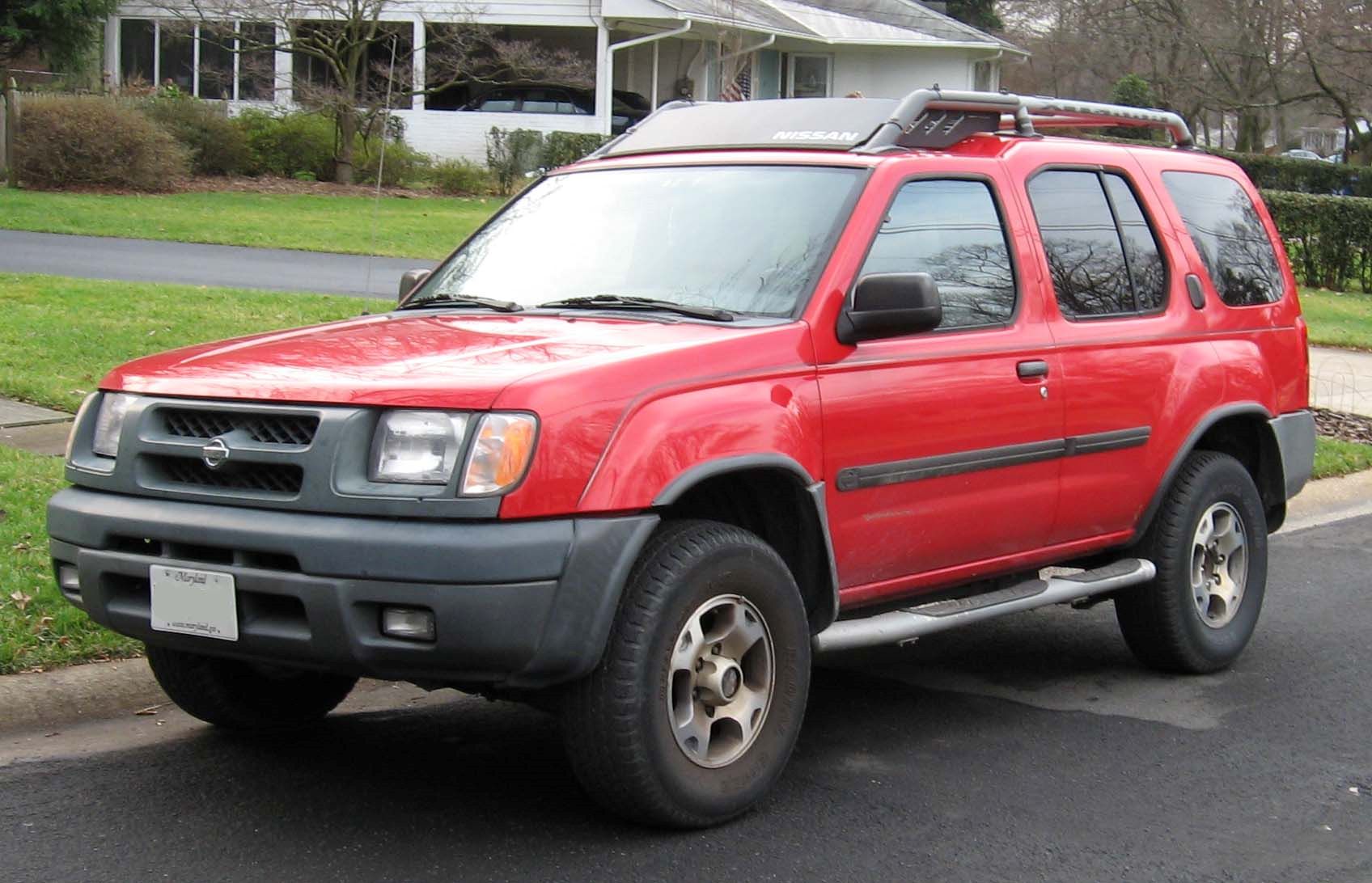
Older Xterras can often be found under $6,000, offering a capable off-road platform without demanding high maintenance costs. With its utilitarian interior and built-in roof rack, the Xterra is perfect for weekend excursions, camping trips, or just tackling rough terrain around town.
Also Read: 10 Classic Chevrolet Models You Can Still Grab for Pocket Change
6. Chevrolet Blazer (1980s–1990s)
Before the modern Blazer became a style statement, it was a full-on off-road truck. The K5 and S10 Blazers are particularly respected for their four-wheel-drive systems, solid axles, and heavy-duty frames.
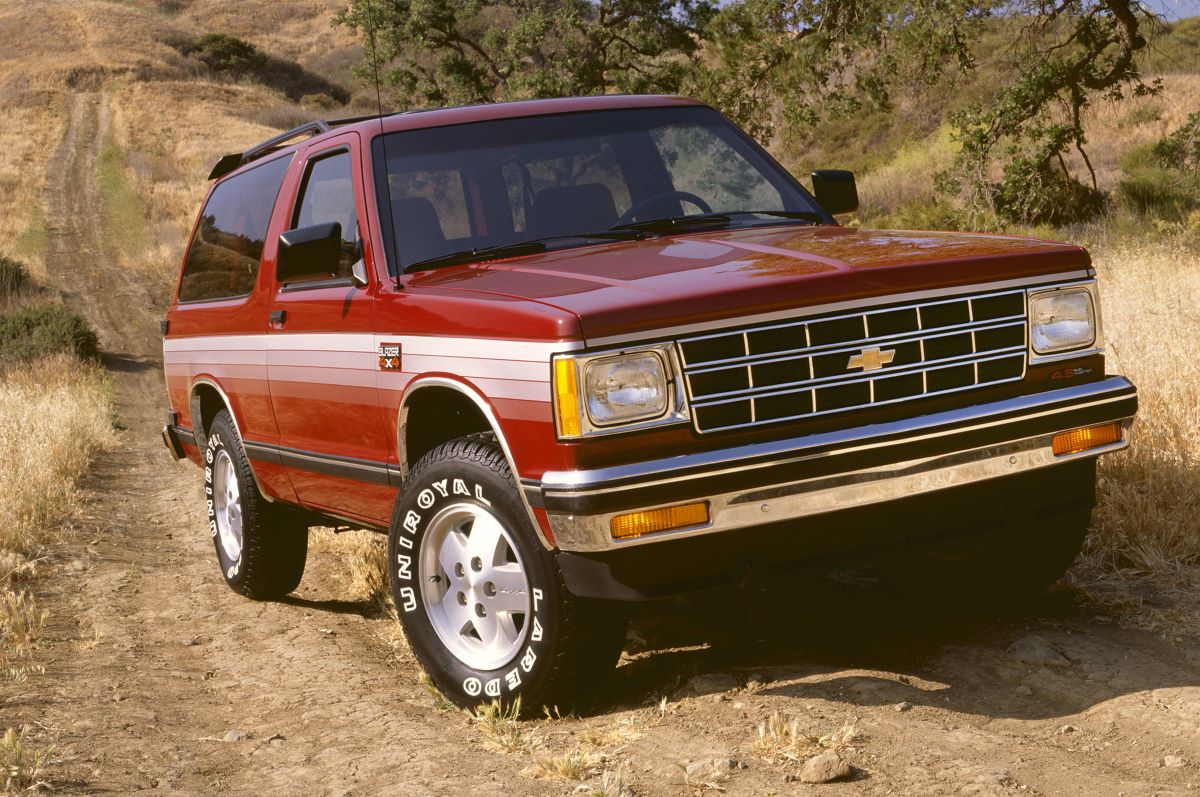
Prices for older models can drop below $5,000, making them a steal for off-road enthusiasts. While they aren’t as fuel-efficient as some compact SUVs, their ruggedness and ability to handle mud, snow, and sand make them excellent candidates for a budget-friendly adventure vehicle.
7. Isuzu Trooper (1991–2002)
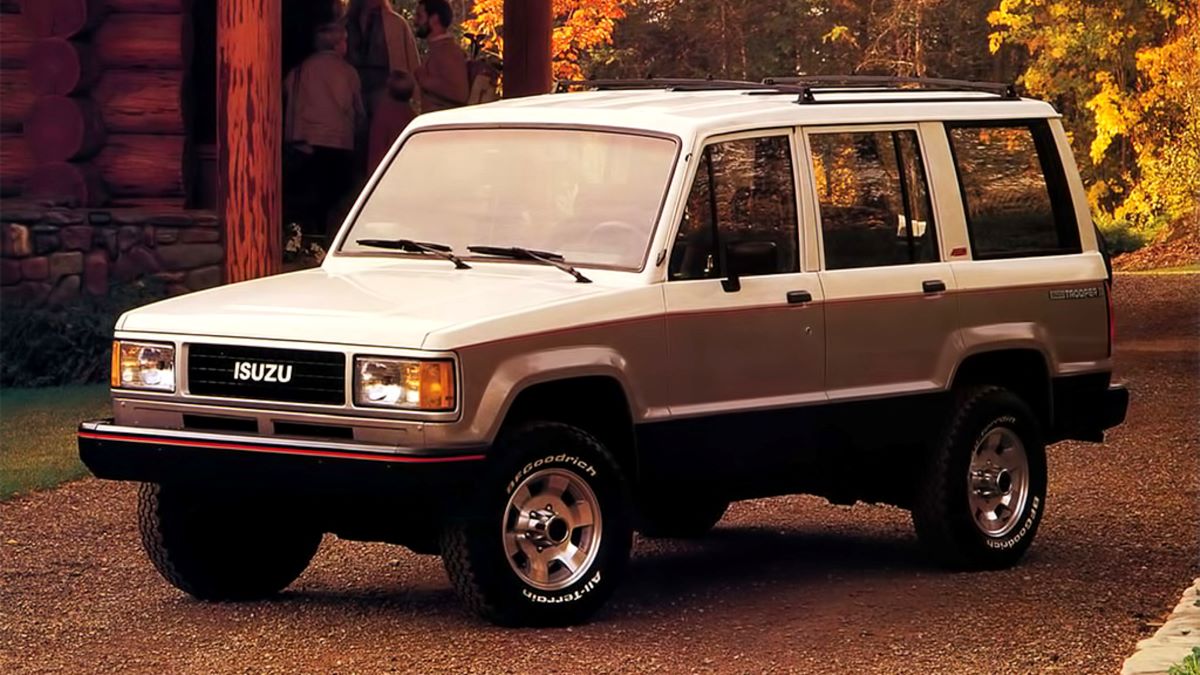
The Isuzu Trooper is often overlooked in the used SUV market, but it’s a hidden gem. With full-time four-wheel drive on most models and a body-on-frame construction, the Trooper is well-suited for rugged terrain.
Older Troopers with V6 engines can usually be found for under $5,000, offering a combination of reliability and off-road toughness. While parts can be a bit rarer than Toyota or Jeep, the Trooper rewards patience with serious off-road performance at a bargain price.
The original Isuzu Trooper was a rugged, boxy two-door SUV with a minimal interior and a four-cylinder engine that wasn’t built for speed but earned a loyal following for its off-road capability and rock-solid reliability. Soon after, a four-door version joined the lineup, and a GM-sourced V6 became available.
As the SUV market evolved, Isuzu added more luxury-oriented features, but by the early 1990s, it was clear the Trooper needed a major redesign to stay competitive in a segment where rivals were rapidly improving.
The Trooper’s last significant update came in 1998. Since then, incremental refinements have produced a vehicle that balances style, comfort, and utility. Folding the rear seats opens up 90 cubic feet of cargo space, ground clearance measures 8.3 inches with the manual transmission, and rear passengers enjoy generous legroom.
Power comes from a 3.5-liter, 24-valve DOHC V6 engine delivering 215 horsepower and 230 lb-ft of torque. Four-wheel-drive models with the automatic transmission feature Isuzu’s Torque on Demand system, which directs power to the front or rear wheels as needed.
The system offers the on-road stability of all-wheel drive with the off-road capabilities of a part-time 4WD setup. Paired with a generous 10-year/120,000-mile powertrain warranty, the Trooper is built to endure serious use.
While the four-wheel-drive system may seem unnecessary for those whose toughest terrain is a cracked parking lot, the more affordable two-wheel-drive version provides sufficient capability for light-duty driving, all while lowering ownership costs.
Prospective owners should be aware that the Trooper is costly to repair in minor collisions. In Insurance Institute for Highway Safety tests, repairs from four separate 5-mph crashes totaled over $11,000, the highest ever recorded for these tests. Even a simple 5-mph fender-bender with a parking lot light pole can cost more than $3,300 in repairs.
Trim levels include the base S model, the LS, and the Limited. The LS adds features such as heated cloth power seats, mesh 16-inch alloy wheels, an automatic transmission, and a six-CD changer.
The Limited steps it up with two-tone paint, 12-spoke alloy wheels, a power moonroof, and beige leather interior. However, the Trooper lacks modern amenities increasingly standard on newer SUVs, including stability control, side and curtain airbags, and a fold-flat third-row seat.
Up until this year, the Trooper remained a favorite thanks to its distinctive personality and off-road prowess, carving a niche between midsize and full-size SUVs.
8. Mitsubishi Montero (1991–2000)
The Mitsubishi Montero, known as the Pajero internationally, is a strong contender in the world of affordable off-roaders. Its Super Select 4WD system allows drivers to switch between 2WD and 4WD modes, making it versatile both on and off the road.
Older models can often be found for $4,000–$6,000, providing a rugged trail machine that can tackle snow, mud, or sand. With proper maintenance, Monteros can last a long time, offering both reliability and off-road fun without the high price tag of modern SUVs.
Mitsubishi was one of the early players in the sport-utility vehicle boom. Back in 1989, long before the Explorer hit the market and when the Grand Cherokee was still just concept sketches, the Montero had already developed into a practical four-door SUV, offering excellent utility and genuine off-road capability.
Over time, however, the Montero drifted upmarket as Mitsubishi loaded it with extra features and costly gadgets. By today’s standards, a base Montero starts just shy of $30,000, and that doesn’t even include essentials like a roof rack, air conditioning, antilock brakes, or floor mats.
To address slipping sales caused by that high price point, Mitsubishi designed a smaller, more affordable SUV built on a proven platform and gave it the not-very-original name Montero Sport.
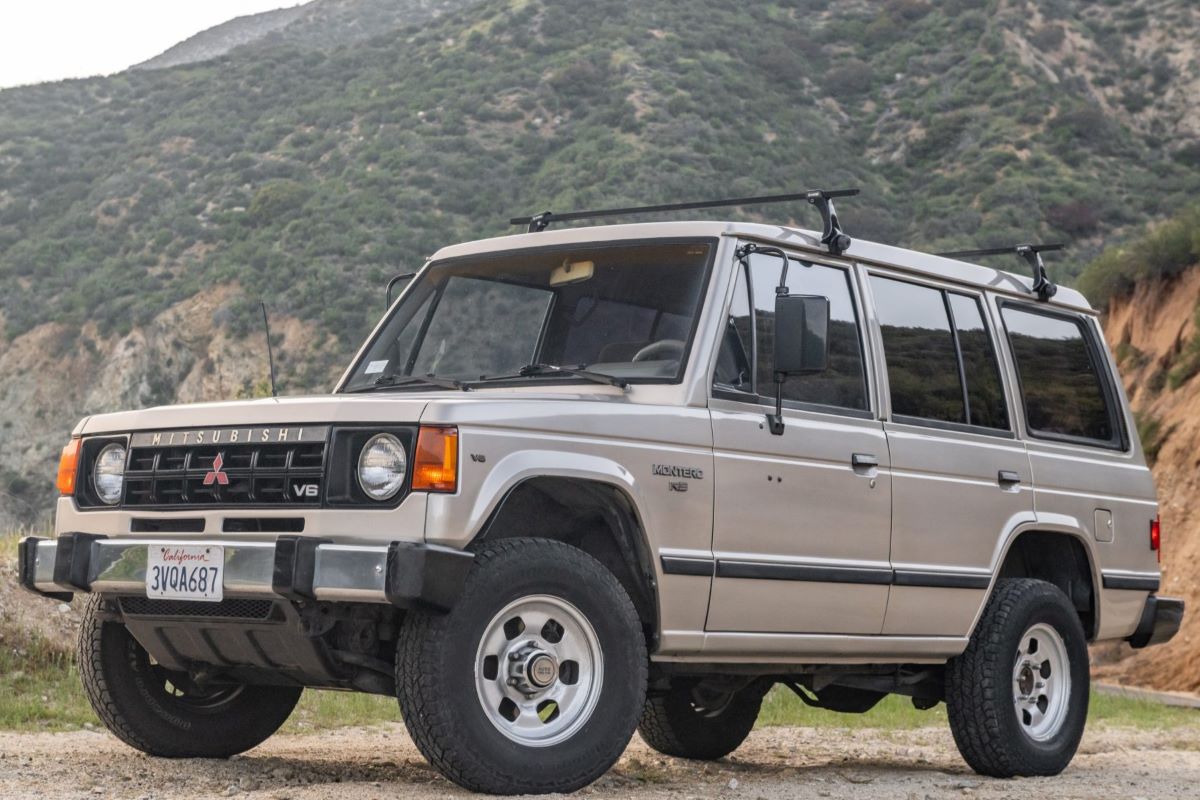
Sharing a frame with the larger Montero, which benefits off-road performance, the Montero Sport is shorter overall due to reduced front and rear overhangs. Its cabin seats five instead of the full-size Montero’s seven, though interestingly, its cargo space exceeds that of its bigger sibling.
The Montero Sport comes in three trims: ES, LS, and XLS, though currently only information on two is available. The ES is powered by a 134-horsepower four-cylinder engine, which seems unlikely to draw many buyers; it appears mainly as a value-oriented entry to lure shoppers into the showroom.
The LS 4WD automatic will likely be the most popular model. Priced at $24,415 including destination charges, it comes with a V6 engine.
It is possible to equip a Montero Sport well for under $30,000, and staying below that threshold could entice customers to Mitsubishi dealerships to explore the new SUV.
Potential buyers should take a careful look at the rear seats, however; the short cushion and limited legroom may make it uncomfortable for taller passengers or teenage riders, which could be a drawback for families.
9. Toyota Tacoma (1995–2004)
While newer Tacomas can be expensive, older first-generation models remain accessible for off-road enthusiasts on a budget. Compact yet durable, these trucks feature a reliable V6 engine and a solid rear axle, perfect for both trail and street.
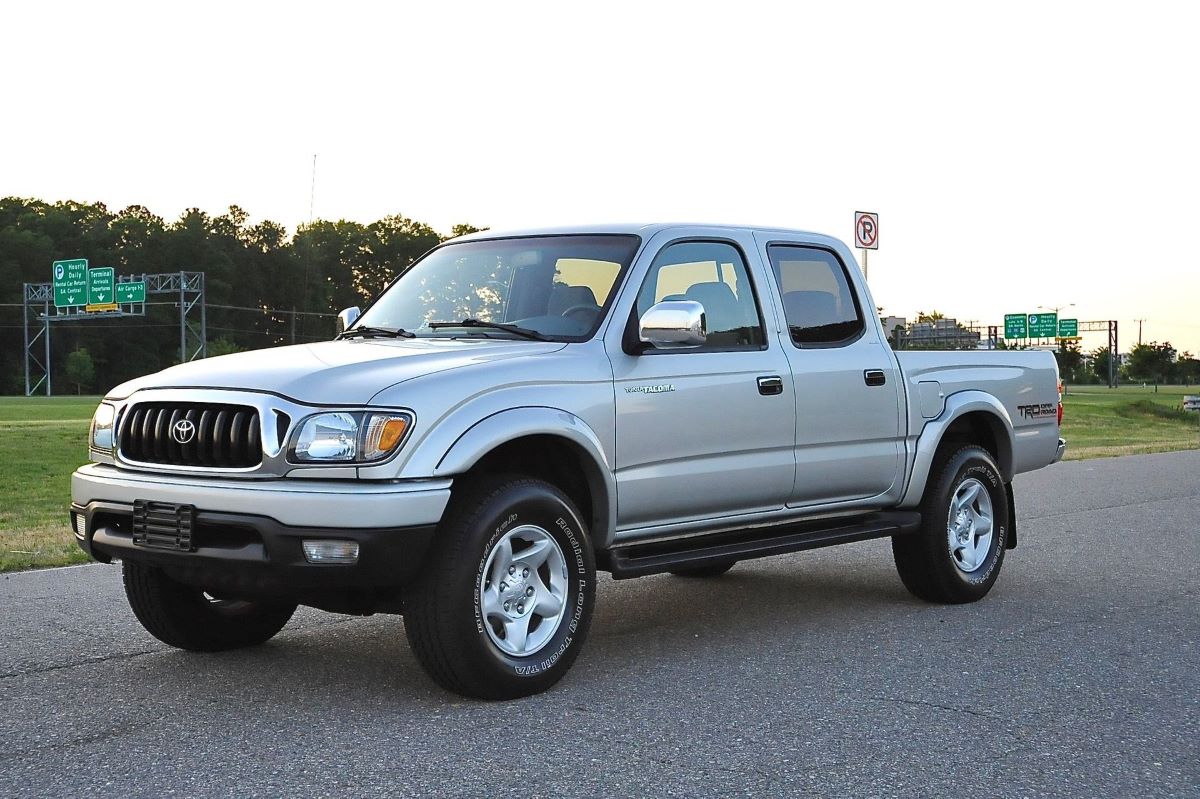
Older Tacomas can often be found under $7,000, and the aftermarket support is massive, allowing for lifts, skid plates, and upgraded tires to easily transform one into a capable off-roader.
Its reputation for longevity means that even with high mileage, a well-maintained Tacoma can continue to tackle tough terrain for years.
10. Land Rover Discovery Series I (1989–1998)
For those seeking an off-road vehicle with a bit of classic European flair, the first-generation Land Rover Discovery offers serious off-road chops at a bargain price.
While older Discoverys can have higher maintenance needs than Japanese or American models, they’re capable of extreme terrain thanks to permanent 4WD, excellent articulation, and solid construction.
Prices for early models often start around $4,000–$6,000, allowing adventurous buyers to enjoy a capable off-roader that stands out from the crowd.
You don’t need to spend $30,000 or more on a brand-new off-roader to have fun in the dirt. These ten vehicles prove that capable, unstoppable off-road machines can be found for less than the price of a used Toyota Corolla.
By the 1980s, Land Rover faced a clear gap in its lineup. Although the brand had been part of British Leyland since 1978, it was still producing essentially the same 4×4 it had been making since 1948, alongside the upmarket Range Rover. The Range Rover catered to the affluent, while the classic Land Rover remained the choice of farmers.
Ambitious yet practical, this new off-roader borrowed heavily from the Range Rover, including its ladder-frame chassis, much of the suspension, the four-wheel-drive system, and even elements of the bodywork.
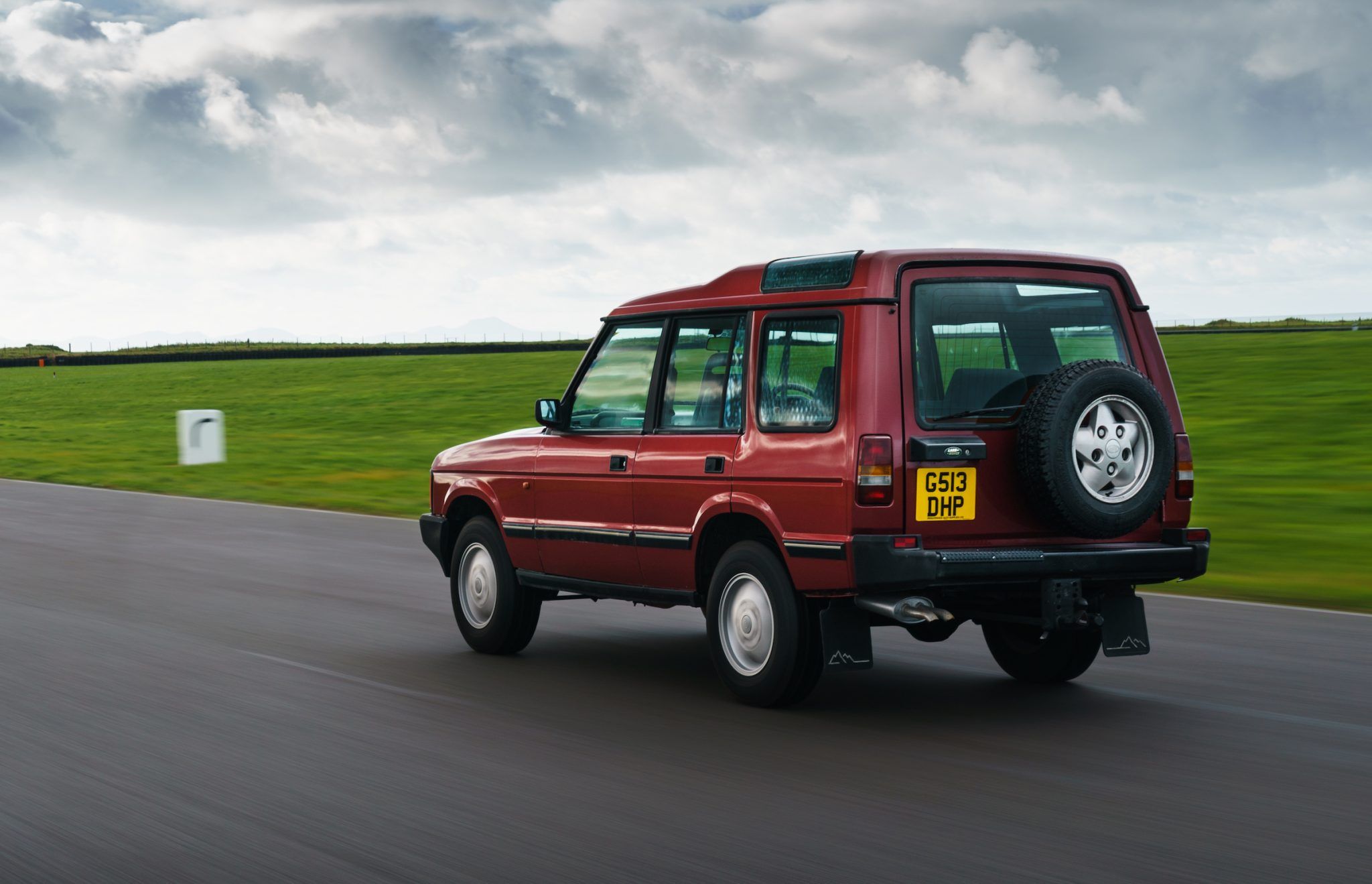
Launched in 1989, the Discovery was designed to reclaim market share lost to newer competitors over the previous decade. It was immediately embraced by both the press and buyers, helping to redefine Land Rover and broaden the brand’s appeal.
Initially, the Discovery I was sold as a three-door, a choice intended to avoid encroaching on the Range Rover’s territory. By 1990, however, a more practical five-door version was added.
The front doors are relatively small, as they’re identical to the five-door model’s and weren’t lengthened to ease rear-seat access. Inside, the Sonar Blue cabin shows its age only in minor spots and is otherwise in good condition.
The dashboard is characterized by straight lines, large buttons flanking the instrument cluster, and chunky heater sliders. Behind the center console sits a Land Rover-fabric storage compartment that converts into a small holdall.
The stepped roofline, twin sunroofs operated by chunky dials, and the “alpine” windows between the roof and side panels remain signature Discovery design cues.
Starting the 3.5-liter Rover V8 produces a subdued rumble, one of only two engines available at launch, the other being a four-cylinder diesel. The engine isn’t overstressed, delivering a leisurely 154 horsepower.
Transmission options were initially limited to a five-speed manual, though an automatic was later added. The manual is a mixed experience: some ratios engage easily while others are stubborn, and reverse requires significant effort, leaving arms fatigued after a few maneuvers.
On the road, the Discovery I exhibits the expected body-on-frame shudders but offers a generally comfortable ride. The elevated seating position and generous ride height provide a commanding view, aided by thin A-pillars.
From the cult-favorite Suzuki Samurai to the rugged Toyota 4Runner and the classic Jeep Cherokee XJ, each vehicle on this list brings its own combination of durability, affordability, and trail-ready performance.
Whether you’re a weekend adventurer, a rock-crawling enthusiast, or just someone who wants the freedom to explore off the beaten path, there’s an option here that won’t drain your wallet while delivering unforgettable off-road experiences.
