When it comes to motorcycles, engine configuration plays a crucial role in defining performance, sound, and the overall riding experience. While twin and four-cylinder motorcycles dominate the market, six-cylinder bikes occupy a unique niche.
These machines blend the smoothness of multiple cylinders with the power and sophistication that only a six-cylinder engine can provide. Rare, often luxurious, and always memorable, six-cylinder motorcycles have earned a cult following among riders who value engineering excellence as much as speed and comfort.
In the U.S., enthusiasts often associate these motorcycles with high-end touring, technological innovation, and an unmistakable presence on the road. Let’s explore twelve six-cylinder motorcycles that stand out and deserve attention.
1. Honda CBX 1000
Introduced in 1978, the Honda CBX 1000 remains a benchmark in motorcycle history. At a time when six-cylinder bikes were virtually unheard of in the mainstream market, Honda produced a street-legal, production six-cylinder motorcycle that was both powerful and reliable.
Its inline-six engine produces a distinct, smooth roar that’s instantly recognizable to enthusiasts. With 104 horsepower at 9,000 RPM, the CBX 1000 was ahead of its time, offering performance that rivaled many sport bikes of its era. In the U.S., collectors prize this model for its blend of vintage styling and engineering prowess.
The Honda CBX was a flagship sports motorcycle in Honda’s CBX series, produced from 1978 to 1982. While widely praised by the press, it was eventually outsold in late 1979 by the more practical CB900F.
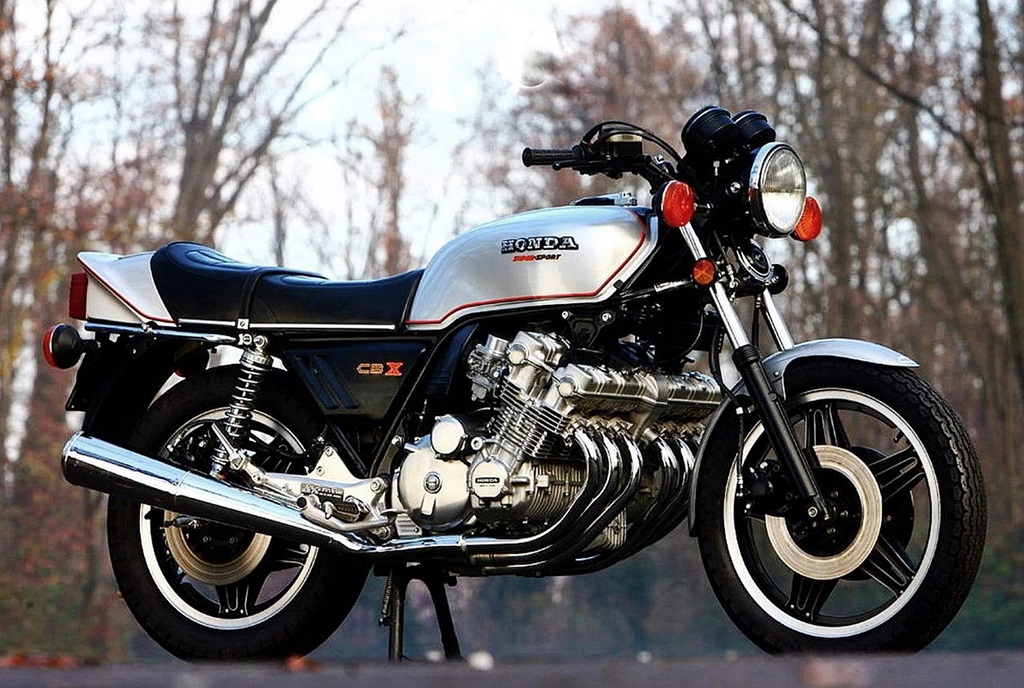
Honda’s CBX drew on the company’s experience with the mid-1960s RC series six-cylinder race bikes, making it the first production six-cylinder road motorcycle to incorporate GP-level racing technology.
In 1982, Honda repositioned the CBX as a sport-touring machine with the CBX-B. This model featured a detuned 98-hp engine, a Pro-Link rear monoshock, a 39 mm air-adjustable front fork, a reinforced frame, and a full fairing with optional panniers for touring comfort.
The original 1978 CBX had a front air-assisted fork with 160 mm of travel and dual rear shocks with 100 mm of travel, optimizing suspension performance. Braking was handled by dual 276 mm hydraulic discs up front and a single 296 mm disc at the rear, providing strong and reliable stopping power.
At the heart of the CBX1000 was a 1047cc air-cooled, four-stroke six-cylinder engine fed by six Keihin carburetors. This powerplant produced 105 hp at 9,000 rpm and 72 Nm (52 lb-ft) of torque at 6,500 rpm, delivering smooth, high-revving performance that set the CBX apart in its era.
Also Read: Top 10 Performance Cars That Deliver Speed Without Draining Your Wallet
2. Honda Gold Wing GL1800
The Gold Wing is perhaps the most iconic touring motorcycle in America, and the GL1800 model is its six-cylinder pinnacle. Launched in 2001, the GL1800’s horizontally opposed six-cylinder engine delivers unmatched smoothness and torque, making long-distance touring a pleasure rather than a chore.
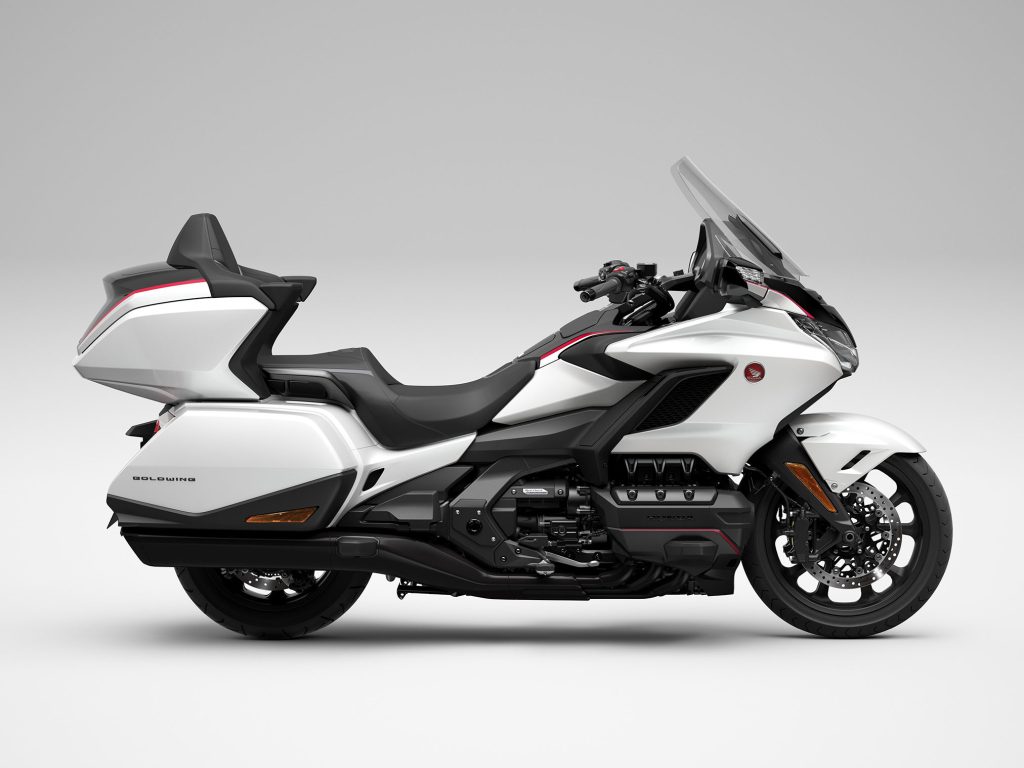
Beyond performance, the GL1800 offers advanced features such as integrated navigation, premium audio, and cruise control, qualities that cater to U.S. riders who cover thousands of miles on highways like the Pacific Coast Highway or Route 66. Its reputation for reliability and comfort has made it a top choice for touring clubs and retirees alike.
3. Benelli Sei 750
Italian craftsmanship and six-cylinder engineering come together beautifully in the Benelli Sei 750. First produced in the late 1970s, this bike was Europe’s answer to Honda’s CBX, bringing a lightweight yet powerful alternative to the American market.
Its 747cc inline-six engine delivers a thrilling ride with smooth acceleration, complemented by a unique exhaust note that resonates differently from any four-cylinder bike. While rarer in the U.S., the Benelli Sei 750 appeals to collectors who appreciate European style, exclusivity, and the legacy of small-scale craftsmanship.
The 1976 Benelli 750 Sei was the Italian manufacturer’s fourth consecutive production year for this model and marked a high point in motorcycle innovation. At the time, it was celebrated as one of the most exciting motorcycles available, featuring the smoothest and most responsive six-cylinder engine ever offered to the public.
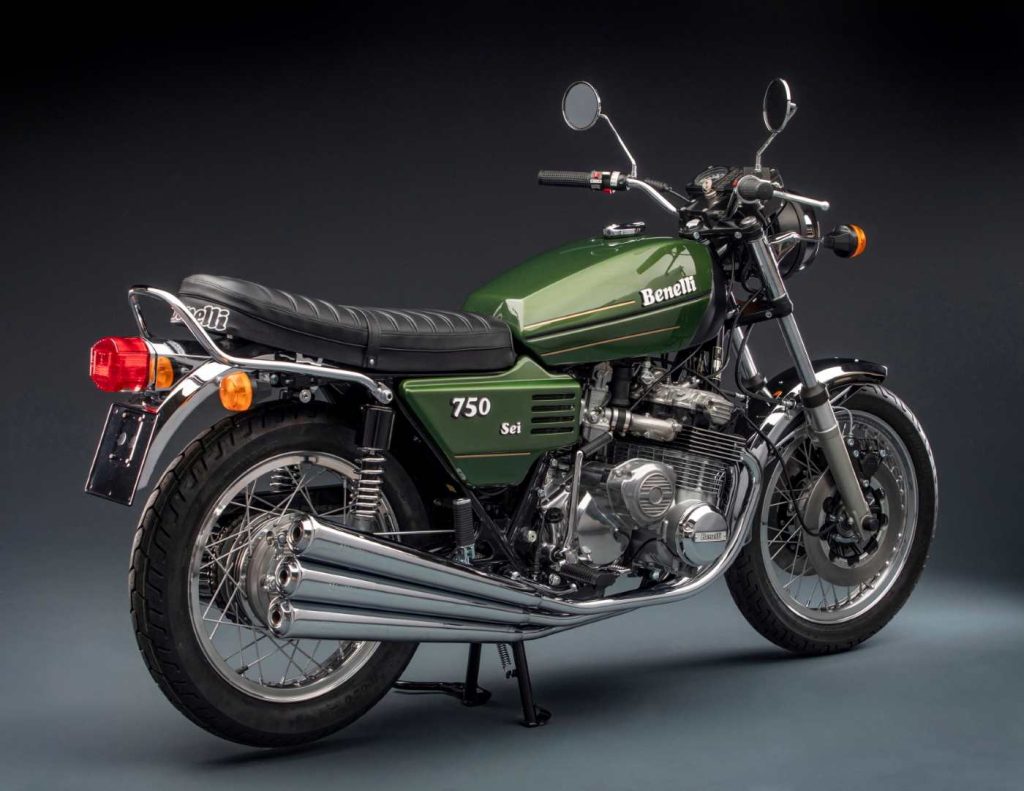
The Benelli Sei series, developed under Alejandro de Tomaso, was produced from 1973 to 1989 and included 750cc and 900cc models. Notably, the 750 Sei was the first production motorcycle to feature a six-cylinder engine.
Aesthetically, the bike included a one-piece dual seat with a pillion grab rail, a round headlight, a chromed front fender, a three-into-three exhaust system with three silencers on each side, and classic wire-spoke wheels.
Suspension duties were handled by a Marzocchi telescopic fork up front and dual side-mounted Sebac shocks in the rear, all mounted to a steel frame for optimal handling. Braking was managed by dual 300 mm discs with dual-piston calipers at the front and a 200 mm drum at the rear, offering excellent stopping power for the era.
Power came from a 748cc air-cooled, four-stroke six-cylinder engine positioned beneath the fuel tank. This engine produced 76 hp at 9,000 rpm, delivering smooth, high-revving performance that set the 750 Sei apart from its contemporaries.
4. Kawasaki KZ1300
Kawasaki’s KZ1300, released in 1979, pushed the boundaries of motorcycle engineering with a 1,300cc liquid-cooled inline-six engine. For U.S. riders, it was revolutionary, a bike capable of smooth, high-speed cruising, yet powerful enough to accelerate like a sport bike.
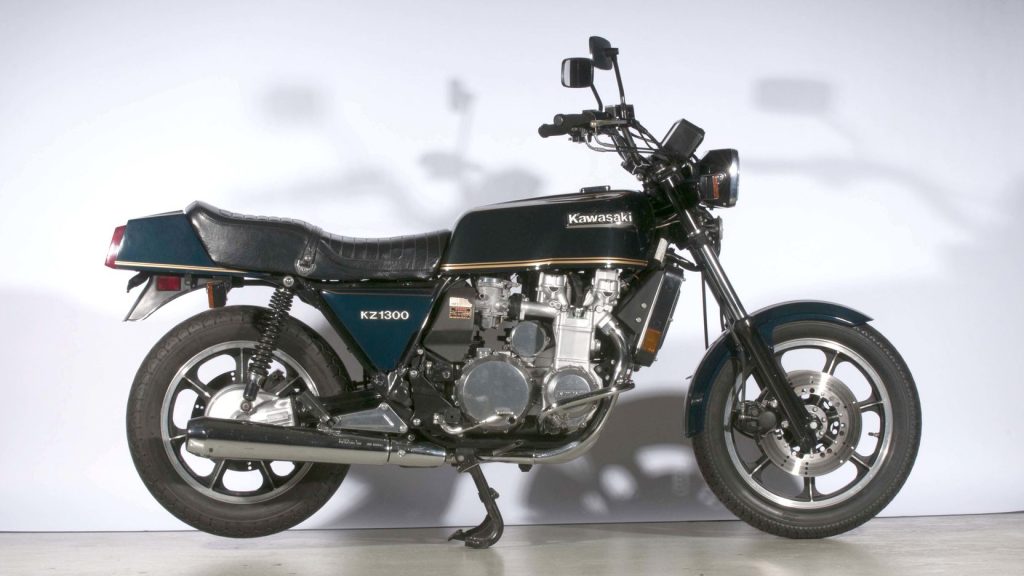
The KZ1300 combined touring comfort with raw performance, featuring shaft drive, large fairings, and advanced suspension for its time. Though it never became mainstream, it remains a standout example of Kawasaki’s willingness to experiment with multi-cylinder layouts.
5. BMW K1600GT/GTL
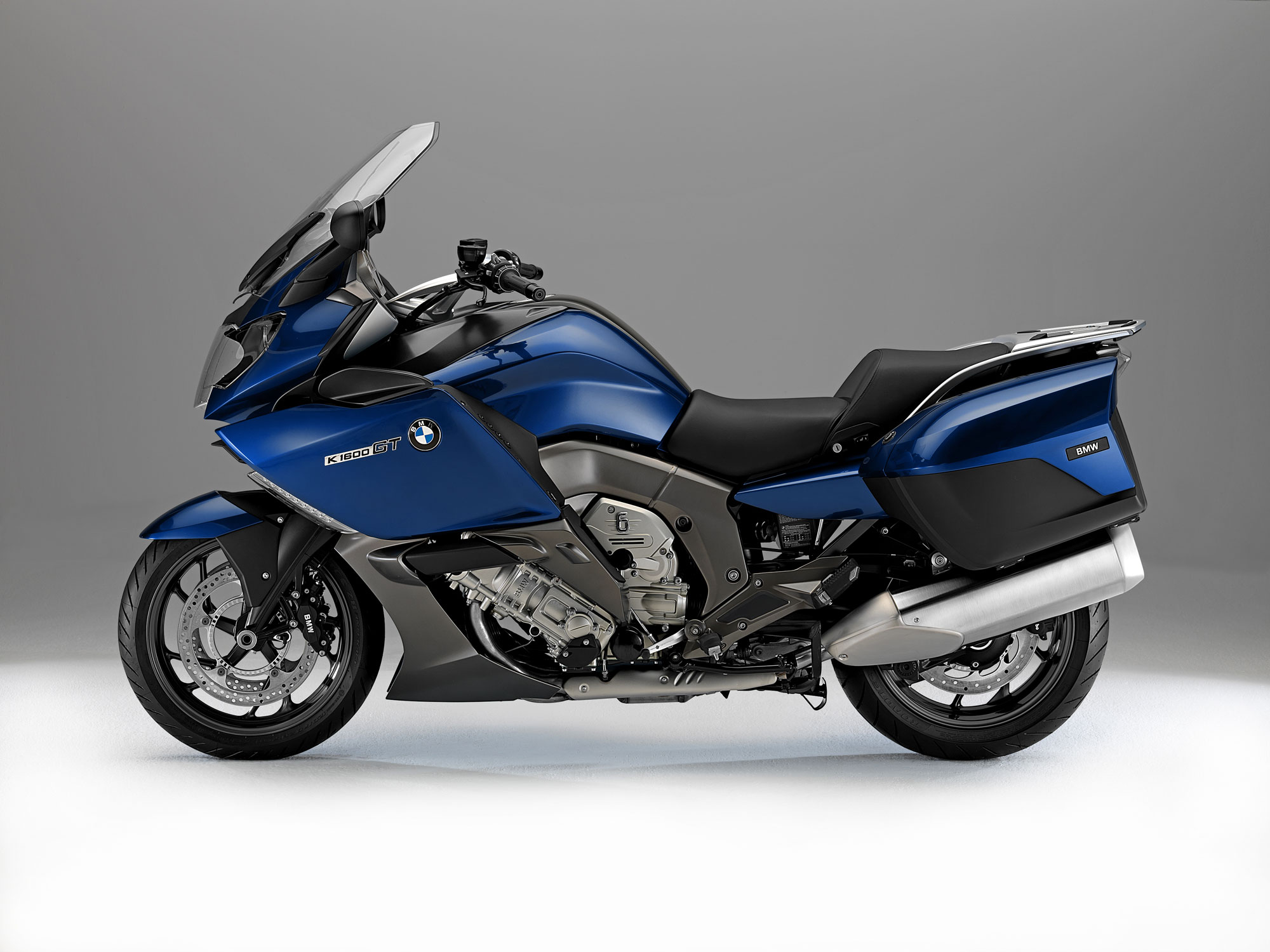
BMW has long been synonymous with premium touring motorcycles, and the K1600 series represents their commitment to six-cylinder luxury. Introduced in 2011, the K1600GT and GTL feature an inline-six engine that delivers over 160 horsepower with silky-smooth delivery.
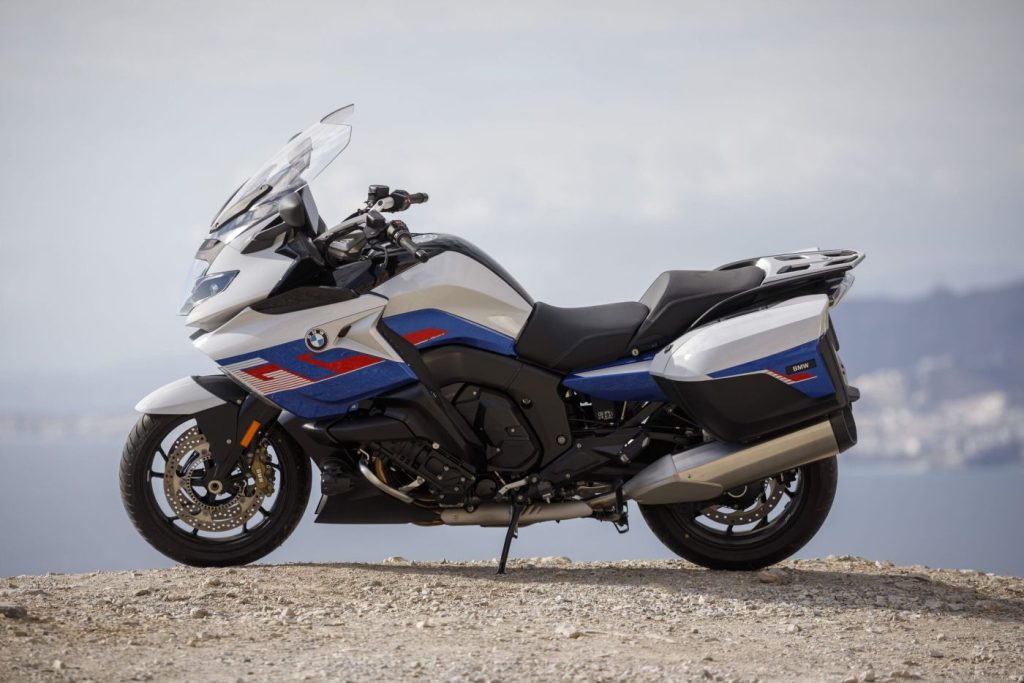
American riders appreciate these bikes for their combination of performance, comfort, and technology, including adaptive headlights, traction control, and electronically adjustable suspension. The K1600GTL, with its full touring amenities, is particularly popular among long-distance riders in the U.S., especially those exploring the Blue Ridge Parkway or the Rocky Mountains.
6. Yamaha VMAX (V-Boost)
Although often associated with V4 engines, Yamaha’s VMAX has occasionally been linked to six-cylinder development in limited forms, particularly when exploring the ultimate in acceleration and power delivery.
Its V-Boost system maximizes performance by effectively managing air intake, creating a visceral experience unmatched in straight-line speed. In the U.S., the VMAX has become a cult favorite among riders who crave muscle-bike dynamics combined with cutting-edge technology.
When discussing raw muscle and iconic power, few years can match the sheer audacity of 1985. That was the year a young, chiseled Sly Stone squared off against the towering Dolph Lundgren in Rocky IV.
It was also the year the streets witnessed the roaring presence of the infamous Camaro IROC-Z, with its flip-up headlights slicing through the asphalt and the glorious mullets flowing in the wind of those who piloted them. From the world of motorcycles, 1985 marked the bold debut of the legendary Yamaha V-MAX.
Conceived by the mad scientist and visionary engineer Akira Araki, the V-MAX was designed to capture the soul of the American Hot Rod. Araki dreamed of creating a drag bike capable of unmatched straight-line speed, a feat no other cruiser of the era could achieve.
By blending Japanese innovation with raw American muscle, Araki cemented his place in history with a bike that became a legendary Harley-Davidson challenger, dominating stoplight drag races everywhere. It has since been widely regarded as the “Muscle Bike” with the most muscle.
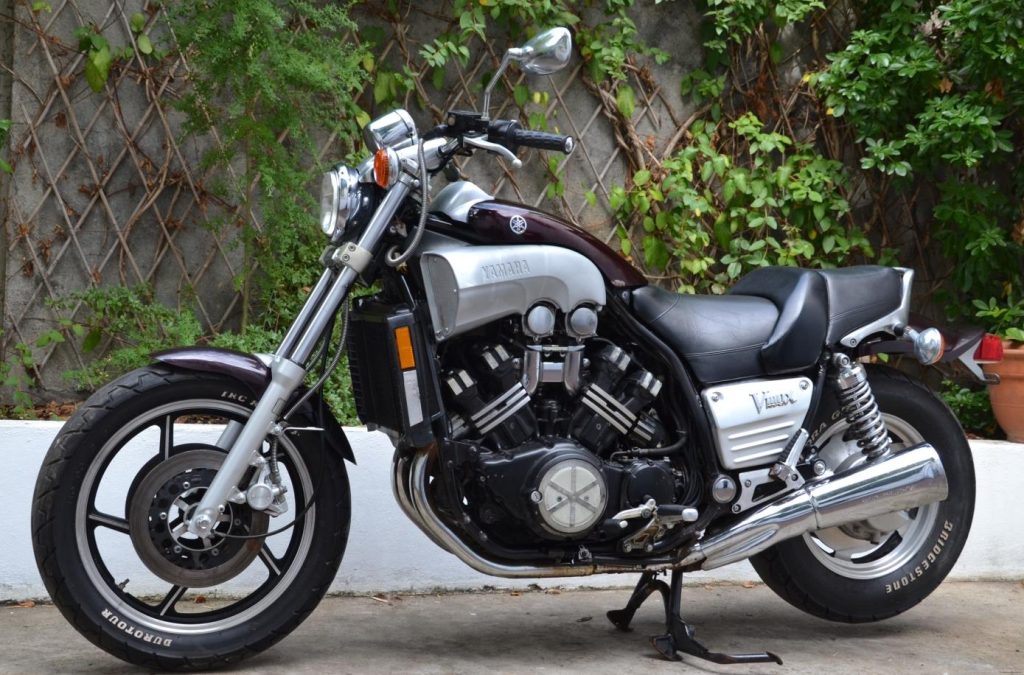
Breaking away from Japan’s traditional “in-line cylinder” approach, Araki embraced a V-4 engine design. To fully realize his vision, he took the project overseas to America.
The result was a liquid-cooled 1,197cc 70-degree V-4 engine producing 135 horsepower. Beyond the impressive numbers, the V-MAX featured an extraordinarily wide powerband, capable of delivering brutal muscle on demand with punchy throttle response in every gear.
In 1985, no other motorcycle could match the innovation of the V-MAX’s V-Boost system. At 6,000 RPM, V-Boost engaged, doubling both fuel and airflow to supercharge the V-4 engine, transforming the bike into a raw, untamed powerhouse.
Despite its terrifyingly explosive acceleration and bold, avant-garde 1980s styling, the V-MAX was not designed for anything beyond straight-line domination. While its reputation as a drag-racing legend was well-earned, taking the bike through twisty mountain roads, rollercoaster-like elevations, or uneven terrain was ill-advised.
The V-MAX’s handling earned a reputation for being difficult to manage. When the throttle was opened wide, the rear wheel had a tendency to fishtail, exacerbated by the double-cradle steel tube frame reacting to the immense horsepower.
Lean angle clearance was minimal, and bumpy surfaces amplified the bike’s instability, producing wobbly, “crap-your-pants” handling. Every crack, dip, and bump unsettled the stiff suspension, making the rider’s rear end take the brunt of the punishment.
Also Read: 7 Least Successful Lexus Models and 7 Most Reliable Ones
7. Honda Valkyrie Rune
The Honda Valkyrie Rune, introduced in 2004, took the concept of the Gold Wing six-cylinder to extreme custom motorcycle territory. With an 1,832cc engine derived from the GL1800, the Rune was a limited-production marvel with radical styling, massive torque, and a commanding road presence.
In the U.S., this bike is less about speed and more about statement-making, turning heads on highways while offering a smooth and powerful ride for those who appreciate both engineering and design artistry.
The Honda NRX1800 Valkyrie Rune was a rare and limited-production machine, manufactured by Honda between 2004 and 2005 at the Marysville, Ohio motorcycle plant. This bike represented a bold departure from the original Valkyrie, boasting an enormous 1,832cc engine and a design that pushed the boundaries of what a cruiser could look like.
The 2005 Valkyrie Rune made a striking visual statement with its futuristic and avant-garde styling. Its wide, angular front fairing immediately caught the eye, complemented by a long wheelbase and a low, streamlined rear section.
Adding to its distinctive appearance, the bike featured a single-sided swingarm, which set it apart from traditional designs and underscored Honda’s commitment to innovation.
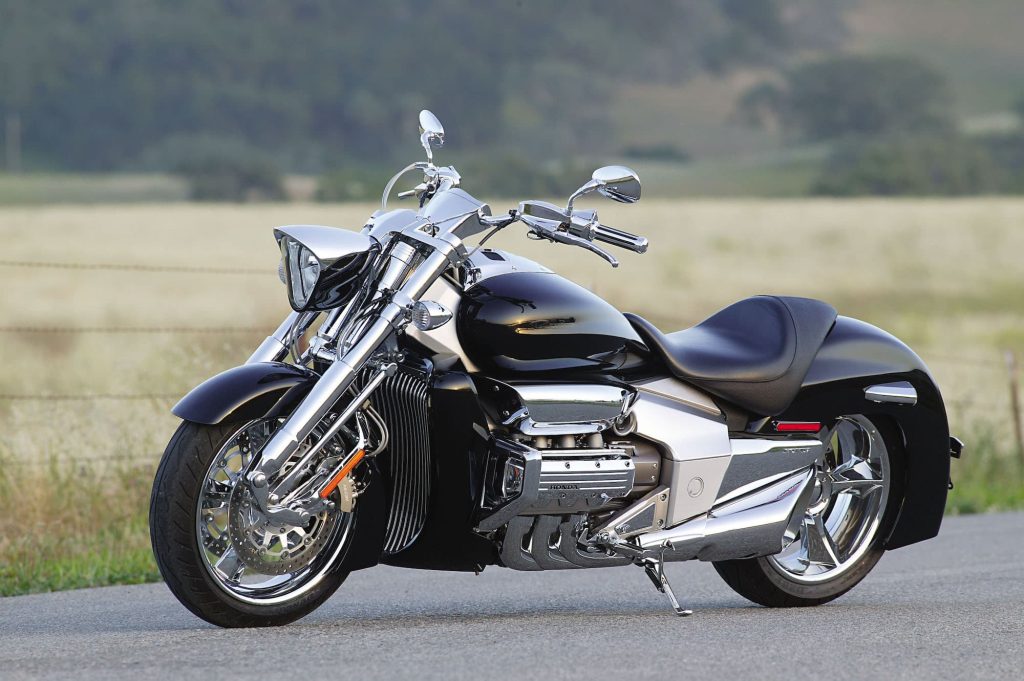
Inside and on the road, the Valkyrie Rune was as much about function as it was form. The machine came equipped with a digital instrument panel, displaying essential data such as speed, engine rpm, fuel level, and trip information.
The design was complemented by a teardrop-shaped fuel tank, five-spoke cast aluminum wheels, a single rider seat, and a pulled-back handlebar, all engineered to provide a comfortable and commanding riding position.
The braking system on the Valkyrie Rune was designed to match the bike’s massive engine. Up front, the five-spoke cast-aluminum wheels carried two 330 mm full-floating discs, each clamped by a three-piston caliper. The rear featured a single 336 mm disc operated by a dual-piston caliper, delivering strong and reliable stopping power.
Suspension duties were handled with a combination of a non-adjustable trailing bottom link fork for the front and a Pro-Link non-adjustable shock absorber at the rear, providing a balance between comfort and handling.
Powering this limited-edition cruiser was the monumental 1,832cc six-cylinder, liquid-cooled engine, fed by an electronically controlled fuel injection system. The Valkyrie Rune produced 118 horsepower at 5,500 rpm, with peak torque of 167 Nm (121 lb-ft) available at 4,000 rpm, giving it both the grunt and the smooth delivery needed to match its bold, futuristic design.
8. Triumph Rocket III
While technically a three-cylinder engine, the Triumph Rocket III deserves mention as it embodies the spirit of large-cylinder, high-displacement, multi-cylinder engineering in ways that rival six-cylinder bikes.
Its 2,500cc engine is designed for straight-line dominance and torque-rich cruising, making it extremely appealing to American riders who favor muscle-tourers and power cruisers. The Rocket III offers a unique experience, combining British design heritage with raw, comfortable performance.
In 2024, Triumph expanded its Rocket 3 lineup with the introduction of the new Rocket 3 Storm models, which included both the Storm R and Storm GT variants. Both motorcycles delivered impressive handling, lighter cast aluminum wheels, increased power and torque, and bold, eye-catching color schemes.
The Storm GT shared its color options with the R version, including Sapphire Black/Carnival Red, Granite/Sapphire Black, and Matt Sapphire Black/Satin Pacific Blue. On Triumph’s official site, the GT is listed with a starting MSRP of $26,295.
Comfort is a strong point of the GT model. It comes with a sculpted touring rider seat, a generously padded passenger seat, and a supportive passenger backrest. The seat height is set at 750 mm, further enhancing rider comfort for long journeys.
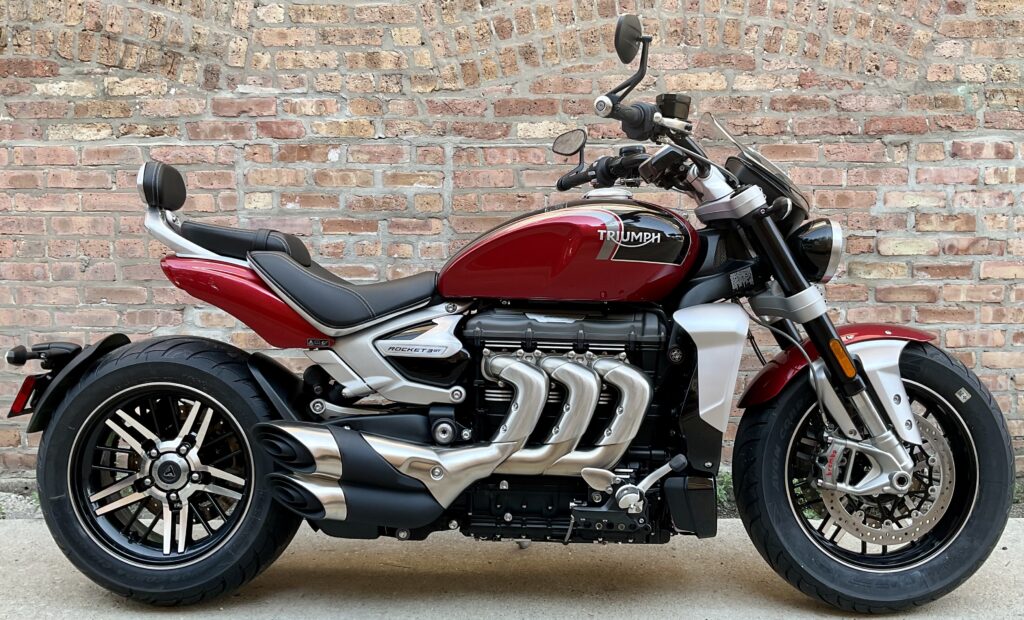
From a visual standpoint, the GT mirrors many design elements of the R version. Standard features include twin round headlights, a small front windscreen, a two-piece dual seat, a sculpted three-into-two exhaust system, a single-sided swingarm, and lightweight ten-spoke aluminum wheels.
Powering the 2024 Rocket 3 Storm GT is a 2,458cc four-stroke inline three-cylinder DOHC engine, liquid-cooled and equipped with fuel injection and a ride-by-wire system. This engine delivers 182 hp at 7,000 rpm and 225 Nm (166 lb-ft) of torque at 4,000 rpm, ensuring robust performance at all speeds.
The GT shares the same aluminum frame and suspension setup as the R model. At the front, a 47 mm USD cartridge-type Showa fork offers 120 mm of travel, while the rear uses a fully adjustable Showa piggyback reservoir shock with 107 mm of travel.
Braking duties are handled by the same high-performance system as the R model: dual 320 mm discs at the front with four-piston Brembo Stylema calipers, and a 300 mm rear disc with a four-piston Brembo caliper.
Adding to its versatility, the Rocket 3 Storm GT is compatible with over 50 Genuine Triumph Accessories, allowing riders to enhance comfort, practicality, style, and security according to their personal preferences.
9. Kawasaki Z1300 Classic
Not to be confused with the KZ1300, the Kawasaki Z1300 Classic is an updated, modern take on the six-cylinder touring motorcycle. It maintained the original’s 1,300cc inline-six engine but incorporated improvements in suspension, braking, and rider comfort.
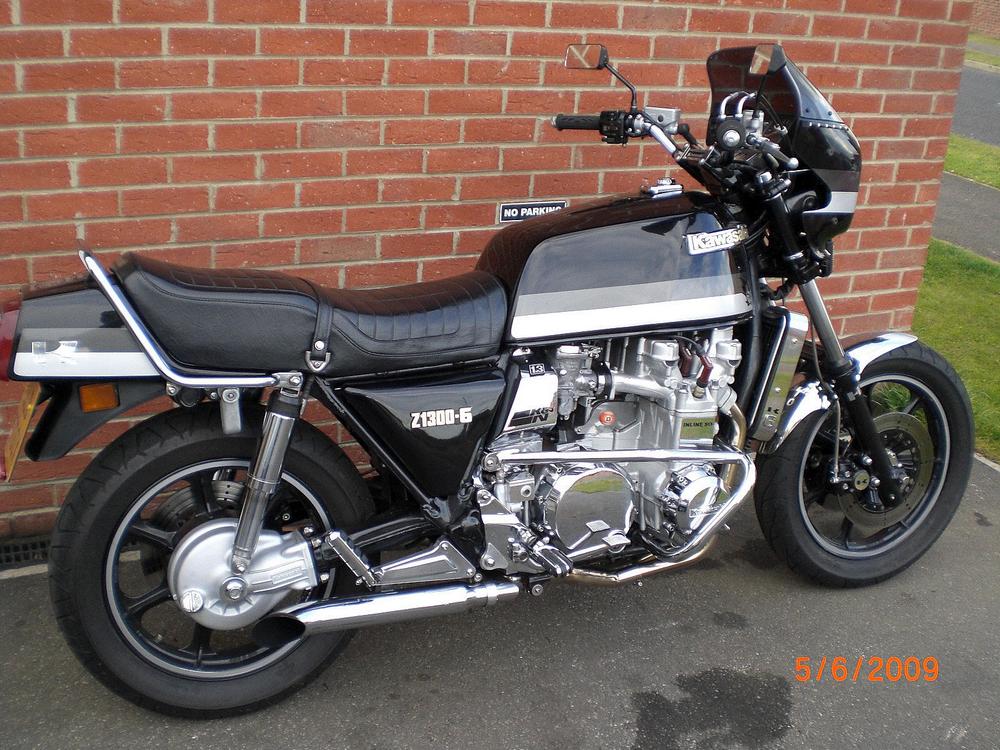
Though production was limited, the Z1300 Classic has found a niche among U.S. riders who want a combination of vintage engineering with modern reliability, a motorcycle that delivers both nostalgia and performance.
10. Honda CBX1100F
The CBX series evolved over the years, and the CBX1100F exemplified Honda’s dedication to refining the six-cylinder formula. Its smooth inline-six engine, paired with sport-touring ergonomics, made it ideal for riders seeking versatility, capable of spirited canyon rides and comfortable highway cruising.
In the U.S., these models remain highly collectible, reflecting a golden era when motorcycles combined high-tech engineering with stylish design.
During the late 1970s and early 1980s, Honda was at the forefront of the superbike revolution, continually refining and improving their groundbreaking designs.
In 1980, Honda introduced the CB900F, featuring a race-inspired 901cc DOHC engine. This model was a step above the previously released DOHC CB750F, boasting a longer stroke and hotter cam profiles that produced 84 BHP at 8,500 RPM. In the United States, this bike was available only between 1981 and 1982.
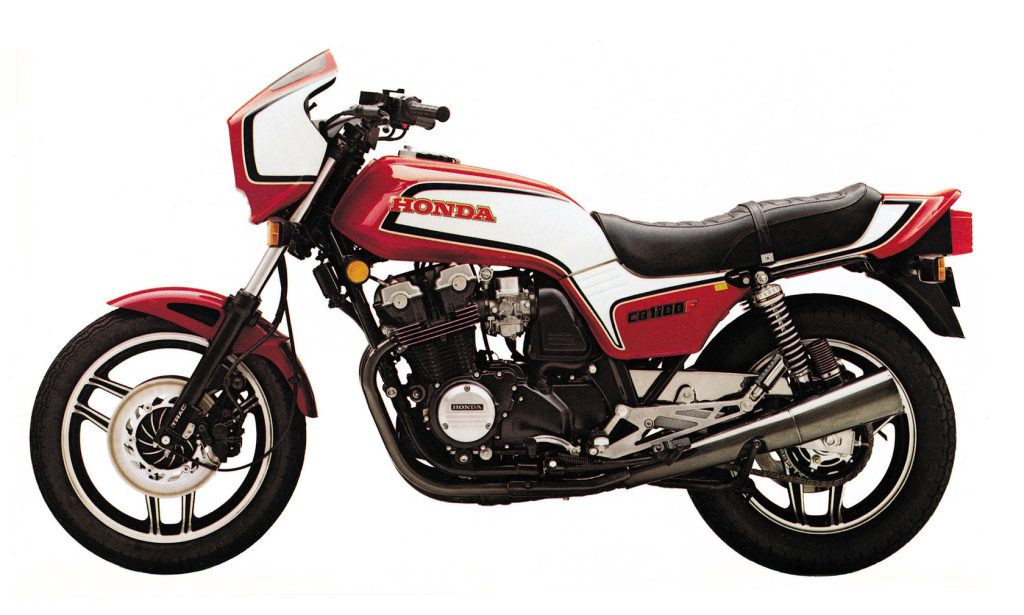
Honda didn’t stop there. In 1983, the company released the CB1100F, a model designed to surpass both the CB750F and CB900F. With hotter cams, larger pistons, and a redesigned combustion chamber, the CB1100F delivered 108 BHP at 8,500 RPM.
Honda also revised the rake angle and added a 1/4 fairing for wind deflection and visual appeal. The CB1100F represented the pinnacle of Honda engineering at the time. In terms of performance and iconic design, its only real rival was the slightly slower but equally legendary Honda CBX.
The CBX, with its DOHC air-cooled six-cylinder engine, featured a 1,047cc short-stroke unit with a compression ratio of 9.3:1 and a remarkable 24-valve head, four valves per cylinder.
Fueling the engine were six 28 mm carburetors with accelerator pumps, producing 105 BHP at 9,000 RPM. Both the CB1100F and the CBX remain highly desirable machines for modern-day speed enthusiasts, representing a golden era of superbike engineering. They stopped making the CBX right around the time they began making the 1100.
11. Kawasaki Ninja ZX-14R (Limited Six-Cylinder Editions)
While the standard ZX-14R is a four-cylinder powerhouse, Kawasaki has experimented with six-cylinder technology in limited prototypes to push top-end performance.
These experiments paved the way for extreme speed records and showcased what six-cylinder sport bikes could achieve. U.S. riders, particularly enthusiasts in the sportbike community, recognize these machines as the epitome of engineering ambition and performance potential.
Kawasaki has long earned a reputation as the wildest, baddest player in the motorcycle world. From the H1 500 and H2 750 triple-cylinder two-strokes to the legendary Z1, ZX-11, and ZX-12R, the brand consistently offered machines whose ear-splitting speed and borderline reckless performance set them apart from other Japanese manufacturers.
For years, and until the supercharged H2 series arrived, the ZX-14R held the crown as Kawasaki’s ultimate horsepower champion.
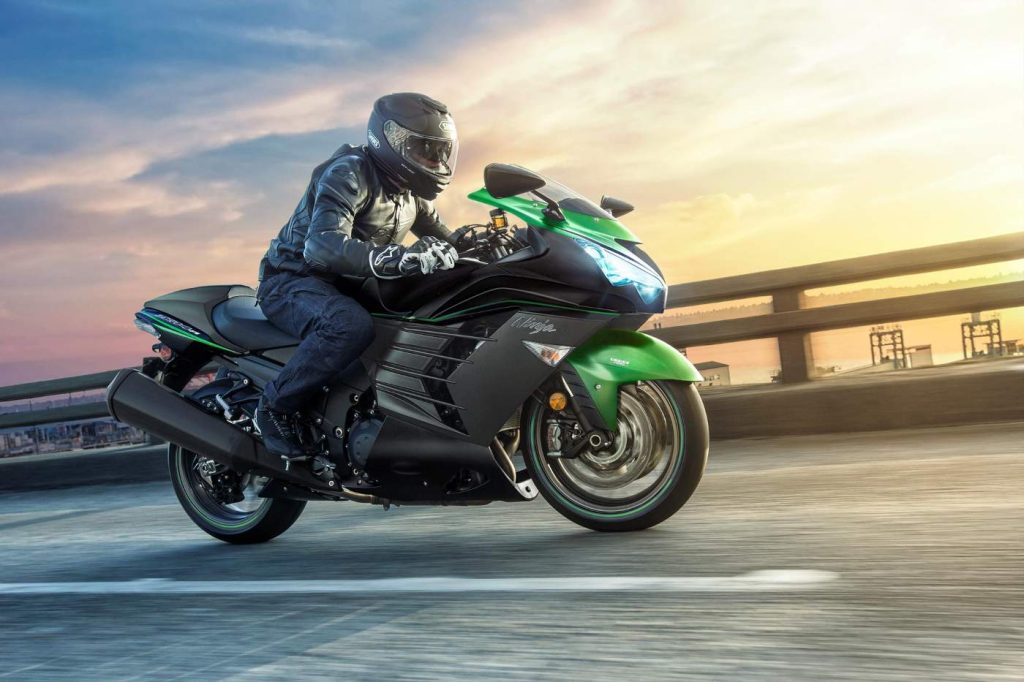
The 2024 Kawasaki Ninja ZX-14R features a comfortable one-piece seat designed for both rider and passenger, though a single-seat cowl is standard. Despite its aggressive supersport styling, ergonomics are surprisingly accommodating, with a supportive saddle, low-set footpegs, and handlebars positioned without overly aggressive reach.
By 2012, the third-generation ZX-14 was showing its age, prompting Kawasaki to introduce the ZX-14R with a suite of substantial upgrades.
Engine displacement jumped from 1,352cc to 1,441cc thanks to a 4mm longer stroke, complemented by a redesigned cylinder head with more aggressive cams, stronger rods, and lighter forged pistons. A slightly higher compression ratio, combined with a reworked exhaust system, produced a noticeable boost in power over the previous model.
Kawasaki didn’t stop at the engine. Numerous components were strengthened to handle the extra performance: transmission gears received enhanced heat treatment, the monocoque frame gained tougher castings and forgings, the swingarm was lengthened by 10mm and stiffened, and front and rear suspension featured stiffer springs and damping.
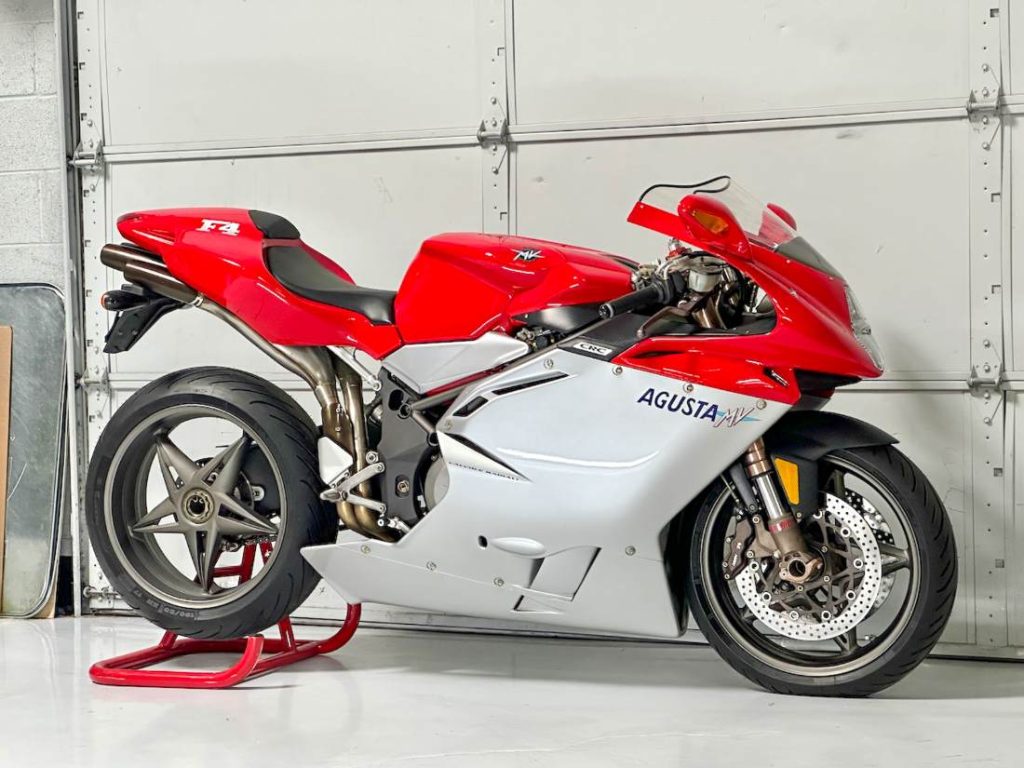
12. MV Agusta F6
MV Agusta’s F6, a modern Italian masterpiece, brings six-cylinder engineering into the contemporary superbike arena. Known for its aggressive design and incredible precision, the F6 delivers blistering performance paired with advanced electronics and top-tier materials.
In the U.S., the MV Agusta F6 is admired not just for its performance, but for its artistry, a motorcycle that balances power, aesthetics, and exclusivity in a way few others can.
Six-cylinder motorcycles occupy a unique place in the motorcycling world. They are often heavier, more complex, and more expensive than their four-cylinder counterparts, but they reward riders with unmatched smoothness, distinctive engine character, and engineering ingenuity.
In the U.S., these bikes are less about mass-market appeal and more about the experience, whether it’s a long-distance Gold Wing tour across the Midwest, a spirited canyon run on a CBX, or simply owning a piece of motorcycle history like a Benelli Sei. They represent a dedication to refinement, and for many riders, owning or riding a six-cylinder machine is as much about passion as it is about performance.
From the pioneering Honda CBX 1000 to the modern MV Agusta F6, six-cylinder motorcycles continue to captivate enthusiasts with their combination of power, smoothness, and exclusivity. While rare in the U.S., these bikes are celebrated among collectors, touring aficionados, and engineering enthusiasts alike.
Whether you prioritize touring comfort, vintage charm, or raw performance, the twelve motorcycles listed here showcase the best that six-cylinder engineering has to offer.
They are not just machines, they are statements, legends, and unforgettable experiences on two wheels. For any American rider with an eye for innovation, performance, and history, these six-cylinder motorcycles are truly unmissable.