
American automotive history is packed with legendary machines that didn’t just turn heads, they tore up the streets with sheer power. From the roaring muscle cars of the 1960s and ’70s to high-performance icons of later decades, the United States produced vehicles designed to thrill drivers with incredible horsepower.
These cars weren’t just about speed; they were about attitude, design, and the unmistakable growl of a big V8 under the hood. Here’s a look at 10 classic American cars that defined performance with mind-blowing horsepower.
1. 1969 Chevrolet Camaro ZL1
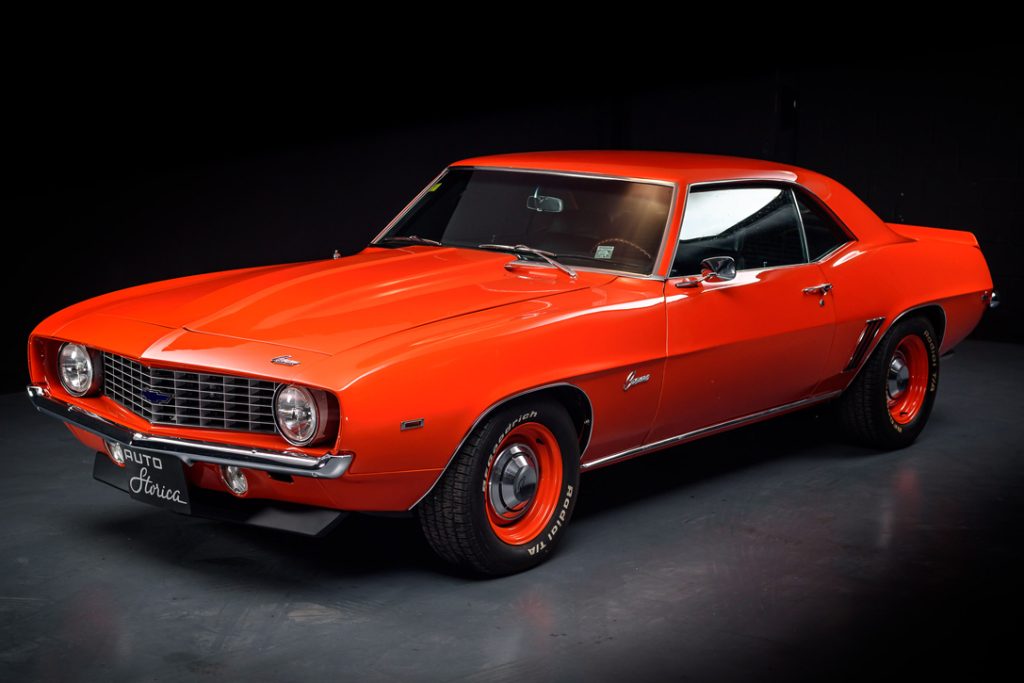
The 1969 Camaro ZL1 is a true muscle car legend. Powered by a rare 427-cubic-inch V8, this beast cranked out an advertised 430 horsepower, though many sources suggest it produced closer to 500 hp in reality. Its lightweight design combined with this monster engine made it a drag strip terror and a dream for collectors today.
The steel ZL-2 cold air induction hood was standard, paired with heavy-duty springs featuring five-leaf rear suspensions, a robust radiator, transistorized ignition, power front disc brakes, and F70x14 white-lettered tires.
All 50 ZL1 cars came with a black vinyl interior, omitted radios, and were offered in only five colors: Cortez Silver, Fathom Green, Dusk Blue, LeMans Blue, and Hugger Orange. Ten cars were produced in each color, split between four equipped with M40 transmissions and six with M21s.
Exterior trim was minimal, limited to blue Bow Tie emblems on the grille and rear panel, with Camaro badges on the header panel, fenders, and deck lid. The grilles were Argent Silver. While iron big-blocks were typically painted orange, the ZL1’s aluminum block was left in its natural, all-aluminum finish.
Development of the ZL1 engine progressed slowly. The aluminum block required extensive modifications for both street and drag racing use. Cast-iron sleeves were retained with a 1/16-inch groove at the top of the block, main bearing bulkheads were strengthened, and many bolt and stud threads throughout the engine were lengthened for added durability.
Forged steel rods were beefed up at the caps and shank base, with larger 7/16-inch rod bolts. The cylinder heads featured an open-chamber design with larger, round 1.88-inch exhaust valves, bigger than those on the L88, which increased exhaust valve lift to .600 and shortened duration to 359 degrees.
The ZL1 was the first Chevrolet production engine to use an 850-cfm double-pumper Holley carburetor on an open-plenum high-rise intake manifold. Chevrolet officially rated the engine at 430 hp at 5,200 rpm and 450 lb-ft of torque at 4,400 rpm, though dynamometer testing of factory ZL1s revealed output closer to 550 hp.
2. 1970 Dodge Challenger R/T
Dodge pushed boundaries with the 1970 Challenger R/T, especially with the 426 HEMI V8 option. This engine delivered a staggering 425 horsepower, allowing the Challenger to burn through the quarter-mile with authority. Its aggressive styling and raw power cemented its status as a muscle car icon.
While the 1970 Challenger R/T might seem relatively common based on production numbers, this mainly applies to cars equipped with the base 383-cubic-inch (6.3-liter) V8 engine, which appeared in 12,281 examples, about 66% of total production.
Optional engines were far rarer: the four-barrel 440-cubic-inch (7.2-liter) V8 was ordered by 3,840 customers, the Six-Pack version of the 440 appeared in 2,035 units, and the legendary 426-cubic-inch (7.0-liter) Hemi powered only 356 Challengers.
The R/T Convertible is also a rare classic, no matter the engine, with only 963 sold. While not as rare as the Hemi R/T Convertible, of which only nine were produced, this combination elevates the 1970 Challenger to near “holy-grail” status among Mopars.
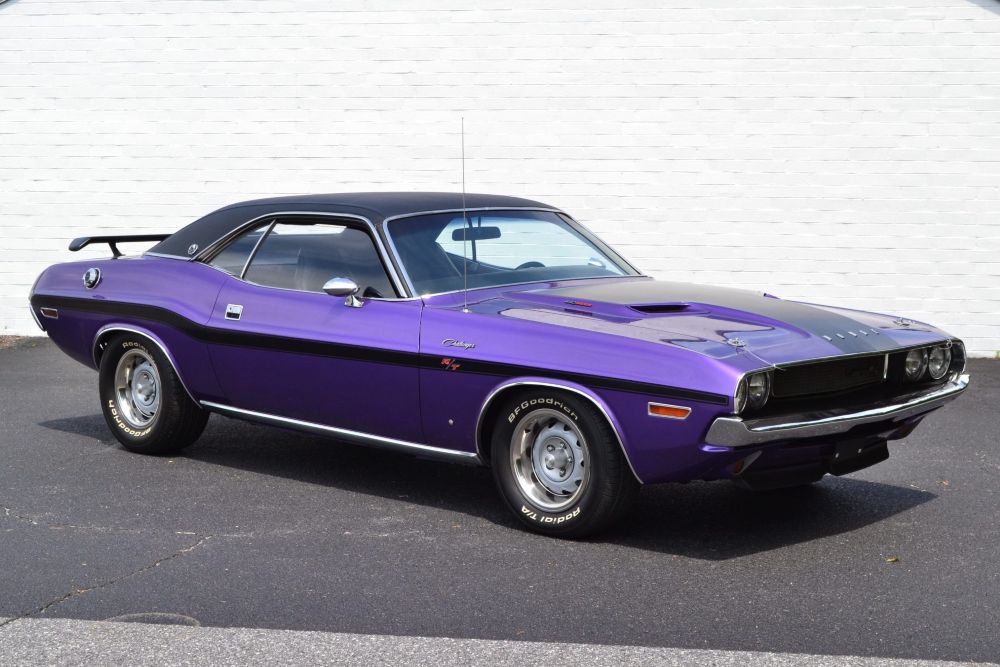
This particular Challenger comes with a three-speed automatic gearbox, limiting its production to just 37 units—its rarity only exceeded by the Hemi convertible, which can command over $1 million at auction in excellent condition.
The current owner has had this Mopar since 1976, a remarkable 49 years as of 2025. While its complete ownership history is unclear, it is known the car was drag raced in the early 1970s, with the battery relocated to the trunk for that purpose.
Fortunately, the quarter-mile runs didn’t compromise the drivetrain, and the numbers-matching Hemi and four-speed manual remain under the hood, largely original with only minor bits replaced during restoration. The Challenger received a thorough refresh in 2022 and remains a stunning example of classic American muscle.
Also Read: Top 10 Performance Cars That Deliver Speed Without Draining Your Wallet
3. 1969 Ford Mustang Boss 429
Ford’s Mustang Boss 429 was designed to dominate NASCAR, and it wasn’t shy about showing off. The massive 429-cubic-inch V8 produced 375 horsepower straight from the factory, though enthusiasts often found more power under the hood. With a rare combination of performance and collectible value, it remains one of the most revered Mustangs ever.
While the Boss 429 carries a Ford badge and Mustang bodywork, it’s what’s under the hood that truly defines the car. Ford didn’t create this model for fun, they built it to meet NASCAR regulations, which required at least 500 production examples of any engine used in competition. To get the monstrous 429 into racing, they needed a street car to house it. Thus, the Boss 429 was born.
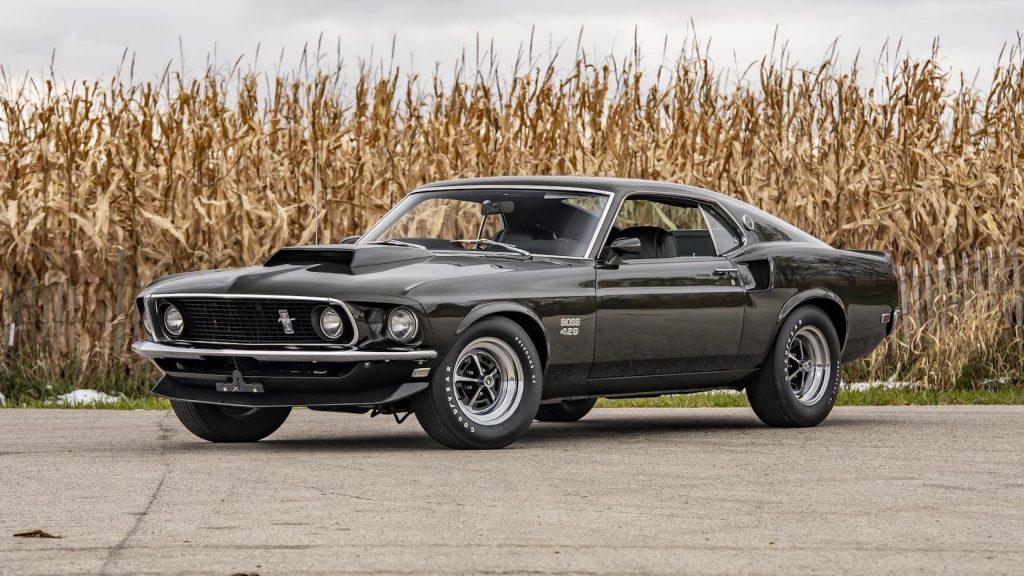
The 429 engine wasn’t a reworked big block, it was purpose-built for NASCAR, engineered for sustained high-RPM racing. With massive cylinder heads, solid lifters, a forged steel crankshaft, and a dry-deck cylinder design, the Boss 429 was ahead of its time. It wasn’t designed to crawl through city traffic; it was built to scream past 7,000 RPM for hours on end.
Fitting such a powerhouse into a Mustang was no small task. Ford outsourced the work to Kar-Kraft, a Michigan-based contractor experienced in specialty builds. Kar-Kraft modified the engine bay to accommodate the 429, relocated the battery to the trunk, revised the front suspension, and gave the Mustang a distinctive, aggressive stance.
4. 1971 Plymouth ‘Cuda 426 HEMI
The 1971 Plymouth ‘Cuda with the 426 HEMI is a symbol of Chrysler’s muscle car dominance. Its V8 engine churned out 425 horsepower, paired with a lightweight body, giving it lightning-fast acceleration and a legendary reputation among drag racers and collectors alike.
The third-generation Barracuda produced one of the most iconic Mopars to wear the Chrysler badge: the Hemi ‘Cuda. Built on a new E-body platform capable of accommodating the legendary 426 Hemi, this generation lasted just two model years, 1970 and 1971, before the mighty motor was retired from regular production.
The 1971 model year marked the final chapter for the 425-hp Hemi, with the rowdy Barracuda receiving the majority of the 356 big-blocks installed in Mopar vehicles. Only 114 ‘Cudas were ordered with the hemispherical-head V8, making them among the most coveted automobiles from the Golden Era in today’s collector market.
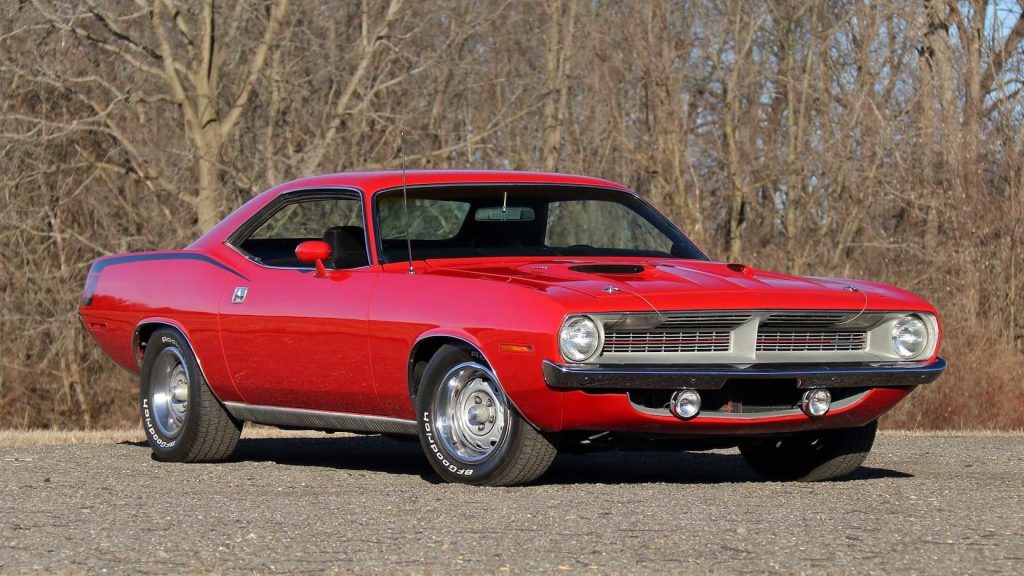
The Barracuda outlived the 426 Hemi by three model years, retiring exactly a decade after its debut. On April 1, 1974, an American icon became a legend, leaving behind only a handful of examples featuring the distinctive shaker hood scoop and the proud “Hemi ‘Cuda” badge.
Of the 114 examples produced, 61 were equipped with a four-speed manual transmission, while the remaining 53 featured the durable three-speed Torqueflite automatic behind the torquey engine.
Setting aside the seven convertibles, which are effectively unobtainable today and command multimillion-dollar sums at auction, the hardtops remain slightly more attainable, though still highly desirable to collectors.
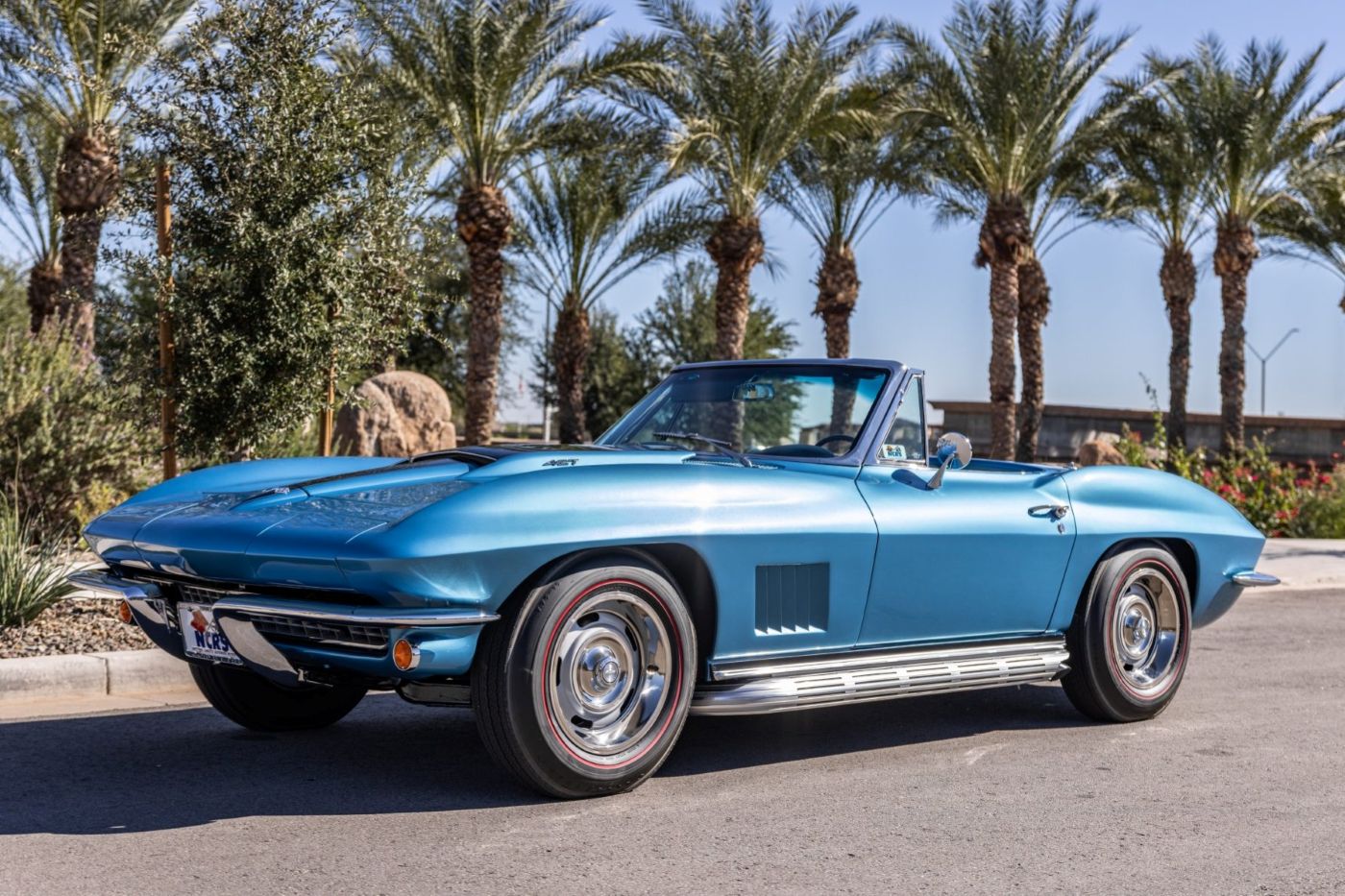
5. 1967 Chevrolet Corvette L88
The Corvette L88 of 1967 is not just an American sports car icon, it’s a high-horsepower marvel. Its 427-cubic-inch V8 was rated at 430 horsepower, but enthusiasts speculate it often exceeded 500 hp in reality. Lightweight construction and racing pedigree made it a true track star of its era.
Introduced in 1963 with a carryover small-block V8, the second-generation Corvette (C2) gained big-block power in 1965. By 1967, the 427-cubic-inch (7.0-liter) L88 engine transformed the C2 into a road-legal race car.
One of Chevrolet’s most coveted golden-era engines, the L88 featured lightweight heads with larger ports, a hotter camshaft, an aluminum radiator, a small-diameter flywheel, and a 12.5:1 compression ratio that required 103-octane racing fuel. While official paperwork rated it at 430 horsepower, dynamometer testing revealed output closer to 500 hp.
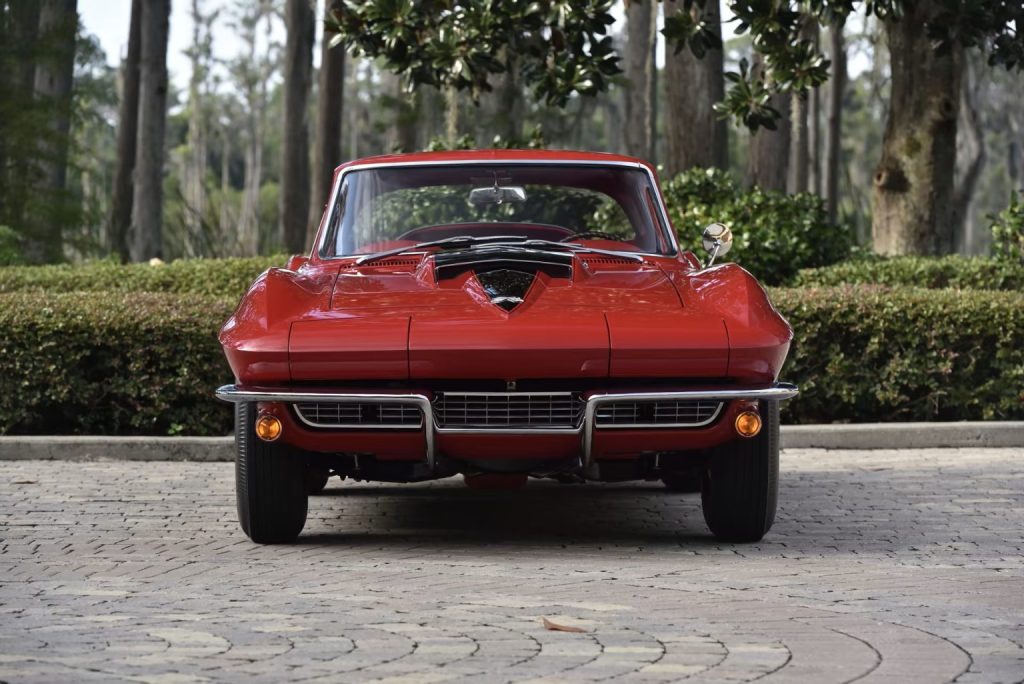
The race-spec L88 was prohibitively expensive at the time, adding roughly 35% to the price of a standard 1967 Corvette, limiting its popularity. Only 20 examples were produced that year. Decades later, the 1967 Corvette L88 remains one of the rarest and most desirable versions of the model, commanding multi-million-dollar prices at auction.
The red-on-red coupe featured here has held the distinction of being the world’s most expensive Corvette for over a decade. It sold in 2014 for a staggering $3.85 million, including fees, and crossed the block again in 2024 for $3.2 million.
6. 1970 Pontiac GTO Judge
Pontiac’s GTO Judge wasn’t just a flashy name; it delivered real power. The 455-cubic-inch V8 could produce up to 370 horsepower stock, and with minor tweaks, drivers routinely saw over 400 hp. Bold styling and powerful performance made it a muscle car that defined the early ’70s.
The Pontiac GTO is widely regarded as one of the original muscle cars, yet by 1970 even this stalwart of the segment could no longer match its earlier sales success. Still, the 1970 GTO stands as a quintessential example of muscle cars at their peak.
The GTO was born as a sportier version of the Tempest, aimed at younger buyers. It debuted in 1964, bypassing GM’s policy that limited A-body intermediate models to a maximum 5.4-liter engine. As a result, the original Tempest GTO came equipped with a 6.4-liter V8, the same powerplant used in the larger Bonneville and Catalina models.
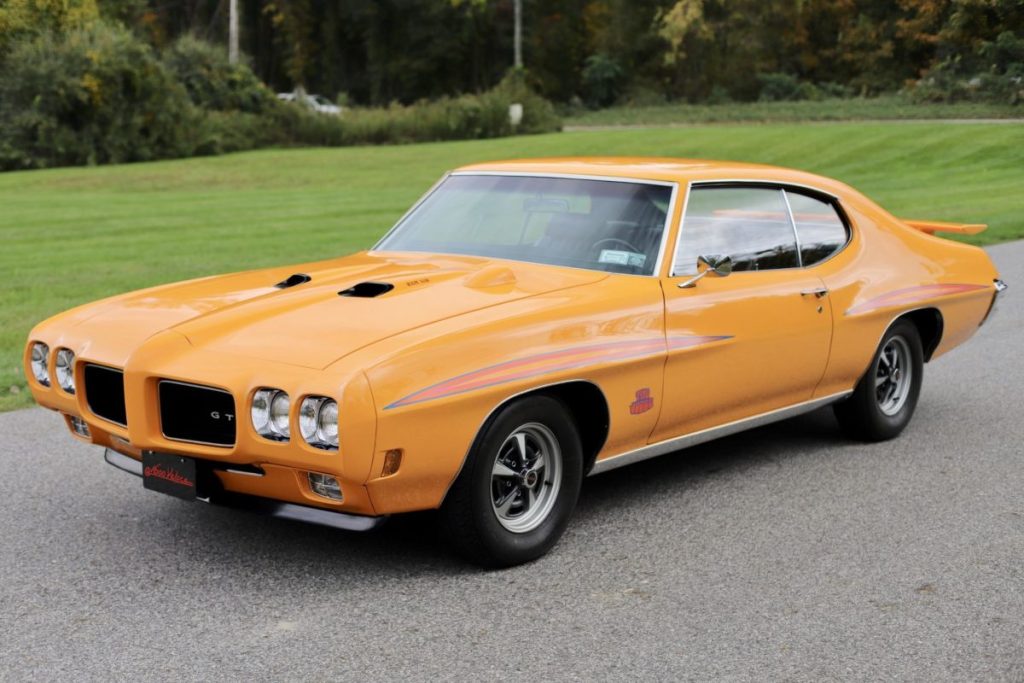
By 1970, the GTO had shed much of its chromed trim, instead featuring an Endura polyurethane nose and aggressively flared fenders. Of the 40,149 units produced that year, only 3,797 were ordered with the Judge trim, which had been introduced the previous year.
Sales continued to decline thereafter, driven by rising insurance costs, stricter emissions regulations, and a market increasingly shifting from performance cars to economy-focused vehicles, especially as the oil crisis loomed.
7. 1969 Dodge Charger R/T
The Charger R/T of 1969, particularly with the 440 Magnum or 426 HEMI, delivered massive horsepower, up to 425 hp, and a dominating presence on the street. Its long, sleek profile combined with high-performance engineering made it a favorite among muscle car enthusiasts and Hollywood alike.
This particular Mopar, equipped with a Hemi and automatic transmission, recently crossed the block at Mecum’s Harrisburg 2025 auction, fetching $176,000, a new auction record for 1969 Chargers with that engine and transmission combination.
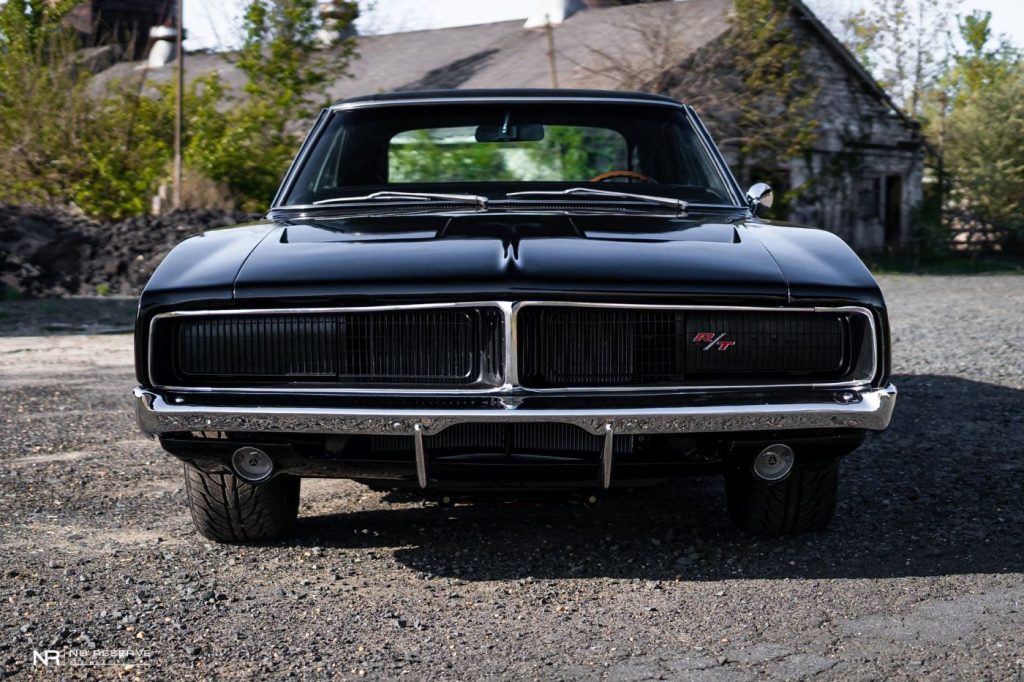
The 1969 model year was a landmark for muscle cars, with many Mopars achieving record sales. The Charger was no exception, surpassing 100,000 units for the first time. Yet only 432 examples were ordered with the 426-cubic-inch (7.0-liter) Hemi V8, making these cars highly sought after and consistently commanding six-figure sums at auction.
This green-on-white Charger now holds the title of the world’s most expensive 1969 Hemi equipped with an automatic. The $176,000 total, including premiums, eclipsed the previous record for three-speed automatic cars by just $5,500, a benchmark that had stood for only 52 days.
The Charger also ranks as the third-most expensive 1969 Hemi ever sold, a position it shares with a manual-transmission counterpart.
Also Read: Top 10 Performance Cars That Deliver Speed Without Draining Your Wallet
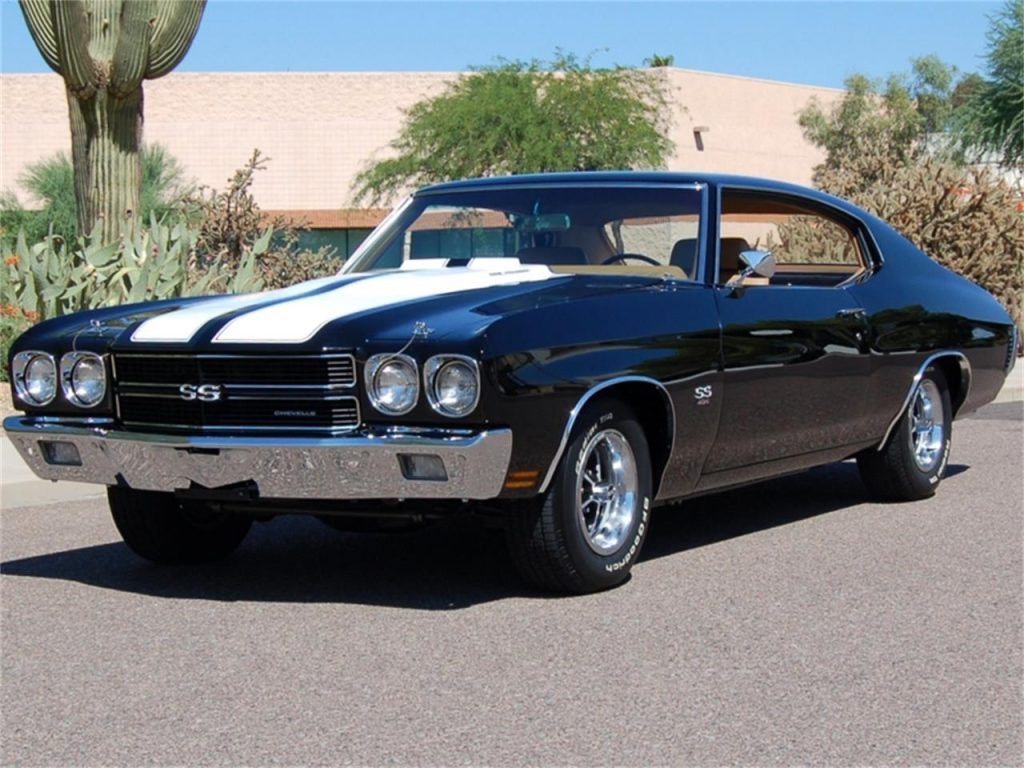
8. 1970 Chevrolet Chevelle SS 454
The Chevelle SS 454 LS6 is a muscle car legend, packing a 454-cubic-inch V8 with 450 horsepower straight from the factory. Its brutal acceleration and classic styling made it one of the most powerful and desirable American cars of its era.
The 1970 Chevrolet Chevelle SS remains one of the most iconic American muscle cars, and for good reason. With its 454-cubic-inch V8, aggressive styling, and jaw-dropping straight-line speed, the Chevelle epitomizes the excess and spirit of its era. It’s a classic that embodies the peak of American performance and prosperity.
These days, prices for a Chevelle SS 454 are sky-high, you’ll be hard-pressed to find one for less than $100,000. While this makes the car out of reach for many enthusiasts, it doesn’t mean a similar experience is impossible.
Back in the muscle car heyday, virtually every manufacturer from Ford to Oldsmobile had a big-block, tire-squealing contender. Many of these alternatives offer comparable performance without the hefty price tag of a top-tier Chevelle.
With that in mind, we searched for Chevelle-like spirit in more attainable packages. For those not looking to drop six figures on a 454ci big-block, the 1969 Oldsmobile Hurst/Olds 455 emerges as an excellent alternative.
Although often overlooked, the Oldsmobile 4-4-2 deserves serious consideration. Originally offered as an option for the Cutlass and F-85, the 4-4-2 name referenced its four-barrel carburetor, four-speed manual, and twin exhausts.
In 1968, Oldsmobile spun the 4-4-2 into its own performance-oriented model to compete with Ford, Dodge, and other muscle powerhouses.
To go toe-to-toe with the likes of the 429 and 440 big blocks, Oldsmobile needed more firepower than a 400-cubic-inch mill. The result was the 1968 Hurst/Olds 4-4-2, featuring a massive 455-cubic-inch (7.5-liter) V8.
Alongside the powertrain upgrades, the car received exclusive paint schemes, H/O badging, pinstriping, and bucket seats. Production was limited, with just 515 examples built in its first year, making it a rare but perfect Chevelle SS 454 alternative for enthusiasts seeking big-block performance without breaking the bank.
9. 1969 Shelby GT500
Shelby took the Mustang and supercharged its performance with the 428-cubic-inch Cobra Jet V8 in the GT500. With around 355 horsepower advertised (but likely higher in reality), this car combined American muscle with racing pedigree, making it a must-have for classic car collectors.
A 1969 Shelby GT500 Convertible has resurfaced, and it’s not just rare, it’s nearly unmatched. Finished in striking Grabber Green with a black interior and paired with a four-speed manual, this Shelby is one of only two ever built in this exact configuration.
Add a 428 Cobra Jet under the hood and a rock-star ownership history, and you’ve got a car that’s far more than collectible, it’s iconic. For collectors and Shelby enthusiasts, this isn’t just another muscle car.
It’s one of only 245 GT500 convertibles produced in 1969, but only two left the factory with Grabber Green paint over black bucket seats and a four-speed manual gearbox, making it among the rarest Shelby cars ever produced.
The car’s pedigree is storied. Built on April 1, 1969, it was first delivered to Ogden Ford in Utah. From 1994 to 2004, Les Claypool, the founder, lead singer, and bassist of the band Primus, owned it.
Afterward, it underwent a meticulous seven-year restoration by Cobra Automotive in Connecticut. The restoration wasn’t light work: the 428-cubic-inch Cobra Jet V8 was rebuilt, the Toploader close-ratio manual transmission overhauled, and everything from the white convertible top to the interior finishes refreshed.
Under the hood, the GT500 remains a performance legend. The factory-rated 428 Cobra Jet produces 335 horsepower and 440 lb-ft of torque, delivered through a Centerforce dual friction clutch and a 9-inch rear axle with Traction-Lok and 3.50 gears.
Performance features include a Ram Air intake, four-barrel carburetor, and dual exhaust system routed through a transverse-mounted muffler, all rebuilt to perfection.
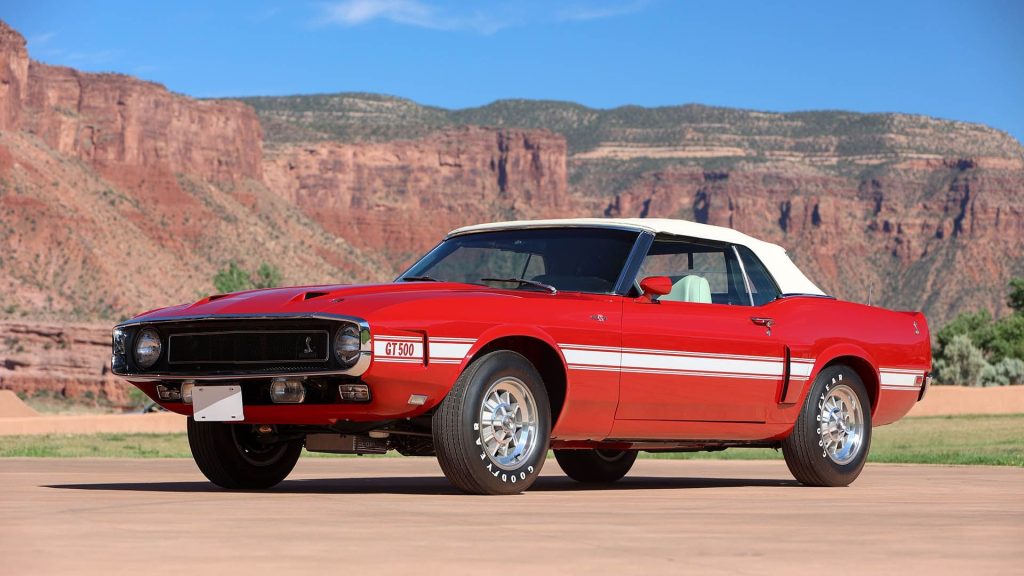
The GT500 rides on 15-inch Shelby wheels wrapped in staggered BFGoodrich Radial T/A tires, with power front disc brakes and the Competition Suspension package enhanced by Koni shocks.
Fiberglass front fenders, trunk lid, and hood reduce weight and maintain performance credibility. The hood features five NACA-style ducts with quick-release latches, and the rear end includes a subtle integrated spoiler with center-exit exhaust outlets.
Inside, the cabin is all Shelby, featuring high-back bucket seats, a Shelby-specific center console with toggle switches, woodgrain trim, and a roll bar. The original AM/FM stereo remains intact, while driver-focused instrumentation includes a 140-mph speedometer, an 8,000-rpm tachometer, and gauges for oil pressure, fuel level, and more.
Every inch of this car tells a story, from its one-of-two paint and trim combination to the extensive list of restored and original components.
10. 1970 Buick GSX Stage 1
Buick may have been known for luxury, but the 1970 GSX Stage 1 proved it could dominate horsepower charts. The 455-cubic-inch V8 delivered up to 360 hp factory-rated, with torque that could embarrass many contemporaries on the street or strip. Its bold styling and high-output engine made it a muscle car sleeper hit.
The 1970 Buick GSX Stage 1 is a rare and formidable muscle car, often referred to as “The Hemi Killer” for good reason. Born as a hotter variant of the Gran Sport 455, the GSX arrived at a moment when General Motors freed its intermediate platforms from a 400-cubic-inch engine limit, giving Buick the opportunity to enter the muscle car fray in earnest.
Its 455-cubic-inch V8, actually bored 30 over to 462 cubic inches, or 7.6 liters, produced a staggering 510 lb-ft of torque, giving the car an almost locomotive-like shove when the accelerator was pressed.
While the standard 455 was rated at 350 horsepower, the Stage 1 option added a hotter cam, slightly higher compression at 10.5:1, 90 degrees of cam overlap, and .490-inch valve lift, boosting output to 360 hp on paper. Buick engineers downplayed the numbers, adhering to the era’s trend of conservative ratings, which also helped manage insurance costs.
Only 678 GSXs were built in 1970, with 491 in Saturn Yellow and the remainder in Apollo White. Of these, 400 received the Stage 1 package, which made the car even more formidable. Stage 1 models came standard with a four-speed manual transmission, though 280 were fitted with a three-speed Turbo Hydra-matic automatic.
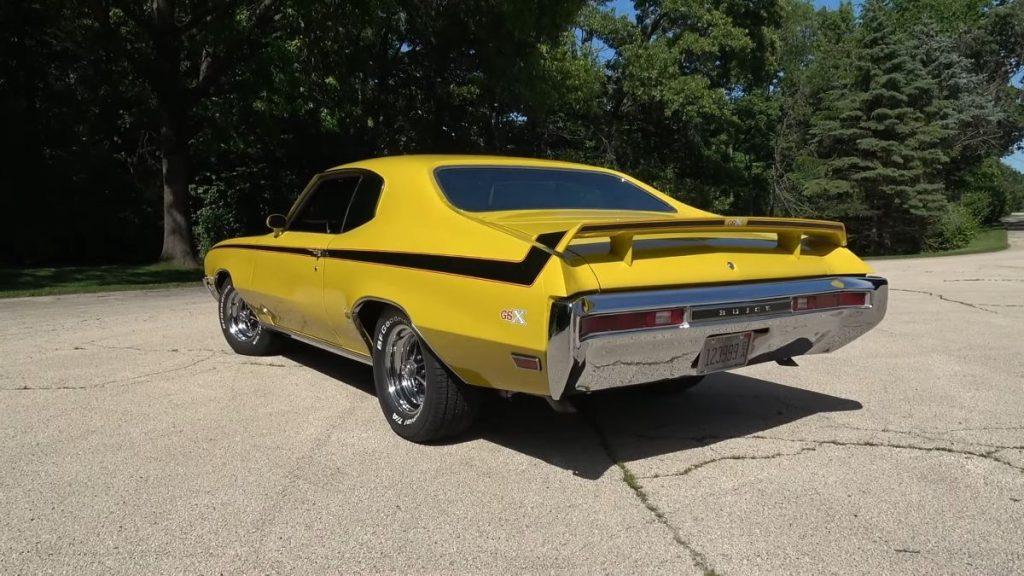
The car’s raw torque made it a handful to drive, so power front disc brakes were standard to tame the massive output. Quarter-mile times were impressive, with a 13.38-second ET at 105.5 mph, giving even the vaunted 426 Hemi competitors a run for their money. A factory air-conditioning option slightly altered axle ratios, with a 3.42 rear gearing when A/C was installed and 3.64 without.
Dennis Doerge, a collector with a penchant for Buicks, owns a fully restored example of this rare muscle car. His GSX Stage 1 retains its original 462-cubic-inch V8, recently rebuilt and barely broken in after restoration. Driving the car, Doerge describes the sheer thrill of controlling a car with such overwhelming torque, power, and presence.
With only one engine size offered, limited paint options, and a minuscule production run, the 1970 Buick GSX Stage 1 remains a standout from the Golden Age of muscle cars, celebrated for its combination of brute power, rarity, and understated sophistication, proving that Buick, usually the quiet family brand, could go toe-to-toe with the best of Chrysler and Ford’s muscle offerings.
These ten classic American cars are more than just machines, they’re statements of power, design, and ambition. Whether roaring down the strip or sitting proudly in a garage, their engines showcase a golden era of horsepower where American automakers weren’t afraid to go big, bold, and loud.
