Honda has built its reputation on reliability, engineering precision, and accessibility, but beneath that sensible image lies a long history of brutally powerful motorcycles.
From record-breaking hyperbikes to MotoGP-derived superbikes and torque-heavy muscle cruisers, Honda has repeatedly proven it can build machines that are as ferocious as they are refined.
Unlike some manufacturers that chase peak horsepower at the expense of usability, Honda’s most powerful motorcycles tend to combine raw output with balance, durability, and real-world rideability qualities that resonate strongly with American riders who demand performance without sacrificing longevity.
This list focuses on production Honda motorcycles, prioritizing factory-rated power, real-world performance, and technological impact rather than one-off race machines or concept bikes.
Some of these motorcycles pushed engineering boundaries in their era, while others remain benchmarks even decades later. Together, they represent the pinnacle of Honda’s performance legacy.
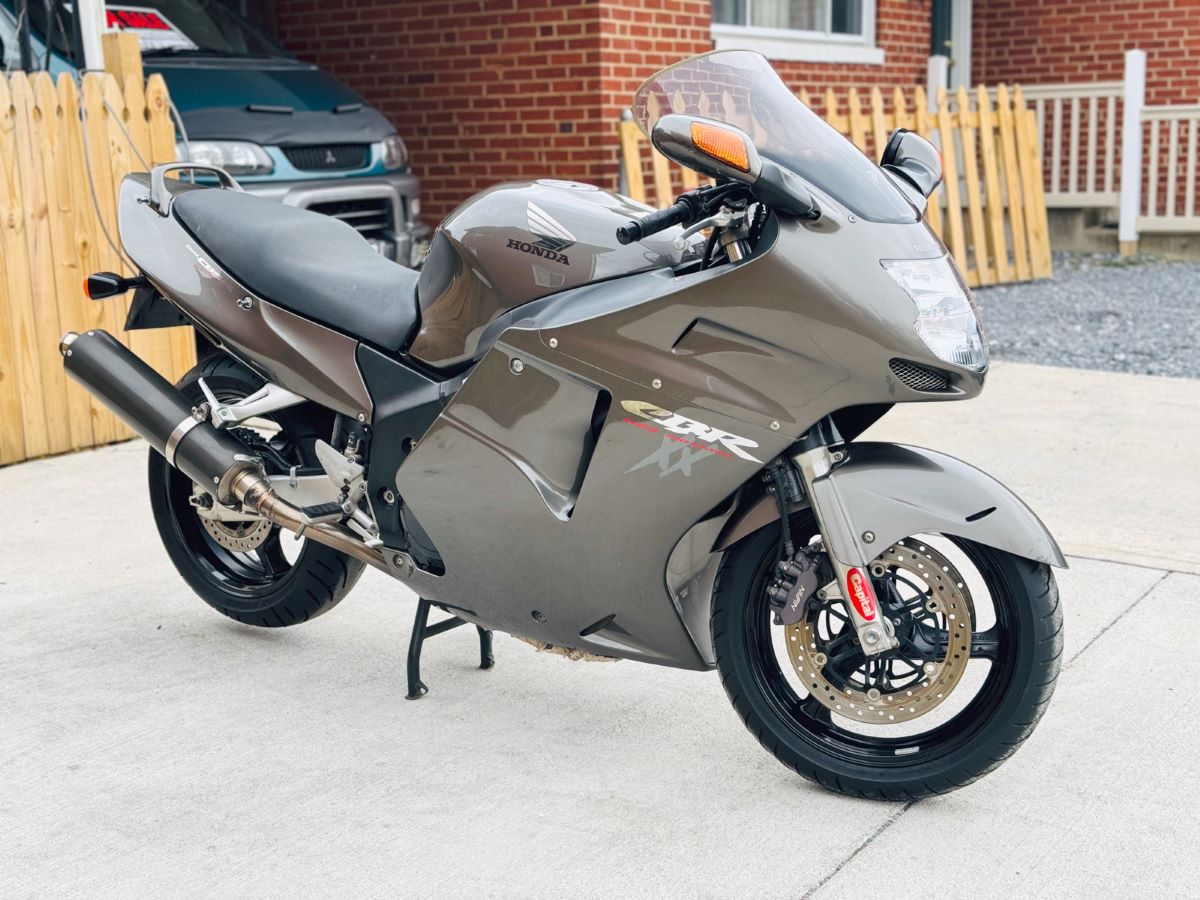
1. Honda CBR1100XX Super Blackbird
When the CBR1100XX Super Blackbird launched in 1996, it wasn’t just powerful it was dominant. Designed explicitly to dethrone the Kawasaki Ninja ZX-11 as the world’s fastest production motorcycle, the Blackbird succeeded with authority.
Its 1,137cc inline-four engine produced around 164 horsepower, a staggering figure for the time, and delivered it with turbine-like smoothness.
What made the Super Blackbird special wasn’t just top-end speed, but how effortlessly it delivered power. Riders could cruise comfortably across states and still unleash near-200-mph performance when conditions allowed.
For American sport-touring enthusiasts, it offered a rare blend of comfort, stability, and straight-line dominance. Even today, the Blackbird is remembered as one of the most civilized high-power motorcycles ever built.
It was always going to take an extraordinary machine to topple the Kawasaki ZZ-R1100 from its throne as the king of hyper bikes, and the Honda Blackbird—otherwise known as the CBR1100XX Super Blackbird, was precisely that bike.
Purpose-built as a ballistic hyper tourer, the Blackbird embodies classic Honda: a combination of corporate ambition executed with no compromise, and a motorcycle that is also remarkably refined, comfortable, smooth, and eminently usable in its own right.
Two aspects highlight just how significant and successful the Blackbird truly was. First, it didn’t merely surpass the Kawasaki ZZ-R1100 in power; it obliterated it, delivering almost 20 extra horsepower thanks to its FireBlade-derived inline-four engine, paired with groundbreaking aerodynamic design.
Second, after keeping the Blackbird on their roster for nearly a decade, Honda themselves eventually abandoned efforts to produce a proper successor. The subsequent Honda VFR1200F turned out to be a short-lived disappointment, and even now, good used Blackbirds remain highly sought after.
Arguably, there is still no hyperbike that balances ballistic speed, competence, comfort, and refinement as flawlessly as the CBR1100XX does. It is, in every sense, both sensible and utterly insane, all wrapped up in a neatly presented Honda package.
Named after the Cold War’s fastest spy plane, the Lockheed SR-71 Blackbird, the first CBR1100XX was unveiled to the press at Paul Ricard, with the Mistral, the longest straight in bikesport, forming the perfect proving ground, in late 1996.
It did not disappoint. From that moment on, motorcycling entered a new era. While no absolute speed records were set that day, it was immediately evident that Honda had raised the benchmark.
The Blackbird may have introduced little in the way of revolutionary technology, but its combination of power, chassis, equipment, manners, and overall cohesion created a motorcycle with no true peer when it came to devouring miles on the Autobahn. Much of that remains true even today. What a machine.
The Honda Blackbird also earned a Guinness World Record as the fastest production motorcycle of its time. Its V-Max reached 178.5 mph, a record it held for two years before Suzuki’s Hayabusa took the title.
Also Read: Top 10 Sports Cars Known for Long-Term Reliability
2. Honda CBR1000RR Fireblade (SC59 & SC77 Generations)
The Honda CBR1000RR Fireblade lineage is synonymous with superbike performance, but it was the later generations especially the SC59 and SC77 that truly showcased Honda’s peak production power.
With horsepower figures pushing 189–192 hp in stock form, these bikes represented Honda’s most aggressive approach to liter-bike performance.
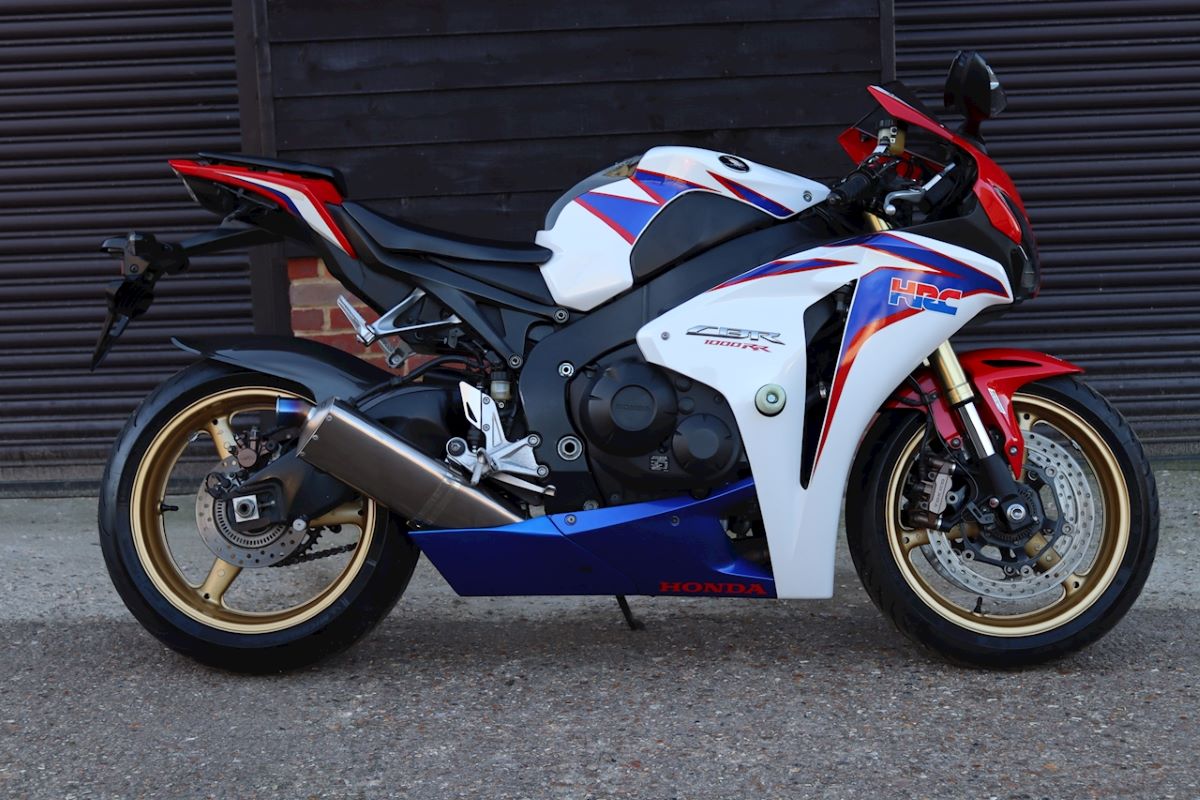
Unlike earlier Fireblades that emphasized lightweight handling over brute force, these models embraced the horsepower wars while maintaining Honda’s legendary balance.
Advanced electronics, ride-by-wire throttles, traction control, and race-derived chassis geometry made them formidable on both track and street.
In the U.S., where liter bikes dominate track days and performance discussions, the Fireblade remains a respected benchmark.
3. Honda CBR1000RR-R Fireblade SP
The CBR1000RR-R Fireblade SP is Honda’s most powerful production sportbike ever built.
Designed with a clear goal of World Superbike competitiveness, it features a heavily oversquare 999cc inline-four that produces approximately 214 horsepower with ram air assistance.
This motorcycle represents a philosophical shift for Honda less compromise, more aggression.
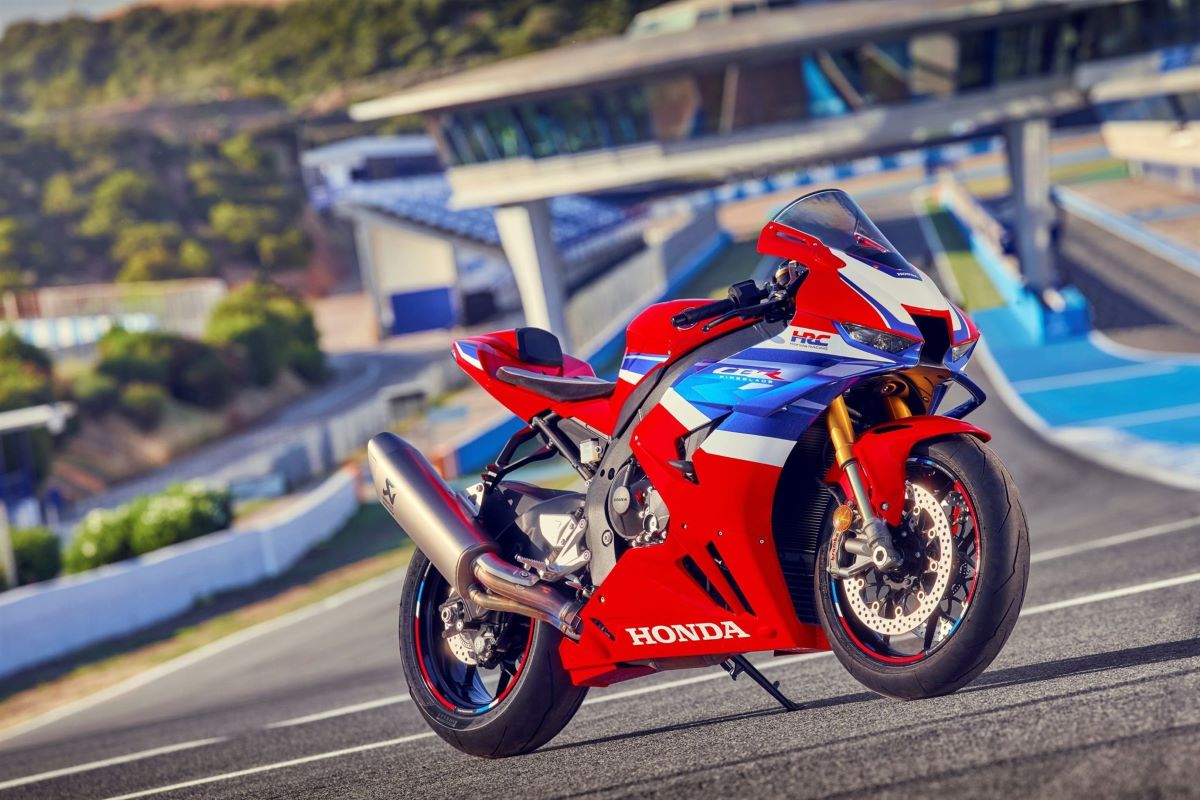
Titanium connecting rods, forged pistons, MotoGP-inspired aerodynamics, and race-ready Öhlins suspension make it a weapon straight from the factory.
For American riders accustomed to European superbikes dominating horsepower headlines, the RR-R proved Honda could still build a no-excuses hyper-focused machine.
The CBR1000RR-R Fireblade SP carries forward a remarkable racing heritage that has profoundly influenced the evolution of sport bikes. Its lineage begins with the 1959 Honda CB92 Benly Super Sport, a performance-oriented machine capable of competing at the highest levels on the track while remaining equally adept on the road, a formula that Honda has consistently refined in its sport bike offerings ever since.
The company’s relentless pursuit of technological advancement through competition on the World Championship stage produced a series of landmark models over the decades, including the revolutionary 1969 CB750, which introduced the world to the first modern inline four-cylinder sport bike engine, a design swiftly adopted by the competition.
When the CBR1000RR debuted in 2004, it further refined this philosophy, drawing on insights from Honda’s MotoGP championship-winning RC models to raise the bar in the 1000cc sport bike segment.
Building directly on Honda’s dominant RCV MotoGP platform, the 2021 CBR1000RR-R Fireblade SP, a completely redesigned motorcycle built with an uncompromising focus on track performance, once again reset the benchmark.
For the 2022 model year, the CBR1000RR-R Fireblade SP marked 30 years since the original CBR1000RR’s European launch in 1992. That edition introduced refined corner-exit acceleration, enhanced Honda Selectable Torque Control (HSTC), and improved throttle feel.
Now, for 2025, the CBR1000RR-R Fireblade SP advances further along its development trajectory. Engine and gearbox revisions deliver a stronger midrange punch and sharper throttle response, while updated ergonomics, along with upgraded Brembo brakes and Öhlins suspension components, enhance both control and confidence.
The result is a motorcycle ready to perform on the track straight from the showroom, while simultaneously offering an elevated riding experience for spirited open-road use.
4. Honda Valkyrie Rune
Power doesn’t always mean speed alone, and few motorcycles demonstrate that better than the Honda Valkyrie Rune.
Powered by a massive 1,832cc flat-six engine derived from the Gold Wing, the Rune produced around 118 horsepower, but its real strength was torque and presence.
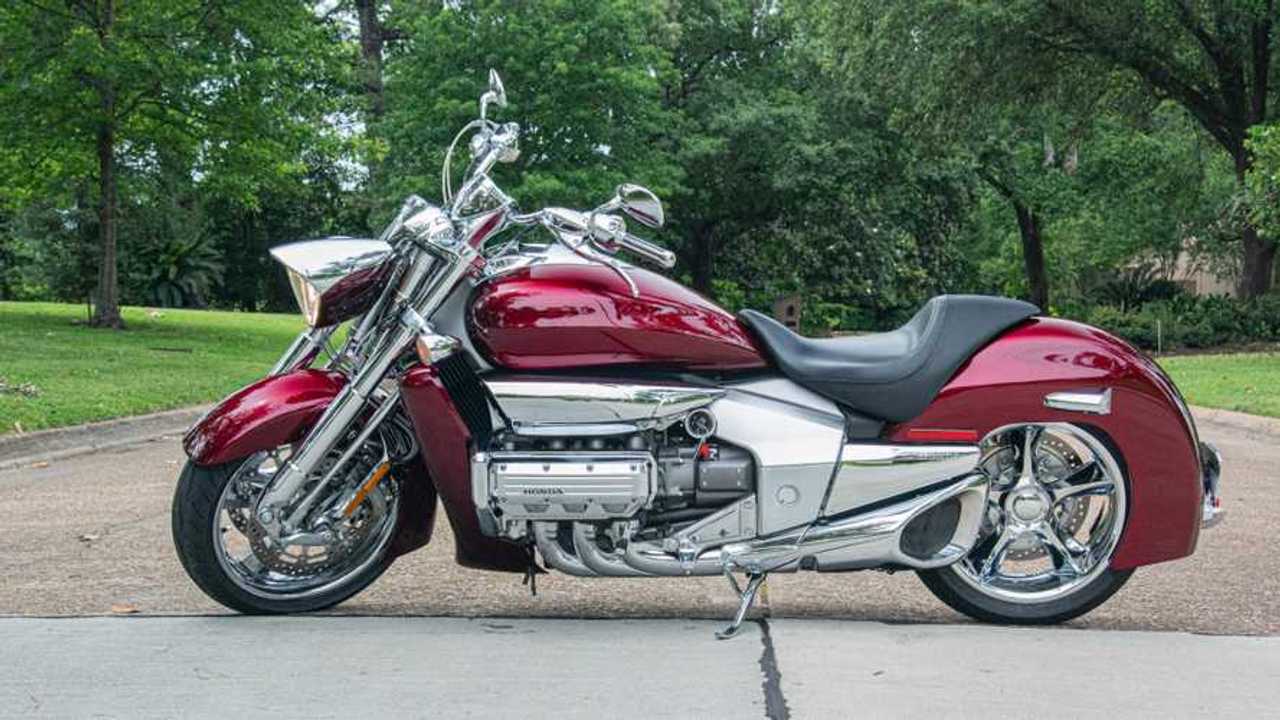
Weighing over 800 pounds and dripping with sculpted aluminum, the Rune was never meant to chase lap times. Instead, it delivered effortless acceleration and unmatched smoothness.
For the American cruiser market, which values torque, sound, and road presence, the Rune remains one of the most powerful and exotic cruisers Honda has ever dared to produce.
5. Honda VFR1200F
The VFR1200F marked Honda’s entry into the V4-powered sport-touring performance arms race. Its 1,237cc V4 engine produced roughly 170 horsepower, making it the most powerful VFR ever built and one of the strongest sport-tourers of its era.
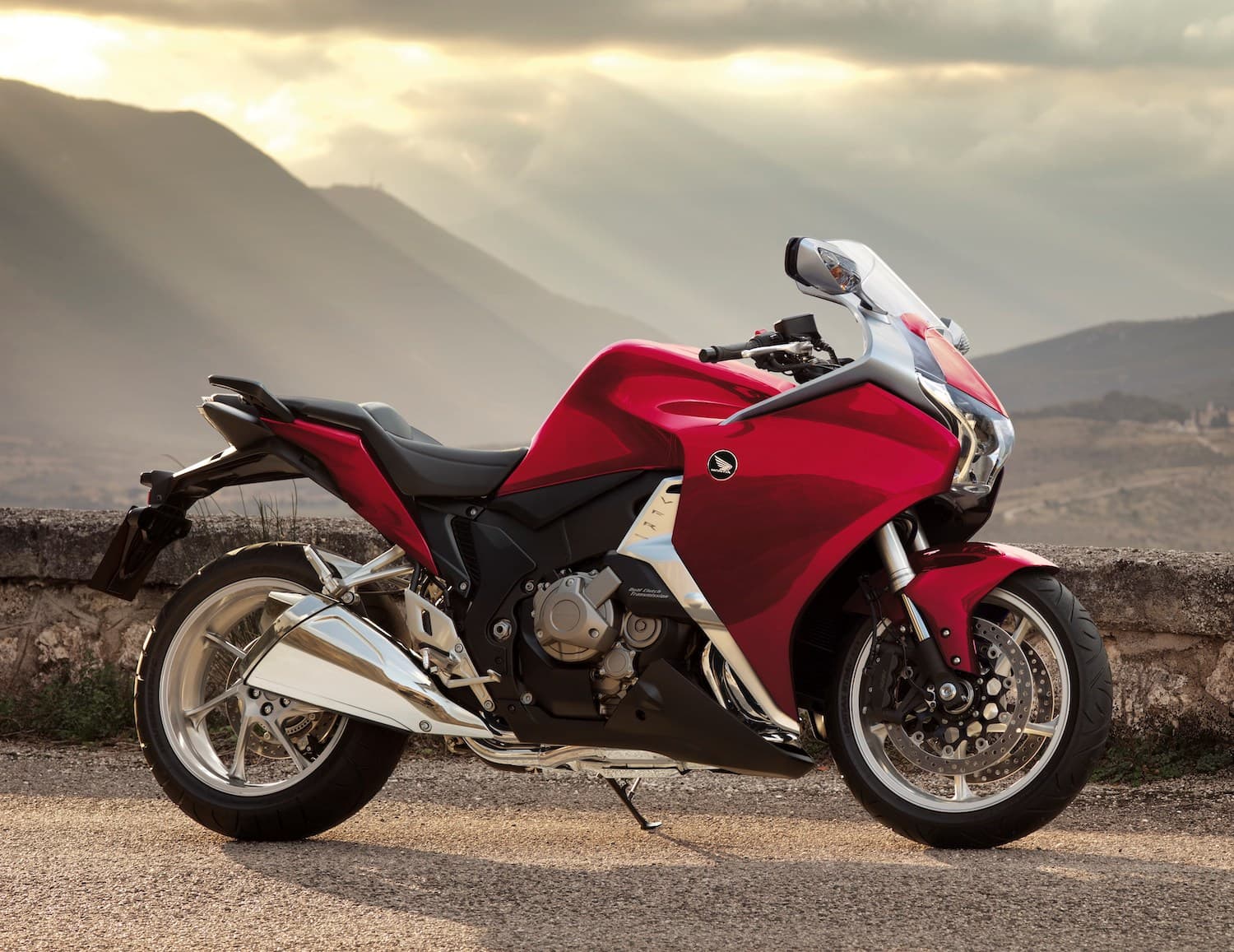
Beyond raw numbers, the VFR1200F introduced groundbreaking technology, including Honda’s first production dual-clutch transmission (DCT).
For U.S. riders seeking high-speed touring comfort with superbike-level thrust, the VFR1200F offered a unique proposition one that prioritized smooth, relentless power delivery over high-rev theatrics.
The Honda VFR1200F sports-tourer represents the culmination of more than 35 years of Honda V4 engineering, expanded to a 1237cc engine and wrapped in large, aerodynamic bodywork. It features modern technology such as a ride-by-wire throttle, shaft drive, ABS, and, optionally, Honda’s Dual Clutch Transmission (DCT).
Despite its impressive engineering, the VFR1200F was never universally loved for its looks, attracting significant criticism online when it launched. It also didn’t “move the game on” in quite the way a brand-new Honda V4 might have been expected to. A few minor flaws didn’t help its reputation either.
For 2012, Honda updated the VFR with revised styling, traction control, increased torque, improved comfort, and extended fuel range, replacing the 2010–2011 VFR1200F.
These qualities make the VFR1200F a strong contender in the used sports-tourer market. Between 2010 and 2016, buyers could also opt for the DCT-equipped automatic version, broadening its appeal.
The VFR1200F is not a bad bike, quite the opposite in fact: it’s a very good one. The natural ergonomics are typically Honda; the big V4 deliciously tractable and charismatic; the suspension and brakes good without dazzling. Whilst the whole bike is undeniably big and heavy, it is however stable, predictable and classy.
“This is a big-motorway mile muncher, very much in the BMW K1300S mould, but with a uniquely slick Honda gloss. The only thing that disappoints, slightly, is that the VFR has never been, not even when new, bang up to date.
6. Honda Gold Wing (1800 Series)
While rarely mentioned in performance conversations, the modern Honda Gold Wing deserves recognition for sheer engine output.
Its 1,833cc flat-six produces around 125 horsepower, which is remarkable considering its touring-focused mission and massive curb weight.
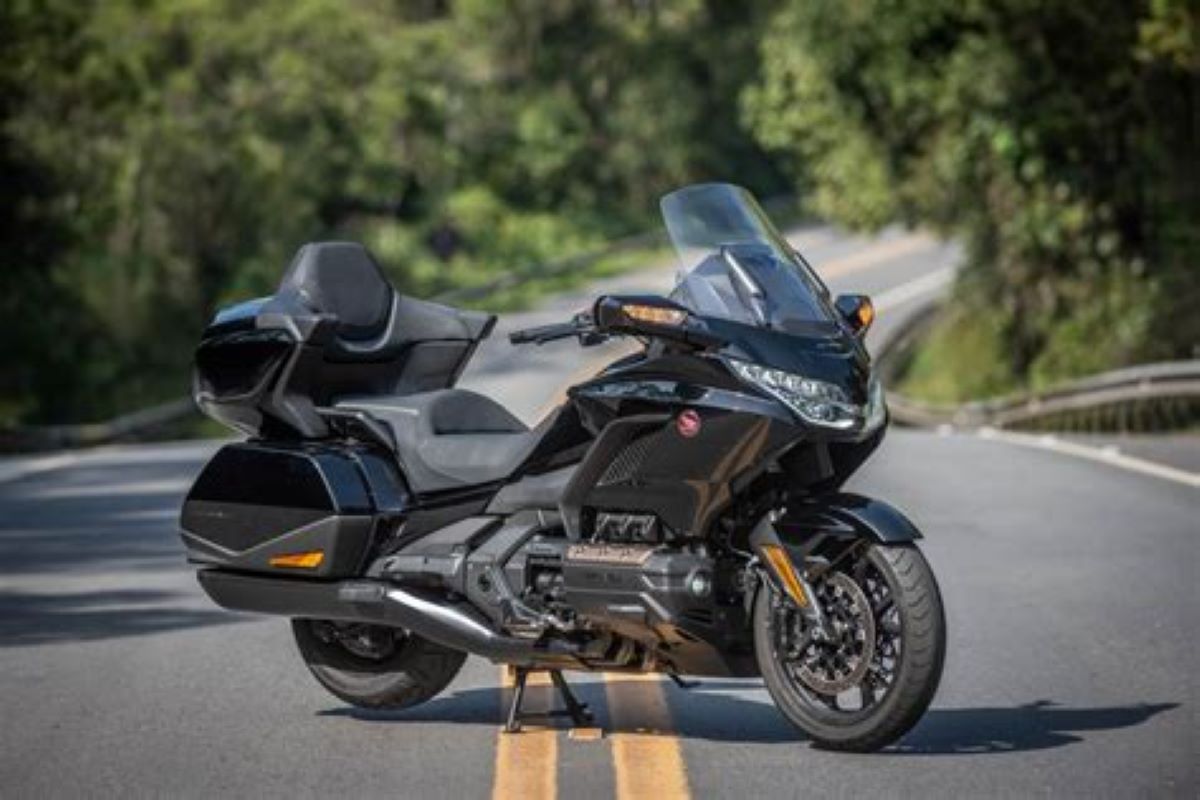
What makes the Gold Wing powerful is how effortlessly it moves nearly half a ton of motorcycle, rider, and luggage.
Rolling acceleration is deceptively quick, especially at highway speeds common across the U.S. interstate system. Few motorcycles demonstrate usable power as convincingly, making the Gold Wing a silent giant in Honda’s lineup.
Also Read: 5 Limited-Edition Cars Now Worth More Used vs 5 Once-Popular Ones Worthless
7. Honda CB1300 Super Four
The CB1300 Super Four is a muscle bike in the purest sense. Powered by a 1,284cc inline-four producing approximately 113 horsepower, it emphasizes torque-rich acceleration over top-end theatrics.
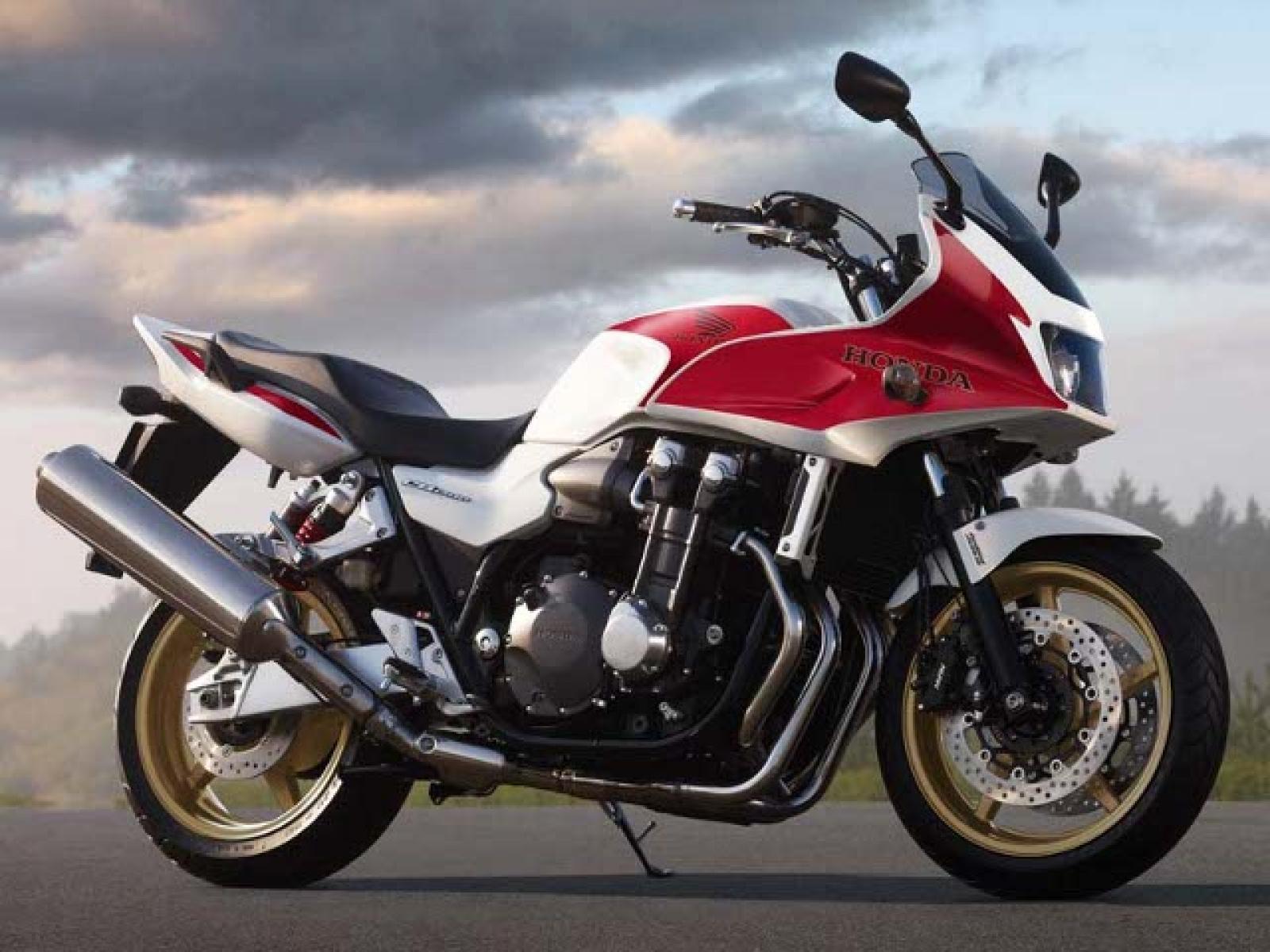
Although never officially sold in the U.S., it remains highly regarded among American enthusiasts who import or admire Japanese domestic market machines.
Its power delivery is immediate, muscular, and deeply satisfying proof that Honda’s engineering excellence extends well beyond fully-faired sportbikes.
Honda’s devotion to the inline-four engine is well-known. Since the brand’s earliest experiments, the engine has been a cornerstone of its high-end motorcycles, continually evolving as engineers extracted more power and refinement over the years.
What is coming to an end, however, is the production of the “BIG-1”, the nickname affectionately given to Honda’s largest inline-four, the CB1300 Super Four. After an incredible 33-year run, Honda has confirmed that production will cease in 2025.
The “Super Four” name traces back to 1992 with the CB1000, following the introduction of the BIG-1 concept. Honda then increased displacement to create the CB1300 Super Four, which has remained one of the largest inline-four motorcycles produced by the Japanese manufacturer.
For 2025, Honda is celebrating the model’s legacy with the CB1300 Final Edition. The Final Edition comes in two versions: the CB1300 Super Four and the CB1300 Super Four Bol D’or. The Super Four is a naked sports bike, while the Bol D’or adds a quarter-fairing for a slightly more aggressive, sporty appearance. Both versions are offered in a base model and an SP variant.
The base models feature a new Graphite Black colorway, finished in dark gloss throughout, while the SP models take a contrasting approach with a bright Pearl Sunbeam White base, accented with striking red inserts.
Mechanically, the Final Edition remains identical to the standard CB1300. The heart of the bike is the 1,284cc inline-four engine, producing 111 horsepower and 82 pound-feet of torque, all delivered below 8,000 RPM. The result is a claimed fuel efficiency of 65 miles per gallon, which is remarkably close to Honda’s single-cylinder CB300R.
The chassis sticks to the fundamentals: a double-cradle frame housing the four-cylinder engine, front suspension provided by 43 mm Showa telescopic forks, and dual rear shocks, all adjustable. Braking is handled by dual 310 mm front discs and a 256 mm rear disc with Nissin calipers.
The SP variant steps up the equipment with Öhlins suspension and Brembo monobloc front calipers, enhancing both performance and feel. Honda has always kept the CB1300 close to its heart, treating it as something of a passion project. Consequently, the Final Edition will be exclusive to the Japanese market, priced at approximately $11,600.
8. Honda VTR1000 SP-1 / SP-2 (RC51)
The RC51 was Honda’s answer to Ducati’s V-twin dominance in World Superbike, and it arrived with authority. Its 999cc V-twin produced around 133–136 horsepower, which may seem modest today but was devastatingly effective in its time.
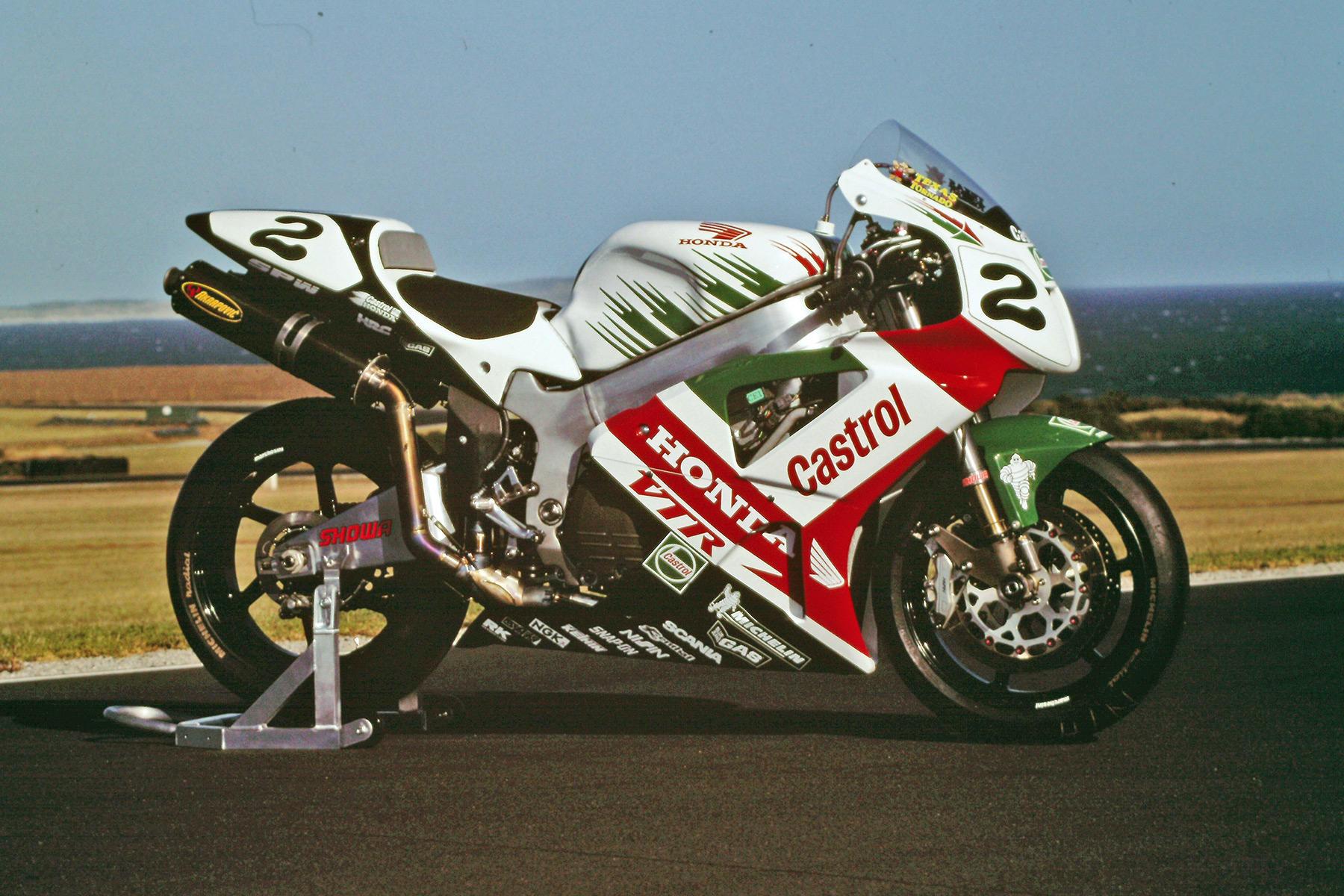
More importantly, the RC51’s power delivery was brutally direct. Massive midrange torque made it a favorite among aggressive riders, and its racing pedigree gave it instant credibility in the U.S. sportbike scene.
The RC51 remains one of Honda’s most characterful and physically demanding high-performance motorcycles.
Back in the day, World Superbikes was a battleground between 750cc inline-fours, typically from Japanese manufacturers, and 1000cc V-twins favored by the Italians. Between 1988 and 1999, the inline and V-four machines managed only four championship titles, highlighting their struggles.
In response, Honda created the SP-1: a 999cc, liquid-cooled, four-valve-per-head “Japcati” that combined superb aesthetics, top-tier build quality, and road practicality similar to the Ducati 996, but at a lower price.
The SP-1 made an immediate impact, winning the WSB championship in its debut season with Colin Edwards. On the road, however, the bike was notoriously snatchy, delivering hair-raising performance if you dared twist the throttle.
The introduction of the SP-2 addressed many of these concerns, particularly with new, larger injector bodies that improved low-end tractability and ease of use, helping Edwards secure a second title.
While the SP-2 remains officially available, it is now an expensive, underpowered V-twin alternative compared to modern 1000cc inline-fours. As a used bike, though, it represents a compelling option for enthusiasts seeking a high-class, race-bred machine.
After the initial snatchiness of the SP-1, the engine pulls strongly from 4,000 rpm, dips slightly due to emissions tuning, and then rockets toward its 120bhp top end along an almost 45-degree line.
The SP series thrives on high revs, which adds to the fun. The major difference between the SP-1 and SP-2 is the larger throttle bodies, which give a smoother low-end delivery and more manageable performance for road use. Routine servicing is recommended every 4,000 miles, with a major service at 16,000 miles to inspect valve clearances.
Many owners advise keeping a careful eye on oil levels, as the SP series can be thirsty. Some riders report tapping noises from the top end when opening the throttle on both SP-1 and SP-2 models. This is normal and should not be confused with cam-chain tensioner issues, as the SP series uses gear-driven cams.
There have been reports of SPs stalling or running poorly. If you are considering a purchase, check how long the fuel has been in the tank and when the bike was last serviced, owners note that old fuel and aged spark plugs are the most common causes of poor running.
A few owners have reported electrical issues with aftermarket alarms or immobilizers, which in some cases can fry wiring or cause the ignition to cut out. If such systems are installed, it is essential to ensure a professional installation to avoid these problems.
9. Honda NRX1800 Valkyrie
Before the Rune, there was the original Valkyrie. Sharing the same flat-six architecture as the Gold Wing, the Valkyrie produced around 100 horsepower, which was enormous for a cruiser in the late 1990s.
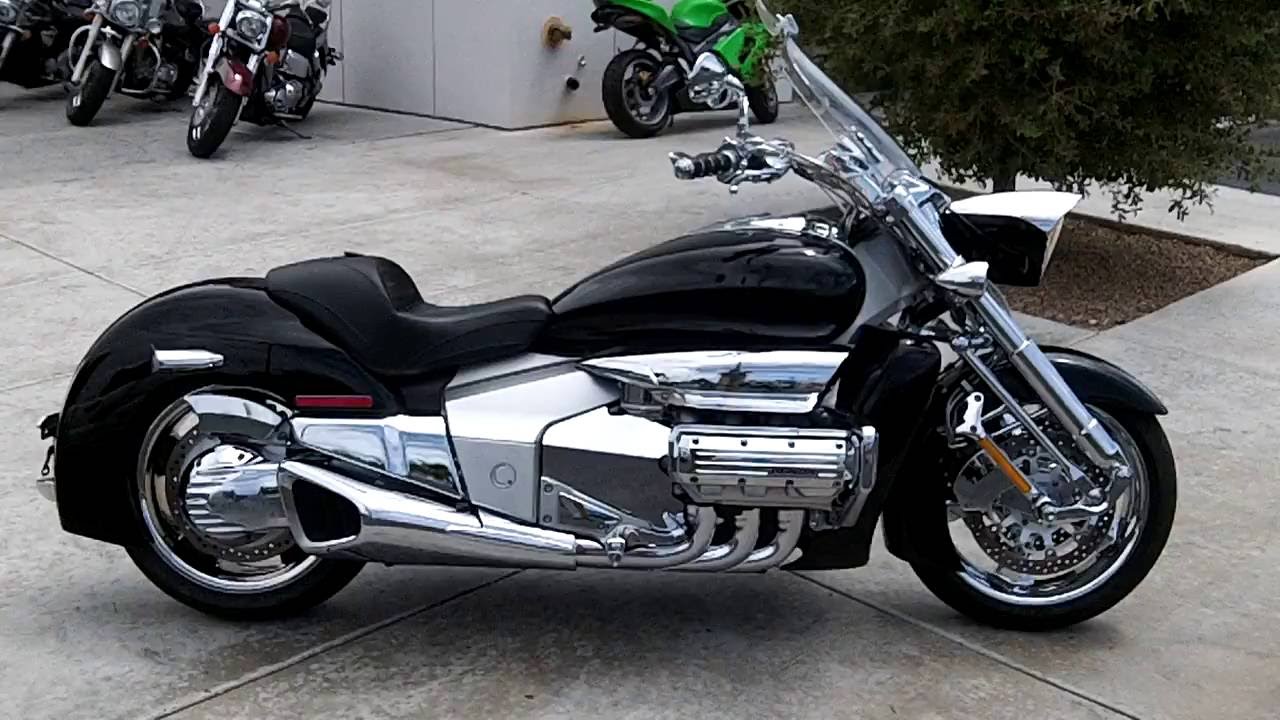
What set it apart was its acceleration. With minimal bodywork and a relatively lighter chassis, the Valkyrie could surprise sportbike riders at stoplights.
In American cruiser culture, it carved out a niche as a performance-oriented alternative to V-twin-dominated lineups.
The Honda NRX1800 Valkyrie Rune was a limited-edition motorcycle produced by Honda between 2004 and 2005 at the company’s Marysville, Ohio plant. Powered by a massive 1,832cc engine, the Rune marked a significant departure from the design and purpose of the original Valkyrie, blending raw power with a striking, futuristic aesthetic.
The 2005 Valkyrie Rune featured a bold and eye-catching design, including a wide, angular front fairing, an extended wheelbase, and a low, streamlined rear end. A single-sided swingarm further contributed to its distinctive, sculpted look, setting it apart from other cruisers of the era.
In terms of features, the NRX1800 Valkyrie Rune was equipped with a fully digital instrument panel displaying speed, engine rpm, fuel level, and trip information.
The bike also included a teardrop-shaped fuel tank, five-spoke cast aluminum wheels, a solo seat, and pulled-back handlebars designed to offer a comfortable riding position while complementing the machine’s aggressive, forward-leaning stance.
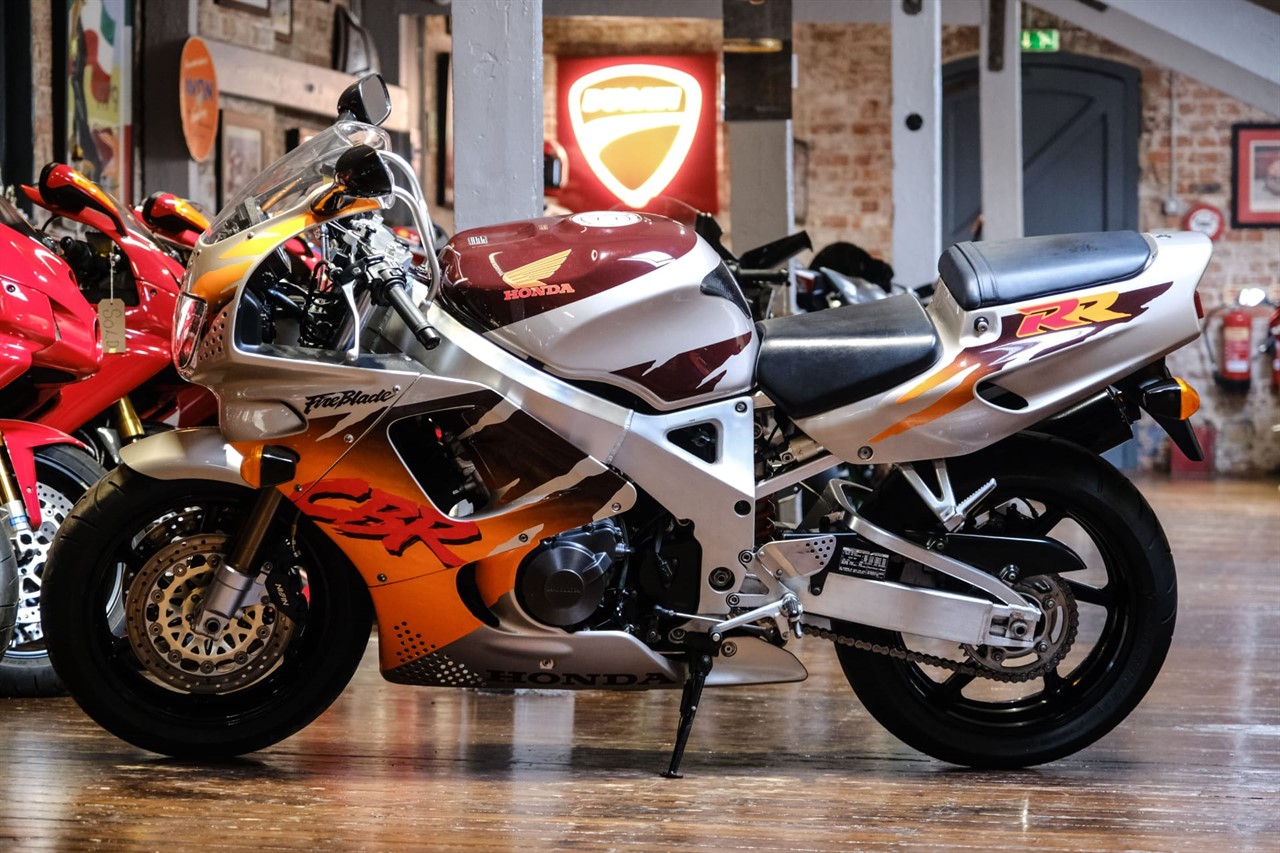
10. Honda CBR900RR Fireblade (Original)
The original CBR900RR Fireblade may not top horsepower charts by modern standards, but its inclusion is essential. Producing around 122 horsepower, it redefined what “power” meant by pairing output with unprecedented lightness.
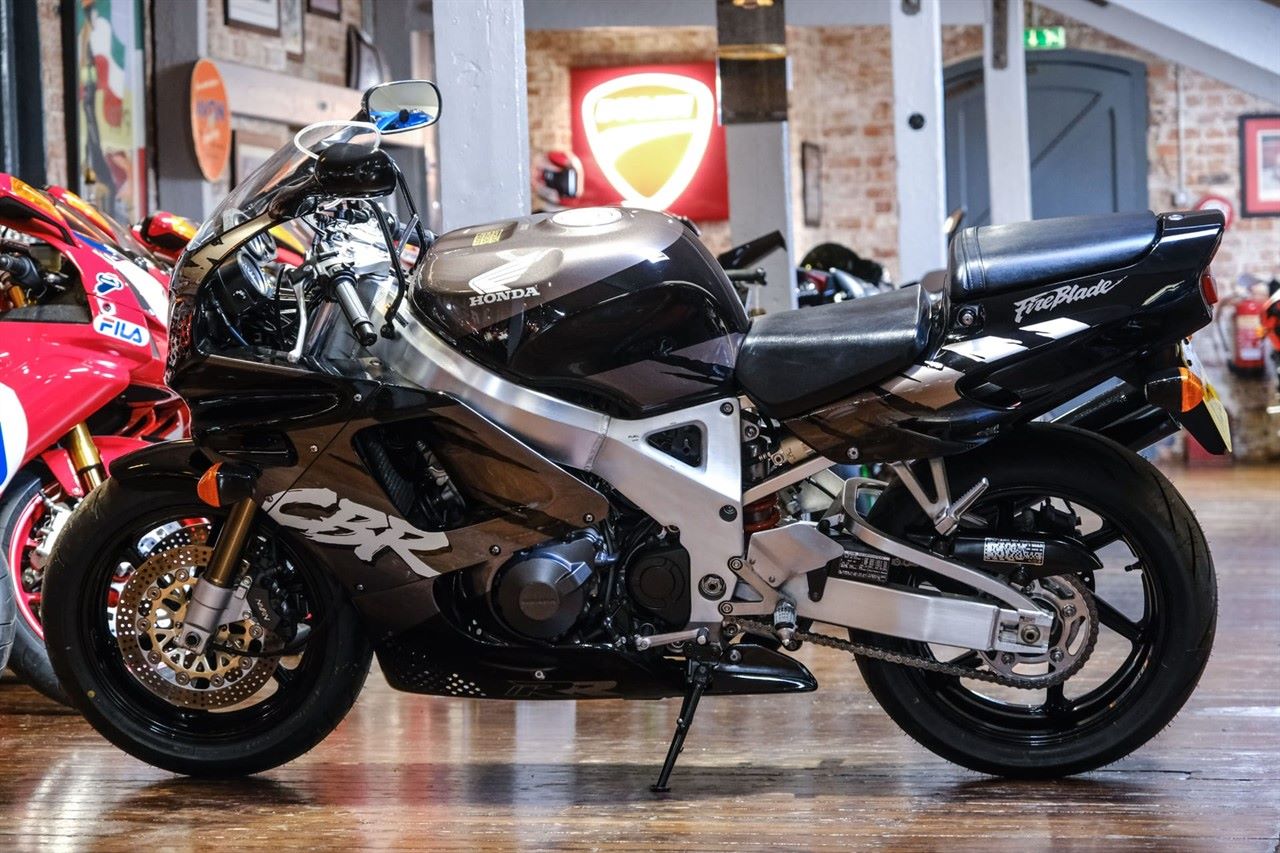
For American riders in the 1990s, the Fireblade felt faster than more powerful competitors because it used its power so efficiently.
It laid the foundation for every high-performance Honda that followed, proving that smart engineering could outperform brute force alone.
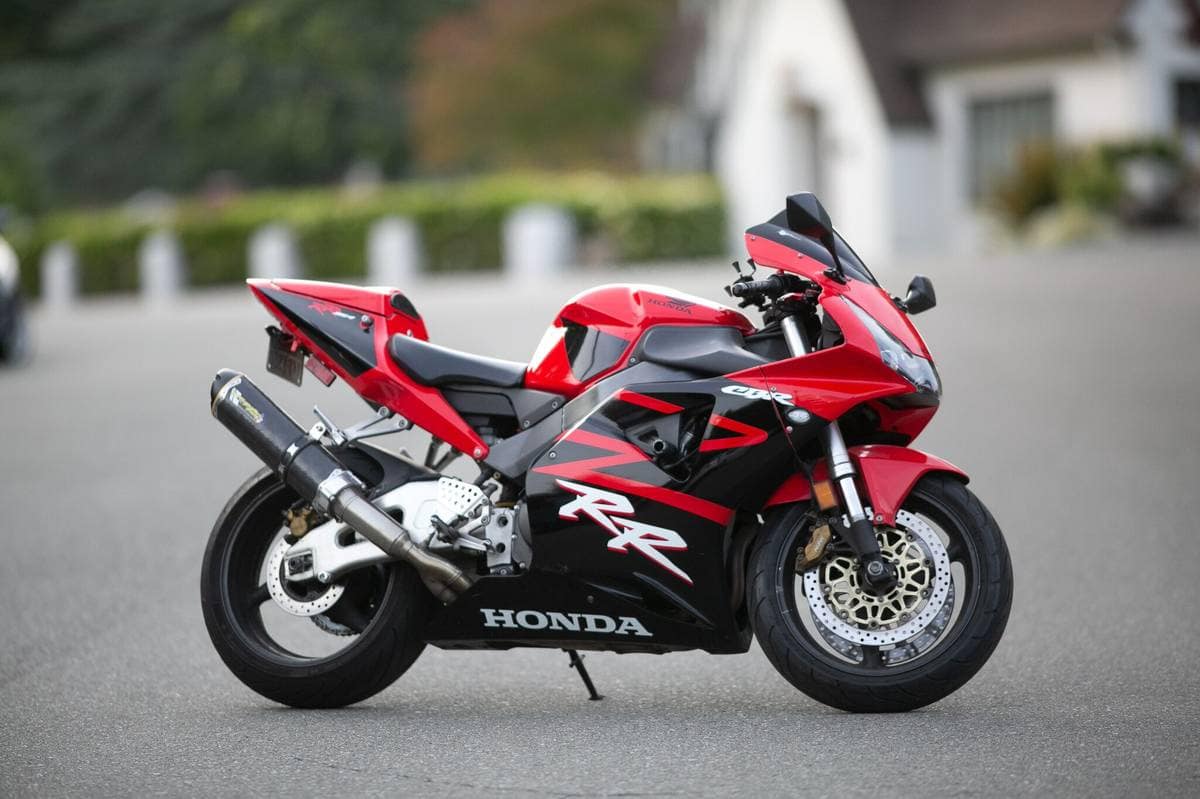
11. Honda CBR954RR Fireblade
The CBR954RR represented the peak of the original Fireblade philosophy before the shift toward heavier, more powerful liter bikes.
With approximately 150 horsepower and a remarkably light chassis, it delivered one of the best power-to-weight ratios of its era.
Many U.S. riders still regard the 954RR as one of the finest sportbikes ever made a machine that blended usable street power with track-ready aggression. Its balance, reliability, and responsiveness continue to earn it legendary status among Honda enthusiasts.
Honda’s most powerful motorcycles tell a story of evolution rather than excess. From the speed-obsessed Super Blackbird to the race-bred CBR1000RR-R and the torque-rich Gold Wing, Honda has consistently pursued performance through engineering discipline rather than spectacle alone.
For American riders who often demand motorcycles capable of long distances, varied terrain, and real-world reliability Honda’s approach has proven timeless.
Power, after all, isn’t just about numbers. It’s about how confidently a motorcycle delivers that performance day after day. And in that regard, Honda’s most powerful motorcycles stand among the greatest ever produced.