

The 2000s marked a golden era for automotive enthusiasts, particularly those with a passion for exclusive, high-performance machinery. While mainstream manufacturers focused on mass production, a select group of boutique automakers and established brands created limited-run masterpieces that pushed the boundaries of speed, engineering, and design.
These low-production vehicles represented the pinnacle of automotive achievement, combining cutting-edge technology with artisanal craftsmanship.
Low-production cars occupy a special place in automotive history. Typically manufactured in quantities ranging from just a handful to a few hundred units, these vehicles were never intended for the masses.
Instead, they served as technological showcases, brand halo vehicles, or passion projects brought to life by visionary engineers and designers.
The 2000s saw an unprecedented surge in these exclusive machines, as advances in materials science, aerodynamics, and powertrain technology enabled smaller manufacturers to compete with and often surpass the performance of traditional supercars.
From the legendary Bugatti Veyron that shattered speed records to obscure European boutique creations that flew under the radar, these vehicles represented automotive excellence in its purest form. Many featured hand-built engines, carbon fiber monocoques, and price tags that exceeded several million dollars.
These weren’t just fast cars; they were rolling works of art, investment pieces, and statements of technological prowess. Join us as we explore twelve of the most extraordinary speed machines from this remarkable decade.
1. Bugatti Veyron 16.4 (2005-2015)
The Bugatti Veyron 16.4 stands as one of the most significant automotive achievements of the 21st century, redefining what was possible in a road-legal production car.
When it debuted in 2005, the Veyron didn’t just break records it obliterated them, reaching a top speed of 253 mph and accelerating from 0-60 mph in just 2.5 seconds.
At its heart sat an 8.0-liter quad-turbocharged W16 engine producing an astonishing 1,001 horsepower, a figure that seemed almost fictional at the time.
The engineering challenges Bugatti overcame were extraordinary. The Veyron required ten radiators to manage cooling, a seven-speed dual-clutch transmission to handle the immense power, and specially developed Michelin tires that could withstand sustained speeds exceeding 250 mph.
When the active rear spoiler deployed at high speeds, it generated enough downforce to keep the car stable while simultaneously acting as an air brake.
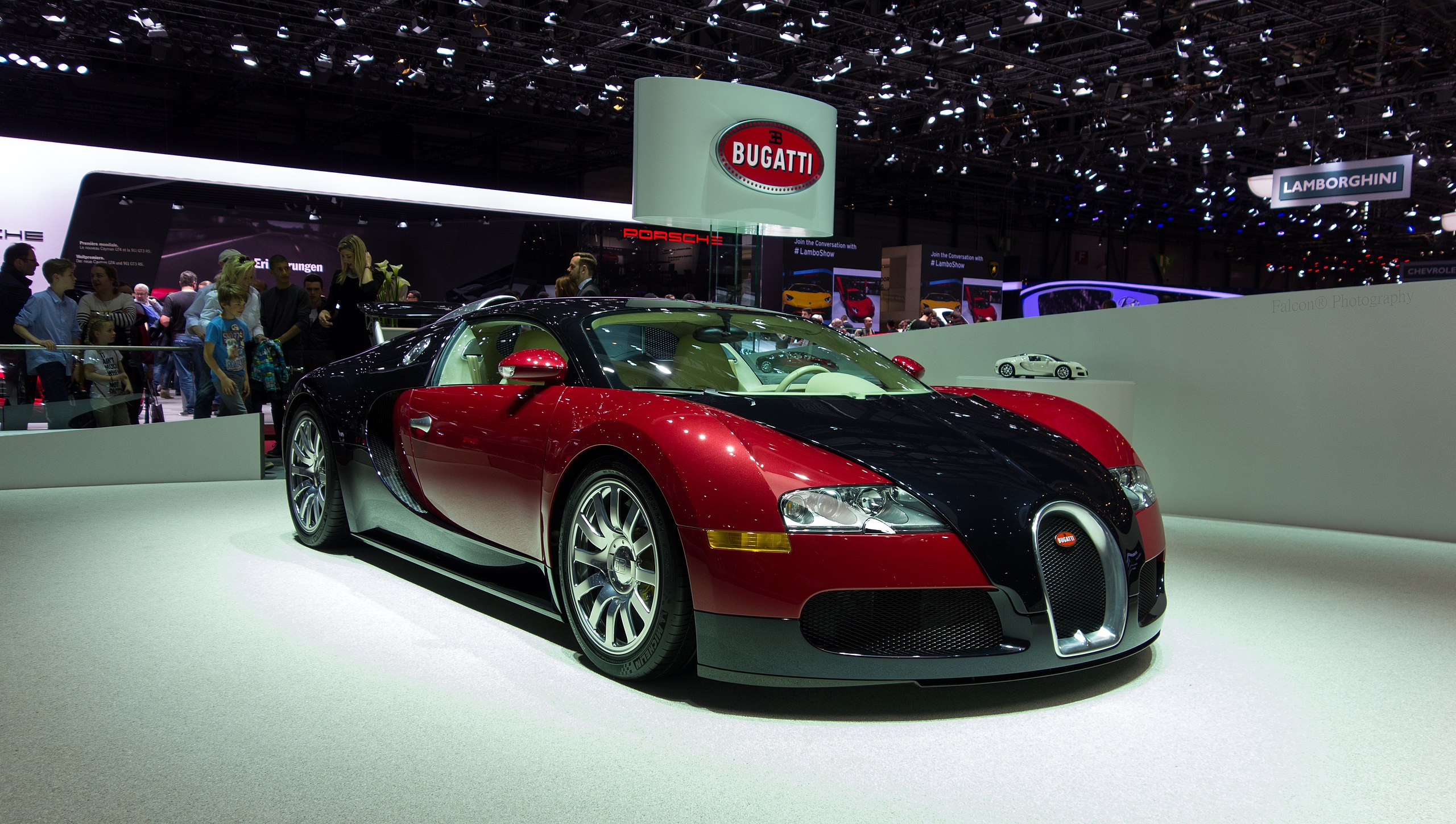
The all-wheel-drive system distributed power intelligently, making this 4,000-pound hypercar remarkably manageable despite its performance.
Volkswagen Group’s acquisition of Bugatti enabled this moonshot project, with estimates suggesting each Veyron was sold at a significant loss despite its €1 million price tag.
The brand built just 450 units over the production run, with each car requiring meticulous hand assembly at the Molsheim facility in France. The Veyron’s interior matched its performance credentials with luxury materials, including leather, aluminum, and carbon fiber throughout.
The cultural impact of the Veyron extended far beyond automotive circles. It became a symbol of ultimate achievement and excess, appearing in music videos, movies, and the garages of celebrities and royalty worldwide.
Later variants including the Super Sport pushed performance even further, achieving 267.8 mph and claiming the title of world’s fastest production car.
The Veyron proved that with sufficient resources and engineering brilliance, automotive boundaries were merely suggestions waiting to be broken.
2. Koenigsegg CCR (2004-2006)
The Koenigsegg CCR emerged from Sweden with a singular mission: to dethrone the McLaren F1 as the world’s fastest production car. In February 2005, it succeeded, reaching 241 mph at Italy’s Nardo test track and temporarily claiming the crown before the Veyron’s arrival.
This achievement was particularly remarkable considering Koenigsegg’s status as a small, independent manufacturer operating from a former Swedish Air Force base.
Christian von Koenigsegg’s creation featured a 4.7-liter supercharged V8 engine producing 806 horsepower, representing an extraordinary power-to-weight ratio thanks to the CCR’s extensive use of carbon fiber.
The entire vehicle weighed just 2,712 pounds, approximately 1,300 pounds lighter than the Bugatti Veyron, demonstrating that raw power wasn’t the only path to extreme performance.
The engine, derived from a Ford racing unit but extensively modified by Koenigsegg, featured twin Rotrex centrifugal superchargers delivering linear power delivery without the lag associated with turbochargers.
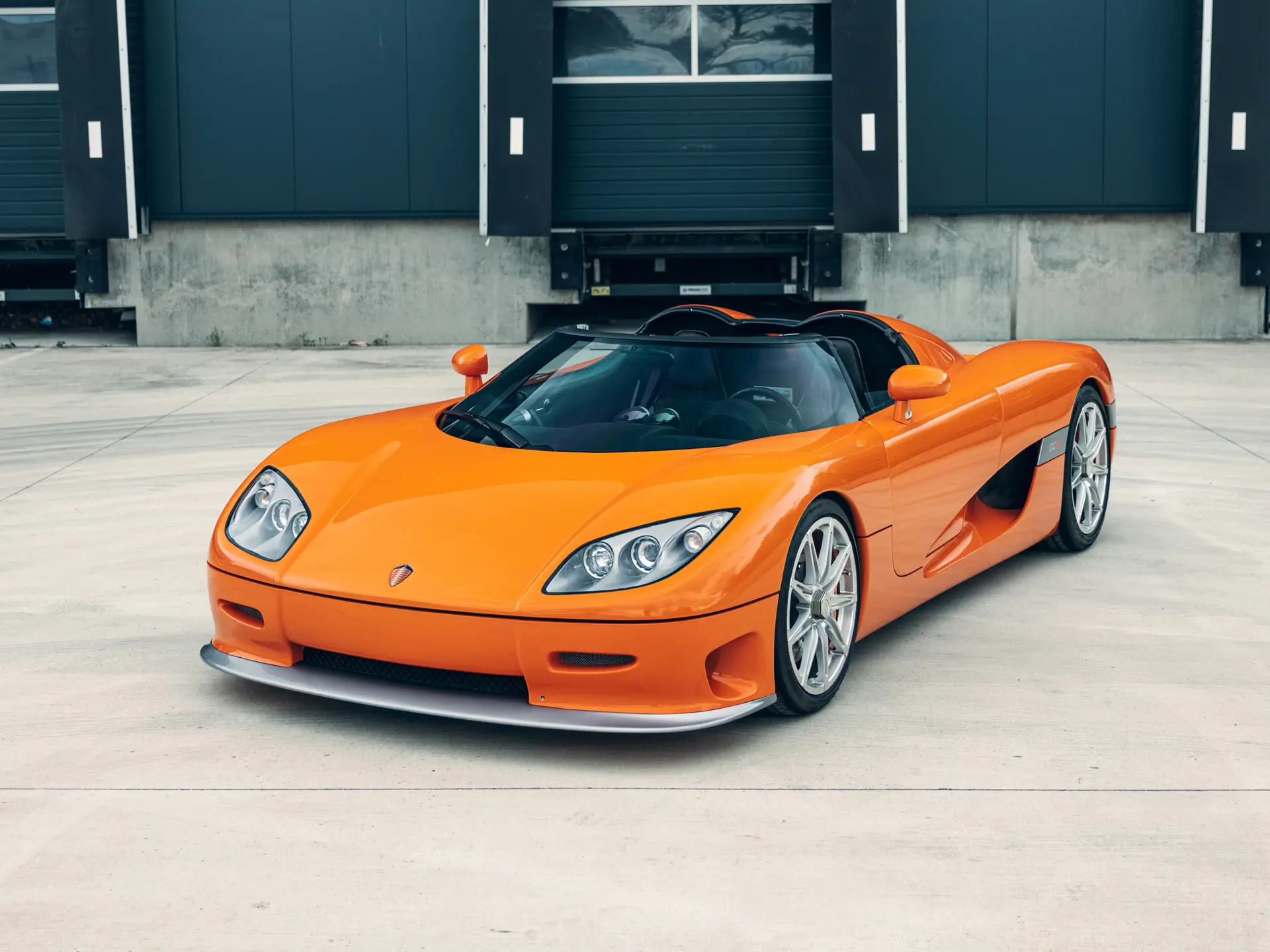
The CCR’s design balanced aesthetic appeal with aerodynamic efficiency. Its dramatic dihedral synchro-helix doors became a Koenigsegg signature, while the body’s sculpted surfaces managed airflow to generate downforce without compromising drag coefficient.
The removable hardtop allowed open-air motoring, though few owners likely exercised this option given the car’s performance focus. Inside, the CCR offered surprising comfort and luxury for a vehicle of such extreme performance, with custom-fitted leather seats and modern amenities.
With only 14 units produced, the CCR remains exceptionally rare. Each car was essentially bespoke, with Koenigsegg accommodating customer requests for customization.
This limited production run ensured exclusivity while establishing Koenigsegg’s reputation as a serious hypercar manufacturer. The CCR proved that innovation and determination could enable a small company to compete with and briefly surpass the industry’s giants.
It laid the foundation for Koenigsegg’s future success and established the brand’s philosophy of creating the ultimate driving machines regardless of constraints.
3. Saleen S7 Twin Turbo (2005-2009)
America’s answer to European exotics arrived in the form of the Saleen S7 Twin Turbo, a supercar that proved American manufacturers could compete at the highest levels of performance.
The twin-turbocharged evolution of Saleen’s naturally aspirated S7 produced 750 horsepower from its 7.0-liter V8 engine, launching the car to 60 mph in 2.8 seconds and achieving a top speed of 248 mph, making it one of the fastest production cars of its era.
Steve Saleen’s vision created America’s first true mid-engine supercar designed from a clean sheet. The S7 Twin Turbo featured a tube frame chassis clothed entirely in carbon fiber bodywork, with every surface optimized for aerodynamic performance.
The body generated significant downforce through its sculpted underbody, rear diffuser, and distinctive rear wing, allowing the S7 to corner at speeds that rivaled purpose-built race cars. The doors opened butterfly-style, and the interior, while race-focused, offered surprisingly good ergonomics and visibility.
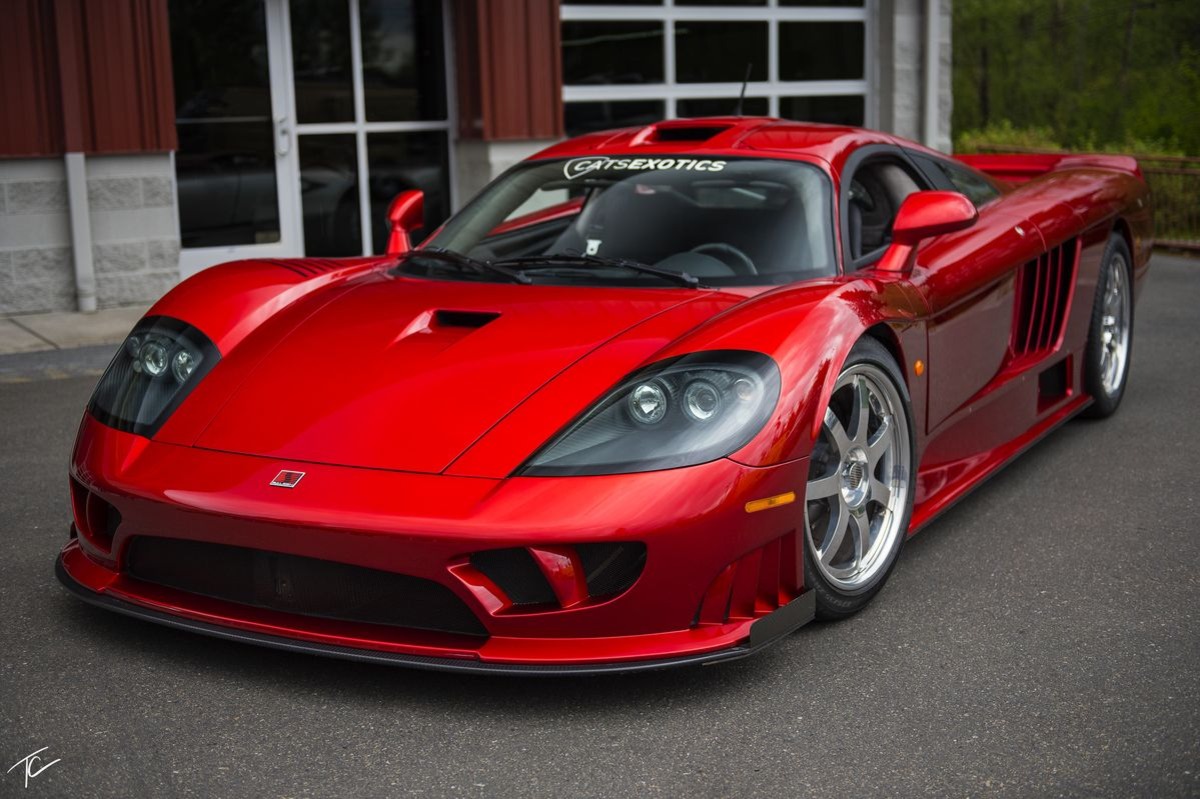
The engineering sophistication belied the S7’s relatively small-scale production. The all-aluminum V8 featured race-derived technology including titanium connecting rods and a dry-sump lubrication system.
The twin turbochargers were mounted high in the engine bay, visible through the rear window and serving as a dramatic visual reminder of the car’s performance potential.
Power reached the rear wheels through a six-speed manual transmission, making the S7 one of the last supercars to eschew paddle-shift automation.
Saleen produced approximately 30 Twin Turbo variants, ensuring extreme exclusivity. The company’s racing heritage informed every aspect of the S7’s development, with a competition version achieving success in international GT racing.
At nearly $580,000, the S7 Twin Turbo commanded exotic car pricing while offering performance that embarrassed vehicles costing significantly more.
It represented American automotive ambition at its finest, proving that given the right resources and vision, American manufacturers could create world-class supercars that stood proudly alongside Europe’s finest offerings.
4. Pagani Zonda F (2005-2009)
Horacio Pagani’s Zonda F represented the Argentine-Italian maestro’s pursuit of automotive perfection, blending art, science, and emotion into a package that transcended mere transportation.
Named after Juan Manuel Fangio, the legendary Argentine racing driver who mentored Pagani, the Zonda F produced 602 horsepower from its Mercedes-AMG sourced 7.3-liter V12 engine, achieving 0-60 mph in 3.5 seconds and a top speed exceeding 214 mph.
The Zonda F’s construction showcased Pagani’s obsessive attention to detail and materials science expertise. The entire monocoque was constructed from carbon-titanium, a proprietary composite that offered exceptional rigidity while minimizing weight.
At just 2,976 pounds, the Zonda F achieved a power-to-weight ratio that enabled performance rivaling cars with significantly more horsepower.
Every component received scrutiny, from the aluminum suspension components to the magnesium wheels, each designed to be as light as possible without compromising strength.
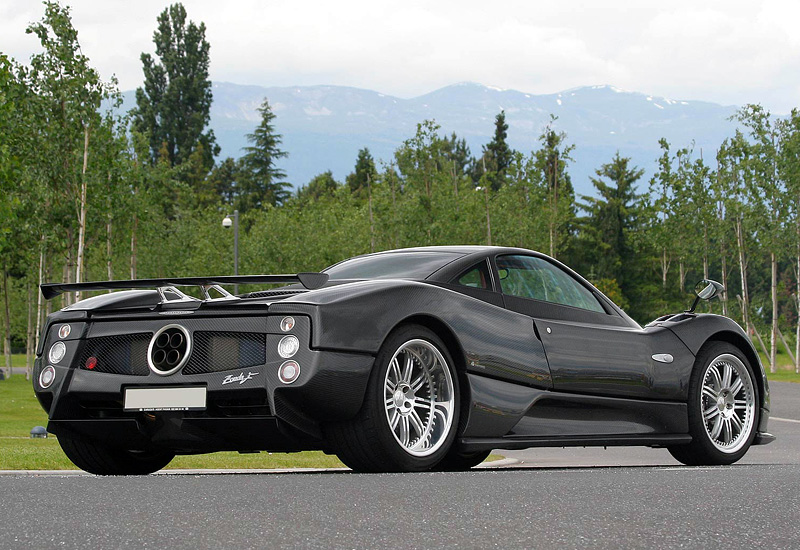
Pagani’s artistic sensibility manifested throughout the Zonda F’s design. The exterior featured flowing organic curves that seemed sculpted rather than designed, with four exhaust pipes emerging centrally like organ pipes, creating a visual and aural symphony.
The interior represented automotive craftsmanship at its zenith, with leather, aluminum, and carbon fiber combined into a cockpit that resembled a luxury watch’s internals.
Every switch, gauge, and control was machined from billet aluminum, and customers could specify virtually any detail to their preferences.
With only 25 coupes and a handful of roadsters produced, the Zonda F remained extraordinarily exclusive. Each car required months of hand assembly at Pagani’s small factory in Modena, Italy, where artisans crafted every component with jewelry-like precision.
The Zonda F’s soundtrack a howling V12 exhaust note became legendary among enthusiasts. At approximately $670,000, the Zonda F attracted collectors who appreciated automotive art as much as performance, establishing Pagani as one of the world’s premier hypercar manufacturers and cementing the Zonda’s status as a modern classic.
Also Read: Top 10 Pickup Trucks Offering the Largest Cargo Beds
5. SSC Ultimate Aero TT (2006-2013)
The SSC Ultimate Aero TT emerged from Washington state with an audacious goal: to build America’s fastest car and claim the world speed record from Bugatti.
In September 2007, it succeeded spectacularly, achieving 256.18 mph on a closed public highway in Washington, surpassing the Bugatti Veyron’s 253 mph mark.
This achievement placed tiny Shelby SuperCars (SSC) alongside automotive giants, proving that innovation and determination could overcome massive resource disadvantages.
The Ultimate Aero TT’s specifications read like fantasy: a 6.3-liter twin-turbocharged V8 producing 1,183 horsepower, rear-wheel drive, and a curb weight under 2,800 pounds thanks to extensive carbon fiber construction.
Unlike the Veyron’s sophisticated all-wheel-drive system and computer aids, the Ultimate Aero delivered its power to the rear wheels through a six-speed manual transmission, making it a handful for even experienced drivers.
The engine, built by SSC, featured custom everything block, heads, crankshaft, and twin Garrett turbochargers producing up to 16 psi of boost.
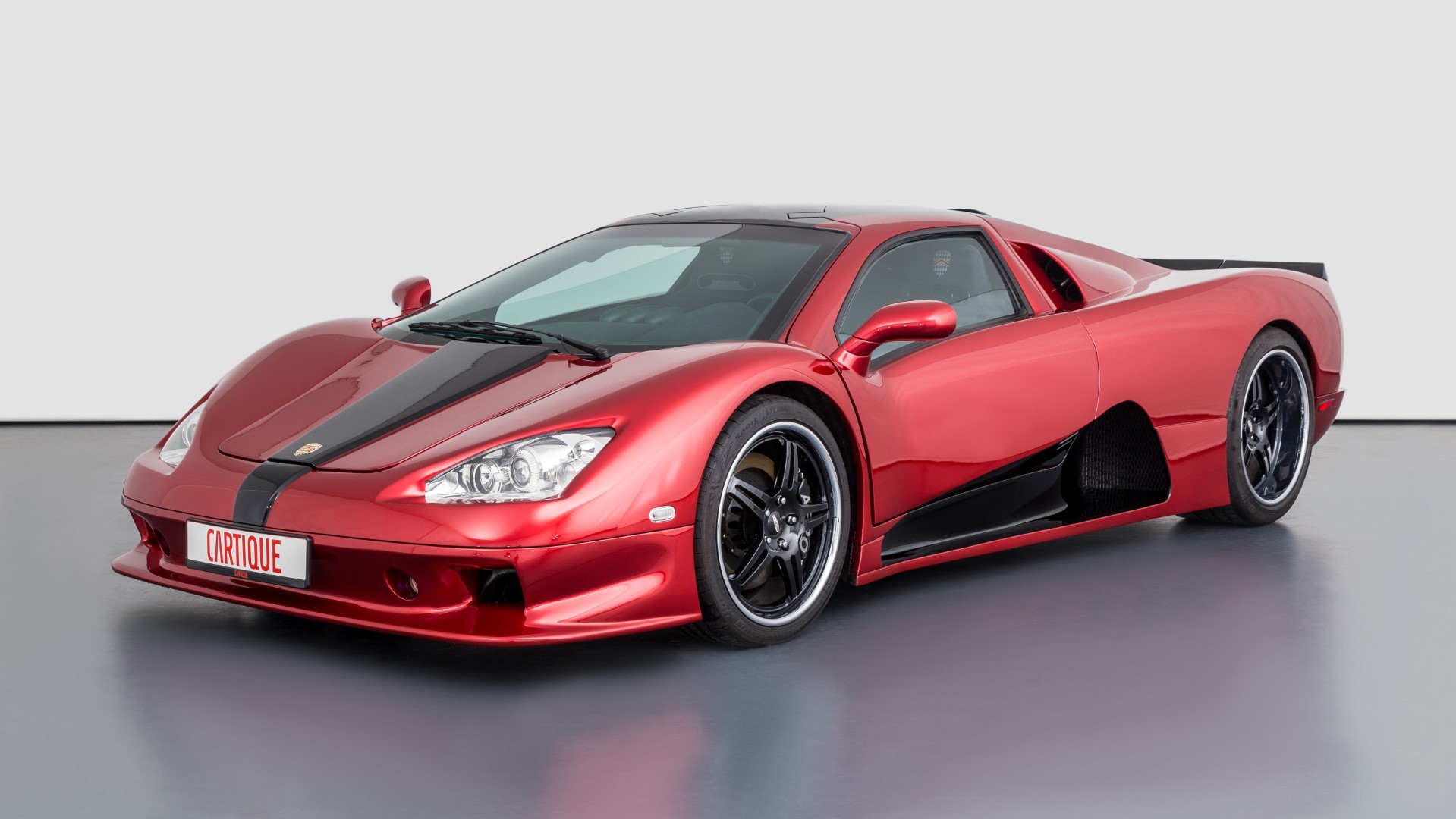
The Aero’s design prioritized function over fashion. Its wedge-shaped profile minimized drag while channels and vents managed cooling and aerodynamics.
The cockpit was surprisingly comfortable given the car’s performance focus, though amenities were secondary to weight savings. The scissor doors provided the obligatory supercar drama, while the rear-mounted intercoolers were visible through the rear window.
Every surface served a purpose, with nothing added purely for aesthetics. SSC produced approximately 20-25 Ultimate Aero TTs during its production run, ensuring extreme rarity. At around $650,000, it undercut the Veyron while offering comparable and briefly superior performance.
The company’s small-scale operation meant each car received intensive personal attention during assembly. The Ultimate Aero TT’s achievement demonstrated that speed records weren’t the exclusive domain of major manufacturers with unlimited budgets, inspiring other boutique manufacturers to pursue their own ambitious projects and enriching the automotive world with diversity and innovation.
6. Ferrari Enzo (2002-2004)
Though production began in 2002, the Ferrari Enzo dominated performance discussions throughout the early 2000s, representing Ferrari’s technological pinnacle and their tribute to company founder Enzo Ferrari.
Limited to 400 units (later 401 after Ferrari built one additional car for charity), the Enzo produced 660 horsepower from its 6.0-liter naturally aspirated V12, achieving 0-60 mph in 3.1 seconds and a top speed of 221 mph.
The Enzo incorporated Formula One technology throughout its design, from its carbon fiber monocoque to its active aerodynamics. The body generated massive downforce through its underbody diffusers, front splitter, and active rear spoiler, which adjusted based on speed and driving conditions.
Ferrari’s F1-derived electrohydraulic shift transmission delivered gear changes in just 150 milliseconds, providing sequential shift precision without a traditional manual’s compromises. Carbon-ceramic brakes, still novel in 2002, provided fade-resistant stopping power appropriate for the Enzo’s performance.
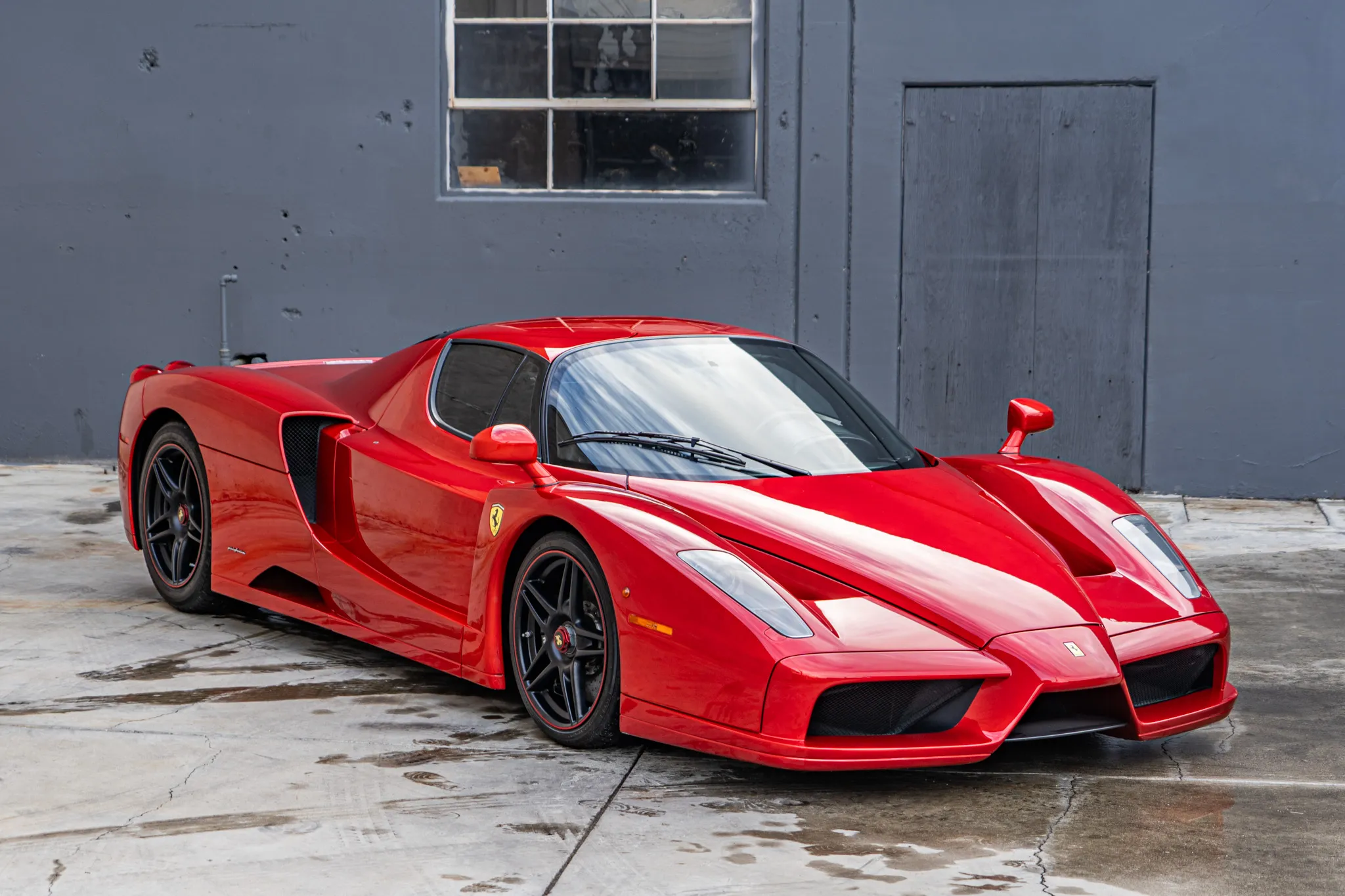
The design, while controversial at launch, represented pure aerodynamic purpose. Every vent, scoop, and surface served functional requirements, from the Formula One-style nose to the flying buttresses flanking the engine bay.
The interior was surprisingly comfortable and driver-focused, with carbon fiber seats molded to provide support during high-speed cornering. The steering wheel, borrowed directly from F1, featured multiple controls and shift paddles, creating an intimate connection between driver and machine.
At approximately $650,000, the Enzo represented Ferrari’s halo vehicle, with production intentionally limited to ensure exclusivity. Prospective buyers needed Ferrari’s approval, ensuring cars went to collectors rather than speculators.
The Enzo’s influence extended far beyond its production run, establishing design and technological directions Ferrari would follow for years. Its naturally aspirated V12 increasingly rare in an era of turbocharging provided an emotional, linear power delivery that enthusiasts celebrated.
The Enzo represented Ferrari’s purest expression of performance, unburdened by compromise or cost considerations, establishing a benchmark other manufacturers spent years attempting to equal.
7. Porsche Carrera GT (2004-2007)
Porsche’s Carrera GT represented the Stuttgart manufacturer’s most extreme road car, a vehicle that demanded respect and offered rewards proportional to driver skill. Its 5.7-liter V10 engine, originally developed for an abandoned Le Mans racing program, produced 605 horsepower while revving to 8,400 rpm, creating an intoxicating soundtrack that many consider among the finest ever produced.
With 0-60 mph achieved in 3.5 seconds and a top speed of 205 mph, the Carrera GT offered supercar performance with Porsche’s engineering precision.
The Carrera GT’s construction showcased Porsche’s racing expertise. The carbon fiber monocoque provided exceptional rigidity while weighing just 220 pounds, and the entire car tipped the scales at only 3,042 pounds.
The suspension used inboard-mounted pushrod dampers technology typically reserved for race cars optimizing geometry and unsprung weight.
Porsche equipped the Carrera GT with a six-speed manual transmission with a ceramic clutch, bucking the trend toward automated transmissions and creating an engaging, if challenging, driving experience that rewarded skill and punished complacency.
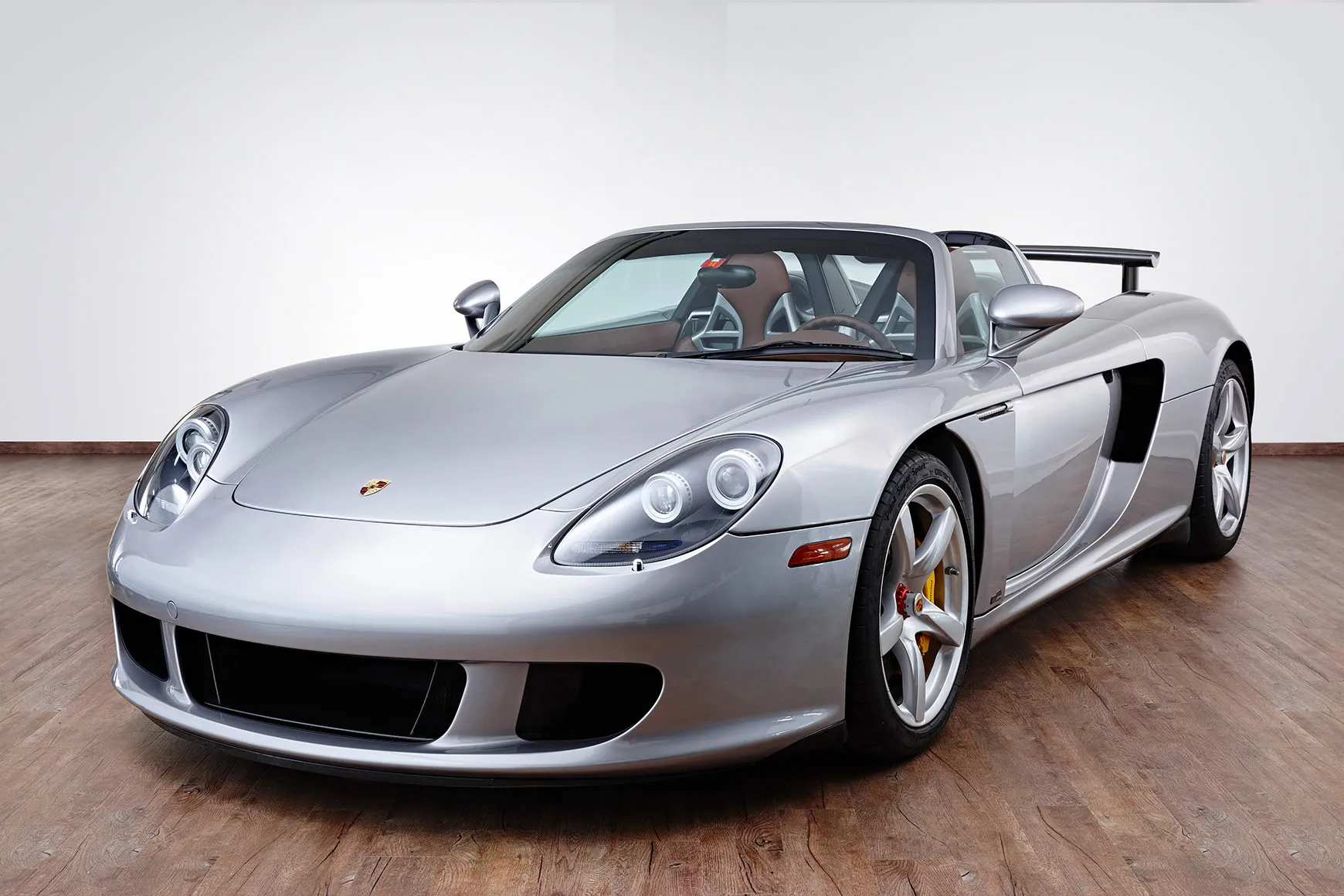
The design balanced purposeful aggression with timeless elegance. The low, wide stance communicated performance intent, while the raised rear clamshell and distinctive side air intakes managed engine cooling.
The retractable rear wing deployed automatically at speed, providing stability without compromising the clean lines when retracted. Inside, the exposed carbon fiber, magnesium shift knob, and minimalist approach created a technical atmosphere that reminded drivers of the car’s serious performance capabilities.
Porsche originally planned 1,500 units but ultimately produced just 1,270 Carrera GTs due to insufficient demand at the $440,000 price point.
This relative “volume” for a hypercar meant the Carrera GT appeared more frequently than competitors, though it remained extremely exclusive.
The manual-only transmission and lack of electronic stability control made it challenging and occasionally dangerous in inexperienced hands, contributing to its reputation as a driver’s car that demanded respect.
The Carrera GT represented Porsche’s purest performance expression, a road-legal race car that prioritized engagement over comfort, establishing itself as one of the decade’s most significant supercars.
8. Mercedes-Benz SLR McLaren 722 Edition (2007-2009)
The Mercedes-Benz SLR McLaren 722 Edition raised the already impressive standard SLR into extreme performance territory, honoring Stirling Moss’s famous victory at the 1955 Mille Miglia.
The supercharged 5.4-liter V8 produced 650 horsepower, improving upon the standard car’s 617 horsepower and enabling 0-60 mph in 3.6 seconds with a top speed of 209 mph.
Limited to 150 coupes and 150 roadsters, the 722 Edition represented the ultimate expression of Mercedes and McLaren’s collaboration.
The 722’s enhancements extended beyond raw power. Engineers reduced weight through increased carbon fiber use, replaced the standard suspension with a more aggressive setup, and fitted unique 19-inch lightweight wheels.
The brake calipers received a distinctive red finish, while the exhaust system was retuned for a more aggressive note. Inside, red stitching, carbon fiber trim, and lightweight bucket seats differentiated the 722 from standard SLRs, creating a more focused environment appropriate for the enhanced performance.
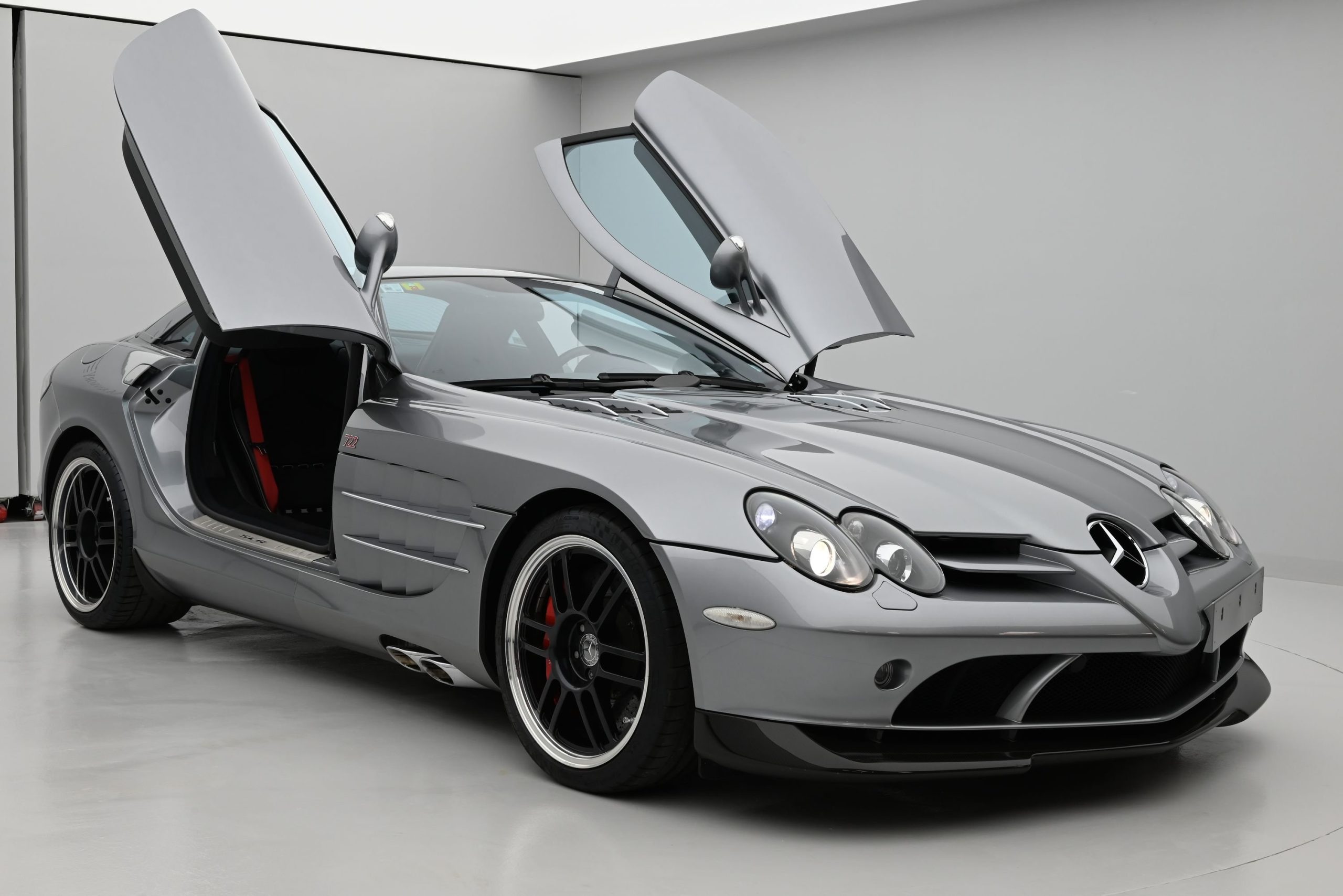
The SLR’s distinctive design, inspired by the 1955 300 SLR race car, divided opinion but undeniably turned heads. The long hood, side exhaust pipes, and dramatic gullwing doors created presence few cars could match.
The front-mounted engine layout, unusual for a modern supercar, enabled better weight distribution than expected while providing a distinct character compared to mid-engine competitors.
The carbon fiber construction combined with Mercedes luxury created a unique proposition: a supercar offering genuine long-distance comfort alongside devastating performance.
At approximately $495,000, the 722 Edition commanded a substantial premium over the standard SLR’s already considerable price. The Mercedes-McLaren partnership brought together Mercedes’ luxury expertise and McLaren’s racing heritage, though the collaboration was sometimes uncomfortable, with differing philosophies creating compromises.
The 722 Edition resolved many criticisms of the standard car, creating a more focused, aggressive machine that better satisfied driving enthusiasts.
Today, the 722 Edition is recognized as the most desirable SLR variant, representing the collaboration’s pinnacle before the partnership dissolved.
9. Maserati MC12 (2004-2005)
Maserati’s MC12 returned the Italian brand to high-performance relevance, sharing its platform with the Ferrari Enzo but creating a distinctly different personality.
The 6.0-liter V12 produced 630 horsepower, slightly detuned from the Enzo’s 660 to differentiate the brands, enabling 0-60 mph in 3.7 seconds and a top speed of 205 mph.
Limited to just 50 units, the MC12 represented one of the decade’s most exclusive vehicles, with production entirely allocated before public announcement.
The MC12’s purpose extended beyond road use Maserati built it specifically to qualify for FIA GT racing, requiring 50 road cars to homologate the racing version.
This competition focus influenced every design decision, from the dramatic aerodynamic bodywork to the carbon fiber construction. At over 16 feet long and nearly 6.6 feet wide, the MC12 was significantly larger than competitors, optimizing downforce and stability at high speeds.
The white and blue livery, inspired by Maserati’s racing heritage, became the standard finish, though customers could request custom colors.
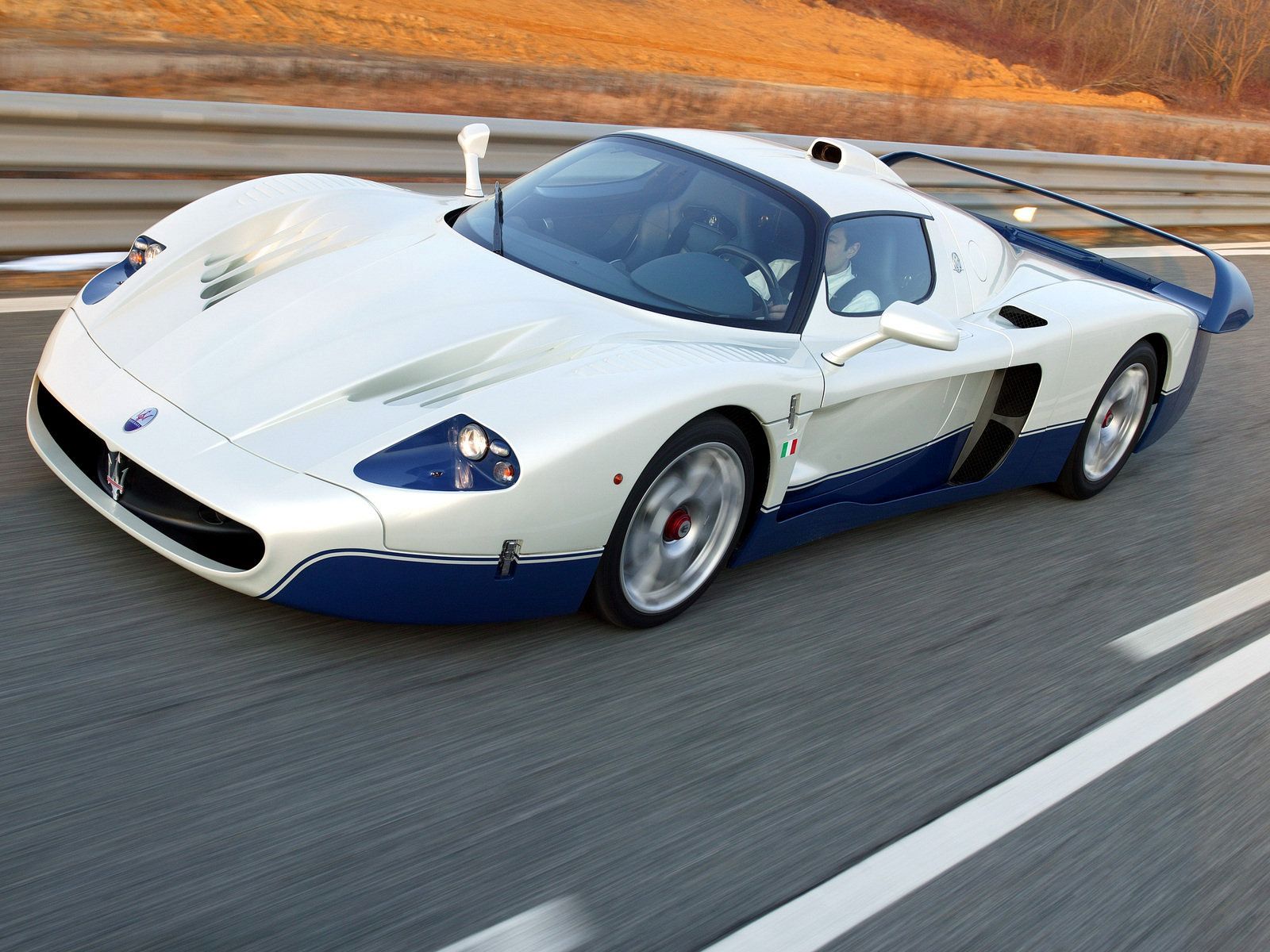
The driving experience balanced race car intensity with unexpected refinement. The V12’s glorious soundtrack, the precise handling enabled by the carbon monocoque and sophisticated suspension, and the substantial downforce created performance rivaling the Enzo despite the slight power deficit.
The sequential transmission, derived from Formula One technology, provided lightning-quick shifts. The interior, while more luxurious than pure race cars, remained purposeful, with carbon fiber, leather, and blue detailing creating a sophisticated atmosphere.
At approximately $670,000, the MC12 commanded pricing reflecting its extreme exclusivity and Ferrari-derived technology. The homologation special nature meant customers accepted practical compromises the car was too wide for many roads, challenging to see out of, and impractical for regular use.
But the MC12 was never intended as a daily driver; it was a rolling piece of motorsport history that enabled Maserati’s return to international racing.
The MC12 succeeded spectacularly in competition, winning multiple FIA GT championships and proving Maserati could compete with anyone given proper resources and ambition.
10. Ascari A10 (2006-2010)
The Ascari A10, named after legendary racing driver Alberto Ascari, emerged from British boutique manufacturer Ascari Cars with intentions to challenge established supercar hierarchy.
Its 5.0-liter BMW-sourced V8, heavily modified and enlarged from the M5’s engine, produced 625 horsepower, launching the A10 to 60 mph in 2.8 seconds with a top speed of 220 mph.
With approximately 50 units planned and likely fewer actually produced, the A10 remained exceptionally rare even among limited-production exotics.
The A10’s construction demonstrated serious engineering. The carbon fiber monocoque provided both rigidity and light weight, with total curb weight around 2,750 pounds creating an exceptional power-to-weight ratio.
The mid-engine layout optimized handling dynamics, while the aerodynamic bodywork generated significant downforce through its ground effects and active rear wing.
The suspension, derived from racing technology, offered adjustability allowing owners to tune the car for track or road use, reflecting Ascari’s racing heritage and their ownership of a private test track in Spain.
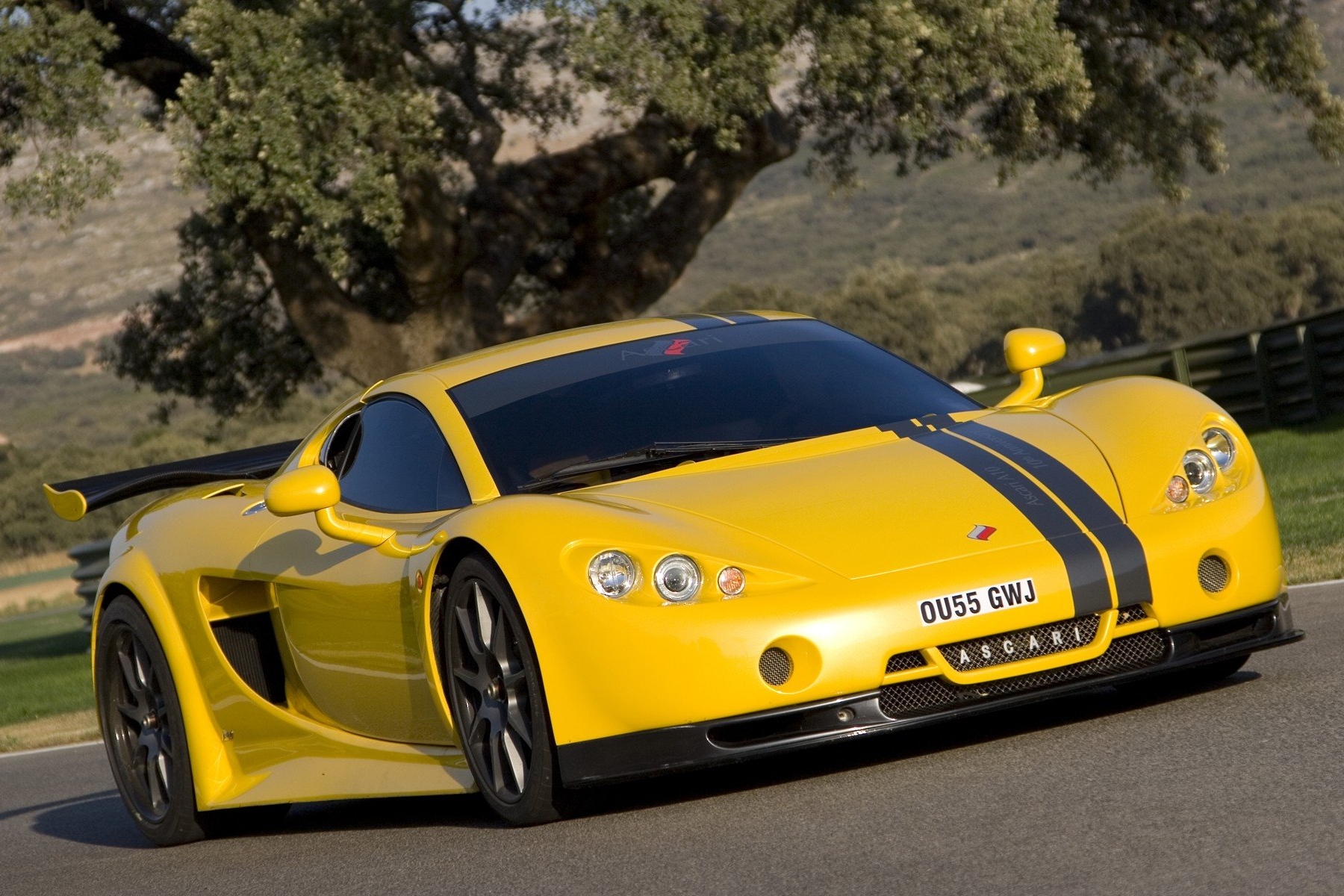
Styling-wise, the A10 featured aggressive, purposeful lines that clearly communicated performance intent. The cab-forward proportions, dramatic intakes, and sculptured surfaces created visual drama without unnecessary embellishment.
Inside, the cockpit focused on driver engagement, with carbon fiber, leather, and aluminum creating a technical environment. Visibility was surprisingly good for a low-slung supercar, and the ergonomics reflected Ascari’s racing experience in creating an environment optimized for quick lap times.
The A10’s limited production reflected both exclusivity intentions and the practical limitations of small-scale manufacturing. At approximately $650,000, it competed directly with established brands offering longer heritage and proven reliability.
Ascari’s subsequent financial difficulties and eventual cessation of operations mean A10s represent particularly rare collectibles today.
The A10 demonstrated that passionate individuals with racing heritage could create legitimate supercars competing on performance with anyone, even if commercial success proved elusive. It represented automotive ambition at its finest, prioritizing the purity of the driving experience over commercial considerations.
11. Leblanc Mirabeau (2008)
The Leblanc Mirabeau represented perhaps the decade’s most extreme expression of track-focused performance in a nominally road-legal package.
This Swiss creation produced between 700-710 horsepower from its supercharged Koenigsegg-derived 4.7-liter V8 engine, achieving 0-60 mph in approximately 2.6 seconds and a claimed top speed exceeding 230 mph.
With likely fewer than 10 units produced, the Mirabeau ranks among the rarest vehicles on this list, making definitive production figures nearly impossible to verify.
The Mirabeau’s construction prioritized lightness above all else. The carbon fiber monocoque and bodywork, combined with ruthless weight reduction throughout, resulted in a curb weight around 2,315 pounds extraordinary for a vehicle with such performance.
This weight combined with the substantial power created a power-to-weight ratio rivaling pure race cars. The aerodynamic bodywork generated massive downforce, while the suspension, derived directly from racing, offered minimal comfort but extraordinary precision on track. The six-speed sequential transmission ensured rapid shifts appropriate for the engine’s character.
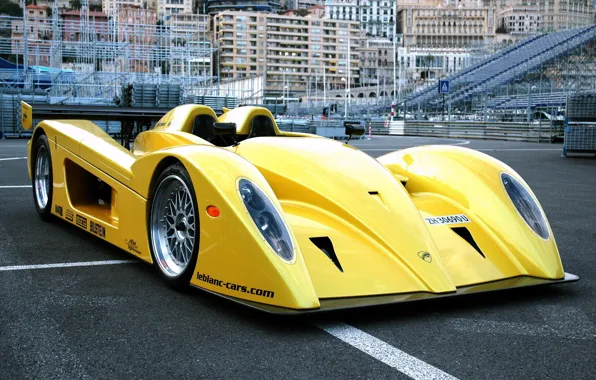
Styling-wise, the Mirabeau made no concessions to conventional beauty standards, embracing pure function. The low, wide stance, massive air intakes, and prominent aerodynamic elements created an appearance that screamed competition car.
The interior was spartan even by supercar standards, with minimal sound deadening, basic instrumentation, and race-inspired seating.
Owners understood they were purchasing track capability in a vehicle that technically could be driven on public roads, though comfort and practicality were not priorities.
At approximately $450,000, the Mirabeau undercut many competitors while offering performance few could match. The Swiss manufacturer’s tiny scale and limited resources meant each car received essentially bespoke construction, with long delivery times and limited support infrastructure.
The Mirabeau’s extreme nature and limited production ensure it remains largely unknown outside enthusiast circles, representing the ultimate expression of the boutique supercar philosophy: create the fastest, most capable vehicle possible regardless of commercial considerations or mainstream appeal, serving only those few customers who understood and appreciated such purity of purpose.
12. Spyker C8 Aileron (2008-2012)
The Dutch manufacturer Spyker crafted the C8 Aileron as their flagship model, combining aircraft-inspired design with supercar performance. Powered by Audi’s 4.2-liter V8 producing 400 horsepower (with later variants offering up to 525 horsepower), the Aileron achieved 0-60 mph in 4.5 seconds with a top speed of 187 mph.
While these figures didn’t match the most extreme entries on this list, the Aileron’s significance lay in its unique character, craftsmanship, and aviation heritage reflected in every detail.
Spyker’s aircraft background, dating to the early 1900s, influenced every aspect of the Aileron’s design. The interior featured exposed gear linkages reminiscent of vintage aircraft controls, aluminum components machined to aerospace standards, and leather work rivaling luxury watchmakers.
The six-speed manual transmission sat exposed between the seats like a fighter jet’s control stick, creating intimate mechanical connection.
The chassis used a space frame construction clothed in aluminum bodywork, prioritizing traditional craftsmanship over pure performance metrics. Each detail received obsessive attention, from the propeller-logo door handles to the turbine-inspired wheels.
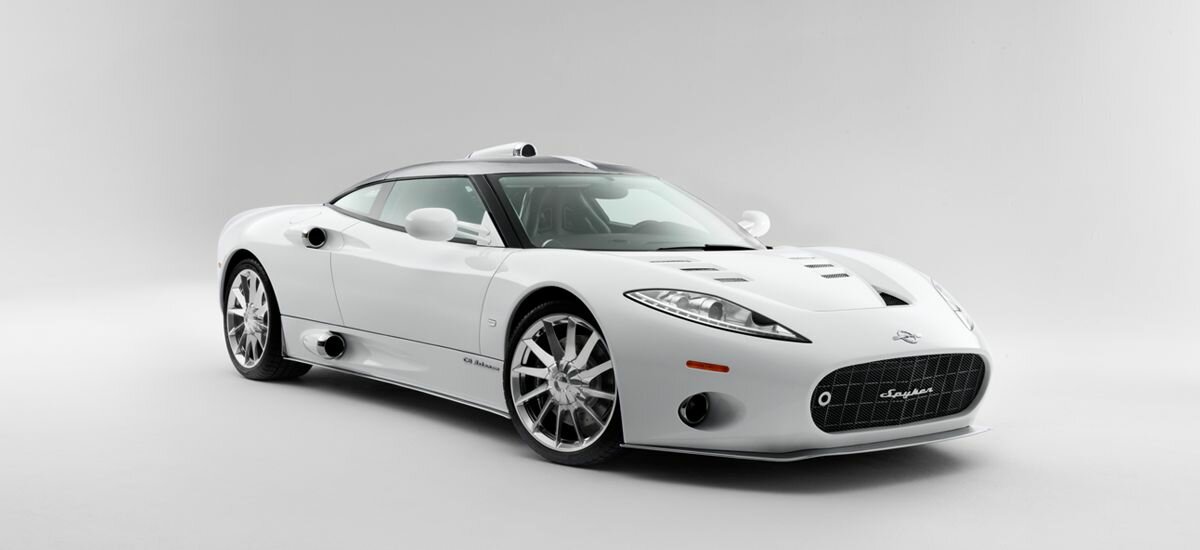
The exterior design balanced elegance with purposeful aggression. The long hood, short deck proportions, and dramatic side air intakes created presence, while the integrated rear spoiler provided downforce without compromising aesthetics.
The mid-engine layout enabled excellent handling dynamics, and while the Aileron wasn’t the fastest car available, its engaging character and unique personality created appeal beyond raw numbers.
The driving experience emphasized involvement and craftsmanship over outright speed, attracting customers who appreciated automotive art as much as performance.
With approximately 50 units planned across all variants, the Aileron maintained extreme exclusivity. At approximately $250,000-$300,000 depending on specification, it occupied a unique market position less expensive than most competitors while offering unmatched craftsmanship and character.
Spyker’s subsequent financial troubles and multiple ownership changes ensure C8 Ailerons remain rare, distinctive machines. The Aileron represented the automotive equivalent of haute horlogerie, emphasizing art, craftsmanship, and heritage over pure performance, proving that speed alone doesn’t define greatness in the supercar world.
Also Read: Top 12 Buick Performance Cars That Prove Speed Isn’t Just for Muscle Brands
