
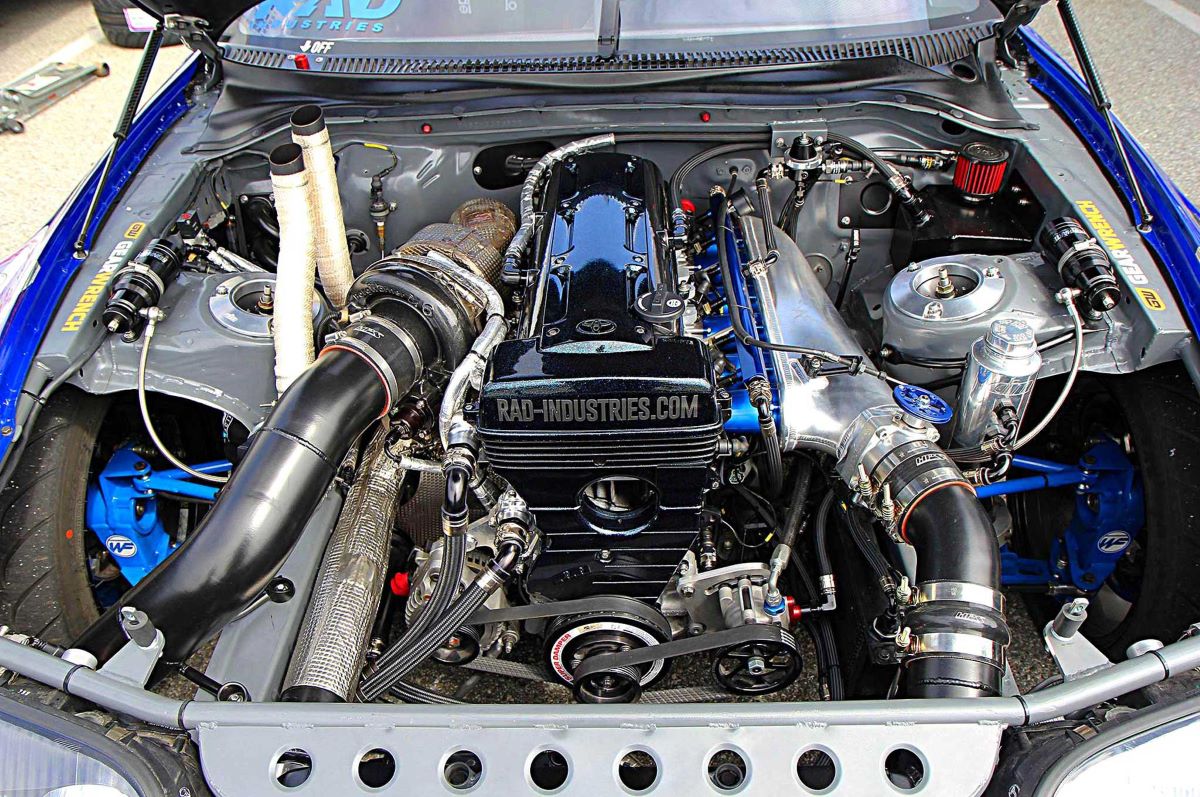
The six-cylinder engine has long represented the perfect balance between performance and practicality in automotive engineering. While V8s and V12s often steal the spotlight, the inline-six and V6 configurations have quietly revolutionized the automotive world, proving that you don’t need eight or more cylinders to achieve extraordinary power outputs.
From the golden age of naturally aspirated masterpieces to today’s turbocharged technological marvels, six-cylinder engines have consistently pushed the boundaries of what’s possible with this elegant configuration.
The beauty of six-cylinder engines lies in their inherent mechanical balance particularly the inline-six, which offers perfect primary and secondary balance without requiring balance shafts.
This smoothness, combined with modern forced induction technology, has allowed engineers to extract staggering amounts of power from relatively compact packages.
Today’s most powerful six-cylinder engines produce outputs that would have seemed impossible just two decades ago, with some exceeding 600 horsepower while maintaining remarkable efficiency and reliability.
This list celebrates the engineering excellence behind the most powerful six-cylinder engines ever created for production vehicles. These powerplants represent the pinnacle of automotive engineering, combining cutting-edge turbocharger technology, advanced materials, sophisticated engine management systems, and decades of refinement.
From Japanese tuner legends to German precision engineering and American muscle innovations, these engines have redefined performance benchmarks and continue to inspire enthusiasts worldwide. Let’s explore these mechanical masterpieces that prove six cylinders are more than enough.
1. Mercedes-AMG M256 (2024+ AMG 53 Series) – 469+ HP
The Mercedes-AMG M256 engine represents the cutting edge of six-cylinder technology, combining a 3.0-liter inline-six configuration with both turbocharging and electrification to create a genuinely revolutionary powerplant.
This engine produces 469 horsepower in its latest iteration, though certain variants with performance packages can exceed this figure, making it one of the most powerful production six-cylinder engines currently available.
What sets the M256 apart is its innovative electric auxiliary compressor, known as EQ Boost. This 48-volt system provides up to 21 additional horsepower and 184 lb-ft of torque, eliminating turbo lag entirely by spinning up before exhaust gases reach the turbocharger.
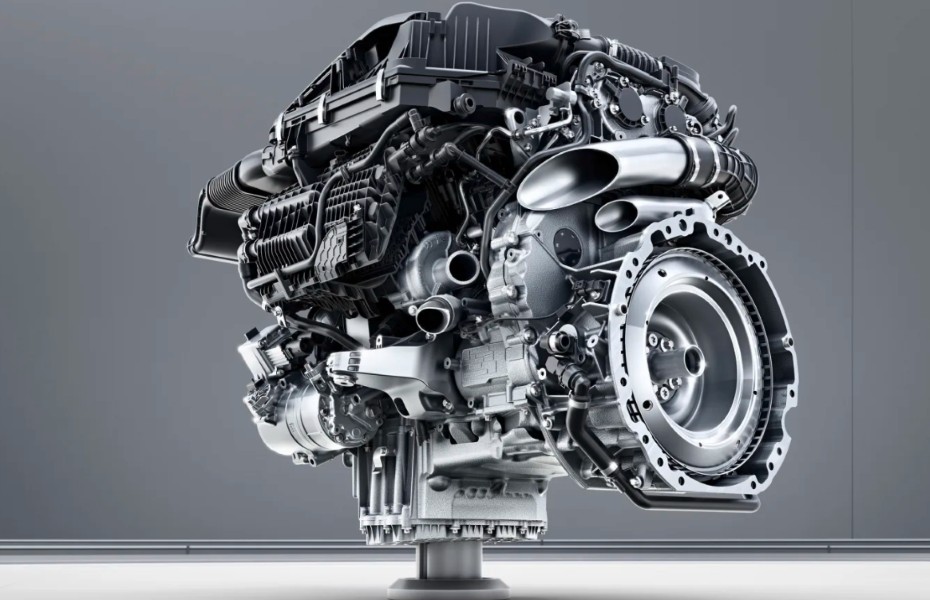
This technology represents a fundamental rethinking of forced induction, addressing the primary weakness of turbocharged engines with electrical assistance. The result is throttle response that rivals naturally aspirated engines while maintaining the efficiency benefits of turbocharging.
The M256’s real-world performance is genuinely impressive, with vehicles equipped with this engine achieving 0-60 mph times in the low four-second range despite often weighing over 4,000 pounds.
The engine’s broad torque curve, delivering maximum twist from just 1,800 rpm, provides effortless acceleration in virtually any driving situation.
This combination of advanced technology, impressive power output, and Mercedes-AMG’s legendary build quality makes the M256 a benchmark against which all modern six-cylinder engines must be measured, representing the future of performance-oriented powerplants.
2. Nissan VR38DETT (GT-R NISMO) – 600 HP
The Nissan VR38DETT has achieved legendary status among automotive enthusiasts, and the version found in the GT-R NISMO represents the ultimate factory evolution of this hand-built masterpiece.
Producing 600 horsepower from its 3.8-liter twin-turbocharged V6 configuration, this engine represents the pinnacle of Nissan’s motorsport-derived engineering expertise and decades of forced induction development.
Each VR38DETT is meticulously assembled by a single takumi (master craftsman) at Nissan’s Yokohama facility, with each engine bearing the builder’s nameplate a practice typically reserved for exotic supercars. This attention to detail ensures exceptionally tight tolerances and consistency across units.
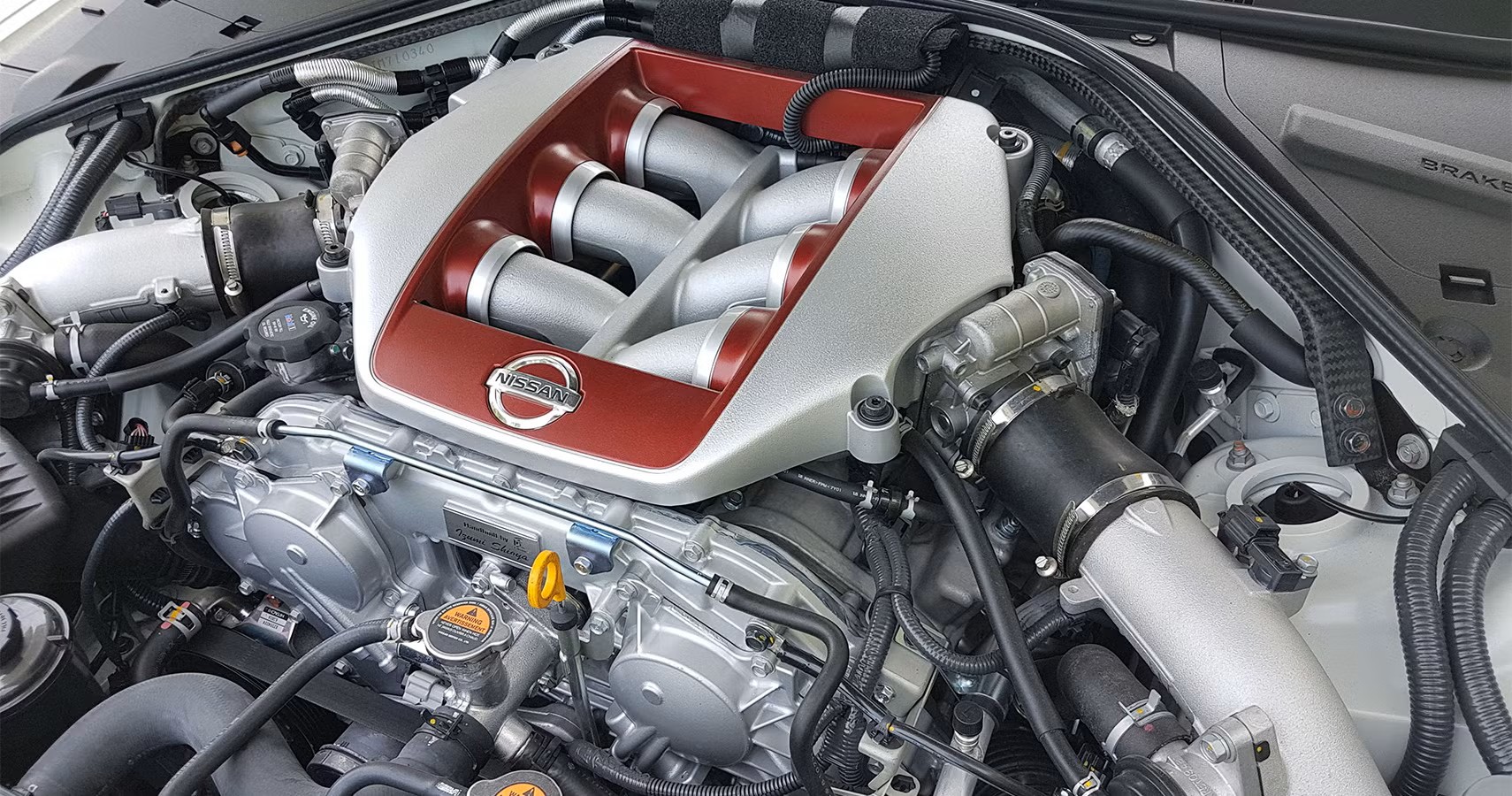
The engine features plasma-coated cylinder bores, which reduce friction while improving heat dissipation and durability. Forged pistons and connecting rods handle the tremendous forces generated by the twin IHI turbochargers, which operate at up to 1.3 bar of boost pressure in NISMO specification.
The VR38DETT’s cooling system is equally impressive, featuring a sophisticated oil circulation system with both a primary oil cooler and a transmission oil cooler, ensuring consistent performance even under extreme track conditions. The engine’s durability has been proven through countless track days, drag strip passes, and professional racing applications.
This combination of factory performance, tuning potential, hand-built quality, and proven reliability has earned the VR38DETT its place among the greatest six-cylinder engines ever created, representing Japanese engineering at its absolute finest.
3. BMW S58 (Competition Models) – 523-543 HP
BMW’s S58 engine represents the latest evolution of the company’s legendary inline-six heritage, and in Competition specification, it produces between 523 and 543 horsepower depending on the application.
This 3.0-liter twin-turbocharged powerplant powers the latest M3 Competition, M4 Competition, and X3 M Competition models, delivering performance that rivals dedicated supercars while maintaining surprising daily drivability.
The S58 builds upon lessons learned from its predecessor, the S55, but represents a comprehensive redesign rather than a simple evolution.
The most significant changes include a reinforced closed-deck engine block design that improves rigidity and allows for higher boost pressures, revised cooling systems with additional coolant and oil pathways, and a new 3D-printed cylinder head core that enables more complex and efficient cooling channel geometries than traditional manufacturing methods could achieve.
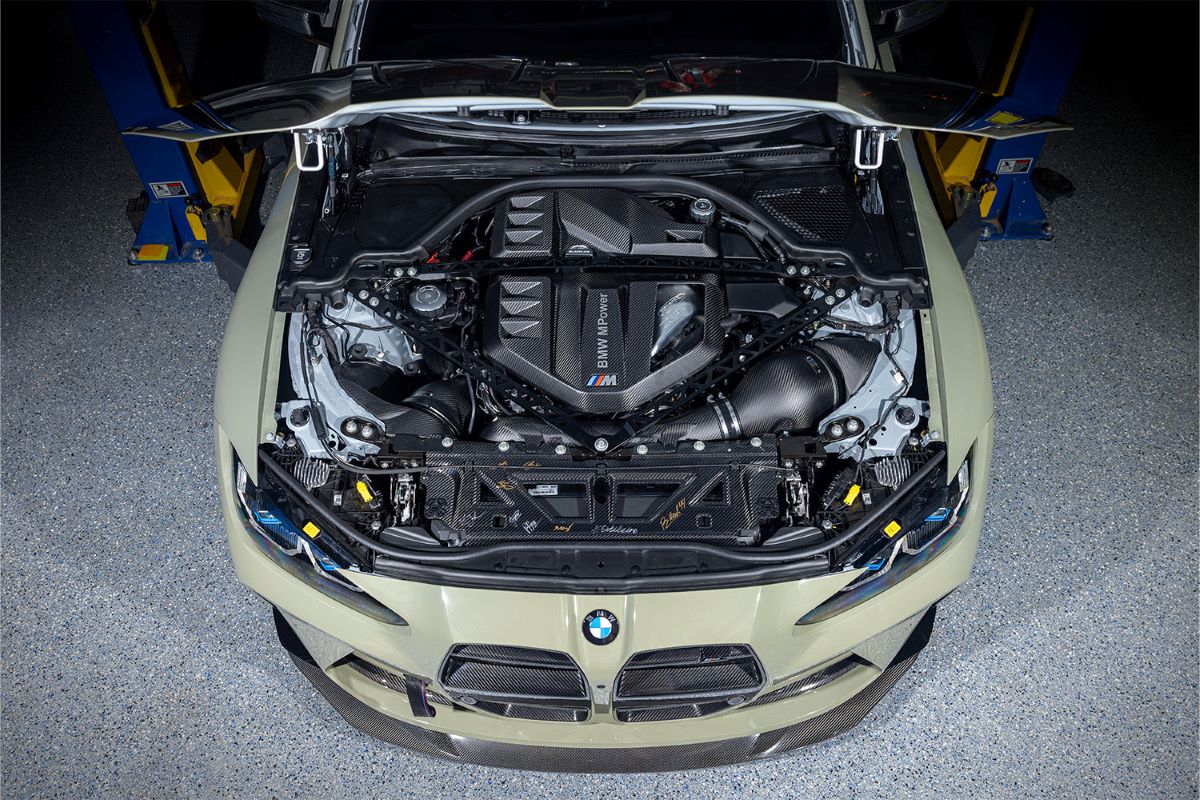
BMW M’s engineers positioned the twin turbochargers centrally within the engine’s V-shaped valley, directly between the cylinder banks.
This “hot-vee” configuration minimizes the distance exhaust gases must travel to reach the turbos, dramatically reducing lag and improving throttle response.
The turbos themselves feature electronically controlled wastegates for precise boost management, working in conjunction with BMW’s Valvetronic variable valve lift system and Double-VANOS variable valve timing to optimize power delivery across the entire rev range.
Advanced thermal management is critical to the S58’s consistent performance delivery, and BMW has equipped the engine with separate cooling circuits for the cylinder head and block, an additional engine oil cooler, and a transmission oil cooler.
These systems work together to maintain optimal operating temperatures even during extended high-performance driving sessions. The engine’s sophisticated knock sensing and management systems allow it to extract maximum performance from various fuel qualities while protecting itself from damage.
With its combination of cutting-edge technology, impressive power output, and that characteristically smooth inline-six personality, the S58 stands as one of BMW’s greatest achievements.
4. Ford EcoBoost 3.5L (GT500/F-150 Raptor R) – 700+ HP
Ford’s high-output 3.5-liter EcoBoost V6 represents American ingenuity at its finest, proving that domestic manufacturers can extract supercar-level performance from relatively modest displacement.
In its most extreme application the Shelby GT500 this hand-built powerplant produces over 700 horsepower, making it one of the most powerful six-cylinder engines ever fitted to a production vehicle, while also powering the mighty F-150 Raptor R where it delivers similar output figures.
The foundation of this engine’s incredible performance is its twin-turbocharger system, featuring a massive air-to-liquid intercooler that spans the width of the engine bay.
This intercooler uses a dedicated cooling system with an electric pump to circulate coolant, ensuring intake air temperatures remain low even under sustained high-load conditions.
The turbos themselves are significantly larger than those found in standard EcoBoost applications, with reinforced housings to handle increased boost pressures that can exceed 20 psi in certain operating conditions.
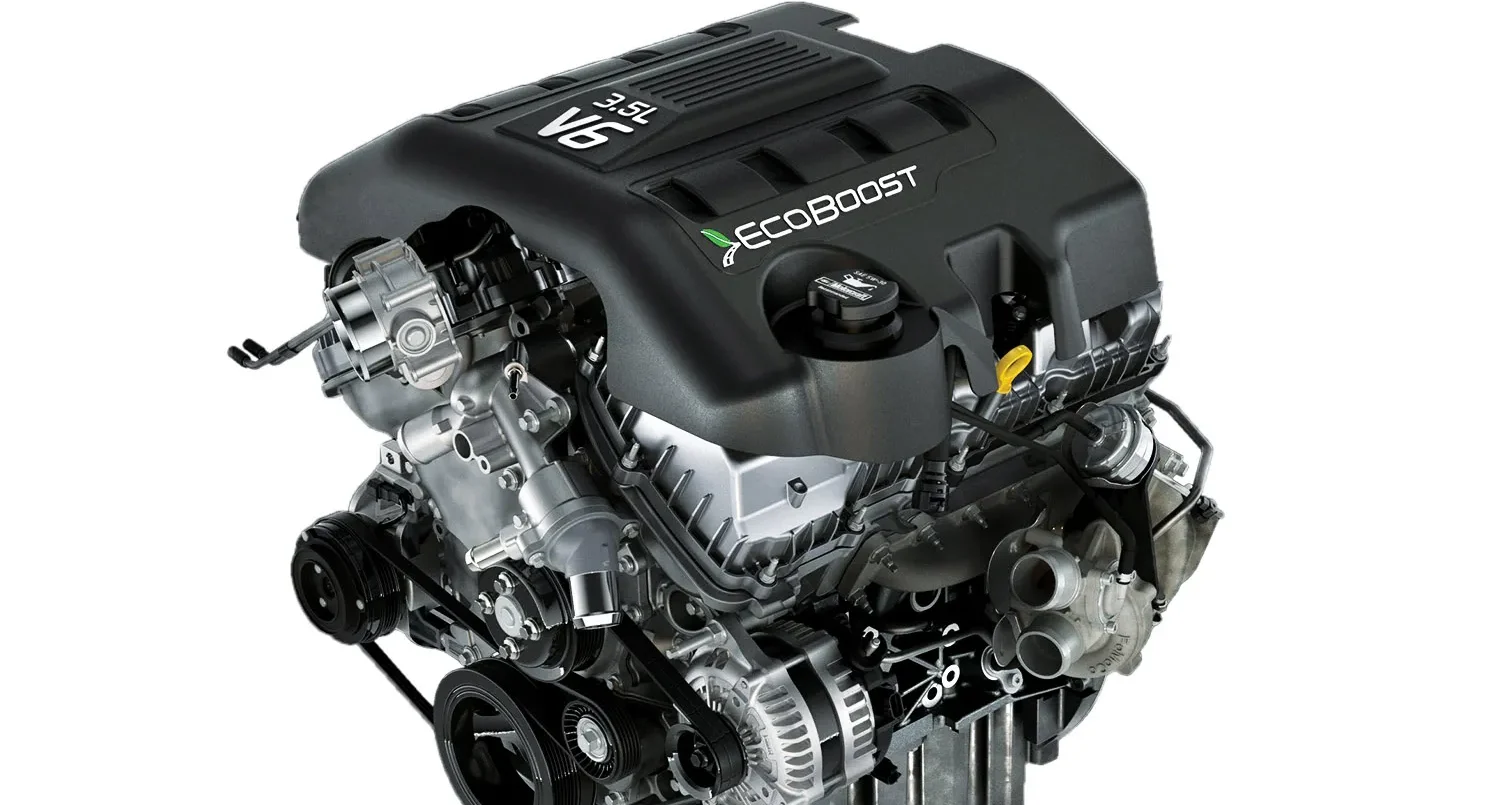
Ford’s engineers completely redesigned the engine’s internals for high-output duty, incorporating forged aluminum pistons with special coatings, strengthened connecting rods, and a reinforced crankshaft.
The cylinder block features additional ribbing and a revised deck design to handle the tremendous forces generated by forced induction at this power level.
An advanced port fuel and direct injection system works simultaneously to optimize fuel delivery, with port injection cooling intake valves and preventing carbon buildup while direct injection provides precise fuel metering for maximum power and efficiency.
The high-output EcoBoost’s soundtrack is distinctive, with the turbos producing characteristic whooshing and whistling sounds under hard acceleration, while the exhaust note carries a purposeful growl quite different from traditional V8s.
Performance figures speak for themselves: vehicles equipped with this engine achieve 0-60 mph in under 3.5 seconds and can cover the quarter-mile in under 11 seconds.
This combination of massive power, advanced technology, and proven durability in both motorsport and off-road applications cements Ford’s high-output 3.5L EcoBoost as one of the greatest six-cylinder achievements in automotive history.
Also Read: Top 12 Dependable Used Audi Models That Still Make Sense in 2026
5. Toyota 2JZ-GTE (Supra Turbo) – 320 HP (Stock)
While the Toyota 2JZ-GTE’s factory rating of 320 horsepower might seem modest compared to modern turbocharged engines, this legendary 3.0-liter inline-six’s inclusion on this list is fully justified by its extraordinary tuning potential and cultural significance.
The 2JZ-GTE is widely considered the most robust production six-cylinder engine ever built, regularly supporting 800-1,000+ horsepower with proper supporting modifications, and has achieved icon status in the performance community.
The 2JZ-GTE’s legendary strength comes from Toyota’s overengineering philosophy during the 1990s. The iron block is exceptionally rigid and features a closed-deck design with thick cylinder walls, while the forged crankshaft and connecting rods are massively overbuilt for the factory power level.
This conservative engineering approach means the bottom end can handle enormous increases in boost pressure and power output without requiring expensive internal upgrades.
The engine’s sequential twin-turbocharger system, while relatively small by modern standards, provides progressive power delivery and excellent throttle response.
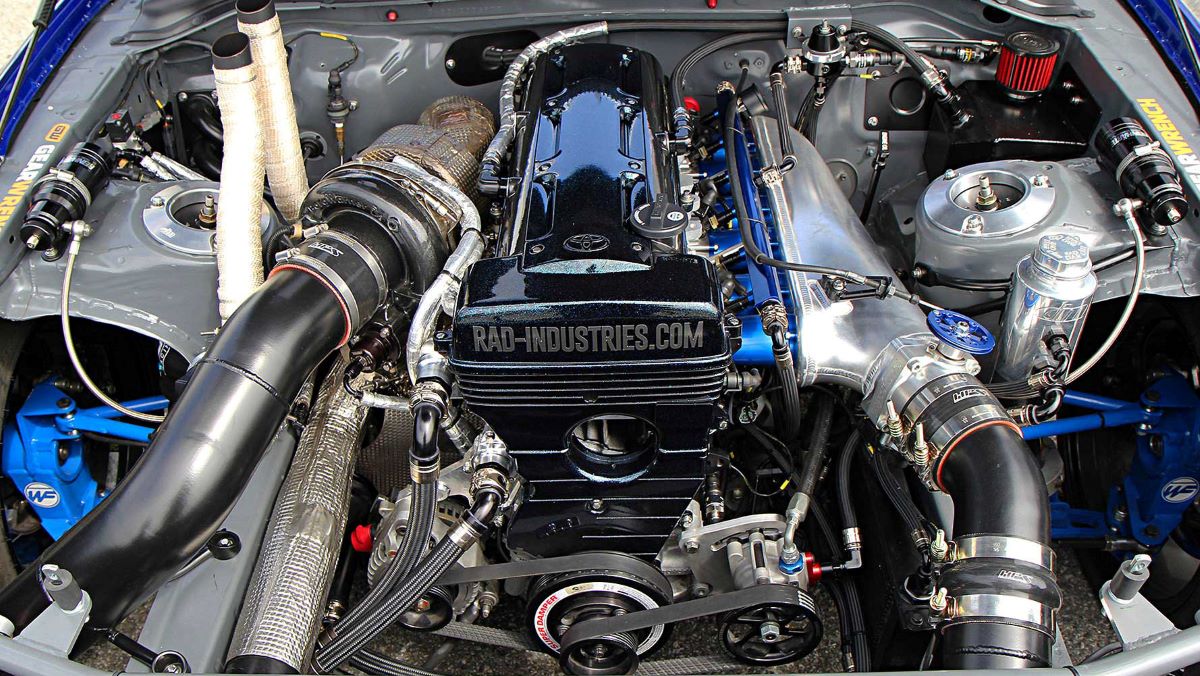
Toyota’s attention to detail extends throughout the engine’s design. The aluminum cylinder head features an efficient combustion chamber design and large, straight intake and exhaust ports that flow exceptionally well even at high RPM. The DOHC valvetrain with variable valve timing on the intake side provides excellent flexibility in tuning.
The factory fuel system, while requiring upgrades for serious power increases, demonstrates impressive capacity with large injectors and a robust fuel pump setup.
Even the engine management system proved remarkably sophisticated for its era, with capabilities that tuners continue to exploit decades later.
What truly sets the 2JZ-GTE apart is its reliability even when modified significantly. Stories of 700-horsepower Supras driven daily are common, while properly built examples have survived thousands of dyno pulls and drag strip launches at power levels that would destroy lesser engines within minutes.
This combination of massive tuning potential, inherent strength, cultural significance, and proven durability has earned the 2JZ-GTE legendary status, inspiring a generation of enthusiasts and influencing engine design philosophy throughout the industry.
While factory power figures don’t tell the whole story, the 2JZ-GTE’s impact on automotive culture and performance engineering is immeasurable.
6. Alfa Romeo 690T (Giulia/Stelvio Quadrifoglio) – 505 HP
The Ferrari-derived Alfa Romeo 690T engine represents Italian passion meeting meticulous engineering, producing 505 horsepower from its 2.9-liter twin-turbocharged V6 configuration.
This compact powerplant delivers supercar performance while fitting within the relatively confined engine bays of the Giulia and Stelvio Quadrifoglio models, proving that displacement isn’t everything when it comes to extracting maximum power.
What makes the 690T particularly special is its developmental heritage engineers from Ferrari’s powertrain division contributed significantly to this engine’s design, bringing Formula 1-derived technology and expertise to Alfa Romeo’s performance lineup.
The architecture features a 90-degree V-angle, which isn’t ideal for balance in a V6 configuration but allows the engine to share tooling and manufacturing processes with Ferrari’s V8 engines, reducing production costs while maintaining exotic car quality standards. To compensate for the inherent imbalance, Alfa Romeo employs a carefully calibrated balance shaft system.
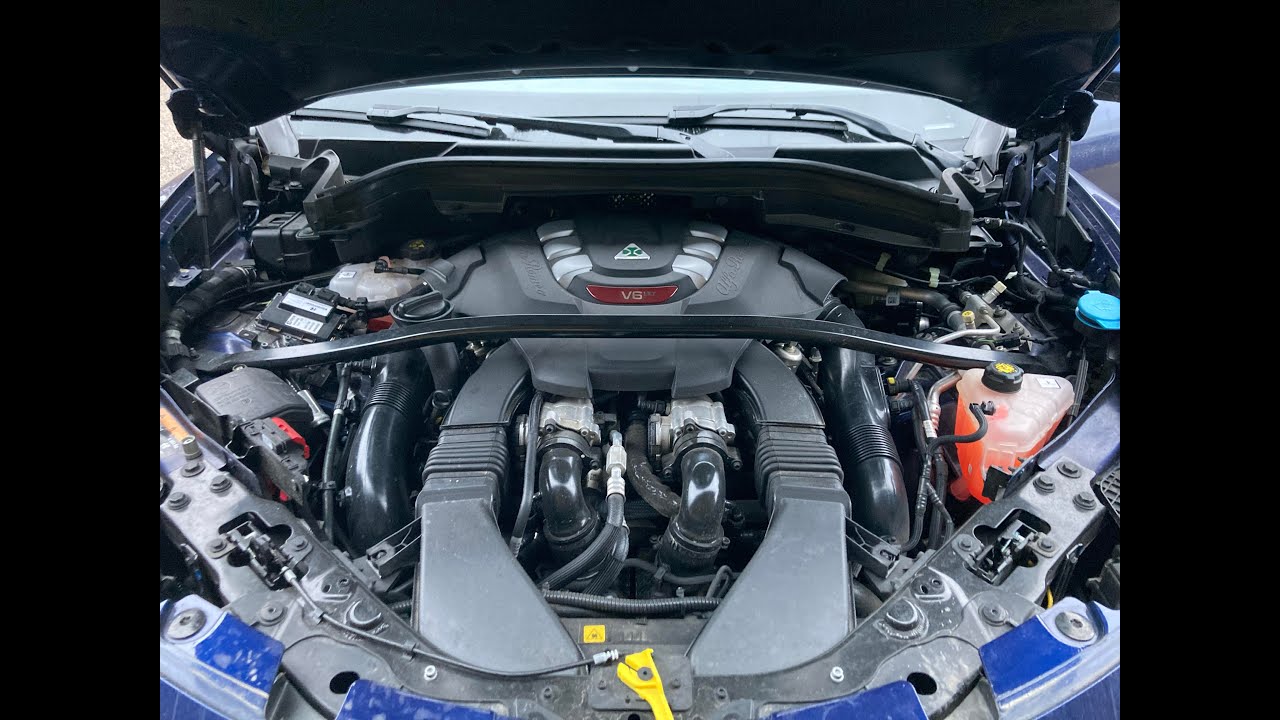
The twin turbochargers are positioned outside the cylinder banks rather than in the traditional hot-vee configuration, a decision driven by packaging constraints and the desire to use readily available IHI turbochargers rather than developing bespoke units.
Despite this conventional placement, throttle response remains excellent thanks to small, quick-spooling turbos and sophisticated wastegate management.
The engine reaches peak torque of 443 lb-ft at just 2,500 rpm and sustains maximum torque through 5,000 rpm, providing devastating acceleration across the mid-range.
The engine’s specific output of approximately 174 horsepower per liter ranks among the highest for any production six-cylinder engine, showcasing the effectiveness of modern turbocharger technology and engine management systems.
Advanced cylinder deactivation technology, which shuts down one cylinder bank during light-load conditions, helps balance performance with efficiency.
The 690T’s combination of Ferrari-influenced engineering, compact dimensions, emotional character, and impressive power output makes it one of the most desirable six-cylinder engines currently in production, representing Italian performance engineering at its finest.
7. Porsche 9A1 EVO (911 Turbo S) – 640 HP
Porsche’s latest evolution of the 9A1 twin-turbocharged flat-six engine, found in the 992-generation 911 Turbo S, produces an astounding 640 horsepower from just 3.7 liters of displacement.
This represents not only the most powerful production six-cylinder engine Porsche has ever created but also one of the most sophisticated powerplants in the automotive industry, combining decades of refinement with cutting-edge technology.
The flat-six configuration provides a low center of gravity that benefits handling dynamics, while the unique horizontally opposed cylinder arrangement requires specialized engineering solutions. Porsche’s engineers positioned the twin turbochargers asymmetrically—one on each side of the engine with the turbos featuring variable turbine geometry (VTG) technology.
This system adjusts the turbine housing’s internal geometry to optimize boost response across the rev range, effectively providing the characteristics of a small turbo at low RPM and a large turbo at high RPM without the compromises typically associated with fixed-geometry turbochargers.
The engine breathes through a sophisticated intake system featuring two charge air coolers and an innovative cooling strategy that includes both direct fuel injection for cooling under high loads and port injection for improved emissions and low-load efficiency.
The cooling system also incorporates a water-spray system for the intercoolers, which activates under extreme conditions to further reduce intake air temperatures and maximize power output. This attention to thermal management ensures consistent performance even during extended high-speed driving or track sessions.
The 9A1 EVO’s performance in the 911 Turbo S is simply staggering 0-60 mph arrives in just 2.6 seconds, making it one of the quickest accelerating production cars ever built.
This performance comes with remarkable refinement, as Porsche has managed to maintain the flat-six’s characteristic smooth, mechanical sound quality even with forced induction.
The combination of incredible power density, sophisticated technology, and Porsche’s legendary attention to detail makes the 9A1 EVO a masterpiece of modern engine engineering.
8. Maserati Nettuno (MC20) – 630 HP
The Maserati Nettuno engine represents a bold departure for the Italian manufacturer, as this 3.0-liter twin-turbocharged V6 is the first engine designed and built entirely in-house by Maserati in decades.
Producing 630 horsepower in the mid-engine MC20 supercar, the Nettuno incorporates Formula 1-derived technology and showcases what’s possible when a manufacturer takes complete control over engine development.
The Nettuno’s most innovative feature is its pre-combustion chamber ignition system, a concept borrowed directly from Formula 1 power units. This system features a small auxiliary combustion chamber for each cylinder, connected to the main combustion chamber by precisely sized orifices.
Fuel is injected into this pre-chamber and ignited by a spark plug, creating jets of flame that shoot through the orifices into the main chamber, igniting the primary fuel-air mixture from multiple points simultaneously rather than from a single spark plug location.
This technology allows for leaner fuel-air mixtures and higher compression ratios than conventional ignition systems, improving both efficiency and power output.
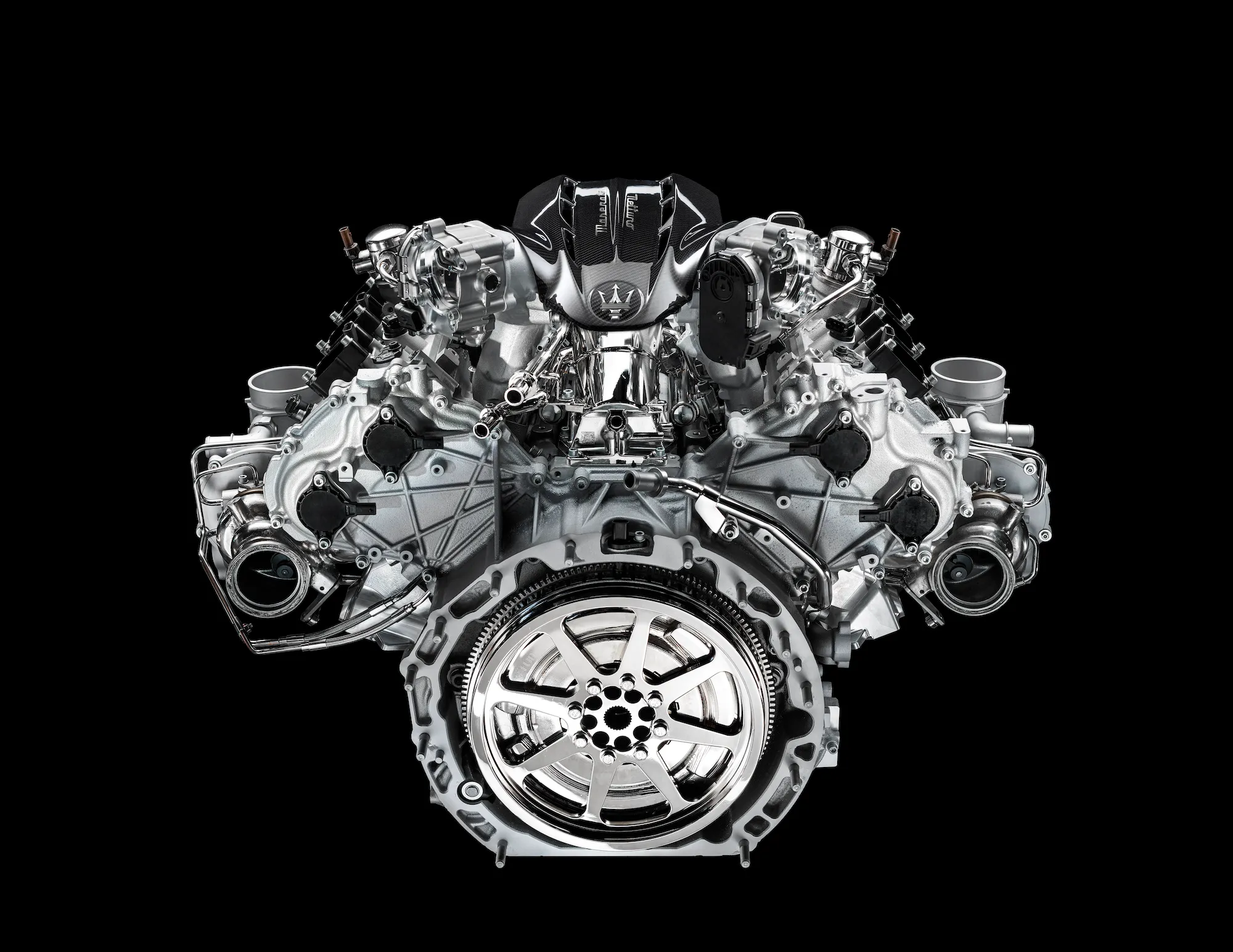
The twin-turbocharger system uses IHI units positioned within the V-angle of the engine, minimizing exhaust path lengths and improving response.
The turbos feature electronically controlled wastegates for precise boost management, working in concert with the sophisticated engine management system to deliver smooth, progressive power delivery.
The Nettuno reaches its peak power at a relatively high 7,500 rpm, showcasing its high-performance character and willingness to rev. Maximum torque of 538 lb-ft arrives at 3,000 rpm and sustains through a broad powerband.
The Nettuno’s soundtrack is distinctly Italian, with a purposeful mechanical growl at low RPM building to an intense wail as it approaches redline.
Maserati carefully tuned the exhaust system to emphasize the engine’s best frequencies while meeting modern noise regulations. The engine propels the MC20 from 0-60 mph in just 2.9 seconds and on to a top speed of over 200 mph, placing it firmly in supercar territory.
This combination of Formula 1-inspired technology, impressive specific output, low weight, and emotional character makes the Nettuno one of the most exciting six-cylinder engines currently in production.
9. Audi EA839 EVO (RS Models) – 444-500 HP
Audi’s EA839 engine family represents the culmination of decades of forced induction expertise, with the highest-output versions producing up to 500 horsepower in certain RS performance models.
This 2.9-liter twin-turbocharged V6 powers various vehicles across the Volkswagen Group portfolio, including the Audi RS4, RS5, and RS6 models, as well as the Porsche Panamera and Cayenne, showcasing its versatility and robust fundamental design.
The EA839 features a 90-degree V-angle with the twin turbochargers positioned in the hot-vee configuration between the cylinder banks, significantly reducing the exhaust path length and virtually eliminating turbo lag.
This central turbo placement creates packaging challenges the turbos operate in an extremely high-temperature environment but Audi’s engineers developed sophisticated cooling systems to manage these thermal loads.
The intercooling system uses an indirect approach, with coolant circulating through air-to-liquid heat exchangers before the compressed air enters the intake manifold, maximizing cooling efficiency while minimizing packaging complexity.
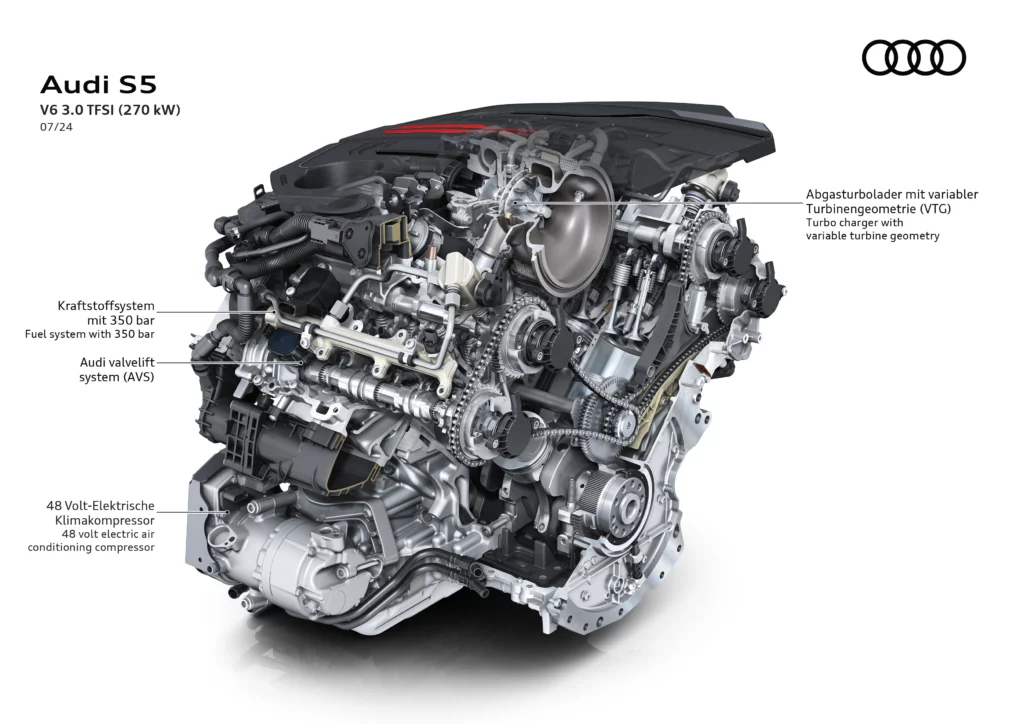
The engine incorporates Audi’s valve lift system (AVS), which varies valve lift on the exhaust side to optimize engine breathing across different operating conditions.
Combined with dual camshaft adjustment on both intake and exhaust sides, this provides exceptional flexibility in managing the engine’s breathing characteristics for maximum power, efficiency, or emissions depending on driving conditions.
The direct fuel injection system operates at extremely high pressures, atomizing fuel into a fine mist that burns more completely and allows for higher compression ratios.
In real-world applications, the EA839 provides devastating performance, with RS-badged Audis achieving 0-60 mph times in the low three-second range despite often weighing over 4,000 pounds.
The engine’s torque output is particularly impressive, with up to 443 lb-ft available from very low in the rev range, providing effortless acceleration in nearly any driving situation.
The characteristic sound a subdued rumble enhanced by clever exhaust tuning and active sound symposer systems balances performance character with refined daily drivability, making the EA839 one of the most well-rounded high-performance six-cylinder engines available today.
10. Acura/Honda J35 Hybrid (NSX) – 573 HP Combined
The powertrain in the second-generation Acura NSX represents a fundamentally different approach to performance, combining a twin-turbocharged 3.5-liter V6 producing 500 horsepower with three electric motors contributing an additional 73 horsepower for a combined system output of 573 horsepower.
While technically a hybrid system, the internal combustion engine component alone ranks among the most sophisticated V6 engines ever produced.
Honda’s engineers designed the twin-turbocharged V6 specifically for mid-engine supercar duty, incorporating lessons learned from decades of racing experience including Formula 1.
The engine features a conventional 75-degree V-angle and employs dual twin-scroll turbochargers for optimal response and power delivery.
What sets this engine apart is its integration with the electric motor system—the V6 works in perfect harmony with the electric motors, with sophisticated control algorithms determining the optimal power split between electric and combustion power sources thousands of times per second.
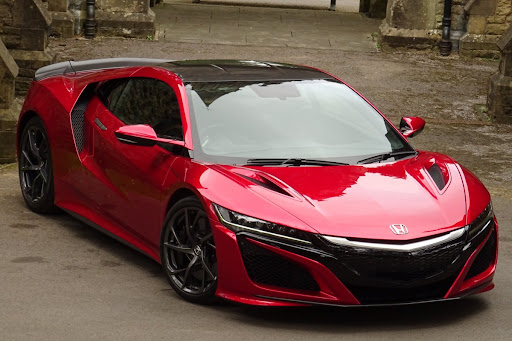
The engine’s construction reflects Honda’s legendary attention to detail and precision manufacturing. The aluminum block features pressed-in iron cylinder liners, while the DOHC cylinder heads incorporate sodium-filled exhaust valves for improved thermal management.
Variable valve timing on both intake and exhaust sides works with the turbocharger system and electric motors to optimize response across all driving conditions.
The direct fuel injection system operates at high pressure to ensure complete combustion, while the titanium connecting rods reduce reciprocating mass for improved throttle response.
The result is supercar performance with surprising daily drivability the NSX achieves 0-60 mph in just 2.9 seconds while remaining comfortable and refined during normal driving. The engine’s soundtrack is distinctly Honda, with a characteristic high-pitched wail at high RPM that enthusiasts find addictive.
This combination of advanced hybrid technology, sophisticated engineering, and genuine supercar performance makes the NSX’s powertrain one of the most innovative six-cylinder applications ever created, showcasing what’s possible when traditional internal combustion engine technology is augmented with electrification.
Also Read: Top 12 Dual-Sport Motorcycles Worth Buying in 2026
