
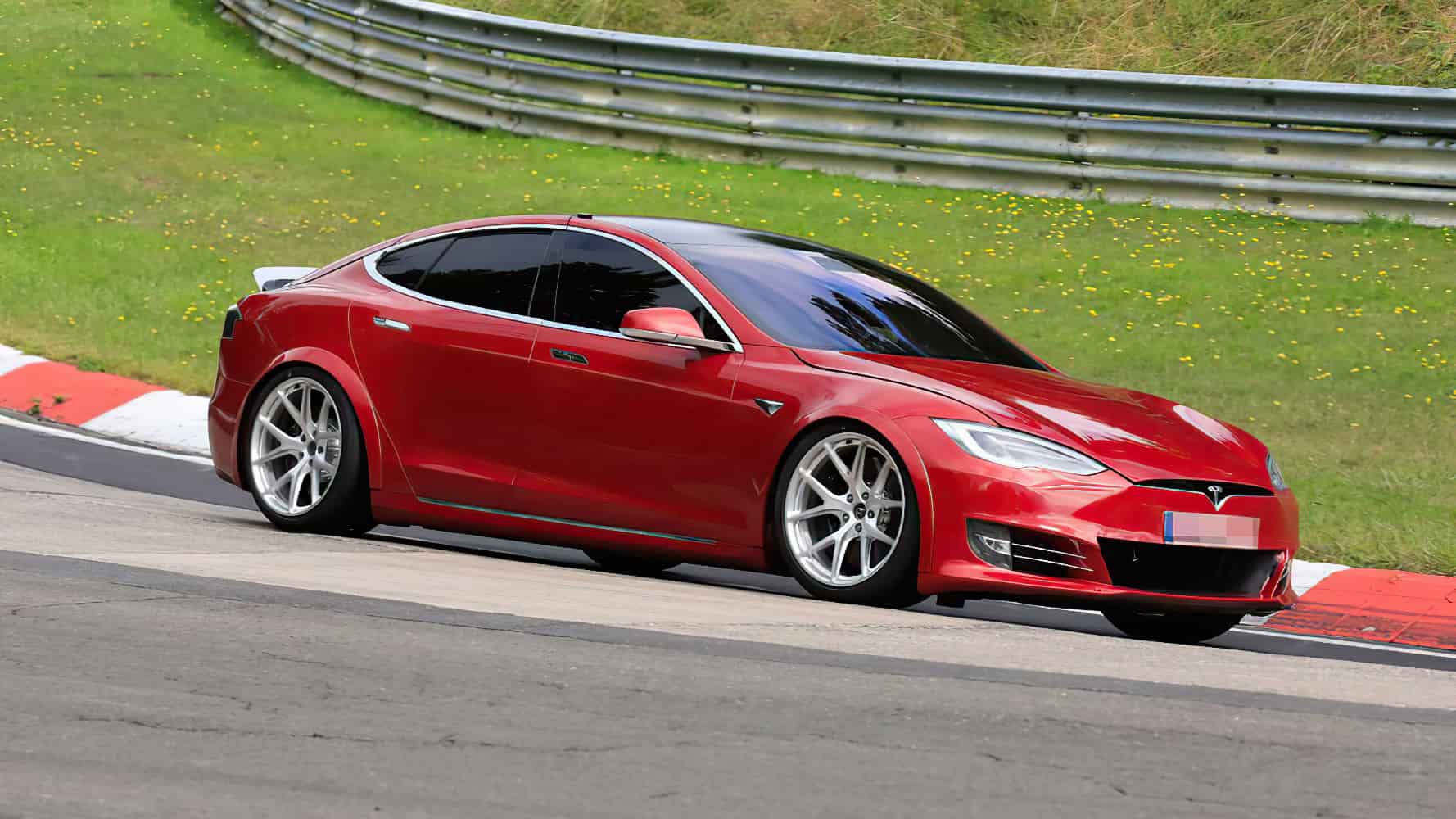
Electric cars have permanently rewritten the performance rulebook. Not long ago, speed conversations in the U.S. revolved around displacement, forced induction, and horsepower wars between muscle cars and European exotics.
Today, the quarter-mile a sacred benchmark in American car culture is increasingly dominated by electric vehicles that deliver instant torque, flawless launches, and repeatable results.
EVs no longer just compete with gasoline supercars; in many cases, they humiliate them.
Quarter-mile performance matters because it measures real-world acceleration, not just theoretical 0–60 times.
It captures launch control, traction, power delivery, and drivetrain efficiency areas where electric cars excel.
The vehicles below are production or near-production electric cars, ranked by their best known quarter-mile times, showcasing just how far EV performance has come.
1. Rimac Nevera R
The Rimac Nevera R currently stands at the absolute summit of electric performance. Built by Croatian hypercar manufacturer Rimac, the Nevera R refines an already outrageous platform into something even more extreme.
With a quad-motor setup producing over 2,100 horsepower, the Nevera R is engineered not just for acceleration, but for total control at absurd speeds.
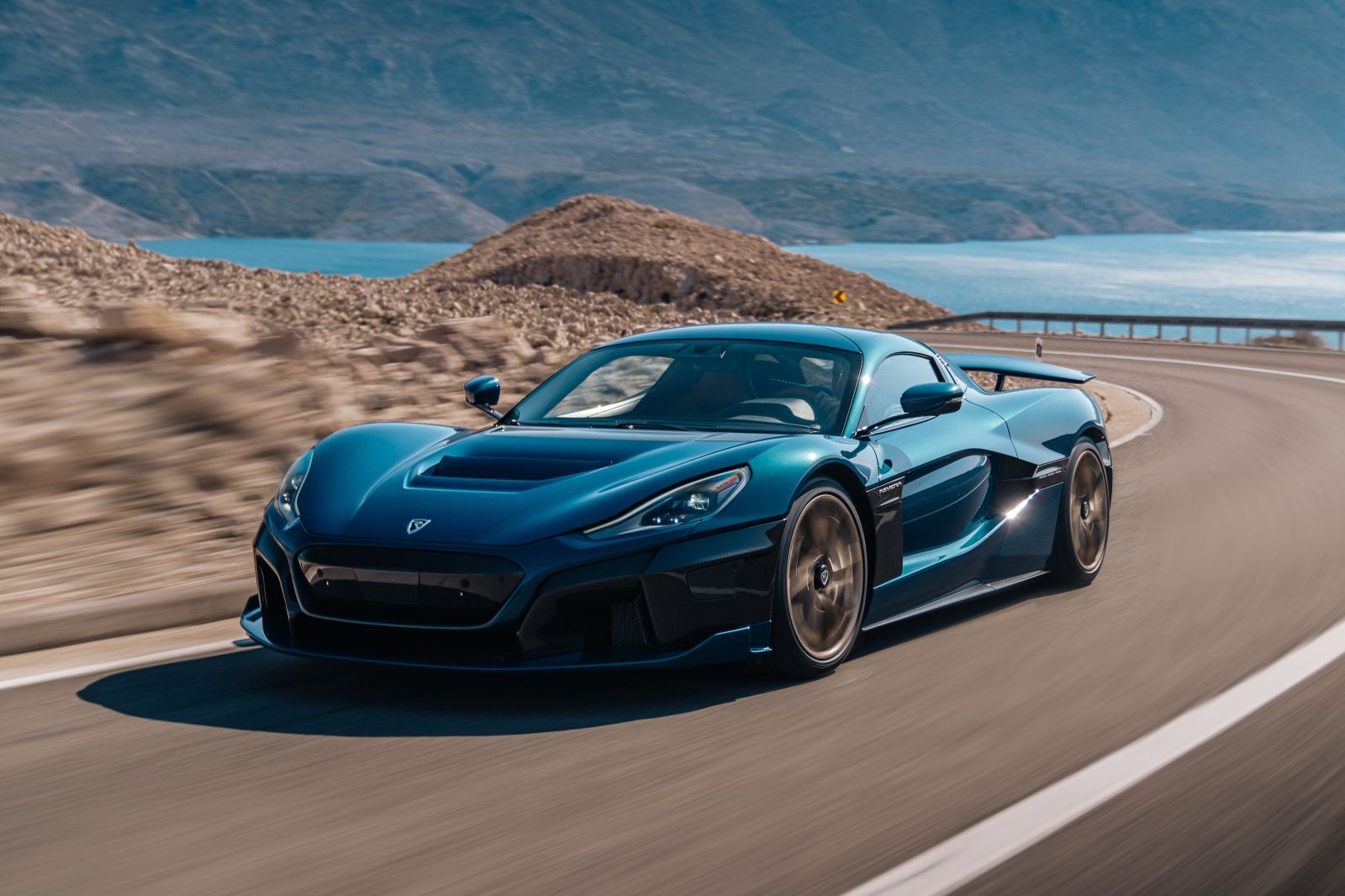
What separates the Nevera R from other EVs is how effortlessly it delivers its performance. Its sub-8-second quarter-mile run places it in territory previously reserved for purpose-built drag cars.
Advanced torque vectoring, massive tire contact patches, and an intelligent battery cooling system allow the car to repeat these runs without dramatic performance degradation.
For American enthusiasts accustomed to equating speed with engine noise, the Nevera R represents a quiet but seismic shift.
2. Lucid Air Sapphire
The Lucid Air Sapphire is proof that extreme speed no longer requires sacrificing comfort or practicality.
Developed in California, this high-performance luxury sedan produces well over 1,200 horsepower and uses a tri-motor configuration that maximizes traction while maintaining efficiency.
In the quarter-mile, the Sapphire dips into the high-8-second range a shocking achievement for a full-size four-door sedan with real rear-seat space.
What makes this especially impressive for U.S. buyers is that the Air Sapphire can serve as a daily driver.
It offers a refined cabin, long-distance cruising ability, and cutting-edge tech, all while being quicker in a straight line than most supercars Americans grew up idolizing.
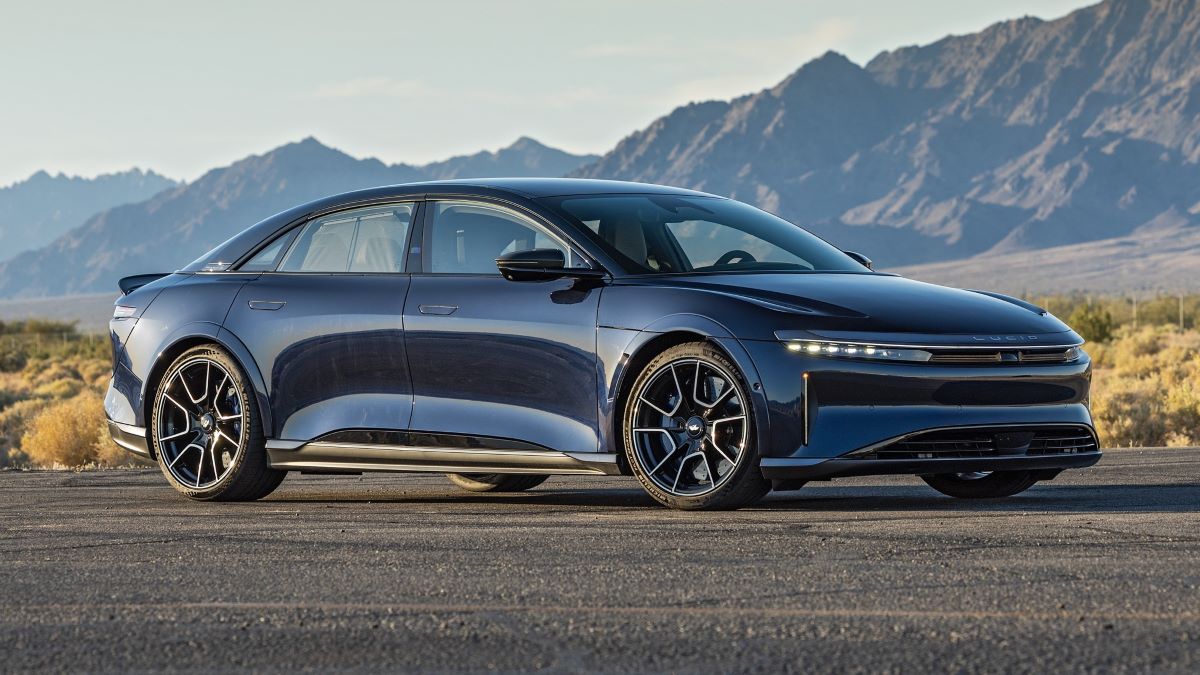
The rear-wheel-drive Air Pure we tested accelerates from 0 to 60 mph in just 4.6 seconds, significantly faster than other rear-drive EVs in its class. While faster versions of the Air exist, the Pure provides more than enough performance for most drivers. Braking from 60 mph required only 113 feet, with the pedal offering natural and predictable feel.
Where the 2025 Air truly shines is in its ride quality. It ranks among the most comfortable vehicles on sale today, handling bumps in a controlled and sophisticated manner, with even larger impacts barely noticeable inside the cabin.
Impressively, this comfort doesn’t come at the expense of handling. The Air Pure eagerly dives into corners, and its steering is sharp without feeling nervous, darty, or overreactive.
Our few minor complaints mostly concern visibility. Thick front pillars can occasionally obstruct the view, making left turns a bit more challenging than they should be. On the technology front, the Air’s advanced driver-assistance systems perform admirably.
Adaptive cruise control maintains a steady speed and keeps an appropriate distance from vehicles ahead, with far fewer phantom braking events or false alerts than in prior models. Additionally, the vehicle offers multiple camera views, all rendered in crisp, high-resolution displays, enhancing situational awareness.
3. Rimac Nevera
Before the Nevera R arrived, the standard Rimac Nevera was already rewriting the EV record books.
With nearly 2,000 horsepower on tap and a quad-motor drivetrain, the Nevera demonstrated that electric hypercars could deliver not just one-off performance runs, but consistent, measurable dominance.
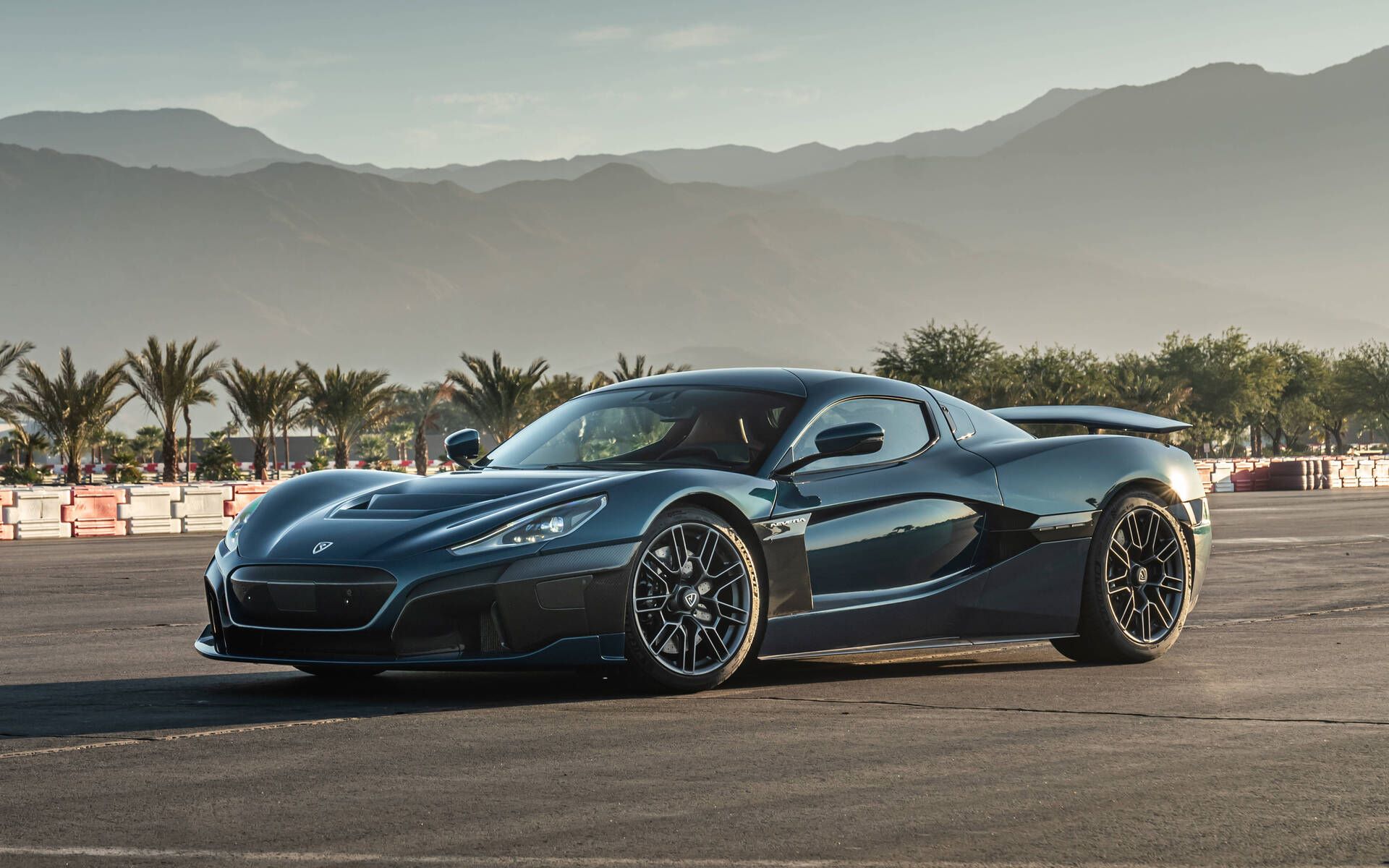
Its quarter-mile times in the low-8-second range remain astonishing even today. The Nevera’s significance goes beyond numbers; it proved to skeptics that battery-powered vehicles could be engineered at the highest levels of performance.
In the context of global automotive history, it stands as a turning point especially meaningful to American performance culture, where drag racing has always been king.
Pushing the limits of what’s possible in a production car, the Rimac Nevera uses a four-motor, fully electric powertrain, with a carbon-sleeved permanent-magnet AC synchronous motor at each wheel paired to a one-speed direct-drive transmission.
While the battery is capable of producing a maximum of 1,877 horsepower, the motors themselves can deliver up to 1,813 horsepower, a difference that’s barely noticeable in practice. The two front motors each produce 295 horsepower and 207 pound-feet of torque, while the rear motors generate 644 horsepower and 664 pound-feet of torque apiece.
Rimac claims the Nevera can accelerate to 60 mph in just 1.85 seconds and cover the quarter-mile in 8.6 seconds, making it potentially the fastest vehicle we’ve ever tested, though these figures were achieved on a prepped drag strip, so real-world results may vary. The top speed is rated at 258 mph, a number few will ever attempt to verify in person.
4. Tesla Roadster (Second Generation)
Tesla’s second-generation Roadster occupies a unique place on this list because much of its reputation is built on projections rather than widespread independent testing.
Still, Tesla’s claims of an 8-second-range quarter-mile have kept the Roadster in performance conversations for years.
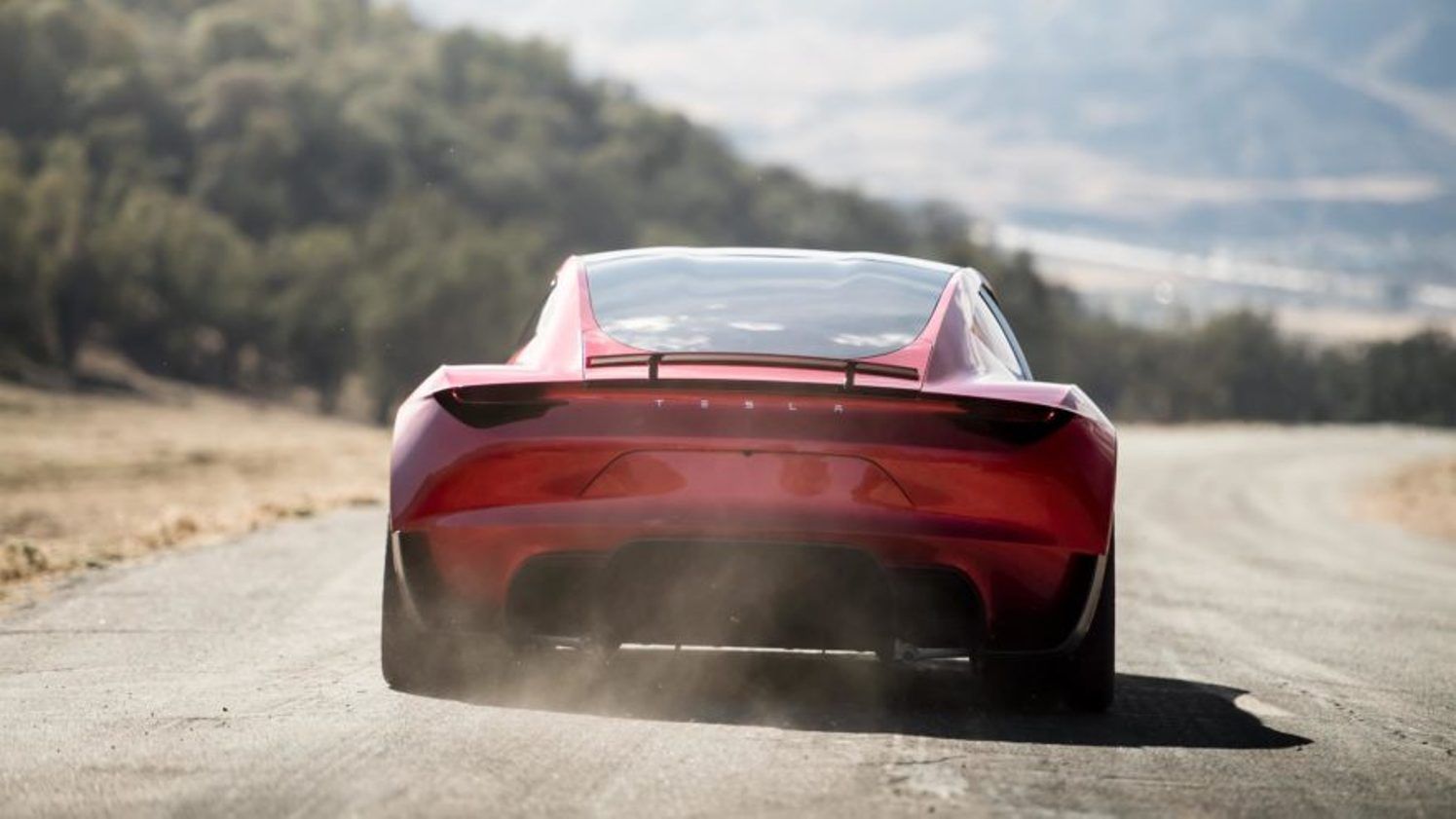
Designed as a halo car rather than a mass-market vehicle, the Roadster aims to showcase Tesla’s engineering ceiling.
If it ultimately delivers on its promised performance, it will stand as one of the fastest street-legal electric cars ever offered in the U.S. Until then, it remains a symbol of the direction EV performance is heading rather than a fully realized benchmark.
5. Tesla Model S Plaid
Few cars have disrupted expectations like the Tesla Model S Plaid. With over 1,000 horsepower, three electric motors, and advanced launch control, the Plaid runs the quarter-mile in just over nine seconds a number that would have been unthinkable for a five-seat family sedan a decade ago.
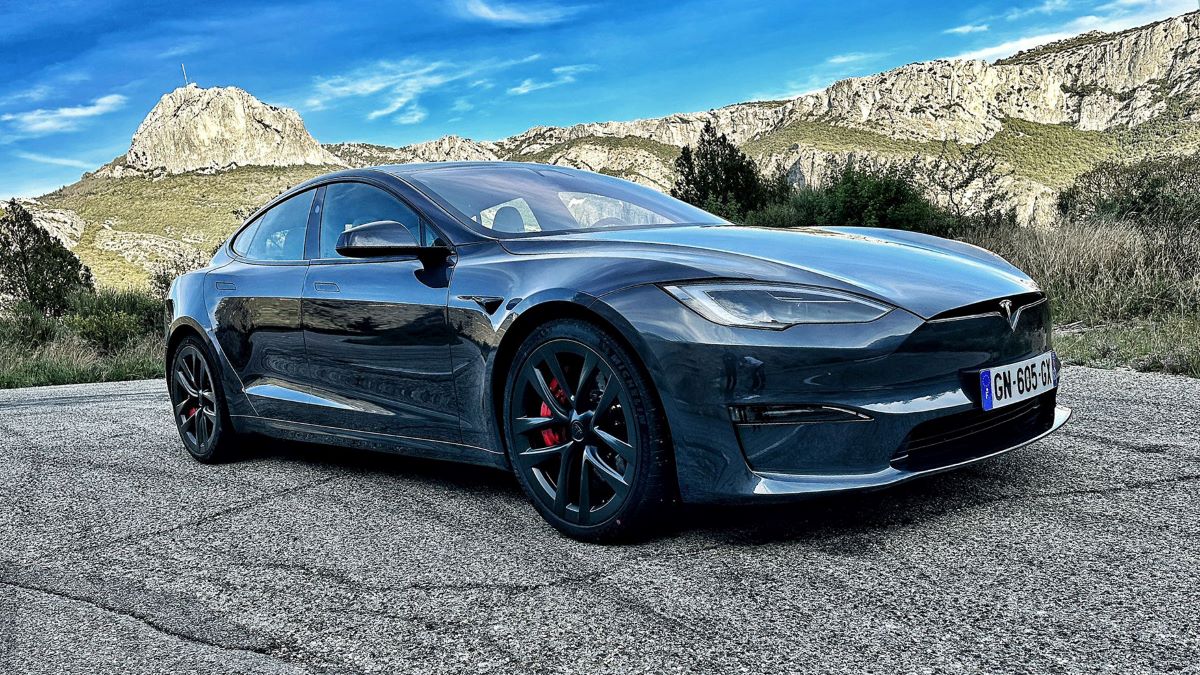
For American buyers, the Model S Plaid is particularly significant because it blends outrageous speed with everyday usability.
It can drop kids off at school, commute comfortably, and then embarrass traditional supercars at the drag strip. No other vehicle has so effectively blurred the line between daily driver and performance weapon.
6. Tesla Model X Plaid
The Tesla Model X Plaid further demonstrates how electric drivetrains redefine vehicle categories. Despite its size and weight, this three-row SUV can complete the quarter-mile in under ten seconds faster than many classic American muscle cars.
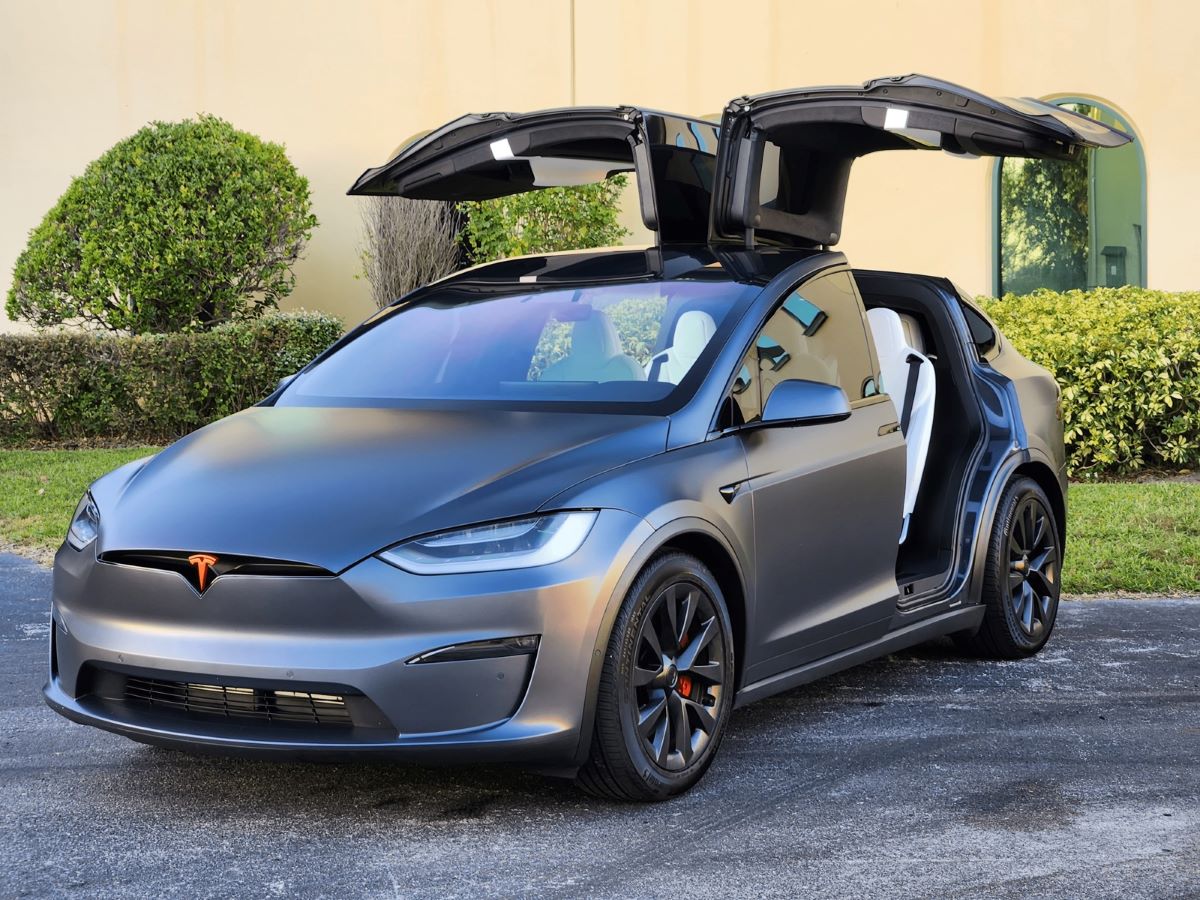
In a U.S. market dominated by SUVs, the Model X Plaid is a reminder that performance no longer belongs exclusively to coupes and sedans.
Its combination of family practicality and supercar-level acceleration makes it one of the most unexpected performers on this list.
Performance has become Tesla’s calling card, and the Model X exemplifies that reputation. The standard Model X delivers 670 horsepower and brisk acceleration, while the Plaid model takes things to an extreme with 1,020 horsepower, enough to startle passengers if they’re unprepared.
Braking is equally impressive, offering both confident stopping power and ease of use in everyday traffic. Regenerative braking is strong enough that, in many situations, you can drive without touching the brake pedal.
The Model X feels nimble thanks to quick steering, a low center of gravity, and adaptive air suspension, which can provide up to 8.9 inches of ground clearance while keeping body motions minimal and the ride very comfortable.
The cabin benefits from Tesla’s advanced camera and safety systems, which improve visibility, while driver-assistance features, including Full Self-Driving (Supervised), can navigate city streets, stop at traffic lights, make turns, and change lanes. Drivers are still required to pay attention, but the system sets a high standard for semi-autonomous technology.
Comfort is a strong suit as well, aided by the adaptive suspension that smooths bumps even with 20-inch wheels and firm tire pressures. Seats are well-cushioned and adjustable, with standard heating and ventilation to enhance comfort despite synthetic leather upholstery.
Tri-zone climate control is handled via front and rear touchscreens, creating a clean, minimalist interface, though the extra-large windshield can let in more heat on hot days. Falcon-wing doors make access to car seats easy, and while anchors are slightly recessed and fixed headrests complicate top tether routing, the Model X still accommodates rear-facing seats behind an average-size driver.
Tesla’s in-cabin tech is modern and capable. The Google-based navigation system is intuitive and syncs seamlessly with Google Maps via the Tesla app, though connectivity issues in poor-service areas can cause occasional lag.
Pricing for the Model X is competitive among midsize luxury EVs, though build quality still trails some rivals despite steady improvement. Buyers gain performance, range, and a strong feature set, though the minimalist interior sacrifices some perceived solidity.
7. Tesla Cybertruck Beast
Electric pickups were once dismissed as novelties, but the tri-motor Cybertruck Beast has changed that narrative.
With massive torque delivered instantly to all four wheels, the Cybertruck is capable of quarter-mile times that rival high-performance sports cars.
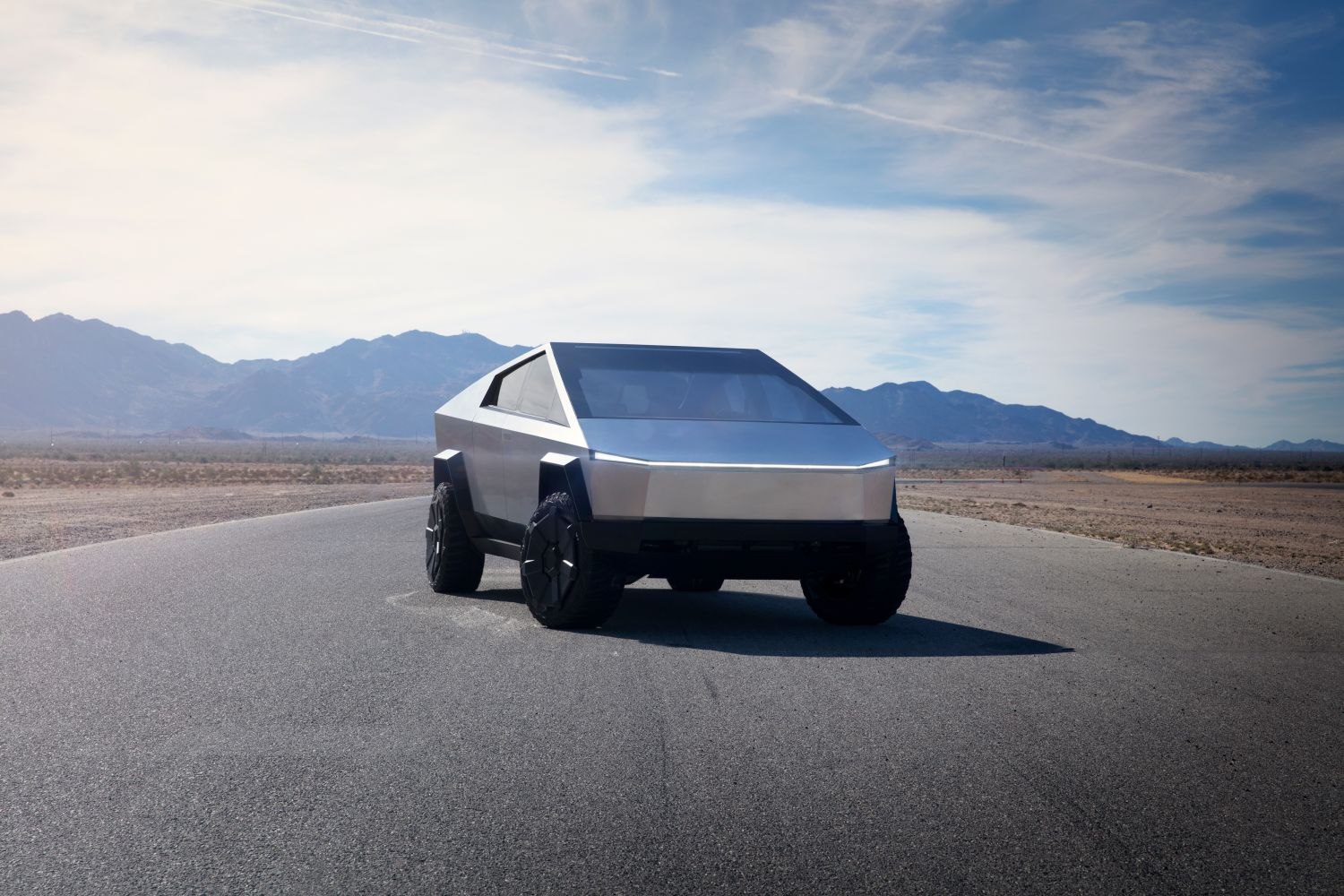
For American truck buyers a demographic deeply rooted in utility and performance this is a major cultural shift.
The Cybertruck demonstrates that electric trucks can be both workhorses and legitimate straight-line performers, challenging long-held assumptions about what a pickup should be.
8. Lucid Air Grand Touring Performance
Just below the Sapphire sits the Lucid Air Grand Touring Performance, a model that emphasizes balance.
Its quarter-mile performance hovers around the 10-second mark, placing it firmly among elite performers, yet it also offers exceptional driving range.
This duality is especially appealing in the U.S., where long highway trips are common. The Grand Touring Performance shows that buyers don’t need to choose between speed and practicality electric technology can deliver both.
Making an EV fast in a straight line has become almost routine, and Tesla has built a reputation on it over the past decade. The real challenge has been creating an electric car that drives like a world-class sports car, despite the heavy battery packs.
Many experienced automakers have tried, often succeeding in cornering quickly but failing to capture the true feel of a high-performance sports car.
The 2022 Lucid Air Grand Touring Performance (GTP) appears to have solved this problem. Lucid’s director of chassis and vehicle dynamics, David Lickfold, personally retuned the Air’s chassis for this model, benchmarking it against a last-generation Porsche 911 GT3 RS, widely regarded as one of the finest sports cars ever built.
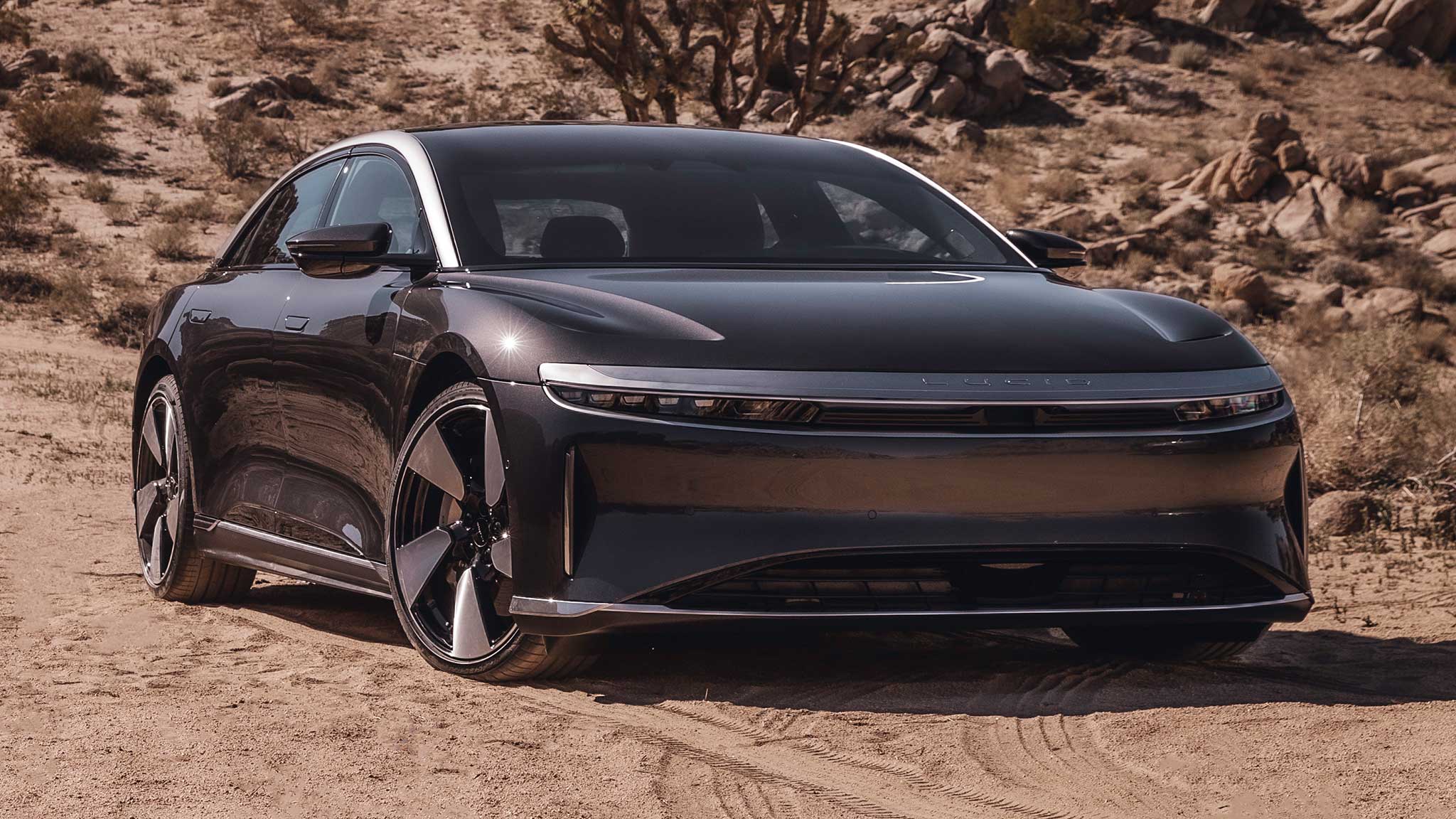
The numbers are impressive but don’t tell the full story. On the skidpad, the Air GTP achieved 0.87 g, lower than other high-performance EVs such as the Tesla Model S Plaid and Porsche Taycan Turbo S, both of which exceed 1.00 g. Its figure-eight lap averaged 0.80 g in 24.8 seconds, a second or more behind those rivals.
Yet raw metrics don’t capture the driving experience. On winding roads, the Air GTP feels sharper, more responsive, and more connected than either the Tesla or the Taycan.
Despite weighing roughly 450 pounds more than the Tesla, it feels lighter, with exceptional front-end response, nimble handling, and excellent steering feedback, qualities that make it feel like a classic high-performance sport sedan rather than a large, heavy EV.
The engineering achievement is significant because EVs face unique challenges: suspension and brakes must handle extra weight, regenerative and mechanical braking must seamlessly interact, and all-wheel-drive setups can compromise steering feel if not carefully tuned.
The Air GTP overcomes these hurdles. Its 1,050-horsepower all-wheel-drive system delivers abundant power without sacrificing poise or grip. Accelerating hard out of corners, the car remains composed, sticking firmly to the road, and drifting requires intentional effort.
Lucid has set a new benchmark for handling in electric vehicles, producing the kind of driving experience enthusiasts have long hoped EVs could achieve.
9. Nio EP9
The Nio EP9 is less about everyday usability and more about pushing electric performance boundaries.
While not fully street-legal in the U.S., its quarter-mile times in the low-10-second range highlight what’s possible when weight reduction and aerodynamics take priority over comfort.
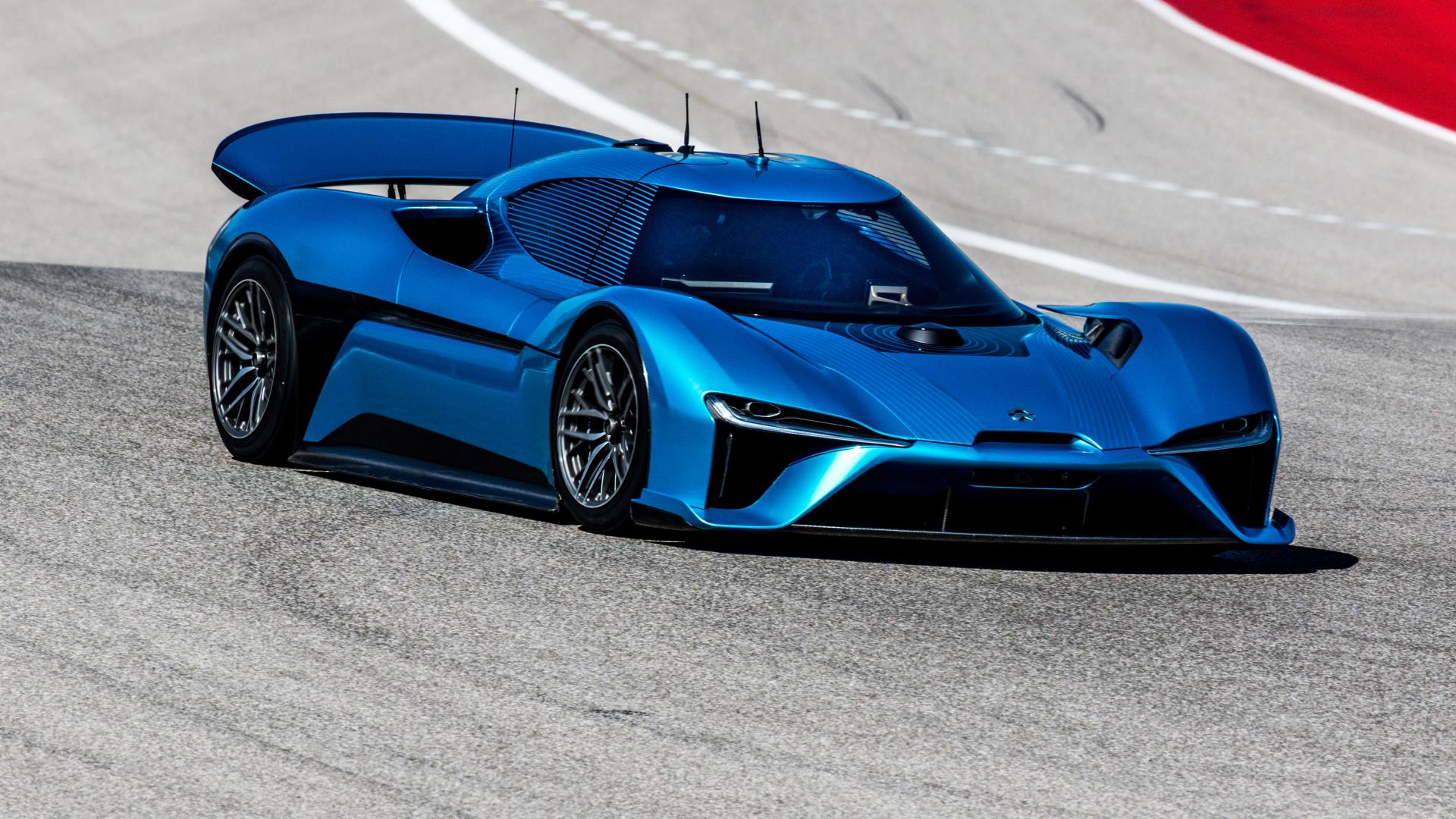
The EP9’s inclusion underscores how electric drivetrains have become legitimate tools for motorsport-level engineering, not just consumer transportation.
The 2016 Nio EP9 made a dramatic debut as an all-electric supercar, demonstrating that Chinese engineering could deliver both breathtaking performance and futuristic design in a halo vehicle.
Developed in just 18 months by a team with Formula E experience, the EP9 was revealed at the Saatchi Gallery in London in November 2016, impressing the audience with its speed and endurance records. More than a showpiece, the EP9 introduced battery-swapping technology capable of replacing the pack in under five minutes, positioning Nio as a serious global EV contender.
Design-wise, the EP9 embraced a “form-follows-function” philosophy. Its low nose was flanked by taller fenders with slim LED headlights, while a broad trapezoidal air intake and side scoops cooled the brakes and enhanced aerodynamics.
The car’s carbon-fiber body and raked panoramic windshield created a fighter-jet–style cockpit, complemented by a sloping roofline that flowed into an active rear wing.
Massive rear haunches, vertical air intakes, and lightweight wheels, 19 inches up front and 21 inches in the rear, further emphasized power and stability. The rear wing incorporated a DRS system borrowed from Formula E, and aerodynamic details under the car boosted downforce for high-G lateral acceleration.
Inside, the EP9 was designed for extreme performance. High side restraints protected occupants during intense cornering, while a squared-off multifunction steering wheel with shaved corners integrated a display. A second display sat directly in front of the driver, and a wide touchscreen on the center stack handled infotainment.
High-bolstered leather bucket seats provided excellent lateral support, and a tall center tunnel housed battery components while reinforcing the racecar-like cockpit. As a track-only vehicle, the EP9 was not road-legal.
Power came from four electric motors delivering a combined 1,341 horsepower (1,000 kW) to all four wheels. Thanks to its low weight, the EP9 could accelerate from 0 to 62 mph (0–100 kph) in under three seconds, with a top speed of 132 mph (212 kph), cementing its status as one of the fastest and most technologically advanced EV supercars of its time.
10. Rivian R1T Quad Motor
The Rivian R1T Quad Motor occupies a rare niche: a vehicle that can haul gear off-road and still run a quarter-mile in the mid-10-second range. Its four-motor setup allows precise torque control, giving it explosive launches despite its truck proportions.
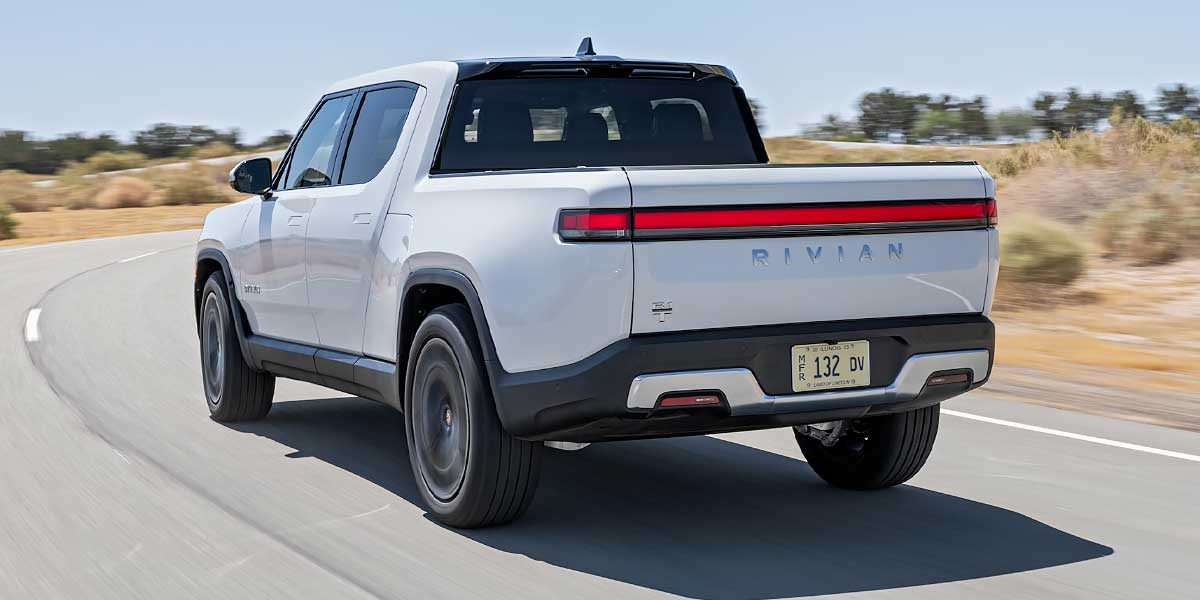
For American buyers who want adventure capability without sacrificing performance, the R1T proves that electric trucks can be more than eco-friendly alternatives they can be legitimately fast machines.
Slightly larger than a Ford Ranger, the R1T is available with either two or four electric motors, depending on the model. The most powerful Quad-Motor version generates 835 horsepower and can tow up to 11,000 pounds, while the Dual-Motor model produces 665–600 horsepower and still delivers remarkable performance, reaching 60 mph in 3.4 seconds compared with 3.3 seconds for the Quad-Motor at our test track.
Its relatively compact size makes it easier to maneuver in tight spaces than larger competitors like the Ford F-150 Lightning or GMC Hummer EV SUT.
The R1T’s cabin is outfitted with luxury features and modern tech, including a large 15.6-inch infotainment system and a separate digital gauge display.
Off-road capability is enhanced by standard adjustable air suspension, available all-terrain tires, and an optional carbon-fiber underbody shield. For 2023, Rivian introduced over-the-air software updates enabling features such as Camp Mode, Pet Comfort Mode, and Soft Sand and Snow driving modes.
Pricing for the 2023 R1T starts at $74,800 and climbs to $86,800 depending on trim and options. The Adventure trim stands out with desirable amenities like a Meridian stereo system, heated and ventilated front seats, and wood interior trim.
Upgrading to the Large battery pack adds range for an extra $6,000, while the Quad-Motor all-wheel-drive setup costs $8,000 more but significantly boosts performance. For most drivers, the Max battery pack isn’t necessary, as it increases range by 27 percent compared with the Large pack but costs $16,000.
Standard all-wheel drive, adjustable air suspension ranging from eight to 14 inches of ground clearance, and the impressive combination of power, luxury, and off-road ability make the Rivian R1T one of the most versatile electric pickups available.
11. Porsche Taycan Turbo S
Rounding out the list is the Porsche Taycan Turbo S. While its quarter-mile times trail the fastest EVs here, the Taycan emphasizes repeatable performance, handling balance, and braking qualities Porsche has long prioritized.
In the U.S. market, the Taycan Turbo S appeals to drivers who value driver engagement as much as outright speed. It may not win every drag race, but it delivers a level of polish that few EVs can match.
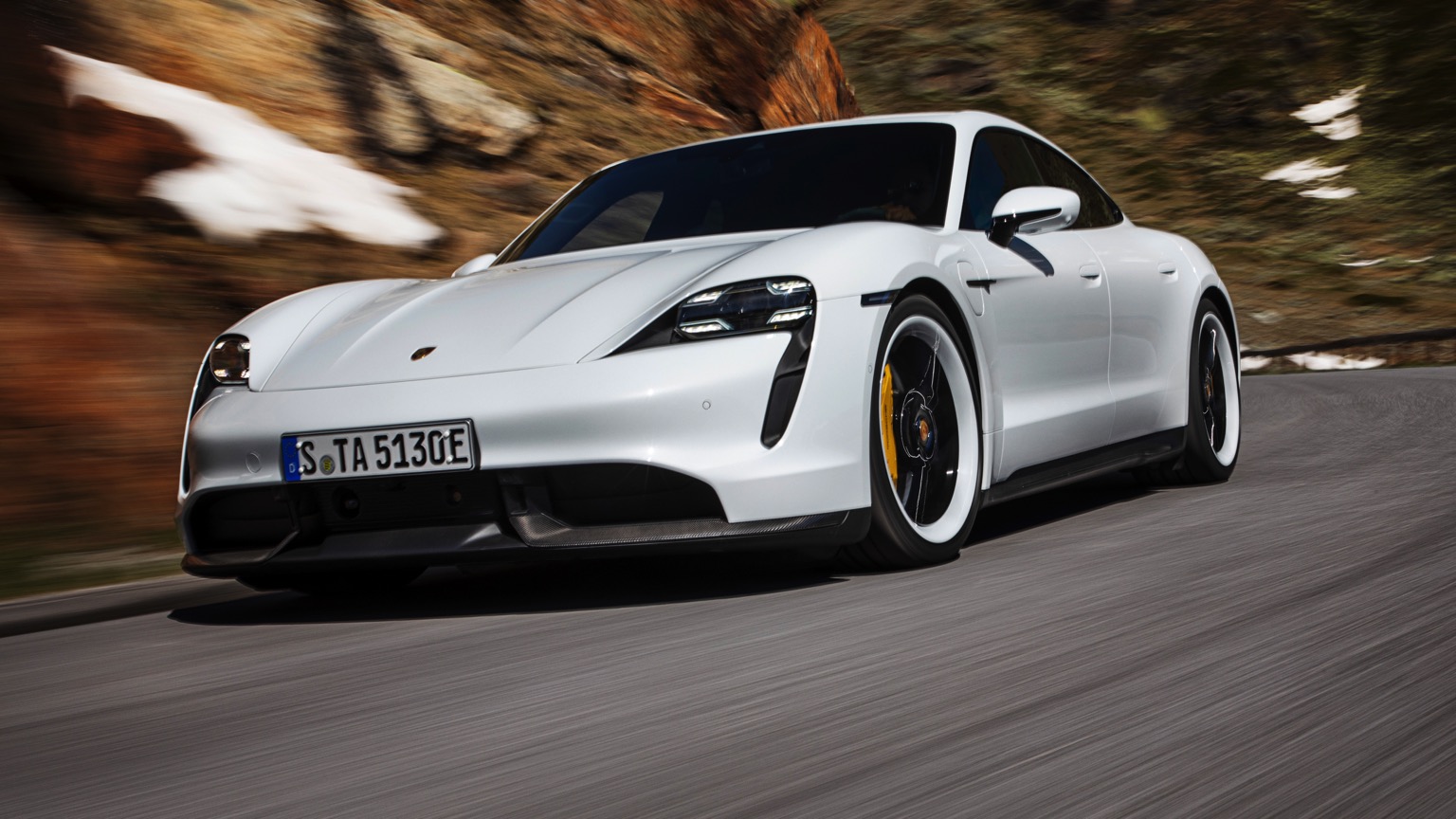
For American enthusiasts, the quarter-mile has always been a proving ground. What’s remarkable today is how electric cars dominate that space not through brute mechanical force, but through precision, software, and instant torque.
The 2025 Porsche Taycan Turbo S Cross Turismo continues to cement Porsche’s reputation for electrifying performance. Our test car carries a base price of $213,695, with the as-tested sticker hitting $253,465, placing it far above competitors like the BMW M5 Touring, which starts at $125,275 and clocks impressive speeds in its own right.
Equipped with Porsche’s front and rear motor setup and a larger battery pack, the Turbo S produces 764 horsepower (rising to 938 hp with launch control) and 818 lb-ft of torque, transmitted to the ground through all four 21-inch Pirelli P Zero tires.
On the track, it achieved a best 0–60 mph time of 2.2 seconds and a quarter-mile in 9.8 seconds at 143.5 mph, slightly slower than the more expensive Taycan Turbo GT Weissach but far quicker than the standard Taycan 4S.
Using Sport+ drive mode and launch control, with the battery at 99 percent charge, the AWD system hooks up with traction immediately, propelling the car in a straight, controlled line while delivering a jolt that can snap an unprepared passenger’s head rearward.
Despite the brutal acceleration, the Turbo S Cross Turismo remains composed and precise, handling the launch without any unwanted veering.
Its performance combines drama-free control with heart-stopping excitement, creating moments that leave passengers laughing, screaming, or both, sometimes all in the same run.
With this mix of wagon practicality, AWD grip, and near-supercar acceleration, the Taycan Turbo S Cross Turismo demonstrates that Porsche can deliver both everyday versatility and extreme, spine-tingling electric performance.
These vehicles represent a fundamental shift in how performance is engineered and experienced. Electric cars are no longer “the future” they are the fastest machines on the road right now, and the quarter-mile times prove it.
