For decades, Japanese motorcycles have shaped not just how bikes perform, but how they look and feel.
While Japan’s manufacturers initially gained global dominance through reliability and value, it didn’t take long for their designers to prove they could rival and often surpass the aesthetic confidence of European brands.
From minimalist naked bikes to futuristic superbikes and elegantly restrained cruisers, Japanese motorcycles have repeatedly reset expectations for what “beautiful” means on two wheels.
Unlike many Western designs that lean heavily on heritage or aggressive styling alone, Japanese motorcycle design often balances harmony, proportion, and purpose.
Every line usually serves a mechanical or ergonomic function, yet the end result still feels emotionally resonant.
In the U.S. market especially, these bikes didn’t just sell well they changed how American riders thought about Japanese engineering, elevating it from practical transportation to rolling art.
What follows isn’t simply a list of popular motorcycles. These are machines that influenced design language, inspired competitors, and remain visually compelling years or even decades after their debut.
Each one represents a moment when Japanese manufacturers took a risk, trusted their designers, and reshaped motorcycle aesthetics in a meaningful way.
1. Honda CB750 (1969)
The original Honda CB750 didn’t just revolutionize performance it quietly redefined motorcycle design for the modern era. Before its arrival, big motorcycles often looked mechanical, cluttered, and intimidating.
The CB750 introduced visual balance. Its inline-four engine sat cleanly within the frame, chrome was used tastefully rather than excessively, and the proportions felt intentional rather than improvised.
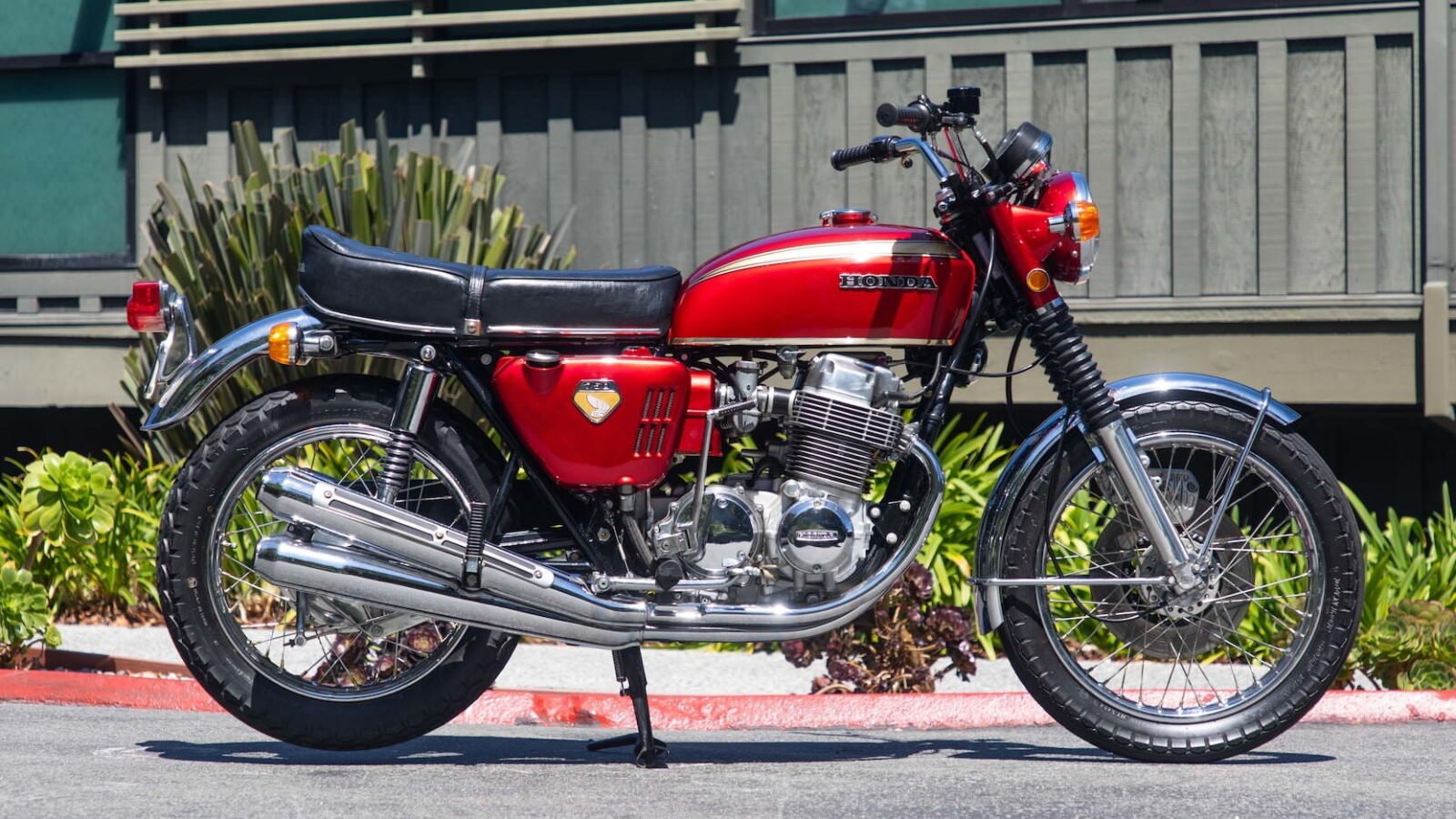
For American riders in the late 1960s, the CB750 looked futuristic without being alien. The tank flowed naturally into the seat, the exhausts were symmetrical, and nothing appeared overstyled.
This was industrial elegance at a time when motorcycles were still shaking off their rough, outlaw image. Even today, restorations and modern retros borrow heavily from the CB750’s understated silhouette, proving its design legacy remains deeply influential.
2. Yamaha RD350 (1973)
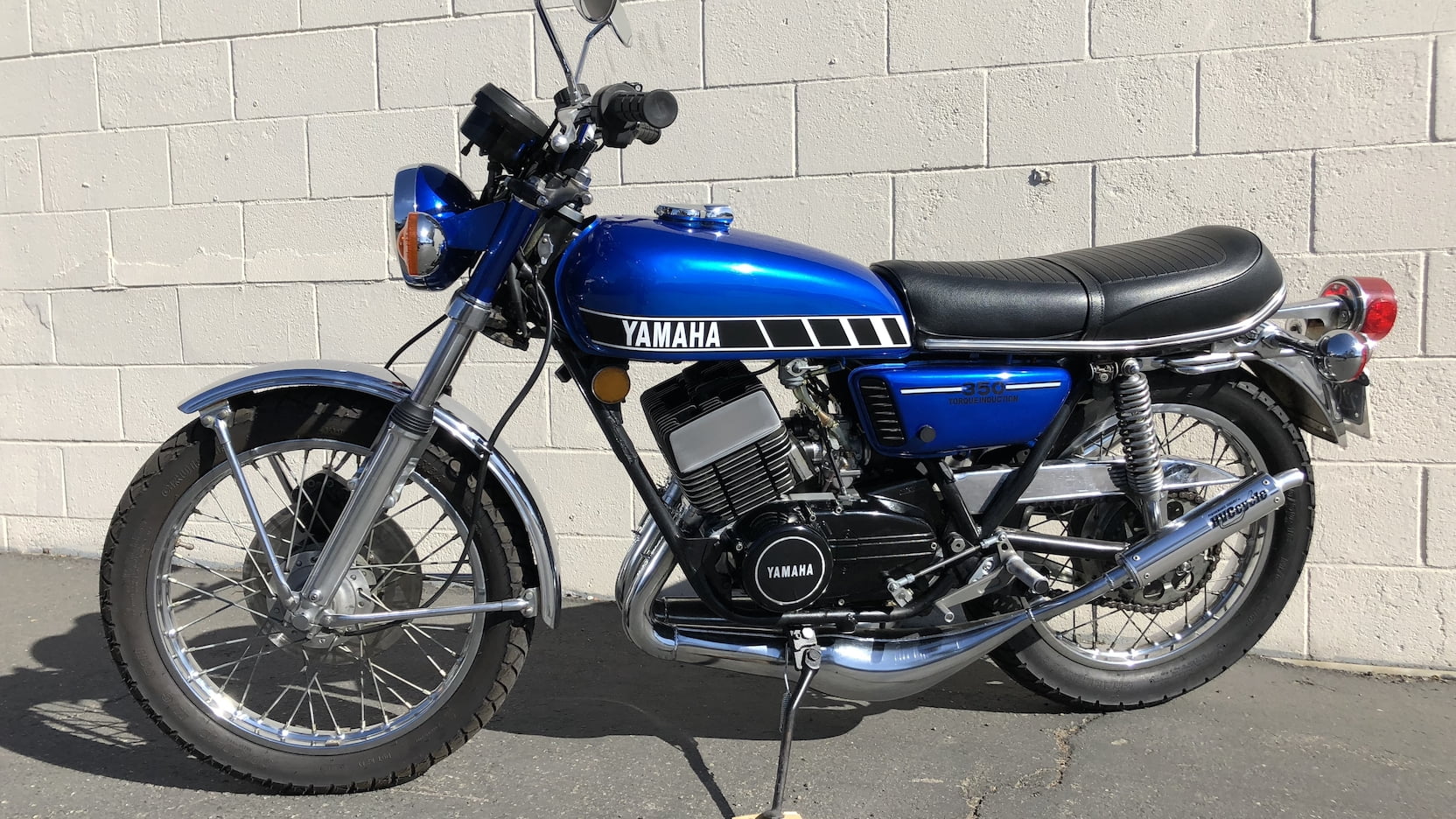
The Yamaha RD350 was compact, lightweight, and deceptively simple, yet its design conveyed speed and agility even while standing still.
Unlike larger four-stroke bikes of its era, the RD350 embraced a lean profile, emphasizing performance through minimalism.
Its narrow tank, slim tail section, and purposeful stance communicated exactly what the bike was about: sharp handling and visceral riding.
In the U.S., the RD350 became iconic not because it was flashy, but because it felt honest. There was no excess bodywork, no attempt to disguise its mechanical nature.
Instead, Yamaha leaned into clarity of form, making the RD350 a blueprint for how small performance bikes should look. That design philosophy continues to influence lightweight sport and naked bikes today.
The Yamaha RD 350 was a sports motorcycle produced by Yamaha from 1973, introduced as the replacement for the Yamaha R5, and it remained in production until 1975, when it was succeeded by the Yamaha RD400.
Powered by a two-stroke engine, the RD 350 was a direct evolution of the R5 and represented Yamaha’s continuing development of lightweight, high-performance road bikes during the era.
All versions of the RD 350 were equipped with Yamaha’s Autolube system, an automatic oil-injection setup that spared riders the inconvenience of premixing two-stroke oil with fuel. Depending on the market, the bike was offered with either a six-speed manual gearbox or a five-speed transmission, giving Yamaha flexibility to meet regional regulations and preferences.
The RD 350’s chassis shared very similar dimensions with Yamaha’s TZ250 and TZ350 factory road-racing machines, differing mainly in overall weight and front-end geometry. Notable changes included a more relaxed 27-degree front fork rake on the RD compared to the steeper 25-degree rake used on the TZ race bikes, contributing to greater stability for road use.
In terms of performance, the 1973 Yamaha RD 350 was powered by a 347cc, air-cooled, two-stroke parallel-twin engine fed by a pair of Mikuni carburetors. This setup produced 39hp at 7,500rpm, along with 33Nm (24lb-ft) of torque at 7,000rpm, delivering lively acceleration and strong mid-range punch for its time.
Power was managed through a six-speed manual transmission with a wet multi-plate clutch, with drive transmitted to the rear wheel via a chain final drive.
The bike was built around a double-cradle steel frame, suspended by telescopic front forks and twin rear shock absorbers. Braking was handled by a 267mm front disc with a dual-piston caliper, while the rear relied on a 178mm drum brake, a typical setup for performance motorcycles of the period.
3. Kawasaki Z1 (1972)
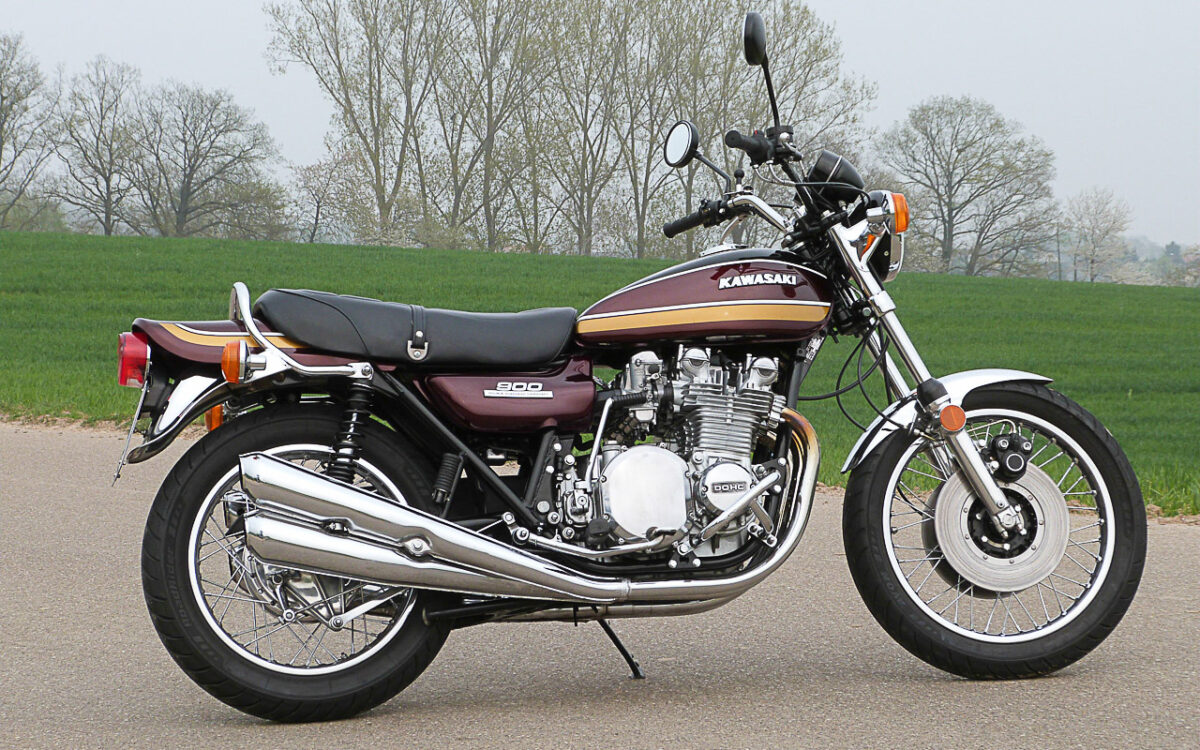
If the Honda CB750 introduced balance, the Kawasaki Z1 introduced drama without sacrificing refinement. The Z1 was larger, more muscular, and visually bolder, yet still remarkably cohesive.
Its long tank, aggressive stance, and wide engine presence gave it undeniable road authority, something American riders gravitated toward immediately.
What set the Z1 apart was how it blended brute force with elegance. The paint schemes were rich and deep, the proportions felt confident, and the bike avoided looking bulky despite its size.
Kawasaki’s designers managed to make power look beautiful rather than intimidating, a lesson the brand continues to apply across its lineup today.
The Kawasaki Z1 was a standard motorcycle introduced by the Japanese manufacturer in 1972, powered by a four-cylinder, air-cooled DOHC engine. The bike played a pivotal role in popularizing the inline, across-the-frame four-cylinder layout that would come to define the Universal Japanese Motorcycle (UJM).
The Z1 was notable as the first large-displacement Japanese production bike to employ a DOHC system, setting a new benchmark for performance and engineering.
The model remained largely unchanged until 1975, when Kawasaki introduced an updated 903cc engine with increased power. That year also brought improvements to the suspension, a stiffer frame, the removal of the automatic chain oiler, revised styling, and a more effective braking system, enhancing both performance and rider confidence.
The Z1 was built around a double-cradle tubular steel frame, with a 36mm telescopic fork managing the front end and dual rear shock absorbers featuring five-way preload adjustability. Braking was handled by a 296mm front disc with a dual-piston caliper and a 200mm rear drum, delivering strong, reliable stopping power.
Power came from a 903cc, four-stroke, four-cylinder air-cooled engine fed by four Mikuni carburetors, producing 82hp at 8,500rpm and 73Nm (54lb-ft) of torque at 7,000rpm.
This output was transmitted to the rear wheel via a five-speed gearbox and chain final drive, allowing the Kawasaki Z1 to reach a top speed of 217kph (135mph) and cementing its status as one of the defining motorcycles of its era.
4. Suzuki Katana (1981)
Few motorcycles have ever looked as radical at launch as the Suzuki Katana. Designed by former BMW stylist Hans Muth, the Katana broke away completely from conventional motorcycle aesthetics.
Its angular fairing, flat lines, and futuristic posture looked more like a concept bike than a production model.
In the early 1980s U.S. market, reactions were polarized some riders loved it, others didn’t know what to make of it but no one ignored it.
Over time, the Katana’s design proved prophetic, influencing the sharp, aggressive styling seen on sportbikes for decades afterward. Today, it’s widely recognized as one of the most important design statements in motorcycle history, Japanese or otherwise.
The Katana was a Japanese street motorcycle produced by Suzuki between 1981 and 2006. From the outset, it stood apart as one of the most visually distinctive motorcycles of its era.
Based on the GSX1100E platform, the Katana entered production in 1981, blending a high-performance engine with sharp, angular styling inspired by the Japanese sword from which it took its name.
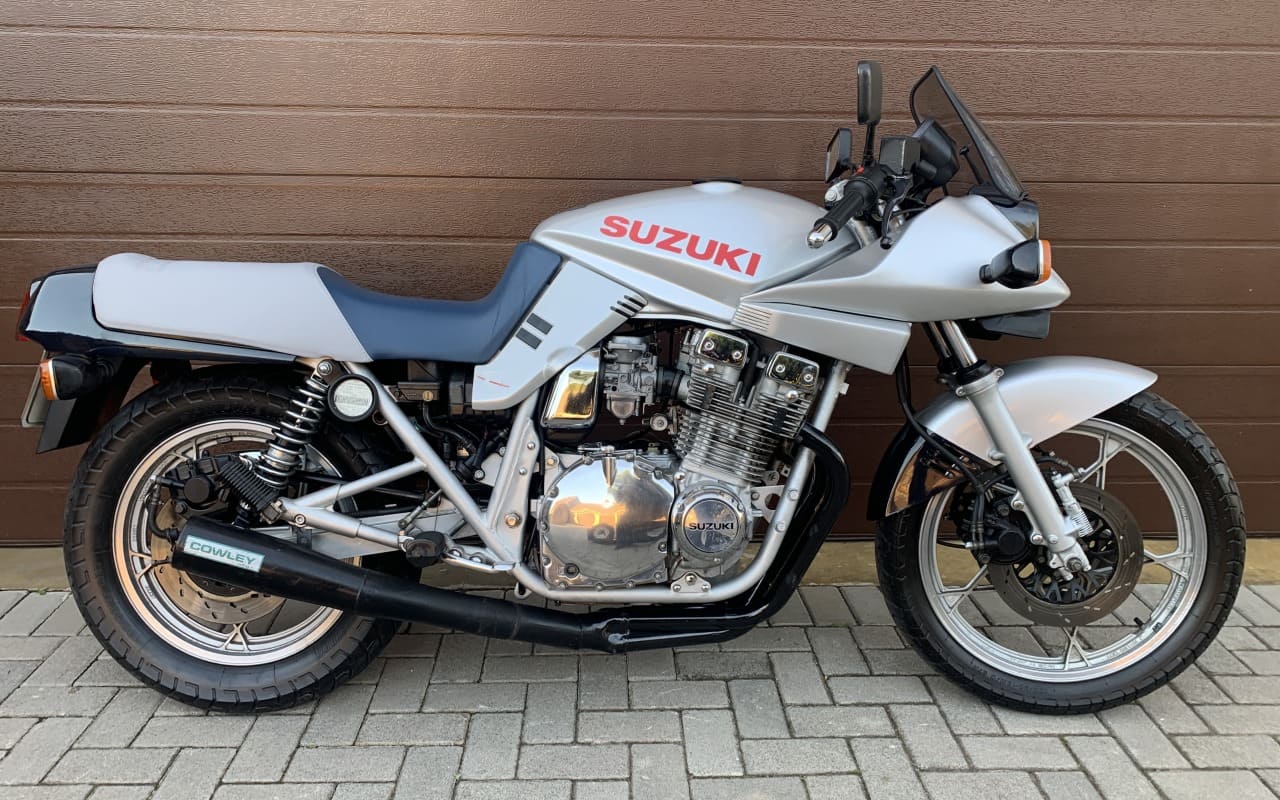
Thanks to its immense popularity, the Katana family expanded over the years to include a wide range of variants, from 125, 250, 400, 650 and 750cc models through to larger-capacity versions, allowing the design philosophy to reach a broad spectrum of riders.
This now-iconic machine was equipped with a distinctive set of components, including an upper fairing, a rectangular headlight, a small windscreen and a two-tone, one-piece dual seat. Further defining features included side-mounted rear shock absorbers, a four-into-two exhaust system with a silencer on each side, and cast aluminium wheels, all of which contributed to the Katana’s unmistakable presence.
Beneath the fuel tank of the 1981 Suzuki GSX1100S Katana sat a 1,074cc, air-cooled, four-stroke, four-cylinder engine producing 111hp at 9,500rpm and 98Nm (72lb-ft) of torque at 6,500rpm. Power was managed through a five-speed manual gearbox, assisted by a wet multi-plate clutch, with final drive delivered to the rear wheel via a chain.
The motorcycle was built around a double-cradle steel frame, supported by a conventional telescopic fork at the front and a pair of oil-damped, side-mounted rear shock absorbers, providing stable and capable handling. Braking duties were handled by twin 275mm discs at the front, gripped by dual-piston calipers, while a single 275mm rear disc with a single-piston caliper completed the setup.
5. Honda VFR750F (1986)
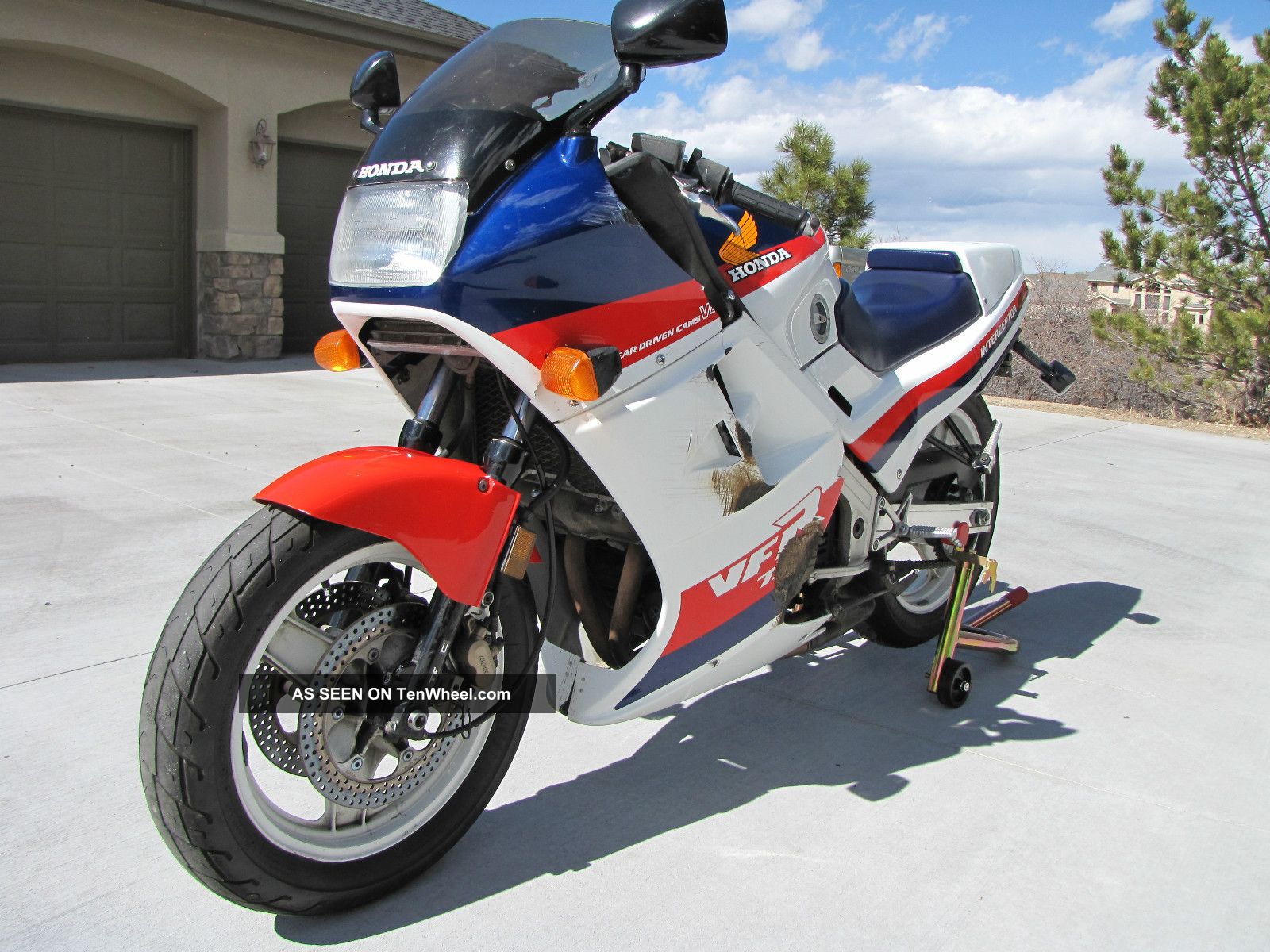
The Honda VFR750F showed that sport motorcycles could be beautiful without being extreme. While many performance bikes of the era leaned toward sharp angles and loud graphics, the VFR took a more refined approach.
Its fairing flowed smoothly, its proportions were balanced, and its design aged gracefully rather than chasing trends.
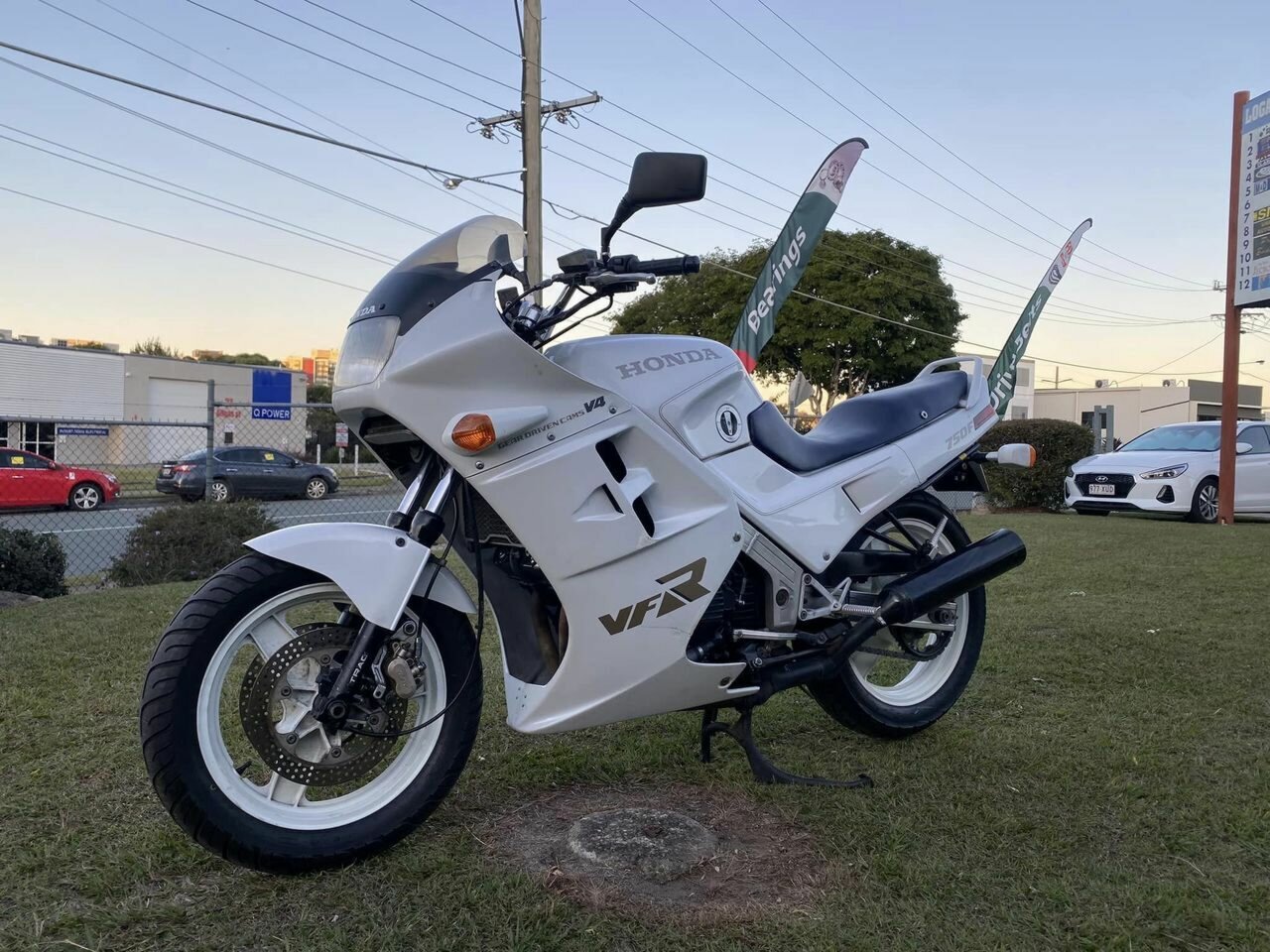
For American riders who wanted performance without sacrificing comfort or sophistication, the VFR looked mature and purposeful.
It represented Honda’s ability to design motorcycles that appealed emotionally while still feeling usable and elegant. Even modern sport-touring bikes owe a design debt to the VFR’s understated confidence.
6. Yamaha VMAX (1985)
The Yamaha VMAX didn’t just break design rules it gleefully ignored them. With its massive intake scoops, muscular stance, and unapologetically aggressive appearance, the VMAX looked like nothing else on the road.
It was a motorcycle that visually communicated excess, power, and rebellion. In the U.S., where muscle cars had long influenced automotive taste, the VMAX struck a chord.
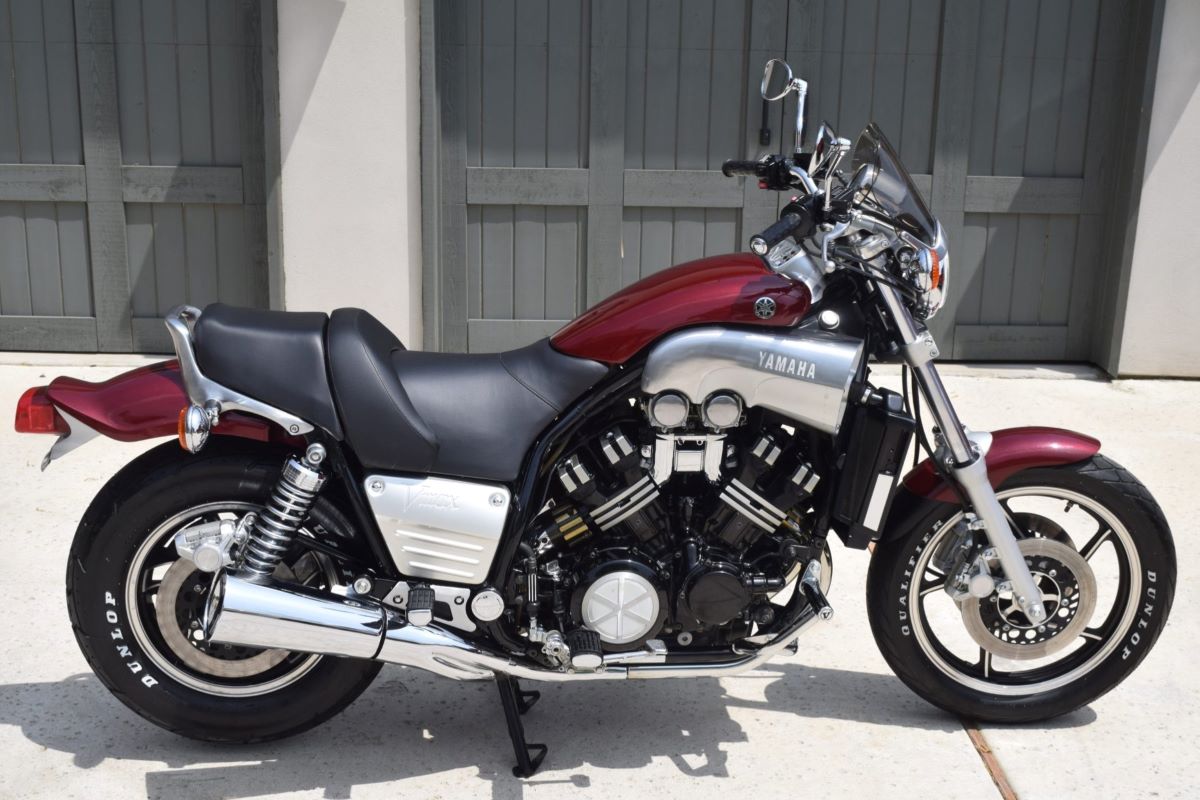
Its design celebrated mechanical presence rather than hiding it, turning the engine and intake into visual centerpieces. Despite being over the top, the VMAX was remarkably cohesive, proving that bold design could still be beautiful when executed with intent.
Back in 1985, Yamaha launched the Yamaha V-Max, also known simply as the VMAX, a cruiser motorcycle that quickly became famous for its V4 engine, shaft drive, and bold, distinctive styling. While it offered blistering acceleration, it earned criticism for its cornering performance and relatively soft suspension.
Sold in Japan and internationally, the model remained largely unchanged from 1985 through 2007, receiving only minor updates during its production run. Visually, it featured a round headlight, wide handlebars, a two-piece dual seat, a two-into-two exhaust system, side-mounted rear shocks, and cast aluminum alloy wheels, all contributing to its aggressive cruiser stance.
The suspension setup comprised a 40mm air-pressured Kayaba telescopic fork up front with 140mm of travel, paired with damping and preload-adjustable Kayaba shocks at the rear offering 100mm of travel. Braking duties were handled by dual 298mm discs with two-pot calipers on the 18-inch front wheel, while the 15-inch rear wheel featured a 282mm rotor with a dual-pot caliper.
At its heart, the 1985 Yamaha V-Max was powered by a 1,198cc, four-stroke, liquid-cooled V4 engine producing 145hp at 9,000rpm and 112Nm (83lb-ft) of torque at 7,500rpm.
Four 35mm Mikuni carburetors fed the engine, which was paired with a five-speed manual gearbox and final shaft drive. This combination allowed the V-Max to reach a top speed of 240kph (150mph), cementing its reputation as one of the fastest and most powerful cruisers of its era.
7. Honda NR750 (1992)
The Honda NR750 remains one of the most visually striking motorcycles ever produced, Japanese or otherwise.
Built as a technological showcase, its oval pistons and carbon fiber bodywork were matched by a design that felt years ahead of its time. The bike’s proportions were sleek, aerodynamic, and impossibly exotic.
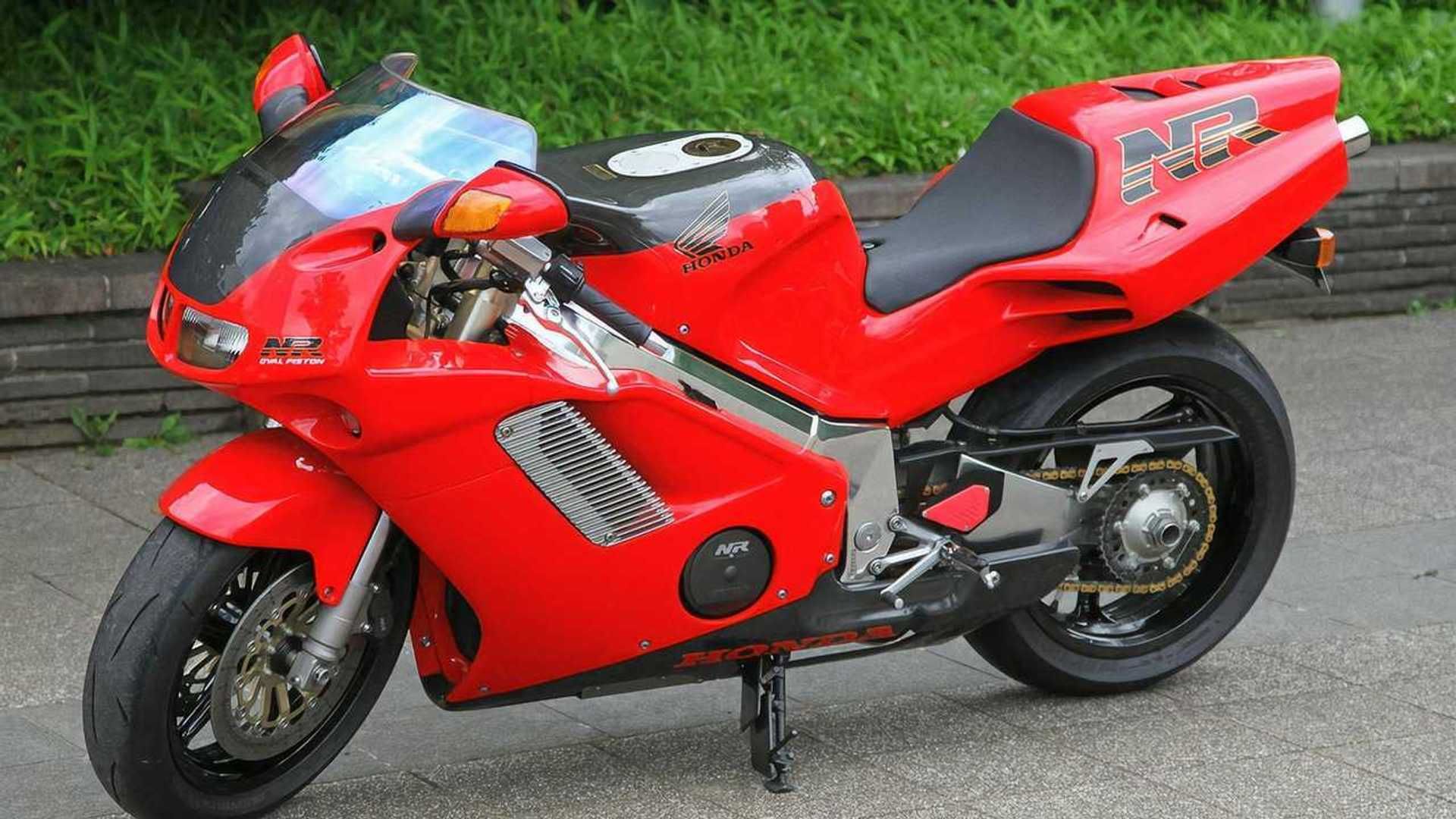
For American enthusiasts, the NR750 became a unicorn rare, expensive, and unattainable for most. Yet its influence on sportbike aesthetics was profound.
Flush body panels, integrated lighting, and minimalist branding all foreshadowed design trends that wouldn’t become mainstream until years later. Even today, the NR750 looks contemporary, a testament to the strength of its design vision.
8. Kawasaki Ninja ZX-7R (1990)
The ZX-7R embodied the golden age of Japanese superbikes, blending aggression with visual clarity. Its wide fairing, ram-air intake, and bold graphics made it instantly recognizable, while still maintaining functional design principles rooted in racing.
In the U.S., the ZX-7R became synonymous with track-ready performance, and its design reflected that purpose without unnecessary ornamentation.
Everything about the bike looked fast, planted, and capable. It wasn’t subtle, but it was honest, and that honesty made it beautiful to riders who valued form following function.
The Kawasaki ZXR 400 was a fully faired sports motorcycle produced from 1989 until 1999, when it was succeeded by the Kawasaki Ninja ZX-4R. Upon its release, the ZXR 400 quickly became one of the most popular 400cc sports bikes on the market.
The model was offered in two versions, the H and the L. The H model was introduced first, later replaced by the L in 1991. While global production ended in 1999, the ZXR 400 continued to be sold in the UK until 2003.
In terms of styling, the bike featured a full fairing with a small windscreen, a single seat, a four-into-one exhaust system with the silencer mounted on the right side, and lightweight three-spoke aluminum wheels, giving it a sharp, race-inspired appearance.
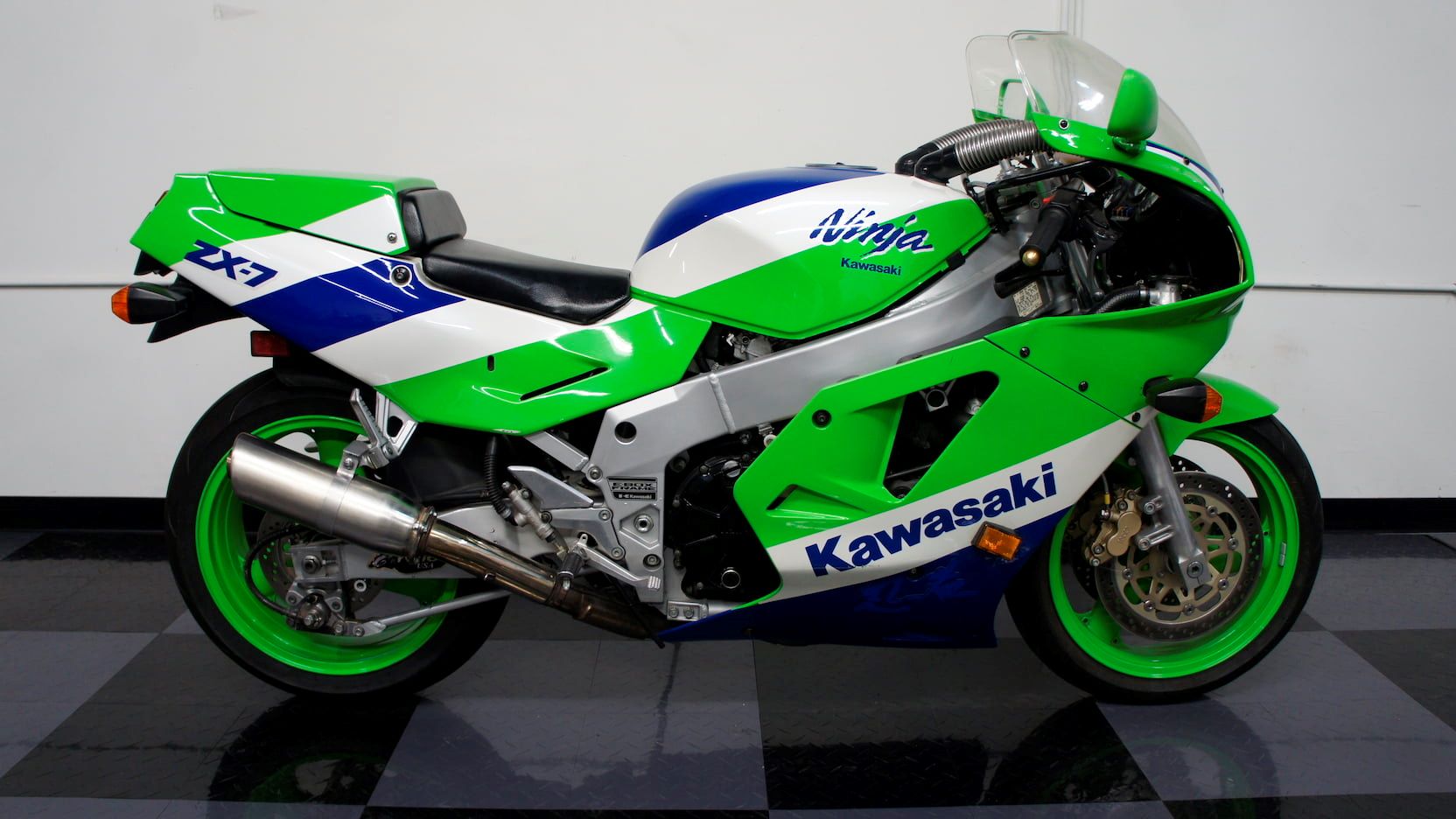
Chassis-wise, the ZXR 400 was built around an aluminum diamond tubular double-cradle frame, complemented by a 41mm inverted Showa telescopic fork at the front and a Uni-Trek preload-adjustable rear shock absorber, delivering precise handling and confident road manners.
Braking performance was handled by dual 300mm discs with four-piston calipers on the front wheel and a 240mm disc with a dual-piston caliper at the rear, providing excellent stopping power.
Powering the 1991 Kawasaki ZXR 400 was a 398cc, four-stroke, four-cylinder, liquid-cooled engine. It produced 65hp at 13,000rpm and 41Nm (30lb-ft) of torque at 10,000rpm, making it a lively and responsive machine that perfectly matched its sporty design.
9. Yamaha R1 (1998)
When the Yamaha R1 debuted, it reset the design language for modern sportbikes. Compact, aggressive, and tightly packaged, it looked smaller and sharper than anything else in its class.
The visual mass was centralized, giving the bike a predatory stance that immediately conveyed performance.
American riders responded not just to its speed, but to how it looked doing it. The R1 proved that extreme performance and aesthetic appeal could coexist without compromise.
Its influence is still visible in today’s superbikes, many of which continue to chase the compact proportions the R1 pioneered.
Hailing from the Yamaha YZF-R1’s inaugural production year, this 1998 model is remarkably close to flawless, with just a few minor blemishes marring its surface.
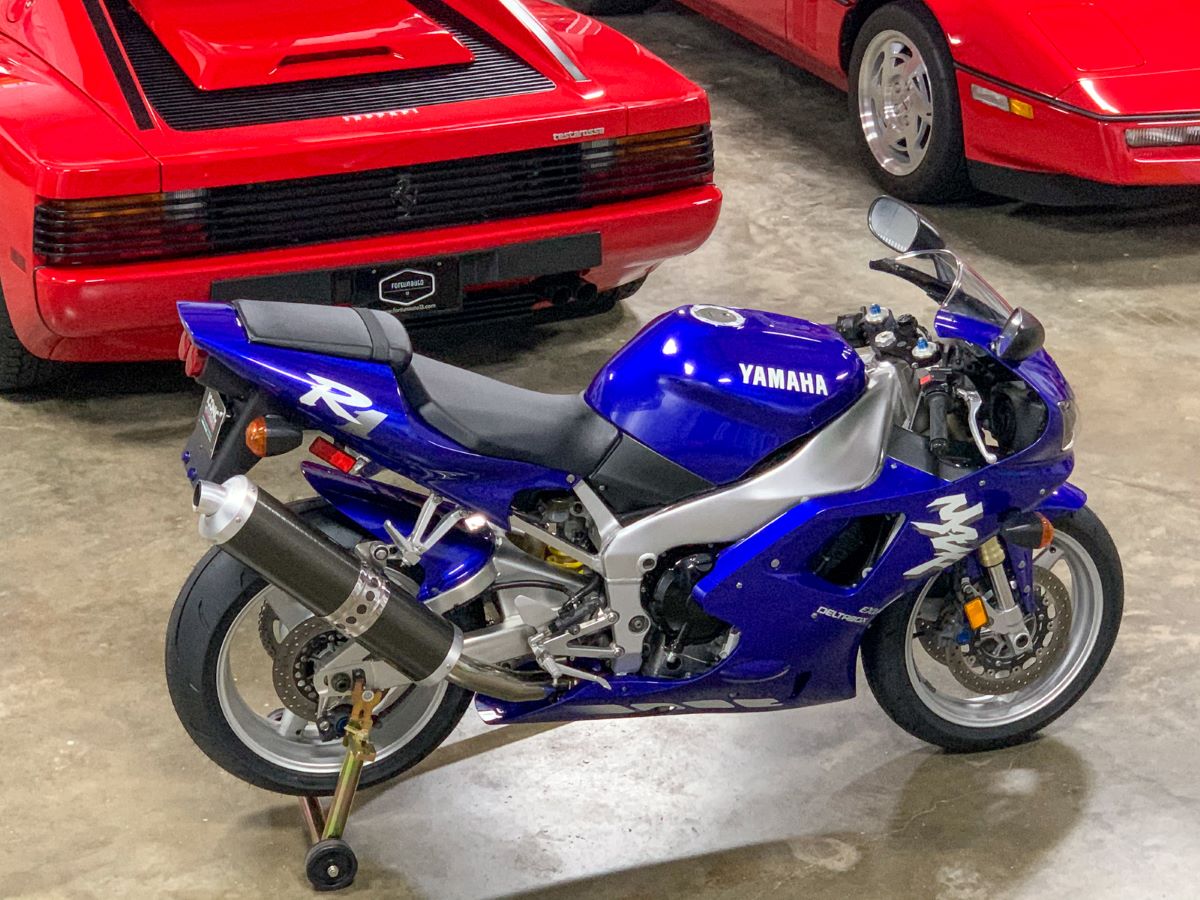
Having spent much of its life on display, the bike’s six-digit odometer reads under 5,700 miles (9,200 km). Notable upgrades include top-tier Goodridge brake lines at the front and an aftermarket drive chain paired with a Renthal rear sprocket, enhancing both performance and reliability.
Propelling this legendary liter-bike is a carbureted, DOHC inline-four engine featuring 11.8:1 compression and five valves per cylinder. Power is delivered to the rear wheel via a six-speed gearbox working in tandem with a wet multi-plate clutch.
The liquid-cooled engine produces up to 150hp at 10,000rpm, offering a thrilling ride for enthusiasts. At 8,500rpm, the engine delivers a robust 80lb-ft (108Nm) of crank-measured torque, enabling the R1 to sprint the quarter-mile in 10.8 seconds and reach a top speed of 168mph (270kph).
The powertrain is housed within a twin-spar aluminum frame, providing rigidity and stability at high speeds. Up front, suspension duties are handled by 41mm inverted forks, while the rear relies on a single shock absorber adjustable for preload, rebound, and compression damping.
Braking performance is strong, with dual 298mm discs at the front and a single 245mm rotor at the rear, ensuring confident stopping power to match the bike’s formidable acceleration.
10. Honda CB1100 (2010)
The Honda CB1100 demonstrated that beauty doesn’t always come from innovation it can come from restraint.
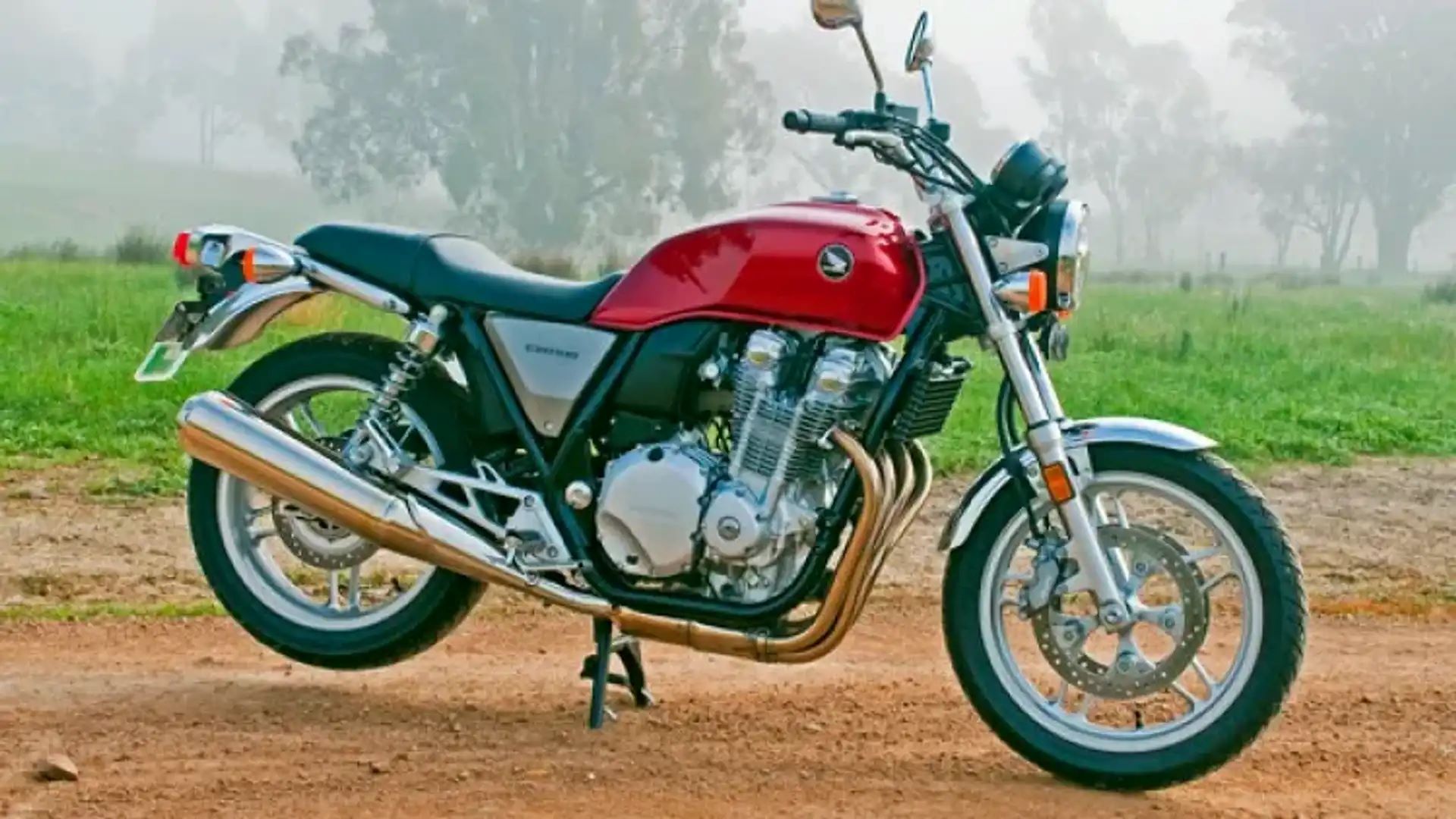
Designed as a modern homage to classic Hondas, the CB1100 avoided retro gimmicks in favor of authentic proportions, clean lines, and premium finishes.
For the U.S. market, where nostalgia often drives purchasing decisions, the CB1100 stood out by feeling genuine rather than forced.
It respected the past while benefiting from modern engineering, proving that timeless design remains just as powerful as radical reinvention.
Japanese motorcycles didn’t redefine beautiful design by chasing trends they did it by understanding riders.
The Honda CB1100 is a naked motorcycle powered by a 1,140cc air-cooled engine, first introduced by Honda in 2010 as the spiritual successor to the original CB750. Initially, the bike was available in Japan, Australia, and New Zealand, before Honda expanded its reach to Europe and the United States in 2013.
The first CB1100 model, released in 2011, catered to riders in Japan, Australia, and New Zealand, combining a classic, retro-inspired aesthetic with a thoroughly modern package underneath.
Styled as a Universal Japanese Motorcycle (UJM), it balanced vintage charm with contemporary functionality. Its clean design included wheels neatly integrated with the front brake disc carriers, a digital instrument panel framed by two analog clocks, an aircraft-style fuel filler cap, a minimalist seat, and the Honda badge, all combining to give the bike a distinctive, timeless appearance.
Under the skin, the 2011 CB1100 was powered by a 1,140cc four-stroke, four-cylinder air-cooled engine, fed by a PGM-FI electronically controlled fuel injection system. This setup produced 89hp at 7,500rpm and 93Nm (68lb-ft) of torque at 5,000rpm, offering smooth, predictable performance suitable for a wide range of riders.
Braking was handled by two 296mm floating discs with Nissin four-piston calipers at the front and a 256mm disc with a single-piston Nissin caliper at the rear, providing confident, responsive stopping power.
Whether through minimalism, aggression, futurism, or nostalgia, these machines connected emotionally while remaining practical and usable. That balance is what continues to set Japanese manufacturers apart in a crowded global market.
Even today, as electric powertrains and advanced electronics reshape the industry, the design lessons learned from these motorcycles remain relevant.
Proportion, purpose, and restraint still matter. And if history is any indication, Japan’s designers will continue to quietly and sometimes boldly redefine what beauty on two wheels looks like for generations to come.