
The automotive industry moves at a relentless pace, with manufacturers constantly pushing the boundaries of technology, design, and performance.
While some vehicles maintain their relevance for years, even decades, others seem to age prematurely, feeling outdated almost as soon as they roll off the showroom floor.
This phenomenon isn’t always about mechanical reliability or build quality sometimes, it’s a combination of design choices, technological features, and market positioning that causes certain cars to feel old before their time.
In today’s rapidly evolving automotive world, what seemed cutting-edge just a few years ago can quickly become yesterday’s news.
Touchscreen interfaces become clunky, safety features that were once premium become standard across budget models, and design languages that appeared modern can suddenly look stale.
Some vehicles suffer from being too conservative in their approach, while others are victims of overly trendy styling that doesn’t age gracefully. Additionally, the accelerated shift toward electrification, advanced driver assistance systems, and connected car technology has left some recent models feeling like relics from another era.
This list examines nine vehicles that, despite their initial promise or popularity, have aged less gracefully than expected. From luxury sedans to compact crossovers, these cars share the unfortunate distinction of feeling dated faster than their competitors, whether due to their interior design, technology packages, or driving experience. Let’s explore what went wrong and why these vehicles lost their fresh appeal so quickly.
1. Nissan Versa (2020-2023)
The Nissan Versa represents a particularly unfortunate case of a vehicle that felt dated almost immediately upon its release. While Nissan attempted to revitalize the Versa nameplate with the 2020 redesign, the result was a car that struggled to compete with rivals that had already moved well beyond its basic approach to budget transportation.
The Versa’s primary issue isn’t that it’s unreliable or poorly built, but rather that it offers an experience that feels like it belongs to a previous decade of automotive design.
The interior of the Versa is perhaps its most glaring weakness. Despite the 2020 refresh, the cabin materials feel cheap and hollow, with hard plastics dominating every surface. The infotainment system, while functional, uses graphics and interface design that recall smartphones from the early 2010s.
The small touchscreen feels unresponsive compared to systems in competitors like the Honda Civic or Hyundai Elantra, and the layout lacks the intuitive flow that modern drivers have come to expect. Even basic features like climate controls feel like afterthoughts, with confusing button layouts and poor ergonomics.
Performance-wise, the Versa’s 122-horsepower four-cylinder engine delivers adequate but uninspiring acceleration. While fuel economy is respectable, the driving experience lacks any sense of engagement or refinement.
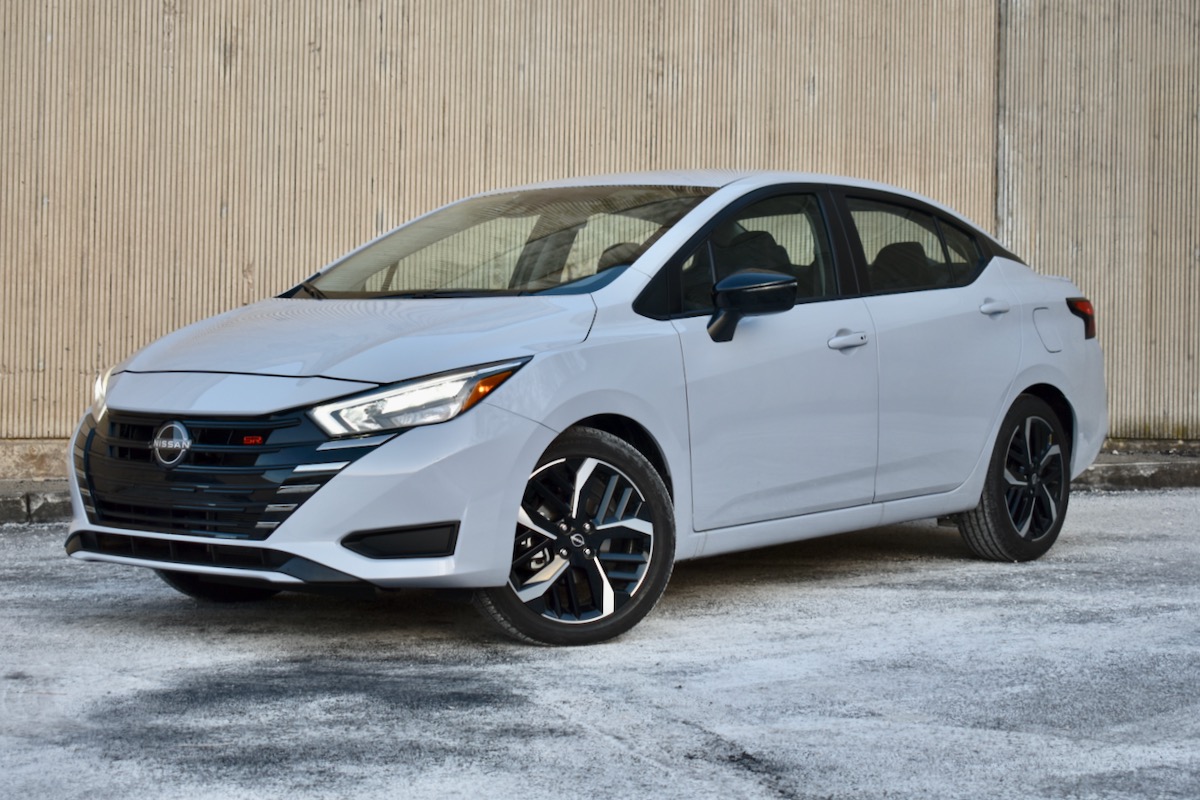
The continuously variable transmission (CVT) exhibits the characteristic drone that has plagued Nissan’s CVT applications for years, creating a disconnected feeling between throttle input and actual acceleration. Road noise intrudes heavily into the cabin, and the suspension feels tuned for absolute softness rather than any semblance of handling precision.
What makes the Versa feel particularly dated is how quickly its competitors evolved past it. The Honda Civic received a sophisticated redesign, the Toyota Corolla added hybrid powertrains and modern safety tech as standard, and even Hyundai’s budget offerings leapfrogged the Versa in terms of technology and refinement.
The Versa’s approach to being an affordable car meant stripping away features and experiences that have become baseline expectations, making it feel like a car from 2010 rather than 2020. In an era where even budget vehicles offer smartphone integration, advanced safety features, and respectable interior quality, the Versa’s bare-bones approach quickly became its downfall.
2. Mitsubishi Mirage (2017-Present)
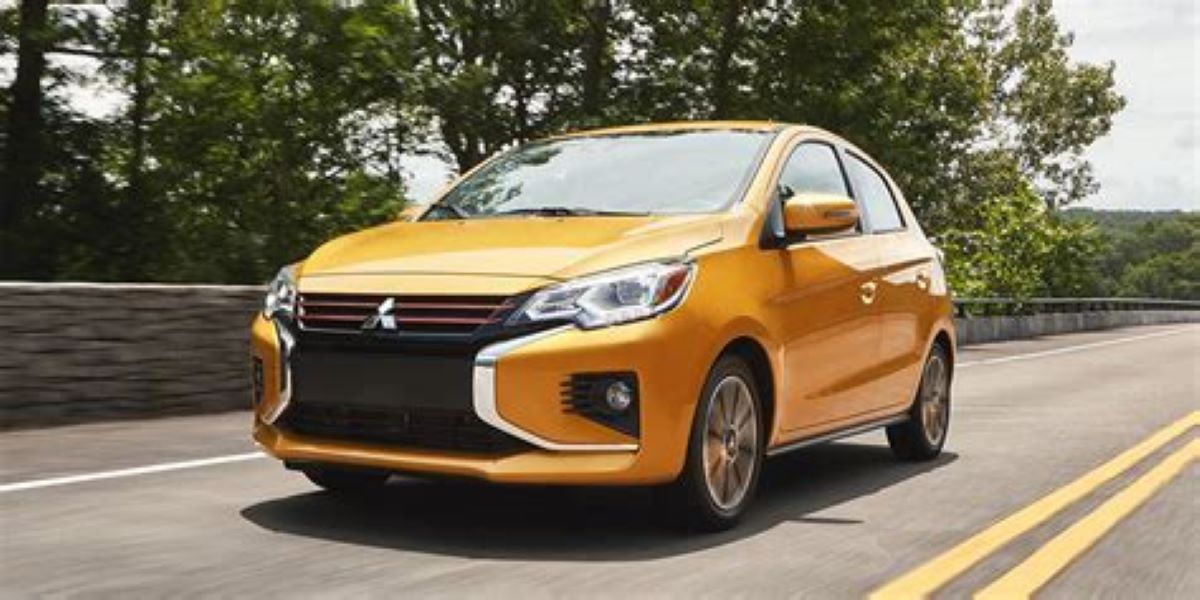
The Mitsubishi Mirage stands as perhaps the most egregious example of a car that feels instantly dated in the modern automotive world. While technically still in production, the Mirage is based on a platform and design philosophy that feels ancient compared to contemporary standards.
This subcompact car might offer an attractively low price point, but nearly everything about the driving experience screams obsolescence, making it feel less like a modern vehicle and more like a time capsule from the early 2000s.
From the moment you settle into the Mirage’s driver seat, the dated nature of this vehicle becomes apparent. The interior is a sea of hard, cheap plastics that feel brittle to the touch. The seats lack adequate support and cushioning, making even short drives uncomfortable.
The dashboard design is simplistic to the point of being spartan, with a layout that prioritizes cost-cutting over any consideration of aesthetics or user experience.
While higher trims offer a touchscreen infotainment system, it’s slow, features outdated graphics, and lacks the smartphone integration capabilities that have become standard even in budget vehicles.
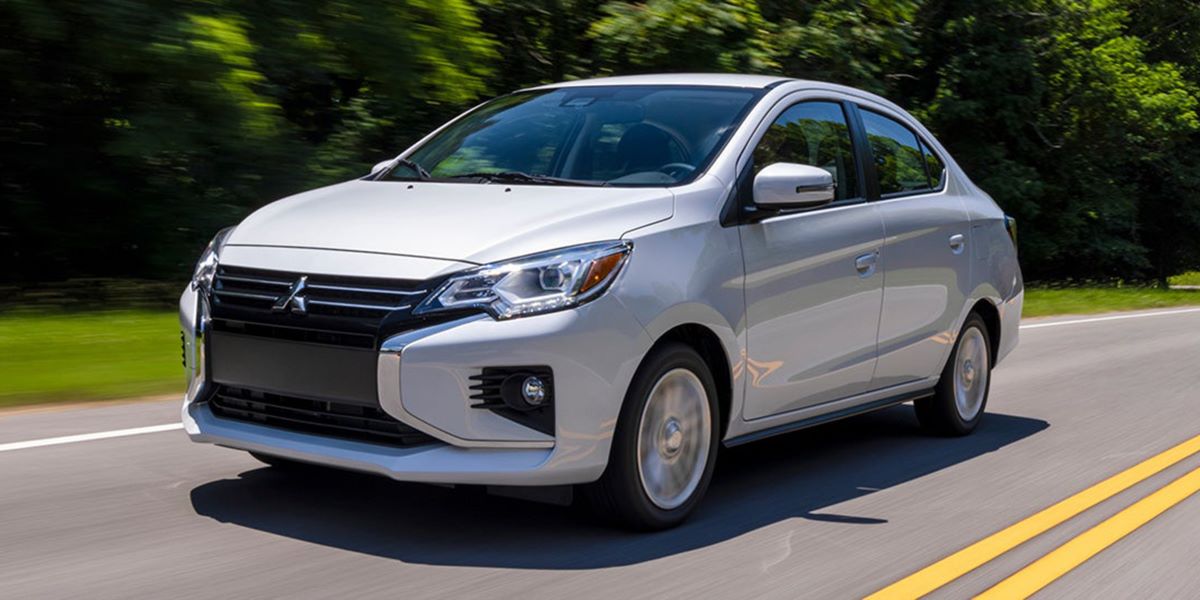
The Mirage’s three-cylinder engine, producing just 78 horsepower, struggles to provide adequate acceleration in nearly any driving situation. Merging onto highways becomes an exercise in careful planning and patience, as the tiny engine wheezes its way up to speed.
The CVT transmission compounds the problem, creating a disconnect between driver input and vehicle response that makes the car feel sluggish and unresponsive. While the Mirage delivers excellent fuel economy, that’s virtually its only redeeming quality from a performance standpoint.
Perhaps most damning is how the Mirage compares to similarly priced competitors. Vehicles like the Kia Rio, Hyundai Accent, and even used examples of more substantial cars offer vastly superior experiences for similar money.
The automotive market has evolved to a point where budget no longer needs to mean sacrificing basic refinement, adequate power, or modern features.
The Mirage’s continued existence feels like an anachronism, a vehicle that would have been barely acceptable fifteen years ago but feels shockingly outdated today. Its tinny build quality, lack of sound insulation, and generally cheap feel make it seem dated the moment you experience it.
3. Chrysler 300 (2015-2023)
The Chrysler 300 once represented American luxury done right bold styling, a powerful engine lineup, and an imposing road presence that commanded attention.
However, as the years progressed without significant updates, the 300 began to feel increasingly dated, particularly in its final years of production. What was once considered a value-oriented luxury sedan gradually became a relic of a bygone era in automotive design, struggling to compete with more modern rivals that had evolved considerably.
The 300’s interior, while spacious and initially impressive, began showing its age dramatically compared to competitors. The dashboard design, with its button-heavy layout and outdated graphics on the infotainment screen, felt increasingly out of step with the minimalist, technology-forward cabins of rivals.
The Uconnect system, while functional, lacked the polish and responsiveness of systems from Mercedes-Benz, BMW, or even mainstream brands like Mazda. Materials quality varied wildly throughout the cabin, with premium surfaces adjacent to cheap plastics that reminded occupants this was a value proposition rather than true luxury.
Technology deficiencies became particularly apparent as the 300 aged. Advanced driver assistance systems that became standard or widely available in competitors remained optional or absent in the 300.
Features like adaptive cruise control, lane-keeping assist, and automated emergency braking technologies that became baseline expectations in the luxury segment were either unavailable or relegated to expensive option packages. The digital gauge cluster, when equipped, used graphics that felt dated compared to the fully customizable displays offered by virtually every competitor.
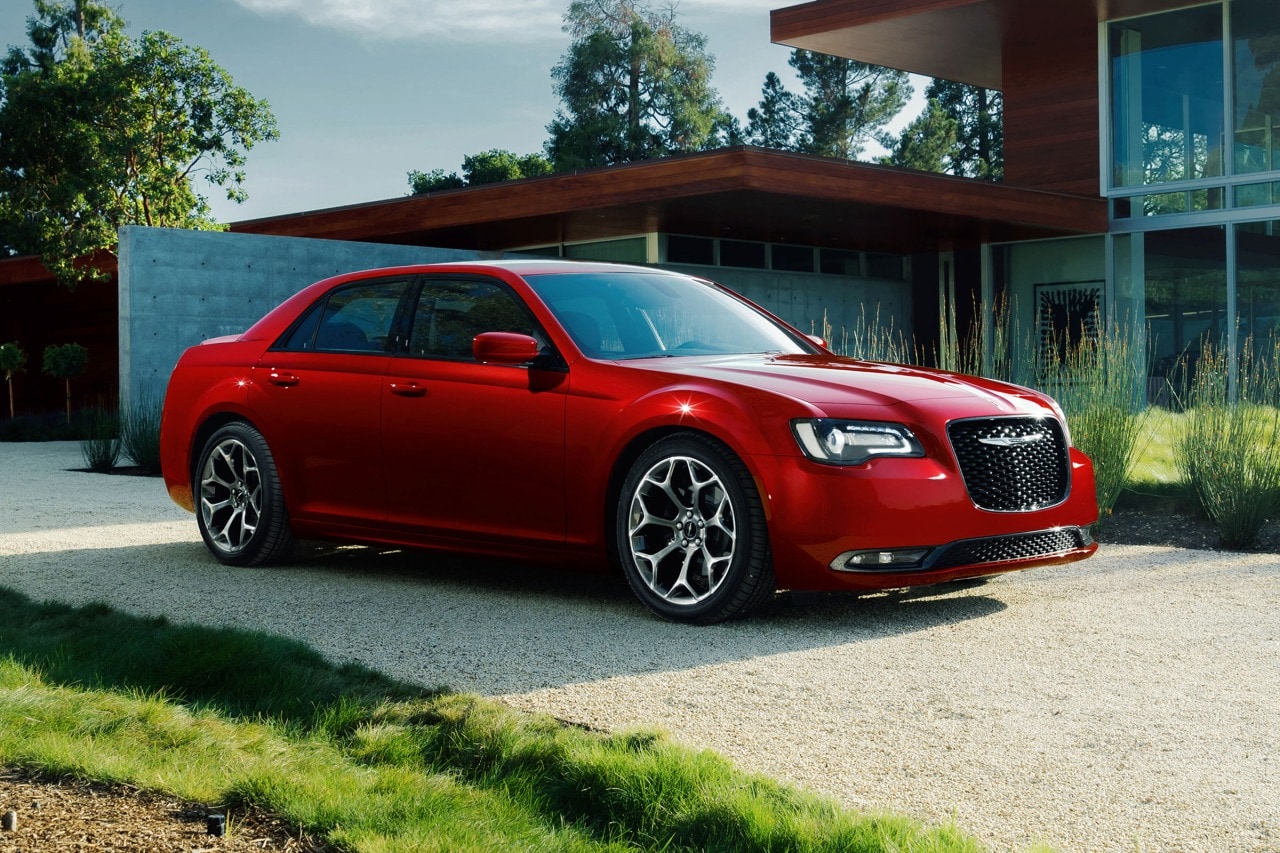
The 300’s exterior styling, once its greatest strength, also began working against it. The bold, aggressive design that seemed fresh in the mid-2010s started feeling heavy-handed and overly retro as automotive design moved toward sleeker, more aerodynamic forms.
The massive chrome grille and blocky proportions made the 300 look like it belonged to a different era, particularly when parked next to more contemporary sedans. While the available V8 engine still provided thrilling performance, it couldn’t overcome the impression that the 300 was a car living on borrowed time, appealing primarily to buyers who valued familiarity over innovation.
4. Volkswagen Beetle (2012-2019)
The modern Volkswagen Beetle attempted to capture the charm and character of the iconic original while incorporating contemporary mechanicals and safety standards.
However, the retro-inspired design that initially seemed charming quickly began to feel like a gimmick, causing the Beetle to age poorly compared to more conventionally styled vehicles.
By the time production ended in 2019, the Beetle felt like a nostalgic curiosity rather than a serious transportation option, a car that prioritized style over substance to its detriment.
The Beetle’s fundamental problem was that its design was frozen in time by necessity. Because the entire appeal rested on evoking the original Beetle’s iconic shape, Volkswagen couldn’t significantly evolve the design without losing the car’s identity.
This created a situation where the Beetle looked essentially the same year after year, while competitors continuously refined their designs.
The rounded shape that seemed whimsical in 2012 felt increasingly out of place as automotive design moved toward more aggressive, angular forms. The Beetle’s styling became a liability rather than an asset, making it feel dated simply because it couldn’t adapt.

Interior practicality suffered significantly due to the design constraints imposed by the Beetle’s retro styling. The sloping roofline that created the car’s iconic profile severely compromised rear headroom, making the back seats nearly useless for adults.
Cargo space was limited, and the packaging efficiency was poor compared to conventional hatchbacks or sedans. While the dashboard featured some charming retro-inspired touches, the interior design felt gimmicky rather than genuinely thoughtful. The emphasis on style over function meant that owners had to make real sacrifices in everyday usability.
As Volkswagen’s lineup evolved with sophisticated turbocharged engines, advanced infotainment systems, and modern safety technology, the Beetle increasingly felt like an outlier in the brand’s portfolio. While it shared mechanicals with the Golf, the execution felt less refined, and the car’s personality increasingly seemed at odds with Volkswagen’s move upmarket.
The Beetle’s novelty wore off quickly, leaving behind a vehicle that felt compromised in fundamental ways. Its status as a design icon couldn’t overcome the fact that it was essentially a less practical Golf wrapped in a retro costume, making it feel dated the moment buyers seriously considered their practical needs versus emotional wants.
Also Read: 5 Vehicles That Manage Street Parking vs 5 That Need Private Space
5. Jeep Compass (2017-2022)
When Jeep redesigned the Compass for 2017, expectations were high that the brand would deliver a competitive compact SUV that could challenge leaders like the Honda CR-V and Toyota RAV4.
Instead, Jeep produced a vehicle that felt dated remarkably quickly, failing to keep pace with rapid improvements in the segment. The Compass struggled with a combination of underwhelming technology, mediocre refinement, and an execution that felt like it was already behind the curve at launch.
The Compass’s interior was a particular disappointment, feeling cheap and poorly assembled compared to rivals. Hard plastics dominated the cabin, with minimal soft-touch materials even on higher trim levels.
The Uconnect infotainment system, while better than some competitors’ offerings, was hampered by a small standard screen size and laggy performance on base models.
The interior design lacked cohesion, with a dashboard layout that felt busy and cluttered rather than thoughtfully organized. Build quality issues, including panel gaps and rattles, became common complaints, making the Compass feel less refined than its price suggested.
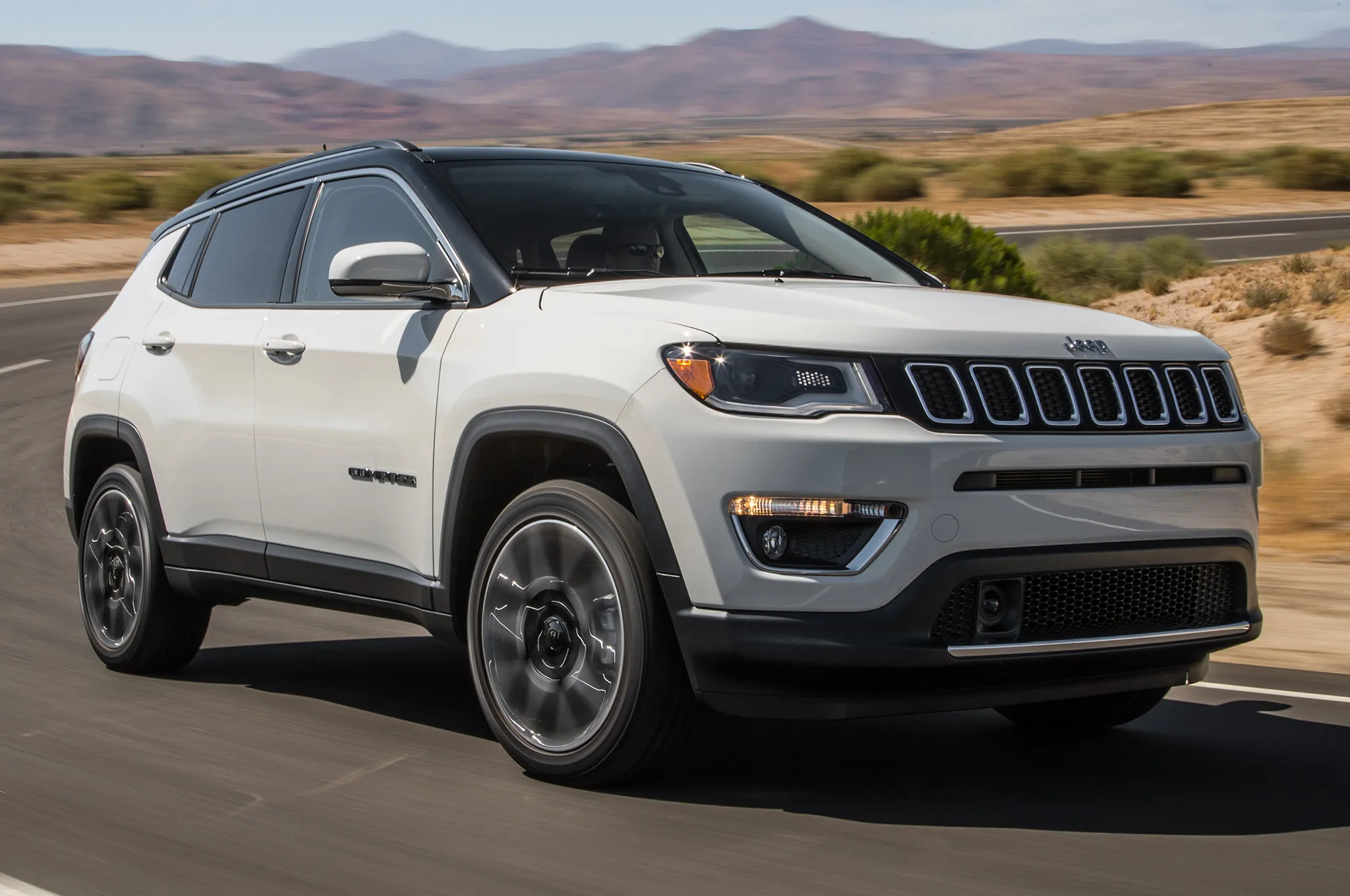
Performance was another area where the Compass quickly fell behind. The base engine, a 2.4-liter four-cylinder producing 180 horsepower, felt underpowered for a vehicle of this size, particularly when equipped with four-wheel drive. The available turbocharged engine offered better performance but was plagued by reliability concerns.
The nine-speed automatic transmission exhibited frustrating behavior, including hesitation, rough shifts, and a general reluctance to select the appropriate gear. These powertrain issues made the Compass feel unpolished and outdated compared to competitors with smoother, more responsive drivetrains.
What really accelerated the Compass’s dated feel was how quickly competitors evolved past it. Honda, Toyota, Mazda, and Hyundai all introduced redesigned or heavily updated compact SUVs that showcased significantly better technology, refinement, and driving dynamics.
Features like standard advanced safety systems, sophisticated all-wheel-drive systems, and high-quality interiors became common in the segment, highlighting the Compass’s deficiencies. By 2022, the Compass felt like a relic from an earlier generation of compact SUVs, unable to compete on technology, refinement, or value despite Jeep’s brand cachet and off-road credibility.
6. Lexus CT 200h (2011-2017)
The Lexus CT 200h entered the market as Lexus’s attempt to capture younger, environmentally conscious buyers with a premium hybrid hatchback. Based heavily on the Toyota Prius platform, the CT 200h promised Lexus luxury with Toyota hybrid efficiency.
However, the vehicle felt dated almost immediately upon release, and as the years progressed without significant updates, it became increasingly clear that the CT 200h was a misstep that aged poorly in nearly every respect.
The CT 200h’s fundamental issue was that it felt like a compromised vehicle from day one. Built on the previous-generation Prius platform, it inherited that car’s uninspiring driving dynamics and buzzy, underpowered hybrid powertrain.
The 134-horsepower hybrid system provided adequate fuel economy but delivered acceleration that felt painfully slow, especially for a vehicle wearing a luxury badge.
The driving experience was further hampered by a harsh ride quality, particularly on Lexus’s sportier F Sport models, and significant road noise that intruded into the cabin unacceptable for a luxury vehicle.
The interior, while featuring higher-quality materials than the Prius, still felt cheap compared to other Lexus products and German competitors.
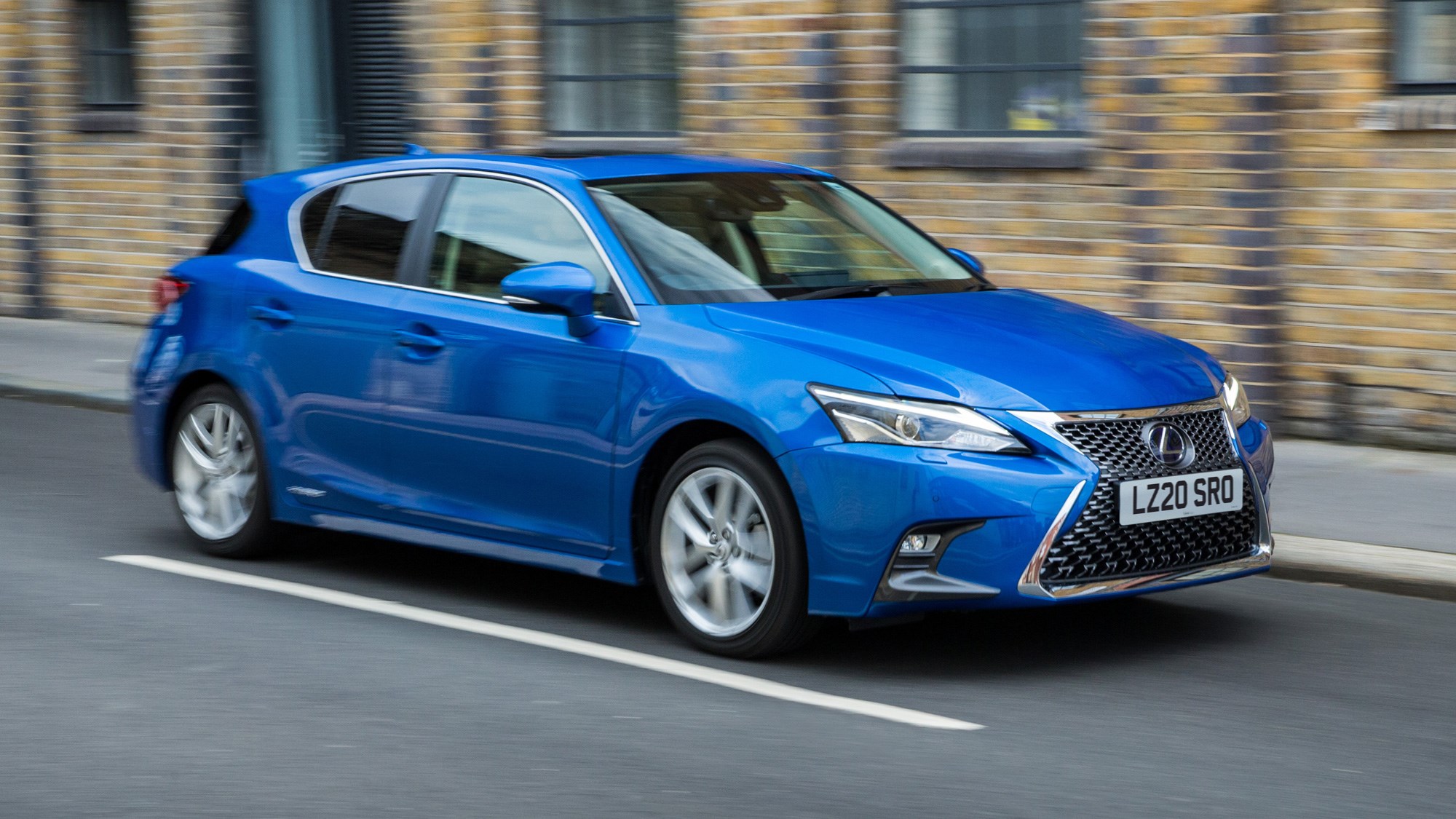
The dashboard design was cluttered and confusing, with the infamous Lexus Remote Touch interface controlling infotainment functions through a finicky trackpad system that frustrated users.
The hatchback body style, while practical, lacked the visual prestige that luxury buyers expected, and the compact dimensions meant limited rear-seat space and cargo capacity. The package felt more like an upscale Toyota than a true Lexus.
As the luxury compact segment evolved with vehicles like the Mercedes-Benz A-Class, Audi A3, and BMW 2 Series offering genuine premium experiences with powerful engines and sophisticated technology, the CT 200h’s shortcomings became glaring.
Lexus’s failure to significantly update the vehicle throughout its lifecycle meant it became increasingly outdated with each passing year.
By the time production ended in 2017, the CT 200h felt like it belonged to a different era a well-intentioned experiment that failed to deliver on the promise of combining luxury and efficiency in a compelling package.
Its dated technology, underwhelming performance, and compromised execution made it feel obsolete far sooner than Lexus likely anticipated.
7. Dodge Journey (2009-2020)
Few vehicles exemplify feeling dated faster than expected quite like the Dodge Journey. Introduced in 2009, the Journey received only minor cosmetic updates throughout its extraordinarily long production run, meaning that a 2020 model felt essentially identical to one from a decade earlier.
This lack of development resulted in a vehicle that seemed increasingly ancient as competitors evolved, making the Journey feel outdated years before production finally ended.
The Journey’s interior was particularly egregious, featuring design and materials that felt cheap even when the vehicle was new. Hard, hollow-feeling plastics covered virtually every surface, with minimal effort made to incorporate soft-touch materials or upscale details.
The dashboard design was simplistic and dated, with an awkward layout that prioritized cost reduction over ergonomics or aesthetics.
The available Uconnect infotainment system was a bright spot, but it couldn’t overcome the fundamentally outdated cabin design. Seats lacked adequate support, and the build quality felt flimsy, with numerous owners reporting rattles and squeaks.
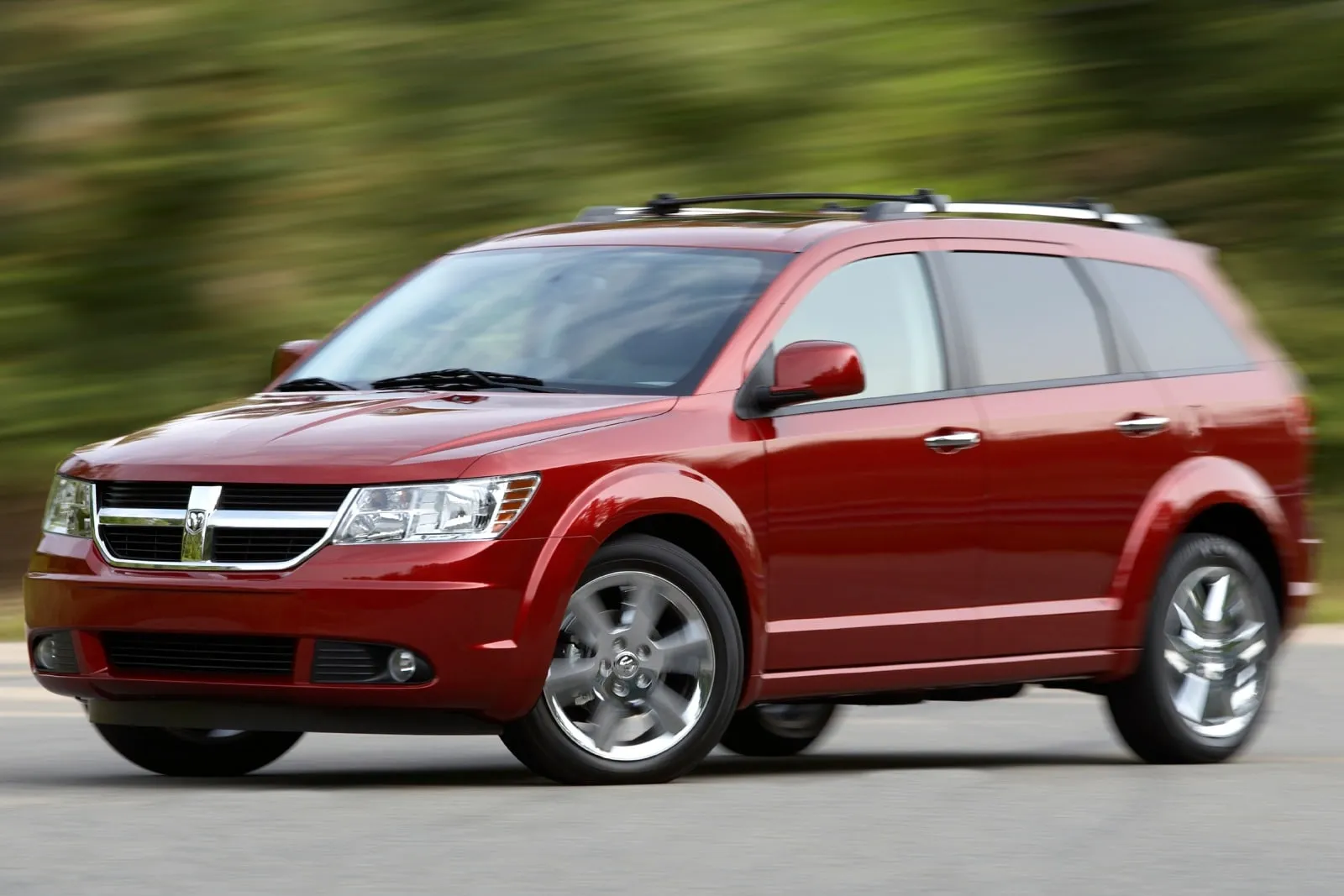
Performance was another area where the Journey quickly showed its age. The base four-cylinder engine was woefully underpowered for a vehicle of this size, struggling with even basic acceleration tasks.
The available V6 offered better performance but came with poor fuel economy. The six-speed automatic transmission felt unrefined, with rough shifts and uncertain behavior.
The driving dynamics were equally disappointing, with vague steering, excessive body roll, and a generally disconnected feel that made the Journey unpleasant to drive on anything but straight highways.
What made the Journey particularly dated was its continued production without meaningful updates while competitors like the Honda Pilot, Toyota Highlander, and Chevrolet Traverse received multiple generational refreshes.
By the late 2010s, the Journey was competing against vehicles that offered vastly superior technology, safety features, fuel efficiency, and refinement. Standard features in competitors like automatic emergency braking, smartphone integration, and premium audio systems remained optional or unavailable in the Journey.
The vehicle’s rock-bottom pricing reflected its outdated nature, appealing primarily to buyers for whom cost was the sole consideration. The Journey’s extended production run without significant updates made it a rolling advertisement for how quickly the automotive industry can leave a vehicle behind.
8. Fiat 500L (2014-2020)
The Fiat 500L represented an attempt to expand the charming Fiat 500 formula into a more practical, family-friendly package. However, the execution resulted in a vehicle that felt dated and poorly conceived from the start, with awkward styling, mediocre reliability, and a driving experience that failed to capture the charm of its smaller sibling.
The 500L struggled to find its place in the market and quickly felt like an outdated curiosity rather than a competitive option in the compact wagon or small SUV segments.
Styling was the 500L’s most immediate problem. While the original Fiat 500 successfully translated retro Italian charm into a modern package, the 500L’s stretched, tall proportions created an awkward, ungainly appearance. The design looked bloated and ungainly, with strange proportions that pleased few observers.
Inside, the Italian design flair that characterized the smaller 500 was largely absent, replaced by acres of hard plastics and a confusing dashboard layout.
The materials felt cheap, and build quality was inconsistent, with many owners reporting various squeaks, rattles, and quality issues that made the vehicle feel even more dated than its already questionable design suggested.
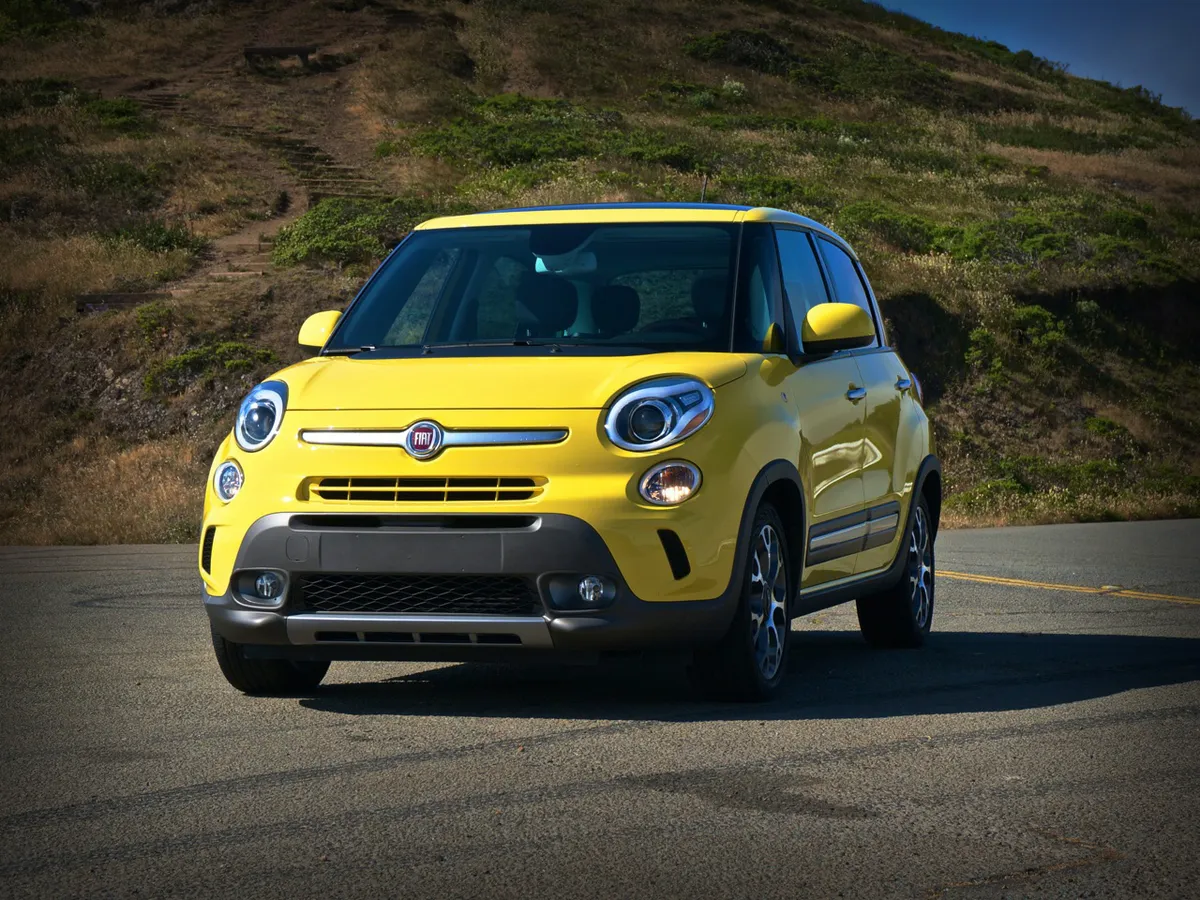
The driving experience did little to redeem the 500L’s shortcomings. The available engines a 1.4-liter turbocharged four-cylinder and a smaller naturally aspirated unit provided adequate but uninspiring performance.
The handling lacked the nimbleness and playfulness that made the standard 500 enjoyable, instead feeling ponderous and disconnected.
The ride quality was harsh, transmitting road imperfections directly into the cabin, and wind and road noise were excessive. The dual-clutch automatic transmission exhibited jerky, unpredictable behavior that frustrated drivers in stop-and-go traffic.
What really accelerated the 500L’s dated feel was the combination of poor reliability ratings and Fiat’s declining presence in the North American market.
As the brand struggled and eventually withdrew from the United States, the 500L became an orphaned vehicle, making buyers hesitant to purchase something that might soon lack dealer support. Meanwhile, competitors like the Honda Fit, Kia Soul, and various compact crossovers offered superior reliability, features, and execution.
The 500L’s quirky Italian character, which might have been charming in a more competent package, couldn’t overcome fundamental deficiencies in execution, making it feel like an outdated oddity almost from the moment it arrived in showrooms.
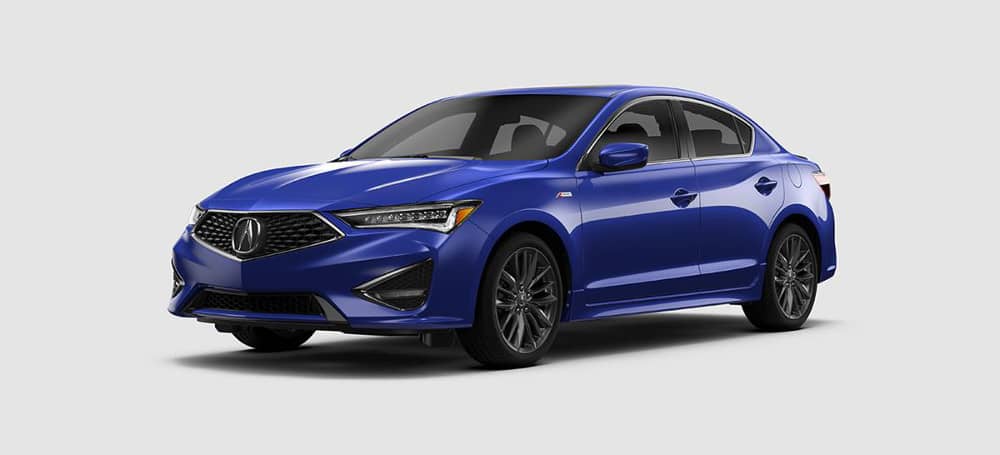
9. Acura ILX (2013-2022)
The Acura ILX represented Honda’s luxury brand’s entry into the compact luxury sedan segment, competing against established players like the BMW 3 Series, Mercedes-Benz C-Class, and Audi A4.
However, the ILX felt dated almost immediately, and despite a mid-cycle refresh, it never truly competed successfully against its premium rivals. The fundamental issue was that the ILX was essentially a dressed-up Honda Civic, and this reality became increasingly apparent and problematic as both the vehicle and the segment evolved.
The ILX’s platform, shared with the ninth-generation Honda Civic, immediately compromised its luxury credentials. While Honda builds excellent mainstream vehicles, the Civic bones were evident throughout the ILX’s execution. The interior, despite Acura’s attempts at upscaling with leather and soft-touch materials, felt more Honda than luxury brand.
The dashboard design was busy and confusing, and the dual-screen infotainment system was widely criticized as one of the worst interfaces in the industry.
The lower screen handled basic functions through frustrating touch-sensitive buttons, while the upper screen displayed navigation and other information without touch capability a baffling design choice that aged poorly.
Performance was adequate but uninspiring for a luxury sport sedan. The 2.4-liter four-cylinder engine produced 201 horsepower, which was respectable but couldn’t match the turbocharged engines and available six-cylinders offered by competitors.
The eight-speed dual-clutch transmission, while quick-shifting, exhibited jerky behavior at low speeds that felt unrefined for a luxury vehicle. The driving dynamics, while competent, lacked the engagement and precision that buyers in this segment expected, feeling more like a well-handling Civic than a true sports sedan.
What made the ILX particularly dated was Acura’s failure to significantly evolve the vehicle while competitors continuously improved their offerings. A 2016 refresh addressed some complaints but didn’t fundamentally transform the vehicle.
As BMW, Mercedes-Benz, and Audi introduced increasingly sophisticated technology, powerful and efficient turbocharged engines, and genuinely luxurious interiors, the ILX’s shortcomings became glaring.
Even the Honda Civic, which received a complete redesign for 2016, surpassed the ILX in some areas, creating the embarrassing situation where the mainstream sibling felt more modern than the luxury variant.
By the end of its production run in 2022, the ILX felt like a relic from an earlier era of compact luxury sedans, unable to justify its premium price against more accomplished competitors or even its own corporate sibling.
Also Read: 5 Cars That Stay Comfortable in LA Traffic vs 5 That Don’t
