

In an automotive world increasingly dominated by safe, conservative styling, there exists a rebellious faction of SUVs that dare to be different. These are the vehicles that turn heads at traffic lights, spark conversations in parking lots, and make bold statements about their owners’ willingness to stand apart from the crowd.
While mainstream manufacturers often play it safe with evolutionary designs that blend seamlessly into the background, the SUVs on this list have taken the road less traveled, embracing controversial aesthetics, unconventional proportions, and design languages that polarize opinion and refuse to apologize for it.
The automotive industry has long grappled with the tension between innovation and market acceptance. Focus groups and consumer research often push designers toward middle-of-the-road aesthetics that offend no one but inspire few.
Yet some automakers have chosen to ignore this conventional wisdom, betting that there’s a substantial market for people who want their vehicle to reflect individuality rather than conformity. These manufacturers understand that in a world of lookalike crossovers, distinctive design becomes its own form of luxury.
What makes an SUV’s design truly stand out? It’s more than just unusual styling cues or aggressive body lines. The vehicles featured here represent genuine design courage the willingness to pursue a unique vision even when it means dividing opinion. Some employ retro-futuristic aesthetics that blend past and future.
Others embrace geometric brutalism or organic sculpting that challenges our expectations of what an SUV should look like. Many incorporate cultural or brand heritage in ways that create instant recognition from hundreds of feet away.
These nine SUVs prove that automotive design can still surprise us, challenge us, and make us feel something beyond mere transportation utility.
They demonstrate that in an era of algorithmic optimization and risk-averse corporate decision-making, there’s still room for vehicles with personality, character, and the audacity to look unlike anything else on the road. Whether you love them or hate them, you certainly can’t ignore them and that’s precisely the point.
1. Lamborghini Urus Performante
The Lamborghini Urus Performante doesn’t just refuse to blend in it actively demands attention with the kind of aggressive, angular design language that could only come from Sant’Agata Bolognese.
This isn’t an SUV that apologizes for its existence; rather, it celebrates the paradox of a luxury performance brand entering the practical family vehicle segment by making something spectacularly impractical and unapologetically extreme.
From the front, the Urus Performante presents a face that’s unmistakably Lamborghini, with sharp-edged hexagonal elements that echo the brand’s supercar DNA.
The massive air intakes aren’t merely decorative they channel cooling air to the twin-turbocharged V8 engine but they’re styled with such theatrical aggression that they look ready to devour the road ahead.
The LED headlights feature Y-shaped signatures that have become a Lamborghini hallmark, adding a distinctive light signature that’s recognizable from remarkable distances.
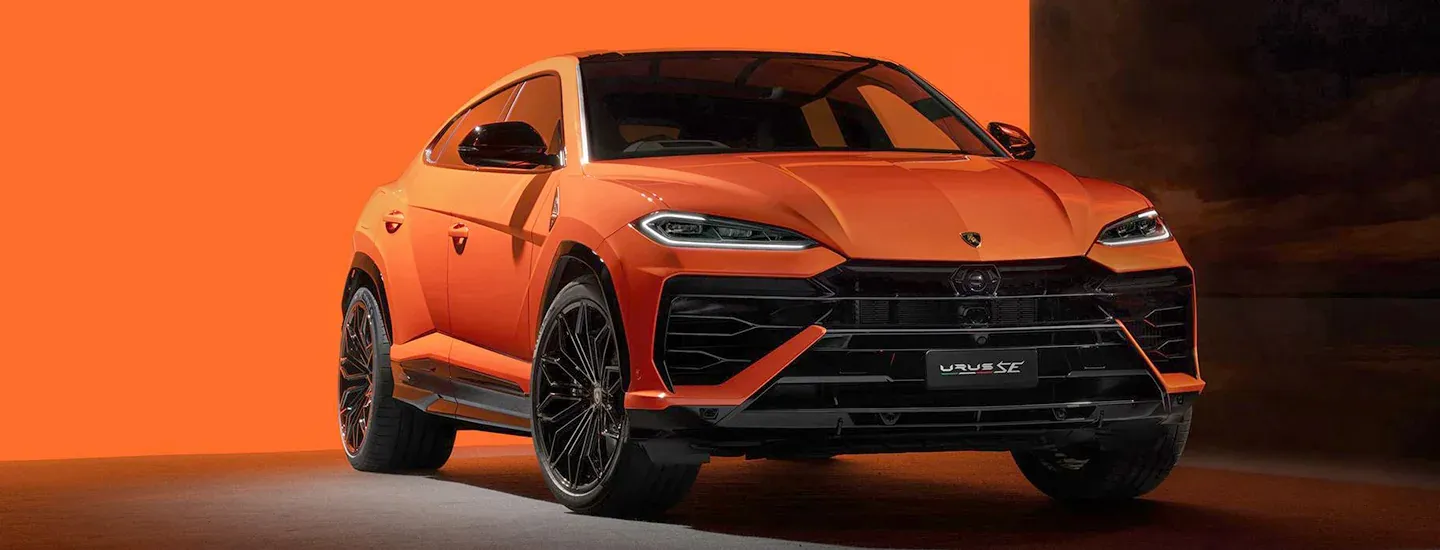
The side profile showcases muscular haunches and dramatically sculpted surfaces that catch light in constantly shifting ways. Unlike conventional SUVs with their upright, boxy proportions, the Urus hunches forward like a predator ready to pounce, with a steeply raked windscreen and a roofline that tapers toward the rear in coupe-like fashion.
The massive wheel arches accommodate forged wheels up to 23 inches in diameter, and the available carbon fiber packages add visual weight reduction that emphasizes the performance-oriented mission.
At the rear, the design reaches peak drama with a full-width light bar connecting angular LED taillights, positioned above a carbon fiber diffuser that houses massive hexagonal exhaust outlets.
The integrated spoiler and air extraction vents are functional aerodynamic elements, but they’re executed with such visual intensity that they border on automotive theater.
The Urus Performante proves that even in the SUV segment, Lamborghini refuses to compromise its design philosophy. It’s a vehicle that makes every school run feel like a special occasion and every parking lot appearance into a minor event. Some might call it excessive; Lamborghini would call it essential.
2. Tesla Cybertruck
Perhaps no vehicle in recent automotive history has generated more polarizing reactions than the Tesla Cybertruck. Revealed to gasps, laughs, and genuine shock, this electric pickup truck looks less like it rolled off an assembly line and more like it was teleported from a dystopian science fiction film.
Elon Musk and Tesla’s design team, led by Franz von Holzhausen, created something so radically different from conventional automotive design that it essentially defines the phrase “refuses to blend in.”
The Cybertruck’s most striking feature is its exoskeleton construction from ultra-hard 30X cold-rolled stainless steel, left unpainted in its raw, industrial finish.
This creates a geometric, faceted exterior that resembles nothing so much as a computer rendering that was never smoothed into organic curves.
Every surface is a flat plane or sharp angle, giving the vehicle an almost brutalist architectural quality. There are no traditional fenders, no character lines in the conventional sense, just geometric surfaces meeting at precise angles.
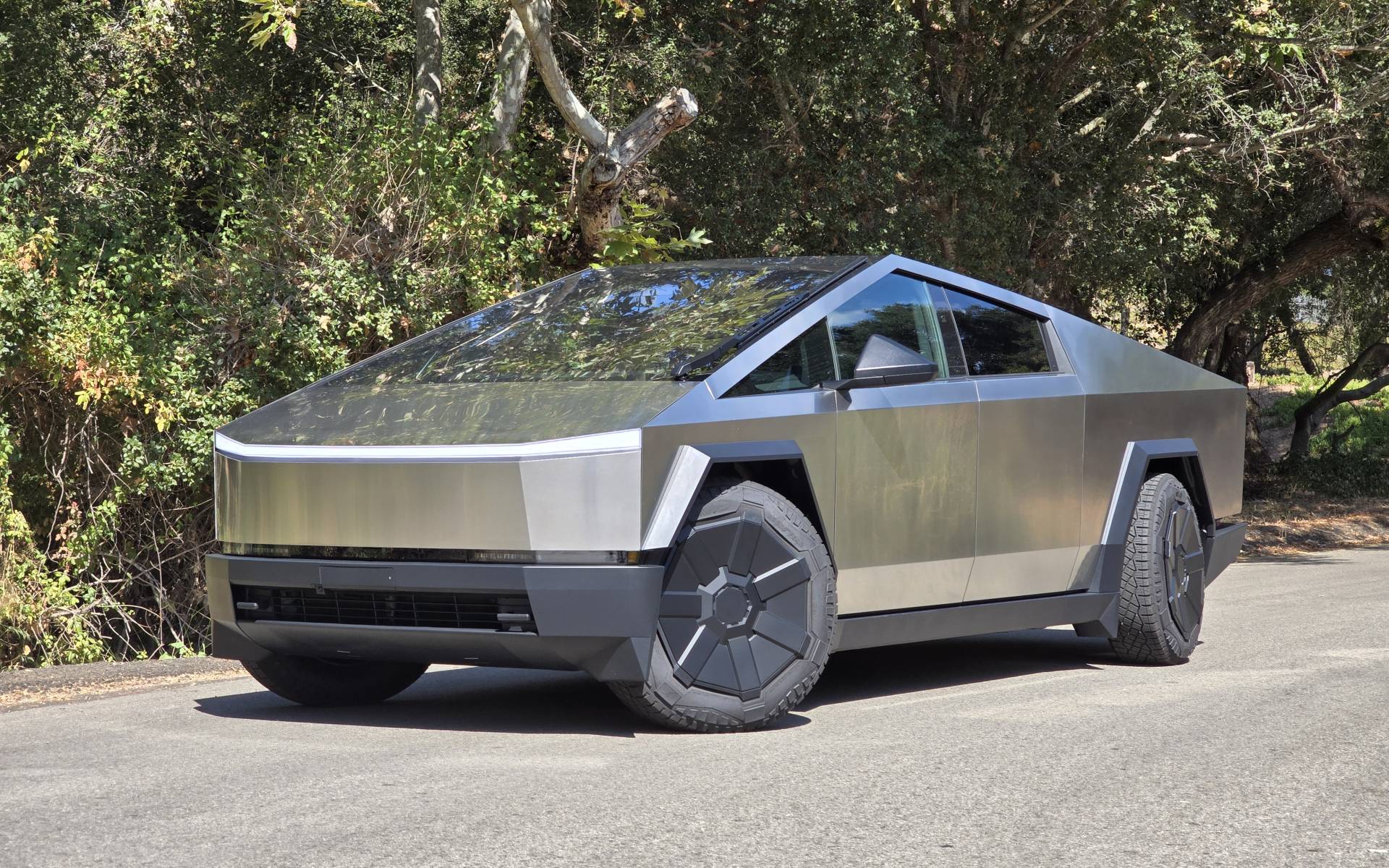
The front end eliminates the traditional grille entirely, replacing it with a solid panel punctuated by a full-width LED light bar. The windshield is nearly flat, angled steeply backward in a single unbroken pane that extends to the roof.
The absence of side mirrors replaced with cameras in the production version furthers the minimalist aesthetic. From the side, the Cybertruck’s profile is dominated by straight lines and triangular forms, with the vault-like tonneau cover creating an uninterrupted geometric shape.
The design is so unconventional that it challenges fundamental assumptions about what vehicles should look like. Traditional automotive design relies on organic curves, character lines, and humanistic proportions.
The Cybertruck rejects all of this in favor of pure geometric forms that prioritize function, manufacturability, and structural efficiency. The stainless steel construction eliminates the need for paint shops and complex stamping operations, while the angular design provides exceptional strength and impact resistance.
Whether you find it brilliant or bizarre, the Cybertruck accomplishes its apparent mission: creating a vehicle so visually distinctive that it’s impossible to mistake for anything else on the road.
3. Jeep Wrangler
While many vehicles on this list achieve distinctiveness through radical departure from tradition, the Jeep Wrangler accomplishes the same goal by remaining steadfastly loyal to its heritage.
In an era when most SUVs have evolved into comfortable, car-like crossovers, the Wrangler continues to embrace its military origins with a design that prioritizes capability over comfort and character over conformity.
The Wrangler’s seven-slot grille is one of the most recognizable design elements in automotive history, dating back to the 1941 Willys MB military Jeep.
This iconic face, combined with round headlights and a flat, vertical windshield, creates instant recognition that transcends generations.
The current JL generation has modernized these elements with LED lighting and refined proportions, but the fundamental design language remains faithful to Jeeps that served in World War II. This creates a visual continuity that few modern vehicles can match.
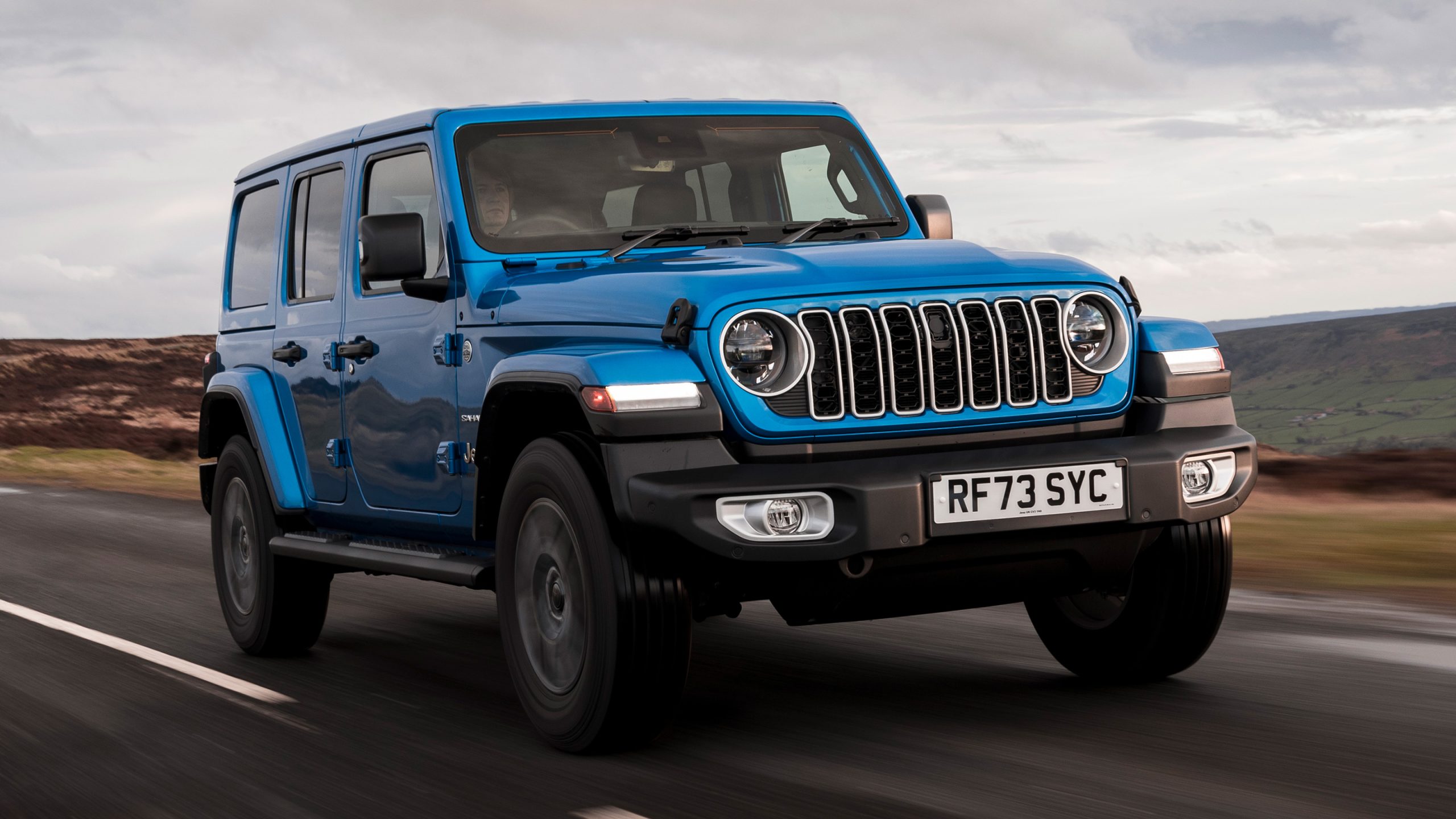
The boxy, upright proportions serve practical purposes maximizing interior space, providing exceptional visibility, and allowing for impressive approach and departure angles but they also create a distinctive silhouette that stands in stark contrast to the swooping, aerodynamic shapes that dominate today’s SUV market.
Removable doors and roof panels aren’t just features; they’re fundamental to the Wrangler’s identity, allowing owners to customize their vehicle’s appearance and create an open-air driving experience that’s increasingly rare in modern automobiles.
Exposed hinges, fold-down windshield capability, and rugged materials throughout emphasize function over fashion, yet this utilitarian approach has become its own fashion statement.
The Wrangler’s design communicates competence, adventure, and a certain rebellious spirit that resonates with buyers who want something genuinely different.
Available in two-door and four-door configurations, with countless trim levels and special editions, the Wrangler offers surprising variety within its distinctive design framework. It proves that refusing to blend in doesn’t always require radical innovation sometimes it means staying true to timeless principles while everything around you changes.
4. Mercedes-AMG G63
The Mercedes-AMG G63 represents an fascinating paradox in automotive design: a vehicle whose boxy, utilitarian styling has become the ultimate symbol of luxury and status.
Originally developed as a military vehicle in the 1970s, the G-Wagen (Geländewagen, or “cross-country vehicle”) has evolved into one of the most distinctive and expensive SUVs on the market, all while retaining design fundamentals that haven’t changed substantially in nearly five decades.
The G63’s design is defiantly angular in an age of fluid, organic shapes. The front end features a flat, vertical grille with three horizontal bars, flanked by round headlights that have been updated with modern LED technology but retain their classic circular shape.
The hood is nearly flat, with a raised power dome and external hinges that speak to the vehicle’s utilitarian origins. The windshield sits at an almost vertical angle, prioritizing interior space and visibility over aerodynamic efficiency. The result is a drag coefficient that would horrify most modern automotive engineers, but the G63 wears this inefficiency as a badge of honor.
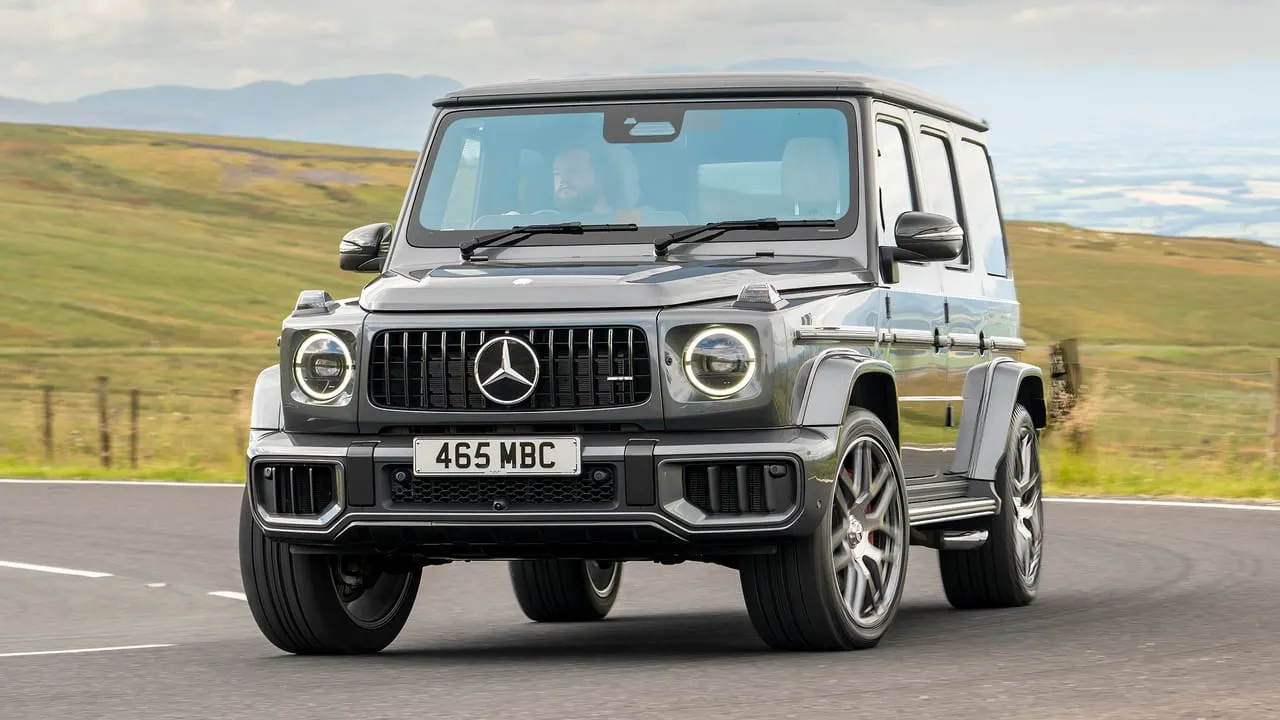
From the side, the profile is unmistakably boxy, with flat door panels, prominent fender flares, and exposed door hinges that have become signature design elements.
The side-mounted spare tire cover adds additional visual bulk and reinforces the expedition-ready aesthetic, even though most G63s will never venture far from paved roads. The stepped roofline creates distinctive proportions, and the chrome trim around windows and along the body sides adds a touch of luxury to the otherwise utilitarian form.
The rear design maintains the vertical theme, with a side-hinged tailgate and externally mounted spare tire. The AMG variant adds quad exhaust outlets and subtle aerodynamic elements, but the shape remains true to the original.
Inside, the contrast between exterior and interior becomes most apparent the latest G63 features Mercedes’ most advanced digital displays, premium materials, and cutting-edge technology, all packaged within that deliberately old-school exterior.
This combination of heritage design and modern luxury has created cult-like following among celebrities, collectors, and enthusiasts who appreciate vehicles with genuine character and presence.
Also Read: 7 Vehicles With Parts That Add Up Quickly
5. Rivian R1S
The Rivian R1S represents the new guard of automotive design, bringing electric vehicle aesthetics to the adventure SUV segment with a look that’s distinctly modern yet approachable.
Unlike the polarizing angularity of some electric vehicles, Rivian has crafted a design language that feels fresh and innovative while remaining harmonious and purposeful. The result is an SUV that stands out not through shock value but through thoughtful, distinctive design choices.
The front fascia is dominated by Rivian’s signature stadium-style LED headlights a horizontal oval shape that creates an instantly recognizable face unlike anything else on the road.
These lights, combined with the body-colored panel where a traditional grille would sit, create a friendly yet purposeful expression. The hood features subtle character lines and functional air extraction vents, while the front bumper integrates sophisticated sensors and cameras behind cleanly integrated panels. The effect is thoroughly modern without being alienating.
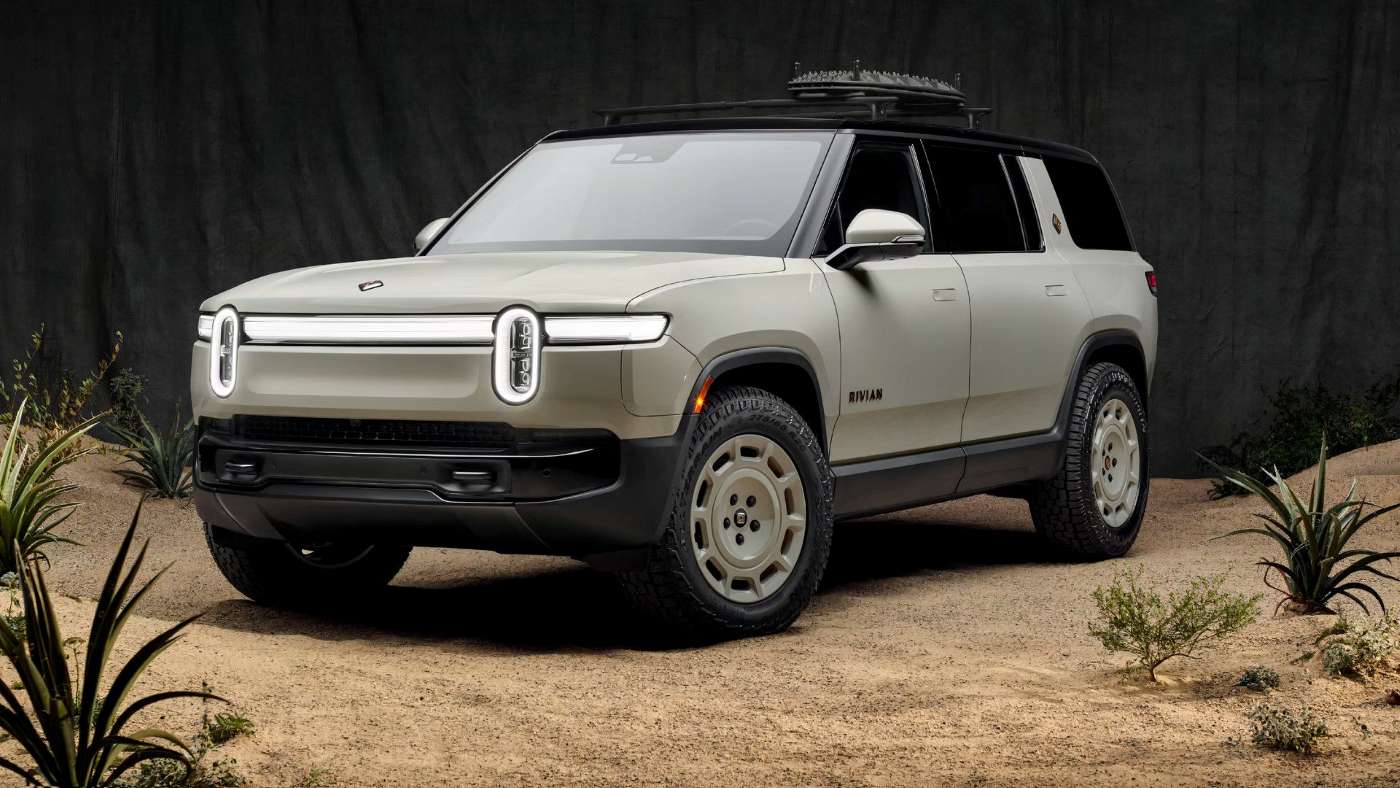
The side profile showcases Rivian’s attention to proportion and detail. The greenhouse features a distinctive wraparound design with a panoramic glass roof that extends far forward, creating an airy interior feeling while contributing to the vehicle’s modern appearance.
The body sides are surprisingly clean, eschewing excessive character lines in favor of gently sculpted surfaces that catch light beautifully. The signature feature is the “flashlight” integrated into the driver’s door a functional detail that also serves as a conversation starter and brand identifier.
The rear design continues the horizontal theme established up front, with a full-width LED light bar that emphasizes the R1S’s width. The rear hatch features a distinctive horizontal split, with the upper glass section opening independently a practical feature executed with design elegance.
The rear bumper integrates functional air outlets and houses the charging port behind a cleanly integrated panel. Underbody protection and skid plates are visible from certain angles, reminding observers that this premium electric SUV is genuinely capable off-road.
Rivian has achieved something remarkable with the R1S: creating a design that looks distinctly different from traditional SUVs and other electric vehicles while avoiding the polarizing extremes that often characterize innovative design. It’s an SUV that refuses to blend in through confident, purpose-driven aesthetics rather than through controversy.
6. Land Rover Defender
The Land Rover Defender’s 2020 redesign walked a challenging tightrope: honoring one of the most iconic utilitarian vehicle designs in history while creating something modern enough to compete in today’s premium SUV market.
The result is a design that manages to be simultaneously retro and contemporary, familiar yet fresh, creating an SUV that stands apart from both its heritage and its competitors.
The front design pays clear homage to the original Defender with its upright proportions and flat surfaces, but modernizes these elements with sophisticated LED lighting integrated into circular housing that references the classic round headlamps.
The hood is purposefully flat with a prominent center bulge, and the high-mounted turn signals positioned on the fenders recall the original’s utilitarian design while serving functional purposes in off-road visibility. The grille maintains Land Rover’s signature appearance while integrating modern active shutters for aerodynamic efficiency.
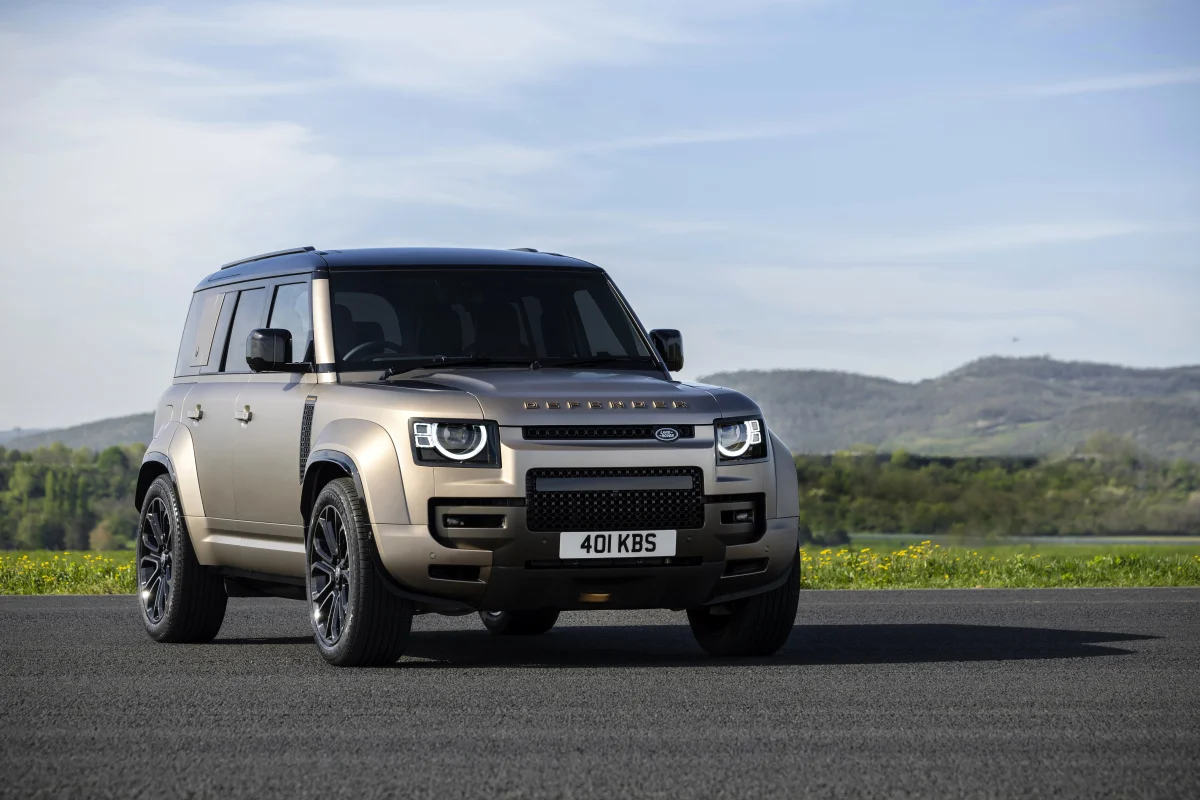
The side profile is where the new Defender most clearly stakes its claim to distinctiveness. The Alpine windows those small, upward-opening rear quarter windows are a direct callback to the original and provide no real functional benefit in the modern vehicle, yet their inclusion creates instant visual connection to Defender heritage.
The exposed rivets, or rather their modern interpretation through design elements that evoke rivet lines, add industrial texture to the surfaces.
The squared-off wheel arches and high ground clearance create an unmistakably capable stance, while available accessories like roof racks, ladders, and external storage solutions allow owners to customize appearance dramatically.
The rear design features a side-hinged tailgate with externally mounted spare tire, though unlike the G-Wagen, this spare is actually designed to be easily accessible and used.
The vertical taillights and squared-off proportions continue the utilitarian theme, while the exposed hinges and robust bumper with integrated steps emphasize functionality.
The new Defender proves that heritage design can be successfully reinterpreted for modern tastes, creating an SUV that honors its past while refusing to be constrained by it.
7. BMW XM
The BMW XM represents one of the most controversial design statements from the Bavarian manufacturer in decades. As BMW’s first standalone M model since the M1 supercar, the XM was intended to make a statement and it certainly accomplishes that goal, though not without dividing opinion sharply.
This plug-in hybrid performance SUV embraces maximalism in an era when many luxury vehicles trend toward minimalism. The front end is dominated by BMW’s now-controversial oversized kidney grilles, which reach their most extreme expression in the XM.
These massive vertical grilles are split by a glowing light element and flanked by angular headlights with gold accents that have become a signature XM detail.
The hood features dramatic power bulges and functional heat extractors, while the lower fascia integrates massive air intakes that serve the hybrid powertrain’s cooling needs. The effect is aggressive and confrontational, designed to announce the XM’s presence from blocks away.

The side profile reveals the XM’s massive proportions, with a long hood and short rear overhang creating a forward-leaning stance. The roofline slopes dramatically toward the rear in coupe-SUV fashion, while the pronounced wheel arches house massive wheels up to 23 inches in diameter.
The character lines are bold and multidirectional, creating complex surface interactions that ensure the XM never looks simple or understated. Gold accent trim, available on certain models, adds additional visual drama and reinforces the exclusive positioning.
The rear design continues the maximalist theme with vertical light elements integrated into black trim panels, creating a distinctive nighttime signature.
The rear window is steeply raked, and the tailgate features a prominent lip spoiler. The quad exhaust outlets are massive, and the rear diffuser element is more aggressive than any previous BMW SUV.
The XM isn’t designed to please everyone it’s designed to make a statement and appeal to buyers who want something that absolutely refuses to blend into the background. Whether you consider it brilliant or excessive, the XM undeniably achieves its goal of standing apart.
8. Hyundai IONIQ 5
The Hyundai IONIQ 5 brings retro-futuristic design to the electric SUV segment, drawing inspiration from Hyundai’s 1974 Pony Coupe concept while incorporating thoroughly modern electric vehicle design principles.
The result is an SUV that looks unlike anything else in its segment, proving that distinctive design doesn’t require exotic brand heritage or six-figure pricing.
The front end features pixel-inspired LED lighting that creates a distinctive digital appearance, with daytime running lights arranged in geometric patterns that reference early computer graphics.
The hood is short and steeply angled, while the front bumper integrates sensors and aerodynamic elements behind cleanly styled surfaces.
The clamshell hood design, which extends over the front fenders, is unusual for vehicles in this class and contributes to the clean, minimalist aesthetic. The front design manages to be friendly and approachable while clearly signaling the IONIQ 5’s electric, forward-thinking nature.
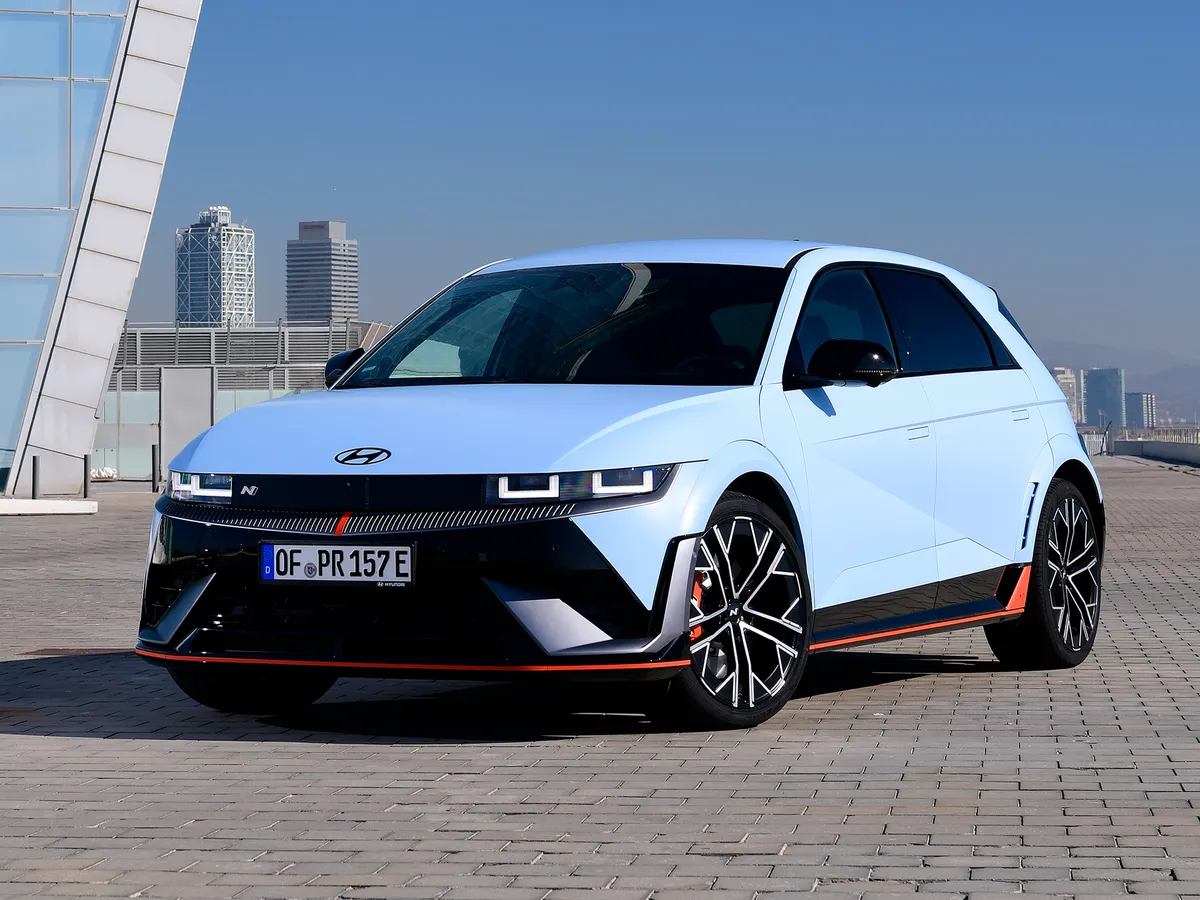
The side profile is where the retro-futuristic design concept becomes most apparent. The straight, angular beltline and sharply defined surfaces recall 1970s and 1980s automotive design, but executed with modern precision and proportion.
The door handles are flush-mounted and pop out electrically, maintaining surface cleanliness while adding a premium touch. The wheels feature aerodynamic designs that balance efficiency with visual interest, and the available two-tone paint schemes with contrasting roofs enhance the retro aesthetic.
The proportions are notably different from traditional SUVs, with a long wheelbase and short overhangs made possible by the electric vehicle architecture.
The rear design continues the pixel theme with distinctive lighting that creates a memorable nighttime signature. The rear spoiler is integrated cleanly into the roofline, and the bumper features subtle aerodynamic detailing.
The IONIQ 5’s design demonstrates that mainstream manufacturers can create genuinely distinctive designs that stand apart from competitors while remaining accessible and appealing to a broad audience. It refuses to blend in not through controversy but through confident execution of a unique design vision.
9. Ineos Grenadier
The Ineos Grenadier represents perhaps the most unusual entry on this list a brand-new vehicle from a chemical company that deliberately embraces decades-old design principles.
Created specifically to fill the void left when Land Rover discontinued the Defender, the Grenadier makes no apologies for its retro-utilitarian aesthetic, instead celebrating the honest, functional design language of old-school off-roaders.
The front end is refreshingly straightforward, with a vertical grille, round headlights, and flat surfaces that prioritize function over fashion.
There are clear visual references to classic SUVs like the original Land Rover Defender and early Land Cruisers, but the Grenadier avoids being a pastiche through clean execution and modern proportions.
The bumper is simple and robust, designed to be replaceable and repairable rather than aerodynamically optimized. The hood is flat with external hinges and a prominent center bulge, while the windshield sits nearly vertical.

The side profile showcases the Grenadier’s commitment to utilitarian design. The body sides are flat with minimal character lines, the doors feature exposed hinges, and the wheel arches are simple squared-off shapes with no decorative cladding. The roof rack isn’t an accessory but an integrated structural element, reinforcing the go-anywhere capability.
The design team has resisted the temptation to add unnecessary styling flourishes, instead creating surfaces that are logical, manufacturable, and durable. The result feels honest in a way that few modern vehicles do.
The rear design maintains this straightforward approach, with a side-hinged tailgate, externally mounted spare tire, and vertical taillights. The rear bumper provides genuine protection and incorporates recovery points and towing capability.
The Grenadier proves that distinctive design doesn’t always require innovation sometimes refusing to blend in means rejecting contemporary trends entirely and embracing timeless principles of form following function. In a market saturated with complicated, overwrought designs, the Grenadier’s honesty and simplicity make it stand out just as effectively as more radical alternatives.
