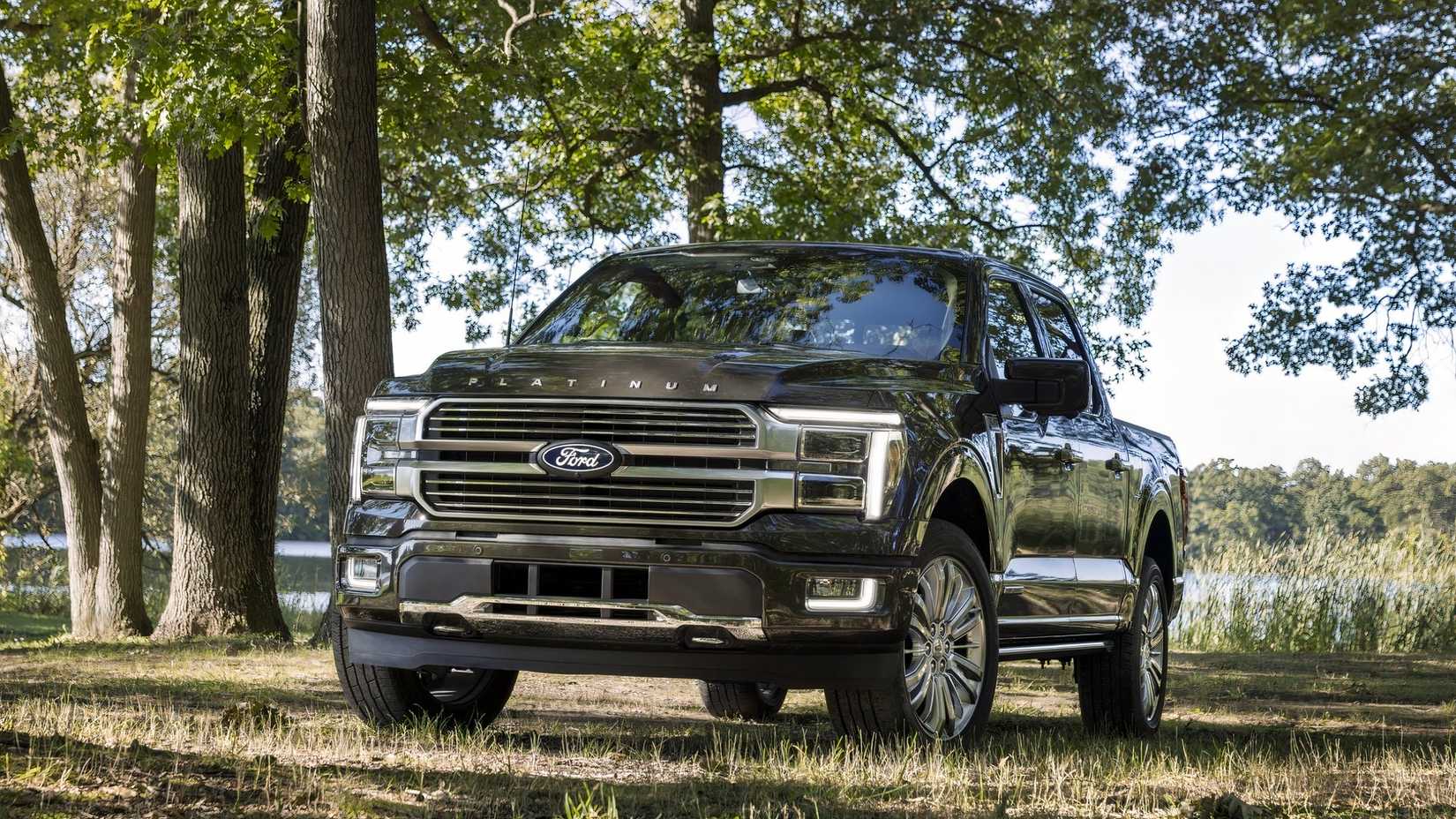
Federal safety regulators are taking a closer look at reports that certain Ford F-150 pickups can unexpectedly downshift on their own, escalating a long-running investigation into a more intensive technical review.
What began as a preliminary probe has now advanced to a full engineering analysis, signaling that authorities are moving beyond paperwork and into hands-on testing to determine whether a widespread recall may be necessary.
The National Highway Traffic Safety Administration’s Office of Defects Investigation has expanded its scrutiny to include real-world driving evaluations and component testing.
The investigation centers on approximately 1.27 million Ford F-150 trucks built between the 2015 and 2017 model years. Regulators are now examining whether the reported transmission behavior represents a safety-related defect that warrants corrective action.
According to complaints from owners, the affected trucks can suddenly downshift without warning or driver input. These unexpected gear changes have been reported to occur at highway speeds, leading to abrupt deceleration. In some cases, drivers say the rear wheels briefly lock up, creating a risk of skidding and loss of control, particularly at higher speeds.
The vehicles under investigation are equipped with Ford’s 6R80 six-speed automatic transmission. Investigators note that many owners have already attempted repairs, including replacing components such as the molded lead frame or the valve body, often without permanently resolving the issue. The recurrence of the problem has raised concerns that the root cause may be more systemic rather than an isolated fault.
Ford has stated that this situation differs from earlier recalls involving older F-150 models, which were linked to signal loss from a specific speed sensor.
In the trucks now under review, regulators believe the issue may stem from electrical connections within the transmission’s lead frame. Over time, exposure to heat and vibration could cause these connections to degrade, leading to intermittent signal loss from a different sensor and triggering unintended downshifts.
Investigators have also identified another potentially dangerous scenario during testing. In at least one case, a truck reversing uphill reportedly lost its transmission signal, shifted into neutral, and then rolled forward. Such behavior could pose a serious risk, particularly when maneuvering on inclines or while towing.
While the escalation of the investigation does not automatically mean a recall will follow, it significantly increases the likelihood of regulatory action if a safety defect is confirmed.
Should engineers determine that the transmission issue poses a meaningful risk to drivers, Ford could be required to implement repairs across a large portion of its F-150 fleet. Given the company’s extensive recall challenges in recent years, another large-scale fix would represent an unwelcome development for both Ford and its customers.
Also Read: Toyota Expands Recall Troubles With 55,000 Hybrid Camry and Corolla Cross Models at Risk