
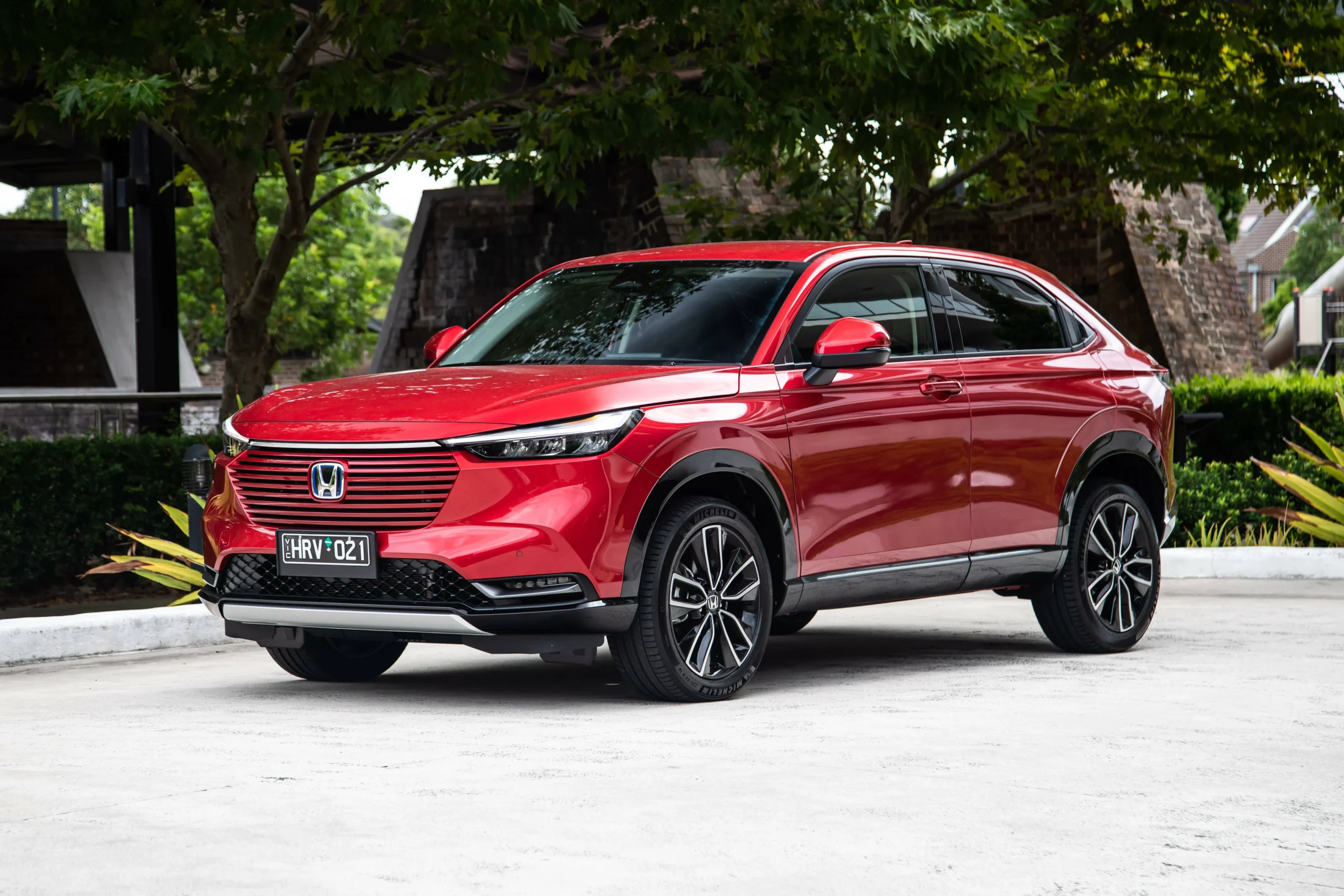
Urban driving conditions have reshaped how motorists assess vehicle suitability. Parking areas now appear more confined, curbs seem closer than expected, and busy shopping locations require heightened attention at every turn. Vehicle size alone no longer determines whether an SUV feels manageable or frustrating when easing into a parking space.
Instead, a combination of design and functional details influences how comfortable that moment becomes. Steering response plays a critical role in low-speed control, especially when small adjustments are required. Camera positioning and image clarity also affect how confidently a driver can judge distance.
Body proportions influence how much space the vehicle appears to occupy, while window design determines how clearly surrounding obstacles can be seen. These factors work together quietly, yet their impact becomes clear almost immediately after ownership begins. Drivers who spend time in urban centres or busy suburban districts often recognize this reality within a short period.
Compact and subcompact SUVs have gained strong attention because they offer a raised seating position without the inconvenience traditionally associated with larger vehicles. Many buyers expect these models to blend visibility, comfort, and ease of use into a single package suitable for daily routines.
While some vehicles meet these expectations successfully, others fall short even when their exterior measurements appear similar. Small differences in design execution often determine whether parking feels controlled or tense. Choices made during vehicle development, including technology layout and visibility angles, create a clear separation between stress-free parking and repeated adjustments accompanied by constant mirror checks.
Awareness of these elements allows buyers to make informed decisions before committing to a vehicle that must cope with tight garages, roadside parking, and restricted spaces regularly. This page examines ten SUVs divided into two distinct categories.
Five models feel easy to position between parking lines, even for drivers who find parallel parking uncomfortable. The remaining five demand greater concentration, patience, and space before alignment feels satisfactory. Each vehicle appears with its full name and model, without repetition, to ensure clarity and accuracy.
The first section focuses on SUVs that show courtesy during parking situations, offering a sense of control and predictability. The next section will be presented separately and addresses those that require more effort and attention. Each vehicle receives a detailed discussion so readers can imagine daily usage rather than rely solely on specifications or promotional descriptions.
5 SUVs That Are Easy to Park
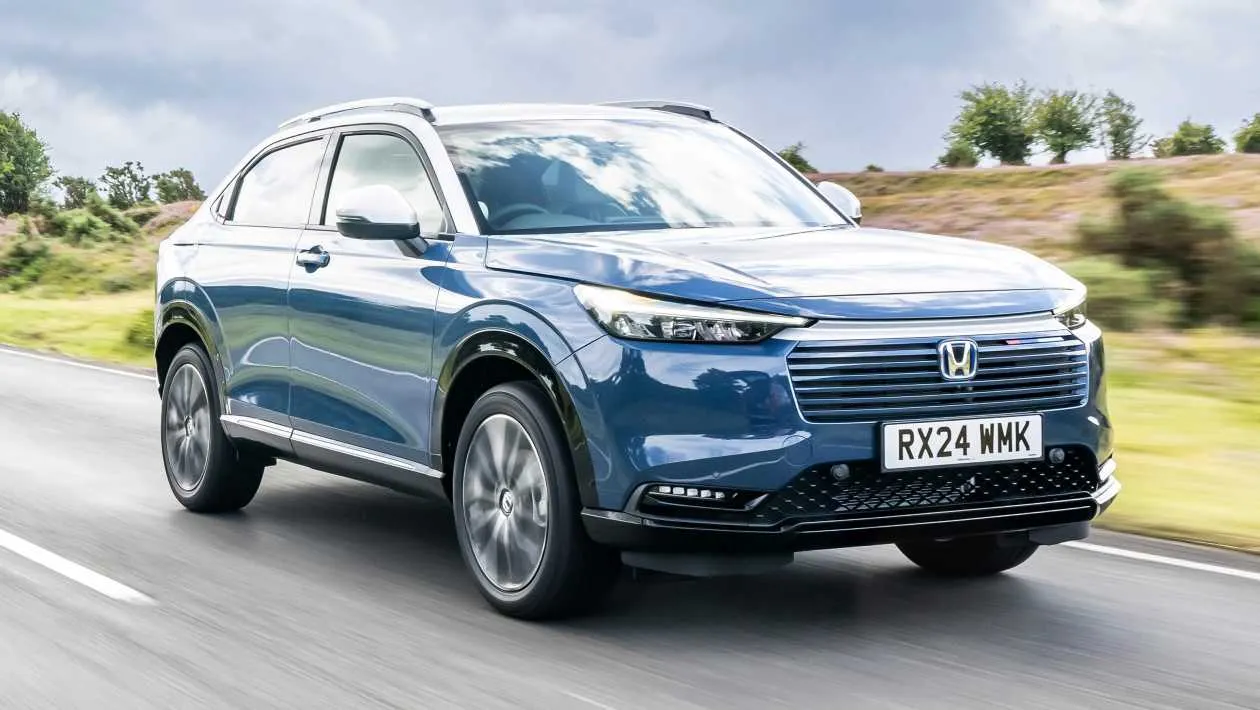
1. Honda HR-V 2024
Parking confidence begins with predictability, and the Honda HR-V 2024 delivers exactly that. Compact exterior proportions allow drivers to judge corners quickly, while smooth steering feedback prevents overcorrection when turning into narrow spaces. Length remains modest, making it easier to line up with parking spot boundaries without second-guessing bumper placement.
Visibility from the driver’s seat plays a major role here, thanks to slim roof pillars and a hood that slopes gently downward. Camera assistance inside this model feels natural rather than intrusive. Rearview images appear clear and well-angled, offering depth perception that feels accurate instead of distorted.
Side mirrors sit at a height that shows curb distance without forcing neck movement, which matters during parallel parking attempts on busy streets. Turning radius remains tight enough to swing into compact spaces with one clean motion instead of repeated adjustments.
Interior layout also contributes quietly to the experience. Seating position places drivers upright, allowing a clear view over the dashboard without blocking road awareness. Controls feel intuitive, reducing distraction when maneuvering slowly. Light steering effort pairs well with predictable braking response, making stop and start movements smooth during careful positioning.
Design choices outside avoid unnecessary bulk. Rounded edges soften the visual footprint, making the vehicle appear smaller than its measurements suggest. That psychological effect encourages confident decisions rather than hesitant movements. Urban dwellers and new SUV owners often appreciate how the Honda HR-V 2024 behaves like a well-mannered companion rather than a demanding machine when parking becomes the main challenge of the drive.
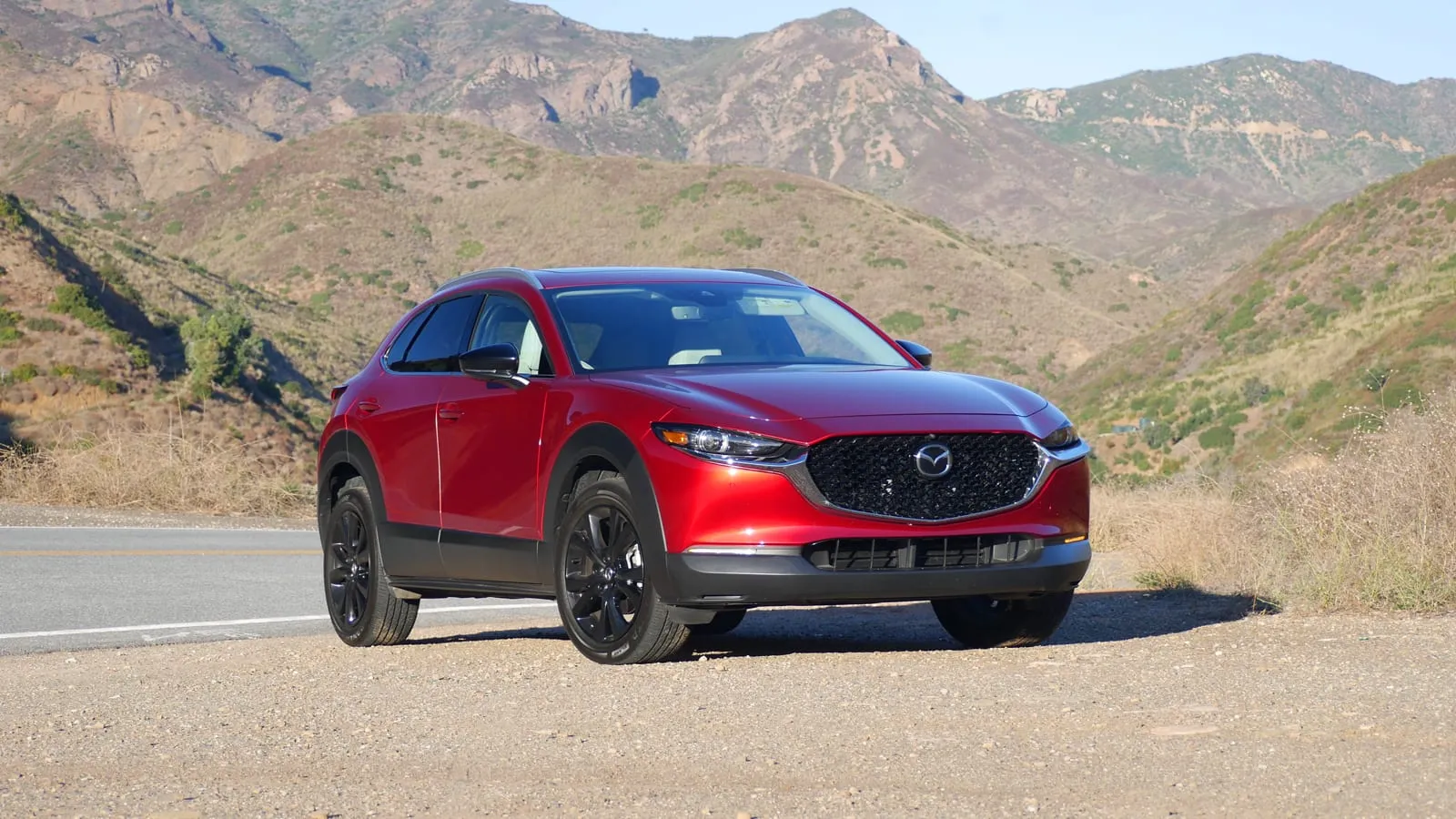
2. Mazda CX-30 2024
Precision defines the parking personality of the Mazda CX-30 2024. Engineers focused on balance, and that balance shows immediately during low-speed maneuvers. Steering feels direct without feeling twitchy, allowing drivers to place wheels exactly where intended. Body dimensions strike a careful balance between compact footprint and interior comfort, which helps in crowded lots without sacrificing daily usability.
Sightlines deserve special mention. Window shapes remain tall enough to provide awareness of surroundings, while mirror placement minimizes blind areas near rear corners. Front hood contours guide spatial judgment, making it easier to estimate distance from walls or other vehicles. Backup camera quality enhances confidence rather than replacing driver awareness, offering crisp visuals that respond well in dim garages.
Suspension tuning also influences parking comfort. Slow speed movement stays controlled, preventing the awkward rocking motion that can distract during careful alignment. Brake pedal modulation feels progressive, giving fine control when easing into tight spots. Those subtle qualities reduce stress when spaces demand patience and accuracy.
Mazda CX-30 2024 avoids unnecessary visual bulk. Sculpted body panels flow inward rather than outward, helping drivers feel connected to the vehicle’s true width. Parking between closely spaced cars feels less intimidating because mirrors and doors remain within predictable limits.
City residents who value driving enjoyment alongside daily practicality often appreciate how this SUV behaves when the engine slows, and precision matters most.
Also Read: 5 SUVs That Work Well in Cities vs 5 That Don’t
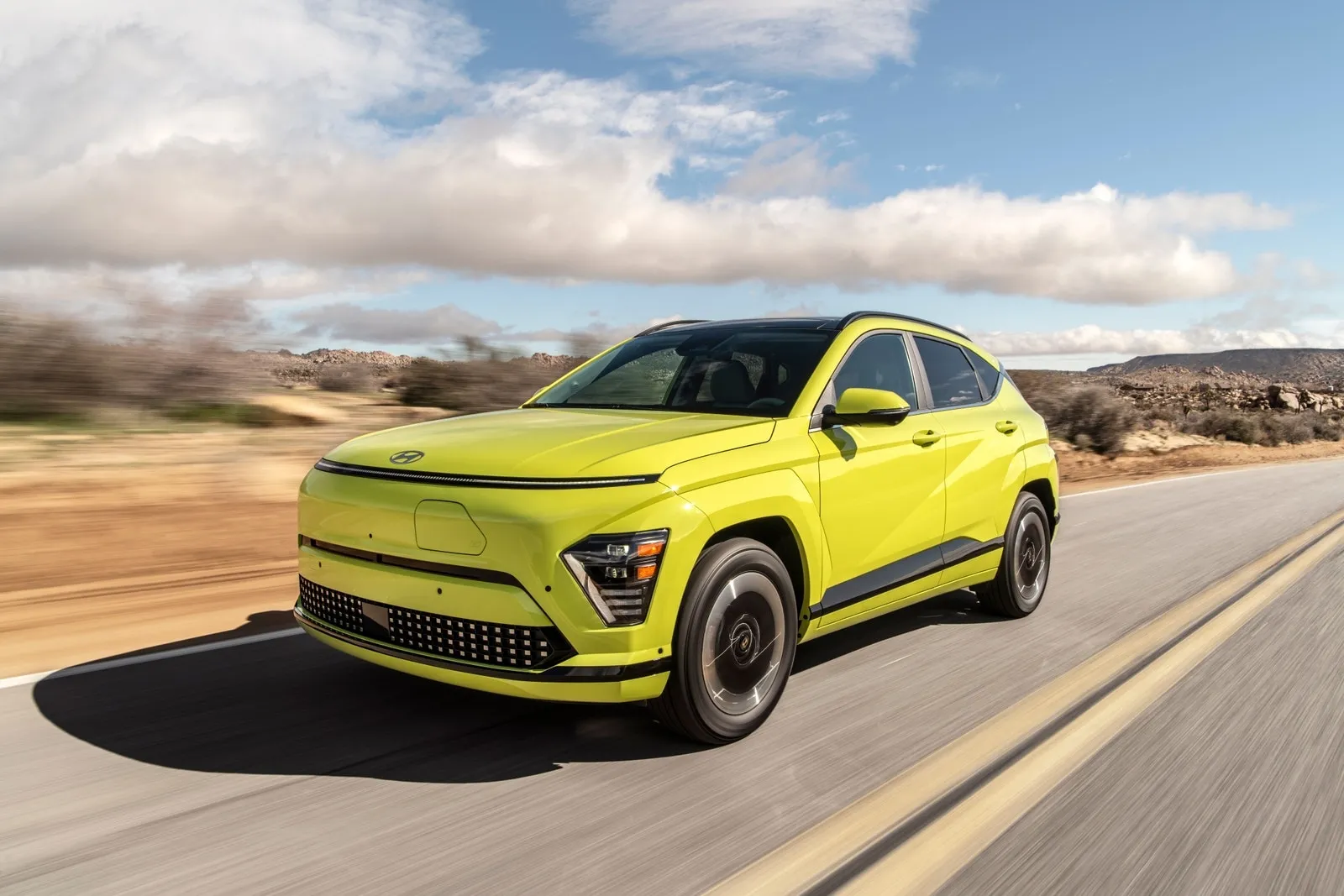
3. Hyundai Kona 2024
Hyundai Kona 2024 reflects a careful balance between style and daily usability, a balance that becomes especially clear during parking situations. The vehicle’s compact body length supports easy alignment within marked spaces, reducing the need for repeated adjustments.
Short front and rear extensions lower the risk of bumper contact with curbs or barriers, which reassures drivers when space is limited. Light steering at reduced speeds encourages smooth wheel movement, allowing entry into parking spots without excessive effort or repeated turning.
Driver support systems strengthen confidence without creating a distraction. Rear cross traffic alerts assist when reversing from tight spaces, particularly in busy car parks where visibility changes quickly. Camera displays provide clean and well-proportioned visuals that help drivers judge distance accurately.
Sensor feedback arrives promptly, offering guidance that feels timely rather than confusing. Elevated seating improves outward visibility while avoiding interference from a bulky dashboard, giving drivers a clear sense of surrounding vehicles and pedestrians.
Cabin arrangement also contributes to a calm parking experience. Switches and controls sit within comfortable reach, reducing the need to look away from the road during careful maneuvers. Seat height provides a commanding yet balanced view, useful in crowded shopping areas where vehicles of different sizes surround the driver. Brake response remains steady and predictable, supporting careful movement without sudden stops that might disrupt alignment.
Exterior styling plays a quiet role in usability. Rounded edges and compact proportions reduce visual intimidation, encouraging confident decisions in narrow streets and older parking facilities. The vehicle feels approachable rather than imposing, which supports relaxed handling during low-speed movement. Drivers transitioning from smaller cars often find this familiarity reassuring.
Hyundai Kona 2024 turns parking into a straightforward task rather than a source of tension. Its dimensions, visibility, and driver-focused features support routine urban use with minimal stress. For individuals seeking a compact SUV that behaves politely in tight environments, this model offers a practical and composed solution.
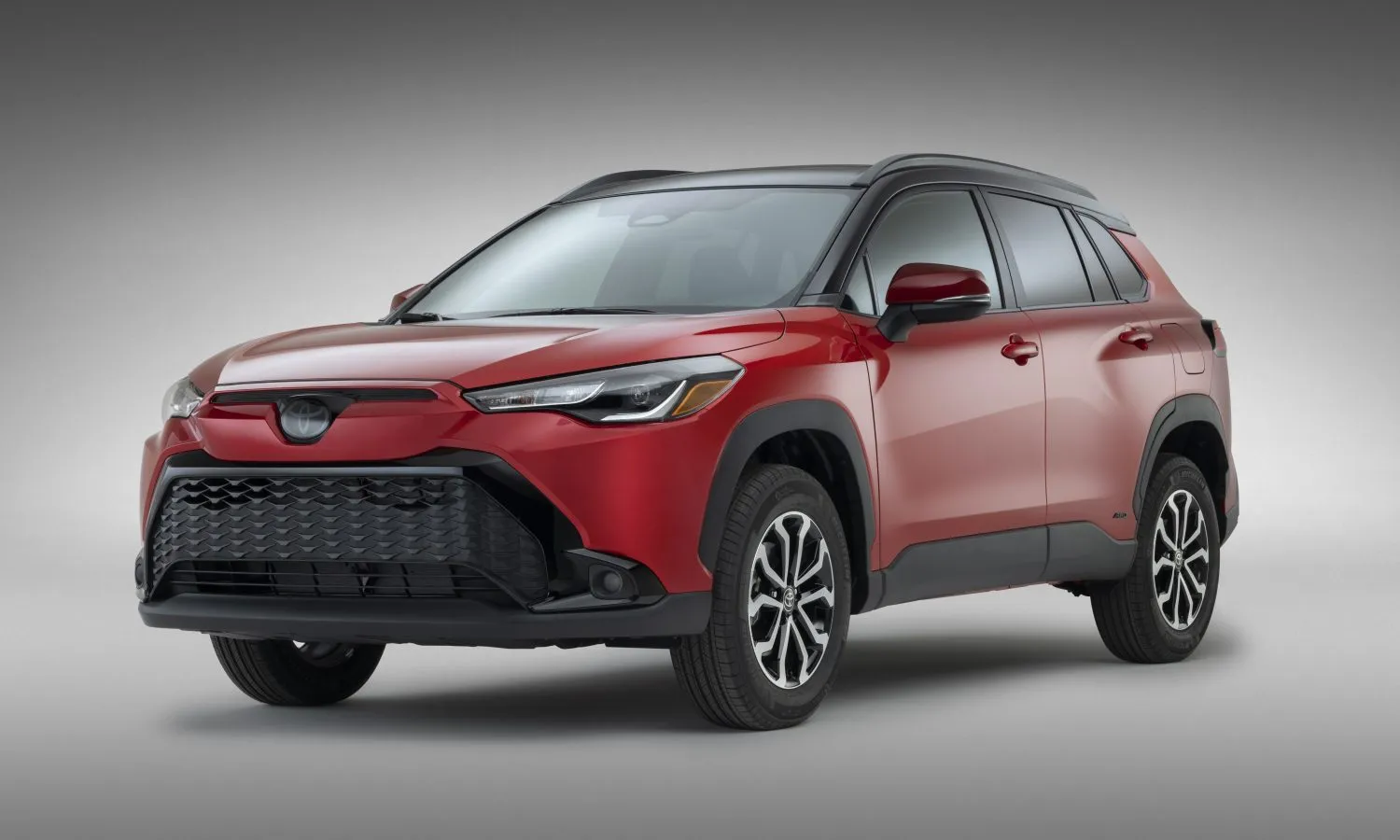
4. Toyota Corolla Cross 2024
Toyota Corolla Cross 2024 presents a familiar driving character that reduces uncertainty during parking situations. Design elements borrowed from smaller passenger cars shape its behaviour at low speeds, creating responses that feel easy to predict. Drivers quickly understand how the vehicle reacts to steering input, which limits hesitation when entering marked spaces.
A well-judged turning radius supports smooth access into angled and perpendicular bays, reducing the need for repeated adjustments that often cause stress in busy parking areas. Clear outward visibility strengthens driver confidence. Upright glass sections minimise blind areas, allowing constant awareness of nearby vehicles, pillars, and pedestrians.
The bonnet slopes gently away from the driver, helping with accurate judgement of front clearance near walls, curbs, or parked cars. Rearview camera positioning feels natural to interpret, matching the direction of sight most drivers expect while reversing.
Parking sensors provide steady feedback, guiding movement without creating distraction or unnecessary urgency. Steering response remains composed at reduced speeds, avoiding looseness that could complicate careful positioning. Small steering inputs produce controlled changes in direction, which assist with precise alignment.
Brake control allows gradual movement forward or backward, supporting careful placement when space feels limited. Seat height achieves a balance between elevation and familiarity, helping drivers who are transitioning from traditional sedans adapt without discomfort or confusion.
Exterior styling choices support accurate spatial judgement. Clean body surfaces and restrained proportions prevent visual distortion of the vehicle’s true size. Drivers can better judge side clearance when manoeuvring between closely parked vehicles. This visual honesty encourages trust in personal judgement rather than dependence on constant corrections.
Toyota Corolla Cross 2024 fits well into daily routines that involve frequent stops and parking tasks. Predictable handling and reliable visibility help reduce tension in crowded car parks and narrow urban streets. Drivers who value ease of use, measured responses, and consistent behaviour during parking may find this model suitable for regular city driving without unnecessary effort or frustration.
Urban use often demands repeated short trips, and this vehicle supports such patterns through its measured dimensions and calm responses. Entry and exit from parking spaces feel orderly, even during peak periods when attention is divided. Consistency in behaviour builds trust as time goes on, allowing drivers to approach routine parking tasks with steady assurance rather than tension or doubt.
Such qualities contribute to a driving experience that remains controlled and reassuring throughout everyday movement across varied urban parking conditions consistently.
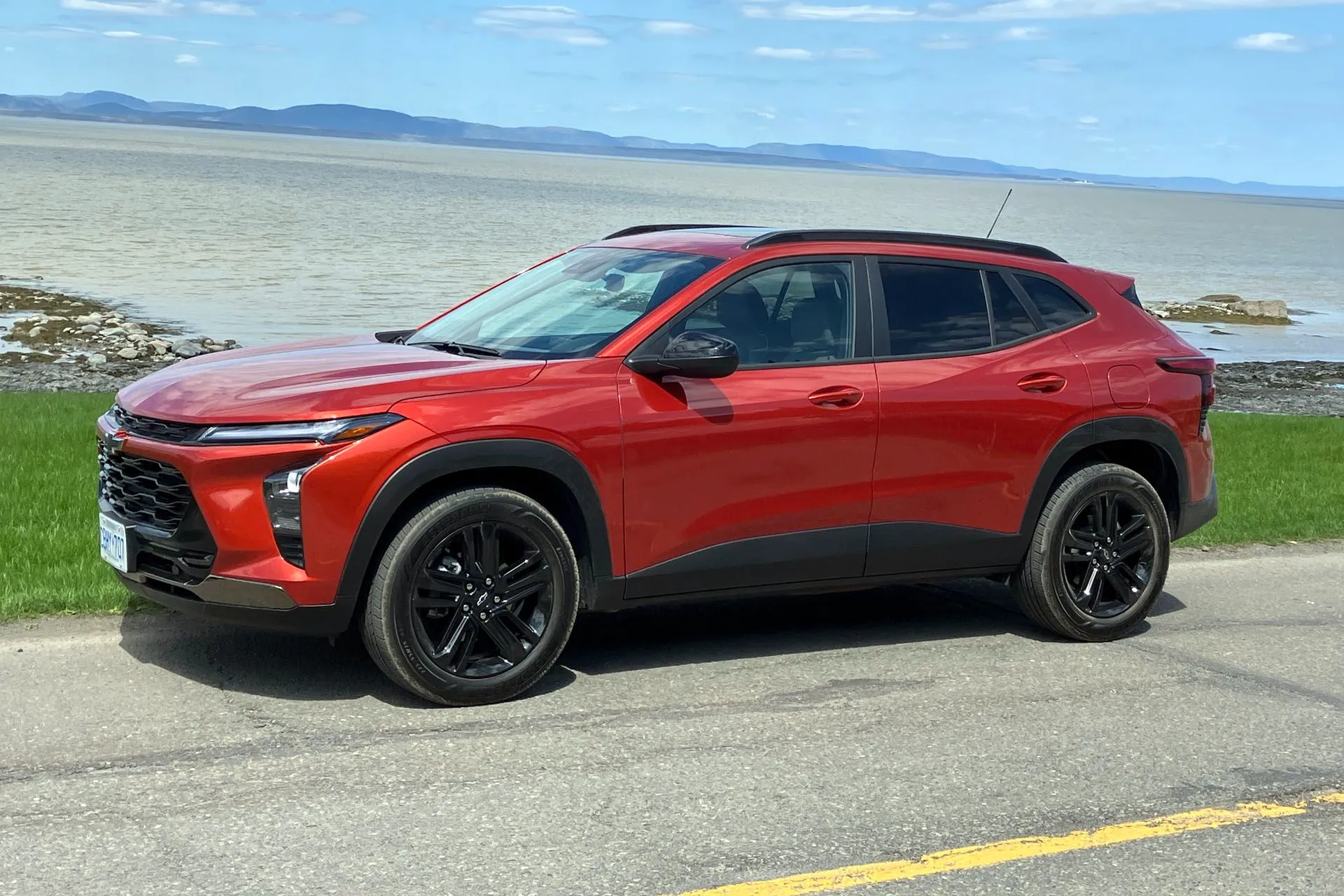
5. Chevrolet Trax 2024
Chevrolet Trax 2024 presents itself as a vehicle designed with city movement in mind, and this focus becomes evident during parking. Short body length allows drivers to identify suitable spaces quickly and commit without hesitation. Steering response remains light and forgiving, supporting swift adjustments when positioning within narrow areas.
Camera assistance supports confidence through clear and properly scaled visuals. Rearview images provide a wide field of vision without distortion, helping drivers judge distance accurately. Sensor alerts arrive promptly, offering guidance that complements rather than interrupts driver attention. Mirror placement assists with side clearance checks, an advantage in older parking structures where space feels limited.
Interior arrangement supports concentration during low-speed maneuvers. Seating height offers awareness without creating a top-heavy sensation. Control placement remains straightforward, allowing drivers to focus on their surroundings rather than cabin adjustments. Brake response stays gentle and progressive, supporting precise movement when easing forward or backward.
Exterior proportions feel honest and approachable. Visual size matches physical dimensions, which helps drivers trust instinctive judgments. Rounded design elements reduce intimidation when entering narrow streets or tight parking bays.
Chevrolet Trax 2024 treats parking as a natural extension of driving rather than a separate challenge. Its dimensions, visibility, and responsive controls make it suitable for daily urban routines. Drivers who value ease and practicality in crowded environments may find this model dependable and reassuring.
5 SUVs That Are Harder to Park
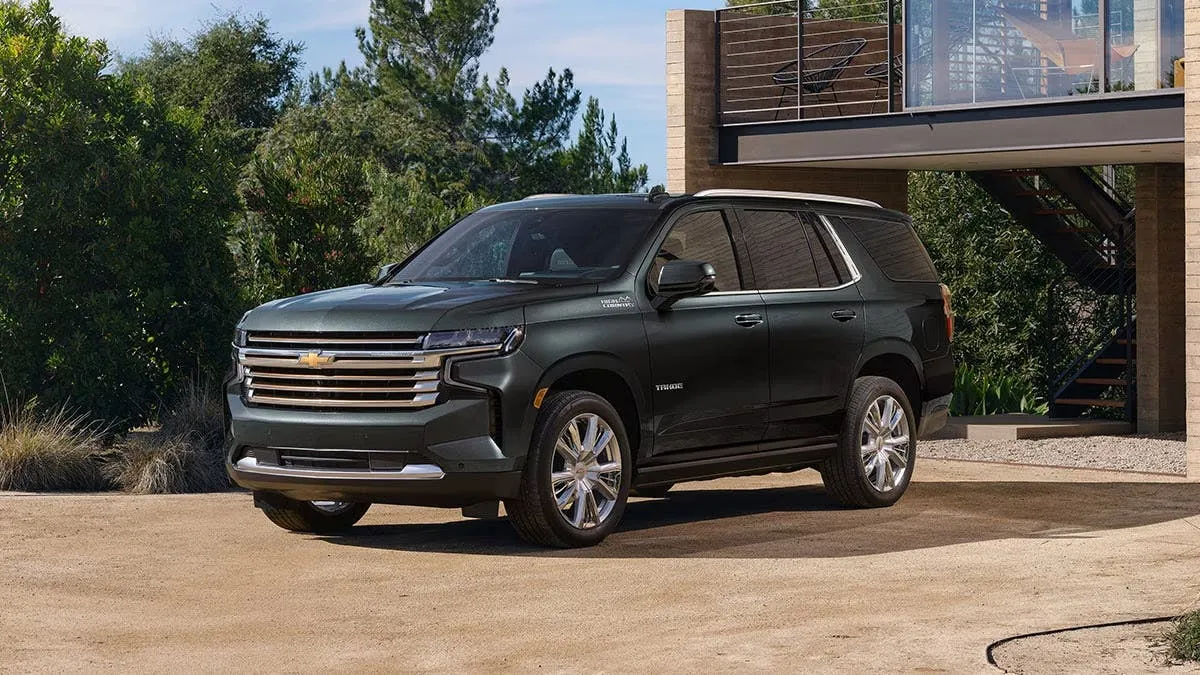
1. Chevrolet Tahoe 2024
Bulk announces itself the moment the Chevrolet Tahoe 2024 rolls into a parking lot. Length and width dominate the driver’s senses, demanding constant awareness of space on every side. Parking spots that look reasonable from a distance often reveal their limitations halfway through the maneuver. Front and rear overhangs extend far beyond the wheels, forcing drivers to estimate clearance without much visual help from the cabin.
Seating position sits high, which sounds helpful, yet the long hood reduces accurate judgment near walls or low barriers. Pillars appear thick, shrinking side visibility during tight turns. Mirrors offer assistance, but their size cannot fully compensate for the vehicle’s sheer footprint. Parallel parking becomes a multi-step process that requires patience, precise timing, and plenty of room.
Camera systems attempt to ease the experience, though perspective distortion can confuse drivers unfamiliar with the display. Depth perception feels less natural, especially in older parking garages with uneven lighting. Sensors alert frequently, sometimes too frequently, creating noise rather than clarity during careful movements.
Steering response favors highway stability rather than low-speed agility. Wheel input demands more rotation, which complicates sharp turns into narrow spaces. Brake modulation remains smooth, yet the weight of the vehicle makes inch-by-inch adjustments feel slower and heavier than expected.
Chevrolet Tahoe 2024 serves families and road trip lovers well, yet parking remains its least friendly task. Urban settings highlight their limitations, turning simple errands into strategic exercises. Drivers who face crowded lots daily may find the size impressive on the road, but exhausting when precision matters most.
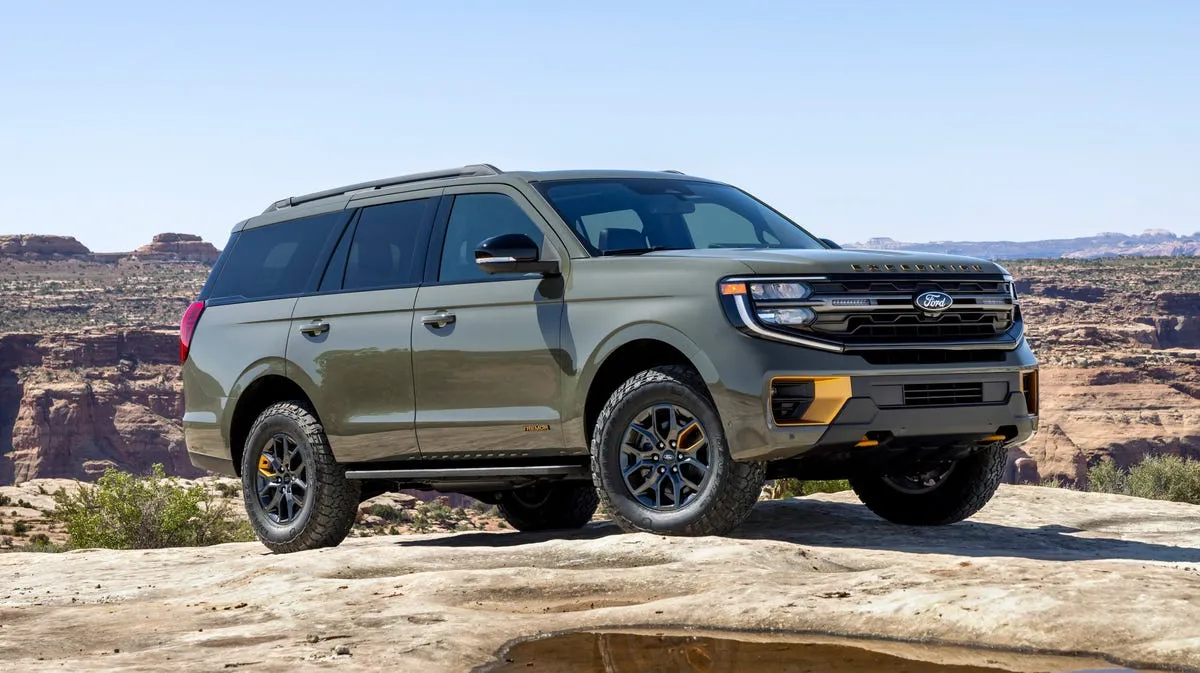
2. Ford Expedition 2024
Ford Expedition 2024 carries a commanding presence that fills parking spaces with ease, but not always comfortably. Wide body panels stretch close to adjacent vehicles, leaving little margin for error. Even spacious suburban lots can feel tight when turning into angled spots due to the long wheelbase.
Visibility challenges appear quickly. Rear pillars create blind areas that mirrors cannot fully erase. Hood length complicates distance judgment near walls or curbs. Drivers rely heavily on technology, yet camera views sometimes flatten depth perception, forcing cautious movement.
Steering tuning favors straight-line travel, which reduces agility during sharp low-speed turns. Multiple corrections often become necessary when aligning properly. Turning radius feels broad, requiring extra room that smaller SUVs rarely need. Brake response remains predictable, yet weight influences stopping distance during slow movements.
Parking garages highlight the height issue. Low ceilings demand careful entry, while narrow ramps amplify stress. Sensors alert consistently, but frequent warnings may blur into background noise rather than helpful guidance. Ford Expedition 2024 excels in carrying passengers and gear, though parking requires confidence and experience.
Drivers who value space above all else may accept the tradeoff, yet those facing crowded environments daily might wish for something more cooperative when the journey slows to a crawl.
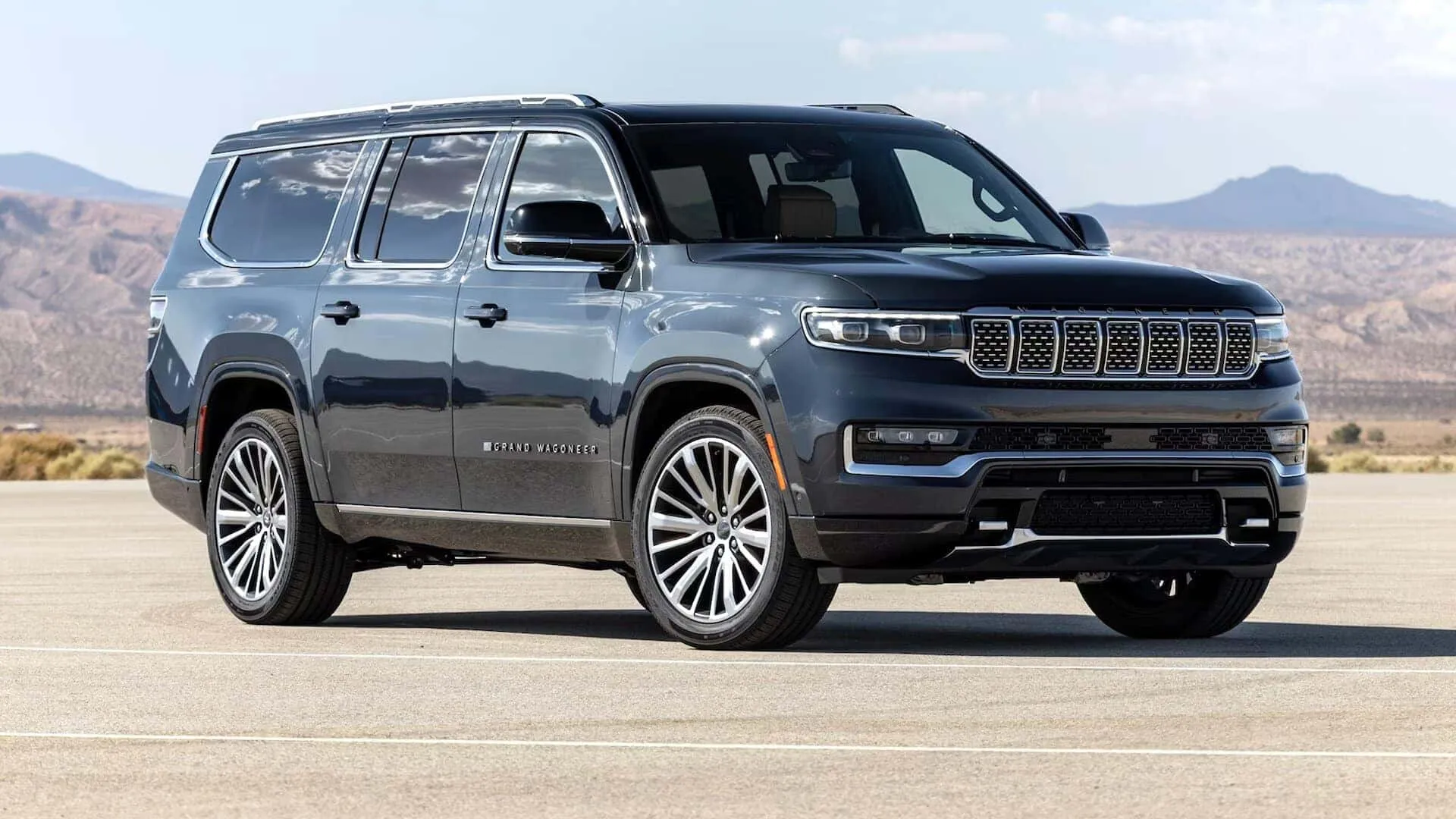
3. Jeep Grand Wagoneer 2024
Jeep Grand Wagoneer 2024 combines premium refinement with substantial physical presence, and this combination strongly shapes how it behaves during parking situations. The vehicle’s wide body immediately influences driver perception, especially in confined environments.
Side mirrors often appear uncomfortably close to adjacent vehicles, even in parking spaces that meet standard dimensions. Door length adds another layer of difficulty, as opening them fully requires ample clearance that is rarely available in crowded locations.
Driver seating height delivers a strong forward view, which supports road awareness, yet this advantage diminishes when attention moves to the rear. Thick structural pillars and a relatively narrow rear window restrict backward visibility. As a result, drivers depend heavily on electronic assistance to judge distance and alignment.
Camera displays provide clear images, though the sheer size of the vehicle can still make precise positioning feel demanding. The sense of scale remains present throughout the maneuver, encouraging slower and more cautious movement. Steering behavior reinforces this careful approach.
The wheel response feels controlled rather than quick, which suits highway travel but limits agility during slow-speed maneuvers. Entering narrow parking spaces often involves stopping midway, adjusting steering input, and attempting alignment again. Brake response is smooth and predictable, yet the mass of the vehicle affects how quickly it reacts to small pedal inputs, especially when fine adjustments are required.
Interior comfort, while impressive during long journeys, offers limited relief during parking. Attention moves away from luxury materials toward constant environmental awareness. Tight underground parking structures highlight these challenges further. Narrow lanes and sharp corners demand full concentration, with little room for error.
Jeep Grand Wagoneer 2024 performs confidently on open roads where space allows its design to shine. Parking situations reveal the compromises that accompany its size. Owners who value commanding presence and interior comfort often accept this reality. Drivers whose routines involve frequent tight parking may find the experience demanding and mentally tiring, even with modern assistance systems in place.
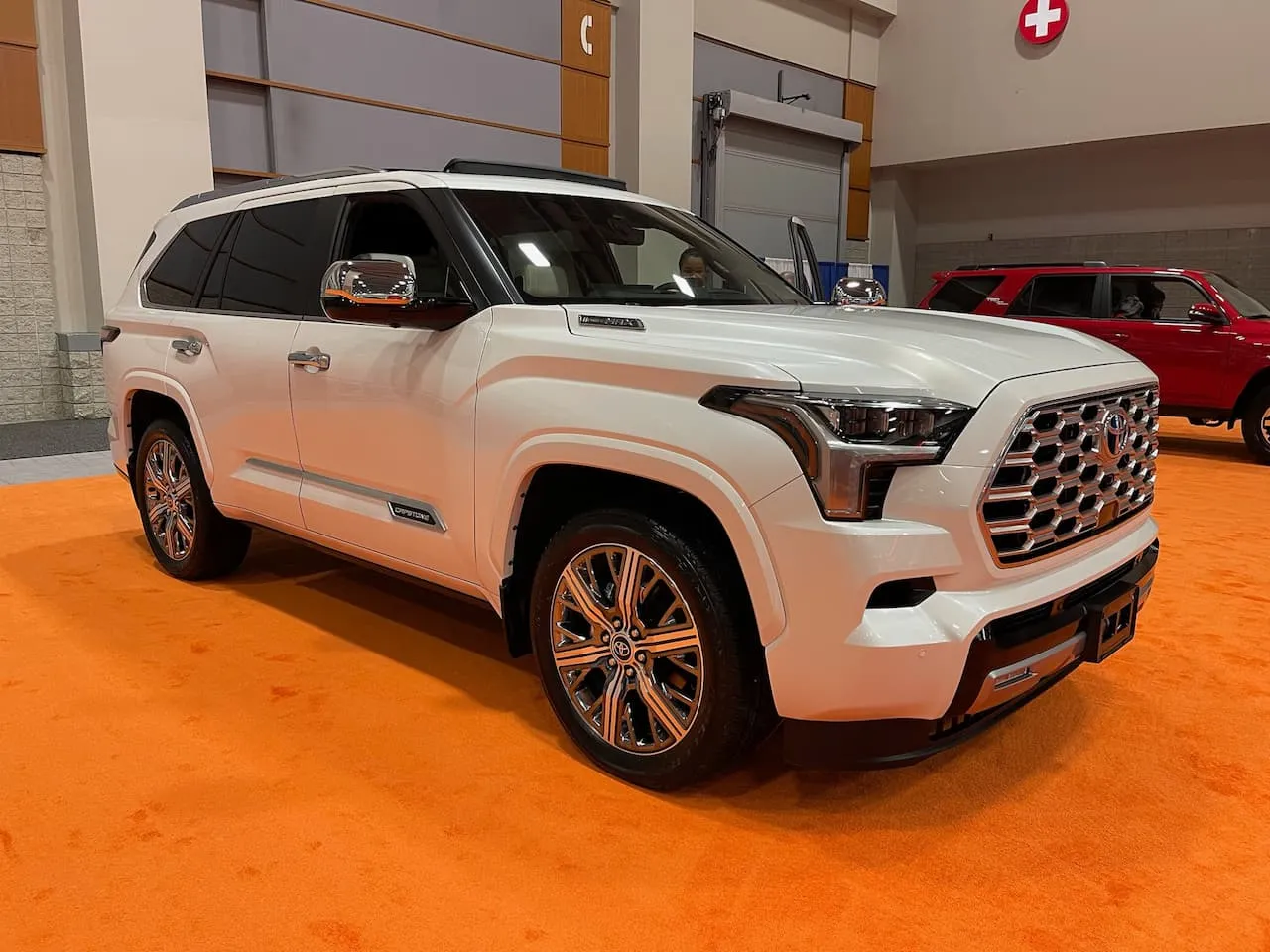
4. Toyota Sequoia 2024
Toyota Sequoia 2024 presents itself as a vehicle built for strength, endurance, and long-distance travel. These qualities, while beneficial in many settings, influence how it behaves when space becomes limited. Vehicle length frequently extends beyond standard parking markings, making end spaces more practical than center positions.
Width also reduces side clearance, particularly in older parking facilities where dimensions feel outdated. Forward visibility remains reasonably clear due to the upright seating position and hood design. Rear awareness, however, proves more challenging.
Body height and structural elements restrict the driver’s natural view, increasing reliance on mirrors and digital displays. Side mirrors require frequent adjustment checks during low-speed turns, especially when clearance is minimal. Rear camera images appear compressed, which demands interpretation rather than instinctive judgment.
Steering weight feels heavier at reduced speeds, which affects ease of movement in tight spaces. Turning radius limits the ability to enter smaller parking spots smoothly, often encouraging drivers to abandon them in favor of wider options. Brake modulation allows controlled movement, yet the vehicle’s mass dictates a slower response when making fine positioning changes.
Parking garages quickly expose these limitations. Entry ramps, sharp directional changes, and low ceilings require heightened attention. Sensor alerts activate often, providing warnings that may feel constant rather than selective. Managing these alerts alongside steering and braking demands concentration.
Toyota Sequoia 2024 excels when space is generous, and the journey extends beyond city limits. Parking serves as a reminder that durability and size often involve compromise. Drivers who prioritize simplicity during routine stops may find this model demanding in urban settings, while those accustomed to larger vehicles may adapt with experience and patience.
Also Read: 5 SUVs That Tolerate Short City Trips vs 5 SUVs That Prefer Highway Use
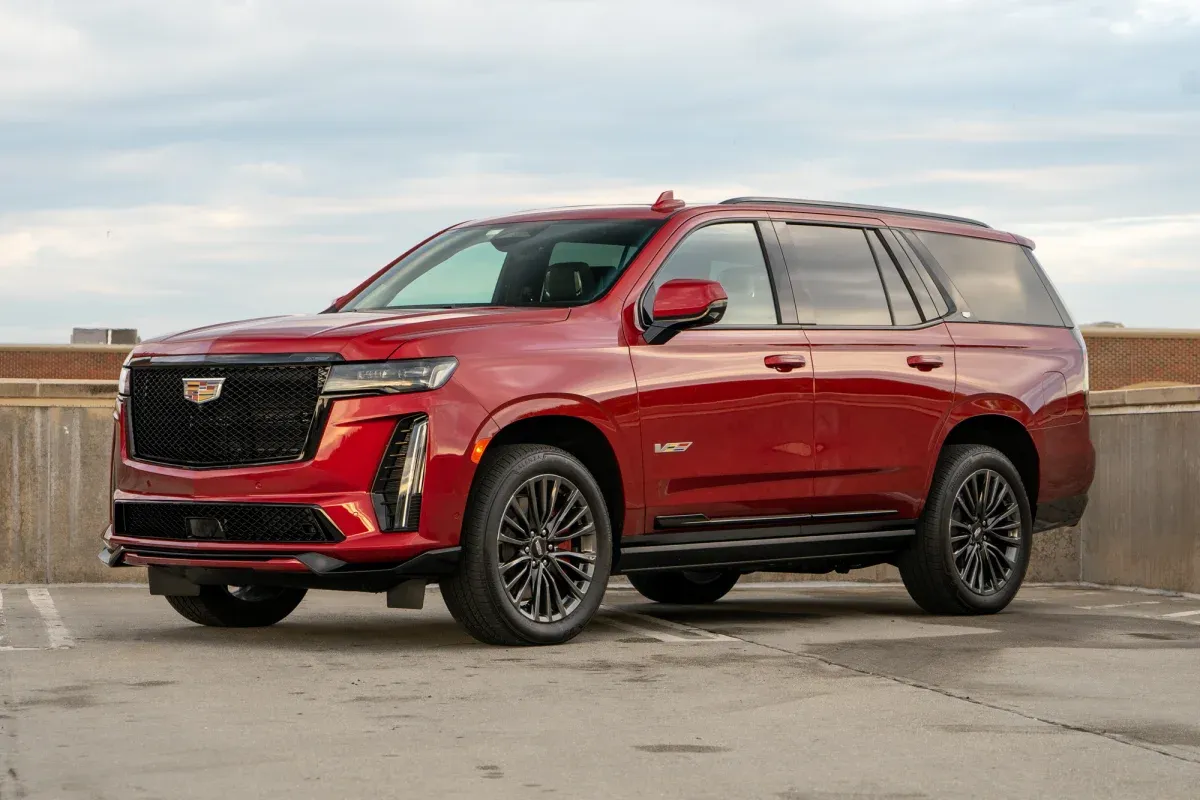
5. Cadillac Escalade 2024
Cadillac Escalade 2024 commands attention through size alone, and this characteristic defines its parking behavior. Length and width dominate spatial awareness, requiring continuous calculation during low-speed maneuvers. Parking spaces designed for standard vehicles often prove insufficient, forcing drivers to search for wider or isolated spots to reduce stress.
Seating position places the driver high above the road, offering a broad forward view. Hood length, however, complicates distance judgment near walls and barriers. Rear visibility presents another challenge, as design priorities favor privacy and exterior styling.
Digital assistance becomes essential rather than supportive. Camera systems provide coverage, yet drivers remain highly aware that technology must compensate for physical dimensions. Steering response emphasizes smoothness, aligning with the vehicle’s luxury focus.
This tuning limits agility when precision is required. Aligning within narrow spaces often involves several adjustments. Brake response feels refined, though vehicle weight influences how quickly it settles during careful positioning. Parking structures intensify these challenges.
Narrow lanes restrict turning angles, while low ceilings demand careful height awareness. Sensor alerts activate frequently, creating a stream of warnings that require interpretation. Managing these signals alongside steering and braking can feel mentally demanding.
Cadillac Escalade 2024 performs impressively during highway travel and formal arrivals. Parking demands respect, patience, and experience. Drivers who value ease during daily routines may find the effort considerable, while those who appreciate presence and luxury may accept parking as part of the ownership experience.
