
Drifting may have started as a niche motorsport in the mountains of Japan, but today it’s a global phenomenon, especially in the United States, where Formula Drift events draw massive crowds and grassroots drift days fill racetracks every weekend.
While American V8s and European turbo sedans have earned their place sideways, Japanese manufacturers still dominate drift culture thanks to their lightweight platforms, bulletproof engines, and endless aftermarket support.
What makes a great drift car isn’t just horsepower. Balance, steering geometry, reliability under abuse, and how easily a chassis accepts modification all matter more.
Japan happened to perfect that formula in the 1980s, ’90s, and early 2000s, creating legends that remain the backbone of drift builds across the U.S. today.
Here are the 10 greatest Japanese drift cars ever built, ranked by real-world performance, cultural impact, and how often you still see them shredding tires at American tracks.
1. Toyota AE86 Sprinter Trueno
If drifting had a spiritual origin story, it would start with the AE86. Lightweight, rear-wheel drive, and powered by the high-revving 4A-GE, this humble Corolla-based coupe became immortal through Japanese street racing culture and later anime fame.
For U.S. drivers, the AE86 represents purity: no driver aids, no excess weight, just steering feel and momentum.
Its short wheelbase and predictable chassis reward skill over brute power, making it a favorite among purists and technical drivers. Even today, well-built AE86s command serious money stateside.
The Toyota AE86 Sprinter Trueno is one of the most influential Japanese performance cars of the 1980s. Produced from 1983 to 1987 as part of the fifth-generation Corolla lineup (E80 series), the AE86 distinguished itself with a front-engine, rear-wheel-drive layout at a time when most compact cars were transitioning to front-wheel drive.
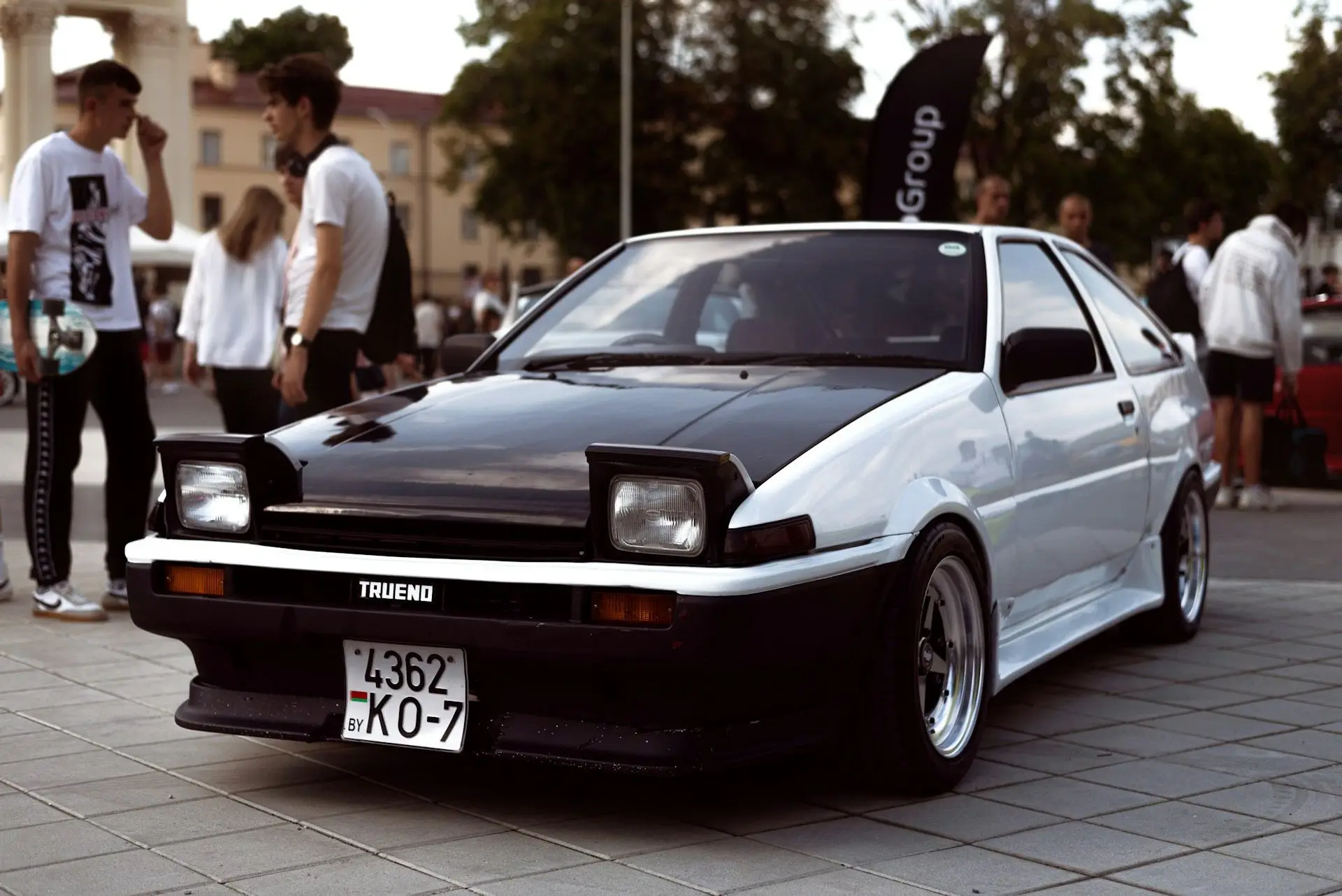
That configuration, combined with low curb weight and balanced chassis dynamics, established the AE86 as a benchmark for affordable driver-focused engineering.
Power comes from the 1.6-liter 4A-GE inline-four, a naturally aspirated DOHC engine with electronic fuel injection. Early versions produced approximately 112–128 horsepower depending on market and specification.
While modest by modern standards, output was sufficient given the AE86’s light weight, typically around 2,200–2,400 pounds (1,000–1,100 kg). The engine’s willingness to rev and its linear throttle response contributed significantly to the car’s dynamic character.
Chassis engineering is central to the AE86’s reputation. It features front MacPherson strut suspension and a live rear axle with coil springs and a four-link setup.
Many models were available with a limited-slip differential, which enhanced traction and controllability under power. The car’s communicative steering and predictable breakaway characteristics made it especially popular in grassroots motorsport.
The AE86 achieved global recognition through drifting culture. Its lightweight rear-wheel-drive platform allowed drivers to initiate and sustain oversteer with precision.
2. Nissan Silvia S13
The S13 is where modern drifting truly began. With its near-perfect weight distribution and factory turbo options overseas, this chassis became the blueprint for competitive drift cars worldwide.
In America, the S13 is prized for its massive aftermarket and swappable engines, from SR20DET to LS V8s. The suspension geometry responds beautifully to angle kits, and parts availability makes it one of the easiest cars to build for drifting on a budget.
Subsequent S-chassis iterations were released in both international markets and the United States, with American buyers eventually receiving features that would later become emblematic of the platform, including flip-up headlights and even a brief turbocharged 200SX variant during the mid-1980s.
While earlier generations achieved moderate success in Japan, none generated the level of attention that the S13 commanded upon its debut in 1988.
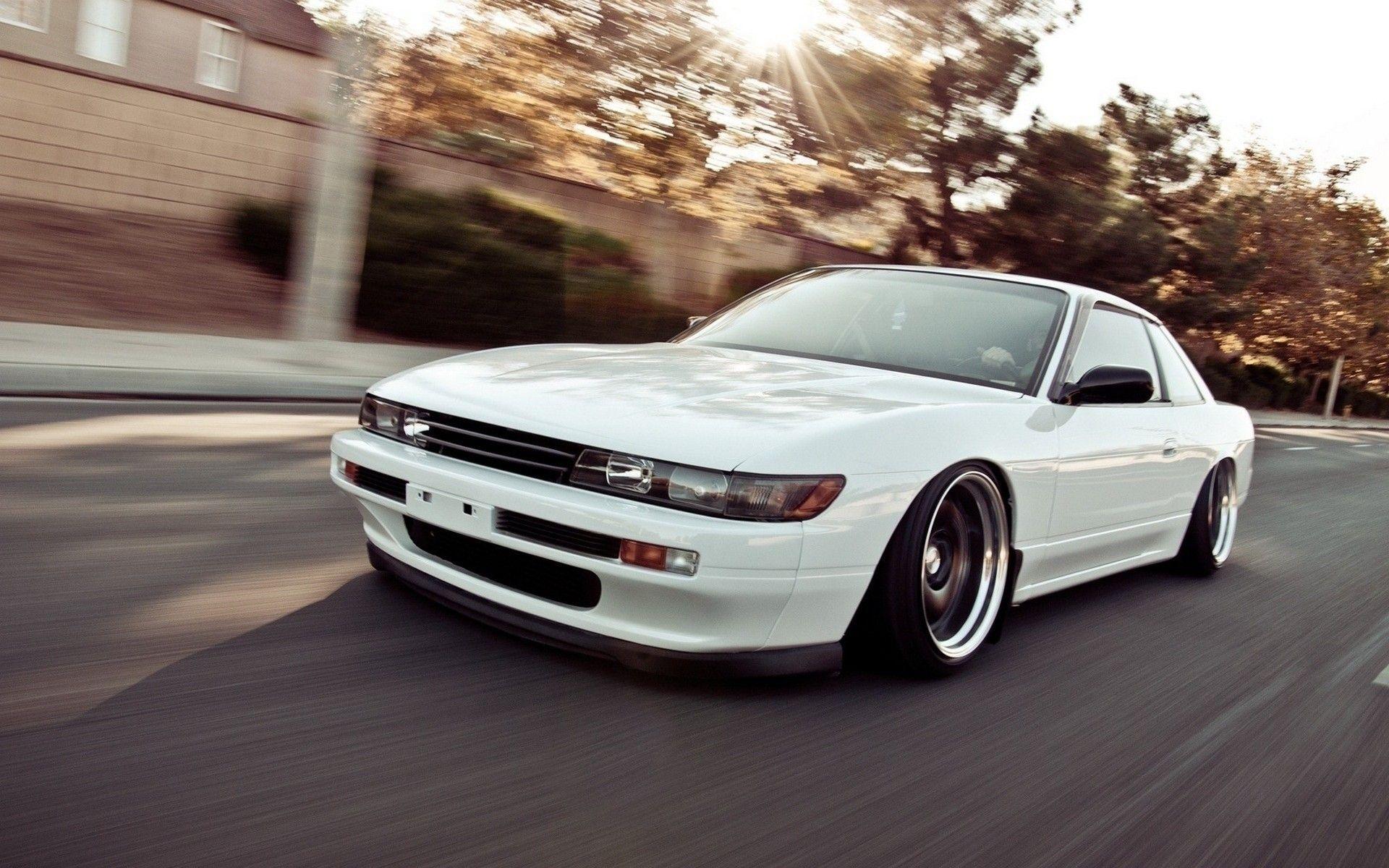
Offered as a newly styled coupe, liftback, and a limited-production convertible, the S13 preserved the formula of an attainable sports car built around a front-engine, rear-wheel-drive configuration. This time, however, the mechanical layout was wrapped in a sharper, lower, and more contemporary design that gave the car a far more assertive presence.
The Silvia designation continued, though exclusively for the Japanese market. There, the 180SX was marketed in the United States as the 240SX, while European customers encountered the 200SX nameplate.
Despite the seemingly inconsistent numbering strategy, the distinctions were largely market-driven. In Japan, the 180SX liftback retained its signature pop-up headlights, mirroring the U.S.-spec model, whereas the Silvia coupe adopted fixed headlamps, giving the two body styles distinct front-end identities.
Mechanically, Japanese buyers initially received a 1.8-liter turbocharged CA18DET engine. Following a minor update, Nissan introduced the now highly regarded SR20DET, which would go on to define the platform’s performance credentials.
This was later replaced by the dual-overhead-cam KA24DE. Both powerplants were sourced from Nissan pickup truck applications and, at the time, were widely characterized by automotive media as lacking the performance expected from a purpose-built sports coupe.
Also Read: 10 Most Affordable Coupes With Pop Up Headlights That Still Hold Their Value
3. Nissan Silvia S15
Often considered the peak of the Silvia lineage, the S15 refined everything the S13 started. Stiffer chassis, sharper steering, and the legendary SR20DET made this car a factory-built drift weapon.
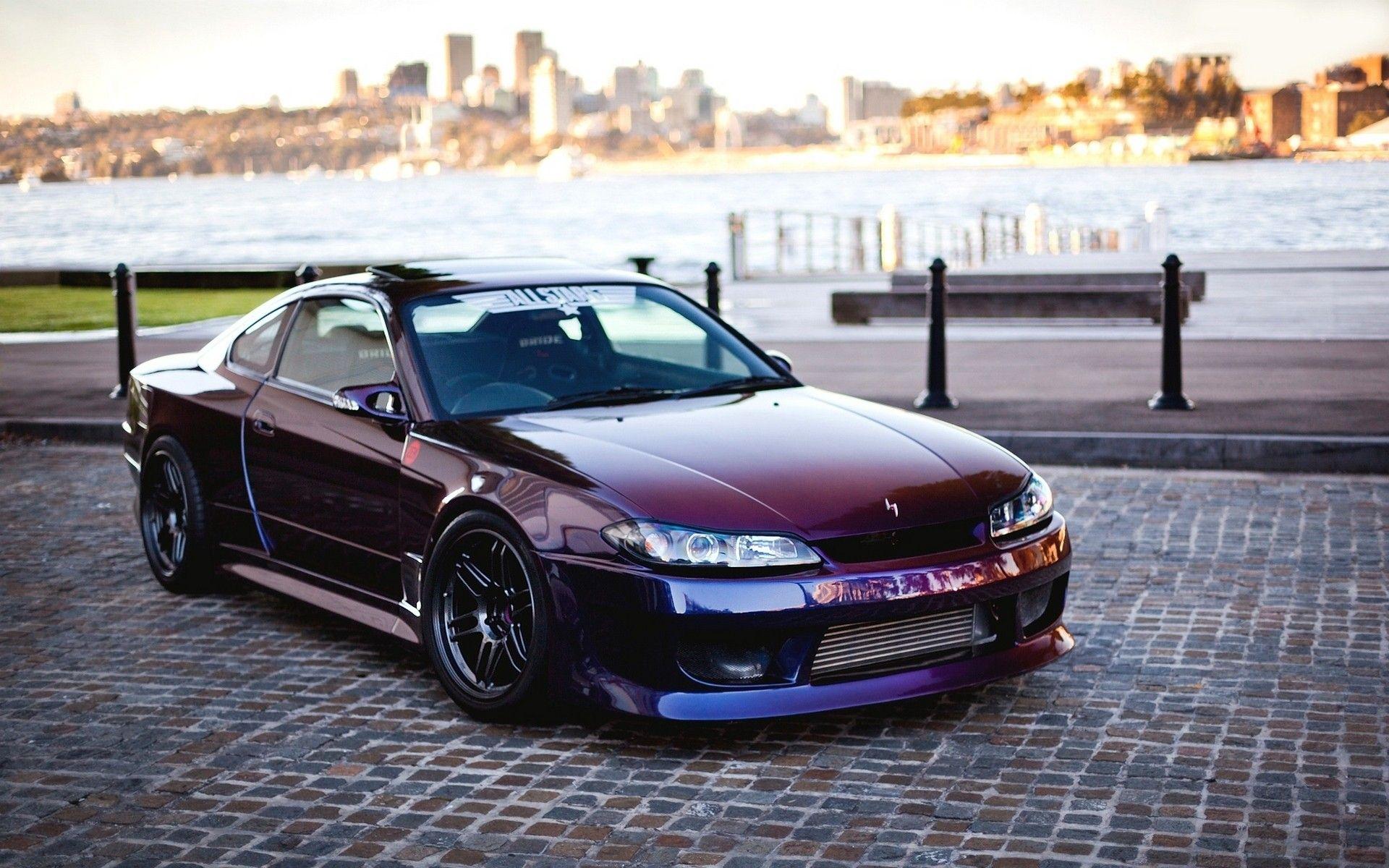
Although never officially sold in the U.S., imported S15s are highly sought after. Competitive drivers love its responsive front end and predictable rear grip, traits that shine on tight American circuits.
4. Nissan Skyline R32 GT‑R
Yes, it came AWD from the factory, but drift builders quickly discovered the R32’s RB26 engine and rock-solid chassis were perfect once converted to rear-wheel drive.
In the U.S., R32 drift builds are popular among experienced drivers who want turbo power with legendary durability. It’s heavier than Silvias, but the stability at speed makes it devastating on fast tracks.
The Nissan Skyline R32 formed part of a long lineage of performance-oriented vehicles produced in Japan. The GT-R badge returned in 1989 following a prolonged absence from the market.
Back in 1973, Nissan discontinued the Skyline GT-R performance variant. The global oil crisis had shifted industry priorities toward fuel-efficient models, and a high-performance coupe no longer aligned with prevailing economic realities.
However, in 1989, the Japanese automaker reinstated the GT-R designation. The revived model was engineered with a specific objective: to compete, and win, in Group A racing. To homologate the vehicle for competition, Nissan was required to manufacture a production version suitable for public sale.
The exterior design took the form of a streamlined two-door coupe. In order to meet racing regulations, the car needed to accommodate wider tires. This requirement led to flared fenders, which enhanced both functionality and visual aggression. A shortened trunk lid paired with a rear spoiler completed the profile.
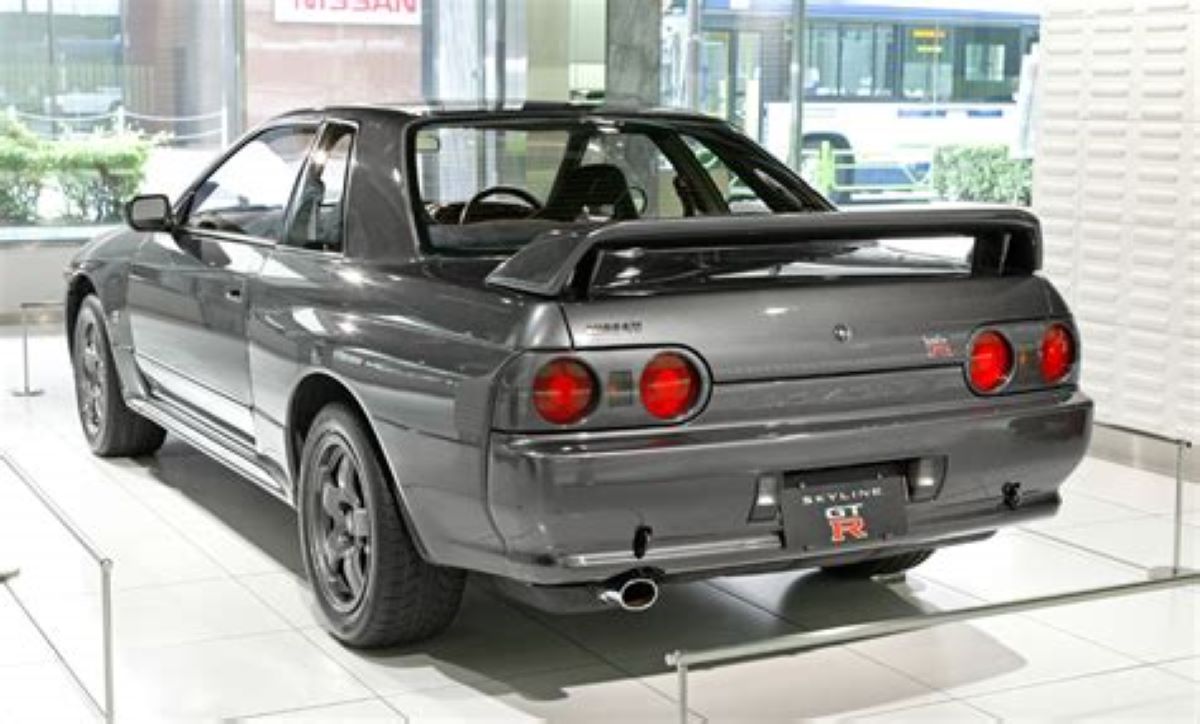
At the front, Nissan opted for square-shaped headlamp units, selected in part for their practicality and ease of replacement in the event of track damage. The rear featured the Skyline’s signature round taillights, carried over from the standard four-door model.
Inside the cabin, the vehicle was configured with four seats, though the rear accommodations were largely nominal and influenced by insurance classifications rather than comfort priorities.
Rear legroom was not a central consideration, particularly in racing configurations that retained only the driver’s seat. The dashboard layout followed a restrained, linear design theme and incorporated a six-dial instrument cluster. Notably, a dedicated gauge positioned at the upper right of the cluster displayed the amount of torque being directed to the front wheels.
Power came from a 2.6-liter inline-six engine equipped with twin turbochargers. The advanced all-wheel-drive system was newly developed and specifically engineered to meet the demands of competitive motorsport.
Also Read: Top 10 Mazda Cars Every Enthusiast Must Drive Once
5. Mazda RX‑7 FD
The FD RX-7 is automotive art that just happens to drift beautifully. Its twin-rotor 13B engine revs freely and keeps weight low, while the chassis delivers razor-sharp turn-in.
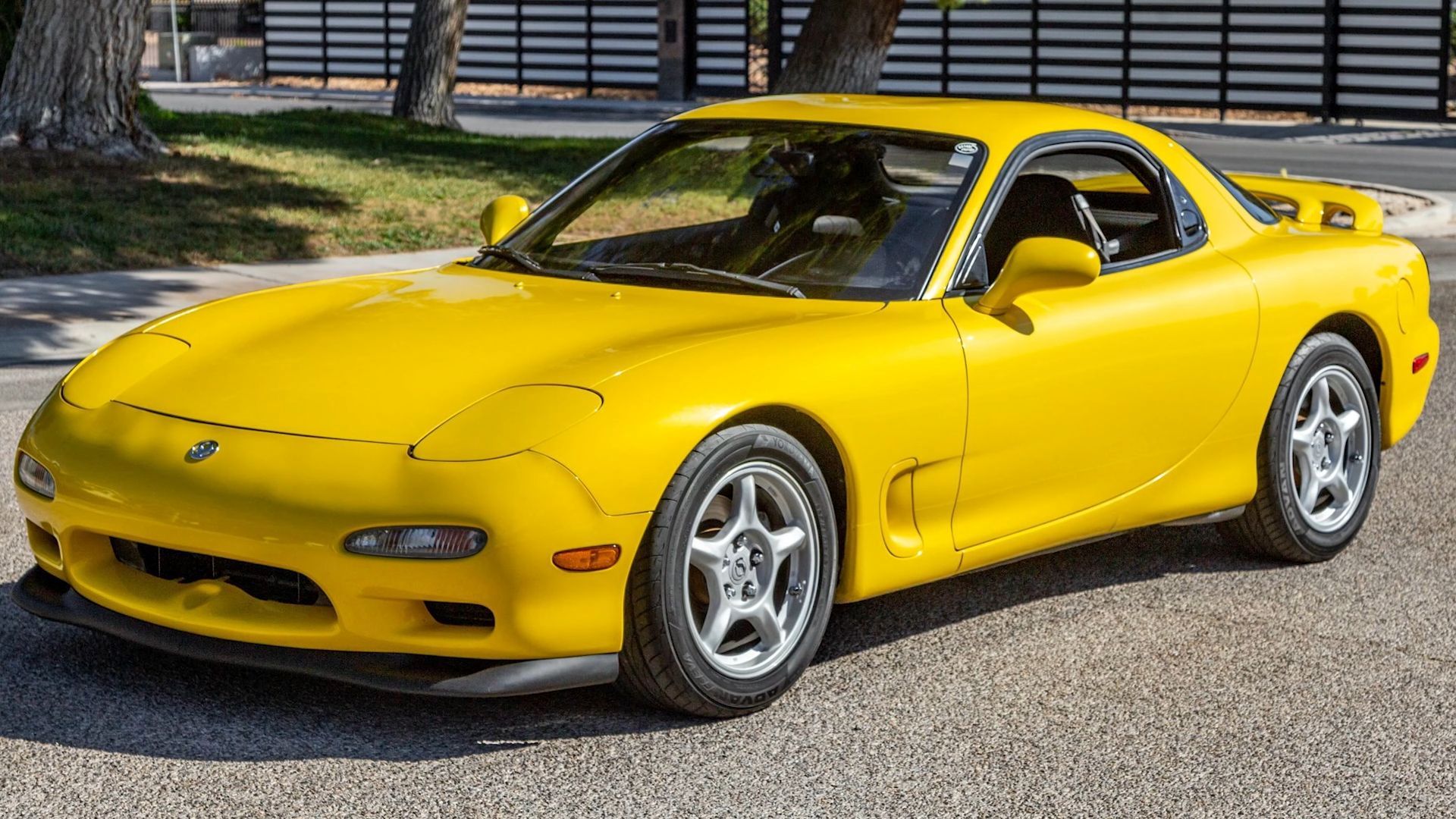
American drift fans love the FD for its balance and style, though rotary maintenance scares some newcomers. When properly tuned, however, it offers one of the smoothest power deliveries in drifting.
Mazda initiated a significant shift in its corporate trajectory with the debut of the first-generation RX-7 in 1978. Although it was not the inaugural production vehicle powered by a Wankel rotary engine, it marked the first time Mazda successfully leveraged that unconventional powerplant to penetrate the global sports car segment at scale.
The RX-7 distinguished itself technically and stylistically, and its commercial performance reflected that distinction, achieving strong international sales.
The vehicle was designed by Matsaburo Maeda as a lightweight sports coupe with a deliberate focus on balance and agility. The engine was mounted behind the front axle line, a placement that optimized weight distribution and improved handling characteristics. This rearward engine positioning allowed for a narrower front profile.
Combined with pop-up headlights, the design contributed to reduced aerodynamic drag. The sharply angled windshield transitioned into a compact roofline, which flowed into a long, sloping rear glass panel that also functioned as the trunk lid.
Within the cabin, Mazda configured the RX-7 with four seats, though the rear positions were largely symbolic due to their limited space. The front compartment featured a curved dashboard layout.
Circular air vents were positioned at the outer edges, while rectangular vents occupied the center section. The instrument cluster prominently displayed a tachometer calibrated to 8,000 rpm, with the redline beginning at 7,000 rpm, an operating range more commonly associated with high-revving motorcycles than conventional automobiles.
Powering the RX-7 were compact twin-rotor rotary engines displacing 1.2 liters and 1.5 liters, depending on specification. Transmission options included 4- or 5-speed manual gearboxes, while U.S. buyers could opt for a 3- or 4-speed automatic transmission.
6. Toyota JZX100 Chaser
Proof that sedans can drift hard, the JZX100 combines four doors with the turbocharged 1JZ-GTE. Its longer wheelbase provides exceptional stability during long, sweeping slides.
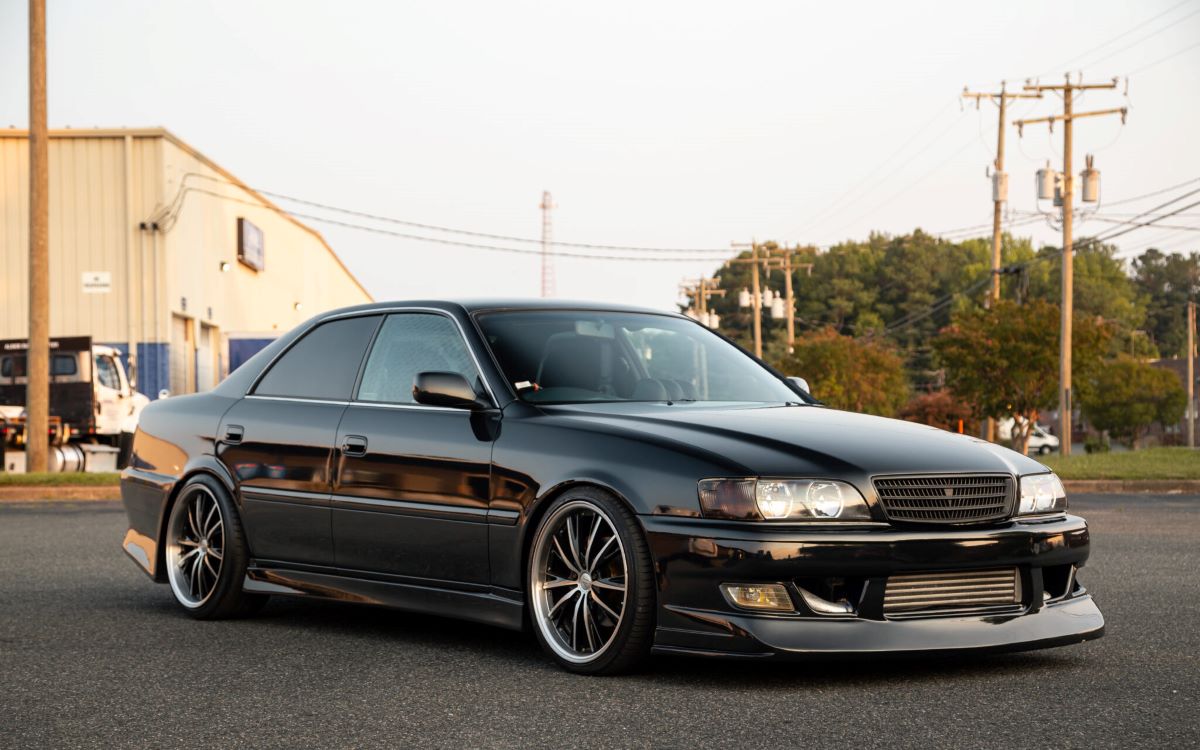
In the U.S., Chasers are becoming more common at drift events as imports increase. Drivers appreciate their torque, comfort, and surprising agility for a midsize sedan.
The Toyota Chaser JZX100 holds a distinct position among automotive enthusiasts globally, particularly within the JDM community. Its strong engine performance, motorsport pedigree, and reputation for durability are central to its appeal.
That said, beyond its widely recognized strengths, the Chaser JZX100 also possesses a number of lesser-known characteristics that even dedicated fans may overlook. A comprehensive examination of this Japanese performance sedan reveals why it continues to command respect decades after its introduction.
During the 1990s, Japanese mid-size sedans and performance-oriented models generated substantial enthusiasm within enthusiast circles. Among the notable entries of that era was the JZX100.
Introduced in September 1996 as the successor to the X90 Chaser, the JZX100 quickly established itself as a serious contender in Japan’s competitive sedan segment.
The Chaser nameplate formed part of the broader Toyota Crown lineage and was one of three closely related models sharing the same underlying platform and floor assembly. This triplet arrangement contributed to the Chaser’s longevity, making it one of Toyota’s long-running offerings.
From a design standpoint, the JZX100 adopted a more polished and cohesive aesthetic than earlier generations, and it is frequently regarded as the most visually balanced iteration of the model line.
Unlike many competitors of the period that shifted toward front-wheel-drive configurations, the Chaser JZX100 retained a rear-wheel-drive chassis. This layout enhanced driver engagement, delivering sharper handling characteristics, improved balance, and the controllability necessary for drifting, an attribute that further solidified its standing in performance circles.
7. Toyota Mark II JZX90
Often overshadowed by the Chaser, the JZX90 Mark II is a drift sleeper. It shares the same 1JZ turbo power but feels slightly lighter and more playful.
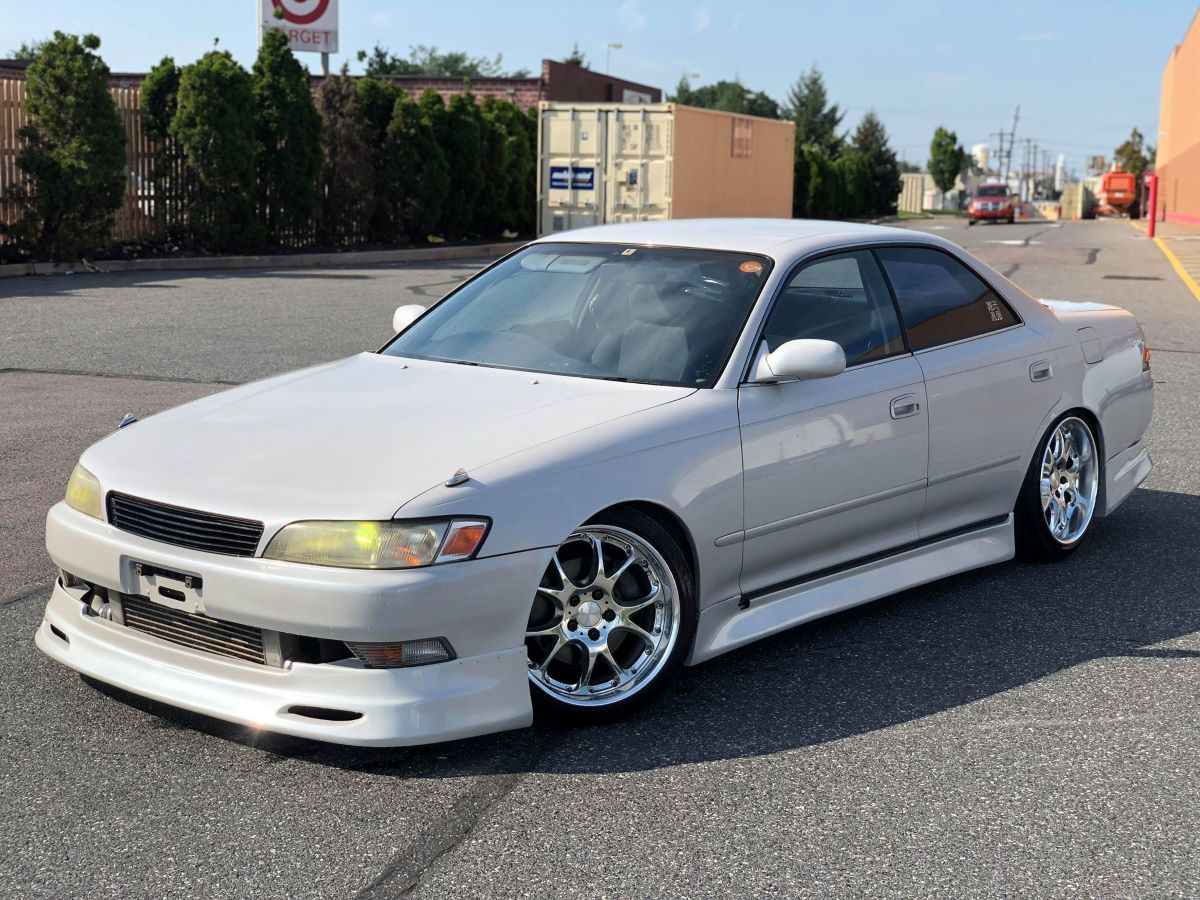
American builders love these for their affordability compared to Silvias and Skylines. With proper suspension, the JZX90 becomes a torque-heavy drift machine that thrives on big-angle entries.
The Toyota Mark II JZX90 represents the seventh generation of the Mark II series, produced between 1992 and 1996. Positioned within Toyota’s mid-size sedan lineup, it was engineered to balance executive-level comfort with legitimate performance capability.
Within enthusiast communities, the JZX90, particularly in Tourer V specification, has become one of the foundational platforms of 1990s Japanese rear-wheel-drive performance culture.
The JZX90 designation specifically refers to variants powered by the 2.5-liter 1JZ-series inline-six engine. In its most celebrated configuration, the 1JZ-GTE featured a twin-turbocharged setup producing approximately 276 horsepower, consistent with Japan’s self-imposed horsepower agreement of the era. Rear-wheel drive was standard on performance trims, and a 5-speed manual transmission option significantly enhanced driver engagement.
Chassis dynamics were a core strength. The JZX90 utilized a double-wishbone suspension layout, contributing to predictable handling and strong grip characteristics.
Combined with a relatively lightweight body for its class, the platform proved highly adaptable for motorsport applications, including drifting and time attack competition. The availability of a factory limited-slip differential further increased its appeal among performance-oriented buyers.
Today, the Toyota Mark II JZX90 is widely regarded as one of the most modifiable and mechanically robust sedans of the 1990s Japanese domestic market. Its combination of the durable 1JZ engine platform, rear-wheel-drive architecture, and understated styling has secured its long-term relevance within global enthusiast circles.
8. Nissan 180SX
Essentially the hatchback cousin of the S13 Silvia, the 180SX offers similar dynamics with added cargo space. Its fastback design also shifts weight rearward, helping initiate slides.
In the U.S., many 240SX owners convert their cars to 180SX styling because of its aggressive look and proven drift pedigree.
The Nissan 180SX is a rear-wheel-drive fastback coupe produced primarily for the Japanese domestic market between 1989 and 1998. Built on the S13 platform, it served as the liftback counterpart to the Silvia coupe and became one of the defining cars of 1990s Japanese performance culture.
The “180” designation originally referenced the 1.8-liter CA18DET turbocharged inline-four engine fitted to early models. This DOHC, intercooled turbo powerplant delivered strong performance relative to the car’s modest weight and established the 180SX as an accessible yet capable sports car.
In 1991, Nissan replaced the CA18DET with the 2.0-liter SR20DET, which offered improved torque characteristics and broader tuning potential. Naturally aspirated SR20DE variants were also available in lower trims.
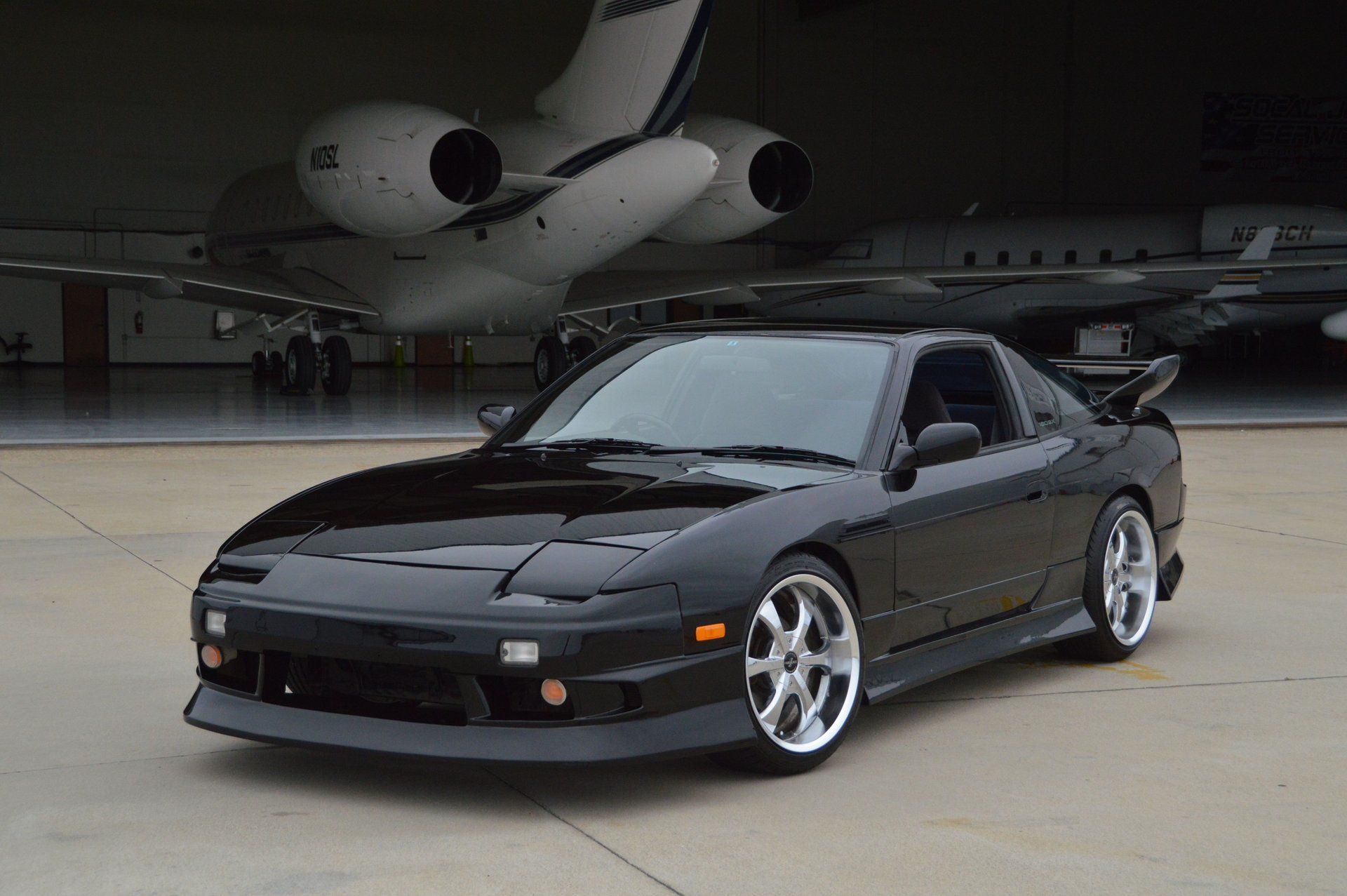
Visually, the 180SX was distinguished by its pop-up headlights and practical hatchback rear design. Higher-performance trims, particularly the Type X introduced in the mid-1990s, featured aerodynamic body kits, rear spoilers, upgraded suspension components, and larger wheels. These revisions reinforced the car’s aggressive stance while maintaining its daily usability.
Inside, the cabin followed a functional, driver-oriented layout typical of Nissan performance vehicles of the era. Supportive bucket-style seats, clear analog instrumentation, and straightforward switchgear prioritized ergonomics over luxury. While interior materials were modest, durability and simplicity aligned with the car’s enthusiast focus.
Over time, the Nissan 180SX gained international recognition due to its mechanical durability, strong aftermarket support, and cultural presence in motorsport and media.
Today, well-preserved examples are increasingly sought after, particularly unmodified Type X models and early CA18DET variants. Its enduring appeal stems from a straightforward engineering formula: lightweight construction, turbocharged performance, and rear-wheel-drive dynamics in a compact, adaptable package.
9. Subaru BRZ
A modern successor to the AE86 philosophy, the BRZ brought lightweight rear-wheel-drive fun back to dealerships. While not powerful stock, its balance and steering feel are outstanding.
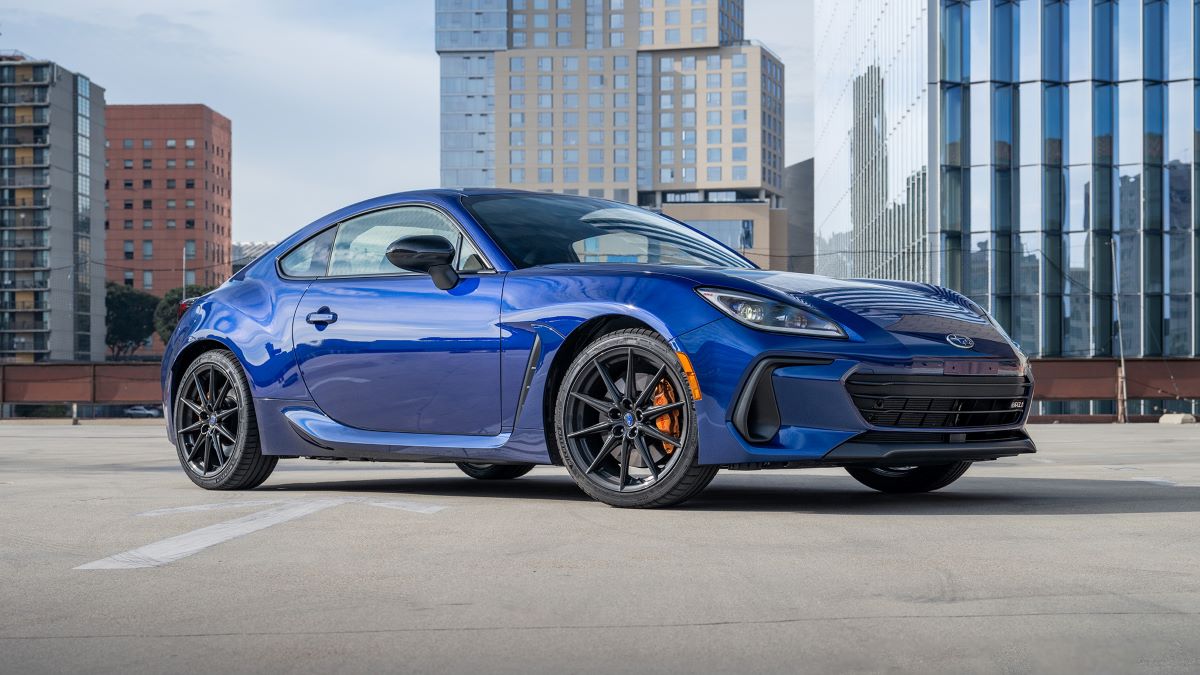
Across the U.S., BRZs dominate grassroots drifting because they’re affordable, reliable, and supported by a massive aftermarket. Turbo or supercharged builds quickly turn them into competitive machines.
The 2026 Subaru BRZ is offered with a single engine configuration: a 2.4-liter naturally aspirated flat-four delivering 228 horsepower and 184 lb-ft of torque.
Transmission choices include a six-speed manual or a six-speed automatic. In MotorTrend instrumented testing, the automatic-equipped BRZ reached 60 mph in 6.6 seconds, while the manual variant reduced that figure to 5.8 seconds.
In comparison, the Mazda MX-5 Miata utilizes a 2.0-liter inline-four engine producing 181 horsepower and 151 lb-ft of torque. It is available with a standard six-speed manual and an optional six-speed automatic transmission.
Equipped with the six-speed manual, the BRZ carries EPA ratings of 20 mpg in the city and 27 mpg on the highway, resulting in a maximum estimated driving range of approximately 290 miles. Selecting the automatic transmission improves fuel economy to 21 mpg city and 30 mpg highway, extending the estimated range to roughly 330 miles.
The Miata demonstrates higher efficiency figures, attributable in part to its lower curb weight and smaller displacement engine. Manual models achieve 26 mpg city and 34 mpg highway. The automatic maintains the 26-mpg city rating while increasing highway efficiency to 35 mpg. Both Miata configurations are rated for an estimated driving range of 345 miles.
10. Toyota GR86
The GR86 represents the new generation of drift cars: lightweight, naturally aspirated, and designed with enthusiasts in mind. Its improved torque over the original 86 makes it easier to initiate slides without forced induction.
For American drivers entering drifting today, the GR86 offers warranty-backed sideways fun, something unimaginable in the early days of the sport.
What ties all these cars together isn’t just their country of origin, it’s design philosophy. Japanese manufacturers prioritized balance, simplicity, and mechanical feedback long before drifting became mainstream. That’s why these platforms remain relevant decades later.
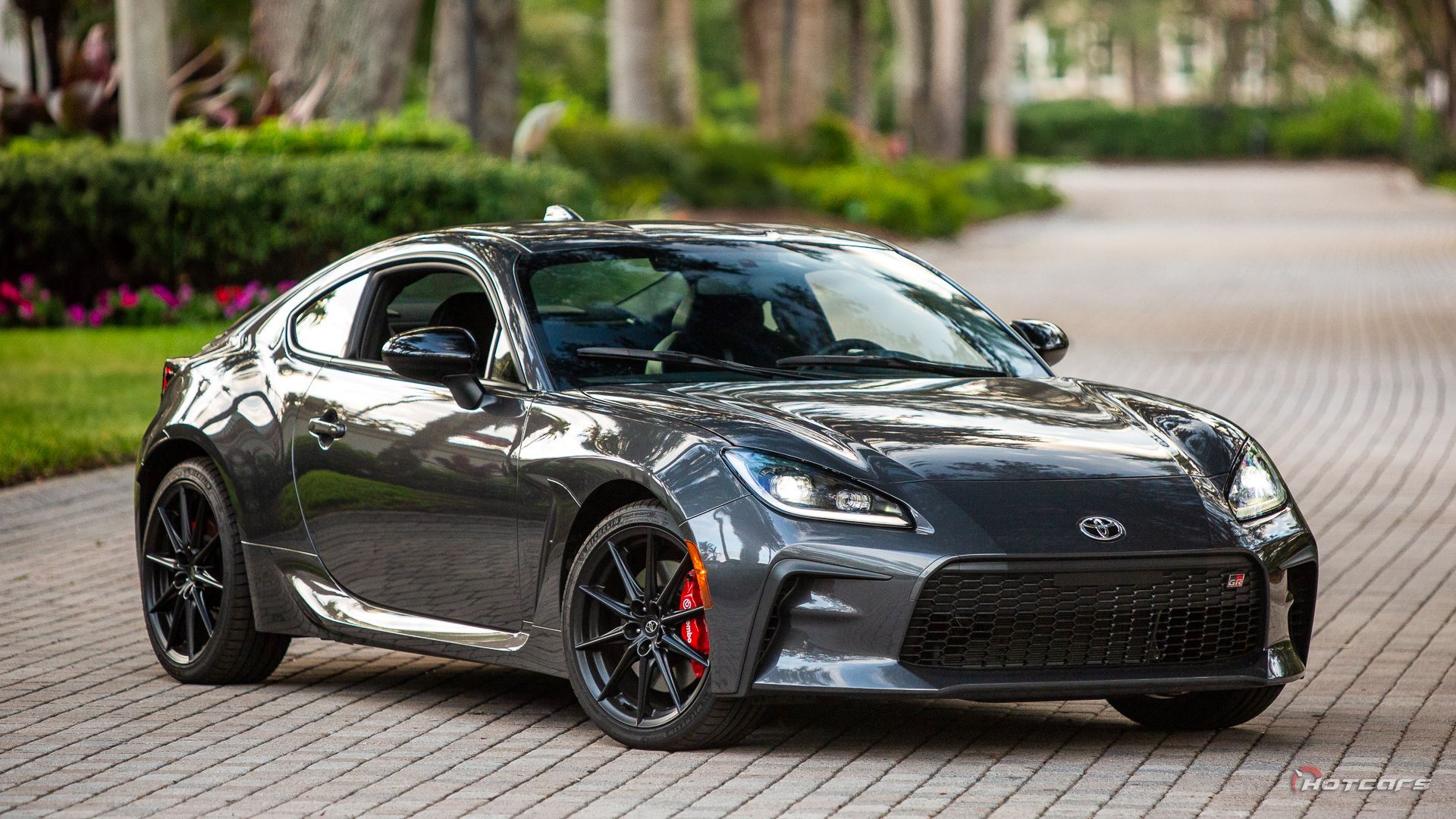
Now officially branded as the GR86, Toyota’s rear-wheel-drive sports coupe enters its second generation delivering a key upgrade enthusiasts had anticipated since the original model debuted: a meaningful increase in power.
Second-generation performance cars often face heightened scrutiny, particularly when the predecessor built a strong enthusiast following. In developing the new 86, Toyota assumed that risk. The result, however, is an evolution rather than a misstep.
From initial cornering impressions, the improvements are apparent. Steering response is precise and appropriately weighted, complementing a chassis that feels agile and communicative.
The vehicle’s inherent balance inspires confidence, while ride comfort over uneven pavement shows noticeable refinement compared to the prior model. The overall driving experience proved compelling enough for the car to earn finalist status in Performance Vehicle of the Year evaluations.
The larger engine’s additional power and torque are immediately beneficial. While the GR86 is not engineered for extreme drift angles or prolonged burnouts, the added output allows for more nuanced throttle steering and improved mid-corner adjustability. The stability control calibration appears to permit greater latitude for controlled oversteer.
As expected in this segment, the six-speed manual transmission is the preferred configuration, as the automatic transmission does not react as quickly to driver inputs. In direct comparison with the closely related Subaru BRZ, the Toyota distinguished itself through superior ride compliance, more cohesive styling, and handling characteristics that feel more intuitive.
There are limitations. Rear-seat space and cargo capacity remain minimal, though this is consistent with the vehicle’s compact dimensions. Despite those constraints, the GR86 delivers a driving experience compelling enough to overshadow its practical compromises.
Toyota has refined a modern classic, enhancing its appeal for returning enthusiasts while broadening its accessibility to new drivers interested in engaging rear-wheel-drive performance.
The updated 2.4-liter flat-four engine is rated at 228 horsepower and 184 lb-ft of torque. By comparison, the 2020 Toyota 86 produced 205 horsepower at 7,000 rpm and 156 lb-ft of torque at 6,400 rpm in manual form, while automatic-equipped versions generated 200 horsepower and 151 lb-ft.
The 2022 GR86 is available with either a six-speed manual or six-speed automatic transmission, both driving the rear wheels. EPA fuel economy estimates are 21 mpg city and 31 mpg highway with the automatic, and 20 mpg city and 27 mpg highway with the manual.
In the U.S., parts availability, engine swap potential, and community knowledge keep these cars alive. From backyard builds to professional Formula Drift entries, Japanese chassis continue to define what a proper drift car should feel like.
More importantly, they teach drivers how to drift, not just how to make smoke. Whether it’s an AE86 on mountain roads or a turbo Silvia on a race circuit, these cars reward technique, timing, and control.
